PART 2: HOA President Called the Cops When I Used My Own Lakefront—Then Went White When I Opened My Federal Badge
PART 2
These revealed panic.
The amendment establishing the lake-access permit was supposedly adopted at an emergency meeting on Christmas Eve.
Four people attended.
Four.
Pine Ridge had 847 homes.
The recorded declaration required broad owner approval for changes affecting fundamental use rights.
Four votes would not come close.
Then I saw the date.
The amendment had been “approved” three days after our property closed.
I sat back.
Elena noticed.
“What?”
“Three days.”
“Three days what?”
“We closed December twenty-first.”
“Yes.”
“This was supposedly adopted December twenty-fourth.”
She stared at the page.
“You think they changed the rules because we bought?”
“I think I need records.”
I spent the rest of the morning making calls.
Jim Patterson lived five houses east.
Older guy.
Retired electrician.
“Jim, do you remember an HOA meeting Christmas Eve?”
He laughed.
“No.”
“You sure?”
“My daughter had twenty people at my place. Brenda sent a reminder about Christmas lights. That’s all I remember.”
“Did you vote on waterfront permits?”
“I own waterfront.”
“That’s why I’m asking.”
“Then definitely not.”
Mary Gonzalez had no memory of the meeting.
Neither did another couple.
Nor Dorothy Walsh.
Dorothy was seventy-three and one of the original Pine Ridge residents.
She invited me over immediately.
“Bring that amendment.”
Her house was one of the old ones.
Low ceilings.
Wood paneling.
Family pictures everywhere.
A grandfather clock in the hallway.
She made coffee strong enough to qualify as a controlled substance.
I showed her the paperwork.
She put on reading glasses and studied it.
“This is garbage.”
“That’s encouraging.”
She disappeared into another room.
Came back carrying a thick yellow folder.
“My husband helped organize Pine Ridge.”
“Original covenants?”
“Original everything.”
The documents smelled like old paper and basement storage.
I read them at her kitchen table.
The original 1987 declaration explicitly recognized waterfront owners’ access rights.
The HOA’s purpose was limited.
Road maintenance.
Common property.
Basic architectural standards.
Lake preservation.
Nothing resembling Brenda’s permit scheme.
Dorothy tapped a paragraph.
“Walter fought over this.”
“Your husband?”
“He said people buying shoreline should never have to ask a committee whether they could touch the water.”
I looked at her.
“Why isn’t this version on the HOA portal?”
She smiled without humor.
“Because Brenda runs the portal.”
Then she told me about the newcomers.
Six of the previous eight property sales involved Brenda’s family real-estate connections.
Every new owner she knew about had been hit with fees shortly after moving in.
Dock violations.
Landscaping.
Boat storage.
Architectural approvals.
Environmental reviews.
Some paid.
Some fought.
The ones who fought usually received more violations.
“She’s been doing this for years,” Dorothy said.
“Why hasn’t the board stopped her?”
“Board?”
Dorothy laughed.
“She built the board.”
The next morning, I sent a formal records request.
Meeting notices.
Ballots.
Owner consents.
Bank records.
Assessment accounts.
Vendor contracts.
Enforcement logs.
Minutes.
Insurance.
Brenda called twenty-two minutes later.
I checked the timestamp because of course I did.
“Marcus.”
“Brenda.”
“I just received an extraordinary demand from you.”
“It’s a records request.”
“Forty-three categories.”
“You counted.”
“You’re treating the association like a criminal organization.”
“I asked for records.”
“You have been here less than a month.”
“Records don’t become less relevant because I’m new.”
“You don’t understand this community.”
“I’m trying to.”
“By threatening the board?”
“Show me where I threatened anyone.”
Silence.
Then she said:
“You have made people uncomfortable.”
“I launched a kayak.”
“This isn’t about the kayak anymore.”
I picked up a pen.
“Can you repeat that?”
“What?”
“The last sentence.”
She hung up.
I wrote it down anyway.
Two days later Dorothy received a citation.
Unauthorized decorative objects.
Garden gnomes.
She had owned them for fifteen years.
Jim got cited for his work truck.
Mary received a fence-height violation.
Two inches.
All three had spoken to me.
That was not proof of retaliation.
But it was enough to start a timeline.
I created a spreadsheet.
Name.
Date of criticism.
Date of citation.
Rule cited.
Fine amount.
Prior enforcement history.
Board response.
Then a special assessment arrived.
Two thousand dollars per household.
Legal defense fund.
Elena read it over dinner.
“Defense against who?”
I raised my hand.
She stared.
“You?”
“Possibly democracy.”
“Did anyone vote?”
“Not that I can find.”
“Can she do this?”
“Not under the documents I received.”
Elena put down her fork.
“Then stop looking at people one at a time.”
“What?”
“She wins because everybody thinks they’re the only person being targeted.”
I nodded.
“So?”
“Bring them here.”
“They’re scared.”
“Then don’t call it a meeting.”
“What do we call it?”
She smiled.
“Wine and paperwork.”
Fifteen households showed up.
Corks popped.
Folders opened.
People who had barely spoken beyond waving from driveways suddenly started comparing letters.
The effect was immediate.
Mary had questioned Brenda about a landscaping contract.
Three days later: fence citation.
Jim had asked why legal fees increased.
Five days later: truck violation.
Dorothy had challenged the lake amendment.
Garden gnomes.
A younger couple had asked for reserve statements.
They received an architectural violation for a satellite dish installed by the prior owner.
An elderly man named Frank had been charged four thousand dollars for a shoreline remediation review.
“No one remediated anything,” he said.
“Who did the review?”
“Pine Ridge Community Services.”
That name was new.
I wrote it down.
Then Dorothy placed a manila folder on our dining table.
“I kept backup financial packets.”
“Why?”
“I never liked Brenda.”
“Strong internal control.”
She smiled.
Inside were bank statements.
Budgets.
Ledgers.
Assessment reports.
The special-assessment account already held eighty-nine thousand dollars collected from residents.
One authorized signer.
Brenda.
Jim leaned over.
“That normal?”
“No.”
“Illegal?”
“Not automatically. But it’s terrible governance.”
Then I saw another figure.
Brenda’s household appeared to owe nearly forty-seven thousand dollars in assessments, reimbursements, and unresolved charges.
No enforcement.
No lien.
No penalties.
Meanwhile newcomers were receiving five-hundred-dollar daily fines.
Mary asked:
“So what are you saying?”
“I’m saying we don’t know enough yet.”
Jim groaned.
“You federal guys always talk like that?”
“When we’re trying not to get sued.”
Elena folded her arms.
“Tell them what you do know.”
I looked around the room.
“We know enforcement appears concentrated against critics and newcomers. We know the lake amendment raises serious validity questions. We know the special assessment was not approved through the process I’ve seen in the governing documents. We know an eighty-nine-thousand-dollar account has weak controls. And we know Brenda’s household appears to have received very different treatment.”
Dorothy said:
“Fraud.”
“Maybe.”
“Marcus.”
“Maybe.”
She rolled her eyes.
“That’s why I’m retired.”
I held up a hand.
“From now on, nobody exaggerates anything. Save every letter. Every email. Every voicemail. Don’t threaten Brenda. Don’t vandalize anything. Don’t post accusations you can’t support.”
Jim looked disappointed.
“What do we do?”
“We make the truth boring.”
He stared.
“What does that mean?”
“Dates. Documents. Numbers. Boring wins.”
That Wednesday, Deputy Jim Morrison pulled into my driveway at six-thirty in the morning.
Lights flashing.
I was carrying my kayak toward the shoreline.
He stepped from the cruiser with the expression of a man who knew the next ten minutes were going to be terrible.
“Marcus Payton?”
“Yes.”
“I need you to step away from the water.”
“Why?”
“We received a complaint of criminal trespass and violation of a temporary court order.”
I nearly laughed.
“Whose property am I trespassing on?”
He looked toward the lake.
“Association-controlled shoreline.”
“This is deeded to me.”
“I understand that’s your position.”
“It’s the county’s position too.”
He held up paperwork.
“There is an order attached.”
I took one step closer.
“May I read it?”
He let me.
Ex parte.
Temporary.
Based on an affidavit claiming I had repeatedly entered restricted community shoreline, threatened HOA officers, and ignored safety directives.
My name was right there.
My property description was not.
The attached diagram included part of my shoreline as a “controlled access zone.”
Elena came outside.
“Marcus?”
“I’m okay.”
She saw the cruiser.
Then Brenda on her deck two houses away.
Brenda stood with her arms crossed.
Watching.
Elena’s face changed.
Deputy Morrison said:
“Sir, until we clarify this, I need you to comply.”
“Am I under arrest?”
“For the moment, I’m detaining you while we sort out the order.”
He was professional.
That made it worse.
Handcuffs still sound like handcuffs no matter how polite the person applying them is.
Metal clicked behind my back.
Neighbors watched from windows.
One held up a phone.
Brenda did not move.
I looked at Elena.
“Call Helena Morrison.”
Deputy Morrison looked at me.
“My sister?”
“Yes.”
“You know Helena?”
“I know her reputation.”
He stared at me for a second.
Then shook his head like the universe had personally insulted him.
Four hours later I was released.
The property records did not support the trespass claim.
The order was already under emergency challenge.
Deputy Morrison did not apologize directly.
He said:
“I wish somebody had shown me the deed before sending me out there.”
I said:
“So do I.”
Then he gave me his sister’s number.
Helena Morrison was a property-rights attorney in Helena.
Sharp.
Direct.
No patience for drama.
She read the complaint.
Read the amendment.
Read my deed.
Then leaned back.
“They put their financial and governance records directly at issue.”
“Meaning?”
“They’re claiming those records establish authority to control your shoreline.”
“Yes.”
“Good.”
I stared.
“Good?”
“Discovery.”
She smiled.
That was the beginning of Brenda’s real problem.
The subpoenas and document demands opened everything.
Bank statements.
Contracts.
Board emails.
Insurance correspondence.
Vendor records.
Invoices.
Assessment ledgers.
What emerged was not a healthy association with one overzealous president.
Pine Ridge was carrying roughly $340,000 in undisclosed debt and liabilities.
Unpaid legal bills.
Contract disputes.
Insurance issues.
Reserve shortages.
Outstanding maintenance.
At the same time, money had been moving from HOA accounts into Pine Ridge Community Services LLC.
I searched the corporate registration.
Owner:
David Hartwell.
Brenda’s husband.
The contracts sounded legitimate.
Landscaping.
Security.
Snow removal.
Maintenance coordination.
Administrative consulting.
But the invoices were strange.
Round numbers.
Repeated descriptions.
No supporting detail.
Some vendors listed in the paperwork denied doing the work.
One landscaping company confirmed performing a $6,000 project.
The HOA had been billed $18,500.
Where did the difference go?
Through David’s company.
A security contract billed monthly.
Residents reported no security service.
A maintenance agreement paid for dock inspections.
Several docks had never been inspected.
Then we found the transfers.
Money moving interstate.
Layered through accounts.
Some into David’s company.
Some into personal accounts.
Some into investment vehicles.
I did not open a federal case.
That would have been improper.
I was personally involved.
Instead Helena and I referred the records through appropriate channels.
I disclosed my conflict.
I stepped back from investigative decisions.
That was important.
Brenda would later accuse me of using the FBI to settle a neighborhood argument.
The truth was much worse for her.
The evidence did not need me.
Independent investigators could read bank statements perfectly well.
The amount tied to questionable contracts grew.
A hundred thousand.
Then more.
Eventually nearly two hundred thousand dollars in suspect transfers and unsupported payments over the examined period.
At the same time, Brenda and David were financially drowning.
Failed California investments.
Credit-card debt.
Mortgage arrears.
A real-estate venture that had collapsed.
Their lake house was quietly being prepared for sale.
The picture forming was simple.
Brenda had a lifestyle she could no longer afford.
An HOA she controlled.
A board she dominated.
Residents who feared liens.
A husband with companies capable of receiving payments.
That was motive.
The bank records were evidence.
But while lawyers and investigators worked, Brenda got more aggressive.
Anonymous letters appeared.
Threats of lawsuits.
Foreclosure warnings.
Claims that critics would become personally responsible for the association’s legal expenses.
Dorothy’s garage was spray-painted.
TRAITOR.
Elena and I drove over.
Dorothy stood in the driveway holding a rag soaked in solvent.
Her hands shook.
“I’ve lived here thirty-six years.”
Elena took the rag from her.
“You’re not cleaning this alone.”
Jim arrived.
Then Mary.
Then six others.
Nobody organized it.
People simply showed up.
We scrubbed red paint until our shoulders hurt.
At some point Dorothy sat in a lawn chair and started crying quietly.
I knelt beside her.
“I’m sorry.”
“For what?”
“This started after you helped me.”
She looked at me.
“No.”
“What?”
“This started before you arrived.”
She pointed toward the garage.
“You’re just the first person who made us compare notes.”
That was the day Pine Ridge changed.
Fear works when it isolates people.
Brenda had spent years convincing every resident their problem was private.
One fence.
One truck.
One dock.
One fee.
One kayak.
Once people started sharing documents, she lost the advantage.
Elena built a phone tree.
Nothing secret or illegal.
Just homeowners staying connected.
Garages.
Basements.
Living rooms.
Residents brought old meeting packets.
Emails.
Receipts.
Canceled checks.
Vendor proposals.
Dorothy produced thirty years of records from her basement.
Those records showed exactly when normal governance started deteriorating.
Competitive bids disappeared.
Executive sessions increased.
Financial reports became vague.
Independent board members resigned.
Brenda’s allies replaced them.
Related companies began receiving money.
One evening, I sat at Dorothy’s kitchen table with Helena, two paralegals, Elena, Jim, Mary, and enough paper to rebuild a forest.
Dorothy brought another box.
Helena stared.
“How much do you have?”
“My husband never threw anything away.”
“I love your husband.”
“He’s been dead nine years.”
“I still love him.”
We traced contracts.
Invoices.
Payments.
Approvals.
Then Mary found an email printout from a board packet.
Brenda to David.
**Need $18k moved before reserve report goes out. Use maintenance classification again.**
I read it twice.
Helena held out her hand.
“Give me that.”
Another email:
**New owners at west shore haven’t paid access fees. Push enforcement before they start asking around.**
I looked at Elena.
She had gone still.
“That’s us.”
“Yes.”
The amendment had been created three days after our closing.
The email was two days before the amendment.
Brenda had been discussing access fees before the rule supposedly existed.
That mattered.
Then my kayak was destroyed.
Tuesday morning.
I walked down to the dock and found deep cuts across the hull.
Foam exposed.
Straps severed.
One seat ripped.
Security cameras had gone offline during the night.
Cable interruption.
Elena came down behind me.
“Marcus.”
I touched the slash.
“This was deliberate.”
“I can see that.”
“Cameras lost connection at 1:13.”
“Do you have backup?”
“Not on the dock.”
She folded her arms.
“This isn’t funny anymore.”
“I never thought it was funny.”
“You joked.”
“Bad habit.”
“No.”
She looked at me.
“Defense mechanism.”
I sat on the dock.
She sat beside me.
For several minutes neither of us spoke.
Then she said:
“We can leave.”
I turned.
“What?”
“Temporary.”
“This is our house.”
“I know.”
“We’re not running.”
“Marcus.”
“No.”
She stared at me.
I immediately regretted the tone.
“Sorry.”
“You’re doing it.”
“Doing what?”
“Becoming the case.”
I looked away.
“I’m protecting us.”
“I lived with you through twenty years of investigations.”
“I know.”
“I know when somebody becomes personal.”
“She had me handcuffed behind my own house.”
“Yes.”
“She’s stealing from these people.”
“Yes.”
“She threatened Dorothy.”
“Yes.”
“So it is personal.”
“That’s why you have to be careful.”
I said nothing.
Elena reached for my hand.
“You’re not the only person who can fight her.”
That changed how I handled the next month.
I let Helena lead.
I stopped making informal calls.
Every federal referral went through proper channels.
Independent agents handled evidence.
I did not participate in witness interviews.
I did not touch investigative databases related to Brenda.
When people asked whether “my FBI friends” were investigating, I told them the truth:
“I’m not part of that investigation.”
Brenda, meanwhile, became convinced I was.
She hired private security.
Men in suits began driving slowly through Pine Ridge.
Dorothy saw the same car outside her house three days in a row.
Jim photographed another outside our neighborhood meeting.
Anonymous letters warned residents to distance themselves from “criminal conspirators.”
Then legal mail started disappearing.
Helena sent me a tracked envelope.
Never arrived.
Another resident’s discovery notice vanished.
Postal inspectors became involved after a pattern developed.
Then utilities.
Dorothy’s water was shut off three times in one week.
The utility confirmed requests had been made using information associated with an HOA account.
A vocal resident lost power after a service-change request he never submitted.
Each new escalation created another witness.
Another document.
Another agency.
Brenda was reacting the way desperate people often do.
Every attempt to regain control produced more evidence that she had lost it.
Then she cornered Dorothy outside a grocery store.
Dorothy called me from her car.
Her voice shook.
“What happened?”
“She came up behind me.”
“Who?”
“Brenda.”
“What did she say?”
Silence.
“Dorothy?”
“She said old women who can’t mind their own business sometimes have accidents.”
I stood so quickly my chair hit the wall.
“Where are you?”
“Parking lot.”
“Stay there.”
“No.”
“What?”
“I’m driving home.”
“You are not driving anywhere until someone gets there.”
“I’m seventy-three, not seven.”
“Dorothy.”
She sighed.
“Fine.”
I called local law enforcement.
The threat also went to federal investigators because by then Dorothy was a potential witness in the financial case.
That decision had consequences Brenda apparently had not considered.
Witness intimidation is not an HOA violation.
It is not a neighborhood dispute.
Soon afterward, Brenda’s high-priced law firm withdrew.
Official reason:
Irreconcilable differences regarding representation.
Jim asked me what that meant.
“It can mean many things.”
“What does it mean here?”
“Probably that her lawyers finally realized she ignores advice.”
“Translation?”
“They’re getting off the train before it reaches the cliff.”
Then came Brenda’s most dangerous move.
Friday.
Five in the afternoon.
Emergency notice.
Seventy-two hours.
Proposal:
Dissolve Pine Ridge Lake Property Owners Association.
Liquidate community assets.
Sell common shoreline.
Sell recreational land.
Pay legal obligations.
Distribute remainder.
The notice blamed “frivolous litigation and government overreach” for the association’s financial distress.
There was already a buyer.
A Delaware company.
Helena traced ownership connections.
Business associates of David.
Two hundred acres of prime communal lakefront could be transferred for a fraction of its potential value.
Elena read the proposal at our dining table.
“She’s trying to steal the lake on the way out.”
“Parts of it.”
“You know what I mean.”
“Yes.”
“Can she do it?”
“Not legally like this.”
“That has never stopped her.”
Helena filed emergency motions before midnight.
Other counsel representing residents joined.
The federal investigation complicated any attempted transfer of assets tied to questioned financial activity.
By Monday morning, the sale effort was frozen.
But the emergency community meeting went forward.
More than four hundred residents came.
I had never seen Pine Ridge so full.
Cars lined both sides of the road.
People stood in hallways.
Media trucks occupied the parking lot.
County officials took seats in front.
Brenda arrived with a criminal-defense attorney.
Not her old HOA lawyer.
Not the Denver firm.
Criminal defense.
That told everyone something.
Still, she sat at the head table.
Still had the gavel.
Still called the room to order like nothing fundamental had changed.
“Recent misinformation,” she began, “has created unnecessary panic.”
Someone shouted:
“Where’s the money?”
Brenda struck the gavel.
“Order.”
“Show us the accounts!”
“Order!”
Her attorney leaned toward her.
She ignored him.
“The proposed dissolution is intended to protect homeowners from catastrophic liabilities created by hostile actors.”
Mary stood.
“Hostile actors?”
Brenda pointed the gavel.
“You are out of order.”
Mary held up three violation letters.
“You fined me six thousand dollars after I asked to see a budget.”
“Sit down.”
“No.”
The room erupted.
Brenda pounded the gavel repeatedly.
It did nothing.
Eventually Helena took the microphone and laid out the civil findings.
Invalid amendment procedures.
Questionable assessments.
Related-party contracts.
Hidden liabilities.
Then an independent forensic accountant explained the financial discrepancies.
No insults.
No drama.
Numbers.
That was more devastating.
Dorothy walked to the microphone carrying the original 1987 covenants.
“My husband helped write these.”
The room became quiet.
Brenda rolled her eyes.
Dorothy noticed.
“You can make that face all you want.”
A few people laughed.
“I was living here when half the roads were dirt. Pine Ridge was built so ordinary people could afford a place by the lake. We formed an association because snow still needed plowing and shared land still needed care.”
She held up the old pages.
“We did not create a private government.”
Brenda interrupted.
“Those documents have been amended repeatedly.”
Dorothy looked toward her.
“Show the votes.”
Brenda stopped.
Dorothy waited.
No answer.
She turned back to the room.
“I kept copies.”
Applause started.
Not explosive.
Steady.
Respectful.
When my name was called, Elena squeezed my hand.
“Facts.”
“I know.”
“No speeches.”
“I know.”
“No enjoying yourself.”
I looked at her.
“That feels unnecessarily restrictive.”
“Marcus.”
“Fine.”
I walked to the microphone.
“My name is Marcus Payton.”
Brenda made a sound somewhere between a laugh and a snort.
I ignored it.
“Elena and I bought our house because we wanted a quieter life.”
That got some laughter.
I smiled.
“Clearly, I miscalculated.”
More laughter.
Then I put the timeline on the screen.
Closing date.
December twenty-first.
Internal email discussing access fees.
December twenty-second.
Emergency amendment supposedly adopted.
December twenty-fourth.
First confrontation.
Fine notice.
Records request.
Retaliatory citations.
Special assessment.
Shell-company payments.
Hidden debt.
Vendor discrepancies.
Financial transfers.
Attempted dissolution.
Every date sourced.
Every amount sourced.
No adjectives necessary.
“For the past several months, counsel and independent authorities have reviewed evidence suggesting a pattern of improper assessments, related-party payments, false representations, and diversion of association funds.”
Brenda stood.
“This is harassment.”
Her attorney whispered something.
She ignored him.
“You have been obsessed with destroying me since you arrived.”
“No.”
“You refused to follow a simple lake rule.”
“A rule created after I bought the property.”
“You think you’re above this community.”
“No.”
“You act like some investigator.”
I paused.
Her attorney touched her arm.
“Brenda.”
She pulled away.
“Marcus Payton is a washed-up federal nobody who moved here because he misses feeling important.”
The room went completely still.
Elena started to stand.
I looked at her.
She sat back down.
Brenda pointed at me.
“He has no authority here.”
I nodded.
“That is correct.”
Her expression changed.
The room stayed quiet.
“As a property owner in Pine Ridge, I have exactly the same rights every other homeowner has.”
Brenda smiled faintly.
“Finally.”
I reached inside my jacket.
Her smile disappeared.
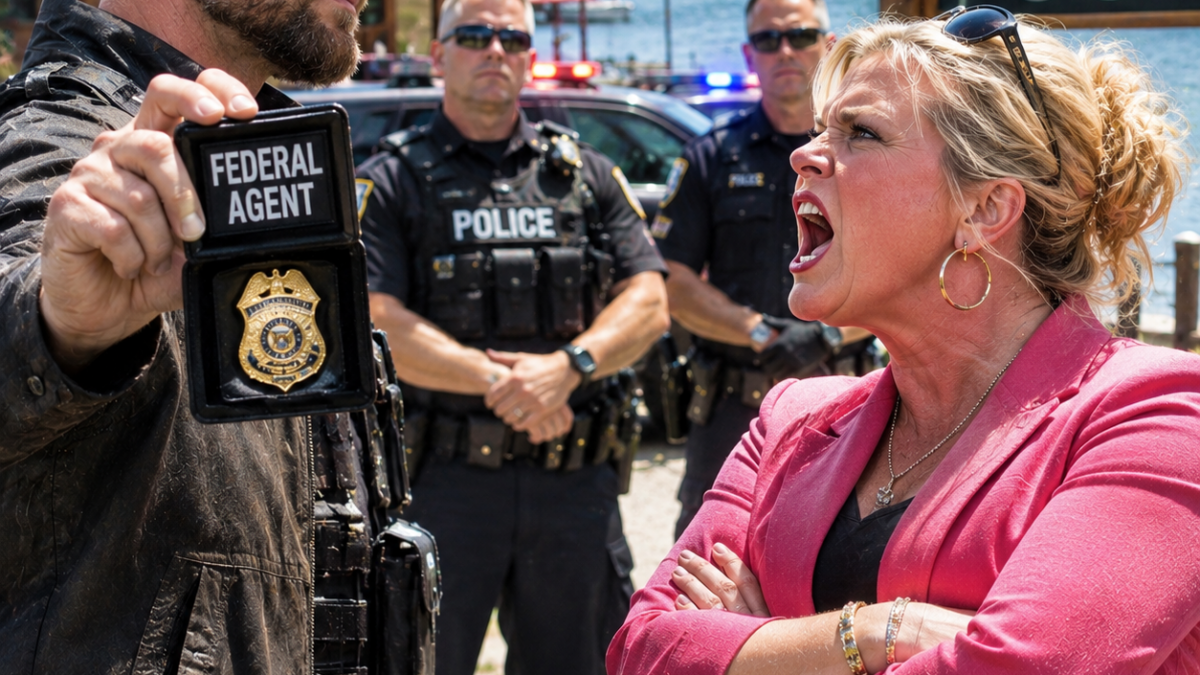
I opened the leather credential case I had carried for fifteen years.
Gold badge.
Identification.
Overhead lights caught the metal.
A sound went through the room.
Not applause.
A collective intake of breath.
Brenda’s face changed so quickly it would have been funny in another situation.
Flushed anger.
Confusion.
Then white.
“My occupation has never been relevant to whether my deed gives me lake access.”
I turned the credentials toward the front rows.
“Special Agent Marcus Payton. Federal Bureau of Investigation. Financial crimes.”
Nobody moved.
Even the reporters stopped whispering.
Brenda’s attorney closed his eyes.
I continued.
“I kept that information out of this dispute because I am personally involved.”
Brenda stared at me.
“I have not directed the federal investigation involving Pine Ridge. I disclosed my conflict. Independent agents and prosecutors are handling it.”
She found her voice.
“You used your badge!”
“No.”
“You called your friends!”
“I referred evidence through counsel and appropriate channels.”
“This is retaliation!”
I closed the credential case.
“Brenda, the bank records existed before you knew what I did for a living.”
She said nothing.
“You said I had no authority here.”
I put the credential case back into my jacket.
“You were right about that too.”
People looked confused.
“I don’t need federal authority to prove my property rights. I have a deed.”
A few people laughed.
“And federal investigators don’t need me to tell them what two hundred thousand dollars in questionable transfers look like.”
That was when the room erupted.
People stood.
Applause.
Shouting.
Some crying.
Dorothy smiled like she had been waiting years for that moment.
Brenda grabbed the edge of the table.
Her attorney leaned close.
“Stop talking.”
She shoved him away.
“This is a setup!”
Nobody listened.
“You planned this!”
Still nobody listened.
For the first time since we arrived, Brenda Hartwell was no longer the loudest person in Pine Ridge.
Then something even worse happened to her.
People stopped responding entirely.
The interim-board motion was called.
Remove Brenda as president pending investigation.
Overwhelming approval.
Replace the current officers temporarily.
Passed.
Suspend disputed fines.
Passed.
Independent forensic audit.
Passed.
Full cooperation with state and federal investigators.
Passed.
Brenda tried to interrupt each vote.
The chair running the emergency procedure ignored her.
The gavel still sat in front of Brenda.
But it no longer mattered.
That was the true humiliation.
Not the badge.
Not her face going pale.
Not four hundred people seeing through her.
It was the moment she discovered authority only exists while other people recognize it.
Her attorney finally convinced her to leave.
At the side door she turned toward me.
“You destroyed Pine Ridge.”
I shook my head.
“No.”
Her eyes narrowed.
“You did.”
“You emptied the accounts.”
Her attorney pulled her through the door.
Camera flashes exploded outside.
I sat down.
Elena leaned toward me.
“That was enjoying yourself.”
“A little.”
“I knew it.”
The next forty-eight hours were chaos.
Media requests.
Legal filings.
Subpoenas.
Asset restraints.
Federal agents executed warrants on accounts associated with Pine Ridge Community Services.
The investigation traced money through multiple banks and investment accounts.
Brenda and David started blaming one another almost immediately.
David’s attorney approached prosecutors.
Then Brenda tried to leave the country.
She was stopped before boarding an international flight.
I learned about it from Helena.
Then the evening news showed footage.
Brenda in handcuffs.
Hair pulled back.
No designer confidence.
No clipboard.
No gavel.
Elena sat beside me.
I watched for maybe thirty seconds.
Then turned off the television.
She looked at me.
“That’s it?”
“What?”
“You spent months waiting for her to face consequences.”
“I spent months waiting for her to leave us alone.”
I went outside.
The lake was dark.
No cameras.
No reporters.
Just water.
The criminal case took time.
Real cases do.
The internet wanted immediate convictions and dramatic hundred-year sentences.
Reality involved motions, negotiations, evidence review, cooperation agreements, restitution calculations, and sentencing guidelines.
Brenda eventually pleaded guilty to multiple federal fraud offenses and obstruction-related conduct.
Her sentence was measured in years.
Serious years.
Not the fictional two hundred years people online kept repeating.
She received additional supervised release.
She was barred from association leadership as part of related civil resolutions.
Assets connected to fraud were forfeited.
Restitution ordered.
David reached his own agreement after cooperating.
The lake house was sold.
Pine Ridge Community Services was dissolved.
Insurance covered part of the association’s losses.
Civil settlements recovered more.
Not everything.
That mattered.
Some residents wanted a perfect ending.
Every stolen dollar returned.
Every legal bill erased.
Every victim compensated fully.
That is not how financial crime works.
Money disappears into mortgages.
Credit cards.
Failed investments.
Legal fees.
Lifestyle.
Taxes.
Depreciation.
Victims rarely receive a magical reset.
But Pine Ridge survived.
The independent audit finally gave residents an honest balance sheet.
It was ugly.
The hidden $340,000 in obligations was real.
Reserve funds had been depleted.
Contracts had been inflated.
Payments had been redirected.
Yet because the community knew the truth, it could finally fix the truth.
Dorothy refused to become president.
“Absolutely not.”
People begged.
“No.”
They asked again.
“I’m seventy-three.”
Jim said:
“That’s not an argument.”
“It is when I want to sleep.”
She eventually accepted an honorary position that gave her no executive power but guaranteed she would attend every meeting and ask uncomfortable questions.
Jim joined the finance committee.
Mary took communications.
A professional management company was hired.
Accounts required multiple approvals.
Large contracts required competitive bids.
Financial reports went online.
Meeting notices had to be delivered properly.
Assessments followed the actual governing documents.
Related-party transactions required disclosure.
Nothing about the reforms was glamorous.
That was what made them good.
Governance should be boring.
Brenda had turned administration into theater because theater distracted from numbers.
The new board made everything dull enough to trust.
My fifteen-thousand-dollar fine disappeared.
So did the five-hundred-dollar kayak penalties.
The fake amendment was formally rejected.
The temporary court order based on Brenda’s representations was dissolved.
The first Saturday after all that became final, I woke before sunrise.
Elena was making coffee.
“You going out?”
“Thinking about it.”
She nodded toward the kayak rack.
I had bought a new kayak after the old one was destroyed.
Dark green.
Nothing fancy.
“You’ve earned it,” she said.
“I owned the right before.”
“The kayak?”
“The lake access.”
She smiled.
“That too.”
I carried it down.
The water was glass.
Exactly like the first morning.
Only this time there were no heels behind me.
No clipboard.
No phone camera.
No threat of fines.
I pushed off.
Paddled maybe fifty yards.
Then stopped.
For months, the shoreline had become evidence.
Survey marker.
Parcel map.
Photograph.
Exhibit.
Now it was water again.
That realization hit me harder than Brenda’s conviction.
A loon surfaced nearby.
I laughed.
When I paddled back, Elena was sitting on the dock holding two mugs.
“How was your criminal activity?”
“Exhilarating.”
“Any arrests?”
“Not yet.”
She handed me coffee.
We sat with our feet above the water.
After legitimate debts and reserves were addressed, Pine Ridge still had settlement and penalty funds available.
Elena proposed scholarships.
Of course she did.
She had spent her entire career finding money for kids whose lives were harder than the spreadsheets suggested.
The Pine Ridge Student Achievement Fund began small.
Community college.
Trade programs.
Four-year degrees.
The first year, a local girl named Samantha received help for nursing school.
Her mother cried at the ceremony.
Elena cried harder.
I stared aggressively at the ceiling until my eyes behaved.
Dorothy’s idea was different.
“Old people.”
That was her entire presentation.
Jim asked:
“Can you elaborate?”
“No.”
Eventually she did.
The Senior Support Program helped older residents with snow removal, dock repairs, minor home maintenance, transportation, and emergency tasks.
Actual services.
Real volunteers.
No fake consulting invoices.
No shell companies.
The first time I saw Jim repairing a railing at Frank’s house, he yelled:
“Marcus! Should I bill Pine Ridge Community Services?”
I gave him a gesture that made Dorothy shout from the porch:
“I saw that!”
We all laughed.
The new board also reviewed property and lake protections.
Brenda’s attempted liquidation had scared people enough to realize how vulnerable common land could become.
Residents voted to strengthen conservation protections around significant shoreline and forested areas.
Not because development was evil.
Because rushed sales under financial pressure were.
The community changed socially too.
Before Brenda fell, people had stopped talking freely.
They smiled.
Waved.
Then went inside.
Nobody wanted to become the next target.
Afterward, neighbors started arguing again.
I mean that positively.
Healthy communities argue.
About budgets.
Dock rules.
Snowplowing.
Parking.
Fireworks.
Then they vote.
Then they go home.
One February meeting lasted forty-seven minutes.
Insurance renewal.
Tree trimming.
Road maintenance.
Budget.
No screaming.
No lawsuits.
No federal agents.
Walking home through the snow, I told Elena:
“That might have been the greatest HOA meeting in American history.”
“Because nothing happened?”
“Exactly.”
“You’re finally learning.”
Our daughters came home that summer.
We had intentionally shielded them from much of the worst of it while the case was active.
They knew Brenda was a problem.
They knew about my detention.
They knew there was an investigation.
They did not know every detail.
At dinner, one daughter stared at me.
“You flashed your FBI badge at an HOA meeting?”
I looked at Elena.
She raised both hands.
“Do not involve me.”
My daughter said:
“Dad.”
“What?”
“You cannot be serious.”
“She called me a washed-up federal nobody.”
“So?”
“It was factually inaccurate.”
Her sister laughed so hard she nearly dropped her glass.
Then the first daughter became quiet.
“Were you scared?”
I assumed she meant Brenda.
“Of what?”
“Losing this place.”
The room changed.
I looked toward the windows.
Sunlight on the lake.
“Yes.”
Elena watched me.
I continued.
“Not because of the money.”
Though the money mattered.
Losing almost half a million dollars would have been catastrophic.
But that was not the deepest fear.
“For twenty years, cases followed me home. I thought moving here would finally separate work from life.”
One daughter smiled slightly.
“Then an embezzler moved two houses away.”
“Apparently.”
“You have terrible luck.”
“Genetic.”
Elena kicked me under the table.
I said:
“When Brenda started this, I felt like I’d failed.”
“Failed what?”
“Leaving that life behind.”
Elena reached across the table.
“You didn’t bring fraud here.”
“No.”
“Fraud came to you.”
Our daughter added:
“And picked the worst possible house.”
That became a family joke.
For a while, the media attention was intense.
Regional television.
National stories.
Reporters asking whether HOA fraud was widespread.
People wanted easy answers.
It isn’t.
Some associations are badly managed.
Some have arrogant boards.
Some have incompetent volunteers.
Some are perfectly functional.
Criminal fraud is different.
I said that repeatedly.
People disappointed by nuance usually edited it out.
Then came the phone calls.
Arizona.
Texas.
Florida.
Colorado.
People convinced their HOA president was “just like Brenda.”
Sometimes the records suggested real misconduct.
Sometimes the caller simply hated a fence rule.
I answered too many.
Emails at midnight.
Stacks of attachments.
Elena finally walked into my office one evening.
“No.”
I looked up.
“No what?”
“This.”
“What?”
“You’re recreating the FBI for free.”
“I’m helping.”
“You’re working at eleven-thirty.”
“Different.”
“How?”
“No supervisor.”
“Worse.”
She was right.
We started volunteering through established legal-aid and homeowner-education groups instead.
I occasionally spoke about financial transparency.
The message stayed boring.
Read the governing documents.
Keep records.
Ask for financial statements.
Separate unfairness from illegality.
Use qualified lawyers when needed.
Report crimes through proper channels.
Do not threaten people.
Do not manufacture confrontations.
Do not assume a title means authority.
And do not assume an official-looking letter is legally correct.
Everybody wanted to hear about the badge.
That was the viral part.
“How pale did she get?”
“Did she faint?”
“Did the crowd go crazy?”
She went pale.
She did not faint.
People did applaud.
But the badge was never the thing that defeated Brenda.
The spreadsheet was.
The bank statements.
The dates.
The emails.
Dorothy’s old records.
Residents comparing notes.
The badge only destroyed the story Brenda had created about me.
Clueless newcomer.
Retired nobody.
Easy target.
A few years after the case, Dorothy walked to our house one autumn morning.
She used a cane by then.
She claimed it was because the doctor was dramatic.
I knew better than to argue.
I found her sitting on our dock.
“You’re trespassing,” I said.
“Fine me.”
“Five hundred dollars.”
“Put it on my account.”
I sat beside her.
We watched the lake.
After a while she said:
“I almost sold my house.”
“When?”
“Before you came.”
I turned.
“Because of Brenda?”
She nodded.
“She had me believing I was too old to fight.”
“You had the documents.”
“I had paper.”
“You had thirty years of memory.”
“At my age, same thing.”
We sat quietly.
Then she said:
“You know what she hated most about you?”
“What?”
“You weren’t impressed.”
I laughed.
“That’s it?”
“People like Brenda need everyone else to believe they’re important.”
I thought about the community meeting.
The gavel.
Her title.
The moment none of it worked anymore.
Dorothy was probably right.
She stood slowly.
I offered my hand.
She ignored it.
Naturally.
At the path she turned back.
“Marcus.”
“Yeah?”
“Go violate the lake.”
I did.
By then Pine Ridge looked different.
Not physically.
Mostly.
The same mountains.
Same water.
Same mix of old cabins and new houses.
But people talked.
Kids rode bikes between properties.
Residents disagreed publicly.
Dorothy’s garden gnomes remained technically questionable under a forgotten design rule, and nobody cared.
The reserves had recovered.
Real reserves.
No hidden hole.
Elena’s scholarship fund had helped dozens of students.
The senior program had repaired roofs and docks.
The conservation restrictions protected land Brenda once tried to sell in a panic.
And the house Elena and I bought to escape my old life had finally become home.
One morning, years after everything ended, I woke before dawn.
Couldn’t sleep.
I made coffee.
Carried the kayak down.
Elena was still in bed.
The lake was perfectly calm.
I pushed away from the shore.
No phone.
No badge.
No case file.
I paddled farther than usual.
Past Dorothy’s place.
Past Brenda’s old mansion, now owned by a family with three children and a ridiculous golden retriever that jumped into the lake every time anyone walked near the dock.
Past the community beach.
Past the point.
I stopped near the center of the lake.
The sun had not fully cleared the ridge.
Mist moved across the surface.
For twenty years, I had made a career out of finding the thing people thought they had hidden.
Money.
Documents.
Relationships.
Lies.
Brenda had assumed that was the dangerous part of me.
The federal badge.
The investigative experience.
The people I knew.
She was wrong.
The most dangerous thing I did was ask her to show me the rule.
Then I read it.
Then I asked for the records.
Then other people started asking too.
Corruption had depended on isolation.
On fear.
On everyone believing their problem was unique.
Once the community put its papers on one table, Brenda’s empire started collapsing.
I looked back toward our house.
Elena had come outside.
She stood on the dock in a robe, holding two mugs of coffee.
I raised my paddle.
She raised a mug.
I thought about the first morning Brenda marched down that same shoreline and told me I needed her permission to touch the water.
I thought about the fifteen-thousand-dollar fine.
The handcuffs.
Dorothy’s garage.
The destroyed kayak.
The shell company.
The emergency dissolution.
The packed meeting.
Brenda pointing at me and calling me a washed-up federal nobody.
Then the look on her face when the badge opened.
That moment had been satisfying.
I won’t pretend otherwise.
But it wasn’t the ending.
This was.
No cameras.
No applause.
No humiliation.
No Brenda.
Just my wife waiting on our dock while morning light spread across water we had never needed permission to enjoy.
I dipped the paddle into Pine Ridge Lake and headed back toward my own shoreline.








