PART 2: HOA Ordered Me to Tear Down My Lean-To—Then Learned It Protected the Transformer Powering Their Entire Street
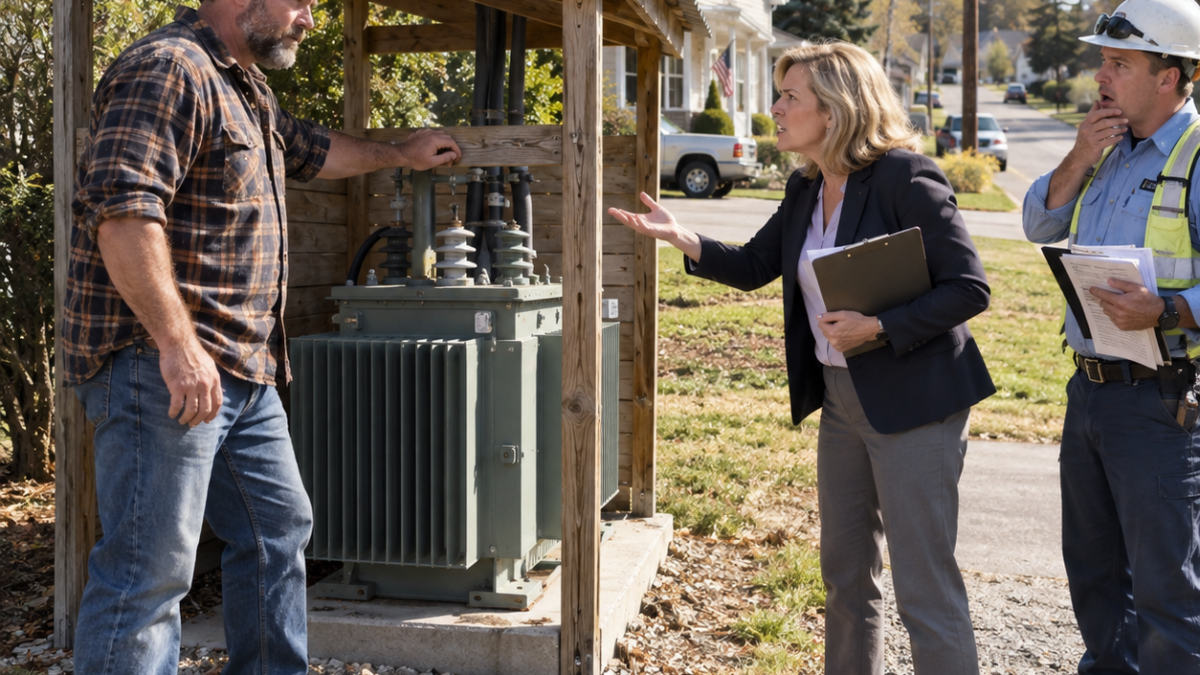
The HOA president gave me until Friday to tear down the little lean-to at the back of my property, or she promised to hire a demolition crew herself and bill me for every swing of the hammer.
She called it an illegal shed, doubled my fines when I refused, and warned that a lien against my home would be next.
What she didn’t know was that the thing she was desperate to destroy wasn’t really protecting anything of mine—and once the right people saw her paperwork, she was going to wish she had never put that threat in writing.
“That illegal monstrosity comes down by Friday, Mr. Davies.”
I straightened from the rosebush I had been pruning and looked toward the far corner of my backyard.
Then back at Karen Johnson.
Sterling Meadows’ HOA president stood near my driveway with a clipboard pressed against her chest and the expression of someone delivering a court order.
“If it’s still standing Friday morning,” she continued, “the association will have it demolished at your expense. One thousand dollars initial fine. One hundred dollars for every additional day of noncompliance.”
I pulled off one work glove.
Then the other.
“You’re talking about the lean-to?”
“I’m talking about your unauthorized outbuilding.”
“It isn’t an outbuilding.”
Karen gave me the smile she reserved for homeowners she considered too slow to understand her authority.
“It has a roof.”
“Yes.”
“Walls.”
“Three.”
“Then it is a structure.”
“That doesn’t make it your structure.”
Her smile disappeared.
The lean-to was simple.
Pressure-treated posts.
Three open-sided walls.
A sloped roof that matched my house.
Nothing decorative.
Nothing large enough to store a riding mower, much less become some secret second residence.
And sitting beneath it was a green electrical transformer that had been there long before Sterling Meadows existed.
Most people barely noticed the box.
I had noticed it the day I bought the house.
Twenty-five years in the Army Corps of Engineers taught me to notice infrastructure.
Especially infrastructure that could kill you if handled badly.
My closing survey showed a public utility easement in that corner of the property.
Ten feet by ten feet.
Recorded decades before the subdivision.
The transformer belonged to Northridge Power and Light.
The HOA had no authority over it.
Two winters earlier, an ice storm had dropped a heavy oak limb against the unit.
Our lights blinked.
Half the street lost power.
Utility crews worked for hours in freezing rain.
The following summer, I built the shelter.
Not because anyone asked me to.
Because it made sense.
Karen pointed toward it.
“You failed to submit architectural plans.”
“I didn’t need to.”
“That is not your decision.”
“Actually, in this case, it is.”
Her eyes narrowed.
“Excuse me?”
“That corner is a pre-existing utility easement.”
“So?”
“So your architectural committee doesn’t control it.”
Karen laughed once.
Sharp.
Dismissive.
“I am the chair of the architectural committee.”
“I know.”
“I think I know our rules better than you.”
“I read them before I bought the house.”
“That lean-to was not approved.”
I looked past her toward the transformer.
A low electrical hum came from beneath the shelter.
“You should read Appendix C.”
Her mouth tightened.
“Don’t quote bylaws at me.”
“Section Four. Pre-existing utility rights-of-way.”
She said nothing.
“Then pull the original development plat.”
“I don’t need homework assignments from you.”
“No.”
I nodded.
“But you may want one before threatening to destroy electrical infrastructure.”
That stopped her.
Only for a second.
Then her face reddened.
“Mr. Davies, I am giving you one final opportunity to cooperate.”
“And I’m giving you one final opportunity to leave my property.”
Her shoulders stiffened.
“We’ve placed liens on homes for less.”
That sentence stayed with me.
Not because I was afraid of losing my house.
Not yet.
Because she sounded proud of it.
I looked at the quiet street behind her.
Trim lawns.
Identical mailboxes.
Curtains moving behind windows.
People watching.
Nobody coming outside.
That was when I understood Karen’s real power.
It wasn’t the bylaws.
It was fear.
I picked up my pruning shears.
“Send everything in writing.”
Her eyes flashed.
“Oh, I will.”
“Good.”
“Friday, Mr. Davies.”
She turned and marched away.
That evening, I pulled the original Sterling Meadows documents from the fireproof cabinet in my study.
Two hundred twelve pages of covenants.
County plat.
Utility easements.
Closing records.
I found the transformer square exactly where I remembered it.
Then I found something else.
A notation referencing a 1974 utility agreement—twenty-four years before Sterling Meadows was built.
I stared at that date for a long time.
Then I reached for the phone.
Because Karen thought she was threatening one retired homeowner over an ugly little shed.
She had no idea she had just picked a fight over the piece of equipment powering her own house.
PART 2
The first person I called wasn’t a lawyer.
It was Northridge Power and Light.
That surprised my wife when she came into the kitchen and found me sitting at the table with the subdivision plat spread open beneath the overhead light.
Laura stopped in the doorway.
She had been married to me for thirty-two years.
That meant she had learned to identify trouble by the number of documents surrounding me.
One document meant curiosity.
Three meant concern.
A full dining table meant somebody somewhere had made a serious mistake.
She crossed her arms.
“How bad?”
“Depends.”
“That is never a comforting word from you.”
I pointed toward the highlighted corner of the plat.
“Transformer.”
She leaned closer.
“I know what the transformer is.”
“Public utility easement recorded in 1974.”
“And?”
“Sterling Meadows wasn’t developed until 1998.”
“I know that too.”
“HOA authority doesn’t predate the easement.”
She looked at the lean-to through the dark kitchen window.
“So Karen can’t make you take it down?”
“She shouldn’t be able to.”
“Shouldn’t?”
“The shelter itself isn’t explicitly listed in the easement language I have here. It says installation, maintenance, servicing, access, and protection.”
Laura tapped the page.
“Protection.”
“Exactly.”
“You built a protective roof.”
“Yes.”
“Then why aren’t you smiling?”
“Because Karen doesn’t care whether she’s wrong.”
That was the part that bothered me.
A reasonable board would have stopped the conversation at the word easement.
They would have checked their documents.
Called counsel.
Contacted the power company.
Maybe asked me whether the shelter interfered with utility access.
Instead, Karen had threatened fines, demolition, liens, and foreclosure before conducting even the most basic review.
That was not enforcement.
That was domination with stationery.
Laura sat across from me.
“You paid that garbage-can fine last year.”
“Fifty dollars.”
“You knew it was ridiculous.”
“Yes.”
“Why?”
“Because fighting fifty dollars would have cost more energy than paying it.”
She gave me a look.
“And what did that teach her?”
I knew where this was going.
“That I’d comply.”
“Exactly.”
Laura pointed toward the transformer.
“So maybe this didn’t start today.”
No.
It hadn’t.
The first two years after I retired had been everything I wanted.
Sterling Meadows was suburban in the most aggressively suburban way possible.
Neat sidewalks.
Identical streetlamps.
Professionally trimmed entrance hedges.
Homes close enough that neighbors knew when you bought a new grill, but far enough apart that you could drink coffee on the patio without participating in someone else’s breakfast.
Our backyard bordered county woodland.
That was what sold me.
After twenty-five years of temporary bases, construction schedules, environmental assessments, damaged bridges, logistics convoys, emergency repairs, and deployments where the word infrastructure often meant the difference between functioning and failing, I wanted quiet.
I wanted dirt that nobody expected me to grade.
Trees nobody expected me to cut.
A garage where my tools belonged to me.
For two years, I got it.
Then Karen became HOA president.
She ran on something called “Restoring the Sterling Standard.”
Nobody knew what that meant.
We found out gradually.
Garbage cans.
Patio furniture.
Holiday lights.
Fence stains.
Door colors.
Lawn ornament size.
Acceptable flower species.
Pressure-washing schedules.
It wasn’t that Sterling Meadows had no rules before Karen.
It did.
Some made sense.
No commercial junkyards.
No abandoned vehicles in front yards.
No ten-foot privacy fences blocking sight lines.
But Karen discovered something intoxicating in the covenant book.
Ambiguity.
And ambiguous rules could be interpreted by whoever controlled the committee.
She controlled the committee.
I watched people adapt.
Not agree.
Adapt.
Neighbors stopped leaving bicycles in front yards.
People moved grills behind privacy screens.
A retired teacher spent four hundred dollars repainting shutters because Karen decided the existing blue had faded beyond acceptable variation.
Everyone complained privately.
Almost nobody challenged publicly.
Including me.
That was my mistake.
The next morning, the certified letter arrived.
The mail carrier, Frank, held the thick cream envelope between two fingers.
“Another love letter?”
“You recognize the stationery?”
“Whole route recognizes the stationery.”
He handed me the electronic signature pad.
“Good luck.”
Inside, Karen had managed to turn a six-by-eight-foot open shelter into an existential threat to community property values.
Violation 2023-47B.
Unauthorized accessory structure.
Initial fine: $1,000.
Daily noncompliance: $100.
Removal deadline: Friday.
Failure to comply would authorize the HOA to obtain demolition services, assess those costs against my property, record a lien, and pursue “all available remedies.”
Including foreclosure.
Laura read it over my shoulder.
“They really put foreclosure in writing.”
“Yes.”
“For that?”
She pointed through the window.
“Yes.”
“What are you going to do?”
“Respond.”
I wrote the letter that afternoon.
No anger.
No sarcasm.
No accusation.
Just facts.
I cited the county-recorded plat.
Book number.
Page.
1974 utility easement.
Northridge Power and Light.
I explained that the structure was not a storage shed.
It had no enclosed floor space.
No doors.
No foundation interfering with utility access.
Its function was solely protective.
Then I quoted the key term.
Protection.
Finally, I requested that the violation and fines be rescinded.
Before printing, I added one sentence.
*A copy of this correspondence and the HOA’s demolition notice has been forwarded to Northridge Power and Light for review.*
Laura read that line.
“Oh.”
“What?”
“That’s the part she’s going to hate.”
“Why?”
“Because now somebody bigger than her knows.”
I mailed both letters certified.
Then I waited.
Four days later, Northridge called.
“Mr. Davies?”
“Yes.”
“This is Brenda Wallace with corporate relations.”
“Thank you for calling.”
“I have your letter in front of me.”
“All right.”
“First, I need to clarify something. Did our field operations team authorize you to construct that covering?”
“No.”
“That could potentially create an issue.”
“I understand.”
My stomach tightened.
This was the danger of doing the logical thing without formal permission.
Being right about Karen did not automatically make me right about the utility.
Brenda continued.
“So we sent someone out yesterday.”
I looked toward the backyard.
“I didn’t see anyone.”
“They inspected from the easement access and reviewed photographs.”
“And?”
There was a pause.
“Your structure is unusually well done.”
I almost laughed from relief.
“Thank you.”
“Our engineering supervisor had one concern about minimum service clearance. Your posts exceed it.”
“I measured against standard transformer maintenance access.”
“Yes. We noticed.”
“Army Corps.”
“That explains a great deal.”
Her tone changed slightly.
“We have service history on that transformer. Two storm-damage incidents in five years.”
“I remember one.”
“The other occurred before you purchased.”
“All right.”
“Your covering reduces direct debris impact while preserving ventilation and access. We don’t normally encourage customers to build around our equipment without coordination, but from an asset-protection standpoint, our engineers consider this beneficial.”
I sat straighter.
“Would you be willing to put that in writing?”
“I already have.”
That was the first moment I smiled.
“To me?”
“To you and the HOA.”
I leaned back.
“What did you tell them?”
“That the transformer is within our recorded utility easement. That our rights predate the subdivision. That your covering presently does not obstruct service access. That removal without our approval could expose the association to liability if our equipment is damaged.”
“Anything else?”
Brenda sounded almost amused.
“I strongly advised them not to touch it.”
“Thank you.”
“Oh, there’s one more thing.”
“What?”
“That transformer is not just yours.”
“I assumed.”
“It feeds distribution serving your cul-de-sac and portions of three adjoining streets.”
I looked through the window.
Karen lived one street over.
“How many houses?”
“Depending on switching configuration, several dozen.”
“Including Meadow Lane?”
“Yes.”
Karen’s address.
I closed my eyes.
“So the structure she wants demolished is protecting the transformer feeding her house.”
“That appears to be the case.”
I laughed once.
Couldn’t help it.
Brenda laughed too.
Then her voice became serious.
“Mr. Davies, high-voltage equipment is not something an HOA contractor should approach casually. If you believe they genuinely intend demolition, let us know.”
“I will.”
The second HOA letter arrived two days later.
Karen had received my response.
Karen had received Northridge’s warning.
Karen had learned the equipment belonged to the utility.
Her solution?
Double the fine.
The letter stated that my attempt to involve Northridge constituted “improper circumvention of the architectural review process.”
Circumvention.
As if contacting the owner of electrical infrastructure before someone demolished a structure around it was somehow sneaky.
Then came a sentence I read three times.
*The Architectural Review Committee retains absolute authority concerning visible structures within Sterling Meadows.*
Absolute.
That word told me more than ten pages of legal analysis could have.
Reasonable people rarely describe their own authority as absolute.
I showed Laura.
“She’s insane.”
“Careful.”
“You think she’s reasonable?”
“No.”
“Then?”
“I think we document actions. We don’t diagnose people.”
Laura smiled.
“You’re already preparing for court.”
“I’m preparing not to need court.”
The hearing was scheduled two weeks later.
At first, I planned only to bring the plat and Northridge letter.
Then I met Arthur Jensen.
Arthur lived six houses down.
Seventy-eight.
Retired structural engineer.
He was kneeling beside a flower bed when I walked past.
“John.”
“Arthur.”
“Heard you built an illegal power plant.”
I stopped.
“That’s the rumor?”
“Karen told Clara it was an unauthorized utility-adjacent structure.”
“That sounds expensive.”
“She’s very good at making ordinary things sound criminal.”
I looked at his flowers.
“Can I ask you something?”
“Depends.”
“You were here when Sterling Meadows started?”
“First fifteen families.”
“Do you remember the utility easements?”
Arthur slowly stood.
His joking expression disappeared.
“Oh, yes.”
“What?”
“The developer hated them.”
“Why?”
“They complicated lot descriptions. Reduced buildable area. Made buyers ask questions.”
He wiped soil from his hands.
“The county required those easements acknowledged before final approval.”
“Was architectural authority excluded?”
Arthur stared at me.
“You haven’t seen the original minutes.”
“No.”
He smiled.
“Come back tomorrow.”
The following evening, he and his wife Clara carried a banker’s box into my kitchen.
Clara had been Sterling Meadows’ first secretary.
Unlike modern boards, the early HOA had apparently believed records were worth preserving.
She brought everything.
Formation meetings.
Developer correspondence.
County approvals.
First board votes.
And there it was.
April 12, 1999.
Motion passed unanimously.
All pre-existing utility easements were excluded from architectural-review authority.
The HOA acknowledged superior utility jurisdiction inside those easements.
I looked at Arthur.
“This still valid?”
“The current board might claim later amendments superseded it.”
“Can they?”
“If the exclusion reflected conditions of county approval and recorded rights, not simply an internal preference, not easily.”
Clara tapped the page.
“They knew exactly why this was included.”
“Who’s they?”
“The developer. Founding board. County planner.”
“Any supporting correspondence?”
She smiled.
“You underestimate retired secretaries.”
Another folder.
Letter from Northridge.
1998.
Utility access must remain unobstructed.
HOA architectural rules would not interfere with utility servicing or protective requirements.
There was my second foundation.
The first was property law.
The second was the HOA’s own history.
The hearing was held at Karen’s house.
That choice told me everything.
Not clubhouse.
Not neutral conference room.
Her dining room.
Her table.
Her territory.
She sat at the head with Sheila Porter from the architectural committee and Gary Morris, the treasurer.
Eight homeowners had been allowed to attend.
Among them were Tom and Sarah Preston, who had recently replaced a fence under HOA pressure, and Mrs. Evelyn Gable, a widow from the next block.
I carried one black binder.
Karen looked at it.
Then at me.
“Mr. Davies.”
“Karen.”
“This is an official hearing.”
“I understand.”
“You will refer to me as Madam Chair.”
“No.”
She blinked.
I sat.
Gary coughed to hide something that might have been a laugh.
Karen’s eyes sharpened.
“We are here concerning violation 2023-47B. You were provided adequate notice and multiple opportunities for voluntary compliance.”
“Correct.”
“Do you have mitigating circumstances you wish us to consider before final enforcement?”
“No.”
That threw her.
“No?”
“I have evidence establishing that the enforcement itself is invalid.”
She leaned back.
“This is not a court.”
“I know.”
I placed the binder on the table.
“But you’re creating a record.”
That made Gary look at me.
I started with the county plat.
Utility easement.
1974.
Then the founding minutes.
April 12, 1999.
I slid copies toward each board member.
Karen didn’t touch hers.
Gary did.
His eyes moved quickly.
“What is this?”
“The original association minutes.”
Sheila sniffed.
“Old paperwork.”
“Binding history.”
Karen waved one hand.
“Rules evolve.”
“Recorded utility rights don’t disappear because your paint-color policy evolved.”
Tom coughed.
Karen glared at him.
I continued.
“Next.”
Northridge’s letter.
This time Karen had to touch it because I placed it directly in front of her.
She read.
I watched.
Exclusive utility rights.
Critical infrastructure.
Non-obstructive protective covering.
Unauthorized interference may create liability.
Potential service interruption.
By the time she finished, the red in her face had moved down her neck.
Gary leaned over.
“They’re saying they like it.”
“They’re saying they do not object to it,” Karen snapped.
Gary pointed.
“It literally says beneficial asset protection.”
She turned on him.
“Do you want to conduct this hearing?”
“No.”
“Then stop editorializing.”
I waited.
Karen looked at me.
“You went behind our backs.”
“I contacted the company that owns the transformer.”
“You attempted to undermine this committee.”
“I attempted to prevent you from damaging utility equipment.”
“Enough.”
She stood.
“This structure was not approved.”
“Your approval isn’t required.”
“I decide what requires approval.”
“No.”
The word hung between us.
Karen leaned forward.
“Mr. Davies, you seem to be under the impression that your military background and your ability to collect old documents somehow place you above community standards.”
“No.”
“Then remove the structure.”
“No.”
She slapped her palm against the table.
“I don’t care what that corporation says.”
Nobody moved.
“And I certainly do not care what some twenty-year-old meeting minutes say.”
Gary’s face went pale.
I looked at her.
“Would you repeat that?”
Her eyes narrowed.
“What?”
“That you don’t care what the founding documents say.”
“This hearing is over.”
“Not yet.”
She pointed toward the door.
“Yes.”
Then she called the vote.
Sheila raised her hand immediately.
Karen raised hers.
Gary hesitated.
His hand remained on the table.
Karen stared at him.
“Gary?”
He looked at Northridge’s letter.
Then at the founding minutes.
Then at Karen.
Slowly, reluctantly, he raised his hand.
“Motion passes.”
Karen smiled.
“Demolition authorized.”
I closed the binder.
“Thank you.”
That confused her.
“For what?”
“For making the decision after receiving all of this.”
I tapped the documents.
Gary lowered his hand.
Karen’s expression changed slightly.
“What does that mean?”
“It means you can never say you didn’t know.”
Then I left.
Outside, Tom caught up with me.
“John.”
I stopped.
“That was insane.”
“What part?”
“She literally ignored a utility company.”
“Yes.”
“And the original bylaws.”
“Minutes.”
“You know what I mean.”
His wife Sarah joined him.
“She made us rebuild our fence.”
“I heard.”
Tom laughed bitterly.
“Two inches too tall.”
Sarah added, “And then she made us restain it because the approved cedar looked too red after sunset.”
I looked at her.
“After sunset?”
“She photographed it at seven-thirty.”
Before I could respond, Mrs. Gable approached.
She held her purse against her chest.
“Mr. Davies?”
“Yes, ma’am?”
“She fined me two hundred dollars.”
“For what?”
“My grandson left his Big Wheel beside my garage.”
I waited for the rest.
There wasn’t any.
“For how long?”
“Two hours.”
She looked down.
“I used grocery money.”
That sentence changed something in me.
A dispute over my lean-to could be dismissed as two stubborn people.
This wasn’t that.
“Why did you pay?”
Mrs. Gable looked embarrassed.
“She said the next notice would be a lien.”
There it was again.
Lien.
Not as legal remedy of last resort.
As threat.
As reflex.
As a word deployed against people who were scared of losing their homes.
I remembered Karen standing on my lawn saying they had placed liens for less.
Proudly.
I turned toward Tom.
“How many people?”
“What?”
“How many have stories like yours?”
He laughed without humor.
“How much time do you have?”
That night, the three of us created a private email list.
I disliked the name Tom suggested.
Sterling Meadows Resistance.
Too theatrical.
Laura suggested Neighbors for Fair Governance.
Too polite.
We compromised on Sterling Meadows Homeowners Forum.
Boring.
That was good.
Boring things are harder to demonize.
Within forty-eight hours, twenty-three households joined.
Within a week, thirty-seven.
Stories arrived.
Fence stains.
Holiday decorations.
Garden hoses.
Driveway discoloration.
Children’s toys.
Planter size.
Solar lights.
Work vans.
One family had been fined because their daughter’s wheelchair-accessible ramp required handrails not matching the porch color.
Karen backed down only after they threatened legal action.
Another man received six warning letters over a boat that had never been on his property.
Wrong address.
No apology.
The deeper I looked, the clearer the pattern became.
Karen didn’t simply enforce rules.
She escalated quickly because escalation produced compliance.
Most homeowners would pay two hundred dollars rather than spend two thousand on a lawyer.
That economic imbalance was her real enforcement mechanism.
I called David Chen.
David had represented another veteran in a property dispute.
His office was on the third floor of an old brick building above a dentist.
He wore no tie.
His desk looked like paper had exploded across it.
I gave him my binder.
He read silently.
Once.
Then again.
He stopped at the hearing notes.
“She said this?”
“Yes.”
“You record the hearing?”
I nodded.
“Sterling Meadows permits audio recording of member disciplinary proceedings if notice is provided. I stated it at the beginning.”
“You did?”
“Yes.”
David looked up.
“You’re frightening.”
“I’m organized.”
“Same thing in litigation.”
He listened to the recording.
Karen’s voice filled the office.
*I don’t care what that corporation says.*
Then:
*I do not care what some twenty-year-old meeting minutes say.*
David paused the recording.
He leaned back.
“Oh, John.”
“What?”
“This woman has provided us with a gift.”
“I’d prefer she provide a rescission.”
“She won’t.”
“How do you know?”
“People driven by authority interpret backing down as losing.”
“She already lost.”
“Not in her mind.”
David tapped the binder.
“What do you want?”
“The fines gone.”
“Easy.”
“The demolition stopped.”
“Also easy.”
“No liens.”
“Yes.”
“And I want her to stop doing this to everybody else.”
That made him quieter.
“That part isn’t a lawsuit.”
“What is it?”
“Politics.”
I grimaced.
“HOA politics.”
“Worse.”
We discussed filing for an injunction.
We could.
Northridge alone might stop any demolition attempt.
But David recommended one more move.
Cease-and-desist letters to each board member individually.
Not just the HOA.
Karen.
Gary.
Sheila.
He explained potential liability for trespass and property damage.
He cited the utility easement.
Attached Northridge’s warning.
Referenced the hearing recording.
And included one line that changed everything for Gary.
*Individual directors may not assume association indemnification protects conduct undertaken with actual knowledge that the association lacks authority.*
David circled it.
“That’s for him.”
“Gary?”
“He was scared.”
“He still voted.”
“Because Karen was scarier than you.”
“So?”
“Let’s change the equation.”
Letters went out.
Three days later, Tom texted me.
**Gary’s been on phone in driveway for an hour. Looks sick.**
Karen sent nothing.
No response.
No letter.
No new fine.
A week passed.
Laura started to think she had backed down.
I didn’t.
Silence felt wrong.
Then Tuesday afternoon, my security camera sent a motion alert.
White van.
No logo.
Ladder rack.
It moved slowly around the cul-de-sac.
Paused near my property.
Driver looking toward the backyard.
Then left.
I saved the video.
An hour later, Tom forwarded Karen’s community email.
**COMMUNITY BEAUTIFICATION UPDATE**
The board had authorized removal of an “unsightly unapproved structure.”
Friday morning.
There it was.
Premeditation delivered to the entire subdivision.
I called David.
He laughed.
Not because it was funny.
Because lawyers apparently experience joy differently.
“She announced it.”
“Yes.”
“To everybody.”
“Yes.”
“Beautiful.”
“David.”
“Sorry.”
“What do we do?”
“Exactly what we prepared to do.”
We notified Northridge.
Brenda’s reaction was immediate.
“They’re actually doing this?”
“Yes.”
“After our letter?”
“Yes.”
Long pause.
“Friday morning?”
“Nine, apparently.”
“We’ll have someone there.”
Then I called the sheriff’s nonemergency line.
I explained.
Private property.
Pending demolition.
Documented utility involvement.
High-voltage transformer.
Potential hazard.
The dispatcher’s tone changed at “high voltage.”
“We’ll notify patrol.”
Finally, David contacted Maria Flores, an investigative reporter.
I resisted.
“I don’t want this turning into a circus.”
“It already is.”
“I don’t need television.”
“You need witnesses.”
“I have neighbors.”
“Karen understands neighbors can be intimidated. She understands paper can be ignored. She understands cameras differently.”
I disliked that he was probably right.
Thursday evening, the homeowners forum filled with messages.
Tom:
**I’m taking Friday morning off.**
Sarah:
**Me too.**
Mrs. Gable:
**I will be outside.**
Others joined.
I wrote one response.
**Please do not confront anyone. Do not block vehicles. Do not touch workers or equipment. Record from lawful locations. Let documentation do the work.**
That mattered.
Anger makes groups stupid.
I didn’t want stupid.
Friday arrived clear.
Almost beautiful.
At 8:40, I sat on the porch with coffee.
Laura beside me.
“You nervous?”
“Yes.”
“Good.”
I looked at her.
“Good?”
“Means you’re not stupid.”
At 8:45, the white van arrived.
Two men got out.
Work clothes.
Sledgehammer.
Crowbar.
No visible company markings.
At 8:50, Karen’s SUV pulled in.
Navy blazer.
Hair perfect.
Phone in hand.
Ready to document her victory.
At 8:55, doors began opening.
Tom stood at the edge of his driveway.
Sarah beside him.
Mrs. Gable on her porch.
Then three more homeowners.
Then six.
Then twelve.
By nine, maybe eighteen residents were visible.
Nobody carried signs.
Nobody yelled.
Karen looked around.
She smiled.
She misunderstood completely.
She thought they had come to watch me lose.
She pointed toward my backyard.
“Get started.”
The workers moved up my driveway.
I stepped down from the porch.
“Gentlemen.”
They stopped.
“I need you to know you’re on private property.”
One worker glanced toward Karen.
“She hired us.”
“I understand.”
“The shed coming down?”
“No.”
Karen shouted from the street.
“Don’t engage with him. Proceed.”
I ignored her.
“That structure protects a 7,200-volt electrical transformer.”
Both men looked toward the backyard.
The larger one frowned.
“A what?”
“Transformer. Northridge Power and Light.”
Karen marched closer.
“It’s a utility box under an illegal shed.”
I looked at the workers.
“If you damage the transformer or interfere with energized equipment, you could cause an outage, arc event, fire, or injury.”
The younger man lowered his crowbar.
“Lady told us it was empty.”
I looked at Karen.
She froze.
“Empty?”
The worker nodded.
“Said it was a shade shelter.”
Karen snapped.
“I said it was an unauthorized structure.”
“You said no utilities were inside.”
The other man turned toward her.
“You said that?”
Her face reddened.
“This is irrelevant.”
“No,” he said. “It’s really relevant.”
I almost admired him.
He placed the sledgehammer on the ground.
“We’re not touching electrical equipment.”
Karen’s voice rose.
“I am paying you.”
“Not enough.”
“You signed a contract.”
“Contract says shed demolition.”
“It is a shed!”
Then we heard the utility truck.
Large.
Yellow warning lights flashing.
Northridge logo.
It pulled directly behind Karen’s SUV.
A field supervisor stepped down.
Heavy boots.
Hard hat.
Reflective vest.
He walked toward us with the expression of a man who had already had enough before arriving.
“Who’s Mr. Davies?”
I raised a hand.
He shook mine.
“Carl Benton. Regional field supervisor.”
“Thank you for coming.”
He looked at the workers.
Tools.
Lean-to.
Then Karen.
“Who authorized demolition?”
Karen stepped forward.
“I did.”
“And you are?”
“Karen Johnson. HOA president.”
Carl stared at her.
“Why are you ordering work around our transformer?”
“This is not about your transformer. This is about an illegal structure.”
“Built over our transformer.”
“Yes.”
“Inside our easement.”
She hesitated.
“The easement doesn’t supersede—”
“It absolutely supersedes your architectural committee when it comes to our equipment.”
Karen’s mouth opened.
Carl continued.
“That unit serves this distribution circuit.”
She folded her arms.
“Then remove the ugly structure yourselves.”
He looked toward the lean-to.
“Why?”
“Because it is unapproved.”
“It is helping.”
“You cannot approve structures in our neighborhood.”
Carl laughed once.
Not kindly.
“I don’t approve your neighborhood. I protect electrical equipment.”
Then the sheriff’s cruiser arrived.
The deputy was a woman named Reyes.
Calm.
Mid-forties.
She stepped out and surveyed the scene.
Residents.
Workers.
Utility truck.
Karen.
Me.
“Mr. Davies?”
“Yes.”
“You called yesterday?”
“I spoke with dispatch.”
“Explain.”
I did.
Briefly.
Private property.
Recorded utility easement.
HOA demolition order.
Northridge warning.
Workers arrived.
I showed her documents.
She read.
Karen interrupted twice.
Deputy Reyes held up one hand.
“Ma’am, I’ll speak with you in a minute.”
That was the first visible blow to Karen’s confidence.
Authority she couldn’t interrupt.
Then another car arrived.
Local news logo.
Maria Flores stepped out.
Camera operator behind her.
Karen’s face changed.
“What is this?”
Maria raised the microphone.
“Ms. Johnson?”
“No.”
“Can we ask why the HOA is attempting to demolish a structure over utility equipment after receiving a warning from the power company?”
Karen stared at me.
“You called the press.”
I said nothing.
Maria turned toward Carl.
He was happy to talk.
Not about HOA politics.
About safety.
He explained transformers.
Service territory.
Clearances.
Storm damage.
He stated plainly that Northridge had told the association not to touch the structure without coordination.
The camera was rolling.
Karen tried to move away.
Deputy Reyes stopped her.
“Ma’am, I still need your statement.”
“This is harassment.”
“Who hired the workers?”
“The board.”
“Do you have authorization from the property owner?”
“The HOA’s architectural authority—”
“This property belongs to Mr. Davies?”
“Yes, but—”
“Did he authorize entry?”
“He was under an enforcement order.”
“That wasn’t my question.”
Karen looked around.
Same question.
Different people.
No answer that helped her.
“No.”
Deputy Reyes nodded.
“Did Northridge authorize work?”
“This has nothing to do with them.”
Carl spoke from several feet away.
“It has everything to do with us.”
Deputy Reyes looked back at Karen.
“Then right now, nobody is demolishing anything.”
Karen’s face flushed.
“This board has authority.”
“Not police authority.”
“She’s violating community standards.”
“He?”
Karen blinked.
Deputy Reyes corrected herself.
“He is disputing an HOA enforcement action. That’s civil. Entering his property after being denied permission and damaging a structure may become something else.”
Karen looked toward the workers.
They were already gathering tools.
“You leave and you don’t get paid.”
The larger worker laughed.
“Lady, I’d rather not get paid than get arrested or fried.”
He loaded the sledgehammer.
Maria Flores’ camera caught it.
Karen saw the camera.
Her rage turned to panic.
“I am not discussing this further.”
Deputy Reyes said, “You are free to leave after I document your information.”
Karen handed over her identification.
The neighborhood watched.
Not cheering.
Not yet.
Just watching.
For years, they had seen Karen arrive at their doors holding official-looking notices.
Now they saw someone else asking her for paperwork.
Someone else telling her no.
Something fundamental shifted.
Deputy Reyes finished.
“You are being instructed not to enter Mr. Davies’ property without lawful authority or permission.”
Karen stared.
“Are you issuing me a trespass warning?”
“Yes.”
“This is outrageous.”
“It’s documented.”
Carl added, “And Northridge will invoice the association for today’s emergency response and inspection.”
“What?”
“We dispatched because you threatened critical equipment.”
“I never threatened the transformer.”
“You hired men with sledgehammers to demolish a structure over it.”
“That is not the same thing.”
Carl stared at her.
“It is to our legal department.”
Karen looked toward her neighbors.
For support.
Nothing.
Gary wasn’t there.
Sheila wasn’t there.
Nobody from the board had come.
She was alone.
She got into her SUV.
Drove away.
The moment she turned the corner, Mrs. Gable started crying.
Not loudly.
Just tears.
Tom hugged his wife.
The workers drove away.
Carl began inspecting the transformer.
Deputy Reyes finished her notes.
Maria interviewed residents.
I stayed near the porch.
Laura came beside me.
“It’s over.”
“No.”
“What else could she possibly do?”
I looked at the neighbors talking openly to the reporter.
“It’s bigger than the lean-to now.”
That evening, the six-o’clock news aired the story.
Maria was careful.
That mattered.
She didn’t call Karen corrupt.
Didn’t dramatize criminal allegations.
She showed documents.
The utility letter.
The easement.
Karen’s community email announcing demolition.
The video of workers arriving with sledgehammers.
Carl explaining transformer safety.
Deputy Reyes directing everyone off the property.
Then interviews.
Tom described his fence.
Sarah described repainting it.
Mrs. Gable described using grocery money to pay the Big Wheel fine.
That became the emotional center of the story.
Not me.
An elderly woman afraid of losing her home over a child’s toy.
By eight that night, our neighborhood email forum had almost doubled.
People who had never spoken before wrote long messages.
Receipts.
Fines.
Warnings.
Threats.
The isolation broke.
Saturday morning, Tom knocked on my door.
He carried the HOA bylaws.
“Recall provision.”
I let him in.
Laura made coffee.
Thirty minutes later, David joined by phone.
Sterling Meadows required signatures from twenty-five percent of voting households to call a special recall meeting.
“How many households?” I asked.
“One hundred forty-eight eligible,” Tom said.
“Need thirty-seven.”
He grinned.
“We already have twenty-nine.”
“Since last night?”
“Yes.”
By Sunday evening, sixty-three.
Monday night, eighty-nine.
More than sixty percent.
Karen sent an email calling the petition illegitimate.
That generated fourteen more signatures.
Sometimes your opponent recruits better for you than you ever could.
The recall meeting was scheduled at the elementary school auditorium because the clubhouse couldn’t hold everyone.
Karen tried to chair it.
She walked to the microphone.
“This meeting will come to order.”
A man yelled:
“No.”
That one word echoed through the auditorium.
Karen froze.
Arthur Jensen stood.
“This meeting was called by the membership under Article Eleven. The petition committee will conduct the recall portion.”
Applause.
Karen looked furious.
Arthur didn’t.
He had spent seventy-eight years becoming the sort of man who did not need to shout.
The signatures were verified.
Then member comments began.
Not insults.
Stories.
Mrs. Gable spoke.
Her hands shook when she walked to the microphone.
But her voice didn’t.
“My grandson is six.”
The room quieted.
“He left his toy beside my garage.”
She paused.
“I received a two-hundred-dollar fine.”
Karen looked away.
“I called the HOA office because I thought there had been a mistake.”
Mrs. Gable swallowed.
“I was told if I challenged the fine and lost, additional legal charges could be added.”
Silence.
“I am on Social Security.”
Her voice cracked.
“I paid with grocery money.”
Someone near the back whispered something angry.
Mrs. Gable lifted one hand.
“I don’t want anybody punished for me.”
She looked directly toward the board table.
“I just want to stop being afraid of the people who are supposed to represent us.”
That sentence ended Karen.
The vote was nearly unanimous.
Removed.
Karen sat motionless.
Sheila resigned before her own vote.
Gary stood next.
He looked sick.
“I resign effective immediately.”
Someone booed.
Arthur raised a hand.
“No.”
The room quieted.
“We’re not doing that.”
He looked toward Gary.
“We wanted accountability. We have it.”
That impressed me.
Public humiliation is intoxicating when you think you’re on the righteous side.
Arthur refused to let the community become Karen in reverse.
Tom Preston was elected interim president.
He looked horrified.
Which made him perfect.
“I don’t want this.”
Arthur smiled.
“That is why we voted for you.”
The new board’s first motion canceled every fine associated with my lean-to.
Second motion:
No demolition.
Third:
Formal review of all outstanding fines and liens imposed by the previous board.
Fourth:
Independent financial audit.
Then Tom asked me to speak.
I shook my head.
“Nothing to say.”
People laughed.
He insisted.
So I walked to the microphone.
I looked across the auditorium.
Neighbors.
People I had nodded to for years without knowing.
People Karen had convinced were isolated problems.
“I didn’t do this.”
Several people shook their heads.
“Yes, you did,” Tom said.
“No.”
I pointed toward Mrs. Gable.
“She did.”
Then the Prestons.
“They did.”
Arthur.
“Clara saved the records.”
I looked around.
“All I did was refuse to tear down a roof.”
That received applause.
I waited.
Then I said the only thing that mattered.
“If this new board becomes what the old board was, remove it too.”
The applause stopped.
People listened.
“Don’t replace one group you trust blindly with another group you trust blindly.”
Tom nodded.
“Read the budgets.”
I pointed toward the bylaws.
“Read the rules.”
Then toward the board table.
“Ask questions.”
I smiled slightly.
“And if somebody tells you their authority is absolute, that’s probably the moment you should check.”
The audit took two months.
Results were ugly.
Not criminal empire ugly.
Real-life ugly.
Which in some ways was worse.
Sloppy.
Self-dealing.
Weak controls.
Expensive legal letters over trivial violations.
A landscaping contract awarded to Karen’s brother-in-law without competitive bids.
Rates significantly above market.
Reimbursements approved without adequate receipts.
Gary had signed almost everything.
When David reviewed the report, he said, “This is what happens when governance becomes personal.”
Several homeowners pursued civil claims related to improper liens and fees.
The board’s insurer became involved.
State regulators received complaints.
Karen’s legal problems continued after she lost office.
I stayed out of most of it.
That surprised people.
Tom asked me to join the board.
“No.”
“Architectural committee?”
“No.”
“Utility liaison?”
“Absolutely not.”
“Why?”
“Because I fought to get my quiet life back.”
He understood.
The new board rewrote enforcement procedures.
Warning before fine.
Hearing before escalation.
No lien without outside legal review.
Emergency exceptions for accessibility modifications.
Transparent financial reports.
Competitive bids.
Conflict disclosures.
And one rule I particularly liked:
No homeowner could be fined under a provision unless the board identified the exact covenant language allegedly violated.
No more “community standards” floating in the air like invisible law.
Then came the transformer.
One Saturday morning, a Northridge crew arrived.
I walked out expecting routine maintenance.
Carl Benton stepped from the truck.
“Morning.”
“Problem?”
“No.”
He pointed toward my lean-to.
“We’re upgrading it.”
“You’re what?”
Brenda Wallace had apparently pushed for formalization.
Northridge’s engineering department had inspected the shelter more carefully after the confrontation.
They liked the concept.
But utility lawyers dislike unofficial things.
So Northridge drafted an agreement.
They would assume responsibility for the protective structure.
They would improve roof loading.
Add appropriate ventilation.
Add clear hazard markings.
Maintain service clearance.
The shelter would become part of their asset-protection plan for that transformer.
I read the document twice.
“You’re adopting it?”
“Basically.”
Carl smiled.
“Congratulations. Your illegal shed has been promoted.”
I laughed.
The crew removed my corrugated roofing and replaced it with a properly engineered shingle assembly.
Same general appearance as my house.
They reinforced two posts.
Added a small ventilation fan.
Installed reflective utility warning markers inside.
Then came the finishing touch.
A metal plaque.
**NORTHRIDGE POWER AND LIGHT**
**ASSET PROTECTION STRUCTURE**
**AUTHORIZED UTILITY EASEMENT**
**IN COOPERATION WITH PROPERTY OWNER**
I stared at it.
Carl stood beside me.
“Think your HOA approves?”
“Which one?”
He laughed.
Fair question.
By then, Sterling Meadows barely resembled the place Karen had controlled.
Not physically.
The houses were still the same.
Same streetlights.
Same sidewalks.
Same pool.
But people behaved differently.
Kids left bicycles in driveways.
Nobody panicked.
A family installed a small free-library box.
Approved easily.
Mrs. Gable’s grandson left his Big Wheel outside again.
Tom personally photographed it.
Then texted her:
**VIOLATION: excessive happiness. Fine waived.**
She printed the message and put it on her refrigerator.
The Prestons kept their fence.
Wrong stain.
Two inches too tall.
Nobody died.
Arthur started holding informal Saturday coffee gatherings near the clubhouse.
No agenda.
No gavel.
People brought folding chairs.
Sometimes they talked about the HOA.
Mostly they didn’t.
That was progress.
The neighborhood learned something Karen never understood.
Community is not created by making everybody compliant.
It is created by making people feel safe enough to belong.
Six months after the recall, Karen’s house went up for sale.
I saw the sign during my morning walk.
I felt something.
Not satisfaction exactly.
Not pity either.
Maybe finality.
Laura asked whether I planned to watch when Karen moved.
“No.”
“You watched the whole neighborhood revolt against her.”
“That was about us.”
“And her leaving?”
“That’s about her.”
She studied me.
“You’re getting philosophical in retirement.”
“Don’t spread it around.”
The moving truck arrived on a Tuesday.
I happened to be pruning the same roses I had been working on the day Karen first threatened the lean-to.
I heard the diesel engine.
Looked up.
Karen stood in her driveway supervising movers.
For a moment our eyes met.
She looked away first.
I did not wave.
I did not smile.
I did not remind her about the transformer.
There was nothing left to prove.
The truck drove away that afternoon.
Laura came outside carrying lemonade.
“She’s gone.”
“Yes.”
“Feel victorious?”
I looked toward the end of the yard.
Northridge’s official plaque caught the sunlight.
“No.”
“No?”
“Relieved.”
She handed me the glass.
“That’s probably better.”
She was right.
Revenge had felt satisfying in imagination.
Watching Karen lose authority.
Watching the demolition crew refuse her.
Watching police tell her no.
Watching residents vote her out.
Those moments scratched something primitive.
But satisfaction faded.
Peace didn’t.
Months later, Sterling Meadows held a neighborhood cookout.
Tom insisted Laura and I attend.
“I live here.”
“Exactly. First time Karen isn’t charging admission.”
There had never been admission.
That was Tom’s humor.
Mrs. Gable brought potato salad.
Arthur grilled.
Children ran between picnic tables.
The Prestons’ daughter drew chalk flowers across the sidewalk.
Nobody measured them.
Tom handed me a gift basket.
Beer.
Cheese.
Hardware-store gift certificate.
A card.
Dozens of signatures.
I opened it.
**John,**
**Thank you for showing us that being neighbors means more than following rules. You stood up when the rest of us had forgotten we could.**
I stopped reading.
Laura touched my arm.
“You okay?”
“Dust.”
“We’re outside.”
“Outdoor dust.”
She smiled.
The card continued.
**You didn’t just save the lean-to. You helped us save Sterling Meadows.**
I folded it.
That hit harder than I expected.
In the Army, I had received medals.
Commendations.
Certificates with flags and seals.
Some represented work I was proud of.
Some represented surviving bureaucratic misery with acceptable professionalism.
That handwritten card mattered differently.
Nobody had been ordered to sign it.
Nobody was required to attend.
No regulation produced it.
It existed because people chose to say thank you.
That was community.
Not enforced landscaping.
Not identical mailboxes.
Choice.
The utility company occasionally used my shelter as an example during field training.
Carl told me that one of their engineers referred to it as “the Davies canopy.”
I hated that.
Naturally, it stuck.
One afternoon, two young utility trainees came to inspect the transformer.
I walked over.
One pointed at the plaque.
“You the homeowner?”
“Yes.”
“You built the original?”
“Yes.”
“Why?”
I looked at the oak trees.
“Branch hit the transformer.”
“That’s it?”
“What else would there be?”
He shrugged.
“Usually people don’t build things for equipment they don’t own.”
“That’s because people confuse ownership with responsibility.”
He looked puzzled.
I smiled.
“You’ll understand eventually.”
The truth was, that idea had stayed with me.
Karen believed responsibility flowed only from authority.
If she controlled something, she cared about it.
If she didn’t control it, she tried to.
My career taught me the opposite.
You can be responsible without owning.
Responsible for your team.
Your neighbors.
A bridge.
A power system.
A piece of land.
A promise.
The lean-to mattered because it protected something shared.
Karen hated it because she had not approved it.
That difference explained almost everything.
A year after the recall, Arthur invited me to help review the original Sterling Meadows archives.
Clara wanted the documents digitized.
We spent three Saturdays scanning.
Meeting minutes.
Letters.
County approvals.
Utility maps.
Original architectural guidelines.
The more we read, the more obvious it became that Sterling Meadows had not been created as Karen’s rigid kingdom.
The founding homeowners argued constantly.
They disagreed about fences.
Landscaping.
Pools.
Parking.
But they also wrote something into the first-year minutes that I wish every HOA would print at the top of every meeting agenda.
**The Association exists to protect shared interests while respecting private ownership.**
I read it twice.
Arthur leaned over.
“Forgotten sentence.”
“Seems important.”
“Karen’s board removed it from later orientation packets.”
“Why?”
Arthur shrugged.
“Harder to bully people when the paperwork reminds them they own their homes.”
We restored it.
Tom put it on the HOA website.
Nobody called it revolutionary.
It wasn’t.
That was the point.
Respect shouldn’t be revolutionary.
The new financial controls helped too.
Landscaping contract went out for competitive bid.
Savings: nearly eighteen thousand dollars a year.
Legal budget dropped dramatically because the HOA stopped paying attorneys to write threats over Big Wheels.
Insurance premiums stabilized.
The board refunded several improperly imposed fines where records supported repayment.
Mrs. Gable received her two hundred dollars back.
She brought the check to my house.
“Look.”
“Good.”
“I’m buying groceries.”
I smiled.
“As you should.”
“And something for Tommy.”
“Big Wheel accessories?”
She laughed.
“Maybe a horn.”
“Karen would’ve hated that.”
Mrs. Gable’s smile softened.
“You know, I used to hate going to the mailbox.”
That hurt.
“Every envelope scared me.”
“I’m sorry.”
“You didn’t do it.”
“No.”
“But you stopped it.”
“We stopped it.”
She shook her head.
“People always say that when they don’t want credit.”
“Sometimes they say it because it’s true.”
She thought about that.
Then nodded.
“Fair.”
One spring morning, a storm came through.
Real storm.
Wind strong enough to bend the oak trees.
Rain sideways.
Lightning.
At 2:13 a.m., I woke to a crack.
Heavy.
Close.
Laura sat upright.
“What was that?”
“Tree.”
I grabbed boots and a raincoat.
“John.”
“I’m checking the transformer.”
“During lightning?”
“From the porch.”
She pointed at me.
“From the porch.”
I stepped outside.
A large oak limb had fallen from the woodland.
It struck the top of the utility shelter.
The reinforced roof held.
The limb slid sideways and landed in the grass.
Lights stayed on.
No transformer fault.
No emergency crew.
No outage.
I stood beneath the porch roof listening to rain.
Laura opened the door behind me.
“Well?”
“Held.”
She looked toward the shelter.
Then at the glowing houses beyond.
“All those people sleeping.”
“Yep.”
“No idea.”
“Probably better.”
The next morning, Carl arrived.
He inspected the roof.
“Minor shingle damage.”
“Structure okay?”
“Perfect.”
He looked at the oak limb.
“That would’ve hit the transformer housing.”
I nodded.
“Probably.”
“Maybe Karen should get a thank-you card.”
I laughed.
“No.”
That afternoon, Tom stopped by.
He had heard.
“Whole street stayed on?”
“Yes.”
He stared toward the lean-to.
“Hell of a thing.”
“What?”
“That ugly illegal monstrosity.”
I smiled.
“Careful. Northridge owns it now.”
“Then I formally withdraw my criticism.”
We laughed.
But later, after he left, I thought about the irony.
Karen’s argument had always been aesthetics.
Ugly.
Unapproved.
Visible.
She saw the shelter.
Not the purpose.
That is one of the easiest mistakes humans make.
We judge what things look like before asking what they do.
The ramp that doesn’t match the porch may let a disabled child enter his home.
The old tree may memorialize someone dead.
The work truck may feed a family.
The wild garden may support pollinators.
The simple lean-to may keep forty homes from losing power during a winter storm.
Rules written without context are tools.
People decide whether those tools build or destroy.
Karen chose destroy.
The new board learned to ask questions first.
Two years later, Tom stepped down as president.
He had gray hair when he started.
He somehow had more gray hair when he finished.
At his final meeting, someone nominated me.
I immediately refused.
“No.”
Laughter.
Tom pointed.
“See? Smartest man here.”
Arthur became parliamentarian.
Mrs. Gable joined the community committee.
The Prestons handled volunteer projects.
New people moved in who knew almost nothing about Karen.
That was healthy too.
Communities shouldn’t remain defined forever by old conflicts.
The story survived mostly as humor.
New neighbors would eventually hear:
“That shed took down the HOA president.”
Then someone would correct them.
“Lean-to.”
Then Carl from Northridge would occasionally say:
“Asset-protection structure.”
Language matters.
One summer evening, Laura and I sat on the porch while children rode bicycles in the cul-de-sac.
One boy left a scooter in Mrs. Gable’s driveway.
She stepped over it.
No fine.
No complaint.
Just life.
Laura handed me iced tea.
“You ever think about what would’ve happened if you tore it down?”
“The transformer?”
“The shelter.”
I looked toward it.
“If Karen’s first letter had come before the storm-damage history?”
“You might have removed it?”
“Maybe.”
That bothered me.
“You were tired when we moved here,” Laura said.
“I was retired.”
“Same thing.”
I looked at her.
She continued.
“You didn’t want another battle.”
“No.”
“That’s why you paid the garbage-can fine.”
“Yes.”
“And everybody else was tired too.”
Probably.
People have jobs.
Children.
Aging parents.
Mortgages.
Medical appointments.
Bills.
Nobody wants to spend Tuesday evening arguing over fence stain at an HOA meeting.
Bullies understand fatigue.
They depend on it.
Karen’s power was not that everyone agreed with her.
It was that resistance cost time.
Money.
Energy.
Peace.
Most people calculated the cost and complied.
Including me once.
The lean-to changed the calculation because the consequence of compliance became bigger than the inconvenience of fighting.
Once one person fought publicly, others discovered resistance could be shared.
That lesson extended far beyond HOAs.
Isolation magnifies power.
Community redistributes it.
“Do you miss the Corps?” Laura asked.
“Sometimes.”
“What part?”
“The people.”
“Not the logistics?”
“Absolutely not.”
She smiled.
“You created a tactical neighborhood resistance network over a roof.”
“I organized documents.”
“You contacted a utility, police, attorney, reporter, and thirty households.”
“Coordination.”
“You installed cameras.”
“Security.”
“You created evidence binders.”
“Documentation.”
She stared at me.
“Logistics.”
I sighed.
“Fine.”
She leaned her head against my shoulder.
“Some things don’t retire.”
No.
They don’t.
The final legal consequences for Karen unfolded slowly.
Several homeowners challenged prior liens.
Some cases settled.
Others were corrected administratively.
State regulators reviewed complaints regarding association governance and financial practices.
No dramatic courtroom confession.
No handcuffs.
No cinematic judge pounding a gavel.
Reality is usually less satisfying than fiction in that way.
Karen’s real consequence was simpler.
She lost the thing she valued most.
Authority.
Her house sold.
She moved.
The neighborhood continued without her.
That last part was probably hardest.
For years, Karen behaved as though Sterling Meadows existed because she controlled it.
Then she left.
Lawns were still cut.
Trash was collected.
Children still played.
The pool opened.
Homes appreciated.
Flowers bloomed.
Electricity flowed.
The world did not notice the loss of her clipboard.
That was the cleanest verdict possible.
Three years after the demolition attempt, Northridge replaced transformer G788B.
Newer unit.
More efficient.
The crew had to temporarily dismantle part of the shelter.
I watched.
“You keeping the structure?” I asked Carl.
“Of course.”
“New unit need it?”
“Still beneficial.”
They rebuilt everything.
Updated plaque.
Same message.
Official.
Permanent.
When they finished, Carl handed me the old plaque.
“Souvenir.”
I keep it in my garage.
Not on display.
Just on a shelf beside old Army memorabilia.
Sometimes Leo—our grandson, not a son; Laura’s brother’s boy who visits often—asks what it is.
I tell him:
“Proof that sometimes adults can argue for months about something before asking the person who actually knows.”
He likes that answer.
One day he asked:
“Was the mean lady stupid?”
I considered.
“No.”
“Then why did she do it?”
“Because being certain feels good.”
He frowned.
“That’s weird.”
“Yes.”
“Was she wrong?”
“Very.”
“Why didn’t she stop?”
That was harder.
“Because once she made winning more important than being right, stopping felt like losing.”
He thought about that.
Then nodded with the seriousness only a nine-year-old can manage.
“That is stupid.”
I laughed.
“Maybe.”
Out of the mouths of children.
Today Sterling Meadows is still an HOA.
That surprises some people when I tell the story.
They assume the satisfying ending would be dissolving the association completely.
Maybe elsewhere.
Not here.
We still maintain common landscaping.
Pool insurance.
Streetlights.
Drainage features.
Community property.
There are still rules.
Most are reasonable.
People still complain about them.
That too is reasonable.
The difference is procedural.
Transparency.
Appeals.
Documentation.
Proportionality.
And humility.
Board members rotate.
Minutes are posted.
Financial reports are available.
Conflict disclosures are mandatory.
No board member may approve a contract involving immediate family.
Fines require written notice and an opportunity to cure except for urgent safety issues.
Liens require independent legal review and a supermajority board vote.
The architectural committee exists, but its mission statement begins:
**Preserve safety and compatibility while respecting homeowner autonomy.**
Arthur wrote that.
I approve.
Not that anybody asked me.
They learned not to.
Some evenings I walk to the far corner of my property.
Past the roses.
Past the maple.
Toward the utility easement.
The transformer hums.
Steady.
Low.
The little roof sits above it.
Nothing impressive.
Nobody would photograph it for an architecture magazine.
But I like it.
It represents three kinds of protection.
First, the obvious one.
Wood and shingles protecting electrical infrastructure.
Second, legal protection.
Recorded easements.
Documents.
Rights preserved because someone bothered to write them down and someone else bothered to read them.
Third, community protection.
People willing to stand beside one another and say:
No.
Not this time.
Karen wanted the lean-to gone because she thought control mattered more than purpose.
Instead, her attempt to demolish it exposed the weakness of every system she had built around herself.
She ignored the plat.
Ignored the founding minutes.
Ignored the utility company.
Ignored legal warnings.
Ignored homeowners.
Then she sent two men with sledgehammers toward high-voltage equipment while half the neighborhood watched.
At some point, arrogance becomes self-documenting.
That was the real trap.
Not something I invented.
Something Karen built herself, one written threat at a time.
If she had read the first page I sent and said:
“John, we were mistaken.”
This story ends there.
No reporter.
No sheriff.
No recall vote.
No audit.
No scandal.
No moving truck.
One apology.
Four words.
**We made a mistake.**
She couldn’t say them.
So instead, she kept escalating until the cost of admitting error became greater every day.
That is why I no longer admire people who never back down.
Sometimes backing down is wisdom.
Sometimes changing your mind is evidence of strength.
Sometimes the strongest person in the room is the one capable of looking at new facts and saying:
“I was wrong.”
Karen mistook rigidity for authority.
Sterling Meadows paid for that confusion.
Then learned from it.
One crisp autumn afternoon, I found Mrs. Gable near the cul-de-sac.
Her grandson was visiting.
The famous Big Wheel was still around, faded plastic and all.
Too small for him now.
He was riding a bicycle.
Mrs. Gable had placed the Big Wheel beside her garage.
On purpose.
I pointed.
“Violation.”
She smiled.
“I dare them.”
We laughed.
Then she became serious.
“You know I almost sold my house.”
“When?”
“Before everything happened.”
“Why didn’t you?”
“Couldn’t afford to move.”
That hit me.
She looked around.
“Now I don’t want to.”
“That’s good.”
“My husband and I bought this place together.”
She touched the mailbox.
“He died six years ago. I thought I had to leave because the neighborhood didn’t feel like mine anymore.”
I didn’t know that.
She continued.
“Then everybody stood outside your house that morning.”
Her eyes filled slightly.
“And I realized maybe it was still ours.”
There it was.
The entire story in one sentence.
Maybe it was still ours.
Not Karen’s.
Not the board’s.
Ours.
That was the thing I had been protecting without understanding it.
The transformer powered the street.
But shared ownership—real ownership, not legal title—powered the community.
The willingness to care.
To show up.
To question.
To repair.
To forgive sometimes.
To remove leaders when necessary.
To replace bad systems rather than merely celebrating bad people falling.
That was why the new Sterling Meadows survived.
We didn’t burn it down.
We rebuilt it.
Years earlier, my Army career had taught me that destruction is quick.
Construction takes longer.
Anyone with enough force can break a bridge.
Building one requires surveying.
Materials.
Load calculations.
Crews.
Time.
Maintenance.
Trust.
Communities are the same.
Karen damaged ours quickly.
Repair took work.
It was less dramatic than the confrontation.
No cameras.
No sheriffs.
No shouting.
Just meetings.
Policies.
Refunds.
Budget spreadsheets.
Neighbors knocking on doors.
Block parties.
Apologies.
That was the real victory.
Not the morning Karen drove away.
The mornings after, when nobody cared whether she was gone because we were too busy living.
Laura and I still sit on the porch most evenings.
The roses I was pruning that first day are bigger now.
One climbed higher than I intended.
Technically, Karen probably would have considered it visually unbalanced.
I’ve decided to risk it.
Beyond the roses, through the side yard, I can see the top of the utility shelter.
New shingles.
Northridge plaque.
A quiet little monument to bureaucracy losing an argument with reality.
Sometimes the transformer hum seems louder at dusk.
I like the sound.
It means refrigerators are running.
Lights are on.
Families are cooking dinner.
Mrs. Gable’s television is probably too loud.
Tom’s garage lights are probably still burning while he starts a project he won’t finish until midnight.
Children are charging tablets.
Air conditioners running.
Life.
All flowing through a piece of infrastructure Karen once nearly endangered because she couldn’t tolerate one homeowner acting without her permission.
Laura brought me iced tea last night.
She sat beside me.
“You know what I still don’t understand?”
“What?”
“Why you built it without calling Northridge first.”
I looked at her.
After everything.
Three years.
Recall.
Audit.
News story.
Utility plaque.
She had found the one part where I was actually wrong.
“I probably should have.”
She smiled triumphantly.
“Thank you.”
“I said probably.”
“No. I heard it.”
“Don’t get used to it.”
“John Davies admits imperfection.”
“Once per decade.”
She lifted her glass.
“I’ll mark the calendar.”
I laughed.
She was right.
That mattered too.
I had been correct about Karen.
Correct about the easement.
Correct about the HOA’s lack of authority.
But I had also built around utility equipment without formal coordination.
Northridge approved after inspection.
That did not mean I had executed the process perfectly.
Good outcomes don’t retroactively make every decision flawless.
That was another lesson Karen never learned.
You can be right about one thing and wrong about another.
Adults should survive that realization.
Systems should too.
The following morning, I walked to the lean-to.
Ran my hand along one of the posts.
The wood had weathered gray.
Northridge had replaced bolts during the upgrade.
Strong.
Simple.
Useful.
Behind me, a car slowed.
New family.
Moved in last month.
The driver rolled down the window.
“Mr. Davies?”
“Yes?”
“My wife says this is the famous shed.”
I looked at the plaque.
“Lean-to.”
He laughed.
“Right.”
He pointed.
“That really powers the whole street?”
“More than one.”
“And the HOA tried to demolish it?”
“Yes.”
“Why?”
I thought about how to explain three years of conflict in one sentence.
“Because nobody asked what it was for.”
He nodded slowly.
Then smiled.
“Good lesson.”
“Very.”
He drove away.
I stood there a little longer.
The sun came through the trees.
Somewhere down the street a lawn mower started.
Exactly the kind of noise I once dreamed retirement would contain.
No convoy.
No generator.
No radio traffic.
No Karen.
Just a mower.
A transformer humming.
A neighborhood waking up.
Peace.
But not the old quiet Sterling Meadows had before.
That quiet had partly been fear.
People swallowed complaints.
Avoided meetings.
Paid fines.
Kept their heads down.
The quiet we have now is different.
It is the quiet of people who know they can speak.
That difference is almost impossible to see from the outside.
I feel it every day.
Karen thought my little shelter was an act of defiance.
Maybe eventually it became one.
But when I built it, it was simply practical.
Protect the transformer.
Prevent storm damage.
Keep the lights on.
In the end, it did something bigger.
It exposed the difference between a rule and authority.
Between authority and legitimacy.
Between conformity and community.
Karen tried to tear down a lean-to.
Instead, she tore open a problem everyone had learned to ignore.
And when the dust settled, the transformer was still standing.
The shelter was stronger.
The lights stayed on.
The fines disappeared.
The board changed.
The neighbors stopped whispering.
And the woman who once threatened to take my home because I refused to remove six posts and a roof discovered that the most dangerous structure in Sterling Meadows had never been my lean-to.
It was the system of fear she had built around herself.
Unlike the shelter, that structure really did need to come down.
So we demolished it.
Not with sledgehammers.
With documents.
Votes.
Witnesses.
Facts.
And enough people finally willing to stand outside their homes at the same time.
That is why, when I look toward that little roof today, I don’t think of Karen.
I think of Mrs. Gable.
Tom and Sarah.
Arthur and Clara.
Brenda at Northridge.
Deputy Reyes.
Neighbors standing silently along the street on a Friday morning.
People who had been frightened one at a time and discovered courage together.
Karen wanted my lean-to gone.
Instead, it became official utility property.
And the transformer beneath it still powers the street she once claimed to rule.
Every light that comes on after sunset feels like the same quiet answer.
Still here.
Still standing.
Still ours.








