PART 2: HOA Ordered Me to Tear Down My Ham Radio Antenna—Then the County Revealed What It Was Keeping Alive
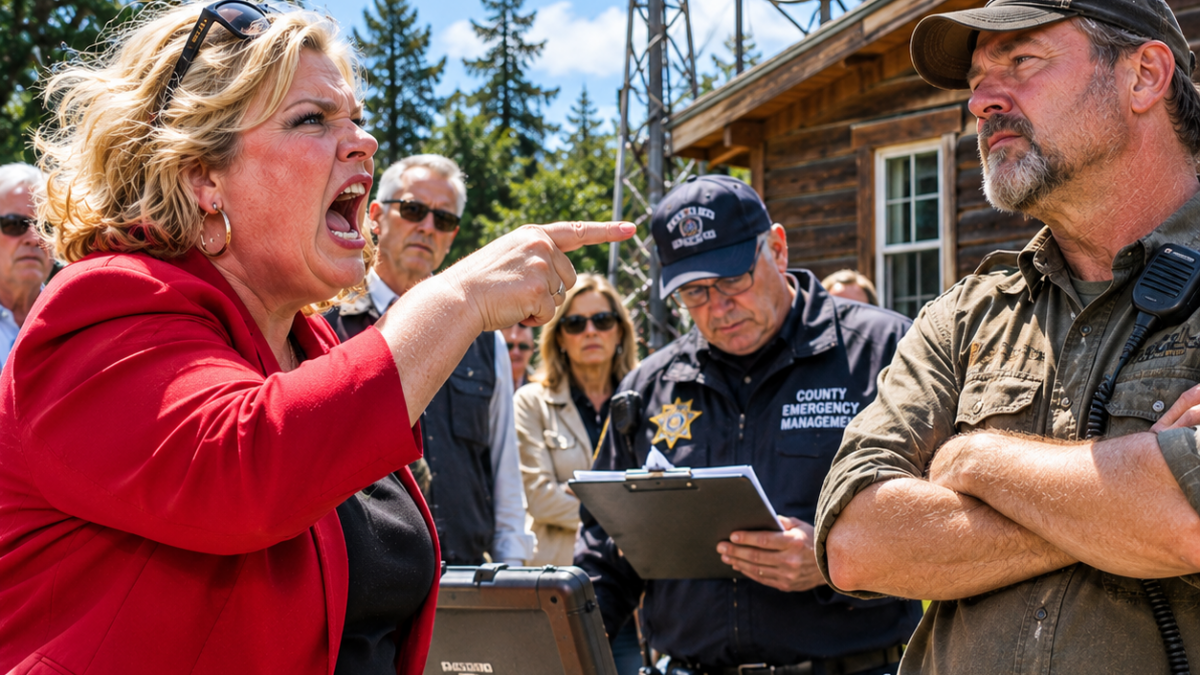
The new HOA president gave me until Friday at 5:00 p.m. to tear down the antenna beside my house, then promised she’d send a contractor onto my property and put a lien on my home if I refused.
When I showed her the signed approval from the previous board, my FCC license, and the county paperwork explaining why the antenna existed, Karen barely looked at it before telling me that none of it mattered because she was “the board now.”
What she didn’t know was that if the hills around Oak Ridge ever went dark during a wildfire or major storm, the piece of metal she was so desperate to destroy was one of the systems county emergency officials expected to still be talking.
“That unsightly metal monstrosity comes down by Friday.”
Karen Peterson pointed toward the antenna mounted discreetly beside my house.
“Five o’clock.”
I looked from her to the mast.
It barely cleared the roofline.
A Diamond dual-band vertical antenna.
Slim.
Professionally mounted.
Grounded.
Properly fed.
Nothing about it was dangerous or improvised.
Karen looked at it as though I’d installed a missile silo in the azaleas.
“And if it doesn’t?” I asked.
She smiled.
“I’ll have it removed.”
“From my property?”
“Yes.”
“You’re planning to send a contractor onto my property?”
“The HOA has enforcement authority.”
“And then?”
“We’ll bill you for the work.”
She tapped her clipboard.
“If you don’t pay, we’ll pursue a lien.”
That was the moment the conversation stopped being funny.
My name is Jack Callahan.
I’d spent twenty-two years in the Army Signal Corps, most of them solving communication problems in places where communication systems had an unfortunate habit of disappearing exactly when people needed them most.
Mountains.
Flood zones.
Storm-damaged towns.
Field hospitals.
Forward positions.
I’ve watched sophisticated networks become useless because one tower lost power.
I’ve also watched a trained operator with a battery, a radio, a good antenna, and discipline keep information moving when almost everything else failed.
Radio was never just a hobby to me.
Before Sarah and I bought our house in Oak Ridge Estates, I had already coordinated with the Harrison County Office of Emergency Management.
The elevation was good.
The location had useful coverage.
My station could operate from backup power.
The county designated it as an auxiliary emergency communications node supporting local amateur-radio emergency networks.
The previous HOA board knew that.
I’d submitted everything before installation.
Equipment specifications.
Location.
Mast height.
Photographs.
County letter.
Architectural application.
The former HOA president approved it in writing three months before Karen won a poorly attended election promising to restore what she called “aesthetic purity.”
Three weeks into her presidency, she was standing on my lawn trying to erase that approval.
I wiped dirt from my hands.
“Karen, the antenna is licensed radio equipment. It was approved by this association before it went up.”
“I am aware of what the former board did.”
“Then what’s the violation?”
“Article Four. Section Three. Aesthetic nuisance.”
“You approved satellite dishes.”
“They’re different.”
“How?”
“They don’t look like that.”
I almost smiled.
Instead, I walked toward my porch.
“Wait here.”
Sarah was watching through the kitchen window.
I gave her a small nod.
Don’t worry.
Not yet.
I returned carrying a folder.
First page:
HOA architectural approval.
Stamped.
Signed.
Second:
My amateur-radio license.
Third:
Letter from Harrison County Emergency Management.
Karen barely glanced at them.
“I don’t care about your paperwork.”
That sentence told me everything.
“You should.”
“This is our community.”
“My house is in your community.”
I pointed at the papers.
“That doesn’t mean you can pretend your own records don’t exist.”
Her face reddened.
“Are you threatening me?”
“No.”
I closed the folder.
“I’m telling you to slow down before you create a problem you don’t understand.”
Her expression became almost triumphant.
“Friday.”
She stepped backward.
“Five p.m.”
Then she pointed at the antenna one last time.
“If it’s standing after that, it’s coming down.”
She marched toward her golf cart.
Sarah stepped outside as soon as Karen drove away.
“She really threatened a lien?”
“Yes.”
“Over the antenna?”
“Yes.”
Sarah looked up at it.
Then at me.
“What are you going to do?”
I watched Karen’s golf cart disappear around the curve.
“For the next twenty-four hours?”
“Yes.”
“Nothing dramatic.”
Sarah folded her arms.
“And after that?”
I picked up the folder Karen had refused to read.
“I’m going to make sure every person involved has the chance to read what she didn’t.”
The first certified violation notice arrived the next morning.
By the time I reached the final paragraph, I knew Karen had made one mistake worse than threatening the wrong antenna.
She had put everything in writing.
PART 2
The envelope cost the HOA several dollars to send approximately three hundred yards.
That detail amused me.
The contents did not.
The notice described my antenna as an:
**UNAPPROVED METALLIC STRUCTURE / AESTHETIC NUISANCE**
Initial fine:
$250.
If not corrected within seven days:
$500.
After that, additional penalties.
The final paragraph repeated Karen’s threat.
If I failed to comply, the association claimed it could arrange removal and charge the cost back to me.
It also reserved the right to secure collection through available lien remedies.
The notice carried three signatures.
Karen.
Barb.
Janice.
The Architectural Review Committee.
I knew two things immediately.
First, my antenna wasn’t unapproved.
Second, Karen was trying to create a new paper trail in which the old approval simply vanished.
That bothered me more than the fine.
People think military communications is about radios.
A lot of it is documentation.
Frequency plans.
Equipment logs.
Authentication procedures.
Maintenance records.
Network diagrams.
After-action reports.
If something fails during an emergency, “I thought we handled it” doesn’t mean much.
The record matters.
I spread Karen’s notice on my desk.
Beside it:
Original architectural application.
Stamped approved.
Signed by former HOA president.
County OEM letter.
Station designation.
My amateur-radio license.
Equipment specifications.
Installation photographs.
Grounding diagram.
I created a timeline.
Application submitted.
County support letter attached.
Approval issued.
Installation completed.
Karen elected.
First verbal threat.
Formal violation.
The sequence was clean.
Sarah brought coffee.
“You’ve got the face.”
“What face?”
“The one you used when somebody sent you an impossible problem and you decided the problem had personally offended you.”
“I don’t have a face.”
“You absolutely have a face.”
She looked at the desk.
“What now?”
“Response.”
I wrote it professionally.
No insults.
No references to dictatorships.
No suggestion that Karen’s tracksuit should itself require architectural approval.
I acknowledged receipt.
Then attached the prior approval.
I quoted the date.
Highlighted the signature.
I included the county emergency-management letter.
Then I addressed the radio issue.
The source material Karen was relying on oversimplified one legal point, and I wasn’t interested in bluffing.
Federal policy strongly favors reasonable accommodation of amateur radio by local governments, but private HOA covenants aren’t automatically erased simply because somebody holds an amateur license.
My stronger position was simpler.
The association had already reviewed and approved the installation.
The antenna complied with that approved plan.
The county had formally documented its public-safety role.
If the new board wanted to challenge it, it needed an actual lawful basis.
Not one woman’s opinion.
I wrote:
**The antenna was installed only after written architectural approval was granted by Oak Ridge Estates. No material deviation from the approved plans has occurred. Please identify the governing provision authorizing the current board to retroactively rescind a completed approval absent misrepresentation, safety defect, or construction deviation.**
Then:
**Because the station also participates in Harrison County emergency communications planning, please provide any proposed alteration or removal order in writing so it may be reviewed by the appropriate county personnel before action is taken.**
Then:
**Pending that review, I request immediate rescission of the fine and written confirmation that no person or contractor will enter my property or interfere with the approved installation.**
Copies.
Attachments.
Three complete packets.
I drove one to the property-management company.
The receptionist accepted the envelope.
“I need acknowledgment.”
She looked confused.
“A what?”
“A signed receipt showing the packet was delivered.”
“We don’t normally—”
“I’m not asking you to agree with it.”
I smiled.
“Just confirm you received it.”
She disappeared into the back.
The property manager came out.
Mid-fifties.
Tie slightly crooked.
Expression of a man already regretting his career choices.
He read my receipt form.
“You understand my signature doesn’t mean the HOA accepts your argument.”
“Absolutely.”
“It means only that we received this.”
“Exactly.”
He signed.
I thanked him.
At five-forty that evening, an email appeared.
The property manager had forwarded Karen’s response.
Subject:
**FWD: CALLAHAN’S NONSENSE**
Body:
**He can send all the fancy paperwork he wants. This is our community, not the county’s. The fine stands. Double it next week. I want counsel involved. We are not backing down.**
I stared.
Then printed it.
Sarah read over my shoulder.
“She actually wrote that?”
“Yes.”
“She knows the management company can see it.”
“Yes.”
“She knows you can see it.”
“Apparently.”
“She said she doesn’t care about the county.”
“Basically.”
Sarah sat down.
“This woman is going to exhaust herself being stupid.”
I filed the email.
Digital folder:
**EXHIBITS**
File:
**01_KAREN_EMAIL_DISREGARD_APPROVAL.pdf**
Sarah looked at the filename.
“You’re enjoying this.”
“No.”
“You named it Exhibit.”
“Organization.”
“You used two digits.”
“Future-proofing.”
She groaned.
One week later, Karen kept her promise.
Second notice.
Fine:
$500.
This one was taped to our front door.
Public.
Deliberate.
I photographed it before removing it.
The letter came from HOA counsel.
Ten pages.
Much more professional.
It argued that the prior approval had been granted in error and that current leadership had authority to enforce existing covenants.
It demanded removal within ten business days.
Then came the line that changed my strategy.
**If the violation remains uncured, the association reserves the right to arrange entry onto the property for correction at the owner’s expense, subject to the governing documents and applicable law.**
That phrase was more cautious than Karen’s threat.
A lawyer had probably insisted on it.
But the message remained.
Take it down.
Or we’ll try to.
Sarah read the letter.
“They cannot just walk into our yard.”
“Not simply because Karen wants them to.”
“Are you sure?”
“Yes.”
“You sound more angry.”
“I am.”
She folded the letter.
“What do you need?”
I looked at her.
That question mattered.
For twenty-two years of Army life, Sarah had been the person on the other end of disruptions she didn’t choose.
Deployments.
Moves.
Phone calls.
Plans canceled.
She’d earned a quiet retirement too.
“I need you not to worry.”
She laughed once.
“Try again.”
“Fair.”
I sat beside her.
“I need you to tell me if this becomes too much.”
“Jack.”
“I’m serious.”
“Our house isn’t supposed to feel like a forward operating base.”
“I know.”
“And you have a tendency.”
“What tendency?”
“To become calm in a way that scares everybody.”
I smiled.
She didn’t.
“I’m not joking.”
“I know.”
“I don’t want to spend every day wondering whether contractors are going to show up.”
“They won’t get near the antenna without us responding.”
“That’s not the same as peace.”
No.
It wasn’t.
I took her hand.
“I’ll end it.”
“How?”
“I don’t know yet.”
“At least that’s honest.”
The next phase began with neighbors.
Not because I wanted an army.
Because people like Karen rarely start with the person who finally fights back.
They practice.
My neighbors, Paul and Linda Henderson, had watched our original confrontation while pretending to trim a hedge that did not need trimming.
I walked over one evening.
Paul smiled.
“Antenna still standing.”
“So far.”
Linda lowered her voice.
“We saw the notice on your door.”
“That’s what Karen intended.”
Paul shook his head.
“She fined us for a garden hose.”
“A hose.”
“Wasn’t coiled neatly enough.”
“How much?”
“Fifty.”
“You paid?”
“Of course.”
“Why?”
He shrugged.
“Fifty bucks was cheaper than making Karen part of our lives.”
There it was.
The economics of bullying.
Keep the penalty below the cost of resistance.
Most people surrender.
Not because the bully is right.
Because they have work the next morning.
Children.
Appointments.
Parents.
Bills.
Lives.
Karen had time.
That made her dangerous.
Then I visited Margaret Ellis.
Seventy-eight.
Widow.
Thirty years in Oak Ridge.
Her yard exploded with flowers and garden gnomes.
Karen hated both.
Margaret didn’t lower her voice.
“Queen Karen after you?”
“Yes.”
“What is it?”
“Antenna.”
Margaret laughed.
“Of course.”
“You’ve had trouble?”
She disappeared inside.
Returned carrying a cardboard box.
Letters.
Violation notices.
Warnings.
Fines.
Gnomes.
Bird feeders.
Exterior trim.
Flower pots.
One notice accused her yard of “excessive visual variety.”
I read it twice.
“That’s a real phrase?”
Margaret pointed.
“Her phrase.”
“How much have you paid?”
“Not much.”
“You fought?”
“At first.”
She sighed.
“Then I learned she’ll just find something else.”
“What happened when you appealed?”
“Karen chaired the appeal.”
I looked at her.
“She issued the violation.”
“Yes.”
“And chaired the review.”
“Yes.”
“That’s not much of an appeal.”
Margaret smiled.
“You’re catching on.”
She told me about families who moved.
A young couple tired of fines.
A man who sold after years of disputes over a work truck.
A widow threatened with collection over lawn care during cancer treatment.
I stopped thinking about the antenna as an isolated fight.
When I got home, Sarah asked:
“Well?”
“Karen has a pattern.”
“I assumed.”
“No.”
I placed Margaret’s box on the table.
“A real pattern.”
The next morning, I requested financial records.
HOA budgets.
Vendor contracts.
Board minutes.
Three years.
The bylaws gave homeowners inspection rights under stated conditions.
I followed them.
Written request.
Date.
Scope.
Purpose.
The management company responded first.
**We will forward your request to the board president for approval.**
I frowned.
Approval?
The governing documents did not say Karen got to approve whether owners could exercise a record-inspection right.
Three hours later:
**REQUEST DENIED. THE BOARD DOES NOT FIND THE RECORDS RELEVANT TO YOUR CURRENT ARCHITECTURAL VIOLATION.**
Signed:
Karen Peterson.
I almost laughed.
She had just turned my antenna dispute into a financial-governance dispute without me doing anything.
I opened the bylaws.
Article Ten.
Financial Records.
Members in good standing could inspect records after written notice.
No relevance test.
No president veto.
I forwarded her denial to myself.
Saved.
Printed.
Exhibit 02.
Then I called David Monroe.
We had attended an advanced Signal Corps course together years earlier.
He left service, used the GI Bill, went to law school, and specialized in administrative and contract disputes.
“Jack.”
“David.”
“How retired are you?”
“Depends.”
“HOA.”
He burst out laughing.
“I’m hanging up.”
“Emergency antenna.”
He stopped.
“Go on.”
I gave him the chronology.
Approval.
Karen.
Fines.
Removal threat.
County emergency agreement.
Record denial.
Margaret.
Vendor questions.
When I finished, he said:
“This woman is aggressively collecting bad decisions.”
“That’s my assessment.”
“Send everything.”
An hour later:
“Jack.”
“Yes.”
“First, stop using PRB-1 like it’s a magic sword.”
“I wasn’t.”
“Good. Private covenants are more complicated than local zoning.”
“I know.”
“Your best arguments are the written approval, reliance, governing documents, selective enforcement, property rights, and the county relationship.”
“Agreed.”
“Second, her denial of records is interesting.”
“Very.”
“Third, we need facts on vendors before saying anything publicly.”
“Agreed.”
“Fourth…”
He paused.
“I hate bullies.”
“I remember.”
“I’ll help.”
“Fee?”
“Professional courtesy.”
“No.”
“Yes.”
“David.”
“Let me enjoy this.”
He reviewed the HOA bylaws overnight.
Then called.
“Get ready.”
“For?”
“Board liability.”
He found several sections requiring directors to act in good faith and in the association’s interest.
Insurance might protect board members for legitimate decisions.
It might not protect intentional misconduct or knowingly unlawful acts.
Not automatic personal ruin.
But enough exposure that responsible directors should care.
“Your move isn’t suing Karen tomorrow,” David said.
“What is it?”
“Educate the rest of the board.”
“How?”
“Give them the evidence individually.”
He began drafting.
Before we sent anything, I called Harrison County OEM Director Richard Evans.
Former Marine.
The kind of man who sounded annoyed even when ordering lunch.
“Evans.”
“Jack Callahan.”
“What’s broken?”
“HOA wants my antenna removed.”
Silence.
Then:
“What?”
I explained.
Evans’ first response was not dramatic.
“Is your station still operational?”
“Yes.”
“Backup power?”
“Yes.”
“County equipment affected?”
“No.”
“Good.”
Then his voice hardened.
“You said they’re threatening physical removal?”
“In writing.”
“Send me everything.”
“I will.”
“When’s their next board meeting?”
“Not scheduled.”
“Then we’ll make sure they understand before anything happens.”
“Evans, I don’t want the county threatening my HOA.”
“I’m not threatening anybody.”
“You sound like you are.”
“I sound like a Marine.”
Fair.
He continued.
“We have wildfire season approaching. Your site is one of our auxiliary communication points. If they alter something we’ve planned around, I want advance notice.”
“I agree.”
“I’ll send a letter.”
“And keep it factual.”
“Son, I have been writing factual angry letters longer than you’ve owned a radio.”
Also fair.
His letter arrived the next day.
Official Harrison County letterhead.
It did not claim my antenna was untouchable federal infrastructure.
It said something more useful.
My station was part of the county’s emergency auxiliary communications plan.
The county relied on continued readiness.
The antenna had been disclosed before installation.
Any action likely to disable the station should be coordinated with OEM so emergency planning could be adjusted.
Professional.
Measured.
Impossible to dismiss as me exaggerating.
Meanwhile, my financial digging produced the first connection.
Landscaping.
Lush Lawns LLC.
Contract renewed three consecutive years.
Cost up roughly twenty percent annually.
No obvious competitive-bid record in the minutes I could obtain.
Registered agent:
Gary Peterson.
Karen’s brother-in-law.
I stared at the screen.
Then called Frank Morris.
Retired accountant.
Neighbor.
One of the people who had replied after Margaret quietly circulated my email.
Frank came over.
I showed him the records.
He adjusted his glasses.
“That proves relation.”
“Yes.”
“Not corruption.”
“I know.”
“Good.”
He looked again.
“What did landscaping cost three years ago?”
I showed him.
“And now?”
Another number.
He whistled.
“Services changed?”
“Not according to budget description.”
“Board minutes?”
“Still trying to get them.”
He nodded.
“We need documents.”
That became our rule.
No rumor.
Documents.
A small email group formed.
Margaret.
Hendersons.
Frank.
A young mother fined over sidewalk chalk.
A contractor who had challenged a roof-color rejection.
Tom Wilson, a younger board member, was not yet part of it.
He would be.
David’s legal package went out forty-eight hours later.
Not just to Karen.
Every director.
Personal delivery.
Signature required.
The opening pages addressed my antenna.
Prior approval.
Completed installation.
No deviation.
County OEM interest.
Lack of clear authority for retroactive rescission.
Threatened property entry.
Then selective enforcement.
Margaret affidavit.
Henderson hose fine.
Other documented cases.
Then records.
Article Ten.
My written request.
Karen’s denial.
Demand for inspection.
Finally:
Lush Lawns.
No accusation of theft.
Just:
**Please provide all contracts, bids, board approvals, disclosures of related-party relationships, invoices, and payment records associated with Lush Lawns LLC.**
Then litigation hold.
Preserve:
Emails.
Texts.
Contracts.
Meeting notes.
Vendor correspondence.
Architectural files.
Financial records.
No deletion.
No alteration.
Every director received one.
That evening, Sarah found me watching our front security camera.
“Expecting something?”
“Karen.”
“Jack.”
“I know.”
“You’re doing it again.”
“What?”
“Mission.”
I closed the camera feed.
“Sorry.”
She sat beside me.
“Tell me what happens next.”
“The board reads.”
“And?”
“Some panic.”
“You sound sure.”
“Because Karen’s been telling them one story.”
“What story?”
“I’m an uncooperative homeowner with an illegal antenna.”
“And the packet?”
“Shows that’s not the whole story.”
Sarah leaned back.
“So we wait.”
“Yes.”
The phone rang the next morning.
Unknown number.
“Mr. Callahan?”
“Yes.”
“This is Tom Wilson. HOA board.”
His voice sounded like he’d been awake all night.
“I got the letter.”
“I assume everyone did.”
“I didn’t know.”
“About?”
“Most of it.”
I said nothing.
He continued.
“Karen said your antenna went up without valid permission.”
“I attached the approval.”
“I saw it.”
“She said the county letter was something you got afterward.”
“The date is on it.”
“I saw that too.”
Another pause.
“I don’t want to lose my house over this.”
“You aren’t going to lose your house because you received a lawyer letter, Tom.”
“You know what I mean.”
“I do.”
“What do you want?”
That was important.
“First, don’t ask me.”
“What?”
“You serve the homeowners.”
“Okay.”
“Read the bylaws. Demand the records. Ask whether Karen has authority to disregard an existing approval. Ask why the board is paying a company related to her family without clear disclosure.”
Tom breathed.
“And the antenna?”
“Ask the county.”
“I thought you wanted us to drop the violation.”
“I do.”
“But I want you to understand why.”
That silenced him.
Finally:
“I’ll call Maria.”
Another board member.
“Good.”
“Barb and Janice won’t listen.”
“Then don’t hide anything from them either.”
“Why?”
“Because this isn’t a conspiracy.”
I meant it.
The process needed sunlight.
Karen’s response came two days later.
Emergency homeowners meeting.
Five days’ notice.
Subject:
**DEFENDING OAK RIDGE COMMUNITY STANDARDS**
She framed me as a threat.
An outsider.
Litigious.
Selfish.
She warned that homeowners might face increased legal expenses because one resident refused to follow “the same rules everyone else follows.”
Sarah read the email.
“She wants a crowd.”
“Yes.”
“Will she get one?”
“Yes.”
“Does she think that’s good for her?”
“Yes.”
Sarah smiled.
“She’s never met Evans.”
Director Evans couldn’t attend.
County budget hearing.
But when I told him about the meeting:
“Video.”
“Are you sure?”
“I’ll make five minutes.”
“Keep it factual.”
“Jack.”
“Yes?”
“Stop telling me to keep things factual.”
Meeting night.
Clubhouse packed.
More people than chairs.
Karen sat center.
Pink had been replaced by dark red blazer.
Barb and Janice flanked her.
Tom and Maria sat farther away.
Physical distance.
Political distance.
Sarah front row.
Margaret beside her.
Frank with financial summary.
I sat three rows back.
Karen opened.
“Neighbors, we are here tonight because Oak Ridge is under attack.”
I looked at Sarah.
Her eyebrow rose.
Karen continued.
“For years, this community has maintained high property values because we apply standards consistently.”
Margaret coughed.
Loudly.
Karen ignored her.
“One resident has erected an industrial antenna structure and now threatens litigation rather than comply.”
I waited.
No mention of prior approval.
No county letter.
No record denial.
No relative’s contract.
She held up David’s packet.
“This is intimidation.”
Tom shifted.
Maria looked down.
Karen finished:
“If we allow one homeowner to place himself above the rules, there will be no rules.”
Scattered applause.
Very scattered.
Then she opened comments.
Margaret stood first.
Karen looked annoyed.
“Please state your name.”
“You’ve fined me enough times to know my name.”
Laughter.
Karen’s jaw tightened.
Margaret held up her folder.
“I’ve lived here thirty years.”
She spoke about gnomes.
Bird feeders.
Trim paint.
The appeal Karen chaired against her own violation decision.
Then she said:
“I used to love walking to the mailbox.”
Her voice changed.
“Now every time I see a cream envelope, I wonder what part of my home she has decided belongs to her.”
The room quieted.
“That isn’t community.”
She sat.
Frank stood.
No emotion.
Just spreadsheet.
“Landscaping expenditure three years ago.”
Number.
“Two years ago.”
Higher.
“Current.”
Higher again.
“Can the board explain the increase?”
Karen interrupted.
“This meeting concerns Mr. Callahan’s antenna.”
Frank looked at her.
“Association finances concern every member.”
Applause.
He continued.
“Can the board confirm whether Lush Lawns LLC was competitively bid?”
Karen:
“Vendor selection is an operational matter.”
“Can you confirm whether Gary Peterson is related to you?”
Silence.
Then:
“He is my brother-in-law.”
Noise.
Frank nodded.
“Was that relationship formally disclosed before contract renewal?”
Karen’s face reddened.
“That is irrelevant.”
Someone shouted:
“No, it isn’t!”
Another:
“That’s our money!”
Karen banged a gavel.
“Order!”
Then Tom spoke.
“Karen.”
She turned.
“I asked for the records yesterday.”
Her eyes narrowed.
“You had no authority.”
“I am a director.”
“The president controls administrative access.”
Tom looked toward homeowners.
“No.”
First open break.
Maria spoke:
“I asked too.”
Karen stared.
Maria continued:
“And I support releasing them to the board and members as required.”
The room erupted.
Karen’s control was cracking before I even stood.
Then it was my turn.
I carried one folder.
Laptop.
No giant binder.
I plugged in.
First slide.
Architectural approval.
Karen spoke immediately.
“That approval was issued in error.”
I ignored her.
“Fact one.”
I pointed.
“My antenna was approved before installation.”
Next slide.
Photograph of antenna exactly as installed.
“Fact two.”
“I built what was approved.”
Next.
County OEM letter.
“Fact three.”
“My station participates in Harrison County auxiliary emergency communications.”
Next.
Original Karen violation.
“Fact four.”
“The new board attempted to retroactively treat the completed installation as unapproved.”
I faced the room.
“This is not a question of whether everyone should be allowed to build anything they want.”
I looked toward Karen.
“It is a question of whether written approval means anything after leadership changes.”
That landed.
Homeowners understand that problem.
If approvals disappear every election, no project is safe.
Karen leaned toward microphone.
“Previous boards can make mistakes.”
“Yes.”
I nodded.
“They can.”
She seemed surprised.
“If the installation is unsafe, show the defect.”
Silence.
“If I misrepresented the plans, show the difference.”
Silence.
“If the approval was beyond the board’s authority, show that provision.”
Silence.
“What you cannot do is simply say you don’t like how it looks and pretend the approval never happened.”
Applause.
Then the projector displayed Director Evans.
He appeared from a conference room.
Uniform shirt.
County insignia.
“Good evening.”
Room quieted.
“My name is Richard Evans. I direct Harrison County’s Office of Emergency Management.”
He was concise.
Perfect.
He explained hurricanes and wildfires could disrupt cellular systems.
Power failures could take down repeaters.
Commercial networks were robust, not invincible.
Auxiliary amateur-radio systems provided an additional layer.
“My office does not control your HOA.”
Important.
“Nor am I here to tell you how to run your private association.”
Karen relaxed slightly.
Then Evans continued.
“But Mr. Callahan’s home station is part of our emergency communications planning.”
She stopped relaxing.
“The county knew about the antenna before installation.”
He held up his copy of the letter.
“I provided this letter.”
Then:
“If this station is going to be disabled or materially altered, my office needs to know because we must adjust our contingency plan.”
A homeowner asked:
“Would it actually be used during an emergency?”
Evans replied:
“It already has been used in county exercises.”
Another:
“If cell towers fail?”
“That’s one scenario.”
Then he looked straight into the camera.
“Emergency systems are built around redundancy. Nobody should remove redundancy casually.”
He didn’t insult Karen.
Didn’t need to.
“Thank you.”
Screen went dark.
Silence.
Then a woman in the back said:
“So why are we trying to tear it down?”
Karen answered:
“Because community standards still matter!”
Wrong answer.
Maybe there was a better one.
She didn’t find it.
Tom stood.
“I move that the antenna enforcement action be suspended immediately pending legal and county review.”
Maria:
“Second.”
Karen grabbed the gavel.
“You cannot make that motion during homeowner comment.”
Tom looked toward property manager.
The manager cleared his throat.
“The board can recess and convene an emergency board session if properly noticed under applicable provisions.”
Karen snapped:
“No.”
Tom said:
“Yes.”
Homeowners cheered.
I unplugged my laptop.
Sarah stood.
“Where are you going?”
“Home.”
“But this is the best part.”
“Our part is done.”
She smiled.
“You’ve been waiting months to say that.”
We walked out before the shouting began.
Behind us, Oak Ridge started reclaiming itself.
The next morning:
Tom called.
Karen’s enforcement authority suspended.
All antenna fines frozen.
Financial audit approved three votes to two.
Records release ordered.
Karen furious.
Barb and Janice still supported her.
Tom appointed interim compliance contact.
He sounded exhausted.
“Jack.”
“Yes?”
“How did she do this for years?”
“People let her.”
“That’s depressing.”
“It’s fixable.”
The financial records began arriving.
Frank came over.
We spent three nights reviewing copies.
Lush Lawns.
Payments.
Invoices.
Renewals.
No meaningful competitive-bid record.
Gary Peterson.
Karen’s brother-in-law.
Then other items.
“Beautification consulting.”
Vendor with weak business footprint.
Clubhouse repairs priced well above comparable estimates.
Personal-looking purchases coded vaguely.
Nothing yet justified calling it criminal.
But enough for an independent forensic audit.
David advised:
“Stop there.”
“Meaning?”
“Let professionals take the financial investigation.”
“Agreed.”
I was relieved.
I didn’t want to become an amateur prosecutor.
Then reporter Bill Peterson called.
I hadn’t contacted him yet.
Margaret had told someone.
Someone told someone.
Local journalists are good at that.
“You’re the radio guy.”
“Apparently.”
“I heard the HOA is trying to remove a county emergency antenna.”
“That’s incomplete.”
“Good. Complete it.”
I hesitated.
David said media could help if we stayed factual.
So I gave Bill documents.
Approval.
County letter.
Violation.
Karen’s email saying the county didn’t matter.
Record denial.
No private gossip.
No unsupported fraud accusations.
Bill interviewed Evans.
Frank.
Margaret.
Then Karen.
That was where she destroyed herself.
Bill approached her outside a grocery store.
Camera phone recording openly.
“Ms. Peterson, do you have a comment regarding allegations that you attempted to remove a county emergency communications antenna despite prior HOA approval?”
Karen should have said:
“No comment. Speak with counsel.”
Instead:
“Mr. Callahan is a liar.”
Then:
“He is manipulating the county.”
Then:
“The previous board was incompetent.”
Then:
“I am this HOA.”
Bill asked:
“What do you mean?”
Karen said:
“The rules are what I say they are because I was elected to enforce them.”
That clip ended up online.
Even I winced.
Sarah watched twice.
Then:
“She sounds worse than you described.”
“I was trying to be fair.”
“No, you weren’t.”
“Maybe.”
Sunday paper.
Front page local section.
**EMERGENCY RADIO FIGHT EXPOSES DEEPER HOA DISPUTE**
Thankfully, Bill’s editor rejected the more ridiculous headline he’d joked about.
The article laid out both sides.
Karen’s aesthetic argument.
My prior approval.
OEM role.
Financial-record dispute.
Related-party landscaping relationship.
Resident complaints.
It did not declare Karen guilty of fraud.
Good journalism.
The effect was still devastating.
By Sunday afternoon, Karen’s support collapsed.
Barb called Tom.
Wanted distance.
Janice stopped answering Karen.
The full board convened without Karen after counsel advised an emergency governance response was necessary.
They formally suspended her presidency pending a membership vote.
Tom became interim president.
Their attorney sent David a letter.
All antenna fines rescinded provisionally.
No contractor would enter my property.
No lien.
Full financial audit.
Negotiations on written apology.
I should have felt victorious.
Instead, I slept ten hours.
Conflict is tiring even when you’re winning.
Sarah woke before me.
When I came downstairs, she had removed the folder pile from the kitchen.
“Where is everything?”
“Your office.”
“Why?”
“I want my table back.”
I looked at the empty table.
Coffee.
Flowers.
Normal.
“Fair.”
She put a hand on my chest.
“Are we done?”
“Almost.”
“I don’t want almost for another six months.”
“Neither do I.”
“Then don’t keep fighting after you’ve won.”
That became important later.
The membership vote was scheduled ten days later.
Every procedural requirement followed.
Notice.
Agenda.
Quorum.
Proxy rules.
Counsel present.
Nobody wanted Karen challenging the outcome later.
The clubhouse was packed again.
Karen came.
Black pantsuit.
Binder.
No golf cart.
No smile.
Tom opened.
“Tonight’s sole membership question is removal of Karen Peterson from the Oak Ridge Estates board.”
Karen demanded to speak first.
Tom allowed it.
Five minutes.
She used nine.
She talked about standards.
Sacrifice.
Hours spent volunteering.
Property values.
Ungrateful residents.
Outside agitators.
Government intimidation.
Then she held up a photograph of my antenna.
“This is how it started.”
I looked at it.
Slim antenna against blue sky.
I almost felt sorry for her.
She had chosen that hill to die on politically.
Not because the antenna harmed anyone.
Because I had told her no.
Margaret spoke next.
Short.
“My gnomes did not destroy property values.”
Laughter.
Then:
“But fear destroyed our community.”
Silence.
Frank:
“Financial transparency is not rebellion.”
Tom:
“Board service is not ownership.”
Maria:
“Disagreement is not disloyalty.”
Then homeowners voted.
Paper ballots.
Counted publicly.
Karen removed overwhelmingly.
Not unanimously.
Three homeowners opposed.
That was okay.
Democracy doesn’t require perfect theater.
Tom announced:
“Motion carries.”
Karen remained seated.
For several seconds.
Then stood.
“You’ll regret this.”
Nobody shouted.
She left.
The door closed.
The room exhaled.
Tom’s next motion:
“Formally recognize the prior approval of Mr. Callahan’s antenna and terminate all enforcement.”
Passed.
Second:
“Void all associated fines.”
Passed.
Third:
“Provide written apology.”
Passed.
Fourth:
“Continue independent audit.”
Passed.
Fifth:
“Review enforcement and appeal procedures.”
Passed.
Then Margaret raised her hand.
“Yes?” Tom asked.
“I move that nobody ever be allowed to fine a seventy-eight-year-old woman for garden gnomes again.”
The room erupted in laughter.
The association lawyer leaned toward Tom.
“Probably don’t phrase the policy exactly that way.”
Margaret shrugged.
“Coward.”
Even counsel laughed.
The audit took months.
It did not produce the instant movie-style revelation everyone expected.
Some questionable expenses had legitimate explanations.
Others did not.
Lush Lawns’ pricing was materially above independent bids.
Related-party disclosures were inadequate.
Several consulting expenses lacked clear documentation.
Some charges under a beautification account appeared to benefit projects connected closely to Karen rather than shared community needs.
The auditors referred certain items for further legal review.
The state authority responsible for nonprofit and association-related complaints received the findings.
Investigators looked deeper.
Eventually, evidence supported formal allegations of financial misconduct involving Karen and her brother-in-law.
The process was slow.
Interviews.
Records.
Accounting.
Lawyers.
No dramatic raid.
No helicopter.
No handcuffs at the HOA meeting.
Reality is usually less cinematic and more durable.
Karen ultimately resolved the case through a plea arrangement involving restitution, financial penalties, and other court-ordered consequences.
Her brother-in-law faced his own penalties.
They sold their home.
Moved away.
I did not attend court.
I didn’t need the sight.
When Tom called to tell me the result, I said:
“Is the HOA getting restitution?”
“Yes.”
“Good.”
“That’s all?”
“What else?”
“I thought you’d want details.”
“No.”
“You’re sure?”
“I wanted her stopped.”
She was.
That was enough.
The new board had more important work.
Objective rules.
Independent appeals.
Financial transparency.
Competitive bids.
Mandatory disclosure of family relationships.
Two-signature expense approval above thresholds.
Published minutes.
Records access.
Term limits.
No board president could personally chair an appeal from an enforcement action they initiated.
That one should have existed from the beginning.
The board reviewed old fines.
Garden hoses.
Gnomes.
Sidewalk chalk.
Margaret received credits and refunds.
So did others.
Not every fine disappeared.
Some had involved actual violations.
Unsafe fencing.
Blocked drainage.
Abandoned vehicles.
The new board distinguished harm from dislike.
That mattered.
You don’t repair a bad system by replacing arbitrary strictness with no rules at all.
One evening Tom knocked on my door.
Envelope.
“What’s this?”
“Formal apology.”
I opened it.
The letter acknowledged prior approval of my antenna.
Confirmed all fines erased.
Acknowledged the board’s handling had been unnecessarily adversarial.
Recognized my station’s role in county emergency planning.
Then Tom handed me a smaller envelope.
“What’s this?”
“Board members collected it personally.”
“No.”
“Jack.”
“No.”
“David traveled here twice.”
“He chose to.”
“We want to cover his travel.”
“Use HOA funds if it’s legally appropriate.”
“We don’t want residents paying.”
I looked at him.
He smiled.
“Take it.”
I did.
Not because of money.
Because Tom needed to make amends.
Sometimes allowing someone to repair a mistake is part of repair.
Then Sarah had an idea.
Dangerous.
“Open house.”
I stared.
“No.”
“Yes.”
“For what?”
“The antenna.”
“People don’t care.”
“They were terrified of it two months ago.”
“They were terrified of Karen.”
“Same difference.”
She made a sign.
**MEET THE ANTENNA**
**SEE HOW EMERGENCY RADIO WORKS**
**COFFEE + DONUTS**
I objected to the phrase “meet the antenna.”
She ignored me.
Saturday morning, twenty people arrived.
Then forty.
Children.
Parents.
Margaret.
Tom.
Frank.
Hendersons.
Director Evans even stopped by briefly.
I took groups into my radio room.
Kenwood.
Icom.
Power supplies.
Backup batteries.
Digital interface.
Maps.
Frequency lists.
I explained:
“If cellular service works, use your cell phone.”
People laughed.
“I mean it.”
I pointed toward radios.
“Amateur emergency communication is not about pretending modern systems are useless. It’s about having another path when primary systems fail.”
A kid asked:
“Can you talk to space?”
“Yes.”
His eyes widened.
His mother sighed.
“Now we’re buying a radio.”
I showed them county repeaters.
Simplex.
Backup power.
ARES.
RACES.
How operators pass health-and-welfare traffic.
How shelters communicate when internet service disappears.
Margaret sat at microphone.
“What do I say?”
“Your call sign?”
“I don’t have one.”
“Then just say hello while we’re demonstrating locally.”
She pressed push-to-talk.
“Hello, this is Margaret, owner of the illegally diverse garden.”
Everyone laughed.
Another operator across the neighborhood replied:
“Margaret, your signal is five-nine and your gnomes remain unauthorized.”
The room exploded.
Even I laughed.
The antenna changed meaning.
Before:
Eyesore.
After:
Emergency station.
But I didn’t want the neighborhood worshipping it either.
It’s a tool.
Tools are useful when trained people maintain them.
The real system was human.
Operators.
Dispatchers.
Shelters.
First responders.
County staff.
Volunteers.
The antenna was one link.
Months passed.
Oak Ridge quieted.
Sarah’s flowers grew.
My azaleas survived my questionable gardening skills.
Karen’s old house sold to a family with three children and a dog.
The first week, sidewalk chalk covered their driveway.
Nobody wrote a violation.
The second week, a basketball hoop appeared.
Approved through a clear online form.
The third week, somebody left a garden hose visible overnight.
Civilization remained intact.
Margaret joined the board.
That terrified Tom.
“She wants revenge.”
“No.”
“She asked to chair architectural review.”
“That does sound dangerous.”
At her first meeting, a homeowner requested a small garden statue.
Tom looked at Margaret.
She said:
“Approve it before I buy him twelve gnomes.”
Approved.
Oak Ridge started feeling like the place Sarah and I thought we’d bought.
Then came the storm.
Not the giant once-in-a-century catastrophe people in viral stories prefer.
A serious autumn storm.
Strong line of thunderstorms.
Wind.
Heavy rain.
Lightning.
Trees down.
Power failures.
One cell site lost commercial power and backup capability.
Another network became congested.
County opened partial emergency operations.
At 6:12 p.m., Evans texted:
**ARES activation. Monitor assigned net.**
I went into the radio room.
Backup battery charged.
Generator ready.
Antenna outside moving slightly in wind.
Sarah appeared at the door.
“Need anything?”
“Coffee.”
“Of course.”
I checked in.
“Net control, this is K4—”
Call sign isn’t important.
What mattered was the response.
“Callahan station, copy. Stand by for shelter relay.”
Operators checked in from across Harrison County.
One near Pine Creek.
One at hospital.
One mobile.
One at shelter.
Another at volunteer fire station.
Routine.
Calm.
Disciplined.
Exactly how emergency communication should sound.
No dramatic screaming.
No movie dialogue.
Information.
Shelter had seventy-three occupants.
Needed updated weather.
Hospital backup systems stable.
Road blocked by fallen tree.
Fire department requested status check from a remote station.
One shelter’s internet failed.
We relayed a request.
I passed two messages through county channels.
Then one came from an area with weak coverage.
Medical supply request.
Nothing life-or-death.
But important.
I relayed it.
Acknowledgment came back.
Sarah placed coffee beside me.
She looked toward the window.
Lightning flashed.
“Is this what Karen wanted removed?”
I kept listening.
“Yes.”
“She really was ridiculous.”
I smiled.
“Quiet.”
“Sorry.”
The net continued for nearly four hours.
Power returned to most of the area before midnight.
Cell networks stabilized.
No major injuries.
No disaster.
Our station didn’t “save the county.”
I hate stories that make auxiliary systems sound magical.
It did exactly what it was supposed to do.
Provided another path.
Helped move information.
Added redundancy.
That was enough.
The next morning, Tom called.
“Jack.”
“Yes?”
“I heard your station was active.”
“For a few hours.”
“So the antenna actually—”
“Yes, Tom.”
“I know. Dumb question.”
“Little bit.”
He laughed.
Then:
“Thank you.”
“For what?”
“Being stubborn.”
I looked at the mast outside.
“Anytime.”
The storm changed the neighborhood’s attitude more than the legal fight.
People understood.
Not theoretically.
Practically.
The piece of metal Karen called a monstrosity had operated through a night when part of the county’s normal communications infrastructure was stressed.
Nobody proposed putting a plaque on it.
Good.
No monument.
Just respect.
The new HOA newsletter published a short emergency-preparedness section.
No worship.
It listed:
Weather radio.
Flashlights.
Medication.
Battery packs.
Emergency contacts.
County alert enrollment.
And:
**Oak Ridge includes trained volunteer amateur-radio operators supporting county emergency communications.**
Plural.
Because after the open house, two neighbors got licensed.
Then three.
The teenager who wanted to talk to space became the first.
His mother blamed me.
He eventually installed a small antenna.
Proper application.
Approved in five days.
Tom called.
“Do you realize what you’ve started?”
“Yes.”
“There’s another antenna.”
“Terrible.”
“Should we declare emergency aesthetic conditions?”
“I’ll call Evans.”
“Don’t you dare.”
By the following year, Oak Ridge had four licensed operators.
Not all emergency volunteers.
Fine.
Hobby first.
Community second.
People talked to distant stations.
Built kits.
Experimented.
One helped with a charity race.
Another worked severe-weather spotting.
The technology became normal.
Exactly what education does to fear.
David visited one afternoon.
He stood beneath my antenna.
“This thing caused all that?”
“Karen caused all that.”
“Fair.”
We sat on the porch.
“Any regrets?”
“Yes.”
He looked surprised.
“About fighting?”
“No.”
“Then what?”
“I should’ve involved the whole board earlier.”
“Maybe.”
“I treated Karen like the HOA.”
“She acted like she was.”
“That’s the problem.”
I thought about Tom.
Maria.
Even Barb eventually admitting she’d rubber-stamped decisions because challenging Karen was exhausting.
Organizations become dangerous when one personality replaces process.
David said:
“You also could’ve sued.”
“I know.”
“Still could have after the board backed down.”
“I know.”
“Would’ve won something.”
“Maybe.”
“Don’t miss the money?”
“No.”
“You’re getting boring.”
“Retirement.”
We watched a hawk circle above the neighborhood.
Then David said:
“You know what your real advantage was?”
“Documents.”
“No.”
“Patience.”
I looked at him.
“You let her make mistakes.”
“That’s documents.”
He groaned.
Sarah later told me he was right.
I didn’t like that.
Years in communications taught me that the worst time to transmit is when everybody is transmitting.
Noise buries information.
Karen was noise.
She shouted.
Threatened.
Sent letters.
Called meetings.
Talked to the newspaper.
Every escalation generated more noise.
I stayed relatively quiet.
Then presented a clean signal.
Approval.
County letter.
Bylaws.
Financial records.
Witnesses.
That’s why people heard it.
Maybe life works like radio more often than I realized.
The strongest voice isn’t always the clearest.
Oak Ridge annual meetings became boring again.
That’s praise.
Budgets.
Pool repairs.
Tree trimming.
Reserve study.
Insurance.
One year, homeowners argued for forty minutes about replacing clubhouse carpet.
I sat beside Margaret.
She whispered:
“This is awful.”
I smiled.
“This is perfect.”
“What?”
“Nobody’s threatening anyone’s house.”
She considered.
“Good point.”
Karen’s financial case ended eventually.
Restitution returned money to the HOA.
The board used part to rebuild reserves.
No giant celebration.
No public humiliation ceremony.
Good.
At one meeting, a homeowner suggested naming the emergency communications policy after me.
I refused before they finished.
Tom said:
“Callahan Communications Protection.”
“No.”
“Jack’s Antenna Clause.”
“Absolutely not.”
Margaret:
“The Unsightly Metal Monstrosity Rule.”
I almost approved that.
Officially, it became:
**Emergency and Public-Service Communications Equipment Policy.**
Boring.
Correct.
The policy did not create unlimited permission to build radio towers.
It established criteria.
Safety.
Setbacks.
Reasonable dimensions.
Professional installation where necessary.
Prior approvals honored.
Emergency-service needs considered.
Objective review.
Exactly what should have existed before Karen.
A year after the conflict, Oak Ridge held community appreciation day.
Park.
Barbecue.
Children.
Margaret brought flowers.
Tom burned hamburgers.
Frank complained about the budget for paper plates.
The Patel family from another street had moved in after the Karen era and knew only part of the story.
One father approached.
“Are you the radio guy?”
“I have a name.”
He laughed.
“Sorry. Jack?”
“Yes.”
“My daughter wants a license.”
“Excellent.”
“My wife blames you.”
“Also excellent.”
Sarah stood beside me.
“You’re enjoying this too much.”
“Public service.”
“You used to complain about people touching your equipment.”
“Still do.”
“Now you invite children.”
“Supervised.”
She smiled.
Then Margaret walked over carrying one rose.
“For Sarah.”
“Why?”
“Because your husband nearly started World War Three over an antenna.”
“I did not.”
Margaret ignored me.
Sarah accepted the rose.
“Thank you.”
Margaret looked at me.
“And because sometimes the quiet ones are useful.”
Then she walked away.
I watched her go.
Sarah said:
“She likes you.”
“Terrifying.”
The hardest lesson came later.
A new board member named Robert took office.
Good man.
Retired engineer.
One afternoon he called.
“We have a radio application.”
“Okay.”
“Twenty-five-foot mast.”
“That might be fine.”
“Neighbor objects.”
“Why?”
“View.”
“Then review the written standards.”
“I wanted your opinion.”
“My opinion doesn’t matter.”
“You’re the expert.”
That word bothered me.
“On radio.”
“Exactly.”
“Not on what your community should approve.”
Silence.
I continued.
“Don’t replace Karen’s personal preference with mine.”
Robert understood immediately.
“Right.”
“Apply the policy.”
They did.
The applicant adjusted placement six feet.
Neighbor satisfied.
Mast approved.
No war.
That’s what mature systems do.
They resolve ordinary disagreements without heroes.
One evening, years after Karen left, Sarah and I walked around the block.
Her house—former house—had flowering planters in front.
Bright yellow.
Karen would’ve hated them.
Children’s chalk across sidewalk.
A small flag.
Two bicycles on grass.
The family waved.
We waved back.
Sarah whispered:
“Property values?”
“Apparently destroyed.”
“Tragic.”
We kept walking.
At our driveway, we looked up.
Antenna still there.
Almost invisible against evening sky.
Sarah said:
“I barely notice it anymore.”
“That was always the goal.”
“Karen noticed.”
“Karen noticed everything.”
She took my hand.
“Do you ever wonder what happened to her?”
“Sometimes.”
“Do you hope she’s miserable?”
I thought.
“No.”
That surprised both of us.
“I did once.”
“I know.”
“But misery doesn’t fix anything.”
“No.”
“I hope she learned.”
Sarah squeezed my hand.
“That sounds annoyingly mature.”
“I hate it.”
The radio remained my sanctuary.
Some evenings I talked halfway across the country.
Sometimes overseas.
Sometimes nobody.
I listened.
Worked digital modes.
Checked emergency nets.
Helped new operators.
Radio is strange that way.
You can speak to someone thousands of miles away and still spend hours improving communication with the people next door.
The Karen fight did that to Oak Ridge.
Before her, neighbors were physically close but socially isolated.
She exploited that.
Margaret didn’t know Hendersons had been fined.
Hendersons didn’t know about other residents.
Tom didn’t know what Karen told homeowners.
Everyone received information one-on-one.
Controlled.
Once people compared signals, the pattern became obvious.
Networks matter.
Another lesson from the Signal Corps.
Never depend on one node.
Karen had made herself the single node.
All complaints.
All enforcement.
All information.
All authority flowed through her.
When that node failed, the community nearly failed with it.
The reforms distributed responsibility.
Committees.
Independent review.
Open documents.
Multiple signatories.
Public meetings.
Redundancy.
Again.
Same principle.
Good networks survive failure.
One spring, Evans retired.
His replacement invited me to the ceremony.
Evans hated ceremonies.
Perfect reason to attend.
He shook my hand.
“Still got that damn antenna?”
“Yes.”
“Good.”
“Still angry about Karen?”
“No.”
“Shame.”
“You sound disappointed.”
“I enjoyed being angry.”
He gave me an old county emergency-communications challenge coin.
“Don’t make this sentimental.”
“Wouldn’t dream of it.”
He looked serious.
“You know your station mattered that storm.”
“It relayed a few messages.”
“That’s what matters means.”
He was right.
Emergency communication is mostly unglamorous.
A road closure.
Supply request.
Shelter count.
Status update.
Small pieces.
Until one piece is missing.
Then everyone notices.
Karen only understood visible things.
Paint.
Hoses.
Antennas.
Gnomes.
She mistook visibility for importance.
Some of the most important systems in a community are barely visible.
Trust.
Backup plans.
Financial controls.
Emergency communication.
People willing to tell leaders no.
You don’t notice them when they work.
That’s why they’re easy to neglect.
Oak Ridge stopped neglecting them.
Sarah eventually earned her own amateur license.
I did not pressure her.
She will claim otherwise.
Her first contact was Margaret.
Margaret got licensed too, mostly out of spite.
Her call sign became infamous locally because she signed off:
“Gnome control clear.”
I objected.
Nobody listened.
During community field day, Sarah operated for two hours.
I stood behind her.
She turned.
“Stop hovering.”
“I’m not.”
“You are.”
“Check your—”
“Jack.”
I left.
Marriage preserved.
The antenna became hers as much as mine.
Maybe that was my favorite part.
It stopped being the object I defended.
It became simply part of our shared life.
The source story ends during another storm, and that’s where this one belongs too.
Because that is when everything finally made sense.
Years after Karen’s ultimatum, a line of storms moved over Harrison County.
Wind advisory.
Heavy rain.
Lightning.
Nothing unprecedented.
Enough to create problems.
By seven p.m., thousands of customers lost power.
One repeater remained available on backup.
Cell service became spotty in low areas.
County activated auxiliary communications.
I entered the radio room.
Sarah brought coffee without asking.
The antenna outside bent slightly in the wind.
Not dangerously.
Designed for it.
I checked backup battery.
Generator.
SWR.
Radio.
Then keyed microphone.
“County net, Callahan station checking in.”
Net control answered immediately.
“Callahan, copy. Stand by.”
Other voices followed.
Clear.
Weak.
Strong.
Some through repeaters.
Some direct.
A shelter opened at middle school.
Fire station requested road information.
Tree down near Route 17.
Medical oxygen delivery delayed by flooding.
County operations confirmed alternate route.
I relayed one message.
Then another.
Sarah sat in the doorway.
No anxiety.
No Karen.
No lawyer.
No letters.
Just radio.
At 9:43, commercial power returned to part of town.
At 10:15, cellular congestion improved.
At 11:02, the county reduced activation.
Before midnight, net control said:
“All stations, thank you. Return to normal monitoring.”
I leaned back.
Room quiet except cooling fans.
Sarah handed me fresh coffee.
“You know,” she said, “for an unsightly metal monstrosity, it works pretty well.”
I laughed.
Outside, rain streaked the window.
The antenna remained against the dark sky.
Not heroic.
Not dramatic.
A piece of aluminum and fiberglass connected to coax.
That’s all.
And not all.
Tools become meaningful because of what people do with them.
A hammer can build a wheelchair ramp.
A pen can issue an unfair fine or sign an apology.
A board can protect neighbors or intimidate them.
A radio antenna can look ugly to somebody who doesn’t understand it and indispensable to somebody waiting for a message during a storm.
Karen saw metal.
I saw connection.
The county saw redundancy.
Years later, Oak Ridge saw all three.
That’s why the ending satisfied me more than her removal ever did.
I didn’t need her to see the antenna working.
I didn’t need her to apologize personally.
I didn’t need a photograph of her leaving the neighborhood.
The system worked.
That was enough.
The homeowners controlled their board again.
Margaret’s gnomes remained.
Henderson’s hose could be coiled however he wanted.
The financial books were open.
Vendor relationships were disclosed.
Appeals were real.
Emergency communications policy was clear.
Children drew chalk on sidewalks.
And when the storm came, my station checked in exactly as it had been designed to do.
Karen once told me:
“This is my community.”
She was wrong.
It was ours.
That’s the mistake people make when they hold a little authority too long.
They begin to believe stewardship means ownership.
It doesn’t.
A board doesn’t own the neighborhood.
A president doesn’t own the rules.
An operator doesn’t own the airwaves.
An emergency director doesn’t own the system.
We are temporary custodians.
The rules are supposed to outlast our egos.
The systems are supposed to serve people who may never know our names.
That’s why I kept volunteering after the fight ended.
Not to prove Karen wrong.
Because the antenna had never been about Karen in the first place.
The next morning, the storm had passed.
Branches covered the street.
People came outside.
No major damage.
Tom walked by carrying a rake.
He looked up at the mast.
“Still standing?”
“Still standing.”
“Did county use it?”
“Yes.”
He smiled.
“Good.”
Then he kept walking.
No speech.
No applause.
Perfect.
I went inside.
Sarah had the emergency net log open.
She pointed at one entry.
“Medical supply relay.”
“Yeah.”
“Important?”
“Probably.”
“Life-saving?”
“No idea.”
She looked at me.
“That bothers you?”
“No.”
Why would it?
People like dramatic endings because they’re easy to understand.
The bad person loses.
The good person wins.
The antenna saves everybody.
Real life is quieter.
Maybe the oxygen reached someone who needed it.
Maybe another route would’ve delivered it anyway.
Maybe my relay saved five minutes.
Maybe thirty.
The point wasn’t that my station was the only system.
The point was that it was available.
Ready.
Working.
Exactly what emergency planning had asked of it.
That’s enough responsibility for one antenna.
I closed the log.
Outside, sunlight broke through clouds.
Water dripped from the mast.
For the first time in a long time, I remembered Karen’s original threat without anger.
“Friday at five.”
It seemed ridiculous now.
She had believed she could put a deadline on something she hadn’t bothered to understand.
But the deadline that mattered wasn’t hers.
It was the moment the next emergency arrived.
Would the station work?
Yes.
Would the county know how to reach us?
Yes.
Would the neighborhood allow the equipment to remain?
Now, yes.
Everything else was noise.
And in radio, when the noise fades and the signal comes through clean, you don’t argue with the static.
You simply listen.
That night, I turned the dial, heard another operator check in from across the county, and answered.
Clear.
Strong.
Reliable.
The antenna was still standing.
The community was still connected.
And after everything Karen had tried to tear apart, that quiet signal was the only ending I needed.
[END OF STORY]








