PART 2: HOA Offered Me $200K for My 10-Acre Family Farm—My Attorney Countered by Demanding Their Pool, Clubhouse, and Land
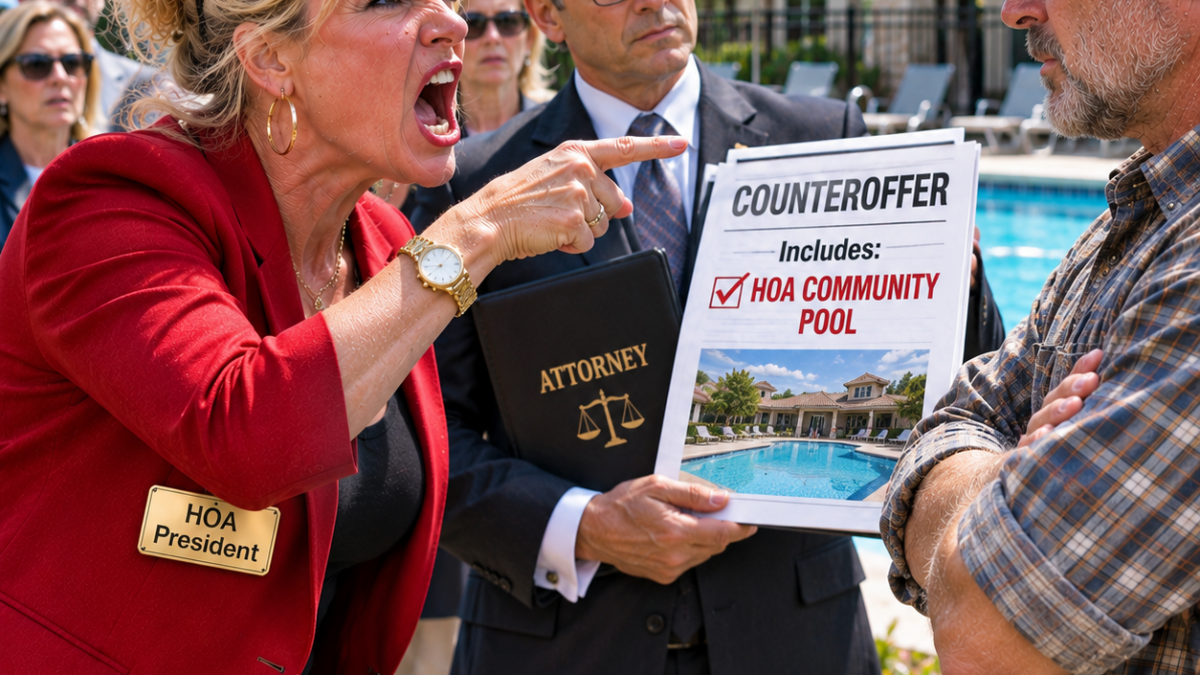
The afternoon Karen Whitmore stood on the other side of my great-grandfather’s stone wall and told me I had thirty days to accept two hundred thousand dollars for ten acres of Virginia land my family had held since the First World War—or watch the HOA bury me under fines, liens, and what she grandly called “county-backed eminent domain proceedings”—I realized she wasn’t trying to negotiate with me at all; she was trying to make surrender sound like paperwork.
She called my century-old barn a fire hazard, my pickup truck a commercial vehicle, my native wildflowers unapproved landscaping, and my farm an embarrassment to Harmony Creek Estates, but the thing that made my anger turn cold wasn’t the insult—it was the confidence in her face when she explained that the HOA had already deducted more than fifty thousand dollars in “violations” from its offer, as though a neighborhood association that had never owned, governed, or legally touched one square foot of my property could simply manufacture debt until my family’s land became cheap enough to steal.
I could have shouted, threatened her, or told her exactly where she could put her clipboard, but I had spent fifteen years in the Marine Corps learning that when someone wants you emotional, the most dangerous thing you can give them is patience—and as Karen walked back toward the immaculate streets of her subdivision, convinced she had just cornered a tired veteran and his family, I made one decision she would not understand until much later: if she wanted to put a price on my home, I was going to make her explain the price of hers.
My name is Jack Davies.
The ten acres Karen called a “hobby farm” had been in my family for generations.
My great-grandfather bought the original property after coming home from the Great War. Over the years, pieces were sold and divided, but those ten acres remained.
So did the barn.
My grandfather taught my father to repair engines inside it. My father taught me how to mend fence there. Some of my earliest memories were of sitting on an upside-down bucket while they argued over carburetors and handed me tools I was too young to identify.
After fifteen years in the Marines and two tours that left me with more memories than I cared to discuss, I came home wanting something solid.
The farm gave me that.
Sarah and I raised our daughter Lily there.
She learned to walk on the porch, fed calves from bottles, and knew which old gate had to be lifted slightly because it sagged in summer.
It wasn’t a development opportunity.
It was home.
For five years, life was quiet.
Then a developer bought the acreage around us.
Trees disappeared. Roads arrived. Then houses.
Harmony Creek Estates surrounded us on three sides, a polished collection of oversized homes, tiny lawns, matching mailboxes, and decorative ponds.
I didn’t resent them.
Their land was theirs.
Mine was mine.
Then Karen became HOA president.
The first complaints seemed almost funny.
My rooster crowed too early. Cattle created an odor. Our old fence didn’t match the subdivision.
Then came letters.
Wildflowers near my driveway were “unapproved landscaping.”
The barn’s weathered oak siding violated a rule requiring approved beige exterior colors.
My Ford F-250 became a “commercial vehicle.”
None of it mattered legally because my property had never been part of Harmony Creek.
The developer had built around us. Our parcel was excluded.
No deed restriction tied us to their association. No membership agreement. No dues. No jurisdiction.
Karen either didn’t understand that or didn’t care.
By the time she came to my stone wall with her final offer, the HOA claimed I owed more than fifty thousand dollars.
She held out a folder.
“Two hundred thousand dollars,” she said. “That is generous.”
“For ten acres?”
“Considering the condition.”
I looked across the field toward the barn.
Developers a mile away were paying many times that per acre.
Karen knew it.
I knew it.
She smiled anyway.
“If you refuse, we proceed.”
“With what?”
“Every remedy available to us.”
“You mean remedies against property you don’t control?”
Her smile tightened.
“You benefit from Harmony Creek’s property values, Mr. Davies. You don’t get to enjoy our community while refusing its standards.”
I stared at her, then took the offer.
Not because I intended to accept it.
Because I wanted the paper.
Karen mistook that for weakness.
She turned away.
Sarah came out behind me.
“What did she want?”
I handed her the folder.
She read the first page.
Her face changed.
“Jack…”
“I know.”
“What are we going to do?”
I looked toward Harmony Creek.
“First,” I said, “we find out how badly she wants this land.”
PART 2
## **The First $3,500**
Karen’s next attack arrived by certified mail.
I had learned to hate the sound of the mail truck slowing beside our gate.
Before Harmony Creek, certified mail usually meant something important.
Now it meant Karen.
I signed.
Carried the envelope to the kitchen.
Sarah was making coffee.
Lily sat at the table doing homework.
I opened it.
Three violation notices.
The first:
**UNAPPROVED LANDSCAPING — $500.**
Attached was a photograph of the wildflowers near our driveway.
My grandfather had scattered those seeds decades earlier.
Black-eyed Susans.
Coneflowers.
A few stubborn patches of phlox.
Karen’s letter described them as “unmanaged vegetation inconsistent with Harmony Creek visual standards.”
The second:
**NONCONFORMING EXTERIOR FINISH — $1,000.**
My barn.
According to Karen, the weathered oak siding needed to be painted one of three approved colors.
Desert Sand.
Gentle Fawn.
Heritage Beige.
I read those names twice.
Sarah looked over my shoulder.
“You are not painting that barn beige.”
“I wasn’t planning to.”
“I’m serious.”
“So am I.”
Then the third notice.
Two thousand dollars.
**COMMERCIAL ACTIVITY PROHIBITED IN RESIDENTIAL ZONE.**
Evidence:
My Ford F-250.
Lily looked up.
“Dad, is your truck a business?”
“No.”
“Then why does that say it is?”
Sarah answered before I could.
“Because some adults confuse writing something down with making it true.”
Lily considered that.
“That’s dumb.”
“Very,” I said.
I added the notices to the folder.
The running total Karen claimed we owed was already absurd.
But the money wasn’t the real point.
The point was accumulation.
One fine becomes five.
Five become ten.
Then interest.
Then collection fees.
Then lien threats.
Karen was building a debt that didn’t exist in hopes that eventually the paperwork would become more frightening than the truth.
## **Sarah Stops Me at the Door**
My first instinct was simple.
Walk to Karen’s house.
Put the notices in her hand.
Explain the difference between private farmland and HOA property in language even she couldn’t misunderstand.
I was halfway to the door when Sarah said:
“Jack.”
I stopped.
She had that voice.
The one that had prevented me from making more than one bad decision over our marriage.
“Don’t.”
“She is trying to fine me for driving my own truck.”
“I know.”
“She wants me to paint Granddad’s barn beige.”
“I know.”
“She threatened to take our land.”
“I know.”
“So what exactly are you asking me not to do?”
“Give her what she wants.”
I stared.
“She wants angry farmer Jack.”
Sarah pointed toward the notices.
“She wants you yelling on somebody’s phone video so she can show everyone how unstable you are.”
That stopped me.
Sarah had spent enough years married to a Marine to know something about strategic restraint.
She came closer.
“We fight facts with facts.”
I exhaled.
Then went back to the table.
## **The HOA Meeting**
I decided to attend the next board meeting.
One attempt at reason.
That was what I told myself.
I carried:
My deed.
County plat.
Development approval documents.
Nothing theatrical.
The Harmony Creek clubhouse looked like a hotel conference room designed by someone afraid of personality.
Beige walls.
Beige carpet.
Fake plants.
Thirty residents.
Karen sat in the center of the board table with a gavel.
Two men beside her looked exhausted.
The other woman at the table looked like a younger version of Karen.
The meeting began.
Pool filter.
Holiday-light deadlines.
Pet waste.
Then twenty minutes debating the permitted height of decorative lawn figures.
I thought of my barn.
My great-grandfather.
The Marines.
Helmand Province.
And somehow realized this was one of the stranger rooms I’d ever occupied.
Eventually Karen opened new business.
I stood.
“I’m Jack Davies. Old Mill Road.”
Whispers.
She knew exactly who I was.
“This meeting is for members.”
“I understand.”
I held up the folder.
“But your association has issued more than fifty thousand dollars in fines against me and threatened my property, so I think the board should see something.”
I placed my deed on the table.
Then the plat.
“My ten acres are not part of Harmony Creek Estates.”
One board member leaned forward.
I pointed.
“This is the boundary.”
Then:
“This is your development.”
Then:
“This is my parcel.”
Separate.
Clear.
“I don’t pay dues because I’m not a member.”
I looked at Karen.
“I never signed an accession agreement. No recorded covenant ties this land to your association.”
Several homeowners whispered.
I continued.
“So the fines are invalid.”
Karen didn’t even look at the deed.
That told me everything.
## **Karen’s Law**
“Interesting interpretation,” she said.
“It isn’t an interpretation.”
She opened her binder.
“Section Fourteen, Article C.”
She read language claiming adjacent properties benefiting from Harmony Creek’s aesthetics and property values could be required to comply with certain standards.
I almost admired the confidence.
“So because my property touches your development…”
“You benefit from our community.”
“…you own regulatory authority over my land?”
“We have a responsibility to protect residents.”
“Did I join your HOA?”
“That’s not the issue.”
“It is the only issue.”
Karen raised her voice.
“The board has already ruled.”
There it was.
Not law.
Not deed.
Not county record.
The board ruled.
She said it as though a room full of homeowners could vote themselves ownership of the Blue Ridge Mountains.
I looked at the other members.
One avoided my eyes.
Another nodded because Karen was nodding.
The residents looked uncertain.
Most didn’t understand property law.
Why would they?
Karen understood that ignorance.
She lived inside it.
I gathered my papers.
“Thank you.”
She smiled.
I walked out.
I had lost the diplomatic round.
But I had also learned something important.
Karen didn’t need to believe she was legally right.
She only needed everyone else to believe she was too powerful to challenge.
## **The Paper Siege**
The fines accelerated.
Agricultural equipment visible from neighboring property.
Five hundred.
The “equipment” was my tiller inside my barn while the door happened to be open.
Noise violation.
Two hundred fifty.
The evidence supposedly came from an evening when Lily and I were on the porch.
According to the timestamp, the “excessive disturbance” occurred at 7:14 p.m.
Lily had been laughing because our dog fell off the porch swing cushion.
I stared at the notice.
Sarah read it.
Then she became angrier than I’d seen her through the entire conflict.
“She fined our daughter?”
“Technically me.”
“She photographed our house because Lily was laughing?”
“Looks like it.”
Something shifted in her expression.
Until then, Sarah wanted calm.
Now calm became determination.
“Find a lawyer.”
## **The Real Offer**
The packet arrived three days later.
Law firm.
Formal purchase proposal.
**$200,000.**
Ten acres.
Then the addendum.
HOA fines:
$78,450.
Deducted from purchase price.
Net payment:
Just over $120,000.
Fourteen days to accept.
Afterward, they would pursue “all available legal remedies.”
I read it once.
Then again.
The numbers seemed impossible.
The land wasn’t simply worth more.
It was worth dramatically more.
Development parcels nearby were selling at multiples of what Harmony Creek had offered.
Karen’s proposal wasn’t a bad negotiation.
It was predatory.
They had invented debt.
Then used that debt to reduce their purchase price.
A paper vise.
That night the dining table disappeared under documents.
Sarah sat opposite me.
Lily had gone to bed.
I stared at the offer.
For the first time, exhaustion beat anger.
“Maybe we sell.”
Sarah didn’t answer.
“Not to them.”
Still nothing.
“Take the money. Buy farther out.”
“No.”
I looked up.
Her voice was quiet.
“No.”
“Sarah.”
“This land was your grandfather’s.”
“It’s dirt.”
“Don’t do that.”
“What?”
“Pretend it doesn’t matter because you’re tired.”
I looked away.
She reached across.
“This is the place you came home to.”
That hurt.
Because it was true.
She squeezed my hand.
“We don’t run.”
“We’re not in the Marines.”
“No.”
Her eyes sharpened.
“Which means you can finally ask for help.”
## **Marcus Thorne**
I called Marcus the next morning.
Former Marine.
Served with me during my first tour.
He had gotten out before I did.
Law school.
Now practiced in Richmond.
“Jack Davies.”
“Marcus.”
“You owe me a beer.”
“Probably.”
“What’s wrong?”
“I need a real-estate attorney.”
“No.”
I paused.
“No?”
“You sound angry.”
“I am.”
“Then you don’t need a real-estate attorney.”
“What do I need?”
“A shark.”
He gave me a name.
Ben Carter.
## **Ben Carter**
Ben wasn’t what I expected.
Late thirties.
Perfect suit.
Friendly smile.
No visible scars.
No gravelly veteran voice.
He listened for nearly an hour.
Didn’t interrupt.
I walked him through:
Farm history.
Harmony Creek.
Karen.
Fines.
Meeting.
Purchase offer.
Then I slid the accordion folder across.
“Everything.”
He read.
Thirty minutes.
At one point he whispered:
“Unbelievable.”
Then he laid one of Karen’s violation photographs beside a picture Sarah had taken of Karen’s own house.
Her fence was deteriorating.
Her door color didn’t appear on the approved palette.
Ben smiled.
Then read the purchase offer.
Finally he leaned back.
“Mr. Davies.”
“Jack.”
“Jack.”
He tapped the letter.
“This is extraordinary.”
“Bad?”
“For them?”
He grinned.
“Potentially catastrophic.”
## **Not Defense**
I expected him to tell me how we would answer the fines.
He didn’t.
“They want your land?”
“Yes.”
“Good.”
I stared.
“How is that good?”
“Because now their motive is documented.”
He picked up the offer.
“They’ve spent months manufacturing fines, then used those fines to reduce the amount they’d pay you.”
He stood.
“They think they have you cornered.”
He walked to the window.
“They assume you’re alone.”
Then turned.
“We aren’t defending.”
“What?”
“We’re counterattacking.”
That was the moment the exhaustion lifted.
## **The Excluded Parcel**
Ben wanted everything.
Not just my deed.
Developer records.
Planning commission minutes.
Master subdivision approvals.
Deed transfers.
His paralegal, Maria, moved through county records like she’d been born inside a database.
Twenty-four hours later, Ben called.
“Come in.”
On the conference table sat a thick developer prospectus.
Three hundred pages.
Maria had marked an appendix.
**EXCLUDED PARCELS.**
My parcel number.
Then one sentence.
The property was wholly exempt from all future Harmony Creek Estates covenants, conditions, and restrictions.
In perpetuity.
I read it twice.
Ben watched me.
“That’s the spine of the case.”
“They knew?”
“Not necessarily all of them.”
“Karen?”
“We’ll find out.”
## **Why Karen Wanted the Land**
Ben hired a private investigator.
Fisher.
Former cop.
Quiet.
Patient.
He found two former Harmony Creek board members.
Both had resigned.
Both described the same pattern.
Karen controlled agendas.
Held discussions outside formal meetings.
Pushed no-bid contracts.
Punished dissenters with violations.
One told Fisher about an elderly couple fined repeatedly over their mailbox.
Eventually they sold.
Buyer?
A relative of Karen.
Below market value.
When Fisher told Ben, the room went silent.
Then Ben said:
“Now we stop assuming incompetence.”
## **My Camera**
Ben gave me one instruction.
“Document hypocrisy.”
So I did.
Not trespassing.
Not peeking through windows.
From lawful positions.
My wildflowers.
My barn.
My truck.
Then visible conditions inside Harmony Creek.
Karen’s peeling vinyl fence.
Satellite dish.
Rose bushes extending into common space.
I documented HOA landscaping crews.
The landscaping company happened to be operated by Karen’s brother-in-law.
I watched one crew spend a few minutes in the common area.
Then nearly an hour on Karen’s yard.
Photos.
Dates.
Times.
No speeches.
Evidence.
Sarah watched the binders multiply.
“You really are planning a raid.”
“A legal one.”
“You know normal retired people play golf?”
“I hate golf.”
“I know.”
## **Mr. Henderson**
He lived three houses from our line.
Older widower.
Ceramic gnomes.
Plastic flamingos.
Flowers.
One afternoon I saw an HOA crew install a community-watch sign directly through part of his flower bed.
Several zinnias flattened.
He stood staring afterward.
I took a jar of Sarah’s peach preserves.
Walked over.
He accepted it carefully.
We talked.
Then he told me about the $200 fine.
Unapproved lawn ornaments.
His wife’s gnomes.
“My Mary loved them.”
He looked toward the house.
“Thirty-eight years married.”
His voice dropped.
“They’re stupid little things.”
“No.”
He looked at me.
“They’re important because she loved them.”
“Yes.”
He swallowed.
“Karen says they hurt property values.”
I looked at the bright ceramic faces.
“Karen is wrong about many things.”
That earned a small laugh.
I told him I was fighting.
Legally.
“My door’s open.”
Then I left.
No pressure.
## **The Millers**
A basketball rolled across my fence line one Saturday.
Eight-year-old boy chasing it.
I tossed it back.
His father came running.
“Sorry.”
“No problem.”
He introduced himself.
Tom Miller.
We talked about the hoop.
Third violation.
Karen required it to be stored inside every night.
One forgotten evening:
$100.
Then swing-set color.
Then welcome mat.
“Overly personalized,” Tom said.
I thought he was joking.
He wasn’t.
I told him who I was.
His expression changed.
“The farm?”
“Yes.”
“You’re fighting her?”
“Yes.”
He looked toward Harmony Creek.
Then back.
“Good.”
## **The Knock After Dark**
Tom and Mr. Henderson came together.
Sarah had cake ready.
She always knew before I did when a conversation would become important.
Two hours.
Fines.
Threats.
Fear.
Mrs. Henderson’s memory.
The Millers’ children.
A hose.
A bird bath.
A minivan.
A welcome mat.
Their stories sounded petty individually.
That was Karen’s genius.
Make every abuse so small that the victim feels foolish fighting it.
But stack them together—
different picture.
We jokingly named ourselves the Harmony Creek Homeowners Liberation Front.
The name stuck.
## **The Garcias**
Tom brought them the next week.
Their Chihuahua barked at the mailman.
Karen threatened legal action under the nuisance-animal clause.
Maria Garcia listened while we talked about the farm.
Then:
“My sister works for a developer.”
Ben looked up.
“What developer?”
“Not Prestige Homes. A competitor.”
Prestige Homes.
The company that built Harmony Creek.
Maria continued.
“They’ve been talking about your land for years.”
My stomach tightened.
“How?”
“Phase Two.”
Then:
“The Prestige CEO golfs with Karen’s husband.”
Silence.
Ben’s face changed.
Not excitement.
Focus.
“Can your sister document what she heard?”
“She’ll talk.”
## **The Motive**
Suddenly the whole campaign aligned.
Farm surrounded by subdivision.
Expansion blocked by my acreage.
HOA manufactures violations.
Karen claims fake jurisdiction.
Land value attacked.
Lowball purchase offer.
Prestige waiting.
Was it proven conspiracy yet?
No.
Ben was careful.
“Suspicion isn’t evidence.”
But now we knew where to look.
## **The Counteroffer**
Their fourteen-day deadline approached.
Ben spread the Harmony Creek plat across his conference table.
“They want your land.”
“Yes.”
“Let’s give them a price.”
“Two million?”
“Boring.”
I looked at him.
“What?”
“Money lets Karen reduce this to negotiation.”
He pointed at the blue shape in the center of Harmony Creek.
Community pool.
Clubhouse.
Two acres.
I looked up.
“No.”
His grin widened.
“Yes.”
“You’re insane.”
“Probably.”
He tapped the pool.
“They valued ten acres of historic farmland at two hundred thousand dollars.”
“So?”
“So we accept their valuation logic.”
I started laughing.
## **The Letter**
Ben worked two days.
First section:
Cease and desist.
My parcel legally exempt.
All fines invalid.
Harassment must stop.
Second:
Formal rejection of $200,000.
Predatory.
Unsupported deductions.
Potential conflicts involving Prestige Homes.
Then the counteroffer.
I read slowly.
If Harmony Creek genuinely believed $200,000 fairly represented ten acres of prime historic land, then my family was willing to discuss a non-cash exchange.
Harmony Creek would transfer to me:
The community swimming pool.
The clubhouse.
The full two-acre common parcel underneath and surrounding both.
Free and clear.
No liens.
No encumbrances.
In exchange:
My ten acres.
I looked at Ben.
“You want their pool.”
“I don’t want their pool.”
“You literally wrote that we want their pool.”
“I want Karen to explain why her land is precious and yours isn’t.”
That was brilliant.
## **Truth Serum**
Ben explained the trap.
If Karen hid the letter:
Potential governance problem.
If she disclosed it:
Residents learn the HOA had offered to buy my land.
They learn how little.
They learn why I responded the way I did.
Either route dragged the transaction into daylight.
“It’s not a real estate strategy,” Ben said.
“What is it?”
“A flashlight.”
## **Delivery**
Courier.
Electronic copy to counsel.
Receipt.
Karen personally signed.
Then silence.
No fines.
No letters.
Nothing.
Ben called.
“She’s thinking.”
“Dangerous.”
“For her, yes.”
## **Showtime**
Tuesday.
Monthly HOA meeting.
My allies sat front row.
No hiding.
Mr. Henderson.
Tom and Lisa Miller.
The Garcias.
Sarah beside me.
Karen looked strained.
She raced through landscaping.
Budget.
Pet stations.
Then new business.
Her hands trembled.
“We have received correspondence from Mr. Davies’s attorney.”
The room shifted.
She called it:
Frivolous.
Unorthodox.
Insulting.
Then she started reading.
She summarized most of it.
But the counteroffer?
She had to explain.
Pool.
Clubhouse.
Two acres.
Silence.
Then laughter from the back.
Not cruel.
Incredulous.
Karen went crimson.
## **The Question**
“This proves how unstable Mr. Davies is!”
I stood.
“Can I ask one question?”
“You are not a member.”
“You’re discussing an offer to purchase my property.”
That got murmurs.
I turned toward residents.
“Your board offered me two hundred thousand dollars for ten acres.”
People looked at each other.
“Developers nearby are paying dramatically more.”
Then:
“How many of you would sell your home for a fraction of its market value because Karen invented seventy-eight thousand dollars in fines first?”
Someone said:
“What fines?”
There it was.
The door opened.
## **Tom Stands**
“My family has paid fines over a basketball hoop.”
He looked at Karen.
“You told us everything was about property values.”
Then he pointed toward me.
“So why is the board trying to buy his land at ten cents on the dollar?”
Karen struck the gavel.
“Sit down.”
He didn’t.
## **Mr. Henderson**
His voice trembled.
“My wife’s gnomes.”
Karen rolled her eyes.
Bad mistake.
People saw it.
“You fined me for them.”
“This is irrelevant.”
“No.”
For the first time, he sounded stronger.
“It isn’t.”
Then:
“Is Jack’s property even part of our HOA?”
Karen opened her mouth.
Mr. Henderson continued.
“Because the county says it isn’t.”
## **Prestige Homes**
A woman in the back stood.
“What about Prestige?”
Karen froze.
“Excuse me?”
“Is their CEO friends with your husband?”
The room changed.
Karen’s anger became panic.
“Personal relationships are not relevant.”
“Is the HOA trying to force a sale for Prestige?”
“No!”
Too fast.
Too loud.
People started shouting questions.
## **Turning on the Lights**
Karen pointed at me.
“You have poisoned this community!”
I didn’t shout back.
“No, Karen.”
Room quieted enough to hear me.
“You did this.”
She stared.
“You bullied people individually because you knew they were easier to control alone.”
I looked around.
“We’re simply comparing notes.”
Then:
“You’re not angry because my offer is ridiculous.”
I nodded toward Ben’s letter.
“You’re angry because it made everyone ask why yours wasn’t.”
That landed.
## **We Walked Out**
No victory speech.
No threats.
Our group left.
Behind us, the meeting exploded.
People demanded records.
Board members argued.
Karen’s gavel disappeared under voices.
Sarah and I reached the parking lot.
She exhaled.
“That was…”
“Loud.”
She laughed.
“Ben wanted chaos.”
“He got it.”
## **Karen Chooses Nuclear**
Two days later:
Lawsuit.
Harmony Creek sued me.
Foreclosure on alleged liens.
Nearly $100,000 in supposed fines.
Forced sale request.
Karen had been exposed publicly and still pushed forward.
I called Ben.
He laughed.
“Good.”
“You lawyers have a disturbing definition of good.”
“She filed the lawsuit we needed.”
## **The Countersuit**
More than one hundred pages.
HOA.
Karen.
Her loyal board members.
Harassment.
Abuse of process.
Slander of title.
Breach of fiduciary duty.
Civil conspiracy allegations.
Intentional emotional harm claims.
Legal fees.
Actual damages.
Punitive demands.
The numbers were large.
The strategy was larger.
No longer could Karen hide behind:
“The HOA did it.”
Ben alleged individuals had knowingly acted outside legitimate authority.
Now their personal behavior mattered.
## **The Reporter**
Ben wanted public scrutiny.
Sharon Price.
Investigative reporter in Richmond.
Experienced.
Skeptical.
Good.
She met us.
Farm first.
Then documents.
She didn’t simply accept our version.
She verified.
Former board members.
County records.
Prestige relationship.
HOA contracts.
Neighbors.
She even filmed Karen’s brother-in-law’s landscaping crew spending disproportionate time on Karen’s property.
One week later:
Six o’clock news.
## **SUBURBAN TYRANNY**
That was the segment title.
I hated it.
Too dramatic.
Then I watched.
My farm.
Barn.
Stone wall.
The $200,000 offer.
The fines.
Tom discussing children’s toys.
Mr. Henderson holding a gnome from his late wife.
Prestige Homes.
Land connection.
Karen’s own property-condition hypocrisy.
Then the counteroffer.
Pool.
Clubhouse.
Two acres.
Sarah watched beside me.
When it ended, neither of us spoke.
Then my phone started ringing.
## **The Story Explodes**
Local websites.
Other stations.
Neighborhood social groups.
Comments.
Anger.
Some people wanted to turn me into a folk hero.
I hated that.
I was a landowner with a lawyer.
That’s all.
But the attention changed Harmony Creek.
Karen could no longer isolate information.
Residents knew.
Public knew.
Insurers knew.
Banks knew.
Board members knew they might be personally exposed.
## **The Resignations**
Two board members resigned the next morning.
Letters claimed Karen had misled them.
Maybe true.
Maybe survival instinct.
Either way:
Her coalition cracked.
## **Insurance**
Reservation of rights.
The HOA’s directors-and-officers carrier would defend certain association interests while preserving the right to deny coverage for proven intentional or malicious acts.
Translation:
Karen could not assume the insurance company would write every check.
That frightened people more than the television report.
Because insurance had been the invisible safety net beneath Karen’s aggression.
Now there might be holes in it.
## **The Pool’s Bank**
Harmony Creek’s clubhouse and pool carried financing.
The lender noticed the lawsuit.
Public scandal.
Board resignations.
Insurance uncertainty.
Emergency discussions followed.
The asset Karen thought represented Harmony Creek’s prestige had become another source of pressure.
Ben’s pool counteroffer had started as legal theater.
Now everyone understood why it was effective.
It forced residents to think about what community assets were actually worth.
And who had authority to risk them.
## **The Petition**
Recall Karen.
Twenty-five percent needed.
They got it in less than two days.
Tom’s house became petition headquarters.
People lined up.
Mr. Henderson sat at a folding table checking names.
The same man who once whispered that Karen “runs everything” was now verifying signatures to remove her.
That’s what courage often looks like.
Not sudden fearlessness.
Just fear losing one vote at a time.
## **Recall Night**
Different atmosphere.
No chaos.
Cold.
Formal.
Karen entered looking smaller.
Pale.
She tried to speak.
Smear campaign.
Hostile outsider.
Fake accusations.
Manipulated media.
Nobody shouted.
That made it worse.
Paper ballots.
Counted.
187 to recall.
12 against.
The number was announced.
For several seconds Karen didn’t move.
Then she stood.
Collected her papers.
Walked out.
No gavel.
No speech.
No power.
## **Her Last Loyalist Resigns**
Right there.
Harmony Creek had no functioning board.
So residents did something Karen probably thought impossible.
They elected another.
## **Eleanor**
Widow.
Soft-spoken.
Fined previously because she planted “too many roses.”
President.
Tom Miller:
Treasurer.
Mr. Henderson:
Head of architectural review.
I almost laughed when his name was announced.
The man with the supposedly illegal gnomes now oversaw architectural decisions.
He leaned toward me afterward.
“First official act.”
“What?”
“Maximum gnome height abolished.”
“Use power responsibly.”
“No promises.”
## **The Foreclosure Suit Disappears**
Next morning, new board instructed counsel:
Withdraw.
The lawsuit Karen intended to use to force a sale of my land vanished.
But our countersuit remained.
That distinction mattered.
Stopping their attack did not erase what had already happened.
## **Eleanor Calls**
She sounded exhausted.
“Mr. Davies?”
“Jack.”
“Jack.”
Pause.
“We want to fix this.”
Not:
Defend.
Not:
Negotiate from strength.
Fix.
I liked her immediately.
“We don’t want residents bankrupted because of Karen.”
“Neither do I.”
Ben looked at me when I said that.
Good.
Because revenge could have become expensive for innocent people.
I didn’t want that.
## **Settlement**
Negotiations were fast.
The new board opened records.
No games.
We settled.
Every dollar of my legal fees paid.
Then:
$75,000 to my family for the harassment and damage described in the source settlement.
Sarah looked at the number.
“That’s real?”
“Yes.”
“What are we doing with it?”
“We haven’t received it yet.”
“I know.”
I smiled.
“Part of Lily’s future.”
Sarah nodded.
“Good.”
## **The Audit**
My non-negotiable term.
Five years.
Independent forensic accounting.
Every check.
Every contract.
Every card charge.
Every vendor.
Especially landscaping.
Eleanor agreed.
“We want to know too.”
That was the difference between her and Karen.
Transparency didn’t frighten her.
## **The Former Board Pays**
Karen and the other responsible former board members collectively contributed another $50,000 to a community improvement fund as part of the settlement described in the source.
They also signed public apologies.
Karen’s signature looked nothing like her confident flourish on violation notices.
Small.
Compressed.
I noticed.
Then felt ashamed of noticing.
## **The Audit Results**
Worse than expected.
Karen’s brother-in-law’s landscaping company had overcharged Harmony Creek by more than $100,000 across the reviewed period.
Then card expenses.
Dinners.
Spa charges.
Trips.
Labeled as community outreach or related expenses.
Mr. Henderson sat in my kitchen reading the summary.
“She fined me two hundred dollars over a gnome.”
“Yes.”
“She was charging spa days?”
“That’s what the audit says.”
He took off his glasses.
For once, no joke.
## **Prestige Emails**
Then came the emails.
Karen.
Prestige Homes CEO.
My land.
Phase Two.
Pressure.
Fines.
Sale.
And what the source described as a promised finder’s fee to Karen if the acquisition closed.
I read the exchange once.
Then handed it back to Ben.
All those months I’d wondered:
Did she actually believe I was under the HOA?
Did she somehow convince herself the farm was hurting Harmony Creek?
The emails answered enough for me.
This hadn’t merely been aesthetics.
There was money behind the pressure.
My family’s land had been an obstacle.
Karen tried turning governance into leverage to remove it.
## **The Prosecutor**
Audit report.
Emails.
Financial records.
Sent to the Commonwealth’s Attorney.
Our civil conflict was ending.
A potential criminal investigation was beginning.
That part no longer belonged to me.
Ben told me:
“Don’t speculate publicly.”
“I won’t.”
“Don’t celebrate.”
“I won’t.”
“Don’t contact Karen.”
“Wasn’t planning to.”
He studied me.
“You’re boring now.”
“That’s what I wanted.”
## **Karen’s House**
She and her husband eventually sold.
Legal costs.
Financial pressure.
Criminal allegations described in the source.
Whatever combination finally made the decision, the result was the same.
For-sale sign.
Then moving truck.
I saw it from the farm.
No champagne.
No lawn chair.
No triumphant music.
I went back to work.
## **Lily Asks**
She was older by then.
Old enough to understand more.
“Is Karen going to jail?”
“I don’t know.”
“But she did bad things.”
“There are allegations.”
“You know she did.”
“I know what the documents show.”
She frowned.
“That’s lawyer talk.”
“It’s responsible talk.”
She rolled her eyes.
Teenagers are unimpressed by due process.
Then she asked:
“Did she really try to take the farm?”
“Yes.”
“Why?”
“Money. Control. Maybe both.”
She looked toward the barn.
“Can anyone ever take it?”
That question stopped me.
I sat beside her.
“Governments can sometimes acquire land through lawful processes for legitimate public purposes.”
Her eyes widened.
“Dad.”
“Not what you meant.”
“No.”
I smiled.
“No HOA can simply invent ownership because it wants your property.”
“Good.”
Then:
“I’m keeping the barn.”
Sarah, from the kitchen:
“You hear that? Your retirement plan is gone.”
## **The Davies Good Neighbor Clause**
The new board drafted reform.
One provision explicitly recognized that Harmony Creek had no authority over neighboring parcels outside its recorded boundaries.
No attempts to enforce covenants externally.
No invented aesthetic jurisdiction.
Residents nicknamed it the Davies Good Neighbor Clause.
I protested.
Nobody cared.
Ben thought it was hilarious.
## **The Pool**
Everyone wanted to know if I was disappointed I didn’t get it.
Absolutely not.
I had zero desire to own a community swimming pool.
The counteroffer was never about acquisition.
It was about perspective.
Karen offered pennies on the dollar for my land because she assumed her property mattered more than mine.
We held up a mirror.
That was enough.
## **Mr. Henderson’s First Review Meeting**
A homeowner wanted to put in a small decorative fountain.
Old Karen policy likely rejected it.
Mr. Henderson examined plans.
Asked whether it caused drainage issues.
No.
Blocked sightlines?
No.
Noise nuisance?
No.
He shrugged.
“Looks nice.”
Approved.
Then he looked at me.
“I’m drunk with power.”
“Go home.”
## **Tom Miller’s Budget**
As treasurer, Tom found legal expenses that made him physically ill.
He called.
“You know how much this fight cost us?”
“I have an idea.”
“We could’ve rebuilt the pool deck.”
“Don’t give Ben ideas.”
He laughed.
Then became serious.
“We should’ve stopped her years ago.”
“Yes.”
He didn’t like my answer.
But truth isn’t always comforting.
## **Eleanor’s Roses**
She planted more.
No one fined her.
One afternoon Sarah and I walked through Harmony Creek.
Eleanor was kneeling in the garden.
“Too many?” she asked.
Sarah said:
“Not enough.”
## **Bartholomew and Friends**
Mr. Henderson expanded his collection.
Not absurdly.
Maybe slightly.
At Christmas, one gnome held a tiny wreath.
He claimed the architectural review chair had approved it.
Technically true.
## **The Millers’ Basketball Hoop**
Stayed out.
Children played.
Nobody rolled it into the garage every evening.
The neighborhood survived.
Property values did not collapse.
Civilization continued.
## **Prestige Homes**
Their hoped-for Phase Two never happened on my land.
My ten acres remained exactly what Karen hated.
Open.
Historic.
Uneconomical in the way family legacies often are.
Worth more to us than to someone with a spreadsheet.
## **The Old Barn**
I repaired the roof.
Not because Karen called it dilapidated.
Because it needed repair.
Important difference.
We replaced several rotten boards with reclaimed oak.
Kept the weathered appearance.
No Heritage Beige.
## **Sarah Laughs About the Colors**
One day at the hardware store, she held up paint swatches.
“Desert Sand?”
“Don’t.”
“Gentle Fawn?”
“Sarah.”
“Heritage Beige?”
I walked away.
She followed, laughing.
## **What the $75,000 Meant**
Money doesn’t undo months of anxiety.
But it mattered.
We set some aside for Lily.
Some for legal-related tax advice and property planning.
Some for improvements.
I didn’t buy a sports car.
Didn’t build a monument.
I reinforced the stone wall.
That felt right.
## **My Great-Grandfather’s Wall**
Sections had shifted.
We reset stones.
Mortar where appropriate.
Kept its old character.
As I worked, I thought about the first confrontation.
Karen on the other side.
Offering $200,000.
Threatening eminent domain she had no power to initiate herself.
Me standing inside generations of history.
That wall had seen worse than her.
## **The Eminent Domain Threat**
Ben later explained how absurd the threat was in the circumstances described in the story.
The HOA couldn’t simply declare:
We want your land.
Therefore county must take it.
Government condemnation involves legal authority and public-purpose requirements far beyond Karen’s clipboard.
Her threat had worked only because the phrase itself sounds terrifying.
That’s how much of her power functioned.
Scary words.
Thin substance.
## **The Fines**
We received formal confirmation:
Voided.
Every one.
Wildflowers.
Barn.
Truck.
Noise.
Equipment.
All gone.
I kept the notices.
Sarah asked why.
“History.”
“Trauma scrapbook?”
“Evidence.”
“The case is settled.”
“Still evidence.”
She sighed.
## **The Public Apology**
Harmony Creek mailed it to every homeowner.
Clear language.
No evasive “regret any misunderstanding.”
The association acknowledged wrongful action.
That mattered.
Karen and former board members signed their separate statement as required by settlement.
Mr. Henderson framed his copy.
Of course he did.
Hung it above the gnomes.
## **News Moves On**
A week later, another scandal replaced ours.
Then weather.
Then sports.
The internet stopped caring.
Good.
We had never needed national outrage.
We needed local correction.
## **The Criminal Investigation**
The source’s final chapter described Karen and her husband facing serious fraud, conspiracy, and embezzlement allegations after the audit and Prestige emails were referred to authorities.
I let that process move without me.
When reporters asked:
“Do you want to see her convicted?”
I said:
“I want the evidence handled properly.”
Less dramatic.
More true.
## **The Apple Pie**
Months later.
Saturday afternoon.
I was on the porch.
Grandfather’s old shotgun across my lap, cleaning it after storage.
Not using it.
Just caring for something old.
Moving truck at Karen’s former house.
New family arriving.
Then a car stopped at our gate.
Eleanor.
Mr. Henderson.
Eleanor carried an apple pie.
I stood.
“What is this?”
“Thank you.”
“No.”
“Yes.”
“For what?”
Mr. Henderson pointed toward his neighborhood.
“Gnome security.”
I laughed.
Eleanor didn’t.
“Jack.”
She handed me the pie.
“You saved your farm.”
“That part is true.”
“You also forced us to look at what we had allowed.”
“That was you.”
“We needed a reason.”
She looked toward the houses.
“Thank you.”
This time I accepted.
## **Not Enemies Anymore**
That evening, Sarah cut the pie.
Lily took an enormous piece.
“You didn’t bake this.”
“No.”
“Who did?”
“HOA president.”
Lily froze.
Then laughed.
“Seriously?”
“New one.”
“Oh.”
She took another bite.
“This one’s better.”
Sarah nearly choked.
## **Looking at Harmony Creek**
At dusk the subdivision lights came on.
For years, those lights had felt like an invading force.
Not because the residents were bad.
Because Karen had used the development as a weapon.
Now they were just lights.
Neighbors.
People.
Some annoying.
Some kind.
Some who still cared too much about lawns.
Normal.
That’s peace.
## **The War Language**
Sarah challenged me once.
“You called everything a battle.”
“I was joking.”
“You weren’t.”
I thought.
She was right.
The Marines had given me vocabulary for conflict.
Enemy.
Objective.
Terrain.
Intel.
Counteroffensive.
Useful words.
But dangerous if you let them turn every disagreement into combat.
Karen was wrong.
Still human.
Harmony Creek wasn’t an enemy force.
It was three hundred homeowners.
That distinction became important once we started winning.
## **Why We Settled**
Ben believed we could push for more.
Maybe.
The evidence was strong.
Public pressure enormous.
But bigger judgment against Harmony Creek meant bigger financial pain for innocent homeowners.
I told him:
“I don’t want to become the reason elderly residents get special assessments.”
He nodded.
“Then define victory.”
“Farm safe.”
“Yes.”
“Legal fees.”
“Yes.”
“Reasonable damages.”
“Yes.”
“Reforms.”
“Yes.”
“Audit.”
“Yes.”
“Done.”
He smiled.
“That’s why clients should decide objectives.”
## **Karen’s Personal Liability**
Different matter.
Her consequences were tied to her own choices and settlement responsibilities.
I didn’t protect her from those.
Compassion isn’t the same as absorbing someone else’s bill.
## **The Audit Changed Everything**
Before the audit, some residents still believed Karen had simply become overzealous.
Then financial records surfaced.
No-bid work.
Inflated costs.
Personal-style spending charged through association accounts.
Prestige communications.
That shattered the remaining nostalgia for her leadership.
She had always presented herself as guardian of property values.
Evidence suggested she had treated the HOA as something very different.
## **The Former Board Members**
Some said they were manipulated.
Some apologized.
One claimed he never read the documents he voted on.
Ben stared at that statement.
“Not the defense he thinks it is.”
Board service carries responsibility.
You don’t get to vote yes blindly and then claim innocence because someone else spoke louder.
Harmony Creek eventually added training requirements.
Good.
## **Maria’s Work**
Ben’s paralegal deserved more credit than anyone knew.
She found the excluded-parcel clause.
Tracked filings.
Organized records.
Built timelines.
Never appeared on television.
Never gave speeches.
That is how many victories happen.
Invisible competence.
## **Fisher**
The private investigator did the same.
Former board members.
Contract relationships.
Interviews.
No trench coat.
No dramatic surveillance.
Coffee.
Questions.
Records.
Patience.
## **Sharon Price**
Her reporting mattered because she verified.
She didn’t publish our accusations simply because we gave her binders.
She checked.
That made the story stronger.
Facts that survive independent verification become difficult to dismiss as vendetta.
## **Prestige’s CEO**
Whatever business consequences followed weren’t my focus.
My land was no longer available.
That’s all I cared about.
If Prestige wanted another Phase Two, they could find another route.
Property rights worked both directions.
They had a right to develop what they owned.
They did not have a right to mine.
## **My Truck**
Still there.
Ford F-250.
Still not a commercial enterprise.
One morning Tom drove by.
“Violation!”
I looked up.
“What?”
“Truck.”
I threw a glove at him.
He drove away laughing.
## **The Wildflowers**
They bloom every year.
No approval.
No landscaping plan.
No fine.
Sarah added more.
Lily says we’re weaponizing flowers.
Maybe.
## **The Rooster**
Eventually died.
Natural causes.
Karen never defeated him.
I feel that belongs in the historical record.
## **The Stone Wall Gets a Plaque**
Not official.
Lily made one as a joke.
Small wooden sign:
**PROPERTY LINE — HOA AUTHORITY ENDS HERE**
Sarah made her take it down.
I secretly liked it.
## **Lily Learns the Whole Story**
When she was older, she asked to read the documents.
I showed her selected files.
The original $200,000 offer.
She stared.
“That’s what they offered?”
“Yes.”
“And then they deducted their fake fines?”
“Yes.”
“So you would’ve gotten about $120,000?”
“Roughly.”
She looked out the window at the fields.
“How much is it actually worth?”
“Doesn’t matter.”
“Dad.”
“More.”
“A lot more?”
“Yes.”
She shook her head.
“That’s evil.”
I corrected her.
“Predatory.”
“Same difference.”
Not always.
But I understood.
## **The Pool Joke**
Harmony Creek residents never let the counteroffer disappear completely.
At the annual barbecue:
“Jack, need a swim?”
“Technically almost mine.”
“Never happened.”
“Could’ve.”
Ben loved it most.
Every Christmas he sent a card:
**Still no pool?**
Lawyers.
## **Why the Counteroffer Worked**
It wasn’t because anyone believed the HOA would accept.
It worked because it translated abstract unfairness into something homeowners understood.
Tell someone:
“HOA undervalued my land.”
They might shrug.
Tell them:
“Using the same valuation logic, your clubhouse and pool should be traded for it.”
Suddenly they ask:
Wait.
Why is our property valuable but his isn’t?
That question broke Karen’s framing.
## **Negotiation Is About Frames**
Ben taught me that.
Karen framed me as:
Noncompliant farmer.
We changed frame:
Independent landowner facing unauthorized pressure.
Karen framed $200,000 as generous.
We changed frame:
If $200,000 is fair for ten acres, let’s apply that logic to HOA assets.
Karen framed fines as community protection.
We changed frame:
Invented debt being used to force a sale.
Same facts.
Different visibility.
## **The Pool Stayed Where It Was**
Important.
Children kept swimming.
Nobody lost community property.
No resident had to explain to their kids that Jack Davies now owned their clubhouse.
The absurdity served its purpose and stopped.
## **The Foreclosure Threat**
That was the darkest part.
Not the lowball offer.
A forced sale risk touches something primal.
For months, Sarah checked county records constantly.
“What if they file something else?”
“They can’t just—”
“I know.”
But fear isn’t fully rational.
Our house had been her first permanent place too.
The threat shook that.
## **The Release**
When every fraudulent lien and claim was formally cleared, we printed the county confirmation.
Sarah touched the paper.
Then cried.
Quietly.
I hadn’t expected it.
I held her.
She whispered:
“It’s ours again.”
I almost corrected her.
It had always been ours.
Then realized what she meant.
Legally?
Yes.
Emotionally?
Karen had made ownership feel uncertain.
The release gave that security back.
## **That Was the Real Damage**
Not fines.
Not news.
Not even legal fees.
The constant whisper:
What if?
What if they somehow win?
What if we have to move?
What if Lily loses this place?
What if the title becomes impossible?
Abusive systems thrive on making impossible things feel inevitable.
## **The Settlement Money**
Helpful.
But the release mattered more.
## **Granddad’s Bench**
Inside the barn sat an old workbench.
Scarred.
Oil-stained.
My grandfather built it.
One evening after settlement, I sat there alone.
No project.
Just sat.
Ran my hand over the top.
I imagined telling him:
“An HOA tried to take the farm.”
He would have asked:
“What in hell is an HOA?”
Then probably laughed for twenty minutes.
## **My Father Would Have Fought Differently**
Less paperwork.
More yelling.
Probably not helpful.
Sarah agrees.
## **The Marines Taught Me to Hold Ground**
But Sarah taught me how to hold it without destroying everything around it.
That may be the more important lesson.
## **Eleanor’s Leadership**
She served two terms.
Transparent meetings.
Financial reports.
No secret sessions unless legitimately required.
Residents allowed to speak.
Appeals treated respectfully.
She never called herself queen.
Good sign.
## **Tom’s Kids**
Basketball hoop stayed.
One day I heard bouncing at dusk.
Tom shouted:
“Too loud?”
I shouted back:
“$250!”
His kids laughed.
## **Mr. Henderson’s Garden**
Gnomes.
Flamingos.
Flowers.
A little excessive.
Perfect.
After another year, he added a ceramic Marine holding a flag.
I accused him of bribery.
He said architectural committee approved it unanimously.
One vote.
His.
We needed to review governance again.
## **The Garcias’ Chihuahua**
Still barked at the mailman.
The mailman survived.
## **The Reserve Fund**
Audit reforms restored it.
Contracts rebid.
Vendor conflicts disclosed.
The community spent less once no-bid relationships ended.
Funny how that works.
## **The Landscaping Crew**
New company.
Actual work logs.
No hour-long personal service at president’s home.
Karen’s roses survived without HOA-funded pampering.
At least until she moved.
## **The New Owners of Karen’s House**
Nice family.
They knew little at first.
Eventually someone told them.
The husband walked over.
“Jack?”
“Yes.”
“Did you really demand our pool?”
“Not yours.”
He laughed.
“Good.”
“Welcome.”
They became ordinary neighbors.
That’s the healthiest thing that can happen to a house connected to bad memories.
## **No Monument to Karen**
No plaque.
No renamed meeting room.
No permanent insult.
She left.
Community continued.
That was enough.
## **The Criminal Case Wasn’t My Ending**
News reports continued.
Court filings.
Charges.
Lawyers.
I followed only enough to know the matter was moving.
Because my story had already ended where it mattered.
Farm safe.
Community changed.
Family home secure.
What happened next belonged to Karen and the justice system.
## **People Wanted More Revenge**
They’d ask:
“Didn’t you want her in prison?”
Wrong question.
I wanted consequence proportional to evidence and law.
My anger wasn’t a sentencing guideline.
That’s important.
## **If She Had Apologized Early**
I sometimes wondered.
After the first meeting.
Suppose Karen had called.
“Jack, we reviewed the deed. We were wrong. Fines void.”
Would I have stopped?
Immediately.
Even after the lowball idea started?
Before liens and legal escalation, probably.
She had many exits.
Pride closed each one.
## **Greed Closed the Rest**
The Prestige connection changed how I viewed the whole campaign.
Control might have started it.
Money hardened it.
Once someone sees a neighbor’s home as an obstacle to profit, ordinary empathy can disappear fast.
## **My Farm Was Not Vacant Land**
That’s something developers often misunderstand emotionally, even when they understand legally.
A map sees ten acres.
I see:
The barn.
Lily’s first steps.
Granddad’s bench.
Dad’s fence line.
Sarah’s garden.
The field where we buried an old dog.
The oak where I sat after coming home from my second deployment because I couldn’t make myself go inside yet.
Market value is real.
It just isn’t the only value.
## **The Oak Tree**
Still there.
That night after deployment, Sarah eventually found me beneath it.
She didn’t ask questions.
Just sat.
That is why “sell and move” was never as simple as buying another ten acres.
You can buy land.
You can’t buy the years already embedded in it.
## **Karen Never Understood That**
To her:
A parcel.
An acquisition.
Phase Two.
A number.
To me:
Home.
## **The Apple Pie Becomes Tradition**
Every fall Eleanor brought one.
First year:
Thank-you.
Second:
Habit.
Third:
Sarah told her she was allowed to visit without baked goods.
Eleanor said:
“I don’t trust Marines without snacks.”
Fair.
## **The Good Neighbor Clause**
Other nearby landowners appreciated it.
Not because they expected Harmony Creek to invade.
Because clarity reduces conflict.
Clear lines.
Written respect.
That should have existed from day one.
## **Harmony Creek Becomes Less Uniform**
Not chaos.
Just humanity.
Different flowers.
Basketball hoops.
Gnomes.
A few more personal paint choices.
The houses didn’t lose value.
Neighbors gained personality.
## **The Barn Never Turns Beige**
I want that on record.
## **The Last Fine Notice**
I burned none.
Destroyed none.
They remain filed.
But I stopped rereading them.
That’s progress.
## **The Purchase Offer**
Kept.
Ben wanted it for his office wall.
I refused.
“Why?”
“Family artifact.”
He laughed.
“Your great-grandfather would be proud.”
“He’d ask why I didn’t charge them for the pool.”
## **Was the Counteroffer Legal?**
It was an offer.
Not a seizure.
Not a threat to take community assets unlawfully.
A proposed exchange framed through counsel.
They could reject.
They did.
Its power came from absurd symmetry.
Not force.
## **That’s Important**
We beat Karen without becoming Karen.
No fabricated liens.
No false fines.
No threats outside lawful channels.
No trespassing.
No sabotaging community property.
No stealing a pool.
We used records.
Contracts.
Courts.
Journalism.
Votes.
Audits.
## **The Difference Matters**
Once you decide your opponent’s misconduct excuses your own, the line disappears.
Then nobody wins.
## **My Anger**
Did not vanish.
It changed.
At first hot.
Then focused.
Finally tired.
Then gone.
Mostly.
Mention Heritage Beige and I still feel something.
## **Sarah Calls That Progress**
“Mostly.”
## **Lily Leaves for College**
Years later.
We loaded her things into the F-250.
The supposedly commercial vehicle.
She sat in passenger seat.
Sarah crying.
I pretended not to.
Before we drove away, Lily looked at the barn.
“You’re not selling while I’m gone.”
“No.”
“Promise?”
“Promise.”
She smiled.
That promise felt heavier than the one I’d made to Karen.
In a good way.
## **Inheritance**
I updated estate documents.
Clear title.
Restrictions checked.
Farm preserved as much as practical.
No child should inherit a legal mess because a parent assumed history protects itself.
Documentation protects history too.
## **Ben Reviews Everything**
He charged me.
Of course.
Worth it.
## **Marcus Takes Credit**
“You’re welcome.”
“For what?”
“Ben.”
“I paid Ben.”
“You never would’ve found him without me.”
“Fine.”
“You owe me two beers now.”
Marines maintain excellent accounting when beer is involved.
## **The Reporter Calls Years Later**
Anniversary story.
I declined.
“Why?”
“Nothing new.”
“Farm still there?”
“Yes.”
“HOA?”
“Yes.”
“Karen?”
“Gone.”
“Sounds like an update.”
“Sounds like peace.”
## **Peace Is Bad Television**
Excellent real life.
## **The Farm Changes Slowly**
Fences repaired.
Barn roof replaced.
Lily grows up.
Cattle come and go.
Wildflowers spread.
Stone wall settles.
Development lights remain beyond fields.
Everything changes.
But not because Karen ordered it.
That distinction still matters.
## **The Pool Gets Renovated**
Years later Harmony Creek actually renovated it.
Tom invited me to ribbon cutting as a joke.
I refused.
Then went anyway because Sarah wanted to see people.
Mr. Henderson handed me a paper crown labeled:
**POOL OWNER**
I almost pushed him in.
Did not.
Restraint.
## **Children Swim**
They don’t know the story.
Good.
They shouldn’t have to.
Community facilities should be places kids swim, not symbols in legal warfare.
## **The Clubhouse**
Same beige room.
Different meetings.
Sometimes Eleanor’s replacement asked me to speak on neighboring-property issues.
I declined unless useful.
I had no desire to become the permanent anti-HOA expert.
## **Authority Can Become Identity**
That’s what happened to Karen.
President stopped being a role.
Became who she was.
Any challenge to a board decision became a challenge to her personally.
Dangerous.
Healthy leaders know they are temporary.
## **Mr. Henderson Steps Down**
He returned to full-time gnome management.
Probably best.
## **The New Architectural Committee**
Three people.
Written standards.
Appeals.
Conflict disclosures.
Nobody controls everything.
Good system design resembles good engineering.
Redundancy.
Checks.
Failure containment.
## **Karen Was a Single Point of Failure**
Once I thought of it that way, everything made sense.
Too much authority concentrated.
Too little oversight.
Too many residents disengaged.
One failure cascaded.
Reform distributed load.
## **Marine Corps and Engineering**
Different worlds.
Same lesson.
Systems fail where assumptions go untested.
Harmony Creek assumed:
Karen knows best.
Nobody tested it.
Until they did.
## **The Lowball Offer Was Her Worst Strategic Error**
Not necessarily the worst moral act.
Strategically.
Until then, fines could be explained as overzealous enforcement.
The purchase offer revealed objective.
They wanted the land.
And they used invented fines to manipulate the price.
That made everything before it look different.
## **Ben Saw That Immediately**
“Motivation converts noise into pattern.”
Lawyer language.
Accurate.
## **The Pool Counteroffer Was His Best Move**
Not because it advanced a sale.
Because it forced motive into a public room.
Karen had to say:
We tried to buy Jack’s land.
Residents then asked:
Why?
How much?
Using whose authority?
For whose benefit?
Those questions did more damage than insults ever could.
## **When People Laugh at Power**
Power changes.
Karen could handle anger.
She had procedures for anger.
Gavel.
Fines.
Warnings.
She could not handle residents laughing at the absurdity of her valuation logic.
Ridicule punctured inevitability.
Once people stopped seeing her as unstoppable, she wasn’t.
## **But Ridicule Alone Isn’t Justice**
Evidence mattered.
Votes mattered.
Court mattered.
Audit mattered.
You need both cultural change and structural change.
Otherwise another Karen comes later.
## **The $50,000 Community Fund**
Used for genuine improvements.
Paths.
Playground repairs.
Some landscaping.
No spa days.
Residents joked about that.
## **The Forensic Audit Became Annual Review**
Less intensive afterward.
Regular transparency.
Healthy habit born from ugly history.
## **Prestige Doesn’t Get the Land**
Still perhaps the simplest victory.
## **The Farm’s Market Value Rises**
Ironically.
Development around us increased it.
Karen had been partly right about one thing:
Harmony Creek did affect surrounding value.
What she was wrong about was thinking that gave her ownership.
Benefit is not jurisdiction.
A neighbor’s beautiful house can increase your value.
That does not make them your landlord.
## **The Same Logic Applied to the Pool**
Exactly why Ben chose it.
If indirect benefit creates control, then I benefited from the pool’s prestige.
Maybe I should regulate the pool.
Absurd.
That was the point.
## **Lily Understands Years Later**
She visited after college.
We sat by the stone wall.
She said:
“I used to think you were fighting because you were stubborn.”
“I was.”
“But not only.”
“No.”
She touched one stone.
“You were scared.”
I looked at her.
“Of losing this.”
“Yes.”
She nodded.
“I didn’t understand that when I was a kid.”
Children often see parents as strong because they don’t see the fear underneath.
## **I Was Terrified**
There.
Truth.
When the lien threats grew, I was terrified.
When the purchase offer arrived, terrified.
When I suggested selling, I wasn’t being strategic.
I wanted the threat gone.
Sarah held the line before I did.
That deserves saying.
## **She Saved the Farm Too**
Maybe first.
“No,” she said.
We fight.
Not alone.
Everything after that came from that sentence.
## **The Hero Story Is Too Simple**
Jack fought Karen.
Jack won.
Reality:
Sarah stopped me from quitting.
Marcus found Ben.
Maria found the exclusion clause.
Fisher found witnesses.
Former board members spoke.
Mr. Henderson trusted us.
Tom stood up.
Garcias connected Prestige.
Sharon verified.
Residents voted.
Eleanor rebuilt.
Audit firm uncovered records.
Lawyers wrote.
Courts processed.
Community changed.
No single hero.
Better story.
## **Karen Built Isolation**
We built connection.
That was the decisive difference.
## **Her Final Look**
Moving day.
I saw her once.
She stood beside the vehicle.
Looked toward the farm.
For a moment our eyes met.
I expected hatred.
Didn’t see it.
Only exhaustion.
Maybe regret.
Maybe nothing.
I didn’t wave.
Didn’t smile.
Didn’t gloat.
She turned away.
That was our final interaction.
## **I Hope She Learned Something**
Not for sentimental reasons.
Because people who don’t learn repeat.
But learning was no longer my responsibility.
## **The New Family in Her House**
Friendly.
Eventually invited us to barbecue.
Sarah went.
I went.
Nothing strange happened.
No history poisoned the backyard.
Good.
## **Forgiveness**
People ask.
I don’t know.
I don’t carry hatred.
That’s enough.
Forgiveness isn’t the same as pretending harm didn’t happen.
Records remain.
Boundaries remain.
Lessons remain.
## **The Farm at Dawn**
My favorite time.
Mist.
Barn dark against sky.
Cattle beginning to move.
Harmony Creek still sleeping.
No paperwork.
No noise.
Just land.
That’s what Karen nearly took.
Or more accurately:
That’s what she convinced me, for a few months, she might be able to take.
## **Power Feels Biggest Before It Is Tested**
Karen’s did.
Then we tested it.
Deed.
Plat.
County record.
Lawyer.
Votes.
Audit.
Suddenly the giant became a woman with a clipboard standing outside her jurisdiction.
## **The Paper Prison**
Ben’s phrase.
Karen built one around me.
Fine after fine.
Letter after letter.
Debt after debt.
But paper works both ways.
Deed.
Exemption.
Receipts.
Contracts.
Emails.
Audit.
Her prison collapsed because better paper existed.
## **The Counteroffer Still Makes Me Laugh**
I imagine Karen reading:
Pool.
Clubhouse.
Two acres.
Probably expecting money.
Instead, Ben made her confront her own logic.
That’s the kind of legal revenge I can live with.
Nobody hurt.
Nothing destroyed.
Truth sharpened until absurdity became obvious.
## **The Best Revenge**
My daughter can still come home.
Sarah still tends her garden.
The barn remains brown.
The wildflowers remain wild.
The truck remains parked where I want.
Mr. Henderson’s gnomes remain ridiculous.
Children play basketball.
The pool remains community property.
And nobody in Harmony Creek is afraid to check their mailbox.
That’s better than revenge.
## **The Last Certified Letter**
Years after Karen, an official certified envelope arrived from Harmony Creek.
Sarah looked at it.
“You open it.”
“No.”
“Jack.”
“Your turn.”
She laughed.
Inside:
Notice that the Good Neighbor Clause had been renewed unchanged during a broader covenant update.
Nothing else.
I filed it.
**PEACE.**
## **What I Would Tell My Great-Grandfather**
The story probably sounds absurd.
“A neighborhood committee tried to take the farm.”
He’d laugh.
Then ask:
“Did they?”
“No.”
“Then get back to work.”
Correct response.
## **The Final Evening**
Sarah and I sat on the porch.
Lily visiting.
Apple pie from Eleanor’s annual delivery tradition.
Lights of Harmony Creek beyond the fields.
The three of us quiet.
Sarah said:
“Remember when you wanted to sell?”
Lily turned.
“You wanted to sell?”
I glared at Sarah.
“Briefly.”
Lily looked betrayed.
“You promised me you wouldn’t.”
“That was later.”
Sarah was laughing now.
I pointed at her.
“She stopped me.”
Lily looked at her mother.
“Good.”
I was outnumbered.
As usual.
## **The Thing Karen Never Understood**
Property can be valued in dollars.
But ownership is more than valuation.
That’s why lowball offers can feel insulting beyond numbers.
She looked at ten acres and saw Phase Two.
I looked and saw four generations.
No appraisal could make those perspectives equal.
But law protected my right to choose mine.
## **The Ending**
Karen thought she could manufacture a financial reality strong enough to erase the legal one.
That was her fatal mistake.
She started small.
A rooster.
A fence.
Wildflowers.
A truck.
Things she could describe as nuisances.
Then fines.
Hundreds.
Thousands.
Tens of thousands.
Every letter made her authority appear larger.
Every unanswered threat made resistance seem more expensive.
By the time she stood at my stone wall offering two hundred thousand dollars for ten acres, she believed the paper fortress she’d built was complete.
She thought I had only two choices.
Accept her price.
Or lose everything fighting.
For one night, I almost believed her.
That’s the part people leave out when they tell the story.
The retired Marine didn’t stand fearless from beginning to end.
I got tired.
I got scared.
I looked at Sarah and suggested surrender.
Not because Karen was right.
Because being right can be exhausting when the person attacking you has endless letters, meetings, fees, and lawyers.
Sarah said no.
Then we stopped fighting alone.
That changed everything.
Marcus brought Ben.
Ben brought strategy.
Maria brought records.
Fisher brought witnesses.
Neighbors brought stories.
Sharon brought light.
The county brought documents.
The audit brought numbers.
And Karen?
Karen brought her own downfall.
Every time she could have stopped, she escalated.
She dismissed the deed.
She ignored the plat.
She increased the fines.
She sent the purchase offer.
She tied fake debt to the price.
She let relationships with Prestige cloud her judgment.
She sued to foreclose when residents were already turning against her.
And through it all, she kept assuming everyone else was weaker because they had been quiet.
That’s the mistake bullies make.
Silence is not always surrender.
Sometimes people are simply waiting to realize they are not alone.
The moment Harmony Creek’s residents began comparing stories, Karen’s empire became much smaller.
Mr. Henderson wasn’t one eccentric old man with too many gnomes.
Tom wasn’t one lazy father refusing to move a basketball hoop.
The Garcias weren’t irresponsible dog owners.
I wasn’t one hostile farmer.
We were people receiving different versions of the same message:
**Obey because fighting me is harder.**
The pool counteroffer broke that spell.
Ben didn’t demand the pool because we wanted to swim.
He demanded it because Karen had placed a laughable price on something priceless to us, and sometimes the fastest way to expose bad logic is to apply it to the person who invented it.
Two hundred thousand dollars for my ten acres?
Fine.
Then give us your pool.
Your clubhouse.
Your two-acre common parcel.
Suddenly everyone understood.
Karen called our proposal ridiculous.
She was right.
That was precisely the point.
Her proposal was ridiculous too.
The difference was that hers came wrapped in threats and fabricated debt.
Ours came wrapped in a mirror.
Once the residents saw themselves inside it, they started asking questions.
Why was the HOA trying to buy neighboring land?
Why were residents paying legal fees for it?
Why was Prestige Homes involved?
Why did Karen’s husband know their CEO?
Why were family-connected contractors getting work?
Why was the reserve fund weak?
Why were harmless homeowners fined constantly while Karen ignored violations on her own property?
Why did a neighborhood association exist to serve one president instead of the people who funded it?
Karen had answers when questions came one at a time.
She had no answer when they all came together.
That is how her power ended.
Not with me taking her pool.
Not with a dramatic fistfight at the stone wall.
Not with a bulldozer destroying somebody’s house.
With homeowners standing in a clubhouse and finally realizing that the person holding the gavel only possessed as much power as they allowed her to exercise lawfully.
They recalled her.
187 to 12.
The foreclosure suit disappeared.
The lien vanished.
The fines vanished.
The association apologized.
Our legal fees were paid.
My family received compensation.
The community received reforms.
The audit exposed what years of silence had hidden.
And the evidence surrounding Prestige Homes transformed a ridiculous HOA dispute into something authorities—not angry neighbors—would examine.
I didn’t need to decide Karen’s ultimate criminal fate.
That belonged to the justice system.
My fight ended where it had begun.
At the property line.
Years later, the same stone wall still runs beside Old Mill Road.
The barn still stands behind it.
Weathered oak.
No beige paint.
The wildflowers still return every spring.
My F-250 still parks wherever it fits.
Harmony Creek’s pool still belongs to Harmony Creek.
Children swim there all summer.
The clubhouse still hosts meetings.
Mr. Henderson’s gnomes survived his brief reign over architectural review.
Tom’s kids kept their basketball hoop.
Eleanor’s roses kept multiplying.
The subdivision didn’t collapse because Karen left.
It became a neighborhood.
And the ten acres Karen once called an eyesore remain exactly where they have always been.
When Lily comes home, she still lifts the old sagging gate slightly before swinging it open.
Sarah still grows too many vegetables.
I still repair things in the barn where three generations before me did the same.
Sometimes, standing there at sunset, I think about Karen’s original offer.
Two hundred thousand dollars.
Minus fake fines.
Just over one hundred twenty thousand dollars left for us.
A price designed not to reflect what the land was worth, but what Karen hoped fear would make me accept.
Then I think about Ben’s counteroffer.
The pool.
The clubhouse.
Two acres.
I still smile.
Because Karen thought the most humiliating thing that could happen to me was being forced to sell my home for less than it was worth.
She was wrong.
The most humiliating thing that happened in this entire story was the moment she stood before her own community and had to explain why my attorney believed her swimming pool was a fair trade for the family farm she had spent months trying to steal.
She called the offer absurd.
And three hundred homeowners finally realized:
**So was hers.**
Karen wanted my land badly enough to invent almost eighty thousand dollars in debt and threaten foreclosure.
My attorney answered with one question she was never prepared to hear:
**If my ten acres are really worth so little, Karen… how much do you think your little kingdom is worth?**
She never got my farm.
I never took her pool.
But by the time the fight was over, she had lost the one thing she’d been trying to protect through all of it.
Her control.
And my family kept the one thing she had never understood how to value.
**Home.**








