PART 2: HOA Kicked Me Off the Board for Asking to See $30,000 in Receipts—They Had No Idea I Investigate Fraud for the State
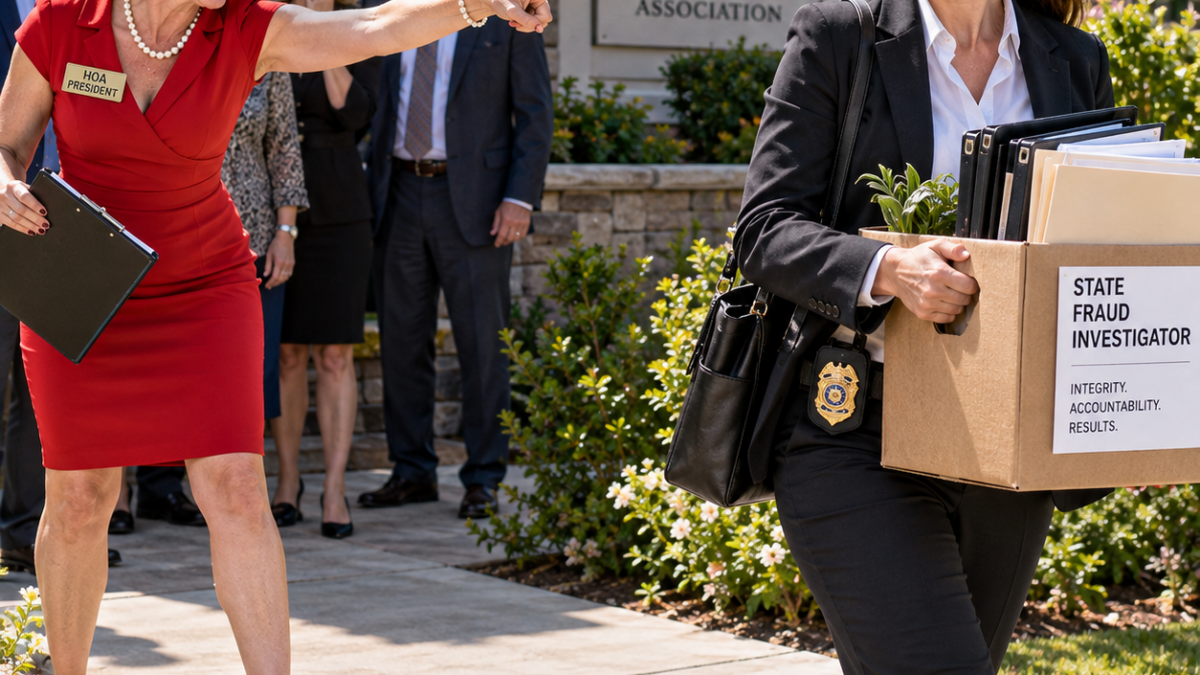
PART 2
I didn’t sleep much that night.
Not because I was devastated about losing my seat on the board.
Trust me, there is nothing glamorous about spending Tuesday evenings debating mailbox colors with people who believe “architectural harmony” is a matter of national importance.
What kept me awake was Barry.
His reaction.
Not Karen’s.
Karen was predictable.
She liked control. She liked being obeyed. She treated disagreement as disrespect and questions as challenges to her authority.
Barry was different.
He was supposed to be the numbers guy.
Treasurer.
Retired insurance salesman.
Soft-spoken.
The kind of man who usually let Karen dominate every conversation while he nodded along.
But when I asked for the gazebo paperwork, Barry didn’t behave like a man annoyed by bureaucracy.
He behaved like a man afraid of scrutiny.
I knew that look.
I had seen versions of it during procurement investigations overseas.
I had seen it across conference tables from county administrators who insisted missing invoices were “clerical issues.”
I had seen it on the face of a purchasing manager who spent six months telling everyone a $1.2 million discrepancy was an accounting software glitch.
People react differently when you question a decision than when you threaten a secret.
Barry had reacted to a secret.
At 5:42 the next morning, I gave up trying to sleep.
Tom was still breathing quietly beside me.
I slipped out of bed, pulled on sweatpants, and went downstairs.
Justice, our golden retriever, raised his head from his bed near the kitchen.
“You’re the only one in this house with reasonable priorities,” I whispered.
His tail thumped twice.
I made coffee and went into my home office.
The room was nothing dramatic.
One desk.
Two monitors.
Bookshelves.
A framed photograph of Tom and me taken shortly after I left the Army.
My law degree.
A few certificates I rarely looked at.
But when I closed the door, something inside me shifted.
Sarah Jenkins, recently humiliated HOA board member, stayed outside.
Investigator Jenkins sat down.
I created a folder.
OAKWOOD—PERSONAL RECORDS.
The word “personal” mattered.
I was not opening an official state investigation.
I was not accessing restricted databases.
I was not using subpoenas, confidential records, agency personnel, or government equipment.
Doing that would have been unethical and potentially illegal.
I was a homeowner reviewing public information about an organization handling my money.
That distinction mattered to me professionally and personally.
I started with what I knew.
Six months earlier, Oakwood Preserve had used Green Pastures Landscaping.
They had maintained the entrance, common lawns, flower beds, and playground area for years.
Their employees knew residents by name.
The work was good.
Then Karen announced the contract had been terminated.
No competitive bids were presented to the board.
No performance report.
No documented complaints.
She simply announced that she had found a “more comprehensive and cost-effective provider.”
Prestige Lawn and Leisure.
The phrase cost-effective had bothered me immediately because Prestige’s first invoice was roughly thirty percent higher.
At the same time, the quality dropped.
The park grass became patchy.
Weeds appeared around the clubhouse.
Mulch was spread so thinly that the landscaping fabric beneath it showed through.
One flower bed near the entrance died completely during an unusually dry week because the irrigation timer had apparently never been checked.
When I raised the issue, Karen gave me the same answer she gave whenever facts interfered with her plans.
“You get what you pay for.”
Except we were paying more.
For less.
I opened the state corporation registry.
Prestige Lawn and Leisure appeared immediately.
Formation date:
Seven months earlier.
That caught my attention.
I clicked deeper.
The company had been incorporated one week before Karen announced the contract.
Registered agent:
Frank Miller.
Manager:
Frank Miller.
Business address:
A small residential property fifteen miles away.
I searched the address.
Public property records showed the home belonged to Frank and Susan Miller.
I searched Susan.
Susan Miller Peterson.
Peterson.
Same last name as Karen.
Not proof.
But interesting.
I moved carefully.
People share surnames.
Families are complicated.
Coincidences exist.
I searched publicly available social-media profiles.
Susan’s page was mostly private.
Frank’s wasn’t.
Frank apparently believed the internet existed so he could post photographs of fishing trips and complain about football officiating.
Then I found a Christmas photograph.
Frank stood beside Susan.
Beside Susan stood Barry.
Our treasurer.
The caption read:
Christmas with my beautiful wife Susan, her brother Frank, and the rest of the family.
I stared at the screen.
There it was.
Prestige Lawn and Leisure was owned by Barry’s brother-in-law.
The company had been created one week before receiving an HOA contract.
The price had increased thirty percent.
The service had declined.
The relationship had never been disclosed to me while I served on the board.
I took a screenshot.
Then another showing the corporate filing.
I saved both.
Justice walked into the office and rested his head on my knee.
“Well,” I whispered, “that’s not ideal.”
His tail thumped.
I created a timeline.
Prestige incorporated.
Seven days later: Karen announces termination of Green Pastures.
Three days after that: Prestige approved.
No bids in minutes.
No disclosed relationship.
Then I added the gazebo.
Special assessment announced.
$500 per household.
More than $30,000 total.
No contractor named publicly.
No bids produced.
Records request ignored.
Director requesting records removed.
I leaned back.
One suspicious contract can be incompetence.
Two can be a pattern.
But I still needed facts.
The gazebo itself offered another route.
Any substantial new structure in our county required permits and review.
The county permit database was public.
I searched the HOA parcel.
Nothing.
I widened the search.
Nothing.
No building permit.
No zoning submission.
No electrical application.
No site plan.
No contractor permit.
That didn’t prove the gazebo was fake.
Maybe they hadn’t filed yet.
But the assessment was already being collected.
The board claimed construction would begin within weeks.
And nobody had applied for permission to build anything.
Tom found me there around seven.
He leaned against the doorframe holding a mug.
“You look terrifyingly happy.”
“I’m not happy.”
“You have your investigation face.”
“I have one of those?”
“You absolutely have one.”
I turned the monitor toward him.
“Prestige Lawn and Leisure belongs to Barry’s brother-in-law.”
Tom stopped smiling.
“You’re sure?”
“Public filing. Family photographs. Same person.”
“And that’s the company we’re paying more?”
“Thirty percent more.”
He looked at the second monitor.
“What’s that?”
“Permit search.”
“For the gazebo?”
“There isn’t one.”
Tom pulled the spare chair closer.
“How bad is that?”
“By itself? Possibly nothing. Together?”
I tapped the timeline.
“It’s enough to keep asking.”
He was quiet.
Then he asked, “What are you going to do?”
That question mattered.
Because there was a temptation.
I knew people.
I knew investigative techniques.
I knew prosecutors.
I knew how a fraud case gets built from the first allegation through subpoenas, interviews, financial analysis, and charging decisions.
But knowing how to use power is not the same as having the right to use it.
“I’m going to stay on the civilian side of the fence,” I said.
Tom looked relieved.
“I hoped you’d say that.”
“I can collect public records. I can exercise my rights as a homeowner. I can report what I find.”
“And your agency?”
“If they touch it, I recuse.”
“Completely?”
“Completely.”
He nodded.
Then he looked at the screen again.
“So Karen really kicked a fraud investigator off the board while apparently hiding financial records.”
I smiled faintly.
“That’s one interpretation.”
“What’s yours?”
“She panicked.”
Over the next week, I stopped thinking of Oakwood as Karen’s community.
That was part of her power.
People spoke as though Karen owned the place.
Ask Karen.
Karen decides.
Karen doesn’t allow that.
Karen approved this.
Karen said no.
But Karen owned one house.
Just like the rest of us.
Oakwood Preserve belonged to sixty-two families.
They deserved to know where their money was going.
My first conversation was with Mr. Henderson.
His name was Walter, though almost everyone called him Mr. Henderson because he had taught high school history for thirty-seven years and somehow carried the title of “teacher” into retirement.
He was eighty.
Widowed.
Sharp as a tack.
He spent more time on his roses than most surgeons spend preparing for operations.
Tom had baked brownies the previous night—a habit he claimed was stress management—so I carried a plate next door.
Mr. Henderson was trimming a rose bush.
“Bribery?” he asked when he saw the brownies.
“Community outreach.”
“Same thing with better branding.”
I laughed.
He removed one glove.
“I heard what happened.”
“I assumed you would.”
“This neighborhood could circulate news faster than the Pentagon.”
“That is disturbingly accurate.”
His expression turned serious.
“They had no business throwing you off for asking about money.”
“I’m less concerned about being removed than I am about what they wouldn’t show me.”
He nodded.
“That landscaping company is terrible.”
“I noticed.”
“My roses have aphids for the first time in nine years.”
“Prestige handles pest treatment?”
“Supposedly.”
“Did you know Prestige is owned by Barry’s brother-in-law?”
His pruning shears stopped.
“No.”
“Neither did I.”
He slowly straightened.
“You can prove that?”
“Yes.”
“What about the gazebo?”
“No permit application yet.”
He frowned.
“But they’re collecting the assessment.”
“Yes.”
He stared toward the clubhouse visible through the trees.
“When I served on the school board, we required three bids for anything over five hundred dollars.”
“I’m not accusing anybody yet.”
“You don’t have to.”
He set his shears down.
“What do you need?”
“Homeowners asking the same questions.”
“What questions?”
I had written them down.
Who is the gazebo contractor?
What is the total project cost?
How many bids were solicited?
May homeowners inspect them?
Where is the permit?
Where are special-assessment funds being held?
Was Barry’s relationship to Prestige Lawn and Leisure disclosed before the contract vote?
Mr. Henderson read the list.
“Good questions.”
“They need to come from residents. Individually. Politely. In writing.”
He smiled.
“My book club meets tomorrow.”
“How many people?”
“Fourteen.”
I stared at him.
“Remind me never to underestimate retired teachers.”
“You should have learned that in school.”
By Friday, sixteen homeowners had emailed the board.
By Sunday, twenty-three.
Then I met Mike.
Justice and I were walking past a driveway where a man in his late forties was washing a black pickup.
A Marine Corps decal filled one corner of the rear glass.
I recognized him from meetings.
Broad shoulders.
Close-cropped hair.
Always sat near the back with his arms crossed.
“You missed a spot,” I said.
He looked at me.
Then at the truck.
Then back at me.
“You Sarah?”
“That depends.”
He laughed.
“Mike Reynolds.”
We shook hands.
“I saw what they did at the meeting.”
“You and half the neighborhood, apparently.”
“Load of garbage.”
His tone had the clipped certainty of someone accustomed to calling something what it was.
“You military?” I asked.
“Marine Corps. Force Recon. Long time ago.”
“Army JAG.”
“I know.”
That surprised me.
“How?”
“Tom mentioned it at the Fourth of July cookout.”
Of course.
Tom considered my military career ordinary dinner conversation.
Mike sprayed soap from the hood.
“So what’s the plan?”
“What makes you think there’s a plan?”
He gave me a look.
“I spent eighteen years around officers. You’re standing in my driveway at nine in the morning asking casual questions with a notebook in your pocket.”
I touched my jacket.
The notebook was visible.
“Fair.”
He grinned.
“What’s the objective?”
“Transparency.”
“Boring objective.”
“Effective one.”
I explained the email campaign.
Mike listened.
Then I told him about Prestige.
His expression changed.
“You have documents?”
“Public filings.”
“And Barry never disclosed it?”
“Not while I was there.”
“What about the gazebo?”
“No permit.”
He turned off the hose.
“How many people are asking for records?”
“Twenty-three.”
“Let’s make it forty.”
That afternoon Mike created a simple one-page template residents could customize.
No accusations.
No threats.
Just precise requests.
Within three days, thirty-six homeowners had requested financial documentation.
Karen responded with one mass email.
The Board of Directors is fully satisfied that all association finances are being managed properly. Repetitive and harassing requests for documents interfere with our volunteer duties and will not be entertained.
That email was magnificent.
Not because it answered anything.
Because it answered nothing.
And because thirty-six homeowners now possessed the same written refusal.
Then the retaliation began.
Mr. Henderson received a violation notice claiming one rose bush extended seven inches beyond the “approved landscaping envelope.”
The Millers—a young couple with two children—were cited for sidewalk chalk.
Mike received a warning stating that his pickup had “encroached upon pedestrian space.”
He measured it.
The bumper remained eleven inches inside his driveway.
A widow named Linda received a notice because her porch wreath was “seasonally inappropriate.”
It was September.
The wreath contained yellow flowers.
Apparently Karen had become the calendar police.
Every person who had asked for records seemed to acquire a violation within two weeks.
That changed the mood.
Before, people were curious.
Now they were angry.
The next board meeting was packed.
I attended as a homeowner.
Karen sat at the front beside Barry and Martha.
Martha had always struck me as nervous.
She rarely expressed opinions.
That night, she looked exhausted.
Karen opened the meeting.
“Due to recent efforts by certain disgruntled individuals to create unnecessary conflict—”
Mike raised his hand.
Karen ignored him.
He kept it raised.
“Public comment comes later.”
Mike lowered it.
He waited.
When public comment finally arrived, he walked to the microphone carrying a tape measure and a printed photograph.
“My violation says my truck blocks the sidewalk.”
“This is not the venue for individual enforcement matters,” Karen said.
“Then where is?”
“You may appeal through the appropriate process.”
“I did.”
“And it will be reviewed.”
“When?”
“When the board has time.”
Mr. Henderson called from the back.
“You had time to measure my roses.”
Several people laughed.
Karen’s face hardened.
“Walter, you are out of order.”
“So are your books.”
That brought applause.
Karen slammed the gavel.
“This behavior proves exactly why stricter controls are necessary.”
The Millers’ husband stood.
“We asked for receipts.”
“You received a response.”
“No. We received an email saying you wouldn’t give us receipts.”
“That is a response.”
“Not a legal one.”
Barry whispered something to Karen.
She shook her head.
Mike stepped closer to the microphone.
“Thirty-six homeowners have asked for the same documents.”
“We will not conduct mob governance.”
“Showing invoices isn’t mob governance.”
“This discussion is over.”
“No,” someone shouted.
Then another voice:
“Where’s our thirty thousand dollars?”
The room erupted.
Karen banged the gavel repeatedly.
“ORDER!”
Nobody stopped.
For years, Karen’s authority had depended on everyone accepting her definition of order.
That night, they stopped.
She adjourned the meeting and left through a side door with Barry.
Martha remained behind for several seconds.
I happened to be near the aisle.
As she passed, our eyes met.
She looked frightened.
Not angry.
Frightened.
“Sarah,” she whispered.
Then Karen called from the hallway.
“Martha!”
Martha flinched.
“I have to go.”
She hurried away.
That moment stayed with me.
The following morning I prepared my complaint package.
By then, the evidence was enough to justify referral.
Not conviction.
Not accusation.
Referral.
I wrote the narrative without adjectives.
No “corrupt.”
No “criminal.”
No “crooked.”
Facts are stronger when you don’t tell the reader how to feel about them.
Exhibit A:
Green Pastures invoices.
Exhibit B:
Prestige invoices demonstrating the increase.
Exhibit C:
Prestige corporate registration.
Exhibit D:
Public documentation establishing Frank’s relationship to Barry.
Exhibit E:
Gazebo assessment notice.
Exhibit F:
County permit search.
Exhibit G:
My original records requests.
Exhibit H:
Board responses.
Exhibit I:
Homeowner requests and blanket refusal.
Exhibit J:
The timing of retaliatory violation notices.
Then I did something the original board would never have understood.
I disclosed my conflict.
I contacted my agency’s ethics officer.
I told her I was a homeowner.
I told her I had served on the board.
I told her I had been removed after requesting financial records.
I told her I possessed public information suggesting undisclosed related-party transactions and possible misuse of association funds.
Then I asked what I was permitted to do.
Her answer was simple.
“You may report suspected wrongdoing through the same channels available to any member of the public. You may not participate in any agency review, access internal case information, influence assignment, or contact investigators about the matter once submitted.”
“Understood.”
“You will recuse in writing.”
“I will.”
“And Sarah?”
“Yes?”
“Do not play detective once this is filed.”
That stung my professional pride.
But she was right.
“I won’t.”
I submitted the package through the official fraud-reporting portal.
Then I emailed my written recusal.
After that, professionally speaking, I stepped away.
It was one of the hardest things I have ever done.
I knew how investigations worked.
I knew what I would do next.
Verify corporate records.
Subpoena bank accounts.
Interview the former landscaping company.
Compare signatures.
Trace transfers.
Preserve email.
Analyze devices.
But I could do none of it.
I was a witness now.
Not an investigator.
So I waited.
Karen did not.
She escalated.
Violation notices multiplied.
Mike challenged every one.
His method was brilliant because it was boring.
Certified letter.
Formal dispute.
Request for hearing.
Citation to bylaws.
Request for evidence.
Every fine became paperwork Karen had to process.
Soon there were more than twenty pending appeals.
The system Karen had weaponized against residents became a burden she had created for herself.
Tom watched the growing stack of certified-mail receipts on our dining table.
“You people are fighting an HOA with office supplies.”
“Civilization runs on office supplies.”
“That explains a lot.”
Three weeks passed.
Then four.
The board stopped answering substantive financial questions entirely.
Karen posted a notice announcing public-comment periods were temporarily suspended due to “organized disruption.”
That brought two previously neutral homeowners into our group.
Then another.
Then another.
The coalition no longer belonged to me.
That was important.
Mr. Henderson organized older residents.
Mike coordinated document requests.
The Millers spoke with younger families.
Linda kept copies of violation notices.
Tom built a spreadsheet tracking assessments, payments, and questions.
My role slowly became smaller.
That was exactly what I wanted.
If the entire movement depended on Sarah Jenkins, Karen could call it a personal vendetta.
If forty homeowners independently wanted answers, Karen had a governance crisis.
One Tuesday morning, I was standing in my kitchen when Justice began barking.
Not his squirrel bark.
Not his delivery-driver bark.
His something-unusual-is-happening bark.
I looked through the window.
Four dark state vehicles turned onto our street.
My stomach dropped.
Tom came down the stairs adjusting his tie.
“What is it?”
I pointed.
The vehicles stopped around Karen’s house.
Doors opened.
Investigators stepped out wearing agency jackets.
For several seconds, I couldn’t move.
I knew some of them professionally.
I also knew I had no business approaching.
“This is it?” Tom asked.
“Looks like a search.”
“At Karen’s?”
“Yes.”
Three investigators walked to the front door.
Another moved toward the side of the property.
Neighbors began appearing on porches.
Karen answered wearing a pink robe.
Even from three houses away, I could see the argument begin.
An investigator presented papers.
Karen shook her head.
He presented them again.
She tried to close the door.
The investigator stopped it.
Not dramatically.
Just firmly.
Then they entered.
Ten minutes later, another vehicle headed toward Barry’s house.
Mike emerged from his garage.
Mr. Henderson stood on his porch.
The Millers came outside holding coffee.
Nobody cheered.
That surprised me.
For months, people had imagined some satisfying moment when Karen finally faced consequences.
But when it arrived, it felt serious.
Because search warrants are serious.
Whatever investigators believed they had found was no longer neighborhood gossip.
The state had convinced a judge there was probable cause to search homes and seize evidence.
Boxes began coming out.
Paper files.
Computers.
External drives.
A small locking cash box.
Investigators photographed everything before moving it.
Karen paced across her front lawn.
At one point she spotted me through my kitchen window.
Our eyes met.
Her face transformed.
She pointed toward my house.
Even through the glass, I knew what she was saying.
Me.
She thought this was me.
Tom stood behind my shoulder.
“Don’t react.”
“I’m not.”
“You’re holding your coffee like a weapon.”
I lowered the mug.
Karen continued staring.
I didn’t smile.
I didn’t wave.
I simply stepped away from the window.
For the rest of the day, Oakwood Preserve felt like a town after a tornado.
Everyone came outside.
Everyone had theories.
Nobody had answers.
Around six that evening, Mike knocked on our door.
“What the hell did they find?”
“I don’t know.”
He stared at me.
“You seriously don’t?”
“I’m recused.”
“Come on.”
“I mean it.”
He studied my face.
Then nodded.
“Okay.”
“That investigation has to survive defense attorneys later. The last thing it needs is me sticking my hands into it.”
He rubbed his jaw.
“So we wait.”
“We wait.”
He hated that answer.
So did I.
The board effectively collapsed.
Karen stopped sending notices.
Barry disappeared from meetings.
Martha resigned by email.
The management company claimed it could not make significant decisions without authorized board officers.
Grass grew high around the park.
The broken playground swing remained wrapped in yellow tape.
Residents began asking what would happen to the HOA itself.
We formed an unofficial homeowner stabilization committee.
Not a shadow board.
Not an attempt to seize authority.
Just residents documenting urgent maintenance issues and communicating with the management company.
Mr. Henderson insisted on calling it the Committee for Restoration.
Mike called it Task Force Freedom until everyone threatened to remove him.
The biggest question remained the gazebo money.
More than thirty thousand dollars had been collected.
Where was it?
The answer became public six weeks after the searches.
I learned it the same way most residents did.
Through filed court documents.
The investigators alleged that the gazebo contractor, Artisan Construction, did not exist as a functioning construction company.
It had no employees.
No contractor license.
No equipment.
No permits.
No history of completed projects.
What it did have was a bank account.
That account had received $30,000 from Oakwood Preserve.
The authorized signer used the name Karen Elaine Peterson.
Karen’s maiden name was Karen Elaine Dawson.
At first I thought I had misread.
Then the affidavit explained.
The account documentation contained identification tied directly to Karen.
She had not even created meaningful distance between herself and the fake vendor.
Tom read over my shoulder.
“That’s the gazebo money?”
“According to the affidavit.”
“She transferred it to herself?”
“Through the Artisan account.”
“Why?”
“The state alleges conversion.”
“In English.”
“They believe she stole it.”
He sat down.
I kept reading.
Prestige Lawn and Leisure was only one piece.
Investigators alleged Barry had controlled or helped create multiple shell vendors.
Oakwood Administrative Solutions billed for consulting.
Superior Pool Services billed monthly maintenance.
That one would have been funny if it hadn’t involved our money.
Oakwood Preserve did not have a pool.
Not even a decorative fountain.
Yet the HOA had paid “pool maintenance” invoices for almost eighteen months.
Tom stared at that page.
“How does nobody notice they’re paying for a pool that doesn’t exist?”
“Because most homeowners don’t review vendor-level statements.”
“And the board?”
I said nothing.
He understood.
The affidavit described transfers from shell companies into accounts controlled by Barry.
Cash withdrawals.
Payments to credit cards.
A boat loan.
Several personal expenses.
Then came Green Pastures.
Investigators had interviewed the owner, Luis Alvarez.
He told them Karen had approached him privately before his contract was canceled.
According to his statement, she suggested there were “ways to make sure good vendors stay in good standing” and asked about a monthly “administrative support fee.”
Luis refused.
Weeks later, Green Pastures lost the contract.
Luis had saved the emails.
One sentence allegedly read:
There are people who help the community, Luis, and people who make things difficult. I hope you choose which one you want to be.
I read that line three times.
It sounded exactly like Karen.
Not because I could prove her intent from tone.
Because I had heard variations of it at board meetings.
Cooperate.
Be reasonable.
Be a team player.
Stop asking questions.
Power rarely announces itself by saying obey me.
It prefers nicer words.
The public filing also confirmed investigators had interviewed Martha.
That broke my heart more than I expected.
Martha had spent years beside Karen.
She had printed documents.
Prepared meeting packets.
Typed minutes.
Processed signatures.
According to the state’s filing, Martha told investigators that some meeting minutes had been altered after meetings.
Votes were inserted.
Approvals were added.
Discussions that never happened appeared in final records.
Martha admitted she knew some of it was wrong.
She said she was afraid of Karen.
Fear is not innocence.
But it explained the trembling hands.
The frightened look.
The half-whispered “Sarah” after the chaotic meeting.
She had wanted to say something.
She hadn’t.
Now she was cooperating.
Then Karen made the worst strategic decision available to her.
She went public.
A local community newspaper published an interview under the headline:
OAKWOOD HOA PRESIDENT SAYS STATE PROBE IS “PERSONAL VENDETTA.”
Karen claimed she had been targeted because she enforced neighborhood standards.
She described herself as a dedicated volunteer.
She said a “disgruntled former board member with government connections” had weaponized state resources against her.
She did not name me.
She didn’t have to.
Everyone knew.
My phone began ringing.
Friends.
Neighbors.
One television reporter.
I declined every interview.
My agency’s ethics officer called me.
“Do not respond.”
“I wasn’t planning to.”
“Good.”
“She’s accusing the agency.”
“That is being handled.”
“Understood.”
“Sarah?”
“Yes?”
“You did the right thing by recusing.”
I needed to hear that more than I realized.
Because Karen’s accusation cut close to the fear I had carried from the beginning.
I did have government experience.
I did know investigators.
I did understand the system.
That was precisely why I had separated myself.
The case had to belong to the evidence.
Not to me.
Karen spent two weeks giving interviews.
Then the indictments came.
It was a gray Thursday morning.
Rain tapped softly against our kitchen windows.
At 10:17, an official state press release went online.
Karen Peterson and Barry Cole had been charged in a multi-count indictment involving alleged theft from the association, fraudulent vendor invoices, forgery of corporate records, conspiracy, and related financial offenses.
I read the release once.
Then again.
My hands were shaking.
Tom stood beside me.
“That’s it.”
“No.”
He looked at me.
“That’s not it?”
“Charges aren’t convictions.”
He nodded.
Army lawyers learn that distinction deeply.
Allegation.
Evidence.
Proof.
Verdict.
They are not interchangeable.
Twenty minutes later, two state vehicles entered Oakwood.
This time everyone understood.
Barry surrendered through his attorney before officers reached his house.
Karen did not.
She opened the door and began arguing.
Neighbors watched from windows.
Nobody stood in the street.
Nobody wanted a spectacle.
Eventually Karen came outside wearing dark pants, a blouse, and a raincoat.
An investigator placed her hands behind her back.
The handcuffs changed everything.
This was no longer Karen with her gavel.
Karen with a violation letter.
Karen measuring lawns.
Karen fining chalk drawings.
This was a sixty-year-old woman standing in the rain while an officer secured metal around her wrists.
I expected satisfaction.
Instead I felt hollow.
Tom seemed to sense it.
“You okay?”
“Yes.”
“You don’t look okay.”
“I wanted accountability.”
“This is accountability.”
“I know.”
He put his hand on my shoulder.
Across the street, Mr. Henderson stood beneath his porch roof.
He removed his cap as Karen was placed in the vehicle.
Not triumphantly.
Almost solemnly.
That image stayed with me.
Justice came to my side.
I rested my hand on his head.
Karen looked toward our house one last time.
I don’t know whether she saw me.
The vehicle drove away.
By evening, the entire neighborhood had received an email from the association’s management company.
Emergency membership meeting.
Saturday.
Seven p.m.
The clubhouse filled before six-thirty.
Every chair was taken.
People stood against walls.
The atmosphere reminded me of the night I had been removed.
Except this time Karen’s chair was empty.
Barry’s too.
Martha had resigned.
The two remaining directors sat at the front looking shell-shocked.
A representative from the management company spoke first.
“Given the criminal charges involving two officers and the resignation of the secretary, we need immediate member action to stabilize governance.”
Mike leaned toward me.
“In English, the emperor has no clothes.”
“Behave.”
“I am behaving.”
Mr. Henderson spoke from my other side.
“This is him behaving.”
The association attorney explained the recall and appointment process.
One homeowner moved to remove all remaining directors and hold a special election.
Another seconded.
The vote passed overwhelmingly.
Then came nominations.
Someone shouted, “Sarah Jenkins.”
My stomach dropped.
I stood.
“No.”
Laughter spread through the room.
“I appreciate the confidence,” I said, “but I will not serve while the criminal matter is pending.”
A woman called out, “Why?”
“Because I may be a witness. And because this community needs leadership that isn’t centered on one person.”
That last sentence mattered.
Karen’s greatest damage wasn’t the money.
It was teaching everyone that an HOA was supposed to orbit one personality.
We needed the opposite.
Mr. Henderson was elected interim president.
He looked horrified.
“I’m eighty years old.”
Mike called out, “That means you don’t have time to become corrupt.”
The entire room laughed.
Even Mr. Henderson.
Mike joined the board.
So did Linda.
A CPA named Priya Shah became treasurer.
The Millers’ husband, Daniel, accepted a director position.
Their first motion required all expenditures above $1,000 to be posted for homeowner review.
Second:
Three bids for major contracts absent documented emergency circumstances.
Third:
Mandatory disclosure of family or financial relationships with vendors.
Fourth:
Quarterly financial reports to every homeowner.
Fifth:
No enforcement action against a homeowner without documented evidence and an appeal process.
Mr. Henderson looked toward me.
“Anything else?”
I stood.
“Yes.”
Everyone waited.
“Put expiration dates on authority.”
He frowned.
“Meaning?”
“Term limits.”
Applause filled the room.
For the first time since this started, I felt something loosen inside my chest.
Not victory.
Relief.
The criminal case moved slowly.
Real cases do.
Months passed.
Discovery.
Motions.
Accountants.
Interviews.
Attorneys.
Barry broke first.
His lawyer negotiated a plea.
He admitted participating in fraudulent invoicing and misuse of association funds.
He agreed to testify against Karen.
He surrendered assets toward restitution.
One of those assets was the fishing boat partially paid through money traced from a shell vendor.
Mike sent me a photograph of the seizure notice.
Under it he wrote:
THE S.S. TRANSPARENCY HAS SUNK.
I laughed harder than I should have.
Martha received immunity for truthful cooperation concerning some conduct while remaining responsible for certain civil consequences.
She moved out of Oakwood before trial.
Before leaving, she came to my house.
It was a Sunday afternoon.
Tom was repairing a cabinet hinge.
Justice slept by the couch.
The doorbell rang.
When I opened it, Martha stood there holding an envelope.
She looked thinner.
“Can I come in?”
“Of course.”
She sat at our dining table but refused coffee.
For nearly a minute, she said nothing.
Then:
“I’m sorry.”
“You don’t owe me an apology for voting.”
“Yes, I do.”
“You were under pressure.”
“That doesn’t make it okay.”
I let her continue.
“I knew they were hiding things.”
“How much did you know?”
“Not everything.”
Her eyes filled.
“I knew Karen changed minutes. I knew Barry brought invoices that didn’t make sense. I knew some meetings on paper never happened.”
“Why didn’t you speak?”
She stared at her hands.
“Because the first time I questioned Karen, she made my life miserable for six months.”
Martha told me about late-night phone calls.
Threats of fines.
Social exclusion.
Rumors.
Karen telling neighbors Martha was unstable.
Eventually Martha learned that life was easier if she agreed.
“I kept telling myself it was just HOA nonsense.”
Her voice cracked.
“Then it wasn’t.”
I understood.
But understanding is not absolution.
“You helped them.”
“I know.”
“You also helped stop them eventually.”
“Too late.”
“Later than you should have.”
She looked at me.
I continued.
“But not too late.”
That was when she cried.
Not dramatically.
Just quiet tears from someone who had spent too long carrying fear and shame together.
The envelope contained copies of old handwritten notes she had kept.
Comments from meetings.
Instructions from Karen.
One line read:
Do not include Sarah’s request in minutes—creates unnecessary record.
I stared at it.
“When was this?”
“The night you first asked for gazebo bids.”
“Why keep it?”
“I think part of me knew.”
“Knew what?”
“That someday I’d need to prove I wasn’t imagining everything.”
I gave the notes to prosecutors through proper channels.
Martha hugged me before leaving.
I did not tell her everything was fine.
It wasn’t.
Some apologies should not erase consequences.
But I told her I hoped she built a quieter life.
She said she intended to.
Karen refused to plead.
Her attorney argued the money transfers were legitimate reimbursements.
Artisan Construction, they claimed, had been intended as a future development entity.
The gazebo project had merely been delayed.
Payments to Barry’s companies were for legitimate services badly documented.
The relationship with Prestige was supposedly known informally.
The altered minutes were “administrative corrections.”
Every fact had an explanation.
Individually, some almost sounded plausible.
Together, they collapsed.
Trial began fourteen months after I had been removed from the board.
I received a subpoena.
On the morning I testified, Tom drove me to the courthouse.
“You nervous?” he asked.
“No.”
“You’re reorganizing the air vents.”
I stopped touching them.
“Maybe.”
He smiled.
“You’ve testified before.”
“Not when I live three houses from the defendant.”
We parked.
Reporters waited outside.
I walked past without speaking.
Inside, Karen sat beside her attorney.
She looked older.
Not dramatically.
But the hard certainty I remembered was gone.
When the clerk called my name, I took the oath.
The prosecutor began simply.
“Ms. Jenkins, were you a member of the Oakwood Preserve Board of Directors?”
“Yes.”
“Why did you join?”
“I wanted to contribute to the community.”
“When did you first become concerned about finances?”
I described Prestige.
The higher cost.
The declining service.
The lack of competitive bids.
Then the gazebo.
“Did you accuse Karen Peterson of stealing money at that time?”
“No.”
“What did you ask for?”
“Bids, invoices, contractor information, and supporting financial records.”
“Were those records provided?”
“No.”
“What happened after your requests?”
“I was removed from the board.”
The prosecutor displayed the emergency meeting notice.
Then minutes.
Then emails.
“Why did you document these events?”
“I document things for a living.”
Karen looked at me for the first time.
The prosecutor walked me through the public records I had found.
Prestige.
Frank.
Barry.
The permit search.
Then he asked the question everyone had been waiting for.
“What was your occupation at that time?”
“Senior investigator with the state financial crimes unit.”
A murmur moved through the gallery.
The judge immediately silenced it.
The prosecutor asked, “Did you personally investigate this criminal case?”
“No.”
“Did you use confidential government databases to investigate the HOA?”
“No.”
“Did you issue subpoenas?”
“No.”
“Did you direct agents?”
“No.”
“Did you participate in the search warrants?”
“No.”
“What did you do?”
“I reported publicly available facts through an authorized channel and formally recused myself.”
That mattered.
Karen’s defense had spent months suggesting I had engineered the prosecution.
The records showed otherwise.
The defense attorney stood.
“Ms. Jenkins, you were angry when the board removed you, correct?”
“Yes.”
“So you wanted revenge.”
“I wanted the records.”
“That isn’t what I asked.”
“I was angry.”
“You began gathering information about Karen Peterson.”
“I reviewed public records regarding association vendors.”
“You recruited neighbors.”
“I encouraged homeowners to exercise their records rights.”
“You wanted to bring down the board.”
“No.”
“You called your activities an investigation, didn’t you?”
“In private conversation, perhaps.”
“So this was personal.”
“It became personal when my money was involved.”
A few people in the gallery smiled.
The attorney frowned.
“You enjoyed watching Ms. Peterson get arrested.”
“No.”
“You expect this jury to believe that after she humiliated you?”
“Yes.”
“Why?”
I looked at Karen.
Then back at the attorney.
“Because accountability and humiliation are not the same thing.”
He paused.
I continued before he could object.
“I wanted the money accounted for. I wanted the books opened. I wanted the retaliation stopped. I did not need her destroyed for that to happen.”
The courtroom was silent.
The attorney changed subjects.
Barry testified two days later.
That was devastating.
He described the shell companies.
He admitted approving invoices.
He admitted transferring funds.
He said Karen conceived the gazebo assessment after reserve funds became harder to draw without attracting attention.
According to Barry, Karen told him:
“People complain about dues. They won’t complain about something pretty.”
The prosecutor asked why they chose a gazebo.
Barry lowered his head.
“Because nobody knows what a gazebo should cost.”
That sentence appeared in the newspaper the next morning.
Luis from Green Pastures testified about the requested kickback.
He produced the email.
Martha testified about altered minutes.
A forensic accountant traced the $30,000 assessment through the Artisan account.
Within days, much of the money had been split into transfers that prosecutors connected to Karen’s personal credit-card payments and a down payment on a luxury vacation package.
The gazebo residents had been promised never existed beyond a stock photograph.
There were no architectural plans.
No site drawings.
No contractor estimate.
No material orders.
No permit application.
Nothing.
On the sixth day of testimony, the prosecutor projected the original glossy flyer onto a courtroom screen.
NEW ERA OF COMMUNITY ELEGANCE.
Beneath it, the stock image of the gazebo.
Then he projected Karen’s credit-card statement showing travel-related charges shortly after the assessment transfer.
No dramatic speech was necessary.
The evidence told the story.
Karen testified against her lawyer’s advice.
That decision ended whatever chance remained.
She blamed Barry.
Then Martha.
Then me.
Then the management company.
Then “disloyal homeowners.”
She insisted the vacation had been planned separately.
She said she intended to repay funds.
The prosecutor asked:
“Why would you need to repay association funds if those funds were legitimately yours?”
Karen froze.
Her attorney closed his eyes.
The prosecutor waited.
Karen eventually said, “That isn’t what I meant.”
“What did you mean?”
“I mean everything was mixed together.”
“The association’s money and yours?”
“No.”
“But you just said—”
“You’re twisting my words.”
For years, that phrase had worked in Oakwood.
Not in court.
The prosecutor displayed bank records.
“Did you sign this transfer?”
“I don’t remember.”
“Is that your electronic signature?”
“It appears to be.”
“Did the money come from Oakwood Preserve?”
“I assume.”
“Did it enter Artisan Construction?”
“Yes.”
“Did you control that account?”
“For administrative purposes.”
“Did money then pay your personal American Express balance?”
Karen stared.
Her attorney objected.
Overruled.
“Mrs. Peterson?”
“I would need to see the full records.”
“They’re in front of you.”
“I don’t remember every transaction.”
The prosecutor stepped back.
“Nothing further.”
The jury deliberated nine hours.
Tom and I waited at a coffee shop across from the courthouse.
I barely touched my drink.
At 6:11 p.m., the prosecutor’s assistant called.
“Verdict.”
We returned.
Karen stood.
The clerk read the first count.
Guilty.
Second.
Guilty.
Third.
Guilty.
Not every charge.
But enough.
The final guilty verdict landed without sound from the gallery.
Karen’s shoulders dropped.
For the first time since I had known her, she seemed small.
Not physically.
In authority.
The illusion was gone.
The gavel.
The notices.
The clipboard.
The board votes.
None of it could protect her from records she had created herself.
Sentencing occurred two months later.
Several homeowners submitted victim-impact statements.
Mr. Henderson wrote about trust.
The Millers wrote about being financially squeezed while raising young children.
Luis described losing employees after his contract was abruptly canceled.
I almost submitted nothing.
Then Tom said, “You keep saying this wasn’t about revenge. Tell the judge what it was about.”
So I wrote one page.
I did not ask for the maximum sentence.
I did not ask for mercy either.
I wrote:
The financial loss matters, but money can be repaid.
The deeper damage was teaching a neighborhood that asking questions was disloyal.
For months, residents were afraid that challenging authority would bring fines, humiliation, or retaliation.
That is how small abuses become systems.
Whatever sentence the court imposes, I hope the lasting consequence is simple: no one in Oakwood Preserve will ever again be punished for asking to see a receipt.
At sentencing, the judge referenced the pattern of concealment, falsified records, and retaliation.
Barry received a reduced sentence because of his plea and cooperation.
Karen received a prison term followed by supervised release, along with substantial restitution obligations and restrictions connected to managing organizational funds.
The exact number of years mattered less to me than people expected.
What mattered was the restitution order.
The court ordered recovered assets applied toward Oakwood’s losses.
Insurance and fidelity coverage filled part of the remaining gap after separate civil negotiations.
Barry’s boat was sold.
Several financial accounts were seized.
Karen eventually sold her home.
The day the FOR SALE sign appeared, Mike texted our group.
Nobody celebrated.
That surprised him.
“Where’s the champagne?” he asked at our next meeting.
Mr. Henderson looked at him.
“We won our neighborhood back. We don’t need to dance on someone’s foreclosure.”
Mike nodded.
“Yes, sir.”
That was the moment I realized how much Oakwood itself had changed.
We were no longer a rebellion.
We were neighbors again.
The new board hired an independent accounting firm to reconstruct five years of finances.
Every homeowner received the report.
It was ugly.
But it was complete.
The total losses extended well beyond the gazebo.
Some money was recoverable.
Some wasn’t.
The board created a restitution reserve.
Dues stabilized.
Unnecessary contracts were canceled.
Green Pastures was invited to bid again.
Luis won the contract fairly against two competitors.
The first week his crew returned, the entrance flower beds looked better than they had in a year.
Mr. Henderson stood beside me admiring them.
“Imagine that,” he said.
“Competence?”
“Competitive bidding.”
“Revolutionary.”
The broken playground swing was repaired for $186.
The old board had spent months claiming it required “vendor review.”
Daniel Miller installed the chain himself while a licensed inspector checked the hardware afterward.
His children were the first to use it.
Their daughter shouted so loudly I heard her from across the park.
Then came the question nobody expected.
The gazebo.
We had all paid for one.
The fraudulent assessment had been partially recovered.
The new board proposed returning every dollar.
At the annual meeting, Priya displayed the numbers.
“We can issue refunds,” she said. “Or, if homeowners prefer, we can apply recovered funds toward the project originally promised, but only after competitive bidding and a full vote.”
Someone behind me laughed.
“After all this, we’re still talking about a gazebo?”
The room cracked up.
Mr. Henderson looked at me.
“What do you think?”
“Don’t ask me.”
“Why?”
“I have gazebo trauma.”
More laughter.
Priya obtained three bids anyway.
The cheapest responsible bid was $12,800.
Not thirty thousand.
Not even close.
The plans were simple.
Wood.
Shingled roof.
Accessible walkway.
Electrical outlets.
No Victorian palace.
No ridiculous ornamental trim.
Just a comfortable pavilion overlooking the park.
The residents voted.
Forty-nine in favor.
Eight wanted refunds.
Five abstained.
Those who wanted refunds received them.
The rest authorized construction.
Every invoice was posted online.
Every payment was visible.
Every change order required approval.
Mike joked that we knew the serial number of every screw.
He wasn’t far off.
When the gazebo was finished, the board wanted to name it.
Suggestions appeared.
Oakwood Pavilion.
Heritage Gazebo.
Community Commons.
Mike submitted:
THE RECEIPT HOUSE.
Priya rejected it.
Then someone anonymously suggested:
JENKINS PAVILION.
I knew exactly who.
“Michael Reynolds.”
He raised both hands.
“No evidence.”
“I investigate fraud professionally.”
“Circumstantial.”
“It’s your handwriting.”
“Still circumstantial.”
I vetoed the name.
We finally chose:
OAKWOOD COMMUNITY PAVILION.
No individual.
No politician.
No board president.
No hero.
Just the community.
At the dedication, Mr. Henderson stood beneath the roof holding oversized scissors.
“Why am I doing this?” he muttered.
“Because you’re president.”
“I regret everything.”
A crowd gathered.
Kids ran across the grass.
Luis’s landscaping crew had planted new beds nearby.
Someone brought lemonade.
Tom carried folding tables.
Justice stole half a hot dog from an unattended plate and spent the next twenty minutes looking innocent.
Mr. Henderson cut the ribbon.
Applause rose.
Then he walked to the microphone.
“I have been told to keep this short.”
Mike shouted, “Correct.”
Mr. Henderson glared.
“I have also been told not to name this structure after anyone.”
He looked at me.
I narrowed my eyes.
“So I won’t.”
People laughed.
“But there is something we should remember.”
His voice softened.
“This community almost lost a great deal more than money.”
The park quieted.
“We almost lost the belief that our neighbors deserved answers.”
He held up a sheet of paper.
“This is the final construction invoice.”
Laughter rippled through the crowd.
“Every one of you can see it online.”
He taped it to a display board beside the pavilion.
People applauded.
A receipt.
That was our monument.
Months later, Karen’s house sold.
A moving company arrived on a cold morning while she was still serving her sentence, and relatives removed the remaining belongings.
I watched only because Justice needed his walk.
There was no final confrontation.
No screaming.
No speech.
No dramatic revenge.
Just cardboard boxes passing through a doorway that had once opened every morning so Karen could patrol Oakwood with her clipboard.
Eventually the house was empty.
A young couple bought it.
They had no idea what had happened until someone told them.
The wife approached me at the pavilion one afternoon.
“Are you Sarah?”
“That depends what I did.”
She laughed.
“I heard the story.”
“I’m sorry.”
“Why sorry?”
“Because people tend to add explosions every time they retell it.”
She smiled.
“Did she really get arrested in a bathrobe?”
I sighed.
“That part is unfortunately accurate.”
The woman looked toward her new home.
“Is it weird for you that we live there?”
“No.”
“You don’t associate the house with her?”
“A house is lumber, drywall, plumbing, and a mortgage.”
She laughed.
“Spoken like someone married to an engineer.”
“Exactly.”
Then she asked something more serious.
“Do you think people like that start out bad?”
I looked across the park.
Kids were running through sprinklers.
Mr. Henderson sat beneath the pavilion reading.
Mike was arguing with Priya about the budget for new trees.
Ordinary life.
“I think people get used to not being questioned,” I said.
“And that changes them?”
“It can.”
A small amount of authority rarely feels dangerous.
Approval over paint colors.
A budget.
A vendor list.
A gavel.
A rulebook.
But if everyone stops asking why, a volunteer can begin thinking she owns what she merely manages.
That was Karen’s mistake.
She confused stewardship with possession.
Barry confused access with entitlement.
Martha confused fear with helplessness.
And the rest of us, for too long, confused peace with silence.
The year after the trial, Oakwood held its first community financial workshop.
Sounds exciting, doesn’t it?
Tom threatened to fake an illness.
Priya forced him to attend.
We explained budgets.
Reserve accounts.
Vendor bids.
Insurance.
Assessments.
Homeowner records rights.
Twenty-seven people showed up.
Mike fell asleep for three minutes during the insurance section.
We have photographic evidence.
The point wasn’t to turn everyone into auditors.
The point was to make information ordinary.
Fraud likes mystery.
Bad governance likes complexity.
Abuse likes people saying:
I don’t understand that stuff.
Someone else is handling it.
It’s probably fine.
Transparency removes oxygen from those conditions.
The following election had seven candidates for five board seats.
Seven.
Years earlier, Karen practically appointed people because nobody wanted to serve.
Now homeowners wanted involvement.
They debated.
Asked questions.
Disagreed.
One meeting lasted almost three hours over whether to replace the park benches.
It was miserable.
I loved every minute.
Because nobody was afraid.
Nobody was punished for voting no.
Nobody whispered in parking lots.
Nobody received a violation because they questioned an invoice.
Democracy at its healthiest can be incredibly annoying.
That is still better than convenient corruption.
Mr. Henderson retired as president after one term.
At the final meeting, we gave him a plaque.
He stared at it.
“I said no plaques.”
“You lost the vote,” Mike replied.
Mr. Henderson smiled.
Priya became president.
Mike stayed on.
Daniel continued as director.
Linda handled architectural review with a kindness Karen would have considered weakness.
I never joined again.
People asked.
Often.
I always declined.
That confused some neighbors.
After everything, they assumed I wanted the presidency.
I never did.
I wanted a board that didn’t need me.
That was the victory.
Two years after the trial, I received a letter.
No return address I recognized.
The handwriting on the envelope was neat.
Inside were three paragraphs.
Sarah,
I have written this many times.
You probably believe I hate you.
For a long time I did.
I told myself you destroyed my life because you were embarrassed about losing a board seat.
It was easier than admitting what happened.
I have had a lot of time to read the evidence.
I still believe some things were portrayed unfairly, but I cannot deny the money or the decisions I made.
I thought being questioned meant being disrespected.
Every time someone challenged me, I pushed harder.
Eventually all I could see were enemies.
I do not expect forgiveness.
I only wanted you to know that I understand now why you asked for the receipts.
Karen
I sat at my desk holding the letter for a long time.
Tom came in.
“Everything okay?”
I handed it to him.
He read silently.
Then gave it back.
“Are you going to answer?”
“I don’t know.”
“What do you want to say?”
That was the problem.
Part of me wanted to tell her exactly how much damage she had caused.
Mr. Henderson’s humiliation.
The Millers’ fines.
Martha’s fear.
Luis losing his contract.
Residents losing money.
Months of division.
But she knew.
Another part of me wanted to write:
I told you so.
That would have felt good for thirty seconds.
Then empty.
Eventually I took out a blank card.
I wrote:
Karen,
I received your letter.
I hope you use what comes next to build something better.
Sarah
Nothing about forgiveness.
Nothing about friendship.
Nothing about forgetting.
Accountability does not require pretending damage never happened.
I mailed it.
Then I closed that chapter.
Or at least I thought I had.
Three years later, Tom and I stood beneath the Oakwood Community Pavilion watching our daughter chase bubbles across the grass.
Her name was Grace.
She was two.
She had Tom’s eyes and my stubbornness, which felt unfair to everyone around us.
Justice was older now.
Gray around the muzzle.
He followed Grace everywhere with the patient exhaustion of a dog who had somehow become responsible for a tiny human.
It was Oakwood’s summer picnic.
Mr. Henderson sat in his usual chair.
Mike was grilling hamburgers.
Priya had posted the picnic budget on the community website because by then transparency had become almost a running joke.
Grace ran toward me holding something.
“Mommy!”
“What do you have?”
She opened her fist.
A crumpled slip of paper.
One of the pavilion supply receipts had blown off the table.
I laughed.
Tom walked over.
“What’s funny?”
I showed him.
“Our daughter found a receipt.”
He stared at me.
“No.”
“Yes.”
“This family is cursed.”
Grace held the paper over her head like treasure.
Mike saw us.
“What’s she got?”
“A receipt.”
He nearly dropped the spatula laughing.
Mr. Henderson called from his chair.
“Frame it!”
Everyone around us laughed.
Grace had no idea why.
She laughed anyway.
I looked around the park.
The repaired swings.
Healthy flower beds.
Families eating under the gazebo that had once existed only as an excuse to take their money.
The same neighbors who had once looked down at their shoes while Karen removed me were now arguing cheerfully about whether next year’s picnic needed a bounce house.
Nobody talked about Karen much anymore.
Nobody needed to.
That may have been the most complete form of justice.
She had once made herself the center of Oakwood Preserve.
Everything went through her.
Every decision.
Every complaint.
Every approval.
Every conflict.
Now years could pass without anyone saying her name.
The community she tried to control had learned how to function without fear.
Grace tugged my hand.
“Swing.”
“Okay.”
She dragged me across the grass.
When we reached the playground, I lifted her into the seat.
Justice settled beneath a nearby tree.
I pushed gently.
Grace squealed.
“Higher!”
“Not too high.”
“Higher!”
Definitely my daughter.
As she swung toward the blue summer sky, I thought about the night Karen removed me.
The fluorescent lights.
The folding chairs.
Barry avoiding my eyes.
Martha’s shaking hands.
Karen raising the gavel.
“By unanimous vote…”
I remembered the heat in my face.
The humiliation.
The temptation to stand up and tell them exactly who I was.
I’m a fraud investigator.
You have no idea who you’re dealing with.
But I hadn’t.
That turned out to be one of the best decisions I made.
Because this story was never powerful because of my job title.
My profession helped me recognize patterns.
It taught me to document.
It taught me patience.
But the thing that broke Karen’s system wasn’t one investigator.
It was dozens of ordinary homeowners deciding they were entitled to an answer.
Mr. Henderson asking about bids.
Mike disputing a false fine.
The Millers questioning why playground equipment stayed broken.
Luis saving an email.
Martha finally telling the truth.
Priya rebuilding the financial system.
Tom reminding me not to cross professional lines.
Each person did something small.
Together, those small things became impossible to bury.
Grace swung back toward me.
“Again!”
I pushed.
The pavilion stood behind her.
$12,800.
Three bids.
County permit approved.
Invoices posted.
Contractor licensed.
Every dollar accounted for.
A gazebo so ordinary nobody visiting Oakwood would ever guess it had once been at the center of a criminal case.
I preferred it that way.
Justice should eventually become boring.
Years earlier, Karen believed removing me would end the questions.
Instead, it multiplied them.
She thought power meant controlling who could speak.
She learned that power without accountability is temporary.
She thought the gavel belonged to her.
It belonged to the office.
She thought HOA money belonged to the board.
It belonged to the homeowners.
She thought requesting receipts was disrespect.
It was responsibility.
And she thought throwing me out would protect what she was hiding.
Instead, it created the clearest warning sign of all.
Because honest people may dislike questions.
They may become impatient.
They may disagree.
But when someone risks everything just to stop you from looking at the paperwork, the paperwork is usually exactly where you should look.
That lesson stayed with Oakwood.
It stayed with me too.
My framed board-removal notice hangs in my office now.
Tom thought I should throw it away.
I didn’t.
Below it is the first certified-mail receipt from my financial-records request.
Beside that is a photograph of the completed pavilion.
Three pieces.
The punishment.
The question.
The result.
Occasionally someone visiting my office asks about them.
I tell them the short version.
“I got kicked off my HOA board.”
They laugh.
Then they see my expression.
“What happened?”
“I asked for receipts.”
“That’s it?”
“That was enough.”
Sometimes the smallest question opens the largest door.
Where is the invoice?
Who approved this payment?
Why did this contract cost more?
Who owns the company?
Why won’t you show us the records?
None of those questions sound heroic.
They shouldn’t.
Accountability is rarely heroic at first.
Usually, it looks like paperwork.
A notebook.
An email.
A certified letter.
One person refusing to accept “because I said so” as a financial control.
Karen wanted a neighborhood where nobody questioned her.
She accidentally created one where everybody learned how.
And that was the revenge she never saw coming.
Not her arrest.
Not the trial.
Not the guilty verdict.
Not the house she had to sell.
Not even the restitution she would spend years paying.
Her real defeat was quieter.
After she was gone, we built the community she always claimed she was protecting.
A place where people could disagree without becoming enemies.
Where volunteers understood that authority was borrowed.
Where money had a paper trail.
Where homeowners knew they had a voice.
Where a child’s sidewalk chalk was just sidewalk chalk.
Where an old man’s roses could grow seven inches wherever they pleased.
Where a Marine could park his truck without someone measuring the bumper.
Where a young family could use a playground that actually got repaired.
And where the pavilion in the middle of the park stood as proof that you could build something beautiful without stealing from the people who trusted you.
One late summer evening, after the picnic had ended, I stayed behind while Tom took Grace home for her bath.
The park was almost empty.
Mr. Henderson had left.
Mike had packed the grill.
The sun was dropping behind the trees.
I sat alone beneath the pavilion.
For a while, I listened to sprinklers clicking across the lawn.
Then I looked up at the beams overhead.
Simple cedar.
Nothing grand.
Nothing resembling the ridiculous stock photograph Karen had mailed years earlier.
Better because it was real.
On one of the support posts was a small metal plaque.
Not my name.
Not Mr. Henderson’s.
Not any board member.
Priya had proposed the wording.
The homeowners approved it unanimously.
It read:
OAKWOOD COMMUNITY PAVILION
BUILT WITH OPEN BOOKS, SHARED TRUST, AND THE BELIEF THAT EVERY MEMBER HAS THE RIGHT TO ASK QUESTIONS.
I ran my fingers over the last word.
Questions.
That was what started everything.
Karen believed questions threatened community.
She was wrong.
Questions saved ours.
Justice walked slowly toward me from the grass.
His joints bothered him now.
I patted the bench.
He rested his head against my knee.
“Ready to go home?”
His tail moved once.
I stood.
Before leaving, I looked back.
The pavilion caught the last orange light of the evening.
Kids would play there tomorrow.
Neighbors would drink coffee there.
Birthday cakes would be cut there.
Arguments would happen there.
People would disagree over budgets, landscaping, paint colors, and probably mailbox shades until the end of time.
Good.
That meant Oakwood was alive.
No queen.
No kingdom.
No subjects.
Just neighbors.
I turned toward home.
Years earlier, I had walked out of the community center after Karen stripped me of my board seat, believing I had suffered one of the most humiliating moments of my civilian life.
Now I understood what had actually happened.
Karen had not silenced me.
She had freed me from her table.
She had taken away a title I never needed and given me the distance to see the entire pattern.
She had removed the one board member asking for receipts.
And in doing so, she had turned a financial question into something no amount of intimidation could contain.
She thought she was ending an investigation.
She was starting one.
The rest was written in bank statements, fake invoices, court records, restored funds, repaired playgrounds, healthy roses, transparent budgets, and one very real gazebo.
I walked home under the streetlights with Justice beside me.
At the end of our driveway, Grace pressed her face against the front window when she saw us.
Tom stood behind her.
She waved both hands.
I waved back.
For years, I had investigated fraud because I believed stolen money mattered.
It does.
But Oakwood taught me something deeper.
Trust is also an asset.
It can be stolen.
It can be abused.
It can be depleted one lie at a time.
And unlike money, there is no insurance policy that simply replaces it.
You rebuild it.
One honest meeting.
One disclosed relationship.
One competitive bid.
One accurate set of minutes.
One answered email.
One receipt at a time.
Karen stole money from Oakwood.
But for a while, she stole something worse.
She convinced neighbors they were powerless.
Watching them discover they weren’t was the most satisfying ending I could have imagined.
And that is why, whenever someone tells me they don’t want to cause trouble by asking a simple question, I think about the empty gazebo account.
I think about Karen’s gavel.
I think about Barry’s shell companies.
I think about Martha trembling behind the secretary’s table.
Then I think about Grace swinging beneath a clear blue sky while her parents and neighbors stand beside a pavilion that actually exists.
Ask the question.
Then ask for the receipt.








