PART 2: HOA Karen Used My Land as Her Dump—Then the Soil Report Destroyed Her Home Sale
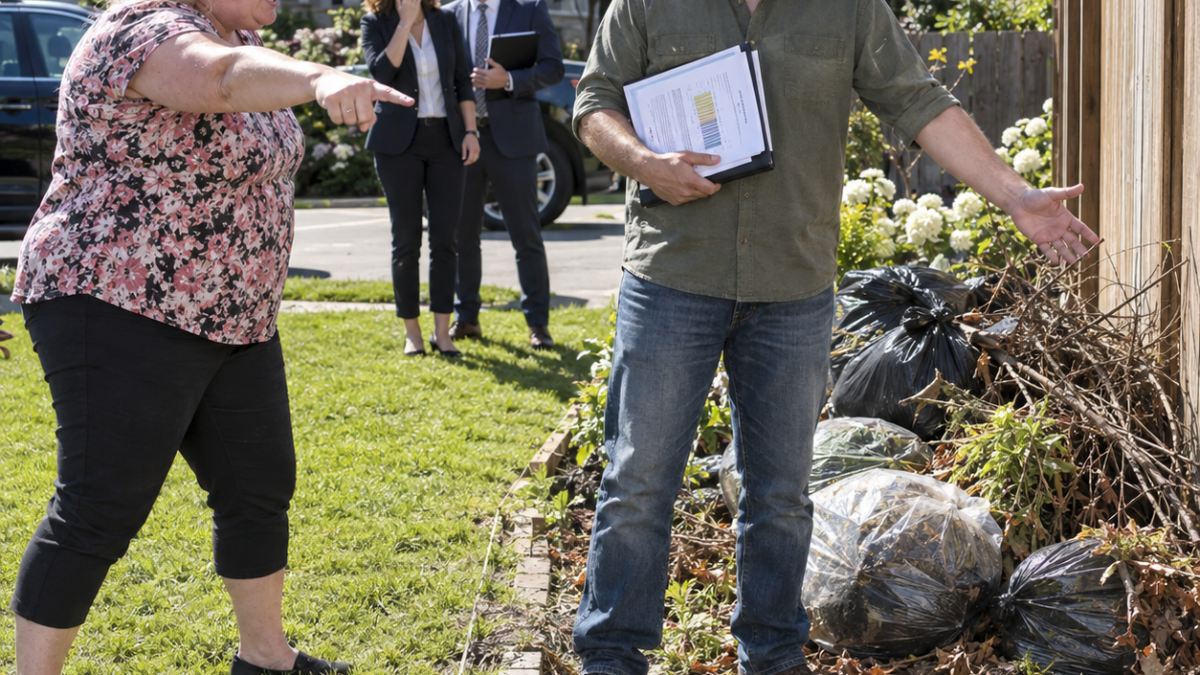
PART 2
The first thing I bought was not a shovel.
It was a trail camera.
Then another.
Then a third.
If Karen wanted to turn the back edge of my land into a dumping site, I wanted every person who crossed that fence recorded doing it.
Sarah stood in the doorway of my workshop while I unpacked the cameras.
“You’re smiling.”
“Am I?”
“Yes.”
“That’s concerning.”
“Very.”
She watched me insert memory cards.
“Tell me you’re not doing anything stupid.”
“I’m putting cameras on our own property.”
“That’s not an answer.”
I looked up.
“I won’t confront anybody.”
“Better.”
“I won’t threaten anybody.”
“Better.”
“I won’t touch anything until we know what’s in that pile.”
Her expression changed.
That was the part neither of us had wanted to say aloud.
This might be more than yard waste.
Sarah folded her arms.
“You think chemicals are in there.”
“I saw pesticide containers.”
“Empty?”
“I don’t know.”
“Paint?”
“Some cans.”
Her face tightened.
“And that oily smell?”
“I don’t know yet.”
She looked toward the tree line beyond the workshop window.
Our creek ran downhill from the dumping area.
Not directly beneath it, but close enough that runoff eventually entered the same drainage basin.
“How long?”
“What?”
“How long has this been happening?”
“I don’t know.”
That answer bothered me more than anything Karen had said.
We had owned the acreage for two years.
I’d concentrated most of my work farther south where the house, workshop, and garden would eventually sit.
The northern gully was steep, tangled with kudzu, and easy to ignore.
A perfect place for someone to believe nobody would notice.
I installed the first camera high in an oak overlooking the gap in the fence.
The second covered the pile from the east.
The third pointed downhill toward the section containing nonorganic trash.
Motion activated.
Night vision.
Time stamped.
Then I walked the boundary with my original survey.
Every iron pin was where it should be.
The old fence deviated only inches from the legal line.
Karen’s claim that I might be confused about ownership was nonsense.
I marked the pins with bright survey ribbon.
Photographed them.
Logged coordinates.
Then I drove to the county records office and pulled certified plats for both my parcel and Willow Creek Estates.
The answer was exactly what I expected.
Their lots stopped at the fence.
My land began on the other side.
No community parcel.
No easement.
No waste-disposal agreement.
No right of entry.
Nothing.
My next stop was my computer.
Karen had made one mistake I couldn’t understand.
She’d cited a date.
May 2021.
People who fabricate vague stories are hard to corner.
People who fabricate specific ones give you handles.
I downloaded the official May 2021 minutes.
Then April.
June.
Every board packet around them.
Nothing.
I searched the entire archive.
Compost.
Organic.
Disposal.
Border.
Yard waste.
Zero.
There had been no vote.
No designation.
No eco-friendly program.
At least not in any publicly posted board record.
I printed the real minutes and placed them in the binder.
Sarah watched me label another divider.
“What’s that one?”
“False representations.”
“Sounds dramatic.”
“It sounds organized.”
“That’s how I know you’re angry.”
She knew me too well.
When I was younger, anger made me loud.
Twenty-two years in the Corps taught me that loud anger wastes energy.
The most dangerous kind is disciplined.
The kind that creates folders.
I checked the trail cameras forty-eight hours later.
The first clip started at 3:14 on a Tuesday afternoon.
A commercial landscaping truck backed toward Karen’s rear gate.
Company logo on the door.
Three workers.
Trailer loaded with grass clippings, hedge cuttings, and branches.
One worker pulled back the fence.
Another backed the trailer through the opening just far enough to tip the load.
They didn’t even look nervous.
That told me everything.
This wasn’t an accident.
It was routine.
The next clip showed Karen’s husband carrying two lawn bags.
He threw them over.
Another clip three days later showed Karen herself.
Loose summer dress.
Sunglasses.
White kitchen bag.
It was leaking.
She carried it to the opening and tossed it onto my side.
Not compost.
Household garbage.
I replayed the clip.
Sarah stood beside me.
“That isn’t yard waste.”
“No.”
“Can you tell what’s inside?”
“No.”
“Do you recognize the bag?”
I looked at her.
“What?”
“Karen was holding the same kind of bag when she took trash out during that neighborhood cookout.”
I stared at my wife.
“Why do you know Karen’s garbage bags?”
Sarah shrugged.
“She wears bright clothes. I notice things.”
I saved the clip in three places.
Computer.
External drive.
Cloud storage.
Over the next two weeks, the evidence became almost boring in its consistency.
Tuesday.
Landscaping crew.
Friday.
Karen’s husband.
Sunday.
Neighboring homeowner with a wheelbarrow.
Tuesday.
Landscaping crew again.
Then something appeared that made me stop treating this like simple trespass.
Karen’s husband carried a half-empty paint can.
He threw it onto the pile.
Later that week, he arrived with a plastic herbicide jug.
He unscrewed the lid.
Turned it upside down.
Liquid poured onto the ground.
Then he tossed the empty bottle after it.
I stared at the footage.
My stomach dropped.
“Sarah.”
She came in.
“What?”
“Look.”
She watched.
Once.
Then again.
“That goes downhill.”
“Yeah.”
“Toward the creek.”
“Eventually.”
Her face went white.
“You need to call somebody.”
“I know.”
Another clip arrived that weekend.
Four old tires.
Oily shop rags.
A small container that looked like automotive fluid.
That was enough.
I called David Chen.
David and I had served together early in my career.
Back then he was a field engineer who could estimate drainage capacity while eating an MRE and arguing baseball.
After leaving active duty, he used the GI Bill for law school.
Now he practiced property and environmental law.
When he answered, his first words were:
“You only call when something is broken.”
“My northern property line.”
“Fence?”
“People.”
“That sounds worse.”
I told him everything.
He interrupted twice.
“Wait. She claimed an HOA compost site on your property?”
“Yes.”
“Written?”
“She waved what she called meeting minutes. Official archive doesn’t match.”
“Keep both.”
“I have the real ones.”
“Good.”
Then I described the video.
Paint.
Herbicide.
Tires.
Oil.
He stopped joking.
“Do not touch the pile.”
“I wasn’t planning to.”
“Do not excavate it.”
“Okay.”
“Do not move containers unless there’s immediate danger.”
“Got it.”
“Keep the cameras running.”
“They are.”
“And Marcus?”
“Yeah?”
“Don’t confront her again.”
“I wasn’t.”
“Good.”
He paused.
“You may have an environmental contamination case, not just dumping.”
“How bad?”
“Impossible to know without testing.”
“What do we do?”
“Get professionals.”
GeoEnvironmental Solutions arrived two weeks later.
Three technicians.
Tyvek suits.
Steel augers.
Sample jars.
GPS receiver.
Chain-of-custody forms.
Karen noticed.
Of course she did.
She stood on her patio watching.
One technician took samples from the center of the pile.
Another worked downhill.
A third sampled sediment closer to the creek.
Then Karen came to the fence.
“What are those people doing?”
I kept my distance.
“Testing.”
“For what?”
David had been very clear.
No unnecessary conversation.
I said:
“My attorney asked me not to discuss an active matter.”
Her face changed.
“Attorney?”
“Yes.”
“This is ridiculous.”
I turned away.
“Marcus!”
I kept walking.
“You can’t just bring hazardous-material people out here and frighten everyone!”
That almost made me stop.
Almost.
She had dumped unknown chemicals on my land and now she was worried testing might frighten someone.
I kept moving.
The technicians spent six hours documenting the site.
Every sample sealed.
Numbered.
Logged.
Photographed.
When they left, the pile looked exactly the same.
But now it had become evidence.
Karen stopped dumping personally after that day.
The landscaping crew didn’t.
Tuesday afternoon, they arrived again.
Camera recorded everything.
Interesting.
Either she hadn’t warned them, or she didn’t believe we had enough to matter.
The lab report took nearly a month.
Those four weeks were harder than the confrontation.
Waiting always is.
When you don’t know the extent of damage, your mind fills the gap.
Sarah stopped walking the creek path.
“I know that’s irrational,” she told me.
“It isn’t.”
“I keep imagining poison in the water.”
“We don’t know that.”
“That doesn’t help.”
So we waited.
Meanwhile David requested records from the HOA.
Internal minutes.
Landscape contracts.
Emails concerning border disposal.
Invoices.
Committee records.
Anything related to a composting program.
Willow Creek’s attorney refused almost everything.
Confidential.
Privileged.
Administrative burden.
Irrelevant to a nonmember.
David laughed when he read their response.
“Good.”
“Good?”
“They’re forcing us to ask a court.”
“That costs money.”
“It also creates an independent record.”
He filed.
Karen apparently decided my silence meant weakness.
Her newsletters returned to normal.
Pool hours.
Parking reminders.
Pressure washing.
One included a paragraph about residents avoiding “outside misinformation campaigns.”
No name.
Didn’t need one.
Then Arthur Hale contacted me.
He was seventy-eight.
Widower.
Former high-school history teacher.
He lived four houses inside Willow Creek.
I met him while walking near the public trail beside the subdivision.
His mailbox was black.
Every other mailbox was green.
I complimented his roses.
He looked suspicious.
“Who are you?”
“Marcus Thorne.”
His eyes widened.
“The dump man.”
“That’s one way to put it.”
“You’re the fellow arguing with Karen.”
“Trying not to.”
He stared at me.
Then nodded toward his mailbox.
“Two thousand eighty dollars.”
“For what?”
“That.”
He pointed.
“The mailbox?”
“Wrong black.”
I thought he was joking.
He wasn’t.
“My wife painted it thirty years ago.”
His voice softened.
“Mary.”
He touched the post.
“She died last year.”
“I’m sorry.”
“She picked black because she thought the green ones looked ridiculous.”
He almost smiled.
“Karen says the current architectural standard requires evergreen.”
“And you’re refusing?”
“Absolutely.”
“Two thousand dollars?”
“Daily fines.”
“Lien?”
He nodded.
My stomach tightened.
Arthur looked toward the subdivision.
“I spent forty-one years teaching children that rules matter.”
He looked back at me.
“I never taught them that rules matter more than people.”
We talked for an hour.
That conversation led to another.
Then another.
The Rodriguez family.
Their son Leo used a therapeutic swing because cerebral palsy affected his mobility.
The family had installed equipment recommended by his therapist.
Karen’s architectural committee ordered it removed because the structure wasn’t on the community’s approved playground list.
Mrs. Rodriguez cried when she showed me the empty concrete pad.
“He asks why the swing disappeared.”
She wiped her eyes.
“I told him it broke.”
Her husband stared at the floor.
“I hated lying to him.”
Then came the Bennetts.
House painters.
Their commercial work van occasionally sat in their driveway while they loaded supplies.
Karen fined them.
Then fined them again.
Eventually a lien appeared.
Mr. Bennett looked twenty years older than he probably was.
“We’ve discussed selling.”
“Don’t.”
He laughed bitterly.
“With the lien?”
“Give us time.”
“Who’s us?”
“My attorney.”
That changed his expression.
Hope is a dangerous thing to give someone.
I chose my next words carefully.
“I can’t promise an outcome.”
He nodded.
“But Karen is not as untouchable as she wants you to believe.”
The alliance formed quietly.
Arthur knew long-time residents.
The Rodriguezes knew families.
The Bennetts knew tradespeople.
People started sharing letters.
Fines.
Hearing notices.
Appeal denials.
Different stories.
Same pattern.
Karen rarely compromised.
She escalated.
Residents paid because fighting cost more than surrender.
My thirty acres gave me one advantage Karen hadn’t accounted for.
I didn’t belong to Willow Creek.
She couldn’t fine me into obedience.
She couldn’t threaten access to the pool.
She couldn’t restrict my vote.
She couldn’t put architectural pressure on my house because her bylaws had no authority over me.
The only leverage she had was intimidation.
And that stopped working the moment I documented the first dump.
Then the soil report arrived.
David emailed me at 6:42 on a Thursday morning.
Call me before opening it.
That was never a good sign.
I called.
“Morning.”
“Sit down.”
“I am.”
“Sarah there?”
“No.”
“Maybe bring her.”
My chest tightened.
I called Sarah into the office.
David continued.
“Testing found significant contamination.”
“How significant?”
“Enough that you need remediation.”
Sarah gripped the back of my chair.
“Water?”
“Some downstream migration indicators. Creek contamination is still limited based on these samples, but the plume is moving.”
“What did they find?”
David read from the summary.
Elevated lead.
Arsenic.
Cadmium.
Petroleum-related compounds.
Solvents.
Herbicides.
Pesticide residues.
Several results exceeded relevant screening levels.
Not every contaminant could be tied to one specific dumped object without further analysis.
That mattered.
We weren’t going to claim more than the evidence supported.
But there was enough.
More than enough.
The environmental firm recommended immediate controlled removal.
Estimated initial remediation:
Between $150,000 and $200,000 depending on excavation depth, disposal classification, and confirmatory sampling.
Sarah walked out of the room.
I heard the back door close.
I almost followed.
David stopped me.
“Marcus.”
“Yeah?”
“Listen.”
I forced myself to.
“This is awful.”
“Yes.”
“But you found it before it spread farther.”
I looked toward the window.
“That’s supposed to make me feel better?”
“No.”
He paused.
“Nothing I say today will.”
I appreciated that.
After we hung up, I found Sarah sitting beside the creek.
I sat next to her.
She didn’t look at me.
“This was supposed to be clean.”
“I know.”
“We bought thirty acres so nobody could do this to us.”
“I know.”
“I keep thinking about the garden.”
“It’s uphill.”
“The house site.”
“Different drainage.”
“Animals.”
“I know.”
She turned.
“Stop saying you know.”
Her eyes were wet.
“I know.”
That made her laugh through the tears.
“Idiot.”
I put my arm around her.
For several minutes, neither of us spoke.
Finally:
“What happens now?”
“We clean it.”
“How much?”
“Up to two hundred thousand, maybe more depending on what they find.”
She stared.
“We don’t have that.”
“David believes responsible parties and potentially the HOA or insurers can be pursued.”
“Potentially.”
“Yes.”
She looked at the creek.
“And until then?”
“We protect what we can.”
That afternoon, David called back.
His voice was different.
Not angry.
Amused.
“What?”
“You sitting?”
“I hate when you ask that.”
“Karen listed her house.”
I didn’t say anything.
“For sale?”
“Yep.”
“How do you know?”
“Public listing.”
“Why do we care?”
“Because she’s adjacent to a documented environmental contamination site.”
My brain caught up.
“Disclosure.”
“Exactly.”
I stood.
“Has she disclosed it?”
“We don’t know.”
“Can we find out?”
“Carefully.”
“No games.”
“Agreed.”
That mattered.
I wasn’t going to sabotage a legal sale through deception.
If a prospective buyer was entitled to material information, that information should reach them through appropriate lawful channels.
The soil report didn’t belong to Karen.
It described contamination on my property adjacent to hers.
But if she had knowingly participated in creating it, the situation could become material to her transaction.
David checked the listing.
Sale Pending.
The property had gone under contract.
Sarah read it over my shoulder.
“They’re leaving.”
“Looks like it.”
“Do you think that’s why?”
“Maybe.”
“Running?”
“Maybe.”
She looked at me.
“Don’t guess.”
“Right.”
That was the rule.
Facts.
Always facts.
The annual Willow Creek picnic was scheduled for that Saturday.
Arthur mentioned it during one of our meetings.
“Karen gives a speech every year.”
“Of course she does.”
“State of the community.”
“Of course.”
“She’ll have half the neighborhood there.”
David and I discussed options.
I did not love the idea of turning a family picnic into a public confrontation.
David didn’t either.
But homeowners potentially faced cleanup liability if the HOA had participated in dumping through its contractors.
They had a right to know.
We prepared carefully.
No exaggerated signs.
No theatrical accusations.
The source story had framed the reveal as an ambush; I wanted the rewrite to feel believable.
So our materials were simple.
Survey map.
Photographs from my land.
Still images from trail cameras.
Plain-language environmental summary.
Estimated cleanup range.
Timeline.
No “criminal.”
No “corrupt.”
No “poison queen.”
Just evidence.
At 12:50 Saturday, we walked onto the common green.
I came with Sarah.
David wore a suit.
Arthur carried copies.
The Rodriguezes came.
The Bennetts.
Karen saw us instantly.
Her smile disappeared.
Music played.
Children ran through sprinklers.
People ate hot dogs.
For about thirty seconds, nobody understood why we were there.
Then residents recognized the photograph of Karen throwing a bag across the fence.
Murmurs spread.
Karen grabbed the microphone.
“Excuse me.”
The music stopped.
“This is a private community event.”
David stepped forward.
“We’re here regarding an environmental condition that may affect the association and adjoining properties.”
“You are not residents.”
“Some people with us are.”
She looked at Arthur.
His black mailbox had apparently made him recognizable.
“Arthur, don’t involve yourself in this.”
He smiled.
“Little late.”
Karen’s face reddened.
She pointed toward me.
“This man has been harassing the HOA for months.”
I answered:
“I sent one cleanup request.”
“You attended our meeting.”
“After you ignored the request.”
“You trespassed.”
“The meeting was advertised as open to homeowners. I identified myself and left when asked.”
She waved her hand.
“Whatever grievance you have is a private property dispute.”
David held up the soil report.
“Potential cleanup liability involving HOA contractors is not purely private.”
People began moving closer.
Karen’s husband emerged from the edge of the crowd.
I recognized him immediately from the cameras.
He looked at the trail-camera still.
Then at me.
His face changed.
Karen saw it.
That was when she understood we had video.
“What is that?”
I pointed.
“Your landscaping contractor unloading yard waste onto my parcel.”
“Organic waste.”
Next image.
Her husband with the tires.
Next.
Chemical jug.
Next.
Karen with household trash.
Nobody spoke.
Karen’s husband said:
“You can’t film us.”
David answered:
“The cameras were placed on Mr. Thorne’s property and recorded activity crossing onto his land.”
Karen grabbed the microphone tighter.
“These images are misleading.”
I held up the certified survey.
“Here’s the boundary.”
Arthur began passing copies.
A woman near Karen opened the packet.
“Is this your backyard?”
Karen ignored her.
I continued.
“We hired an independent environmental testing firm.”
Now everybody listened.
“Samples were collected under documented chain of custody.”
I held up the summary.
“Contamination was found.”
A man called:
“What kind?”
“Lead. Arsenic. Cadmium. Petroleum-related compounds. Herbicide and pesticide residues.”
Murmurs became voices.
I raised one hand.
“Not every contaminant can currently be tied to a specific individual or dumped item. But the site requires remediation.”
“How much?” someone asked.
“Initial estimate is roughly one hundred fifty to two hundred thousand dollars.”
Silence.
A child laughed somewhere near the inflatable slide.
The normal sound felt bizarre against the crowd’s expression.
Karen finally spoke.
“This has nothing to do with homeowners.”
David turned.
“If HOA contractors participated while performing association-funded work, the association’s insurer and counsel may need to be involved.”
That landed.
The treasurer, a man named Tom Reeves, pushed through the crowd.
“What contractors?”
I pointed at the still.
Tom stared.
“That’s GreenLine.”
“Yes.”
“They have our landscaping contract.”
“Yes.”
Tom looked at Karen.
“Did you tell them to dump there?”
“No.”
Her answer came too fast.
Her husband looked down.
Tom repeated:
“Did anybody on the board authorize that?”
Karen snapped:
“No.”
A voice came from behind us.
“That’s not what you said at the meeting.”
Everyone turned.
One of the residents who had attended my earlier confrontation stepped forward.
“You said the board designated it as a composting site.”
Karen’s face changed.
“I said the landscape committee had—”
“No,” he replied. “You said the board.”
Arthur held up the actual minutes.
“I checked.”
Karen glared.
Arthur continued.
“There’s no compost site resolution.”
Tom took the document.
He looked at Karen.
“Is there another set of minutes?”
She didn’t answer.
“Karen.”
“They were draft minutes.”
“Where are they?”
Silence.
The crowd’s mood changed.
Not mob anger.
Something worse for a leader.
Doubt.
Then David received a call.
He stepped aside.
Listened.
Looked toward Karen’s house.
Then came back to me.
“We need to talk.”
“Now?”
“Now.”
We moved away.
“What?”
“Karen’s buyers are here.”
I looked toward the back of the crowd.
Young couple.
Mid-thirties.
The woman held the hand of a little girl.
“They’re the Garcias?”
“Apparently.”
“How do you know?”
“Their buyer’s agent called me after recognizing the property listing from our map. One of the residents sent him the report this morning.”
I exhaled.
“So they know?”
“Not fully.”
“What do we do?”
“Their agent is arranging counsel.”
“Good.”
I didn’t want to be the person who announced to strangers that their dream house might have an environmental disclosure problem.
They needed professional advice.
Karen, however, noticed them.
Her face went white.
The woman—Mrs. Garcia—walked toward her.
“Karen?”
Karen’s husband whispered something.
Mrs. Garcia held up the environmental summary.
“What is this?”
Karen tried to smile.
“A dispute with the adjoining landowner.”
“Is the contaminated area behind your house?”
“Technically it’s not on our property.”
“That isn’t what I asked.”
Mr. Garcia joined her.
“Did you know about this before we signed?”
Karen’s mouth opened.
Closed.
That silence mattered.
Mrs. Garcia’s voice shook.
“Our daughter was going to play back there.”
Karen finally said:
“There’s a fence.”
Mrs. Garcia stared at her.
A fence.
That was the answer.
Not reassurance.
Not disclosure.
A fence.
Mr. Garcia took his wife by the arm.
“We’re calling our attorney.”
They walked away.
Karen turned toward me.
The expression on her face scared Sarah enough that she stepped closer.
Karen pointed.
“You did this.”
“No.”
“You ruined my sale.”
“I tested my soil.”
“You brought them here!”
“I didn’t.”
“You planned all of this.”
I answered carefully.
“I documented what happened on my property.”
Her husband grabbed her arm.
“Karen.”
She yanked away.
“No!”
People fell silent.
She turned toward the residents.
“This man has been obsessed with destroying me since I told him the truth about that land!”
Arthur shouted:
“His land.”
She pointed at him.
“You stay out of this!”
“No.”
Karen lost control.
Not physically at first.
Verbally.
She began listing everything she’d done for Willow Creek.
Landscaping.
Pool repairs.
Holiday decorating.
Vendor management.
Property values.
Then:
“And this is the thanks I get?”
Tom the treasurer stepped forward.
“This isn’t about gratitude.”
“You wouldn’t know how to run this association without me.”
“Maybe.”
Tom held up the trail-camera image.
“But I know we need counsel.”
“We have counsel.”
“Independent counsel.”
That word hit her.
Independent.
Tom turned toward the crowd.
“I am calling an emergency board meeting tonight.”
Karen stared.
“For what?”
“To determine whether the association was involved in unauthorized dumping and whether you should be temporarily suspended while it’s investigated.”
“You can’t suspend me.”
“I can move it.”
Another board member spoke.
“I’ll second.”
Karen looked between them.
“You’re unbelievable.”
Then Mrs. Rodriguez stepped forward.
Her voice trembled.
“Since we’re talking about investigations, maybe we can investigate why you made us remove Leo’s swing.”
Karen turned.
“That’s unrelated.”
“It’s related to you.”
Her husband tried to stop her.
She kept going.
“You told us therapeutic equipment didn’t matter because visual standards applied equally.”
More residents looked over.
Arthur stepped beside her.
“And my mailbox lien.”
The Bennetts joined.
“And our work van.”
Another woman:
“My wind chimes.”
Another:
“My daughter’s Girl Scout banner.”
Another:
“You tried to fine us during a drought because our grass wasn’t green enough.”
It wasn’t coordinated.
That’s what made it powerful.
People had waited years.
Once one person spoke, others followed.
Karen stood in the center holding a dead microphone.
Nobody needed amplification anymore.
Tom announced:
“Emergency meeting. Seven tonight.”
Karen dropped the microphone onto the folding table.
Then she walked toward her house.
Her husband followed.
No one cheered.
I was glad.
This wasn’t a movie.
A contaminated property is not funny.
A couple potentially losing a home sale is not funny.
Families discovering their HOA may face environmental liability is not funny.
Justice doesn’t become more legitimate because the crowd enjoys somebody’s humiliation.
Sarah took my hand.
“You okay?”
“No.”
“Me neither.”
We packed the materials.
David looked at me.
“You thought you’d feel better.”
“I thought I’d feel something.”
“You will.”
“What?”
“Tired.”
He was right.
At seven, Willow Creek’s clubhouse was packed.
I did not attend.
That surprised people.
Arthur called at 8:23.
“She’s suspended.”
“For how long?”
“Pending investigation.”
“Vote?”
“Four to one.”
“Who voted against?”
“Karen.”
I smiled despite myself.
“Of course.”
Then Arthur’s voice changed.
“Marcus?”
“Yeah?”
“Thank you.”
“Don’t.”
“I mean it.”
“Wait until this is done.”
The next morning, GreenLine’s owner called me.
Not Karen’s landscaping workers.
The owner.
He sounded terrified.
“Mr. Thorne, I just became aware our crews have been disposing material on your property.”
“You weren’t aware?”
“No.”
“Your truck has been there every Tuesday for weeks.”
“Our route supervisor was told that location was an approved organic disposal area.”
“By whom?”
Pause.
“Our attorney told me not to discuss names directly.”
“Then talk to my attorney.”
“I will.”
He did.
Within forty-eight hours, GreenLine stopped all work for Willow Creek and notified its insurer.
More importantly, it preserved internal work orders and instructions.
David later told me:
“This is why you document instead of scream.”
The records-compulsion case moved forward.
The association’s temporary leadership stopped resisting.
Emails were produced.
Not some giant criminal conspiracy.
Reality was simpler.
Karen had emailed the landscape supervisor months earlier.
Use north border compost location behind my lot.
No parcel number.
No permission from me.
No legal description.
No board authorization attached.
Just Karen.
The contractor assumed she had authority.
That didn’t excuse dumping.
But it clarified how it started.
Then the emails got worse.
One supervisor asked whether black bags were permitted.
Karen replied:
If it’s yard-related, yes. Put it beyond the fence so residents don’t have to see it.
Beyond the fence.
My land.
Another email from her husband asked whether old soil amendments and garden chemicals could be left there.
Karen replied:
Anything landscaping-related is fine. Marcus doesn’t use that section anyway.
Sarah read that one twice.
Then handed the printout back.
“That’s the sentence.”
“What?”
“That’s what this was.”
She pointed.
“Not misunderstanding. Not compost. She decided because we weren’t standing there every day, it didn’t matter.”
I nodded.
Sarah’s eyes filled.
“She thought unused meant unloved.”
That sentence stayed with me.
The Garcias terminated their purchase contract after consulting their attorney and environmental professional.
I never spoke to them directly.
I didn’t need to.
Karen’s house returned to active listing.
This time, the environmental issue had to be addressed with prospective buyers and their representatives in whatever manner applicable law and professional advice required.
The listing sat.
Then the price dropped.
Five percent.
Then another.
People in Willow Creek noticed.
Karen blamed me.
A certified letter arrived at my address.
Her personal lawyer demanded that I stop “interfering with the marketability of the Miller residence.”
David read it and laughed.
“What?”
“They want you to stop telling the truth about your own contamination.”
“Response?”
“One page.”
His letter said, in essence:
My client will continue providing truthful environmental information concerning his property to regulators, insurers, courts, and other persons legally entitled to receive it.
Nothing more.
Karen’s lawyer never answered.
The state environmental agency became involved after the test results and dumping evidence were reported through counsel.
Inspectors visited.
More samples.
More photographs.
The contaminated area was formally delineated.
The final excavation zone was larger than our original estimate.
Not thirty acres.
Not the whole creek valley.
But enough.
Hundreds of tons of impacted material.
Some contamination had migrated downslope, but we had caught it before it reached the worst-case scenario Sarah feared.
Cleanup planning began.
Who would pay became the fight.
Karen.
Her husband.
GreenLine.
The HOA.
Insurance carriers.
Potentially others.
David told me:
“Do not expect one villain to write one check.”
He was right.
Environmental responsibility rarely works like that.
Lawyers argued.
Insurers reserved rights.
Contractors disputed percentages.
The HOA argued Karen exceeded authority.
Karen argued she acted for the HOA.
GreenLine argued it relied on instructions.
Everybody pointed.
Meanwhile, the pile remained.
Fenced.
Marked.
Untouched except by professionals.
Every time I walked near it, I felt angry all over again.
Then one morning, I found Leo Rodriguez standing with his mother near my gate.
They had called first.
Leo was ten.
Thin legs.
Bright eyes.
He used forearm crutches that day.
Mrs. Rodriguez carried a basket.
“I hope we’re not bothering you.”
“No.”
Leo looked toward the woods.
“Is that where the trash was?”
“Still is.”
His mother looked embarrassed.
“He wanted to see.”
“From here is fine.”
Leo stared through the trees.
“Why would somebody put trash there?”
I didn’t know how to answer without making Karen into a monster for a child.
“Sometimes people convince themselves something is okay because it’s convenient.”
He frowned.
“That doesn’t make it okay.”
“No.”
He looked up at me.
“My swing is coming back.”
I smiled.
“I heard.”
The temporary board had suspended enforcement of the playground decision.
An accessibility review concluded Leo’s therapeutic equipment could return.
His mother wiped her eye.
“He hasn’t stopped talking about it.”
Leo looked serious.
“You should build a swing.”
“Me?”
“Yeah.”
“I have trees.”
“Exactly.”
Smart kid.
After they left, Sarah said:
“You’re building a swing.”
“I am not.”
“You absolutely are.”
Three days later, I was designing one.
Not because I needed it.
Because someday grandchildren might.
Hope does that.
It makes you build things before you need them.
The settlement negotiations lasted almost five months.
In the end, multiple parties contributed.
The HOA’s insurer funded a substantial portion of remediation under negotiated terms.
GreenLine’s carrier contributed.
Karen and her husband bore personal financial consequences for conduct outside or beyond protected board activity.
Some terms were confidential.
The important part was simple:
Sarah and I did not pay to clean up what others had dumped.
That mattered.
The HOA also agreed to compensate certain residents whose enforcement cases had been mishandled.
Arthur’s lien was released.
The Bennetts’ disputed fines disappeared.
The Rodriguez family received reimbursement associated with removing and reinstalling Leo’s therapeutic equipment.
Other claims were reviewed individually.
Not every homeowner won everything.
That mattered too.
A few complaints were legitimate HOA enforcement.
People were angry enough to want every old violation erased.
Tom refused.
“Then we’re no better than Karen.”
He was right.
Fairness isn’t reversing every decision made by someone you dislike.
It’s examining each decision honestly.
Karen resigned before the board could complete formal removal.
No speech.
No apology.
One email.
Effective immediately, I resign as President and Director of Willow Creek Estates Homeowners Association.
That was it.
Arthur printed it.
Framed it.
Hung it beside his black mailbox.
“I thought teachers were mature.”
“Retired.”
The mailbox stayed black.
The new board later grandfathered original homeowner features that predated certain architectural standards.
Arthur acted like he’d won the Supreme Court.
Maybe, emotionally, he had.
Cleanup started in November.
Excavators arrived.
Not dramatic television excavators.
Environmental remediation equipment.
Controlled excavation.
Covered trucks.
Dust suppression.
Documentation.
Every load weighed and manifested.
I stood there the first morning.
Sarah came beside me.
The first bucket bit into the pile.
She flinched.
“You okay?”
“Ask me in two months.”
The smell was worse once they opened the deeper layers.
Decomposed grass.
Oil.
Solvents.
Rot.
Wet plastic.
Things buried for years.
Workers found batteries.
Paint containers.
Pesticide jugs.
Household garbage.
Landscape debris.
Tires.
Broken equipment.
Construction scraps.
Evidence of far more than the cameras had recorded.
The deeper layers predated my discovery.
Maybe years.
That explained the contamination.
Our cameras had captured the final months of a pattern already well established.
GeoEnvironmental technicians sampled constantly.
Excavate.
Test.
Excavate farther.
Test again.
One day, a sample showed elevated concentrations beyond the expected boundary.
My stomach dropped.
They expanded the excavation.
Another twenty feet.
Sarah cried that night.
Not because of money.
Because trees had to come down.
Old oaks.
Healthy-looking from above.
Roots in contaminated soil.
The environmental arborist recommended removal of several.
Sarah stood beside one before it came down.
She placed her palm against the bark.
“This one wasn’t part of the plan.”
“No.”
“Karen doesn’t even know what she killed.”
I didn’t answer.
The next morning, the oak fell.
The sound echoed across our property.
I hated her then.
For maybe thirty seconds, I hated her completely.
Then I looked at Sarah.
Hatred wasn’t going to replant a tree.
Work would.
So we worked.
Two months later, contaminated soil was gone.
Clean fill came in.
Then topsoil.
The gully was regraded.
Erosion control installed.
Native grasses.
Dogwoods.
Redbuds.
Sycamores near the wetter zone.
Oaks farther uphill.
Mrs. Gable from another part of town didn’t exist in this story; instead, Arthur arrived with a shovel.
The Rodriguezes came.
The Bennetts.
Tom from the new board.
Even two former GreenLine employees volunteered after their company’s involvement became public.
We planted.
Not for Karen.
For the land.
Leo sat on a folding chair giving instructions.
“That tree is crooked.”
“Leo,” his mother said.
“It is.”
He was right.
We straightened it.
Arthur planted a dogwood.
“My wife liked these.”
“Mary?”
He nodded.
“She would’ve hated Karen.”
“Arthur.”
“What?”
“We’re healing.”
“I can heal and hold opinions.”
Fair.
The new privacy fence went up last.
Eight feet.
Wood.
Clean line.
No gap.
Tom came to inspect it.
“I assume this finally meets your standards.”
“My standards?”
“Boundary.”
I looked along the fence.
“It’s on the survey line.”
“We paid for a survey.”
“Good.”
“You engineers are exhausting.”
“We’re usually correct.”
He laughed.
Willow Creek changed slowly.
Not magically.
People who had supported Karen didn’t suddenly apologize.
Some resented the legal expenses.
Some thought I had overreacted.
A few believed Karen had been unfairly blamed for a dumping practice many residents had used.
That last part contained some truth.
She had normalized it.
Others participated.
The trail cameras showed that.
A teenager dumping weeds wasn’t a criminal mastermind.
A neighbor tossing leaves thought she was using a community compost site.
Not everybody understood the land was mine.
Karen had blurred that boundary deliberately.
So we distinguished.
People who reasonably relied on false HOA instructions were treated differently from people recorded dumping paint, chemicals, or household waste.
Context mattered.
Intent mattered.
Damage mattered.
That’s what justice required.
Karen’s house remained listed.
Months passed.
Price reductions appeared.
Her original asking price was gone.
Then the listing disappeared.
Returned.
Different agent.
More disclosure language.
Environmental remediation nearby.
Resolved contamination on adjacent parcel.
Documentation available.
That is what ultimately hurt the house.
Not revenge magic.
Not me calling buyers.
Information.
Buyers asked questions.
Lenders asked questions.
Inspectors asked questions.
Even after remediation, some people didn’t want the history.
Eventually an investor made an offer far below the original listing price.
Karen rejected it.
Another buyer offered slightly more.
Still low.
She rejected that too.
I knew because Arthur watched real-estate websites the way other retirees watched baseball.
“Price dropped again.”
“Stop monitoring her house.”
“I like market data.”
“You taught history.”
“I contain multitudes.”
Six months after cleanup finished, I saw a moving truck in Karen’s driveway.
No sold sign.
No celebration.
Just movers.
I was working near the new fence.
Karen came through her back gate.
Stopped.
The fence separated us now.
She looked thinner.
Tired.
No bright dress.
Jeans.
Sweatshirt.
For several seconds neither of us spoke.
Then she said:
“Happy?”
It wasn’t angry.
That made it harder.
“No.”
She laughed once.
“Of course.”
“I’m relieved.”
“You destroyed our home value.”
I put down the shovel.
“I didn’t put the waste there.”
“You published that report.”
“My lawyer provided it where required.”
“You showed it to the neighborhood.”
“Your HOA’s contractors participated in dumping.”
“You embarrassed us.”
I looked at her.
“Karen, my land required hundreds of thousands of dollars in cleanup.”
“Insurance paid.”
“Trees died.”
“You replanted.”
“My wife stopped walking by her own creek because she thought it might be contaminated.”
Karen looked away.
I continued.
“Leo lost his swing because of you.”
“That has nothing to do with this.”
“It has everything to do with why nobody trusted you once the evidence appeared.”
Her face tightened.
“You think you’re some hero.”
“No.”
“Everybody treats you like one.”
“I wanted a quiet piece of land.”
“And you got a war.”
“Yes.”
She almost smiled at the irony.
Then she looked at the fence.
“We used that gully before you bought the property.”
“Did you?”
“Yes.”
“Did the previous owner give permission?”
“I don’t know.”
“Then you should have checked.”
“Nobody cared.”
“I cared.”
“You didn’t even know it was there for two years.”
There it was again.
The argument.
Unused meant unwanted.
“You don’t get to decide something has no value because the owner isn’t staring at it.”
She crossed her arms.
“You had thirty acres.”
“And?”
“We had quarter-acre lots.”
“So my extra land became your landfill?”
“It was yard waste at first.”
“At first?”
She realized what she’d said.
I waited.
Karen closed her eyes.
“My husband started throwing other things.”
“You did too.”
“Household trash. Not chemicals.”
“Trail camera has you.”
“I know.”
“Then why lie?”
“Because by the time you confronted me, it was too big.”
That answer surprised me.
“What?”
She looked toward her house.
“The landscapers had used it for years.”
“Under your instructions?”
“At first I told them leaves and clippings.”
“And then?”
“I stopped checking.”
“Because it was convenient.”
“Yes.”
The honesty sounded painful.
“I told the board it was compost because admitting the truth meant admitting I’d let it happen.”
She swallowed.
“Then you came to the meeting.”
“And you produced fake minutes.”
Her face flushed.
“They were notes.”
“Karen.”
“They were based on discussions.”
“Not a vote.”
“No.”
There it was.
Finally.
No board resolution.
No mysterious program.
Just a story she’d created after being caught.
“Why?”
She stared at the new trees.
“Because I wasn’t going to be humiliated by someone who didn’t even live in the neighborhood.”
I almost laughed.
Not from humor.
From disbelief at how small the reason sounded compared with the damage.
“You poisoned land because you didn’t want to be embarrassed.”
“No.”
She snapped the word.
Then softer:
“No. I let something stupid grow because admitting I was wrong kept getting harder.”
That sounded closer to truth.
She looked toward the moving truck.
“We’re leaving.”
“Where?”
“My sister’s.”
“For good?”
“For now.”
“What about the house?”
“Bank.”
I didn’t ask.
She volunteered.
“We fell behind.”
I felt no satisfaction.
None.
Karen looked at me.
“This is what you wanted.”
“No.”
“Don’t lie.”
“I wanted cleanup.”
“You wanted revenge.”
“At one point?”
I thought about the picnic.
The report.
The buyers learning.
Maybe part of me had wanted impact.
“Probably.”
She seemed surprised I admitted it.
“But not this.”
I nodded toward the house.
“You made choices. They had consequences. I don’t need your life destroyed to prove I was right.”
Her eyes filled.
“Easy for you to say.”
“No. It isn’t.”
For a moment, the fence felt unnecessary.
Not because I trusted her.
Because there was nothing left to fight over.
She took a breath.
“I hate that fence.”
“It’s staying.”
That produced the smallest smile.
“I figured.”
Then she looked at the saplings.
“What are those?”
“Dogwoods. Redbuds. Oaks.”
“Will they grow?”
“Some.”
“Some?”
“That’s how restoration works.”
She nodded.
“Slow.”
“Very.”
She started away.
“Karen.”
She stopped.
“The Garcias found another house.”
She turned.
“How do you know?”
“Arthur.”
“Black mailbox?”
“Black mailbox.”
She actually laughed.
“I hated that mailbox.”
“I know.”
She wiped her cheek.
“Goodbye, Marcus.”
“Goodbye.”
The truck left the next morning.
No neighbors lined the street.
No applause.
No final humiliation.
Just a moving truck.
That’s how most reigns end.
Not with thunder.
With boxes.
Arthur’s lien was gone.
He repainted his mailbox that spring.
Still black.
Fresh black.
When I saw it, I asked:
“Why repaint if the old paint meant so much?”
He touched the post.
“Mary picked the color.”
“She didn’t pick the peeling.”
Fair.
The Bennetts stayed.
Their business recovered.
A year later, they bought a second van.
Tom jokingly asked if it was an approved color.
Mr. Bennett nearly threw a paint roller at him.
Leo’s swing returned.
Bigger.
Safer.
Designed with input from his therapist.
The first afternoon he used it, Sarah and I were invited.
Leo laughed so loudly the entire block heard him.
Mrs. Rodriguez stood beside me crying.
“Karen called it visually disruptive.”
I watched Leo.
“Looks pretty good to me.”
The new board rewrote its enforcement policy.
Warnings.
Real appeals.
Accommodation review.
Limits on escalating fines.
Clear lien procedures.
Conflict checks.
Vendor oversight.
Most importantly, board members could no longer create informal programs involving property outside the association.
Arthur called that one the Marcus Rule.
I hated it.
He used the name anyway.
Our own land healed.
Not perfectly.
Environmental remediation isn’t magic.
We continued monitoring soil and water according to professional recommendations.
Follow-up samples improved.
The creek remained healthy.
The replanted slope stabilized.
Birds returned quickly.
Insects even faster.
The first spring after cleanup, Sarah found wild violets growing beside one of the new dogwoods.
She came running to the workshop.
“Marcus.”
I thought someone was hurt.
“What?”
“Come.”
“What’s wrong?”
“Nothing.”
“Sarah.”
“Come.”
She pulled me toward the gully.
Then crouched.
Three tiny purple flowers.
I stared.
“Violets.”
“I know what they are.”
“They came back.”
I smiled.
“Apparently.”
Her eyes filled.
“I didn’t plant these.”
I knelt beside her.
“No.”
“They just came.”
“Seeds were probably dormant.”
She elbowed me.
“Don’t engineer this moment.”
I shut up.
We sat there in dirt looking at three flowers.
That was the first time the land felt clean to me again.
Not because a report said contaminant levels were improving.
Not because trucks had removed soil.
Because something chose to grow.
Years later, that section of our acreage looks different from the rest.
You can still tell where the cleanup happened.
Trees are younger.
Contours slightly smoother.
Fence newer.
To anyone else, it probably looks ordinary.
To me, it is a map of everything that happened.
There is the oak planted by Arthur.
There are the redbuds Sarah chose.
There is the area where Leo complained our dogwood was crooked.
There is the spot where the original trash pile reached almost ten feet high.
Now ferns grow there.
The old evidence binder sits in my workshop cabinet.
Certified letters.
Surveys.
Trail-camera stills.
Environmental reports.
Legal correspondence.
Settlement documents.
I almost threw it away once.
Sarah stopped me.
“Keep it.”
“Why?”
“So someday when you exaggerate the story, I can correct you.”
“I don’t exaggerate.”
“You were in the Army.”
“Engineers don’t exaggerate.”
She laughed.
We kept it.
Our grandchildren eventually came.
Two.
A boy and a girl.
The swing I built after meeting Leo turned out to be useful after all.
One afternoon, my grandson asked why our northern fence was so tall.
“Privacy.”
“From who?”
“The neighborhood.”
“Why?”
Kids always find the question behind the question.
I looked toward the restored gully.
“Because once, people over there forgot this land belonged to somebody.”
“Did they steal it?”
“No.”
“They put garbage on it.”
His face twisted.
“Why?”
“Because they thought nobody cared.”
He looked toward the dogwoods.
“You cared.”
“Very much.”
He thought.
“Did you get mad?”
Sarah was sitting nearby.
She laughed loudly.
I glared at her.
“Apparently your grandmother has opinions.”
“You got very mad,” she told him.
“Did you yell?”
“Not enough,” she said.
I sighed.
My grandson looked fascinated.
“What did you do?”
I pointed toward the workshop.
“Made a binder.”
His disappointment was immediate.
“A binder?”
“Very powerful weapon.”
Sarah nearly fell out of her chair.
He looked at me skeptically.
“What was in it?”
“Evidence.”
“What’s evidence?”
I picked up a pinecone.
“If you tell me somebody threw this at the barn window, that’s a story.”
“Okay.”
“If I have a video showing them throwing it, that’s evidence.”
He nodded slowly.
“Which is better?”
“Video.”
“Exactly.”
“Did you have video?”
“Lots.”
“Can I see Karen?”
“No.”
“Why?”
“Because she isn’t entertainment.”
That answer surprised Sarah.
Later she asked:
“You really believe that?”
“Now.”
“And then?”
“Then I probably enjoyed the reveal too much.”
She nodded.
“Growth.”
“Don’t sound so proud.”
“I am.”
That’s another thing I learned.
There is a difference between accountability and spectacle.
Karen needed to be stopped.
The dumping needed cleanup.
The HOA needed reform.
Buyers needed truthful environmental information.
Residents needed to know what their contractor had been doing.
Those were legitimate outcomes.
Watching someone lose everything is different.
It’s easy to confuse the two when you’re angry.
Karen’s house did eventually sell.
Almost two years later.
Not for the number she’d originally wanted.
Arthur told me, naturally.
The buyer was an investor who renovated it and resold after environmental remediation documents and follow-up testing were available.
A family eventually moved in.
Parents named Daniel and Brooke.
Twin daughters.
First week, Daniel walked over to our fence.
Not through it.
Around to the front gate.
Good start.
“Mr. Thorne?”
“Marcus.”
“I’m Daniel.”
We shook hands.
“We bought the Miller place.”
“I heard.”
He looked embarrassed.
“The realtor told us there was history.”
“There was.”
“We reviewed the environmental documents.”
“Good.”
“Follow-up tests look clean.”
“So far.”
He nodded.
Then:
“I wanted to ask about the trees.”
“What about them?”
“Some branches from yours hang over our fence.”
Here we go.
“Problem?”
“No.”
He smiled.
“My daughters want a treehouse.”
I laughed so hard he looked confused.
“Sorry.”
“Did I say something?”
“No.”
“Would you mind if we trimmed one branch?”
“Call an arborist.”
“We will.”
“And send me the plan.”
His eyebrows rose.
“Really?”
“I’m an engineer.”
He laughed.
“Understood.”
We got along fine.
That mattered.
Because land disputes have a way of becoming inherited hatred if you let them.
Daniel didn’t dump anything.
Brooke didn’t run the HOA.
Their daughters didn’t owe me an apology for Karen.
So when the twins built their treehouse, I helped.
The platform sat entirely on their side.
No nails in my trees.
Engineer-approved.
Naturally.
The girls named it Eagle Base.
My grandson thought that was unfair and renamed our workshop Fort Thorne.
A small territorial conflict began.
Much healthier than the previous one.
One evening, years after cleanup, I walked the fence.
The old dump site was almost unrecognizable.
Young oaks had reached above my head.
Native grasses covered the slope.
A red-tailed hawk circled overhead.
The creek below reflected orange sunset.
Sarah joined me.
“You still check this area more than anywhere else.”
“Habit.”
“You think somebody’s going to throw a tire over?”
“No.”
“Then?”
I looked at the ground.
“I remember what it smelled like.”
She took my hand.
“So do I.”
We stood quietly.
Then she asked:
“Do you ever wonder what happened to Karen?”
“Sometimes.”
“I looked her up once.”
I turned.
“You did?”
“Facebook.”
“Traitor.”
“She lives near her sister.”
“Happy?”
“Hard to tell from Facebook.”
“Fair.”
“She gardens.”
That surprised me.
“What?”
“Vegetables.”
I laughed.
“Compost?”
Sarah gave me a warning look.
“Don’t.”
“Too soon?”
“Years too late and still too soon.”
We walked toward the house.
Maybe Karen learned.
Maybe she didn’t.
That stopped being my responsibility.
The best outcome wasn’t her suffering forever.
It was that her choices stopped controlling ours.
The land belonged to us again.
Willow Creek belonged to its residents again.
Arthur could choose black paint.
Leo could swing.
The Bennetts could work.
Daniel’s twins could build a treehouse.
Sarah could walk the creek without looking at the water and imagining chemicals.
And I could return to what I’d wanted when I left the Army.
Quiet.
Not silence.
There’s a difference.
Silence can come from fear.
Willow Creek used to be silent in that way.
Residents avoided meetings.
Lowered voices.
Paid fines.
Removed personal things.
Nobody wanted attention.
After Karen left, it got louder.
Basketballs.
Children.
Dogs.
Neighbors talking across driveways.
Leo laughing on his swing.
Arthur arguing about roses.
The Bennetts’ work van starting early.
Normal sounds.
Healthy sounds.
Our land changed too.
Birds.
Chainsaw occasionally.
Creek.
Grandchildren.
Sarah yelling that I’ve left tools in the wrong place.
That’s quiet to me.
Life without fear.
The soil report did hurt Karen’s sale.
That’s the title people remember.
They like the irony.
Woman dumps waste next door.
Contamination becomes material.
House sale collapses.
Price falls.
Poetic justice.
But titles simplify things.
The report wasn’t revenge.
It was a diagnosis.
My land was sick.
The report told us how sick.
That truth had consequences because Karen’s house stood beside the damage and because evidence connected her to what happened.
I never changed one lab number.
Never called a buyer.
Never invented a contaminant.
Never needed to.
The facts were devastating enough.
That’s what Karen never understood.
She spent years controlling narratives.
Calling fines “standards.”
Calling intimidation “compliance.”
Calling a child’s therapeutic swing “visual disruption.”
Calling a work van an “aesthetic violation.”
Calling my private land an “undeveloped border.”
Calling a landfill “compost.”
Eventually reality stopped accepting new names.
Garbage was garbage.
Trespass was trespass.
Contamination was contamination.
And a lie printed on HOA letterhead was still a lie.
One spring morning, I found Arthur standing beside the restored gully.
He was eighty-four then.
Walked with a cane.
Still stubborn.
“What are you doing here?”
“Admiring my tree.”
“You planted one dogwood.”
“My tree.”
He pointed.
It was blooming.
White petals against green.
“Mary liked dogwoods.”
“I remember.”
He stood quietly.
Then said:
“You know, I really thought I’d lose the house.”
“The lien?”
“Yeah.”
“I had nightmares.”
I looked at him.
“I didn’t know that.”
“Didn’t tell anyone.”
“Why?”
“Embarrassed.”
“Over mailbox paint?”
“Over being scared.”
That hurt.
Arthur continued.
“Karen understood that.”
“What?”
“She knew nobody wanted to admit an HOA letter scared them.”
He tapped his cane against the ground.
“So she made everybody feel alone.”
I thought about it.
“Same thing she did with me.”
“You weren’t scared.”
“Yes, I was.”
Arthur looked surprised.
“Of what?”
I gestured toward the land.
“Losing this.”
He nodded.
“Difference is you showed everybody your fear in a binder.”
I laughed.
“That’s one way to describe documentation.”
He turned toward me.
“Fear gets powerful when it’s private.”
I never forgot that.
Karen’s system hadn’t depended entirely on fines.
It depended on isolation.
Arthur thought he was the only one with a lien.
The Rodriguezes thought Leo’s swing was just their private heartbreak.
The Bennetts thought their work van made them bad neighbors.
I thought the dump was my private boundary dispute.
Then we compared stories.
That was the beginning of Karen’s downfall.
Not the soil report.
Not the trail cameras.
Not the picnic.
People talked.
One story connected to another.
Patterns appeared.
Paper trails met human consequences.
Fear became evidence.
Evidence became action.
Years after all of it, Willow Creek invited Sarah and me to their annual picnic.
I almost refused.
Sarah insisted.
“Why?”
“Because I want to see Arthur boss people around.”
We went.
The same green.
Different board.
No Karen speech.
No microphone except for announcing children’s games.
Tom had retired from the board.
A younger woman named Denise was president.
She approached with two lemonades.
“Marcus.”
“Denise.”
“Promise you’re not carrying environmental reports?”
“Not today.”
“Good.”
Sarah laughed.
Children ran across the grass.
Leo was seventeen by then.
Taller than me.
His gait still showed the effects of cerebral palsy, but he moved confidently with crutches.
He came over.
“Mr. Thorne.”
“Leo.”
“You still have the swing?”
“Grandkids use it.”
“Good.”
He smiled.
“I’m graduating.”
“I heard.”
“Engineering.”
I stared.
“What kind?”
“Civil.”
Sarah laughed.
“Oh no.”
I shook his hand.
“Don’t let anyone talk you into the Corps.”
“No promises.”
Mrs. Rodriguez stood behind him crying.
Again.
Some people are consistent.
Arthur sat beneath a canopy wearing a black-mailbox T-shirt someone had custom printed for him.
I refused to ask.
The Bennetts catered part of the event.
Their painting company had grown.
Two vans now.
Both parked openly near the clubhouse.
The atmosphere felt nothing like that first meeting.
No one looked toward a gavel.
No one whispered before speaking.
Nobody treated leadership as royalty.
It was just neighbors.
Messy.
Opinionated.
Occasionally annoying.
Free enough to disagree.
On the walk home, Sarah said:
“You should be proud.”
“I didn’t do all that.”
“I know.”
“That wasn’t false modesty.”
“I know.”
“Then why say it?”
“Because you were part of it.”
“Part.”
She squeezed my hand.
“That’s enough.”
Back on our property, we walked to the restored gully.
The dogwood Arthur planted was blooming.
Violets spread across the slope.
My grandson’s swing moved slightly in the breeze.
I stopped at the exact place where I’d first smelled rot years earlier.
There was no smell now.
Just wet earth.
Pine.
Creek water.
I closed my eyes.
For a second, I heard Karen.
That’s just compost, you idiot.
I almost laughed.
The words had once made me furious.
Now they seemed small.
That’s what time does to bullies.
When you’re standing in front of them, they fill the room.
Years later, you realize how little they actually were compared with everything that survived them.
The land survived.
The creek survived.
Our marriage survived the stress.
The neighborhood survived bad leadership.
Friendships grew where fear used to be.
Trees grew where trash used to rot.
That is the ending I care about.
Not Karen’s foreclosure scare.
Not the failed sale.
Not the price reductions.
Not the attorney letter.
Not even watching her lose the presidency.
Those were consequences.
Necessary ones.
But justice wasn’t complete until something healthy occupied the space where damage had been.
That’s why I still visit that part of the property more often than anywhere else.
The southern ridge has a better view.
The creek bend is prettier.
The workshop is more useful.
But the restored gully tells the truth.
Damage can be removed.
Not erased.
Removed.
Then replaced with something better.
Fresh soil.
Roots.
Shade.
Trust.
Boundaries that people respect because they understand there are real people on both sides.
And every time someone asks how I beat the HOA president who used my property as her dump, I give them the boring answer.
I took photographs.
I sent one reasonable letter.
I found the survey.
I checked the minutes.
I installed cameras.
I hired experts.
I called a lawyer.
I let the evidence become stronger than my anger.
They usually look disappointed.
They want some explosive confrontation.
A sheriff.
A judge slamming a gavel.
Karen dragged away.
Life rarely works that cleanly.
The harder revenge was quieter.
Karen had spent years making people believe her version of reality because she held the title.
Then reality acquired timestamps.
GPS coordinates.
Lab results.
Signed receipts.
Official minutes.
Contracts.
Emails.
Once that happened, her title couldn’t save her.
And the soil report?
Yes.
It destroyed the easy sale she thought she had.
But it also saved my land.
It told us where to dig.
How far.
What to remove.
What to monitor.
What to replant.
That report wasn’t the weapon.
Truth was.
The report simply gave truth numbers.
One afternoon, long after Willow Creek had moved on, my granddaughter found an old trail camera in the workshop.
“Grandpa, what’s this?”
“Camera.”
“For animals?”
“Mostly.”
She turned it over.
“Did you see deer?”
“Some.”
“Bears?”
“One.”
“Cool.”
“Also people.”
She looked confused.
“Why?”
“Long story.”
She grinned.
“Tell me.”
So I did.
Not every legal detail.
Not every chemical.
Just enough.
When I finished, she stared toward the northern woods.
“Did the mean lady say sorry?”
“No.”
“Never?”
“No.”
“That’s bad.”
“Maybe.”
“Would you say sorry?”
“I hope so.”
She considered that.
Then:
“Did she have to clean it?”
“A lot of people helped pay and clean it.”
“That’s fair.”
“More or less.”
She carried the trail camera toward the door.
“Can we put this up?”
“For what?”
“Deer.”
I smiled.
“Sure.”
We mounted it near the restored gully.
First week:
Raccoon.
Fox.
Two deer.
Wild turkey.
Second week:
A doe with a fawn standing almost exactly where the biggest trash pile had once been.
My granddaughter stared at the image.
“That’s pretty.”
“Yeah.”
“You should print it.”
So I did.
I put it in the old evidence binder.
Last page.
No legal document.
No invoice.
No contamination chart.
Just the doe and her fawn.
Sarah saw it.
“Perfect.”
“What?”
“The ending.”
She was right.
For years, that binder told the story of everything that went wrong.
The final page deserved to show what remained after we fixed it.
Clean ground.
Young trees.
Wildlife.
Life.
Karen thought dumping on my thirty acres meant nothing because I had so much land.
She thought one neglected corner wasn’t valuable.
She thought a fence gap turned private property into unused space.
She thought a title made her version of reality official.
And when I challenged her, she thought embarrassment was something she could avoid by pushing harder.
Every assumption cost her.
The last one cost the most.
Because when the soil report came back, it didn’t care who she was.
It didn’t care that she was HOA president.
It didn’t care how perfect her brick house looked.
It didn’t care what story she had told at meetings.
The numbers were the numbers.
And once those numbers became part of the truth surrounding her property, the beautiful house she had expected to sell easily became a much harder transaction.
She blamed me.
For a while, maybe I wanted her to.
But years later, standing beneath trees we planted over clean soil, I understood something more satisfying than revenge:
I didn’t destroy Karen’s home value.
I documented what she had done.
I protected what belonged to me.
The consequences followed the evidence.
And while her “community compost site” disappeared truckload by truckload into licensed disposal facilities, something else happened that she never expected.
Arthur kept his black mailbox.
Leo got his swing back.
The Bennetts kept their business and their home.
Willow Creek got a board that answered questions instead of silencing them.
Sarah got her creek back without wondering what was washing downstream.
And I finally got the thing I’d been chasing since retirement.
Quiet.
Real quiet.
Not the silence of neighbors afraid to speak.
The sound of wind in young oaks.
A creek moving over stone.
Children laughing beyond a fence that finally meant what a boundary should mean:
Your home ends here.
Mine begins there.
Respect both.
The woman who once stood beside a mountain of trash and told me I should thank her eventually disappeared from my daily life.
But the land she damaged stayed.
So we healed it.
And that became the revenge she could never take away.
Because every spring, the flowers return to the place where her garbage once rotted.
Every summer, deer step through the grass where chemical bottles used to lie.
And every time I walk that trail, I remember the lesson buried beneath all of it:
A bully can hide a lot beneath a pile of excuses.
But sooner or later, somebody tests the soil.








