PART 2: HOA Karen Tried to Give My New House to Her Son—Then Called Police to Evict My Pregnant Wife and Me
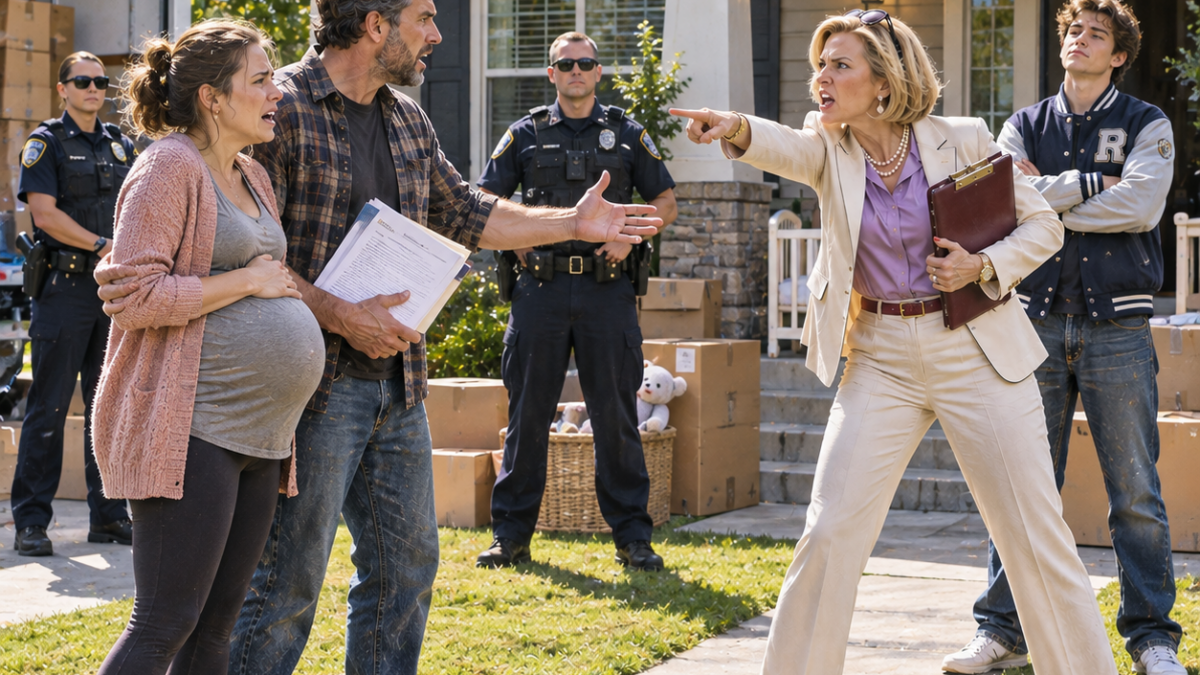
Forty-eight hours after my pregnant wife and I carried the last moving box into the house we had spent years saving for, a woman I had never met stood on my front lawn screaming that the property belonged to her eighteen-year-old son and demanding that police remove us as trespassers. When I opened the door holding the keys, closing documents, and deed to the home, she pointed at me like I was a burglar and told the officers we had forged everything because her son “needed the house more than we did.” What frightened me most was not the insanity of the accusation, but the certainty in her voice, because I could already tell she had convinced herself that wanting something badly enough gave her the right to take it.
My wife, Emily, was six months pregnant when we bought the house.
It wasn’t a mansion. It wasn’t some luxury estate worth fighting a war over. It was a modest three-bedroom home on a quiet tree-lined street, with a small backyard, an attached garage, and a second bedroom we had already started turning into a nursery.
To us, it was everything.
We had rented cramped apartments for almost seven years. We skipped vacations. I worked overtime. Emily picked up extra weekend shifts before the pregnancy became too exhausting. Every saved dollar had gone toward one goal: a stable place where our child could grow up.
The second morning after moving in, I was hanging shelves when somebody knocked.
A thin young man stood outside wearing an oversized backpack and thick glasses.
He looked eighteen, maybe nineteen.
“Hey,” he said awkwardly. “I want to live here.”
I actually glanced behind him, expecting a friend recording some kind of prank.
“Sorry?”
“This house.”
He pointed past me into my living room.
“I want it.”
“It isn’t for rent.”
He frowned.
“But it’s small.”
I stared at him.
“Okay.”
“So it should be affordable.”
“We’re not renting rooms.”
His disappointment looked genuine.
“I start college soon.”
“Congratulations.”
“I need somewhere to stay.”
“So you’ll need to find an apartment.”
He adjusted his backpack.
“But I like this place.”
I almost laughed.
“My wife and I just bought it.”
He peered through the doorway at our boxes.
“Could you move?”
That was when I closed the door.
Emily nearly cried laughing when I told her.
We assumed it was over.
The following evening, while we were eating dinner, the bell rang again.
The same kid stood outside.
This time his mother was beside him.
She wore expensive sunglasses pushed into her hair, carried herself like somebody accustomed to having doors opened before she reached them, and skipped every normal human introduction.
“My son came here yesterday,” she snapped, “and you refused to discuss his housing.”
I blinked.
“Because this isn’t his housing.”
“He starts college this year.”
“That doesn’t make my house available.”
She waved my words away.
“Dormitories are filthy. Apartments near campus are overpriced. This house is appropriate.”
“For us. We own it.”
My wife appeared behind me.
Karen’s eyes immediately went to Emily’s stomach.
I thought that would make her understand.
Instead she frowned.
“You have a baby coming?”
“Yes.”
“Well, babies don’t need this much space.”
I looked at our three-bedroom house.
“Excuse me?”
“My son does.”
I tried one last time.
“Ma’am, we are not renting a room.”
Her expression changed.
“A room?”
She sounded offended.
“I would never expect my son to share a house with strangers.”
Then she pointed past me into the foyer.
“You two need to move out. He’ll take the entire property.”
For three seconds nobody spoke.
Emily’s hand tightened around my arm.
I said, “Leave.”
Karen stepped closer.
“Everything is negotiable.”
“This isn’t.”
“People like you need to learn how communities work.”
I closed the door.
She began pounding on it immediately.
“OPEN THIS DOOR!”
Emily jumped so hard her fork fell from her hand.
I led her toward the bedroom while Karen continued screaming outside.
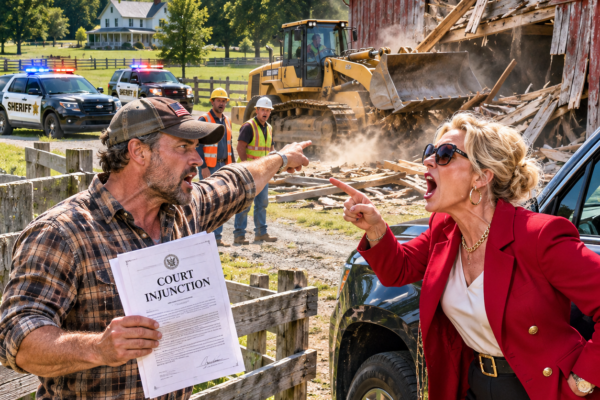
Then sirens appeared at the end of the street.
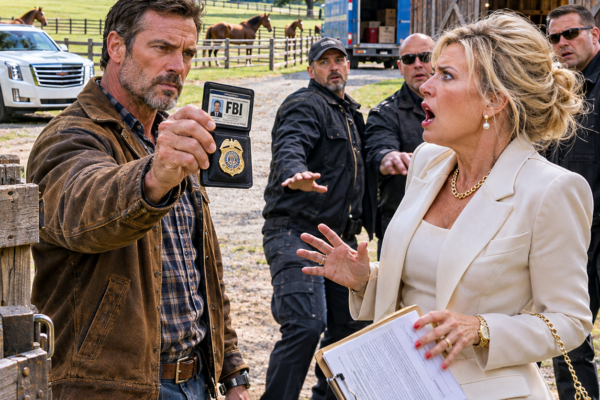
Through the window I watched two officers step from a patrol car.
Karen ran toward them, pointed at my home, and shouted loudly enough for half the block to hear:
“Thank God you’re here. Those people broke into my son’s house, and they refuse to leave.”
One officer looked toward my front door.
Karen smiled.
And I realized she had not called the police because she misunderstood who owned the house.
She had called because she believed the police could make her version of reality become true.
PART 2
I told Emily to stay inside.
“Don’t come out unless I ask you to.”
“Nathan—”
“I’ll be right here.”
She looked toward the front window.
“What if they believe her?”
That question hit me harder than it should have.
Because logically, they wouldn’t.
We had closed legally.
We had a mortgage.
We had the deed.
Property taxes.
Insurance.
Identification matching the address.
Every piece of reality was on our side.
But when somebody outside your home is shouting that you’re a criminal while police officers are walking toward your door, logic becomes strangely difficult to feel.
“I’ve got the closing folder,” I told her.
She nodded.
I stepped onto the porch with my hands visible.
The older officer introduced himself as Officer Daniels.
His partner was Officer Reyes.
Daniels spoke calmly.
“Sir, we’re responding to a property dispute.”
“There isn’t a property dispute.”
Karen shouted from the yard.
“That’s exactly what a squatter would say.”
Daniels held up one hand without looking at her.
“Ma’am, please let me speak.”
She folded her arms.
I said, “My wife and I purchased this house three days ago. This woman and her son appeared yesterday demanding that we give it to him.”
Karen gasped dramatically.
“That’s a lie.”
Her son stood five feet behind her, studying the sidewalk.
Daniels looked at me.
“Do you have identification?”
“Yes.”
“Documents?”
“Yes.”
“Bring them out, please.”
I went inside.
Emily was standing in the hallway.
“Well?”
“They’re checking.”
Her face had gone pale.
I kissed her forehead.
“We’re fine.”
“You don’t know that.”
“No. But the deed does.”
I grabbed the folder we had kept near the kitchen specifically because we were still changing addresses and setting up utilities.
Purchase agreement.
Settlement statement.
Title documents.
Homeowner’s insurance.
Property tax information.
Copy of recorded deed.
Mortgage documents.
Everything.
When I returned, Karen tried looking over Daniels’ shoulder as he reviewed them.
“These can be printed anywhere,” she announced.
Daniels ignored her.
Reyes took my driver’s license and used the patrol computer to verify information.
The minutes felt much longer than they were.
Finally Daniels closed the folder.
“These documents appear consistent with county records.”
Karen stepped forward.
“Appear?”
Daniels turned toward her.
“Do you have documentation that your son owns this home?”
Her face tightened.
“He was promised it.”
“By whom?”
“The community.”
“What community?”
“This neighborhood.”
Daniels glanced around.
“Is there an HOA?”
“Not technically.”
I almost laughed.
Karen continued.
“But several residents agree that homes should be allocated responsibly.”
“Allocated?”
“Yes.”
“These are privately purchased houses.”
“You don’t understand.”
Daniels looked toward her son.
“What is your name?”
“Evan.”
“Evan, do you own this property?”
Evan looked at his mother.
Karen answered for him.
“He was supposed to.”
Daniels redirected.
“I asked him.”
Evan swallowed.
“No.”
That one word changed everything.
Karen snapped her head toward him.
“What?”
He immediately added:
“But Mom said—”
“No.”
Karen moved between him and the officer.
“He’s confused.”
Daniels’ voice became firmer.
“Ma’am, your son just confirmed he does not own this house.”
“He doesn’t understand legal matters.”
“Do you have a deed?”
“No.”
“Lease?”
“No.”
“Purchase contract?”
“We intended to purchase it.”
That was new.
I stepped forward slightly.
“You made an offer?”
Karen glared at me.
“This was supposed to be his starter home.”
Daniels looked at her.
“That is not ownership.”
“We were unfairly excluded from the sale.”
“How?”
“They closed too quickly.”
I couldn’t believe what I was hearing.
The truth was finally appearing beneath the madness.
Emily and I hadn’t stolen anybody’s house.
We had simply bought a house Karen had wanted.
Officer Reyes said:
“Ma’am, you called dispatch and reported active trespassers occupying a residence belonging to your son.”
“Yes.”
“But you knew he did not own it.”
“I knew he should own it.”
“That isn’t the same thing.”
“It should be.”
Daniels exhaled.
“I’m going to explain this once. Mr. Reed and his wife appear to be the lawful owners. You need to leave their property.”
Karen pointed at me.
“They’re not part of this community.”
I stared.
“We moved here three days ago.”
“Exactly.”
“And?”
“You don’t belong.”
The words landed differently than the house argument.
Not legally.
Personally.
I saw Emily standing inside the doorway behind me.
Her arms were folded protectively across her stomach.
Karen noticed her too.
Then said:
“My son has lived in this area his entire life.”
Evan looked embarrassed.
I asked:
“Does he live on this street?”
“No.”
“Within this subdivision?”
“No.”
“Then what are you talking about?”
Karen’s voice rose.
“People who have roots here should have priority over outsiders who arrive waving money around.”
There it was.
Jealousy dressed as community principle.
Daniels stepped between us.
“Enough.”
Karen turned on him.
“You’re letting them steal his future.”
“No one stole anything.”
“I called you to remove them.”
“And we’re not removing lawful owners from their home because you wanted to buy it.”
Her face changed.
For the first time, anger overwhelmed performance.
“Do your job!”
“I am.”
“Then arrest him.”
“For what?”
“He threatened me.”
I stared at her.
“When?”
“Just now.”
Officer Reyes looked at me.
“Did you threaten her?”
“No.”
Karen shouted:
“He told me to leave!”
Daniels said:
“That’s not a threat.”
“This is harassment.”
“You came to his house.”
“I have rights.”
“Yes. One of them is leaving when the property owner tells you to leave.”
Karen looked around at the gathering neighbors.
Curtains had shifted.
Two people stood on porches.
A man farther down the sidewalk held up his phone.
Public humiliation was setting in.
I could see it.
And I could see Karen couldn’t tolerate it.
She jabbed her finger at me.
“This isn’t over.”
Daniels immediately said:
“Ma’am, don’t threaten him.”
“I didn’t.”
“You just said—”
“I said this matter isn’t over.”
“Then handle it through an attorney. Do not return to this property without permission.”
Karen folded her arms.
“I want to file a complaint against him.”
“You can make a statement.”
“I want him arrested.”
“That’s not how arrest works.”
“He stole my son’s house.”
Daniels finally lost patience.
“Your son just admitted he never owned this house.”
Evan whispered:
“Mom, let’s go.”
She turned on him.
“Don’t embarrass me.”
That was the first moment I felt sorry for him.
Not enough to excuse what had happened.
But enough to notice that the strange entitlement I’d seen the previous day might not be entirely his.
Karen continued arguing until Reyes warned her that knowingly making false statements to law enforcement and refusing to leave private property could create consequences for her.
She still resisted.
Still shouted.
Still demanded supervisors.
Eventually she stepped onto the public sidewalk.
Then she screamed at me one last time:
“You haven’t paid for what you did!”
Daniels turned sharply.
“What does that mean?”
Karen looked at him.
“Nothing.”
She grabbed Evan’s arm.
Dragged him toward a black Prius.
Then drove away.
Daniels remained.
“Mr. Reed.”
“Yes?”
“You should save your doorbell footage.”
“Already recording.”
“Good.”
“You think she’ll come back?”
He looked down the road.
“I can’t predict people.”
That wasn’t reassuring.
He gave me an incident number.
Then left.
Inside, Emily sat on the couch.
The adrenaline that had kept her upright outside disappeared all at once.
She started crying.
Not loud.
Just tears.
I sat beside her.
“Hey.”
“I hate this.”
“I know.”
“We’ve been here three days.”
“I know.”
“This was supposed to be where we felt safe.”
I put my arm around her.
She leaned into me.
“Can somebody actually do this? Just decide our house should be theirs?”
“No.”
“But she believed the police would remove us.”
“She was wrong.”
“What if she keeps coming?”
I looked toward the nursery.
Boxes everywhere.
Paint samples.
A half-assembled crib.
The whole reason we had worked so hard was that room.
“I won’t let her push us out.”
Emily looked at me.
“Promise?”
“Yes.”
I meant it.
That night, I didn’t sleep much.
At 2:00 a.m. I checked the front camera.
At 3:10, the garage.
At 4:30, the locks.
Nothing happened.
The next morning almost convinced me that maybe Karen’s humiliation had ended it.
Then Mrs. Henderson crossed the street.
She was in her seventies and walked a tiny terrier that behaved like every passing leaf had personally offended him.
“Quite the evening.”
I forced a laugh.
“That obvious?”
“The entire street heard her.”
“Sorry.”
“Oh, don’t apologize. Nobody’s blamed you.”
She hesitated.
“Just be careful.”
“With Karen?”
Mrs. Henderson’s expression tightened.
“You know her?”
“Not well.”
“Then how—”
“Her sister lived three streets over for years.”
She lowered her voice.
“Karen doesn’t handle losing very well.”
“Apparently.”
“No.”
Mrs. Henderson looked serious now.
“I mean she really doesn’t handle losing.”
I watched her cross back home.
That sentence stayed with me.
The next several hours were normal.
Emily and I went to a home-improvement store.
She picked pale green paint for the nursery.
I told her it looked gray.
She informed me this was because I was “emotionally color-blind.”
For two hours, we were us again.
Then we came home.
Fresh tire tracks curved across our front lawn.
Emily stopped walking.
“Nathan.”
I put down the paint cans.
The tracks came from the street.
Across the grass.
Near the porch.
Then back out.
No accident.
I photographed them.
Checked the cameras.
Our doorbell camera caught part of a black car, but not the plate.
Someone had driven deliberately close enough to miss the camera’s best angle.
That bothered me more than random vandalism would have.
Two days later, our trash cans were knocked over.
Then a package went missing.
The delivery company told me somebody had attempted to redirect our account to another address online.
Then came the first note.
**PEOPLE KNOW WHAT YOU DID.**
No signature.
The second:
**THIS NEIGHBORHOOD IS FOR REAL FAMILIES.**
I showed Emily.
She sat at the kitchen table staring at it.
“What does that even mean?”
“I don’t know.”
“We are a family.”
“I know.”
Her hand went to her stomach.
The gesture was automatic.
Protective.
That made me angry in a way I had not felt before.
I could deal with insults.
I could deal with somebody calling police.
But the fear was following Emily into every room now.
She startled at deliveries.
Checked the driveway before opening curtains.
Stopped sitting alone on the porch.
Our home was becoming a place where she waited for the next attack.
I called the police non-emergency line and added everything to the existing incident report.
No suspect.
No obvious crime on some incidents.
But documentation.
That became my routine.
Photograph.
Save footage.
Write date.
Write time.
Save note.
Back up everything.
Then one evening I caught someone at the mailbox.
She looked maybe twenty.
Hood up.
Thin.
Nervous.
I stepped out of the garage.
“Hey.”
She froze.
“What are you doing?”
She ran.
I followed only far enough to see where she went.
Black Prius.
Two houses down.
Same model Karen had driven.
I photographed the license plate as it pulled away.
Inside the mailbox was another note.
**GIVE THE HOUSE BACK. YOU STOLE IT FROM A FAMILY WHO NEEDS IT MORE. IF YOU DON’T LEAVE, YOU’LL REGRET IT.**
Emily read it twice.
Then whispered:
“Call them.”
The responding officer couldn’t prove who wrote it.
But the plate came back to Karen Dalton.
That mattered.
The officer added it to the report.
“You got cameras?”
“Yes.”
“Keep them running.”
“Anything else?”
“If she returns after being told not to, call us.”
I looked toward the nursery.
“That’s it?”
“For now.”
I understood.
Police don’t arrest people because your instincts say they’re dangerous.
Evidence has to catch up.
The next morning, Karen stood across from our driveway.
No shouting.
No pounding.
Just waiting.
That calm version of her disturbed me more.
Emily stood behind the curtain.
“Don’t go out.”
“I need to tell her to leave.”
“We already did.”
“I’ll stay on camera.”
I stepped onto the porch.
“What do you want?”
Karen smiled.
“Good morning.”
“Leave.”
“I came to resolve this civilly.”
“There is nothing to resolve.”
“You keep saying that.”
“Because I own the house.”
She tilted her head.
“You are very fixated on ownership.”
I almost laughed.
“When somebody keeps trying to take your home, ownership becomes relevant.”
“I’ve spoken to several neighbors.”
“About what?”
“Community standards.”
“There is no HOA.”
“Not yet.”
That stopped me.
“What does that mean?”
“We’re exploring formation.”
“Fine.”
“You should be concerned.”
“Why?”
“Because communities can decide who fits.”
I stared.
“An HOA can’t seize an existing owner’s house because neighbors don’t like him.”
“You’re very naive.”
“No. I have a deed.”
She stepped toward the sidewalk edge.
“My son was supposed to buy this property.”
“Then why didn’t he?”
“Your offer was accepted first.”
Finally.
The truth.
“You knew the house was already sold.”
“The seller rushed.”
“We closed legally.”
“My son had toured it.”
“So did dozens of people.”
“He loved it.”
“That doesn’t create ownership.”
“He needs stability.”
“My wife is six months pregnant.”
Karen’s eyes went cold.
“That was your choice.”
Something inside me went still.
“You need to leave.”
“Your family could rent.”
“No.”
“You could make money on the sale.”
“No.”
“Everything has a price.”
“My home doesn’t.”
Her smile disappeared.
“Then don’t say I didn’t try.”
“Karen.”
She stopped.
“I know the black Prius was at my mailbox.”
The smallest change crossed her face.
“Lots of people own black cars.”
“I have the plate.”
Silence.
“I have the threatening note.”
“You’re accusing me?”
“I’m telling you I’m documenting everything.”
She stared at me.
Then said softly:
“You should be careful who you accuse.”
“Is that another threat?”
She turned.
Evan waited by the Prius.
He looked at me.
Then looked away.
Karen climbed into the passenger seat.
The car left.
The harassment got worse after that.
Three more notes.
A small camera appeared in a neighbor’s upstairs window pointed directly toward our property.
Another sat inside a parked vehicle for several hours.
Maybe legal.
Maybe not.
Definitely meant to be noticed.
Then three people came to our door carrying clipboards.
I was unloading groceries when my phone showed the doorbell notification.
Emily had opened the door.
That terrified me.
I dropped the bags.
Ran.
The woman in front wore a blazer and spoke in that controlled voice people use when they want intimidation to sound professional.
“We are the interim neighborhood association formation committee.”
I stepped between her and Emily.
“There is no association.”
“We are forming one.”
“Good luck.”
The woman frowned.
“Your recent conduct has generated multiple complaints.”
“My conduct?”
“Police activity. Hostility. Conflict with residents.”
“Karen called police because I wouldn’t give her my house.”
The man beside her said:
“That’s her version against yours.”
“No. It’s on body camera.”
That quieted him.
The woman handed me a paper.
**NOTICE OF COMMUNITY CONCERN.**
It had no legal citation.
No corporate registration.
No existing declaration.
No authority.
Just signatures.
Karen’s name was not on it.
That was deliberate.
“What do you want?”
The woman said:
“We believe your household may not be compatible with the neighborhood.”
Emily made a sound behind me.
Not quite a sob.
I turned.
Her face was pale.
That ended the conversation.
“Get off my property.”
The woman lifted her chin.
“We are attempting to communicate.”
“Communicate by mail.”
“We’ll be returning.”
“Then I’ll be adding you to the harassment complaint.”
The man said:
“You can’t threaten volunteers.”
“That’s not a threat. That’s notice.”
They left.
I closed the door.
Emily started crying before I could speak.
“I can’t do this.”
I pulled her into my arms.
“I know.”
“No, Nathan. I mean I can’t live like this.”
Her voice cracked.
“Every time someone knocks, I think something’s going to happen. Every time a car slows down, I think she’s back. I wake up at night because I hear things that aren’t there.”
I felt helpless.
Not because I couldn’t fight Karen.
Because winning didn’t automatically make Emily feel safe.
I sat with her until her breathing slowed.
Then I called a real-estate attorney.
His name was Michael Grant.
I explained everything.
He asked for the deed.
Purchase records.
Police reports.
Notes.
Doorbell footage.
The fake committee notice.
Then he said:
“Don’t engage with them beyond clearly revoking permission to enter your property.”
“Can they form an HOA?”
“They can form an organization. Binding your already-owned property to new restrictive covenants without your voluntary legal agreement is another matter entirely.”
“So they can’t vote us out?”
“No.”
“Can’t seize the house?”
“No.”
“Can’t fine us?”
“Not based on some newly invented association you didn’t join.”
I exhaled.
“What do we do?”
“Document. Send a formal cease-contact notice to Karen. Notify committee members that they have no permission to enter your property. If harassment continues, we’ll evaluate civil remedies and protective orders.”
For the first time, we had a strategy.
Michael sent letters.
Karen ignored hers.
That evening she returned.
Angry again.
She hammered the doorbell.
I stepped outside and closed the door behind me.
“You got my letter,” I said.
She waved an envelope.
“This garbage?”
“Yes.”
“You think an attorney frightens me?”
“No.”
“You think you can intimidate me?”
“Karen, you’re standing on the porch of the people you’ve been harassing accusing us of intimidation.”
“The committee told me how you behaved.”
“The committee isn’t real.”
“It is real.”
“It isn’t an HOA.”
“Not yet.”
“You can’t retroactively force my property into it.”
“You’ll see.”
“No, Karen. You’re going to see.”
Her face twisted.
“You think you’re clever.”
“I think I’m tired.”
“My son deserves this house.”
“No.”
“You stole his chance.”
“No.”
“He saw it first.”
“Then he should have made a better offer.”
That hit.
Hard.
Her whole face changed.
“You think because you had more money ready that makes you better than us?”
“No.”
“You swept in.”
“We submitted an offer. The seller accepted.”
“Evan had plans.”
“So did we.”
“His future matters.”
“So does my child’s.”
She stepped closer.
“You people always think because you’re having a baby the world owes you sympathy.”
I felt my fists tighten.
I opened them.
Slowly.
“Leave.”
“If you don’t give this up, you’re going to wish you had.”
I looked directly at the doorbell camera.
Then back at her.
“Would you like to repeat that?”
Her eyes followed mine.
She saw the camera.
Her expression shifted.
“No.”
She walked away.
At 2:14 the next morning, metal scraped outside our bedroom window.
I woke instantly.
Emily stayed asleep.
I checked the camera.
Two figures crouched beside the water meter.
I called police before going outside.
Then I opened the side door with my phone recording.
I stayed several yards away.
“Step away from the meter.”
Both figures jumped.
Evan.
And another teenager.
His friend whispered:
“Dude, go.”
Evan froze.
“What are you doing?”
“Nothing.”
“You’re holding a wrench.”
“My mom said—”
His friend grabbed his sleeve.
“Shut up.”
I raised the phone.
“Police are coming.”
Both panicked.
The friend ran immediately.
Evan remained another second.
Then said something I’ll never forget.
“My mom said if your water gets shut off, your wife will want to move.”
I stared at him.
“You came here at two in the morning to shut off water to a pregnant woman.”
His face crumpled.
“It wasn’t supposed to hurt anyone.”
“Leave.”
He ran.
I did not chase him.
I did not touch him.
I didn’t need to.
The camera had his face.
My phone had his voice.
The water-meter housing was scratched and partially pried.
The responding officer took photographs.
Listened to the recording.
Added another report.
“This is escalating.”
“Yes.”
“Do you know the kid?”
“Karen’s son.”
The officer looked at me.
“The one who wants the house?”
“The one she wants the house for.”
He wrote that down.
By morning Emily had abdominal tightness from stress.
Her doctor advised rest and told us to contact them if anything changed.
That terrified me more than Karen ever had.
I sat beside Emily on the bed.
“This is my fault.”
She looked at me.
“How?”
“I keep saying we’re staying.”
“This is our house.”
“I know.”
“I don’t want to move because some woman is terrorizing us.”
“I don’t want this hurting you.”
She took my hand.
“Then end it.”
That became my mission.
Not revenge.
Not humiliation.
End it.
At 7:45 the doorbell rang.
Police.
Karen behind them.
Again.
She wore a triumphant expression.
Officer Daniels was there.
He looked exhausted before anybody spoke.
Karen pointed at me.
“He assaulted my son.”
I almost smiled from disbelief.
Daniels looked at me.
“Mr. Reed?”
“Her son was at my water meter at two fourteen this morning.”
Karen shouted:
“Lie.”
“I called police.”
“Lie.”
“There is an incident report.”
Her smile faltered.
“I have video.”
She went pale.
Daniels turned toward her.
“You told dispatch your son was assaulted while walking home.”
“He was.”
“Where?”
“Near here.”
“At what time?”
She hesitated.
“Around midnight.”
I said nothing.
Daniels noticed.
“Mr. Reed?”
“Two fourteen. My camera timestamp is exact.”
Officer Reyes arrived from around the side of the house.
He crouched near the meter.
Saw the damage.
Daniels asked:
“Where is Evan?”
Karen folded her arms.
“He’s unavailable.”
“Where?”
“Store.”
“At eight in the morning?”
“Yes.”
Daniels looked tired.
“Ma’am, you need to stop answering for everybody.”
“He’s traumatized.”
“We need his statement.”
“No.”
“You filed a complaint on his behalf.”
“I am his mother.”
“He’s eighteen.”
“He’s still my child.”
Daniels looked at me.
“Show me the video.”
I opened my phone.
Karen moved closer.
I stepped back.
Daniels watched.
Evan appeared clearly.
His voice:
**My mom said if your water gets shut off, your wife will want to move.**
Daniels stopped the video.
Karen said:
“That’s manipulated.”
“It came from his phone.”
“Deepfake.”
I almost laughed.
Nobody else did.
Daniels said:
“Ma’am, did you tell your son to interfere with their water?”
“No.”
“Did you know he was here?”
“No.”
“Then why did he say you told him to do it?”
“He’s confused.”
“Your son seems to become confused every time his version contradicts yours.”
Karen’s voice rose.
“You’re taking his side again!”
“I am reviewing evidence.”
“You humiliated me last time.”
“This isn’t about humiliation.”
“It is to me.”
That answer surprised even her.
She stopped.
Daniels said quietly:
“You need to leave this property.”
“He assaulted my son.”
“There is currently no evidence he assaulted anyone.”
“He grabbed him.”
I looked at Daniels.
“I never touched Evan.”
“My video shows the entire encounter.”
Karen shouted:
“He attacked him off camera!”
“My phone records continuously from when I opened the side door.”
Daniels closed his eyes briefly.
Then said:
“Ms. Dalton, knowingly filing false complaints can carry consequences.”
“I am not lying.”
“Then we’ll take statements and investigate.”
“I want him arrested now.”
“No.”
That word destroyed her.
She stepped toward Daniels.
“You people never do anything!”
“Step back.”
“My son deserves justice!”
“Step back.”
She continued.
Reyes moved closer.
Karen shoved Daniels’ hand away when he raised it to maintain distance.
That changed the scene instantly.
Daniels ordered her to turn around.
She screamed.
Refused.
Tried walking toward my door.
Reyes blocked her.
After another clear warning, they detained her for the disturbance and her physical interference.
She screamed all the way to the cruiser.
“You can’t arrest me again!”
Again.
So apparently the previous incident had led to processing after all.
Neighbors watched.
Phones appeared.
Evan wasn’t there.
Emily stood inside crying.
I didn’t feel victorious.
I felt exhausted.
Officer Daniels returned after securing Karen.
“Mr. Reed, we’ve documented the meter incident.”
“What happens?”
“Investigators will speak to Evan. We’ll also review these harassment reports.”
“Will she come back?”
“I can’t promise she won’t.”
“That isn’t good enough.”
“I understand.”
“Do you?”
He looked toward Emily inside.
“Yes.”
His tone changed.
“I do.”
He gave me the number for the department’s victim-services contact and explained how to speak with our attorney about seeking a protective order based on the documented pattern.
Michael filed paperwork the same day.
The temporary order prohibited Karen from coming onto our property or directly contacting us while the matter was reviewed.
I thought that would end it.
That evening, Evan came alone.
He stood under the porch camera.
Hands visible.
No backpack.
No mother.
I opened the door but stayed inside.
“What do you want?”
“To apologize.”
I didn’t answer.
He looked toward the camera.
“You can record.”
“I am.”
He nodded.
“I didn’t want your house.”
That stopped me.
“You knocked on my door and said you wanted it.”
“I know.”
“Your mother tried to have us removed.”
“I know.”
“You tried shutting off our water.”
His face dropped.
“I know.”
“Then explain.”
He sat on the bottom porch step without being invited.
“My mom found this house online months ago.”
I waited.
“She wanted to buy it for me.”
“Why?”
“She doesn’t want me living in dorms.”
“That part I heard.”
“She offered below asking price.”
I almost laughed.
“She thought the seller would negotiate because the house had been listed a while.”
“Our agent said there were several offers.”
“Yeah.”
He rubbed his hands together.
“When your offer got accepted, she lost it.”
“How did she even know who bought it?”
“Real-estate sites. Neighbors. She kept checking.”
“So why did you come here?”
“She told me you might rent a room.”
“And when I said no?”
“She said you were being selfish.”
“Then why return?”
Evan looked ashamed.
“Because when I don’t do what she wants, she makes my life miserable.”
I didn’t know whether that was fully true.
But I believed he believed it.
“Why the water meter?”
“She said if you had utility problems, your wife would want to leave before the baby came.”
My stomach turned.
“You understand how dangerous that was?”
“Yes.”
“Then why do it?”
He looked toward the street.
“Because I keep thinking if I do one thing she asks, she’ll stop asking.”
That sentence changed something.
Not forgiveness.
Perspective.
“What happens?”
“She asks for another thing.”
“Yes.”
He nodded.
“She told me she’s getting out soon.”
My shoulders tightened.
“Do you know when?”
“No.”
“She knows about the protective order?”
“Yes.”
He swallowed.
“She said it doesn’t matter.”
I stared.
“What does that mean?”
“She has another plan.”
“What plan?”
“I don’t know.”
“You came here to warn me without knowing?”
“She said this one would make sure you couldn’t stay.”
I glanced toward the house.
Emily had appeared at the hallway entrance.
Evan saw her.
His face changed.
“I’m sorry.”
Emily didn’t answer.
He stood.
“I don’t want the house.”
“Then say that to police.”
His fear returned.
“My mom—”
“Evan.”
I stepped outside.
“You’re eighteen.”
He looked at me.
“You participated in this. Maybe because she pushed you. Maybe because you’re scared of her. But at some point, you decide whether you’re helping her hurt people or stopping.”
He looked down.
“If I talk, she’ll never forgive me.”
I thought about the nights Emily hadn’t slept.
“She tried to drive a pregnant woman out of her own home.”
He nodded.
Then left.
I sent the entire porch recording to Michael and Officer Daniels.
That turned out to matter.
At 2:03 the following morning, glass shattered.
Emily screamed.
I was out of bed before I fully woke.
Cold air hit the hallway.
Our front living-room window had exploded inward.
I called 911 immediately.
Then told Emily:
“Bedroom. Lock the door.”
She didn’t argue.
Outside stood Karen.
Crowbar in her hand.
Two younger figures behind her.
She was not supposed to be within hundreds of feet of our property.
Instead she was standing beneath our security lights surrounded by broken glass.
“You should have listened!”
I stayed inside.
“Police are coming.”
Her face twisted.
“You always hide behind police.”
“You broke my window.”
“My window!”
She swung the crowbar at my car.
The windshield cracked.
Another strike.
Passenger window shattered.
One of the younger guys backed away.
“Mrs. Dalton, we should go.”
She screamed:
“No!”
Then swung again.
“Tonight this ends.”
I couldn’t understand how a house she had never owned had become something she considered hers.
I shouted:
“Karen, put the crowbar down.”
“You stole everything!”
“I bought this house legally.”
“My son should be living here.”
“He doesn’t even want it.”
That stopped her.
“What?”
“He came here tonight.”
Her face changed completely.
“You’re lying.”
“He told us everything.”
“No.”
“He told us about your offer.”
“No.”
“He told us about the water.”
“Shut up.”
“He said he doesn’t want the house.”
She stared through the broken window.
That was the one truth she couldn’t absorb.
“No.”
“He said it himself.”
“You manipulated him.”
“He came voluntarily.”
“You poisoned him against me.”
“No.”
“You did!”
She moved toward the broken window.
Crowbar raised.
I backed away.
“Don’t come inside.”
“This was supposed to be his.”
“Karen.”
“You took it.”
“We bought it.”
“You took his future.”
“No.”
“You took mine.”
And there it was.
Not Evan.
Her.
This house had become proof that she could still control something.
Losing it had become an insult she could not metabolize.
The sirens appeared.
Karen spun toward the street.
The two teenagers ran.
She tried to follow.
Didn’t get far.
Officers arrived from two directions.
Commands filled the yard.
“DROP THE CROWBAR!”
Karen froze.
For one terrible second she raised it.
Not toward me.
Not directly toward police.
Just upward as she turned in panic.
Three officers moved immediately.
She was taken to the ground.
The crowbar skidded across the grass.
Handcuffs clicked.
This time there was no argument about a misunderstanding.
Broken window.
Broken windshield.
Security footage.
Protective order.
Threats.
Trespass.
Weapon.
Everything was documented.
Officer Daniels arrived after the first units.
He looked through the broken window.
Then at me.
“Everyone okay?”
“Emily.”
I turned.
She stood in the hallway.
Hands shaking.
“Physically?”
“Yes.”
Daniels nodded.
“Good.”
Police searched Karen’s vehicle after obtaining the appropriate authority connected to the arrest and evidence at the scene.
The inventory later described items that made my stomach turn.
Zip ties.
Duct tape.
Spray paint.
A hammer.
Printed copies of neighborhood addresses.
And a handwritten page titled:
**WAYS TO MAKE THEM LEAVE**
It contained ideas.
Disable water.
Create code complaints.
Block driveway.
Damage vehicle.
Break window.
Report unsafe conditions.
Pressure neighbors.
Some had already happened.
The document wasn’t a sophisticated criminal blueprint.
It was worse in another way.
It showed obsession becoming organization.
By sunrise, Karen was still in custody.
Evan came to the station with an attorney and gave a statement.
The two teenagers were identified.
One had been the friend at the water meter.
The other had participated in the harassment group.
Their stories began matching pieces of ours.
Karen had recruited people.
Encouraged notes.
Promised that once we left, the home would somehow become available again.
She had told neighbors we fraudulently jumped ahead of her son in the sale.
She described us as “outsiders” who had manipulated an elderly seller.
None of that was true.
Our attorney requested preservation of every message.
Group chats changed the case.
Karen had created one called:
**TAKE BACK OUR STREET**
Members included several residents.
Not all of them participated in criminal acts.
Some had mostly complained.
Others had encouraged her.
A few messages were uglier.
**Make them uncomfortable enough and they’ll sell.**
**We should report every little thing until they get tired.**
**If a neighborhood association forms, maybe we can pressure their lender.**
Then Karen:
**Evan deserves that house. We just need to make the current people understand they aren’t welcome.**
There was no ambiguity left.
This had never been confusion.
It was pressure.
A coordinated attempt to make us leave voluntarily so Karen could try to acquire the property.
Michael read the messages in his office.
Emily sat beside me.
Her hands rested over her stomach.
“Can we sue?”
Michael looked at her.
“Yes.”
I turned.
“For what?”
“Harassment-related civil claims, property damage, potentially conspiracy depending on who participated and what evidence establishes. We can also seek a longer-term protective order.”
Emily asked:
“Will that make it stop?”
Michael paused.
“Court orders cannot physically prevent someone from making a bad decision.”
That was the same painful truth Officer Daniels had given us.
“But violations create consequences. And this evidence gives the court a much clearer picture.”
I asked:
“What about the fake HOA?”
He smiled slightly.
“They can form a social club if they want. They cannot retroactively encumber your property without your consent.”
“Can they keep threatening to fine us?”
“They can write nonsense on paper. That doesn’t make it enforceable.”
“What do we do?”
“Nothing.”
“Nothing?”
“With their pretend HOA paperwork. Don’t dignify theater.”
That advice proved useful when we received a thick envelope the following day.
Law Offices of Weatherbee & Crane.
A cease-and-desist letter.
It accused me of harassment.
Intimidation.
Defamation.
Targeted hostility toward Karen and her dependent son.
Demanded I stop sharing security recordings.
Demanded a written retraction.
Demanded that I acknowledge a “legitimate housing dispute.”
Michael read it.
Then laughed once.
“What’s funny?”
“This.”
He held up the letter.
“Is it dangerous?”
“No.”
“Can they sue?”
“Anyone can file.”
Emily looked worried.
He continued.
“But sending a letter is not proving a case.”
He marked several paragraphs.
“They’re demanding deletion of evidence relevant to active police investigations. Do not delete anything.”
“Obviously.”
“They’re also characterizing your ownership as disputed.”
“It isn’t.”
“Correct.”
“So?”
“So we respond once through counsel.”
“I thought you said don’t dignify theater.”
“I said don’t answer fake HOA paperwork. A lawyer’s letter gets a lawyer’s response.”
His response was short.
My clients own the property.
Your client has no ownership interest.
All evidence will be preserved.
All contact should go through counsel.
Do not approach the property.
Do not contact the family.
The end.
Three days later, Jared Crane withdrew from representing Karen after receiving the police records, security footage, and confirmation that she had misrepresented key facts during their initial consultation.
That was when the neighborhood began changing.
People came to our door.
Not all at once.
One by one.
Mrs. Henderson first.
Then Brian, the man who lived four houses down.
Then a younger couple.
Then the woman whose upstairs window had held the camera.
Her name was Melissa.
She looked embarrassed.
“That camera wasn’t mine.”
“Whose?”
“Karen asked if she could put it there.”
Emily’s face tightened.
“You let her?”
Melissa looked down.
“She told me you had threatened Evan.”
“Did you watch us?”
“No. She had access to the app.”
That became another piece of evidence.
Melissa voluntarily turned over the device.
It contained footage of our front yard.
Nothing inside.
But enough to establish how deliberate the surveillance had been.
Brian told us Karen had organized petitions.
Mrs. Henderson had saved messages where Karen tried convincing her to sign.
Another neighbor had footage of the black Prius crossing our lawn.
Another had video of the young woman at our mailbox.
The wall around Karen’s story collapsed because once people realized she had lied to them, nobody wanted to be the last person still defending her.
Then we learned about the community meeting.
The fake HOA group planned to gather at the neighborhood green.
Their stated purpose:
**Address continuing safety concerns and incompatible residents.**
Meaning us.
Emily didn’t want to go.
Neither did I.
Michael advised us not to engage in confrontation.
But neighbors who supported us asked us to attend.
Ultimately we decided to go with Michael present.
Not to argue.
To make one statement.
Then leave.
About fifteen people gathered.
The man with the clipboard from the committee stood in front.
His name was Harold Benson.
He saw us.
“Good. We can finally discuss this rationally.”
I almost laughed.
Michael whispered:
“Don’t.”
I didn’t.
Harold began talking about community stability.
Police disturbances.
Neighborhood harmony.
Then said:
“Until the situation is fully resolved, we believe Nathan and Emily should temporarily vacate.”
Emily’s fingers tightened around mine.
I said:
“No.”
Harold frowned.
“This is a safety recommendation.”
“The person arrested for breaking our window isn’t living in our house.”
“Your continued presence is creating conflict.”
Mrs. Henderson spoke from behind us.
“Their presence didn’t create anything.”
Harold looked annoyed.
“Margaret—”
“No.”
I’d never heard her voice that firm.
“Karen created this.”
Another neighbor stepped beside her.
Then Melissa.
Then Brian.
Harold said:
“We have majority concerns.”
Brian asked:
“Show the vote.”
Harold froze.
“What?”
“You said majority. Show us.”
“We’ve collected opinions.”
“Show them.”
Harold shuffled papers.
Nobody moved.
Michael stepped forward.
“My clients’ ownership is not subject to a neighborhood vote.”
Harold’s face reddened.
“You don’t live here.”
“No. I’m their attorney.”
That changed his tone.
He looked at the folder in Michael’s hand.
Michael continued.
“There is currently no recorded homeowners association with restrictive covenants binding my clients’ parcel. There is no legal basis for demanding that they vacate. Any continued attempts to pressure them to relinquish possession may become additional evidence in pending civil claims.”
The crowd became very quiet.
Harold said:
“You’re threatening residents.”
“No. I’m explaining consequences.”
Then a police cruiser arrived.
Officer Daniels stepped out.
I hadn’t known he was coming.
Apparently Mrs. Henderson had called the non-emergency line after receiving messages suggesting the meeting might become confrontational.
Daniels approached the group.
“Evening.”
Nobody answered.
He looked toward Harold.
Then toward us.
“I understand there’s a neighborhood meeting.”
Harold said:
“Yes. Private community matter.”
Daniels nodded.
“That’s fine. I’m not here to regulate your meeting.”
Then his expression hardened.
“I am here because investigators are seeking statements from several individuals regarding the Dalton harassment case.”
Harold’s face changed.
Daniels continued.
“Some communications recovered during the investigation reference coordinated surveillance, property interference, attempted utility disruption, false complaints, and pressure intended to force these homeowners to leave.”
People began looking at one another.
One man quietly stepped backward.
Daniels said:
“If investigators contact you, cooperate. Do not delete messages. Do not approach the Reed residence without permission.”
Harold swallowed.
“Are we suspects?”
Daniels didn’t answer the question the way Harold wanted.
“Investigators will determine each person’s involvement.”
Then Mrs. Henderson asked:
“What about Karen?”
Daniels said:
“She remains in custody pending further proceedings. A judge has continued the protective conditions, and additional charges are under review.”
The fake committee ended that night.
Not officially.
There was nothing official to dissolve.
But the group chat emptied.
People resigned from a board that had never legally existed.
Harold retained counsel.
Melissa provided records.
Two residents admitted they had helped distribute notes after Karen told them we had stolen the home through fraud.
They apologized.
I didn’t immediately forgive them.
But I accepted the evidence.
Evan became the most important witness.
Months later, he sat across from us in Michael’s conference room during a civil deposition.
He looked different.
Hair cut shorter.
No backpack.
No mother speaking for him.
Karen’s attorney asked:
“Did Mr. Reed ever threaten you?”
“No.”
“Assault you?”
“No.”
“Force you to make statements?”
“No.”
“Why did you originally tell your mother you wanted the house?”
Evan stared at the table.
“Because she wanted me to want it.”
The room went silent.
His attorney asked him to explain.
Evan said:
“She toured it with me before the Reeds bought it.”
He looked toward me.
“I liked it. I said it was nice.”
“That was all?” Michael asked.
“Yes.”
“What happened when another offer was accepted?”
“My mom became obsessed.”
“How?”
“She kept saying the seller had betrayed us. Said the buyers must have cheated. Said people like us were being pushed out.”
“Did you believe her?”
“At first.”
“Why did you go to the Reeds’ home?”
“She told me to ask whether I could live there.”
“Did you believe they might agree?”
“No.”
“Then why go?”
“Because she said if I didn’t, I was choosing strangers over my own mother.”
Emily squeezed my hand under the table.
Michael asked:
“What happened after Nathan refused?”
“She said he humiliated me.”
“Did you feel humiliated?”
“No.”
“Did you want him evicted?”
Evan closed his eyes.
“No.”
“Did your mother?”
“Yes.”
“Did she instruct you to interfere with the water meter?”
“Yes.”
Karen’s attorney objected.
The question was clarified.
Evan continued.
“She said we weren’t breaking anything. Just turning it off.”
“Why?”
“So Emily would feel the house wasn’t safe before the baby came.”
Emily inhaled sharply.
Evan looked at her.
“I’m sorry.”
She didn’t answer.
He cried anyway.
Not dramatically.
Quiet tears.
“I was a coward.”
Michael paused the deposition.
Later, in the hallway, Evan approached us.
“I know saying sorry doesn’t fix it.”
I said:
“No.”
He nodded.
“I moved out.”
“From your mother’s?”
“Yes.”
“Where?”
“Dorm.”
For the first time, I almost smiled.
“How is it?”
He gave a weak laugh.
“Disgusting. Cramped. Loud.”
Emily actually laughed.
A tiny laugh.
Evan looked relieved.
“But it’s mine,” he said.
That sentence stayed with me.
The criminal case took months.
Karen did not face every dramatic charge neighbors imagined.
Real cases are narrower than gossip.
But prosecutors had substantial evidence supporting charges tied to stalking-related conduct, property damage, violation of protective orders, attempted unlawful entry, false reporting, and conspiracy with others on specific acts.
Her vandalism was on camera.
Her messages were preserved.
The crowbar was recovered.
The planning note existed.
Evan cooperated.
Several neighbors cooperated.
The two teenagers did too.
The strongest evidence against Karen was not my anger.
It was her own instructions.
Her own messages.
Her own voice.
One text to Harold read:
**If we keep the pressure on, they’ll sell before the baby comes.**
Another:
**Once they’re gone, I can approach the lender or seller and fix what should have happened the first time.**
Another to Evan:
**Do not feel sorry for them. They took your future.**
She had written the story she wanted everyone to believe.
Then documented herself trying to make it real.
The civil case settled before trial.
Karen agreed to restitution for the broken window, vehicle damage, security expenses, and other documented losses as part of the broader resolution of our claims.
Several neighbors who had materially participated contributed through separate settlements or insurance arrangements where applicable.
More important, permanent protective restrictions were entered.
No contact.
No coming onto our property.
No directing others to contact or surveil us.
No more pretending the house belonged to Evan.
Harold and the remaining “formation committee” signed a written acknowledgment that their group had no authority over our property.
That document felt better than money.
I framed it.
Emily hated the frame.
“That’s petty.”
“Yes.”
“You admit it?”
“Absolutely.”
She made me put it in the garage instead of the living room.
Fair compromise.
Karen eventually entered a plea agreement rather than forcing every charge through trial.
There were fines.
Probationary conditions following custody.
Mandatory treatment requirements imposed through the legal process.
Restitution.
And restrictions on contact with us.
I did not attend every hearing.
By then, I had something more important to prepare for.
Our daughter.
Emily’s due date approached.
The nursery was finally finished.
Pale green walls.
Not gray.
I admitted this eventually.
Crib against the interior wall.
Bookshelf my father helped me build years earlier.
Rocking chair Emily’s mother gave us.
The broken living-room window had been replaced with laminated glass.
Not because we expected another attack.
Because after everything, reinforced glass helped Emily sleep.
The day the installers finished, she stood in front of it.
“You can barely tell.”
“That is the point.”
She looked at me.
“Do you ever think about leaving?”
I knew what she meant.
Not that day.
The house.
The street.
All of it.
“Sometimes.”
“So do I.”
That surprised me.
“You want to move?”
“No.”
She looked toward the nursery.
“I just hate that some of my first memories here are her.”
I understood.
“What do we do with that?”
Emily thought.
“Make more memories.”
That became our revenge.
Not against Karen.
Against fear.
We had dinner on the porch again.
The first time, Emily kept checking the street.
The third time, she forgot.
We planted a small maple near the driveway where the Prius had crossed our lawn.
Mrs. Henderson helped.
Her terrier tried digging it back up.
Brian repaired a section of grass damaged by the tires.
Melissa removed the window camera and replaced it with a bird feeder.
Harold moved away six months later.
Nobody started an HOA.
Somebody joked about proposing one at a neighborhood barbecue.
Twenty people yelled “NO” simultaneously.
I liked our street after that.
Not because everyone became friends.
Real neighborhoods don’t work like that.
Some people still annoyed me.
One neighbor played music too loudly.
Another left trash cans out two days after collection.
Mrs. Henderson’s dog barked at everything.
It was normal.
Normal became beautiful.
Evan wrote Emily a letter before the baby was born.
He didn’t send it through his mother.
He mailed it through Michael.
Emily read it privately.
Then handed it to me.
He apologized again.
Not for wanting a house.
For helping his mother make our home feel unsafe.
He said he had started counseling through his college and was trying to learn the difference between supporting a parent and surrendering your judgment to them.
At the bottom:
**I hope your baby grows up never knowing any of this happened.**
Emily folded the letter.
“Do you forgive him?”
I asked.
She thought for a long time.
“I think I will.”
That was enough.
Our daughter, Sophie, was born on a rainy Thursday morning.
Seven pounds, six ounces.
Angry lungs.
Tiny fists.
Perfect.
When we brought her home, Mrs. Henderson had tied a pink ribbon around our mailbox.
Brian had left dinner on the porch.
Melissa put flowers by the door.
Nobody knocked.
They had learned we valued quiet.
I carried Sophie’s car seat through the same doorway where Karen had once stood demanding that we hand our home to her son.
For a second, the memory flashed.
Karen pointing.
Police lights.
Emily crying.
Broken glass.
Then Sophie made a small noise.
I looked down.
The past disappeared.
That evening, Emily sat in the rocking chair with Sophie asleep against her chest.
The nursery lamp cast soft light across the pale green walls.
I leaned against the doorway.
“You were right.”
“About what?”
“Green.”
She smiled.
“I know.”
Outside, a car slowed.
My body tensed automatically.
Old instinct.
Then it kept driving.
Emily noticed.
“You okay?”
“Yeah.”
“You still do that.”
“I know.”
She looked down at Sophie.
“It’ll fade.”
And it did.
Slowly.
Months later, Officer Daniels stopped by while off duty.
He lived nearby and was walking with his wife.
I was watering the maple tree.
“Still here,” he said.
“Apparently.”
“House behaving itself?”
“So far.”
He smiled.
“Any new owners demanding possession?”
“Only her.”
I pointed through the window at baby Sophie.
“She owns everything.”
His wife laughed.
Daniels looked toward the repaired window.
Then at the street.
“I’m glad this ended the way it did.”
“So am I.”
He hesitated.
“You know, that first night, I thought your caller was confused.”
“Karen?”
“Yeah.”
“When did you realize she wasn’t?”
“When her son said he didn’t own the house and she kept demanding we arrest you anyway.”
I nodded.
“That was about when I figured it out too.”
He continued walking.
Life became ordinary.
Work.
Diapers.
Groceries.
Sleepless nights for reasons that had nothing to do with harassment.
We stopped checking cameras every hour.
The binder of evidence moved from the kitchen to my office.
Then to a cabinet.
Then to a storage box.
I kept it.
Not because I expected to need it again.
Because for a while, documentation had been the only thing separating reality from Karen’s version of reality.
Photos.
Dates.
Video.
Police reports.
Messages.
Deed.
Proof.
That experience changed me.
Not into somebody suspicious of everyone.
Into somebody who understood that truth is strongest when you can show it calmly.
Almost a year after the first knock, I was assembling a small wooden play shelf in the living room.
Sophie crawled nearby.
Emily called from the kitchen.
“Someone’s at the door.”
I froze.
Then laughed at myself.
“Can you get it?”
“No.”
“Why?”
“Your trauma anniversary.”
“Very funny.”
I opened the door.
Evan stood there.
Older.
More confident.
No oversized backpack.
He held a small cardboard box.
I looked at the porch camera.
Still running.
He noticed.
“That’s fair.”
“What are you doing here?”
“I emailed your attorney.”
“He didn’t tell me.”
“I asked him not to unless you refused the delivery.”
He held out the box.
“For Sophie.”
I didn’t take it immediately.
“What is it?”
“Nothing expensive.”
Emily joined me.
Evan looked at her.
“Hi.”
“Hi.”
He handed me the box.
Inside was a small wooden house.
A toy.
Handmade.
Simple.
Three windows.
Tiny porch.
Painted pale green.
I stared at him.
“You made this?”
“Woodworking elective.”
Emily touched the roof.
“It’s beautiful.”
Evan swallowed.
“I know this might be weird.”
“A little.”
“I wanted to give her something.”
He looked toward Sophie crawling behind us.
“Something that belongs to her because somebody gave it to her. Not because anybody demanded it.”
Nobody spoke for several seconds.
Then Emily asked:
“How’s the dorm?”
He smiled.
“Still disgusting.”
She laughed.
I did too.
Evan didn’t stay long.
Before leaving, he looked back at the house.
“You know what’s weird?”
“What?”
“I don’t even like this style anymore.”
I stared at him.
He smiled faintly.
“My mom almost ruined your lives over a house I wasn’t even sure I wanted.”
“That’s not the weirdest part.”
“What is?”
“You showed up and asked me to give it to you.”
He covered his face.
“I know.”
“Still thinking about that sometimes.”
“Please stop.”
I laughed.
Then said:
“Take care of yourself, Evan.”
“You too.”
He walked down the driveway.
No black Prius waiting.
No mother directing him.
Just a college kid walking toward his own car.
Emily stood beside me holding the toy house.
“You forgive him?”
I looked at the little pale-green house.
“Yeah.”
“So do I.”
We put it in Sophie’s room.
Years from now, she may ask where it came from.
Maybe we’ll tell her.
Maybe not all of it.
She doesn’t need Karen’s story.
This house has enough stories of its own now.
First steps across the living room floor.
Crayon on a wall we had just painted.
Christmas lights hanging crooked on the porch.
Mrs. Henderson teaching Sophie to throw treats to the terrier.
Brian burning hamburgers at neighborhood cookouts.
Rain against the replacement window.
Emily rocking our daughter to sleep.
Those memories replaced the other ones.
Not erased.
Replaced.
There is a difference.
The final reminder of Karen arrived almost eighteen months after everything began.
A letter from Michael.
The remaining civil matters had closed.
Restitution completed under the final schedule.
Protective restrictions remained.
No pending claims against our ownership.
No committee.
No HOA.
No question.
At the bottom Michael had written:
**You can put the file away now.**
I showed Emily.
She smiled.
“Finally.”
I carried the evidence binder into the garage.
It was thick.
Threatening notes.
Photographs.
Copies of messages.
Police report numbers.
Attorney letters.
Pictures of the damaged window and car.
The fake community notice.
The ridiculous demand that we vacate.
I put it in a storage bin.
Then noticed the framed acknowledgment from the fake HOA committee sitting on my workbench.
Emily had banished it there months earlier.
I picked it up.
Read it once.
Then laughed.
She appeared at the garage door holding Sophie.
“What?”
“Nothing.”
“You’re looking at that stupid frame.”
“I earned this.”
“You absolutely did not earn the right to decorate with legal paperwork.”
I took the document out.
“What are you doing?”
I fed it through the shredder.
Emily stared.
“Seriously?”
“Seriously.”
“You’ve been defending that thing for a year.”
“I don’t need it anymore.”
She smiled.
“That might be the healthiest thing you’ve done since we moved here.”
“Harsh.”
“True.”
I closed the storage bin.
Carried it to the top shelf.
Then followed Emily inside.
Sophie had reached the stage where everything belonged in her mouth.
She was chewing one corner of the little wooden house Evan had made.
“Hey,” I said.
She stared at me.
“That’s a house. You don’t eat houses.”
Emily laughed from the kitchen.
“Apparently ownership rules are different when you’re one.”
I took the toy gently away.
Sophie immediately demanded it back.
Loudly.
I looked at Emily.
“She’s got Karen’s negotiation strategy.”
“Don’t you dare.”
We both laughed.
And that was the sound I remembered later.
Not police sirens.
Not Karen screaming.
Not glass breaking.
Our laughter.
Inside our house.
The house we saved for.
The house Emily and I chose together.
The house where our daughter learned to crawl.
Nobody else’s starter home.
Nobody else’s community prize.
Nobody else’s entitlement.
Ours.
One evening, long after the legal nightmare was finished, I sat on the porch while Emily put Sophie to bed.
The maple near the driveway had grown several inches.
The lawn had healed.
The replacement window reflected the sunset.
Mrs. Henderson waved from across the street.
I waved back.
Nothing happened.
No car stopped.
No angry stranger approached.
No police cruiser appeared.
No clipboard committee knocked.
Just a quiet street.
For a long time after Karen, I had thought victory would feel loud.
I imagined courtrooms.
Judgments.
Handcuffs.
Apologies.
People admitting we had been right.
Some of those things happened.
They mattered.
But none of them felt like victory.
This did.
Sitting on my own porch without watching the street.
Hearing my daughter laugh through an open window.
Knowing my wife was inside a house that felt safe again.
Karen had spent months insisting her son deserved our home more than we did.
In the end, nobody had to prove who deserved it.
We only had to prove who owned it.
And once the shouting stopped, the truth had been sitting there the entire time—in the deed, in the closing papers, in the keys in my pocket, and in every ordinary day we built afterward.
The porch light came on.
Emily opened the door.
“You coming in?”
“Yeah.”
I stood.
Before stepping inside, I looked once down the empty street.
Then I locked the door behind me.
Not because I was afraid someone would take our house.
Because it was bedtime.
And after everything we had survived, nothing felt better than having an ordinary reason to lock my own front door.
[END OF STORY]