HOA Karen Ignored a Judge’s Order and Bulldozed My Grandfather’s Barn—Then Her $2 Million Mansion Was Sold to Pay Me
HOA Karen Ignored a Judge’s Order and Bulldozed My Grandfather’s Barn—Then Her $2 Million Mansion Was Sold to Pay Me
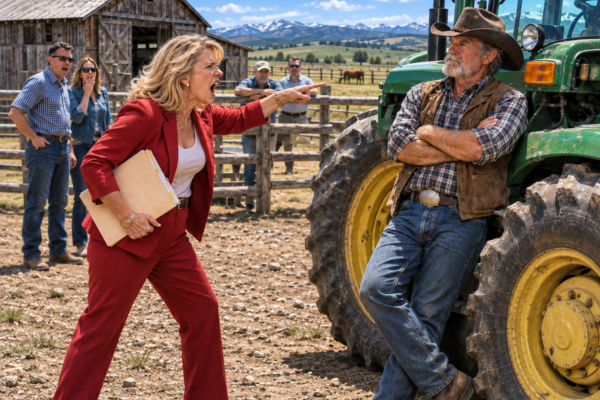
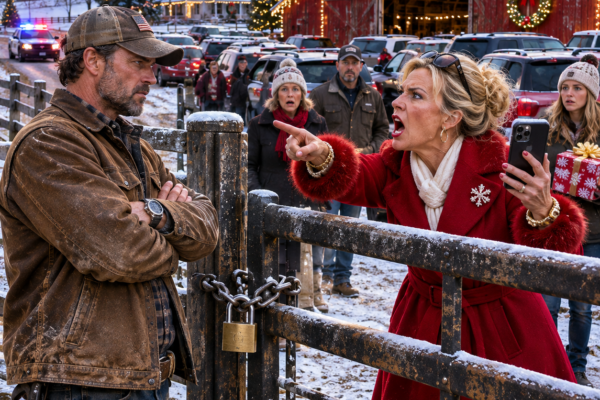
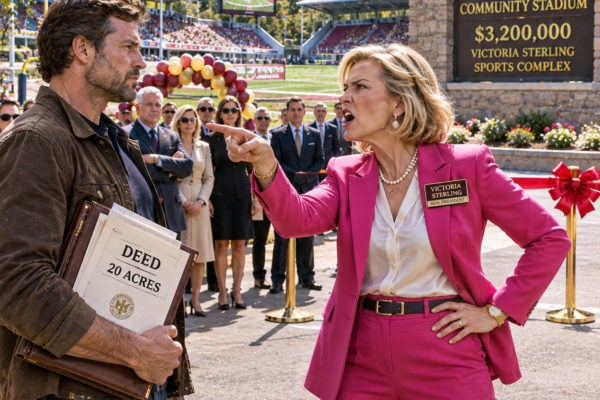
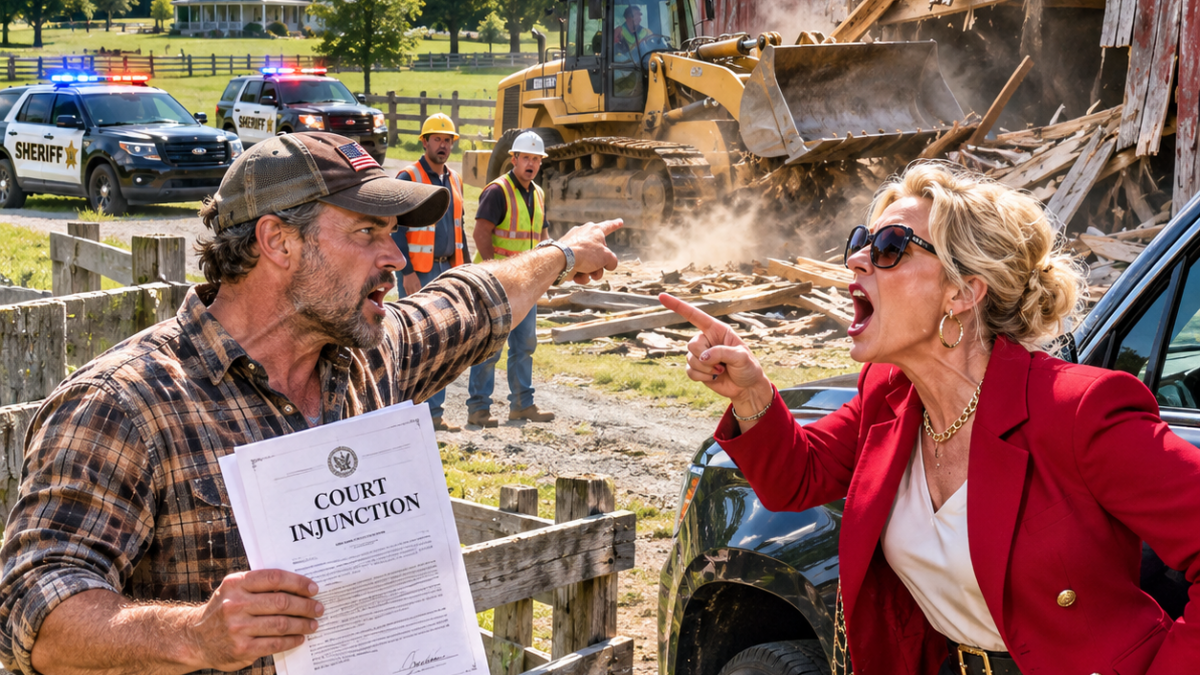
**“I DON’T GIVE A DAMN WHAT THAT JUDGE ORDERED, SAMUEL—YOUR ROTTEN OLD BARN IS COMING DOWN TODAY, AND IF YOU GET IN THE WAY, I’LL HAVE THE SHERIFF DRAG YOU OFF THE PROPERTY!” HOA president Patricia Lawson screamed in her bright red designer jacket as a yellow bulldozer smashed through the wooden wall of the barn my grandfather had built nearly ninety years earlier.**
**I stood twenty yards away holding a certified court injunction that explicitly prohibited Patricia from entering my Tennessee farm, while her demolition crew tore through the horse stalls, shattered my father’s workshop, and sent terrified animals crashing against their doors.**
**Then my sixty-year-old farm manager screamed from beneath the collapsing roof, and when I heard a ten-year-old girl crying behind the tack-room wall, I realized Patricia hadn’t just violated a judge’s order—she had ordered a building demolished with people still inside.**
The first wall came down at 6:43 on a Saturday morning.
I remember the time because I’d checked my phone seconds before the bulldozer hit.
A yellow machine crawled across the muddy barnyard with its blade raised.
Its tracks carved deep scars into ground my family had worked for generations.
Behind it stood two dump trucks, an excavator, and a black SUV.
Patricia Lawson leaned against that SUV wearing an expensive red jacket, white boots, and sunglasses that looked ridiculous in the early morning fog.
She was smiling.
I ran across the yard, waving the court order above my head.
“STOP THAT MACHINE!”
The bulldozer kept moving.
“PATRICIA! THERE’S A COURT INJUNCTION!”
She turned toward me.
Then laughed.
“YOU SHOULD HAVE TAKEN MY OFFER, SAMUEL!”
The bulldozer’s steel blade pressed against the eastern wall of my barn.
Old oak boards bent.
A beam cracked.
Then an entire section collapsed inward.
I heard Rusty, my oldest horse, scream from inside.
“THERE ARE ANIMALS IN THERE!”
Patricia didn’t move.
“Then you should have removed them!”
I stared at her.
“This is an operating farm!”
She folded her arms.
“Not for much longer.”
Her development consultant, Richard Blake, stood beside the machine operator.
He looked uncomfortable.
He said something to Patricia.
She waved him away.
The bulldozer pushed again.
Wood exploded into splinters.
Dust rolled out through the broken doors.
Then I heard a human voice.
“STOP! SOMEBODY STOP THAT THING!”
Robert Jenkins.
My farm manager.
My father’s oldest friend.
PART2:
He’d been inside checking the horse stalls when the machines arrived.
I rushed toward the entrance.
“ROBERT!”
“Samuel! I’m back here!”
A heavy roof beam crashed down.
I stopped as broken timber blocked the doorway.
The whole structure trembled.
Rusty kicked against his stall.
Molly, our younger horse, began screaming.
Then Robert shouted again.
“My leg! Samuel, I can’t move!”
I grabbed my phone and called 911.
Before I could finish explaining, Richard hurried toward me carrying a leather folder.
“Mr. Bennett, I was told you signed a demolition release.”
I turned toward him.
“What?”
He opened the folder.
A document bore my name.
Samuel Bennett.
Below it was a signature that resembled mine.
The document supposedly authorized immediate demolition of the barn.
I stared at it.
“I never signed that.”
Richard’s face changed.
“The development company was told everything had been approved.”
I pointed toward the wreckage.
“There’s an injunction prohibiting this exact work!”
Then another crash came from inside.
Robert cried out.
“Samuel!”
I moved toward the side entrance.
The wall was buckling.
I couldn’t safely reach him.
Then his voice came again.
This time, terrified.
“LUCY’S IN HERE!”
My blood turned cold.
Lucy Jenkins.
Robert’s ten-year-old granddaughter.
She’d been visiting the horses that morning.
I had assumed she was still with her mother.
“LUCY!” I screamed.
Nothing.
I called again.
Then a small voice answered from behind the tack-room wall.
“MR. BENNETT! THE DOOR WON’T OPEN!”
I looked up.
The main roof beam above the tack room was splitting.
I could see daylight through a widening crack.
The dispatcher told me to keep clear of the unstable structure.
Firefighters were coming.
I turned toward Patricia.
“THERE’S A LITTLE GIRL INSIDE!”
For the first time, her smile disappeared.
Then she looked at Richard.
“Get those machines out of here before the police arrive.”
I couldn’t believe what I was hearing.
“YOU’RE LEAVING THEM IN THERE?”
She ignored me.
“Richard, I said move the equipment!”
One worker stepped forward.
“Ma’am, nobody’s moving anything until those people are safe.”
Patricia glared at him.
“You work for me!”
He shook his head.
“Not like this.”
Then the final support above the tack room began to crack.
I shouted Lucy’s name.
She cried out once.
And the roof came down.
Six months earlier, I had returned to Maple Creek, Tennessee, believing the hardest chapter of my life was behind me.
I was forty-six.
For more than twenty years, I’d worked as a building contractor, repairing houses after floods, storms, and fires.
The work paid well enough.
But it kept me traveling.
I missed birthdays, holidays, and ordinary evenings with the people I loved.
When my father became seriously ill, I came home to help care for him.
After he passed away, I decided to stay.
Bennett Family Farm covered nearly two hundred acres of rolling pasture, woodland, and fields outside town.
My grandfather bought the property in the 1930s.
He built the farmhouse slowly.
Then the barn.
He cut oak timber from the land, raised the main frame with help from neighbors, and spent years expanding it as the farm grew.
My father added horse stalls, a storage room, and a small workshop.
The barn was old.
Its roof needed work.
Some boards had rotted.
But it was still a working building.
And every beam seemed to carry a memory.
My grandfather teaching my father to use a hammer.
My father teaching me to saddle a horse.
Robert Jenkins laughing beside the workbench.
Winters when newborn animals needed warmth.
Summer afternoons when the barn smelled of fresh hay and sawdust.
I wanted to restore it.
Not replace it.
Robert had worked on the farm for almost thirty years.
He was sixty now, with a gray beard and hands shaped by decades of honest work.
He knew the animals better than anyone.
Especially Rusty.
Rusty was our oldest horse, a gentle brown gelding who loved peppermints and seemed to recognize Robert’s footsteps before anyone else could hear them.
Molly was younger and more nervous.
Robert treated both like family.
His granddaughter Lucy loved them just as much.
She visited on school holidays, brushed their coats, and asked endless questions about animal care.
One Saturday, she helped me build a birdhouse.
She painted it bright yellow.
“Every animal deserves somewhere safe to live,” she told me.
I remember smiling.
I never imagined she’d soon be trapped inside a collapsing barn because somebody decided a new luxury road mattered more than human life.
The trouble began with Silver Pines Estates.
It was a development east of my farm.
More than a hundred expensive houses.
A private clubhouse.
A swimming pool.
Decorative gardens.
And a stone entrance designed to make the neighborhood look like a private resort.
Most residents were decent people.
Some bought eggs from us.
Others waved when they passed the fence.
Several families brought children to see the horses when Robert or I could supervise.
The problems began when Patricia Lawson became involved.
She was fifty-three and lived in a massive six-bedroom mansion overlooking the Silver Pines lake.
White columns.
Wide stone driveway.
Imported landscaping.
Expensive cars.
Patricia was HOA president.
And she seemed to believe that title gave her authority over everything within sight of the neighborhood.
The first time she visited, Robert and I were repairing the southern fence.
She stepped from her black SUV wearing a cream-colored suit.
Then pointed at my barn.
“WHEN ARE YOU GOING TO GET RID OF THAT DISGUSTING OLD BUILDING?”
I looked behind me.
“The barn?”
“It’s ruining the view from our neighborhood.”
“It’s a farm building.”
“It’s an eyesore.”
“We’re restoring it.”
“Then you’ll need HOA approval.”
I thought I’d misheard her.
“Approval for what?”
“Any visible exterior changes.”
I wiped my hands on my jeans.
“Patricia, this property isn’t part of Silver Pines.”
She crossed her arms.
“Anything affecting neighborhood appearance falls under our community standards.”
“No. Your HOA standards apply to property within your association.”
She stared at me.
“You don’t understand how important property values are.”
I looked toward the old barn.
“My grandfather built that before your neighborhood existed.”
“History doesn’t make it attractive.”
“Neither does threatening your neighbors.”
Her face reddened.
She pointed toward my tractor.
Then the hay stacks.
Then the pasture fence.
“This entire place needs serious improvements.”
I nodded toward my tools.
“That’s what we’re doing.”
She turned toward her SUV.
“You’re going to regret making this difficult.”
Three days later, a bright orange notice appeared on my gate.
SILVER PINES HOA VIOLATION.
It demanded that I paint the barn an approved color, hide my tractor, replace agricultural fencing with decorative fencing, and remove visible hay storage.
Daily fines would follow if I failed to comply.
I called my attorney.
Rebecca Collins.
She’d handled my father’s estate and knew the property history.
Rebecca reviewed the notice.
Then shook her head.
“Samuel, your farm isn’t within Silver Pines.”
“I know.”
“The HOA has no general authority to impose those private covenant rules on you.”
“Then why is Patricia sending fines?”
Rebecca looked at me.
“That’s what we need to find out.”
She sent a formal response with my recorded deed and the development boundary map.
Patricia ignored it.
A week later, she returned with two men carrying clipboards.
She introduced them as building inspectors.
They worked for a private company hired by her HOA.
Patricia demanded access to the barn.
I asked whether they had county authority or my permission.
They didn’t.
“Then you’re not inspecting anything today,” I said.
Patricia pointed at the roof.
“That building is dangerous!”
“We’re already working with qualified professionals on the restoration.”
“I’ll have it condemned!”
“Then take your concerns to the proper authority.”
She turned toward the horses.
“Maybe animal control should remove those, too.”
Robert stepped forward angrily.
I raised a hand.
“Let me handle it.”
Then I looked at Patricia.
“Threatening animals won’t change where my property line stands.”
She left furious.
I hoped that would be the end.
Then Dorothy Walker came to visit.
Dorothy was seventy-four and lived near Silver Pines’ eastern boundary.
She’d known my father for years.
She arrived with apple pie and a warning.
“Samuel, Patricia’s planning something bigger.”
“What?”
“Silver Pines Lakeside expansion.”
She explained that Patricia had been discussing additional luxury homes, walking trails, and a private recreation area.
One proposed entrance road would cross the eastern edge of my farm.
Directly through my barn.
I stared at her.
“She’s planning a road through my property?”
Dorothy nodded.
“She told residents the arrangements were already being handled.”
Nobody had approached me.
Nobody had purchased any land.
Nobody had even made a legitimate offer.
The next morning, I went to the county planning office.
The preliminary development map confirmed it.
A wide road entered from Silver Pines, crossed my eastern pasture, and continued through the exact location of my grandfather’s barn.
I requested copies.
Then called Rebecca.
The development company couldn’t build through my property without obtaining the necessary rights.
Rebecca sent formal notice that I had never agreed to sell or grant an easement.
I thought that would settle the issue.
Then Patricia appeared with Richard Blake.
Richard was a development consultant.
Gray suit.
Expensive briefcase.
Careful voice.
He explained that Silver Pines Lakeside could create jobs, increase property values, and improve traffic.
Then he offered to buy the barnyard and surrounding strip of land.
The number was far below what the land was worth.
And money wasn’t my only concern.
I looked at the map.
“You want to demolish the barn?”
Richard hesitated.
“The route would require removing existing structures.”
“No.”
Patricia’s expression hardened.
“YOU’RE BLOCKING MILLIONS OF DOLLARS IN DEVELOPMENT!”
“Then the developer shouldn’t have drawn a road through property it doesn’t own.”
Richard suggested a higher price might be possible.
I shook my head.
“The barn isn’t for sale.”
Patricia stepped closer.
“Buyers have already been promised that entrance.”
I stared at her.
“Then somebody promised something before securing the land.”
She pointed toward the barn.
“That building will come down one way or another.”
I believed she was threatening another lawsuit.
I didn’t yet understand how literal she intended to be.
Over the next several weeks, the letters became more aggressive.
The barn was supposedly a fire risk.
The horses were allegedly dangerous.
The hay storage was a public hazard.
Every complaint seemed designed to establish that the building needed to disappear.
Rebecca advised me to preserve everything.
We also hired an independent structural professional to inspect the barn.
He found areas that needed repairs.
But no reason for immediate demolition.
We began the recommended work.
I kept the report.
Sent it to Rebecca.
And continued restoring the building.
Then Patricia’s contractors entered the eastern pasture without permission.
Orange survey flags appeared inside my fence.
One morning, I found two men measuring land near the barn.
I asked them to leave.
They said Patricia had told them the HOA controlled the area.
I showed them the property map.
They stopped immediately.
But Patricia continued sending threats.
Finally, Rebecca suggested seeking a court injunction.
An order preventing Patricia, the HOA, and those acting on their behalf from entering the farm or interfering with the barn while the dispute continued.
I agreed.
At the hearing, Rebecca presented the deed, development plans, repeated threats, inspection report, and records of unauthorized entry.
Patricia’s lawyer argued that the HOA had safety concerns.
The judge asked what authority the association possessed over land outside its boundaries.
The answer was unclear.
Then he asked whether I’d authorized demolition.
“No, Your Honor.”
The judge issued a temporary injunction.
Patricia was ordered not to enter my property or interfere with the barn while the case remained pending.
The order also restricted further actions based on the disputed HOA claim.
I remember feeling tremendous relief.
Not because I wanted to defeat Patricia publicly.
Because I wanted the threats to stop.
Outside the courtroom, she walked past me.
Then whispered:
“Judges don’t understand how real business works.”
I said nothing.
Robert and I celebrated quietly that evening.
Two cups of coffee.
Sunset over the western pasture.
Rusty grazing near the fence.
Lucy helping her grandfather gather stones for a garden project.
Robert looked toward the barn.
“Think she’ll finally leave us alone?”
“I hope so.”
He shook his head.
“People like that get dangerous when somebody tells them no.”
I wanted to believe he was wrong.
A few days passed without trouble.
We repaired roof boards.
Replaced damaged windows.
Painted the barn doors.
Lucy helped with a small brush.
She got red paint on her gloves.
Robert laughed.
She stepped back to admire her work.
“Grandpa would love this,” she said.
I smiled.
“He certainly would.”
Then Dorothy called.
Patricia had reportedly met with investors at the Silver Pines clubhouse.
She told them the injunction was a temporary obstacle.
The barn would be removed before the next planning review.
Rebecca sent another warning.
Then new survey flags appeared along my eastern fence.
Security cameras showed men entering before dawn.
The court order apparently meant nothing to Patricia.
The following Friday, heavy rain soaked the farm.
By evening, the ground was muddy.
Robert and I checked the animals and secured the barn.
I went to bed exhausted.
At 6:30 the next morning, Robert called.
“Samuel, there are bulldozers coming through the eastern pasture!”
I sat upright.
“What?”
“Two dump trucks, an excavator, and a bulldozer!”
“Where are you?”
“Inside the barn. I’m trying to get Rusty and Molly out.”
“Robert, get clear of the building!”
I called the sheriff’s office immediately.
Then ran toward the barnyard.
That’s when I saw Patricia standing beside her SUV in the red jacket.
That’s when the bulldozer struck the wall.
And that’s when the world I’d known since childhood began collapsing around the people I loved.
When the first fire trucks arrived, Captain James Foster ordered everyone away from the unstable building.
Deputy Andrew Miller took my statement.
I showed him the injunction.
The warning letters.
The security footage.
The demolition paperwork carrying my supposed signature.
Then I explained that Robert and Lucy were trapped inside.
Firefighters examined the damaged walls.
The main entrance was blocked.
The roof was unstable.
The horses were terrified.
I wanted to run inside.
Andrew caught my arm.
“Samuel, the rescue team needs room to work.”
“There’s a child in there!”
“I know. Let them do their jobs.”
I knew he was right.
But standing outside while the barn collapsed around Lucy and Robert was almost unbearable.
Captain Foster asked about the building’s layout.
I remembered an old set of plans stored in the farmhouse.
Dad had preserved them.
They showed a narrow passage behind the hay storage room.
It connected to a small northern service entrance.
A firefighter accompanied me to retrieve the drawings.
We spread them across the hood of a rescue vehicle.
Captain Foster examined the passage.
“That might give us another approach.”
The firefighters checked the northern side.
Then a weak voice came from inside.
Robert.
“Lucy! Can anybody hear me?”
I shouted back.
“ROBERT! WE’RE HERE!”
He told us his leg was trapped beneath a beam.
Lucy was somewhere near the tack room.
A fallen cabinet blocked his view.
Then silence.
For several awful minutes, rescuers worked to secure the structure.
One team supported the damaged roof.
Another cleared the northern entrance.
Finally, a firefighter reached Robert.
He was conscious.
His leg was pinned.
But he kept asking about Lucy.
The second rescuer searched near the tack room.
Broken shelves.
Splintered wood.
Collapsed ceiling.
Then Captain Foster raised his hand.
“Quiet!”
Everyone stopped speaking.
Through the rescue radio came a small sound.
Coughing.
Then a frightened voice.
“Grandpa?”
Lucy.
I closed my eyes.
She was alive.
The rescuers found her curled beneath a heavy wooden workbench that had fallen sideways.
The bench had created a small protected space when the roof came down.
Broken boards blocked the way out.
But she was breathing.
Conscious.
Terrified.
Firefighters carefully secured the area.
Then moved the debris.
When one finally emerged carrying Lucy, her mother Amanda ran forward crying.
Lucy’s face was covered in dust.
A small cut marked her forehead.
Her eyes were open.
The paramedics took her immediately.
I stepped beside the stretcher.
“Lucy?”
She looked toward me.
“Is Rusty okay?”
I almost cried.
“We’re working on it.”
“I went to get his lead rope.”
I took her hand.
“You have a good heart, sweetheart. But never go into a dangerous building to save an animal.”
She nodded weakly.
Then asked:
“Where’s Grandpa?”
“Firefighters are helping him.”
Robert’s rescue took longer.
The beam trapping his leg was also supporting damaged roof timber.
The crew couldn’t simply lift it.
They had to stabilize the structure first.
When they finally brought him out, his face was pale and his right leg was badly injured.
He reached for my hand.
“Lucy?”
“She’s safe.”
His eyes filled with tears.
“Thank God.”
Then paramedics carried him toward the ambulance.
The horses were still inside.
An animal rescue team arrived with Dr. Caroline Foster.
Molly was reached through a side opening.
She emerged frightened but without serious injury.
Rusty was harder.
Fallen boards blocked his stall.
The old horse was trembling.
I played a recording of Robert’s voice from my phone while rescuers worked.
Rusty lifted his head.
He made that familiar gentle sound he always made when Robert approached with peppermints.
Then he took one step.
Another.
Finally, he emerged into the sunlight.
Covered in dust.
Shaking.
Alive.
I stood beside the rescue crew with tears running down my face.
Every person and animal trapped inside had survived.
Only then did I turn toward Patricia.
She was arguing with Deputy Miller.
Waving the supposed demolition release.
Claiming everything was authorized.
Andrew looked at her.
“Ma’am, this property is covered by an active court injunction.”
Patricia pointed at the paperwork.
“He signed permission!”
I stepped forward.
“No, I didn’t.”
Richard Blake approached and admitted he’d relied on documents Patricia supplied.
He also admitted he’d never independently verified that the injunction had been lifted.
Several construction workers said they’d been told the barn was empty.
One young worker, Peter Wilson, explained that he warned the crew when he heard horses inside.
Patricia ordered work to continue.
Another worker confirmed it.
I stared at the ruins.
The eastern wall was gone.
The roof had collapsed.
Broken oak beams lay across the stalls.
My father’s workshop was buried in debris.
Then I saw a piece of the door Lucy had painted.
Fresh red paint.
Splintered wood.
Dust.
And I finally understood that the barn my grandfather built was gone.
At the hospital, doctors confirmed Lucy had bruises and a cut near her forehead.
She was expected to recover.
Robert had a broken leg and several painful injuries.
He faced a much longer recovery.
When I entered Lucy’s room, she looked up.
“Mr. Bennett?”
“Yes?”
“Can we fix the barn?”
I sat beside her.
“We’ll need to rebuild most of it.”
She looked down.
“But that’s where Grandpa worked with your dad.”
“I know.”
She wiped her eyes.
“Rusty needs somewhere to sleep.”
“We’ll make sure he has somewhere safe.”
She was quiet.
Then asked:
“Can the new barn have bigger windows?”
I smiled.
“As many as we can reasonably fit.”
“And a place where kids can learn about horses?”
“We’ll talk about it.”
Her face brightened.
I didn’t know it then, but that promise would become one of the things that carried me through the months ahead.
Rebecca filed an urgent request with the court.
The judge ordered the parties to preserve records and appear for further proceedings.
The injunction was still in effect.
And Patricia’s decision to ignore it would have consequences.
At the hearing, Rebecca presented security footage, demolition records, rescue reports, and proof that Patricia had received the injunction.
Patricia’s attorney argued she believed the demolition was independently authorized.
Then the judge asked why the crew arrived before sunrise.
Why nobody verified the barn was empty.
And why the supposed release contained a signature I denied making.
Patricia shifted in her chair.
Rebecca showed the court a message sent from Patricia’s phone.
It instructed Richard to start early and remove the barn before I could interfere.
Another message complained that the injunction was delaying the expansion.
Patricia had written that the barn needed to disappear before investors visited.
Then the judge asked her directly whether she understood the order prohibited interference with the barn.
After a long pause, she admitted she’d received it.
The courtroom became silent.
The judge reminded her that a court order wasn’t optional.
Business plans didn’t give anyone permission to ignore it.
The court found she’d knowingly violated the injunction and imposed consequences.
But that wasn’t the same as rebuilding my barn.
The real financial fight was just beginning.
Rebecca helped me document the damage.
The barn itself.
Horse stalls.
Workshop equipment.
Stored tools.
Temporary animal housing.
Veterinary costs.
Cleanup.
Lost use.
The numbers were overwhelming.
A safe replacement using modern materials would cost hundreds of thousands of dollars.
I had worked as a contractor for twenty years.
I understood construction costs.
But seeing the estimate for replacing something my grandfather built with his own hands was devastating.
The building had been old.
The loss was enormous.
Yet no dollar figure could replace the sound of my father laughing beside the workbench.
No payment could put the original oak beams back where they’d stood for generations.
Then Patricia began moving assets between family businesses.
Rebecca discovered transfers that raised concerns about whether she was preparing to avoid future collection.
Some transactions might have ordinary explanations.
Others needed examination.
Rebecca warned me that winning a judgment and collecting it were two different things.
I wasn’t trying to ruin Patricia financially.
But I couldn’t rebuild the farm on promises.
Then another problem arrived.
The development company had advertised the Lakeside expansion with a road that crossed my barnyard.
Buyers had paid deposits.
Investors expected construction progress.
And Patricia had ordered the barn demolished before anyone secured the rights needed to build.
Now the developer faced questions from angry investors and prospective homeowners.
Some demanded refunds.
Others wanted to know who approved the demolition.
Silver Pines residents were furious too.
Dorothy Walker helped organize a community meeting.
Nearly seventy homeowners attended.
I came with Rebecca.
I showed the recorded property map.
Explained that Bennett Family Farm wasn’t part of Silver Pines.
Then showed the court injunction.
I described what happened during the demolition.
The trapped horses.
Robert’s broken leg.
Lucy buried beneath the fallen workbench.
Several residents looked horrified.
Dorothy stood holding a photograph of Lucy and Rusty.
She looked directly at Patricia.
“WHY WAS YOUR ROAD MORE IMPORTANT THAN THIS LITTLE GIRL’S LIFE?”
Patricia’s face tightened.
“I never intended for anyone to be hurt.”
Dorothy shook her head.
“You brought a bulldozer to a working barn without making sure everyone was out.”
Nobody answered.
Then Charles Miller, a retired carpenter and Silver Pines homeowner, asked whether the board had approved demolition.
Several members said they hadn’t.
They’d never voted to destroy my barn.
They hadn’t even known a court injunction prohibited interference.
Patricia accused them of abandoning her.
But the board voted to begin an independent financial review.
Residents also began the process of removing her as president.
Outside, Patricia confronted me near my truck.
“YOU DESTROYED MY REPUTATION!”
I looked at her.
“I told people what happened.”
“You’ll never get a dollar from me.”
“I want the damage repaired.”
“My lawyers will drag this out until you run out of money.”
I held her gaze.
“Then we’ll let the court decide.”
She walked away furious.
Two weeks later, Rebecca called with important news.
Investigators examining the supposed demolition release had found evidence of alteration.
The signature appeared copied from an unrelated construction agreement I’d signed years earlier.
The property description was different.
Several pages didn’t match the original formatting.
Somebody had turned an ordinary document into paperwork claiming I’d authorized destruction of my barn.
Rebecca told me the findings would matter in the civil case.
They might also lead to separate legal consequences.
But she cautioned against accusing a specific person without proof.
I agreed.
Then Robert received a strange phone call.
A man claiming to represent the development company asked whether he’d reconsider his statement.
The caller suggested that if Robert admitted responsibility for remaining inside the barn, the legal problems might become easier.
Robert wrote down everything he remembered.
He refused to change his account.
When I visited him, Lucy sat beside his chair drawing the new barn.
She looked up.
“Why would somebody want Grandpa to say something that isn’t true?”
I didn’t know how to explain it simply.
“Because sometimes people get frightened when their choices have consequences.”
She considered that.
“Being scared doesn’t make lying okay.”
“No, it doesn’t.”
Then Patricia’s company sent a truck full of used building materials.
Broken windows.
Damaged doors.
Old timber.
A letter suggested accepting the shipment would settle part of my claim.
I called Rebecca.
She told me not to sign anything or accept a settlement without proper review.
The driver was understanding.
He took the materials away.
I stood watching the truck leave.
Patricia seemed to believe a pile of used boards could replace my grandfather’s barn.
But I wasn’t interested in revenge.
I wanted a fair judgment.
And enough compensation to rebuild.
Then, just when I thought the situation couldn’t get worse, somebody set fire to our temporary horse shelter.
It happened at three in the morning.
Dorothy called first.
She’d heard loud noises near the eastern boundary and seen an orange glow above the trees.
My security system sounded an alert moments later.
I opened the camera feed.
Two shadowy figures moved near the hay storage area.
One carried a container.
A dark pickup waited beside the fence.
Then fire appeared.
Within seconds, flames spread through the dry hay.
I called emergency services.
Then ran toward the pasture, stopping well away from the growing fire.
Molly was screaming inside the temporary shelter.
Rusty kicked against his stall door.
The eastern gate was open.
The pickup was disappearing toward the county road.
I reported its description.
Then called Robert.
He answered immediately.
“Samuel?”
“There’s a fire at the temporary stalls.”
“I’m coming.”
“No, you’re not. Your leg’s still healing.”
“But Rusty—”
“Stay home, Robert. Firefighters are coming.”
Then I saw a small figure near the fence.
Lucy.
She’d heard about the fire and had come with her mother.
Now she’d slipped away and was trying to open the shelter gate.
I ran toward her from a safer direction.
“LUCY! GET BACK!”
She turned toward me crying.
“RUSTY’S INSIDE!”
“I know!”
“He can’t get out!”
I grabbed her hand and moved her away from the smoke.
“We can’t go inside. The firefighters need to do this.”
She struggled for a moment.
Then buried her face against my jacket.
The first fire truck arrived.
Captain James Foster stepped out.
Within minutes, firefighters were working to protect the temporary stalls and contain the burning hay.
They guided Molly through a side opening.
She stumbled into the open pasture.
Frightened.
But alive.
Rusty was still trapped.
Part of the doorway had collapsed.
Smoke filled the rear stall.
Then Captain Foster warned that the fire was spreading toward a nearby farm equipment fuel tank.
He ordered everyone farther away.
A loud bang shook the storage area.
Fire surged upward.
The shelter roof began falling.
Lucy screamed Rusty’s name.
Then a firefighter disappeared beneath the collapsing timber.
His name was Daniel Price.
Thirty-two.
Father of two.
A volunteer firefighter I’d known for years.
He’d helped repair fences on my farm after a storm.
Now he was trapped inside a burning shelter while trying to save our horse.
Captain Foster organized an immediate rescue from a safer side.
I stood behind the barrier holding Lucy’s hand.
The heat was unbearable even at a distance.
I couldn’t stop thinking about her trapped beneath the barn roof months earlier.
Now she was watching another building collapse.
Another person in danger.
Another terrible night.
Then a voice came through the fire radio.
They’d found Daniel.
Conscious.
Trapped beneath a beam.
Firefighters secured the damaged section and worked to free him.
Minutes later, he emerged on a stretcher.
His uniform was covered in soot.
He had burns on one arm and an injured shoulder.
Paramedics treated him immediately.
I raised a hand as the ambulance doors closed.
He managed a weak nod.
Then Lucy began crying again.
“Rusty’s still inside.”
The firefighters and animal rescue team continued working after bringing the flames under control.
Dr. Caroline Foster reached the rear stall with trained rescuers.
Rusty lay beside the broken doorway.
His breathing was heavy.
One leg appeared injured.
They carefully removed debris.
Then helped him stand.
He stumbled.
I thought his leg wouldn’t support him.
Then the old horse took a step.
Another.
And finally walked into the night air.
Lucy cried with relief.
I did too.
Both horses survived.
Daniel survived.
But the temporary shelter was badly damaged.
The hay was destroyed.
More equipment had been lost.
And another person had been injured.
Investigators secured the scene.
Deputy Miller explained that officers had stopped a dark pickup near the county road.
The driver carried a work order connected to a company associated with Patricia Lawson.
That alone didn’t prove Patricia ordered the fire.
But the timing was disturbing.
The security footage showed people near the hay before flames appeared.
The work order provided another connection to investigate.
The driver admitted he’d been hired to collect equipment from the farm.
He denied knowing anyone intended to start a fire.
Investigators examined phone records, witness statements, and the video.
I wanted answers.
But Rebecca reminded me not to weaken the case with unsupported accusations.
The fire investigation would follow its own evidence.
The injunction remained in effect.
And the civil claim for the barn continued.
At the hospital, Daniel asked me something I hadn’t expected.
“Did Rusty make it?”
I smiled.
“He’s alive.”
Daniel closed his eyes.
“Good.”
His wife, Sarah, sat beside him holding his hand.
Their children had been terrified when they learned he was injured.
I thanked him for risking so much.
He shrugged carefully.
“That’s why we train.”
Later, I visited Robert.
He was still recovering from his broken leg.
When I told him about the fire, he stared toward the window.
“Another shelter?”
I nodded.
“Rusty and Molly survived.”
He closed his eyes.
“Thank God.”
Then he began talking about the winter Rusty was born.
A heavy snowstorm.
My father staying awake all night.
The tiny foal struggling to stand.
Robert laughed through tears.
“Your dad loved that horse from the beginning.”
I sat beside him.
For a moment, the legal battle disappeared.
There was just an old man remembering his friend.
And a farm that had survived more than it should’ve had to.
The community helped again.
Farmers offered temporary stall space.
A feed store donated hay.
Silver Pines residents brought food and supplies.
Lucy arrived with a decorated box filled with get-well messages from children at school.
She wanted the cards hung near Rusty’s stall.
We did exactly that.
Then Rebecca called with the news that changed the legal case.
The court had reviewed evidence about the injunction violation.
Workers’ statements.
Patricia’s messages.
The altered demolition release.
Records showing she’d known about the order.
At a later hearing, Patricia insisted she’d believed the project was authorized.
Rebecca presented the messages directing workers to start before sunrise.
Another message said the barn had to disappear before investors arrived.
The judge asked whether Patricia had received the injunction.
She admitted she had.
He found she had knowingly violated it.
The civil case then addressed the damage.
Independent experts estimated the rebuilding cost.
Damaged stalls.
Tools.
Equipment.
Temporary housing.
Related losses.
The court entered a substantial money judgment against Patricia.
For the first time, a judge had formally ordered her to compensate me.
I sat beside Rebecca as the decision was announced.
I thought about Grandpa’s barn.
Robert.
Lucy.
The horses.
The months of fear.
I wanted to feel victorious.
Instead, I felt exhausted.
Then Patricia announced she wouldn’t pay.
She told Silver Pines residents the judgment was unfair.
She claimed the courts were punishing her for improving the community.
Her attorneys explored challenges.
But the debt remained.
And the barn was still gone.
Rebecca explained that collecting a judgment could take time.
Patricia’s businesses had complicated financial arrangements.
Some accounts appeared to hold limited funds.
The six-bedroom mansion where she lived was valuable, but mortgages and other lawful claims affected how much equity was available.
Then Rebecca discovered Patricia had attempted to transfer an interest in the mansion to a family-controlled company after the lawsuit began.
The timing raised serious concerns.
I sat across from Rebecca in her office.
“Can she simply move everything out of her name?”
“Not necessarily.”
“Then what happens?”
“The court can examine certain transfers and determine whether they should be set aside under the applicable law.”
I looked at the documents.
The mansion had always been Patricia’s favorite symbol of success.
White columns.
Lakefront view.
Expensive landscaping.
Rooms large enough to host parties for dozens of guests.
She loved showing it off.
Now that same property might become part of the judgment collection process.
I felt uncomfortable.
I hadn’t asked for her home.
I wanted my barn rebuilt.
But Patricia refused to pay what the court ordered.
And winning a judgment meant little if I couldn’t collect enough to restore the farm.
Rebecca explained that a house couldn’t simply be seized because a creditor was angry.
There were procedures.
Notices.
Court review.
Mortgages.
Exemptions.
Rights belonging to other parties.
Only legally available property interests could be reached.
We would follow the process.
Just as we’d followed it from the beginning.
Then the court scheduled a hearing over Patricia’s attempted transfer.
She arrived in an expensive cream-colored suit with several attorneys.
Rebecca presented the judgment.
Financial records.
The timing of the transfer.
Then a message Patricia had sent shortly after the judgment.
It said she intended to move the mansion beyond my reach before I could collect.
She wrote that I would never receive money from the house because she’d make sure someone else owned it on paper.
The courtroom went quiet.
Patricia’s attorney challenged how the message was being characterized.
The judge considered the arguments.
Then reviewed the evidence.
Ultimately, the court ruled that the disputed transfer couldn’t be used to defeat lawful collection.
Further enforcement steps were authorized against available non-exempt property interests, subject to required protections.
That didn’t mean the mansion would be sold the next day.
Patricia still had legal options.
She could arrange payment.
Resolve the judgment.
Or raise proper objections.
But she could no longer rely on a questionable transfer to make the debt disappear.
Outside the courthouse, she confronted me.
“YOU’RE TRYING TO STEAL MY HOME!”
I looked at her.
“I never wanted your house.”
“Then stop this!”
“Pay the judgment.”
Her face hardened.
“I’d rather lose everything than give a farmer one dollar.”
I stared at her.
“Patricia, this isn’t a favor you’re being asked to do.”
She looked away.
“It’s a court judgment.”
Then I walked toward my truck.
Days later, Charles Miller called.
Silver Pines homeowners had completed the process of removing Patricia as HOA president.
The new board was reviewing contracts, finances, and development promises.
Residents wanted to rebuild trust with neighboring landowners.
I appreciated that.
But Patricia continued fighting the judgment.
Then came the night her mansion caught fire.
It began with moving trucks.
Charles called shortly after sunset.
Workers were carrying furniture, paintings, and other valuable items out of Patricia’s house.
She was standing in the driveway shouting orders.
One man apparently tried explaining that certain property transactions needed to account for the court’s claims.
Patricia refused to listen.
Vehicles blocked part of the neighborhood road.
Neighbors gathered.
Someone contacted local authorities.
I told Charles not to get involved.
“This needs to be handled by the court.”
He agreed.
An hour later, he called again.
Patricia had locked herself inside the mansion.
She was refusing to cooperate with people trying to address the collection proceedings.
Then I heard a crash through the phone.
Charles gasped.
“Samuel, there’s smoke!”
“Where?”
“Her garage!”
He said a window had shattered.
Thick smoke was rising from the rear of the mansion.
People were calling the fire department.
Then he remembered something.
Patricia’s mother was staying there.
Margaret Lawson.
Seventy-nine.
Recovering from an illness.
She had difficulty walking.
Charles hadn’t seen her leave the house.
I felt my stomach tighten.
“Tell the dispatcher immediately.”
He did.
Fire engines arrived.
Smoke spread toward the upper rooms.
Patricia appeared briefly at an upstairs window shouting that nobody had permission to enter her home.
Then disappeared.
I couldn’t believe what I was hearing.
Her mother was inside.
The house was burning.
And Patricia was still arguing about control.
Then Charles shouted again.
The garage fire had intensified.
A loud bang shook the building.
Flames spread through a broken window.
Smoke filled the staircase.
The front entrance appeared blocked.
Margaret remained upstairs.
I grabbed my jacket.
Then drove toward Silver Pines.
Not because I wanted to be near Patricia.
Because an elderly woman was trapped inside a burning building.
When I arrived, emergency vehicles lined the road.
Firefighters worked near the garage.
Another team prepared a ladder beside the house.
The white columns were blackened with soot.
Smoke poured from several windows.
I parked well away from the emergency scene and approached the safety barrier.
A deputy confirmed rescuers knew Margaret might still be upstairs.
Then I saw movement at a second-floor window.
A hand.
Weakly pressing against the glass.
Captain Daniel Harris directed the ladder team toward that side of the house.
A firefighter climbed carefully.
Reached the window.
Opened a safe way through the damaged glass.
Then began speaking to Margaret.
She was frightened.
Exhausted.
Barely able to stand.
Smoke filled the room behind her.
The firefighter supported her toward the opening.
For several terrifying seconds, I watched them work.
Then Margaret was brought onto the rescue equipment.
Slowly.
Carefully.
She reached the ground.
Paramedics rushed her to a stretcher.
She was conscious.
Breathing.
Weak from smoke exposure.
But alive.
I felt enormous relief.
Margaret hadn’t destroyed my barn.
Hadn’t threatened my horses.
Hadn’t ignored the injunction.
She was an elderly woman who needed help.
And she deserved every effort the firefighters made to save her.
Patricia was still inside.
Then she appeared at the front door.
Coughing.
Holding a large leather handbag.
Her expensive clothes were covered in soot.
A firefighter guided her down the steps.
When she reached the sidewalk, she tried turning back toward the house.
“MY DOCUMENTS ARE STILL INSIDE!”
The firefighter stopped her.
“You cannot go back in.”
“THOSE PAPERS ARE IMPORTANT!”
Then a paramedic told her Margaret had been rescued.
Patricia stopped arguing.
She looked toward the ambulance.
And for the first time since I’d met her, I saw no anger on her face.
Only fear.
The firefighters continued working.
The mansion suffered serious damage near the garage and upper rooms.
But everyone believed to have been inside was accounted for.
I stood behind the barrier watching smoke drift above the lake.
Months earlier, Patricia had smiled while a bulldozer destroyed my family’s barn.
Now her own home was burning.
But I didn’t feel satisfaction.
Fire doesn’t repair another fire.
Suffering doesn’t undo suffering.
Another family had nearly lost someone they loved.
That wasn’t victory.
The next morning, I visited the hospital.
I didn’t know Margaret personally.
But I asked the staff to give her a card wishing her a full recovery.
I didn’t expect Patricia to appreciate it.
I simply believed a frightened elderly woman deserved kindness.
Dorothy later told me Patricia was surprised I’d sent the card.
I didn’t see anything surprising about it.
Margaret hadn’t harmed me.
She’d almost died.
That was enough.
Fire investigators examined the mansion.
The fire had begun near electrical equipment in the garage while workers were moving belongings.
Several devices had been connected.
Flames spread through stored materials.
Investigators found no reliable evidence that someone deliberately set the house on fire.
I was relieved.
Patricia had made enough terrible decisions without another crime being added through speculation.
Margaret recovered.
She eventually left the hospital to stay with a relative.
The mansion remained badly damaged.
Building officials restricted access to unsafe areas.
And the judgment collection proceedings continued.
Rebecca explained that the fire affected the property’s value and raised new questions about insurance.
But the debt didn’t vanish because the house had been damaged.
The court still needed to consider the legally available equity, mortgages, exemptions, and other claims.
Then, one afternoon, Patricia came to my farmhouse.
She wore a plain gray sweater and dark pants.
No sunglasses.
No designer jacket.
No clipboard.
She looked older.
Tired.
She approached the porch slowly.
“Samuel, can we talk?”
I hesitated.
Then nodded.
We sat outside, where my security camera covered the entrance.
For a long time, Patricia said nothing.
Then she looked up.
“Why did you send my mother a card?”
“Because she nearly died.”
She stared at me.
“After everything I’ve done to you?”
“Your mother didn’t destroy my barn.”
Patricia looked down.
“You have every reason to hate me.”
I shook my head.
“I’m angry about what you did.”
She nodded.
“I’m angry that Robert broke his leg and Lucy was buried beneath the roof.”
Her eyes filled with tears.
“I’m angry that you ignored a judge’s order and used a false document to justify destroying my property.”
She began crying quietly.
“But hating you won’t rebuild the barn.”
Patricia wiped her face.
Then admitted something she’d never said before.
She’d become obsessed with the Lakeside expansion.
Investors expected progress.
Buyers had been promised a road.
She thought removing my barn would make the property dispute easier to resolve later.
She convinced herself that because the injunction was temporary, she could ignore it.
I listened.
Then said:
“Patricia, you didn’t just make a business mistake.”
She nodded.
“You brought a bulldozer to a working barn without confirming that everyone was out.”
“I never wanted Lucy to get hurt.”
“But you knew the order prohibited the demolition.”
She looked down.
“Yes.”
“You were warned.”
“Yes.”
“And you told them to keep working.”
She began crying again.
“I know.”
For the first time, she wasn’t arguing.
She wasn’t threatening me.
She wasn’t claiming somebody more powerful had authorized her actions.
Then she asked whether I’d accept a smaller settlement so she could keep her mansion.
I looked at her carefully.
“I don’t want your house.”
She looked up.
“I want the judgment satisfied.”
“The amount is too much.”
“The damage is real.”
She looked toward the empty barnyard.
I continued.
“Robert and Lucy were injured. Equipment was destroyed. The horses lost their shelter. We’ve spent months trying to recover.”
Patricia said nothing.
“If you have a lawful payment proposal, your attorney can discuss it with Rebecca.”
She nodded.
Then she said something that stayed with me.
“I spent so much time trying to make people admire me that I stopped caring what my decisions did to them.”
I believed she meant it.
But a confession wasn’t payment.
And remorse didn’t erase the damage.
I told her real change required action.
Honesty.
Cooperation with the court.
Accepting responsibility.
She thanked me for listening.
Then left.
The next morning, I told Rebecca about the conversation.
She said any settlement needed to be written and reviewed properly.
We had spent too long establishing the facts to let a vague promise replace an enforceable agreement.
I agreed.
Over the following month, Patricia’s attorneys explored payment options.
Available funds.
Insurance.
Private property sales.
Business assets.
But the debt remained substantial.
Some assets were encumbered.
Others had been depleted by development expenses and legal costs.
The mansion remained the largest asset potentially available for collection.
The court reviewed the attempted transfer.
The fire damage.
Remaining property value.
Mortgages.
Exemptions.
Other lawful claims.
Patricia received the required notices.
She attended hearings with her lawyers.
She had opportunities to address the judgment.
But she couldn’t arrange sufficient payment.
Eventually, after the required proceedings, the court authorized enforcement against the mansion’s non-exempt value through a supervised sale.
I sat beside Rebecca when the decision was announced.
For months, Patricia had insisted she would never pay me.
Now the court had reached the property she once treated as proof that she was untouchable.
But there was still no joy in it.
I remembered Grandpa’s barn.
Robert sweeping the stalls.
Lucy painting the doors.
Rusty waiting for peppermints.
Those were the things I wanted back.
Not a stranger’s house.
The sale proceeded through the authorized process.
Buyers received information about the property’s condition, including the fire damage.
Even damaged, the six-bedroom mansion attracted interest.
It overlooked the Silver Pines lake.
The lot was valuable.
The house still had potential.
Patricia had opportunities to resolve the judgment before the sale concluded.
But she couldn’t satisfy the debt.
Then, months after she’d destroyed my grandfather’s barn, her mansion was sold.
The required costs, secured debts, exemptions, and other lawful claims were addressed.
The legally available proceeds were applied toward the judgment she owed me.
Rebecca called when the sale results were confirmed.
“Samuel, it’s done.”
I sat at the kitchen table.
“The house?”
“Sold.”
I didn’t answer immediately.
Rebecca continued.
“The amount available will cover a substantial portion of the judgment.”
I looked toward the empty barnyard through the window.
For months, I had stared at that space.
Remembering what used to stand there.
Now, for the first time, I had a realistic way to begin rebuilding.
I thanked Rebecca.
Then sat alone for several minutes.
The woman who had smiled while a bulldozer destroyed my grandfather’s barn had lost the mansion she loved showing off.
Not because I took it.
Not because I threatened her.
Because a court entered a judgment, she refused to satisfy it, and the lawful collection process reached an asset available to help pay what she owed.
When I told Robert, he was sitting on the farmhouse porch with his injured leg resting on a small stool.
Lucy was nearby drawing horses.
Robert listened quietly.
Then shook his head.
“She spent months trying to take your land.”
I nodded.
“And lost her own home because she wouldn’t pay for what she destroyed.”
I looked toward the pasture.
“I never wanted that to happen.”
Robert sighed.
“Neither did your father, if he’d been here.”
Then he said:
“Justice isn’t supposed to make us cruel, Samuel.”
I knew he was right.
We hadn’t asked Patricia to bring bulldozers onto the farm.
We hadn’t asked her to ignore the injunction.
We hadn’t forced her to use questionable paperwork.
We’d asked her to leave our property alone.
Every serious consequence began with a choice she could have made differently.
With the first major payment toward the judgment available, I began planning the new barn.
This time, I didn’t want to build something identical to the old structure.
I wanted to honor it.
But also make it safer.
Modern fire protection.
Stronger framing.
Better ventilation.
Wider exits.
More comfortable stalls.
A separate equipment storage area.
Safe access for emergency vehicles.
I invited Robert and Lucy to help with the design.
Lucy arrived with a notebook full of drawings.
Every picture featured Rusty near a large window.
One included a classroom where children could learn about animal care.
Another showed a wide porch where Robert could sit and watch the horses.
I laughed as she explained her ideas.
Then I realized she wasn’t joking.
She’d thought carefully about every part.
Robert suggested moving hay and equipment farther from the animal stalls.
After the fire, we all understood why that mattered.
The architect adjusted the plans.
Construction began on a clear Monday morning.
The first truck arrived shortly after sunrise.
I watched it turn into the driveway.
For one terrible second, I remembered the bulldozer.
Then I looked at the purchase order in my hand.
These were my workers.
My materials.
My plans.
My decision.
Nobody had forged my signature.
Nobody had ignored a court order.
Nobody was threatening to destroy the place.
They were here to build it.
Robert sat beneath the oak tree while crews prepared the foundation.
Lucy stood beside him holding her notebook.
I walked toward them.
“Ready?”
She smiled.
“Can Rusty’s window face the pasture?”
I laughed.
“That’s exactly where it’s going.”
Over the following months, the new barn took shape.
A strong wooden frame.
A dark roof.
Wide doors.
Comfortable stalls.
Clean water systems.
A small workshop.
And a safe room where children could learn basic farm skills under supervision.
Charles Miller, the retired carpenter from Silver Pines, helped with the wooden details.
Dorothy brought food for workers.
Neighbors helped plant trees along the pasture fence.
Their kindness reminded me that Patricia had never represented every homeowner in the development.
Most had been horrified by what happened.
Some had helped us from the beginning.
Then Dorothy arrived carrying a wooden box.
Inside were things volunteers had recovered from the demolished barn after investigators finished their work.
Old hinges.
A horseshoe.
And a small wooden nameplate.
It was scratched and dusty.
But the letters were still visible.
BENNETT FAMILY BARN — BUILT WITH LOVE.
I stared at it.
My grandfather had carved those words.
Robert touched the wood with trembling fingers.
“I remember when he nailed that above the doors.”
His eyes filled with tears.
I looked toward the new barn.
“Then it belongs there again.”
We cleaned the nameplate.
Restored it carefully.
And mounted it beside the new entrance.
The old horseshoe went above the door.
The building was new.
But it still belonged to the same family history.
Rusty was one of the first animals to move inside.
Dr. Caroline Foster examined him before approving the move.
His injured leg still needed attention, but he was recovering.
Robert led him slowly through the entrance.
Lucy walked beside them carrying a bucket of carrots.
Rusty paused.
Sniffed the clean straw.
Looked toward the wide window.
Then stepped into his new stall.
Lucy laughed.
Robert wiped his eyes.
I stood in the doorway watching.
The old horse had survived a bulldozer destroying his home.
Then a fire destroying his temporary shelter.
Now he had somewhere safe to rest.
Again.
A few weeks later, the new Silver Pines HOA board contacted me.
Charles explained that residents wanted to organize a community safety event.
Children could learn about farms, animals, and respecting property boundaries.
I agreed.
Not because I had forgotten what happened.
But because the people asking had treated me respectfully.
At the event, Lucy stood beside Rusty’s stall and explained how to approach horses safely.
She spoke confidently.
Told younger children never to stand directly behind an animal.
Never to enter a stall without permission.
And never to ignore an adult’s safety instructions.
Robert watched from the doorway.
I stood beside him.
“She’s good at this,” I said.
He smiled.
“Better than both of us.”
I laughed.
Then remembered the little girl trapped beneath the tack-room wreckage.
The frightened voice calling for help.
And the way she’d asked about Rusty before asking about herself.
Now she was teaching other children how to keep animals and people safe.
That meant more to me than any courtroom decision.
Some time later, a letter arrived from Patricia.
She had moved into a smaller home outside Silver Pines.
The letter contained no threats.
No demands.
No accusations.
She acknowledged the terrible decisions she’d made.
She apologized for the demolition.
For the injuries.
For the months of legal fighting.
She wrote that losing her mansion had forced her to reconsider what she valued.
The house had been beautiful.
Expensive.
Impressive.
But she’d treated it as proof that she was better than other people.
And she’d treated the farm next door as something she had the right to control.
I read the letter twice.
I couldn’t know whether she had truly changed.
One apology couldn’t undo what she’d done.
The legal process had provided accountability, and any remaining matters would continue through proper channels.
But I hoped she meant what she wrote.
I hoped she’d learned that authority wasn’t permission to destroy somebody else’s life.
That evening, I walked toward the new barn.
The sun was setting behind the western hills.
Cattle moved quietly through the pasture.
The air smelled of fresh hay.
Robert sat on the barn porch with a cup of coffee.
Lucy was brushing Rusty.
Molly stood nearby watching the activity.
I joined Robert.
For a while, neither of us spoke.
Then he asked:
“You still think about that morning?”
I looked toward the new entrance.
“Every day.”
He nodded.
“Me too.”
I remembered Patricia standing beside the bulldozer in her bright red jacket.
Laughing at the court injunction.
Telling me judges didn’t understand business.
I remembered the wall collapsing.
Robert screaming.
Lucy’s frightened voice behind the tack-room door.
The firefighters pulling them out.
The horses stumbling into daylight.
Then the fire at the temporary shelter.
Daniel Price being carried to an ambulance.
Rusty fighting to stand.
And months of courtroom hearings before Patricia finally faced a judgment she couldn’t ignore.
The strangest part was that I never wanted any of it.
I didn’t want to sue her.
Didn’t want to watch her mansion burn.
Didn’t want her home sold.
I wanted to restore my grandfather’s barn.
Care for our animals.
Fix fences.
And enjoy the life I’d returned to Maple Creek to build.
But Patricia decided that her expansion project mattered more than my property rights.
Then she decided a court order was something she could ignore.
And when her choices caused enormous damage, she decided paying for it was optional too.
The law eventually proved otherwise.
I looked at Robert.
“Grandpa always said a farm was something you were responsible for, not something you simply owned.”
Robert smiled.
“He said something else too.”
“What?”
“A strong fence isn’t built to keep every person away.”
I waited.
“It’s built to show where respect begins.”
I smiled.
That sounded exactly like him.
Good neighbors could open a gate.
Visit.
Share a meal.
Help with the harvest.
Teach a child how to care for a horse.
But nobody had the right to tear down the fence simply because they wanted what stood on the other side.
Patricia never understood that until the consequences reached her own front door.
She believed money and a prestigious HOA title placed her above the rules that governed everyone else.
She believed her lawyers could make the judge’s injunction disappear.
She believed bulldozing my barn would force me to surrender the land.
And she believed refusing to pay the judgment would somehow make the debt go away.
Instead, the barn was rebuilt.
The farm remained mine.
The HOA elected new leadership.
And Patricia’s six-bedroom mansion was sold through the court-authorized process to help compensate me for the destruction she caused.
But when I think about how the story ended, I don’t picture the courthouse.
Or the mansion.
Or even the bulldozer.
I picture Rusty standing inside his new stall.
Robert walking through the doorway without needing his cane.
And Lucy pointing to the old wooden nameplate above the entrance.
“Mr. Bennett?”
I turned.
She stood beside Rusty holding a brush.
“Yes, sweetheart?”
“Will you tell me how your grandfather built the first barn?”
I smiled.
Robert moved over to make room on the porch.
Lucy sat between us.
And I began telling her about a young farmer, a stand of oak trees, and a dream of building somewhere safe for the animals he loved.
Because buildings can fall.
Money can disappear.
Expensive houses can be sold.
And people who believe they’re powerful can lose everything they once used to intimidate others.
But the love that built my grandfather’s barn was still here.
In Robert’s hands.
In Lucy’s smile.
In the animals resting safely behind us.
And in the people who helped rebuild when everything seemed lost.
**Patricia Lawson thought ignoring a judge’s order would cost me my farm—but in the end, it cost her the mansion she treasured, while my grandfather’s barn rose again on the land she never had the right to touch.**