HOA Karen Stormed Into My Farm for an “Inspection”—Then I Showed Her My FBI Badge and She Went Silent
HOA Karen Stormed Into My Farm for an “Inspection”—Then I Showed Her My FBI Badge and She Went Silent.
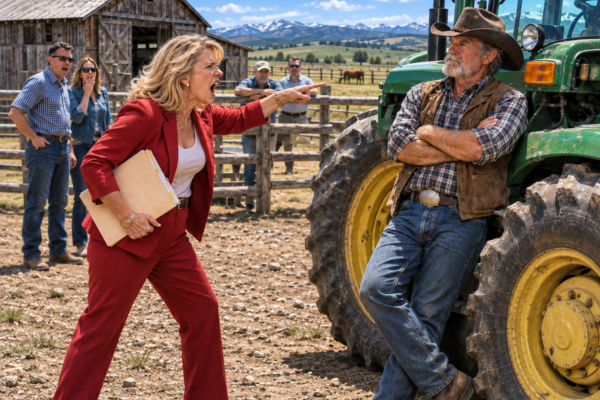
“OPEN THAT BARN RIGHT NOW, YOU STUBBORN IDIOT! I’M THE HOA PRESIDENT, AND IF YOU REFUSE MY INSPECTION, I’LL HAVE YOUR HORSES SEIZED, YOUR FARM SHUT DOWN, AND YOU DRAGGED OFF THIS PROPERTY IN HANDCUFFS!”
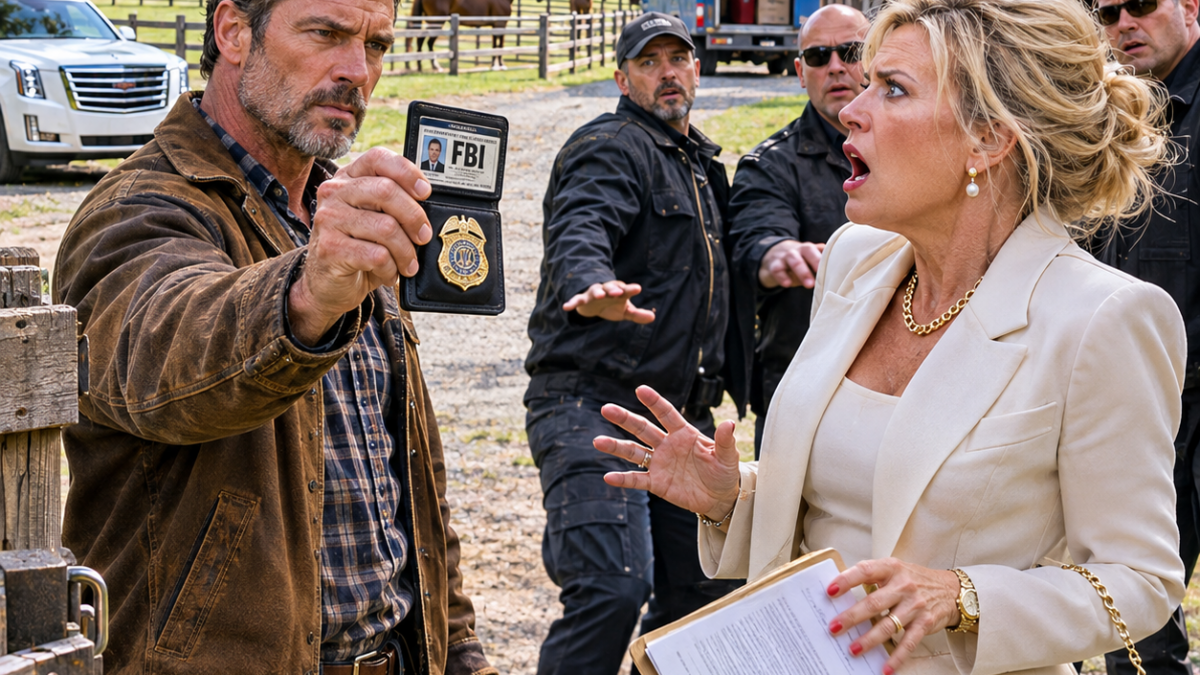
Vanessa Caldwell had just forced her way through my locked farm gate with three men, threatened my employees, and ordered our children’s riding program closed when I opened my FBI credentials in front of her—and the clipboard slipped from her fingers as she realized the muddy-booted farmer she’d been bullying was Special Agent Michael Hayes.
But the moment Vanessa recognized the blue delivery truck parked outside my barn, her expression changed from shock to fear, and seconds later my farm manager came running toward us shouting that an eleven-year-old girl was standing beside a horse trailer sinking into Willow Creek.
“GET YOUR HANDS OFF MY HORSES!”
My voice echoed through the barn as Vanessa Caldwell reached toward the latch on Daisy’s stall.
The brown mare stepped backward, ears pinned against her head.
Behind Vanessa stood three men wearing dark jackets. One carried a clipboard, another held a camera, and the third had been photographing our equipment without asking permission.
Vanessa turned toward me.
“Don’t raise your voice at an authorized HOA inspector.”
“Then show me your legal authority.”
She laughed.
“I don’t need your permission.”
“You’re standing inside a private barn on property that isn’t part of your association.”
“I am responsible for every property affecting Oakridge Hills.”
“No, Vanessa. You’re responsible for the association you were elected to represent.”
She stepped closer.
Her expensive white suit looked almost ridiculous against the dusty barn floor.
“Your farm is an embarrassment to this community. Your animals smell, your buildings are outdated, and you’re operating an unauthorized riding program.”
“Our program meets the applicable local requirements.”
“That’s what you claim.”
She pointed toward Robert Dawson, my farm manager.
“Stop whatever you’re doing. My committee needs full access to every building, equipment shed, and storage room.”
Robert stared at her.
“Lady, I’ve worked here thirty years. You don’t get to walk in and start giving orders.”
Vanessa turned bright red.
“I can have you removed.”
I stepped between them.
“That’s enough.”
She stared at me.
Then she smiled in a way I didn’t like.
“You know, Michael, somebody told me you claim to work for the federal government.”
I didn’t answer.
She continued.
“Pretending to be a federal officer is a serious crime. Perhaps I should report you for impersonating an FBI agent.”
“Who told you that?”
“Doesn’t matter.”
“Vanessa, you need to leave.”
“Show me proof, then. Unless you’re lying.”
For a moment, I considered simply turning away.
My profession had nothing to do with her imaginary HOA inspection rights.
But she’d already frightened my employees, threatened the children’s riding program, and publicly accused me of impersonating a federal officer.
So I reached into my jacket.
Removed my identification wallet.
And opened it.
“My name is Michael Hayes. I’m a special agent with the Federal Bureau of Investigation.”
Vanessa went completely still.
Her mouth opened.
The clipboard slipped from her fingers and struck the barn floor.
The three men behind her exchanged nervous looks.
One immediately moved toward the exit.
I closed my identification wallet.
PART2:
“Now, to be clear, I’m speaking as the owner of this farm. My badge doesn’t give me special property rights. But neither does your HOA title.”
Vanessa said nothing.
It was the first peaceful moment we’d had since she entered.
Then her eyes shifted toward the open barn doors.
A small blue delivery truck was parked outside.
Its rear doors were partly open.
Gray tape covered part of a red warning label.
The driver was speaking urgently into his phone.
Vanessa whispered something to the man nearest her.
He turned toward the truck.
I noticed her hands trembling.
“What is that vehicle doing here?” I asked.
She swallowed.
“It’s a legitimate delivery.”
“Of what?”
“Development equipment.”
“For whose development?”
Before she could answer, Robert came running from the lower pasture.
His face was pale.
“MICHAEL! SOMEBODY OPENED THE EAST GATE!”
I turned.
“What happened?”
“A horse trailer is backing toward Willow Creek! The children heard the horses screaming!”
“Where’s Hannah?”
“Trying to get Sophie away from the fence!”
I was already moving toward the door.
Robert grabbed my arm.
“Michael, the old bridge is giving way!”
Then I heard the scream.
A little girl’s voice.
Sophie Bennett.
And behind it came the terrible sound of a horse kicking against the metal walls of a trailer.
Three months earlier, I thought coming home would be the simplest decision I’d ever made.
My name is Michael Hayes.
I was forty-five years old, and I’d spent almost twenty years working as an FBI special agent.
Much of my career involved financial crimes.
Fraudulent investments.
False business records.
People who used impressive titles and convincing paperwork to take advantage of others.
I’d seen ordinary families lose retirement savings because they believed somebody who spoke confidently and promised everything would be fine.
I’d also seen how dangerous it could become when dishonest people were desperate to keep their schemes hidden.
I believed in my work.
But the job had taken a toll.
Missed birthdays.
Cancelled holidays.
Long nights away from home.
And too many family dinners spent staring at a phone while someone explained another emergency.
When my mother passed away, I began thinking about everything I’d missed.
My father, Thomas Hayes, had died five years earlier.
He left our family’s 280-acre farm to me.
The property sat outside Cedar Falls, Virginia, surrounded by green pastures, wooded hills, and the gentle curves of Willow Creek.
My grandparents had owned it before my parents.
Dad spent most of his life raising horses.
But his greatest passion wasn’t making money.
It was teaching children.
He believed a frightened child could learn confidence by earning the trust of a gentle horse.
He offered free riding lessons to families who couldn’t afford expensive programs.
Some children were painfully shy.
Others struggled at school.
A few had experienced more sadness than anyone their age should have to face.
Dad never asked what kind of house they lived in.
He simply taught them how to brush a horse, check its water, and treat animals with patience.
When I accepted a transfer that allowed me to live closer to Cedar Falls, I decided to continue what he’d started.
The day I returned, Robert Dawson met me beside the farmhouse.
Robert was fifty-eight, with broad shoulders, a gray beard, and hands permanently rough from working outdoors.
He’d been Dad’s closest friend.
After my father’s death, Robert kept the farm operating while I worked away from home.
When he saw me step out of my pickup, he hugged me.
“Your dad would’ve loved this, Michael.”
I looked toward the old red barn.
“I hope so.”
“He always wanted you back here.”
I walked the property with Robert that afternoon.
The fences needed work.
The western barn roof had begun leaking.
Several gates were worn.
But the horses were healthy, the fields were green, and the farmhouse still smelled faintly of cedar and old leather.
For the first time in years, I felt like I belonged somewhere.
Robert suggested hiring Hannah Miller to help reopen the riding program.
Hannah was twenty-seven and had worked at several local stables.
She was patient with animals and even more patient with children.
During our first meeting, she told me something I never forgot.
“Some kids don’t need somebody telling them to be brave. They need a place where it’s okay to be scared until they’re ready.”
I hired her immediately.
We repaired the riding arena, checked the equipment, arranged the necessary insurance, and made sure the program met applicable safety requirements.
Then we selected three gentle horses.
Daisy, a beautiful brown mare.
Winston, a calm gray gelding.
And Shadow, an older black horse who had belonged to my father.
Shadow was special.
He seemed to understand nervous children.
If a child moved slowly, he moved slowly.
If a child needed more time, he waited.
Dad used to joke that Shadow had more patience than most teachers.
One of our first students was Sophie Bennett.
Eleven years old.
Bright eyes.
Quiet voice.
Always carrying a notebook.
Her mother had died several years earlier, and her father worked long hours as a truck driver.
Sophie lived with her grandmother, Evelyn Bennett.
Money was tight.
But Sophie loved animals.
The first afternoon she came to the farm, she stood beside Daisy’s stall for twenty minutes, talking softly.
Hannah asked whether she wanted to brush the mare.
Sophie nodded.
Then she asked a question that made everyone smile.
“Do horses remember people who are kind to them?”
Robert answered before I could.
“They sure do, sweetheart.”
After that, Sophie visited almost every Saturday.
She helped prepare feed buckets under supervision, cleaned brushes, and learned why animals needed consistent routines.
Some days she barely spoke to people.
But she could talk to Daisy for an hour.
Watching her made me understand why Dad had loved the program so much.
For the first month, everything was peaceful.
Then Vanessa Caldwell drove through our gate.
Her white luxury SUV stopped beside the northern pasture.
She stepped out wearing a pale blue suit and expensive sunglasses.
Without introducing herself, she pointed toward our barn.
“That roof is unacceptable.”
I looked up.
“Excuse me?”
“The roof. It needs repainting.”
Robert glanced at me.
I struggled not to smile.
“May I help you?”
“Vanessa Caldwell. President of the Oakridge Hills Homeowners Association.”
Oakridge Hills was a wealthy development along our northern property line.
It had large houses, manicured lawns, a clubhouse, and a tall stone entrance.
The neighborhood had been constructed decades after our family began farming the valley.
Our land wasn’t part of its HOA.
Vanessa apparently considered that a minor technicality.
“Your horses are too close to our residents,” she continued.
“They’ve been grazing here for generations.”
“They create odors.”
“They’re horses.”
“Your tractor is visible from the upper houses.”
“We use it.”
“And your barn doesn’t meet our architectural standards.”
I crossed my arms.
“Vanessa, Hayes Farm isn’t part of Oakridge Hills.”
She laughed.
“Any property affecting our residents falls under my responsibility.”
“That’s not how HOA authority works.”
Her smile disappeared.
“You’ll need approval before making any visible improvements.”
“Any required permits come from the county. Not your board.”
She warned that she had powerful friends.
Then drove away.
Robert watched the SUV disappear.
“Your dad would’ve had something colorful to say about that woman.”
I laughed.
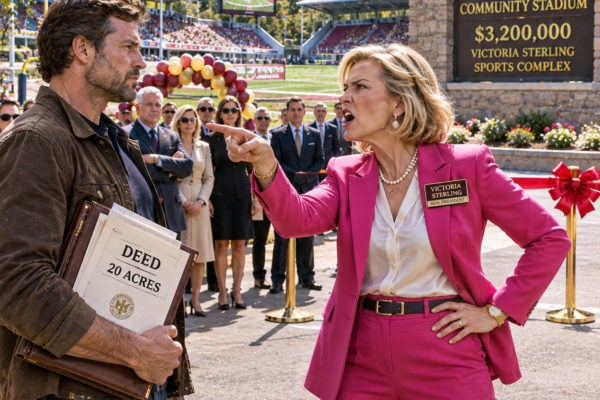
But three days later, an official-looking notice appeared on our gate.
Outdated barn paint.
Exposed equipment.
Livestock odors.
Unauthorized riding activities.
Inspection required within seven days.
Daily fines threatened for noncompliance.
I called Laura Mitchell, the attorney who’d handled my father’s estate.
She confirmed our farm wasn’t subject to Oakridge Hills’ private rules.
We sent a polite response explaining the boundary and requesting that Vanessa stop issuing unsupported notices.
Instead, she sent another letter claiming our riding program was dangerous.
That bothered me more than the complaints about the barn.
Parents trusted us with their children.
Hannah worked hard to make the lessons safe.
I wasn’t going to let a neighbor frighten families with accusations she couldn’t support.
So we held a small open afternoon.
Parents came.
Hannah demonstrated the riding rules.
Robert explained how we cared for the horses.
Sophie proudly showed visitors how to brush Daisy.
About fifteen people attended.
Several Oakridge Hills residents thanked us for providing something positive for children.
One father told me his son had started speaking more confidently at school after spending time with Shadow.
I looked toward Dad’s old barn and wished he could’ve seen it.
Then Charles Parker approached me.
Charles was a retired principal who lived in Oakridge Hills.
“Michael, I think you should know why Vanessa’s bothering you.”
I listened.
He explained that she had been promoting a luxury equestrian resort near the neighborhood.
Private riding trails.
Expensive boarding facilities.
Guest cabins.
A recreation center.
And a service road connecting the development to the county highway.
That road crossed my eastern pasture.
I felt my stomach tighten.
“Has anybody asked permission to use my land?”
Charles shook his head.
“Vanessa says the arrangements are already being handled.”
I thanked him.
The following Monday, Robert and I inspected the eastern boundary.
The old service road crossed one of our pastures and continued toward Willow Creek.
Dad had occasionally allowed utility crews to use it.
But he had never opened it for commercial traffic.
The wooden bridge over Willow Creek was aging badly.
Several supports had been weakened by seasonal flooding.
Robert had closed it to ordinary vehicles.
Warning signs were posted.
A heavy chain secured the gate.
Then we found blue marks painted on trees inside our boundary.
Small survey stakes.
Fresh tire tracks.
Somebody had been examining the route.
Laura checked public planning records.
A company called Blue Ridge Leisure Group had submitted preliminary plans for a private equestrian resort.
The drawings showed access across my farm.
No signed agreement from me existed.
I asked Laura to notify the company that it couldn’t assume rights to property it hadn’t purchased or obtained permission to use.
Then Vanessa returned with two men and another clipboard.
She demanded an inspection.
I refused.
One of the men quietly asked whether my farm was officially part of the HOA.
Vanessa ignored him.
She threatened to have the horses inspected and the riding program shut down.
I told her genuine safety concerns belonged with the proper authorities.
She could report them.
But she couldn’t invent inspection powers over a neighboring farm.
She left furious.
A week later, Robert found a blue delivery truck near our eastern service gate.
The driver had a work order identifying part of our pasture as a temporary storage area.
I showed him the boundary map.
He apologized and left.
Then more trucks appeared.
Unfamiliar men photographed the creek crossing.
Vanessa sent another notice claiming we’d failed an inspection that had never happened.
I began documenting everything.
I also informed my FBI supervisor about the personal property dispute so there would be no confusion if my professional responsibilities ever overlapped with it.
He told me to handle the HOA matter through local and civil channels.
That’s exactly what I intended to do.
Then came the Saturday community open day.
Families arrived around noon.
Children played supervised games beneath the oak trees.
Hannah introduced Daisy, Winston, and Shadow.
Sophie handed out homemade welcome signs.
For a while, the farm was filled with laughter.
Then Vanessa arrived wearing her white suit.
Three men followed her into the barn.
She began shouting orders.
Demanding records.
Threatening employees.
And accusing me of impersonating an FBI agent.
When I showed her my credentials, she went silent.
But the real trouble was already moving toward Willow Creek.
Robert’s warning sent us toward the eastern pasture.
I told Hannah to move the children and parents toward the farmhouse.
Then I called the sheriff’s office.
Vanessa hurried after us.
“The vehicles belong to a legitimate development project!” she insisted.
“Then why are they entering my property through a locked gate?”
She didn’t answer.
I could see the horse trailer near the old wooden crossing.
The towing truck was trying to reverse.
Its tires spun in wet soil.
The trailer leaned toward the creek.
Inside, horses kicked against the metal walls.
Sophie stood near the fence crying.
“MR. HAYES! ONE OF THEM FELL!”
Hannah caught her arm.
“Stay back, Sophie!”
The driver accelerated.
The trailer jerked.
A wooden support cracked.
I shouted for everyone to move away from the crossing.
Then the rear of the trailer dropped.
Metal slammed against the bridge railing.
The horses screamed.
A man climbed from the passenger side of the truck and ran toward the trees.
Vanessa shouted after him.
“TRAVIS! COME BACK!”
I turned toward her.
“Who is Travis?”
She froze.
“My son.”
Before I could ask another question, the bridge gave way.
The trailer dropped into Willow Creek.
Muddy water splashed over the damaged wood.
For several seconds, I couldn’t see the animals.
Then Robert shouted something even worse.
“THERE’S A MAN INSIDE THAT TRAILER!”
A face appeared briefly through a small window.
A young worker.
Blood running down his forehead.
He was trapped inside with three terrified horses.
Deputy James Walker arrived moments later.
He ordered everyone away from the crossing and requested firefighters, rescue personnel, and an animal-response team.
Captain William Foster reached the scene with his crew.
The trailer was wedged against a stone support.
Its rear section lay partly in the creek.
Water was entering through the damaged opening.
The young worker shouted that his name was Tyler Reed.
His leg was trapped beneath a fallen divider.
One horse lay beside him.
Two others were kicking near the front.
Captain Foster organized a rescue from stable ground.
Robert stayed nearby to advise the team about the horses.
I kept Sophie away from the danger.
She was shaking.
“Are they going to die?”
“Everyone’s working to help them.”
I didn’t promise more than I knew.
The firefighters stabilized the trailer enough to reach Tyler.
They freed his injured leg and brought him out on a stretcher.
He had a broken ankle and several cuts, but he was alive.
Then Dr. Rebecca Stone arrived with an animal-rescue team.
The first horse, a chestnut gelding, was guided to safety.
The second, a gray mare, had injured her leg and needed careful treatment.
The third was a frightened dark brown stallion trapped near the rear opening.
The trailer shifted again.
Rescuers backed away until recovery equipment secured it.
Finally, the stallion stepped onto firm ground.
All three horses survived.
When Sophie heard that, she buried her face against Hannah and cried.
I felt like doing the same.
Tyler explained that Blue Meadow Hauling had been hired to deliver the horses to a new riding facility connected to Blue Ridge Leisure Group.
The route changed after a phone call.
Someone named Travis had allegedly assured the driver that the creek crossing was safe.
I knew exactly how false that assurance was.
I’d posted warnings.
Closed the gate.
And repeatedly notified the development company.
Still, somebody had sent a heavy horse trailer toward the bridge.
Vanessa stood beside her SUV watching the rescue.
She wasn’t shouting anymore.
I thought showing her my FBI badge had embarrassed her.
Now I suspected she’d been frightened because the truck, her son, and the development company were connected.
The connection became clearer over the following weeks.
Laura found that Travis Caldwell was a project manager for Blue Ridge Leisure Group.
The company had been advertising luxury horse boarding, riding trails, guest cabins, and expensive memberships.
The proposed resort entrance crossed my eastern pasture.
Investors apparently believed that access was already secured.
It wasn’t.
A former employee named Rachel Porter came to see me.
She’d recently left Blue Ridge Leisure Group.
Rachel said Travis had repeatedly told staff that his mother would persuade me to cooperate.
He claimed the HOA could pressure the farm into compliance.
Rachel also described suspicious transport records.
Some horse deliveries had been redirected from legitimate boarding facilities to temporary locations that weren’t properly prepared for the animals.
The company wanted investors to believe horses and equipment were arriving for a resort that wasn’t ready.
Rachel had consulted an attorney and was preparing to share records with investigators.
I encouraged her to do that.
Because my farm was personally involved, I didn’t attempt to direct the federal investigation.
My supervisor arranged for other agents to handle any connection with Blue Ridge Leisure Group.
I remained a property owner and witness.
For a few weeks, the farm became quiet again.
The three rescued horses were receiving veterinary care.
Tyler was recovering.
Hannah continued teaching.
Sophie spent extra time brushing Daisy.
Then Vanessa sent another demand.
A full inspection within ten days.
She claimed the farm’s refusal to cooperate had damaged the resort’s financial prospects.
Laura responded that the HOA had no general right to inspect our property.
I hoped that would be the last letter.
It wasn’t.
One Friday evening, Robert called from the eastern pasture.
“Michael, somebody cut the chain again.”
I stood.
“Are they still there?”
“No vehicles. But there are crates outside the old storage shed.”
“What kind?”
“Blue Ridge shipping labels.”
I told him not to touch anything.
Then I called the sheriff.
When I arrived, Robert was waiting on the safe upper road.
A strange mechanical hum came from the shed.
Faint light leaked through the wooden walls.
The building had no active electrical service.
A damaged crate outside revealed thick cables.
Deputy Walker arrived with another officer.
They confirmed the gate had been forced.
The shed door stood partly open.
Then a loud metallic bang came from inside.
Smoke rose through a gap beneath the roof.
James immediately requested firefighters.
We moved away.
Another bang.
The humming grew louder.
Then the door swung open.
A young man stumbled outside.
He was coughing.
One arm was burned.
Blood ran from a cut above his eyebrow.
I recognized him.
Travis Caldwell.
Vanessa’s son.
He collapsed onto the grass.
Paramedics began treating him.
Before they moved him, he caught Deputy Walker’s sleeve.
“The equipment wasn’t supposed to be here.”
James leaned closer.
“What equipment?”
Travis struggled to speak.
“Records. Control units. They wanted everything gone before the investigation.”
Then he looked toward me.
“They’re using your farm to hide it.”
I felt my stomach tighten.
Travis said someone had ordered the crates removed before the next inspection.
He claimed people connected to the resort were moving financial records and equipment between temporary sites.
He also said he’d been threatened when he refused to cooperate.
Before I could hear more, paramedics took him toward the ambulance.
Then my supervisor called.
Federal investigators had uncovered evidence of suspicious investments and financial transfers involving Blue Ridge Leisure Group and associated companies.
The business had promised people facilities and land rights that didn’t exist.
My supervisor reminded me that I’d remain outside the investigative team because I was personally involved.
I agreed.
Then the old shed exploded into flames.
Firefighters moved everyone farther back.
A loud burst sent burning pieces of timber across the yard.
They protected the nearby trees and worked to contain the fire.
Robert stood beside me.
“That shed belonged to your father.”
“I know.”
“He kept tools in there for thirty years.”
I put a hand on his shoulder.
“It’s a building, Robert. Everyone’s alive.”
Then I noticed a dark pickup moving along the upper service road.
Its headlights were off.
It turned toward the riding arena.
A moment later, my phone buzzed.
Hannah.
She’d returned to collect equipment for the next morning’s lesson.
Two unfamiliar men were outside the storage building.
She’d hidden in the office.
Then the lights went out.
I called immediately.
She answered in a whisper.
“Michael, they’re trying to open the feed room.”
“Don’t confront them. Call 911 and stay somewhere safe.”
“I already called.”
I passed the information to Deputy Walker.
He requested officers to the arena.
Then I heard a crash through Hannah’s phone.
A man shouted.
“OPEN THE STORAGE ROOM!”
Hannah gasped.
Footsteps.
Furniture moving.
Then her voice.
“PLEASE! I DON’T KNOW WHAT YOU WANT!”
The line disconnected.
I stared at my phone.
Then a message arrived.
A photograph.
Hannah was sitting on the office floor.
Her hands appeared bound behind her back.
Beneath the image were words I will never forget.
TELL THE FBI TO STAY AWAY FROM THE RESORT CASE OR SHE WON’T LEAVE THIS FARM ALIVE.
For several seconds, I couldn’t breathe.
Hannah had spent months teaching frightened children to trust horses.
Now somebody was using her life to threaten a federal investigation.
My first instinct was to jump into my truck and chase the pickup.
I didn’t.
I had spent nearly twenty years in law enforcement.
I knew a reckless pursuit could place Hannah in even greater danger.
Instead, I handed my phone to Deputy Walker.
He transmitted the information.
Officers secured the riding arena.
They found the office door forced open.
Cabinets overturned.
A piece of rope beside Hannah’s desk.
Her phone on the floor.
And a small amount of blood near the doorway.
Hannah was gone.
I called her mother, Linda Miller.
She answered cheerfully.
“Michael! Is everything okay?”
I closed my eyes.
Then told her what we knew.
She began crying.
I promised the investigators would give her verified updates.
I did not promise that everything would be fine.
Because I didn’t know.
The search continued through the night.
A dark pickup was found abandoned several miles north of the farm.
Its registration connected it to a contractor associated with Blue Ridge Leisure Group.
Investigators checked nearby roads and buildings.
Local search teams used trained dogs.
I provided old property maps showing maintenance trails through the hills.
Then a farmer reported seeing a white delivery van with a damaged rear light traveling toward an abandoned equipment yard near the county line.
I knew the property.
Dad had once repaired a tractor there.
I gave Deputy Walker the location.
Then I sat beside my kitchen phone and waited.
At 3:57 a.m., James called.
“Michael, we found her.”
I couldn’t speak.
“Hannah’s alive.”
I gripped the kitchen counter.
“Are you sure?”
“Yes. She’s conscious. Medical teams are with her.”
I closed my eyes.
For the first time in hours, I felt I could breathe.
Officers had located Hannah inside a locked storage room.
Several suspects were taken into custody.
Investigators were securing the property and collecting evidence.
I called Linda.
She cried so hard I could barely understand her.
Then I drove to the hospital.
Hannah was bruised and exhausted.
Her mother sat beside her.
When she saw me, tears filled her eyes.
“I thought I’d never see the farm again.”
I pulled a chair close.
“I’m glad you’re home.”
She gripped my hand.
“Are Sophie and the horses okay?”
“Yes. They’re safe.”
Hannah exhaled.
Then she told me the men had been searching for property agreements and resort records.
They wanted to know whether I had given documents to the FBI.
They threatened her when she couldn’t answer.
During the drive, she’d heard them arguing about investors and missing money.
One complained that Travis had already told investigators too much.
Another said Vanessa had promised the HOA inspection would keep me occupied while equipment was removed.
I listened.
Then asked Hannah to share those details with the investigators when she felt ready.
I wasn’t going to turn a hospital visit into an interrogation.
Before I left, she asked something that broke my heart.
“Do I still have a job?”
I stared at her.
“Hannah, the kids love you. The horses trust you. You have a place here whenever you’re ready.”
She began crying again.
This time, she smiled.
The weeks that followed were difficult.
Hannah needed time to recover.
She sometimes became anxious when unfamiliar vehicles approached the farm.
Robert and I supported her without pushing her to return too quickly.
Sophie made her a card with Daisy’s picture.
KIND HANDS, HAPPY HORSES.
Hannah kept it beside her bed.
Meanwhile, investigators examined the resort company’s finances.
Rachel Porter provided records showing investors had been promised access through my farm before any agreement existed.
Several payments went to consulting companies connected to the Caldwell family.
Then another property document appeared.
An agreement supposedly signed by my father.
It claimed he had granted permanent commercial access through the eastern pasture.
The signature looked familiar.
But the date troubled me.
Dad was recovering from major surgery during that period.
I remembered it clearly.
I’d taken leave to help him.
Robert also remembered that Dad had rejected a proposal for commercial access because the road would pass dangerously close to the riding area.
We searched Dad’s old office.
In a folder labeled EASTERN ACCESS, we found letters from developers.
One included his written refusal.
Then Robert discovered a handwritten note.
Dad had complained that someone had prepared a revised agreement without his approval and had demanded its withdrawal.
The consultant named in the note was Franklin Caldwell.
Vanessa’s husband.
I read the name twice.
Franklin had worked on the area’s early development plans.
Public records showed he still had financial interests connected to Blue Ridge Leisure Group.
Suddenly, the history of the disputed road looked very different.
Vanessa wasn’t simply helping her son.
Her husband had been involved years earlier.
My father had refused them then.
And now they were trying again.
Laura challenged the disputed agreement through the proper legal process.
She sought protection against unauthorized construction while the property rights were reviewed.
Then Vanessa came to see me.
Alone.
No clipboard.
No inspection committee.
She stopped outside the main gate and asked to talk.
I agreed to speak where the security camera could record our conversation.
She looked tired.
For a moment, I thought she’d come to apologize.
Instead, she offered money.
Blue Ridge Leisure Group wanted to purchase permanent access through my eastern pasture.
She said the resort could bring jobs, tourists, and valuable investment to Cedar Falls.
I thanked her.
Then declined.
“The bridge is unsafe, Vanessa. The route crosses our horse pasture. I’m not selling it.”
Her face tightened.
“You don’t understand how much money is at stake.”
“Then explain why the company promised investors access it didn’t own.”
She looked away.
“Changing the entrance would cost millions.”
“Then change the entrance and tell investors the truth.”
“Families depend on this project.”
“Families also depend on our farm. Your company’s deliveries nearly killed a worker and three horses. People connected to this mess kidnapped Hannah.”
She flinched.
“I’m trying to settle things.”
“Then stop threatening me and bring legitimate proposals through our attorneys.”
Her expression hardened.
She claimed my father had secretly approved the road.
I told her we had his refusal in writing.
She smiled coldly.
“Old letters can be misunderstood.”
Then she warned that unpleasant information about my federal career could become public if I continued resisting.
I stared at her.
“Is that supposed to frighten me?”
She said nothing.
Then drove away.
I immediately sent the recording to Laura and notified my supervisor.
The next morning, an official-looking notice appeared on my gate.
EMERGENCY COUNTY ROAD AUTHORIZATION.
It claimed construction crews could enter the eastern pasture and repair the old crossing.
I called the county.
No such order existed.
The document was preserved for investigation.
Still, someone placed gravel near the damaged bridge.
Fresh tracks appeared beside the service road.
Survey stakes marked a route I had never approved.
Then Charles Parker called from Oakridge Hills.
“Michael, Vanessa told residents the road dispute is settled.”
“It isn’t.”
“She says work begins this weekend.”
“Then she’s lying.”
That evening, heavy rain moved across Cedar Falls.
The security camera near my eastern pasture sent an alert.
Headlights.
A bulldozer.
Two dump trucks loaded with gravel.
And a section of fence that had been removed.
I called the sheriff’s office.
Then Robert.
“Stay away from the machines. Keep the horses clear if you can do it safely.”
He agreed.
On the camera feed, Vanessa stepped out of her white SUV beneath an umbrella.
Franklin Caldwell stood beside her holding a folder.
He pointed toward the creek.
The bulldozer pushed gravel toward the crossing.
Then water began collecting behind the new material.
The stream was rising quickly from the rain.
I remembered the county inspector’s warning.
Those gravel piles could obstruct drainage.
Then Robert called again.
“MICHAEL! THEY HIT THE FENCE!”
I turned toward another camera view.
The paddock fence had collapsed.
Two horses were moving through the opening.
One was Daisy.
She ran toward the creek, frightened by the machinery and flashing lights.
Robert called her name.
She didn’t stop.
The bulldozer pushed another load of gravel.
Water rose higher.
Branches collected behind the blocked channel.
I called dispatch again and reported a possible flood hazard.
Then Deputy James Walker arrived at the eastern gate.
He ordered the equipment shut down.
Franklin held up the supposed county authorization.
James told him it required verification.
Vanessa began shouting that the HOA had the right to improve the road.
Then a terrible cracking sound came through the camera speakers.
The gravel barrier failed.
A wall of muddy water rushed through the opening.
Broken branches and stones swept downstream.
The remaining bridge supports began breaking apart.
Daisy stumbled near the bank.
Then disappeared behind a cloud of water.
I heard Robert scream her name.
A dump truck parked too close to the creek began tilting as the bank washed away.
The driver jumped from the cab.
A worker ran toward him.
Both slipped on the collapsing ground.
Deputy Walker called for swift-water rescue.
Then Franklin moved toward the damaged crossing.
James shouted for him to stay back.
Franklin kept going.
The dump truck slid farther.
Its metal bed struck part of the bridge.
Wood snapped.
The remaining crossing collapsed.
Franklin stumbled.
Then disappeared into Willow Creek.
Vanessa screamed.
The camera showed his hand gripping a piece of timber.
Then the hand vanished.
Robert was shouting that Daisy was struggling in the water farther downstream.
I could hear sirens approaching.
Then the dump truck rolled sideways, striking the fallen bridge.
A burst of muddy water filled the camera.
And the image went black.
For several seconds, I sat frozen at my desk.
Then I grabbed my raincoat.
I didn’t drive toward the broken bridge.
Instead, I followed the safer upper farm road to the emergency command area.
Captain William Foster was organizing rescue teams when I arrived.
I told him about Franklin and Daisy.
He asked whether I knew where the creek widened downstream.
I pointed to an old cattle crossing nearly half a mile away.
Dad had used it for years.
The banks there were lower.
William sent rescuers toward that location.
The water was dangerous.
Nobody entered without appropriate equipment.
Then a firefighter spotted movement beside a broken support.
Franklin.
He was trapped against timber in the current.
Rescuers secured him and carefully worked him free.
Vanessa stood near a patrol vehicle, crying.
Her white coat was soaked.
She kept asking whether her husband was alive.
Then two rescuers brought Franklin onto firm ground.
He was coughing.
Shaking.
Barely able to stand.
But alive.
Paramedics placed him on a stretcher.
Vanessa rushed to his side after deputies guided her safely around the equipment.
I watched quietly.
Franklin had helped create the danger that nearly killed him.
But I didn’t want him to die.
Then Robert caught my arm.
“Daisy’s still missing.”
I looked toward the creek.
Animal rescuers and Dr. Rebecca Stone were checking the safer banks downstream.
Minutes passed.
Then a radio call came.
A large brown horse had been spotted near a fallen cottonwood.
She was standing in shallow water.
Exhausted.
Covered in mud.
But alive.
Robert started crying.
Dr. Stone’s team guided Daisy onto solid ground and arranged veterinary care.
She had cuts and painful injuries, but she was breathing normally.
When Robert spoke her name, she lifted her head and turned one ear toward him.
That small movement nearly broke me.
After everything, Daisy was still here.
I called Hannah.
She began crying when I told her.
Then asked whether Sophie knew.
“Not yet. I want to make sure we have accurate information first.”
The storm eased after midnight.
Emergency crews secured the crossing.
The dump truck remained partly submerged.
Fences were destroyed.
Gravel and broken timber covered the creek bank.
I looked toward the pasture where my father had taught me to ride.
It was almost unrecognizable.
All because people refused to accept that they couldn’t build a road through land they didn’t own.
The following morning, I visited Franklin at the hospital.
Vanessa was sitting beside him.
She looked exhausted.
When she saw me, her expression tightened.
“Why are you here?”
“To see whether he’s okay.”
She stared.
“After everything we’ve done?”
“Yes.”
Franklin thanked me for sharing the property maps that helped rescuers.
I told him the firefighters deserved the credit.
Then I reminded him the bridge had been closed for a reason.
He looked away.
“I knew it was unsafe.”
I waited.
“But the investors were demanding progress,” he said. “Every delay was costing us money.”
“Franklin, a business project isn’t worth killing somebody.”
His eyes filled.
He admitted he’d convinced himself that one more day of work would solve the access problem.
One more shipment.
One more permit.
One more promise to investors.
Then everything began falling apart.
Vanessa asked whether I could forgive them.
I looked at her.
“Forgiveness doesn’t replace responsibility.”
She lowered her head.
“People were injured,” I continued. “Animals suffered. Hannah was kidnapped. My property was damaged. Those things have to be addressed.”
For once, Vanessa didn’t argue.
The legal investigations continued.
Because I was personally involved, I remained outside the federal team handling Blue Ridge Leisure Group.
Other agents reviewed the financial records, investment representations, and business transactions.
Local authorities investigated the unauthorized entries, false notices, damaged property, and dangerous construction activity.
The court examined the disputed access agreement.
My father’s letters proved he’d rejected permanent commercial use of the eastern road.
The later filing relied on an unapproved draft.
The court eventually confirmed that Blue Ridge Leisure Group had not established the permanent access rights it claimed.
The improper filing was cleared from the property records.
The eastern pasture remained ours.
When Laura called with the news, I sat at Dad’s old desk.
His photograph hung above it.
He stood beside Shadow, smiling beneath his brown hat.
I looked at the picture for a long time.
“You were right, Dad,” I whispered.
The financial case continued.
Records showed Blue Ridge Leisure Group had promised investors resort facilities and access rights that weren’t secured.
Travis cooperated after receiving treatment.
Rachel Porter and other employees provided statements.
Investigators examined payments through businesses connected to the Caldwell family.
The people who held Hannah captive faced separate criminal charges.
Several defendants admitted involvement through plea agreements.
Other matters continued through the courts.
The HOA also faced its own reckoning.
An independent review identified spending connected to the resort that hadn’t been adequately disclosed or approved.
Vanessa’s inspection demands had no authority over my farm.
Her threats against our riding program had been baseless.
Homeowners demanded new leadership.
Charles invited me to a special meeting.
Nearly eighty Oakridge Hills residents attended.
I brought the public property map.
I explained that Hayes Farm existed long before the neighborhood.
I explained the limited utility access Dad had allowed.
And I explained why the old creek crossing was closed.
A woman asked why the resort brochures showed the entrance as approved.
“Because someone represented it that way,” I answered. “But I never granted those rights, and the court has confirmed the company didn’t establish them.”
Then Sophie stood beside Evelyn.
She raised her hand.
Charles smiled.
“Go ahead, Sophie.”
Her voice trembled at first.
“Hayes Farm is where I learned to be brave.”
The room became quiet.
“It’s where I learned how to care for Daisy and make friends.”
She looked toward me.
“When the bridge broke, Daisy got hurt. Hannah got hurt, too. And those horses in the trailer didn’t do anything wrong.”
She swallowed.
“Horses don’t know what investors are. They don’t care about big houses or expensive resorts.”
A few people wiped their eyes.
“They just know when they’re scared.”
Sophie looked around the room.
“Why couldn’t the adults just talk without hurting animals or frightening people?”
Nobody answered.
Then the room erupted in applause.
Evelyn hugged her granddaughter.
Charles announced that homeowners had voted to remove Vanessa as HOA president under their association’s procedures.
A new board would review spending, improve transparency, and stop making demands against neighboring properties it didn’t control.
I didn’t cheer.
I was relieved.
Most Oakridge Hills homeowners had never wanted a fight with our farm.
They wanted honest leadership and a peaceful place to live.
Charles apologized on behalf of the association.
I told him I didn’t blame ordinary residents for Vanessa’s actions.
Then I invited the neighborhood to a community open day once our damaged areas were repaired.
Months passed.
We rebuilt the storage shed.
Replaced damaged fencing.
Improved the eastern gate.
And constructed a safer private farm crossing under the required approvals.
The road remained private.
No resort traffic.
No unauthorized construction equipment.
No invented inspection rights.
Daisy’s recovery took longer.
Dr. Stone monitored her injuries carefully.
Robert visited her stall every morning.
Sophie brought drawings and talked softly to her whenever the veterinarian allowed.
The day Daisy returned to light exercise, Sophie began crying with happiness.
Hannah stood beside her holding the lead rope.
Robert watched from the gate.
Daisy moved slowly but confidently.
Her brown coat shone beneath the spring sunshine.
I remembered the night we thought the creek had taken her.
Seeing her walk again felt like a miracle.
Hannah also returned to teaching.
Not all at once.
She started with small groups and responsibilities she felt comfortable handling.
Some days were still difficult.
But the children welcomed her with flowers and handmade cards.
Sophie gave her another sign.
KIND HANDS, HAPPY HORSES.
We hung it beside the riding arena.
Then came the community open day.
Families arrived from Cedar Falls and Oakridge Hills.
Parents brought food.
Children played supervised games beneath the oak trees.
Robert demonstrated safe horse care.
Hannah introduced Daisy, Winston, and Shadow.
Charles helped organize parking.
Nobody blocked the farm gates.
Nobody pretended an HOA title gave them special privileges.
For the first time in months, the farm sounded the way Dad would’ve wanted.
Children laughing.
Horses moving through the grass.
Neighbors talking beside the barn.
Then Evelyn brought me something.
A large framed photograph.
Dad teaching children to ride horses many years earlier.
He was standing beside Shadow.
One little boy gripped the saddle nervously.
Dad had one hand on the reins and the other resting gently on the child’s shoulder.
Evelyn explained that several neighbors had helped restore the photograph and build the frame.
I stared at it.
I remembered my father’s voice.
His patience.
His belief that people grew stronger when somebody cared enough to teach them.
We hung the picture inside the main barn.
Beneath it, I placed a small wooden sign.
KINDNESS IS STRONGEST WHEN IT PROTECTS OTHERS.
Robert stood beside me.
“Your dad would’ve loved this.”
I nodded.
“I know.”
A few weeks later, Vanessa sent me a letter.
No HOA letterhead.
No threats.
Just a handwritten apology.
She acknowledged that her actions had harmed the farm and frightened the children.
She expressed regret over the resort project and thanked the rescuers who saved Franklin.
I read it twice.
I didn’t know whether she’d truly changed.
Maybe she had.
Maybe the legal consequences had simply forced her to confront what she’d done.
But I didn’t need to solve that question.
The farm needed my attention.
The children needed their lessons.
And I had already spent too much of my life thinking about Vanessa Caldwell.
One quiet Saturday afternoon, Sophie found me repairing a fence near the riding arena.
“Mr. Hayes?”
“Yeah?”
“Can I ask you something?”
“Of course.”
She hesitated.
“Are you ever going to show your FBI badge to another HOA president?”
I laughed.
“I hope not.”
“Why?”
“Because I shouldn’t need a badge to make someone respect my property.”
She thought about that.
“But it made Vanessa stop talking.”
“For a few seconds.”
Sophie smiled.
“That’s pretty impressive.”
I laughed again.
Then I grew serious.
“A badge identifies somebody doing a job. It doesn’t make them better than anyone else.”
She nodded slowly.
“So if you were just a farmer, Vanessa still would’ve been wrong?”
“Exactly.”
Sophie looked toward Daisy.
“Good.”
“Why good?”
“Because Grandpa Robert says everyone deserves to be treated fairly.”
I smiled.
“He’s right.”
Then she asked what I’d do if another stranger tried to inspect the farm without permission.
I looked toward the main gate.
“I’d stay calm, ask for proper authority, keep everyone safe, and call the right people if I needed help.”
She nodded.
Then I added, “And I’d probably make sure the gate was locked first.”
She burst out laughing.
Daisy gently nudged her shoulder.
I stood there watching them for a moment.
The spring breeze moved through the grass.
The creek flowed quietly beyond the trees.
Robert was carrying tools toward the rebuilt shed.
Hannah was preparing the next lesson.
And children were arriving with their parents for another peaceful afternoon.
For years, I’d spent my career investigating people who believed money, influence, and impressive titles entitled them to take advantage of others.
Then I came home to a 280-acre Virginia farm and met an HOA president who believed exactly the same thing.
Vanessa Caldwell thought she could storm into my barn, threaten my workers, frighten children, and force me to surrender my land.
She thought shouting loudly enough could transform private property into HOA territory.
When I showed her my FBI badge, she finally went silent.
But the badge wasn’t what protected my farm.
The truth did.
My father’s records.
The boundaries he respected.
The people who spoke up.
The workers who refused to abandon their responsibilities.
The officers who rescued innocent lives.
And the neighbors who decided that honesty mattered more than expensive promises.
The resort scheme collapsed.
The false access claims were defeated.
The people responsible faced legal consequences.
And the farm remained exactly what my father intended it to be.
A safe place for children.
A home for horses.
And a piece of family land that couldn’t be taken simply because somebody with an HOA title decided she wanted it.
As Sophie led Daisy back toward the barn, I looked at my father’s photograph through the open doorway.
For the first time since returning to Cedar Falls, I felt completely at peace.
I hadn’t come home to prove how powerful I was.
I’d come home to protect something my father loved.
And after everything Vanessa Caldwell tried to take from us, that was exactly what I’d done.