“UNLOCK THAT GATE, OR I’LL FINE YOU UNTIL YOU OBEY!” HOA Karen Demanded Unrestricted Access to My Backyard—Six Territorial Geese, One Shredded Clipboard, and a Sprinkler Changed Everything
“UNLOCK THAT GATE, OR I’LL FINE YOU UNTIL YOU OBEY!” HOA Karen Demanded Unrestricted Access to My Backyard—Six Territorial Geese, One Shredded Clipboard, and a Sprinkler Changed Everything
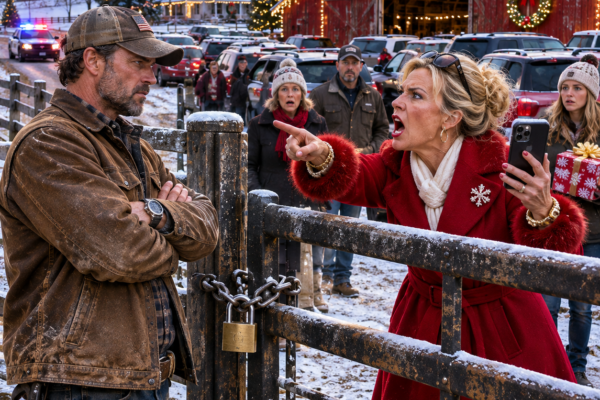
“I don’t need your permission to enter your backyard, and if you keep that gate locked, I’ll make sure the HOA punishes you for every day you refuse to cooperate!” HOA president Denise Caldwell declared after I caught her trying to open the gate of the home I had owned for five years.
When I finally unlocked it, posted an enormous yellow warning sign, and offered to secure my six territorial geese before her inspection, Denise laughed, marched inside anyway, and came running back out with grass stains on her pants while a goose named Peanut carried away her official paperwork.
But the moment that truly destroyed her authority came days later, when she deliberately opened the animals’ enclosure in front of an independent risk assessor and a management representative—and neither of them was willing to lie about what happened next.
“Denise, I really think we should call him first.”
The young man standing outside my backyard gate looked nervous.
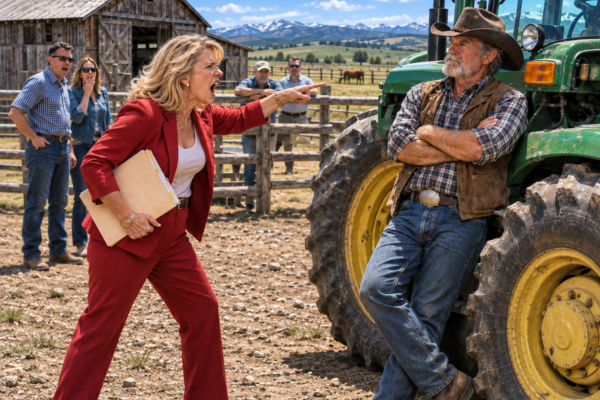
Denise Caldwell adjusted her bright red blazer and examined the yellow sign attached to the wooden fence.
ENTER AT OWN RISK — TERRITORIAL GEESE.
She read it twice.
Then she looked through the narrow opening between the boards.
“They’re geese, Tyler.”
“I understand that, but he said he’d secure them before we went inside.”
Denise lifted her clipboard.
“We’re conducting an authorized association inspection. We aren’t asking permission from poultry.”
She opened the gate.
From my back porch, I watched Tank, the largest member of my newly acquired flock, slowly raise his head.
He was an impressive gray-and-white goose with a broad chest, a thick neck, and the expression of a retired school principal who had just discovered somebody chewing gum in his hallway.
Denise stepped inside.
Tank took one step toward her.
She stopped.
Tank stopped.
She looked at me.
“Are you going to control your animals?”
“I offered to secure them five minutes ago.”
“That won’t be necessary.”
“All right.”
She pointed her clipboard toward Tank.
“Shoo!”
Tank stared at it.
“GO ON!”
He lowered his neck.
Denise took a step backward.
“Tyler!”
“Yes?”
“Come in here!”
There was a brief silence.
“No.”
I nearly choked on my coffee.
Denise turned toward the gate.
“YOU ARE ASSISTING ME WITH THIS INSPECTION!”
“I’m assisting from out here.”
Tank honked.
Another goose appeared beside the vegetable bed.
That was Zipper.
Peanut, who possessed an unhealthy fascination with anything made of paper, emerged from beneath the maple tree.
Denise looked at the three approaching birds.
Then she looked toward the gate.
She could have walked out. She could have accepted my offer to secure the animals and returned to complete her inspection without further difficulty.
Instead, she straightened her shoulders.
“I AM COMPLETING THIS INSPECTION!”
Tank spread his wings.
Tyler backed farther away.
Denise screamed.
Her clipboard went into the air.
Three sheets of paper fluttered across the grass, and Peanut immediately abandoned every other responsibility in his life to investigate them.
“THAT IS ASSOCIATION PROPERTY!”
Peanut grabbed an inspection form.
Denise lunged toward him.
I put down my coffee and went to help her leave safely.
By the time she reached the gate, her red blazer was twisted, her hair had fallen across her face, and one knee of her expensive cream-colored pants was stained green.
She slammed the gate shut.
“You did this deliberately!”
“I told you about the geese. I offered to secure them.”
“You knew exactly what would happen!”
“I knew what might happen. That’s why I warned you.”
Tyler cleared his throat.
“He did warn us, Denise.”
She turned on him.
“YOUR COMMENTARY IS NOT NECESSARY!”
He looked toward Tank.
“Okay.”
Then he took another step away from the fence.
I was thirty-nine years old, single, and making my living as an HVAC contractor. After ten hours crawling through attics or repairing commercial equipment, all I wanted was a peaceful evening in my own backyard.
For five years, nobody had questioned my right to keep that backyard private.
Then Denise became HOA president and decided a locked gate was a personal insult.
Now she was standing outside my fence, furious because the authority she had spent months accumulating had failed to impress six ordinary farm animals.
“You think you’ve found some clever little loophole?” she demanded.
“No. I think I offered you an appointment.”
Her expression went cold.
“This isn’t over. You’re going to regret this.”
She stormed toward her vehicle.
I looked toward Tyler, who gave me an apologetic shrug before following her.
Then I looked at Peanut.
Three inches of official HOA paperwork hung from his beak.
“Seriously?”
He swallowed it.
I laughed.
I wouldn’t be laughing two days later, when Denise began using the association’s money, contractors, and enforcement procedures to build a case against my animals.
PART2
Five years earlier, when I bought my two-story house, the backyard had been the feature that convinced me to make an offer.
It wasn’t enormous by rural standards, but a quarter acre felt like paradise after years of renting places where my outdoor space consisted of a balcony barely wide enough to accommodate a folding chair.
There was a mature maple tree shading a stone patio, a vegetable bed along the southern fence, and a little shed beside a workbench that needed considerable attention.
A six-foot privacy fence surrounded the entire yard.
One wooden gate provided access along the side of the house.
I loved everything about it.
And the gate locked.
That mattered more to me than I could have explained to most people.
When your working life involves entering other people’s homes, answering emergency calls, and listening to customers explain why their air conditioners must be repaired immediately because their mother-in-law is visiting, privacy becomes something precious.
I spent my days solving problems for strangers.
I wanted my evenings to belong to me.
The first summer after I moved in, I repaired the shed roof, rebuilt the vegetable bed, and purchased a secondhand patio table from a neighbor who was downsizing.
The table had several scratches, one slightly uneven leg, and enough faded paint to discourage anybody from describing it as elegant.
It was perfect.
I could leave my work boots beside it, eat dinner beneath the maple tree, and sit outside until the mosquitoes convinced me that going indoors was a reasonable compromise.
My neighbor Clare occasionally stopped by to talk over the fence when we happened to be gardening at the same time. We exchanged tomatoes, helped each other with small projects, and generally respected the fact that being neighbors didn’t mean we needed unrestricted access to one another’s homes.
For five years, that arrangement worked beautifully.
The HOA collected dues, maintained the entrance landscaping, and occasionally distributed reminders about common concerns.
I paid on time.
I kept my property maintained.
When somebody asked me to address a legitimate issue, I addressed it.
I had no interest in becoming one of those homeowners who attended every association meeting carrying a collection of grievances accumulated since the previous presidential administration.
Then Denise Caldwell was elected president.
Denise was fifty-two, blonde, and permanently overdressed for whatever activity she was performing. She wore expensive-looking shoes to walk around retention ponds and appeared to possess an entire wardrobe dedicated to attending meetings.
But her favorite item was a bright red blazer.
Eventually, I came to think of that blazer the way sailors think of dark clouds gathering on the horizon.
If I saw red coming down the sidewalk, something unpleasant was probably about to happen.
Within two months of her election, the community newsletter doubled in length. We received notices concerning garbage containers, basketball hoops, decorative flags, mailbox maintenance, and the importance of something Denise called neighborhood visual consistency.
She carried a clipboard everywhere.
Once, I saw her walking her dog while holding it.
I considered asking whether the dog was currently on probation, but I decided I didn’t need that conversation.
Initially, Denise’s enthusiasm didn’t cause me any particular problems. I worked long hours, rarely encountered her, and figured that if writing six paragraphs about mulch made somebody happy, there were worse ways to spend a retirement.
Then I came home one Tuesday evening and discovered a white envelope taped to my front door.
Inside was a notice titled:
EXTERIOR PROPERTY REVIEW — ACCESS REQUEST
According to the association, my property had been selected for a neighborhood appearance and pest-prevention review.
The board wanted access to my backyard to examine exterior conditions that couldn’t be observed from common areas.
There was no photograph of an alleged problem.
No description of a complaint.
No identification of a drainage issue, pest infestation, or dangerous structure.
Just a request that I make the enclosed rear yard accessible.
I read the notice twice before walking around the side of the house.
The grass had been cut the previous weekend. My vegetables were growing nicely. There was no garbage beside the shed, no standing water, no accumulation of debris, and no mysterious collection of old appliances waiting to become a home for rodents.
I opened the shed.
Everything was reasonably organized, although I wouldn’t have recommended conducting an inventory of my screwdrivers.
I returned inside and emailed the management office.
I explained that I was happy to address legitimate concerns and asked what specifically needed to be inspected, who would be entering the backyard, and when the inspection would take place.
Twenty minutes later, Denise answered personally.
The inspection is routine. Cooperation is expected.
I looked at the clock.
It was after seven in the evening.
Apparently, Denise’s administrative responsibilities extended well beyond ordinary business hours.
I replied.
Happy to cooperate with a documented inspection need. Please identify the purpose and proposed time so we can arrange access.
Then I heated some leftover chicken and forgot about the matter.
The following afternoon, my doorbell rang.
I opened the door.
Red blazer.
Clipboard.
Denise.
“I’m here for the backyard inspection.”
I glanced past her.
There was no inspector, maintenance employee, pest-control specialist, or management representative.
Just Denise.
“Right now?”
“It’ll only take a few minutes.”
“What are you inspecting?”
“Exterior compliance.”
“Which aspect?”
“The rear property.”
I leaned against the doorframe.
“That tells me where, not what.”
Her smile tightened.
“Pest conditions, storage, vegetation, drainage. Ordinary association concerns.”
“Do you have a particular complaint involving my yard?”
“We don’t need a complaint to conduct a routine review.”
“Okay. Send me the details and we’ll arrange a time.”
She looked toward the side of the house.
“I’m already here.”
“I noticed.”
“Most homeowners have been very cooperative.”
There it was.
Not an explanation.
A comparison.
She wanted me to understand that by asking ordinary questions, I was distinguishing myself from people she considered better homeowners.
I smiled.
“Then this should be a successful afternoon for you.”
She didn’t laugh.
“Are you refusing an HOA inspection?”
“No. I’m asking you to schedule one.”
“I’ll document that you refused access.”
“Document that I asked you to schedule it.”
She lowered her head and started writing.
I watched her pen move.
“What are you writing?”
“Notes.”
“Make sure you spell my name correctly.”
Denise looked up.
For a moment, I thought she might actually smile.
Instead, she tucked the clipboard beneath her arm and walked away.
I closed the door.
At the time, I thought the whole thing was ridiculous.
I didn’t realize she considered my refusal to immediately surrender the key an attack on her authority.
Two mornings later, I was loading tools into my truck when I heard a distinctive rattling sound beside the house.
The side gate had a wooden frame and metal hardware that produced a particular noise whenever somebody tried to lift the latch while the padlock was engaged.
I knew that noise.
I’d heard it when friends arrived before I had unlocked the gate.
I’d heard it when I came home carrying too many groceries and forgot where I’d put the key.
But I wasn’t expecting anybody that morning.
I set down my tool bag and walked toward the side of the house.
Denise was standing beside the gate with one hand near the latch.
“Were you just trying to open that?”
She turned.
“I was checking whether access had been provided.”
“With your hand?”
“The notice instructed you to make the yard accessible.”
“The gate is locked.”
“Yes, I noticed.”
“That’s generally what happens when you pull on a locked gate.”
She removed her hand.
“You’re making the association’s responsibilities unnecessarily difficult.”
I glanced toward the street, then back toward her.
“Did you have an appointment?”
“No appointment is necessary for routine association business.”
“Who told you that?”
She straightened.
“As HOA president, I’m authorized to ensure that properties remain in compliance.”
“Without coordinating entry with the homeowner?”
“I don’t need your permission to perform association duties.”
That sentence changed everything.
Until then, I had regarded Denise as somebody whose enthusiasm for her new position had exceeded her ability to communicate reasonably.
Now she was standing beside my house, trying to open a locked gate, and explaining that she didn’t need my permission to do it.
I wasn’t frightened.
But I was angry.
The quiet kind of angry.
The kind that comes when somebody has crossed a boundary and expects you to apologize for noticing.
“Denise, if someone needs to inspect my backyard, arrange an appointment.”
She opened her mouth.
I continued.
“What you’re not going to do is walk around my house trying doors and gates.”
“You’re making this much harder than it needs to be.”
“No. You’re leaving.”
Her face reddened.
“All right. I’ll handle this formally.”
She walked toward the sidewalk.
I watched her go, then examined the gate.
The lock was undamaged. Nothing had been opened.
Still, the experience left me uncomfortable.
I went to work wondering how many other homeowners had opened their gates simply because challenging Denise seemed like more trouble than allowing her inside.
That afternoon, another notice arrived.
FAILURE TO PROVIDE REQUIRED ACCESS
According to the document, I had repeatedly obstructed authorized association personnel attempting to perform official responsibilities.
Continued refusal could result in enforcement action and escalating penalties.
I stared at the sentence.
Repeatedly obstructed.
I had answered an email.
I had requested an appointment.
I had told a woman not to try opening a locked gate without coordinating with me.
That was my extensive record of obstruction.
I called the management office.
A woman named Marcy answered.
“Good afternoon. How may I help you?”
“I’m trying to understand an access notice involving my backyard.”
She requested the address and checked the account.
“Yes, I see the notice.”
“Is there an active property violation?”
“No.”
“Any pest complaint?”
“Not attached to your account.”
“Standing water?”
“No.”
“Vegetation complaint?”
“No.”
“Then what exactly is Denise trying to inspect?”
I heard typing.
“It appears your address was included in the community-wide exterior review.”
“Does the review require homeowners to leave locked, enclosed backyards accessible for unscheduled entry?”
There was a pause.
“I’d have to check the procedure.”
“Please do. And would you send the answer in writing?”
“Of course.”
I thanked her and ended the call.
That evening, I spread Denise’s notices across the kitchen table.
I read every paragraph.
Every reference.
Every threatening sentence concerning possible future enforcement.
Almost nothing identified a specific problem associated with my property.
But one thing appeared in every version.
Access.
It was always about access.
The gate needed to be unlocked. The yard needed to be accessible. Cooperation needed to be demonstrated.
Denise didn’t appear interested in establishing what was wrong with my backyard.
She appeared interested in establishing who decided whether the gate opened.
And suddenly, I remembered what she had said on my doorstep.
Most homeowners have been very cooperative.
Maybe she didn’t care what she would find behind my fence.
Maybe she cared that I was the person deciding whether she could go inside.
I sat at the table for several minutes, listening to the dishwasher run.
Then a thought occurred to me.
I had spent a week arguing about the lock.
What if I stopped treating the lock as the entire issue?
I could buy another lock. Install more security equipment. Spend months disputing notices.
But none of those things would eliminate Denise’s conviction that she was entitled to enter without coordination.
What I really wanted was a backyard where legitimate visitors could be welcomed safely, while nobody would consider opening the gate without contacting me first.
At the time, I didn’t know that the answer to that particular problem would eat approximately half an inspection form.
The following morning, before my first service call, I stopped at a farm supply store.
I actually needed grass seed. Several patches near my vegetable bed had become thin, and I figured I might as well purchase what I needed while I was passing the store.
I was pushing a cart through the outdoor section when I heard an enormous honk from somewhere beyond the fence.
I stopped.
Another honk followed.
Then a third.
An employee pushing a cart of feed bags past me didn’t even look up.
“What’s making that noise?” I asked.
“Geese.”
He continued pushing the cart.
“Are they always that angry?”
He shrugged.
“They’re geese.”
Apparently, that was considered a complete explanation in the agricultural community.
The man next door to the store raised poultry. After purchasing my grass seed, I walked over to look around.
His name was Ray.
He was an older man with sunburned arms, an old baseball cap, and the manner of somebody who had spent enough time dealing with animals to have lost patience with unnecessarily complicated human questions.
“You ever had geese?” he asked.
“No.”
“Ever been chased by one?”
“No.”
“You will be.”
He said it so casually that I laughed.
Ray didn’t.
He led me around a barn toward several enclosures.
There were chickens moving through the grass, ducks investigating a shallow water container, and a large gray-and-white goose standing beside a trough.
Unlike some of the other birds, the big goose wasn’t making any noise.
He just watched us.
“That one doesn’t seem particularly angry,” I said.
Ray looked at me.
“That’s because you’re over here.”
The goose took three slow steps toward the fence.
I watched him.
“What happens if somebody goes inside?”
“He introduces himself.”
I was beginning to like Ray.
He explained that geese could be intelligent, observant, noisy, and territorial. They could become familiar with people who cared for them and respond predictably to ordinary routines, but unfamiliar visitors sometimes received an entirely different reception.
He also explained that keeping poultry required considerably more than buying animals and turning them loose in a yard.
They needed proper shelter, clean water, suitable food, secure containment, attention, and space. Their welfare mattered, and their behavior needed to be managed responsibly.
I listened.
Then Ray looked at me.
“Why are you asking?”
“I’m having a disagreement with my homeowners association.”
He stared at me.
Then he looked at the geese.
Then back at me.
“That’s a new one.”
I laughed.
I explained the repeated requests for unrestricted access and the incident involving my locked gate.
Ray listened without interrupting.
When I finished, he folded his arms.
“Well, don’t buy animals just to have an argument with a woman.”
I nodded.
He continued.
“You bring these birds home, they’re your responsibility. Doesn’t matter whether your argument lasts three days or three years. You take care of them.”
“I understand.”
“Geese can hurt somebody. Somebody can hurt them. You don’t want either.”
“No.”
“And if a plumber needs to come into the yard, the plumber shouldn’t be fighting his way past a flock of birds.”
I agreed.
Ray examined me for several seconds.
Then he returned his attention to the large goose.
“He’s a good bird,” he said. “Just thinks every fence belongs to him.”
I smiled.
“Sounds like somebody I know.”
Ray laughed.
For the first time since meeting him, I saw him genuinely smile.
I went to work without purchasing any animals that day.
I had questions to answer first.
And that afternoon, Marcy finally provided the information I had requested from the association.
The management office’s email was straightforward.
The association could request access where there was a legitimate inspection or maintenance need. Nonemergency entry into enclosed private areas should generally be coordinated with the homeowner.
That was exactly the distinction I had been attempting to establish.
I replied that I remained willing to arrange any legitimate inspection.
Eleven minutes later, Denise responded.
Her message contained an instruction considerably more aggressive than the management office’s explanation.
The rear gate must remain unlocked and accessible through Tuesday at 6:00 p.m. during the association’s designated inspection period.
Then came the sentence I read three times.
Advance coordination with the homeowner is not required.
I sat in my truck outside a customer’s building, staring at the screen.
Marcy had explained that ordinary entry into an enclosed private area should generally be coordinated.
Denise had responded by specifically telling me that coordination wasn’t required.
There was no emergency.
No documented condition needing immediate attention.
She simply wanted access on her terms.
I forwarded the exchange into the folder where I had been preserving our correspondence.
Then I finished my service calls.
That evening, I reviewed the local animal-keeping requirements and the association’s governing documents.
The HOA rules devoted considerable attention to dogs, some attention to cats, and a surprising number of paragraphs to bird feeders.
I didn’t find a provision specifically prohibiting a small flock of properly maintained and contained backyard geese under the circumstances described in the story’s community.
That didn’t mean I could ignore noise, sanitation, containment, or ordinary animal welfare responsibilities.
It meant that keeping the birds wasn’t automatically a violation simply because Denise might dislike them.
I thought about Ray’s warning.
I had the space.
I was willing to provide the care.
And I genuinely liked the idea of having animals in the yard, although I suspected I was about to redefine what counted as a peaceful evening.
By Saturday morning, I had made a decision.
When I returned to Ray’s property, he recognized my truck.
“You got chased already?”
“Not yet.”
“Then why are you back?”
“I want geese.”
“How many?”
“Six.”
Ray looked at me for several seconds.
“You sure?”
“No.”
He nodded approvingly.
“Good answer.”
Then he led me toward the enclosure.
The big gray-and-white goose was still there.
“He’s part of a group that gets along reasonably well,” Ray explained. “But that big one has opinions.”
“What does he do?”
“Mostly judges people.”
I watched the goose.
He watched me.
“I’ll take him.”
“Of course you will.”
That was how Tank entered my life.
The second personality became apparent while Ray was explaining the feeding arrangements. A smaller goose approached behind him, reached upward, and removed a folded receipt from his back pocket.
Ray turned.
The goose ran.
I burst out laughing.
“Is that normal?”
“Unfortunately.”
The thief became Peanut.
Then there was Zipper.
Zipper was smaller than Tank and possessed an almost supernatural ability to appear precisely where I wasn’t looking.
I’d see him near the trough, turn toward Ray for several seconds, and discover that he was suddenly standing directly behind my knee.
The third time it happened, Ray shook his head.
“Keep an eye on that little one.”
“I am.”
“No. You’re looking at him.”
“What’s the difference?”
“You’ll find out.”
The remaining three were generally less theatrical, although together the six made an impressive amount of noise when they became excited.
Ray helped me understand how to manage them and made certain I was comfortable around the flock before they came home.
When I first entered their enclosure with him, Tank watched me as though I were attending a job interview for a position he wasn’t certain needed filling.
Peanut inspected my boots.
Zipper disappeared.
I turned around.
There he was.
“Buddy,” I told him, “we’re going to have to establish some personal boundaries.”
Ray laughed.
He showed me how the flock responded to familiar routines and calm handling.
The birds weren’t mechanical security devices. They weren’t trained to attack people, and I wasn’t going to treat them that way.
They were animals with natural behavior that I needed to manage.
That distinction would become important later, when Denise attempted to describe them as if I had installed six deliberately dangerous weapons in my backyard.
At the time, however, I was mostly wondering how long it would take before Peanut discovered the contents of my pockets.
I spent Saturday preparing the yard.
I checked the fence, arranged appropriate shelter and water, and established a secure area where the birds could be contained when somebody needed to enter the property.
I made certain the perimeter was intact.
Then Ray helped bring the flock home.
The moment the geese entered the backyard, my peaceful little quarter acre acquired a completely different personality.
Peanut immediately investigated the vegetable bed.
Zipper located the patio.
Tank walked toward the side gate, stopped several feet from it, and stared at the wooden boards.
I stood beside him.
“You and me both, buddy.”
He honked.
I laughed.
Over the next several hours, I watched the flock explore its new surroundings.
They investigated everything.
They complained about things I couldn’t identify.
They appeared to hold several meetings beneath the maple tree, none of which required a printed agenda.
By early evening, they had begun settling into their new environment.
Then I prepared the warning sign.
Large black lettering on a bright yellow background.
ENTER AT OWN RISK — TERRITORIAL GEESE.
I attached it prominently to the gate.
It could be read from the sidewalk.
I photographed it and preserved the photograph with the date.
Then I sent Denise and the management office an email.
The rear gate is accessible during the requested inspection period. Territorial geese are contained within the fenced backyard. A warning sign has been posted. Please contact me before entry so I can secure the animals and provide safe access.
I wanted there to be no uncertainty about the presence of the flock or my willingness to accommodate legitimate visitors.
The gate itself remained closed.
I would have preferred to keep it locked, but Denise had specifically insisted that it be accessible during the designated period.
I complied with that request while expressly advising her not to enter until the animals were secured.
Looking back, I can appreciate that buying geese in the middle of an access dispute wasn’t exactly the most restrained decision I had ever made.
I had been frustrated.
Part of me absolutely enjoyed the idea that Denise might finally discover a reason to knock on the front door rather than try the side gate.
But I wasn’t interested in anybody being injured.
I didn’t want the animals frightened or harmed.
And I didn’t believe that a warning sign made every possible encounter automatically safe.
That’s why I made the offer to secure the flock before anybody entered.
It was an offer I genuinely intended to honor.
Sunday passed without any response from Denise.
Monday morning was equally quiet.
By Monday afternoon, I began wondering whether the management company had explained the importance of coordinating entry and resolved the matter before another confrontation occurred.
Then, at 4:38, Tank honked once.
A second honk followed.
All six geese turned toward the side fence.
A moment later, my doorbell rang.
Through the glass, I saw red.
Denise stood on the porch beside a young man wearing a polo shirt and an HOA volunteer badge.
He looked approximately twenty-two and possessed the pleasant, slightly uncertain expression of someone who had been promised an easy assignment and was beginning to suspect that the assignment had been inaccurately described.
“We’re here to complete the inspection,” Denise announced.
“Okay. Did you receive my email?”
“Yes.”
“Then you know about the geese.”
“I saw your sign.”
“Great. Give me a few minutes to secure them.”
She tightened her grip on the clipboard.
“That won’t be necessary.”
“It absolutely will.”
She stared at me.
“We are not delaying an authorized inspection because you have chosen to introduce animals onto the property.”
“I’m offering you safe access.”
“I already have access.”
The volunteer glanced toward the side of the house.
I looked directly at Denise.
“I’m asking you to wait until the birds are secured.”
“You’ve spent an entire week trying to prevent this inspection.”
“No. I’ve spent an entire week asking you to arrange it.”
“Well, now it’s arranged.”
“When?”
“NOW!”
I exhaled.
The young man looked at me apologetically.
I reminded Denise about the sign and told her again that I was available to secure the animals.
She dismissed the warning.
Then she turned toward the gate.
I went through the house to the backyard so I could supervise what was happening and intervene if necessary.
As I stepped onto my porch, Tank was standing beneath the maple tree.
His head turned toward the fence.
Footsteps approached from the other side.
The volunteer spoke.
“Denise, maybe we should call him first.”
“He’s aware we’re here.”
“Yeah, but the sign says—”
“They’re geese!”
The latch clicked.
Denise opened the gate.
The volunteer stayed outside.
That turned out to be the smartest decision anybody representing the association made all afternoon.
Tank stood approximately thirty feet away.
At first, he didn’t charge or flap his wings.
He just looked at her.
Denise looked back at him.
“See?” she told the volunteer. “It’s fine.”
She took a step.
Tank took a step.
She stopped.
Tank stopped.
Then she pointed her clipboard at him.
“Shoo.”
He extended his neck.
The volunteer spoke again.
“Denise?”
“It’s a goose, Tyler!”
So that was his name.
Tank spread his wings and honked.
Denise jumped.
Another honk came from beside the vegetable bed.
Zipper appeared.
Peanut followed.
I moved off the porch.
“Denise, please come back out. I’ll secure them.”
She didn’t want to leave.
In her mind, walking back through the gate apparently meant surrendering the entire argument.
“I AM COMPLETING THIS INSPECTION!”
Tank moved forward.
Denise backed away, stumbled slightly, and lost control of the papers clipped to her board.
That attracted Peanut.
“DROP THAT!”
He didn’t.
She moved toward him.
The other geese became excited.
I was trying to guide the situation toward a safe conclusion while Denise was attempting to retrieve an association document from the beak of an animal who had no interest in recognizing her ownership of it.
“Leave the paper,” I told her. “Come toward the gate.”
“I NEED THAT DOCUMENT!”
“We can get it afterward.”
She lunged for it.
Peanut moved away.
Zipper followed him.
Tank followed the movement of his flock.
In a matter of seconds, an unnecessary property inspection had transformed into the most absurd scene I had ever witnessed in my own backyard.
Denise turned and hurried toward the exit.
Tyler moved out of her way.
She reached the gate, struck it lightly with her shoulder, and rushed through.
Then she pulled it closed.
I secured the entrance.
Tank stopped inside.
Peanut stood beside him with part of the inspection form protruding from his mouth.
Denise was breathing heavily.
Her hair was disheveled.
Her blazer was crooked.
There was a green stain across one knee.
But she hadn’t suffered any documented injury from the animals.
I was relieved about that.
Tyler looked at her, then at the warning sign.
I collected the loose sheets I could reach and passed them back.
“I think these belong to you.”
She snatched them from my hand.
“You introduced aggressive animals specifically to interfere with association access!”
“I told you they were here. I offered to secure them.”
“You knew what would happen!”
“I knew entering without coordination could cause a problem. That’s why I warned you.”
Tyler spoke quietly.
“He did tell us.”
Denise turned toward him.
“What?”
“The email said to contact him before we went inside.”
“I AM AWARE OF WHAT THE EMAIL SAID!”
He nodded.
“Okay.”
“Your commentary isn’t necessary!”
“Okay.”
Tank honked.
Tyler took another step away from the gate.
“I think I’m just going to stay out here.”
I looked toward the sky.
Keeping a straight face had become an exhausting responsibility.
Denise finally left, promising that I would regret what had happened.
Tyler followed at a respectful distance.
When they were gone, I checked the flock, gathered the remaining scraps of paper, and looked at Peanut.
He had managed to consume part of an inspection form.
I sighed.
“Buddy, we really need to discuss your diet.”
He looked at me.
Then he went back to investigating the grass.
For two days, there was no further contact from Denise.
Tuesday evening, the designated inspection period ended at six.
At 6:01, I replaced the padlock.
The yard was mine again.
Or at least that was how it felt.
The following morning, Denise’s new enforcement notice arrived.
And this time, she wasn’t demanding that I unlock the gate.
She was demanding that I get rid of what lived behind it.
The notice arrived at 8:12 on Wednesday morning.
UNAUTHORIZED ANIMALS — NUISANCE CONDITION — SAFETY CONCERN
I opened it while sitting in my truck between service calls.
According to the association, the animals on my property threatened association representatives, created an unsafe environment for service personnel, and presented potential concerns involving noise and sanitation.
The notice referred to escalating penalties and possible corrective action.
Interestingly, it didn’t mention the gate.
Denise had changed the subject.
She couldn’t establish unrestricted access on her preferred terms, so now she was attempting to remove the reason she had been advised to coordinate entry.
I sent a written response requesting the specific animal-related restrictions she believed I had violated and the evidence supporting the alleged nuisance conditions.
I also contacted Marcy to confirm that the matter had been received through the management office.
That afternoon, Denise emailed me directly.
Your attempt to obstruct association access through the introduction of aggressive animals will not be tolerated. Appropriate corrective action is being initiated.
I saved the message.
The phrase that interested me most wasn’t aggressive animals.
It was obstruct association access.
Even when she was supposedly addressing animal safety, Denise couldn’t resist returning to the original argument.
I considered contacting Ray.
He had warned me that maintaining geese could create complications, and I wanted to make sure I was continuing to handle the flock responsibly.
We spoke briefly about how the birds had settled in.
When I told him about Peanut’s interest in paperwork, he laughed.
“Yeah, that sounds like him.”
“Anything I should be watching for?”
“Same things you were watching for last week. Make sure they’re properly cared for. And don’t let people mess with them.”
I looked toward the gate.
“I’m trying.”
Ray became serious.
“Your disagreement is with the woman. Don’t let it become the birds’ problem.”
That advice stayed with me.
I had brought the geese into an argument they couldn’t possibly understand. Whatever happened between Denise and me, I needed to make sure they remained safe and properly managed.
Unfortunately, Denise was about to involve people who hadn’t been told the animals were there at all.
I was halfway up a ladder inside a customer’s garage when my telephone vibrated.
The customer’s air-conditioning system had stopped working, and I was investigating an issue associated with the installation when the notification appeared.
Backyard camera.
I opened the alert.
Three men wearing fluorescent work shirts stood near my side gate.
One carried a clipboard.
Another held a leaf blower.
The third had a string trimmer.
I didn’t recognize any of them.
The man with the clipboard stopped beside my yellow warning sign and read it.
Then he pulled out his telephone.
A moment later, mine rang.
“Hello?”
“Is this the homeowner?”
“Yes.”
“This is Luis with Green Line Property Maintenance. We’ve been sent by the HOA to access your rear yard.”
I looked down at my tools.
“For what?”
“We were instructed to document an exterior condition and perform corrective maintenance.”
“What condition?”
There was a pause.
“Honestly, I was hoping you could tell me.”
I frowned.
“Did the association arrange an appointment?”
“No. Our work order says homeowner access has been approved.”
Another worker spoke near him.
“She told us the owner approved it.”
I climbed down the ladder.
“Who told you that?”
“The HOA president.”
“Luis, please don’t open the gate.”
“I wasn’t planning to.”
“Good. I haven’t authorized any work or entry. Did anybody tell you there were geese inside?”
“No.”
I closed my eyes.
Denise knew exactly what lived behind that gate.
She had personally experienced what could happen when somebody entered without coordination.
Nevertheless, she had sent three contractors to my property without advising them about the animals, and their instructions represented that I had approved access.
That wasn’t funny.
Luis sounded increasingly uncomfortable.
“We aren’t trying to create a problem, sir. We were just given a work order.”
“I understand. I’m approximately twenty minutes away. Are you able to wait outside while I finish here?”
“Works for me.”
Then I heard another voice.
“Boss, look at the little one.”
I glanced at the camera image.
Zipper’s head appeared between two shrubs near the fence.
Luis apparently noticed him.
“Is that one a problem?”
“Which one?”
“The small one.”
Zipper disappeared.
“Where’d he go?” Luis asked.
“I don’t know.”
“That’s not particularly comforting.”
“No. He’s good at that.”
Luis laughed.
“Okay. We’ll wait.”
I finished my work, explained the interruption to my customer, and drove home.
When I arrived, Luis was standing beside his truck drinking water.
His crew had moved away from the gate.
I thanked them for waiting.
Then he handed me the work order.
The description was vague.
Exterior documentation.
Corrective maintenance.
Potential sanitation concerns.
Vegetation.
Possible animal-related damage.
The authorization section was more interesting.
REAR YARD ACCESS APPROVED BY HOA REPRESENTATIVE.
There was also an indication that the homeowner had been notified.
Neither statement established my actual consent.
And I certainly hadn’t received advance notice.
The contact name was Denise Caldwell.
I photographed the work order with Luis’s knowledge.
Then I asked him whether he would like to examine the yard while I was present.
“If you’re comfortable authorizing it,” he answered.
“I am. Give me a minute to secure the birds.”
He nodded.
“Absolutely.”
I went inside and gathered the flock.
Peanut responded immediately when he realized food was involved.
Zipper followed Peanut.
The other three joined them.
Tank remained beneath the maple tree.
“Tank.”
He looked at me.
I indicated the secure area.
He continued looking at me.
“You don’t work for the HOA.”
Honk.
“Neither do I.”
Eventually, he joined the others.
I checked that the animals were properly contained and opened the gate for Luis and his crew.
“Come on in.”
They examined the yard.
Luis looked along the fence, checked the areas identified in his work order, and asked whether there had been any recent drainage or sanitation concerns.
I explained that none had been identified to me.
His employees looked at the grass, the shed, and the vegetable bed.
One of them examined the area near the gate.
There was nothing requiring corrective maintenance.
Luis looked toward the enclosure.
“So that’s Tank?”
“That’s Tank.”
“You actually named him Tank?”
“I didn’t name him Cupcake.”
Luis nodded.
“I respect Tank.”
“Healthy attitude.”
He began completing his field report.
Then his telephone rang.
He looked at the screen.
“Speak of the devil.”
Denise.
He answered.
“Yes, Mrs. Caldwell.”
There was a pause.
“We’re at the property now.”
Another pause.
“The homeowner is here. He secured the animals before we entered.”
Luis listened.
His eyebrows rose.
Then he looked toward me.
“No. I’m not asking one of my guys to provoke a goose for a photograph.”
I stopped smiling.
Denise’s voice became loud enough for me to hear that she was objecting, although I couldn’t make out everything she said.
Luis waited until she finished.
“We’ve inspected the property. There isn’t a condition here requiring the work described.”
More talking.
He shook his head.
“Mrs. Caldwell, if you need evidence of an animal behaving aggressively, I’m not going to have my employees deliberately create that situation.”
He listened for another moment.
Then he ended the call.
One of his workers stared at him.
“She wanted us to make the goose mad?”
“Apparently, she wanted a photograph showing its reaction.”
The worker glanced toward Tank.
Tank looked back.
“I’m hourly,” the man said. “Not that hourly.”
Luis laughed, but I was looking at the work order again.
Denise hadn’t sent these men simply to inspect a possible sanitation issue.
When they reported that they had found nothing, she apparently wanted them to produce the behavior she needed to support her case.
That was a serious difference.
I asked Luis whether he could include what had happened in his field report.
He nodded.
“I’m documenting the entire visit.”
Before leaving, he emailed me copies of the work order and his report.
No sanitation condition observed.
No corrective maintenance required.
Animals contained during homeowner-authorized, supervised entry.
His notes also described the telephone request concerning documentation of aggressive behavior.
The documents didn’t require me to guess what Denise had intended.
Luis had recorded what he had been asked to do and why he hadn’t done it.
I thanked him.
“Sorry you guys got dragged into this.”
He shook my hand.
“Honestly, this was better than cleaning out a drainage ditch.”
One of his employees waved toward the enclosure.
“Later, Tank.”
Tank honked.
The employee grinned.
“That’s what I thought.”
They left without incident.
I stood beside the gate for a while, holding my phone.
Denise had spent weeks threatening me with documentation.
I was beginning to understand the appeal.
The next afternoon, an internet technician called me.
He needed access to a junction box near my side fence.
“Is there a convenient time for me to come through?” he asked.
I paused.
“Just to confirm, you’re calling before entering?”
“Yes.”
“And you’re asking whether I can provide access?”
Another pause.
“Yes?”
“Sorry. Weird week.”
He laughed.
I arranged a time, secured the geese before his arrival, and let him complete the work.
When he finished, he handed me the service information and glanced toward the birds.
“Interesting pets.”
“They’re developing quite a reputation.”
He smiled.
“I’m not surprised.”
The entire visit took less than an hour.
No threats.
No running.
No frightened service personnel.
No disagreement about whether the technician possessed unrestricted authority over the yard.
Just a telephone call and a little coordination.
That uncomplicated visit demonstrated the very thing I had been attempting to explain to Denise from the beginning.
A private backyard could remain private while still being accessible to people who legitimately needed to enter it.
The two ideas weren’t incompatible.
A few days later, Clare caught me near the mailbox.
She was carrying several envelopes and looked as though she wasn’t entirely certain how to begin the conversation.
“Can I ask you something strange?”
“Considering my recent experiences, probably.”
She smiled.
“Are your geese attacking children?”
I stared at her.
“No.”
“Dogs?”
“No.”
“Delivery drivers?”
“No.”
“Have they been escaping?”
“No.”
She nodded.
“That’s what I thought.”
“Why?”
“Denise came by.”
Of course.
Clare showed me a complaint form Denise had distributed to several homeowners.
The form included categories for excessive noise, animal aggression, sanitation concerns, and safety risks.
I looked at Clare.
“Has the noise been bothering you?”
“Occasionally, I hear them.”
“Is it becoming a problem?”
“No. They make noise when something gets their attention. My dog makes more noise when the mail arrives.”
I appreciated her honesty.
I didn’t expect the neighbors to pretend the geese were silent.
They weren’t.
If someone had a genuine concern about noise, I wanted to address it rather than dismiss it because Denise had become involved.
Clare continued.
“I saw one of the complaint summaries she was preparing.”
She showed me the original wording of a neighboring resident’s observation.
Occasional honking when people pass the side fence.
Then she showed me how the information had been characterized in the association’s summary.
Repeated aggressive vocalization toward pedestrians, creating a persistent safety concern.
I read both sentences several times.
“That’s quite a transformation.”
Clare nodded.
“The person who made the comment just mentioned that it annoyed his dog.”
“Did he report that anybody had been attacked?”
“No.”
“Did he say he was afraid to walk along the sidewalk?”
“Not that I heard.”
I preserved the information Clare had provided.
That evening, I spent some time observing the flock’s behavior from the sidewalk and speaking with my immediate neighbors about ordinary concerns.
I wasn’t trying to establish that geese could never be disruptive. Of course they could.
I wanted to understand whether the actual experience of living nearby matched the alarming description Denise was circulating.
The people I spoke with didn’t describe anything resembling the emergency her paperwork suggested.
Then, on Tuesday evening, another notice arrived.
This one identified the next step in her campaign.
NOTICE OF PROPERTY RISK ASSESSMENT
The association had received reports of an alleged animal-related liability condition.
A contracted assessor would visit on Thursday.
Depending on the findings, recommendations could include restrictions affecting whether the geese could remain on my property.
I read the notice at the kitchen table.
For the first time since the dispute began, I felt genuinely worried about losing the animals.
It was a strange feeling.
A week earlier, I had barely known what keeping geese involved.
Now Tank had established his favorite spot beneath the maple tree. Peanut followed me around whenever I worked outside, apparently convinced that my pockets concealed valuable documents. Zipper’s sudden appearances had become a daily joke.
I was learning their routines.
I was making adjustments to take care of them.
And I had accepted responsibility for all six.
They weren’t something I could simply discard because the argument had become inconvenient.
I called Marcy.
“Can you confirm that the assessment will be conducted by somebody qualified and independent of Denise’s personal observations?”
She explained that the assessor would be contracted through the management arrangements and accompanied by a management representative.
I asked whether entry would be coordinated.
“Yes.”
“And I’ll secure the animals before anybody comes inside?”
“Absolutely.”
“Then I’m happy to cooperate.”
I confirmed the appointment.
Four minutes later, Denise responded to the email thread.
I will also be present in my capacity as HOA president.
I sighed.
Of course she would.
I looked through the kitchen window.
Tank rested beneath the maple tree.
Peanut was investigating a flowerpot.
Zipper was nowhere to be seen.
I stepped outside.
“Zipper?”
Nothing.
I turned.
He was directly behind me.
I nearly jumped out of my boots.
“You’ve had several days to stop doing that.”
He blinked.
I shook my head.
Then I sat on the patio.
For the first time, I wasn’t looking forward to Denise’s next visit.
She had found a way to present the dispute as a question of animal safety.
And I understood that the timing of my decision to acquire the geese gave her an argument that couldn’t be dismissed merely by showing everybody the original access emails.
I would need to be honest about why I had brought the animals home.
I would need to demonstrate that I was caring for them responsibly.
And if an independent professional identified legitimate concerns, I would need to take them seriously.
The assessment was no longer simply an opportunity to make Denise look foolish.
It was an opportunity to determine whether I could keep the animals I had brought into my life.
Thursday afternoon, I arrived home early and organized the relevant paperwork.
The original access requests.
Marcy’s explanation of the coordinated entry procedure.
Denise’s written instruction that advance coordination wasn’t necessary.
My warning email.
The photograph of the sign.
Luis’s work order and field report.
The original neighbor observation and the more alarming summary.
I also had the relevant camera footage available if the assessor wanted to examine it.
At 2:57, a sedan stopped outside my house.
A man carrying a tablet got out, followed by a woman wearing a management company badge.
I met them on the front porch.
“Daniel Mercer,” the man said, shaking my hand. “I’m conducting the property risk assessment.”
The woman introduced herself as Rebecca Shaw.
“We’ll review the information and document our observations,” she explained. “We’d like to understand the circumstances of the previous incident as well as the present conditions.”
I nodded.
“Of course.”
Daniel glanced toward the side of the house.
“Are the animals going to be secured before we enter?”
“Yes.”
“Good.”
At 3:01, a familiar vehicle arrived.
Denise climbed out wearing her red blazer and carrying a thick folder.
Apparently, her previous experience with Peanut hadn’t persuaded her to adopt electronic recordkeeping.
“Good afternoon,” she announced.
Rebecca greeted her.
Daniel explained the assessment procedure.
When he reached the arrangements for securing the animals, Denise interrupted.
“There is no need to accommodate the animals. Their aggressive behavior is the condition we’re here to assess.”
Daniel looked at her.
“I understand the nature of the complaint.”
“Then you understand why allowing him to restrain them will undermine the assessment.”
He considered her statement.
“Are you asking me to enter an enclosure containing territorial animals without the homeowner securing them?”
“I’m asking you to observe the property as it normally exists.”
Daniel glanced toward the warning sign.
“No.”
One word.
Calm.
Professional.
Absolute.
Denise blinked.
Rebecca checked the appointment information.
“Denise, the confirmation specifically states that entry will be coordinated with the homeowner.”
“The assessment will be meaningless if he controls the circumstances!”
Daniel looked at her.
“The homeowner demonstrating control of contained animals is relevant to the assessment.”
“It PREVENTS you from observing the hazard!”
“If the concern arises when somebody disregards a warning and enters without coordination, that’s relevant, too.”
Denise opened her folder.
“These animals were deliberately introduced immediately after the association requested access.”
Daniel turned toward me.
“Is that timeline accurate?”
“Yes.”
Denise almost smiled.
“Exactly!”
Daniel continued.
“Why did you acquire the birds?”
I could have given him a carefully polished answer that made the timing sound coincidental.
I could have claimed I had always dreamed of owning six geese and had simply chosen that particular weekend by chance.
But it wasn’t true.
“The access dispute was part of the reason,” I answered. “Denise insisted I make the gate accessible without coordinating entry. I wanted a private yard where people would contact me before entering.”
“So the acquisition was related to the dispute?”
“Yes.”
Denise looked delighted.
“THERE! He admits it!”
Daniel made a note.
He didn’t appear delighted or angry.
He simply recorded the answer.
Then Denise handed him several photographs.
One showed Tank with his wings extended.
Another showed her stepping backward.
A third captured several geese moving across the grass near the gate.
The photographs looked alarming when viewed individually.
They didn’t show the warning sign.
They didn’t show Tyler refusing to enter.
They didn’t include my offer to secure the animals.
And they didn’t show what happened immediately before Denise’s paperwork attracted Peanut.
Daniel examined them carefully.
“Was there an injury?”
Denise hesitated.
“There could have been a serious injury.”
“Was there one?”
“No serious injury.”
“Medical treatment?”
“No.”
“Documented injury resulting from animal contact?”
She paused again.
“No.”
Daniel looked at the dates.
Then he looked at me.
“The timing does raise a legitimate question.”
My stomach tightened.
Until then, I had been reasonably confident.
But hearing the facts summarized without the surrounding context made me understand how convincing Denise’s presentation could appear.
The association requested access.
A homeowner challenged the request.
The homeowner acquired territorial geese.
The HOA president entered.
The geese pursued her.
Presented that way, the situation sounded less like an argument over privacy and more like somebody had used animals to create a hazardous encounter.
I looked toward the fence.
I could hear the flock moving around inside.
What if Denise succeeded?
What if Daniel concluded that keeping the animals was incompatible with the necessary property arrangements?
What if my decision to acquire them during the dispute had created a problem I couldn’t resolve?
I had no desire to send them away.
But I understood that being attached to them wasn’t evidence that I was keeping them responsibly.
Daniel looked toward the documents I had placed on the porch table.
“What information would you like me to consider?”
“Context.”
He nodded.
I handed him the management company’s original response.
Daniel read the email slowly.
Nonemergency access into enclosed private areas should generally be coordinated with the homeowner.
Then I gave him Denise’s subsequent instruction.
The rear gate must remain unlocked and accessible through Tuesday at six.
Advance coordination with the homeowner is not required.
He compared the dates.
“Mrs. Caldwell, was this instruction issued by you?”
Denise folded her arms.
“It was consistent with the association’s enforcement authority.”
Rebecca held out her hand.
“May I see that?”
Daniel passed her the email.
She read the relevant sentence, looked toward Denise, and returned her attention to the document.
I provided my warning email.
Daniel checked the timestamp.
“You informed the association that the geese were present?”
“Yes.”
He looked at Denise.
“Did you receive this before entering the property?”
“Yes.”
“Did the homeowner offer to secure the animals?”
“He attempted to impose additional conditions on authorized access.”
Daniel glanced down at the message.
“Did he offer to secure them?”
Denise tightened her lips.
“Yes.”
“Did you enter before he did so?”
“Yes.”
“Why?”
“Because requiring the animals to be restrained allowed him to dictate the conditions of an official association inspection.”
Rebecca looked up.
“Denise, if a homeowner has animals in a fenced backyard, coordinating their containment before an inspection isn’t an unreasonable condition.”
Denise immediately disagreed.
“The association cannot be required to obtain an escort every time it performs routine responsibilities!”
Daniel held up a hand.
“We’ll come back to the access arrangements.”
Then he examined Luis’s work order.
He looked toward me.
“Were you advised that the maintenance contractor would be attending?”
“No.”
“Had you authorized access?”
“No.”
Denise interrupted.
“The association authorized the work!”
Rebecca pointed toward the document.
“This indicates that the homeowner had been notified and that access was approved.”
“The association representative approved it!”
“But the contractor arrived believing he had homeowner approval.”
Denise shook her head.
“That’s an issue with the vendor’s interpretation.”
I handed Rebecca the field report.
She examined the description of Luis’s conversation with Denise.
Her expression changed.
“Did you ask the crew to create a reaction from the animals for a photograph?”
“I asked them to document the existing condition.”
“Luis’s report says you wanted them to trigger a reaction.”
“I DID NOT USE THE WORD PROVOKE!”
Daniel looked toward her.
“What exactly did you ask them to do?”
Denise straightened.
“I asked them to conduct a meaningful assessment rather than allow the homeowner to stage-manage the property from inside the yard.”
Tank honked from the other side of the fence.
The timing was so perfect that I had to look down at my boots.
Daniel glanced toward the gate.
Then he returned to his notes.
Rebecca read the remainder of Luis’s report.
The employees had identified no sanitation problem.
No animal-related property damage requiring correction.
No necessary maintenance work.
The homeowner had secured the animals and provided supervised access.
The report contradicted the idea that ordinary service personnel couldn’t safely enter the property.
It also documented that the original instructions had not established my actual consent before the workers arrived.
Finally, Daniel examined the neighbor information.
Occasional honking when pedestrians passed the fence.
He compared it with Denise’s summary describing repeated aggressive vocalization and a persistent safety concern.
“Do we have documentation of an actual attack on a pedestrian?” he asked.
Denise looked toward Rebecca.
“We’ve received complaints.”
“I’m asking about an attack.”
“No.”
“An animal escaping the enclosure?”
“Not that I’ve been informed.”
“A documented injury involving a visitor?”
“We’ve already discussed the inspection incident.”
Daniel nodded.
“Yes. We have.”
Rebecca pointed toward the original neighbor statement.
“This homeowner mentioned occasional honking and indicated that it annoyed his dog.”
“Which reflects disruptive animal behavior!”
“He didn’t describe a persistent danger.”
Denise’s cheeks were beginning to match her blazer.
Daniel closed the file.
“Let’s examine the property.”
I secured the geese before opening the gate.
The three visitors entered together.
Daniel began by examining the physical condition of the enclosure.
The fence.
The entrance.
The warning sign.
The shelter and water arrangements.
The area where the animals could be safely contained during ordinary property access.
He photographed the relevant features and asked several questions about the flock’s routine.
I answered honestly.
I didn’t pretend geese never made noise.
I didn’t suggest that strangers could ignore the warning sign without experiencing a possible reaction.
And I acknowledged that managing territorial animals required ongoing attention.
Daniel appeared satisfied with the condition of the property he was examining.
Denise followed him across the grass.
“You’re assessing them while they’re restrained.”
“I’m assessing containment.”
“You haven’t observed their response to an unfamiliar entrant.”
Daniel stopped.
“I’m not going to deliberately create an uncontrolled situation in order to establish whether an uncontrolled situation might be unsafe.”
She stared at him.
“They’re only calm because he’s controlling everything.”
Rebecca looked toward the enclosure.
“That’s what responsible animal ownership is supposed to look like.”
Denise crossed her arms.
Daniel continued documenting the property.
Eventually, we gathered near the patio.
He consulted his notes.
“Based on what I’ve observed today, I can’t support the conclusion that these animals constitute an uncontrolled liability hazard under the conditions presented.”
Denise went completely still.
“What?”
“The animals are contained. The warning is clearly visible. The homeowner has demonstrated a workable method of providing coordinated access.”
She pointed toward the enclosure.
“And the incident involving me?”
“You entered after receiving written notice that the homeowner should be contacted before entry.”
“I HAD AUTHORITY!”
Daniel nodded.
“That’s a governance question. It isn’t a risk assessment conclusion.”
Rebecca closed her notebook.
“And it’s a governance question we’re going to review.”
Denise turned toward her.
“Review?”
“Yes.”
“For what?”
Rebecca glanced at Luis’s field report.
“For several matters identified during this process.”
Denise gave a short, humorless laugh.
“I’ve spent two weeks attempting to enforce the association’s rules while this homeowner has obstructed me at every turn!”
Rebecca answered evenly.
“You directed contractors to attend this property without coordinated access, despite the information already provided concerning the animals.”
“That was an association work order!”
“And according to the contractor, you subsequently requested a reaction from the animals that could be photographed.”
“I ASKED THEM TO DO THEIR JOB!”
Her voice echoed across the backyard.
All six geese raised their heads.
Daniel glanced toward them.
“That got their attention.”
Denise opened her folder.
“Fine. You want documentation? These are the notices he’s ignored.”
A breeze lifted the top page.
Another sheet moved beneath it.
Peanut’s head turned.
I looked at him.
“No.”
He watched the folder.
“Don’t.”
Denise looked toward me.
“What?”
“Nothing.”
One sheet slipped out and slid across the grass.
Peanut moved toward the edge of the enclosure.
“Peanut.”
He stopped.
Daniel retrieved the loose paper and returned it to Denise.
She snatched it from him.
“THIS is precisely what I’m talking about! Everyone is being required to modify their behavior because of these animals!”
Daniel looked around.
“We’re standing in their enclosed yard.”
“No! We’re standing in a backyard the association has a legitimate need to access, and we’re being permitted to do so only under HIS conditions!”
Rebecca’s expression changed.
“Denise, please don’t turn this into another argument about access.”
“ANOTHER argument?”
Denise stepped closer.
“This has ALWAYS been an access argument!”
Silence.
She realized what she had said.
Too late.
Daniel looked down and typed something on his tablet.
Denise noticed immediately.
“What are you writing?”
“Notes.”
For one beautiful second, I remembered standing in my front doorway while Denise had written something on her clipboard.
What are you writing?
Notes.
Now somebody else was making the notes.
And Denise didn’t control them.
“I would like to see exactly what you’re recording,” she demanded.
Daniel continued typing.
“You’ll receive the completed report through management.”
“I AM THE HOA PRESIDENT!”
“And I’m the contracted assessor.”
“I have a right to ensure the record is accurate!”
“Please give me some space.”
Rebecca started speaking, but Denise was no longer looking at either of them.
She was staring at the enclosure.
“If these animals are truly manageable,” she said, “there shouldn’t be any difficulty demonstrating that under normal inspection conditions.”
Daniel shook his head.
“We’ve completed the assessment.”
Then Denise began walking toward the enclosure latch.
I immediately understood what she intended to do.
Daniel had refused to manufacture the demonstration she wanted.
Luis had refused to manufacture it.
So now she was going to try creating the situation herself.
“Denise, don’t open that.”
She stopped with her hand inches from the latch.
Rebecca’s voice sharpened.
“Do not touch the enclosure.”
Denise looked at us.
“I thought he said the animals were manageable.”
“I said don’t open it.”
She turned toward Daniel.
“THERE! The homeowner admits the animals cannot safely coexist with routine association access!”
Daniel stared at her.
“No. The homeowner is instructing you not to release contained animals during an assessment.”
“They live in this yard!”
“Yes.”
“Then let’s assess the yard as it normally exists!”
She lifted the latch.
For half a second, nothing happened.
Six geese looked toward the opening.
Four humans looked toward Denise.
I told her to close the enclosure.
Rebecca repeated the instruction.
Denise opened it wider.
Tank stepped out.
Slowly.
He took one step, then another.
No charging.
No flapping.
Denise pointed toward him triumphantly.
“SEE?”
“Close the gate,” Daniel told her.
Zipper slipped through.
I lost sight of him almost immediately.
Peanut came third.
And unlike Tank, Peanut wasn’t particularly interested in making a territorial statement.
He had noticed something considerably more important.
A white corner of paper sticking out from Denise’s folder.
I saw him see it.
“Oh, no.”
Denise looked toward me.
“What now?”
Peanut began walking toward her.
Peanut approached with the calm determination of somebody who had identified a particularly promising lunch opportunity.
Denise pointed at him.
“Stay!”
He continued walking.
“STAY!”
Peanut possessed no HOA membership, recognized no association boundaries beyond the physical fence, and had apparently decided that compliance with verbal instructions was optional.
Denise moved her folder behind her back.
Peanut changed direction.
She moved it to her other side.
He adjusted again.
Daniel stepped away.
Rebecca followed.
“Control him!” Denise shouted.
I moved toward the feed bucket.
“He’s interested in your paperwork. Please stop moving the folder around.”
“HE CANNOT HAVE ASSOCIATION DOCUMENTS!”
“I agree.”
Peanut reached toward the exposed corner of the page.
Denise jerked the folder away.
The sheet slid farther out.
“Denise, just leave the paper for a moment.”
“I AM NOT GIVING HIM MY DOCUMENTS!”
Peanut grabbed it.
“No!”
She pulled.
Peanut pulled.
For approximately three seconds, the president of the homeowners association was engaged in a tug-of-war over an inspection notice with a goose.
“LET GO!”
I wasn’t entirely certain which participant she was addressing.
Then the paper tore.
Peanut got half.
Denise got half.
The sudden release caused her to lose her grip on the folder.
It fell onto the grass.
The clip opened.
Approximately thirty pages scattered across my backyard.
Everybody froze.
Peanut froze.
Zipper reappeared from somewhere beside the patio.
Tank raised his head.
The remaining geese emerged from the open enclosure.
Denise looked at the papers.
“No.”
A sheet began rolling across the lawn.
Zipper went after it.
Another fluttered toward the stone patio.
Peanut followed.
“NO!”
Denise hurried forward to retrieve them.
Unfortunately, every attempt to collect the papers made more of them move, and moving paper appeared to represent the most exciting event Peanut had experienced since his arrival at my house.
She grabbed one corner of a sheet.
Zipper caught the other.
She released it.
He ran.
Another sheet landed beneath Tank’s foot.
Denise reached toward it.
Tank lowered his neck.
She immediately reconsidered.
Rebecca covered her mouth.
Daniel had stopped pretending that the situation wasn’t at least slightly entertaining.
I retrieved the feed bucket and began gathering the flock.
Five birds responded fairly quickly.
Tank, naturally, required additional patience.
“Those are OFFICIAL RECORDS!” Denise shouted.
“I know.”
I continued bringing the geese back toward their enclosure.
Then Denise spotted a sheet sliding toward the maple tree.
“My complaint summary!”
She hurried after it.
“Denise, leave it.”
She ignored me.
The paper rolled across the grass.
Zipper followed the moving sheet.
Peanut followed Zipper.
Tank noticed the sudden activity and moved in the same direction.
Apparently, the meeting had become a parade.
Denise grabbed the complaint summary, turned around, saw three geese moving toward her, and ran.
Not toward the gate.
Toward the patio.
“Wrong way!” I called.
She veered sideways.
Another sheet of paper had caught around a sprinkler head near the walkway.
Denise bent down.
“Don’t pull that,” I warned.
She grabbed the wet-looking paper and tugged.
The sprinkler assembly shifted.
There was a click.
Then a mechanical chunk.
Denise froze.
The irrigation zone came alive.
The first spray of water struck her directly in the side.
She screamed.
Not the frightened scream somebody makes when encountering danger.
The offended scream of somebody discovering that the landscaping equipment on another person’s property had failed to recognize her executive authority.
She spun away.
A second sprinkler caught her from the front.
The folder collapsed.
Papers stuck to her sleeves.
One of the complaint forms plastered itself across her shoulder.
Peanut stopped moving.
Even Peanut appeared surprised.
Denise staggered toward the patio.
Another sprinkler swept past.
Direct hit.
Her red blazer darkened as it became soaked.
Her carefully arranged hair flattened against her head.
Water ran down her arms and dripped from the remains of her official paperwork.
The six geese stood in the grass watching.
Daniel turned away.
His shoulders were moving.
Rebecca laughed once, then attempted to disguise it as a cough.
I rushed to shut off the irrigation.
A few seconds later, everything became quiet.
Water dripped from the maple leaves.
Denise stood on the patio.
A wet complaint form slowly detached itself from her blazer and landed at her feet.
Tank honked.
I looked at Denise.
Then at Daniel.
Then at the soaked documents scattered around the grass.
“Inspection complete?”
Rebecca lost the fight and laughed again.
Daniel glanced at his tablet.
“Yes. I believe it is.”
For several seconds, Denise appeared unable to speak.
Then she turned toward me.
“This was DELIBERATE!”
I stared at her.
“You pulled at the sprinkler head.”
“YOU SET THIS UP!”
“Denise, nobody told you to open the animal enclosure.”
“The irrigation system, the animals, the paperwork! ALL OF IT!”
Rebecca’s expression hardened.
“Denise.”
Denise turned toward her.
“You saw what happened!”
“Yes, I did.”
“They pursued me!”
“After you opened the enclosure.”
“I was demonstrating the condition!”
“You were explicitly instructed not to open it.”
Denise looked toward Daniel.
“He said they were manageable!”
Daniel nodded.
“And the homeowner had them contained before you released them.”
“This assessment has been manipulated!”
Rebecca stepped forward.
“No. We’re done here.”
Denise stared at her.
“You don’t have authority to end this!”
“I have authority to conclude a site assessment attended by our management office.”
Denise opened her mouth.
Rebecca continued before she could interrupt.
“And effective immediately, you are not to direct contractors to enter this property, represent homeowner approval to third parties, or conduct further unscheduled inspection activities here until management and the board review these circumstances.”
The humor disappeared from the afternoon.
Denise’s eyes widened.
“You can’t suspend the HOA president!”
“I haven’t suspended your elected position.”
Rebecca pointed toward the documents.
“I’m restricting unilateral enforcement activity involving this property pending review.”
“This is outrageous!”
“What’s outrageous is that a contractor’s report states you represented homeowner approval that hadn’t been provided, requested an animal reaction for evidence, and then opened an enclosure after being specifically told not to do so.”
Denise turned toward Daniel.
“Are you going to allow her to characterize it that way?”
Daniel looked directly at her.
“I don’t have to allow anything.”
He held up his tablet.
“I watched you do it.”
That ended the argument.
Not because Denise had nothing else to say.
Denise always had something else to say.
But because the people responsible for determining what had happened no longer needed her interpretation of it.
They had been standing beside her.
They had heard the warnings.
They had watched her approach the enclosure.
They had watched her open it.
And they had watched everything that followed.
She couldn’t turn ordinary honking into an alleged attack simply by changing a sentence in a report.
She couldn’t describe supervised access as obstruction when the assessor had personally entered the yard without difficulty.
She couldn’t suggest that I had deliberately released the birds when two independent witnesses had instructed her to leave them contained.
For once, Denise Caldwell wasn’t the only person holding the official notes.
Rebecca helped collect the scattered paperwork while I finished securing the flock.
Peanut eventually exchanged the remains of one document for food.
Zipper surrendered nothing.
We later found the sheet he had carried away behind the shed.
Tank returned to his favorite spot beneath the maple tree, looking as though the afternoon had met every expectation he had formed about human behavior.
Daniel completed his observations and explained that the report would be submitted through the management office.
I thanked him.
He looked toward the enclosure.
“Continue managing the animals responsibly. If anybody needs legitimate access, make sure the arrangements are clear.”
“I will.”
He nodded.
Rebecca handed Denise several of the surviving documents.
They were wrinkled, wet, and considerably less impressive than they had been when she arrived.
Denise accepted them without speaking.
Then she walked toward the side gate.
Her expensive shoes made little wet sounds all the way down the driveway.
Nobody followed her.
Nobody laughed in her face.
I certainly didn’t need to make another comment.
She had arrived hoping to obtain evidence that my animals made ordinary inspections impossible.
Instead, she had provided evidence demonstrating precisely why coordinated access was necessary.
After the vehicles left, I sat on the patio.
The lawn was wet.
A scrap of paper clung to one of the stones.
My coffee had become cold.
I looked toward Tank.
He looked back.
“Well, buddy.”
He honked.
“I think we’ve had enough meetings for today.”
Three days later, Rebecca called.
Management had reviewed the incident, the assessor’s findings, the relevant correspondence, the contractor’s report, and the available information concerning the complaints.
The board had also considered the enforcement arrangements.
There was no courtroom.
No police intervention.
No grand public hearing where everybody applauded while Denise was escorted out of the clubhouse.
Just interviews, documents, professional observations, and people finally comparing what had been alleged with what the evidence actually supported.
Rebecca explained the result.
The nuisance case against my geese was not sustained.
I could keep all six, provided I continued maintaining them responsibly and complying with applicable requirements.
Nonemergency access to my enclosed backyard would be coordinated with me.
Denise would no longer be permitted to independently initiate inspections, direct vendors, or issue enforcement instructions without the required involvement of management or another authorized board representative.
I sat back in my chair.
“Does that mean the next person who needs to inspect the backyard will contact me?”
“Yes.”
“And we’ll arrange a time when the animals can be secured?”
“Yes.”
I smiled.
“That’s all I wanted.”
Rebecca laughed softly.
“I’m beginning to understand that.”
She also made it clear that the findings didn’t exempt me from ordinary homeowner responsibilities.
If a legitimate nuisance, sanitation issue, or other concern arose in the future, it could still be addressed through the proper process.
I had no objection to that.
I wasn’t asking for permission to neglect my property or disregard my neighbors.
I was asking that any legitimate concern be identified and handled appropriately.
Before we ended the call, I asked about Denise.
“Is she still on the board?”
“Yes.”
I nodded.
That didn’t bother me.
I hadn’t needed her entire life dismantled to obtain the outcome I wanted.
She was still an HOA board member.
She still owned her house.
She could still participate in legitimate association business.
But she could no longer personally direct enforcement as though her own preferences automatically established authority.
For a woman whose favorite sentence had effectively been I don’t need your permission, that was about as poetic an outcome as neighborhood governance could produce.
I thanked Rebecca and ended the call.
Then I went outside.
Tank was beneath the maple tree.
Peanut was investigating the patio.
Zipper was missing.
I turned around.
There he was.
“Of course.”
I laughed.
“All six of you are staying.”
Tank honked.
Peanut continued looking for something he wasn’t supposed to eat.
And I finally felt myself relax.
A week later, I checked the side gate and replaced the padlock.
I closed the gate.
Locked it.
Then stood there with the key in my hand.
Five years earlier, that little lock had simply been a lock.
It protected a private yard.
It allowed me to leave tools outside without worrying unnecessarily.
It meant that anybody who wanted to come inside would contact me first.
Then Denise had turned it into a political argument.
She had treated my decision to lock the gate as evidence of noncooperation and attempted to establish that her position gave her the right to bypass it.
Now it was a lock again.
Nothing more.
Nothing less.
Clare stopped near the mailbox that evening.
“I heard the geese get to stay.”
“They do.”
She smiled.
“How’s the noise?”
“Depends whether Peanut finds something interesting.”
She laughed.
Then she looked toward the fence.
“I’m glad they worked everything out.”
“Me too.”
She handed me a bag containing several vegetables from her garden.
I gave her some of the tomatoes I had collected that morning.
We talked about the weather.
About a repair her husband was considering.
About ordinary neighborhood things.
It felt good.
I didn’t want the association dispute to become the permanent subject of every conversation I had with the people living around me.
I wanted to return to the life I had enjoyed before Denise decided that my backyard needed unrestricted inspection.
Of course, that life now included six additional residents.
And they had opinions.
Tank claimed the shade beneath the maple tree.
Peanut remained a threat to unattended receipts, packaging, and anything that looked remotely chewable.
Zipper continued appearing in locations that seemed inconsistent with the amount of time that had passed since I last saw him.
The other three generally followed whatever activity seemed most interesting to the flock.
I improved their routines as I learned more about caring for them.
When someone needed legitimate access, I arranged it.
When I had maintenance work to complete, I secured the animals first.
When I noticed something affecting the condition of the yard, I addressed it.
The geese weren’t my excuse to neglect those responsibilities.
They were among the responsibilities I had chosen to accept.
And despite the ridiculous circumstances that had brought them into my life, I was glad they were there.
My backyard wasn’t silent anymore.
But after a long day repairing equipment and dealing with customers, sitting outside watching six geese conduct their mysterious little daily activities turned out to be surprisingly enjoyable.
I no longer needed to wonder whether somebody would try my gate while I was loading tools into the truck.
Nobody was sending contractors to the property under unsupported claims of approval.
Nobody was attempting to manufacture evidence against the animals.
For the first time since Denise became interested in my backyard, the dispute felt genuinely finished.
Then, one evening, I was sitting beneath the maple tree drinking a beer when Tank suddenly stood.
He turned toward the side fence.
I heard footsteps on the sidewalk.
Through the narrow opening beside the gate, I saw blonde hair and a familiar flash of red.
Denise.
She was walking past my house.
Her blazer was dry.
An encouraging development.
She slowed when she reached the gate.
Tank moved closer.
He wasn’t charging.
He wasn’t making a dramatic display.
He simply stood inside the fence, watching.
Denise looked at the yellow warning sign.
Then at the padlock.
Then at Tank.
For approximately two seconds, the president of my homeowners association and the largest member of my flock stared at one another.
I remained in my chair.
I wondered whether she would knock on my door.
Whether she would issue another instruction.
Whether she would explain that the association had recently established a special policy concerning territorial geese.
Instead, Denise looked away.
She adjusted her blazer and continued walking.
Tank watched until the last flash of red disappeared beyond the fence.
Then he turned toward me.
I raised my beer.
“Good evening, Chairman.”
He honked once.
Peanut investigated something near the workbench.
Zipper appeared beside my chair.
I laughed.
Five years ago, I had bought a house because I wanted somewhere peaceful to spend my evenings.
For a little while, somebody had decided that wanting privacy made me an uncooperative homeowner.
She had threatened enforcement.
Questioned my right to lock a gate.
Sent contractors without establishing my consent.
Attempted to remove my animals.
And finally disregarded the very precautions she claimed were necessary to protect people.
Now the gate was locked.
My neighbors were getting on with their lives.
My property was maintained.
And six geese were settling down beneath the evening sky.
I leaned back in my chair and listened to the sounds of the yard.
Everything was exactly the way I wanted it.
Well, almost.
Peanut had somehow found an old receipt.
“PEANUT!”
He ran.
Zipper followed.
Tank looked toward them.
I started laughing.
Denise Caldwell demanded unrestricted access to my backyard because she believed her HOA title made every locked gate hers to open—but six geese, a ruined red blazer, and an independent assessor’s report finally taught her that being elected president didn’t make her the owner of everybody else’s home.