PART 2: HOA Karen Tried to Foreclose on My “Abandoned” House—She Had No Idea I Was the Undercover Agent Investigating Her
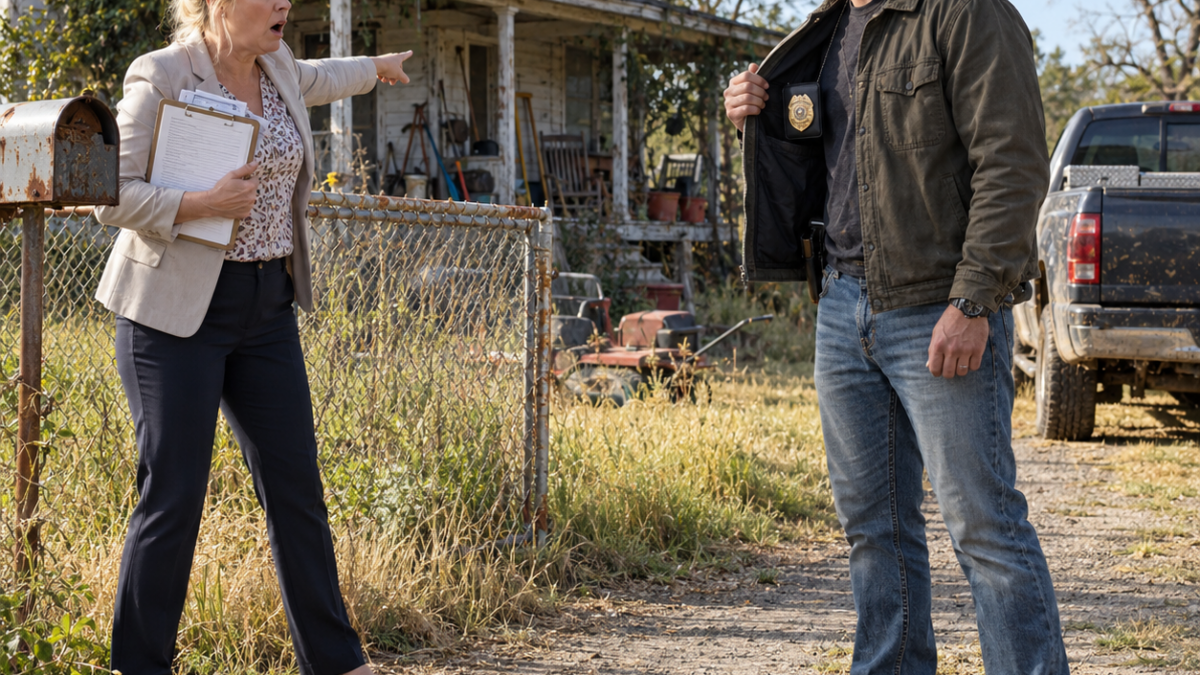
PART 2
I didn’t sleep much that night.
Not because I was afraid of losing the house.
The house had never really been mine.
It had been acquired through an entity controlled by our investigative team specifically because it fit the profile we needed: a structurally sound property with enough cosmetic neglect to attract an aggressive HOA board without creating an actual safety hazard.
My problem was Eleanor.
At 1:30 in the morning, I sat alone at the dining table with Karen’s foreclosure packet spread beneath the yellow light.
Across the street, Eleanor’s cottage was dark.
Six months earlier, her letters had been nothing more than four handwritten pages in an evidence intake file.
Now I knew the woman who had written them.
I knew she drank tea instead of coffee after noon because caffeine kept her awake.
I knew she still set two plates on her kitchen table on what would have been her wedding anniversary because she couldn’t quite bring herself to stop.
I knew her late husband, Daniel, had planted every rosebush in her backyard except one.
And she had told me all of that because she thought I was Mark Serrano, frightened homeowner.
She didn’t know I was also Special Agent Serrano.
That part of undercover work never became comfortable.
People imagine the difficult part is lying convincingly.
It isn’t.
The difficult part is being trusted by decent people while knowing there is an entire room inside yourself they are not allowed to enter.
At seven the next morning, I drove twenty miles outside Oakmont and parked behind a county records building.
A gray government sedan arrived five minutes later.
Director Claire Evans got out carrying two coffees.
She was fifty-two, short, sharply dressed, and possessed the unnerving ability to make silence feel like an interrogation.
She handed me a cup.
“You look terrible.”
“That’s the persona.”
“No, your persona looks terrible. You look worse.”
I got into the passenger seat.
Evans opened a laptop between us.
The Oakmont investigation had begun because Eleanor’s complaints intersected with another inquiry.
Three former Oakmont homeowners had sold properties following prolonged HOA enforcement disputes.
All three homes had eventually passed through entities connected to the same investment network.
Two mortgages had involved federally backed programs.
One homeowner was elderly and had alleged that she had been misled about the consequences of an HOA lien.
That overlap was enough to draw attention from multiple agencies.
My office was only one part of the team.
The state attorney general’s financial-crimes unit was involved.
So were local prosecutors and a federal investigator specializing in housing-related fraud.
No single fine or ugly HOA letter created federal jurisdiction.
The money trail did.
And the trail kept getting stranger.
Evans pulled up a diagram.
Karen Thompson sat in the middle.
On one side was Prestige Patio & Lawn, owned by her brother-in-law, Raymond Foster.
On another was Oakmont Management Solutions, a consulting company organized by Karen’s nephew.
Then came three property LLCs.
One of them had Karen’s husband, Robert Thompson, listed indirectly through a registered agent.
The flow of money wasn’t complete yet.
That was why I was still living behind a peeling door.
“We got the first bank production,” Evans said.
“What did it show?”
“Enough to keep looking. Not enough to start celebrating.”
“That’s your motivational speech?”
“I save balloons for convictions.”
She enlarged several transactions.
Prestige Patio & Lawn received unusually large payments from HOA accounts.
A portion went toward legitimate payroll and materials.
Other amounts moved through accounts associated with related parties.
Oakmont Management Solutions had received more than sixty thousand dollars in “consulting” fees.
We still needed to establish what services had actually been performed.
Then Evans showed me something more interesting.
A payment from a property-investment LLC to a real-estate agent.
The date was four days after an elderly Oakmont homeowner signed a distressed sale.
“What do we know about the agent?” I asked.
“Friend of Karen’s husband.”
“And the homeowner?”
“Widower. Seventy-nine. He had twelve thousand dollars in disputed HOA charges.”
I stared at the screen.
“Name?”
“Walter Graves.”
I knew the house.
Colonial on Willow Bend.
New owners had renovated it and sold it three months earlier.
Profit after estimated expenses: just over ninety thousand dollars.
Evans shut the laptop.
“Your foreclosure notice gives us an opportunity.”
“Because they think I’ll sell.”
“Exactly.”
She studied me.
“What do you think Karen does next?”
“Raises the pressure. Adds fees. Denies mediation. Then somebody appears with a convenient offer.”
“That’s our theory.”
“If the buyer is connected to Robert?”
“Then we get closer to proving the cycle.”
I looked out through the windshield.
“And if she skips the offer and actually tries foreclosure?”
“Counsel will intervene before title is endangered.”
“Karen may wonder why a broke veteran suddenly has excellent lawyers.”
“Then don’t make us intervene until we have to.”
I smiled without humor.
“Comforting.”
Evans took a sip of coffee.
“Mark.”
I looked at her.
“Do not fall in love with the neighborhood.”
“I’m not.”
“You’re terrible at lying to me.”
She started the car.
Before I got out, she added, “And don’t try to save everybody personally. Build the case that lets the law do it.”
That was easier advice to give than follow.
Three days after the foreclosure notice, Karen answered my request for records.
She did it personally.
No knock.
An envelope came through my mail slot at eight in the morning.
It contained five pages.
The first dismissed my objections as “misinterpretations by a non-attorney homeowner.”
The second stated that board meeting minutes concerning enforcement were confidential.
The third rejected mediation.
The fourth was a new violation notice concerning my lawn.
The fifth was a $2,000 “special remediation assessment.”
I sat on the floor beside the mail slot reading it twice.
Two thousand dollars.
No contractor invoice.
No scope of work.
No explanation beyond “emergency aesthetic correction.”
Exactly the kind of financial pressure Eleanor had described.
I photographed everything.
Then I put on an old T-shirt, walked outside, and began pulling clover from beside the driveway.
Karen’s golf cart appeared twelve minutes later.
Coincidence had stopped existing in Oakmont Estates.
She rolled to the curb wearing oversized sunglasses and a white visor.
“Progress,” she said.
I sat back on my heels.
“Trying.”
“I received your letter.”
“I figured.”
“It was unnecessarily confrontational.”
I almost admired the sentence.
My letter had included three “please” statements and ended with “respectfully.”
“I’m just trying to understand what I’m supposed to do.”
“You have been told what to do.”
“Two thousand dollars is a lot of money.”
Her face softened.
Not with compassion.
Recognition.
That was what she had wanted me to say.
She lowered her voice.
“I understand financial difficulty, Mr. Serrano.”
I remained silent.
“There may be alternatives.”
“What alternatives?”
Karen looked up and down the street.
Then she gave me a small, almost maternal smile.
“Sometimes a property simply becomes too much for someone.”
I stared at the clover between my fingers.
“I’m not planning to move.”
“Nobody plans for difficult circumstances.”
That line stayed with me.
Nobody plans for difficult circumstances.
She said it like somebody who specialized in creating them.
“My husband knows people in real estate,” she continued. “Investors. Cash buyers. No repairs, no inspections, no drawn-out closing. If the association action becomes overwhelming, perhaps there’s a way everyone comes out whole.”
There it was.
Not enough.
But there.
I made myself hesitate.
“How much?”
“I don’t handle that side.”
“Who does?”
“Robert could have someone contact you.”
I looked toward my sagging shutter.
“Let me think.”
Karen smiled.
“That would be wise.”
The golf cart hummed away.
I waited until she turned the corner.
Then I walked inside.
My first call was to Evans.
My second was to Eleanor.
The two calls represented the two lives I was living.
Evans said, “Good. If an offer arrives, do nothing without instruction.”
Eleanor said, “I told you.”
She was standing among her roses when I reached her house.
I had brought the $2,000 notice.
She didn’t look surprised.
“Same number,” she said.
“What?”
“They charged Harold Bishop two thousand before he sold.”
“Who’s Harold?”
“Used to live on Maple Court.”
She disappeared inside and returned carrying a blue binder.
Eleanor owned more binders than some law offices.
She opened it to a newspaper clipping.
A photograph showed an older man with a golden retriever.
“Harold’s wife died,” Eleanor said. “After that he fell behind on the yard. Karen started fining him.”
“What happened?”
“Within four months, he was gone.”
“Where?”
“His daughter took him to Tennessee.”
“Did he sell?”
Eleanor nodded.
“To one of those investor companies.”
My pulse quickened.
“Do you have the company name?”
She turned another page.
There it was.
Hawthorn Residential Partners LLC.
One of the entities on Evans’s diagram.
“How did you get this?”
“Public property records.”
“You looked up the deed?”
“I was an accountant, Mark, not a turnip.”
I smiled.
She didn’t.
“They did it to him when he was grieving.”
The anger beneath her voice was old.
“And nobody stopped it.”
“What did the house sell for?”
She told me.
I knew from task-force records what Hawthorn later sold it for.
The difference was more than one hundred thousand dollars.
Eleanor sat on the garden bench.
“Daniel wanted us to move after Karen took over.”
“Your husband?”
She nodded.
“He hated conflict. I told him we’d worked our whole lives for this place and I wasn’t being chased out because some woman thought my birdbath was three inches too tall.”
She smiled faintly.
“Then he got sick.”
I didn’t interrupt.
“Cancer. Fast.”
Her thumb rubbed the edge of the binder.
“Karen sent a violation notice the week he started hospice.”
“For what?”
“Garbage cans visible from the side yard.”
I felt my jaw tighten.
“I called her. Told her my husband was dying and trash cans were not exactly my priority.”
“What did she say?”
Eleanor looked directly at me.
“She said personal circumstances did not suspend community standards.”
For a second, I forgot every undercover protocol I had ever learned.
I wanted to walk two houses down and tell Karen exactly who I was.
I wanted her to understand what was coming.
Then I heard Evans in my head.
Build the case that lets the law do it.
Eleanor closed the binder.
“Three weeks after Daniel died, I got another fine.”
Her eyes shone, but she didn’t cry.
“That’s when I started keeping everything.”
“Why the letters to the attorney general?”
“Because no one here wanted to fight.”
“Why anonymous?”
“Because I was scared.”
That admission cost her something.
“I’m still scared.”
I sat beside her.
“What changed?”
“You moved in.”
I nearly looked away.
“I watched Karen start doing to you exactly what she had done to Harold.”
She gave a small shrug.
“I thought maybe if two people stood up, a third person might.”
That was how our little group began.
Not with revolution.
With cookies.
The next Sunday Eleanor invited the Millers over.
Not Karen’s family.
David and Rachel Miller lived on the east side of the neighborhood with their two children.
Their offense was a swing set.
Their daughter Ava had wanted a blue one.
The approved HOA color sheet listed “Heritage Navy.”
The manufacturer called theirs “Ocean Blue.”
The difference between the colors was almost invisible.
The difference in fines reached a thousand dollars.
David brought photographs.
Rachel brought every letter.
Their daughter brought a stuffed rabbit and sat beneath the kitchen table while adults talked.
“I offered to repaint it,” David said.
“They told me repainting constituted an unauthorized modification of an unauthorized structure.”
Even Eleanor laughed at that.
Then Mr. Chen arrived.
Daniel Chen was forty-one, quiet, careful, and owned a one-man electrical business.
His white work van had his company name printed on the door.
The HOA prohibited overnight parking of commercial vehicles.
Daniel complied.
He parked at a rented lot every night.
Karen had begun citing him during the day anyway.
“What are you supposed to do?” I asked.
“Teleport my tools?”
That was the longest sentence I had heard him speak.
He showed me seven violations.
Same pattern.
Small issue.
Escalating fines.
Then an attorney letter.
Then something interesting.
“Did anyone ever offer to buy your house?” I asked.
Daniel frowned.
Rachel looked at him.
“Tell him.”
Daniel pulled out his phone.
An email from a local investment broker offered a fast cash purchase.
The email arrived nine days after his first attorney letter.
“Random investor?” I asked.
“I thought so.”
“What company?”
He scrolled.
Hawthorn Residential Partners.
The room became very quiet.
I could not react like an investigator.
So I reacted like a homeowner.
“Eleanor?”
She went to her binder.
Harold Bishop.
Hawthorn.
I took out Karen’s foreclosure notice.
Then the $2,000 assessment.
Rachel whispered, “Oh my God.”
Nobody needed me to explain the pattern.
That was important.
They saw it themselves.
David leaned forward.
“So what do we do?”
There were two answers.
The real answer involved subpoenas, surveillance, financial analysis, prosecutors, sealed affidavits, and people whose names they would never know.
I gave him the answer Mark Serrano the homeowner could give.
“We document.”
“That’s it?”
“We document. We request records. We compare stories. We demand an independent audit. And we stop dealing with her one household at a time.”
Daniel nodded slowly.
Eleanor looked at me.
“You’ve done this before.”
My heartbeat shifted.
“What?”
“Organized people.”
“Army.”
That was true.
She accepted it.
I hated how relieved I felt.
Over the next ten days, Oakmont changed.
Not visibly.
The lawns were still perfect.
The entrance fountain still ran every morning.
Karen still drove her golf cart.
But conversations began happening.
Eleanor talked to longtime residents.
Rachel spoke to parents at the pool.
Daniel talked to tradespeople and small-business owners.
Nobody used words like criminal or corrupt.
That was my rule.
“Show documents,” I told them. “Don’t make accusations you can’t prove.”
Eleanor approved.
“Facts are mean enough when they’re good facts.”
She was right.
Sarah Bell on Hawthorne Lane had been fined because her mailbox post leaned after a storm.
Frank Alvarez had been billed for pressure washing his driveway without being asked.
A widow named Lillian Parker had paid more than four thousand dollars in accumulated fines before borrowing from her son.
And then we found Walter Graves.
The seventy-nine-year-old widower from Evans’s file.
He wasn’t in Tennessee.
That had been Harold.
Walter was living with his daughter twenty-five miles away.
Eleanor had his phone number.
“What are you going to say?” she asked as I stood in my kitchen holding the phone.
“The truth.”
That earned me a look.
“The part of the truth he needs.”
Better.
Walter agreed to meet us at a diner near the interstate.
He arrived wearing a faded Atlanta Braves cap and walked with a cane.
His daughter, Monica, came with him.
At first, Walter didn’t want to talk.
Then Eleanor placed one of Karen’s letters on the table.
His expression changed.
“I got the same letter.”
“For what?” I asked.
“Fence.”
“What was wrong with it?”
“Nothing until they decided there was.”
Monica shook her head.
“My father’s fence had been there eighteen years.”
Walter stared into his coffee.
“They said the stain color wasn’t approved.”
“Then what?”
“Fines. Hearing fees. Attorney fees.”
“How much?”
“Almost fifteen thousand by the time I left.”
Eleanor inhaled sharply.
Walter continued.
“I couldn’t sleep. Every envelope scared me.”
His hands trembled.
“One day this fellow called. Said he bought distressed houses. Said he’d heard I might be interested in selling.”
“Who?”
“I don’t remember.”
Monica did.
She opened her email.
“Hawthorn Residential.”
My pulse kicked.
“Did Karen refer you?”
Walter laughed bitterly.
“Nobody said that.”
Then his expression hardened.
“But Karen told me at a hearing that maybe Oakmont was becoming too difficult for a man my age.”
Eleanor reached across the table and touched his hand.
Walter looked at me.
“You fighting them?”
“Yes.”
“Don’t.”
Monica turned.
“Dad.”
“I mean it.”
His voice cracked.
“They will make your life miserable.”
I understood why fear had kept Karen powerful.
It wasn’t theatrical fear.
Nobody thought she was going to send men with baseball bats.
It was worse in some ways.
Paper fear.
Certified letters.
Attorney fees.
Liens.
Deadlines.
The fear that one missed envelope could cost you the place where your wife’s height marks were still penciled inside a closet door.
“I’m staying,” I said.
Walter studied me for a long time.
Then he nodded.
“Then take this.”
He slid an old folder across the table.
Inside were his HOA letters, Hawthorn’s offer, closing paperwork, and something we did not have.
A handwritten note from a meeting with Karen.
Walter had written it immediately after the conversation.
One line was circled.
“Cash buyer can make this go away.”
That still wasn’t enough to prove coordination.
But it was another brick.
After the meeting, I photographed everything and sent it through our secure channel.
Evans called an hour later.
“Walter’s willing to be interviewed officially?”
“I think so.”
“Don’t ask him. We will.”
“Understood.”
“And Mark?”
“Yeah?”
“Hawthorn’s bank records came in.”
I stopped walking.
“And?”
“Robert Thompson received distributions.”
“How much?”
“Enough.”
That night I sat in the dark dining room listening to the air conditioner rattle.
For months the investigation had been theory, pattern, suspicion.
Now the lines were beginning to connect.
HOA pressure.
Distressed homeowners.
Lowball offers.
Property acquisitions.
Profits moving toward Karen’s household.
Still, we needed intent.
We needed evidence that the pressure wasn’t merely aggressive HOA enforcement that happened to benefit a related investor.
Karen gave us more.
On Tuesday afternoon, a man named Paul Mercer knocked on my door.
Sports coat.
No tie.
Expensive loafers.
He handed me a business card.
Mercer Property Solutions.
“I understand you may be considering selling.”
“Who told you that?”
He smiled.
“I work with several local investors. We identify properties where owners may benefit from an uncomplicated exit.”
“An exit from what?”
“Financial strain. Maintenance obligations. Association disputes.”
That last phrase mattered.
I stepped onto the porch.
“You know about the HOA?”
“Public records and local relationships.”
“What relationships?”
He ignored the question.
“I may be able to make you a cash offer.”
“On a house you haven’t inspected?”
“Preliminary offer.”
He gave me a number.
It was seventy-eight thousand dollars below conservative market value.
I laughed.
He didn’t.
“That’s not serious.”
“It reflects condition and title risk.”
“What title risk?”
“Potential association action.”
There it was.
“You’ve spoken to Karen Thompson.”
Mercer’s expression barely changed.
“I speak with many people.”
“Did she send you?”
“No one sent me.”
He handed me a one-page letter.
Hawthorn Residential Partners appeared in small print at the bottom.
My body went cold despite the heat.
I made myself look defeated.
“If I accept, what happens to the HOA fines?”
“We can often resolve those at closing.”
“How?”
“Those details can be managed.”
“By Karen?”
Mercer glanced toward her house.
That glance said more than his answer.
“I’m here to discuss the property, Mr. Serrano.”
I folded the offer.
“Give me a week.”
“I wouldn’t wait too long.”
“Why?”
“Situations like this tend to get more expensive.”
Then he walked away.
The camera above my porch had captured everything.
Evans listened to the recording three times.
“So he knows the HOA action affects price,” she said.
“Obviously.”
“Knowing isn’t enough.”
“He looked at Karen’s house.”
“A jury can’t convict a glance.”
“I know.”
“Good.”
She paused.
“Do you want the encouraging part?”
“Yes.”
“Mercer has been communicating with Robert.”
“How recently?”
“Yesterday.”
That was better than a glance.
A week later, the task force obtained another court-authorized set of financial records.
The picture sharpened.
Hawthorn was not simply an independent buyer.
Robert Thompson had a financial interest.
Payments moved from Hawthorn through another entity and ultimately benefited him.
Prestige Patio & Lawn had also transferred money into accounts linked to Karen’s relatives.
Some transfers might have legitimate explanations.
Others did not.
Then Oakmont Management Solutions became our biggest problem for Karen.
The company had received five thousand dollars per month.
Its listed business address was a rented mailbox.
Its “consultant” was Karen’s twenty-four-year-old nephew, Tyler.
We could find almost no work product.
No substantial reports.
No operating plan.
No employee files.
No meaningful deliverables.
But the HOA had paid him tens of thousands of dollars.
Eleanor found the most embarrassing invoice.
“Digital community modernization.”
Fifteen thousand dollars.
She opened Oakmont’s website.
The copyright date at the bottom was five years old.
“Modern,” she said.
I laughed.
Then Karen made another mistake.
She fined Eleanor.
The violation concerned her roses.
Specifically, three rosebushes extended approximately nine inches beyond an approved planting boundary.
I was at Eleanor’s house when she opened the letter.
Her hands began to shake.
Not with fear.
Rage.
“That woman has walked past these roses for twelve years.”
I read the notice.
A hearing had been scheduled.
“This is because of me.”
“No.”
“Eleanor.”
She took the paper back.
“This is because of her.”
That distinction mattered.
“I’m going to the hearing,” she said.
“Fine.”
“And I’m bringing every record.”
“Bring the ones relevant to the violation.”
She stared at me.
“Whose side are you on?”
“Yours.”
“Then why are you telling me to behave?”
“Because angry people are easy to dismiss.”
The sentence hurt her.
I saw it.
Her mouth tightened.
“You think I’m just an angry old woman too?”
“No.”
“Everyone else did.”
“I don’t.”
“Then stop treating me like I need permission to speak.”
She turned away.
I let several seconds pass.
“You’re right.”
That surprised her.
“I’m sorry.”
She faced me again.
“My job—”
I caught myself.
“My experience taught me to make everything tactical. Sometimes that makes me sound like I’m giving orders.”
Eleanor studied me.
“There are times I don’t understand you, Mark.”
My stomach tightened.
“Most people don’t.”
“That wasn’t a compliment.”
“I know.”
She folded the violation notice.
“I’m going to that hearing.”
“I’ll drive.”
Her hearing took place in the clubhouse on a Thursday evening.
Karen sat behind a folding table with two board members.
Tom Willis, the treasurer, rarely looked up.
Nancy Doyle, vice president, seemed permanently uncomfortable.
Eleanor placed photographs of her roses on the table.
“Show me the rule.”
Karen tapped the violation notice.
“It is cited there.”
“No. Show me the rule that says these three stems cannot extend past this line.”
“The landscaping standards are available to every homeowner.”
“I brought those.”
Eleanor opened the bylaws.
“I don’t see it.”
Karen’s jaw tightened.
“Mrs. Vance, this board will not debate its authority with you.”
“I’m not debating your authority. I’m asking you to identify the rule I violated.”
Tom shifted.
Nancy looked down.
Karen said, “The board has discretion to preserve neighborhood appearance.”
“Then this isn’t about a rule.”
“It absolutely is.”
“Which one?”
Silence.
Twenty-two residents attended.
That was unusual.
Karen knew it.
Her voice sharpened.
“If you refuse to correct the condition, the fine will stand.”
Eleanor closed her binder.
“I’ll appeal.”
“The board is the appeal.”
“No,” Eleanor said. “The homeowners are.”
Karen laughed once.
“You seem confused about how this association functions.”
Eleanor stood.
“No. I think all of us have been confused about that for a very long time.”
No applause.
I had specifically asked people not to turn the hearing into theater.
But when Eleanor walked toward the door, residents followed her.
Karen remained at the table.
Almost alone.
Outside, Eleanor’s knees gave a little.
I caught her elbow.
“I’m fine.”
“You’re shaking.”
“I’m furious.”
“I know.”
She took a breath.
“I thought standing up would feel different.”
“How?”
“Bigger.”
I looked at the people filing out behind us.
“It was bigger than you think.”
Two nights later, we held our first real organizing meeting.
Thirty-one homeowners came.
There wasn’t room inside Eleanor’s cottage, so we gathered in her backyard beneath strings of patio lights.
Nobody called it a resistance.
Bill Sanders, a retired high-school principal, tried.
Eleanor shut him down.
“We are neighbors asking our association to follow its own rules.”
Bill raised his beer.
“That’s less catchy.”
It was also exactly what we needed.
We drafted a formal records request.
Vendor contracts.
Board votes.
Conflict disclosures.
Enforcement expenditures.
Legal expenses.
Collection policies.
Minutes.
We also began drafting a petition for an independent audit and recall vote.
The bylaws required twenty-five percent of homeowners to force a special meeting.
We aimed for forty.
Karen learned about it before we collected ten signatures.
The next morning, my pickup had a bright yellow violation sticker attached to the window.
COMMERCIAL VEHICLE.
Fine: $250.
Daniel Chen received another citation for his van.
Rachel Miller received a warning alleging excessive noise from her children.
Eleanor received a second rose violation.
Then every member of our group received the same email.
The board had become aware of “organized efforts to undermine community governance.”
The email warned against harassment, misinformation, and unauthorized solicitation.
Eleanor called me.
“She knows.”
“Good.”
“Good?”
“People show you what they’re afraid of.”
“What is she afraid of?”
I looked at the email.
“People comparing notes.”
We collected twenty-six percent in two days.
Thirty-five percent by Friday.
Forty-two by Sunday.
Most signatures came quietly.
Some residents signed immediately.
Others needed to see documents.
A few refused.
One man told me he disliked Karen but believed the HOA kept property values high.
“That’s fair,” I said.
He seemed surprised.
“You’re not going to argue?”
“No. Read the petition. Decide for yourself.”
He signed three days later.
Another homeowner refused entirely.
I thanked her for her time.
Movements become dangerous when disagreement is treated as betrayal.
I had seen enough organizations fail because people forgot that.
Karen had forgotten it long ago.
We wouldn’t.
The annual meeting was three weeks away.
The board tried to reject our petition.
Their attorney sent a letter claiming several signatures were invalid because homeowners had not written their lot numbers beside their names.
Arthur Bell, a retired civil attorney who lived near the lake, joined us after reading that letter.
He was seventy-one and delighted to have something to do.
“The bylaws require signatures,” he said. “Not autobiographies.”
He drafted a response.
The board backed down.
Then Karen challenged proxies.
Arthur responded again.
Then she changed the meeting room from the large community hall to the smaller clubhouse.
Fire-code capacity: seventy-two.
Oakmont had more than two hundred homes.
Arthur stared at the notice.
“This is not subtle.”
We requested the larger room in writing.
Denied.
Eleanor called the county fire marshal.
Not to cause trouble.
To ask a question.
The meeting was moved back to the larger hall the next afternoon.
Karen’s next move was more personal.
At 6:10 on a Monday evening, my doorbell rang.
It was Robert Thompson.
Karen’s husband.
I had seen him dozens of times but never spoken to him.
He was a broad-shouldered man in his late fifties with expensive glasses and the smooth confidence of someone accustomed to business lunches.
“Mark?”
“Yes.”
“Robert Thompson.”
“I know.”
“Can we talk?”
I stepped outside and closed the door behind me.
“No offense.”
“None taken.”
He looked at the peeling paint.
“I understand you’ve had some friction with Karen.”
“That’s one word.”
Robert smiled.
“My wife can be… procedural.”
“Another word.”
He chuckled.
Then his tone changed.
“I prefer solutions.”
“So do I.”
“Hawthorn made you an offer.”
Every nerve in my body sharpened.
He had just connected himself directly to the company.
I kept my face neutral.
“How do you know?”
“I know people.”
“Did Karen tell you?”
“My wife and I speak.”
The camera above us was recording.
Robert leaned against the porch railing.
“Look, Mark. You don’t seem happy here.”
“You’ve known me six months.”
“I know enough.”
“Meaning?”
“You’ve got violations. Legal fees are coming. The house needs work.”
He gestured around.
“Hawthorn’s offer gets you out clean.”
“What happens to the HOA debt?”
“We can deal with it.”
“How?”
Robert’s eyes settled on mine.
“Don’t worry about mechanics.”
“I worry about mechanics.”
“Army engineer, right?”
I smiled.
“Something like that.”
He laughed.
Then lowered his voice.
“If you keep fighting, the number doesn’t get better.”
“What number?”
“All of them.”
There was the pressure.
“Are you threatening me?”
His smile vanished.
“No. I’m explaining reality.”
“The HOA increases fines and your investment company lowers the offer?”
“Hawthorn isn’t my company.”
Careful wording.
“Then why are you negotiating for them?”
“I’m not.”
“You’re standing on my porch discussing their offer.”
Robert straightened.
“I came as a neighbor.”
“Neighbors don’t usually know my buyer’s numbers.”
For the first time, irritation flashed across his face.
“You’re making this unnecessarily difficult.”
“Karen says that too.”
He stared at me.
Then stepped down from the porch.
“Think carefully, Mark.”
“I always do.”
After he left, I remained outside another minute.
Not because I needed air.
Because I knew if I went straight inside, surveillance review would show how quickly the defeated veteran persona disappeared.
So I sat on the porch.
Put my face in my hands.
Counted to sixty.
Then I went inside and called Evans.
She answered with, “Please tell me the audio is good.”
“Better than good.”
“Did he say Hawthorn was his?”
“No. He denied it.”
“Did he acknowledge knowing the offer?”
“Yes.”
“Did he tie the HOA debt to the sale?”
“Enough to make my heart happy.”
“Your heart isn’t admissible.”
“Always encouraging.”
She laughed.
Then her voice turned serious.
“Mark, we’re nearing the end.”
“How near?”
“Search-warrant affidavits are being drafted.”
“Arrest warrants?”
“Not yet.”
I looked toward Karen’s house through the blinds.
“What are we missing?”
“Final corroboration. And patience.”
I hated patience.
Karen’s whole system had survived because everyone around her ran out of patience first.
So I gave her mine.
The annual meeting arrived on October 17.
By six thirty, the community center parking lot was full.
People parked along both sides of Oakmont Drive.
Families walked from three blocks away carrying folders and folding chairs.
Eleanor wore a navy dress and Daniel’s old silver watch.
“He bought this for our twenty-fifth anniversary,” she told me.
“Lucky watch?”
“No.”
She smiled.
“He hated Karen.”
“Good enough.”
Daniel Chen wore a tie.
Rachel had arranged for a teenager to watch her children.
Arthur carried two copies of Robert’s Rules of Order and looked happier than a man attending an HOA meeting had any right to look.
I took a seat near the middle.
That was deliberate.
This was Eleanor’s fight publicly.
Not mine.
Karen entered at 6:58.
Conversation died almost immediately.
She wore a burgundy jacket.
Robert sat along the wall behind her.
He saw me.
No smile.
Karen called the meeting to order.
The first twenty minutes were mundane.
Pool maintenance.
Insurance.
Entrance landscaping.
Then the treasurer’s report.
Tom Willis read numbers without looking at the audience.
“Landscaping and exterior maintenance expenditures totaled one hundred eighteen thousand—”
A hand rose.
Karen ignored it.
Another hand.
“Questions will be taken at the appropriate time.”
Arthur whispered, “Meaning never.”
I hid a smile.
Karen moved to committee reports.
Then elections.
Then she attempted to adjourn.
Eleanor stood.
“Point of order.”
Karen closed her eyes for one second.
“Mrs. Vance.”
“I have new business.”
“There is no additional new business on the approved agenda.”
Eleanor held up the petition.
“This petition is signed by ninety-four homeowners.”
A murmur spread.
Karen’s mouth tightened.
“The board has already advised you that the petition is procedurally defective.”
Arthur stood.
“It is not.”
Karen looked at him.
“And you are?”
“Arthur Bell. Lot 118.”
“I wasn’t asking for your address.”
“Your bylaws were.”
Laughter moved through the room.
Karen banged the gavel.
“We will maintain order.”
Eleanor continued.
“The petition requests an independent forensic audit and a membership vote on recall of the board.”
Karen’s voice became cold.
“You are out of order.”
Daniel Chen stood.
“Under Article Four, homeowners may introduce motions during the annual membership meeting.”
“You have not been recognized.”
“I’m requesting recognition.”
“No.”
Rachel stood from the back.
“I move to consider the petition.”
Voices answered immediately.
“Second.”
“Second.”
“Second.”
Karen banged the gavel again.
“This is not how meetings operate.”
Arthur raised his rulebook.
“Actually, it is very close.”
More laughter.
Karen stared at the crowd.
For years, her authority had depended on rooms where no one knew the rules except her.
Tonight half the neighborhood had printed them.
Tom leaned toward her and whispered something.
She shook her head.
Nancy whispered too.
Karen’s face flushed.
Finally she said, “All those in favor of adding this unauthorized petition to the agenda—”
Hands rose across the room.
So many that counting became pointless.
Karen looked toward Robert.
He did not move.
“All opposed?”
Eleven hands.
The motion carried.
Eleanor walked to the front.
Her hands trembled slightly when she unfolded her pages.
Then she looked at the room.
“My name is Eleanor Vance. I have lived in Oakmont Estates for twenty-two years.”
The room settled.
“My husband and I bought our house because we wanted somewhere peaceful to grow old.”
Her voice caught on the word husband.
She paused.
Nobody rushed her.
“After Daniel died, I learned that a community can look beautiful from the outside while people inside it become afraid of one another.”
Karen shifted.
Eleanor continued.
“This petition is not about eliminating standards. It is not about refusing to maintain our homes. And it is not about revenge.”
She held up a stack of papers.
“It is about asking where our money went.”
Sarah Bell projected the first spreadsheet.
Vendor payments.
Prestige Patio & Lawn.
Year one.
Year two.
Year three.
The numbers climbed.
Then Eleanor displayed public corporate records identifying Raymond Foster, Karen’s brother-in-law, as the owner.
Karen grabbed her microphone.
“My family relationships have never been concealed.”
Arthur spoke without standing.
“Then the audit will confirm proper disclosures and abstentions.”
That was the beauty of the audit demand.
If everything was clean, Karen should have welcomed it.
She didn’t.
Eleanor moved to Oakmont Management Solutions.
Monthly payments.
Five thousand dollars.
Residents murmured.
Karen interrupted.
“That company provides administrative consulting.”
“Can the board produce the consulting work?”
“It is proprietary.”
Someone behind me said, “We paid for it.”
The room erupted.
Karen slammed the gavel.
Eleanor waited.
Then came the fines.
Not every grievance.
Just five.
Swing set.
Work van.
Roses.
Walter Graves’s fence.
My “abandoned” property.
Eleanor did not mention Hawthorn’s connection to Robert.
That evidence belonged to the criminal investigation.
Instead, she focused on what residents could prove independently.
“We are asking for an audit,” she finished. “And we are asking whether the current board still has the confidence of the people it represents.”
Applause began.
Karen stood.
Her hands were shaking.
“For five years I have given my time to this association.”
No one interrupted.
“I have answered calls at midnight. I have dealt with irresponsible contractors, delinquent homeowners, pool failures, insurance problems, legal disputes, and hundreds of complaints.”
That was probably true.
She pointed toward the projector.
“And now people who understand nothing about governance are taking routine expenses out of context and presenting them as wrongdoing.”
Eleanor remained beside the podium.
Karen looked directly at her.
“You have spent years attacking me.”
Eleanor’s face changed.
“No.”
“Yes.”
“No, Karen. I spent years being afraid of you.”
The room went silent.
“That’s different.”
Karen stopped.
Eleanor continued.
“My husband died in my house while you were sending me letters about garbage cans.”
Several people looked down.
“I paid your fines because I didn’t have the strength to fight while I was helping him die.”
Karen’s face went pale.
Eleanor’s voice remained steady.
“You mistook that for obedience.”
Nobody moved.
Then Karen made the mistake that ended her control of the room.
She said, “Your personal circumstances were unfortunate, but the board cannot make emotional exceptions for every resident.”
Eleanor nodded slowly.
“That is exactly who you are.”
Not shouted.
Not theatrical.
Just six quiet words.
The room erupted.
Karen banged the gavel.
“Enough!”
People kept talking.
“I said enough!”
She turned toward the other board members.
Tom Willis looked sick.
Nancy Doyle had tears in her eyes.
Karen demanded a motion to adjourn.
Tom did not move.
“Tom?”
He looked at her.
“I think we should hold the vote.”
Karen stared at him.
“What?”
“The recall vote.”
“You’re on this board.”
“I know.”
“You’ll be recalled too.”
“I know.”
It was the first crack from inside her own circle.
Nancy whispered, “I agree.”
Karen’s face hardened.
“You both knew every decision we made.”
Tom shook his head.
“No, we didn’t.”
That sentence changed the temperature in the room.
Karen went still.
“What is that supposed to mean?”
“The Serrano foreclosure,” Tom said.
My name moving through the room felt strange.
“I never voted for it.”
Neither did Nancy.
People turned toward me.
I remained seated.
Karen’s voice became dangerously quiet.
“We discussed enforcement.”
“Not foreclosure.”
“You agreed he was noncompliant.”
“That isn’t the same thing.”
Nancy opened a folder.
“And those minutes you gave me last week say the board voted unanimously.”
Karen stared at her.
Nancy continued.
“We didn’t.”
I felt my pulse in my neck.
This was new evidence.
Evans would want every word.
Karen looked toward Robert.
For the first time that night, he looked afraid.
Then she saw me.
Something in her expression shifted.
Not recognition.
Suspicion.
“You.”
The room quieted.
I did not move.
Karen pointed.
“This began when you moved here.”
I stood slowly.
“No.”
“Yes. You started meeting with Eleanor. You organized these people.”
“I encouraged homeowners to compare records.”
“You came here looking for trouble.”
That was closer to the truth than she knew.
“I came here because this house was available.”
Technically true.
Karen walked around the table.
“You lied about your finances.”
“I never discussed my finances with you beyond saying money was limited.”
“You presented yourself as helpless.”
“No. You decided I was helpless.”
A few people murmured.
Karen stopped six feet away.
“You think you’re clever.”
“No.”
“I’ve dealt with men like you.”
I almost smiled.
No, she hadn’t.
But my phone vibrated once in my pocket.
The prearranged signal from Evans.
Do not engage further.
So I sat down.
That infuriated Karen more than any insult could have.
The membership voted.
Paper ballots.
Not a show of hands.
Arthur insisted.
Two neutral homeowners counted.
Then counted again.
Karen sat rigidly at the front.
Eleanor held Daniel’s watch in one hand.
The result was announced at 9:46 p.m.
Eighty-seven percent supported removing Karen.
Eighty-two percent supported removing Tom.
Eighty-four percent supported removing Nancy.
Tom actually looked relieved.
Nancy cried quietly.
Karen did neither.
She gathered her papers.
“You’ll regret this.”
No one answered.
She left with Robert.
The doors closed behind them.
And the room exhaled.
People hugged.
Some cried.
I saw Daniel Chen shaking hands with Arthur.
Rachel called her children.
Eleanor remained standing beside the front table.
I approached her.
“You did it.”
“We did.”
“No.”
She looked at me.
“You did.”
She smiled.
“You’re terrible at accepting gratitude.”
“You have no idea.”
She touched my arm.
“I couldn’t have done this without you.”
That hurt.
More than it should have.
Because by then I knew something she didn’t.
The operation was ending.
And when it did, Eleanor was going to discover that the friend she had trusted for months had never actually been who he claimed to be.
At 10:23 p.m., Evans called.
“Come out the back entrance.”
I told Eleanor I needed air.
A dark SUV waited two streets away.
Evans sat in the back with Assistant Attorney General Maya Brooks and a federal prosecutor named Seth Landry.
I climbed in.
Maya handed me a tablet.
“Tom Willis contacted counsel twenty minutes ago.”
“What?”
“He wants to cooperate.”
“Already?”
“Apparently being recalled clarified his priorities.”
She almost smiled.
“He says Karen directed several actions without formal votes.”
“Foreclosures?”
“At least mine?”
“Yes.”
“Others?”
“He says yes.”
Landry leaned forward.
“He also says Robert regularly attended informal strategy discussions regarding delinquent properties.”
I looked at Evans.
“Hawthorn?”
“Tom claims he heard Robert discuss potential acquisitions.”
That was significant.
“How soon can you interview him?”
“His attorney is bringing him in tonight.”
Maya tapped another document.
“And Nancy Doyle emailed us.”
“Does she know who I am?”
“Not yet.”
“What did she send?”
“Draft board minutes.”
My body went still.
“Drafts?”
“Multiple versions. Including one prepared after the fact showing a unanimous vote on your foreclosure.”
“That’s fabrication.”
“Potentially.”
Evans held up a hand.
“Prosecutors decide labels. We collect facts.”
Landry smiled.
“She says that to us too.”
I looked back toward the clubhouse.
People were still inside celebrating.
“What about Karen?”
Evans closed the tablet.
“Tonight, nothing.”
I frowned.
“We have cooperating board members.”
“We also have no reason to rush.”
“What if she destroys records?”
“Preservation tools are already in place.”
“What if she runs?”
Landry spoke.
“Then she makes our life easier. But there is no indication she will.”
Evans looked at me.
“You’re going home.”
“To the safe house?”
“To your house.”
“Karen just lost everything.”
“Exactly.”
“She may come over.”
“We hope she does.”
At 12:14 a.m., she did.
I was sitting in the dark living room when headlights swept across the wall.
A car door slammed.
Then pounding.
Not knocking.
Pounding.
“Serrano!”
I activated the recording system.
Walked to the door.
Opened it three inches with the chain secured.
Karen stood under the porch light.
Her makeup was smeared.
Her face looked smaller somehow.
Robert remained by their SUV.
“What do you want?”
“You destroyed my life.”
Her voice was low.
“I voted once.”
“You organized them.”
“I helped people read documents.”
“You poisoned this neighborhood against me.”
“Karen, go home.”
Her eyes widened.
It was the first time I had spoken to her without the hesitant tone she associated with me.
She noticed.
“Who are you?”
The question landed between us.
I almost answered.
Instead I said, “Your neighbor.”
“No.”
She looked past me into the house.
“You’re not.”
I tightened my hand on the door.
“Go home.”
“You think this is over?”
“I think tonight should be.”
She leaned closer.
“You have no idea what you’ve gotten yourself into.”
That was almost funny.
“I know enough.”
Robert called from the driveway.
“Karen.”
She ignored him.
“The foreclosure is still active.”
“The board that authorized it was recalled.”
“The lien process started before tonight.”
“Then lawyers can sort it out.”
“You don’t have lawyers.”
I let just enough silence pass.
Her expression shifted.
She had heard something in the silence.
“You do.”
I said nothing.
“Who are you?”
Robert came up the walkway.
“Karen, stop.”
She turned on him.
“He played us.”
My pulse accelerated.
Robert grabbed her arm.
“We’re leaving.”
She pulled free.
Then she looked at me one final time.
“This isn’t finished.”
I closed the door.
Locked it.
Waited.
Their SUV disappeared.
Then I spoke toward the hidden microphone.
“You get that?”
Evans’s voice came through my earpiece.
“Every word.”
At 2:40 a.m., Tom Willis signed a cooperation agreement.
At 4:05, investigators finished his initial interview.
At 5:20, a judge approved search warrants for the HOA office, Prestige Patio & Lawn’s business location, Hawthorn’s records office, and the Thompson residence.
Separate arrest warrants were approved later that morning based on evidence developed over months—not merely anything Karen had said on my porch.
I had slept forty-three minutes when Evans called.
“It’s time.”
I showered.
Shaved.
Opened the closet that contained the clothes Karen had never seen me wear.
Dark suit.
White shirt.
Plain tie.
Service weapon secured beneath my jacket.
Credentials in my inside pocket.
When I looked into the mirror, Mark Serrano the defeated homeowner was gone.
The man staring back at me stood straighter.
Not because the suit changed me.
Because I no longer had to pretend to be smaller.
At 8:52 a.m., four unmarked vehicles entered Oakmont Estates.
No sirens.
No dramatic convoy.
Professional investigations rarely look like television.
Two teams went to the HOA office.
Another headed to Hawthorn’s business address.
Evans, Maya Brooks, two economic-crimes investigators, and I stopped outside Karen’s house.
Neighbors noticed immediately.
Curtains moved.
Garage doors opened.
Eleanor stepped onto her porch across the street.
She saw my suit.
Then she saw the badge clipped near my belt.
Her face changed.
I felt that harder than anything else that morning.
Evans glanced at me.
“You okay?”
“No.”
“Good.”
“What does that mean?”
“It means you remember these are people.”
We walked up Karen’s driveway.
Before we knocked, the door opened.
Robert stood there fully dressed.
He looked at me first.
Then at Evans.
Then at the investigators.
Something inside him collapsed.
“Serrano.”
I removed my credentials.
“Special Agent Mark Serrano. Joint Financial Crimes Task Force.”
Karen appeared behind him.
She was wearing sweatpants and an old college sweatshirt.
Her eyes found my badge.
For several seconds, nobody spoke.
Then she whispered, “No.”
I said nothing.
“No.”
Her eyes moved from my face to the vehicles.
“You’re a cop?”
“Federal investigator assigned to a joint task force.”
“You lived there.”
“Yes.”
“You lied.”
“I was working undercover.”
The color drained from her face.
She looked across the street at my peeling house.
“The lawn.”
“Operational cover.”
“The shutter.”
“Yes.”
“The truck?”
“My truck.”
That almost made Evans smile.
Karen stepped backward.
“You set me up.”
Maya answered before I could.
“No, Mrs. Thompson. Investigators documented choices made by you and others during an existing investigation.”
Karen stared at me.
“You made me target you.”
“No.”
That answer mattered.
“I made myself look like someone you believed wouldn’t fight back.”
Her face twisted.
“That’s entrapment.”
Landry wasn’t present, but I could practically hear his future response.
I kept mine simple.
“No one told you to issue fines. No one told you to threaten foreclosure. No one told your husband to discuss Hawthorn’s offer with me.”
Robert’s head snapped toward Karen.
“Stop talking.”
Smartest thing he had said.
Evans presented the warrant.
“We are executing a court-authorized search.”
One investigator stepped toward Robert.
A second warrant was served.
He was placed under arrest.
Karen backed into the hallway.
“You can’t do this.”
Maya calmly informed her of the warrant issued for her.
The exact charges would later be set out formally in court.
Her hands began trembling.
Not dramatically.
Just enough that I noticed.
She looked at me as an officer secured the cuffs.
For months I had imagined this moment.
In some versions, I thought I would feel satisfaction.
In others, vindication.
Instead I remembered Eleanor telling me about Daniel dying while violation letters arrived.
I remembered Walter Graves staring into diner coffee because certified mail still frightened him.
I remembered Ava Miller hiding beneath a table with her stuffed rabbit while her parents discussed a thousand-dollar swing-set fine.
I felt tired.
Karen’s voice cracked.
“You ruined me.”
I shook my head.
“No, Karen.”
Then I stopped.
There was nothing useful in finishing the sentence.
Justice didn’t need a speech.
The warrants were enough.
Robert was escorted to one vehicle.
Karen to another.
No one cheered.
That mattered too.
A small group of residents had gathered along the sidewalk.
They watched silently.
Some had been furious with Karen for years.
Yet seeing a neighbor taken away in handcuffs is different from imagining it.
A community can want accountability without enjoying humiliation.
Eleanor stood across the street holding her cardigan closed at the neck.
Our eyes met.
She didn’t smile.
Neither did I.
She went back inside.
That was when I knew the hardest conversation of the entire operation was still coming.
The search lasted nearly nine hours.
Investigators removed computers, phones, accounting records, external drives, contract files, and boxes from Karen’s home office.
At the HOA office, another team seized financial records and board materials covered by the warrant.
At Hawthorn’s office, investigators collected transaction files on multiple Oakmont properties.
At Prestige Patio & Lawn, financial ledgers and invoices were preserved.
Nothing magical appeared in one drawer labeled CRIMES.
Real cases are rarely that generous.
Evidence accumulated piece by piece.
Draft meeting minutes.
Internal emails.
Invoices.
Closing statements.
Bank transfers.
Spreadsheets tracking “problem properties.”
One spreadsheet contained columns for violation balance, owner age, estimated equity, mortgage status, and “resolution potential.”
My address appeared near the bottom.
Beside it were three words.
VET / CASH POOR.
I stared at them for a long time.
Evans appeared beside me.
“You okay?”
“They profiled me exactly the way we expected.”
“That was the operation.”
“I know.”
But seeing it written was different.
I thought of Walter.
Harold.
Lillian.
People whose vulnerabilities hadn’t been manufactured for an operation.
Karen and Robert had not created every one of their hardships.
But the evidence suggested they had learned to recognize hardship.
And exploit it.
Near five o’clock, I walked across the street to Eleanor’s house.
I knocked.
No answer.
I knew she was home.
I knocked again.
“Eleanor.”
Nothing.
“I understand if you don’t want to talk.”
The door opened.
Her eyes were red.
“Do you?”
I swallowed.
“Probably not completely.”
“Were you ever actually my neighbor?”
“Yes.”
“That is not what I asked.”
She stepped aside.
I entered.
The house smelled like tea and roses.
On her kitchen table sat the plate where she had served me cookies the first time.
I had been inside this house dozens of times.
Now it felt like I had no right to stand there.
Eleanor folded her arms.
“What is your real name?”
“Mark Serrano.”
“At least I got that.”
“Yes.”
“Army?”
“Real.”
“Sergeant?”
“Real.”
“Widowed?”
I paused.
“No.”
Pain crossed her face.
I hated myself for that one.
I had needed a reason no spouse ever appeared.
“Never married,” I said.
She looked away.
“You sat at this table while I told you about Daniel.”
“I know.”
“I told you things I haven’t told people I’ve known twenty years.”
“I know.”
“And you went home and wrote reports.”
“Some of it.”
She looked back sharply.
“What parts?”
“Anything related to the investigation. Not your grief. Not your marriage unless it was relevant to what Karen did.”
“How generous.”
I accepted that.
“You have every right to be angry.”
“Do not investigator-talk me.”
I stopped.
She pointed toward a chair.
“Sit.”
I sat.
She remained standing.
“Why my letters?”
“They overlapped with other reports and financial activity already under review.”
“So somebody believed me.”
“Yes.”
Her eyes filled.
“Why didn’t anyone tell me?”
“Because we didn’t know who was involved. Because the investigation could have been compromised. Because undercover work—”
“I don’t care about undercover work.”
Her voice cracked.
“I spent five years thinking I was crazy.”
“You weren’t.”
“I know that now.”
She sat across from me.
“But when you showed up, I thought finally somebody else sees it. Somebody ordinary. Somebody who has something to lose.”
“I did have something to lose.”
“What?”
“You.”
That shut both of us up.
I hadn’t planned to say it.
Eleanor stared at me.
I continued because stopping would have been cowardly.
“If I handled this wrong, I could lose the case. People could lose restitution. Evidence could be suppressed or witnesses compromised. But personally?”
I took a breath.
“I knew this day was coming. And I knew you might never speak to me again.”
“Did that bother you?”
“Yes.”
“Good.”
I almost smiled.
She didn’t.
Then she asked, “Was any of it real?”
That was the question undercover agents dread.
“The cookies were terrible.”
Her lips twitched despite herself.
“Store bought.”
“I know.”
“The coffee?”
“I genuinely hated it.”
“I knew that too.”
I looked at her.
“The nights at your table were real. Helping David with his petition was real. Sitting with Walter was real. Being furious when you told me what happened while Daniel was dying was real.”
“And being my friend?”
My throat tightened.
“Yes.”
She studied my face for a long time.
“I don’t forgive you today.”
“I’m not asking you to.”
“I may not forgive you tomorrow.”
“I know.”
“But if you disappear without saying goodbye, I’ll be furious.”
For the first time all day, I laughed.
A small one.
“That seems fair.”
She poured two cups of tea.
She didn’t forgive me that afternoon.
But she let me stay.
That was enough.
The criminal case took months.
That surprised Oakmont residents.
They had watched search warrants executed and expected courtroom fireworks the following week.
The justice system does not move at neighborhood-rumor speed.
Lawyers reviewed evidence.
Forensic accountants reconstructed transactions.
Witnesses gave statements.
Electronic records were examined.
Defense attorneys challenged the government’s interpretations.
Prosecutors narrowed the case to conduct they believed they could prove beyond a reasonable doubt.
Some allegations residents assumed were criminal turned out to be bad governance rather than crimes.
Some inflated invoices reflected poor contracting rather than theft.
Other transactions were far more serious.
The strongest evidence involved undisclosed related-party financial benefits, false or misleading records, fraudulent communications, property transactions connected to distressed homeowners, and money movements prosecutors alleged were designed to conceal who benefited.
Tom Willis cooperated.
Nancy Doyle did too.
Neither claimed innocence.
That mattered.
Tom admitted he had signed financial approvals without asking enough questions.
Nancy admitted she had accepted meeting minutes she knew were inaccurate because challenging Karen felt exhausting.
They were not portrayed as helpless victims.
They had responsibilities.
Their cooperation merely distinguished their conduct from what prosecutors alleged Karen and Robert had orchestrated.
The investigation eventually documented hundreds of thousands of dollars in questionable or fraudulent transactions accumulated over several years.
Not every dollar was stolen.
The forensic analysis separated legitimate landscaping, administrative expenses, and maintenance from unsupported charges and diverted funds.
That distinction made the case stronger.
Facts did not need exaggeration.
Oakmont’s civil problems also had to be repaired.
Because its accounts and records were tangled in litigation, a court approved temporary independent oversight while the homeowners elected a replacement board and accountants completed their review.
Pending foreclosure actions initiated under Karen’s leadership were paused.
Disputed fines were reexamined.
Some were upheld.
Many were canceled.
Walter Graves received a call from an attorney representing the association.
The HOA could not magically give him his old house back.
It had been sold again to an innocent family.
But the association acknowledged procedural failures in the way his case had been handled.
A civil settlement followed.
The amount remained private.
What mattered to Walter was different.
He called me afterward.
“They apologized.”
“How did that feel?”
“Strange.”
“Good strange?”
“No.”
He thought.
“Necessary strange.”
I understood.
Lillian Parker had several thousand dollars in fines refunded.
Daniel Chen’s daytime van citations were canceled.
The new policy allowed commercial vehicles during reasonable working hours provided they met size and safety rules.
The Millers’ swing set survived.
Rachel celebrated by repainting absolutely nothing.
Eleanor’s roses remained exactly where Daniel had planted them.
One afternoon I saw her outside measuring the longest branch with a ruler.
“What are you doing?”
“Confirming my criminal activity.”
“Nine inches?”
“Eleven now.”
“Dangerous.”
“I’m out of control.”
Our friendship was rebuilding.
Slowly.
She still occasionally weaponized my undercover identity against me.
At Thanksgiving she invited me to dinner.
When I asked what I could bring, she said, “Your real personality this time.”
I brought pie.
The new board election took place four months after Karen’s arrest.
Eleanor refused to run for president.
Then ninety-one homeowners signed a petition asking her to reconsider.
She called me furious.
“You did this.”
“I did not.”
“You organize petitions.”
“So do you now.”
“I am seventy-four.”
“Democracy remains legal after seventy.”
“I hate you.”
“Are you running?”
Silence.
“Eleanor?”
“One year.”
She won easily.
Her first meeting lasted three hours and forty-seven minutes because she insisted every resident who signed up for comment be allowed to speak.
At 10:36 p.m., Arthur leaned toward me and whispered, “We may have overcorrected.”
I nearly choked trying not to laugh.
Eleanor heard him.
“I heard that, counselor.”
“Transparency is beautiful, Madam President.”
“Coward.”
Her reforms were simple.
All contracts above a specified amount required competitive bids unless an emergency was documented.
Family and financial relationships had to be disclosed.
Interested board members had to recuse themselves where required.
Monthly financial statements were made available to homeowners.
Violation notices had to identify the exact rule allegedly breached.
Fines required notice and an opportunity to be heard.
Foreclosure-related action required independent legal review and full-board authorization consistent with state law.
No more mystery.
No more “the board decided” when the board had not decided anything.
And no more using embarrassment as an enforcement strategy.
The neighborhood changed.
Not overnight.
People who had spent years whispering did not suddenly trust one another because Karen disappeared.
Trust is slower than fear.
But it returned.
Neighbors came to meetings.
Some argued.
That was healthy.
A man complained that the new board was too lenient about lawn height.
Another argued they were still too strict about sheds.
Eleanor listened to both.
Then voted based on the rules.
Nobody feared receiving a punitive letter for disagreeing with her.
That was the standard that mattered.
Nine months after the arrests, Karen and Robert entered plea agreements.
The precise charges were narrower than the original allegations people had repeated around Oakmont.
That was normal.
Prosecutors focused on the conduct they could prove.
Karen admitted participating in a scheme involving fraudulent financial transactions and misuse of her position for undisclosed personal benefit.
Robert admitted his role in the property and financial arrangements.
Restitution and forfeiture provisions followed.
Karen received a multi-year prison sentence.
Robert received a shorter one.
Other participants received probation, financial penalties, or lesser consequences depending on their conduct and cooperation.
Nobody at Oakmont celebrated the sentencing with champagne.
Eleanor called me after court.
“So that’s it?”
“Legally? Mostly.”
“Does it feel finished?”
“No.”
“Me neither.”
Justice is often disappointing if you expect it to feel like revenge.
There was no orchestra.
No perfect speech.
No moment when every hurt disappeared.
Daniel was still dead.
Walter still didn’t have his old house.
People had spent years afraid.
Money could be recovered.
Time couldn’t.
But consequences mattered.
And so did what came afterward.
A year after Karen handed me that foreclosure notice, my assignment officially ended.
The government-controlled entity that owned the house prepared it for sale.
A real contractor repaired the shutter.
The exterior was painted.
The lawn, to Karen’s imaginary satisfaction, became aggressively respectable.
When I saw the finished house, I barely recognized it.
Eleanor walked over carrying a plate covered in foil.
“Cookies?”
“Homemade.”
“I’m suspicious.”
“You should be. Apparently you’re an investigator.”
We sat on the front steps.
My furniture was already gone.
The surveillance equipment had been removed.
The dining room where I had logged evidence was empty.
No encrypted drive beneath the table.
No camera in the smoke detector.
No secure phone behind the pantry panel.
Just a house.
Eleanor looked at the repaired door.
“I almost miss the peeling paint.”
“No, you don’t.”
“No.”
She handed me a cookie.
I took a bite.
It was excellent.
“See?” she said.
“Evidence supports improvement.”
“Don’t ruin cookies with government language.”
“Yes, ma’am.”
A moving truck came slowly around the corner.
Not mine.
The new owners were arriving the following week, and contractors were delivering something early.
A swing set.
Blue.
Eleanor looked at it.
“Think that shade is approved?”
“Ask President Vance.”
“She seems difficult.”
“I’ve heard that.”
She nudged my shoulder.
For a while we watched children ride bicycles down Chestnut Drive.
Daniel Chen’s work van was parked in his driveway while he ate lunch.
Nobody photographed it.
Rachel Miller walked past with Ava, who was taller now and still carrying a stuffed rabbit by one ear.
Bill Sanders was arguing with Arthur about a tree.
Normal problems.
Normal people.
That was what Oakmont had fought to get back.
Before I left, Eleanor handed me a small cardboard box.
“What’s this?”
“Open it later.”
“I hate instructions like that.”
“Good.”
We stood.
Her eyes filled.
Mine almost did.
“You know,” she said, “when you first moved in, I thought you were going to ruin the block.”
“I was cultivating authenticity.”
“Your grass was hideous.”
“National security.”
“Your shutter nearly gave me a stroke.”
“Operational necessity.”
She laughed.
Then her face became serious.
“Mark.”
“Yeah?”
“Thank you.”
I shook my head.
“You wrote the letters.”
“You answered them.”
“You kept the records.”
“You believed them.”
“You stood up at the meeting.”
“You taught me how.”
“No.”
I looked at her.
“You already knew how. You were just tired.”
She wiped one cheek.
“So were you.”
“That part wasn’t undercover.”
She hugged me.
Eleanor was small, but the hug nearly broke my ribs.
When she released me, she said, “You have my phone number.”
“Yes.”
“Agents can use phones after investigations end?”
“Recent technology.”
“If you vanish, I will report you.”
“To whom?”
She smiled.
“I know several government offices now.”
I believed her.
I loaded the last box into my pickup.
At the entrance to Oakmont Estates, I stopped beside the neighborhood sign.
The petunias Prestige Patio & Lawn had planted years earlier had finally been replaced.
Eleanor had chosen native flowers after three bids and a recorded board vote.
Naturally.
I opened the cardboard box she had given me.
Inside was Daniel’s old silver watch.
For several seconds, I couldn’t breathe.
Under it was a note.
Mark,
Daniel wore this when he needed courage.
For a long time I thought courage meant not being afraid.
I know better now.
It means being frightened, keeping good records, and showing up anyway.
You gave this neighborhood something back.
We gave you something too, whether you admit it or not.
Come visit.
And mow your lawn next time.
—Eleanor
I read it twice.
Then I put the watch on.
Months later, I returned to Oakmont for Eleanor’s seventy-fifth birthday.
I told myself I was only stopping by for an hour.
I stayed until dark.
The clubhouse lawn was filled with folding tables.
Children played near the lake.
Daniel grilled burgers beside me.
Rachel handed out cake.
Walter Graves had driven in with Monica.
He looked healthier.
Arthur complained that retirement had somehow resulted in more unpaid legal work.
Eleanor moved between everyone wearing a ridiculous paper birthday crown.
At sunset, she found me standing near the water.
“You came back.”
“I said I would.”
“You lie professionally.”
“Formerly, in this neighborhood.”
She looked toward Chestnut Drive.
The old undercover house was visible between the trees.
A young couple lived there now.
Their son had left a red bicycle on the front lawn.
The garage door was open.
A soccer ball rested beside the driveway.
Nothing about the place looked abandoned.
Nothing about Oakmont felt abandoned either.
“You ever think about what would’ve happened if Karen had ignored your house?” Eleanor asked.
“All the time.”
“She picked the wrong man.”
I shook my head.
“No.”
Eleanor looked at me.
“She picked people she thought were alone.”
Walter was laughing near the picnic tables.
Rachel’s children chased bubbles across the grass.
Daniel Chen was helping Arthur fix one leg of a folding chair.
Neighbors who once avoided each other were passing plates and arguing about baseball.
“That was her mistake,” I said.
“She kept assuming everyone was alone.”
Eleanor rested her head briefly against my shoulder.
“And we weren’t.”
“No.”
That was the ending Karen never anticipated.
She had believed power belonged to whoever controlled the fines, the meetings, the contracts, and the threatening letters.
She had looked at an elderly widow and seen an easy target.
At a tradesman and seen a work van she could use against him.
At a grieving widower and seen equity.
At a struggling veteran and seen an abandoned property waiting to be taken.
But Eleanor had kept the receipts.
Walter had saved his paperwork.
Daniel had kept his citations.
Rachel had photographed the swing set.
Neighbors had compared stories.
Investigators had followed the money.
And eventually, all those small pieces became something no amount of authority could bury.
The truth.
When I drove away that night, Eleanor stood beside the Oakmont Estates sign and waved until my truck turned onto the county road.
Daniel’s watch rested against my wrist.
For once, there was no hidden camera.
No recorder.
No evidence log waiting to be completed.
Just the warm glow of houses behind me and a neighborhood finally belonging to the people who actually lived there.
Karen had tried to foreclose on the most “abandoned” house in Oakmont Estates because she believed the man inside it had nobody.
She never understood that the house had been watching her.
And by the time she finally learned who I was, the people she had spent years teaching to be afraid had already discovered something far more powerful than my badge.
They had discovered each other.








