PART 2: HOA Karen Tried to Condemn My 1948 Guest Cottage—Then the Fire Marshal Shut Down Her Clubhouse
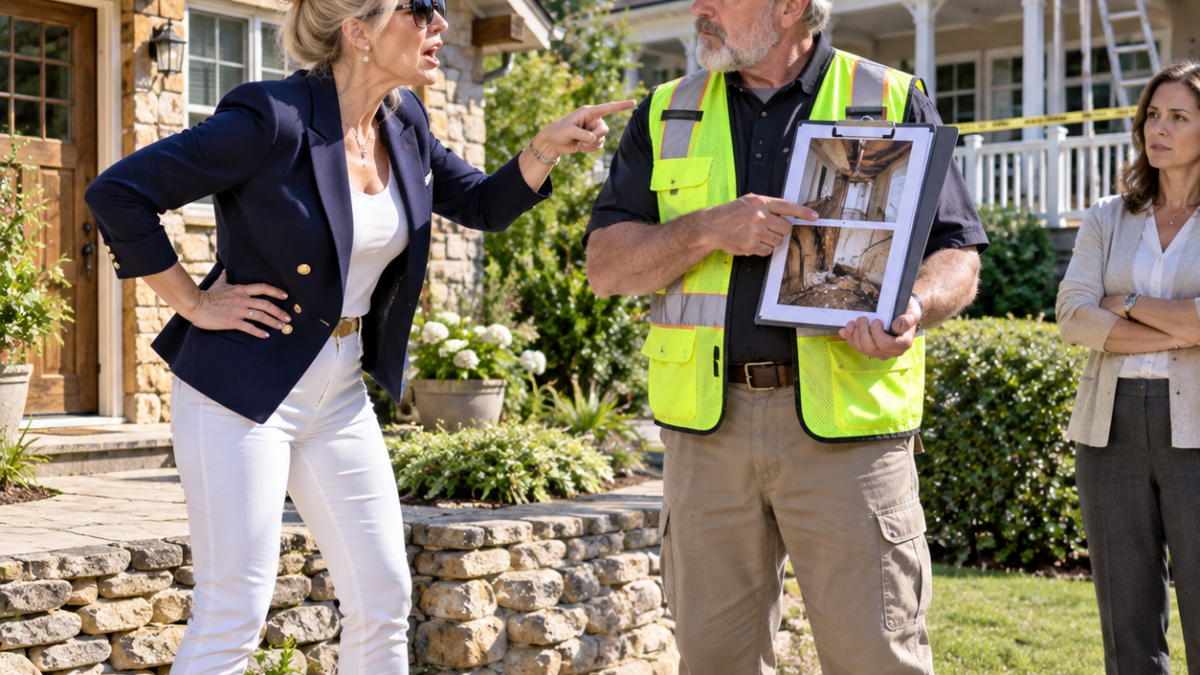
Karen gave me sixty days to demolish the little white guest cottage I had spent six months restoring for my seventy-eight-year-old father, then smiled as she threatened a $10,000 penalty if I refused.
She called my cottage an “unauthorized blight,” even though it had been legally standing on that land since 1948—forty years before Oak Creek Estates or its HOA existed.
What Karen never imagined was that by demanding an official inspection of my property, she was about to invite the same city officials to look very closely at the building where she ruled the neighborhood.
“This is not a negotiation, Mr. Davis.”
Karen Miller tapped the demolition notice against her clipboard as if the paper itself carried the force of a court order.
Behind her, autumn leaves moved in the branches of the enormous oak tree at the edge of my property.
Behind me stood the cottage.
Small.
Whitewashed.
One bedroom.
Wide front porch.
Original 1940s framing hidden beneath new insulation and carefully restored siding.
I had rebuilt almost everything that needed rebuilding.
Electrical.
Plumbing.
Roof.
Bathroom.
Accessibility features.
A gently sloped walkway from the driveway.
Grab bars.
A wider doorway.
The kind of details nobody noticed unless they needed them.
My father needed them.
He had served in Vietnam and spent most of his life pretending the damage in his knees and hips didn’t bother him.
At seventy-eight, pretending had stopped working.
The stairs in his old house were becoming dangerous.
I wanted him close.
Not in a facility.
Not two counties away.
Close enough that Lily—my daughter—could walk across the yard and eat breakfast with her grandfather.
So I restored the old cottage.
Karen wanted it gone.
“You understand,” she continued, “that failure to remove the structure within sixty days will result in a ten-thousand-dollar noncompliance penalty. The association may also arrange demolition and bill your account.”
I looked at the paper.
Then at her.
“The cottage was permitted in 1948.”
Karen gave a dismissive sniff.
“I’m aware of your claim.”
“It isn’t a claim.”
“I have the county permit.”
“County history is irrelevant.”
That got my attention.
“What?”
“When your property joined Oak Creek, you accepted the covenants.”
“Covenants don’t erase county permits.”
“The HOA has architectural authority.”
“Not unlimited authority.”
Karen smiled.
It was the smile of someone who had never been forced to distinguish confidence from legality.
“Mr. Davis, you spent a long career in the military. I’m sure you understand rules.”
I did.
Twenty-four years in the Army Corps of Engineers had taught me more about rules than Karen could imagine.
Load limits.
Building codes.
Survey lines.
Procurement regulations.
Safety standards.
Permits.
Inspections.
There were rules that annoyed you.
Rules that protected money.
Rules that protected people.
And there was one principle underneath all of them:
Authority has limits.
“Actually,” I said, “that’s exactly why I’m asking you to show me the legal basis for this.”
Karen’s face tightened.
“It’s in Section Seven, Subsection C.”
“I read it.”
“Then you understand.”
“I understand it governs unauthorized new structures.”
“This cottage was renovated.”
“Yes.”
“Substantially.”
“With permits.”
“That doesn’t matter.”
“It matters to the county.”
Karen stepped closer.
“The board has already decided.”
“Was there a hearing?”
“You were notified.”
“That wasn’t my question.”
She looked past me toward the cottage.
“That building is unsafe, obsolete, inconsistent with neighborhood standards, and a liability.”
The word unsafe bothered me more than everything else she had said.
My father was supposed to live there.
I had personally reinforced the porch.
Personally checked the framing.
Personally supervised licensed electrical and plumbing work.
Karen had never stepped inside.
Never sent an inspector.
Never asked for my permits.
Yet she had declared it unsafe because the building did not fit her picture of Oak Creek.
I folded the demolition notice once.
“Put everything you just said in writing.”
Karen laughed.
“Gladly.”
“Especially the part about safety.”
Her smile faded slightly.
“Why?”
“No reason.”
She turned toward her golf cart.
“You have sixty days.”
I looked at the cottage.
At the new porch rail my father had chosen.
At the small brass house number Lily had screwed beside the door.
Then back at Karen.
“Karen?”
She stopped.
“If the cottage is unsafe, I assume you won’t object to a professional inspection.”
She gave me a smug smile.
“I encourage it.”
That was the answer I needed.
Because at that moment I still thought I was going to prove my cottage safe.
I had no idea the inspection trail would end with a city fire marshal standing inside Karen’s clubhouse, staring at blocked exits and dead smoke alarms before posting a bright red sign across her front door.
PART 2
The golf cart disappeared around the curve at the end of Oak Creek Drive, and I stood there holding the demolition notice long after the little electric motor went silent.
My father’s cottage sat thirty yards behind the main house.
From where I stood, it looked almost peaceful.
Fresh white siding.
Dark green shutters.
A porch just wide enough for two rocking chairs.
The building had survived presidents, wars, recessions, hurricanes, owners, tenants, termites, and seventy-five years of southern summers.
Karen had given it sixty days.
I went inside.
Sarah was at the kitchen table helping Lily with homework.
My demolition notice landed between a spelling worksheet and a bowl of apple slices.
Sarah read the first paragraph.
Then the second.
Her face changed.
“She wants it demolished?”
“Yes.”
“Why?”
“Because she’s Karen.”
“That is not an answer.”
“It may be the only one she has.”
Lily looked up.
“What’s demolished?”
Neither of us answered immediately.
She was nine.
Old enough to understand more than we wanted.
Young enough that every bad thing still seemed fixable if adults acted quickly enough.
“The cottage,” Sarah finally said.
Lily’s eyes widened.
“Grandpa’s house?”
“Maybe,” I said.
Sarah looked at me.
Not because she disagreed.
Because I rarely said maybe.
Lily put down her pencil.
“But Grandpa’s moving there.”
“I know.”
“She can’t break his house.”
“We’re not going to let anyone do anything until we understand the rules.”
That sounded better.
Lily frowned.
“She’s mean.”
“Lily.”
“She is.”
Sarah almost smiled.
I sat down.
The cottage had been my idea.
Dad initially refused.
His name was Robert Davis.
Bob to everybody except his own grandchildren, who called him Grandpa Bobby because Lily had decided at age four that “Grandpa Robert” sounded too serious.
Dad served as an Army helicopter mechanic in Vietnam.
He almost never spoke about it.
The medals stayed in a box.
The photographs stayed in an envelope.
If you asked about the war, he changed the subject to engines.
But the service followed him physically.
Bad knees.
Hearing loss.
A left hip that had deteriorated enough to make stairs dangerous.
He had lived alone since Mom died.
For years, he managed.
Then Sarah called me one afternoon after visiting him.
“He almost fell.”
“What happened?”
“Top stair.”
I drove there.
Dad was sitting in his recliner pretending nothing had happened.
“You’re moving.”
“No.”
“Dad.”
“I said no.”
“Your stairs are dangerous.”
“I’ve used those stairs forty years.”
“That isn’t the defense you think it is.”
He glared.
I inherited that glare.
“You trying to put me in a home?”
“No.”
“Then stop talking.”
So I drove him to our property and showed him the guest cottage.
At the time, it looked tired.
Peeling paint.
Sagging porch boards.
Old galvanized plumbing.
Outdated electrical panel.
But the bones were remarkable.
Full-dimension lumber.
Old-growth pine.
Heavy rafters.
Real plaster.
The kind of construction that had survived because somebody in 1948 built more than the minimum.
Dad walked through slowly.
He tapped a wall.
“Solid.”
“Yes.”
“Roof needs work.”
“Yes.”
“Porch is rotten.”
“Partly.”
“Bathroom’s too small.”
“Correct.”
He turned.
“You want me to live here?”
“If I fix it.”
He looked through the front window toward our house.
Lily was outside chasing the dog.
Dad watched her for a long time.
Then said:
“I want my own coffee maker.”
“That’s your condition?”
“And nobody checks on me every fifteen minutes.”
“I’ll negotiate to twenty.”
“Thirty.”
“Twenty-five.”
He smiled.
Deal.
For six months, I rebuilt that cottage.
Not alone.
Licensed electricians handled the service upgrade.
A plumber replaced the old lines.
A roofing contractor installed a new roof.
But I did the carpentry.
The accessibility work.
The porch.
Trim.
Cabinetry.
Paint.
Dad helped when his knees allowed.
Mostly by sitting on a folding chair and criticizing me.
“You’re overbuilding.”
“I’m an engineer.”
“That’s what I said.”
The project became ours.
One afternoon, while installing porch rails, Dad ran his hand along the new cedar.
“You remember that bridge kit you built in college?”
“No.”
“You were sixteen.”
“That wasn’t college.”
“Whatever.”
“You told me it would hold five hundred pounds.”
“It held the lawn tractor.”
“Exactly.”
“You drove a tractor across my bridge?”
“You needed confidence.”
That was Dad.
He expressed love through unnecessary stress tests.
The cottage meant more to me than Karen knew.
Not because it was historic.
Because it was the difference between Dad being nearby and Dad slowly becoming unsafe in a house he could no longer navigate.
That night, after Lily went to bed, I opened the HOA covenants.
Section Seven, Subsection C.
Karen had quoted it accurately.
Sort of.
No new accessory dwelling units or detached residential structures could be erected without architectural approval.
The cottage wasn’t new.
The renovations did not change its use.
Its footprint was identical.
Then I found the sentence in the preamble.
**All provisions shall remain subject to applicable municipal, county, state and federal law and shall not supersede vested property rights recognized therein.**
I read it twice.
Then highlighted it.
Sarah walked in carrying two mugs of coffee.
“That face.”
“What face?”
“The one you get when a problem finally becomes interesting.”
I turned the binder toward her.
“The HOA admits its authority is subordinate to law.”
“Was that in doubt?”
“According to Karen, yes.”
“What does it mean for us?”
“It means I need the county history.”
The next morning I reached the records office before it opened.
The clerk’s name was Marjorie Benton.
Everyone called her Marge.
She wore reading glasses on a chain and moved through old records like a librarian who had secretly memorized the county.
“What year?”
“I’m not sure.”
“Property address?”
I gave it.
She typed.
“Old parcel.”
“How old?”
“Pre-subdivision.”
“I know.”
She looked at me.
“Then you know enough to be trouble.”
I liked her immediately.
Three days later, I knew more about my property than the people who built it probably had.
Main house permit.
1947.
Cottage permit.
1948.
Inspection sign-off.
Occupancy records.
Tax assessments showing the cottage as a legal improvement continuously for decades.
County plat.
The original land existed before Oak Creek.
Subdivision filed in 1988.
Our parcel was initially outside.
The owner who bought the property in 1995 voluntarily joined the HOA.
That was Karen’s foothold.
The land became subject to covenants.
But the cottage did not become illegal simply because the property joined later.
Existing lawful structures generally carried vested status unless something specific lawfully required otherwise.
Marge found one particularly useful document.
A 1995 property disclosure attached to the HOA enrollment.
It listed:
**Existing accessory dwelling / guest cottage — constructed 1948.**
The HOA had known about it when the property joined.
I laughed.
Marge leaned over.
“Good laugh or bad laugh?”
“Very good.”
“They knew.”
“Looks like it.”
I requested certified copies.
Every page.
I built a binder.
Not because I like binders.
Despite what Sarah says.
Because evidence should be organized before somebody decides to pretend it doesn’t exist.
I created tabs.
County permits.
Tax records.
Subdivision plats.
HOA enrollment.
Covenants.
Renovation permits.
Contractor inspections.
Photos.
Timeline.
At the same time, I started talking to neighbors.
Not about Karen at first.
People reveal more when you listen before asking them to join a cause.
Richard Morales lived three houses away.
Retired mechanic.
Vietnam-era Navy.
He was cleaning his truck when I passed.
“Morning.”
“Mark.”
He nodded toward the cottage.
“Looks good.”
“Thanks.”
“Heard Karen hates it.”
News travels quickly in suburbs.
“What did you hear?”
“She wants it gone.”
“That accurate?”
Richard shook his head.
“That woman fined me two hundred dollars because my trash cans were out after four.”
“How late?”
“Trash pickup was delayed. I got home at seven.”
He laughed without humor.
“She drove by at five-thirty and took pictures.”
“Did you appeal?”
“Waste of time.”
I kept walking.
Maria Garcia told me about the basketball hoop.
Her son Leo had cerebral palsy.
Basketball was part of his physical therapy.
A therapist had specifically recommended repetitive reaching and throwing movements.
Karen cited the hoop because it was visible from the street.
“We submitted a medical letter,” Maria said.
“What happened?”
“She said medical needs don’t override aesthetics.”
The phrase sounded familiar.
That afternoon, I found Mrs. Gable.
Eighty-one.
Widow.
She had eight wind chimes.
I counted.
“You like wind chimes.”
“My husband did.”
Then she showed me the violation notice.
Excessive decorative noise-generating objects.
She rolled her eyes.
“I’m too old to be bullied by a woman in a golf cart, but apparently not old enough to stop being annoyed by it.”
The pattern was obvious.
Karen did not manage rules.
She personalized them.
People she liked got flexibility.
People who questioned her got enforcement.
I brought the binder to the monthly HOA meeting.
Karen scheduled my matter last.
Classic tactic.
Make somebody wait while anxiety builds.
She sat behind a folding table with four directors.
Gary Pennington, treasurer.
Brenda Lowe, secretary.
Frank Holloway.
And Diane Mercer.
Frank looked tired before the meeting started.
Diane avoided eye contact with Karen.
Gary looked as if he had been appointed specifically to agree.
Karen ran through landscaping.
Pool maintenance.
Holiday decorations.
Then:
“Property Twelve.”
She smiled.
“Mr. Davis.”
I stood.
Carried the binder forward.
Set up a small projector.
Karen immediately interrupted.
“This agenda item is for confirmation of compliance.”
“No.”
She blinked.
“Excuse me?”
“I’m not demolishing the cottage.”
Murmurs.
Karen folded her hands.
“Then you are refusing a lawful directive.”
“I’m refusing an unlawful one.”
That word changed the room.
Unlawful.
Not unfair.
Not ridiculous.
Unlawful.
Karen’s smile hardened.
“Proceed carefully.”
“I intend to.”
I projected the 1946 plat.
Then 1948 permit.
Then inspection.
Tax records.
1995 HOA enrollment disclosure.
“This cottage existed forty years before Oak Creek.”
Nobody could dispute the dates.
“The county permitted it.”
Next slide.
“The HOA knew it existed when this property joined.”
Next.
“The covenants themselves expressly recognize they do not supersede vested legal rights.”
Karen interrupted.
“Your interpretation.”
“County records.”
“Our attorney has reviewed the matter.”
“May I see the opinion?”
“No.”
“Why?”
“Privileged.”
“Then stop citing it as public evidence.”
That got a few laughs.
Karen slammed her pen down.
“This board has authority over every improvement within Oak Creek.”
“Not authority to retroactively erase a legal structure.”
“You substantially modified it.”
“With county permits.”
“Architectural approval was still required.”
“Show me where restoration of an existing grandfathered cottage requires demolition.”
Silence.
I finished.
Then placed the binder on the table.
“This contains certified copies.”
Karen pushed it sideways without opening it.
“The board does not recognize your interpretation.”
Frank frowned.
“Karen, maybe we should review—”
“No.”
She turned toward the board.
“All in favor of upholding the demolition order?”
Her hand went up.
Gary followed.
Brenda.
Frank hesitated.
Diane stared at the binder.
Karen looked at both.
Frank raised his hand.
Diane finally did too.
“Five-zero,” Karen said.
I looked at Frank.
Then Diane.
Neither met my eyes.
“Fifty-two days, Mr. Davis.”
I picked up the binder.
“You just voted after being shown contrary county records.”
“Yes.”
“Good.”
Karen looked confused.
“Good?”
“I wanted the vote documented.”
That was the first time she looked uncertain.
I left.
The next morning, Arthur Goldstein called.
Retired attorney.
Forty years in real estate and contract law.
He had watched the meeting.
“What she did was extraordinary.”
“That’s one word.”
“Bad faith is another.”
We met at my house.
Arthur read the binder.
Slowly.
Meticulously.
Then leaned back.
“Your cottage is not their best problem.”
“What does that mean?”
“It means their behavior may be.”
He explained fiduciary duty.
Selective enforcement.
Bad-faith decision-making.
Personal exposure when directors knowingly disregard law or governing documents.
He was careful.
“Board members usually have protections.”
“Insurance.”
“And statutory or corporate protections.”
“Usually?”
“Usually.”
“What removes them?”
“Depends on law, policy, and facts. But intentional misconduct or gross negligence can create unpleasant questions.”
He smiled.
“And Karen just created facts.”
Maria and her husband joined us.
Richard.
Mrs. Gable.
We spent an afternoon comparing notices.
Same issue treated differently depending on resident.
Board-family violations ignored.
Others fined.
Hearings denied.
Appeals delayed.
Rules invented through letters without proper amendments.
Arthur tapped his legal pad.
“She’s operating governance as personal discretion.”
Mrs. Gable handed him a cookie.
“Can that get her fired?”
Arthur smiled.
“That part may be easier than the lawsuit.”
We formed a coalition.
No dramatic name.
No secret society.
Just residents.
Arthur drafted two letters.
First:
Formal demand to withdraw my demolition order.
Ten business days.
Certified copies to every director and association counsel.
Second:
Records request.
Financials.
Board minutes.
Violation history.
Vendor contracts.
Legal invoices.
Executive-session records to the extent members were legally entitled.
Karen responded by hiring a large law firm.
Their first letter was two paragraphs.
We acknowledge your correspondence.
We are reviewing.
Arthur laughed.
“What?”
“She blinked.”
“They hired lawyers.”
“Yes.”
“That sounds bad.”
“No.”
He pointed to the letterhead.
“This firm bills more per hour than my first house cost per month.”
“And homeowners are paying.”
“Exactly.”
That news spread.
Residents who did not care about my cottage suddenly cared that their dues were funding Karen’s private war.
Then she made things worse.
Violation notices multiplied.
Political signs.
Grass height.
Cars.
Mailbox colors.
A woman received a warning because her porch wreath remained up after the seasonal-decor deadline.
Our private online group grew from twelve residents to forty.
Then sixty.
Each notice became another example.
Karen was attempting intimidation.
Instead she was building our evidence.
The law firm objected to our records request as burdensome.
Arthur filed the necessary court action to compel compliance.
That process moved slowly.
I am an engineer.
Slow processes irritate me.
So while Arthur attacked legal authority, I focused on something I understood better.
Structures.
I still needed an independent inspection of Dad’s cottage.
Not because Karen’s opinion mattered.
Because Dad’s safety did.
I hired David Jensen.
Retired Marine master gunnery sergeant.
Professional building inspector.
He arrived at eight.
Left after noon.
He crawled everywhere.
Roof.
Attic.
Crawlspace.
Electrical.
Plumbing.
Foundation.
Windows.
Egress.
Porch.
Accessibility.
At one point, Dad arrived.
He watched Dave disappear beneath the cottage.
“Who’s that?”
“Inspector.”
“Why?”
“HOA says the cottage is unsafe.”
Dad stared.
Then yelled toward the crawlspace:
“You find anything down there?”
Dave shouted back:
“Spider!”
Dad nodded.
“Condemn it.”
I laughed for the first time in days.
When Dave finished, he handed me a preliminary summary.
“Structurally excellent.”
“Electrical?”
“Good.”
“Plumbing?”
“Good.”
“Foundation?”
“Better than most homes built last year.”
He patted the porch column.
“This framing is old-growth timber. Dense as stone.”
“So you’d let your father live here?”
“Mine’s dead.”
He paused.
“But yes.”
Dad sat in the rocking chair.
“I like him.”
Dave’s final report ran twenty pages.
Photos.
Moisture readings.
Load observations.
Safety notes.
One minor handrail correction.
Nothing remotely supporting demolition.
As we finished, I looked toward the clubhouse.
“What code applies to a building like that?”
Dave followed my gaze.
“Assembly occupancy.”
“What changes?”
“A lot.”
He listed them.
Emergency lighting.
Exit access.
Smoke detection.
Fire extinguishers.
Electrical safety.
Occupancy.
Clear egress.
Periodic inspection.
“When was it last inspected?”
He shrugged.
“Ask the fire marshal.”
That thought followed me all night.
Not revenge.
Safety.
The HOA’s own covenants stated common areas had to comply with applicable law and safety codes.
Karen was demanding the demolition of a structurally sound cottage.
Meanwhile, the clubhouse hosted:
Birthday parties.
Board meetings.
Yoga.
Children’s events.
Holiday dinners.
Voting.
If it had not been inspected, that mattered.
We sent a formal request.
Signed by twelve homeowners.
**Please provide the most recent fire and life-safety inspection certificate for the Oak Creek clubhouse.**
Karen responded personally.
**The board takes safety extremely seriously. To address unnecessary concerns, a full city inspection has been scheduled for Tuesday at 10:00 a.m. Concerned residents may attend.**
Arthur called me.
“She thinks this helps her.”
“It might.”
“If the clubhouse is compliant.”
“Then good.”
He paused.
“You actually mean that.”
“Yes.”
“If it’s safe, I want it safe.”
Arthur laughed softly.
“This is why Karen doesn’t understand you.”
Tuesday morning, twenty residents gathered outside.
Karen arrived by golf cart.
Smiling.
Fire Marshal Thomas Thompson arrived in a white city sedan.
No theatrics.
Blue uniform.
Clipboard.
Flashlight.
Test equipment.
Karen greeted him loudly.
“We’re very proud of this facility.”
He nodded.
“Let’s take a look.”
The first failure happened thirty seconds inside.
Emergency lighting.
Dead.
Thompson pressed test.
Nothing.
He wrote.
Karen said:
“Probably a bulb.”
“Battery system.”
He kept walking.
Main hall.
Smoke detector.
One.
For a room requiring more coverage.
He opened it.
No battery.
“Where are the others?”
Karen looked around.
“That’s the system.”
“No.”
One word.
Flat.
Professional.
It hit harder than anything I could have said.
He found a second detector inside a storage area.
Also missing a battery.
Fire extinguisher.
Inspection tag seven years old.
He lifted it.
“This unit is out of service.”
Karen’s face tightened.
“Our maintenance vendor—”
“Who?”
She couldn’t answer.
Back exit.
Blocked.
Broken folding tables.
Boxes.
Holiday decorations.
Thompson stopped.
His demeanor changed.
Until then, he had been technical.
Now he was angry.
“Who blocked this door?”
Karen blinked.
“It’s temporary storage.”
“This is an emergency exit.”
“It’s rarely used.”
He turned.
“That is irrelevant.”
Maria stood behind me.
I heard her whisper:
“Oh, God.”
Thompson pulled several boxes away himself.
Then photographed everything.
Kitchen.
Extension cord running under a rug.
Cheap power strip.
Large television.
Coffee urn.
Microwave.
Multiple high-draw devices.
He unplugged one.
“This needs corrected.”
Karen tried smiling.
“These seem like minor maintenance issues.”
He stared at her.
“No functioning smoke detection is not minor.”
He pointed toward the rear.
“Blocked egress is not minor.”
Then the expired extinguisher.
“Lack of maintained fire protection is not minor.”
Karen stopped smiling.
He completed the inspection.
Then walked outside.
Retrieved a red notice.
Returned.
Karen followed.
“What are you doing?”
“Closing the facility.”
The room went silent.
“You can’t close it.”
“I can.”
“We have events scheduled.”
“Cancel them.”
“This is private property.”
“It’s an assembly space subject to fire code.”
Karen looked around at the residents.
“This is absurd.”
Thompson stopped.
“Ma’am.”
She looked at him.
“If there is a fire tonight and somebody cannot get through that blocked exit, this becomes much worse than an inconvenience.”
No one spoke.
He posted the red notice on the glass.
**UNSAFE — DO NOT OCCUPY**
The color almost glowed.
Karen stared at it.
For months, she had sent red and orange violation notices to residents.
Now the city had placed one on her front door.
Nobody cheered.
That made it more powerful.
Silence.
Cold.
Complete.
Thompson gave her paperwork.
“Formal citation follows.”
Then he left.
Karen turned toward us.
Her eyes found mine.
“This is your fault.”
“No.”
“You caused this inspection.”
“You scheduled it.”
“Because of your harassment.”
Maria stepped forward.
“Our children use this building.”
Karen ignored her.
“You did this.”
I looked at the red sign.
“No, Karen.”
Then back at her.
“I didn’t remove the smoke-detector batteries.”
That ended the conversation.
By afternoon, every homeowner knew.
The next day, Arthur obtained the city report.
Violations.
Fines.
Corrective orders.
Estimated repairs.
Rough total exposure approaching fifty thousand dollars after fines, electrical work, alarm upgrades, emergency lighting, fire protection, and remediation.
More than four times the penalty Karen had threatened against my legal cottage.
Residents were furious.
Not because repairs cost money.
Because they had been paying dues for maintenance all along.
Where had the money gone?
That question became louder than everything else.
A petition forced a special meeting.
The clubhouse was closed.
So the meeting happened outside.
Lawn chairs.
Flashlights.
Blankets.
The board sat beneath the awning.
Red closure notice behind them.
The symbolism required no help.
Karen opened.
“We have experienced a temporary regulatory setback.”
Someone shouted:
“Death trap!”
Applause.
Karen tried continuing.
“The city has changed certain standards—”
Arthur stood.
“No.”
His voice was calm.
“The fire code was not invented Tuesday.”
People laughed.
Karen glared.
Arthur held the report.
“The extinguisher had not been serviced for seven years.”
Murmurs.
“The emergency lighting failed.”
Louder.
“Smoke detectors were nonfunctional.”
Maria stood.
“My son had therapy events in there.”
Karen raised her hands.
“Please.”
Maria continued.
“You fined us over his basketball hoop.”
Applause exploded.
“You told me community standards came before personal preference.”
Maria pointed at the red notice.
“What standard is this?”
Karen looked trapped.
Richard stood.
“You fined me two hundred dollars for trash cans.”
Mrs. Gable:
“You threatened me over wind chimes.”
Another resident:
“You sent me a notice because my garage door was open while I was unloading groceries.”
Another:
“You spent HOA money on attorneys fighting Mark’s legal cottage.”
Karen banged her gavel.
Nobody listened.
Arthur took the center.
“This board voted to threaten demolition against a structure certified safe by independent inspection and protected by county records.”
He held up another paper.
“At the same time, it failed to maintain the safety of the one building the association itself owns.”
He looked toward the homeowners.
“Worse, the board has spent over ten thousand dollars in legal fees defending the cottage action.”
The crowd erupted.
Karen looked at Gary.
Gary looked down.
Arthur continued.
“This is not management.”
“It is not responsible governance.”
“It is a breach of trust.”
Karen stood.
“Sit down.”
Arthur faced her.
“No.”
Another no.
Different story.
Same effect.
People who rule through fear rarely know what to do when fear stops working.
Arthur quoted the removal provision.
Then made the motion.
Remove Karen.
Remove Gary.
Remove Brenda.
Entire board.
Frank stood.
My eyes widened.
He had voted against me.
He stepped beside Arthur.
“I second.”
Karen stared.
“Frank.”
He looked miserable.
“I should have read Mark’s documents before voting.”
“You did.”
“No.”
Frank shook his head.
“I looked at them.”
“That isn’t the same as reading.”
Karen’s face reddened.
“You’re betraying this board.”
“No.”
He looked toward the crowd.
“I betrayed them when I raised my hand because I was afraid of you.”
The entire lawn became quiet.
Diane started crying.
“I’m sorry too.”
Karen backed away from the table.
“This meeting is invalid.”
Arthur replied:
“The petition is valid.”
“You cannot remove us.”
“The bylaws say otherwise.”
“I will sue.”
Arthur smiled slightly.
“You already hired lawyers.”
That drew laughter.
Then came the vote.
Hundreds of hands.
Nearly everyone.
Against removal:
Karen.
Gary.
Two hands.
That was all.
The president who once claimed authority over every paint color, basketball hoop, cottage, trash can, wind chime, and garden ornament stood beneath a bright red city closure notice while her own neighbors voted her out.
She left in the golf cart.
Nobody stopped her.
No applause.
Only a long exhale.
Frank became interim director temporarily.
Maria.
Arthur.
Several others.
First motion:
Withdraw my demolition order.
Passed unanimously.
Second:
Written apology.
Passed.
Third:
Suspend all discretionary enforcement pending review.
Passed.
Fourth:
Independent financial audit.
Passed.
Fifth:
Repair the clubhouse under city supervision.
Passed.
Dad watched the entire meeting from a folding chair beside me.
He leaned close.
“You could’ve just put me in an apartment.”
I laughed.
“Too late now.”
“I caused a revolution.”
“You mostly drank coffee.”
“Leadership.”
The audit started immediately.
That was where Karen’s story became worse.
HOA credit card.
Restaurants.
Personal shopping.
Spa weekend.
Gas purchases nowhere near Oak Creek.
Improper reimbursements.
Missing receipts.
Payments categorized as community development.
Nearly fifteen thousand dollars in questionable or misappropriated expenses.
Not millions.
Not a criminal empire.
Something more ordinary.
Petty theft hidden inside petty power.
Arthur called me when the auditor finalized the report.
“I hate being right.”
“You love being right.”
“Not about this.”
He was right.
The new board referred the evidence to local authorities.
Karen eventually faced investigation and legal consequences connected to the financial misconduct.
The HOA’s expensive law firm was terminated.
Their final bill was more than ten thousand dollars.
For letters defending a demolition order that should never have existed.
The irony was painful.
Residents had to approve a special assessment to fix the clubhouse.
I expected anger.
There was some.
But the vote passed overwhelmingly.
Maria explained it best.
“At least now I know what I’m paying for.”
The city reduced some penalties after the new board presented a corrective plan.
New fire-alarm system.
Hardwired interconnected detectors.
Emergency lighting.
Clear exits.
New extinguishers.
Electrical corrections.
Inspection schedule.
Occupancy documentation.
Everything transparent.
Ninety days later, Marshal Thompson returned.
I attended.
Karen did not.
He tested the emergency lights.
They came on.
Alarm.
Worked.
Exit.
Clear.
Extinguishers.
Current.
Electrical.
Corrected.
He removed the red closure notice.
Susan Bennett, one of the new directors, asked:
“Can we keep it?”
Thompson blinked.
“The notice?”
“As a reminder.”
He almost smiled.
“Once it’s void, do whatever you want.”
They framed it.
Hung it inside the board office.
Below it, Arthur added a plaque:
**THE RULES APPLY HERE TOO.**
Perfect.
The cottage inspection report became part of the permanent property file.
No violation.
No condemnation.
No demolition.
Dad moved in two weeks later.
That mattered more than all the meetings.
We carried boxes across the lawn.
Clothes.
Books.
Tools.
A ridiculously heavy stereo he had owned since 1976.
“Dad, why?”
“Sound quality.”
“You can’t hear above twelve kilohertz.”
“Neither can you.”
Fair.
Lily decorated his refrigerator with magnets.
Sarah stocked the pantry.
I put his coffee maker exactly where he demanded.
First morning, I knocked.
He opened the door wearing pajama pants and an Army T-shirt.
“What?”
“Checking.”
“It’s seven.”
“You’re alive.”
“I regret moving here.”
Then Lily ran past me holding pancakes.
“Grandpa!”
Dad’s face changed completely.
“Breakfast?”
“Yes.”
He stepped aside.
“Your father can leave.”
That was the life I wanted.
Not victory.
That.
Dad reading on the porch.
Lily walking across the yard.
Sarah dropping off soup.
Me checking the ramp every six months even though it never moved.
Dad complaining that I checked the ramp.
One afternoon Karen’s house went on the market.
No dramatic foreclosure.
No mob.
She simply could no longer tolerate living where everyone knew what happened.
The moving truck arrived on a Saturday.
I was helping Dad install a bird feeder beside the cottage.
Karen carried boxes to her car.
At one point she looked toward us.
Dad raised one hand.
Not a wave exactly.
Acknowledgment.
Karen looked away.
“What was that?” I asked.
“Courtesy.”
“She tried to demolish your house.”
Dad tightened a bolt.
“She failed.”
“That’s it?”
“What else do you need?”
I thought about it.
Nothing.
Apparently.
Dad sat down.
Karen’s moving truck pulled away.
He watched it disappear.
Then said:
“Good.”
I laughed.
“So much for courtesy.”
“Courtesy has limits.”
The new owners were a young couple with two children.
They repainted Karen’s front door blue.
Dark blue.
The old architectural standards listed only approved earth tones.
The new board reviewed the request.
Approved it unanimously.
Civilization survived.
Mrs. Gable added three new wind chimes.
Richard occasionally left his trash cans visible until dinner.
Maria’s son kept his basketball hoop.
Leo grew older.
Got stronger.
One afternoon, I saw him shooting baskets with another kid.
He missed badly.
The ball rolled into the street.
Maria yelled:
“Try again!”
No violation.
No letter.
Just childhood.
The clubhouse reopened in winter.
First event:
A neighborhood safety night.
Fire Marshal Thompson gave a short talk.
He seemed uncomfortable with applause.
Arthur presented him with a small plaque.
Thompson refused.
“Please don’t make me part of HOA politics.”
Everyone laughed.
The second event was Dad’s eightieth birthday.
He didn’t want a party.
So naturally, we held one.
Inside the same clubhouse Karen had nearly allowed to become dangerous.
Every exit clear.
Alarms active.
Extinguishers tagged.
Dad looked around.
“This place seems familiar.”
“You’ve been here.”
“Wasn’t it closed?”
“Yes.”
“Because of you?”
“Technically because of the fire code.”
“Same thing.”
He was unbearable.
At some point Maria introduced Leo.
Dad shook his hand.
“Heard about your hoop.”
Leo looked confused.
Dad pointed at me.
“This guy caused more trouble over a cottage.”
“Dad.”
“I’m proud.”
That shut me up.
The financial case against Karen ended quietly.
No spectacular courtroom showdown.
The investigation established misuse of association funds.
She was ordered to repay money under the resulting legal resolution and lost any realistic chance of returning to leadership.
That was enough for me.
People asked whether I wanted her punished more.
I didn’t.
Not anymore.
She had lost the thing she cared about most.
Control.
And Oak Creek had gained something more valuable.
Memory.
Communities forget quickly.
That worried Arthur.
So we made procedural changes.
All enforcement notices required citation to the exact covenant.
Major fines required independent committee review.
Appeals could not be decided solely by the same people who issued the violation.
Common-property inspections were scheduled and publicly posted.
Financial statements were available online.
Legal spending above a threshold required board approval in open session when permitted.
Safety certificates were scanned and stored.
Most importantly, residents learned to ask questions.
A year earlier, Karen could say:
“The lawyer says.”
And everyone accepted it.
Now residents asked:
“Can we see the opinion?”
Karen could once say:
“The committee decided.”
Now:
“Who is on the committee?”
Karen could say:
“Safety.”
Now:
“Where is the inspection?”
That was the real revolution.
Not rebellion.
Verification.
Dad lived in the cottage for six years.
Six good years.
Longer than any of us expected.
His knees worsened.
Then his heart.
But he stayed independent.
He cooked terrible chili.
Fed squirrels even though I asked him not to.
Taught Lily how to change oil.
Watched baseball with the volume absurdly loud.
Kept the porch light on after dark.
Every morning when I looked from our kitchen toward the cottage and saw that light, I felt grateful.
Not triumphant.
Grateful.
One fall afternoon, almost exactly seven years after Karen delivered the demolition notice, Dad sat on the porch wrapped in a blanket.
Leaves moved across the yard.
Same season.
Same oak.
He was weaker.
He looked toward the cottage roof.
“You remember when that woman wanted this torn down?”
“I remember.”
“What was her name?”
“Karen.”
Dad smiled.
“Of course.”
I sat beside him.
“She thought the HOA rules outranked the county.”
Dad snorted.
“Idiot.”
“Dad.”
“I’m old. I can call people idiots.”
Apparently age had privileges not listed in any covenant.
He looked at the porch railing.
“You did good work.”
“Dave Jensen said the same thing.”
“Who?”
“The inspector.”
“Oh.”
Dad stared toward the main house where Lily—now sixteen—was getting out of Sarah’s car.
“You built it for me.”
“Yes.”
“Don’t keep it because of me.”
I turned.
“What?”
“When I’m gone.”
“Dad.”
“I’m not dying today.”
“You don’t know that.”
“Pretty sure.”
He smiled.
Then became serious.
“Buildings are for people.”
I listened.
“If someday Lily needs it, give it to her.”
“Okay.”
“If somebody else needs it, let them use it.”
“Okay.”
“Don’t turn it into a shrine.”
That sounded familiar.
Military men dislike museums built from their lives.
“I won’t.”
Dad nodded.
“Good.”
He died the following spring.
At home.
Not in the cottage.
In the hospital for only two nights, then hospice helped us bring him back.
We moved his bed near the front window.
He could see the oak.
Hear Lily coming across the yard.
His last morning, he asked me to open the window.
Cold air came in.
Birds.
Wind.
Ordinary sounds.
Dad looked around once.
“Good house.”
Those were among his last clear words.
After the funeral, the cottage felt empty in a way I had not expected.
For months, I avoided it.
Sarah cleaned occasionally.
Lily sat on the porch.
I couldn’t.
Then one afternoon, Maria called.
Her sister had left an abusive marriage.
She had two children.
Needed somewhere safe for a few weeks.
Maria apologized three times before asking.
“Could she use the cottage?”
My first instinct was no.
Not because of Maria.
Because the cottage was Dad.
His chair.
His coffee mug.
His books.
Then I remembered.
Buildings are for people.
“How long?”
“Maybe a month.”
“Give me a day.”
Sarah helped.
We packed Dad’s personal items carefully.
Kept photographs.
Tools.
Medals.
His stereo.
The cottage became a home again.
Maria’s sister stayed six weeks.
Her children played on the porch.
One drew chalk flowers along the walkway.
The first morning I saw them eating cereal at Dad’s table, I had to walk away.
Not because it felt wrong.
Because it felt exactly right.
Dad had been smarter than me again.
The cottage became Oak Creek’s unofficial emergency guest house after that.
Never HOA property.
Still ours.
But when a neighbor had a house fire, they stayed two weeks.
When Arthur’s wife had surgery and their stairs became impossible temporarily, they stayed there.
When Lily came home from college with three friends, all four invaded it and left towels everywhere.
Dad would have hated the towels.
Loved everything else.
Years passed.
Karen became a story newer residents heard secondhand.
Some versions became ridiculous.
People said she tried to bulldoze the cottage personally.
She didn’t.
People said I discovered fifty thousand dollars in offshore accounts.
I didn’t.
People said the fire marshal arrested her in the clubhouse.
Absolutely not.
The truth was better because it was ordinary.
She overreached.
People documented.
The real rules were checked.
A legal cottage survived.
An unsafe building was corrected.
A board was removed.
Money was audited.
Neighbors stopped being afraid.
Sometimes that is what justice looks like.
Not explosions.
Procedures finally working.
Arthur eventually stepped down as president.
Maria succeeded him.
He complained for years that she spent too much money on flowers.
She told him to review the landscaping budget.
He did.
Every month.
At eighty-two.
When Arthur died, his daughter found a yellow legal pad in his desk.
First page:
**DAVIS COTTAGE — KAREN OVERREACH**
Second:
**Garcia hoop**
Third:
**Gable wind chimes**
Then dozens of pages documenting the coalition’s earliest meetings.
His daughter gave it to me.
I kept it beside the original 1948 permit.
Two documents.
Seventy years apart.
Both protected the same little house.
One through law.
One through courage.
Lily eventually became an architect.
I blame the cottage.
She denies it.
Her senior thesis focused on adaptive reuse of historic residential structures for aging in place.
When she presented, one slide showed Dad’s cottage.
Before restoration.
After.
Ramp.
Wider doorway.
Preserved original framing.
She ended with a photograph of Grandpa Bobby sitting on the porch.
I sat in the audience beside Sarah.
Cried openly.
No Marine standards to maintain anymore.
Afterward Lily hugged me.
“Grandpa would’ve complained about the photo.”
“He would’ve said he looked old.”
“He was old.”
“Never tell a veteran that.”
She laughed.
“Dad?”
“Yeah?”
“Thank you for not tearing it down.”
That sentence undid me.
Not because I had ever planned to.
Because suddenly the entire fight compressed into something simple.
Karen had wanted me to destroy a building.
If I had surrendered for convenience, fear, or exhaustion, Lily would have lost those mornings with Dad.
Dad would have lost six years of independence.
Maria’s sister would have lost a safe temporary home.
Neighbors would have lost shelter when they needed it.
Lily might still have become an architect.
But maybe the cottage helped.
How many consequences hide behind a decision that looks small?
That was the question I carried.
Karen thought she was ordering wood and plaster removed.
She never considered the life that would happen inside afterward.
That is what bureaucratic cruelty often misses.
Behind every “structure” is somebody’s reason.
Behind a basketball hoop may be therapy.
Behind wind chimes may be a dead husband.
Behind an overgrown lawn may be chemotherapy.
Behind a guest cottage may be an old soldier who wants coffee with his granddaughter.
Rules cannot account for every human detail.
That is why the people enforcing them need judgment.
And humility.
Oak Creek eventually became known as a well-run association.
That amused me.
The red clubhouse closure notice remained framed inside the board office for almost twenty years.
New directors had to look at it every time they met.
Beneath it:
**THE RULES APPLY HERE TOO.**
When the clubhouse was renovated again, Maria asked if I wanted the sign.
“No.”
“Why?”
“It belongs there.”
“What happens when the building gets demolished someday?”
I smiled.
“Check the permit first.”
She laughed.
The original cottage turned one hundred years old in 2048.
I did not.
But before I got too old to climb ladders, I made Lily promise something.
“Don’t preserve it just because I fought for it.”
She frowned.
“Grandpa said the same thing.”
“Smart man.”
“It’s historic.”
“History isn’t an excuse to stop something from serving people.”
She looked toward the cottage.
“What if I want to preserve it?”
“Then preserve it.”
“What if my kids want to change it?”
“Make them get permits.”
She laughed.
I was serious.
The legal protection we fought for was never about freezing the building in time.
It was about choice.
Karen wanted to decide for us.
That was the problem.
Not change.
Control.
Late in my seventies, I sat on the cottage porch one autumn evening.
Same season the fight began.
Golden leaves.
Cool wind.
The oak tree still massive.
The clubhouse visible down the street.
New roof.
Updated alarm system.
Clear exits.
Children inside doing some kind of craft program.
The building had become what it should have been all along.
Safe.
Useful.
Unremarkable.
The cottage too.
No longer controversial.
Just part of home.
Sarah brought me coffee.
She sat in Dad’s old chair.
“You’re thinking about him.”
“Yes.”
“And Karen.”
“No.”
She smiled.
“You’re a terrible liar.”
“Fine.”
“A little.”
“Why?”
I looked toward the clubhouse.
“Because she was so sure.”
“About what?”
“Everything.”
Sarah nodded.
“That was her problem.”
I thought about the demolition order.
The board vote.
The fire marshal.
The red sticker.
The outdoor meeting.
Karen leaving.
Then Dad.
Lily.
All the lives the cottage had held.
“She thought authority meant never admitting you were wrong.”
Sarah took a sip.
“And?”
“I think authority means being responsible enough to stop when you are.”
That may have been the biggest lesson Oak Creek learned.
The new boards made mistakes.
Of course they did.
One year they approved the wrong landscaping contract.
Another year they miscalculated the pool budget.
Maria once sent a violation notice to the wrong address.
You know what she did?
Apologized.
Immediately.
Corrected it.
No lawsuit.
No revolution.
No binders.
An apology can be remarkably cheap if you use it early.
Karen never learned that.
She could have stopped on my lawn.
Read the permit.
Asked for county guidance.
Withdrawn the notice.
That would have been the end.
She could have stopped after my presentation.
She could have said:
“Let’s review.”
Instead she forced a vote.
She could have stopped when Arthur sent the legal letter.
Instead she hired expensive counsel.
She could have responded honestly to the clubhouse inspection request.
Instead she scheduled a public inspection to prove us wrong.
Every opportunity to correct became another opportunity to double down.
Eventually there was nowhere left to go except out.
People sometimes ask whether the fire marshal “got revenge for me.”
No.
He did his job.
That is precisely why it was so satisfying.
No friendship.
No secret arrangement.
No trick.
He tested equipment.
Inspected exits.
Read tags.
Applied code.
Karen could dismiss me as difficult.
Arthur as disgruntled.
Maria as emotional.
Mrs. Gable as old.
She could not argue with a dead emergency light.
Could not intimidate an empty smoke detector into functioning.
Could not bully an expired fire extinguisher.
Could not vote a blocked exit into compliance.
For once, reality did not care what Karen thought.
Neither did the fire code.
That bright red sticker changed Oak Creek because everybody saw the difference between enforcement and responsibility.
Karen had been obsessed with enforcement.
The fire marshal demonstrated responsibility.
One was about power.
The other was about safety.
One was loud.
The other was factual.
One tried to demolish a good building.
The other closed a dangerous one until it was fixed.
That distinction stayed with me.
Eventually the original demolition notice yellowed inside my binder.
I kept it.
Lily found it once.
“You still have this?”
“Yes.”
“Why?”
“History.”
“You’re becoming Grandpa.”
“Take that back.”
She smiled.
The notice said:
**DEMOLISH WITHIN 60 DAYS.**
Below it:
**$10,000 NONCOMPLIANCE PENALTY.**
On the back, years earlier, Dad had written something in pencil.
I had not noticed until after his death.
Three words.
**Still here. — Bob**
That became my favorite document in the entire file.
Not the county permit.
Not Arthur’s legal letter.
Not the fire marshal report.
Not Karen’s removal vote.
That.
Still here.
Dad wasn’t anymore.
Karen wasn’t.
Most of the original board had moved.
But the cottage remained.
Not because buildings matter more than people.
Because sometimes buildings carry the shape of the people who lived inside them.
Dad’s coffee stain remained on one windowsill for years.
Lily’s crooked brass numbers still sat beside the door.
A shallow scratch on the porch rail marked where Dad repeatedly leaned his cane.
I never repaired it.
Those were not defects.
They were use.
Life.
The thing Karen could not see when she called the cottage a blight.
Years after Dad died, I stood outside one morning and watched Lily arrive with her own daughter.
Little Emma.
Four years old.
She ran up the ramp.
“Grandpa!”
“I’m right here.”
She pointed.
“Mom says Great-Grandpa Bobby lived here.”
“He did.”
“Did he like it?”
“Very much.”
“Can I sleep here?”
“Ask your mother.”
Lily laughed.
“You built this cottage for him?”
“No.”
I looked at the old framing visible beneath the porch roof.
“Somebody built it long before me.”
“I just helped it keep going.”
Emma considered that.
Then ran inside.
Lily stayed beside me.
“Mom told her the Karen story.”
“Why would you do that to a child?”
“She likes villains.”
“She’s four.”
“Exactly.”
I shook my head.
Lily rested her head briefly against my shoulder.
“You won, Dad.”
The younger version of me would have agreed immediately.
I saved the cottage.
Karen lost office.
Clubhouse condemned temporarily.
Audit.
Removal.
Apology.
Easy victory equation.
Age makes equations more complicated.
“No.”
Lily looked at me.
“No?”
“I think we all stopped losing.”
She understood.
That was closer to the truth.
Karen lost power.
But Oak Creek gained accountability.
The board learned humility.
Residents learned participation.
The clubhouse became safe.
Dad gained years near his family.
Maria gained support.
Leo kept his basketball hoop.
Mrs. Gable kept the sounds that reminded her of her husband.
Frank learned to stop raising his hand merely because someone glared at him.
Arthur got to use forty years of legal knowledge one last time for people he lived beside.
Even the city gained a community that took inspections seriously.
That mattered more than watching Karen leave.
Eventually, whenever someone new moved into Oak Creek and asked about the small 1948 cottage behind our house, the story got shorter.
“That place caused the HOA revolution.”
Or:
“That’s where Grandpa Bobby lived.”
Or:
“That’s the cottage Karen tried to condemn before the city condemned her clubhouse.”
That last version was inaccurate but admittedly catchy.
The truth was less clever.
A woman abused a little authority.
A homeowner checked records.
Neighbors compared experiences.
A retired attorney helped.
An inspector verified facts.
A fire marshal enforced actual safety law.
Homeowners voted.
A bad board went away.
A better one replaced it.
A family kept its home.
That is how most meaningful change happens.
Not because one heroic person destroys a villain.
Because enough ordinary people decide something is no longer acceptable.
The cottage was still standing the last time I walked its porch alone.
White siding.
Dark shutters.
Oak leaves along the walkway.
Dad’s old chair had finally worn beyond repair.
I kept one armrest.
Couldn’t throw it away.
On the wall inside hung a framed copy of the 1948 permit.
Beside it, Dad’s handwritten note:
**STILL HERE.**
I stood there for a long time.
Then I walked outside and looked toward the clubhouse.
Lights on.
Children inside.
Emergency exit unobstructed.
Green inspection certificate near the entrance.
The red closure notice preserved in the board office.
Two buildings.
Both old enough to carry stories.
One Karen tried to destroy even though it was safe.
One Karen ignored even though it was dangerous.
Both taught us the same lesson.
Rules should protect people.
The moment rules become tools for humiliation, control, or revenge, somebody needs to ask who they are actually serving.
Karen gave me sixty days to destroy my father’s home.
Instead, those sixty days gave Oak Creek enough time to examine hers.
And once everyone finally looked closely, the most dangerous structure in the neighborhood was never my little cottage.
It was the system that had allowed one person to confuse her authority with the law.
We fixed both.
The clubhouse reopened.
The cottage remained.
My father got his porch.
My daughter got years with her grandfather.
And Karen’s demolition order?
It stayed in my binder until the paper turned yellow.
Not as proof that she lost.
As proof that we finally learned the difference between tearing something down and building something better.








