PART 2: HOA KAREN Tried to Block My Well Permit—She Didn’t Know I Was the Hydrogeologist Mapping the Aquifer Beneath Her Home
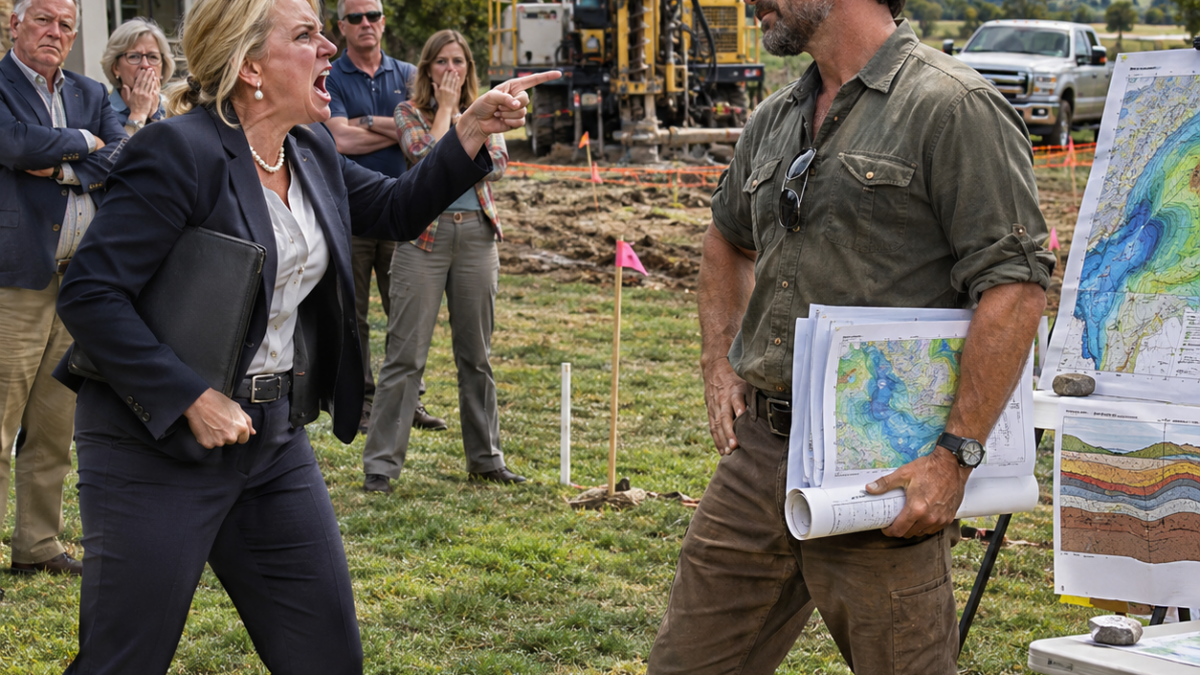
PART 2
I attended the quarterly meeting anyway.
There are times when you know an argument is probably pointless, but you still need the record to show that you tried.
I arrived twenty minutes early.
The Clearwater Bluffs community room had beige walls, fluorescent ceiling panels, twelve folding chairs, and an industrial coffee maker that had apparently been brewing the same pot since the Clinton administration.
Walt Breivik was already there.
He owned the property beside mine.
Retired plumber.
Seventy-something.
Tall, sun-browned, mostly silent.
He gave me a small nod.
That was the most enthusiasm Walt gave anyone.
I sat in the second row with a folder on my lap.
Renata arrived five minutes before the meeting.
Cream-colored slacks.
Blue golf shirt.
Lanyard.
Clipboard.
She placed everything on the table as though she were preparing to chair a congressional hearing.
Two other board members sat beside her.
One was Craig Fenton, an insurance salesman in his forties who had perfected the art of agreeing before knowing what the question was.
The other barely looked up from his phone.
Renata called the meeting to order.
Landscaping.
Road gravel.
Gate maintenance.
Then:
“Mr. Dolphrey has requested time regarding his proposed well installation.”
Requested.
That was generous.
I stood.
Placed three documents on the table.
“My well application is being processed under state water regulations.”
Renata folded her hands.
“I understand.”
“The proposed well is domestic.”
“Yes.”
“Expected annual use is approximately two acre-feet or less.”
Craig looked puzzled.
I turned slightly toward the homeowners.
“An acre-foot is enough water to cover one acre one foot deep. Two acre-feet is roughly what a household with outdoor use might consume in a year, depending on conditions.”
Renata interrupted.
“We all understand what water is, Garrett.”
I looked at her.
“I wasn’t explaining water.”
Walt coughed into his hand.
It might have been a laugh.
I continued.
“The HOA is relying on Section 7.4C to claim approval authority.”
“That is correct.”
“My reading is that the provision concerns architectural review of non-municipal utility installations.”
“Correct again.”
“But the underlying well permit is governed by the state.”
“We know.”
“Then what exactly are you reviewing?”
Renata smiled.
“Community impact.”
“Which means?”
“Noise.”
“Temporary.”
“Construction traffic.”
“Temporary.”
“Visual impact.”
“The wellhead will be screened.”
“Groundwater drawdown.”
Finally.
There it was.
I opened another map.
“That’s a hydrologic question.”
“And a community concern.”
“Absolutely.”
I liked that answer because it allowed me to be fair.
“Then let’s address it scientifically.”
I put the regional map on the easel.
“Clearwater Bluffs sits above a regional aquifer system with significant storage.”
Renata leaned back.
I explained hydraulic gradients.
Recharge.
Expected household draw.
Existing wells.
Not at doctoral-dissertation level.
Plain English.
Two acre-feet.
One domestic well.
No measurable neighborhood impact according to available data.
When I finished, Renata said:
“That’s all very interesting.”
There are phrases people use when they want to dismiss information without arguing with it.
**That’s all very interesting** is one of them.
Then:
“But you purchased subject to the CC&Rs.”
“Yes.”
“And Section 7.4C predates your purchase.”
“Yes.”
“So you agreed to it.”
“I agreed to valid covenants.”
Her smile changed slightly.
“This one is valid.”
“Maybe.”
“Not maybe.”
She glanced toward the twelve homeowners.
“Our HOA attorney has reviewed it.”
“Did your attorney also review state well regulations?”
“The association’s position is that the provision is defensible.”
That word stood out.
Defensible.
Not:
Clearly enforceable.
Not:
Controlling.
Defensible.
I had testified in enough water-rights disputes to recognize lawyer language.
“Okay.”
Renata seemed surprised.
“Okay?”
“If that’s the board’s position, put it in writing.”
“We intend to.”
“And the well?”
“We are filing an objection with the county and relevant state agencies.”
Walt finally spoke.
“On what grounds?”
Renata looked at him.
“Community protection.”
“That’s not a ground.”
Craig shifted.
“Walt—”
“No.”
Walt leaned forward.
“I’m asking what the actual technical objection is.”
Renata answered:
“Potential aquifer impacts.”
I looked at Walt.
He looked at me.
Then he leaned back.
I gathered my papers.
Renata seemed almost disappointed.
“Nothing else, Mr. Dolphrey?”
“No.”
I thanked the board.
Walked outside.
The Sonoran night had settled cold and dark over the ridge.
Creosote hung in the air from a storm somewhere west.
Bats cut across the parking-lot lights.
I stood beside my truck for a minute.
I wasn’t angry.
Not yet.
Mostly curious.
Because Renata had just done something much more useful than telling me no.
She had made the dispute official.
A formal objection meant a formal administrative record.
A formal record meant I could respond.
And once I responded, Renata wouldn’t get to decide which facts entered the file.
I drove home.
Killed the engine.
Sat in the driveway.
Then remembered a well registration number.
I knew it because I had been staring at regional pumping data for two years.
A large-capacity agricultural well.
Roughly 180 acre-feet annually.
I went inside.
Opened the county model database.
Typed the registration number.
Owner:
A family trust.
Trustee:
**Renata A. Colbrook.**
I stared at the screen.
Then laughed once.
Not because it was funny.
Because it was almost too clean.
My proposed domestic well:
roughly two acre-feet a year.
Her agricultural well:
around 180.
Same regional aquifer.
Same groundwater system.
The woman trying to stop me from withdrawing a cup was already carrying buckets out the back door.
That still didn’t automatically make her wrong.
Large wells can be legitimate.
Agricultural use can be legitimate.
Different wells have different rights, histories, locations, impacts.
Hydrogeology is not a morality play.
So I did not post anything online.
I did not call neighbors.
I did not confront Renata.
I started reading.
Her registration.
Pump reports.
Compliance history.
Five years.
Three filings.
Two missing.
I checked twice.
Then a third time.
The person who had formally objected to my permit on groundwater-stewardship grounds had gaps in her own required reporting.
I created a new folder.
**CLEARWATER BLUFFS – WELL DISPUTE.**
Then another subfolder.
**COLBROOK WELL – PUBLIC RECORDS.**
I sat there until almost midnight.
Eventually I walked outside.
The desert was enormous.
A sliver of moon over the saguaros.
Somewhere underneath my boots, hundreds of feet down, water occupied fractures and pore spaces in darkness.
People imagine aquifers as giant underground lakes.
Most aren’t.
They’re saturated geologic formations.
Water moving through spaces we cannot see.
Slowly.
Predictably.
According to pressure, permeability, recharge and extraction.
The water did not know Renata.
Did not know me.
Did not know what an HOA was.
That was comforting.
Two weeks later, Dorotha Strand called.
She lived on my other side.
Retired schoolteacher.
Three rescue dogs.
Tomatoes that somehow survived Arizona summers through a level of devotion I considered excessive.
“Garrett?”
“Hey, Dorotha.”
“I hope I’m not bothering you.”
“You aren’t.”
“I think I should tell you something.”
Her voice sounded apologetic.
“Renata came by.”
I sat up.
“About?”
“Your well.”
“What’d she say?”
“She has a petition.”
Of course she did.
“What kind of petition?”
Dorotha hesitated.
“That the drilling could destabilize the water table.”
“That phrase doesn’t mean what she thinks it means.”
“There was more.”
I closed my eyes.
“What?”
“Seismic risk.”
I said nothing.
Dorotha continued.
“I thought that sounded strange.”
“Very.”
“She says drilling could create ground vibration affecting foundations.”
I rubbed my forehead.
A domestic well bore.
Casing.
Grout.
No blasting.
No hydraulic fracturing.
No industrial injection.
Just a borehole.
“How many signatures?”
“Eight.”
“Did you sign?”
“No.”
“Thank you.”
“Not because I understood it.”
“That still counts.”
“I’d like to understand.”
So I went over for coffee.
Her kitchen smelled like bread.
One dog slept beneath the table.
Another stared at me with the expression of an auditor who had discovered financial irregularities.
I unrolled maps.
Dorotha put on reading glasses with a chip in one lens.
I explained what a residential well actually involved.
Drill.
Bore.
Casing.
Screen.
Grout.
Pump.
No explosion.
No mysterious underground event.
Then the aquifer.
“Your well is here.”
I pointed.
“My proposed well is here.”
“Renata’s?”
I paused.
Then pointed.
“Here.”
Dorotha studied the map.
“She already has one?”
“Yes.”
“How large?”
“Registered agricultural capacity. Recent pumping around 180 acre-feet per year.”
“And yours?”
“Probably two or less.”
She removed her glasses.
“So hers uses ninety times more?”
“Roughly, based on those numbers.”
“And she’s collecting signatures against yours?”
“Yes.”
Dorotha stared at the map.
Then said:
“Well.”
That was all.
But the word contained multitudes.
I showed her the monitoring record.
Recharge zones.
Water-level trends.
My proposed draw.
“No measurable effect?”
“Not at the scale we’re discussing.”
“Can you guarantee that?”
“No.”
She looked surprised.
“You can’t?”
“Nobody honest guarantees groundwater.”
I sat back.
“We measure. Model. Update. If the data changes, the conclusion changes.”
Dorotha nodded.
“A teacher would call that learning.”
“An engineer calls it avoiding lawsuits.”
She smiled.
Before I left, I gave her a one-page summary.
No Renata attacks.
No personal accusations.
Just:
What is an aquifer?
What does a domestic well do?
What does two acre-feet mean?
What regulatory review occurs?
What monitoring data shows.
Dorotha held the page.
“Can I share this?”
“Yes.”
“With neighbors?”
“Absolutely.”
“Not campaigning?”
“No.”
She nodded.
“Facts travel fine without shouting.”
I liked her.
That same week, I filed my formal response to the permit objection.
Eleven pages.
Credentials.
Thirty years of field experience.
Licensure.
USGS work.
County contract.
Regional monitoring.
Proposed well design.
Estimated withdrawal.
Modeled drawdown.
Recharge data.
Existing production wells within five miles.
Conclusion:
No measurable adverse impact expected from the proposed domestic well.
Then Exhibit C.
Renata’s agricultural-well compliance history.
I stared at it before adding it.
Part of me asked whether I was being petty.
Then I asked the better question:
Was it relevant?
She had objected as a supposed steward of the aquifer.
Her own large-capacity well was part of the same groundwater-management picture.
Its reporting gaps mattered to the administrative record.
So in it went.
No editorializing.
No:
**Look what a hypocrite she is.**
Just:
Registration.
Volume.
Filing years.
Missing years.
Dates.
The state acknowledged my response.
Entered into the record.
I printed that too.
Another folder.
Another tab.
Around that time, I noticed something else.
Renata’s property enjoyed agricultural tax classification.
That can make a substantial difference.
I checked county records.
The classification required qualifying agricultural use.
Then I looked at public satellite imagery.
One year.
Two.
Three.
Fields dry.
Native scrub.
No visible active irrigation infrastructure in the area historically associated with the classification.
That did not prove everything.
Satellite photographs can mislead.
Fallow periods happen.
Agricultural use has definitions.
I wasn’t a tax specialist.
So I did nothing.
Yet.
I simply put a note in the file.
**REVIEW AGRICULTURAL CLASSIFICATION WITH QUALIFIED PROFESSIONAL.**
The smear campaign started before I found one.
I noticed it at the hardware store.
Burl Eastwick owned the place.
He’d always greeted me the same way.
“Morning, Professor.”
He called me professor even after I explained hydrogeologists are not automatically professors.
That Saturday:
Half-second hesitation.
“Morning, Garrett.”
No Professor.
Interesting.
On the way out, I met Craig Fenton.
HOA board member.
Insurance salesman.
Human barometer of whatever Renata was currently thinking.
“Garrett.”
“Craig.”
“How’s the well situation?”
“Still a well.”
He smiled weakly.
“I heard there are some concerns about your long-term plans.”
“What long-term plans?”
“You know.”
“I don’t.”
He looked toward the parking lot.
“Commercial activity.”
I stared.
“What commercial activity?”
“Drilling.”
“For my house?”
“I think there’s concern that this could become something larger.”
“What?”
He lowered his voice.
“Commercial well operations.”
For a moment, I had no response.
Not because the accusation frightened me.
Because it was so disconnected from reality that my brain had to find the nearest shelf to put it on.
“I own eleven residential acres.”
“I know.”
“I have one domestic-well application.”
“I know.”
“I don’t own a drilling rig.”
“I know.”
“I don’t sell water.”
“I know.”
“So who’s saying I’m starting a commercial drilling operation?”
Craig studied the asphalt.
“I didn’t say anyone said that.”
“Of course.”
He walked away.
I stood in the Arizona sun holding a box of fittings.
This was the clever part of a social rumor.
Nothing written.
No attributable statement.
Just concern.
Questions.
People beginning sentences with:
**I heard…**
You cannot rebut fog by punching it.
So I didn’t.
Instead, I became visible.
Coffee shop.
Neighborhood common area.
Walt’s irrigation repair.
He had a cracked PVC line near his pump house.
I helped replace it.
For almost an hour we worked without talking.
As God intended.
Finally Walt said:
“She says you’re going commercial.”
“I don’t even own a drill rig.”
“I know.”
We tightened a coupling.
“She did something similar to the Merkels.”
“What?”
“Second driveway.”
I stopped.
“How?”
“Claimed emergency-access concerns.”
“Were there?”
“County approved the driveway.”
“Then?”
“Dragged architectural approval out five months.”
“Why?”
Walt shrugged.
“Control.”
We turned the water back on.
No leak.
Walt looked at me.
“Good.”
“Pipe?”
“Both.”
I also called the Arizona Attorney General’s office to ask a narrow question about HOA authority in the context described by the source documents I was dealing with.
Not to complain.
Not yet.
I wanted guidance on jurisdiction.
The answer I received was straightforward enough:
Private covenants did not give the HOA control over the state’s decision whether to issue my water-well permit.
That didn’t make every covenant irrelevant.
The HOA might regulate certain surface features if valid documents allowed it.
But it could not simply replace the state permitting scheme.
Useful distinction.
I added the call notes.
Date.
Time.
Office.
Name.
Summary.
Then I went back to my actual job.
Because while Renata was telling neighbors I might drain the desert one household at a time, I was finishing Puma County’s regional groundwater availability model.
Two years of work.
Monitoring wells.
Historic pumping.
Recharge estimates.
Seasonal water levels.
Projected demand.
Twenty-year scenarios.
The county wanted recommendations about long-term groundwater management.
One part of the report focused on large-capacity wells whose pumping levels or reporting history deserved review.
Renata’s registration was one of them.
Not because of our HOA fight.
It had been flagged before the fight.
That distinction mattered enormously.
The dataset existed before her objection.
The model methodology had been set before she knew I wanted a domestic well.
The findings were independently reviewed.
I made sure every version history was preserved.
Because by then I knew exactly what accusation would come.
**Retaliation.**
**Bias.**
**Conflict.**
Science can survive those accusations if you have clean chronology.
I did.
Six weeks before my county presentation, an email arrived.
Sender:
**Philippa Arens.**
Subject:
**Section 7.4C**
I almost ignored it because I didn’t recognize the name.
The message began:
*Mr. Dolphrey, I served on the Clearwater Bluffs HOA board several years ago. I believe you should know how the amendment Renata is citing was passed.*
I sat down.
Philippa had served two years.
Resigned four years earlier.
Moved to Flagstaff.
She claimed Section 7.4C had been pushed through at a special meeting without the notice process required under the governing documents.
Some homeowners hadn’t been properly notified.
Attendance was low.
Even board members were confused about whether they were approving an amendment or moving a budget item forward for later review.
Philippa had objected at the time.
Renata overruled her.
Philippa kept notes.
Meeting emails.
Old notices.
Attendance records.
I read the email twice.
Then called her.
She answered immediately.
“Garrett?”
“Yes.”
“I hoped you’d call.”
“How much documentation do you have?”
She laughed softly.
“You’re definitely the hydrogeologist.”
“What?”
“Not hello. Not thank you. How much documentation?”
“Sorry.”
“Don’t be.”
Then:
“A lot.”
We talked an hour.
Dates.
Procedures.
Minutes.
Philippa’s recollection.
I did not assume her version was automatically true because it helped me.
That is a trap.
Information that supports what you want most deserves the hardest scrutiny.
“Would you sign an affidavit?”
“I’ve been waiting four years.”
“For what?”
“For someone to care.”
That sentence stayed with me.
I introduced her to Meredith Callaway.
Real-estate attorney in Tucson.
Meredith had handled HOA disputes before.
She was calm in the way only attorneys who bill calmly can be.
She reviewed everything.
Then said:
“The water dispute may be simpler than the HOA dispute.”
“That sounds expensive.”
“It probably is.”
“What do you think of 7.4C?”
“If Philippa’s records are accurate, there is a serious procedural problem.”
“Void?”
“Potentially challengeable.”
“Good enough.”
“No.”
I looked at her.
“No?”
“We don’t use ‘good enough’ around recorded covenants.”
I liked her.
Philippa drove down from Flagstaff.
Saturday morning.
Kitchen table.
Coffee.
Her notes.
Meredith.
Me.
Four years of documents.
She remembered details Renata probably assumed nobody had saved.
Wrong notice date.
Wrong distribution list.
Attendance.
Confused motion language.
Her contemporaneous email objecting to the procedure.
Meredith drafted an affidavit.
Philippa signed it.
Not dramatic.
Just another document.
But a dangerous one.
Because if Section 7.4C had not been properly enacted, Renata had built her permit objection on a foundation that might not exist.
Then I reread the original Clearwater Bluffs governing documents.
Every page.
There was another provision.
Association funds could not be used for certain legal actions against individual homeowners without approval from the full membership.
Not merely the board.
I called Walt.
“You ever seen a membership vote approving Renata’s attorney fees?”
“No.”
“How sure?”
“Pretty.”
“Pretty isn’t useful.”
“I’ll check.”
Three days later:
“No votes.”
“How far back?”
“Three years.”
“How much money?”
“Still adding.”
He disappeared into financial statements.
Walt approached HOA records like plumbing.
Follow the line.
Find where it branches.
Check every connection.
Meanwhile, I hired a property-tax consultant.
Dale Foscott.
Sharp.
Fast.
Completely unimpressed by personal drama.
I showed him Renata’s agricultural classification.
Satellite imagery.
County use records.
He looked at me.
“You want revenge or an assessment?”
“Assessment.”
“Good answer.”
He investigated independently.
His conclusion was that the classification deserved formal review because the qualifying agricultural activity appeared questionable for recent years.
“If the county agrees?”
“Reassessment.”
“Back taxes?”
“Potentially.”
“How much?”
He gave me a preliminary range.
Forty to sixty thousand dollars depending on the years and valuation.
I sat quietly.
That was real money.
Dale watched me.
“You can choose not to file.”
“I know.”
“You have a personal dispute with her.”
“I know.”
“That will be raised.”
“I know.”
“Why file?”
I thought about the neighbors paying full residential rates.
Then Renata claiming special status tied to agricultural activity that public records suggested wasn’t occurring.
“Because either the classification is valid or it isn’t.”
Dale nodded.
“Then keep the well argument out of this.”
“Completely.”
Separate facts.
Separate filing.
Separate professional.
That was important.
I wasn’t going to manufacture pressure.
I was going to stop shielding problems simply because discovering them had become personally convenient.
The challenge was filed.
Walt and Dorotha began talking to homeowners.
Not a campaign.
No flyers saying:
**REMOVE RENATA.**
No angry Facebook group.
Dorotha hosted coffee.
Water conservation.
Arizona.
Reasonable topic.
She explained what she’d learned about domestic wells.
Walt discussed financial questions.
I answered technical questions when asked.
People listened.
Fourteen homeowners became twenty-two.
Then Renata learned about the agricultural challenge.
The temperature changed overnight.
Friday morning, a letter arrived from the HOA attorney.
Meredith read it aloud over the phone.
“They’re threatening tortious-interference claims based partly on your conversations with Philippa.”
“Can I interfere with someone telling the truth voluntarily?”
“That is one of several questions their letter avoids.”
“You sound unimpressed.”
“I am billing you to remain professional.”
“Thank you.”
“Don’t respond directly.”
“Wasn’t planning to.”
Renata also filed a complaint claiming my groundwater-monitoring work on my own property constituted unauthorized commercial activity.
That one almost impressed me.
The county had hired me.
My instruments were part of a public groundwater study.
I was walking land I owned.
No customers.
No storefront.
No industrial operation.
Just data loggers and field equipment.
Meredith sent a short response.
The complaint was dismissed nine days later.
I framed nothing.
Tempting.
But nothing.
Then came the move I actually worried about.
Renata contacted members of the Puma County Board of Supervisors.
She alleged my upcoming groundwater report was politically motivated.
That my personal HOA dispute created a conflict.
That my recommendations could not be trusted.
This was no longer neighborhood nonsense.
This touched my profession.
My reputation.
Thirty years of work.
That night I didn’t sleep well.
I walked the west ridge after dark.
The desert was quiet.
Moonlight on saguaros.
The dry wash pale below.
I kept hearing my father’s voice from years ago.
Not about water.
About tools.
He used to say:
“If you’re going to accuse a wrench of being wrong, make sure you aren’t turning it backward.”
I had checked my work.
But professional accusations still hurt.
Not because I doubted the data.
Because reputation takes decades to build and minutes to smear.
The next morning, I called Cibil Chang.
County project manager.
Twenty years managing government contracts.
Utterly intolerant of nonsense.
I told her everything.
Not selectively.
My well.
HOA objection.
Renata’s well registration.
Agricultural challenge.
Philippa.
Everything.
Cibil listened.
Then asked:
“Did any of this alter your modeling protocol?”
“No.”
“Were the flagged-well criteria established before the HOA dispute?”
“Yes.”
“Documented?”
“Yes.”
“Independent QA?”
“Two licensed hydrogeologists.”
“Good.”
She paused.
“Send me the chronology.”
I did.
That afternoon, Cibil issued a formal project memo.
The groundwater model had undergone independent technical review.
The methodology predated my private dispute.
The findings were supported by county data and peer review.
No basis had been identified to question the scientific integrity of the deliverable.
She sent it to the supervisors.
Legal counsel.
Project file.
I called her.
“Thank you.”
“Don’t thank me.”
“You defended me.”
“No.”
Her voice was sharp.
“I defended my contract.”
That was Cibil.
Then softer:
“And your work happens to be good.”
That was the closest thing to affection she ever offered.
Walt finished his financial review.
Twenty-three thousand dollars in HOA legal fees over three years.
He could not identify the membership votes required under the governing provision we’d found.
He created a three-page summary.
No adjectives.
No outrage.
Date.
Invoice.
Amount.
Purpose.
Meeting minutes.
Authorization located?
No.
Again.
Again.
Again.
I read it.
“Walt.”
“What?”
“You missed your calling.”
“I was a plumber forty-three years.”
“Exactly.”
He frowned.
“That doesn’t make sense.”
“It does to me.”
Dorotha distributed copies only to homeowners who asked.
The coalition grew.
Renata stopped visiting tables at the coffee shop.
Stopped waving at some neighbors.
The strange thing about authority is that it can seem enormous until people stop lending it their obedience.
Then you realize how much of it was social.
My county presentation was four days away.
The night before, I walked my property.
Same ritual before any major technical deliverable.
Flashlight.
Data logger.
West ridge.
Water-level sensor had recorded readings every six hours for eighteen months.
Clean trend.
Seasonal change exactly within model expectations.
I downloaded the latest data.
Then sat on a rock.
The desert smelled cool.
Creosote.
Dust.
Dry grass.
I asked myself a question I had avoided.
Was I enjoying this too much?
Renata had tried to delay my well.
Now her tax classification was under review.
Her HOA amendment was under challenge.
Her legal spending was being scrutinized.
Her own large well was flagged in a county report.
There was satisfaction in that.
I couldn’t lie to myself.
But satisfaction does not automatically make an action wrong.
So I went through each piece.
Her well?
Flagged under model criteria created before the dispute.
Tax challenge?
Prepared independently based on public records.
Section 7.4C?
Former board member came to me voluntarily.
Financial review?
HOA member exercised his own inspection rights.
County report?
Peer reviewed.
Nothing fabricated.
Nothing altered.
Nothing hidden.
I stood.
Brushed dust from my jeans.
“Okay.”
No audience.
Just me.
But I needed to say it.
The county presentation began at nine the next morning.
Third-floor meeting room.
Supervisors in a horseshoe.
Four reporters.
Staff.
Public seating.
I had presented to governments dozens of times.
Technical presentations are not performances.
Headline.
Evidence.
Uncertainty.
Recommendation.
Forty minutes.
Regional recharge.
Extraction trends.
Seasonal water-level changes.
Twenty-year projections.
Demand.
Conservation.
Reporting gaps.
Then recommendations.
Tighter compliance with pump-test reporting.
Review of several high-volume wells.
More accurate classification of current use.
Slide twenty-two contained a table.
Ten registrations.
No owner names.
Registration numbers.
Pumping volumes.
Reporting completeness.
Classification-review recommendation.
One registration belonged to Renata’s trust.
Three amber cells.
Missing information.
Supervisor Aguilar leaned forward.
“Mr. Dolphrey, how significant are these reporting gaps?”
“Depends on the well.”
“Do they imply illegal pumping?”
“No.”
Important answer.
“They mean the dataset is incomplete.”
“So what do you recommend?”
“Outreach first.”
I changed slides.
“Contact the registrants. Verify current use. Bring required filings up to date. Enforcement only if warranted after review.”
A reporter wrote that down.
No drama.
No:
**Renata lied.**
No:
**Look whose well is bigger.**
Science doesn’t need a villain.
Later, Dorotha told me Renata had attended.
Back row.
Silent.
She left before slide twenty-two.
Maybe coincidence.
Maybe not.
The Arizona Daily Star story ran the following Tuesday.
Regional groundwater.
Long-term sustainability.
High-volume wells.
Reporting issues.
My name appeared as contracted hydrogeologist.
Renata’s did not.
But registration numbers were public.
Neighbors knew how to read.
The annual Clearwater Bluffs membership meeting was scheduled for the last Saturday in September.
Usually twelve people attended.
Maybe ten.
That year:
Twenty-six.
Chairs ran out.
People stood against the wall.
Arizona heat pressed against the community-center windows.
Renata arrived exactly on time.
Golf shirt.
Slacks.
Lanyard.
Clipboard.
She entered smiling.
Then saw the room.
The smile remained.
But her eyes changed.
Too many people.
I was seated beside Dorotha.
Walt across the aisle.
Philippa Arens had driven down from Flagstaff.
She sat near the back with Meredith.
Renata called the meeting to order.
“First item, common-area maintenance—”
Walt’s hand went up.
Straight.
No drama.
“Point of order.”
Renata stared.
“The maintenance report has begun.”
“I move to table it and take up association financial disclosures.”
“That is not on the agenda.”
A man I recognized as Tomas Reed, an environmental attorney attending for several homeowners, stood.
“Members have the right to raise association financial matters at a properly noticed membership meeting.”
Renata looked toward her attorney.
Different attorney now.
Phoenix firm.
Expensive suit.
He leaned over.
Whispered.
She looked back at Walt.
“Proceed.”
Walt walked to the front with his three-page summary.
No PowerPoint.
No speech.
“Over the past three fiscal years, association records show approximately twenty-three thousand dollars in legal expenditures.”
Murmurs.
Walt held up the original governing documents.
“I have reviewed the meeting minutes associated with these payments.”
He handed packets down each row.
“The governing documents require membership authorization for legal actions of this type against individual homeowners.”
Renata interrupted.
“That is your interpretation.”
Walt looked at her.
“Then show us the votes.”
Silence.
Craig Fenton looked down.
Walt continued.
“March 12.”
Invoice amount.
No authorization located.
“June 8.”
Amount.
No authorization.
“September 19.”
Amount.
No authorization.
The room changed.
Not loudly.
People reading.
Turning pages.
Someone whispering:
“Twenty-three thousand?”
Dorotha raised her hand.
“I move for an independent audit of association legal expenditures.”
Seconded immediately.
Renata tried to speak.
“Before we vote—”
Someone said:
“Vote.”
Another:
“Let us vote.”
Twenty-two in favor.
Four against.
Independent audit.
Passed.
Renata’s attorney touched her arm when she began objecting.
She stopped.
Next:
Legal review of CC&R amendments adopted during Renata’s presidency.
Including Section 7.4C.
Philippa stood.
No drama.
“My name is Philippa Arens.”
Renata’s expression froze.
“I served on this board.”
She gave the years.
“I have provided counsel with a notarized affidavit and supporting records regarding the adoption procedure used for Section 7.4C.”
She walked forward.
Placed the affidavit on the table.
Right in front of Renata.
Then returned to her seat.
Renata did not pick it up.
That image stayed with me longer than any argument.
A few sheets of paper.
A woman who had once believed nobody would remember.
And twenty-six neighbors watching.
Vote.
Eighteen to eight.
Formal legal review.
Passed.
My well never came up.
It didn’t need to.
The provision underlying the HOA objection was now under review.
State water regulators already had Meredith’s procedural notice.
Two weeks later, I received the permit approval.
I opened the envelope at the kitchen table.
Read it once.
Then again.
No victory music.
No cheering.
Just paper.
I carried it outside.
The sun was low.
Long saguaro shadows.
I walked to the flagged drill location.
Stood there.
For almost a year, that spot had been argument.
Maps.
Lawyers.
Meetings.
Rumors.
Now it was simply ground.
I called Shep Folz.
Third-generation well driller.
He’d been drilling the Tucson basin his entire adult life.
“Got it?”
“Got it.”
“When do you want us?”
“Yesterday.”
He laughed.
“Tuesday.”
Tuesday morning, the rig arrived.
Diesel.
Steel.
Hydraulics.
Exactly the smell of Colorado in 1974.
I stood too close until Shep told me to back up.
“You hydro people are worse than kids.”
“I know what I’m doing.”
“That’s what makes you dangerous.”
The bit descended.
Fifty feet.
One hundred.
One eighty.
Two fifty.
Cuttings changed.
I watched every sample.
Color.
Grain.
Moisture.
At three hundred feet, I felt that old excitement rising.
Shep looked down.
“Getting close?”
“If my model isn’t embarrassing me today.”
At 312 feet, conditions changed.
Saturated zone.
Shep looked at me.
“You called it.”
I didn’t answer.
He pulled the first water sample.
Clear.
Cold.
I held the cup.
For a second I was seven years old again.
Colorado gravel.
Dad’s rented rig.
My boots vibrating.
His hands cupping cold water.
I drank.
Mineral edge.
Earth.
Time folded.
Shep watched.
“You okay?”
“Yeah.”
I swallowed.
“My dad drilled our well when I was seven.”
“Good well?”
“Best water I remember.”
Shep nodded toward the casing.
“Maybe this one competes.”
I smiled.
Maybe.
The pump test ran clean.
No measurable surprise.
No neighborhood wells collapsing.
No earthquakes.
No cracked patios.
No dramatic lowering of the aquifer.
Just a domestic well doing what the data said it would do.
For the first time in months, something inside me settled.
Not victory.
Home.
I connected the system.
Water ran from the kitchen tap.
I filled a glass.
Walked onto the porch.
Watched sunset turn the desert copper.
I had spent most of my life telling communities that groundwater is invisible infrastructure.
That evening, invisible infrastructure filled my glass.
The aftermath moved more slowly.
Audits do not have dramatic soundtracks.
The independent CPA reviewed years of Clearwater Bluffs records.
Final finding:
Approximately $27,400 in association funds had been spent on legal actions during the reviewed period without the membership authorization required under the governing framework being applied by the audit.
Renata disputed parts of the characterization.
Her attorney responded.
The accountant responded.
Members received the report.
Nobody needed rumors anymore.
Numbers were enough.
The CC&R review followed.
Section 7.4C was one of three provisions found to have serious procedural defects in how they had been enacted.
A properly noticed special membership meeting was scheduled.
Real notice.
Real quorum.
Actual ballots.
Twenty-nine to three.
The provisions were rescinded.
Walt sat beside me.
When the vote was announced, he whispered:
“That’s how you amend something.”
“That was almost a joke.”
“Don’t push it.”
Renata resigned in November.
Personal reasons.
Health concerns.
I believed the health part.
Whatever I thought of her choices, eleven years of controlling an organization and then watching that control unravel publicly must have been brutal.
I didn’t celebrate.
Dorotha asked me why.
We were walking near the wash.
“You wanted her out.”
“I wanted her to stop.”
“Difference?”
“Yes.”
She waited.
“I don’t need her miserable.”
Dorotha nodded.
“Teacher answer.”
“What’s that?”
“The best consequence teaches something.”
“Did this?”
“I hope.”
The agricultural-classification challenge also reached resolution.
County review determined Renata’s property had not supported the classification for at least part of the recent period.
The final negotiated back-tax amount was around $38,000.
None came to me.
As it shouldn’t.
County general fund.
Renata paid.
Some neighbors treated that like the grand revenge.
I didn’t.
It was tax administration.
If the classification was unsupported, reassessment was appropriate.
If it had been supported, the challenge should have failed.
That’s how systems are supposed to work.
You don’t bend rules because you dislike somebody.
That was the entire problem I had with Renata.
I wasn’t going to become her while fighting her.
The new board included Walt.
Dorotha.
Three others.
At their first organizational meeting, someone suggested making Walt president.
He stared at them.
“No.”
Nobody laughed.
Dorotha said:
“You’d be good.”
“That’s why I’m saying no.”
They eventually convinced him to serve as vice president instead.
A retired accountant became president.
The governing documents were rewritten with outside counsel and a university-extension governance specialist.
Plain language.
Notice requirements.
Quorum requirements.
Limits on unilateral legal spending.
Membership approval for specified actions.
Periodic review.
No invented committee authority hidden in cross-references.
When the draft arrived, I read it.
Of course I did.
Walt called.
“Well?”
“Page nineteen.”
“What?”
“Definition of common utility improvement could be clearer.”
Silence.
“Garrett.”
“Yes?”
“I’m hanging up.”
He did.
The broader groundwater report created something unexpected too.
Tomas Reed—the environmental attorney who had attended the HOA meeting—contacted me.
He had been working on rural groundwater access issues.
He said Clearwater Bluffs illustrated a problem.
Homeowners often didn’t understand the difference between state-regulated water rights and private HOA restrictions.
Some associations didn’t either.
“Would you speak at a workshop?”
“No.”
“Why?”
“I hate workshops.”
“You give county presentations.”
“I’m paid.”
“We’ll provide coffee.”
“That isn’t payment.”
“Sixty people registered.”
I stared at the phone.
“You already scheduled it?”
“Maybe.”
I sighed.
“What do you want me to explain?”
“Groundwater.”
“That’s broad.”
“Twenty minutes.”
“That’s impossible.”
“Then twenty-five.”
I spoke for twenty-eight.
What an aquifer actually is.
Recharge.
Drawdown.
Domestic wells.
Why a neighbor’s small well does not automatically “steal” your water.
Why high-capacity pumping deserves different analysis.
Why local geology matters.
Why anybody who promises a universal answer is selling something.
Afterward, an older man approached.
He owned six acres outside another planned community.
His HOA had told him a well would “drain the shared aquifer.”
He looked worried.
“Can that happen?”
“Depends on the aquifer.”
He seemed disappointed.
“That’s your answer?”
“It’s the only honest one.”
“So what do I do?”
“Get your permit information.”
“Then?”
“Get site-specific data.”
“Then?”
“Talk to someone qualified who isn’t being paid to tell you what you already want to hear.”
He nodded.
That felt useful.
We held more workshops.
Not because I wanted to become an HOA activist.
I didn’t.
I wanted to talk about water.
But water and authority intersect constantly in the West.
Who gets it.
Who regulates it.
Who understands it.
Who pretends to.
Clearwater Bluffs became a case people mentioned.
I always corrected them when the story got too neat.
“Renata tried to stop your well because hers was bigger.”
Not exactly.
“Renata’s well was illegal.”
No.
Reporting gaps and classification issues are not the same thing as an illegal well.
“You exposed her.”
Public records exposed facts.
“Your county report was revenge.”
Absolutely not.
That one annoyed me.
The model predated the dispute.
The flagged-well criteria predated the dispute.
Peer review mattered.
Chronology mattered.
If I had altered one scientific recommendation because I was angry, Renata would have been right to question the report.
Science isn’t clean because scientists are morally superior.
We’re not.
It’s clean when methods are transparent enough that someone else can reproduce the conclusion.
That was the part I protected most fiercely.
Months after Renata resigned, I saw her at the community mailbox.
No lanyard.
No clipboard.
Just a woman collecting mail.
We noticed each other.
“Garrett.”
“Renata.”
She looked toward my property.
“I heard the well came in.”
“Three hundred twelve feet.”
“Good production?”
“Yes.”
She nodded.
“I’m glad.”
I didn’t know what to do with that.
“Thank you.”
Silence.
Then:
“I owe you an apology.”
I waited.
“The petition was too much.”
“The seismic part?”
Her mouth tightened.
“Yes.”
“That was very creative.”
“I had read about induced seismicity.”
“From industrial injection.”
“I know that now.”
I almost smiled.
“You could have called me.”
“I didn’t trust you.”
“Why?”
“You’d already challenged me.”
“I’d asked for a well.”
She looked away.
“That felt like a challenge.”
There it was.
More honest than anything she had said during the dispute.
“Why?”
She thought.
“I’d been running things a long time.”
“That isn’t an answer.”
“No.”
She held the mail against her chest.
“I suppose I got used to people asking permission.”
“And I didn’t.”
“No.”
“I did apply.”
“To the state.”
“Yes.”
“Not to us.”
“Because the state issues the water permit.”
“I know.”
“Now.”
She nodded.
“Now.”
We stood in desert heat.
A quail crossed the road like it owned the subdivision.
Finally Renata said:
“The tax thing hurt.”
“I figured.”
“You filed that because of me.”
“I investigated it because the well records led me there.”
“Same thing.”
“No.”
She looked at me.
“If Dale had found active agricultural use, I would’ve dropped it.”
She studied my face.
“I believe you.”
“That matters.”
“Does it?”
“To me.”
She nodded.
“Fair.”
Then she said:
“I really did think I was protecting the neighborhood.”
I believed that too.
That’s what makes people like Renata more complicated than villains.
Most bad governance isn’t carried out by someone waking up and thinking:
**How do I hurt everyone today?**
It’s often someone convinced their judgment is synonymous with the public good.
That’s more dangerous.
Because good intentions become permission.
I said:
“I think you stopped checking whether people agreed with your definition of protection.”
Her eyes narrowed.
Then softened.
“Probably.”
“That’s as close as I’m getting to a speech.”
She almost laughed.
“Thank you.”
We parted.
Not friends.
No hug.
No magical reconciliation.
But the next time we passed on the road, she waved.
I waved back.
That was enough.
Clearwater Bluffs became quieter.
The new board stopped sending dramatic letters.
No one wore badges.
One committee chaired by three separate people instead of Renata chairing everything herself.
Board minutes got longer.
Meetings got shorter.
That is progress.
Dorotha’s tomatoes remained absurdly healthy.
She began walking the west ridge with me in the evenings.
Sometimes Walt joined.
Mostly we talked about nothing.
Dogs.
Pipe fittings.
Weather.
Water levels.
Dorotha eventually asked:
“Do you still check Renata’s well?”
“It’s in the regional dataset.”
“That isn’t what I asked.”
I smiled.
“Yes.”
“And?”
“Reporting improved.”
She laughed.
“Fear is educational.”
“Accountability is educational.”
“Same result.”
“Different principle.”
She rolled her eyes.
“Scientists.”
One evening, monsoon clouds built over the mountains.
Dark blue-black.
Lightning far away.
The air smelled electric.
We stood near the dry wash.
Dorotha asked:
“How much water is under us?”
I hate that question.
People want a number.
Aquifers don’t work like underground tanks with a gauge.
“Enough to matter.”
“That’s evasive.”
“Very.”
“Try again.”
I looked across the basin.
“Water stored over huge volumes of saturated material.”
“Better.”
“How old?”
“Some relatively young. Some much older.”
She smiled.
“You love this.”
“Yes.”
That was the truth.
The HOA fight had almost made me forget.
For months, water had become paperwork.
Objections.
Petitions.
Taxes.
Lawyers.
Board votes.
I had spent my life loving groundwater because it connected geology to life.
Invisible movement sustaining visible communities.
The well reminded me.
So did the rain.
The first monsoon after my permit approval arrived hard.
Wind first.
Dust.
Then the sky opened.
Water hammered the porch roof.
The dry wash filled within minutes.
Amber current.
Branches spinning.
I stood under the porch with coffee.
My well pump was off.
Didn’t need it.
Nature was handling recharge in its own complicated way.
I thought of my father.
1974.
His rented rig.
His pride when water came up.
I had once asked him why he drilled the well himself.
Money, partly.
But he said something else.
“Because I wanted to know where our water came from.”
At seven, I thought that meant knowing which hole.
At fifty-something, I understood it differently.
Knowing where water comes from means understanding connection.
Recharge miles away.
Rain years ago.
Rock layers.
Pumping elsewhere.
Land use.
Policy.
Other people.
No well exists alone.
That was the part Renata accidentally understood correctly.
A well can affect a community.
She was right about the principle.
Wrong about the scale.
Wrong about the data.
Wrong about believing concern granted her unlimited jurisdiction.
That distinction matters.
If every HOA objection to groundwater use were automatically ridiculous, communities would have no reason to care about overpumping.
They should care.
Arizona depends on people caring.
But caring requires accuracy.
A two-acre-foot domestic well and a 180-acre-foot agricultural well are not interchangeable.
Fear is not analysis.
And authority is not expertise.
Several years later, Puma County asked me to update part of the groundwater model again.
I said no.
Then Cibil called.
“You’re taking it.”
“I’m retired.”
“You said that last time.”
“I mean it now.”
“Six months.”
“No.”
“Four.”
“No.”
“Your replacement keeps calling transmissivity permeability.”
Silence.
“That bad?”
“Yes.”
I sighed.
“Send the scope.”
Darlene wasn’t there to laugh at me because Darlene was my neighbor? Wait—my name’s wife wasn’t Darlene in this story. I caught myself.
That was another effect of getting older.
Too many project names.
Too many people.
I walked into my workshop alone and laughed.
Then opened the scope.
Four months.
Of course I accepted.
The updated model showed the same basic picture.
Regional groundwater remained stressed but manageable with better reporting, smarter conservation and careful review of large withdrawals.
My domestic well barely registered at basin scale.
That pleased me more than any HOA vote.
The science had stayed boring.
Boring is good.
At another community workshop, a young woman approached afterward.
She was studying geology.
“Dr. Dolphrey?”
“Not a doctor.”
She blinked.
“Mr. Dolphrey?”
“Garrett.”
She held a notebook.
“Why hydrogeology?”
I thought of Colorado.
Diesel.
My father’s hands.
Cold mineral water.
“My dad drilled a well.”
“That simple?”
“Most careers start with something simple.”
She nodded.
“I’m deciding between environmental engineering and geology.”
“Do both badly for a while.”
She laughed.
“Seriously.”
“Take classes.”
“Field work.”
“See whether you like problems you can’t see.”
“What do you mean?”
I pointed toward the floor.
“Everything interesting is down there.”
She looked down instinctively.
I smiled.
“See? Already curious.”
She eventually interned with the county.
Two years later, she emailed to say she had chosen hydrogeology.
That may have been the most satisfying outcome of the entire affair.
Not Renata’s resignation.
Not the tax settlement.
Not winning the permit.
Someone else deciding invisible water was worth understanding.
Walt eventually became board president after all.
He hated every minute.
Dorotha nominated him.
I seconded.
He accused us of betrayal.
His first meeting lasted thirty-eight minutes.
Legendary.
His rule was:
“If it needs a three-page explanation, we’re probably overreaching.”
Not legally precise.
Good governance philosophy.
At one meeting, a homeowner asked to install a rainwater harvesting system.
Walt stared.
“You’re asking permission to save rain?”
The homeowner looked nervous.
“Yes.”
“Does county code allow it?”
“Yes.”
“Any architectural issue?”
“Tank screened from road.”
Walt looked at the board.
“Why are we still talking?”
Approved.
I thought about his own rainwater system Renata had delayed years earlier.
Systems can learn.
People can too.
The financial audit led to another change.
Quarterly public expense reports.
Legal invoices summarized.
Authorization cited.
No mysterious line items.
Homeowners discovered transparency was boring too.
Exactly.
You want governance to be boring.
Exciting governance usually means somebody is spending your money or rewriting your rights.
Renata sold part of her property several years later.
The agricultural classification was gone.
Her large well remained under the applicable regulatory framework, with better reporting.
I never asked whether the tax bill forced the sale.
Not my business.
People tried to tell me.
I stopped them.
That’s another thing I learned.
Once accountability is complete, curiosity can become cruelty.
You don’t need to monitor the person forever.
She paid what the county required.
Left the board.
That chapter ended.
Let it.
One fall morning, Shep Folz came by to inspect my well system.
“Still good.”
“Obviously.”
He looked at me.
“Hydro people.”
“Drillers.”
He checked the pressure tank.
Pump controls.
Electrical.
Then we stood by the casing.
He tapped the steel.
“You know what I tell people about this well?”
“That your company drilled it beautifully?”
“No.”
He smiled.
“That a guy spent almost a year fighting to drill a hole we finished in two days.”
I laughed.
“That is offensive.”
“True.”
“Also true.”
He shook his head.
“People make water complicated.”
“Water is complicated.”
“People make permits complicated.”
“Fair.”
We drank coffee in the workshop.
He asked about my father.
I told him the Colorado story.
Shep nodded.
“My grandfather drilled with cable tools.”
“Slow.”
“Very.”
“Reliable.”
“Very.”
He smiled.
“Funny thing. Technology changes. People still lose their minds when water shows up.”
He’s right.
Water is emotional.
Especially in dry country.
You can argue about architecture abstractly.
Paint colors.
Fences.
Mailboxes.
Water is different.
Water touches survival.
That makes it easy to weaponize fear.
Say:
**Your neighbor’s well will dry yours.**
People listen.
Say:
**The aquifer is collapsing.**
People listen.
Say:
**Drilling could destabilize the ground.**
People sign petitions.
The answer isn’t to mock concern.
The answer is better information.
That’s why I never blamed the eight people who signed Renata’s petition.
One apologized later.
Harlon Tukes, the sheriff’s deputy.
He came to my gate one evening.
Off duty.
No uniform.
“Garrett.”
“Harlon.”
“I signed that thing.”
“I know.”
He looked embarrassed.
“I thought she had technical advice.”
“She presented it that way.”
“I should’ve asked you.”
“Probably.”
He nodded.
“I deal with people lying all day. You’d think I’d be better at checking.”
“This wasn’t lying exactly.”
He looked at me.
“Seismic risk?”
“Okay, that part was creative.”
He laughed.
Then:
“Sorry.”
“Accepted.”
He turned to leave.
“Harlon?”
“Yeah?”
“If your well ever changes production, call me.”
He smiled.
“Free?”
“First ten minutes.”
“Crook.”
Good ending.
No enemies required.
Years after the dispute, I found the original HOA notice in a drawer.
Section 7.4C.
Renata’s signature.
I had forgotten I kept it.
I sat at the workbench and read it.
The language sounded enormous.
**SIGNIFICANT COMMUNITY IMPACT EVENT.**
**NONCOMPLIANCE.**
**BOARD REVIEW REQUIRED.**
At the time, it had felt heavy.
Official.
Threatening.
Years later, knowing the provision had been improperly enacted and later rescinded, it felt almost theatrical.
Paper gets power from authority beneath it.
Without that foundation, intimidating typography is just ink.
I almost threw it away.
Then kept it.
Not as a trophy.
As a reminder.
You can be highly educated.
Experienced.
Licensed.
Confident.
And still feel your stomach tighten when somebody sends an official-looking letter telling you no.
Imagine someone without my background.
A homeowner who doesn’t know water law.
Doesn’t know how to search county records.
Doesn’t know the difference between an HOA covenant and state permitting jurisdiction.
Doesn’t have a groundwater model on his hard drive.
Doesn’t know a Meredith.
A Cibil.
A Dale.
A Philippa.
Would they spend months fighting?
Maybe not.
They might cancel the well.
Pay more for hauled water.
Sell.
Comply with a rule that wasn’t valid because fighting felt impossible.
That bothered me more than anything.
The system worked for me partly because I knew how to make it work.
That’s not enough.
Rights shouldn’t depend entirely on whether the person being challenged happens to be an expert.
That became the purpose of the workshops.
Plain-language guides.
Where to find governing documents.
Where to find public records.
Difference between state permits and private covenants.
How to ask:
**What gives you authority to require this?**
Not aggressively.
Just clearly.
At the third workshop, a woman raised her hand.
“My board president says asking for the statute is hostile.”
“That’s unfortunate.”
Laughter.
“No, seriously.”
I leaned forward.
“Any legitimate authority should be able to identify its source.”
“Does that mean they’re wrong?”
“No.”
Important.
“It means you’re allowed to understand the rule being applied to you.”
She wrote that down.
I liked that better than any revenge line.
Understand the rule.
Verify the authority.
Then act.
Not every HOA president is Renata.
Most volunteers are people trying to keep roads maintained and budgets balanced after working full-time jobs.
Not every board dispute is abuse.
Not every homeowner is right.
Sometimes the HOA letter is correct.
Sometimes your shed really violates the setback.
Sometimes your drainage plan really hurts the neighbor.
Sometimes your well proposal really does raise water concerns.
Then evidence may tell you no.
Accept that too.
The principle only works if you’re willing to lose when the facts don’t support you.
Renata wasn’t.
That was her problem.
One evening, long after the conflict ended, I walked the ridge alone.
Sunset.
Saguaros black against orange sky.
My pump had run earlier.
Pressure tank full.
House quiet.
I stopped near the monitoring point I’d used during the county study.
Opened the protective cap.
Checked the old equipment.
No longer active.
I sat on a stone.
When I was seven, my father made groundwater feel magical.
A hidden thing suddenly appearing.
At twenty-five, university made it mathematical.
Hydraulic conductivity.
Gradient.
Porosity.
Transmissivity.
At forty, it became political.
Water rights.
Municipal supply.
Development.
At sixty, I finally understood it as relationship.
Everything connected.
Rain.
Rock.
Pumping.
Law.
Neighbors.
Trust.
The Clearwater Bluffs fight had started because Renata saw my well as a threat.
In a strange way, she had forced the neighborhood to learn more about its water than it ever would have otherwise.
Residents began asking about recharge.
Large wells.
Conservation.
Reporting.
Rainwater harvesting.
People installed low-water landscaping.
The new board invited county staff to speak annually.
Dorotha organized a summer water-use workshop that people actually attended voluntarily.
Even Renata’s old well became part of a healthier reporting system.
That is a better ending than:
**I beat Karen.**
Because beating one person doesn’t fix anything.
Changing the system might.
The last time Renata and I had a real conversation was years later.
We ended up beside each other at a county water workshop.
She was there as a resident.
I was speaking.
Afterward, she waited until most people left.
“You still doing these?”
“Apparently.”
She smiled.
“I’ve learned more about groundwater than I ever wanted.”
“Good.”
“You’d say that.”
“Yes.”
She looked at the maps on the table.
“I was wrong about your well.”
I didn’t respond.
She continued.
“I know I’ve said sorry before.”
“You have.”
“I don’t mean the process this time.”
She touched the edge of the aquifer map.
“I mean technically.”
That was different.
She pointed.
“Two acre-feet really wasn’t going to matter at that scale.”
“No measurable effect.”
“I used the word seismic.”
“You did.”
She winced.
“I’d like that erased from history.”
“Not happening.”
She laughed.
Then became serious.
“I was scared.”
“Of my well?”
“No.”
“Then what?”
“Losing control.”
There it was again.
We had circled it years before.
This time she said it cleanly.
“The board had depended on me for everything.”
She looked around the empty room.
“I think I started believing depending on me meant agreeing with me.”
I folded a map.
“That’s dangerous.”
“I know.”
“Why tell me now?”
She thought.
“Because I finally understand what you were protecting.”
“My well?”
“No.”
She shook her head.
“The boundary.”
“What boundary?”
“Between responsibility and control.”
That was better than anything I could have said.
I nodded.
“Yeah.”
She smiled.
“Don’t look so shocked.”
“I am.”
“I’ve had time.”
“Fair.”
Then she left.
I finished packing the maps.
Drove home.
Turned on the kitchen faucet.
Filled a glass.
Cold.
Clear.
Faint mineral taste.
Same as always.
That is the thing about water.
It doesn’t care about our narratives.
Doesn’t care who apologized.
Who resigned.
Who won a vote.
It follows pressure.
Gravity.
Geology.
My well came in at 312 feet because that’s where the productive saturated zone was.
Not because I deserved to win.
Renata’s large well drew more because it was designed and registered for a different use.
Not because she was morally worse.
The county reassessed taxes because records no longer supported the old classification.
The HOA amended its documents because members finally used the procedures available to them.
None of those outcomes required revenge.
They required systems functioning after people forced them to look at the facts.
That’s the ending I prefer.
Not:
Renata lost.
But:
Clearwater Bluffs learned.
The final audit report sits in a file now.
So does Philippa’s affidavit.
So does the rescission vote.
Twenty-nine to three.
So does my permit.
I keep my father’s old well photograph beside them.
Black-and-white.
1974.
He is standing near the rented rig.
I’m barely visible at the edge.
Skinny kid.
Boots too big.
There is water running into a metal bucket.
Whenever the HOA story starts to feel too complicated in my memory, I look at that photograph.
A man wanted water on his own land.
He learned the ground.
He drilled responsibly.
He found it.
Decades later, his son wanted the same thing.
The paperwork was thicker.
The arguments louder.
The geology unchanged.
Sometimes I wish Dad could have seen the well come in.
Maybe he’d have laughed at how much trouble I went through.
“Three hundred twelve feet?” he’d say.
“Yep.”
“Mine was shallower.”
“I know.”
“Probably better water.”
“Absolutely not.”
He’d drink mine.
Make a face.
Say his was better anyway.
That’s fathers.
I like imagining it.
The new HOA board eventually installed a small bulletin board in the community center.
Meeting notices.
Financial summaries.
Draft amendments.
Legal expenses.
Nothing hidden in email chains.
Walt called it “the wall of boredom.”
Dorotha called it democracy.
I called it overdue.
One notice caught my eye:
**PROPOSED RAINWATER HARVESTING GUIDELINES – PUBLIC COMMENT INVITED**
I took a picture.
Sent it to Walt.
**You’ve gone soft.**
He replied:
**Go test some dirt.**
I laughed.
The desert around Clearwater Bluffs changed over the years.
More houses in the distance.
More lights.
More pressure on water.
The county tightened some recommendations.
Large-well reporting improved.
Groundwater conversations got harder.
They should.
There is no permanent easy answer to water in arid country.
That’s why expertise matters.
But expertise isn’t authority either.
Another lesson Renata accidentally taught me.
I knew more groundwater science than anyone on the HOA board.
That didn’t give me the right to decide every community policy alone.
I still had to explain.
Submit.
Answer questions.
Let other experts review my work.
Being right technically does not excuse bypassing legitimate process.
The goal is not replacing Renata’s power with mine.
The goal is process strong enough that nobody’s personality controls the outcome.
That took me longer to understand than I like admitting.
At the beginning, I thought:
**She picked the wrong guy.**
There is truth in that.
I had resources.
Knowledge.
Credentials.
But the better question became:
**Why should she have been able to do this to the right guy?**
Meaning someone without those advantages.
That changed my perspective.
The free workshops mattered.
The plain-language CC&R reforms mattered.
The financial transparency mattered.
The sunset review requirement mattered.
Those things protect people who aren’t hydrogeologists.
That was worth more than $38,000 in somebody else’s back taxes.
More than seeing Renata resign.
More than watching Section 7.4C disappear.
One summer, Dorotha became ill.
Nothing dramatic at first.
Then enough that she stopped walking the ridge.
I visited.
Her kitchen still smelled like bread.
Only one rescue dog remained.
She sat at the same table where I had unrolled the aquifer map years earlier.
“Remember this?”
She tapped the table.
“Of course.”
“You were so serious.”
“I was being accused of seismic activity.”
She laughed until she coughed.
“You had all those maps.”
“You asked.”
“I didn’t understand half of them.”
“You understood enough.”
She looked out the window.
“People listened because I explained it?”
“Yes.”
“No.”
She shook her head.
“They listened because I was their neighbor.”
That stopped me.
She was right.
My credentials mattered in the administrative record.
Dorotha mattered at kitchen tables.
Systems need both.
Experts.
Trusted people.
Data.
Community.
You can have perfect science and fail to communicate it.
You can have strong community trust and spread nonsense if the underlying facts are wrong.
Both have to meet.
I held her hand.
“You helped.”
“I know.”
Still teacher.
Always teacher.
She recovered enough to return to short walks months later.
Not as far.
That was okay.
The first evening she came back to the ridge, monsoon clouds were building.
She leaned on a walking stick.
“Still water under there?”
“Last I checked.”
“Good.”
We watched lightning.
No HOA talk.
That’s how I knew the story had finally ended.
A conflict is truly over when the people involved can share a sunset without needing to mention it.
My well pump still runs only a few hours a week.
Workshop still smells like coffee, dust, technical paper and whatever lubricant I spilled last.
I still monitor water levels more often than any normal homeowner should.
Old habits.
Every so often, somebody visiting sees the casing and asks:
“That’s the famous well?”
“No.”
“What do you mean?”
“It’s just a well.”
“But the HOA—”
“The HOA was famous.”
I tap the casing.
“This did nothing.”
And that’s true.
The well never fought anyone.
Never lowered anyone’s water in a measurable way.
Never caused seismic activity.
Never became commercial.
It simply existed after the state approved it.
All the drama occurred above ground.
That’s another irony.
Renata claimed to be protecting an underground system she didn’t understand.
The actual danger was entirely human.
Bad procedure.
Unchecked authority.
Fear.
Rumor.
Opaque spending.
People failing to ask where power came from.
Those are harder to map than aquifers.
But they leave traces too.
Meeting minutes.
Invoices.
Votes.
Emails.
Public records.
If you know where to look.
One morning, years after everything, I carried a glass of well water to the western porch.
Sun rising.
Desert still cool.
A coyote crossed the wash.
I thought about the first notice on my door.
Section 7.4C.
How angry it had made me.
How enormous Renata had seemed then.
Eleven years as president.
Committees.
Attorney.
Letters.
Social influence.
Then I thought about the annual meeting.
Twenty-six homeowners.
Walt’s three pages.
Dorotha’s audit motion.
Philippa’s affidavit sitting untouched in front of Renata.
Eighteen to eight.
Twenty-two to four.
Twenty-nine to three months later.
Authority hadn’t vanished.
It had moved back where it belonged.
From one person to the membership.
That was the real correction.
Aquifers do something similar.
Pump too heavily in one place and hydraulic gradients change.
Pressure redistributes.
Water moves.
Systems seek balance.
Not perfect analogy.
Hydrogeologists hate sloppy analogies.
But close enough for a porch.
I drank.
Cold.
Mineral.
Same taste that started everything for me in 1974.
There is an old photograph of my father beside our Colorado well.
There is a new photograph of me beside mine.
Different desert.
Different decade.
Different rig.
Same expression.
Relief.
Maybe pride.
Mostly gratitude.
Water where you need it.
That’s never small.
Renata once thought stopping my permit would prove the HOA could decide what happened on my land.
Instead, her objection forced the entire neighborhood to examine who actually had authority, where its money was going, how its rules had been adopted, and whether the person claiming to protect the aquifer was following the same standards she demanded from everyone else.
I didn’t shut down her well.
Didn’t sabotage her water.
Didn’t threaten the neighborhood supply.
Didn’t use my county contract to invent conclusions.
I did something much less dramatic.
I answered her objection with data.
Her procedural rule with meeting records.
Her legal spending with financial statements.
Her tax classification with public land-use evidence.
Her accusation of bias with independent peer review.
And her eleven years of accumulated authority with the one thing authority hates when it has stopped being accountable:
people finally reading the documents.
My well came in at 312 feet.
Clear.
Cold.
Exactly where the geology said it would.
Renata’s presidency ended.
The invalid amendments ended.
The hidden legal spending ended.
The neighborhood didn’t.
It improved.
That matters.
A good ending is not watching the other person’s life collapse.
It’s waking up years later and realizing the problem they created can no longer happen the same way to someone else.
The board now has limits.
The members know where to look.
The county has better data.
People understand their groundwater a little better.
And when someone in Clearwater Bluffs wants to change a rule today, nobody says:
**Renata says it’s allowed.**
They ask:
**Where is it written?**
**Was it properly adopted?**
**Who approved the spending?**
**What does the evidence show?**
Those four questions did more for the neighborhood than I ever could.
I thought this story was going to be about a well.
It wasn’t.
It was about the difference between having power and being entitled to use it.
Renata mistook the first for the second.
For a while, everyone around her did too.
Then she picked a fight over groundwater with the man who happened to have mapped the aquifer beneath her feet.
That was unlucky for her.
But the outcome wasn’t luck.
The data existed.
The records existed.
The rules existed.
The only thing that changed was that people finally looked.
And beneath all of it—beneath the HOA office, beneath Renata’s agricultural parcel, beneath my eleven acres, beneath every argument, every vote and every certified letter—the aquifer kept moving through the dark exactly as it had before any of us arrived.
Quiet.
Patient.
Indifferent to titles.
Waiting for us to become smart enough to listen.








