PART 2: HOA Karen Tried to Ban My “Business Visitors”—Then Learned the Cars in My Driveway Belonged to My Senate Staff
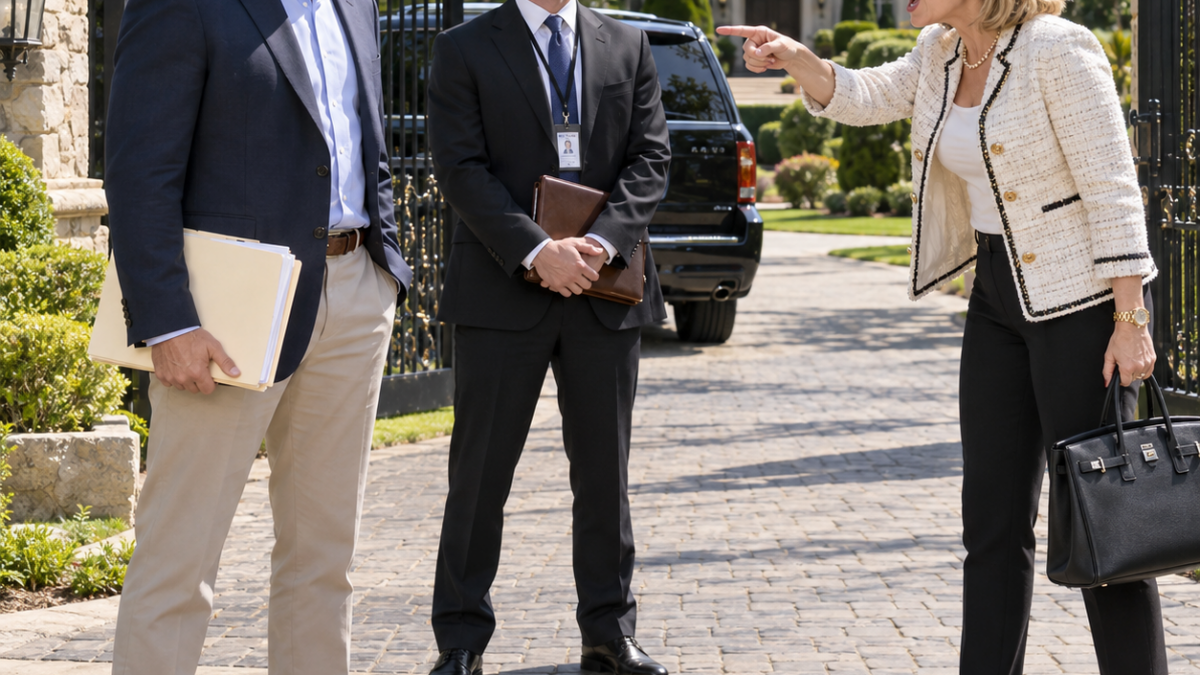
PART 2
David sent me everything he had found that evening.
Public corporate filings.
Annual HOA budgets.
Vendor disclosures.
Contract summaries.
Nothing by itself proved corruption.
That distinction mattered.
Miller Property Solutions was a legitimate company.
It existed.
It had employees.
It owned equipment.
It could legally contract with an HOA even if the owner happened to be related to the president.
The questions were different.
Was the relationship disclosed?
Were competitive bids required?
Had Karen participated in selecting the company?
Were the prices reasonable?
And why did a sixty-seven-home subdivision appear to be spending so much money with one family-connected vendor?
I called David.
“You didn’t use Senate resources for this?”
“No.”
“Staff time?”
“Twenty minutes of mine after hours. The corporate database is public.”
“Good.”
He laughed.
“You think I don’t know you by now?”
“I’m making sure.”
“You’ve spent thirty years making sure.”
That was probably true.
I had no intention of turning an HOA argument into a congressional investigation.
Willow Creek was my private home.
The Senate had no business being weaponized because I was angry about a fine.
If Karen was wrong, I wanted her defeated the same way any other homeowner should be able to defeat her.
Records.
Votes.
Courts if necessary.
Not political muscle.
Eleanor understood that before I explained it.
She sat across from me in the study while I reviewed the vendor records.
“You’re going to make this harder for yourself than it needs to be.”
“Yes.”
“Because you don’t want anyone saying you crushed the neighborhood lady with your Senate office.”
“Yes.”
“She already thinks your sister is an unidentified operative.”
“Unknown associate.”
“Right. Very sinister.”
I looked at the visitor log again.
“What bothers me is that she wrote down everyone’s plates.”
“That bothers me too.”
“Not just mine.”
Eleanor leaned back.
“Then stop thinking like the target.”
I looked at her.
“What?”
“Find out who else she’s doing this to.”
Eleanor had always been better at reducing my complicated strategies to one sentence.
The next evening I walked down the block.
Not Senator Thorne.
Just Marcus.
George Tanaka was pulling weeds near his mailbox.
He was seventy-eight and moved with the careful precision of someone whose knees had begun negotiating every bend.
I pointed toward the curb.
“Any dandelions?”
He laughed.
“Don’t joke.”
“That bad?”
“Three cost me seventy-five dollars.”
“I heard.”
His smile disappeared.
“From who?”
“Neighbor.”
George looked down the street.
Karen’s house was near the entrance.
Large stone façade.
Perfect shrubs.
American flag centered exactly between two columns.
His voice lowered.
“She knows you’re asking questions?”
“I don’t care.”
“You should.”
That interested me.
“Why?”
George looked at me as if deciding whether I was safe.
Then he opened his garage.
“Come inside.”
There were aircraft models hanging from the ceiling.
Fighter jets.
Commercial airliners.
A spacecraft prototype.
“Engineer?” I asked.
“Forty-two years.”
“Where?”
“Mostly aerospace.”
That explained the models.
He pulled a folder from a metal cabinet.
“Keep copies of everything.”
Inside were HOA notices going back four years.
Weeds.
A trash container visible twenty minutes after the approved storage deadline.
A satellite dish Karen claimed was two inches too low.
A small bench near his front walk that had never received architectural approval.
Wind chimes.
The dandelions.
“How much total?”
“Maybe three thousand.”
“You paid?”
“Most.”
“Why?”
He stared at me.
“Because I’m seventy-eight.”
“That’s not an answer.”
“It is.”
His voice sharpened.
“My wife died six years ago. My children live in California. I don’t want court. I don’t want liens. I don’t want lawyers sending letters.”
He touched the folder.
“I want to water my tomatoes and watch baseball.”
Then he looked embarrassed.
“I spent my whole career solving problems worth hundreds of millions of dollars.”
His voice dropped.
“And this woman makes me nervous about three weeds.”
That stayed with me.
Karen’s power wasn’t created by the bylaws.
It was created by exhaustion.
She had more energy for conflict than the people she targeted.
So they paid.
Then she moved to the next violation.
I asked George about Miller Property Solutions.
He frowned.
“They do everything.”
“Landscaping?”
“Pool.”
“Repairs?”
“Christmas lights.”
“Do homeowners know Karen is related to the owner?”
His eyebrows rose.
“She is?”
That was answer enough.
The next person I spoke with was Nicole Harris.
Thirty-four.
Emergency-room physician.
Single mother.
Her front door was blue.
Beautiful blue.
Almost navy in the shade.
She told me she had painted it three times.
The first shade was “too vibrant.”
The second was “insufficiently traditional.”
The third passed.
“How much?”
“Paint and labor? About nine hundred.”
“Fine?”
“Two hundred fifty before I agreed to repaint.”
“Did you appeal?”
“I work twelve-hour shifts.”
She shrugged.
“I started the appeal form. Then they scheduled the hearing for a Tuesday at ten in the morning.”
“You asked to reschedule?”
“Denied.”
“Why?”
“Board availability.”
She smiled bitterly.
“The same board that meets at seven in the evening when they want people to approve a dues increase.”
Another neighbor had been fined for washing his car on a Sunday.
The cited rule concerned “commercial maintenance activity.”
He wasn’t running a detailing business.
He was washing his own Buick.
A widow named Elaine Porter was cited because her wind chimes created a “recurring auditory nuisance.”
Karen’s evidence consisted of a twenty-second phone recording made from the sidewalk.
“How loud were they?” I asked.
Elaine looked offended.
“They’re bamboo.”
I laughed.
She didn’t.
“I took them down.”
“Why?”
“Because the next letter mentioned legal fees.”
There it was again.
Fear disguised as compliance.
By the end of the week, I had twenty-seven stories.
Not every complaint was outrageous.
One homeowner had left a boat trailer parked on his front lawn for five months.
The HOA had a clear rule against that.
Another had built a shed without approval and discovered it encroached on a drainage easement.
Karen was not wrong every time.
That made the cases where she was wrong more important.
A system doesn’t become abusive merely because people dislike being told no.
It becomes abusive when rules are selectively interpreted, procedures are manipulated, punishment becomes the objective, and authority serves the person exercising it rather than the community granting it.
David called again Friday.
“I found the incorporation date.”
“For Miller Property Solutions?”
“One month before the first HOA contract.”
“That isn’t illegal.”
“I know.”
“Bid records?”
“Not public.”
“Then we need member records rights.”
“Exactly.”
I had another idea.
A barbecue.
Eleanor stared at me.
“A barbecue?”
“Sixty-seven houses.”
“Your tactical response to corruption is hamburgers?”
“People talk over food.”
“People also talk over wine.”
“We’ll have that too.”
She smiled.
“You were a better Marine than party planner.”
“That’s why I married you.”
We delivered invitations.
Nothing political.
No Senate seal.
No campaign logo.
No mention of Karen.
Marcus and Eleanor Thorne invite you to a neighborhood barbecue. Come meet your neighbors. Saturday, 4:00 p.m.
Twenty-two households said yes.
More than I expected.
George arrived first with a bottle of red wine.
Nicole came with her daughter.
Elaine Porter brought potato salad.
A retired teacher named William Evans brought enough cookies for a battalion.
At first people talked about safe things.
Weather.
Schools.
Property taxes.
College football.
Nobody mentioned Karen.
Then Karen appeared.
She stood on the public sidewalk beside my yard.
Notebook in hand.
She didn’t enter.
Didn’t speak.
Just watched.
The effect was immediate.
Conversations softened.
Two people glanced toward their cars.
Elaine stopped laughing.
That angered me more than any letter she had sent.
One woman standing fifty feet away should not be able to drain the joy out of twenty-two families by appearing with a notebook.
I handed my grilling tongs to Eleanor.
She looked toward Karen.
“About time.”
I tapped my glass.
“Everyone?”
People turned.
“I want to say something before dinner.”
Karen’s pen started moving.
I almost thanked her for proving my point.
Instead I said, “Eleanor and I invited you because after six months here, we realized we barely knew our neighbors.”
Heads nodded.
“I also learned something less pleasant.”
I held up my HOA file.
“I have been fined for having members of my Senate staff visit my home.”
A few people laughed nervously.
“I’ve been fined for non-residential traffic.”
More laughter.
“Karen has also kept a written log of people visiting this property.”
That killed the laughter.
I opened the page.
“I’m not going to read license plates publicly.”
I looked toward the sidewalk.
“But I am going to say that I find the practice troubling.”
Karen shouted from the sidewalk.
“Those records document violations!”
Everyone turned.
I answered calmly.
“This is private property, Karen.”
“I am standing on the sidewalk.”
“I know.”
“Then I am within my rights.”
“Enjoy the barbecue from there.”
A few people smiled.
Karen’s face reddened.
I returned to the group.
“I also know I’m not the only person who has had difficult experiences with enforcement.”
George stood.
His hands shook slightly.
“Three dandelions.”
People looked at him.
He swallowed.
“Seventy-five dollars.”
Nicole raised her hand.
“Three blue doors.”
Someone laughed.
Nicole didn’t.
“Nine hundred dollars.”
Elaine said, “Wind chimes.”
Then the stories came.
Not as a planned presentation.
As release.
A garage door left open.
A basketball hoop.
Holiday decorations.
A work van.
Garden statues.
A child’s playhouse.
Somebody had received a violation because an Amazon package sat on the porch for two days while the family was out of town.
“Visual clutter.”
The phrase produced genuine laughter.
For the first time, people weren’t ashamed of their notices.
They were comparing them.
That changed everything.
Isolation had made each resident think the problem was personal.
Comparison created a pattern.
I waited until people finished.
Then said, “I’ve learned that a company called Miller Property Solutions receives a significant portion of our major vendor spending.”
Karen stopped writing.
“Does everyone here know who owns it?”
Silence.
George said, “Her brother-in-law.”
Karen shouted, “That is not a secret.”
Nicole turned.
“Then why didn’t we know?”
“It is disclosed where disclosure is required.”
“Where?”
Karen’s mouth tightened.
“Association records.”
That gave me exactly the opening I needed.
“Then I propose we inspect them.”
People looked at one another.
“Our state association law and Willow Creek’s own documents provide members access to categories of financial records.”
I held up a draft petition.
“We ask for contracts, bids, invoices, minutes, and conflict disclosures.”
George stepped forward.
“I’ll sign.”
Nicole joined him.
“So will I.”
Elaine.
Then William.
By sunset we had twenty-eight signatures.
Karen remained on the sidewalk until Eleanor walked toward her carrying a paper plate.
“Burger?”
Karen glared.
Eleanor smiled.
“Worth a try.”
The next morning, we had thirty-four signatures.
A majority of the neighborhood.
We served the records demand formally.
Karen’s response arrived one week later.
Not records.
Emergency proposed bylaw amendments.
The first amendment attempted to expand the definition of prohibited home business activity to include “political, legislative, governmental, lobbying, advocacy, or organized professional meetings.”
It was written for me.
The second attempted to give the board broad towing authority over vehicles it considered “unauthorized, suspicious, non-residential, or disruptive.”
Eleanor read it twice.
“Suspicious?”
“Apparently.”
“What makes a Toyota suspicious?”
“Government employee inside.”
She looked at me.
“She’s panicking.”
“Yes.”
David Chen called that evening.
I had sent him the proposed language for a private legal sanity check, not Senate action.
“You cannot let her pass that without challenge.”
“I know.”
“Be careful with the first amendment.”
“Why?”
“Because everyone is going to shout ‘First Amendment,’ but this is a private HOA, not Congress.”
“Exactly.”
“So keep the argument grounded.”
“Contract authority. State HOA law. Reasonableness. Voting procedure.”
“And potentially public policy depending on state law.”
“Yes.”
“The towing language is worse.”
“I know.”
“She’s trying to authorize conduct that state towing law may not permit merely because she writes it into a covenant.”
“Exactly.”
David paused.
“Marcus?”
“Yes?”
“This stopped being funny.”
“I know.”
We retained private counsel.
That was deliberate.
Not Senate counsel.
Not campaign counsel.
A local property attorney named Lisa Grant.
She reviewed the amendments.
Then Willow Creek’s declaration.
Then towing law.
Then the existing commercial-use restriction.
“Your staff issue should never have gotten this far,” she said.
“I agree.”
“The original covenant is aimed at operating a business from the residence.”
“Yes.”
“Occasional staff visits do not resemble the prohibited activity described elsewhere in this declaration.”
“That was my reading.”
“The amendment looks retaliatory.”
“That was also my reading.”
She tapped the towing proposal.
“And this is reckless.”
“Can they tow?”
“Sometimes. Depending on ownership of the street, signage, authorization, notice, and statutory requirements.”
“Our streets are privately maintained.”
“That gives the association some authority, not unlimited authority.”
She looked at me.
“I’ll send the board a memorandum.”
“To Karen?”
“To the entire board.”
Good.
Lisa’s memorandum was devastating because it was boring.
No constitutional melodrama.
No mention that I was a senator beyond explaining the factual nature of the meetings.
It laid out procedural requirements.
Existing covenant language.
State towing restrictions.
Potential liability for unauthorized towing.
Members’ financial inspection rights.
Then one final warning:
Board members who knowingly approved actions outside association authority could face personal exposure depending on the circumstances and governing law.
That last paragraph changed the other directors.
Karen had four people who normally voted with her.
Arthur Fleming.
Accountant.
Cynthia Moore.
Retired nurse.
Steven Pike.
Insurance broker.
Janice Bell.
Local realtor.
They had spent years nodding.
Now they had a private attorney telling them nodding could become expensive.
The special meeting was Tuesday.
The clubhouse filled.
Thirty-seven homeowners.
Nearly every chair taken.
Eleanor sat beside George.
I sat in the front row.
Karen wore navy.
Binders stacked in front of her.
“The meeting will come to order.”
She read the amendments.
Then immediately said, “We will proceed to vote.”
Arthur Fleming cleared his throat.
“Karen.”
She stared at him.
“What?”
“I think we should discuss counsel’s memorandum.”
“That was not association counsel.”
“It was sent to the board.”
“By Senator Thorne’s lawyer.”
Arthur swallowed.
“It cites statutes.”
“Lawyers cite things.”
Cynthia leaned forward.
“The towing section concerns me.”
Karen’s face tightened.
“You voted to protect this community.”
“I did not vote to tow random visitors.”
“They are not random.”
Then a woman stood at the back.
Gray hair.
Blue cardigan.
Hands trembling.
“I have a question.”
I turned.
Margaret Davis.
My chest tightened.
Margaret was a Gold Star mother.
Her son, Sergeant Michael Davis, had been killed eight years earlier while serving overseas.
She had driven two hours to speak with me about a proposal affecting educational benefits for children of fallen service members.
We had met in my study for forty-five minutes that afternoon.
I had assumed she left afterward.
Apparently she had not.
“My car is gone.”
The room went silent.
Karen looked almost satisfied.
Margaret continued.
“I parked on the street outside Senator Thorne’s house.”
Karen said, “That vehicle was unauthorized.”
My stomach dropped.
“You had it towed?” I asked.
Karen looked at me.
“I enforced existing parking authority.”
Lisa Grant, our attorney, stood.
“Under what provision?”
Karen waved toward her binder.
“The board has responsibility for community safety.”
“That isn’t a towing provision.”
“It was parked by an unidentified outsider.”
Margaret’s face changed.
“Unidentified?”
Karen finally looked at her.
“You do not reside here.”
“No.”
“You were conducting business at Senator Thorne’s residence.”
“I came to talk about my son.”
Karen hesitated.
Margaret reached into her purse.
She took out a small photograph.
Michael in uniform.
Young.
Smiling.
“My son was killed before his daughter turned four.”
Her voice shook.
“I came here because I want other children who lose a parent in uniform to have choices my granddaughter didn’t.”
Nobody moved.
“I parked where I was told visitors could park.”
Karen said, “That doesn’t exempt you from community rules.”
Arthur Fleming pushed his chair back.
“Karen, did the board authorize that tow?”
“I don’t need a separate vote for routine enforcement.”
“I didn’t authorize it.”
Cynthia said, “Neither did I.”
Steven shook his head.
Janice stared at the table.
Karen’s face hardened.
“The president is delegated enforcement authority.”
Lisa asked, “Did you personally call the towing company?”
“Yes.”
“Before this proposed amendment has even been voted on?”
Karen realized the problem.
“The existing rules already permit removal of unauthorized vehicles.”
Lisa opened the declaration.
“Show me.”
Karen started flipping pages.
For the first time, her hands were not steady.
Margaret sat down.
I went to her.
“I’m sorry.”
“You didn’t tow it.”
“It happened because you came to see me.”
“That does not make it your fault.”
I had heard similar words given to grieving families for twenty years.
They were harder to accept than to say.
I stood.
“Karen.”
She looked up.
I kept my voice level.
“No vote is happening tonight until Mrs. Davis’s vehicle is located and this towing authority is clarified.”
“You do not control this meeting.”
“No.”
I looked at the other directors.
“You do.”
Arthur stared at Karen.
Then at Margaret.
“I move that both amendments be tabled pending independent legal review.”
Cynthia immediately said, “Second.”
Karen slammed her gavel.
“You are out of order.”
Arthur’s face finally changed.
For years he had been afraid of her.
Not anymore.
“I’m a director too.”
Karen stared at him.
Arthur looked toward Lisa.
“Can we vote?”
Lisa answered carefully.
“Follow your bylaws and parliamentary rules.”
Karen tried to adjourn.
Three directors objected.
The vote proceeded.
Four to one.
Both amendments tabled.
Karen alone voted no.
The room did not cheer.
The shift was too serious for cheering.
Arthur made a second motion.
“Immediate independent review of the Davis tow and suspension of discretionary towing until counsel confirms the policy.”
Cynthia seconded.
Four to one again.
Karen sat frozen.
Her authority had survived for years because the other four people at the table never discovered they had spines at the same time.
Margaret’s missing car changed that.
The meeting ended forty minutes later.
I called the towing company directly with Margaret’s authorization.
No Senate office.
No political threats.
We learned the car had been removed to a private impound lot seventeen miles away.
The paperwork listed the HOA as the requesting party.
Karen Miller as the authorized caller.
The towing company had relied on her representation that the vehicle violated association parking rules.
Lisa contacted the company.
After reviewing the dispute, they released Margaret’s car without requiring her to bear the contested charge while responsibility was sorted out.
I drove her to retrieve it.
She sat beside me quietly.
Halfway there she said, “Michael would have thought this was funny.”
I looked over.
“What part?”
“His mother getting her car impounded by a homeowners association while lobbying a senator.”
I laughed despite myself.
“He had your sense of humor?”
“Worse.”
She looked out the window.
“He hated bullies.”
I didn’t answer.
At the lot, we inspected the car.
No damage.
Margaret ran her hand across the hood.
Then said, “Don’t make this about me being a Gold Star mother.”
That surprised me.
“Why?”
“Because Karen would have been wrong if I were a schoolteacher.”
“Yes.”
“Or a waitress.”
“Yes.”
“Or your sister.”
I smiled.
“She logged Eleanor’s sister as an unknown associate.”
Margaret laughed.
“Then make it about that.”
I nodded.
She was right.
Her son’s sacrifice explained why the incident felt especially cruel.
It did not create her right to fair treatment.
She possessed that before anyone knew her story.
That became important later.
The next morning, the remaining directors held an emergency session with independent association counsel.
Karen attended by video.
The board voted to suspend her enforcement authority pending investigation.
Not remove her from elected office yet.
The bylaws required a member process for that.
But she lost the ability to issue fines, authorize towing, or direct vendors unilaterally.
Then they approved the financial audit.
Karen sent a community email two hours later.
COORDINATED COUP AGAINST WILLOW CREEK LEADERSHIP
Eleanor read the subject line.
“Subtle.”
I poured coffee.
“She’s escalating.”
“No.”
Eleanor looked at me.
“She’s losing.”
There is a difference.
The audit began with five years of records.
Miller Property Solutions.
Invoices.
Checks.
Board minutes.
Bidding documentation.
Vendor communications.
Conflict disclosures.
At the same time, George started collecting homeowner experiences.
Nobody asked him.
He simply did it.
One evening he came to my house carrying three binders.
“I made an index.”
Of course he had.
Aerospace engineer.
“What’s in them?”
“Four years of nonsense.”
He placed the first binder on my dining table.
Dandelions.
Playsets.
Wind chimes.
Driveway washing.
Holiday wreaths.
Garden decorations.
Then he showed me something more important.
Miller Property Solutions invoices.
In several cases, Karen issued a violation.
Then recommended Miller Property Solutions to correct it.
A family fined over a playset paid the company $800 to repaint it.
A homeowner cited for landscaping paid them $1,900 to replace shrubs.
Elaine Porter had been told Miller Property Solutions could install “approved low-noise decorative alternatives” to her wind chimes.
Even Eleanor laughed at that one.
“Low-noise decorative alternatives?”
George nodded solemnly.
“Apparently silence is a service.”
I kept reading.
One case bothered me.
Nicole Harris.
Her blue door.
After the second rejection, Karen sent her a list of approved painters.
Miller Property Solutions appeared first.
Nicole hired someone else.
Her third color was rejected.
Then she hired Miller.
Approved immediately.
“How much?”
“Twelve hundred.”
Nicole had told me nine hundred.
George shook his head.
“She forgot the compliance inspection charge.”
My anger sharpened.
“Any proof Karen controlled approvals?”
“Emails.”
He slid printed messages across the table.
Karen to Miller Property Solutions:
Harris still resisting. Give her the standard door package.
Another:
Once your color is installed, ARC can clear it.
ARC.
Architectural Review Committee.
Karen chaired it.
That was the first document that looked less like favoritism and more like a system.
Create enforcement pressure.
Steer work to family vendor.
Approve family vendor’s solution.
Repeat.
I called Lisa.
She read the emails.
Then said, “Preserve originals.”
“Obviously.”
“And stop calling this a racket publicly.”
“I haven’t called it anything publicly.”
“Good.”
“Is it fraud?”
“Maybe.”
“Extortion?”
“Marcus.”
“I know.”
“You’re a senator. Every adjective you use becomes a headline.”
“I know.”
“Then let investigators use adjectives.”
That was good advice.
The forensic accountants spent seven weeks on the books.
During that time, Willow Creek changed.
People talked outside.
Children played in front yards.
Neighbors compared notices without whispering.
George started walking with a clipboard.
The first time I saw him, I nearly had a heart attack.
“You’ve become Karen.”
He looked horrified.
“This is a census of violations.”
“That is exactly what Karen would say.”
He threw the clipboard at me.
I laughed.
It was the first time I had seen him laugh freely.
Arthur Fleming became interim board president after Karen’s suspension.
He hated every minute.
At his first meeting, he said, “I want everyone to understand that I do not want this job.”
Someone shouted, “That’s why we trust you.”
The room laughed.
Arthur did too.
His first action was to rescind my fines.
Not because I was a senator.
Because outside counsel reviewed the covenant and concluded my occasional staff meetings did not constitute operating a prohibited commercial enterprise.
The visitor-traffic fines went too.
The towing incident generated a formal apology to Margaret Davis.
Willow Creek reimbursed all related costs.
Margaret requested something else.
No donation in her name.
No plaque.
No ceremonial resolution.
Instead she asked the board to adopt clear visitor-parking rules.
“If you’re sorry,” she told Arthur, “make it harder to do to the next person.”
The board did.
That was Margaret.
Turn pain into procedure.
She and Eleanor became friends.
I was excluded from most of their conversations.
Probably for the best.
Then the audit report arrived.
Community meeting.
Every household received notice.
Nearly all attended.
The forensic accountant was named Henry Davies.
Small man.
Wire-rim glasses.
Voice so dry he could make embezzlement sound like weather data.
His first slide:
WILLOW CREEK ESTATES HOA
INDEPENDENT FORENSIC REVIEW
He started with vendor concentration.
Eighty-five percent of discretionary contract spending over several years had gone to Miller Property Solutions or related subcontractors.
That did not automatically mean theft.
Then came price comparison.
Selected services were billed substantially above available market benchmarks.
Then bidding procedures.
Missing.
Incomplete.
Or prepared after vendor selection.
Then conflict disclosures.
Sparse.
Then emails.
Karen discussing invoice structure with her brother-in-law before proposals were presented to the board.
Then violation-driven work.
The pattern George identified.
Homes cited.
Miller Property Solutions offered as remedy.
Family company paid.
Approval followed.
Fine revenue had also tripled during Karen’s tenure.
The accountant showed no basis to claim every dollar was improper.
That mattered.
He was careful.
Then he reached the estimate.
Approximately $487,000 in transactions requiring recovery, adjustment, further investigation, or legal review due to overbilling, unsupported charges, conflicts, and related issues.
No one spoke.
Karen entered through the back door.
People turned.
She wore the navy suit.
Binder in hand.
For one strange second, she looked exactly as she had months earlier.
Certain.
Prepared.
Still convinced force of personality could make facts negotiable.
“This presentation is defamatory.”
Henry Davies looked at her.
“I’m presenting accounting findings.”
“You were hired by people hostile to me.”
“I was retained by the board.”
“A board that illegally removed me.”
Arthur stood.
“You are not removed from membership, Karen. Your enforcement authority was suspended.”
“You betrayed me.”
“No.”
His voice shook.
Then steadied.
“We finally read the contracts.”
Karen looked toward me.
“There.”
She pointed.
“This is him.”
The room became still.
“Senator Marcus Thorne moves into our neighborhood and within six months we have lawyers, auditors, television reporters, and state investigators.”
I hadn’t known she knew about investigators.
That interested me.
She continued.
“He couldn’t stand being told our rules apply to him.”
I stood slowly.
Lisa looked at me from two rows away.
Her expression said: careful.
I walked toward the front.
“No, Karen.”
“You used your office.”
“No.”
“You sent Senate lawyers after us.”
“No.”
“You had congressional staff digging through our finances.”
“No.”
David Chen was in Washington.
The audit had been performed by a private firm hired by Willow Creek itself.
The records requests came from homeowners and private counsel.
The state investigation—which had begun after financial evidence and complaints were referred through ordinary channels—was independent.
I said all of that.
Then added, “You’ve spent months trying to turn this into Senator Thorne versus Karen Miller.”
I looked around the room.
“It isn’t.”
George sat with his binders.
Nicole sat beside her daughter.
Elaine Porter had brought her wind chimes in a grocery bag as a joke.
Arthur sat at the board table.
Margaret Davis was in the back.
“This is Willow Creek versus secrecy.”
Karen laughed.
“You’re dramatic.”
“I’ve been called worse.”
“You want everyone to think I stole half a million dollars.”
“I said no such thing.”
I gestured toward Henry.
“The accountant identified transactions requiring legal review.”
“You know exactly what you’re implying.”
“No.”
I looked at her.
“That’s the difference between us.”
Her face changed.
“I’m willing to let evidence decide what words apply.”
Silence.
Karen clutched the binder.
“I built standards here.”
George stood.
“You built fear.”
She turned.
“You?”
His voice shook.
Then grew stronger.
“Yes.”
George held up his violation file.
“I paid you for dandelions.”
“You violated landscaping standards.”
“I paid because I was afraid of a lien.”
“Then you should have maintained your yard.”
Three years earlier, George might have sat down.
He didn’t.
“You know what changed?”
Karen stared.
“I realized everybody was afraid.”
He looked around.
“That means the problem wasn’t my lawn.”
Nicole stood next.
“You rejected my door until I hired your brother-in-law.”
“That is false.”
Nicole held up emails.
“Your words say otherwise.”
Elaine lifted the bag containing her bamboo wind chimes.
“Want to fine these again?”
Laughter rippled through the room.
Karen looked around.
No allies.
The four directors who once voted automatically with her were silent.
Her binder finally lowered.
Arthur spoke.
“A member recall petition has reached the threshold required under the bylaws.”
Karen stared at him.
“You signed it?”
Arthur nodded.
“Yes.”
“You coward.”
“Probably.”
He swallowed.
“But I signed it.”
The recall meeting was scheduled for three weeks later.
Before it happened, the state attorney general’s office publicly confirmed an investigation into possible nonprofit financial misconduct connected to Willow Creek and related vendors.
I had not requested special treatment.
In fact, the moment my office learned a state investigation existed, my ethics counsel told my entire Senate staff to remain completely separate.
No calls.
No inquiries.
No “checking status.”
No political pressure.
David complained.
“I can’t even ask who the investigator is?”
“No.”
“What if they contact us?”
“Then counsel handles it.”
“You really enjoy walls.”
“Walls prevent scandals.”
That was especially important because Karen immediately told a local reporter I had unleashed government investigators on a private citizen.
The attorney general’s office issued one sentence:
The investigation originated from financial information and complaints received through ordinary enforcement channels. Senator Thorne has no role in investigative decisions.
Perfect.
Boring.
Independent.
Karen hated it.
The recall vote happened on a Thursday.
Sixty-three of sixty-seven homes participated in person or by valid proxy.
Before voting, Karen received time to speak.
She used all of it.
She defended the cleanliness of Willow Creek.
The maintained pool.
Stable home values.
The landscaping.
Holiday decorations.
Some of those accomplishments were real.
She argued that strong enforcement had prevented decline.
Some residents probably agreed.
Then she blamed “a faction led by an ambitious politician.”
That part failed.
Because I wasn’t standing at the podium.
George was.
Nicole was.
Elaine.
Arthur.
Margaret wasn’t a member and couldn’t vote, but she sat quietly in the audience.
The final tally removed Karen by an overwhelming margin.
There was no screaming.
No victory chant.
Just an exhale.
Karen placed her association keys on the table.
Then walked out.
The criminal investigation took another year.
Longer than anyone expected.
Real investigations do.
Miller Property Solutions turned over records.
Banks produced statements.
Former employees were interviewed.
Board members testified.
Vendors were compared.
Invoices reconstructed.
Some charges that looked suspicious had legitimate explanations.
Others did not.
Investigators found evidence of inflated invoices.
Undisclosed related-party transactions.
Payments for services not fully performed.
Kickback-style transfers connected to certain contracts.
And communications showing Karen actively coordinating both enforcement activity and vendor opportunities.
Her brother-in-law Daniel Miller became a central target too.
The prosecutor did not charge Karen with being mean.
Or power hungry.
Or spying from hedges.
Those things made good neighborhood stories.
Criminal law needed elements.
Money.
Intent.
False representations.
Records.
That was healthier.
Karen eventually faced multiple fraud- and theft-related charges.
Daniel faced his own.
The towing incident became relevant mostly as evidence of the broader abuse of authority, not the centerpiece of the financial prosecution.
Margaret preferred it that way.
She called me one afternoon.
“I saw the article.”
“Yes.”
“They called me ‘the Gold Star mother whose car brought down an HOA president.’”
“I saw.”
“That’s ridiculous.”
“I agree.”
“My son did not die so I could become a headline about parking.”
“I know.”
She sighed.
“Michael would still think it was funny.”
I smiled.
“I believe that.”
Then her voice softened.
“Marcus?”
“Yes?”
“You did one thing right.”
“Only one?”
“You didn’t make me your prop.”
That mattered more than she knew.
“Thank you.”
“You’re welcome.”
Karen’s trial attracted more attention than I wanted.
I testified briefly about the original enforcement dispute and records chronology.
The prosecutor did not need me for the money trail.
That was good.
Bank records are better witnesses than senators.
Karen’s defense argued the vendor relationship was disclosed informally and that pricing reflected premium service.
They argued she acted for community benefit.
They attacked the audit methodology.
They questioned cooperating witnesses.
All legitimate defense work.
Then Daniel Miller’s emails appeared.
One concerned the Harris door.
Blue again? Keep pressure until she uses our approved crew.
Another:
Compliance revenue is soft this month. Push landscaping before quarter close.
Then Karen’s reply:
I’ll review west side this weekend. Plenty there.
The courtroom went silent.
I thought about George’s three dandelions.
Karen didn’t look at the gallery.
The strongest evidence wasn’t a dramatic confession.
It was routine language.
People become careless when wrongdoing becomes ordinary.
The jury convicted Karen on several principal fraud and financial-misconduct counts.
Daniel was convicted on related charges.
Other counts produced different outcomes.
That was reality.
Not every allegation becomes a conviction.
At sentencing, Willow Creek residents submitted victim-impact statements.
George wrote three pages.
Then tore them up.
“Too angry,” he told me.
He tried again.
His final statement was six sentences.
He read it himself.
“My name is George Tanaka. I am seventy-nine years old. For several years I paid fines because I was afraid that fighting would cost more than surrendering. The money mattered, but the fear mattered more. I stopped talking to neighbors because I thought anything I said might get back to Mrs. Miller. I would like the court to understand that a neighborhood can look beautiful and still be unhealthy.”
That was all.
It was enough.
Nicole spoke too.
She described coming home after emergency-room shifts and finding violation notices.
“I take care of frightened people for a living,” she said. “Then I came home and felt frightened by my own mailbox.”
Elaine did not speak.
She sent a written statement.
Margaret chose not to participate.
“It’s their case,” she told me.
She was right.
Karen received a custodial sentence, financial penalties, and restitution obligations.
Daniel received his own sentence and business consequences.
The HOA pursued civil recovery where appropriate.
Insurance covered some losses.
Vendor recovery covered others.
Not all money returned.
That disappointed people.
Justice is rarely a full refund.
The bigger question was what happened to Willow Creek.
Arthur refused to remain president.
“I barely survived interim.”
George laughed.
“You’re doing fine.”
“I wake up dreaming about meeting notices.”
So the neighborhood held an election.
George was nominated.
He tried to decline.
Nicole nominated him again.
He lost the argument.
At seventy-nine, the man once frightened by dandelions became president of Willow Creek Estates.
His first speech lasted forty-three seconds.
“I don’t want your money unless it’s actually due.”
Laughter.
“I don’t want photographs of your weeds.”
More laughter.
“And if I ever stand in your hedge writing down license plates, call my children and have me committed.”
The room erupted.
Then he became serious.
“We still need rules.”
That surprised a few people.
“Rules are not the problem.”
He looked around.
“Unaccountable people are.”
That became the philosophy of the new board.
They did not burn the covenants.
That would have made a great story and terrible governance.
Instead, they revised them lawfully.
The commercial-use restriction remained.
It still made sense to stop someone from operating a noisy repair shop or retail storefront out of a residential house.
But definitions were clarified.
Ordinary professional visitors were not automatically commercial traffic.
Occasional remote work wasn’t a home business.
Government, nonprofit, medical, educational, and other ordinary household visitors were treated like visitors unless actual business operations changed the character of the property.
Parking rules became measurable.
Where visitors could park.
For how long.
When towing could occur.
What notice was required.
Who could authorize it.
No single president could call a tow truck because a license plate looked unfamiliar.
Conflict-of-interest rules were rewritten.
Related-party vendors required disclosure.
Competitive bids above a threshold.
Board minutes had to record recusals.
Financial statements became available in a resident portal.
Enforcement appeals went to a committee that did not include the person who issued the original violation whenever possible.
And fines stopped escalating automatically without review.
The first quarterly meeting under the new system lasted two hours.
People complained.
That made me happy.
Healthy communities complain openly.
One resident thought the pool opened too late.
Another hated the landscaping company.
Someone wanted basketball hoops banned from sidewalks.
Someone else wanted chickens.
George listened.
Then said, “We are not voting on chickens tonight.”
The room laughed.
Karen would have hated the disorder.
I found it comforting.
Willow Creek started feeling like the place Eleanor and I thought we had bought.
Neighbors stood in driveways talking.
George hosted a telescope night.
Nicole’s daughter sold lemonade without Karen demanding a commercial-use permit.
Elaine rehung her wind chimes.
Bamboo.
Quiet.
Still technically audible.
One Saturday, Eleanor and I hosted another barbecue.
No strategy.
No petition.
No files hidden in my study.
Just food.
All sixty-seven homes were invited.
Fifty-three came.
Margaret Davis drove in around five.
George stood in the street waving both arms.
“VISITOR VEHICLE!”
Margaret stopped.
Rolled down the window.
“You towing me?”
George shouted, “ONLY IF YOU BROUGHT NO DESSERT!”
She held up a pie.
“Cleared for entry.”
People applauded.
I laughed harder than I had in months.
Margaret parked in the exact place where Karen had ordered her car removed.
No one cared.
She found Eleanor first.
Then me.
“You look relaxed.”
“Don’t spread that around.”
“Bad for your reputation?”
“Terrible.”
Later that evening, she handed me a small envelope.
Inside was a copy of the photograph she had shown at the disastrous board meeting.
Michael in uniform.
On the back she had written:
He believed service meant protecting people who could do nothing for you in return. Don’t forget that when the titles get loud. — Margaret
I couldn’t speak for a moment.
She touched my arm.
“No speeches, Senator.”
“Yes, ma’am.”
I put the photograph in my study.
Not beside awards.
Beside a picture of Eleanor.
A reminder.
Years in public office teach you to become comfortable with titles.
Chairman.
General.
Ambassador.
Senator.
President.
Titles are useful.
Institutions need structure.
But Karen taught me something the Marine Corps had taught me decades earlier in a more serious context.
Authority is healthiest when the person holding it remembers that it is borrowed.
Karen thought the presidency of sixty-seven homes transformed her preferences into law.
It didn’t.
Being a United States senator did not transform mine into law either.
That was why I had been so careful not to use my office against her.
If I had called an agency because I wanted revenge, if I had ordered Senate staff to investigate her private finances, if I had threatened board members with political power, I would have proven the ugliest version of her argument.
Instead, the homeowners used their rights.
The board used its procedures.
Private counsel went to court where necessary.
Independent accountants followed money.
State investigators followed evidence.
A jury made the criminal decision.
That was slower.
Messier.
Less satisfying in the moment.
And far better.
My original fines were formally expunged.
I kept the notices.
Eleanor wanted to throw them away.
“Why are we preserving stupidity?”
“Historical record.”
“You sound like George.”
“He’s rubbing off on me.”
The first notice still makes me laugh.
COMMERCIAL ENTERPRISE — $500
Daniel Thompson visited one afternoon several years later.
He had retired from the Army by then but still worked in public service.
He parked the same black sedan model he had driven the first day.
George happened to be outside.
He walked over.
Daniel lowered his window.
George leaned down.
“Business?”
Daniel looked at me.
I said, “Careful.”
George continued.
“Government agent?”
Daniel played along.
“Potentially.”
“Commercial traffic?”
“Unclear.”
George pulled an old notebook from his pocket.
For one horrifying second, I thought he had become Karen.
Then he flipped it open.
Blank pages.
He scribbled.
“Violation.”
Daniel asked, “Fine?”
George looked thoughtful.
“One pie.”
Daniel laughed.
“Reasonable.”
We went inside.
No photograph from the hedges.
No certified envelope two days later.
No daily penalty.
That was freedom in miniature.
Not the absence of rules.
The absence of fear.
Eventually I sold the Washington apartment completely and kept Willow Creek as my state home.
Eleanor spent more time there too.
I still had meetings at the house.
Staff.
Local officials.
Veterans.
Farmers.
Teachers.
Hospital administrators.
Sometimes constituents.
Nothing constant.
Nothing that transformed the property into an office.
Just the kind of human traffic that comes through any home belonging to someone whose work involves people.
The neighborhood survived.
Property values did not collapse.
Children still slept at night despite the occasional presence of a legislative aide.
The apocalypse never arrived.
George served one term as HOA president.
Then resigned voluntarily.
When people begged him to stay, he refused.
“My dandelions need me.”
Nicole became the next president.
Her first board meeting started twelve minutes late because she was finishing an emergency-room shift.
Nobody fined her.
George gave her a framed gift.
A photograph of three dandelions.
Underneath:
TOTAL ASSESSED VALUE: $75
She hung it in the clubhouse.
Elaine donated one bamboo wind chime for the patio.
Someone suggested calling the space Karen Memorial Garden.
Nobody laughed.
Too mean.
We had moved on.
Miller Property Solutions eventually reorganized under different ownership after legal and financial consequences dismantled Daniel’s control.
Some employees had done nothing wrong.
That mattered too.
Landscapers who mowed lawns did not deserve unemployment because their owner participated in misconduct.
The new HOA allowed legitimate vendors to bid openly, including a new company formed by several former Miller employees.
They won a small contract.
Fair price.
Good work.
George was suspicious.
Nicole made him review all three bids.
He admitted theirs was best.
That was how a healthy system should work.
Not blacklist by association.
Not favoritism by association.
Evidence.
Procedure.
Decision.
One autumn afternoon, Karen’s old house went on the market.
Legal costs and restitution pressures had taken their toll.
A young family eventually bought it.
The parents had two children.
One wanted a basketball hoop.
The other wanted a purple playset.
George called me.
“Should we warn them?”
“About what?”
“The playset.”
“George.”
“Kidding.”
The new family knew almost nothing about the history.
That was probably good.
Homes deserve new stories.
They painted the front door blue.
Almost exactly the shade Nicole had originally chosen.
I sent Nicole a photograph.
She replied:
APPROVED.
The years passed.
My time in the Senate eventually ended too.
That is the part political people hate admitting.
Everything ends.
Terms.
Committee chairs.
Poll numbers.
Motorcades.
Staff who call you “Senator” even when you’ve told them to use your first name.
On my final day in Washington, Daniel and David helped me empty the office.
Boxes of books.
Military photographs.
Letters.
Challenge coins.
A framed copy of the Constitution that had hung behind my desk.
David found Karen’s first violation notice inside a folder.
He held it up.
“You kept this?”
“Apparently.”
“Commercial enterprise.”
“Serious crime.”
He smiled.
“You know, this may be the only document in Senate history that classified a congressional briefing as suburban retail activity.”
“Put it in the box.”
“Presidential library?”
“Trash.”
“You kept it for fifteen years.”
“Fine. Box.”
Back at Willow Creek, Eleanor had organized a small retirement gathering.
I expected twenty people.
Half the neighborhood came.
George was eighty-six by then.
Walking stick.
Still stubborn.
Nicole stood beside him.
Margaret came too.
Older.
Still sharp.
She brought no pie.
George threatened to tow her.
Some jokes refuse to die.
At sunset, people drifted home.
George remained.
He carried something wrapped in brown paper.
“For you.”
I opened it.
A framed page from an old version of the Willow Creek covenants.
Section Seven.
Article Four.
No commercial enterprise.
Below it George had mounted a small brass plaque:
VISITORS WELCOME. AUTHORITY SUBJECT TO REVIEW.
I laughed.
“That second part is not legally elegant.”
“I’m an engineer.”
“Clearly.”
He became serious.
“You know what I regret?”
“What?”
“That it took somebody like you moving here before we stood up.”
I shook my head.
“Don’t.”
“It’s true.”
“No.”
He looked annoyed.
“You were a senator.”
“And?”
“People listened.”
“Some did.”
“You had lawyers.”
“I hired a private lawyer like anyone else could.”
“You had confidence.”
I looked at him.
“That part maybe.”
He nodded.
“Exactly.”
He tapped his cane against the porch floor.
“We weren’t stupid.”
“I know.”
“We were tired.”
“I know.”
“We were scared of making it worse.”
“I know.”
Then he looked toward the street.
“Fear grows when nobody says it out loud.”
That was George at his best.
An aerospace engineer who occasionally turned into a philosopher against his will.
I said, “You said it out loud.”
“Eventually.”
“That’s the only time that matters.”
He nodded.
Then smiled.
“Three dandelions.”
“Historic three.”
“Best seventy-five dollars I ever spent.”
“Absolutely not.”
He laughed.
We sat there after everyone left.
No politics.
No strategy.
Just two old men watching porch lights come on.
I thought about the first day.
Karen at the curb.
Daniel and Avery trapped in the sedan.
Five minutes.
Tow truck.
Fine.
Commercial enterprise.
At the time, I thought the absurdity was the story.
A senator’s staff being banned from visiting a senator.
It wasn’t.
The story was what happened afterward.
George admitting fear.
Nicole showing the door invoices.
Elaine taking down wind chimes because a legal threat frightened her.
Margaret refusing to let tragedy turn her into a prop.
Arthur finally voting no.
The board opening its books.
Accountants following money nobody had followed because everyone assumed someone else had checked.
Neighbors discovering that courage is easier in groups.
Karen’s mistake wasn’t that she failed to recognize a senator.
If I had been a dentist, teacher, mechanic, nurse, retiree, or unemployed father, her conduct would still have been wrong where it exceeded her authority.
Her real mistake was believing titles flowed in one direction.
She thought “HOA President” meant residents owed her obedience.
She never understood that leadership means the person with the title owes everyone else something first.
Fairness.
Restraint.
Transparency.
Accountability.
I had spent much of my adult life around people with enormous titles.
Presidents.
Generals.
Cabinet secretaries.
Foreign ministers.
Committee chairs.
The good ones knew power was temporary.
The dangerous ones confused access to power with ownership of it.
Karen’s kingdom was only sixty-seven houses.
The principle was identical.
The smaller scale did not make the damage imaginary.
A person can lose sleep over seventy-five dollars.
A widow can fear a lien.
A single mother can spend money she doesn’t have repainting a door.
A visitor can walk outside and find her car gone.
Abuse does not become harmless because the institution committing it is small.
But there was another lesson.
The solution did not require replacing Karen with someone equally controlling who happened to agree with us.
That would have been easy.
And temporary.
Willow Creek became healthier only when we changed the structure.
Records.
Bids.
Recusals.
Appeals.
Defined towing rules.
Limits on unilateral action.
Those things are boring.
Good governance usually is.
Years later, when someone asked me which Senate vote I remembered most clearly, I could never give them a simple answer.
Too many.
War authorizations.
Budgets.
Veterans legislation.
Judicial confirmations.
Each had consequences larger than Willow Creek.
But one vote I remember perfectly involved no marble chamber.
No cameras.
No national press.
Just four frightened HOA directors sitting behind a folding table.
Karen raised her hand.
Arthur did not.
Then Cynthia did not.
Then Steven.
Then Janice.
Four ordinary people realized “no” was available to them.
That was the moment Willow Creek changed.
Not when Karen was sentenced.
Not when the audit finished.
Not when the reporter arrived.
The first crack appeared when one man who had spent years nodding cleared his throat and said:
“Karen, I think we need to discuss this.”
Tiny sentence.
Enormous consequence.
That is how most power ends.
Someone decides agreement is no longer automatic.
After George died, years later, his children invited Eleanor and me to a small memorial.
He had lived to ninety-one.
Good innings.
His daughter handed me an envelope afterward.
“Dad left this for you.”
Inside was a photograph.
George kneeling beside the curb.
Three dandelions visible behind him.
On the back:
Marcus — Turns out weeds aren’t always the problem. Sometimes they’re how you notice the soil. Thanks for helping us notice. — George
I sat in my car for a long time before driving home.
That photograph now hangs beside Margaret’s picture of Michael.
One man survived long enough to see his neighborhood change.
Another didn’t come home from war.
Different stories.
Different sacrifices.
Both remind me of the same obligation.
Use whatever authority you have carefully.
And when someone else uses theirs carelessly, ask them to show where it comes from.
Eleanor died three years after George.
Cancer.
Fast.
Cruel.
Nothing in the Marines, the Senate, or Willow Creek prepared me for a house without her.
For months, I barely left the porch.
Nicole brought food.
Margaret called every Sunday.
Daniel visited.
David arrived once with three boxes of Senate papers I had apparently abandoned in storage.
Neighbors mowed my lawn.
No invoices.
No violation notices.
No votes.
One morning I woke and found Elaine’s old bamboo wind chime hanging from the corner of my porch.
Nicole had put it there.
I almost took it down.
Then the wind moved.
Soft wooden notes.
Not loud.
Just enough.
Eleanor had once called Karen’s campaign against them “the least musical scandal in America.”
I left it.
That was community.
Not synchronized doors.
Not uniform lawns.
Not fear of paper.
People showing up.
Years earlier, Karen used the word “community” every time she wanted to control someone.
I learned what the word actually meant only after she was gone.
On the anniversary of Eleanor’s death, Margaret sat beside me on the porch.
Neither of us spoke for a while.
Then a black sedan turned onto the street.
My first absurd thought was Karen.
Old reflexes.
The car stopped in front of my house.
Daniel Thompson stepped out.
Older now.
Silver hair.
He carried a folder.
I laughed.
Margaret looked at me.
“What?”
“Nothing.”
Daniel climbed the steps.
“Senator.”
“Not anymore.”
“Habit.”
He handed me the folder.
Inside was the original briefing schedule from the day Karen confronted him.
Meeting location:
Residence of Senator Marcus Thorne.
Participants:
Major Daniel Thompson.
Dr. Avery Cole.
Subject:
Foreign policy briefing.
At the bottom Daniel had written:
Commercial enterprise status: unresolved.
Margaret laughed so loudly the neighbor’s dog barked.
I looked at Daniel.
“You drove all the way here for that?”
“No.”
He sat down.
“I came to check on you.”
That was the real reason.
Of course it was.
We drank coffee.
The wind chime moved.
Cars passed.
Nobody logged their plates.
Nobody demanded credentials.
No one appeared with a notebook.
Willow Creek had become ordinary.
That may be the happiest ending any neighborhood can have.
The clubhouse still keeps one copy of the independent audit.
Not displayed.
Archived.
The revised bylaws require records retention.
Every new board member receives an ethics orientation.
Conflict disclosures.
Towing limits.
Financial controls.
Appeal procedures.
The training is boring enough to make grown adults reconsider volunteer service.
Perfect.
On the wall hangs George’s dandelion photograph.
Below it is one line:
RULES SHOULD PROTECT A COMMUNITY, NOT FRIGHTEN IT.
Nicole chose the wording.
I approved.
Not that she needed me to.
That was the point.
Karen tried to ban my “business visitors” because she saw two unfamiliar people in a sedan and assumed her title entitled her to decide why they were there.
She discovered they were Senate staff.
Then she discovered I was not going to pay a fine simply because she printed one.
But that was never what destroyed her authority.
My title did not.
Congress did not.
Political power did not.
Her own records did.
Her own contracts.
Her own emails.
Her own choices.
And the neighbors she had kept isolated finally comparing notes.
The irony is that the people in my driveway that first morning really were connected to one of the most powerful institutions in the country.
Karen was impressed by the wrong kind of power.
The power that mattered most came later.
George saying he was afraid.
Nicole producing an invoice.
Arthur refusing to raise his hand.
Margaret insisting her rights mattered even if nobody knew who her son was.
Sixty-seven homes discovering that an HOA president works for the association—not the other way around.
I spent years in the Senate learning that people imagine government as something distant.
Marble buildings.
Motorcades.
Television cameras.
But governance begins much closer.
A board meeting.
A school committee.
A neighborhood budget.
A room where five people vote while everyone else stays home.
That is where power learns whether anyone is watching.
Karen counted on nobody watching.
Eventually we did.
My first violation letter still sits in a desk drawer.
I occasionally take it out.
The amount makes me smile now.
$750.
Then $50 per day.
A threat of lien.
All because Daniel Thompson and Avery Cole walked through my front door carrying briefing folders.
Karen thought she was protecting Willow Creek from outsiders.
Instead, those visitors exposed a community that had forgotten how to look inward.
The final time I saw Karen was not in court.
It was years later.
A grocery store.
She had finished her sentence and returned quietly to the area, though not Willow Creek.
I saw her before she saw me.
She looked older.
So did I.
I could have turned away.
Instead I said, “Karen.”
She froze.
“Marcus.”
No Senator.
Good.
For several seconds, neither of us knew what belonged in that aisle between canned soup and cereal.
Finally she said, “I heard about Eleanor.”
“Thank you.”
“She was kind to me once.”
I remembered.
At the first barbecue, Eleanor had offered her a burger while Karen stood there spying on everyone.
“Yes.”
Karen looked down.
“I didn’t deserve it.”
Maybe not.
I said nothing.
Then she surprised me.
“I used to think you destroyed my life.”
I waited.
“I don’t anymore.”
Her voice was barely above a whisper.
“I did.”
There are apologies you fantasize about hearing.
Then when they come, they are smaller than the years spent wanting them.
I asked, “Why are you telling me?”
“Because I don’t know if I’ll see you again.”
Fair.
She looked toward her cart.
“I’m sorry about Mrs. Davis.”
“Tell her.”
Karen blinked.
“What?”
“If you mean it, tell Margaret.”
“I don’t think she wants to hear from me.”
“Maybe not.”
I picked up my basket.
“But the apology belongs to her.”
Karen nodded.
I started walking away.
“Marcus?”
I turned.
“I was wrong about your visitors too.”
That made me smile despite everything.
“Yes.”
“They weren’t commercial traffic.”
“No.”
She almost smiled.
“Obviously.”
Then we went separate directions.
Margaret received a letter two weeks later.
She never showed it to me.
I never asked.
All she said was, “Some debts are paid by admitting they exist.”
That sounded like her.
There was no grand reconciliation.
No friendship.
No final photograph.
Just accountability arriving years late.
Sometimes that is enough.
These days, when I sit on the porch and hear Elaine’s old bamboo wind chime, I think about that first afternoon.
Karen ordering Daniel’s sedan away.
Five minutes.
Commercial enterprise.
The ridiculous certainty of it.
If I could speak to myself in that moment, I would not say:
Tell her you are a senator.
I would say:
Ask who else she has frightened.
That was the question that mattered.
Titles can protect one person.
Neighbors protect a community.
And in the end, Willow Creek did not become free because a United States senator moved into Number 42.
It became free because ordinary people finally realized that they were allowed to say no.








