PART 2: HOA Karen Stole My Family’s Grain Elevator and Sold 200 VIP Memberships—So Her Grand Opening Became Her Eviction
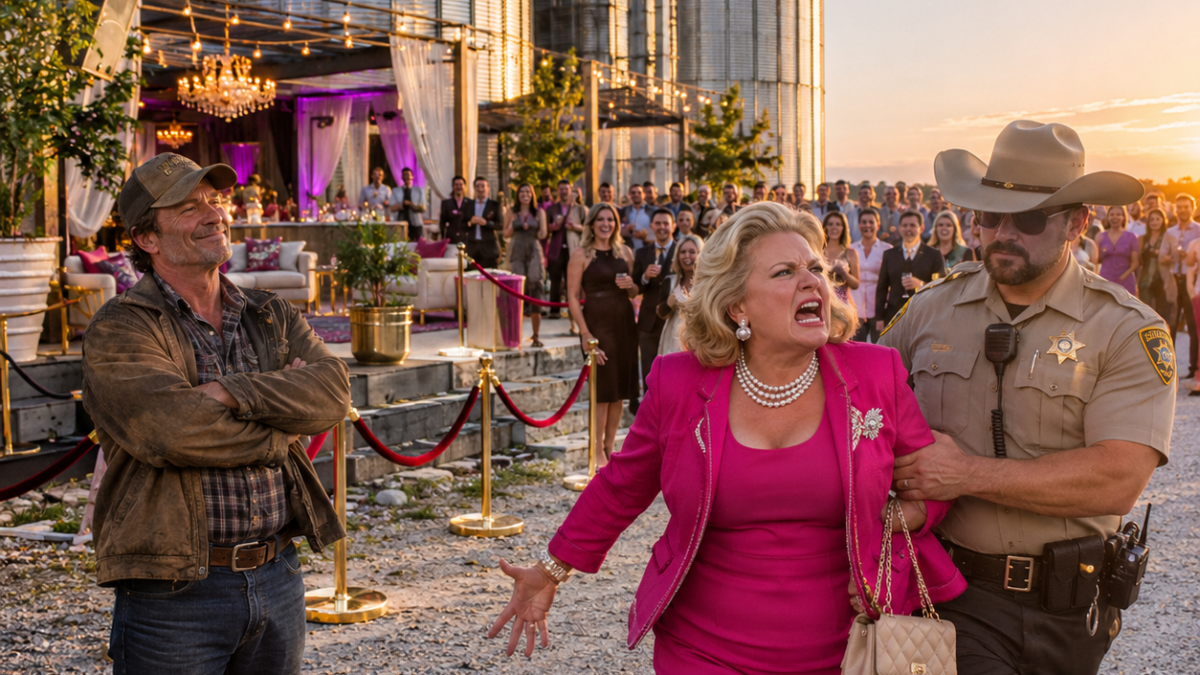
PART 2
I kept the phone up.
Meredith finally noticed.
Her expression shifted.
“What are you doing?”
“Recording.”
“You don’t have permission to film our contractors.”
I almost laughed.
“Your contractors are standing inside my building.”
“This is HOA-controlled property.”
“Then show me the deed.”
She folded her arms.
“The association has legal access rights.”
“What rights?”
“You’ll receive documentation.”
“That’s not what I asked.”
I stepped toward the receiving bay.
Both guards moved.
They didn’t touch me.
Not yet.
But they stepped close enough to make their purpose obvious.
Meredith pointed toward the gate.
“You need to leave.”
I looked at the elevator.
Then at her.
“That tower belongs to me.”
No answer.
“The bins belong to me.”
She stared.
“The scale belongs to me.”
One guard shifted.
“Every bolt, every beam, every inch of ground under your shoes belongs to me.”
Meredith’s eyes hardened.
“Escort him out.”
I didn’t fight.
That would have been the story she wanted.
Crazy farmer attacks HOA security at luxury development.
Instead, I recorded their faces.
Badges.
License plates.
Construction equipment.
Workers.
Then Meredith herself.
As I backed toward my truck, she called to the contractor:
“Keep removing the old system. I don’t want any of that industrial junk visible by opening night.”
I stopped.
Opening night.
“What opening night?”
She smiled again.
This time there was something almost theatrical about it.
“You’ll see.”
I drove out.
Less than a mile down the county road, I saw the billboard.
I pulled onto the shoulder.
Silver background.
Black lettering.
A stylized image of my concrete elevator glowing gold under decorative lights.
**THE SILVER SILO
GRAND OPENING — 41 DAYS**
Underneath:
**200 VIP GUESTS
INVITATION ONLY**
And beneath that:
**A $1.9 MILLION PRIVATE INVESTMENT IN CEDAR CREST LIVING**
I read the last line three times.
Someone had spent almost two million dollars renovating property I had never sold.
For the first time that day, my anger turned into fear.
People think ownership is simple.
You have a deed.
It’s yours.
That is true.
But when somebody spends millions, hires contractors, prints brochures, sells memberships, installs security, and tells hundreds of people they own what belongs to you, truth starts competing against momentum.
And momentum has money.
The next morning, I walked into the Cedar Crest Reserve HOA office carrying a thick folder.
Certified deed.
Property-tax records.
Survey.
Business registration.
Old maintenance invoices.
Photographs.
Everything.
I expected a private meeting.
Meredith had arranged an audience.
Nearly thirty homeowners sat inside the community room.
She stood at the front.
When I entered, she smiled like she had been waiting for me.
“Everyone, this is Nolan Rusk.”
Several people turned.
Meredith continued.
“He is the individual attempting to challenge our ownership interest in the Silver Silo.”
I set my folder on the table.
“That isn’t what’s happening.”
She lifted one hand.
“Mr. Rusk believes an old family connection gives him rights over the property.”
Someone chuckled.
An old family connection.
I opened the deed.
“Current county record.”
I slid it across the table.
“Owner: Nolan Rusk.”
Meredith didn’t touch it.
I looked at the homeowners.
“If the HOA owns the elevator, why is my name on the deed?”
Silence.
Meredith picked up another document.
“We have contractual control.”
She unfolded it.
**PROPERTY ACCESS AND IMPROVEMENT AGREEMENT**
My name appeared at the bottom.
My signature.
I stared at it.
According to the document, I had granted Cedar Crest Reserve extensive rights.
Full access.
Renovation.
Community events.
Membership operations.
Fee collection.
Control over entry.
The right to alter portions of the structure.
It was far beyond an easement.
Far beyond temporary access.
It looked almost like I had leased them the place.
I read the signature again.
“That’s not mine.”
Meredith smiled.
“It appears to be.”
“I didn’t sign this.”
“You signed an agreement.”
“No.”
“You accepted the terms.”
“No.”
Her voice became sympathetic.
The kind of sympathy used for an audience.
“Nolan, if you’ve changed your mind because you’ve seen the financial potential—”
“Stop.”
Several homeowners shifted.
She continued anyway.
“The community has invested a tremendous amount based on this agreement.”
“I never signed it.”
“Then how is your signature there?”
“I intend to find out.”
Meredith turned toward the room.
“You see what we’re dealing with.”
A man near the wall shook his head.
Someone whispered.
Another woman looked at me like I had walked in to steal their clubhouse.
Meredith reached for a new document.
A notice.
She pushed it toward me.
“This bans you from the property while the dispute is pending.”
I read it.
“You’re banning me from my own land.”
“For everyone’s safety.”
“You don’t have the authority.”
“If you return, security will contact law enforcement.”
I slowly folded the notice.
“You can ban me from your clubhouse.”
I looked directly at her.
“You cannot ban me from my own land.”
She signaled the guards.
They moved toward me.
At the door, I stopped.
Turned.
“How many people have paid?”
Meredith’s expression changed.
“What?”
“For the Silver Silo.”
Silence.
“How many memberships?”
She lifted her chin.
“Two hundred.”
The room seemed suddenly smaller.
I asked:
“And every one of them thinks you own my building?”
Meredith smiled coldly.
“Every one of them is worth more to this community than you are.”
I left.
That sentence followed me all the way to my truck.
Not because it hurt.
Because it explained her.
To Meredith, ownership wasn’t about legal title.
It was about importance.
Two hundred wealthy members mattered.
One grain operator didn’t.
A $1.9 million project mattered.
My harvest contracts didn’t.
Silk dresses mattered.
Sorghum didn’t.
Her world had already decided what my building should become.
My permission was a technical inconvenience.
That afternoon, Gus Whitlock called.
Gus was sixty-one.
He had worked with my father before I was old enough to reach the elevator controls.
He knew Rusk Grainworks better than anyone alive.
His voice was tight.
“Nolan.”
“What?”
“I drove past.”
“How bad?”
“They’re pulling the conveyor system.”
My stomach tightened.
“How much?”
“Enough.”
“Control cabinet?”
“Parts of it.”
“Scale?”
“They’re covering the deck.”
I shut my eyes.
“Can we restore it?”
“Yes.”
“How fast?”
“That depends on what disappears.”
Harvest was coming.
Six growers had signed receiving agreements.
If I couldn’t receive grain, they would have to haul more than sixty miles to another facility.
They would survive.
Maybe.
But they would not trust me next year.
An elevator is a business built on reliability.
A single failed harvest can kill a reputation that took decades to build.
I drove straight to Tessa McBride.
Real-estate litigator.
Thirty-nine.
Sharp.
Prepared.
Not easily impressed.
She read Meredith’s agreement twice.
Then a third time.
Finally:
“Have you ever signed any access document involving this property?”
“Not this.”
“That wasn’t my question.”
I thought.
There had been one.
2018.
A utility contractor needed to bury a power line along the edge of my land.
Twelve-foot strip.
Temporary construction access.
Permanent maintenance rights for the buried line.
That was it.
“I signed a utility permit.”
Tessa held out her hand.
“Find it.”
I had a copy in Dad’s old fireproof cabinet.
I brought it back.
Tessa laid the two documents side by side.
My stomach turned.
The signature was identical.
Not similar.
Identical.
Same angle.
Same flourish.
Same slightly heavier mark on the last letter.
I pointed.
“They took it.”
“Looks like it.”
“Can you prove it?”
“Not by looking.”
“What do we do?”
“Get the original.”
Meanwhile, Meredith accelerated construction.
Maybe she knew I had hired counsel.
Maybe she thought speed could become ownership.
Crews worked late into the night.
The changes were astonishing.
Forty-two-foot stone bar.
Imported chandelier.
Full sound system.
Large video screens.
Decorative gold lighting.
Private platinum room.
Stage for charity auctions.
Climate-controlled wine storage.
Carpet.
Wall panels.
Glass.
They named rooms after grain.
The Wheat Room.
Barley Lounge.
Sorghum Bar.
My father would have hated that.
Not because he hated rich people.
Dad sold grain to rich people.
He hated people who treated farming like costume decoration.
Meredith released a promotional video.
I watched it once.
That was enough.
She stood inside my receiving house smiling beneath the chandelier.
“We replaced an ugly industrial relic with the finest private venue in the county.”
Ugly industrial relic.
Gus sat beside me.
He didn’t say anything for a while.
Then:
“Your dad would’ve thrown that television.”
“He paid too much for televisions.”
“He would’ve thrown something.”
We started studying the promotional photos.
Then something else bothered Gus.
“Zoom in.”
I did.
One of the old safety rails was gone.
Another photo.
Emergency exit partially blocked.
Electrical conduit crossing a zone that had never been designed for decorative power loads.
Another image showed a wall panel installed near a bin-access hatch.
Gus went pale.
“Nolan.”
“I see it.”
Grain elevators carry risks people outside agriculture don’t understand.
Dust.
Fine grain dust.
It gets into beams.
Ductwork.
Equipment.
Corners.
Handled correctly, fine.
Handled carelessly around electrical systems?
Potential disaster.
That building had never been permitted for two hundred people drinking champagne beneath decorative wiring.
I sent everything to Fire Marshal Vivian Keen.
Not because I wanted to destroy Meredith’s party.
Because I didn’t want two hundred people dying in my building.
Meredith responded with another video.
This one was about me.
She accused me of greed.
Sabotage.
Trying to extort money from Cedar Crest.
Threatening contractors.
Trying to steal a community asset.
Messages started coming.
“Leave them alone.”
“You abandoned it.”
“You only care now because it’s valuable.”
“Greedy farmer.”
One woman called and said:
“You should be ashamed.”
I asked:
“Have we met?”
“No.”
“Then how do you know what I should be ashamed of?”
She hung up.
I stopped answering.
Tessa approved.
“Good.”
“Being insulted is now legal strategy?”
“Not wasting energy is.”
Gus finished the first equipment-loss estimate.
Scale sensors.
Conveyor sections.
Control units.
Receiving components.
Electrical systems.
Items removed.
Some already transferred to scrap.
Estimated restoration:
$640,000.
I sat at my kitchen table staring at the figure.
Six hundred forty thousand.
And harvest didn’t care.
Harvest was coming whether lawyers were ready or not.
Then a trucker sent me a photo.
Flatbed leaving Rusk Grainworks.
My old control panels strapped to the trailer.
The dispatch ticket was visible.
Approval:
**Meredith Barlow**
Description:
**Dispose of obsolete farm equipment.**
I showed Tessa.
“She isn’t renovating my property.”
Tessa looked up.
“She’s dismantling my business.”
The next morning, we drove to the archive maintained by the company that had developed land around Cedar Crest.
Dusty boxes.
Old plats.
Utility files.
Finally, we found the 2018 agreement.
The real one.
Twelve-foot utility strip.
Underground power line.
Installation and maintenance.
Nothing else.
No elevator.
No HOA.
No commercial use.
No event rights.
And one sentence near the end:
**No rights to occupy, alter, lease, or commercially operate any structures are granted by this agreement.**
Tessa read it.
Then opened Meredith’s document.
That sentence was missing.
In its place were pages granting renovation and commercial rights.
“Someone rebuilt the document,” Tessa said.
“With my signature.”
“Yes.”
A forensic document examiner confirmed it.
Different document structure.
Page inconsistencies.
Digital anomalies.
Notary irregularities.
Signature lifted from the older permit.
That changed the case.
Meredith wasn’t arguing over ambiguous language.
Somebody had manufactured authority.
Tessa filed an emergency motion.
Ownership records.
Original permit.
Suspected forged version.
Equipment removal.
Business losses.
Safety hazards.
The judge issued temporary protection.
No further dismantling.
No removal.
No transfer of disputed equipment.
A hearing would follow.
I went to the property with Tessa and a process server.
The guards looked less confident this time.
I handed the order to Dale Hutchins, the lead contractor.
He read it.
Once.
Then again.
He turned.
“Everybody shut it down.”
Saws stopped.
Drills stopped.
For the first time in weeks, Rusk Grainworks became quiet.
Meredith came across the lot almost running.
“Who let him in?”
I held up the court order.
“The law finally caught up with your renovation.”
She snatched the page from Dale.
Read.
Then pointed at the workers.
“Keep working.”
Dale shook his head.
“No.”
“I’m paying you.”
“I’m not violating a judge’s order.”
“I’ll replace your company.”
“Fine.”
Her composure cracked.
She turned on me.
“You are going to owe this association millions.”
“No.”
“Every slab of stone.”
“No.”
“The chandelier.”
“No.”
“Labor.”
“No.”
“I will bury you.”
I looked at the building.
“You’re standing in my grain elevator threatening to sue me because I stopped you from tearing it apart.”
She lowered her voice.
“You think one court filing means you’ve won?”
“No.”
“Good.”
She smiled.
“Because opening night is happening.”
That evening, every Cedar Crest homeowner received a message in capital letters.
**THE SILVER SILO GRAND OPENING WILL PROCEED AS SCHEDULED.**
I read it at Tessa’s office.
Then:
“Fine.”
Tessa looked at me.
“Fine?”
“She wants an audience.”
“That makes me nervous.”
“Why?”
“Because whenever clients say something like that, the next sentence is usually illegal.”
I shook my head.
“I want the court order enforced.”
“Good.”
“I want the building safe.”
“Good.”
“I want the residents to understand what they paid for.”
“Also reasonable.”
“And I want to know where the money went.”
Tessa leaned back.
“That last one may be the biggest question.”
Two hundred VIP memberships.
Advertised price:
$2,500 each.
Half a million dollars.
Where was it?
Then there was the $1.9 million renovation.
Where had that come from?
Meredith didn’t own the building.
No lender with competent counsel should have financed improvements based on clear title.
So who had paid?
Fire Marshal Vivian Keen arrived days later.
She inspected everything.
She didn’t care about the chandelier.
Didn’t care about membership lists.
Didn’t care that Meredith said important people were coming.
She cared about exits.
Occupancy.
Fire protection.
Wiring.
Dust.
Clearance.
She found multiple violations.
Areas not approved for crowd use.
Inadequate emergency egress.
Altered layouts.
Uninspected electrical additions.
Hidden access points.
She prohibited use of unapproved areas for a two-hundred-person event.
Meredith exploded.
“You’re doing this because of Nolan.”
Vivian looked at her.
“I don’t care who owns this building.”
Meredith opened her mouth.
Vivian continued.
“I care whether two hundred people can get out alive.”
That shut her up.
For maybe ten seconds.
Then came Celia Whitcomb.
Celia was a forty-six-year-old Cedar Crest homeowner.
She called me herself.
“I have documents.”
“What kind?”
“Financial.”
“Then call my attorney.”
“I don’t know who I can trust.”
“You can trust Tessa to know what’s legal to share.”
We met that evening.
Celia arrived carrying a leather portfolio.
She looked exhausted.
She placed bank statements on the table.
Then pointed to one transfer.
$1.4 million.
Source:
**CEDAR CREST HOA EMERGENCY RESERVE FUND**
I stared.
“That’s HOA money?”
Celia’s eyes filled.
“That’s our emergency money.”
Roof failures.
Storm damage.
Infrastructure.
Unexpected community expenses.
Money every homeowner had contributed through dues.
Meredith had described the Silver Silo to the board as an urgent amenity acquisition and temporary investment.
The meeting minutes had been written to make the transaction look cleaner than it was.
Tessa reviewed invoices.
Construction management.
Design consulting.
Property acquisition support.
Executive development.
Vague.
Expensive.
Then one company appeared repeatedly.
**BARLOW EVENT HOLDINGS**
Tessa looked up.
“Barlow.”
Celia nodded.
“Connected to Meredith.”
“How connected?”
“Ownership.”
I sat back.
“She’s paying her own company.”
Celia said:
“The board was never fully told.”
That was the second time I felt the case grow larger than my property.
Meredith was using my building.
But the people she claimed to represent were paying for it.
The same homeowners laughing at me during that first meeting had put money into an emergency reserve.
And Meredith had taken $1.4 million out.
Then she sold them memberships for another roughly half-million dollars.
I wasn’t the only victim.
That changed my anger.
It didn’t reduce it.
It focused it.
Vice President Vaughn Heller discovered Celia had shared records.
He called her.
Threatened board action.
Told her to stop.
Then a week later, he asked to meet me.
Truck-stop diner.
Middle of the afternoon.
He sat across from me looking like a man whose stomach hadn’t accepted food in days.
“I can help you.”
“Help yourself first.”
“I want protection.”
“I’m not law enforcement.”
“Your lawyer can make this go away.”
“No.”
He looked shocked.
“I can give you documents.”
“Then give them to investigators.”
“If I do that, I need to know you won’t come after me.”
“I can’t promise what isn’t mine to promise.”
He stared into his coffee.
“What can you promise?”
“The truth.”
“That’s it?”
“That’s the only deal I have.”
Eventually he talked.
He had co-signed payments.
Meredith told him they were legitimate.
Sometimes he questioned them.
Usually he didn’t.
Then he revealed the next plan.
Grand-opening night.
7:30 p.m.
Financing ceremony.
Loan:
$3.8 million.
Meredith had been pitching the Silver Silo as a thriving commercial real-estate venture.
Two hundred memberships.
Luxury venue.
$1.9 million improvements.
Investor interest.
And the elevator itself presented as collateral.
My elevator.
A property she didn’t own.
If that loan closed, millions could move before the dispute was resolved.
Tessa stopped taking notes for a second.
“Do you have proof?”
Vaughn slid over the event schedule.
At the bottom:
**7:30 P.M. — PRIVATE INVESTMENT SIGNING CEREMONY**
I looked at it.
Meredith wanted cameras.
Applause.
People in tuxedos.
A ceremonial signing.
The appearance of legitimacy.
“She wants an audience,” I said.
Tessa looked at me.
I folded the schedule.
“She’s going to get one.”
Tessa immediately notified the lender’s compliance department.
Relevant documents.
Ownership dispute.
Court filings.
Suspected forged agreement.
She also contacted the appropriate authorities regarding preservation of assets.
Then we went back to court.
Possession.
That was the heart of it.
Who had the lawful right to control the property?
Meredith arrived with an expensive attorney.
They argued investment.
Reliance.
Community benefit.
Millions spent.
Memberships sold.
They claimed the HOA had improved a deteriorating structure.
Tessa waited.
Then laid out the county deed.
The 2018 utility agreement.
The protective clause.
The altered version.
The forensic report.
The equipment-removal records.
My business agreements.
Damage estimates.
The temporary order Meredith had already resisted.
The judge listened.
Then asked the HOA attorney:
“Where is the owner’s valid authorization to occupy the structure?”
Silence.
The attorney referenced the disputed agreement.
The judge asked for an original validly executed document granting occupancy and commercial control.
There wasn’t one.
The court ordered possession returned to me.
There was a deadline.
Procedures.
Formal service.
Meredith had to surrender control.
Her attorney mentioned reconsideration.
Tessa explained something important to me afterward.
“Asking the court to reconsider doesn’t automatically stop enforcement.”
“So when the deadline expires?”
“If no stay exists and she hasn’t complied, enforcement proceeds lawfully.”
“Sheriff?”
“Civil officers.”
“Good.”
She pointed at me.
“And you do nothing stupid.”
“I know.”
“You do not drag her out.”
“I know.”
“You do not remove her yourself.”
“I know.”
“You do not touch her.”
“Tessa.”
“I know you know. I’m saying it anyway.”
I didn’t want a dramatic revenge scene I could lose afterward.
I wanted paperwork so clean that Meredith couldn’t edit the story.
She received notice.
She ignored it.
Then sent final confirmations to all two hundred guests.
Vaughn reportedly told her:
“You need to surrender.”
Meredith said:
“No one is going to drag an HOA president out in front of two hundred people.”
Maybe she believed that.
Maybe the whole plan had depended on it.
Crowds had protected her before.
Homeowners.
Contractors.
Guards.
Board members.
She assumed authority became stronger with witnesses.
She didn’t understand witnesses can work both ways.
The enforcement date fell on opening night.
I didn’t choose it.
I wasn’t going to complain.
The sheriff’s office coordinated the process.
My job was simple.
Be there to receive my property.
I prepared.
Survey.
Deed.
Inventory.
Witnesses.
Technical crew.
Gus.
Photographs.
Serial numbers.
Locksmith.
Safety specialists.
Documentation of every area after turnover.
I also prepared a short packet for HOA residents.
Not accusations.
Facts.
Ownership record.
Court order.
Original agreement.
Basic financial information already verified and lawfully available.
No insults.
No screaming.
No “Karen” jokes.
Meredith had built her power by controlling the story.
I wanted documents.
The night before, Gus and I sat on the tailgate of my pickup.
The elevator rose against the dark sky.
Gold decorative lights washed the concrete.
It looked ridiculous.
And strangely beautiful.
Gus stared.
“You really want to do this with all those people there?”
“I’m not doing anything.”
“You know what I mean.”
I looked at the tower.
“She humiliated me in front of the people she lied to.”
“That doesn’t mean you need to humiliate her.”
“I don’t.”
“Then why go?”
“Because I’m the person receiving the building.”
Gus waited.
I added:
“And because those people paid money based on a lie.”
He nodded slowly.
“They deserve to see it.”
“Yes.”
I didn’t hate the two hundred guests.
Some had insulted me.
Some had laughed.
Most had simply believed their HOA president.
That doesn’t make them innocent of every choice.
But it also doesn’t make them enemies.
I wanted Meredith to stop hiding behind them.
Opening night arrived.
At 6:40, my phone buzzed.
Enforcement team moving.
I checked the time.
Twenty minutes.
Three miles away, the Silver Silo was already glowing.
By seven, the courtyard looked like a movie premiere.
Luxury cars.
Black tuxedos.
Silk gowns.
String quartet.
Champagne tower.
White linen.
A huge screen showing “before” images of my elevator.
They had deliberately chosen the ugliest photographs.
Rust.
Dust.
Old equipment.
Then “after.”
Gold light.
Marble.
Chandelier.
Bar.
Smiling Meredith.
I stood outside the crowd for a moment.
My father would never have recognized the receiving house.
Maybe that was the part that hurt most.
Then Meredith took the stage.
She lifted a microphone.
“Tonight, Cedar Crest enters a new era.”
Applause.
She talked about vision.
Community.
Courage.
Transformation.
Taking a neglected relic and creating something extraordinary.
Every sentence was about her.
Then the ribbon.
Large silver scissors.
7:03 p.m.
She cut.
The ribbon dropped.
Two hundred people applauded.
And I walked into the welcome area.
Meredith saw me.
The smile vanished.
She snapped her fingers.
“Security.”
Two guards started toward me.
I stayed where I was.
One said:
“You need to leave.”
“I’m waiting for someone.”
Meredith took the microphone away from her mouth.
“Remove him.”
Then headlights swept across the lot.
Patrol vehicle.
Deputy Everett Shaw stepped out.
Civil officer beside him.
Everett moved slowly.
No drama.
No rushing.
That made the moment stronger.
He raised a hand.
“Everyone remain calm.”
Meredith came off the stage.
“Officer, thank God.”
She pointed at me.
“This man is trespassing.”
Everett looked at her.
“Do you have paperwork supporting your right to exclude him?”
“Of course.”
She produced the altered agreement.
The same document.
The same signature.
She handed it over like a winning card.
Everett barely studied it.
“Ma’am, I’m here to enforce a court order.”
Her expression changed.
“What order?”
He unfolded it.
“Return of possession.”
“That’s being appealed.”
“I’m not here to debate the case.”
“You don’t understand.”
“I understand the order currently in effect.”
He read the name aloud.
**Meredith Barlow, acting on behalf of Cedar Crest Reserve HOA.**
The nearest guests heard.
Whispers spread outward.
Meredith stepped closer.
“You cannot do this tonight.”
“Ma’am—”
“This is a private event.”
“On property the court has ordered returned to Mr. Rusk.”
Someone in the crowd gasped.
Meredith looked around.
She suddenly understood the audience had changed.
She turned toward the building.
Then moved quickly toward the entrance.
Everett called after her.
“Mrs. Barlow.”
She kept going.
“Stop.”
She stopped at the door.
He instructed her to surrender access cards and cooperate with turnover.
She refused.
“This is my facility.”
“No, ma’am.”
“I built this.”
“That is not the question before me.”
“I have two hundred members here.”
“That doesn’t alter the order.”
She gripped the door handle.
Everett’s voice hardened slightly.
“Mrs. Barlow, this is your final instruction. Surrender control of the property.”
At the same time, Fire Marshal Vivian Keen stepped into the courtyard.
Meredith had already allowed dozens of guests into the lobby for a sneak preview.
Vivian ordered them out.
Politely.
Firmly.
Staff began guiding people back outside.
Nobody panicked.
Within minutes, all two hundred guests were standing in the courtyard.
Watching.
Meredith reached for the stage microphone.
Maybe she still believed she could control it.
She spoke loudly.
“This is an outrageous seizure of HOA property.”
I stepped onto the edge of the outdoor stage.
Not close to her.
Just visible.
She pointed at me.
“He is stealing what this community built!”
I finally answered.
“With my building.”
Silence.
“And their money.”
The crowd went still.
Meredith stared.
I held up the deed.
Then the court order.
“Every person here paid to celebrate a building she never owned.”
Nobody applauded.
A gray-haired man near the front called:
“Is that true?”
I looked at him.
“Yes.”
“You own this?”
“Yes.”
“Right now?”
“The county deed has never changed.”
Another voice:
“Then how did she sell memberships?”
“That is one of the questions investigators and auditors are asking.”
Meredith shouted:
“He signed an agreement!”
I lifted the forensic report.
“I signed a utility permit in 2018. Someone reused my signature on different pages.”
Murmurs.
Celia stepped forward.
Many residents recognized her.
She confirmed that the board and members had not been told the full story.
Meredith turned toward the event technicians.
“Cut the microphone.”
Nobody moved.
She pointed.
“I said cut it!”
Nothing.
For the first time since I met her, an order left Meredith Barlow’s mouth and simply died in the air.
She looked around.
“Two hundred people came here because of me!”
I looked at the crowd.
“Then two hundred people deserve the truth.”
Everett repeated the handover instruction.
Meredith’s hands shook.
Finally, she grabbed the stack of access cards.
She threw them onto the welcome table.
Cards scattered across white linen.
Silver.
Black.
Gold.
The symbols of authority she had invented.
I never touched her.
Everett and the civil officer watched as she walked away.
To reach her SUV, she had to cross the courtyard.
All two hundred guests watched.
The same people who had applauded ten minutes earlier.
Questions started.
“What happened to our membership money?”
“Who owns the elevator?”
“Was the agreement forged?”
“What did the board know?”
“Where is the reserve fund?”
Meredith kept walking.
At the bottom of the steps, she turned.
“You think this means you’ve won?”
I looked down at her.
No anger.
I was too tired.
“No.”
She waited.
“It means you finally have to leave.”
The civil officer completed the turnover.
Keys.
Cards.
Possession.
Rusk Grainworks was legally mine again.
But there was something I still needed the residents to see.
Meredith reached her SUV.
I raised my voice.
“Before anyone leaves.”
The courtyard quieted.
“There’s one more thing.”
I looked at Gus.
“Open the freight doors.”
He smiled slightly.
Then went to work.
The massive doors groaned.
Slowly separated.
Guests moved closer.
Behind the gold decorative panels and temporary walls were pieces of the old industrial structure.
Gus removed a section of flooring.
Under Meredith’s polished stone lay the steel framework of the truck scale.
Not a metaphor.
Not a photograph.
The actual bones of my business buried beneath luxury finishes.
I stepped down from the stage.
“This building wasn’t abandoned.”
I held up photographs.
“Rusk Grainworks was being restored for harvest.”
Before.
Control cabinets.
Conveyors.
Scale equipment.
Receiving floor.
After.
Removed.
Covered.
Scrapped.
I displayed the inventory.
“These are components taken from the operation.”
One man asked:
“Why would she tell us this was abandoned?”
I answered honestly.
“You’ll have to ask her.”
Then came the financial information.
Only material residents were legally entitled to see and that our attorneys had cleared.
$1.4 million transferred from the HOA emergency reserve.
Approximately $500,000 in VIP memberships.
Payments to Barlow Event Holdings.
Invoices.
Service agreements.
Tessa spoke carefully.
“These documents raise serious questions. Exact liability and final amounts will be determined through audits, investigations, and the courts.”
That distinction mattered.
We weren’t holding a mob trial.
We were showing facts.
The residents could decide what questions to ask next.
They did.
Loudly.
Vaughn had moved toward the edge of the gathering.
People saw him.
“Did you sign these checks?”
“What did the board approve?”
“Where is the money?”
He looked like he wanted the earth to open.
Then another man stepped forward.
Silver hair.
Charcoal suit.
Graham Pierce.
He represented the institution considering Meredith’s $3.8 million financing.
She had invited him.
He was supposed to sign at 7:30.
Instead, Graham looked at the crowd.
“Our institution received notice of material title and ownership concerns.”
Meredith stopped beside her vehicle.
Graham continued.
“Our underwriting team has suspended the proposed transaction pending investigation.”
The courtyard erupted.
“No signing?” someone asked.
“No signing.”
Meredith ran back.
Actually ran.
She grabbed Graham’s arm.
“This is paperwork.”
He pulled free.
“This is an ownership problem.”
“It’s being resolved.”
“The court just ordered you out.”
“Nolan is manipulating—”
I held up my deed.
“You cannot borrow millions against a building that belongs to someone else.”
That was the end of the grand opening.
No investment ceremony.
No triumphant toast.
No VIP tour.
No applause.
The champagne remained.
The chandelier remained.
The Silver Silo sign still glowed.
But the illusion was gone.
Later investigators found draft financial materials suggesting Meredith had represented the elevator as an asset supporting the financing.
Membership revenue helped create the image of a successful business.
The elaborate event was supposed to reassure investors.
Make everything look finished.
Real.
Profitable.
Stable.
Had $3.8 million moved before anyone stopped it, recovering the money could have become far more difficult.
Standing in that courtyard, I finally understood.
The elevator itself was never the end.
It was collateral.
A stage set.
Proof for a bigger deal.
My property was the foundation for a financial machine I never agreed to join.
A homeowner shouted:
“Give us our money back!”
Another:
“Where is the reserve fund?”
Someone demanded an audit.
Meredith pointed at Vaughn.
“He approved everything!”
Vaughn snapped.
“You gave every instruction!”
“Because you were vice president!”
“You told me Nolan signed!”
“You saw the documents!”
“You created the documents!”
They started attacking each other in front of everyone.
I didn’t need the microphone anymore.
Truth had become louder than me.
When the shouting finally fell apart, I said one sentence.
“You invited two hundred people to watch you take my property.”
Meredith looked at me.
“Now they’re watching you give it back.”
She walked away.
As her SUV reached the exit, an investigator approached her window to ask questions about the disputed documents.
The Silver Silo sign glowed behind her.
But nobody was looking at the sign anymore.
The party had lasted minutes.
The consequences lasted much longer.
Investigators reviewed suspected forgery.
Financial representations.
The HOA reserve fund.
Barlow Event Holdings.
Investor materials.
Equipment removal.
Membership money.
Vaughn cooperated.
Celia cooperated.
Contractors turned over invoices.
Residents demanded records.
A properly called special meeting removed Meredith as HOA president.
Not one board member defended her.
That was the part I found most revealing.
For weeks, she had said:
“The HOA says.”
“The community says.”
“The board says.”
Once documents came out, everyone discovered how often “the HOA” had meant Meredith.
Cedar Crest began an independent audit.
Membership holders pursued refunds and claims.
Questions arose about every major Silver Silo payment.
I stayed out of most of that.
I had a grain elevator to rebuild.
The first time I walked through the receiving house after formal turnover, I almost didn’t recognize it.
Stone bar.
Gold lighting.
Decorative panels.
Wine storage.
Carpet.
Sound equipment.
Beautiful.
Expensive.
Useless to me.
Gus stood beside the scale area.
“You all right?”
“No.”
He nodded.
We walked.
He pointed.
“Conveyor path used to run here.”
Covered.
“Control station.”
Gone.
“Guardrail.”
Gone.
“Intake drive.”
Partially dismantled.
Then we found markings where components had been torched away.
I touched the steel.
For the first time since the opening, I felt something close to grief.
I had spent weeks thinking about legal ownership.
Money.
Meredith.
But Dad’s hands had been on some of that equipment.
He installed control panels.
Repaired motors.
Calibrated the scale.
That history had been treated like junk.
I sat on an overturned crate.
Gus didn’t talk.
Finally:
“She called it obsolete.”
He looked at me.
“I heard.”
“She signed the disposal ticket.”
“I know.”
“My father kept some of those controls running thirty years.”
“I know.”
“Maybe they were old.”
Gus sat beside me.
“Old doesn’t mean worthless.”
I laughed once.
“You sound like him.”
“Your dad stole half his good lines from me.”
That helped.
A little.
We started restoration.
Not glamorous.
The opposite of Meredith’s project.
Engineers.
Electricians.
Millwrights.
Scale technicians.
Conveyor specialists.
Safety inspections.
Replacement fabrication.
Cleaning.
Documentation.
Every expense logged.
Every missing item recorded for damages claims.
Some original components were recovered.
Some were too damaged.
Some had already been scrapped.
Those had to be replaced.
The $640,000 early estimate grew and shifted as we learned more.
Civil cases take time.
Asset recovery takes time.
Insurance disputes take time.
There was no magical check arriving the morning after the eviction.
But I had possession.
That mattered.
Nobody could lock me outside.
Nobody could tell me my key didn’t work.
Nobody could sell another VIP card without my permission.
And harvest kept getting closer.
Six growers called.
I dreaded those calls.
One was Pete Arlen.
“You going to make it?”
“I’m trying.”
“That wasn’t my question.”
“I know.”
“How bad?”
“Bad.”
Long pause.
“My wheat can go south if it has to.”
“I know.”
“But I’d rather bring it to you.”
“Why?”
“Your dad weighed my first crop.”
I didn’t speak.
Pete continued.
“I’m not promising forever.”
“I wouldn’t ask.”
“But if you can get that scale working, call me.”
That mattered more than he knew.
Other growers said similar things.
They weren’t charities.
Farmers can’t run businesses on sentiment.
But loyalty buys time.
And sometimes time saves a company.
Cedar Crest residents changed too.
At first I expected hostility.
Some remained angry.
Money had been lost.
Memberships were uncertain.
But more began coming by the gate.
One man stood outside while I was loading scrap.
“Mr. Rusk?”
“Yeah?”
“My wife and I were at the opening.”
“I remember a lot of people.”
“I yelled at you.”
“That narrows it down slightly.”
He gave an embarrassed laugh.
“I called you a thief.”
I looked at him.
He lowered his eyes.
“I was wrong.”
I waited.
“I’m sorry.”
“Okay.”
He seemed surprised.
“That’s it?”
“What do you want?”
“I don’t know.”
“You apologized.”
“Yes.”
“I heard you.”
He nodded.
Before leaving:
“We thought Meredith saved that building.”
“I know.”
“She told us nobody wanted it.”
“I know.”
“Why didn’t you tell us earlier?”
I looked at him.
“I tried.”
That hit him.
He left quietly.
I never demanded apologies.
What would I do with two hundred apologies?
Frame them?
Put them on the elevator wall?
I wanted people to learn.
That seemed more useful.
Celia visited often during the audit.
She was angry at herself.
“I voted for the project.”
“You didn’t know.”
“I should have known.”
“Maybe.”
She looked at me.
“That isn’t comforting.”
“It isn’t supposed to be.”
She smiled slightly.
“Meredith said questioning her would kill property values.”
“That seems to be a favorite argument.”
“She said the reserve money would come back after memberships sold.”
“Did the board verify it?”
“No.”
“Then next time verify.”
She nodded.
“That’s what we’re changing.”
New financial rules.
Independent review.
Conflict disclosures.
Reserve spending restrictions.
Multiple signatures.
Outside confirmation of property rights before any future acquisition.
Boring policies.
Useful policies.
Power hates boring paperwork.
Paperwork slows people down.
Meredith had always treated delay as the enemy.
Emergency.
Urgent.
Opportunity.
Act now.
Sign now.
Build now.
Open now.
Borrow now.
Anyone asking a question became an obstacle.
That was how she moved $1.4 million without enough people understanding where it went.
That was how she renovated property she didn’t own.
Urgency can be real.
But people who manufacture urgency often need you too rushed to read.
Vaughn eventually came to see me.
Not because I wanted him to.
He appeared outside the elevator one afternoon.
“You have a minute?”
“Probably.”
He looked older.
“Investigators think I should testify.”
“Then testify.”
“I’m going to.”
“Good.”
“I wanted you to know I didn’t understand the whole thing.”
I stared.
“You signed checks.”
“I know.”
“You sat beside her.”
“I know.”
“You watched her tell people I had agreed.”
“I believed the document.”
“Did you ever call me?”
“No.”
“County?”
“No.”
“Recorder’s office?”
“No.”
He swallowed.
“She said she handled it.”
“That’s the problem.”
“I know now.”
I turned toward the building.
Vaughn said:
“I’m sorry.”
I looked back.
“I’m not the only person you owe that to.”
“I know.”
He left.
I didn’t forgive him that day.
Maybe I never fully did.
But I learned something.
There is the person who drives the fraud.
And there are people who make fraud possible by deciding not to look.
Both matter.
Not equally.
But both matter.
Months after the grand opening, Meredith appeared at a hearing involving compensation claims.
I was there with Tessa.
I barely recognized her.
No cream suit.
No guards.
No crowd.
She saw me in the hallway.
Stopped.
“You destroyed everything I built.”
I could have kept walking.
Instead, I said:
“You built it with my property.”
She stared.
“And their money.”
Her face hardened.
“You could have negotiated.”
“You could have asked.”
“You weren’t using it.”
“That’s not permission.”
“The community loved it.”
“That’s not ownership.”
“We improved it.”
“That’s not ownership.”
“You were going to let it rot.”
“No.”
I stepped closer, but not aggressively.
“You needed that to be true.”
She looked away.
Because that was the foundation of her moral story.
Abandoned elevator.
Ungrateful owner.
Visionary HOA president.
Community improvement.
If she admitted I was rebuilding a real business, everything became uglier.
She had not rescued anything.
She had interrupted it.
Tessa touched my arm.
Time to go.
I walked away.
That was the last time Meredith and I argued.
I don’t know whether she ever truly understood.
Maybe people like Meredith rarely do.
In their stories, consequences are always something other people did to them.
Never the result of choices.
I stopped needing her to understand.
That was freedom.
The following harvest approached.
Rusk Grainworks still looked rough.
We removed Meredith’s decorative walls.
The stone bar came out.
Not because I hated stone.
Because trucks needed space.
The wine room became equipment storage.
The stage disappeared.
Gold lighting came down.
The chandelier?
That became a debate.
Gus stood under it.
“You keeping that?”
“No.”
“It’s eighty-five thousand dollars.”
“I don’t care.”
“We could sell it.”
“Fine.”
“Or keep it.”
“No.”
“Think how fancy grain dust would look under crystal.”
I stared at him.
He laughed.
“Sell it.”
We sold what could legally and properly be sold after the property inventory was settled.
Funds were documented.
Nothing disappeared.
I was not making Meredith’s mistake.
Anything disputed stayed preserved.
Anything cleared was handled transparently.
The **SILVER SILO** sign came down.
It lay face-first in the gravel for days.
I walked past it every morning.
One day Gus asked:
“You want it?”
“For what?”
“Trophy.”
“No.”
“Target practice?”
“No.”
“Shop wall?”
“No.”
He shrugged.
“Scrap.”
“Once legal clears it.”
That was my new favorite sentence.
Once legal clears it.
Dad would have laughed.
We rebuilt the truck scale.
That was the milestone.
New sensors.
Repaired frame.
Certified calibration.
The day the technician printed the certification, I stared at the paper longer than necessary.
“Something wrong?” he asked.
“No.”
“Then why are you looking at it?”
“I missed boring documents.”
He didn’t understand.
That was fine.
Then conveyors.
Drives.
Intake.
Controls.
Safety rails.
Electrical inspection.
Dust management.
Emergency procedures.
Everything Meredith had called ugly.
Everything required to make the building useful.
Harvest week arrived.
The morning was cold.
Gus beat me there.
Of course.
At sixty-one, he still believed arriving before the owner was a moral virtue.
First truck appeared on the county road.
Pete Arlen.
He pulled onto the property.
The truck climbed onto the restored scale.
Signal light.
Weight registered.
Gus looked at me through the scale-house window.
“You ready?”
I nodded.
Green light.
Truck rolled forward.
Receiving pit.
Gate opened.
Golden wheat started pouring.
The sound filled the building.
Grain.
Machinery.
Motors.
Steel.
Not string quartet.
Not champagne glasses.
No applause.
Real work.
I stood beside the pit.
For a moment, I couldn’t speak.
Gus yelled over the machinery:
“You crying?”
“No.”
“Dust?”
“Yes.”
“Building’s clean.”
“Shut up.”
He laughed.
More wheat poured.
Rusk Grainworks was operating.
That felt like winning.
Not Meredith leaving in front of two hundred people.
Not the court order.
Not the loan cancellation.
This.
A farmer trusting me with his crop.
A scale reading correctly.
A conveyor moving grain.
A business doing what it was built to do.
Later that day, Gus found a cardboard box in one of the storage closets.
“Hey.”
“What?”
“You need to see this.”
Inside were two hundred membership cards.
Heavy stock.
Gold embossed.
**THE SILVER SILO
EXCLUSIVE ACCESS
LIFETIME VIP MEMBERSHIP**
I stared.
Then I started laughing.
Gus lifted one.
“What?”
I took it.
Turned it over.
“She sold two hundred people lifetime access.”
“Yeah.”
“To a building she can’t enter.”
Gus started laughing too.
It was the first time the whole thing felt absurd instead of painful.
“Keep one,” I said.
“Seriously?”
“Evidence inventory first.”
“There’s the Nolan I know.”
“Then if cleared, keep one.”
“What about the rest?”
“Turn them over with the case records.”
He held up the card.
“Could frame it.”
“Don’t.”
“I’m framing it.”
“Gus.”
“I worked here before you were born.”
“That doesn’t give you decorating rights.”
“Apparently decorating rights are easy to invent.”
I laughed despite myself.
That evening, I sat in the scale house.
One membership card on the desk.
Outside, another truck climbed onto the scale.
Green light.
I thought about opening night.
Two hundred people.
Tuxedos.
Gowns.
Champagne.
Meredith standing in my building as though ownership could be created by confidence.
She had spent almost two million dollars making the place look like hers.
Then she tried to borrow another $3.8 million against the illusion.
And I had spent weeks being told I was standing in the way of progress.
What is progress?
That question stayed with me.
The Silver Silo was beautiful.
Maybe more beautiful than Rusk Grainworks would ever be.
But beauty built on theft isn’t progress.
Revenue built on deception isn’t progress.
A community amenity funded by residents who weren’t told the truth isn’t progress.
Progress is not taking something from someone less fashionable and giving it to people with more money.
Sometimes progress is fixing an old machine.
Keeping farmers from hauling grain sixty miles.
Preserving a business that still has a purpose.
That isn’t glamorous.
It matters.
Cedar Crest eventually completed its audit.
The residents pursued recovery.
Claims moved through courts and insurance processes.
Exact responsibility took time.
Some money came back.
Some became the subject of litigation.
The HOA changed leadership.
Celia joined a financial oversight committee reluctantly.
I told her:
“You know you’re voluntarily joining HOA leadership after all this.”
“I hate myself.”
“You should.”
She laughed.
Then:
“I want somebody in the room who asks where the money is going.”
“That seems healthy.”
“You want to join?”
“No.”
“Thought so.”
The new president came to see me months later.
He brought no guards.
No fake documents.
No audience.
Just himself.
“Mr. Rusk.”
“Nolan.”
“I’m Daniel Mercer.”
“I know.”
“I want to formally apologize on behalf of Cedar Crest.”
“You didn’t do it.”
“The association did.”
I considered that.
“Parts of it.”
“Enough.”
He handed me a written apology.
I read it later.
It acknowledged the HOA had no ownership interest.
No right to occupy.
No right to operate.
No authority to sell memberships on the property.
Simple statements.
Statements that should never have been controversial.
Daniel looked toward the elevator.
“You really use all of that?”
I smiled.
“Yes.”
“What do those bins hold?”
“Depends on season.”
“And trucks drive through there?”
“That’s the general idea.”
He laughed awkwardly.
“I guess I only saw the place after…”
“After marble?”
“Yeah.”
“You weren’t here before?”
“No.”
“That was part of the problem.”
He nodded.
“We believed photographs.”
I looked at him.
“Photographs are good at showing what the photographer wants.”
That became a lesson for all of us.
Meredith had created “before” images that told a story.
Rust.
Dust.
Old equipment.
Empty concrete.
Then “after.”
Light.
Luxury.
People.
Value.
But missing from the “before” story were my contracts.
My repairs.
My plans.
My ownership.
My history.
A photograph of an empty factory doesn’t prove nobody needs it.
An old building isn’t abandoned simply because wealthy people can imagine a more profitable use.
Years passed.
Rusk Grainworks stabilized.
We modernized systems.
Added updated dust controls.
New monitoring.
Better electrical work.
Dad would probably complain I spent too much.
Then secretly tell everyone how good it looked.
The Cedar Crest neighborhood remained next door.
We learned to coexist.
Most people stopped thinking of me as the angry grain guy.
Some residents bought grain from local growers.
One even brought his son by during harvest.
The boy stared at the elevator.
“This was a nightclub?”
I nearly dropped my coffee.
“No.”
His father laughed.
“Long story.”
“Can we see the chandelier?”
“Absolutely not.”
The boy looked disappointed.
I showed him the scale instead.
He liked that more once a loaded truck rolled across it.
Kids usually understand machines better than adults understand property law.
One autumn afternoon, I found the old Silver Silo sign behind the maintenance shed.
We had stored it during litigation.
The case inventory had finally cleared.
Gus stood beside me.
“Now can we scrap it?”
I looked at the silver letters.
For years, that sign represented humiliation.
I arrived home and saw somebody else’s name over my property.
Not literally their name.
Something worse.
A new identity.
My building had been renamed without me.
Rewritten.
Turned into someone else’s story.
I expected to feel something dramatic.
I didn’t.
“Yeah.”
Gus blinked.
“Yeah?”
“Scrap it.”
“You sure?”
“Completely.”
He lifted one end.
I lifted the other.
We carried it toward the scrap pile.
Two middle-aged men carrying the symbol of somebody else’s empire like a piece of sheet metal.
That felt right.
No ceremony.
No fire.
No smashing.
No revenge ritual.
Just recycling.
Metal returning to metal.
The next week, part of the scrap value went toward a new safety guard for the receiving system.
I liked that.
Something fake helping pay for something useful.
Tessa called occasionally with case updates.
Asset claims.
Settlement discussions.
Hearings.
I listened.
Signed what I needed.
Then went back to work.
At one point she asked:
“Do you realize you barely talk about Meredith anymore?”
“Good.”
“You were obsessed for six months.”
“I had reason.”
“You did.”
“Now I have grain.”
She laughed.
“That’s probably healthier.”
It was.
Hatred is expensive.
It consumes time.
You keep paying long after the person is gone.
Meredith had already taken enough.
She wasn’t getting years of my attention too.
The hardest thing to restore wasn’t equipment.
It was normality.
For months, every unfamiliar vehicle near the gate made me tense.
Every envelope from an attorney tightened my stomach.
Every HOA email felt like a threat.
Then slowly those reactions faded.
A white SUV became just a white SUV.
A chandelier became a joke.
A grain truck became a grain truck again.
That was healing.
One evening, Pete’s truck was the last load.
We finished late.
Sunset burned orange across the bins.
Gus shut down the receiving system.
The elevator became quiet.
We sat outside.
“You ever think about what would’ve happened if you came back two months later?” he asked.
“What?”
“If you hadn’t arrived when you did.”
I considered it.
Grand opening completed.
Loan possibly closed.
More memberships.
More money moved.
My equipment gone.
Harvest contracts dead.
The story of abandonment repeated until everyone believed it.
“Would’ve been worse.”
“Yeah.”
“I still would’ve owned it.”
“On paper.”
I looked at him.
“Paper matters.”
“It does.”
“But getting people to respect paper can take a while.”
He nodded.
That was the frightening part.
Rights don’t enforce themselves.
A deed is powerful.
But only if institutions honor it.
Courts.
Recorders.
Lawyers.
Law enforcement.
Processes.
And owners willing to use them.
Meredith counted on exhaustion.
She assumed I would look at $1.9 million of improvements and think:
I can’t fight this.
She assumed two hundred members made her claim feel inevitable.
She assumed a crowd could turn a lie into fact.
That is why the eviction mattered.
Not because I wanted humiliation.
Because inevitability had to break.
Two hundred people needed to see that expensive lies are still lies.
The court order didn’t care about her chandelier.
The deputy didn’t care about her guest list.
The deed didn’t care how much champagne cost.
That was beautiful in its own way.
Meredith had tried to replace ownership with spectacle.
Spectacle lost.
Years later, a local business group invited me to speak about property disputes.
I said no.
Then they asked again.
I finally agreed.
The organizer wanted a dramatic story.
“Tell them about the eviction.”
“I’d rather tell them about due diligence.”
“That’s less exciting.”
“That’s why people skip it.”
I told the room:
Before you improve property, verify ownership.
Before you lend against property, verify ownership.
Before you sell memberships tied to property, verify ownership.
Before an HOA spends reserve money, verify authority.
Before you rely on a signature, verify the document.
Boring.
People took notes.
Afterward, one man asked:
“What was the biggest mistake Meredith made?”
I thought he expected “forgery.”
Or “stealing the elevator.”
I said:
“She believed spending money would make the truth harder to enforce.”
He frowned.
I explained.
Every dollar made her more committed.
Marble.
Chandelier.
Bar.
Memberships.
Advertising.
Loan plans.
At every stage she could have stopped.
But stopping meant admitting the previous money was wasted.
So she spent more.
Lied more.
Committed more.
That is how sunk costs become moral disasters.
People defend bad decisions because admitting them hurts.
Meredith turned a questionable action into a catastrophe by refusing to reverse course.
I saw the same pattern when Vaughn talked.
When board members stayed quiet.
Nobody wanted to be the first person to say:
We made a mistake.
That sentence might have saved millions.
Pride is expensive too.
The elevator eventually needed a new exterior paint job.
The old RUSK GRAINWORKS letters were faded.
A sign company came.
The designer asked:
“Want something modern?”
“How modern?”
“Backlit logo. Brushed metal. Maybe silver.”
I stared at him.
“No silver.”
He didn’t understand why Gus started laughing from across the lot.
We kept it simple.
**RUSK GRAINWORKS**
Large block letters.
Visible from the county road.
Nothing luxurious.
Nothing exclusive.
No members.
No lounge.
No prestige.
Just the name.
When the new sign went up, I stood outside longer than I should have.
Dad’s name.
My name.
Our business.
Back where it belonged.
Gus came over.
“Better than Silver Silo?”
“Much.”
“Could use gold lights.”
“Go home.”
He laughed.
The first night the sign lights came on, I drove past intentionally.
White letters against the dark tower.
For a second, I remembered that morning forty-one days before Meredith’s party.
Wrong lock.
Silver sign.
Workers.
Guards.
The feeling that reality had somehow changed while I was gone.
Then I looked at the new sign.
Reality had not changed.
It had been covered.
Like my scale under marble.
That became my favorite metaphor for the whole case.
Meredith covered things.
Scale with stone.
Equipment with walls.
Ownership with paperwork.
Reserve spending with vague invoices.
Debt with revenue projections.
Fraud with spectacle.
But covering something doesn’t remove it.
Eventually somebody lifts the floor.
That was why I asked Gus to open the freight doors in front of those guests.
I wanted them to see beneath the surface.
Literally.
Under the luxury floor was steel.
Under Meredith’s story was my business.
Under the membership club was a grain elevator.
Under the investment opportunity was property she did not own.
The truth had been there the whole time.
Years later, one of the original VIP members came to the office.
She was older.
Elegant.
I recognized her vaguely from opening night.
She placed something on my desk.
A gold membership card.
“You still have this?”
“I found it in a drawer.”
I picked it up.
**LIFETIME VIP MEMBERSHIP**
She smiled.
“Apparently my lifetime was very short.”
I laughed.
“What do you want me to do with it?”
“Keep it.”
“Why?”
“Reminder.”
“I already have one.”
“Of course you do.”
She sat.
“I was one of the people who laughed when Meredith talked about you.”
I remembered.
Maybe.
“I believed you were trying to extort us.”
“I know.”
“I’m embarrassed.”
“That’s probably useful.”
She smiled.
“You really don’t make apologies easy.”
“I’m not trying to make them hard.”
“What do you want people like me to say?”
I thought.
“Nothing.”
“Nothing?”
“Ask more questions next time.”
She nodded.
Then looked through the window at a grain truck.
“This place makes more sense like this.”
I smiled.
“It always did to me.”
Before leaving, she asked:
“Did you ever consider keeping the club?”
“No.”
“Not even the bar?”
“No.”
“The wine room?”
“No.”
“The chandelier?”
“No.”
“You’re impossible.”
“I’ve been told.”
After she left, I put the extra VIP card into the closed-case box.
Not on the wall.
I had no trophies.
The elevator itself was enough.
Cedar Crest eventually held another big event.
At their actual clubhouse.
On land they owned.
I heard it went well.
I was glad.
That surprised some people.
Why wouldn’t I be?
My fight wasn’t against parties.
Or rich neighbors.
Or HOAs as a concept.
It was against someone taking my property.
Once that stopped, I had no reason to hope everyone next door suffered forever.
Collective punishment is just another kind of arrogance.
Meredith said she acted for the community.
I refused to blame the entire community for Meredith.
That distinction mattered.
The new HOA leadership even hired local farmers for a harvest-themed charity dinner one year.
They asked whether Rusk Grainworks would supply a tour.
I declined indoor access during active harvest for safety.
But I let a small group observe from designated areas.
Proper paperwork.
Insurance.
Scheduling.
Consent.
All the boring things.
Daniel joked:
“We learned to ask.”
I replied:
“Works surprisingly well.”
That became the relationship.
Ask.
Answer.
Respect answer.
Civilization in three steps.
The grain elevator continued.
Season after season.
Some years good.
Some bad.
Drought.
Prices.
Equipment failures.
Labor shortages.
Normal threats.
Normal business problems.
I almost welcomed them.
A broken bearing is honest.
It doesn’t forge signatures.
A storm is honest.
It doesn’t pretend it owns your building.
Machinery fails without ego.
You fix it.
That simplicity was comforting.
On the fifth anniversary of the Silver Silo opening, Gus reminded me.
“You know what today is?”
“Tuesday.”
“Five years.”
“Since?”
He stared.
“You know.”
“Oh.”
“You really forgot?”
“Almost.”
He looked impressed.
“That’s probably the best revenge.”
I smiled.
Maybe.
For years, people called the opening-night scene my revenge.
I never saw it that way.
Revenge would have been sabotaging Meredith’s event.
Destroying her property.
Humiliating her with some trick.
I did none of that.
The court decided possession.
Officers enforced it.
Fire marshal handled safety.
Lender suspended financing.
Residents asked questions.
Investigators followed documents.
Meredith created almost every consequence herself.
I simply refused to disappear.
There is power in that.
Not theatrical power.
Endurance.
She had spectacle.
I had records.
She had two hundred guests.
I had a deed.
She had security.
I had a court order.
She had $1.9 million in renovations.
I had forty years of documented ownership.
She had an eighty-five-thousand-dollar chandelier.
I had the right key.
Guess which mattered when the deputy arrived.
The memory still makes me smile.
Not the humiliation.
The simplicity.
A court order is just paper.
But so was Meredith’s forged agreement.
The difference is legitimacy.
People confuse appearance with authority.
Badge-looking seals.
Official fonts.
Expensive suits.
Board titles.
Security guards.
Luxury events.
Those things create emotional authority.
Real authority comes from law.
Process.
Consent.
Truth.
Meredith understood the first kind.
Not the second.
That is why her empire collapsed so quickly once real authority arrived.
One day, a young farmer named Luke came to see me.
He had inherited land near a new development.
HOA wanted an access easement.
He was nervous.
“I heard your story.”
“Probably exaggerated.”
“They said an HOA stole your grain elevator.”
“Temporary description.”
“What should I do?”
“Read everything.”
“I mean about the easement.”
“Hire a lawyer.”
“Expensive.”
“Cheaper than not hiring one.”
“Anything else?”
“Define purpose.”
“Okay.”
“Width.”
“Okay.”
“Who can use it.”
“Okay.”
“When.”
“Okay.”
“Maintenance.”
“Okay.”
“Commercial use.”
“Okay.”
“Transfer rights.”
He started writing.
I smiled.
“And don’t sign anything because somebody says it’s routine.”
He looked up.
“That what happened to you?”
“No.”
“What happened?”
“I signed one narrow utility permit years earlier.”
“And?”
“Somebody turned my signature into something it wasn’t.”
He went quiet.
“That can happen?”
“Apparently.”
He hired a lawyer.
Negotiated carefully.
Agreement worked.
No war.
That felt like a meaningful legacy.
Not viral videos.
Not the grand opening footage.
Helping one person avoid the same nightmare.
Tessa eventually retired from private practice.
At her farewell dinner, she told the Silver Silo story.
Badly.
She made herself the hero.
I objected.
“You spent half the case telling me not to do anything.”
“That is why you won.”
Gus raised his glass.
“She’s right.”
I pointed at both of them.
“I regret inviting either of you.”
Tessa laughed.
Then became serious.
“You did one thing most clients struggle to do.”
“What?”
“You let the process work.”
“I complained constantly.”
“Yes.”
“I wanted to break the locks.”
“Yes.”
“I wanted to walk in.”
“Yes.”
“I wanted to tear down that sign.”
“Yes.”
“So?”
“You didn’t.”
She raised her glass.
“Restraint is behavior, not emotion.”
That stuck with me.
People think calm people don’t feel rage.
Wrong.
I was furious.
I imagined stupid things.
I just didn’t do them.
That difference saved me.
Imagine if I had cut the gate.
Pushed a guard.
Damaged the bar.
Dragged Meredith out myself.
She would have built the entire public story around my behavior.
Instead, when the deputy arrived, I stood there with a folder.
That was less satisfying in the moment.
Much more satisfying later.
The original opening-night video remained online for years.
I rarely watched it.
Once, out of curiosity, I did.
Meredith cutting the ribbon.
Applause.
Me entering.
Her face changing.
Deputy arriving.
The cards hitting the table.
Guests shouting questions.
Freight doors opening.
The scale underneath.
What struck me was how fast status moved.
At 7:03, Meredith was the most important person there.
At 7:15, people were avoiding her.
Power built on perception can disappear in twelve minutes.
Real ownership did not change once.
I owned the elevator at 6:59.
At 7:03.
At 7:15.
The court order didn’t create my ownership.
It enforced what was already true.
That is important.
Justice often feels like something new happens.
Sometimes justice is simply reality being recognized after a period when powerful people pretended not to see it.
The last VIP card remained in Gus’s desk for years.
After he finally retired, he handed it to me.
“Your problem now.”
“I told you to keep it.”
“I’m retiring.”
“That doesn’t cancel membership.”
He laughed.
“You want me to take this to Florida?”
“Lifetime access.”
“To what?”
“Apparently nothing.”
He put it on my desk.
“Frame it.”
“No.”
“Burn it.”
“No.”
“Then what?”
I opened Dad’s old fireproof cabinet.
Inside:
Deeds.
Old contracts.
Utility permit.
Maintenance records.
Documents that saved the business.
I placed the VIP card inside.
Gus stared.
“Seriously?”
“History.”
“You’ve become sentimental.”
“Get out.”
He left laughing.
The card sits there today.
Not because Meredith deserves memorializing.
Because it belongs beside the papers.
One fake promise.
Surrounded by real records.
That seems right.
The elevator is older now.
So am I.
The concrete still shows age.
I stopped caring whether outsiders call it ugly.
There is beauty in function.
Truck arrives.
Scale reads.
Grain unloads.
Conveyor moves.
Bins fill.
Grower gets receipt.
Another truck.
That rhythm has supported families for generations.
You don’t need marble to make work dignified.
You don’t need chandeliers to make a building valuable.
Value is not the same as luxury.
Meredith never understood that.
She looked at Rusk Grainworks and saw wasted real estate.
I saw a business waiting to breathe again.
She saw a concrete tower.
I saw my father climbing stairs before sunrise.
She saw old controls.
I remembered him teaching me not to touch a live panel.
She saw steel bins.
I remembered harvest nights when Dad slept in the office between trucks.
She saw a place to impress investors.
I saw a place farmers trusted.
Who was right?
The green scale light answers that every harvest.
One evening near the end of the season, I stood outside after the last truck.
The tower cast a long shadow.
I could still picture the Silver Silo lettering.
Sometimes memory overlays reality like a transparency.
Then the lights on our RUSK GRAINWORKS sign came on.
The image disappeared.
I thought about Meredith’s last words to me.
“You destroyed everything I built.”
No.
I finally understood the full answer.
I didn’t destroy it.
It was built on something that could never support it.
My property.
Their reserve money.
A copied signature.
A false assumption.
A loan application using an asset she didn’t own.
That foundation was always going to fail.
I just refused to let my building be buried underneath it.
The following morning, a truck rolled onto the scale.
I watched the numbers settle.
Gus’s replacement, a young operator named Casey, looked through the window.
“Good?”
“Good.”
He switched the signal.
Red to green.
The truck moved.
Golden wheat poured into the receiving pit.
Noise filled the house.
I smiled.
Meredith invited two hundred people to watch her greatest triumph.
Instead, they watched a deputy tell her she had no right to control a single door.
They watched her throw access cards onto a table.
They watched the freight doors open.
They saw the scale beneath the marble.
They learned their emergency reserve had funded a project built on property the HOA never owned.
They watched the $3.8 million signing disappear.
And eventually they voted her out.
People call that revenge.
Maybe from the outside it looks like revenge.
From where I stood, it looked like correction.
A building returned to its owner.
A business returned to work.
A community forced to examine what it had trusted.
A lie stripped of decoration.
I never needed Meredith carried out screaming.
I never needed applause.
The best moment came much later.
No audience.
No deputy.
No court order.
Just a harvest truck.
I stood beside the restored scale.
The driver rolled down his window.
“Morning, Nolan.”
“Morning.”
“Where do you want me?”
“Same place as always.”
He pulled forward.
The green light came on.
That phrase stayed with me.
Same place as always.
That was what Meredith never understood.
She spent almost two million dollars pretending she had transformed history.
But underneath the marble, underneath the chandelier, underneath the Silver Silo sign, the place had never stopped being mine.
She sold two hundred lifetime memberships to it.
Then she became the one person who could no longer enter.
She invited two hundred guests to celebrate her victory.
They became witnesses to her eviction.
She tried to borrow $3.8 million against my property.
The lender walked.
She used her neighbors’ money to create an empire.
Her neighbors removed her.
And the grain elevator she called an ugly relic?
It survived all of it.
So did I.
I reached for the scale-house switch.
Another truck waited.
Red.
Weight.
Record.
Green.
The truck moved.
Outside, the RUSK GRAINWORKS sign caught the morning sun.
No silver letters.
No VIP lounge.
No champagne.
Just a name that had been there before Meredith arrived and would remain long after her party became a story people barely remembered.
And every time those freight doors open, I remember the night two hundred people finally saw what had been hidden behind them.
Not an abandoned building.
Not an HOA amenity.
Not collateral.
Not a luxury club.
My family’s grain elevator.
My business.
My land.
Mine.
Meredith spent forty-one days trying to make everyone believe otherwise.
One court order was enough to make her walk out.
And when the first harvest came roaring through the receiving pit again, I finally understood something my father had known his entire life:
You don’t prove the value of honest work by making it look expensive.
You prove it by making it work.
Rusk Grainworks was working again.
And that was the only ending I ever needed.








