PART 2: HOA Karen Reported My Wood Smoke to the EPA—Then She Learned I Ran the County Environmental Office
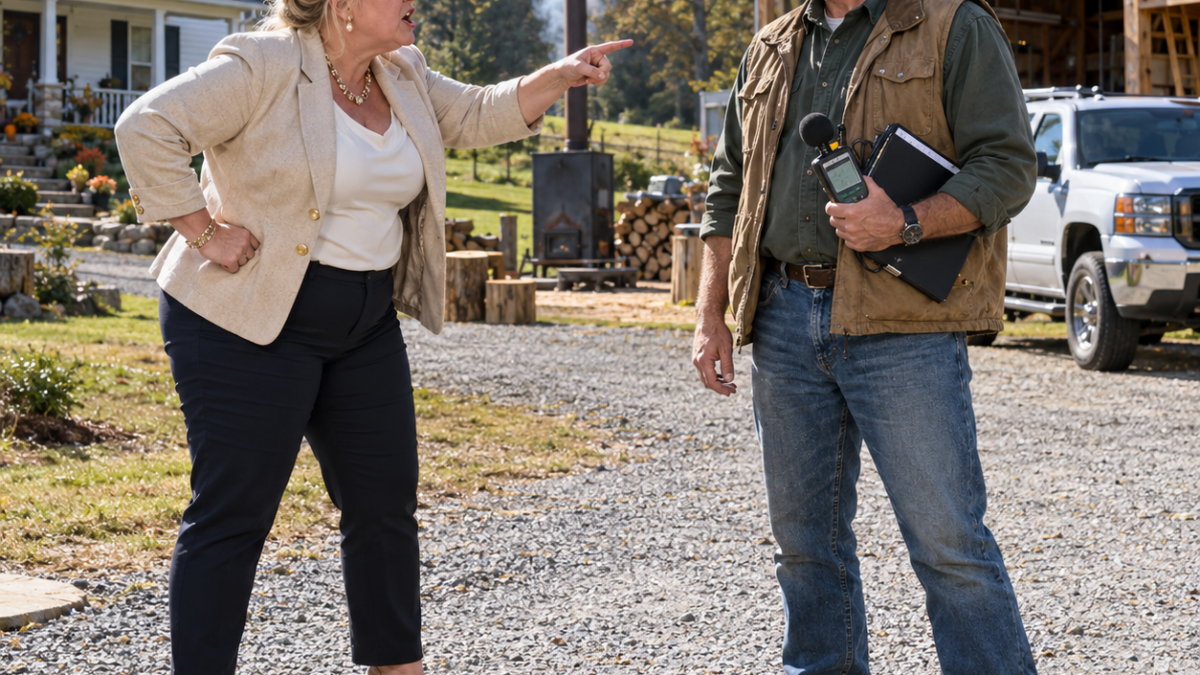
PART 2
Sarah watched me place Karen’s letter into the new folder.
“You’re doing the thing.”
I looked up.
“What thing?”
“The thing where you get very calm and make a folder.”
“I make folders all the time.”
“You make folders when normal people get angry.”
“That’s why folders were invented.”
She gave me the look that had survived twenty-six years of marriage, nine military moves, three deployments, one flooded basement, and my insistence that organizing the garage by tool function was “common sense.”
“Mark.”
“All right.”
I sat across from her.
“I think she believes the HOA can bluff me into paying.”
“Can it?”
“No.”
“Then send her a letter and forget it.”
“That’s the plan.”
Sarah tilted her head.
“That is not your plan.”
I smiled.
“It’s the first part.”
She sighed.
“There it is.”
I drafted the response that night.
No insults.
No sarcasm.
No threats about my job.
I deliberately did not identify myself as the county environmental officer because that fact had nothing to do with whether Karen possessed authority over my land.
She didn’t.
That was enough.
I cited my recorded survey and parcel number.
I attached the portion showing the Whispering Pines boundary ending thirty-eight feet before my property line.
I included the wood stove manufacturer’s EPA certification.
I included the installation permit.
I included the inspection sign-off.
I included the stove’s published particulate-emission rate.
I included the county ordinance governing residential solid-fuel appliances.
Then I wrote one paragraph in plain English.
My property was not a member of Whispering Pines HOA. The association possessed no contractual authority to regulate my workshop, wood supply, heating equipment, or lawful emissions. The five-hundred-dollar demand was therefore rejected.
I added one more sentence.
Any further attempt to collect money from me under authority the association did not possess would be documented and referred to counsel.
I signed it.
Certified mail.
Return receipt requested.
Three days later the green card came back.
Karen Bishop had signed for it herself.
Sarah saw the receipt on the counter.
“Is it over?”
“No.”
“How do you know?”
“Because she signed at nine seventeen yesterday morning.”
“And?”
“At eight twelve this morning she was standing beside our east fence taking pictures.”
Sarah closed her eyes.
“Wonderful.”
Karen’s second letter arrived the next afternoon.
The fine had doubled.
One thousand dollars.
The tone had changed too.
No more polite phrases about voluntary compliance.
Now I was accused of maintaining a public health nuisance and exposing Whispering Pines residents to “dangerous airborne combustion byproducts.”
She demanded immediate cessation of “all wood-burning activity.”
At the bottom, in bold letters, was a threat.
FAILURE TO COMPLY MAY RESULT IN LEGAL ACTION, PROPERTY LIEN PROCEDURES, AND REFERRAL TO FEDERAL ENVIRONMENTAL AUTHORITIES.
I read it twice.
Then I handed it to Sarah.
She reached the lien paragraph.
“Can they actually put one on our property?”
“Legally? No.”
“Could they try?”
“That’s the problem.”
Sarah looked toward the workshop window.
“You know, when we bought this place, you promised me your biggest retirement conflict would be deciding what kind of tomatoes to plant.”
“I never promised tomatoes.”
“You absolutely did.”
“I said garden.”
“You specifically said tomatoes.”
“I dispute the record.”
“Of course you do.”
She smiled, but the concern remained in her eyes.
We had bought the five acres because we were tired.
That sounds strange when you say it out loud.
People imagine military retirement as freedom.
No more orders.
No more uniforms.
No more moving.
But after twenty-two years, stability can feel unfamiliar.
Sarah and I had packed our lives into boxes so many times that cardboard had become a family tradition.
We had lived in North Carolina, Virginia, California, Japan, Germany, and places I still did not discuss over dinner.
Our children were grown.
The last house we rented near my final duty station never felt permanent.
When I retired as a lieutenant colonel, we wanted roots.
Not luxury.
Roots.
We found the land in October.
Five wooded acres on the edge of town.
Pines.
Hickories.
A shallow creek in the back.
Enough slope for drainage.
Enough clearing for a house.
Whispering Pines was visible through the trees but technically separate.
The developer had once tried to buy the parcel and failed.
Its survey description predated the subdivision.
That mattered to me.
I read every Whispering Pines covenant before making the offer.
Sixty pages.
Approved exterior lighting.
Approved fencing materials.
Approved driveway surfaces.
Approved roof colors.
Approved lawn species.
One paragraph about decorative rocks.
I told Sarah, “We are absolutely not joining this thing.”
She replied, “I was going to stop you at decorative rocks.”
We built the house ourselves with a contractor and a rotating cast of retired Marines who considered free beer an acceptable substitute for proper compensation.
The workshop came later.
Thirty by forty.
Simple.
Insulated.
A place for woodworking, repairs, and the endless collection of projects I had postponed during active duty.
The stove was not decorative.
It was efficient.
I spent months comparing models.
Sarah mocked me for building a spreadsheet.
Then she admitted the workshop stayed warmer for less money than our previous electric heater.
The fuel was mostly oak and hickory from storm-damaged trees on our own acreage.
I split it.
Stacked it.
Covered it.
Let it season.
The moisture content typically ran between fourteen and eighteen percent.
Clean fuel.
Hot fire.
Minimal smoke.
The irony was almost offensive.
Karen had accidentally targeted the most obsessively compliant wood stove in the county.
I could have told her who I was.
I chose not to.
There are times when a professional title resolves confusion.
There are other times when it merely changes the argument.
I wanted her to understand that she was wrong because the facts were wrong, not because the person standing across from her happened to work for the government.
So instead, I installed a camera.
A trail camera.
High resolution.
Night vision.
Motion activation.
Telephoto capability.
I climbed thirty feet into a pine near the east property line and mounted it behind a cluster of branches.
Its field of view covered the place where Karen liked to stand with her phone.
I did not point it at her windows.
I did not monitor her house.
It covered my land.
My fence.
My wood shed.
My workshop approach.
If she remained on her property, the camera would record almost nothing.
If she stepped onto mine, it would record everything.
For four days nothing happened.
On the fifth morning, I checked the memory card.
Karen appeared at 6:41 a.m.
Bathrobe.
Slippers.
Phone held above her head.
She stood on her side of the boundary photographing my chimney.
Nothing illegal.
Nothing remarkable.
The next clip showed her at 6:47.
One foot across the survey line.
Then two.
She moved ten feet onto my property to get a better angle.
The next day she came farther.
Then the footage became interesting.
Saturday.
2:16 p.m.
Karen crossed onto my land carrying three orange plastic flags.
She walked toward the wood shed.
Looked back.
Then pushed one flag into the ground beside my firewood stack.
She photographed it.
Moved twenty feet.
Inserted another.
Photographed it.
Then a third.
No markings.
No utility labels.
No survey designation.
Just little orange flags she had brought herself.
Sarah watched the clip beside me.
“What is she doing?”
“Creating pictures.”
“For what?”
“Probably her file.”
“She put the flags there.”
“I know.”
“That’s insane.”
“It’s useful.”
Sarah stared at me.
“You just said useful.”
“Yes.”
“Your neighbor is sneaking onto our property planting fake evidence markers and your reaction is useful?”
I removed the memory card.
“That’s why I married you.”
“No. You married me because I stopped you from buying a motorcycle at thirty-seven.”
“That too.”
The nighttime footage was worse.
Karen arrived after nine with a powerful flashlight.
She crossed the property line and walked toward my workshop.
She shined the beam through one window.
Then another.
She remained there for nearly three minutes.
The timestamp was clear.
Her face was clear.
I saved the original files.
Made two backups.
Logged dates and times.
Then I called a friend named Marcus Thorne.
Marcus had served as a Marine JAG officer before leaving the service and becoming a civil attorney.
He listened without interrupting.
When I finished, he said, “You enjoy this too much.”
“I’m not enjoying anything.”
“You built an evidence log.”
“That is called being responsible.”
“You gave it tabs?”
“Tabs improve efficiency.”
“You gave the trespassing videos different categories?”
I looked at the folders on my desk.
“That is irrelevant.”
Marcus laughed.
“All right, Colonel Filing Cabinet. Here’s what you do. Do not confront her about the camera yet.”
“Why?”
“Because right now she believes her version of events exists uncontested.”
“It doesn’t.”
“She doesn’t know that.”
“So?”
“So people become careless when they believe reality belongs to them.”
I leaned back.
“Sarah said almost the same thing.”
“Sarah is smarter than both of us.”
“That is unfortunately true.”
Marcus became serious.
“Document every demand. Don’t pay. Don’t threaten. Don’t use your county position in a private dispute.”
“I wasn’t planning to.”
“I know. I’m saying it because eventually she may discover where you work and claim you retaliated.”
That mattered.
Government employment changes ordinary disputes.
People assume access.
Power.
Influence.
Sometimes those assumptions are justified.
That is exactly why conflicts have procedures.
“If she files an actual environmental complaint against me,” I said, “I’ll recuse.”
“Immediately.”
“Obviously.”
“And let somebody independent handle it.”
“Yes.”
“Good. Because when this blows up, I want the record cleaner than your garage.”
“That is an unreasonable standard.”
Marcus laughed again.
Then his voice dropped.
“One more thing.”
“What?”
“Don’t underestimate what public-health accusations can do.”
“I don’t.”
“She’s talking about children?”
“Yes.”
“Asthma?”
“Yes.”
“That’s powerful language. People stop asking technical questions when they think a kid is being hurt.”
I knew that too.
Two days later, Dave Miller confirmed it.
Dave lived inside Whispering Pines, two houses down from Karen.
Retired Army sergeant major.
Quiet.
Broad shoulders.
Permanent expression suggesting the universe was wasting his time.
We had become friendly because neither of us liked unnecessary conversation.
I was splitting oak when he approached the fence.
“Caldwell.”
“Miller.”
“Your fan club is expanding.”
I set the maul against the chopping block.
“Karen?”
“She called an emergency meeting.”
“About me?”
“External environmental threat from adjacent properties.”
“That subtle?”
“That’s the title.”
“When?”
“Tuesday.”
“Are you going?”
“I attend every meeting.”
“Why?”
“Free coffee and anger.”
I smiled.
Dave lowered his voice.
“She’s telling people you burn plastic.”
“I don’t.”
“Treated lumber.”
“I don’t.”
“Household trash.”
“No.”
“She told Martha Pearson your smoke caused her son’s asthma attack.”
That stopped me.
“What did Martha say?”
“She looked uncomfortable.”
“Did she agree?”
“Karen didn’t give her much room.”
Dave glanced toward the subdivision.
“Look, most people know Karen exaggerates. But when you say child, asthma, toxic fumes… people get nervous.”
“I understand.”
“She showed pictures.”
“Of my chimney?”
“Blurry ones.”
“Of course.”
“She also told everyone you’re running some kind of unlicensed commercial woodworking operation.”
I stared at him.
“I made Sarah a bookshelf last week.”
Dave nodded gravely.
“International furniture cartel.”
“Apparently.”
He did not smile.
“Mark, she’s building a story.”
“I know.”
“Why aren’t you stopping it?”
“How?”
“Show people your permits.”
“I shouldn’t have to prove innocence at a neighborhood meeting I don’t belong to.”
“No.”
Dave looked at me carefully.
“But sometimes being right and stopping damage are different jobs.”
That stayed with me.
After he left, I documented everything he told me.
Date.
Time.
Summary.
Not because Dave’s recollection proved what Karen had said.
Because patterns matter.
The emergency meeting happened Tuesday night.
I did not attend.
I was not a Whispering Pines member.
Dave called me the next morning.
“She went full apocalypse.”
“How bad?”
“PowerPoint.”
“Dear God.”
“Stock photos of smokestacks.”
I closed my eyes.
“Industrial?”
“Steel mills. Maybe a refinery.”
“My chimney is six inches.”
“I’m aware.”
“What else?”
“Children with nebulizers.”
I stopped writing.
“She showed sick children?”
“Stock photos.”
“Did she use the Pearsons?”
“She talked about their son. Martha finally said her kid has had asthma since he was three and she had no medical evidence connecting anything to you.”
“That should have ended it.”
“It didn’t.”
“Of course not.”
“Karen said parents often fail to recognize environmental triggers.”
I stared at the legal pad.
“She corrected the child’s mother about the child’s medical condition?”
“Yes.”
“Anything else?”
“She said county officials were ignoring you.”
That almost made me laugh.
“Did she say why?”
“Apparently because you’re a former military officer with ‘political connections.’”
“My political connection is Frank Thompson complaining about copier toner.”
Dave continued.
“She says she’s going over the county’s head.”
“To the state?”
“State and EPA.”
I felt the click.
Not emotionally.
Procedurally.
A door opening.
“All right.”
“That’s all you have to say?”
“What do you want me to say?”
“I want you to tell me why you suddenly sound happy.”
“I’m not happy.”
“You Marine officers are terrible liars.”
“I was logistics. We lie with spreadsheets.”
He grunted.
“Whatever you’re doing, don’t leave us alone with her forever.”
The next official HOA letter threatened a lien.
One thousand dollars.
Ten business days.
The letter cited a “unanimous community consensus” supporting immediate enforcement.
I knew from Dave that the vote had been attended by thirty-one households in a subdivision of nearly two hundred.
Several had objected.
Consensus was fantasy.
I copied the letter.
Envelope too.
Postmark.
Certified number.
Everything went into the file.
Then I checked the trail camera again.
More trespassing.
Karen standing beside my wood pile.
Karen photographing my firewood from six feet away.
Karen placing another orange flag.
Karen leaning toward my workshop window.
One video included audio.
Her phone rang while she stood on my property.
She answered.
“No, I’m documenting it now.”
Pause.
“No, he has no idea.”
Another pause.
“I need enough for the EPA to take this seriously.”
I replayed it.
Sarah stood behind me.
“She actually said EPA?”
“Yes.”
“Think she’ll do it?”
“I hope so.”
Sarah turned.
“Mark.”
“I mean procedurally.”
“No, you don’t.”
I looked back at the screen.
“She was warned.”
“That doesn’t mean you should want her to make it worse.”
“I don’t want her to.”
Sarah waited.
“Fine. A part of me wants her to.”
“There.”
“What?”
“That part.”
“What part?”
“The one that scares me more than Karen.”
I closed the laptop.
She sat beside me.
“You know you’re right.”
“Yes.”
“You know she’s lying.”
“Yes.”
“You know the system will prove it.”
“If she enters the system, yes.”
“Then why do you need her destroyed?”
The word bothered me.
“I don’t.”
“You’re acting like you do.”
“I want consequences.”
“So do I.”
Sarah took my hand.
“But consequences and destruction are different things.”
I stared at our fingers.
Twenty-six years.
Her wedding band had a tiny scratch from the time she caught it on a moving box in Okinawa.
Somehow that scratch survived every house, every posting, every chapter.
“I’ll remember that,” I said.
“I’m serious.”
“So am I.”
The call arrived at work two mornings later.
Not from the EPA.
From Frank Thompson.
Frank was director of county planning and development.
He had spent nearly thirty years in public service and possessed the emotional range of a courthouse column.
His phone calls usually lasted under thirty seconds.
“Mark.”
“Frank.”
“Office.”
“I’m in my office.”
“My office.”
“How bad?”
“Bring coffee.”
That was bad.
I carried two cups down the hall.
Frank’s office looked like a paper avalanche had been delayed by zoning regulations.
Maps.
Blueprints.
Permit binders.
Geological surveys.
He pointed toward the door.
“Close it.”
I did.
A folder rested on his desk.
He slid it toward me.
AIR QUALITY COMPLAINT.
SUBJECT: CALDWELL, MARK.
I sat down.
Frank took the coffee.
“High-priority citizen complaint filed through the state environmental hotline. She copied the EPA regional complaint portal too.”
I opened the folder.
Complainant.
Karen Bishop.
Title.
President, Whispering Pines Homeowners Association.
Allegations.
Continuous black smoke.
Burning plastics.
Treated lumber.
Possible household waste.
Chemical odor.
Respiratory distress among nearby residents.
Failure of local authorities to respond.
I kept reading.
Photographs.
Her blurry chimney pictures.
A log documenting dozens of supposed burn events.
Sworn statements from Carol Ames and Gary Walsh, both HOA board members.
Then an affidavit from Karen.
She declared under penalty of applicable law that the statements were true to the best of her knowledge.
Frank watched me.
“How much of this is true?”
“Almost none.”
“Almost?”
“I burn wood in the stove.”
“Seasoned?”
“Yes.”
“Certified unit?”
“You know it is.”
“I’m asking as your director.”
“EPA-certified appliance. Permit approved. Final inspection passed. Fuel moisture generally fourteen to eighteen percent. No treated lumber. No garbage. No plastic. No commercial incineration.”
“Operating a business?”
“No. Personal woodworking.”
Frank flipped pages.
“She claims local enforcement ignored repeated notifications.”
“She never filed one with us.”
“I checked.”
“And?”
“Nothing.”
He leaned back.
“Mark, you understand what happens next.”
“Full recusal.”
“Correct.”
“I don’t assign the investigator.”
“No.”
“I don’t review evidence as supervisor.”
“No.”
“I don’t participate in findings.”
“No.”
“I cooperate as the subject.”
“Yes.”
“Who gets it?”
“Maria Flores.”
I nodded.
Maria was the right choice.
Sharp.
Methodical.
Zero interest in office politics.
I had recruited her three years earlier after seeing her work during a state water-quality internship.
She was now one of our strongest field investigators.
Frank continued.
“She reports directly to me for this case.”
“Good.”
“And because you head environmental compliance, I’m documenting the conflict in writing and temporarily removing you from the chain for this complaint.”
“Good.”
“You sound disappointed.”
“I’m relieved.”
“Liar.”
“I’m also interested.”
Frank almost smiled.
“I know.”
He tapped the complaint.
“One more thing.”
“What?”
“If this woman knowingly fabricated evidence, that becomes a different problem.”
“For her.”
“For everybody.”
He pointed at me.
“And you stay out of that too.”
“Understood.”
“No private crusade.”
“Understood.”
“No using county resources to investigate your neighbor.”
“I have not.”
“No accessing internal data you wouldn’t have as an ordinary citizen.”
“I haven’t.”
“No discussions with Maria except through the case process.”
“Yes.”
Frank studied me.
“Your wife keeping you civilized?”
“Barely.”
“Good woman.”
“The best.”
He pushed a formal notice toward me.
“Congratulations. You’re officially under investigation by your own department.”
I picked it up.
“Do I get a plaque?”
“Get out.”
Maria called that afternoon.
Her tone was professional.
“Mr. Caldwell?”
That told me exactly how she intended to handle it.
“Investigator Flores.”
“I’m contacting you regarding an air-quality complaint referred to our office by the state.”
“I’m aware.”
“I’d like to schedule a site inspection Thursday at nine a.m.”
“I’ll be available.”
“I will need access to the stove, fuel storage, installation documentation, purchase records if available, and any burn logs you maintain.”
“Understood.”
“I will also conduct a normal operating burn for opacity observation.”
“Fine.”
“One more thing.”
“Yes?”
“This investigation is independent.”
“I know.”
“I am not your employee for purposes of this case.”
“I know.”
“If I find a violation, I will document it.”
“I would expect nothing less.”
There was a small pause.
“Good.”
She hung up.
I smiled.
Sarah saw me.
“What?”
“Maria is going to interrogate me.”
“You sound proud.”
“I trained her well.”
Thursday morning came cold and clear.
Maria arrived in a white county truck at exactly nine.
No friendliness.
No jokes.
Clipboard.
Camera.
Pelican equipment case.
She stopped at the driveway.
“Mr. Caldwell.”
“Investigator Flores.”
Sarah was standing in the doorway holding coffee.
Maria glanced at her.
“Mrs. Caldwell?”
“Yes.”
“I may need to ask you a few questions later about typical stove use.”
“Of course.”
Sarah handed me my mug.
Then looked at Maria.
“Please be mean to him.”
Maria’s professional expression cracked for half a second.
“I’ll do my best.”
“Thank you.”
We started in the workshop.
Maria photographed the stove.
Manufacturer label.
Model number.
EPA certification plate.
Clearances.
Floor protection.
Chimney connection.
Flue routing.
She measured distances.
Opened the ash compartment.
Inspected residue.
Checked for evidence of prohibited materials.
Then she walked to the wood shed.
She selected twelve pieces at random.
Split several to expose fresh interior wood.
Moisture meter.
Fifteen percent.
Seventeen.
Fourteen.
Eighteen.
Sixteen.
She logged each value.
“Fuel appears properly seasoned.”
I said nothing.
She turned toward me.
“You can say thank you.”
“I’m trying not to influence the investigator.”
“You’re succeeding at being irritating.”
“Excellent.”
She returned to professional mode.
“Please start the stove exactly as you normally would.”
I crumpled newspaper.
Dry kindling.
Two small oak splits.
Lit it.
Damper open.
Within minutes the fire established.
A little startup smoke appeared.
Normal.
Then the secondary combustion system engaged.
The visible plume almost disappeared.
We went outside.
Maria established an observation position.
Wind speed.
Temperature.
Humidity.
Background.
She recorded a series of visual opacity observations using the accepted county procedure aligned with state guidance.
Five percent during startup.
Then lower.
Near zero during steady burn.
She moved to a second position.
Repeated.
Photographed the stack.
Then she looked toward me.
“Mr. Caldwell, based on today’s operating conditions, I am observing no violation.”
“Understood.”
“That is not the final finding.”
“Understood.”
“I still need interviews.”
“Understood.”
“You enjoy saying understood.”
“Occupational damage.”
She packed the case.
Then she looked toward the pine trees separating us from Whispering Pines.
“Where is the complainant’s property?”
I pointed.
“Beyond those trees. East side.”
“How far from the stack?”
“Property line roughly one hundred twenty feet. Her house farther.”
“The Pearson residence?”
“Closer to two hundred yards from the workshop.”
She noted it.
“Any security footage relevant to the allegations?”
“As a private citizen, I have footage showing the complainant entering my property during the period covered by her evidence log.”
Maria looked at me.
“Has Director Thompson been informed?”
“Yes.”
“Has counsel reviewed it?”
“My private attorney has.”
“I’ll need a copy through evidence intake.”
“I prepared one.”
“Chain of custody sheet?”
“Yes.”
She stared at me.
“Of course you did.”
“I taught the training module.”
“I remember.”
She drove away.
That afternoon she interviewed Karen.
I was not present.
Frank later authorized me to review the final case file after findings were completed, but during the investigation I deliberately stayed away.
The eventual report reconstructed the interview in painful detail.
Karen had prepared.
Tea.
Cookies.
Printed photographs.
A binder labeled AIR QUALITY EMERGENCY.
She described “thick black smoke.”
Maria asked how often.
“Every day.”
What duration?
“Hours.”
What odor?
“Chemical.”
Could she identify specific burned material?
“Plastic, definitely.”
Had she seen plastic being placed in the stove?
“No.”
Treated lumber?
“I can tell.”
How?
“The smell.”
Did she collect an air sample?
“No.”
Soot sample?
Karen claimed black residue coated her windows.
Maria asked to sample it.
Karen said she had cleaned the windows that morning.
Karen claimed damaged flowers.
Maria asked for plant tissue or soil analysis.
None.
Karen cited Martha Pearson’s son.
Maria asked whether the child’s physician had associated symptoms with emissions from my property.
Karen did not know.
Had Martha given permission for her son’s medical condition to be included in a formal complaint?
Karen became defensive.
Maria documented the answer.
Then she opened Karen’s incident log.
October 15.
6:00 p.m. to 10:00 p.m.
“Continuous black smoke and chemical odor.”
The problem was that Sarah and I had been sixty miles away at a Marine Corps birthday dinner.
Our security system showed the workshop unopened all evening.
No fire.
Another date showed heavy smoke at 7:30 a.m.
I had been at a county training seminar overnight.
Another alleged event occurred during a forty-eight-hour period when rain had soaked the property and the stove had not been used.
Maria asked Karen to explain.
Karen said dates could become confused.
Maria asked why her sworn log presented them as exact.
Karen changed the subject.
Then came the property question.
“Ms. Bishop, some of your photographs appear to have been taken from positions on or near Mr. Caldwell’s parcel.”
Karen became indignant.
“I never entered his property.”
“Never?”
“Absolutely never.”
“You remained on HOA property or public right-of-way?”
“Yes.”
“At all times?”
“Yes.”
Maria asked again.
Karen repeated it.
That answer went into the report.
So did the video.
Timestamped.
Karen crossing the boundary.
Karen planting orange flags.
Karen photographing them.
Karen approaching the workshop windows.
Karen on the phone saying she needed enough evidence for the EPA.
She had not merely exaggerated.
She had denied conduct already captured from multiple angles on private property.
Carol Ames broke quickly.
Maria asked whether Carol had personally observed black smoke.
“Not black exactly.”
What color?
“I don’t know.”
How often had she smelled chemicals?
“Well, Karen said—”
Maria stopped her.
What had Carol personally smelled?
Maybe smoke.
From where?
She wasn’t sure.
Did she read the sworn statement before signing?
“Most of it.”
Most?
Karen had drafted it.
Carol wanted to support neighborhood safety.
Gary Walsh lasted longer but ended in the same place.
He had smelled wood smoke once.
Maybe.
He had never seen trash burning.
Never seen plastic.
Never seen black emissions.
He signed because Karen said the complaint needed board support.
Martha Pearson was interviewed separately.
That interview became important to me.
She confirmed her son had asthma.
She also stated clearly that he had been diagnosed years before I built the workshop.
She had never accused my stove of causing an attack.
Karen had raised the issue without her permission.
Martha told Maria something else.
“My son likes Mr. Caldwell.”
Maria asked why that mattered.
“Because Mark made him a birdhouse.”
I had forgotten about it.
The previous spring, Martha’s son had watched me cutting cedar.
He stood at the fence asking questions until I finally invited Martha over with him and showed him how to assemble a simple birdhouse.
The kid painted it blue.
It still hung in their yard.
Martha said, “I would never knowingly expose my son to smoke if I believed it was dangerous. But I also don’t want his illness used to scare people.”
That line ended up quoted in the report.
The final finding arrived nine days later.
Frank called me into his office.
Maria was already there.
A thick file sat on the conference table.
Frank pointed at the chair.
“Citizen Caldwell.”
“Director Thompson.”
Maria slid the report toward me.
I read the executive summary first.
Complaint not substantiated.
No evidence of prohibited fuel combustion.
Stove certified and properly installed.
Observed emissions substantially below applicable opacity threshold under tested conditions.
Fuel moisture consistent with clean combustion.
No evidence of commercial incineration.
No documented causal connection between stove operation and alleged health impacts.
Then the second section.
Complainant credibility concerns.
Material inconsistencies between sworn incident log and objective records.
Supporting witnesses did not substantiate core claims.
Complainant denied entering subject property despite timestamped video demonstrating multiple unauthorized entries.
Evidence flags photographed by complainant were observed in video being carried onto and placed within subject property by complainant.
I stopped.
Read that paragraph again.
Then looked at Maria.
“You wrote exactly what happened.”
“Yes.”
“No adjectives.”
“No.”
“Good.”
She almost smiled.
Frank tapped the file.
“Now we discuss the other part.”
I closed the report.
“Potential false statements.”
“And trespass.”
“And attempted HOA collection.”
“That’s private.”
“Yes.”
Frank leaned forward.
“You do not decide whether the false complaint becomes criminal.”
“Agreed.”
“You do not make a referral in your official capacity.”
“Agreed.”
“County counsel and I handle that.”
“Agreed.”
“You can provide your private evidence as the victim if requested.”
“Yes.”
Maria added, “And the environmental file remains preserved independent of your private dispute.”
“Exactly.”
Frank studied me.
“You look disappointed.”
“No.”
“Mark.”
“All right. I wanted to be there when Karen read this.”
Maria crossed her arms.
“You’re not twelve.”
“I’m aware.”
“Are you?”
Frank laughed.
I carried my citizen copy home.
Sarah read the conclusion at the kitchen table.
When she finished, she set it down.
“So you won.”
“No.”
“You were cleared.”
“Yes.”
“She lied.”
“Yes.”
“She was caught.”
“Yes.”
“That sounds like winning.”
I looked toward the window.
Across the trees, Whispering Pines roofs appeared between the pines.
“This stops the government complaint.”
“But not her.”
“No.”
Sarah tapped the report.
“What are you going to do?”
“Call Marcus.”
She sighed.
“Of course you are.”
Marcus read everything.
The HOA demands.
Certified receipts.
Lien threat.
Dave’s written statement describing the emergency meeting.
Trail camera footage.
Maria’s final report.
My survey.
The environmental test results.
When he finished, he leaned back behind his desk.
“Well.”
“What?”
“You brought me a very organized disaster.”
“How bad?”
“For her?”
“Yes.”
“Potentially very.”
I sat back.
Marcus picked up the HOA’s thousand-dollar demand.
“This alone is interesting. Association demanding money from a nonmember while being repeatedly informed it lacks jurisdiction.”
He lifted the trespass evidence.
“This is better.”
Then the government report.
“This is the spine.”
“Why?”
“Because it removes the argument that you’re just two angry neighbors telling different stories.”
He tapped the report.
“An independent investigator examined the actual environmental allegations and found them unsupported. The same investigation documented evidence contradicting her statements.”
“I want it stopped.”
“Good.”
“I don’t want to bankrupt the HOA.”
“Better.”
“I don’t want residents paying for Karen’s behavior.”
“Best thing you’ve said.”
“I want the false statements retracted.”
“Yes.”
“I want the collection demands withdrawn.”
“Yes.”
“I want her to stop entering my property.”
“Obviously.”
“And I think she should be removed from authority.”
Marcus studied me.
“That last one is not really your decision.”
“I know.”
“You can request the board address her conduct. Homeowners decide governance.”
“Fine.”
“Damages?”
“I’ve spent money on you.”
“Devastating.”
“I mean it.”
“So do I.”
I thought about it.
“I don’t want personal money.”
“You may be entitled to some.”
“I don’t care.”
Marcus smiled slowly.
“Charity.”
“What?”
“If they want to resolve it, ask for a modest payment to something that matters to you.”
“Like what?”
“Veterans housing?”
That got my attention.
Sarah and I had volunteered with a nonprofit helping homeless veterans transition into permanent housing.
Five thousand dollars could furnish several apartments.
“That I’d accept.”
Marcus opened a blank document.
“Then we write.”
The letter took two hours.
Not because Marcus used dramatic language.
Because every sentence was supported.
First, the environmental complaint.
Official disposition: unsubstantiated.
Second, the HOA’s lack of jurisdiction.
Survey attached.
Third, the attempted fines.
Copies attached.
Fourth, threat of lien.
Copy attached.
Fifth, defamatory statements attributed to Karen at the emergency meeting.
Dave’s signed account attached.
Sixth, repeated trespass.
Still frames from the trail camera attached.
Not the full video.
Seventh, false denial during the official investigation.
Referenced only through the public disposition and evidence available to counsel.
Then our settlement demands.
Withdraw every fine and threatened lien involving my property.
Cease all HOA enforcement attempts against the Caldwell parcel unless a future legal basis genuinely arose.
Publicly retract the claims that I burned toxic materials, endangered neighborhood children, or operated an illegal incinerator.
Reimburse reasonable legal costs.
Adopt a formal board position regarding Karen’s authority and conduct.
Pay five thousand dollars to the veterans housing nonprofit as settlement of my private civil claims.
Marcus added one crucial provision.
No admission by innocent homeowners.
No assessment charged to the neighborhood solely to satisfy the settlement without membership approval.
“I don’t want Mrs. Gable paying because Karen hates my chimney,” I said.
Marcus nodded.
“Agreed.”
He sent the demand not only to Karen.
Every board member received one personally.
Carol.
Gary.
Susan Meyers.
Thomas Bell.
Karen Bishop.
Five separate signature-required deliveries.
The reaction took less than six hours.
Dave called me.
“You really did it.”
“Did what?”
“Gary is having a nervous breakdown.”
“That seems dramatic.”
“He called me asking whether his house can be taken.”
“It cannot.”
“That’s what I told him.”
“What else?”
“Carol says Karen never told them about the trespassing.”
“Why would she?”
“She also never showed them your certified letters.”
I sat up.
“What?”
“According to Carol, Karen told the board you refused to provide proof your property was outside the HOA.”
I looked toward my file cabinet.
The signed return receipt proving Karen received exactly that proof sat inside.
“She lied to her own board.”
“Apparently.”
Dave lowered his voice.
“People are furious.”
“At me?”
“At her.”
“Why now?”
“Because for years everybody thought she was just difficult.”
“And now?”
“Now they think she exposed the association to a lawsuit because she wanted to win a fight with somebody who doesn’t even belong to the association.”
“That’s more accurate.”
Dave continued.
“A petition is circulating.”
“For what?”
“Emergency meeting.”
I felt a flicker of satisfaction.
Sarah’s voice immediately entered my head.
Consequences and destruction are different things.
“How many signatures?”
“Thirty percent already.”
“They need twenty-five under the bylaws, right?”
“Yep.”
“So meeting is valid.”
“Mark.”
“Yes?”
“This isn’t just about you anymore.”
“I know.”
“No, I mean it. Mrs. Gable has twelve violation letters. Rodriguez family has seven. One guy has been fined over the same basketball hoop four times.”
I remembered Karen’s confidence.
Pollution does not respect property lines.
Apparently neither did resentment.
Within forty-eight hours, seventy-five percent of Whispering Pines households had signed the petition.
The emergency meeting notice appeared on the clubhouse board.
REVIEW OF PRESIDENTIAL CONDUCT.
LEGAL EXPOSURE TO THE ASSOCIATION.
VOTE OF NO CONFIDENCE.
Sarah read the notice from Dave’s photograph.
“She’s going to come after you hard.”
“I know.”
“You going?”
“Marcus thinks I should.”
“Do you?”
“Yes.”
Sarah folded her arms.
“Then promise me something.”
“What?”
“You will not enjoy humiliating her.”
“That is not a promise a human can make.”
“Mark.”
“I can promise I won’t add humiliation that isn’t necessary.”
“Better.”
“And I’ll stick to facts.”
“Better.”
“And I will not quote her Christmas-decoration memo.”
She smiled.
“I never asked for that.”
“It was extremely tempting.”
The clubhouse was packed the following Wednesday.
Whispering Pines had never seen turnout like it.
People stood against the walls.
Others watched from the open hallway.
Marcus and I sat in the rear.
That was deliberate.
This was their association.
Their board.
Their vote.
I was evidence.
Not the leader.
Karen sat at the center of the board table wearing a navy blazer.
Carol sat far enough from her that the gap looked intentional.
Gary kept drinking water.
Susan and Thomas had stacks of papers in front of them.
Karen struck the gavel.
“This unauthorized gathering will come to order.”
Dave stood immediately.
“It’s authorized.”
“I was speaking.”
“So was I.”
Karen’s eyes narrowed.
Dave held up the petition.
“Section 7.4 allows an emergency membership meeting when requested by twenty-five percent of members. We have signatures representing seventy-seven percent.”
“Many were obtained under false pretenses.”
“Then homeowners can decide that themselves.”
A murmur of approval moved through the room.
Karen struck the gavel again.
“This meeting has become a harassment campaign against an elected officer.”
Susan leaned toward her microphone.
“Karen, we need to address the attorney letter.”
Karen turned.
“You do not speak until recognized.”
Susan stared at her.
Then slowly pushed her microphone closer.
“I’m a board member.”
For the first time, Karen looked uncertain.
Dave opened a copy of Marcus’s letter.
“I’m going to summarize what the association received.”
“You are not authorized to disclose privileged legal—”
Marcus stood.
“My letter to the board is not privileged merely because an attorney wrote it.”
Every head turned.
Karen’s face changed when she saw him.
Marcus introduced himself.
Then sat.
Dave began.
He summarized my property survey.
The certification of the stove.
The failed environmental complaint.
The HOA fines.
The lien threat.
The trespassing evidence.
With every point, the room grew quieter.
When he mentioned Karen entering my property, someone said, “What?”
Dave continued.
He described video showing orange evidence flags being carried onto my land by the same person who later photographed them.
Karen slammed the gavel.
“That footage is misleading.”
I remained seated.
Dave looked toward her.
“Did you enter Mr. Caldwell’s property?”
“No.”
Marcus glanced at me.
I saw the question.
Use the video?
I shook my head.
Not yet.
Dave held up the county report.
“The independent investigation found video evidence of multiple entries.”
Karen’s voice rose.
“The county investigation is corrupt.”
There it was.
The room shifted.
“You’re accusing the county?” Thomas asked.
“Yes.”
“Based on what?”
“Based on the fact that he works there!”
Heads turned toward me.
Whispers spread.
This was the moment Karen had expected to control.
She pointed across the room.
“He didn’t tell you that, did he?”
I stood.
“No.”
“Of course not!”
I looked around the room.
“My name is Mark Caldwell. I am the county’s senior environmental compliance officer.”
The murmurs became louder.
Karen smiled for the first time.
A triumphant, desperate smile.
“There! Conflict of interest.”
I continued.
“That is exactly why I had no role in investigating the complaint.”
Her smile weakened.
“The day the state referred Karen’s complaint to the county, my director formally removed me from the case chain.”
I held up the recusal memorandum.
“Maria Flores conducted the investigation independently and reported directly to Director Frank Thompson.”
Karen interrupted.
“She works for you.”
“Not on this case.”
“You trained her!”
“I did.”
“That proves it.”
“No. It proves we anticipated the appearance problem and documented the recusal before she inspected anything.”
I placed the memorandum on the table near Dave.
“The stove inspection, witness interviews, evidence review, and final findings were hers. The director approved the report. County counsel reviewed the conflict procedure.”
Gary stared at Karen.
“You told us the county refused to investigate.”
The room became silent.
Karen looked at him.
“I said they protected him.”
“No,” Gary replied. “You told us nobody came.”
Karen’s mouth tightened.
Carol spoke next.
“You told me he never provided proof his land was outside Whispering Pines.”
I reached into my folder.
Marcus stopped me with one hand.
Then produced the certified-mail receipt himself.
“Mrs. Bishop personally signed for the parcel survey and jurisdictional explanation months ago.”
Carol stared at Karen.
“Is that your signature?”
Karen did not answer.
Susan pushed another document forward.
“What about the thousand-dollar fine?”
Karen’s voice sharpened.
“He was harming the neighborhood.”
“That wasn’t my question.”
“I acted under emergency authority.”
“What emergency authority?”
Karen looked toward her binder.
Susan continued.
“I read the bylaws three times. There is no provision allowing the president to fine nonmembers.”
People began talking.
Karen hammered the gavel.
“Order!”
Nobody quieted.
She hit it again.
“I said order!”
Dave stood.
The room settled.
Not because Karen demanded it.
Because Dave asked.
That difference was visible on Karen’s face.
Dave looked toward me.
“Mr. Caldwell, can you explain what the environmental investigation actually found?”
I walked toward the front.
No projector.
No dramatic reveal.
Just paper.
“The complaint accused me of burning plastic, treated lumber, and other prohibited materials.”
I held up the official finding.
“The investigator found no evidence supporting those claims.”
I placed another page down.
“My stove is certified and legally installed.”
Another.
“Observed emissions during the inspection were well below the applicable limit.”
Another.
“The firewood tested in the appropriate moisture range.”
Another.
“The alleged burn log contained events on dates when objective records showed the stove was not operating.”
A murmur moved through the room.
Karen stood.
“He forged his logs.”
I looked at her.
“The dates were corroborated by security-system data and other records reviewed by the investigator.”
“She believes whatever you tell her.”
“No.”
My voice remained level.
“That’s the difference between an investigation and an accusation.”
Karen’s face reddened.
“You think your government title makes you untouchable?”
“No.”
“I think my title required me to step aside.”
Silence.
I continued.
“You filed a complaint. You had every right to do that.”
She blinked.
That wasn’t the answer she expected.
“If you genuinely believed my stove violated environmental law, reporting it was appropriate.”
Several people shifted.
“But once you filed it, facts mattered.”
I looked directly at her.
“The fact that your complaint failed does not make filing it wrong.”
She seemed almost relieved.
Then I continued.
“What matters is whether evidence was knowingly fabricated.”
Her face changed again.
“Whether dates were invented.”
I glanced at Carol and Gary.
“Whether people were asked to sign statements they had not verified.”
Then back to Karen.
“And whether photographs presented as proof were created after someone entered my property and placed objects there herself.”
The room went still.
Karen’s hand gripped the table.
“That’s a lie.”
Marcus stood.
“Karen.”
She snapped toward him.
“I would recommend you be extremely careful with that word.”
He looked toward the homeowners.
“My client has avoided publicly releasing the security footage because this should not become entertainment.”
Then back to Karen.
“But the footage exists.”
She stared at him.
“Multiple timestamped clips.”
Her eyes flicked toward me.
Marcus continued.
“And copies have been preserved.”
Karen sat slowly.
The air in the room changed.
This was no longer an argument.
It was gravity.
Martha Pearson stood from the third row.
I had not expected her to speak.
Karen saw her.
“Martha—”
“No.”
Martha’s voice trembled.
“My son is not your evidence.”
Karen froze.
“My son has asthma,” Martha said. “He has had asthma since preschool.”
She looked around the room.
“Karen used his condition in meetings and in that complaint without asking me.”
“I was protecting him,” Karen said.
“No.”
Martha shook her head.
“You were using him.”
“That smoke could still—”
“The county tested it.”
“You don’t know what happens when—”
“My son’s doctor has never said Mark’s stove caused anything.”
Martha’s eyes filled.
“My child heard neighbors talking about ‘the toxic smoke making him sick.’ He asked me if Mr. Caldwell was hurting him.”
She wiped her cheek.
“You made my eight-year-old afraid of a man who built him a birdhouse.”
Nobody moved.
Karen looked toward me.
I said nothing.
Martha sat.
Then Mrs. Gable stood.
“You fined me fifty dollars over a welcome mat.”
Karen rolled her eyes.
“That is irrelevant.”
“It said Welcome Home.”
“Wrong dimensions.”
Someone laughed.
Not loudly.
Then Rodriguez stood.
“You measured my son’s basketball hoop.”
“It violated setback standards.”
“By a quarter inch.”
“The rule does not say almost.”
Another homeowner spoke.
“You threatened me because my garbage cans were visible at two fifteen.”
“Collection hours ended at two.”
“I was at my wife’s cancer appointment.”
Karen looked away.
Another.
“My granddaughter’s chalk drawings.”
Another.
“My flag bracket.”
Another.
“Christmas lights.”
Another.
“Vegetable planter.”
The stories came faster.
Some were legitimate violations handled badly.
Others sounded absurd.
That distinction mattered to me.
I raised a hand.
Dave looked at me.
“Can I say something?”
He nodded.
I faced the residents.
“Not every rule Karen enforced was necessarily invalid.”
Several people groaned.
I continued.
“That matters.”
Karen looked almost surprised.
“A neighborhood association has lawful responsibilities. Drainage. Common property. Safety. Finances. Some architectural rules are valid contracts for people who bought into them.”
I looked around.
“If you remove Karen tonight and then decide rules only apply when you like them, you will build the same problem with a different face.”
The room quieted.
“What happened to me was wrong because the HOA had no jurisdiction.”
I gestured toward Martha.
“What happened with her son was wrong because medical fear was turned into leverage without evidence.”
Then toward the files.
“What happens next needs to be based on process.”
Dave nodded slowly.
“So what are you asking us to do?”
“Nothing for me.”
Karen laughed bitterly.
“Please.”
I looked at her.
“I already have legal counsel.”
Then back to Dave.
“You’re deciding who should lead your association.”
I returned to my seat.
That was all.
No speech about revenge.
No threats of jail.
No announcement that I could ruin Karen through my county office.
Because I couldn’t.
And even if I could have, I should not.
Dave raised the petition.
“The motion before the membership is no confidence in President Karen Bishop and removal from the office of president subject to the association’s bylaws.”
Karen rose.
“This is a lynching.”
“No,” Dave said.
“It’s a vote.”
“You people don’t understand what I’ve done for you.”
Nobody answered.
Karen looked toward Carol.
“Tell them.”
Carol stared at her hands.
“Karen…”
“Tell them what this neighborhood was like before me.”
Carol’s voice broke.
“You told me the complaint was accurate.”
“It was.”
“You asked me to sign something I didn’t fully read.”
“You agreed with it.”
“I trusted you.”
Karen turned to Gary.
“Gary?”
He shook his head.
“I’m done.”
Her expression cracked.
Not completely.
Just enough.
For the first time, she looked less like an HOA president and more like a frightened woman watching a room refuse to obey her.
“You’re all going to regret this.”
Dave looked at the membership list.
“We’ll vote by written ballot.”
That was smart.
No performance.
No roar.
No intimidation.
Each household representative received a ballot.
Remove.
Retain.
A small committee counted them at a table visible to everyone.
Karen remained seated.
Hands folded.
Back rigid.
Sarah had come with me but sat near the door.
While votes were counted, she touched my arm.
“You okay?”
“Yes.”
“You look disappointed.”
“I’m not.”
“Mark.”
I exhaled.
“I thought this moment would feel better.”
Sarah smiled sadly.
“That’s because you imagined revenge.”
“And this is?”
“Consequences.”
I looked toward Karen.
She was staring at the tabletop.
Seventy-four percent of eligible households had participated.
The result was overwhelming.
Remove.
Dave announced it.
Nobody cheered.
I was grateful for that.
Karen closed her eyes.
The gavel remained in front of her.
After several seconds she reached for it.
Then stopped.
She stood.
Picked up her purse.
Walked toward the aisle.
Halfway to the door she stopped beside me.
“You could have told me.”
I looked up.
“Told you what?”
“Who you were.”
“My job?”
“Yes.”
“And then what?”
She stared.
“You would have stopped?”
No answer.
“You would have accepted that my stove was legal because I had a county title?”
Her jaw tightened.
“That isn’t what I said.”
“But that’s the problem.”
I stood.
“The documents I sent you were enough.”
She looked away.
“You didn’t need to know who I was.”
I lowered my voice.
“You needed to accept that you weren’t entitled to control me.”
Her eyes became wet.
For a second I thought she might say something honest.
Instead she whispered, “You humiliated me.”
“No.”
I looked toward the room.
“You kept escalating after people showed you facts.”
She left.
The door closed behind her.
That was the end of Karen Bishop as president of Whispering Pines.
It was not the end of the story.
The remaining board met with Marcus the following morning.
Without Karen in the room, the conversation changed dramatically.
Susan apologized before we even sat.
“I should have asked more questions.”
Carol looked exhausted.
“I believed her.”
Gary said nothing for several minutes.
Then finally spoke.
“I knew she could be difficult.”
Marcus folded his hands.
“Difficult is not the legal issue.”
Gary nodded.
“I know.”
Dave attended as the homeowners’ designated interim representative.
We reviewed the settlement demands.
The fines against me were formally withdrawn.
The lien threat was rescinded in writing.
The HOA acknowledged my parcel was outside its jurisdiction.
The association agreed to stop enforcement contact regarding lawful activities on my land.
Legal fees were reimbursed from an insurance-approved claims-resolution fund, not through a new special assessment.
The five-thousand-dollar payment to the veterans housing nonprofit was funded through a negotiated combination of Karen’s individual contribution and existing board discretionary reserves after counsel reviewed what could legally be used.
I insisted the HOA not simply dump the cost on ordinary residents without disclosure.
Marcus drafted the public retraction.
I edited it.
He complained.
“You made it boring.”
“It should be boring.”
“It needs impact.”
“It needs accuracy.”
“You were more fun in the Marines.”
“No, I wasn’t.”
The final version appeared in the next newsletter.
The previous board president had made unsupported statements alleging that Mark Caldwell operated an illegal combustion facility, burned prohibited materials, endangered residents, and refused to cooperate with environmental authorities.
Those statements were withdrawn.
The county environmental investigation had found no air-quality violation.
The Caldwell parcel was not subject to Whispering Pines HOA covenants.
The association apologized for enforcement demands issued without jurisdiction.
Simple.
Factual.
Devastating.
The false-report issue took a separate path.
Frank and county counsel handled it without me.
I was interviewed as the subject of the original complaint and as the owner of the security footage.
Maria supplied her investigative file.
Karen retained an attorney.
The district attorney reviewed whether her statements met the elements of any criminal offense under state law.
Unlike neighborhood gossip, legal systems care about exact wording, intent, and statutory definitions.
Not every lie becomes a crime.
Not every false complaint becomes prosecution.
Eventually Karen entered a negotiated diversion agreement connected to the trespass and false-statement issues.
She paid a fine.
Completed community service.
Agreed not to enter my property.
No dramatic prison sentence.
No handcuffs at the clubhouse.
No federal agents descending from black SUVs.
Reality is usually less cinematic.
It was also enough.
Marcus asked whether I was disappointed.
“No.”
“You wanted prison in your imagination.”
“I wanted accountability.”
“That is the answer husbands give when their wives are nearby.”
Sarah was nearby.
She raised one eyebrow.
I corrected myself.
“Fine. Early on, part of me wanted something worse.”
“Better.”
“But after the meeting…”
I thought about Karen standing alone beside the gavel.
“I stopped caring.”
Marcus nodded.
“That’s usually when people are actually ready to move on.”
Whispering Pines did something more important.
It rewrote itself.
Not literally at first.
Culturally.
Dave became interim president because nobody else wanted the job.
He accepted only after announcing, “If any of you call me about welcome mats, I am resigning immediately.”
His first meeting lasted forty-one minutes.
The previous meetings often ran three hours.
Sarah and I attended as guests because the new board wanted to discuss relations with adjacent properties.
Dave opened with three rules.
“We will follow the bylaws.”
“We will document decisions.”
“And nobody will weaponize a child’s medical condition, federal agencies, or decorative rocks.”
Mrs. Gable applauded.
The board reviewed old enforcement cases.
Some fines were canceled.
Some were reduced.
Some remained.
That caused arguments.
A homeowner named Brett expected his repeated parking violations to disappear because “Karen was corrupt.”
Dave refused.
“You blocked a fire hydrant three times.”
“But Karen issued the fines.”
“The hydrant was still blocked.”
“So we’re keeping her punishments?”
“We’re keeping valid enforcement.”
Brett pointed toward me.
“Ask Caldwell.”
I had been sitting quietly in the back.
Everyone turned.
I sighed.
“My property being outside the HOA did not magically erase fire codes inside it.”
Brett looked betrayed.
“Whose side are you on?”
“The hydrant’s.”
People laughed.
He did not.
But the fine stayed.
That moment mattered more than Karen’s removal.
A system becomes legitimate not when it punishes your enemy.
It becomes legitimate when it applies the same standard after your enemy is gone.
The trail-camera footage never went online.
That surprised people.
Several residents asked for it.
One wanted to post it in the private group.
Another wanted to put still images in the newsletter.
I refused.
The clips remained evidence.
Not entertainment.
Sarah approved.
“You’re learning.”
“I have always been mature.”
“You labeled the video folder OPERATION PINK TRACKSUIT.”
“That was internal nomenclature.”
She laughed so hard she had to sit down.
Life slowly became what we originally wanted.
Quiet.
The workshop stopped feeling like contested territory.
Cold mornings returned.
I lit the stove.
The oak caught.
Secondary flames rolled across the top of the firebox.
Outside, the chimney released a brief pale wisp.
Then mostly heat shimmer.
Dave sometimes wandered through the trees with coffee.
Technically there was a road route between our properties.
He preferred the woods.
One morning he stood beside the fire rubbing his hands.
“I hate admitting this.”
“What?”
“This stove is nice.”
“You spent six months calling it Toxic Command.”
“That was funny.”
“It was inaccurate.”
“Still funny.”
He looked around the workshop.
Walnut boards.
Clamps.
Chisels.
Half-built table.
“You ever sell anything?”
“No.”
“Then why did Karen think this was commercial?”
“Because I own more than one tool.”
Dave nodded.
“Suspicious.”
He sipped coffee.
“You know Martha’s kid still has that birdhouse.”
“I heard.”
“He tells people the county environmental officer made it.”
“That sounds corrupt.”
“He says it like you’re Batman.”
“I am substantially less useful in a cape.”
Winter turned to spring.
The veterans charity invited Sarah and me to see where the settlement donation had gone.
I almost declined.
Marcus insisted.
“You fought for it. Go look.”
The nonprofit had used the money as part of a furnishing fund for veterans transitioning from temporary shelters into apartments.
Beds.
Dressers.
Kitchen tables.
Basic supplies.
We visited one apartment before the resident moved in.
Nothing fancy.
One bedroom.
Small kitchen.
A couch donated by a furniture store.
On the counter sat a coffee maker.
Sarah ran her hand over the new table.
“This is better than damages.”
“Yeah.”
The program director thanked us.
I hated that part.
“It wasn’t my money.”
“It was because of your settlement.”
“I didn’t earn it.”
She looked at me.
“Neither did the veteran who needs this apartment.”
That stopped me.
She smiled.
“Sometimes good money comes from ugly places.”
I thought about Karen’s thousand-dollar fine.
Her threat of federal prison.
Her blurry smoke photographs.
Her complaint.
All of it eventually becoming a kitchen table in an apartment for someone starting again.
Sarah squeezed my hand.
“Not bad revenge.”
I looked at her.
“Consequences.”
She smiled.
“Sure.”
Karen remained in Whispering Pines for several months.
I saw her occasionally.
At the grocery store.
Driving.
Collecting mail.
She no longer wore the bright tracksuits as often.
Or maybe I simply noticed less.
People said she had become isolated.
I did not celebrate that.
I also did not rescue her from it.
Consequences do not require cruelty, but they also do not require pretending nothing happened.
One Saturday afternoon, I was stacking freshly split hickory when I heard a voice at the property line.
“Mark.”
I looked up.
Karen stood beside one of the survey markers.
On her side.
That detail did not escape me.
I set down the wood.
“What do you need?”
She held an envelope.
“I’m not crossing.”
“Good.”
She flinched.
“I wanted to give you this.”
“You can leave it on the post.”
She placed the envelope there.
Then stepped back.
I remained where I was.
She looked thinner.
Tired.
Not broken.
Just reduced somehow.
The absence of official authority made her look more like an ordinary neighbor.
“I’m selling the house,” she said.
“I heard.”
“Of course you did.”
“Dave talks.”
A faint smile appeared and disappeared.
“He always did.”
Neither of us spoke.
Finally she looked toward the workshop chimney.
“No smoke today.”
“Warm outside.”
She nodded.
Then said, “I really did think it was dangerous.”
“At first?”
She looked at me sharply.
“You read the interview.”
“It became part of the final case file.”
Karen stared at the ground.
“At first, yes.”
“What changed?”
“You wouldn’t listen to me.”
“I listened.”
“You didn’t obey.”
There it was.
No lawyer.
No gavel.
No audience.
Just the simplest truth in the entire story.
“You’re right,” I said.
She seemed surprised.
“You told me what you wanted.”
I continued.
“I considered it. I checked the law. I showed you the documentation. Then I said no.”
Karen’s eyes filled.
“You made me feel powerless.”
“I didn’t make you powerless.”
“You don’t understand.”
“No.”
I waited.
“Explain.”
She folded her arms, then unfolded them.
“My husband died six years ago.”
I knew that vaguely.
“I’m sorry.”
“He handled everything.”
She laughed once.
“Too much, probably.”
She looked toward her house.
“When he died, I couldn’t control anything.”
The sentence came quietly.
“Bills. Repairs. Insurance. The house. People telling me what paperwork I needed. Everybody had an answer. Everybody knew more than I did.”
She swallowed.
“The HOA was the first place where people listened when I spoke.”
I said nothing.
“I became secretary.”
Then vice president.
Then president.
“And suddenly nobody could tell me I didn’t understand.”
She looked at me.
“Do you know what that felt like?”
“Yes.”
That surprised her.
“You were a lieutenant colonel.”
“Exactly.”
She frowned.
“In the military, rank can make people confuse obedience with agreement.”
The wind moved through the pines.
“I had people follow my orders because they had to. If you aren’t careful, you start believing that means you’re always right.”
Karen watched me.
“What stopped you?”
“People who corrected me.”
“Subordinates?”
“Sometimes.”
“They could do that?”
“The good ones found a way.”
I smiled slightly.
“Sarah had no chain-of-command concerns.”
Karen almost laughed.
Then her expression collapsed again.
“I knew your land wasn’t in the HOA.”
I already knew.
Hearing it still mattered.
“You knew?”
“Yes.”
“When?”
“Before the second fine.”
My jaw tightened.
“I checked after you sent the survey.”
“Then why keep going?”
She looked toward the workshop.
“Because if I admitted you were right, everybody else would start questioning me.”
There it was.
The final missing piece.
Not pollution.
Not property values.
Not children.
Authority.
“You used Martha’s son.”
Karen closed her eyes.
“I know.”
“That was worse than what you did to me.”
“I know.”
“You planted flags on my property.”
“I know.”
“You filed dates you hadn’t verified.”
“I know.”
“You asked Carol and Gary to sign statements.”
“I know.”
She looked at me again.
“I am sorry.”
I wanted a larger feeling.
Vindication.
Satisfaction.
Triumph.
Instead I felt tired.
“I believe you’re sorry now.”
She nodded.
“That’s fair.”
“I don’t know what you want me to do with that.”
“Nothing.”
She glanced toward the envelope.
“I just wanted to say it without a lawyer.”
Then she turned.
“Karen.”
She stopped.
“If you’re asking whether I forgive you…”
She looked back.
“I wasn’t.”
“You were.”
Her eyes dropped.
“Maybe.”
I thought about Sarah.
Consequences and destruction.
The veterans apartment.
Martha’s son.
The orange flags.
The ridiculous letters.
“I don’t want to spend the rest of my life angry at you.”
Karen’s face tightened.
“That isn’t forgiveness.”
“It’s the part I can give you today.”
She nodded.
“I’ll take it.”
She walked home.
I opened the envelope that evening.
The letter was handwritten.
No legal language.
No excuses.
She apologized to me.
To Sarah.
To Martha.
To the other residents.
She admitted she knew the jurisdiction claim was wrong before the second fine.
She admitted the environmental campaign became personal.
She wrote that she had spent years convincing herself that strict control was the same as leadership.
At the bottom was one line.
Being obeyed made me feel safe, and I hurt people every time they reminded me I wasn’t entitled to obedience.
Sarah read it.
Then folded it carefully.
“That’s more honest than I expected.”
“Me too.”
“You writing back?”
“I don’t know.”
“You don’t have to.”
“I know.”
Three days later, I wrote one paragraph.
Karen,
Thank you for telling the truth without being forced to. I hope wherever you go next, you find a life that does not require other people to become smaller so you can feel secure. I wish you peace.
Mark.
I mailed it.
She moved two months later.
A young family bought her house.
Two children.
One enormous dog.
Their first week in Whispering Pines, the dog dug a hole in the front lawn large enough to qualify for its own postal code.
Dave sent me a photograph.
NEW ENVIRONMENTAL THREAT.
I replied:
CONTACT EPA IMMEDIATELY.
He wrote back:
TOO LATE. DOG HAS LAWYER.
Sarah laughed for five minutes.
The new board lasted.
That was the real test.
People assume removing one difficult leader solves institutional problems.
It doesn’t.
Systems train behavior.
If rules reward secrecy, secrecy returns.
If one person can issue penalties without review, eventually someone will.
So Whispering Pines changed procedures.
No individual officer could impose significant fines alone.
Complaints required documented evidence.
Appeals went to members not involved in the original decision.
Financial records became easier to inspect.
Board correspondence affecting legal rights had to be preserved.
Medical claims could not be used in enforcement communications without consent and evidence.
And most importantly, the board began separating preference from authority.
“I don’t like it” stopped being treated as a legal category.
The association still had rules.
Some people still complained about them.
That was normal.
Dave once called me after midnight.
I answered expecting an emergency.
“What?”
“I hate you.”
“What happened?”
“Mrs. Feldman submitted a fourteen-page appeal about decorative edging stones.”
“Congratulations on public service.”
“She attached diagrams.”
“Serious woman.”
“She cited three dictionaries.”
“Thorough.”
“I’m resigning.”
“No, you’re not.”
“I fought Karen for this?”
“You fought Karen so Mrs. Feldman could annoy you through due process.”
There was silence.
“That is the worst thing you’ve ever said.”
“Good night, Dave.”
Spring became summer.
The workshop stove went cold.
I spent evenings on the porch with Sarah.
Our five acres turned green.
The boundary between our property and Whispering Pines became almost invisible beneath leaves.
That amused me.
Karen had treated that line like a front in a war.
In reality, neighbors crossed it all the time once fear disappeared.
Dave came through the woods.
Martha brought her son to show me a second birdhouse he had built himself.
Mrs. Gable gave Sarah flowers.
Rodriguez asked to borrow a post-hole digger.
Nobody requested a passport.
In October, the first cold morning arrived.
I went to the workshop before sunrise.
Split oak.
Kindling.
Match.
Fire.
The stove warmed slowly.
I stood outside with coffee and watched the chimney.
For a few minutes a pale ribbon appeared in the blue morning.
Then it thinned.
Disappeared.
Sarah came up behind me wearing my old Marine sweatshirt.
“You monitoring emissions?”
“Occupational habit.”
“You know normal people just enjoy fires.”
“Normal people have higher particulate numbers.”
She wrapped both hands around her mug.
Across the trees, Whispering Pines was waking.
Garage doors.
Car engines.
A dog barking.
No cameras pointed toward me.
No clipboard.
No orange flags.
No threatening letters.
Just a neighborhood.
Sarah leaned against my shoulder.
“Worth it?”
“What?”
“All of it.”
I thought carefully.
“Ask me a different question.”
She smiled.
“Did anything good come from it?”
“Yes.”
“What?”
I looked through the trees.
“People started talking.”
“That’s all?”
“No.”
I remembered the veterans apartment.
Martha standing in the clubhouse defending her son.
Carol admitting she had signed something she didn’t understand.
Gary refusing to keep enabling Karen.
Dave learning that due process is more annoying than revolution.
Karen standing at the property line and finally staying on her own side.
“I learned something too.”
Sarah looked at me.
“That sounds dangerous.”
“I spent my whole career believing good systems protect people from bad decisions.”
“They don’t?”
“They can.”
I watched another faint breath leave the chimney.
“But systems only work if people are willing to be bound by them when the outcome isn’t what they want.”
Sarah waited.
“That includes me.”
She smiled.
“That took you long enough.”
“Twenty-two years in the Marines and a county job.”
“Plus twenty-six years married to me.”
“Mainly that.”
The cold deepened over the next month.
I burned oak most mornings.
Nobody complained.
Then one Tuesday, an official envelope arrived from the state environmental agency.
Sarah raised an eyebrow.
“Should I worry?”
“Probably not.”
I opened it.
Inside was a notice about updated voluntary residential wood-burning guidance.
Nothing to do with Karen.
At the bottom was a reminder encouraging local jurisdictions to educate residents about certified stoves, seasoned wood, and clean-burning practices.
I laughed.
“What?”
I showed Sarah.
She read it.
“You’re smiling at government guidance.”
“It’s good guidance.”
“You need hobbies.”
“I have woodworking.”
“You need a worse hobby.”
That gave me an idea.
The following winter, with Frank’s approval and no connection to any enforcement matter, our county launched a public workshop on clean residential wood burning.
Not because of Karen.
Because during the case I realized how little ordinary residents understood about it.
People knew smoke could be harmful.
They didn’t know the difference between dry and wet fuel.
Certified and uncertified appliances.
Startup emissions and continuous smoke.
Visible opacity and actual compliance.
I asked Maria to lead the technical section.
She agreed on one condition.
“You don’t tell the Karen story.”
“Wasn’t planning to.”
“You were absolutely planning to.”
“I was considering a sanitized anecdote.”
“No.”
“Fine.”
The first session drew forty people.
The second drew seventy.
Several residents brought photographs of their installations.
We talked about chimney safety.
Fuel moisture.
Smoke reduction.
When not to burn.
Why treated lumber and trash are dangerous.
How to report genuine concerns.
How local complaints are investigated.
The irony was not lost on me.
Karen had tried to weaponize environmental protection.
Instead, the experience eventually produced better environmental education.
Marcus loved that.
“This story keeps refusing to give me the ending I want.”
“What ending do you want?”
“Explosions.”
“You’re a lawyer.”
“Exactly.”
The five-thousand-dollar veterans donation grew too.
The nonprofit used the publicity from the settlement—not Karen’s name, just the story of a community dispute resolved into support for veterans—to raise matching contributions.
Five thousand became eighteen.
Eighteen furnished several more apartments.
One of the veterans who moved into those apartments was a former Army mechanic named Ben.
He attended the nonprofit’s annual dinner.
Dave came with us.
When Ben learned I had been a Marine, he said, “Sorry.”
I replied, “For the Army?”
He laughed.
Dave almost choked.
Ben told us he had spent nine months sleeping in his truck.
Then six weeks in transitional housing.
The apartment changed everything.
A door.
A key.
A refrigerator.
A place nobody could tell him to leave at dawn.
“People think furniture is furniture,” he said.
“But when you’ve got nothing, a kitchen table feels like somebody expects you to stay.”
That sentence followed me home.
Somebody expects you to stay.
Maybe that was what Sarah and I had been looking for when we bought the five acres.
Not independence.
Not really.
Belonging without control.
A home where permanence didn’t depend on permission.
Karen misunderstood that.
She believed community meant conformity.
Same lawns.
Same mailboxes.
Same approved colors.
Same obedience.
But Whispering Pines became more of a community after people stopped pretending sameness was harmony.
Mrs. Gable replaced her supposedly noncompliant welcome mat.
Her new one said:
SERIOUSLY, WELCOME.
Nobody measured it.
The Rodriguez basketball hoop remained.
Properly clear of the sidewalk after Dave convinced them to move the base three inches.
Martha’s son painted his second birdhouse bright orange.
It was hideous.
I told him so.
He said, “That means you like it.”
Smart kid.
Dave lasted eighteen months as HOA president.
His resignation speech contained nine words.
“I have served my country enough. Find another victim.”
Eleanor Price succeeded him.
Yes, the same Eleanor who had never previously served on the board.
She was seventy-three.
Five feet three.
Silver hair.
Terrifying ability to cite meeting procedure from memory.
Her first action was to create a “common sense review” for obsolete rules.
Decorative rocks survived.
Maximum welcome-mat dimensions did not.
At one meeting, somebody proposed banning wood smoke throughout Whispering Pines.
Every head turned toward me even though I wasn’t a member.
I raised both hands.
“Not my circus.”
Eleanor adjusted her glasses.
“We’ll follow state law and county guidance. No need to invent regulations.”
Motion died.
That was satisfying.
Not because wood smoke won.
Because process did.
Three years after Karen left, Sarah and I built a small gazebo near the creek.
No permit required due to its size and location, but I checked anyway.
Sarah caught me reviewing the county code.
“You know the person who interprets this.”
“I know several.”
“You are one of them.”
“Conflict of interest.”
“It’s a gazebo.”
“Ethics begins at home.”
She threw a cushion at me.
We spent our anniversary there.
Twenty-nine years.
Sarah brought wine.
I brought mosquito repellent.
Romance matures.
As sunset disappeared behind the pines, we could see a faint glow from Whispering Pines through the trees.
“I used to hate those houses,” I admitted.
Sarah leaned back.
“No, you didn’t.”
“For a while.”
“You hated Karen.”
“I didn’t hate her.”
Sarah looked at me.
“Fine.”
I watched fireflies moving over the creek.
“I hated what she turned the place into.”
“That’s different.”
“Yes.”
“And now?”
“Now it’s just neighbors.”
Sarah smiled.
“That was always the goal.”
A year later, a letter arrived with no return address.
Handwriting I recognized.
Karen.
I opened it alone.
She had moved two states away.
Started working part-time at a garden center.
Joined no committees.
Her words.
She wrote that she had attended counseling.
That surprised me.
She wrote that losing the presidency had felt at first like losing her identity.
Then she realized that was the problem.
She had built an identity around being obeyed.
There was one paragraph about Martha.
Karen said she had written her separately.
Another about Carol and Gary.
Apologies.
Then she wrote:
I used to tell myself you ruined me because that was easier than admitting you exposed something I had already ruined inside myself. I do not expect you to answer. I wanted you to know I no longer blame you for what happened.
I sat with the letter for a long time.
Sarah found me in the workshop.
“You okay?”
I handed it to her.
She read silently.
Then gave it back.
“That’s good.”
“Yeah.”
“You answering?”
“I think so.”
“What will you say?”
I looked at the stove.
Cold that day.
Summer.
“No idea.”
It took me a week.
Eventually:
Karen,
I’m glad you’re building something healthier. I never needed you to blame yourself forever. I only needed the harm to stop.
Take care,
Mark.
That was the last time we communicated.
No friendship.
No dramatic reconciliation.
No pretending the past had been harmless.
But the anger was gone.
That mattered.
Years after the original complaint, Maria became deputy director.
I recommended her.
Frank pretended the decision was difficult.
It wasn’t.
At her promotion dinner, she gave a short speech.
Then she looked at me.
“I want to thank Mark Caldwell for teaching me the most important rule of environmental investigation.”
I braced myself.
“Never trust your boss when he says a case is uncomplicated.”
Everyone laughed.
Then she became serious.
“He also taught me that public trust depends on our willingness to investigate friends, supervisors, strangers, and critics with the same discipline.”
That hit me harder than any public victory over Karen.
Because Maria was right.
The best part of the system wasn’t that it cleared me.
The best part was that it could have found against me if I had been wrong.
That is the difference between authority and legitimacy.
Karen wanted authority that confirmed her beliefs.
I wanted a process strong enough to contradict mine.
Those are not the same thing.
The original Karen folder still exists.
Sarah has tried to make me throw it away.
I refuse.
Not because I enjoy remembering the fight.
Because I use parts of it when training new investigators.
Names removed.
Personal details removed.
Just the lessons.
Separate allegation from evidence.
Document jurisdiction before enforcement.
Never confuse confidence with accuracy.
Never infer causation from fear.
Treat medical claims carefully.
Preserve chain of custody.
Disclose conflicts.
Recuse when necessary.
And never, ever let somebody’s title substitute for facts.
One trainee once asked how the complaint ended.
I told him:
“The smoke was legal.”
He asked, “What happened to the complainant?”
I said:
“She learned the difference between reporting a problem and manufacturing one.”
That was enough.
On cold mornings now, I still light the stove.
Same workshop.
Same chimney.
Same seasoned oak.
The certification plate has faded slightly.
The glass needs replacing next year.
My woodworking has improved.
Marginally.
Sarah still claims my chairs are overengineered.
She is correct.
Dave still comes through the woods.
His knees are worse.
His opinions are not.
Martha’s son is a teenager now.
He no longer cares about birdhouses.
He cares about cars.
That is more expensive.
Whispering Pines installed a new playground.
No special assessment.
Transparent bids.
Member vote.
Nobody threatened federal prison.
Progress.
Every once in a while, someone who knows the old story asks me whether I deliberately let Karen file the environmental complaint because I knew it would come back to my office.
The truthful answer is complicated.
I did not cause her to file it.
I warned her my stove was compliant.
I gave her documentation.
I told her she was free to contact legitimate authorities.
Did I know the complaint would probably be routed through the local environmental system?
Yes.
Did part of me understand that a real investigation would expose the difference between her claims and the facts?
Absolutely.
But I could not control the outcome.
That is the part people miss.
If Maria had found my wood too wet, it would have gone in the report.
If my installation had been unsafe, it would have gone in the report.
If emissions exceeded the applicable standard, it would have gone in the report.
If I had burned treated lumber even once and evidence proved it, my position would not have saved me.
It should not have.
That is why I could stand in the clubhouse and tell Karen the investigation was legitimate.
It was not legitimate because it cleared me.
It was legitimate because I had no power to order the answer.
Karen never understood that kind of authority.
The kind with limits.
The kind that becomes trustworthy because it can tell its own people no.
Maybe that was the deepest difference between us.
She believed power meant the last word belonged to her.
My entire professional life had taught me the opposite.
Real authority comes with someone above you.
A statute.
A procedure.
An appeal.
A record.
A court.
A public meeting.
Somewhere, there must always be a place where somebody can say, “Show me the evidence.”
That question saved me.
It saved Whispering Pines too.
Not my title.
Not my military career.
Not Marcus’s letter.
Not Maria’s badge.
The evidence.
The survey.
The stove certification.
The moisture readings.
The opacity observations.
The timestamps.
The certified mail.
The footage of orange flags being pushed into my dirt by the same woman who later photographed them as proof.
Truth is rarely dramatic while you are collecting it.
Mostly it looks like paperwork.
Dates.
Receipts.
Measurements.
Boring details.
But when someone has built a kingdom out of exaggeration, boring facts become demolition equipment.
Karen reported my wood smoke because she thought the government would become a larger version of her HOA.
She expected an authority figure to hear her outrage, believe her confidence, and order me to submit.
Instead, the system asked questions.
What stove?
What certification?
What fuel?
What moisture content?
What emissions?
What wind?
What dates?
What evidence?
Where were you standing when you took this photograph?
Did you enter the property?
Did you personally observe what you swore happened?
One question at a time, the story she had constructed lost pieces.
Until nothing remained except what actually happened.
A legally installed stove.
Dry oak.
Clean combustion.
A man on land outside her authority.
And a woman who could not tolerate being told no.
The county report did not destroy Karen.
Neither did I.
Her own refusal to stop when the facts stopped supporting her did that.
What came afterward was not the revenge I imagined during those first angry weeks.
It was better.
Her power ended.
The false accusations were withdrawn.
The charity received money.
The community improved its rules.
The environmental office became more careful about conflict procedures.
Maria grew into a stronger investigator.
Martha’s son stopped being used as somebody else’s argument.
And eventually Karen herself seemed to understand what she had done.
That is as complete an ending as real life usually gives you.
No explosion.
No dramatic federal raid.
No villain disappearing into a prison van.
Just truth accumulating until intimidation no longer worked.
One January evening, long after all of it, I finished sanding a table and stepped outside.
Snow had started.
Rare for us.
Tiny flakes drifting through the workshop light.
The stove burned behind me.
A pale wisp rose from the chimney.
Across the trees, lights glowed in Whispering Pines.
Dave’s house.
Martha’s.
Mrs. Gable’s.
The new family in Karen’s old place.
Somebody had put an enormous inflatable penguin on the lawn.
I could practically hear old Karen objecting from two states away.
Sarah came outside.
She looked toward the penguin.
“That has to violate something.”
“Probably several laws of physics.”
She laughed.
Then she looked at the chimney.
“Federal offense?”
“Absolutely.”
“Jail time?”
“Minimum twenty years.”
She slipped her arm through mine.
The smoke disappeared into the cold dark sky almost as soon as it left the pipe.
Just a faint gray breath.
Nothing dramatic.
Nothing dangerous.
Nothing worth a war.
And that was what made me smile.
Karen Bishop once stood at my property line and threatened me with the EPA because she believed one thin curl of wood smoke proved I needed to be controlled.
What she eventually learned was that facts do not become stronger because someone says them angrily.
Authority does not expand because someone prints a title on a letterhead.
And rules mean nothing if the person enforcing them refuses to be ruled by them too.
She thought calling the government would put me in my place.
Instead, it put every claim she had made under a microscope.
That microscope cleared my name.
It exposed her trespassing.
It revealed the fabricated evidence.
It gave her own neighbors enough information to decide who they wanted leading them.
But the part I remember most is not Karen’s face at the emergency meeting.
It is Sarah beside me on the porch months later when the subdivision finally became quiet again.
“It’s peaceful,” she said.
She was right.
Not the nervous quiet of people afraid to draw attention.
Not the silence Karen had mistaken for obedience.
Real peace.
The kind where Mrs. Gable can own an oversized welcome mat.
A kid can paint a birdhouse orange.
A board president can be challenged without becoming an enemy.
A neighbor can disagree without turning disagreement into warfare.
And a retired Marine can light a perfectly legal wood stove on his own five acres without wondering which government agency an angry woman intends to impersonate next.
I spent much of my adult life learning how to move supplies through chaos.
Then years learning how environmental rules turn complicated science into enforceable standards.
Karen taught me one final lesson neither career ever had.
Sometimes the most important boundary is not the survey line between two properties.
It is the line between leadership and control.
Leadership survives questions.
Control fears them.
Leadership uses rules to protect people.
Control uses rules to protect power.
Leadership can admit it was wrong.
Control keeps escalating until reality itself becomes the enemy.
Karen crossed that line long before she ever crossed my property boundary.
And once the community finally saw it, no gavel, threat, federal acronym, or fabricated photograph could put the illusion back together.
I opened the workshop door.
Warm air rolled out.
Oak crackled in the stove.
Sarah stepped inside ahead of me.
I looked back once toward Whispering Pines.
Then I closed the door.
Outside, the last trace of smoke disappeared into the winter sky.
Inside, everything was exactly where it belonged.








