PART 2: HOA Karen Put My Private Lakefront on 49 Home Contracts—Then One Judge Froze Every Closing Before She Could Collect
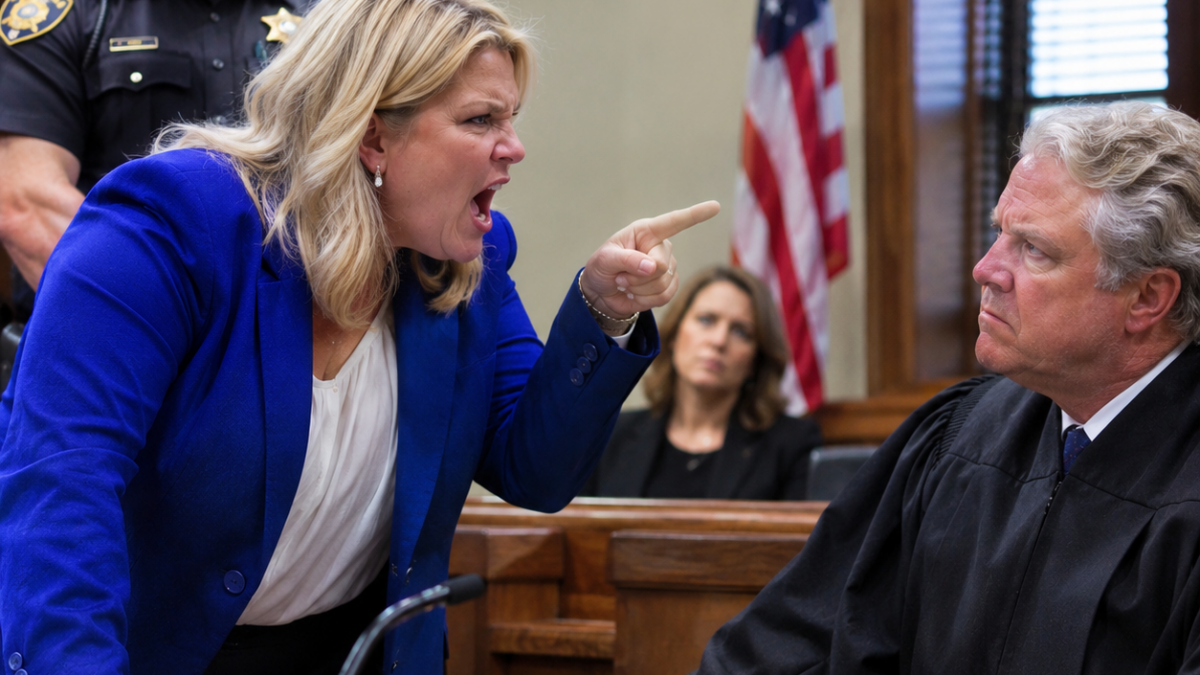
At 8:17 that Friday morning, forty-nine families were preparing to sign papers for luxury lake homes that promised permanent access to my shoreline.
Two minutes later, I was standing beneath a champagne banner staring at a glossy development map that had quietly erased my name from land I had owned for seventeen years.
The HOA president smiled and told security to remove me—but she had no idea that the most dangerous document in that room wasn’t her map, it was the old survey case in my hand.
My name is Reed Ashford.
For seventeen years, I had owned 12.6 acres on Larkspur Lake.
Four hundred sixty feet of shoreline.
A meadow.
A gravel path.
A weathered cedar dock I rebuilt myself after a storm ripped half the decking apart nine years earlier.
Nothing fancy.
No clubhouse.
No private beach attendants.
No imported stone.
Just quiet water, scrub grass, and one of the last open stretches of shoreline around what used to be a lonely high-desert reservoir.
Then Mariner’s Point arrived.
First came model homes.
Then gates.
Then manicured landscaping.
Then a clubhouse big enough to host weddings.
Then phase two.
Forty-nine luxury houses marketed around one thing:
Lake access.
Not a distant public boat ramp.
Not a shared county park.
My shoreline.
I discovered that four days before the closings.
Two men were pounding metal posts into the ground beside my gravel path.
I walked toward them.
“What are you doing?”
The taller man turned.
“Installing the new lakefront signage.”
“Whose lakefront?”
He looked at me as if I were joking.
“Mariner’s Point.”
I glanced toward the sign.
It was enormous.
A photograph of my dock filled the top half.
My dock.
The same cedar boards I had replaced by hand.
The same railing I had built with my brother.
Underneath, in bright white letters:
**MARINER’S POINT EXCLUSIVE HOA LAKEFRONT COMMON AREA**
Then an artist’s rendering.
Boardwalk.
Benches.
Landscaped overlook.
Sunset seating.
None of it existed.
“What company are you with?”
He named a contractor.
“Who authorized you?”
He pulled out an HOA work order.
His partner unrolled a map across the hood of their truck.
“There.”
He pointed.
Bright green.
**TRACT L – COMMON LAND**
I leaned closer.
Then felt my stomach tighten.
The shape was mine.
Every curve.
Every bend.
The meadow.
The shoreline.
The corner where an old survey pin sat near a cottonwood.
My 12.6 acres had been copied onto their project map almost perfectly.
Only one thing was missing.
My name.
I said quietly:
“This is private property.”
The man shrugged.
“We were told the shoreline was turned over to the HOA.”
“By who?”
“Office.”
I took photographs.
The sign.
The truck.
The map.
The work order.
Then I told them to stop until ownership was verified.
They called someone.
Packed up.
Left the sign lying beside the road.
That evening, I went online.
Mariner’s Point sales website.
Phase two.
Luxury homes.
Lakefront lifestyle.
Private dock access.
Exclusive park.
Members-only waterfront.
Then I saw my dock.
Photographed at sunset.
Presented as if Mariner’s Point had built it.
I stared at the screen.
Opened every listing.
All forty-nine homes carried the same status.
**CLOSING SCHEDULED FRIDAY**
I checked the calendar.
Four days.
That was when I realized this wasn’t a bad advertisement.
It was about to become paperwork.
Forty-nine sets of purchase documents.
Forty-nine buyers.
Forty-nine potential claims to permanent rights over land I had never sold.
The next afternoon, a certified envelope arrived.
Mariner’s Point crest.
Signed by HOA President Veronica Madsen.
It ordered me to:
Stop all private use of “Tract L.”
Remove my lock from the lakeside gate.
Cease using my own dock.
Turn access over to the HOA within seven days.
Then the sentence that changed everything:
**The Association has already committed these rights to forty-nine purchasers in Phase Two.**
I read it three times.
Then I drove to the Mariner’s Point clubhouse.
Veronica sat behind a glass desk.
Fifty-three.
Perfect cream blouse.
Silver watch.
Expression calm enough to make arrogance look professional.
I put my deed on her desk.
She barely looked.
“The updated master plan designates the lakefront as a community amenity.”
“My deed says otherwise.”
“Your deed reflects an older configuration.”
“No.”
I pushed it closer.
“My deed reflects ownership.”
She folded her hands.
“You are looking at this too narrowly.”
“I’m looking at it legally.”
“Forty-nine transactions depend on this shoreline.”
“That doesn’t make it yours.”
“Millions of dollars are involved.”
“That doesn’t make it yours.”
“Families have already made moving arrangements.”
“That still doesn’t make it yours.”
Her smile thinned.
Then she pulled out a map.
County-style stamp.
Clean lines.
My property shaded green.
**TRACT L**
She said the board had accepted the shoreline as common property through a supplemental declaration.
I asked the only question that mattered.
“Where is the deed with my signature?”
Silence.
Then she slid another sheet toward me.
Offer.
$75,000.
I read it.
Not a purchase agreement.
Not fair-market negotiation.
A confirmation.
I would acknowledge that the HOA already possessed shoreline access.
They would pay me $75,000.
I looked up.
“You already sold something you don’t own, and now you want to pay me to make the lie legal afterward.”
Veronica’s expression hardened.
“You should think carefully.”
“I am.”
“If these closings are disrupted, the association and developer will pursue commercial damages.”
I stood.
“Then you should have bought the land before you sold it.”
Her cheeks turned red.
As I left, I picked up one blank purchase contract from a side table.
Page after page.
Home.
Lot.
Association.
Common amenities.
Then I found it.
Each buyer was granted a perpetual easement across Tract L as identified in the HOA declaration.
I sat in my truck.
Called my attorney.
Eliza Norwood answered.
“Reed?”
“They aren’t trying to buy my shoreline.”
“What are they doing?”
I looked back at the clubhouse.
“They’re trying to make forty-nine strangers believe they already own it.”
PART 2
Eliza did not waste time asking whether I was angry.
She asked for documents.
“All of them.”
“My deed?”
“Yes.”
“Survey?”
“Yes.”
“Tax records?”
“Yes.”
“Previous owner’s closing file?”
“Yes.”
“What about the HOA letter?”
“Everything.”
I spent that evening opening boxes I had not touched in years.
Seventeen years of tax statements.
Original purchase deed.
Boundary survey.
Closing documents.
Old correspondence.
A waterproof survey tube from the previous owner.
The next morning, Eliza and I stood at the county recorder’s office.
Della Rusk was the clerk who pulled the history.
She was meticulous.
The kind of person who noticed when one page number was missing from a forty-page filing.
She searched my parcel.
“There’s no transfer.”
Eliza asked:
“To Mariner’s Point?”
“No.”
“To the HOA?”
“No.”
“Any easement?”
“Not from Mr. Ashford.”
“Any shoreline dedication?”
“No.”
My parcel number remained separate.
My name remained owner.
Then Della frowned.
“There is this.”
Six months earlier, Mariner’s Point filed a supplemental declaration.
Attached map.
Tract L.
Common land.
Eliza leaned closer.
“Who filed it?”
“Association counsel submitted it.”
“Underlying deed?”
“None attached.”
Della printed the declaration.
Then pulled the original planning record for phase two.
We laid them side by side.
I saw it before Eliza said anything.
Original map:
**PROPOSED LAKEFRONT AMENITY – SUBJECT TO SEPARATE ACQUISITION**
HOA map:
**HOA COMMON LAND – TRACT L**
The words **proposed** were gone.
**Subject to separate acquisition** was gone.
The dashed line showing my independent parcel was gone.
Eliza tapped the page.
“There.”
“What?”
“They didn’t change geography.”
“They changed meaning.”
“Exactly.”
A concept became ownership.
A hoped-for purchase became existing common land.
I felt something cold in my stomach.
This wasn’t a drafting error.
Not anymore.
I hired an independent surveyor.
Orson Lively.
Thirty years in the business.
He did not care about HOA politics.
Did not care how many houses were closing.
He cared about line weights, legends, coordinates, version numbers, and whether a professional record matched the original.
He studied the maps for almost two hours.
Then removed his glasses.
“This isn’t the original technical map.”
“How can you tell?”
“Legend changed.”
He pointed.
“Version number trimmed.”
Another point.
“Independent boundary line deleted.”
Another.
“And this engineer’s certification signature does not match the signature held in the survey office.”
“Can you tell who altered it?”
“No.”
“Can you tell whether it accurately reflects ownership?”
“Yes.”
“And?”
“It doesn’t.”
Eliza immediately sent title-dispute notices to every title and escrow company handling the forty-nine closings.
My deed.
County parcel map.
Original planning file.
Orson’s findings.
Some title officers responded cautiously.
“We need time.”
The developer did not.
Porter Gresham, chief financial officer for the development company, replied that their internal counsel had reviewed the matter.
No reason to delay.
Veronica instructed sales agents to continue using the same lakefront pitch.
That told me everything.
They were not trying to fix the problem.
They were trying to outrun it.
Thursday afternoon, Orson called.
“Come back.”
I arrived at his office.
He had enlarged an older scan.
Fine print near the bottom.
Almost covered by a decorative rendering.
Reference number.
He traced it.
“This reference points to a preliminary survey exhibit.”
“Meaning?”
“Not a conveyance map.”
“So the thing they’re presenting as proof—”
“Was never intended to transfer anything.”
Eliza was on speaker.
She was quiet for several seconds.
Then:
“I’m filing for emergency relief.”
That night, I sat on my porch.
Mariner’s Point lights reflected across the water.
Homes I did not resent.
Families I did not know.
People about to close on houses they probably loved.
My phone buzzed.
Message from Eliza.
A title officer had quietly sent something.
**Buyers have already paid separate lake-access fees.**
I stared.
Not only had the shoreline been marketed.
Money had already changed hands.
Friday.
8:17 a.m.
I walked into the downtown closing coordination office carrying my old survey case.
Inside:
Champagne.
Flowers.
Lenders.
Title representatives.
Buyers.
Salespeople.
A giant banner:
**YOUR LAKEFRONT LIFE BEGINS TODAY**
My dock filled the background.
Veronica stood beneath it posing for photos with developer executives.
Beside the entrance, a giant project map.
My land painted bright green.
**HOA COMMON LAND**
I stopped.
Veronica saw me.
Her smile did not move.
She walked over.
“You were told this is a private closing event.”
“I’m looking at my property.”
She turned to the crowd.
“This man has been harassing the development.”
I heard murmurs.
She motioned toward security.
“Give him five minutes to leave.”
The guard approached.
I set the survey case on a table.
Opened it.
Two maps.
Side by side.
My certified survey.
My parcel.
My name.
Then the altered map.
Same land.
Same shape.
Different owner.
A title officer named April Sutcliffe walked closer.
She studied both.
“Where did this certified survey come from?”
“County records.”
“And this one?”
“HOA sales package.”
She took out her phone.
The guard stopped.
Veronica snapped:
“What are you doing?”
April said:
“Verifying title.”
“That’s already been done.”
“Then verification should be easy.”
Across town, Eliza was already before Judge Virginia Ainsley.
Emergency hearing.
She did not ask the court to cancel the development.
Did not ask to stop people buying houses forever.
One narrow request.
Freeze any closing that included claimed rights over Tract L until ownership could be reviewed.
The HOA lawyer accused me of sabotage.
Judge Ainsley asked:
“Show me the deed transferring Tract L from Reed Ashford to the HOA.”
He could not.
At 9:47 a.m., the judge signed the temporary restraining order.
All forty-nine transactions containing the disputed shoreline rights were paused.
No completion.
No recording.
No funding based on those rights until further order.
The certified order reached April.
She read it twice.
Then turned toward her team.
“Pause every file.”
One by one, the closing tracker changed.
**ON HOLD**
**ON HOLD**
**ON HOLD**
Forty-nine times.
People began asking questions.
Veronica’s phone rang.
Porter.
I could hear his voice through the speaker.
“What happened?”
She moved away.
April called lenders.
Escrow teams stopped releases.
Not one closing completed that morning.
Veronica came toward me.
Her face had changed.
“You froze forty-nine homes.”
I looked at her.
“No.”
She stared.
“You tried to sell one shoreline forty-nine times.”
That was when April touched my arm.
“Mr. Ashford.”
“What?”
“There’s something else.”
She lowered her voice.
“Every buyer paid a lakefront activation fee.”
“How much?”
“I’m checking.”
By noon, Mariner’s Point was chaos.
Buyers had sold old houses.
Scheduled movers.
Locked mortgage rates.
Put belongings in storage.
Some were staying in hotels.
They were furious.
And Veronica did what she had always planned to do.
Pointed at me.
Mass email.
**Outside landowner delays Phase Two families.**
Emergency HOA meeting.
My photo projected onto a clubhouse screen.
This is the man stopping your homes.
The pressure was immediate.
People sent angry messages.
Someone left Veronica’s statement under my windshield wiper.
One buyer confronted me outside the county building.
Her name was Leah Harrow.
Forties.
Sharp voice.
Exhausted eyes.
“Do you have any idea what you’re doing to us?”
“Yes.”
“No, I don’t think you do.”
“I know people are losing money.”
“My move is tomorrow.”
“I’m sorry.”
“You’re sorry?”
“Yes.”
“You froze my house.”
“No.”
She stared.
I opened my truck.
Pulled out my deed.
Handed it to her.
“I froze a document that said you had permanent rights over my land.”
She read.
County parcel map.
My name.
My acreage.
She looked up.
“The HOA says this was transferred.”
“Ask them for the deed.”
“They have a declaration.”
“They filed a declaration describing my property.”
“That sounds legal.”
“It’s legal to file paper. It doesn’t mean the paper transfers what you never owned.”
She looked back at the deed.
“Why would they do that?”
“That’s what I’m trying to find out.”
Her anger changed.
Not gone.
But less certain.
She folded the copy.
“Can I keep this?”
“Yes.”
She left.
The next day, the developer’s lawyers started looking for alternatives.
Could purchase documents be revised?
Could lake rights be removed?
Could values be preserved?
Meanwhile, Veronica offered me $150,000 through counsel.
Same deal.
Recognize the rights already sold.
Confidential settlement.
I refused.
Eliza warned me:
“Do not touch their signs.”
“I want them off my land.”
“I know.”
“Do not move barriers.”
“I know.”
“Do not argue with buyers.”
“I know.”
“Do not create a second dispute.”
I hated how often she was right.
Then Leah called.
Late.
Her voice quiet.
“I read my contract.”
“And?”
“Page eleven.”
She read the clause.
Separate fee.
Non-refundable.
**Lakefront Access Activation Charge**
Amount:
$16,800.
“Who got it?” I asked.
“I called my broker.”
“And?”
“She couldn’t tell me.”
Eliza took over.
Demanded payment records.
April reviewed closing files.
The fee had not been collected through escrow.
It had been paid separately.
That was important.
Escrow controls money.
Records it.
Requires instructions.
These payments had been routed around that system.
April did the math.
49 buyers.
$16,800 each.
$823,200.
For access to my shoreline.
Recipient:
**Cove Access Holdings LLC**
I had never heard the name.
State filings.
No land.
No lease.
No interest in my parcel.
Then ownership records.
Managing member:
Veronica Madsen.
I sat in Eliza’s office.
“Her company?”
“Yes.”
“So she used the HOA to market my land…”
“Yes.”
“…and her private company collected the access fees?”
“That is what the records appear to show.”
Leah brought the separate agreement.
Three glossy pages.
Cove Access Holdings promised:
**Perpetual access to Tract L upon closing.**
Not vague lifestyle services.
Not concierge benefits.
Not management.
Rights to my land.
Eliza stared at the contract.
“This is much worse.”
Discovery began.
Documents surfaced.
Porter Gresham had signed a memorandum with Cove Access Holdings.
The arrangement:
Veronica’s company collects lake-access fees.
HOA supports the marketing.
Developer gets a more valuable product.
Everyone benefits.
Except the one person who owned the lakefront.
Me.
Then I noticed HOA maintenance trucks near my fence.
Measuring.
Photographing.
I called Eliza.
She filed to extend the injunction.
Judge granted it.
No use.
No development.
No access over Tract L while the case proceeded.
Then Eliza found a loan application.
Cove Access Holdings had applied for commercial financing.
Collateral package included the altered Tract L map.
I read that twice.
Veronica had not only sold access to my land.
She had tried to use the land itself to support credit for her company.
Lenders started asking questions.
Developer financing tightened.
Porter became desperate.
Then came the document that nearly turned the case.
Purchase option agreement.
Years earlier.
My name.
Developer.
Right to buy Tract L after zoning conditions.
At the bottom:
My signature.
I stared at it.
For a moment, even I felt doubt.
It looked right.
Then something bothered me.
The last stroke.
Tiny ink smear.
I had seen it before.
I went home.
Opened old files.
Environmental study.
Years earlier, engineers asked permission to cross my shoreline for water sampling.
Temporary access.
No sale.
No easement.
No permanent right.
I had signed the letter.
There it was.
Same signature.
Same slant.
Same little smear.
Exactly.
I called Eliza.
“They copied it.”
“You’re sure?”
“They copied my signature from an old access letter.”
“Bring it.”
She demanded the original option agreement.
Developer produced only a scan.
No ink original.
Forensic document examiner compared both.
Pixel structure.
Resolution.
Placement.
Artifacting.
The conclusion was cautious.
Professional.
Technical evidence was consistent with the signature being copied from the older letter and inserted into the new agreement.
That was enough to make Porter’s lawyers suddenly stop talking about the option.
Then Orson’s old email appeared.
Years before I hired him, he had briefly consulted on the original Mariner’s Point layout.
Email to Porter.
Forwarded to Veronica.
Plain words:
Do not describe Tract L as HOA common property unless and until it is purchased from the owner.
I read it.
Then looked at Eliza.
“They knew.”
“Yes.”
“They knew before the sign?”
“Yes.”
“Before the fees?”
“Yes.”
“Before the declaration?”
“Yes.”
I leaned back.
“They didn’t misunderstand my boundary.”
Eliza waited.
“They understood it well enough to erase it.”
One week later, the courtroom was full.
Buyers.
Homeowners.
Lawyers.
Developer executives.
Veronica.
Porter.
Judge Ainsley.
Veronica’s lawyer started with damages.
Frozen loans.
Moving expenses.
Rate locks.
Storage.
Forty-nine families.
Economic harm.
It was effective.
Buyers nodded.
Then Eliza stood.
She asked:
“What document transferred any right in Tract L from Reed Ashford to the HOA?”
The defense attorney started discussing planning history.
Eliza repeated:
“What document transferred the right?”
Silence.
Then ownership.
My deed.
Tax history.
Parcel record.
Survey.
Nothing transferred.
Then maps.
Orson took the stand.
He explained:
Original conditional map.
Altered legend.
Removed boundary.
Trimmed version.
Nonmatching certification.
Then knowledge.
His warning email.
Porter received.
Veronica received.
Before the declaration.
Then Eliza called Leah.
Veronica looked surprised.
Leah took the stand.
She explained why she bought.
Lake access.
Dock.
Private park.
Then the fee.
$16,800.
Paid to Cove Access Holdings.
Judge Ainsley asked:
“What did you believe you were purchasing?”
Leah looked directly at her.
“Access the HOA already owned.”
She swallowed.
“I didn’t pay for a future negotiation.”
The courtroom became quiet.
“I paid because they told me the land already belonged to the community.”
That was the moment Veronica lost the buyers.
Not all at once.
But you could feel it.
The forty-nine people she had been using as leverage suddenly started wondering whether they were leverage because they had been deceived.
Judge Ainsley kept the restrictions in place.
Preserve records.
Continue discovery.
No transactions could include false Tract L rights.
But she created a path.
Home sales could proceed if the disputed lakefront rights were removed and buyers received complete disclosure.
That mattered.
I did not want forty-nine families homeless.
I wanted my deed respected.
Porter’s attorney announced cooperation.
Veronica looked at Porter like he had betrayed her.
Maybe he had.
Or maybe he had finally realized protecting Veronica meant sinking with her.
His internal files came next.
Emails.
Spreadsheets.
Meeting notes.
Porter was not innocent.
He knew the shoreline rights had not been secured.
He still allowed marketing to continue.
But one memo was worse than everything.
Veronica’s plan.
Three stages.
Stage one:
Add Tract L as a project amenity.
Increase perceived value of all forty-nine homes.
Stage two:
Collect activation fees immediately.
Stage three:
Use collected money, closed contracts, buyer pressure, and threatened commercial damages to force me into a low-value transfer.
I stared at that page for a long time.
It was exactly what happened.
She had designed the trap before I knew there was a trap.
Sell my land first.
Create forty-nine innocent victims.
Then come to me and say:
If you refuse to cooperate, you hurt all of them.
That was why the $75,000 offer came after the shoreline had already been marketed.
She never intended to negotiate as an equal.
She wanted me cornered.
The money trail finished the picture.
$823,200 collected.
Some still in Cove’s accounts.
Some spent on promotion.
Consulting.
Related companies.
Buyers filed claims.
Court preserved traceable funds.
For the first time, angry emails stopped coming to me.
They went to Veronica.
Mariner’s Point homeowners demanded a special meeting.
The clubhouse filled.
Veronica blamed Porter.
Then someone projected the Cove Access Holdings filings.
Her name.
Her company.
Her contracts.
Her emails.
She could not blame all of that on Porter.
The membership voted.
Veronica removed as president.
She lost the HOA title she had been hiding behind.
A few days later, she came to my gate.
No cream suit.
No entourage.
Plain jacket.
She stayed outside.
At least she had learned that.
“I can end this.”
I looked at her.
“How?”
“I’ll sign an acknowledgment.”
“What acknowledgment?”
“That Tract L belongs to you.”
I almost laughed.
“My deed already does that.”
“You know what I mean.”
“What do you want?”
“Confidentiality.”
“About what?”
“Cove.”
“No.”
“Reed.”
“No.”
“You’ll get your land.”
“I have my land.”
“You’ll get money.”
“This stopped being about money when you sold my shoreline forty-nine times.”
Her jaw tightened.
“You’re destroying the whole project.”
“No.”
I looked at her.
“You built the project around something you never owned.”
“You could fix that.”
“I could.”
She looked almost hopeful.
“I won’t.”
Her face hardened.
“You’d rather hurt everyone.”
“No.”
I shook my head.
“I’d rather everyone know who hurt them.”
She left.
Final negotiations took weeks.
Developer.
HOA.
Buyers.
Veronica.
Insurers.
Lenders.
Me.
I had one non-negotiable condition.
Every statement claiming Tract L was HOA land had to disappear.
Maps corrected.
Declarations corrected.
Purchase documents corrected.
No hidden easement.
No perpetual access.
No vague language surviving in the footnotes.
Eliza asked:
“If they offer enough money for access?”
“No.”
“Temporary license?”
“No.”
“You’re sure?”
“Yes.”
“Why?”
“Because this started with someone deciding money could replace consent.”
She smiled slightly.
“Good answer.”
Three months after the frozen closings, the dispute reached resolution.
Ownership confirmed.
Tract L remained mine.
HOA had no valid ownership.
No perpetual right.
No common-land claim.
Supplemental declaration corrected.
Altered map removed from the official record.
All forty-nine transactions reprocessed.
Every buyer received new documents.
No shoreline access.
No private dock.
No fake park.
Just the house they were actually buying.
Then they chose.
Thirty-one continued.
Renegotiated price.
Revised terms.
Full disclosure.
Eighteen canceled.
Settlement agreements.
Refunds.
The $823,200 lakefront activation fees?
Refunded in full.
If Cove could not immediately cover something, responsible parties made up the difference under settlement terms.
Veronica did not keep one dollar from rights her company never possessed.
Separate civil claims followed.
Asset preservation.
Financial liability.
Possible forgery and fraud matters referred to appropriate authorities.
That part moved through its own process.
The developer and responsible parties paid my documented damages.
Legal fees where agreed.
Restoration costs.
Settlement:
$410,000.
People heard that number and assumed I had won a fortune.
I didn’t see it that way.
Lawyers cost money.
Experts cost money.
Months of disruption cost money.
Restoring damaged ground cost money.
Stress does not appear neatly on a spreadsheet, but everything that could be documented was.
The HOA removed every sign.
Every marker.
Every unauthorized structure.
The new board sent formal notice to all members.
The lakefront was private property.
Independent from Mariner’s Point.
The HOA survived.
That mattered too.
I never wanted eighty innocent homeowners punished for Veronica.
The association continued managing what it truly owned.
Roads.
Clubhouse.
Landscaping.
Actual common areas.
Not mine.
Early autumn.
Cool morning.
I drove to the lake.
The giant sign was gone.
My fence stood where it had always stood.
The path to the cedar dock was quiet.
I walked down.
Water flat.
Light wind.
For the first time in months, I did not see my property as evidence.
No map overlays.
No court exhibits.
No photographs.
Just water.
Around ten, Leah walked over from Mariner’s Point.
She had closed on her house.
Revised contract.
No shoreline rights.
I smiled when I saw her.
“You stayed.”
“I did.”
“Happy?”
“Ask me after the first mortgage payment.”
I laughed.
She looked at the dock.
“This is the famous dock.”
“Apparently.”
“It looked bigger in the brochure.”
“That’s marketing.”
She smiled.
Then:
“I wanted to say thank you.”
“For freezing your house?”
She winced.
“I deserved that.”
“No.”
“You were nicer than I would have been.”
“You were angry.”
“I blamed you.”
“You had been told I was the problem.”
She looked toward Mariner’s Point.
“I still can’t believe I paid sixteen thousand eight hundred dollars for access they never owned.”
“You got it back.”
“Yes.”
“Good.”
She hesitated.
“Would you ever sell?”
“The land?”
“Yes.”
“Maybe.”
Her eyebrows rose.
“Really?”
“I never said it wasn’t for sale under any circumstance.”
“Then why not sell to Veronica?”
“Because she never made an honest offer.”
She nodded.
“The seventy-five thousand?”
“You know about that?”
“Everybody does now.”
I laughed.
“She didn’t offer to buy the land.”
“What was it?”
“A payment to pretend she already had rights.”
“That’s worse.”
“Yes.”
We stood by the water.
Then Leah said:
“I learned something.”
“What?”
“Read the deed.”
“Good lesson.”
“And ask who owns the dirt.”
“Even better.”
She left.
I sat at the old wooden table near the shoreline.
Opened my phone.
Found the photo from closing morning.
Veronica standing under the banner.
Map behind her.
Forty-nine homes.
My shoreline painted green.
She looked completely confident.
Like nothing in the world could stop what she had built.
I stared at the picture.
Then deleted it.
I surprised myself.
For months, I had saved everything.
Screenshots.
Emails.
Maps.
Contracts.
Photos.
I kept records because I needed them.
Now I did not need that one.
The evidence belonged in the case file.
The anger did not need to live in my pocket.
I walked back toward the gate.
A new sign hung there.
Simple.
Black letters.
**PRIVATE PROPERTY**
**REED ASHFORD**
Nothing else.
No warning about the HOA.
No angry message.
No sarcasm.
Just the truth.
That was enough.
Months later, Orson stopped by.
He had been working nearby.
We sat on the dock.
He looked at the shoreline.
“You know what still bothers me?”
“What?”
“The map.”
“Which part?”
“How easy it was.”
“You mean to alter it?”
“Yes.”
He shook his head.
“One legend.”
“One deleted boundary.”
“One missing note.”
“One trimmed version number.”
“And suddenly people think ownership changed.”
I nodded.
He looked at me.
“Most people don’t understand that a map is only as reliable as the record behind it.”
“Most people don’t expect someone to weaponize a planning sketch.”
“Exactly.”
He paused.
“I saw something similar once.”
“Another HOA?”
“No. Mining company.”
“Same arrogance?”
“More money.”
I laughed.
Then he said something I kept thinking about.
“Maps feel objective.”
“Because they look precise.”
“Exactly.”
“Lines. Numbers. Stamps.”
“But somebody still chose what to print.”
That was Veronica’s trick.
She did not need to persuade forty-nine buyers to ignore my deed.
They never saw it.
She gave them a cleaner story.
Green land on a glossy map.
Professional font.
County-style markings.
Pictures of sunsets.
A declaration filed in public records.
Most people assume if something looks official enough, someone else has already verified it.
That assumption was worth $823,200 to her.
For a while.
The criminal and regulatory side moved more slowly.
I stayed out of it unless asked.
Authorities reviewed the altered records.
The copied signature.
The collection system.
The loan materials.
Possible fraud.
Possible forgery.
Each required its own proof.
I did not need immediate spectacle.
The civil result gave me what I wanted.
My title clean.
Buyers informed.
Fees returned.
False rights removed.
Veronica removed from leadership.
Anything beyond that belonged to investigators and courts.
People sometimes found that disappointing.
One neighbor asked:
“So she didn’t go to jail immediately?”
“No.”
“That’s anticlimactic.”
“No.”
He looked at me.
“Really?”
“Forty-nine contracts were corrected.”
“Yeah.”
“Eight hundred twenty-three thousand two hundred dollars returned.”
“Yeah.”
“My title was cleared.”
“Yeah.”
“She lost control of the HOA.”
“True.”
“Her company lost the money.”
“Yes.”
“And the false map was removed.”
He shrugged.
“When you list it like that…”
“That’s because real consequences are often paperwork.”
That became a theme.
Veronica believed paperwork could create reality.
In the end, paperwork destroyed the reality she tried to invent.
The original deed.
The planning map.
The email.
The bank records.
The separate fee agreements.
The memo.
The old water-sampling letter.
Each one boring alone.
Together?
Devastating.
One year after the frozen closings, Mariner’s Point held its annual meeting.
The new board invited me.
I almost declined.
Leah called.
“Come.”
“Why?”
“Because people need to hear from you.”
“No.”
“Reed.”
“I’m not joining your HOA.”
“I didn’t ask you to.”
“Good.”
“Come for twenty minutes.”
I agreed.
The clubhouse looked different without Veronica’s presence.
Same polished floors.
Same lake photos.
But the giant amenity screen no longer showed my shoreline.
Good start.
The new president stood.
“We have completed our document audit.”
Residents murmured.
“All common-property maps have been cross-checked against recorded title.”
Applause.
That almost made me laugh.
A basic act of checking ownership had become applause-worthy.
Then they adopted rules.
No future amenity shown in marketing unless ownership verified.
No outside land rights described as guaranteed without recorded instrument.
No private company controlled by a board officer allowed to collect mandatory project fees without full disclosure and independent approval.
No alteration of property maps without professional certification and version control.
Leah leaned toward me.
“See?”
“What?”
“You changed the HOA.”
“No.”
“Come on.”
“Veronica changed it.”
“How?”
“By almost destroying it.”
She smiled.
“Fine.”
Then the president invited me to say something.
I had not agreed to that.
I stood anyway.
“Keep it short,” Leah whispered.
“I was planning thirty minutes.”
She glared.
I faced the room.
“I don’t have much to say.”
People laughed.
“I never wanted to stop forty-nine homes from closing.”
Silence.
“I wanted forty-nine contracts to stop claiming rights over land I never sold.”
I looked around.
“If a future project needs somebody else’s property, there’s a simple solution.”
Pause.
“Ask.”
A few people laughed.
“Then negotiate.”
More smiles.
“And if they say no, find another plan.”
That was it.
I sat.
Afterward, an older couple approached.
They had been among the buyers who canceled.
“We moved somewhere else.”
“I’m sorry.”
“We’re not.”
The woman smiled.
“Smaller house.”
“Less expensive.”
Her husband added:
“And a public boat ramp.”
I laughed.
She said:
“We were furious with you.”
“I heard.”
“Veronica sent us your picture.”
“I know.”
“We thought you were trying to extort the developer.”
“I know.”
She looked embarrassed.
“We should have asked for proof.”
“Yes.”
She looked surprised.
Then smiled.
“You don’t make apologies easy.”
“You asked.”
Her husband laughed.
“We deserved that.”
They left.
I felt lighter.
Not because people apologized.
Because most had eventually learned the difference between inconvenience and wrongdoing.
I caused inconvenience.
The judge caused more.
The title companies caused more when they paused files.
But those actions prevented a much bigger wrong.
Sometimes stopping a bad transaction hurts innocent people temporarily.
That does not mean the stop was wrong.
It means the bad transaction should never have reached that point.
I struggled with that during the case.
Forty-nine families.
I could see their anger.
Their boxes.
Hotels.
Moving trucks.
Rate locks.
Real pain.
Veronica designed that pressure intentionally.
The memo proved it.
She wanted their suffering to become a weapon against me.
That was the part I never forgave.
Not the map.
Not even the money.
Using innocent buyers as leverage.
She created urgency.
Then pointed at the innocent people inside it.
**Look what Reed is doing to them.**
No.
Look what happens when you sell rights before you own them.
There is a difference.
That realization changed Leah too.
She became one of the strongest voices for the new HOA rules.
Once, she called me laughing.
“I’m on the documents committee.”
“That sounds terrible.”
“It is.”
“You chose this?”
“Apparently I hate myself.”
“What do you do?”
“Review recorded ownership before the HOA puts anything on a map.”
I laughed.
“You have one job.”
“Exactly.”
“Don’t steal my lake.”
“Very funny.”
She became a friend.
Not close.
But enough that once or twice a year she walked over.
We drank coffee at the dock.
She never used it without asking.
That mattered.
One morning she said:
“Can I ask something?”
“Yes.”
“What would you have done if they made a real offer before all this?”
“For the shoreline?”
“Yes.”
“I don’t know.”
“Really?”
“Depends.”
“On price?”
“Partly.”
“Then Veronica was right. Everyone has a price.”
“No.”
She looked at me.
“Price is not the same thing as consent.”
She waited.
“If I decide to sell, that’s my choice.”
“Okay.”
“If someone sells first and then tells me I have to accept because too many people are counting on it, that’s not negotiation.”
She nodded.
“That’s coercion.”
“Exactly.”
She stared at the water.
“She really did build the whole system around making your no impossible.”
“Yes.”
“And almost succeeded.”
“Almost.”
That word stayed with me.
Almost.
If I had discovered the sign a week later?
Maybe closings recorded.
Forty-nine easement claims.
Lender files.
Title policies.
Recorded documents.
Dozens of innocent owners.
Undoing that could have taken years.
That was why Judge Ainsley’s 9:47 order mattered.
Not because freezing closings was dramatic.
Because timing was everything.
Before recording, the lie was a transaction problem.
After recording, it could become forty-nine title disputes.
Sometimes the most powerful legal remedy is not punishment.
It is pause.
Stop.
Freeze.
Do not let bad facts become permanent while we figure out what is true.
That is what the judge did.
One morning, I ran into April Sutcliffe at a coffee shop.
I thanked her.
“For what?”
“For looking at the maps.”
She smiled.
“That was my job.”
“You could have ignored me.”
“No.”
“People do.”
“Not title people.”
“Some do.”
She laughed.
“Fair.”
Then she became serious.
“When you opened that survey case, I knew something was wrong.”
“Why?”
“Your survey was old.”
“That made it trustworthy?”
“It made it boring.”
I laughed.
“What does that mean?”
“Fraudulent documents are often too clean.”
She stirred her coffee.
“Fresh renderings. New maps. Beautiful colors.”
“And mine?”
“Folded. Water-stained. Stamped seventeen years ago.”
“That’s romantic.”
“It matched the county record.”
“That too.”
She said the title company changed some procedures after the case.
Independent review whenever common-area rights crossed into separately numbered parcels.
Again.
Basic verification.
Expensive lesson.
Porter Gresham’s consequences were complicated.
He cooperated eventually.
He also knew too much too early.
The discovery emails showed he received Orson’s warning.
Still let the sales operation continue.
Developer paid heavily.
Settlements.
Buyer claims.
Repriced homes.
Legal costs.
Lost reputation.
Porter left the company later.
I never spoke to him directly after settlement.
Didn’t need to.
Not every person in a story needs a confrontation.
His emails said enough.
Veronica was different.
She had stood at the center.
HOA president.
Cove managing member.
Amenity agreements.
Fee system.
Pressure plan.
Then tried to trade confidentiality for recognition of ownership she should never have disputed.
Her biggest mistake was not greed.
Greed is common.
Her biggest mistake was believing other people’s dependence could replace my consent.
Forty-nine buyers need this.
Millions depend on this.
Lenders depend on this.
Property values depend on this.
Therefore you must say yes.
That logic sounds powerful.
It is also dangerous.
Rights do not disappear because enough money is stacked on the other side.
Years later, I watched Mariner’s Point grow.
The thirty-one buyers who stayed settled in.
The eighteen canceled lots were resold eventually under honest marketing.
No private lakefront.
No fake dock rights.
Some homes sold for less than originally projected.
The development survived.
That fact mattered.
Veronica had acted as if admitting the truth would destroy everything.
It didn’t.
It made the project smaller.
Less glamorous.
More honest.
Honesty is cheaper than fraud.
Almost always.
One summer, the new HOA approached me properly.
Letter.
Not a threat.
Proposal.
They wanted to discuss paying for limited seasonal access to part of the shoreline for a community event.
I read it.
Called Eliza.
She laughed.
“Are you going to say yes?”
“Maybe.”
“After all that?”
“They asked.”
We negotiated.
One-day charitable lakeside cleanup.
No permanent right.
No easement.
Insurance.
Written boundaries.
Twenty volunteers.
I agreed.
Leah laughed when she heard.
“You let the HOA onto Tract L?”
“For six hours.”
“Veronica would faint.”
“She is not president.”
“Good point.”
The event happened.
People cleaned trash from the shoreline.
Nobody claimed ownership.
Nobody put my dock in a brochure.
Everyone left by sunset.
That day proved something.
I never hated Mariner’s Point.
I hated theft dressed as planning.
Good neighbors ask.
Good neighbors respect no.
Good neighbors document yes.
That is how it should work.
When the $410,000 settlement became public, a few people accused me of doing it for money.
That irritated me at first.
Then I stopped caring.
The easiest way to answer was:
“If I wanted money, I could have taken $150,000 and signed away the rights.”
Or $75,000 earlier.
Or negotiated after buyer pressure mounted.
I refused because money was never the question.
Control was.
My land.
My signature.
My choice.
The settlement came after the damage.
Not before the consent.
Big difference.
I used part of the settlement to restore fencing and the shoreline areas disturbed by unauthorized crews.
Legal fees.
Expert fees.
Taxes.
Then I replaced a section of the dock.
Leah came by.
“New boards?”
“Yes.”
“From the settlement?”
“Partly.”
She smiled.
“So Veronica helped renovate the dock she stole in the brochure.”
I laughed.
“That is annoyingly satisfying.”
“You should put up a plaque.”
“No.”
**THANKS, VERONICA**
“No.”
She laughed.
I left it plain.
Cedar.
Simple.
Mine.
One day, Eliza brought me the corrected county filing.
The supplemental declaration had been amended.
Tract L removed from HOA common property.
Altered map no longer operative.
She placed it on my kitchen table.
“Frame it.”
“No.”
“You frame weird things.”
“I don’t frame legal paperwork.”
“Everyone frames legal paperwork.”
“No one does.”
“Lawyers do.”
“That explains lawyers.”
She laughed.
I filed it with my deed.
Then she said:
“You realize you won.”
“I know.”
“You don’t look excited.”
“I’m tired.”
“That’s usually what winning looks like.”
She was right.
Real legal fights drain you.
There is no music.
No magical moment where every expense disappears.
You get an order.
Then another filing.
Then negotiation.
Then corrections.
Then signatures.
Then finally one morning, nobody calls.
That silence was my favorite part.
No Veronica email.
No title emergency.
No buyer accusation.
No new map.
No lawyer voicemail.
Just quiet.
I started sleeping better.
My lake stopped feeling like Exhibit A.
That took longer.
For months I walked the shoreline and saw legal descriptions.
Tract L.
Boundary line.
Parcel number.
Eventually, I saw water again.
One autumn evening, I sat on the dock after sunset.
Lights from Mariner’s Point across the shoreline.
People living normal lives.
Some of the same people who once blamed me.
That felt good.
Not because I had been proven right.
Because conflict ended without turning neighbors into permanent enemies.
The HOA was not dissolved.
Homeowners were not bankrupted.
The development survived.
The lake remained mine.
The buyers got refunds.
Some stayed.
Some left.
That was a better ending than total destruction.
Veronica tried to make the fight binary.
Give me your land or hurt forty-nine families.
The actual solution was more complicated.
Remove false rights.
Reprice homes.
Refund fees.
Correct records.
Hold responsible parties accountable.
Let innocent buyers choose.
Complicated does not mean impossible.
It means someone has to do the work.
One afternoon, I found an old Mariner’s Point brochure in a drawer.
My dock on the cover.
**PRIVATE LAKEFRONT LIVING**
I turned the pages.
A rendering of the park.
Boardwalk.
Sunset terrace.
Kayak storage.
Everything that never existed.
I considered throwing it away.
Then kept it.
Not as anger.
As a reminder of how powerful pictures can be.
People saw that brochure and felt something.
A future.
Morning coffee by the lake.
Children visiting.
Boats.
Sunsets.
Once people emotionally own a future, they become easier to manipulate.
Veronica knew that.
She sold the feeling before she secured the rights.
Then when I objected, I appeared to be taking away something buyers already believed was theirs.
That was sophisticated.
Cruel.
Effective.
Until documents caught up.
At a later HOA meeting, Leah showed the brochure during a transparency presentation.
She said:
“We bought the picture before anyone verified the property.”
That sentence hit me.
Because it was true.
Veronica sold an image.
Judge Ainsley froze paper.
The truth sat underneath both.
A deed.
Boring.
No sunset.
No champagne.
Just ownership.
I became more suspicious of polished documents after that.
Not paranoid.
Just careful.
Whenever anyone brought me a new land proposal, I asked:
“What recorded instrument supports this?”
People laughed.
Eliza blamed herself.
“You’ve become impossible.”
“I was already impossible.”
“Fair.”
The possible forgery case around the copied signature stayed with me.
That one felt personal.
A map can be altered.
But seeing my own signature on something I never signed?
That was different.
It felt like someone had borrowed my hand.
The old water-sampling letter had been harmless.
Temporary permission.
A few engineers.
A few weeks.
Years later, the signature from that simple kindness appeared beneath a document claiming I had agreed to sell.
That bothered me enough that I changed how I handled signatures.
Digital verification.
Copies.
Document labels.
No blank scans left sitting around.
Maybe overkill.
But once someone copies your name, you learn what it is worth.
The forensic examiner explained something during deposition.
“Exact signatures are suspicious.”
I asked:
“Why?”
“People never sign exactly the same way twice.”
“But these matched?”
“To microscopic digital details.”
“Even the smudge.”
“Yes.”
“So whoever made it thought perfect similarity would make it more convincing.”
“Usually.”
“But it did the opposite.”
She smiled.
“Exactly.”
That became another lesson.
Fraud often fails because the liar tries too hard to make something look perfect.
Real life is messy.
Signatures vary.
Surveys have old folds.
Files have version numbers.
Truth usually carries imperfections.
Years passed.
Mariner’s Point became just another neighborhood.
New residents moved in who barely knew the story.
One day, a man fishing from the public side called over:
“Is that the famous HOA lake?”
I laughed.
“No.”
“What?”
“That’s the problem.”
He did not understand.
I kept walking.
At the gate, the sign still read:
**PRIVATE PROPERTY — REED ASHFORD**
I never added:
NOT HOA LAND.
Didn’t need to.
The county record did that.
The most satisfying moment was not Judge Ainsley freezing forty-nine closings.
Though that was close.
Not Veronica losing the presidency.
Not the $823,200 refund.
Not the $410,000 settlement.
Not the altered map being removed.
It happened on a quiet morning.
I walked down to the dock.
Found Leah sitting on the public side of the fence.
She waved.
“Can I come in?”
She asked.
That simple sentence.
Can I come in?
After everything.
That was it.
“Yes.”
I opened the gate.
She walked down.
We sat on the dock.
Two neighbors.
Permission given.
No fake easement.
No declaration.
No fee.
No pressure.
Just one person asking another.
It should never have been more complicated than that.
Leah looked at the water.
“You know what’s funny?”
“What?”
“I still got the lake.”
I looked at her.
“You don’t have access.”
“I can see it.”
“That was free.”
“Exactly.”
We laughed.
She said:
“I think Veronica convinced us ownership was the only way to enjoy something.”
“Maybe.”
“She made everything about exclusivity.”
“That sells houses.”
“You know what sells houses better?”
“What?”
“Not getting sued.”
I laughed.
“Strong marketing concept.”
We sat quietly.
A bird skimmed the surface.
No boardwalk.
No private park.
No glossy amenity.
Still beautiful.
That was the heart of the ending.
Veronica tried to improve reality by taking control of it.
Instead, she almost destroyed the project.
Once the lie was removed, the neighborhood remained.
The lake remained.
My shoreline remained.
People adapted.
They always do.
The world did not end because forty-nine families could not use my dock.
That fact probably would have hurt Veronica most.
All her urgency.
All her threats.
All her claims that one man’s refusal would ruin everything.
None of it was true.
The project survived without my land.
The only thing that could not survive was her story.
I think about that whenever someone says:
“Everyone is counting on you.”
Sometimes that is a genuine appeal.
Sometimes it is leverage.
You need to ask:
Counting on me for what?
Something I promised?
Something I owe?
Or something someone else promised using my name?
Forty-nine buyers were counting on access.
But I never promised it.
Veronica did.
That responsibility belonged to her.
Not me.
That distinction saved my sanity.
Otherwise, guilt would have been easy.
Families upset.
Closings frozen.
Moving plans broken.
How could I not feel responsible?
I did.
For a while.
Then Eliza said:
“You are not responsible for making Veronica’s false promise true.”
I wrote that down.
Not because I needed a quote.
Because I needed to believe it.
Eventually, I did.
In the final documents, one phrase mattered more than the settlement number.
**Reed Ashford is confirmed as lawful owner of the disputed lakefront parcel.**
Confirmed.
Not awarded.
Not granted.
Confirmed.
That word meant the court had not given me something new.
It recognized what had already been true before Veronica’s map.
Before the buyers.
Before the fees.
Before the lawsuit.
The land was mine.
The whole fight existed because she tried to make paperwork louder than that fact.
It failed.
The last time I saw Veronica was outside a lawyer’s office.
No confrontation.
She was getting into a car.
She saw me.
Stopped.
For a moment, I thought she might speak.
She didn’t.
Neither did I.
There was nothing left.
She no longer controlled the HOA.
Cove’s money was tied up in claims.
The buyers had been refunded.
The map was corrected.
The shoreline was mine.
What would a speech add?
Nothing.
She drove away.
I drove home.
Sometimes silence is the cleanest ending.
A few months later, I replaced the gate latch.
Not because of damage.
Just old age.
While working, I remembered Veronica telling security to remove me from the closing office.
Five minutes.
That morning, she believed she controlled the room.
Developers.
Title companies.
Buyers.
Security.
Champagne.
Forty-nine files.
The only thing she did not control was the title.
That was enough.
Ninety minutes later, one judge froze everything.
Not because I was powerful.
Because the documents did not support what they were trying to record.
People call that revenge.
I don’t.
Revenge would have meant wanting forty-nine homes to fail.
I didn’t.
It would have meant wanting Mariner’s Point destroyed.
I didn’t.
It would have meant taking pleasure in buyers losing money.
I didn’t.
What I wanted was simple.
Stop putting my property in contracts.
Return money collected for rights you did not own.
Correct the record.
Leave my shoreline alone.
Once that happened, I was done.
That is the difference between revenge and accountability.
Revenge needs the other person to suffer.
Accountability needs the wrong to stop.
Veronica suffered consequences.
That was her doing.
I got my quiet back.
That was mine.
On the anniversary of the frozen closings, Leah texted:
**Happy Tract L Day.**
I replied:
**Never call it that again.**
She sent:
**HOA COMMON LAND DAY?**
I threatened to revoke her coffee privileges.
She laughed.
Friendship grows in strange places.
That evening, I walked the fence.
Same path where workers once hammered the first sign.
No sign now.
Just grass.
The original survey pin still sat in the corner.
Small metal cap.
Easy to miss.
I brushed dirt away.
Seventeen years earlier, that pin marked the boundary.
During the lawsuit, it marked the boundary.
After all the altered maps, it still marked the boundary.
That felt symbolic.
Veronica changed labels.
Plans.
Declarations.
Contracts.
Websites.
Brochures.
Nothing moved the pin.
The law can be complicated.
Sometimes the truth beneath it is not.
This side is mine.
That side is yours.
If you want something from this side, ask.
That is civilized society in one sentence.
I looked across the lake.
Mariner’s Point lights came on.
People cooking dinner.
Walking dogs.
Living normal lives.
Thirty-one families who chose to stay.
Others replaced the eighteen who left.
No one needed my dock to be happy.
The development company eventually built a small viewing area on land it actually owned.
Imagine that.
People liked it.
Public boat access nearby improved.
Life adjusted.
Veronica’s entire scheme had been unnecessary.
That may have been the most satisfying truth of all.
She risked everything to force a shortcut.
The honest alternative existed the whole time.
It just required accepting that she could not have exactly what she wanted.
Some people would rather destroy themselves than accept a boundary.
I closed the gate.
The simple sign moved slightly in the wind.
**PRIVATE PROPERTY**
No fancy language.
No threat.
No map.
No HOA logo.
Just enough.
Veronica had placed my shoreline in forty-nine contracts.
She collected $823,200 for rights her company never owned.
She helped turn a conditional planning map into supposed common land.
She stood under a banner promising lakefront life and ordered security to remove the actual landowner from the room.
Then a judge asked for the one document that mattered.
The deed.
They did not have it.
At 9:47 that morning, forty-nine closings stopped.
For a while, everyone thought I had caused a disaster.
But the freeze prevented a much bigger one.
The buyers eventually got the truth.
The money came back.
The files were corrected.
The homes that could close honestly did.
The people who wanted out were allowed out.
The HOA survived.
The lakefront stayed mine.
And the woman who once believed forty-nine promises could overpower one deed learned something she should have known before she sold the first house.
You cannot create ownership by repeating a lie.
Not forty-nine times.
Not four hundred ninety.
The truth only had to be proven once.
And once it was, every false line on every glossy map became exactly what it had always been.
Ink on someone else’s land.








