PART 2: HOA Karen Poisoned My Pasture for Two Years—Then Her Own Paper Trail Cost Her $180,000
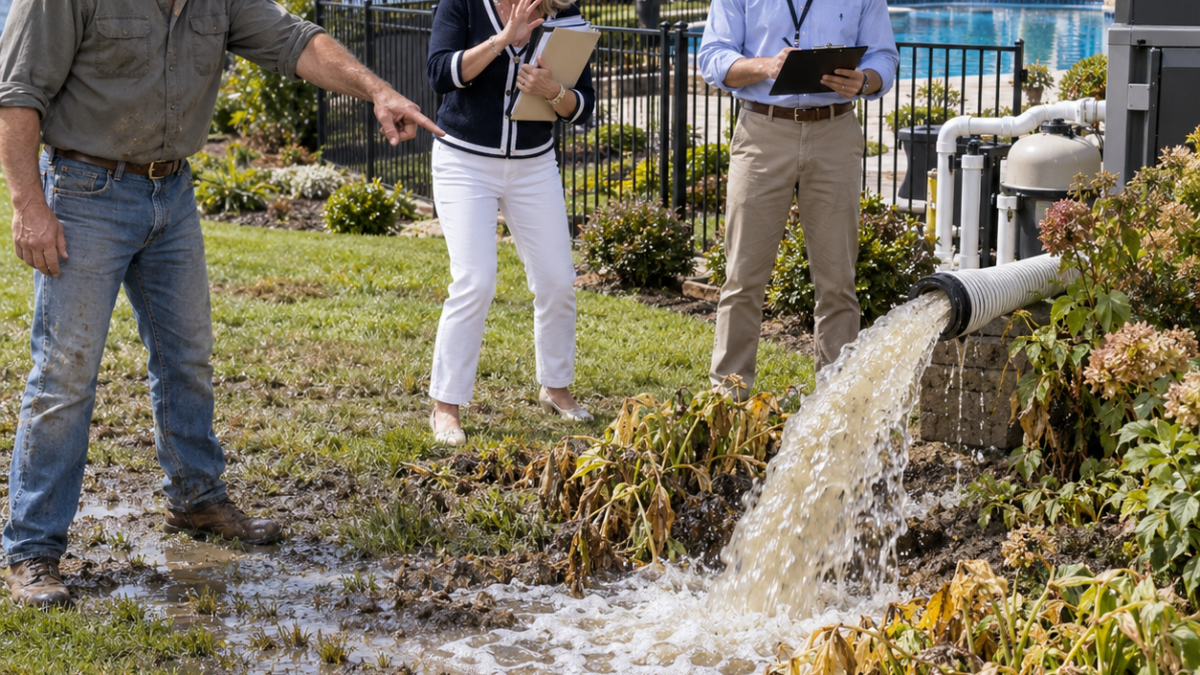
Karen looked at the dead strip spreading across my pasture and told me it was “just a little water.”
For almost two years, something from her property had been quietly killing the land I bought to become a sanctuary for rescue horses, and she expected me to accept it because I wasn’t part of her picture-perfect neighborhood.
The moment I found the black pipe hidden beneath the fence, I knew this wasn’t going to end with an argument between neighbors.
I had bought those five acres after twenty years in the Army because I wanted silence.
No formations.
No deployment schedules.
No radios crackling at two in the morning.
Just pasture, trees, an old wire fence, and enough room to eventually bring home a couple of horses that needed somewhere safe to finish their lives.
Eagles Landing sat along three sides of my property.
Five hundred immaculate suburban homes.
Identical mailboxes.
Perfect lawns.
An HOA famous for caring deeply about things like mulch color and trash-can visibility.
My land had existed before the development, so I wasn’t part of the association.
That fact irritated Karen Miller more than anything else about me.
Karen was HOA president.
She treated the title like she’d been elected governor.
The first sign that something was wrong appeared late in my second spring on the property.
A patch of grass near the rear fence turned yellow.
At first I blamed drought.
Then insects.
Maybe fungus.
But rain came, and everything around it recovered.
That patch didn’t.
It grew.
Green became yellow.
Yellow became brittle tan.
Within weeks, the damage stretched outward in a strange fan shape.
I walked the area every morning.
The soil looked crusted.
Nothing new sprouted.
And even outdoors, beneath the smell of sun-warmed grass, there was something else.
Chlorine.
I started following the damage toward the fence.
The closer I got, the stronger that sterile chemical smell became.
Across the property line sat Karen’s house.
The biggest one in that section of Eagles Landing.
Two stories.
Three-car garage.
Landscaping manicured within an inch of its life.
And behind it, a swimming pool bright enough to look artificial from my pasture.
I stared at that pool for a long time.
Then I grabbed a pair of loppers.
Vines and brush had grown thick beneath the lowest strand of my fence.
I cleared them slowly.
One branch.
Then another.
Until black plastic appeared beneath the leaves.
I froze.
A four-inch corrugated pipe had been pushed under the fence.
Its open end extended several inches onto my property.
The earth around it was pale, wet, and dead.
I crouched.
The smell of chlorine hit me immediately.
I followed the pipe visually through Karen’s hedge.
It pointed straight toward her pool equipment.
My anger didn’t explode.
It hardened.
Years in the military had taught me that anger is useful only when you can control it.
So instead of marching to her house, I took out my phone.
Photographs.
Close-ups.
Wide angles.
Fence line.
Dead soil.
Pipe.
Pool equipment in the background.
Then video.
I documented everything.
That’s when Karen appeared.
She marched across her lawn wearing oversized sunglasses and carrying her phone like she had been waiting for an excuse to use it against me.
“Can I help you?”
I pointed at the pipe.
“This yours?”
She glanced down.
For half a second, something crossed her face.
Not surprise.
Recognition.
“It drains from the pool.”
“Onto my property.”
“It drains away from my house.”
“Onto my property,” I repeated.
Her expression tightened.
I pointed toward the dead grass.
“That discharge is killing my pasture.”
Karen folded her arms.
Then she looked over my five acres with an expression I would remember for a very long time.
“That’s just a little bit of water, Sergeant.”
She knew my old rank.
Neighborhood gossip, apparently.
“Your pathetic patch of weeds will be fine.”
I stared at her.
“This isn’t weeds.”
“Looks like weeds to me.”
“This is pasture.”
“Then grow more.”
She turned away.
That was the moment she made her real mistake.
Not the pipe.
Not even the chemicals.
It was believing that dismissing me was the same thing as defeating me.
I didn’t argue.
I didn’t threaten.
I simply said, “All right, Karen.”
She glanced back.
“We’ll see.”
That afternoon, I installed two trail cameras facing the pipe.
Then I ordered a soil-testing kit from the state university agricultural extension service.
One sample came from the dead zone.
Another came from healthy pasture a hundred yards away.
I labeled everything carefully.
Photographed the collection process.
Mailed both samples with tracking.
Then I opened a notebook and wrote the date at the top of the first page.
Two days later, my trail camera captured thirty-five straight minutes of chemical-smelling water blasting through that pipe.
Three days after that, it happened again.
Then again.
And when the university’s laboratory report finally arrived, I read the first page twice.
Then I sat completely still.
Because what Karen called “a little bit of water” had done far more damage than I had imagined.
And according to the lab, fixing it wasn’t going to require grass seed.
It was going to require excavation.
PART 2
The report was twenty pages long.
I read every one.
Most people probably would have skimmed the summary, looked at the recommendation, and immediately called a lawyer.
I didn’t.
I wanted to understand exactly what had happened to my land.
The contaminated soil was dramatically more alkaline than the healthy control sample.
Salinity was far above normal pasture levels.
Chemical stabilizers associated with treated pool water were present at concentrations that had no natural explanation.
The lab’s language was restrained, scientific, and therefore more disturbing than anything emotional could have been.
Repeated exposure.
Direct application.
Long-term inhibition of vegetative growth.
Severe degradation of soil suitability.
Then came the recommendation.
Remove the contaminated topsoil.
Not aerate it.
Not fertilize it.
Not wait for rain.
Physically excavate it.
Depending on saturation, twelve to eighteen inches.
Possibly more.
Replace it with clean soil.
Regrade.
Reseed.
Monitor.
I leaned back in my chair.
Outside my study window, afternoon sunlight covered the pasture.
Most of it looked healthy.
Then there was that bleached fan-shaped wound spreading away from Karen’s fence.
I had walked those acres almost every evening since buying the property.
I knew where water pooled after thunderstorms.
I knew which corner stayed green longest in August.
I knew where deer crossed before sunrise.
I knew which old fence post leaned because the soil beneath it had washed out decades ago.
Land becomes personal when you work it with your own hands.
You stop seeing acreage.
You see history.
Effort.
Possibility.
And that dead patch was supposed to become part of a grazing area for horses I hadn’t even met yet.
I’d spent years telling myself that retirement would be the point when I finally stopped moving long enough to build something gentle.
That pasture was part of the plan.
Karen had looked at it and called it weeds.
I printed the lab report.
Three-hole punched it.
Put it into a black binder.
Then I opened Google Earth.
Satellite imagery wasn’t perfect, but it gave me another angle.
I moved backward through the years.
Current year.
The dead area was obvious.
Previous year.
Smaller, but visible.
One year earlier.
There it was again, faint discoloration near the fence.
Another year back.
Healthy green.
I stared at the screen.
This hadn’t begun after I moved in.
The pipe had likely been discharging for at least two years.
Maybe longer.
The previous owner had been an elderly widower named Mr. Henderson—not related to anyone in Eagles Landing—who had moved into assisted living before I bought the place.
The rear pasture had been neglected during his final years there.
Tall grass.
Brush.
Little foot traffic.
Karen could have been backwashing her pool onto the property for months before anyone noticed.
Possibly hundreds of discharges.
Hundreds of occasions when chlorinated, chemically treated water had crossed the fence because disposing of it properly would have been less convenient.
That transformed my understanding of the problem.
It wasn’t carelessness.
A broken pipe can be careless.
A single discharge can be a mistake.
A hose slipping loose can be an accident.
A black pipe intentionally extended beneath a fence toward someone else’s land?
Repeated use?
For years?
That was a system.
I created another section in the binder.
SATELLITE HISTORY.
Dates.
Images.
Notes.
Then I reviewed the trail-camera footage.
The pattern became obvious.
Every few days, usually in the afternoon, the pipe discharged.
Thirty minutes.
Sometimes forty.
Once nearly an hour.
The amount of water surprised me.
I knew pools required backwashing depending on filtration systems and maintenance routines, but seeing that volume dumped directly into the soil changed the scale of what I was dealing with.
I saved every clip.
Original memory cards went into envelopes.
Copies went onto an external drive.
Backup copies went to encrypted cloud storage.
Then I started the log.
Date.
Time.
Duration.
Weather.
Approximate flow.
Condition of soil.
Anything unusual.
Some people might call that excessive.
Those people never spent twenty years working military logistics.
Documentation keeps people honest.
And when they refuse to be honest, documentation keeps you protected.
My next move wasn’t a lawsuit.
It was a letter.
I wanted one last clean opportunity for Karen to stop.
No shouting.
No accusation.
No legal theater.
I wrote two pages.
Mrs. Miller,
A discharge pipe originating from your property is releasing pool water onto my pasture.
The discharge has caused documented damage.
Independent laboratory testing has identified chemical conditions consistent with repeated pool-water exposure.
Please immediately discontinue all discharge onto my property and contact me within ten business days so we can discuss appropriate remediation.
I included the first page of the lab summary.
One photograph of the pipe.
One still image showing water pouring out.
That was it.
No demand for money.
No threat.
No insult.
No discussion of intent.
I sent it certified mail with return receipt.
Four days later, the green receipt came back.
Karen Miller’s signature.
I placed it into the binder.
Then I waited.
Day one.
Nothing.
Day three.
Nothing.
Day five.
Another discharge.
I watched the trail-camera footage twice.
Karen had received scientific confirmation that her pool water was damaging my property.
She kept dumping it anyway.
Day eight.
Another discharge.
Day ten.
Silence.
On day eleven, I walked to the mailbox.
There was a cream-colored envelope inside.
Heavy paper.
Embossed eagle.
EAGLES LANDING HOMEOWNERS ASSOCIATION.
I laughed before opening it.
Not because anything was funny.
Because I already knew what she had done.
Karen hadn’t responded to my complaint.
She had changed battlefields.
The letter accused my property of creating “visual blight along the community perimeter.”
Specifically:
My fence.
A standard wire agricultural fence that had been standing there longer than half the homes in Eagles Landing.
According to Karen, it was “unsightly, deteriorated, inconsistent with community appearance standards, and detrimental to surrounding property values.”
The HOA demanded that I replace approximately nine hundred feet of fence with six-foot white vinyl privacy fencing.
At my expense.
Within thirty days.
I read the letter again.
Then I looked toward the fence.
The same fence Karen had pushed her drainage pipe beneath.
I called Dave Morgan.
At that point I didn’t know Dave personally.
I knew his name because it appeared beneath Karen’s on the HOA correspondence.
Treasurer.
I’d seen him jogging along the county road in the mornings.
Retired military haircut.
Air Force veteran plate.
I didn’t have his number.
So I didn’t actually call him yet.
Instead, I wrote back to the association’s general mailing address.
One paragraph.
My parcel was not and had never been subject to the Eagles Landing HOA covenants.
Therefore, its violation notice had no legal application to my property.
I requested that the board cease sending enforcement notices.
Certified mail.
Return receipt.
Into the binder.
Two weeks later, another HOA envelope arrived.
This time, the target was my horse shelter.
A three-sided run-in shed stood near the eastern side of the pasture.
Old.
Functional.
Structurally sound.
It had been there when I purchased the property.
Karen’s notice called it an “unapproved accessory structure.”
Removal required within thirty days.
Potential penalties:
One hundred dollars per day.
I sat at my kitchen table holding the letter.
Something inside me changed.
Up to that point, I’d still been trying to treat Karen as a neighbor behaving badly.
Now I understood what she was doing.
She was retaliating.
I had identified damage she was causing.
Instead of addressing it, she had used the authority of the HOA she controlled to create pressure against me.
She couldn’t legally enforce those covenants against my property.
But legal authority wasn’t the point.
Fear was.
Official letterhead.
Deadlines.
Fines.
Threats of additional action.
She wanted me worrying about the cost of a fence.
The horse shelter.
Maybe attorneys.
Maybe county complaints.
Anything that distracted from the black pipe.
It was a familiar tactic.
Overwhelm someone with enough smaller problems and eventually they’ll abandon the larger one.
I’d seen versions of it in bureaucracy my entire career.
The problem for Karen was that I didn’t respond to pressure by becoming less organized.
I became more organized.
I started a second tab in the binder.
RETALIATION.
Violation notice one.
Violation notice two.
Copies of envelopes.
Postal dates.
My replies.
Certified receipts.
A timeline showing her first notice arrived after she signed for my contamination letter.
When laid out chronologically, it told a remarkably simple story.
April 5: I confronted Karen.
April 9: first documented discharge after confrontation.
April 18: laboratory results received.
April 20: certified remediation request mailed.
April 23: Karen signed for it.
April 28: another discharge.
May 2: another discharge.
May 4: HOA fence violation issued.
May 18: horse shelter violation.
Cause.
Response.
Retaliation.
Once I saw it arranged like that, I stopped wondering whether I should hire a lawyer.
The only question was which one.
But first I wanted to understand the organization Karen was using against me.
That meant understanding Eagles Landing.
Most mornings I drove the county road bordering the development with coffee.
Not spying.
Observing.
There was a difference.
Perfect lawns.
Perfect hedges.
Perfect rows of mailboxes.
Very few basketball hoops.
Very few toys.
Very little individuality visible from the street.
One morning I stopped near the rear corner of my fence to replace a loose insulator.
Dave Morgan came jogging around the bend.
He slowed.
“Morning.”
“Morning.”
He leaned forward with his hands on his hips.
“Getting too old for hills.”
“Then stop running them.”
He laughed.
“That’s what my knees keep telling me.”
I noticed the Air Force veteran emblem on his T-shirt.
“Retired?”
“Twenty-two years.”
“Army. Twenty.”
That instantly changed the tone.
The strange shorthand that exists between veterans did what it usually does.
Where stationed?
What field?
How long out?
Dave had been an aircraft maintenance officer.
I had worked logistics.
Eventually he nodded toward my pasture.
“You bought the old Henderson place.”
“Couple years ago.”
“Nice land.”
“Usually.”
He noticed the dead patch.
His expression changed slightly.
“That from the pool?”
I looked at him.
Interesting.
“What makes you ask?”
He hesitated.
Then nodded toward Karen’s house.
“I’ve seen her maintenance guy messing around back there.”
“You know about the pipe?”
“No.”
“Want to?”
Dave followed me along the fence.
I showed him.
He crouched.
“Jesus.”
“Lab says repeated pool discharge.”
“How bad?”
“Bad enough the recommendation is excavation.”
He straightened.
“She knows?”
“She signed for the lab report.”
“And?”
I handed him a copy of the fence violation.
Dave read it.
His shoulders dropped.
“Oh, for God’s sake.”
“You signed these?”
He pointed at the bottom.
“My name prints automatically because I’m treasurer.”
“Did you approve it?”
“No.”
“Who did?”
“You already know.”
“Karen.”
Dave handed the paper back.
“She runs most enforcement through the management portal. Two other board members vote with her on almost everything.”
“And you?”
“I vote no enough that she stopped asking unless procedure forces her.”
I gave him the second notice.
His face tightened.
“You’re not even in the HOA.”
“I’ve mentioned that.”
“Repeatedly?”
“Certified mail.”
That earned a smile.
“Army logistics?”
“Unfortunately.”
He handed the letter back.
“You documenting all of this?”
“Everything.”
“Good.”
There was something exhausted in the way he said it.
“Karen do this often?”
Dave looked toward the neighborhood.
“You got an hour?”
We leaned against my fence for nearly forty minutes.
He told me about residents receiving notices because garbage cans were visible too early.
Shrubs measured with tape.
A flagpole dispute over six inches.
A family ordered to remove a basketball hoop because its orange rim supposedly conflicted with architectural standards.
A widow fined over landscaping because she replaced dead bushes with a variety not included on an old approved planting list.
“People pay?” I asked.
“They don’t want the fight.”
“What happens if they fight?”
“More letters. Hearings. Late fees. Sometimes legal letters.”
“So fear.”
Dave nodded.
“Pretty much.”
“You’re treasurer.”
“I know.”
“Why stay?”
He looked uncomfortable.
“Because if I leave, she appoints someone else who won’t push back at all.”
Fair answer.
Maybe incomplete.
But fair.
I told him about the trail cameras.
Satellite imagery.
Soil analysis.
Certified letter.
Continued discharge.
Dave grew quieter with each item.
Then he said, “You need to sue her.”
“Probably.”
“Not the HOA.”
“That depends on how far she keeps dragging the HOA into it.”
He winced.
“I was afraid you’d say that.”
“Dave, I’m not trying to punish five hundred homeowners.”
“I know.”
“But if association resources are being used against me—”
“Then we’re exposed.”
“Yes.”
He rubbed his forehead.
“She used our lawyer yet?”
“Not that I know of.”
“Then maybe we can stop it before she does.”
We couldn’t.
Karen got there first.
But before that happened, Dave introduced me to Eleanor Price and Mike Dalton.
We met on a Saturday afternoon at his house.
Dave called it a beer.
It became a strategy session.
Eleanor was seventy-one, a retired librarian who spoke softly even when she was angry.
Mike was thirty-six, worked in telecommunications, had two kids, and looked permanently tired in the way young fathers often do.
Dave told them why I was there.
Eleanor listened to the contamination story with both hands wrapped around a coffee mug.
When I finished, she said, “She made me dig up my roses.”
I knew immediately who she meant.
“Karen?”
Eleanor nodded.
“My husband planted them.”
Her voice changed.
“He died three years ago.”
Nobody spoke.
“There were twelve bushes along the side garden. He researched them. Ordered them from different nurseries. Took care of them himself.”
She stared into the mug.
“The year after he died, Karen sent me a letter saying several varieties weren’t on the approved landscape list.”
“What happened?”
“I asked for an exception.”
“And?”
“They denied it.”
“On what grounds?”
“She said if they made exceptions for sentimental reasons, standards would become impossible to enforce.”
Mike muttered something under his breath.
Eleanor continued.
“I ignored the first letter.”
She smiled sadly.
“Then I received another one. And another. Then fines.”
“How much?”
“Eventually twelve hundred dollars.”
“For roses?”
“Yes.”
“Did you pay?”
“I couldn’t risk a lien.”
Her eyes filled but she didn’t cry.
“My grandson helped me dig them out.”
That story did something to me.
Until then, Karen was irritating.
Entitled.
Potentially liable.
But hearing Eleanor describe digging up something her dead husband had planted because a woman with a clipboard preferred an approved species list made the problem feel larger.
Mike had his own story.
Basketball hoop.
Bikes.
Chalk drawings.
Noise complaints.
A warning because a welcome mat contained colors not included in the design handbook.
“I know how stupid that sounds,” he said.
“It sounds stupid because it is stupid.”
“My wife stopped letting the kids leave anything outside.”
He looked embarrassed.
“Sometimes I’ll hear them laughing in the backyard and catch myself wondering if someone is going to complain.”
Dave stared at the floor.
“That’s what I mean.”
I opened my binder.
They went through it together.
Pipe.
Photographs.
Trail footage.
Soil results.
Satellite timeline.
Certified letter.
Violation notices.
Mike looked up.
“She sent you that fence violation after signing for this?”
“Yes.”
“And you’re not in the HOA?”
“No.”
He shook his head.
“That’s insane.”
Eleanor touched the edge of the lab report.
“What are you going to do?”
“Hold her accountable.”
“How?”
“Legally.”
They waited.
“I may need evidence showing how she uses HOA authority.”
Eleanor looked nervous again.
“Against us?”
“Statements. Copies of notices. Dates. Nothing exaggerated. Nothing anonymous.”
“What would you do with them?”
“Give them to my attorney if relevant.”
Mike sat back.
“Would Karen see them?”
“Possibly.”
Fear entered the room.
I didn’t minimize it.
“If you aren’t comfortable, don’t do it.”
Eleanor surprised everyone.
“I’ll do it.”
Dave turned toward her.
“You sure?”
She straightened.
“My roses aren’t coming back.”
Then she looked at me.
“But maybe she doesn’t get to do that to someone else.”
Mike agreed next.
Dave already had years of board records.
Within a week, I had sworn statements.
Copies of notices.
Emails.
Minutes showing Dave objecting to enforcement decisions.
The binder became two binders.
That’s when Dave gave me the name Annette Evans.
Property.
Environmental disputes.
Civil litigation.
Former county attorney.
“She’s scary,” he told me.
“In a good way?”
“If you’re her client.”
Annette’s office was downtown above a small accounting firm.
No marble lobby.
No floor-to-ceiling glass.
Just legal books, framed degrees, and a conference table large enough to spread out my evidence.
She was in her mid-fifties.
Silver beginning at her temples.
Dark suit.
No wasted motion.
Dave had given her a summary.
She shook my hand.
“Mr. Thorne?”
“Marcus.”
“Dave says you brought documents.”
I set both binders on the table.
She raised an eyebrow.
“Apparently.”
For the next hour, I walked her through everything.
Annette rarely interrupted.
When she did, the questions were precise.
“How did you collect the soil?”
I explained the sampling protocol.
“Photographs?”
“Yes.”
“Chain of possession?”
Shipping receipt.
Lab confirmation.
“Original trail-camera files?”
Preserved.
“Metadata?”
Yes.
“Property boundary survey?”
In section three.
“Proof the pipe crossed your property line?”
Survey photograph and markers.
“Written notice to defendant?”
Certified.
“Proof she received it?”
Signature.
“Discharge after receipt?”
Multiple videos.
“HOA jurisdiction?”
None.
“Documentation?”
Title documents and subdivision map.
“Retaliatory notices?”
Tab six.
She stopped.
Looked at me.
Then at the binders.
“Marcus.”
“Yes?”
“Most clients arrive with anger.”
I waited.
“You arrived with exhibits.”
“I didn’t know whether to take that as a compliment.”
“It is.”
She turned back to the lab report.
“This is substantial.”
“How substantial?”
“Potentially six figures.”
I didn’t react.
She noticed.
“You were expecting less?”
“I expected enough to repair the land.”
“Repair is only one category.”
She pulled a legal pad closer.
“Let’s separate this.”
She wrote.
“First: trespass.”
“Because the water crossed the property line?”
“The pipe itself may support it too, but yes. Intentional intrusion doesn’t require someone physically walking onto your land.”
Next line.
“Private nuisance. Repeated discharge interfering with your use and enjoyment.”
Next.
“Property damage.”
Another.
“Remediation costs.”
Another.
“Loss of use.”
I frowned.
“I haven’t brought horses in yet.”
“But your intended use matters, especially if the contamination delayed it. We’ll quantify conservatively.”
Next.
“Potential diminution in value, depending on appraisal.”
Then she looked up.
“And then we get to conduct after notice.”
“Retaliation.”
“Exactly.”
She picked up Karen’s fence letter.
“This is extremely helpful.”
“Helpful?”
“You notified her of damage. She did not investigate or stop. She continued discharging and began sending unsupported HOA threats.”
“She has no jurisdiction.”
“That makes it worse.”
She turned to Dave’s statement.
“And she did it through an office she holds as a fiduciary.”
“What’s that mean for the HOA?”
“Depends how association resources were used.”
Annette tapped the documents.
“If she acts purely in a personal capacity, the HOA may distance itself.”
“She used association notices.”
“Yes.”
“If she uses association counsel?”
Annette’s expression changed.
“Then everyone will have a much less pleasant week.”
She asked permission to commission professional estimates.
Environmental remediation.
Agricultural restoration.
Appraisal.
Survey confirmation.
I agreed.
Two weeks later, the first remediation contractor walked the damaged area.
He pushed a probe into the earth.
Took his own samples.
Measured the footprint with GPS.
“How long?” I asked.
“To fix it?”
“To make it usable.”
“If the contamination is mostly in the upper eighteen inches, excavation, replacement, grading, reseeding, then one growing season before heavy grazing.”
“And if it’s deeper?”
“More excavation.”
“How much?”
He looked across the pale strip.
“Forty-five to fifty-five thousand.”
I exhaled.
“For grass?”
“For contaminated soil.”
He pointed toward Karen’s property.
“The grass is just what died first.”
Final estimate:
$52,400.
Annette added temporary fencing.
Reseeding.
Follow-up testing.
Agricultural loss.
Survey cost.
Legal expenses.
Potential value impact.
Then she scheduled another meeting.
I sat across from her as she slid a yellow pad toward me.
At the bottom she’d written:
$180,000.
I stared at it.
“That’s the demand?”
“Yes.”
“Seems high.”
“It should.”
“Explain.”
“Your hard damages are already approaching sixty thousand when restoration and associated costs are included.”
She tapped the number.
“The remainder reflects punitive exposure and settlement risk created by deliberate continuation after notice and retaliatory conduct.”
“Will a judge award that?”
“Maybe. Maybe less. Depending on evidence and state limitations.”
“I thought lawyers never said maybe.”
“Bad lawyers don’t.”
Fair enough.
“We demand one hundred eighty thousand. If she has insurance, her carrier gets involved. If she wants to negotiate, we evaluate.”
“And if she ignores it?”
“We file.”
Annette leaned forward.
“Understand something, Marcus. This number isn’t revenge.”
I nodded.
“It’s leverage.”
“Accountability and leverage.”
She pointed toward the restoration estimate.
“If someone damages fifty thousand dollars’ worth of your land and then deliberately continues after being warned, the law is allowed to take intent seriously.”
That distinction mattered to me.
I wanted Karen stopped.
I wanted the pasture repaired.
And yes, I wanted her to feel consequences.
But I wasn’t interested in destroying someone merely because I was angry.
I’d spent too much of my life around actual destruction to confuse it with justice.
Annette drafted the demand.
Ten pages.
Timeline.
Legal claims.
Photographs.
Laboratory findings.
Satellite evidence.
Certified notice.
Post-notice discharges.
Retaliatory HOA letters.
Settlement demand.
Thirty days.
A process server delivered it to Karen personally.
The first visible result came within forty-eight hours.
The black pipe disappeared.
I checked the trail cameras.
No discharge.
Three days.
Seven.
Fourteen.
Nothing.
For the first time in months, the soil near the fence began drying naturally.
Karen had received a $180,000 demand and suddenly discovered another way to manage her pool water.
That told me everything I needed to know.
Still, she did not call me.
She did not apologize.
She did not offer remediation.
On day twenty-five, Annette called.
I was replacing a gate hinge.
“You sitting down?”
“No.”
“Karen responded.”
“With what?”
“An attorney letter.”
“Her insurance?”
“No.”
“Personal counsel?”
“Worse.”
She paused.
“The HOA’s lawyer.”
I closed my eyes.
“She used association counsel?”
“Yes.”
“What does it say?”
“That your claim is frivolous, vexatious, without merit, and appears to constitute harassment against a dedicated community volunteer.”
I laughed once.
“You’re enjoying this.”
“A little.”
“Why?”
“Because she just dragged the HOA into a dispute that could have remained largely personal.”
“Meaning?”
“Association counsel is now formally denying conduct supported by videos, lab testing, photographs, and their own president’s written retaliation.”
“Can they get out?”
“They can change position.”
“Will that help?”
“It helps more before they know they’re wrong.”
She emailed me the letter.
I printed it.
Into the binder.
Three binders now.
The following morning I found Dave at the fence.
He already knew.
“Karen used our lawyer.”
“Yes.”
“I didn’t approve that expenditure.”
“Did the board?”
“No meeting.”
“That sounds like a question for you.”
Dave’s jaw tightened.
“It absolutely is.”
He called an emergency board session.
Karen refused.
She claimed the matter fell within presidential discretion.
Dave requested invoices.
The association’s management company provided them.
Karen had authorized legal review using HOA funds.
Now Dave was angry in a way I hadn’t seen before.
“She exposed the association without even telling us.”
“What can you do?”
“Meeting next Thursday.”
“Regular meeting?”
“Yes.”
“Then use it.”
Dave did.
He read the bylaws with the attention of a man studying an emergency procedure manual.
Residents could submit agenda items forty-eight hours in advance.
Eleanor submitted one.
Review of landscaping violation.
Mike submitted another.
Review of family-use enforcement.
Dave submitted:
Board president conduct, legal expenditure, and potential association liability.
Then he found the clause that mattered.
A homeowner could yield speaking time to a guest when the subject directly affected association business.
Dave called me.
“You comfortable speaking?”
“Yes.”
“Ten minutes.”
“I’ll need eight.”
“Bring a projector.”
The Eagles Landing clubhouse looked like every suburban clubhouse built in the last twenty-five years.
Beige walls.
Beige carpet.
Artificial plants.
Framed photographs of the pool.
A community events calendar.
Karen sat at the center of the board table.
Dave sat at one end.
Two other board members, Gerald Ross and Susan Bell, sat between them.
Usually maybe twenty people attended meetings.
That night, there were more than eighty.
Word had moved quickly.
Karen saw me standing at the back.
Her eyes narrowed.
The meeting began.
Landscaping update.
Pool maintenance.
Ironically.
Trash reminders.
Then Eleanor.
Karen sighed.
“Mrs. Price, your previously resolved landscape matter.”
Eleanor stood.
Her hands trembled.
“My rose garden.”
“Resolved last year.”
“I am requesting formal review.”
“There is nothing to review.”
“The bylaws say residents may request board review of an enforcement decision.”
Karen’s expression hardened.
“Eleanor, we’ve been through this.”
“My husband planted those roses.”
The room became quieter.
“They caused no hazard.”
Karen shuffled papers.
“They were not compliant plantings.”
“I want the rule explained.”
“The approved list speaks for itself.”
“Why were those varieties prohibited?”
Karen stopped.
“What?”
“Why?”
“They were not approved.”
“That isn’t an answer.”
A few people murmured.
Eleanor continued.
“Were they invasive?”
Karen frowned.
“No.”
“Poisonous?”
“No.”
“Dangerous to foundations?”
“No.”
“Then why did you make me remove them?”
Karen’s cheeks reddened.
“Because rules are rules.”
Eleanor sat.
That phrase lingered.
Then Mike stood.
He spoke about the basketball hoop.
Bike warnings.
Backyard noise complaints.
He didn’t shout.
That made his words stronger.
“My children started asking permission before leaving toys outside their own home.”
Someone behind him said, “Same.”
Another voice.
“Us too.”
Karen grabbed the gavel.
“This is not an open complaint forum.”
Dave leaned into his microphone.
“Then we’ll move to my agenda item.”
Karen glared.
“Your legal expenditure complaint.”
“Board conduct and liability.”
“Ten minutes.”
“Correct.”
Dave stood.
“I yield my time under Article 9.2 to Marcus Thorne.”
The room erupted in whispers.
Karen immediately objected.
“No.”
Dave held up the bylaws.
“You don’t have discretion.”
“He’s not a resident.”
“He is party to a $180,000 claim involving association legal counsel.”
The dollar amount changed the air.
“What claim?”
“Did he say one-eighty?”
“Against us?”
Karen banged the gavel.
“Order!”
Dave looked at her.
“Would you like to explain it?”
She didn’t.
So I walked forward.
Connected my laptop.
First slide.
Aerial photograph.
Healthy pasture.
Dead fan-shaped scar.
I turned toward the room.
“My name is Marcus Thorne. I own the five acres outside the western boundary.”
Someone nodded.
Most residents knew the land.
“For approximately two years, a pool-discharge line originating from Mrs. Miller’s property has emptied directly onto mine.”
Second slide.
Pipe beneath fence.
Third.
Water pouring out.
No one spoke.
I played six seconds of video.
Water gushed.
Timestamp visible.
Then another clip.
Different date.
Then another.
I stopped.
“I confronted Mrs. Miller.”
Karen interrupted.
“You have no right to—”
Dave said, “He has the floor.”
That was probably the first time anyone had said those words to her in that room.
I continued.
“She called it a little water.”
Next slide.
Laboratory summary.
“I had the soil independently analyzed through the state university agricultural extension program.”
Highlighted text.
Chemical concentrations.
Pool stabilizer.
Soil degradation.
Next slide.
Professional remediation estimate.
$52,400.
A woman in the second row whispered, “Oh my God.”
Next slide.
My certified letter.
“I notified Mrs. Miller in writing.”
Next.
Return receipt.
“She signed.”
Next.
Trail-camera discharge dated after signature.
“The dumping continued.”
Now people were staring at Karen.
Next slide.
Fence violation.
A few residents recognized the HOA letterhead immediately.
“This arrived after my complaint.”
Next.
Horse-shelter violation.
“My property is not part of Eagles Landing.”
Voices rose.
“What?”
“She fined him anyway?”
“I didn’t fine him,” Karen snapped.
I looked at her.
“You threatened fines.”
She folded her arms.
I continued.
“I notified the association that it had no jurisdiction over my land.”
Next slide.
My letter.
Next.
Legal demand.
$180,000.
Then final slide.
HOA counsel’s response calling my claim frivolous.
“That letter was sent by an attorney paid with association funds.”
That hit harder than the contamination.
Residents looked at one another.
Dave spoke from the table.
“I did not approve the expenditure.”
Gerald looked stunned.
“Neither did I.”
Susan turned toward Karen.
“I wasn’t consulted.”
Karen leaned into her microphone.
“This is a private property dispute.”
Dave answered.
“Then why did you use association counsel?”
She hesitated.
“To defend the association.”
“From liability you created?”
Her face flushed.
I closed the laptop.
“I didn’t come here asking anyone in this room for money.”
The room settled.
“I asked Karen to stop dumping pool water onto my property and repair the damage.”
I pointed toward the dead-pasture photograph.
“She responded using your HOA against me.”
I looked toward Eleanor.
“Some of you know what that feels like.”
Eleanor nodded.
I looked toward Mike.
“So do your families.”
Then I faced the board.
“My attorney has given Mrs. Miller and the association an opportunity to resolve this before litigation proceeds.”
Karen finally found her voice.
“He is extorting this community.”
The word hung there.
I stared at her.
“Extorting?”
“You’re demanding one hundred eighty thousand dollars.”
“For contamination you caused.”
“Alleged contamination.”
I almost couldn’t believe she said it.
Not after the video.
Not after the lab report.
Not after removing the pipe.
I reopened the laptop.
Clicked back to the footage.
Water poured onto my pasture.
Karen looked at the screen.
Then away.
I said, “That pipe disappeared two days after you received the legal demand.”
Silence.
An elderly man stood in the back.
“Karen.”
She ignored him.
“Karen.”
He spoke louder.
She turned.
“Did you put that pipe there?”
“I hired pool contractors over the years.”
“That isn’t what he asked,” someone said.
The elderly man repeated.
“Did you know the pool drained onto his property?”
Karen looked toward me.
Then Dave.
Then the residents.
Her kingdom.
For years, fear had allowed her to answer questions with authority instead of facts.
That night, authority wasn’t enough.
“I knew water drained toward the pasture.”
The room reacted.
There it was.
Not everything.
Enough.
“Did you know it was damaging his land?”
“I disagree with the characterization.”
Someone laughed bitterly.
“There’s a lab report!”
Karen banged the gavel.
Dave stood.
“I’m making a motion.”
Her head snapped toward him.
“For what?”
“No confidence in the president.”
The room erupted.
“You can’t.”
“Article twelve.”
He held the bylaws.
“Removal for breach of fiduciary duty, misuse of association resources, or conduct exposing the association to substantial liability.”
Gerald shifted.
“Dave—”
“You just said you weren’t told she hired counsel.”
Gerald looked down.
Dave continued.
“We now have evidence association letterhead was used against property outside our jurisdiction.”
Susan looked at Karen.
“Did you authorize those violations yourself?”
Karen hesitated.
Susan’s face changed.
“You did.”
“Those properties affect our perimeter.”
“They aren’t members.”
“They affect values.”
Gerald rubbed his forehead.
Dave called the motion.
Karen tried to adjourn.
Residents objected.
Gerald finally spoke.
“We should vote.”
Karen stared at him.
For years, he had apparently supported her almost automatically.
Now self-preservation had arrived.
Dave asked homeowners to indicate support for initiating removal proceedings and immediately suspending Karen’s presidential authority pending formal confirmation.
Hands rose.
Dozens.
Then more.
Eleanor.
Mike.
The elderly man.
Parents.
Retirees.
People who had probably spent years telling themselves it was easier not to fight.
Karen watched those hands climb.
When Dave asked for opposition, only a handful remained down.
Karen’s was one of them.
Her hand shook.
The motion passed.
She didn’t scream.
That surprised me.
She simply gathered her papers.
Her face had gone pale.
At the door, she stopped.
Turned toward me.
“You did this.”
I answered quietly.
“No.”
Her eyes narrowed.
“You did.”
“I documented it.”
That difference mattered.
She left.
Nobody applauded.
For a few seconds, the room was silent.
Then everyone started talking at once.
The HOA’s new reality began the next morning.
Dave called me.
“Interim president.”
“Congratulations.”
“Don’t say that.”
“You sound thrilled.”
“I’d rather clean aircraft hydraulics.”
“Too late.”
He became serious.
“We retained separate counsel.”
“Good.”
“We’re withdrawing the HOA’s denial letter.”
“Talk to Annette.”
“We will.”
“And Dave?”
“Yeah?”
“I don’t want five hundred homeowners paying for Karen’s personal conduct.”
“I know.”
“Separate what she did personally from whatever the association actually approved.”
“That’s exactly what we’re doing.”
The formal lawsuit was filed the following week.
Karen Miller.
Eagles Landing Homeowners Association, to the extent of association involvement.
Claims related to trespass, nuisance, property damage, retaliatory conduct, and misuse of HOA process.
Once filed, everything became real.
Court number.
Summons.
Deadlines.
Disclosure.
Karen had to hire personal counsel.
The HOA’s new attorney contacted Annette almost immediately.
His tone was entirely different from the first letter.
Professional.
Careful.
Interested in limiting community exposure.
Annette called me afterward.
“They want out.”
“Can they?”
“Probably most of the way.”
“How?”
“Rescind every notice. Apologize. Cover fees associated with their lawyer’s involvement. Adopt noninterference terms.”
“And Karen?”
“Separate defendant.”
“Good.”
We negotiated the association piece first.
I did not demand punitive money from the neighborhood.
The HOA formally acknowledged my parcel lay outside its authority.
All violation letters were rescinded.
It reimbursed a portion of legal expenses tied directly to its involvement.
More importantly, the board agreed to review retaliatory fines issued under Karen’s leadership.
Eleanor received money back.
Mike had several fines reversed.
Others came forward.
Christmas decorations.
Planters.
Garden ornaments.
Flags.
Driveway basketball equipment.
The board couldn’t legally refund everything automatically, but it created a review process.
The stories poured in.
Karen’s legacy began unraveling one envelope at a time.
Then came the insurance issue.
Karen filed a claim under her homeowners policy.
Her attorney apparently believed insurance might cover property damage.
An adjuster arrived.
He inspected Karen’s pool equipment first.
Then my land.
He took photographs.
Measured the damaged area.
Asked about the pipe.
I answered only what I knew.
He requested copies of the lab results.
Annette provided them.
Then came discovery.
Maintenance invoices.
Pool service records.
Emails.
HOA correspondence.
One invoice from almost two years earlier included a handwritten note:
“Extend waste line toward rear pasture.”
Annette showed it to me.
I stared at the words.
“You’re kidding.”
“No.”
“Who wrote it?”
“Pool contractor.”
“Karen?”
“Unknown yet.”
But it established something important.
The discharge route had not appeared accidentally.
Someone had deliberately directed the waste line toward my land.
Then another record surfaced.
A text exchange between Karen and a pool technician.
The technician had apparently warned her that discharge should remain on her property or go to an approved drainage area.
Karen’s response:
“Rear field is empty. Send it there.”
I read the line twice.
Rear field.
My pasture.
Empty.
As though lack of a house made land ownerless.
Annette leaned back.
“That changes things.”
“It proves knowledge.”
“It strengthens knowledge.”
“Enough?”
“Combined with everything else, yes.”
A month later, Karen’s insurer sent its coverage decision.
Denied.
Annette received a copy through counsel.
The policy covered certain accidental losses.
This was not accidental.
Repeated intentional routing over an extended period.
Pollution and contamination exclusions also applied.
The company would not fund her defense or settlement under the relevant coverage.
Karen was on her own.
For the first time since the conflict began, I felt something uncomfortable.
Not sympathy exactly.
But awareness.
One hundred eighty thousand dollars is not a parking ticket.
It’s not an HOA fine.
It can reshape a family’s finances.
I called Annette.
“Are we still demanding full amount?”
“Yes.”
“Walk me through it again.”
She understood what I was asking.
“Marcus, the remediation alone is over fifty-two thousand.”
“I know.”
“Add testing, surveying, restoration, delayed use, legal expenses, and potential long-term monitoring.”
“I know.”
“She continued after written notice.”
“Yes.”
“She used an organization she controlled to retaliate.”
“Yes.”
“She denied conduct despite evidence.”
“Yes.”
“And discovery now supports deliberate routing.”
I looked toward the pasture.
“So this is proportionate?”
“That’s for negotiation, and potentially a court, to determine.”
I appreciated the answer.
Not reassurance.
Analysis.
Karen’s lawyer requested mediation.
We agreed.
The mediation took place in a neutral office downtown.
I hadn’t spoken directly to Karen since the HOA meeting.
She arrived with her husband, Richard.
I’d seen him before only at a distance.
He looked exhausted.
Karen looked smaller somehow.
Not physically.
The certainty was gone.
We stayed in separate rooms for most of the day.
Mediator went back and forth.
First offer.
$65,000.
Annette shook her head.
“That barely repairs the land.”
Second.
$90,000.
Rejected.
Third.
$120,000.
Annette asked me privately, “Your call.”
“What do you recommend?”
“We have a strong case.”
“Trial risk?”
“Always exists.”
“Cost?”
“Substantial.”
“Time?”
“Possibly a year or more.”
I considered it.
“What would $120,000 cover after fees?”
She calculated.
Enough to remediate.
Not enough to fully reflect other damages.
I shook my head.
“Not yet.”
Late afternoon.
Mediator returned.
“Karen wants to speak directly.”
Annette looked at me.
“Your choice.”
I agreed.
Karen entered with her lawyer.
Richard remained in the other room.
For several seconds, she didn’t look at me.
Then she said, “You want to ruin me.”
“No.”
Her eyes lifted.
“You’re demanding one hundred eighty thousand dollars.”
“My land didn’t poison itself.”
“You can repair it for fifty.”
“After you dumped water on it for two years.”
“I didn’t know it would do that much damage.”
“Your pool technician warned you about where to discharge.”
Her face tightened.
“He exaggerates.”
“And when I told you?”
Silence.
“When I gave you the lab result?”
She looked away.
“You kept doing it.”
“I was angry.”
There it was.
Not legal language.
Not denial.
Just truth.
“You were angry because I confronted you.”
“Yes.”
“So you continued.”
She didn’t answer.
“And sent HOA violations.”
“You embarrassed me.”
“I spoke to you at a fence with nobody else there.”
“You treated me like I was stupid.”
I shook my head.
“Karen, I said your water was killing my pasture.”
“You always had that tone.”
“What tone?”
“That military tone.”
Despite everything, I nearly laughed.
“I asked you to stop putting chemicals on my property.”
She folded her hands tightly.
“You could have handled it privately.”
“I tried.”
“You hired a lawyer.”
“After the certified letter.”
Silence again.
Then she said something I didn’t expect.
“I thought you would back down.”
I leaned back.
“Why?”
Her answer was barely audible.
“Everyone else does.”
That sentence explained five years of Eagles Landing better than every witness statement.
Everyone else does.
Pay the fine.
Remove the roses.
Hide the bicycles.
Repaint the playset.
Take down the hoop.
Replace the welcome mat.
And apparently tolerate chemical water crossing a fence.
Not because Karen was legally right.
Because resistance was exhausting.
She had built authority out of other people’s desire for peace.
I looked at her.
“I’m not trying to destroy you.”
“Then lower the number.”
“Make the land whole.”
“Fifty-two thousand.”
“Make me whole.”
“What does that mean?”
“Testing. Remediation. Loss of use. Legal expenses. The years of contamination. The harassment.”
She looked at Annette.
Annette said nothing.
This was between us.
Karen whispered, “I can’t pay one-eighty.”
“Then your lawyer and mine will keep talking.”
She stood.
“So that’s it?”
“No.”
I looked directly at her.
“This could have cost you the price of relocating a drain line.”
Her expression changed.
I continued.
“It could have cost you an apology.”
Her eyes reddened.
“You chose every step after that.”
She left the room.
Two hours later, the mediator returned.
Full settlement.
$180,000.
Confidentiality was limited because parts of the litigation were already public, but financial terms could be disclosed by the parties under agreed conditions.
Karen accepted responsibility without admitting every pleaded allegation.
The pipe would never return.
Any future drainage toward my property was prohibited.
She would pay.
When Annette told me, I didn’t celebrate.
I sat quietly.
“You won,” she said.
“Feels heavier than I expected.”
“Most real victories do.”
“How is she paying?”
“Refinancing.”
That hit me.
“House?”
“Second mortgage, apparently.”
I looked out the window.
Eagles Landing existed because people cared intensely about home values.
Karen had spent years threatening other people’s homes with fines and liens.
Now her own house would carry debt because of what she’d done beyond her fence.
Poetic.
But not joyful.
The money arrived in Annette’s trust account thirty days later.
After legal fees and costs, enough remained to restore the pasture properly and compensate the other documented losses.
My first check went to Terravation Environmental Services.
Excavation began in early fall.
The first morning, a compact excavator rolled through my gate.
Behind it came dump trucks.
The project manager marked the contamination perimeter with paint.
Then the bucket bit into the earth.
I hated watching it.
Even though it was repair.
Even though every scoop removed damaged soil.
It felt violent.
The machine scraped away the dead layer.
Pale dirt.
Compacted soil.
Areas where roots simply stopped.
In the worst section, they dug nearly two feet.
Truckload after truckload left my property for approved disposal.
The chlorine smell faded.
By day three, the open excavation looked like a wound.
Then clean topsoil arrived.
Dark.
Rich.
Alive.
They layered it carefully.
Graded the slope.
Restored drainage.
Added organic material.
Then seeded a native pasture mix.
When the hydroseeding truck finished, the once-dead zone was covered in a strange green coating.
Not grass yet.
Promise.
The bill came to a little over fifty-two thousand dollars.
I thought about Karen’s first words.
Pathetic patch of weeds.
Fifty-two thousand dollars to repair those weeds.
But money wasn’t the part that mattered most.
For weeks, I watered according to the restoration plan.
Monitored runoff.
Sent follow-up samples.
Waited.
The first shoots appeared after rain.
Thin.
Fragile.
Almost impossible to see from the house.
I knelt beside them one morning.
Ran my fingers lightly over the new growth.
I had seen damaged systems recover before.
Warehouses after storms.
Supply routes after conflict.
Communities after disasters.
But watching land recover was different.
Slower.
Quieter.
Nothing announced success.
A few blades simply appeared where nothing had been able to live.
Across the fence, Karen’s house remained closed most days.
Blinds drawn.
Pool unused.
I rarely saw her.
Some neighbors said she barely attended community events.
Others said Richard wanted to move.
I didn’t ask.
Eagles Landing itself changed dramatically.
Dave remained interim president until a special election.
He hated every minute.
Which probably made him exactly the person they needed.
His first rule was simple.
“No surprise enforcement.”
Residents received notice.
Opportunity to discuss.
Appeal procedures.
Board votes documented.
Legal counsel used only with recorded authorization except true emergencies.
Then the board reviewed the rules.
Some stayed.
Reasonable parking standards.
Safety requirements.
Maintenance of common areas.
Pool rules.
Others disappeared.
Exact flower varieties.
Decorative planter colors.
Overly rigid toy restrictions.
The infamous basketball-hoop standard.
At the meeting where that rule came up, Mike brought his children.
Dave read the provision.
“Portable recreational equipment must be removed from public view when not in active use.”
He looked around.
“Thoughts?”
A woman raised her hand.
“Can we define active use as childhood?”
The room laughed.
Rule changed.
Eleanor’s roses became the emotional issue.
The board couldn’t bring back her husband’s plants.
But they refunded her fines.
Then Dave did something nobody expected.
At the next community landscape day, residents arrived at Eleanor’s home carrying rose bushes.
Not identical to the ones she had lost.
That wasn’t possible.
But similar varieties.
Red.
Pink.
Cream.
Yellow.
Mike dug holes.
Dave hauled compost.
Children carried watering cans.
Eleanor stood on her porch with one hand covering her mouth.
I stayed near the sidewalk.
She saw me.
Walked over.
“This was because of you.”
“No.”
“Yes.”
“This was because people finally stopped being afraid.”
She hugged me.
I wasn’t prepared for that.
I had spent much of my adult life in environments where emotion was managed privately.
Eleanor didn’t care.
“You gave us permission to fight.”
I shook my head.
“You already had permission.”
“Maybe.”
She looked toward Dave.
“We forgot.”
By spring, her roses were blooming.
So was my pasture.
I waited longer than necessary before bringing horses home.
Partly because follow-up testing mattered.
Partly because I didn’t trust happiness arriving too quickly.
Three rounds of samples showed normal conditions.
The remediation contractor signed off.
Agricultural extension confirmed the pasture could safely support grazing.
Then I called a rescue organization two counties away.
I’d followed them online for years.
They had two geldings that were difficult to place together.
Gus was an old quarter horse.
Gentle.
Broad.
Gray around the muzzle.
Finn was a former racehorse.
Tall.
Nervous.
Underweight when rescued.
They had bonded in foster care.
Separating them would have been hard.
The rescue coordinator walked my property.
Checked fencing.
Shelter.
Water.
Pasture.
She stopped near the restored section.
“New grass?”
“Long story.”
“Healthy?”
“Tested three times.”
She nodded.
“Good.”
Two weeks later, a trailer turned into my driveway.
I stood at the pasture gate while the driver lowered the ramp.
Gus came out first.
Slow.
Suspicious.
Finn followed.
Head high.
Eyes moving everywhere.
For a few minutes, they just stood.
Then Gus lowered his nose.
Smelled the grass.
Took one bite.
Finn watched him.
Then did the same.
I leaned against the fence.
The wire fence.
The one Karen had ordered me to replace.
I laughed when I realized that.
Gus wandered toward the restored area.
My body tightened instinctively.
Even though every test said it was safe.
Even though months had passed.
Even though the soil beneath him was new.
He stepped onto the grass.
Stopped.
Grazed.
Finn followed.
Two horses standing where nothing had been able to grow.
That was the moment the lawsuit ended for me.
Not when the settlement was signed.
Not when the money arrived.
Not when Karen lost the presidency.
Not when the excavation trucks removed the contaminated dirt.
There.
Gus chewing grass.
Finn beside him.
Sunlight crossing their backs.
That was the victory.
Dave walked over that evening.
He leaned on the opposite side of the fence.
“So these are the famous horses.”
“Gus and Finn.”
“Which is which?”
“Gus is the one ignoring you.”
“Good horse.”
Finn raised his head.
Dave nodded toward the grass.
“Hard to believe what this looked like.”
“I remember.”
“Karen does too.”
I glanced toward him.
He shrugged.
“She doesn’t come to meetings.”
“Probably healthier for everyone.”
“She and Richard are still here.”
“So I’ve heard.”
Dave looked toward the development.
“People wanted them forced out.”
“You stopped it?”
“Didn’t need to. HOA can’t just exile somebody because they’re unpopular.”
“Good.”
“You sound surprised.”
“I’ve developed trust issues involving HOAs.”
He laughed.
Then became serious.
“We could’ve become what she was.”
“What do you mean?”
“Everyone was angry. Once she lost power, people wanted punishment.”
I nodded.
“That’s easy.”
“Yeah.”
Dave looked at the horses.
“Harder to build something better.”
That was exactly right.
For months, people framed my story as revenge.
The veteran who took down the HOA Karen.
The $180,000 lawsuit.
The poisoned pasture.
The public meeting.
Those details made a good story.
But revenge was never the part I wanted to carry forward.
Revenge keeps you emotionally tied to the person who hurt you.
Repair lets you move on.
I wanted soil where horses could graze.
A fence nobody could threaten through fake authority.
Neighbors who weren’t afraid of their mailbox.
Eleanor’s roses.
Mike’s kids playing basketball.
That was enough.
Still, consequences matter.
Without consequences, abuse teaches the wrong lesson.
Karen had treated another person’s land like empty space.
She had been warned.
Ignored it.
Then retaliated.
Her financial loss wasn’t some mysterious tragedy that fell out of the sky.
It was the accumulated price of decisions.
Decision to run the pipe.
Decision to keep using it.
Decision to dismiss the damage.
Decision to continue after written notice.
Decision to weaponize the HOA.
Decision to use association counsel.
Decision to deny evidence instead of fixing harm.
One bad decision can be a mistake.
A chain of them becomes character.
About a year after the settlement, I ran into Richard Miller at the hardware store.
I almost didn’t recognize him.
He was wearing jeans and an old sweatshirt.
No sign of Karen.
We ended up reaching for the same bag of grass seed.
He stopped.
“Marcus.”
“Richard.”
For a second, I considered leaving.
Then he said, “How’s the pasture?”
“Good.”
“Horses?”
“Two.”
He nodded.
“Karen mentioned them.”
That surprised me.
We stood awkwardly beside fertilizer shelves.
Finally he said, “I was angry with you.”
“I assumed.”
“For a long time.”
I waited.
“I thought you were trying to make an example out of her.”
“I wasn’t.”
“I know that now.”
He looked down.
“She didn’t tell me about the first letter.”
“The one I sent?”
“No.”
“What did she tell you?”
“That the neighbor was complaining about runoff.”
“Runoff.”
“Yeah.”
“She didn’t mention the lab?”
“Not until the lawyer got involved.”
I nodded.
Richard’s face tightened.
“I asked why she hadn’t just moved the drainage.”
“What did she say?”
He gave a sad smile.
“That you had disrespected her.”
That fit.
“I told her paying a plumber would’ve been cheaper.”
“Much.”
He looked toward the seed.
“Second mortgage is going to be with us awhile.”
I didn’t know what to say.
“I’m sorry you got caught in it.”
He looked at me.
“You don’t owe me that.”
“Maybe not.”
“I signed for the refinance.”
“You’re still part of it.”
He nodded.
Then he said something I hadn’t expected.
“She needed this.”
I frowned.
“The lawsuit?”
“The consequence.”
He leaned against the cart.
“For years, every time she pushed someone and they backed down, she took it as proof she was right.”
I remembered mediation.
Everyone else does.
Richard continued.
“I should’ve stopped it earlier.”
“You couldn’t control her.”
“No.”
“But I could’ve stopped pretending it wasn’t my problem.”
That sentence stayed with me.
We shook hands before leaving.
Not friends.
Not enemies.
Two men standing in a hardware store acknowledging the wreckage one person’s obsession with control had created around both of us.
Life became quieter after that.
Exactly what I’d wanted originally.
Gus turned out to love carrots and despise puddles.
Finn hated plastic bags.
Both learned my routine.
Morning feed.
Fence check.
Water trough.
Evening walk.
Sometimes neighborhood children came to the property line.
I let them watch the horses.
Never through the fence without an adult.
Never feeding them without permission.
Mike’s kids became regular visitors.
One afternoon his daughter asked why a section of grass looked slightly newer.
I told her some soil had been replaced.
“Why?”
Mike looked at me.
I looked at him.
Then I gave the child the simplest truthful answer.
“Someone made a mistake about where water should go.”
She considered that.
“Did they say sorry?”
Children ask direct questions adults avoid.
“Eventually, in their own way.”
She nodded.
“That’s good.”
Mike waited until she walked away.
“Very diplomatic.”
“She doesn’t need the litigation history.”
“Probably not.”
He looked toward Karen’s house.
“You know people still talk about it.”
“I know.”
“Someone called you Pool Water Sergeant.”
“I hate everything about that.”
Mike laughed.
“Could be worse.”
“How?”
“Dave suggested Captain Chlorine.”
“I’ll sue.”
That kind of humor told me how far the neighborhood had come.
People could joke because they weren’t frightened anymore.
Eagles Landing’s annual meeting the next year lasted forty-three minutes.
Dave called me afterward.
“Historic event.”
“What?”
“Shortest meeting anyone remembers.”
“No revolution?”
“Pool budget.”
“Dangerous.”
“Two people argued about umbrellas.”
“Civil war.”
“Then we adjourned.”
“Congratulations.”
He sighed.
“I think I’m finally resigning.”
“You said that six months ago.”
“This time I mean it.”
“Who’s replacing you?”
“Eleanor.”
I almost dropped the phone.
“Rose Eleanor?”
“President Eleanor.”
I started laughing.
“Does Karen know?”
“I assume.”
“How’s Eleanor feel?”
“Said she’s doing one term.”
“Everybody says that.”
“She already proposed simplifying the landscape handbook to one page.”
“That’s my president.”
Eleanor served eighteen months.
Under her leadership, the HOA created a community garden.
Residents could plant almost anything safe and noninvasive.
The first bed?
Roses.
They called it the Heritage Garden.
Not Karen Garden.
Not Victory Garden.
No one wanted to build community around resentment.
Eleanor chose the name because the neighborhood had finally started understanding that people bring histories into their homes.
Rules shouldn’t erase them unnecessarily.
One Saturday, she invited me to the garden opening.
I resisted.
She threatened to send an HOA violation.
I went.
There were about sixty people.
Children painted small garden stones.
Families planted herbs.
Dave grilled hamburgers badly.
Mike took over the grill.
Eleanor stood beside a row of roses.
Her husband’s photograph sat on a small table.
She touched one bloom.
Then she looked at me.
“We’re allowed to have red now.”
I smiled.
“Dangerous precedent.”
She laughed.
Across the lawn, kids were playing basketball.
One hoop.
Orange rim.
Completely visible.
Nobody died.
Property values survived.
That afternoon I walked home along the county road.
When I reached the section bordering Karen’s house, I noticed something I hadn’t seen in months.
She was outside.
No clipboard.
No sunglasses.
Just gardening gloves.
She was pulling weeds near a flower bed.
We saw each other.
Neither of us moved.
Then she gave the smallest nod.
I returned it.
That was all.
No apology.
No confrontation.
No speech.
And strangely, I didn’t need more.
Some conflicts end with hugs.
Some with courtroom orders.
Some with people learning how to occupy the same world without continuing the fight.
I preferred the last one.
Another summer passed.
The restored pasture blended completely into the surrounding land.
Eventually even I couldn’t identify the exact boundary of the old contamination without using survey markers.
Roots had taken hold.
Rain moved normally through the soil.
Wild clover returned.
Gus rolled in the grass as though determined to destroy every expensive blade I had paid to restore.
Finn gained weight.
His coat shone.
On cool evenings, they would stand near the fence while I drank coffee from the porch.
Peace has a sound.
Horses tearing grass.
Wind through oak leaves.
Distant children.
An occasional basketball striking pavement.
No certified letters.
No gavel.
No trail-camera alarm.
I kept the binders in my workshop for several years.
Three thick volumes.
Evidence.
Receipts.
Photographs.
Court filings.
Lab results.
Every few months I’d see them on the shelf.
At first, they made me proud.
Then tired.
Eventually they became irrelevant.
One winter afternoon, I opened the first binder.
There was the photograph of the black pipe.
Karen’s first violation.
The lab report.
I remembered every stage of the anger.
But I no longer felt it.
That surprised me.
I thought about throwing the binders away.
Instead, I kept one small folder.
Final settlement.
Remediation certification.
Clean soil tests.
Property survey.
Documents that mattered to the land.
The rest I boxed for long-term storage.
Not a shrine.
Not a trophy.
Just history.
Because there was a lesson in those pages worth remembering.
When someone uses power irresponsibly, the natural instinct is often to meet force with force.
Sometimes that’s necessary.
But often the stronger answer is evidence.
Photograph.
Record.
Verify.
Document.
Give reasonable notice.
Stay calm enough that the other person’s behavior remains theirs rather than becoming tangled with your own.
Karen’s greatest advantage had been fear.
Mine was patience.
She expected anger.
I gave her certified mail.
She expected retreat.
I gave her laboratory testing.
She expected confusion.
I gave her dates.
She expected silence.
I gave her a courtroom.
That wasn’t because I was smarter.
It was because I understood something her years of unchecked authority had allowed her to forget.
Facts do not become weaker because someone dismisses them.
Property lines don’t disappear because an HOA president dislikes them.
Contamination doesn’t become harmless because the person causing it calls the pasture weeds.
And authority doesn’t expand simply because nobody has challenged it yet.
Two years after the settlement, I stood beside the fence while Gus grazed near the old contamination site.
Karen’s pool glittered through the trees.
A new drainage system had been installed entirely within her property.
Properly routed.
Code compliant.
No pipe crossed my fence.
Dave walked up carrying two beers.
He handed me one.
“You ever think about how stupid this whole thing was?”
“Constantly.”
“All she had to do was redirect a hose.”
“Pipe.”
“Whatever.”
“Probably a few hundred dollars.”
“And instead?”
“One hundred eighty thousand.”
He whistled.
“Worst home-improvement decision in Eagles Landing history.”
“By a significant margin.”
We watched Finn chase Gus away from a patch of clover.
Dave smiled.
“Worth it?”
I knew what he meant.
Not the money.
The fight.
The months.
The attorneys.
The stress.
The excavators.
The meetings.
I thought for a while.
“No.”
Dave looked surprised.
“No?”
“It shouldn’t have been necessary.”
He nodded slowly.
“But since it was?”
I looked across the pasture.
The grass was deep.
Healthy.
Alive.
Children laughed somewhere beyond the houses.
Eleanor’s rose garden was probably blooming.
Mike’s basketball hoop stood in full view.
Nobody was measuring shrubs.
Nobody was receiving fines because children had left bicycles outside too long.
“Since it was,” I said, “I’m glad I didn’t walk away.”
Dave lifted his beer.
“To stubborn veterans.”
“To proper drainage.”
We clinked bottles.
Gus looked at us as though humans were idiots.
He wasn’t wrong.
A few months later, I received a letter from the rescue organization.
They wanted a photograph of Gus and Finn for a donor newsletter.
I took one at sunset.
Both horses stood in the middle of the restored pasture.
Gus facing the camera.
Finn grazing.
The grass glowed gold around them.
I sent it.
The coordinator replied:
“They look like they’ve always belonged there.”
I read that line several times.
Always belonged there.
That was what I’d wanted from the beginning.
A place where something discarded could finally belong.
I had thought I was buying land for horses.
Instead, the land itself had needed rescuing first.
And strangely, so had the neighborhood beside it.
Karen had spent years trying to perfect Eagles Landing from the outside.
Straight shrubs.
Approved flowers.
Hidden toys.
Correct fences.
Perfect appearances.
But underneath that surface, people were afraid.
That’s not a healthy community.
It’s landscaping around resentment.
When her control finally cracked, the neighborhood didn’t fall apart.
It relaxed.
It became louder.
Less uniform.
More human.
Children left bikes out occasionally.
Flowers didn’t match.
Someone painted a front door navy blue.
Dave told me there was an argument over whether the color technically complied.
Eleanor’s response as president:
“It’s a door, not a nuclear reactor.”
The board approved it.
That story made me laugh for ten minutes.
Eventually, Karen and Richard sold their house.
Three years after the lawsuit.
Not immediately.
No dramatic midnight departure.
No moving van while neighbors cheered.
They listed quietly.
The property sold to a young couple with two children.
On their first week, the new owners came to my fence.
The husband waved.
“Are you Marcus?”
“Depends who’s asking.”
He laughed nervously.
“I’m Ben. We just bought the Miller place.”
“Welcome.”
His wife, Rachel, pointed toward the rear fence.
“Our inspector said there used to be some drainage dispute.”
I looked at Dave, who happened to be nearby.
He nearly choked trying not to laugh.
“Something like that.”
Ben looked concerned.
“The drainage system was redone. We had it inspected.”
“Good.”
“I just wanted to make sure water wasn’t coming your direction.”
I appreciated that.
“Stay inside your property, follow county discharge rules, and we’ll never have a problem.”
Rachel smiled.
“Sounds reasonable.”
“It shouldn’t be revolutionary.”
Their children eventually became part of the group that came to watch Gus and Finn.
The past didn’t have to transfer with the deed.
Karen left.
The house stayed.
New people arrived.
Different choices.
That’s another thing land teaches you.
It outlasts conflict.
The final time I heard Karen’s name in any meaningful way came from Eleanor.
She called me one Sunday afternoon.
“You’ll never guess who sent me a card.”
“President?”
“Former president.”
“Karen?”
“Yes.”
“What did it say?”
Eleanor hesitated.
“She apologized.”
I sat down.
“For the roses?”
“For everything, generally. But she mentioned the roses.”
“What did you do?”
“I cried.”
“Then?”
“I wrote back.”
That surprised me almost as much as Karen’s card.
“What did you say?”
“That I accepted the apology.”
“Do you?”
“Yes.”
I was quiet.
Eleanor said, “Marcus, forgiving someone doesn’t mean I want her running the HOA again.”
I laughed.
“Good distinction.”
“It means I don’t want to carry her around anymore.”
That may have been the smartest thing anyone said during the entire saga.
We talked another few minutes.
After hanging up, I walked to the pasture.
Gus came toward me expecting food.
I scratched between his ears.
The evening was warm.
Finn stood near the old fence line.
Nothing about the land showed what had happened there.
No dead grass.
No pipe.
No machinery.
No courtroom.
Only pasture.
I thought about Karen apologizing to Eleanor.
Maybe losing everything she thought defined her—title, authority, reputation—had forced her to look at what remained.
Maybe not.
People change privately.
We rarely know how much.
What mattered was that the harm had stopped.
And that was enough.
That night, I sat on the porch long after sunset.
I could hear Eagles Landing beyond the trees.
A basketball bouncing.
Someone calling a dog.
Music faintly playing from a backyard.
Normal sounds.
For years, Karen had tried to eliminate anything she considered disorder.
But life is disorder.
Kids play.
Flowers grow where people love them.
Horses roll in expensive grass.
Neighbors disagree.
Fences age.
Leaves fall.
Real communities aren’t beautiful because nothing is out of place.
They’re beautiful because people learn how to live beside one another without treating difference as an offense.
I finished my coffee.
Gus shifted somewhere in the dark.
The pasture smelled like summer grass.
No chlorine.
I smiled at that.
Karen had once stood beside my fence, looked at poisoned ground, and told me my pathetic patch of weeds would be fine.
She was wrong.
It wasn’t fine.
It required science.
Lawyers.
Excavators.
Fifty-two thousand dollars of soil restoration.
A six-figure settlement.
An HOA revolt.
And more patience than I had expected retirement to demand.
But eventually, the land was fine.
Better than fine.
It became exactly what I had imagined when I first signed the deed.
A safe field.
Two rescued horses.
Quiet evenings.
Neighbors I actually knew.
The $180,000 became the number people remembered.
I understood why.
It’s dramatic.
It makes a good headline.
But when people ask me what Karen really lost, I don’t say money.
She lost the thing she’d valued most.
Control.
And she lost it because she’d mistaken control for respect.
They are not the same.
Respect survives questions.
Control fears them.
Respect admits mistakes.
Control punishes the person who notices them.
Respect protects boundaries.
Control crosses them and assumes nobody will object.
I didn’t win because I was louder.
Karen was louder.
I didn’t win because I had more authority.
For most of the fight, she appeared to have plenty.
I won because I could prove what happened.
And because eventually enough people decided they were no longer willing to pretend that proof didn’t matter.
Years later, I can barely see where the poisoned soil once ended and healthy pasture began.
That’s my favorite part.
Not the scar.
The disappearance of it.
Some victories leave monuments.
Mine left grass.
Tall enough for Gus to bury his muzzle in.
Strong enough for Finn to gallop across.
Ordinary enough that anyone passing on the county road would never guess what happened there.
I prefer it that way.
I didn’t buy five acres to become a local legend.
I bought them to disappear quietly into retirement.
Life had other plans.
But in the end, I still got what I wanted.
The land healed.
The horses came home.
The neighborhood learned how to breathe again.
And every time rain falls across that pasture, the water stays exactly where it belongs.
On my side of the fence because nature put it there.
Not because someone decided my property was easier to sacrifice than their convenience.
That’s enough justice for me.








