PART 2: HOA Karen Ordered Me to Tear Down My Therapy Horses’ Shelter—Then Her Own Letter Put the Entire Board in Federal Trouble
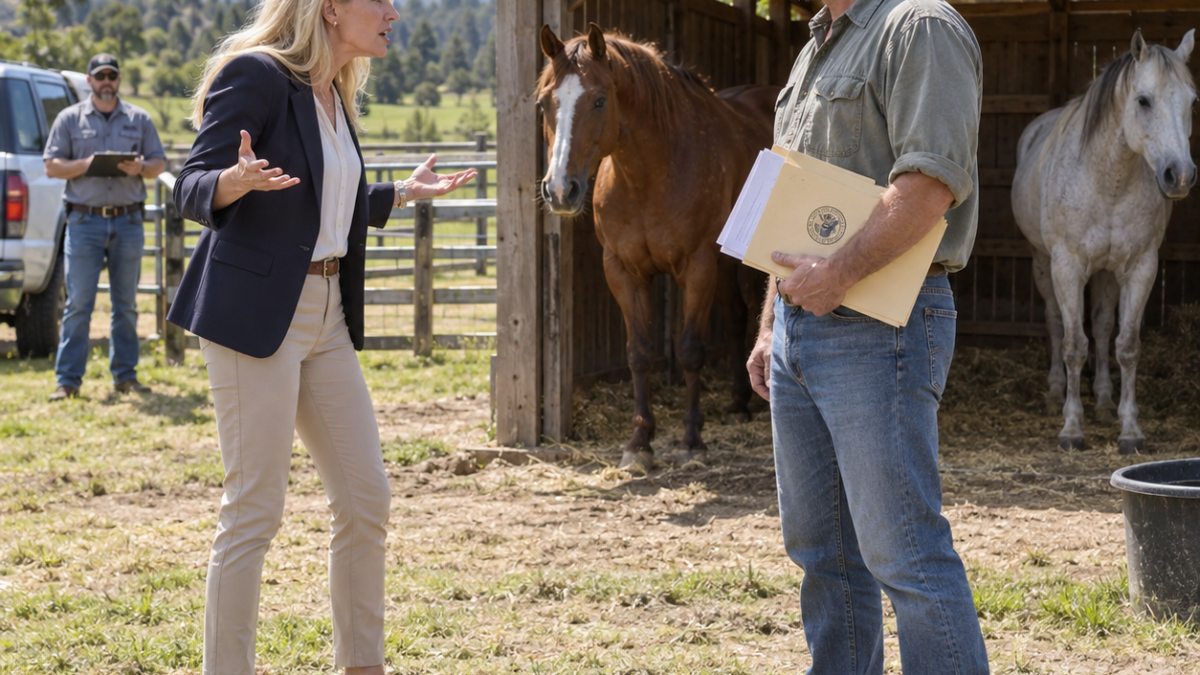
The morning Karen Miller told me I had seven days to tear down the three-sided shelter protecting my therapy horses, Ghost and General were standing behind me in the pasture while she threatened more than ten thousand dollars in HOA fines as casually as if she were discussing weeds. She called the shed an “agricultural eyesore,” laughed when I explained why those horses were part of my treatment, and warned that Willow Creek Estates would put a lien on our home if I refused to obey. What Karen did not know was that twenty-five years as an Army combat engineer had taught me never to argue with somebody’s confidence when I could document exactly where their authority ended.
“That pile of scrap wood comes down by Friday.”
Karen pointed across my pasture with a jeweled pair of sunglasses balanced high on her nose.
I followed her finger.
Fresh pine posts.
Pressure-treated framing.
A clean metal roof.
Three enclosed sides positioned against the prevailing winter wind.
The loafing shed wasn’t pretty in the way Karen understood pretty.
It was functional.
Strong.
Dry.
Exactly what two horses needed when summer storms rolled across our five acres or freezing rain came sideways in January.
“It isn’t scrap wood.”
“It’s unapproved.”
“I pulled the county permit.”
“This isn’t county property, Mr. Renner.”
I looked at her.
“It absolutely is.”
Her mouth tightened.
“You know what I mean.”
Behind me, Ghost lifted his head.
He was a gray Quarter Horse with the emotional range of a retired librarian.
General, my Appaloosa, was different.
General considered every bucket suspicious, every bird a tactical threat, and every human pocket a potential source of carrots.
They had done more for me than Karen could possibly understand.
After twenty-five years in the Army, silence had not felt peaceful when I first retired.
It felt loud.
Sleep came in fragments.
Crowded stores made my shoulders tighten.
A car backfiring could turn an ordinary afternoon into something my body remembered before my mind did.
My VA counselor suggested equine-assisted therapy.
I hated the idea.
Then I met Ghost.
He didn’t care about rank.
Didn’t care about medals.
Didn’t care about Afghanistan.
He cared whether I was present enough to notice when his ears changed direction.
Working with him forced me back into the moment.
General did the same thing less politely.
Sarah noticed the difference before I did.
So when we bought five acres in Willow Creek, the real-estate brochure’s phrase **EQUESTRIAN-FRIENDLY LARGE LOTS** mattered more to us than the granite kitchen counters or community pool.
The covenants allowed horses on properties our size.
That was why we bought here.
Karen held up a cream-colored violation notice.
“Article Four, Section Three-B. Detached structures require written Architectural Review Committee approval.”
“That I’m willing to discuss.”
“There’s nothing to discuss.”
“There usually is.”
Her smile sharpened.
“The unauthorized-construction penalty is ten thousand dollars.”
Sarah, who had stepped onto the porch behind me, said, “Ten thousand?”
Karen barely looked at her.
“Plus two hundred dollars per day until removal.”
I felt Sarah come down the steps.
“Mark.”
She said my name softly.
Not because she was frightened of Karen.
Because she knew me.
She knew the quieter I became, the angrier I was.
I took the notice.
Read every line.
“Who sits on the Architectural Review Committee?”
Karen blinked.
“What?”
“The committee that denied the shed.”
“That’s board business.”
“If they denied my structure, I’d like the written decision.”
“You never submitted an application.”
“Then how did they deny it?”
Her face changed.
Only slightly.
“The violation is the absence of prior approval.”
“Fair enough.”
That answer surprised her.
I wasn’t going to invent innocence.
I had built before submitting to the HOA because I believed the county permit and the equestrian-use language were enough.
If that was my procedural mistake, I would own it.
But demolition was something else.
Especially when the structure existed to protect animals my treatment provider had documented as part of my disability-related care.
I folded the notice.
“Send me the application.”
Karen laughed.
“You think this can be fixed with an application?”
“I think rules should have a process.”
“You’ll learn how things work here.”
She turned toward her golf cart.
Before leaving, she looked back.
“Seven days, Mr. Renner.”
I watched her drive away.
Then I walked into the house, pulled our HOA binder from the closing cabinet, downloaded my clinician’s documentation, and started building a file.
By midnight I had the equestrian covenants, the county permit, the shed plans, Karen’s violation notice, and the paperwork supporting why Ghost and General mattered to my ability to live normally in my own home.
At the very front, I placed one page.
**FORMAL REQUEST FOR REASONABLE ACCOMMODATION.**
Sarah read the heading over my shoulder.
“You think she’ll listen?”
I looked toward the dark pasture, where Ghost and General stood beneath the roof Karen had ordered me to destroy.
“No.”
Then I signed the letter.
“But after she receives this, she won’t be able to say nobody warned her.”
PART 2
I mailed the accommodation request the next morning.
Certified.
Return receipt.
One copy to Karen.
One to every board member whose address appeared in the association records.
Another by email to the management address.
And one copy stayed in my binder.
Twenty-five years in uniform had made me irritatingly methodical about paper.
Dates matter.
Delivery matters.
Exact language matters.
Memory gets emotional.
Documents don’t.
Sarah stood beside me at the post office counter as the clerk stamped the receipts.
“You know normal retirees golf.”
“I hate golf.”
“They fish.”
“I have horses.”
“Normal retirees don’t create evidence indexes.”
“That is why normal retirees lose paperwork.”
She kissed my cheek.
“You’re impossible.”
“Yet here you are.”
On the drive home, she became serious.
“Mark, what happens if they refuse?”
“We appeal.”
“And if they fine us?”
“We dispute it.”
“And if they put a lien on the house?”
That one took longer.
Because houses are not abstract.
Sarah and I had spent thirty-one years moving between bases, rentals, government quarters, temporary housing, and places where our address changed before the curtains felt familiar.
Willow Creek was supposed to be the last move.
Five acres.
Horses.
A kitchen Sarah had chosen because the windows faced east.
A workshop.
A pasture.
A place where nobody woke me at 0430 unless one of the horses had kicked something expensive.
“They won’t take the house,” I said.
Sarah looked at me.
“That wasn’t what I asked.”
“No.”
She knew better than to accept reassurance disguised as an answer.
“If they actually record a lien, we get a lawyer.”
“We should probably get one before that.”
“Probably.”
“Mark.”
“I know.”
Sarah hated conflict.
Not because she was weak.
She had spent decades living with Army bureaucracy, deployments, moves, injuries, casualty calls, and the peculiar loneliness of military spouses who are expected to be resilient without ever admitting resilience has a cost.
She had earned quiet too.
I squeezed her hand.
“I’m not going to turn this into a war.”
“That word was already in your head.”
“I said I wouldn’t.”
“You said you wouldn’t turn it into one. That means you already classified it.”
I smiled.
She didn’t.
“Promise me something.”
“What?”
“Ghost and General need you calm more than Karen needs you defeated.”
That sentence would come back to me later.
A lot.
Three days passed.
Then five.
The return receipt arrived first.
Karen’s signature.
Large.
Confident.
I slid it into the binder.
Day six, I was repairing a pasture gate when I heard the whine of an electric golf cart.
Karen.
Two passengers.
One was a thin man in wire-rim glasses.
The other, a woman with silver-blonde hair cut sharply at her jaw.
Karen stopped at the end of my driveway.
She didn’t step onto the property.
Progress.
“Mr. Renner.”
I set down my wrench.
“Karen.”
“I brought two members of the board because apparently everything now requires witnesses.”
That was useful.
The man adjusted his glasses.
“I’m Gary Collins. Treasurer.”
The woman nodded once.
“Debra Lawson. Vice president.”
Karen waved my letter.
“We received this.”
“I have the receipt.”
Her jaw tightened.
“It is thirty-seven pages.”
“Twenty-two are attachments.”
“Thirty-seven.”
“Federal law doesn’t become less relevant because your printer got tired.”
Gary looked down.
Debra’s mouth twitched.
Karen did not appreciate the joke.
“This so-called accommodation request changes nothing.”
I took my phone from the workbench and started an audio recording.
Visible.
No trick.
“I’m going to document the conversation.”
Karen folded her arms.
“Typical.”
“Do you object to me documenting a discussion about a potential lien on my house?”
“Yes.”
“Then send your decision in writing.”
She looked toward Gary.
Gary cleared his throat.
“The covenants are contractual, Mr. Renner.”
“Agreed.”
That answer seemed to confuse him too.
I walked closer but stopped well inside my property.
“The issue is not whether the covenants exist.”
“Exactly,” Karen said.
“The issue is whether the association will evaluate a disability-related accommodation request rather than refusing it solely because the shed doesn’t meet Karen’s aesthetic preference.”
Debra looked at Karen.
Karen said, “It isn’t my aesthetic preference.”
“Whose?”
“The Architectural Review Committee’s.”
“Who sits on it?”
No answer.
“Names?”
Karen’s face reddened.
“That information is available through proper records procedures.”
“I requested it yesterday.”
Gary shifted again.
Interesting.
I continued.
“The horses are allowed under the covenants.”
“Yes,” Gary said.
Karen snapped her head toward him.
I almost felt sorry for him.
“The structure is not,” she said.
“The structure has not been approved.”
“Same thing.”
“No.”
Debra spoke for the first time.
“He may have a point.”
Karen stared at her.
Debra immediately qualified:
“Procedurally.”
Karen waved my letter.
“You claim the shed is medically necessary.”
“I claim shelter for the horses is part of keeping the animals safely on the property while I use them as part of documented disability-related treatment.”
Karen laughed.
A short, hard sound.
“Therapy horses.”
There was something about the way she said it.
Not skepticism.
Contempt.
I felt my breathing change.
Ghost noticed.
He had been grazing forty feet away.
His head came up.
Ears pointed toward me.
I forced my shoulders down.
Slow breath.
That was the whole reason he existed in my life.
Karen kept talking.
“I’m sorry, Mr. Renner, but we are not going to allow people to invent medical excuses every time they dislike a rule.”
Gary whispered, “Karen.”
She ignored him.
“I didn’t invent anything.”
“You provided a letter.”
“From my clinician.”
“Doctors write letters.”
I looked at Gary.
Then Debra.
“Are you both hearing this?”
Gary looked miserable.
Debra said quietly, “Yes.”
I faced Karen.
“For the record, has the board reviewed my accommodation request?”
“Yes.”
“When?”
“Yesterday.”
“Was there a meeting?”
“A consultation.”
“Minutes?”
“You’re obsessed with minutes.”
“I’m obsessed with decisions affecting my home.”
Her sunglasses reflected me back at myself.
I looked older than I felt.
Gray at the temples.
Work shirt.
Dust.
No medals.
No uniform.
Just a man standing beside a fence.
Good.
That was who needed protection here.
Not Sergeant Major Renner.
Mark.
Husband.
Neighbor.
Homeowner.
Karen unfolded another sheet.
“Your fines now total eleven thousand eight hundred dollars.”
Sarah appeared on the porch.
I heard her inhale.
Karen continued.
“If the structure remains after the final deadline, the association will pursue collection remedies available under the governing documents.”
“Including a lien?”
“Yes.”
“Foreclosure?”
Gary flinched.
Karen didn’t.
“If necessary.”
I nodded.
“Are you denying the accommodation?”
Gary interrupted.
“I think we should consult counsel.”
Karen’s face hardened.
“We already have.”
“Who?” I asked.
“That’s privileged.”
“Fair.”
I looked at her.
“So yes or no?”
“Yes.”
Debra said, “Karen—”
“Yes,” Karen repeated. “The request is denied.”
“Reason?”
“The structure is aesthetically incompatible with Willow Creek.”
I waited.
“Anything else?”
“It reduces community character and may affect property values.”
I looked at my phone.
Recording.
Clear.
“Thank you.”
Karen frowned.
“For what?”
“For answering.”
I stopped the recording.
Then picked up my wrench.
“Are we done?”
She looked genuinely offended.
“You’re not taking this seriously.”
“No.”
I looked at her.
“I’m taking it very seriously.”
The golf cart left ten minutes later.
Ghost walked over the moment the motor disappeared.
He pushed his nose against my chest.
Hard.
“Yeah.”
I rubbed the gray patch between his eyes.
“I know.”
Sarah came down.
“Were you shaking?”
“A little.”
She put her hand on my back.
“I saw.”
“I’m okay.”
“I know.”
The great lie of being a veteran with a condition you’ve learned to manage is that people think improvement means absence.
It doesn’t.
You build routines.
Learn triggers.
Notice breathing.
Know exits.
Sleep differently.
Carry invisible procedures.
Ghost was part of mine.
General too.
Ghost lowered my heart rate.
General forced concentration.
If my mind wandered, General would locate the one loose latch within half a mile and use it to create a three-hour project.
Therapeutic through inconvenience.
Sarah leaned against the fence.
“What now?”
“Lawyer.”
“Good.”
“You sound relieved.”
“I’ve been suggesting it.”
“You enjoy being right.”
“Marriage is hard work.”
The Veterans Legal Assistance Clinic operated out of an old commercial building downtown.
A faded sign hung beside a dentist and an accountant.
Not exactly the Pentagon.
I liked it.
My appointment was with David Chen.
Forty-two.
Dark suit.
Marine Corps tie clip.
I noticed before he told me.
“JAG?”
He smiled.
“Eight years.”
“Marine?”
“Unfortunately.”
“Sorry.”
“Army?”
“Twenty-five.”
“Then I’m sorry too.”
We understood each other immediately.
I placed my binder on the conference table.
David looked at its tabs.
“Sergeant major?”
“Retired.”
“That explains the binder.”
I opened it.
He listened.
County permit.
Covenants allowing horses.
Shed requirement.
Clinical documentation.
Formal accommodation request.
Certified delivery.
Board denial.
Fine threats.
Recording.
He did not interrupt until I finished.
Then he replayed Karen’s response.
**Doctors write letters.**
His expression changed.
Then:
**Yes. The request is denied.**
Then:
**The structure is aesthetically incompatible with Willow Creek.**
David stopped the recording.
“All right.”
“How bad?”
“For you or them?”
“Both.”
He folded his hands.
“First, I want to correct one thing.”
I waited.
“Your horses do not become automatically untouchable under federal law because someone calls them therapy animals.”
“I understand.”
“Good.”
“The internet is full of bad information.”
“Yes.”
“The important issue is that fair-housing law can require housing providers, including associations in appropriate circumstances, to make reasonable accommodations when a resident has a disability-related need that affects use and enjoyment of the home.”
“And shelter?”
“Potentially.”
He leaned back.
“We would argue that allowing a reasonable structure necessary to safely maintain animals tied to that disability-related need is part of the accommodation.”
“Guaranteed?”
“No.”
I liked him more.
“If a lawyer guarantees litigation, leave.”
“Noted.”
“They can discuss location, dimensions, materials, safety, legitimate burdens. They can engage in an interactive process.”
He tapped the recording.
“What they should not do is receive a documented request and dismiss it because the president thinks therapy horses sound ridiculous.”
“So what now?”
“First, we give them a clean exit.”
I frowned.
David smiled.
“You wanted artillery.”
“I was combat engineer.”
“Close enough.”
He drafted a letter.
No threats of financial annihilation.
No absurd million-dollar damages.
No claim Gary would personally lose his retirement account next Tuesday.
Just law.
Facts.
Request timeline.
Need for individualized consideration.
Demand that fines pause while the accommodation was evaluated.
Request for a meeting.
Request for the specific architectural concerns.
Offer to stain the wood.
Add screening.
Modify trim.
Relocate within practical limits.
Anything reasonable that did not defeat the purpose.
I looked at him.
“We’re offering compromise?”
“We’re showing reasonableness.”
“She said tear it down.”
“And a judge may someday read both letters.”
That ended my objection.
David added another demand.
The association should preserve all records relating to accommodation requests, disability-related exceptions, the Architectural Review Committee, and collection activity on my account.
“Why others?”
“Because you told me about your neighbors.”
I had almost forgotten.
Jennifer.
Leo.
The Hendersons.
The shade sail family.
David listened to those stories.
Carefully.
“Have they consented to you sharing documents?”
“Yes.”
“Would any talk to me?”
“Yes.”
“Good.”
Then he said something that changed the scope of the fight.
“If there is a pattern, we need evidence.”
Not revolution.
Not liberation.
Evidence.
That weekend I returned to Jennifer’s house.
Her son Leo was shooting baskets.
Twelve years old.
Thin.
Headphones.
He made four shots without looking at me.
Jennifer brought out a folder.
Violation letters.
Therapist note.
Appeal.
Denial.
The therapist had described basketball as part of Leo’s routine for sensory regulation and emotional stability.
Karen’s response:
**Personal therapeutic preferences do not supersede exterior aesthetic standards.**
David read it Monday.
He closed his eyes.
“She likes writing things down.”
“Apparently.”
“That helps.”
The Hendersons came next.
Walter Henderson was eighty-one.
Mary seventy-eight.
Raised garden bed beside their house.
Mary had severe arthritis.
Gardening kept her moving.
Their physician had not specifically ordered tomatoes as treatment.
That distinction mattered.
David said their situation might not create the same kind of legal accommodation claim.
“But the fines may still be unreasonable or inconsistent with the governing documents.”
Again:
Truth over narrative.
The family with the shade sail was different.
Their daughter Emily had a documented medical condition causing severe sun sensitivity.
Parents had requested permission for a UV-blocking patio shade.
Denied because the fabric color was not approved.
They offered approved colors.
Still denied because the structure itself changed the rear elevation.
That concerned David.
We collected everything with permission.
Then came something I had not expected.
Gary Collins called me.
The treasurer.
“Can we talk?”
“In writing?”
He exhaled.
“I deserve that.”
We met at a coffee shop.
Public.
Sarah came.
Gary looked as though he hadn’t slept.
“I researched what you sent.”
“You should have done that before voting.”
“I know.”
He didn’t defend himself.
That took some wind out of me.
“Karen told us counsel said your claim didn’t apply.”
“Did counsel say that?”
“I haven’t seen an opinion.”
“Did you ask?”
“Yesterday.”
“And?”
“She told me not to worry about it.”
Sarah asked:
“Who is the ARC?”
Gary looked down.
“Karen, Debra, and me informally.”
“Elected?”
“No.”
“Minutes?”
“Not separate.”
I leaned back.
“Then why does every denial say ‘Architectural Review Committee’?”
Gary rubbed his forehead.
“That’s how Karen has always done it.”
The most dangerous sentence in governance:
That’s how we’ve always done it.
Gary continued.
“I’m not asking you to drop anything.”
“Good.”
“I’m asking you not to assume all of us understood what she was doing.”
I stared at him.
“You signed the minutes.”
“Yes.”
“You voted.”
“Yes.”
“You watched her mock my medical documentation.”
His face tightened.
“Yes.”
“Then whether you understood everything or not, you participated.”
Sarah touched my arm.
Not hard.
Enough.
Gary nodded.
“You’re right.”
Silence.
Then he placed a flash drive on the table.
Sarah’s eyes widened.
I did not touch it.
“What’s that?”
“Board packets I already lawfully have access to.”
“Gary, I’m not taking internal documents from you without David reviewing whether we should.”
He seemed surprised.
“I thought you wanted evidence.”
“I want clean evidence.”
I called David.
He told Gary to speak independently with counsel if he believed the board had legal exposure.
No secret downloads.
No midnight espionage.
Gary eventually resigned.
But not yet.
First, the HOA replied to David’s demand.
Their attorney was named Milton Graves.
His letter was more careful than Karen.
He did not say federal law was irrelevant.
He argued that the board disputed whether the requested shed was necessary in its current design and location.
That was a defensible legal posture.
Then came the problem.
The final page, signed by Karen as president, said collection would continue during the dispute.
Current balance:
$15,400.
And:
**Failure to pay may result in lien enforcement.**
David stared at the page.
“She still doesn’t understand what an off-ramp is.”
“What do we do?”
“Fair-housing complaint and court if necessary.”
“Federal?”
“Administrative first can be appropriate. We can also seek state-court relief on the fines depending on governing law.”
He paused.
“But before we file everything, I want one meeting.”
“Why?”
“Because if reasonable people can resolve this without spending eighteen months in litigation, we should.”
I hated that he kept being sensible.
The mediation-style meeting took place at the management company’s office.
Karen.
Gary.
Debra.
Milton.
David.
Me.
Sarah.
No horses.
Unfortunately.
David began calmly.
“Our client is willing to paint or stain the structure in an approved earth tone.”
Karen said:
“No.”
“We can add approved trim.”
“No.”
“Landscape screening?”
“No.”
“Adjust roof color?”
“No.”
“Relocate ten feet?”
“No.”
Milton looked at her.
Karen continued.
“The structure is unacceptable.”
David asked:
“In any design?”
“Yes.”
“So the board’s position is that no loafing shed will be permitted?”
“The horses can use his barn.”
I answered.
“The barn is almost three hundred yards from the lower pasture and requires bringing them across the service drive.”
“Then move the fence.”
I stared.
Karen had reduced my disability-related routine, the animals’ welfare, and the layout of our property to:
Move the fence.
David asked:
“What alternative accommodation is the association proposing?”
“The horses can be boarded off-site.”
Sarah sat forward.
“That defeats why we bought the property.”
Karen looked at her.
“Many people board horses.”
Sarah’s voice changed.
“Many people aren’t my husband.”
Silence.
She continued.
“You keep talking about these animals like they’re decorations he wants to keep.”
Karen’s lawyer shifted.
Sarah did not stop.
“There were nights after Mark came home when he woke up so hard he didn’t know what room he was in.”
My stomach tightened.
“Sarah.”
“No.”
She looked at me.
“You’ve told this story like it’s about rules because rules are easier for you.”
Then to Karen:
“Ghost gets him outside.”
Karen stared.
“General makes him laugh.”
Sarah’s voice broke.
“Those horses gave me pieces of my husband back.”
No one moved.
Even Karen.
Sarah wiped her eyes.
“I’m not asking you to understand combat.”
She shook her head.
“I don’t understand it.”
Then:
“I’m asking you to stop treating the things keeping him healthy like they are ruining your view.”
Karen looked away.
For one moment I thought we had reached her.
Then she said:
“The shed still violates the standards.”
Milton closed his folder.
That told me everything.
The meeting ended without settlement.
David filed the fair-housing complaint.
He also sought temporary judicial relief to stop escalating fines and any lien enforcement while the accommodation dispute was being reviewed.
The judge did not immediately declare us winners.
She asked hard questions.
Had I submitted architectural drawings?
Yes, after David became involved.
Had the board proposed alternatives?
Boarding off-site and barn use.
Were those practical?
We produced the property map and statements from my clinician explaining why having the horses available at home mattered to my routine.
Was the shed safe?
County permit.
Inspection.
Engineer certification.
Could aesthetics be modified?
Yes.
I had offered multiple options.
The HOA?
No meaningful alternative beyond removing the structure.
The court temporarily prevented collection escalation and lien enforcement while the dispute proceeded.
The shed stayed.
Ghost and General stayed.
It wasn’t victory.
But for the first time in weeks, Sarah slept through the night.
The legal fight also forced Willow Creek to produce records.
That was when the neighborhood learned how much Karen’s system depended on people never comparing paperwork.
There were no properly elected ARC members during much of the period Karen claimed committee authority.
Architectural decisions were discussed informally among board officers.
Sometimes by email.
Sometimes apparently by Karen alone.
The new issue was broader than my shed.
But David refused to tell residents that every past decision was automatically invalid.
“Different claims require different facts.”
People hated that sentence.
It was still true.
A special membership meeting was called after enough owners signed a petition under the bylaws.
Not because David ordered it.
Not because I was leading an insurgency.
Residents had the right.
They used it.
The clubhouse filled.
Karen sat at the front.
Purple jacket.
Gold necklace.
Gavel.
Gary looked ill.
Debra looked angry at everyone.
David attended as my counsel but sat in the back.
He told me:
“This is their association. Do not turn yourself into prosecutor.”
So I didn’t.
I stood with one binder.
“My name is Mark Renner.”
Everyone knew by then.
“I made a mistake when I built my shed.”
Karen blinked.
“I did not submit an HOA application before construction.”
Murmurs.
“I should have.”
Karen leaned toward the microphone.
“Thank you.”
I looked at her.
“I’m not finished.”
A few people laughed.
“I had a county permit and believed the equestrian provisions were enough. They weren’t necessarily the same thing as architectural approval.”
I held up my later application.
“So I corrected that.”
Then the next document.
“My dispute is what happened afterward.”
I walked through the timeline.
No emotional language.
Notice.
Accommodation request.
Certified receipt.
Recorded denial.
Alternatives offered.
Fines.
Threatened lien.
Court order pausing collection.
Then I played the short portion of the recording.
Karen’s voice filled the room:
**Doctors, the VA, the federal government—they don’t run Willow Creek Estates. I do.**
The room became so silent I heard the air-conditioning unit cycle.
Karen grabbed the gavel.
“That conversation was taken out of context.”
I stopped the recording.
“Then explain the context.”
She glared.
I continued.
“I am not here to tell you the court has ruled I am right.”
That mattered.
“It hasn’t.”
I looked around.
“I am here because everyone in this room is financially connected to decisions this board makes.”
Then Jennifer stood.
She had asked for time under the resident-comment rules.
“My name is Jennifer Walsh.”
Leo was not there.
She wanted him nowhere near the meeting.
She explained the basketball hoop.
Routine.
Therapist letter.
Appeal.
Fines.
Then Walter Henderson.
He held up one tomato in his hand.
Actual tomato.
The room laughed before he spoke.
“This little sucker has cost me eight hundred dollars.”
More laughter.
Then he explained Mary’s hands.
Her garden.
Their fear of a lien.
“This house is paid for.”
His voice shook.
“I worked forty-four years.”
He looked at Karen.
“I should not be scared somebody will take it because my wife grows zucchini.”
That ended the laughter.
Then Emily’s father spoke about the UV shade.
Not every resident had a disability claim.
Not every HOA decision was unlawful.
But the pattern was obvious:
No flexibility.
No meaningful process.
Immediate fines.
Immediate threats.
Karen stood.
“I have spent nine years keeping Willow Creek from turning into a dump.”
People shouted.
She hit the gavel.
“I have protected every one of your property values!”
David Moore, a homeowner near the rear, called:
“From tomatoes?”
Laughter.
Karen turned red.
“From exceptions.”
That word mattered.
Exceptions.
She hated them.
Because an exception required admitting rules existed to serve people rather than the other way around.
Karen continued.
“The moment you allow one person to ignore a standard, everybody demands special treatment.”
Jennifer stood again.
“My son isn’t asking to be special.”
Karen snapped:
“He has a basketball hoop.”
Jennifer’s face changed.
“He has autism.”
Silence.
Karen realized too late.
Then Gary stood.
Hands shaking.
“I need to say something.”
Karen stared at him.
“Sit down.”
“No.”
It may have been the first time he had ever told her that.
He took out a page.
“When Mark submitted his accommodation request, I asked Karen whether we should send it to our attorney before denying it.”
Karen shouted:
“That’s privileged board communication.”
Gary looked toward David.
Then toward the membership.
“I’m not going to disclose legal advice. There wasn’t any at that point.”
The room erupted.
He continued.
“She told us federal law did not apply because Willow Creek was private.”
Karen slapped the table.
“That is not what I said.”
“I have the email.”
That ended it.
Gary looked sick.
“I voted with her.”
He swallowed.
“That was my fault.”
Accountability changes a room.
He wasn’t asking to be forgiven.
He was admitting.
“I should have verified.”
Karen stood.
“You coward.”
Gary flinched.
Then steadied.
“No.”
He looked at her.
“I was cowardly when I didn’t question you.”
People started clapping.
Karen raised her voice.
“You people are destroying everything I built!”
Walter Henderson answered:
“You didn’t build our homes.”
Jennifer:
“You don’t own our families.”
Then someone else:
“You’re president, not landlord.”
Karen’s face broke.
Not emotionally.
Structurally.
The confidence.
The assumption everyone would eventually back down.
Gone.
The members petitioned for a formal recall process.
Properly.
No instant mob vote.
Notice went out.
Ballots prepared.
Independent management counsel oversaw the election.
Karen campaigned hard.
She sent a seven-page letter titled:
**THE FUTURE OF WILLOW CREEK IS AT RISK.**
She warned of collapsing standards.
Reduced property values.
“Barnyard commercialization.”
That phrase became a neighborhood joke.
Someone left a toy cow beside the entrance sign.
I removed it.
“Why?” Sarah asked.
“Don’t turn this stupid.”
“It was funny.”
“It was a little funny.”
The recall vote happened three weeks later.
Seventy-four percent participation.
Sixty-seven percent voted to remove Karen.
Not unanimous.
Some people genuinely believed she had maintained the neighborhood well.
Some disliked how public the dispute had become.
Some feared change.
That was fair.
Democracy does not require universal agreement.
Karen lost.
The other directors did not all disappear.
Gary resigned voluntarily.
Debra stayed until the next scheduled election but agreed to independent legal and governance review.
Two new interim directors were appointed under the bylaws.
A retired high-school principal named Eleanor Price became acting president.
Her first public statement:
“We are not abolishing rules.”
Thank God.
“We are restoring process.”
Better.
The board immediately suspended disputed disability-related fines pending individual review.
Mine.
Jennifer’s.
Emily’s family.
Others.
The Henderson garden issue was reviewed separately under covenant authority and enforcement consistency.
Their fines were eventually canceled after counsel found the garden rule had been interpreted far more broadly than the actual text supported.
Walter celebrated by planting more tomatoes.
The board created a formal reasonable-accommodation procedure.
Not a rubber stamp.
A process.
Requests could include documentation when legally appropriate.
The board had to respond within a defined period.
Interactive discussion.
Alternative accommodations considered.
Privacy protected.
No public debate about someone’s diagnosis.
That last rule mattered to me.
I had chosen to tell parts of my story.
Others should not have to.
My shed application returned to a newly constituted Architectural Review Committee.
Three residents.
None named Karen.
They visited the property.
One was a retired architect.
One a horse owner.
One a software manager who admitted she knew nothing about horses but read every document twice.
The architect looked at the shed.
“Functional.”
“That’s a polite word.”
“It needs stain.”
“Agreed.”
“Roof color is fine.”
“Thank you.”
“Would you add a narrow fascia board?”
“Sure.”
The horse owner inspected ventilation.
Drainage.
Roof overhang.
Then Ghost tried to eat her clipboard.
I considered him an excellent judge of bureaucracy.
Two weeks later:
**APPROVED AS REASONABLE ACCOMMODATION AND ARCHITECTURAL MODIFICATION SUBJECT TO LISTED FINISHING CONDITIONS.**
I read the letter three times.
Sarah read it once.
Then cried.
I didn’t.
At first.
Then I went outside.
Ghost stood inside the shed.
General had his hindquarters under the roof and his head in the rain because General was committed to misunderstanding architecture.
I leaned against a pine post.
Ran my hand over the grain.
My chest tightened.
Not panic.
Something else.
Relief can hurt after you’ve carried fear too long.
Sarah came beside me.
“You okay?”
“No.”
“Good.”
I laughed.
Then cried.
She wrapped both arms around me.
The shed stayed.
That was the beginning.
Not the ending.
The fair-housing complaint remained open.
David negotiated with the association’s new counsel.
The new board did not pretend nothing had happened.
They agreed to settlement discussions.
The eventual agreement did not make us millionaires.
I did not want that.
Fines canceled.
Attorney costs resolved.
Policy reforms.
Training for board and ARC members.
Written confirmation of accommodation.
Modest compensation for documented distress and expenses.
Confidential medical records handled appropriately.
Jennifer’s family reached a separate resolution.
Emily’s family too.
The Hendersons received refunded fines under the board’s own corrective review.
There was no dramatic federal raid.
No agents descending on golf carts.
Accountability was paperwork.
Meetings.
Lawyers.
Policy.
Money.
Change.
Less cinematic.
More useful.
Karen moved six months after the recall.
Not the next morning.
Her husband did not dramatically abandon her.
As far as I knew, they stayed married.
A FOR SALE sign simply appeared.
One afternoon she walked down our road.
On foot.
No golf cart.
I was repairing a water line near the pasture.
She stopped outside the fence.
Ghost noticed first.
He walked over.
Karen stayed on the road.
“Mr. Renner.”
“Karen.”
She looked at the shed.
We had stained it dark brown.
Added the fascia.
Planted three native shrubs along the side visible from the road.
“It looks better.”
“Thank you.”
“You could have done that from the beginning.”
I set down the wrench.
“We offered.”
Her face tightened.
“I mean before all of this.”
“I could have applied.”
That surprised her.
“Yes.”
“I should have.”
She crossed her arms.
“Then this was your fault too.”
“No.”
Her eyes sharpened.
“I made a procedural mistake.”
I pointed toward the shed.
“You turned it into a threat to my home after receiving documentation explaining why the structure mattered.”
“You made me look like a monster.”
“I played your words.”
“That meeting—”
“You said them.”
She looked toward Ghost.
“Are they really therapy animals?”
I could have been offended.
Instead:
“Yes.”
“How?”
That was the first time she had asked.
Not challenged.
Asked.
I walked toward the fence.
Ghost stood between us.
I rubbed his neck.
“When I first retired, I couldn’t sit in a restaurant with my back to the door.”
Karen said nothing.
“I slept badly.”
I looked at Ghost.
“Some days I could go six hours without noticing I had clenched my jaw until it hurt.”
He nudged my shoulder.
“These animals don’t cure anything.”
I scratched beneath his mane.
“They make me pay attention to what’s happening now instead of what happened then.”
Karen looked at him.
“Which one is this?”
“Ghost.”
“The calm one?”
I smiled.
“You’ve been listening.”
“I heard people.”
General came trotting over because Ghost was receiving attention without authorization.
Karen stepped back.
“This one?”
“General.”
“He doesn’t look calming.”
“He’s terrible.”
General shoved his nose through the fence.
Karen hesitated.
Then held out her hand.
He sniffed.
Sneezed on her.
I laughed.
Karen wiped her sleeve.
“That’s disgusting.”
“Therapeutic.”
She almost smiled.
Then her face became serious.
“I didn’t know.”
I heard Sarah’s voice in my memory:
*She never asked.*
“You had the letter.”
“That isn’t what I mean.”
Karen looked at the pasture.
“I read diagnosis. Accommodation. Federal law.”
She shook her head.
“I didn’t understand this.”
“Understanding wasn’t required before treating me legally.”
“I know.”
Silence.
“But maybe it would have helped.”
“Yes.”
She looked back toward Willow Creek.
“I thought if I allowed exceptions, everyone would demand one.”
“That is part of leadership.”
“What?”
“Figuring out which differences actually matter.”
She frowned.
“I spent years making that neighborhood look good.”
“I know.”
“Nobody complained when flowers were perfect.”
“They complained privately.”
Her jaw tightened.
“You hate me.”
“No.”
That answer surprised both of us.
“I did.”
“For a while?”
“Yes.”
“And now?”
I looked at General, who was trying to untie my jacket drawstring with his teeth.
“I’m tired.”
Karen laughed quietly.
Then:
“I’m leaving Friday.”
“I heard.”
“I don’t expect anybody to miss me.”
I didn’t lie.
“Probably some will.”
She looked at me.
“You really believe that?”
“You did work people appreciated too.”
Storm cleanup.
Road repairs.
Landscaping.
Budget negotiations.
Karen had not been invented fully formed as a tyrant.
She had become one decision at a time.
“That doesn’t excuse the rest,” I said.
“I know.”
Her eyes filled slightly.
She looked away.
“My husband says I made the HOA my whole life.”
“Maybe.”
“I thought that meant I cared more.”
“Sometimes.”
“What did it mean?”
I thought.
“That you couldn’t separate criticism of a decision from criticism of you.”
Karen said nothing.
I knew that weakness.
Military leaders can develop it too.
Question the plan, and a bad leader hears:
Question my rank.
Question my worth.
The best commanders I knew rewarded the lieutenant who said:
Sir, I think we’re wrong.
“I hope your next place has no HOA,” I said.
Karen laughed.
“So does my husband.”
She turned.
Then stopped.
“For what it’s worth…”
I waited.
“I’m sorry I laughed about the horses.”
That mattered more than I expected.
“Thank you.”
She walked home.
Two days later, Sarah came outside carrying two mugs of coffee.
“You talked to Karen.”
“Yes.”
“Friendly?”
“No.”
“Civil?”
“Yes.”
“Look at you.”
“Don’t.”
She handed me coffee.
Ghost and General grazed near the shed.
Sarah leaned against the fence.
“Do you remember what I told you the first day?”
“You tell me many things.”
“That they need you calm more than Karen needs you defeated.”
I groaned.
“You’ve been waiting months to use that.”
“Yes.”
“Very manipulative.”
“I learned from the HOA.”
Willow Creek changed slowly after Karen left.
Slow change lasts better.
Eleanor Price served as president for one year.
Then stepped down voluntarily.
She said:
“If the job starts feeling like it belongs to you, resign immediately.”
The next president was Gary Collins.
I nearly choked when I heard.
He came to my house before accepting.
“I want to ask what you think.”
“Why?”
“Because I failed you.”
“Yes.”
He winced.
“You don’t make apologies comfortable.”
“Would you prefer fake comfort?”
“No.”
We walked toward the pasture.
“I resigned because I was ashamed.”
“I know.”
“The governance committee asked me to run.”
“Why?”
“I’m good with finances.”
“That’s not the same as leadership.”
“I know.”
Good answer.
“What will you do differently?”
Gary thought.
“Ask questions before signing.”
“Good start.”
“Publish financial reports.”
“Good.”
“Never let one officer become an entire committee.”
“Excellent.”
“And if counsel tells me something I don’t understand, I’ll call counsel myself.”
I smiled.
“Revolutionary.”
He became a good president.
Not charismatic.
Better.
He read agendas.
Asked for second opinions.
Admitted when he didn’t know something.
People trusted him because he had failed publicly and changed deliberately.
That became another lesson I had not expected.
Accountability should leave room for rehabilitation.
If everybody who makes one cowardly decision is permanently discarded, people become very good at never admitting mistakes.
Walter and Mary Henderson became neighborhood royalty.
Mary’s raised beds doubled.
Then tripled.
Gary insisted she submit a one-page garden plan under the revised rules.
She brought him a hand-drawn picture featuring a smiling tomato.
Approved.
A small table appeared beside their mailbox each summer.
**TAKE WHAT YOU NEED.**
Tomatoes.
Cucumbers.
Zucchini nobody needed but took out of politeness.
Her arthritis worsened slowly.
But she kept gardening.
Walter did the heavy work.
She supervised.
Like an officer.
Jennifer’s son Leo grew.
At fifteen, he was six feet tall and still shot basketball almost every afternoon.
The hoop stayed.
One evening he knocked on my door.
His mother waited in the car.
“Mr. Renner?”
“Yeah?”
He didn’t make much eye contact.
That was normal for Leo.
“Mom said your horses help your brain.”
I looked at him.
“That’s a simplified version.”
“Can I see them?”
“Sure.”
We walked to the fence.
Ghost approached.
Leo froze.
“He’s huge.”
“About eleven hundred pounds.”
“No.”
“What?”
“I changed my mind.”
Ghost stopped several feet away.
I said:
“You don’t have to touch him.”
Leo watched.
Ghost watched back.
Five minutes.
Ten.
Then Leo held out his hand.
Ghost came close enough to breathe against his fingers.
Leo smiled.
Small.
Real.
“He’s warm.”
“Yes.”
“Can he feel nervous?”
“Very well.”
“He knows I’m nervous?”
“Probably.”
“Why doesn’t he leave?”
I looked at Ghost.
“Maybe he doesn’t think nervous means dangerous.”
Leo stayed half an hour.
Then an hour.
After that he visited occasionally.
Never rode.
Didn’t want to.
He brushed Ghost.
Filled water.
Sat on an overturned bucket.
General stole his baseball cap once.
Leo laughed so hard Sarah came outside to see what happened.
Years later, Jennifer told me:
“You know you gave him another place to be himself.”
I shook my head.
“Ghost did.”
“Ghost doesn’t own property.”
Fair.
The shed became part of the community’s mental geography.
People called it Ghost’s house.
General objected to this arrangement by chewing one corner.
I repaired it.
Then added metal edging.
Combat engineering versus Appaloosa.
The Appaloosa nearly won.
My VA counselor, Dr. Hayes, visited once.
He stood beside the pasture watching me refill a trough.
“This is the shed?”
“The internationally controversial shed.”
“Looks like a shed.”
“Very observant.”
He smiled.
Then became serious.
“How are you sleeping?”
“Better.”
“Crowds?”
“Still don’t love them.”
“Nightmares?”
“Less.”
He nodded.
“Why?”
I shrugged.
He waited.
Therapists enjoy silence because they don’t pay by the minute.
Finally:
“I have work.”
“Ranch work?”
“Horses. Neighborhood.”
“What kind of neighborhood work?”
“Accessibility committee.”
Dr. Hayes raised an eyebrow.
“Voluntary?”
“Sarah volunteered me.”
He smiled.
“You’re helping write policy?”
“I review reasonable-accommodation procedures.”
“How does that feel?”
“Terrible.”
“Why?”
“People expect patience.”
He laughed.
I joined Willow Creek’s resident accommodation advisory group precisely because I had been on the other side.
Not to approve every request.
To make sure nobody was mocked for asking.
That distinction mattered.
One request involved a resident who wanted a twelve-foot privacy fence, claiming anxiety.
The board had legitimate safety and drainage concerns.
We did not simply approve twelve feet.
Instead:
Six-foot solid fence.
Strategic landscaping.
Modified gate placement.
Accommodation met without creating new hazards.
Another resident needed an exterior ramp.
The first proposed slope did not work within the setback.
We found a switchback design.
Aesthetics still considered.
Access came first.
I learned accommodation was not about destroying rules.
It was about making rules flexible enough to include human reality.
Karen had believed fairness meant everyone getting the exact same standard.
Life taught me fairness often means people getting what they reasonably need to use the same home with dignity.
Five years after the shed dispute, Walter died.
Eighty-six.
Stroke.
Mary stayed in the house.
The whole neighborhood watched over her.
Leo mowed her lawn.
Gary took her trash cans out.
Sarah drove her to appointments when her daughter couldn’t.
I repaired raised beds so she could reach them from a stool.
One spring, Mary handed me an envelope of tomato seeds.
“Walter saved these.”
“What variety?”
“He called them Henderson Reds.”
“That sounds made up.”
“It is.”
I planted them beside the shed.
Terrible tomatoes.
Odd shape.
Excellent flavor.
Mary died two years later.
The new homeowners kept one of her raised beds.
At closing, they had asked the HOA if vegetable gardens were permitted.
Gary sent them the revised rule and added:
**Please grow enough tomatoes for Mark. He complains constantly.**
Governance had evolved.
Sarah and I aged.
Our five acres became less work because we became slower.
Ghost aged too.
Gray horse turning whiter around his face.
Stiffness in winter.
We changed feed.
Adjusted turnout.
Veterinarian visits increased.
General remained convinced aging was optional.
At twenty, he could still behave like a four-year-old criminal.
Then came the morning Ghost didn’t finish breakfast.
Horse people understand how quickly fear arrives when a horse refuses food.
Colic.
We called Dr. Martinez immediately.
Treatment.
Walking.
Fluids.
Hours.
For a while, he improved.
Then worsened.
The clinic gave us options.
Hospital transport.
Surgery.
His age and condition made the odds difficult.
I sat in the straw beside his head.
He breathed slowly.
Sarah knelt next to me.
“I’m not ready.”
“I know.”
That animal had met me when my life felt like a room with no quiet corner.
He had stood beside me through nights when sleep would not come.
Taught me to breathe slower.
Taught me that strength could weigh half a ton and still choose gentleness.
I pressed my forehead against his.
“I’m sorry, buddy.”
The decision was mine.
That was the cruelty of loving animals.
Eventually they trust you enough to make the hardest choice for them.
Ghost died with his head in my lap.
Dr. Martinez cried too.
Sarah held my shoulders.
General stood outside the stall calling.
That sound nearly destroyed me.
For weeks, the loafing shed felt wrong.
One horse beneath it.
Empty space.
I considered tearing it down.
Not because Karen had been right.
Because seeing Ghost’s side hurt.
Sarah stopped me.
“Don’t make decisions while grief is fresh.”
“That’s therapist language.”
“I live with one.”
General changed.
Quieter.
He stood in Ghost’s usual place sometimes.
Horses grieve too.
Not like us.
But they know absence.
Months later, Leo came home from college.
He was studying occupational therapy.
That surprised nobody more than Jennifer.
He came straight to the pasture.
“Where’s Ghost?”
I couldn’t answer immediately.
Leo understood.
He sat beside the fence.
“He was the first horse I touched.”
“I remember.”
“He knew I was nervous.”
“Yes.”
Leo looked toward General.
“Can I go in?”
We stood with General for almost an hour.
When Leo left, he touched one of the shed posts.
“Don’t tear this down.”
I looked at him.
“How did you know?”
“My mom says people want to erase places that hurt.”
Smart kid.
“It was his.”
“It can be General’s.”
“It was always General’s too.”
“Then stop being weird.”
Ghost’s ashes were buried beneath a cottonwood at the far side of the pasture.
No plaque.
No giant memorial.
Just a flat river stone.
I carved one word:
**GHOST**
That was enough.
I adopted another horse the following year.
Not a replacement.
Nothing replaces.
His name was Scout.
A bay gelding from a therapeutic-riding program that had closed.
Older.
Steady.
General hated him for three days.
Then stood beside him under the shed during a thunderstorm.
Problem solved.
Life does that.
Leaves empty spaces.
Then not replacements.
New chapters.
The HOA story faded.
New residents moved in without knowing Karen.
One asked Gary why the accommodation policy was so detailed.
Gary pointed toward my property.
“Long story.”
The man later asked me.
I said:
“Bad shed review.”
He expected more.
I didn’t give it.
I had spent enough years letting Karen occupy the story.
The important parts were now Ghost.
General.
Scout.
Leo.
Mary’s tomatoes.
Gary learning leadership.
People asking questions without fear.
Ten years after the dispute, Willow Creek hosted an equestrian safety day.
That would have given Karen a medical event.
Three residents had horses by then.
County extension staff came.
Veterinarian.
Farrier.
Children learned how to approach safely.
No pony rides.
No circus.
Just education.
We used my pasture.
With permission.
The board sent me a written request.
I laughed when I read it.
Sarah asked:
“What?”
“They asked permission.”
“Revolutionary.”
I approved.
On the morning of the event, Gary hung a temporary sign near the drive:
**WILLOW CREEK EQUINE SAFETY DAY**
Under it, Leo—now a licensed occupational therapist—added:
**PLEASE DO NOT FEED GENERAL WITHOUT SUPERVISION. HE LIES ABOUT STARVING.**
Correct.
General ate two unattended hot-dog buns anyway.
He considered signage advisory.
Leo gave a short talk about routines, sensory regulation, and how animals can become part of therapeutic work for different people.
He was careful.
“No animal is magic.”
He looked toward me.
“They don’t fix us.”
Then toward Scout.
“Sometimes they give us a relationship in which our bodies learn something different.”
I felt my throat tighten.
Afterward, Jennifer stood beside me.
“You started this.”
“No.”
“You fought for the shed.”
“That’s not the same.”
She nodded toward Leo.
“If you had torn it down, he never would’ve met Ghost.”
I looked away.
Life is full of causal chains nobody can predict.
Karen saw a shed.
I saw shelter.
Ghost saw shade.
Leo eventually found a career.
The same structure meant different things depending on who bothered to look longer.
General died at twenty-eight.
Peacefully.
Less dramatic than Ghost.
He simply became old.
His last summer was easy.
Soft grass.
Medication for arthritis.
Scout nearby.
Sarah and I sat with him often.
On his final morning, he could not rise.
Dr. Martinez came.
General looked at me as if this were another unnecessary appointment.
I rubbed the white patch on his forehead.
“You were a pain.”
Sarah whispered:
“Mark.”
“He knows.”
General sighed.
I laughed and cried.
“You saved me too.”
He had.
Ghost brought calm.
General brought the requirement to stay awake to life.
There is therapy in being needed by something that does not care about your excuses.
After he died, I carved another stone.
**GENERAL**
Beside Ghost.
Scout remained.
The loafing shed now had teeth marks, patched boards, faded stain, and one corner reinforced with steel because General had treated pine as a personal challenge.
It was no architectural masterpiece.
It was beautiful to me.
One autumn, the Architectural Review Committee sent a courtesy notice.
I almost laughed before opening it.
**The exterior stain on your equine shelter appears weathered. Under current standards, maintenance is recommended within the next twelve months. Please contact the ARC if you need an accommodation related to timing or maintenance.**
I stared.
Then called Gary.
“This is outrageous.”
“What?”
“You people want me to stain the shed.”
“Is it faded?”
“Yes.”
“Then stain it.”
“I fought for this structure.”
“You fought to keep it, not to let it rot.”
He had a point.
I hated him.
Leo came over that weekend.
We stained it together.
Dark brown.
Same approved tone.
Halfway through, he said:
“You know Karen might’ve liked this color.”
“Stop talking.”
He laughed.
Sarah brought lemonade.
We sat beneath the shed afterward.
Scout stood nearby.
Wind moved through the pasture.
No tension.
No letters.
No fear.
Just maintenance.
That became another lesson.
Winning the right to keep something does not mean you stop being responsible for it.
Rights and obligations can exist at the same time.
Karen had been wrong to deny accommodation without meaningful consideration.
I had been wrong to build first and assume architectural approval did not matter at all.
The new system acknowledged both truths.
That mattered to me more as I aged.
Stories get simpler when retold.
Hero.
Villain.
Victory.
Reality remained stubbornly complicated.
Karen cared about Willow Creek.
She also abused authority.
Gary failed.
Then changed.
I was justified in fighting.
I also enjoyed the fight more than I should have for a while.
The board needed correction.
The community still needed rules afterward.
Ghost helped me heal.
He couldn’t erase the past.
All those things could be true.
Sarah developed breast cancer when I was sixty-nine.
Early stage.
Good prognosis.
Words you cling to.
Surgery.
Radiation.
Medication.
Suddenly I became the anxious spouse sitting beside medical chairs.
She had been that person for me for years.
Now roles reversed.
After one treatment, she came home exhausted.
I helped her onto the porch.
Scout walked to the fence.
Sarah said:
“Take me out there.”
“You should rest.”
“I am resting.”
“In a chair.”
“With the horse.”
I drove her out in the UTV.
She sat beneath the loafing shed.
Scout stood beside her.
Not trained for it.
Just there.
Sarah pressed her hand to his neck.
“Okay.”
“What?”
“I get it.”
“You’ve been around horses for fifteen years.”
“No.”
She closed her eyes.
“I get why this mattered so much.”
I sat beside her.
The shed Karen once called an eyesore now kept shade over the woman who had kept me alive in ways no law could document.
We stayed until sunset.
Sarah recovered.
Five years later, still clear.
Every scan day frightened me anyway.
One evening, she said:
“You know what I want if I die first?”
“Don’t.”
“Mark.”
“No.”
“Listen.”
“I hate this conversation.”
“So do I.”
She looked toward the pasture.
“Don’t turn this place into a shrine.”
I stared.
“What does that mean?”
“Keep horses.”
“I will.”
“Let people come.”
“What people?”
“Veterans.”
That idea grew.
The local VA program had limited access to equine activities.
Insurance.
Facilities.
Staffing.
Complicated.
I could not simply announce myself a therapist.
So I didn’t.
Instead, with professionals, we created a small nonprofit partnership for veterans and first responders to participate in supervised horsemanship and ground-based activities.
Licensed clinicians handled therapy.
Qualified horse professionals handled animals.
I handled fences and complained about insurance forms.
The loafing shed became part of the program site.
We expanded carefully.
With permits.
ARC applications.
Every single one.
The first time I submitted plans for a second shelter, the committee approved them with modifications.
I framed the approval and hung it in the workshop.
Gary called me pathetic.
Fair.
Participants came quietly.
No press.
No heroic advertising.
Some veterans never spoke about combat.
They brushed horses.
Learned knots.
Cleaned stalls.
Walked.
Breathed.
Went home.
One man named Aaron attended for nearly a year before telling me:
“I didn’t know being calm could feel this boring.”
I laughed.
“That’s the goal.”
He nodded.
“I always thought calm would feel good.”
“Sometimes it just feels like nothing is wrong.”
He smiled.
“I’ll take that.”
So would I.
The nonprofit named the original structure **Ghost Shelter** after I finally surrendered to everyone’s sentimentality.
A small wooden plaque.
Nothing more.
General got a plaque inside:
**NO FOOD LEFT UNATTENDED.**
Sarah insisted.
Years later, Karen’s name was barely mentioned.
That was intentional.
The place was not built as a monument to conflict.
It was a place for peace.
When I turned seventy-eight, Leo returned for an event.
He stood beneath Ghost Shelter speaking to a group of occupational-therapy students.
I sat in the back.
He told them about being twelve.
The basketball hoop.
An HOA letter.
His mother’s fear.
Then meeting Ghost.
“What did the horse do?” one student asked.
Leo smiled.
“Nothing.”
They looked confused.
“He stood there.”
Leo let the silence work.
“I was used to adults trying to correct me.”
He looked toward the pasture.
“Ghost didn’t.”
That sentence almost finished me.
Afterward, Leo hugged me.
A full hug.
Something twelve-year-old Leo would never have done.
“You okay?” he asked.
“No.”
“Good.”
Apparently everybody in my life learned Sarah’s technique.
Gary died before me.
Heart attack.
Seventy-six.
At his memorial, his daughter told me he kept my original accommodation letter in his personal files.
“Why?”
“He said it was the document that taught him never to sign something he hadn’t read.”
That was a strange legacy.
A good one.
Willow Creek named nothing after him.
He would have hated that.
Instead, the board created the **Collins Review Rule**:
Every major enforcement action or lien recommendation required review and documented approval by more than one decision-maker plus confirmation of notice and appeal rights.
Boring.
Excellent.
Mary Henderson’s garden became a formal community garden after her house sold.
The new owners did not want raised beds.
The HOA offered common space near the clubhouse.
Residents voted.
Garden built.
One bed dedicated to Henderson Reds.
Still terrible-looking tomatoes.
Still delicious.
Sarah and I attended the first harvest.
She held one up.
“This is ugly.”
“Tradition.”
“Tradition is often ugly.”
I loved her.
At eighty-one, I stopped riding.
Balance.
Hips.
Reality.
I still handled horses from the ground.
Scout had died years earlier.
The nonprofit had several calm geldings now.
None were mine personally.
That transition was harder than expected.
For decades, horses were not a program.
They were Ghost.
General.
Scout.
Individuals.
Eventually I understood letting others care for the next generation was not betrayal.
It was continuity.
I spent mornings beside Ghost Shelter.
Coffee.
Same as before.
Younger veterans came and went.
Some knew the story.
One asked:
“Is it true the federal government forced your HOA president to move?”
“No.”
He looked disappointed.
“Internet says that.”
“Internet is wrong.”
“What happened?”
“Residents removed her from the board.”
“And lawsuit?”
“Settled.”
“No federal agents?”
“No.”
“No hundred-million-dollar fine?”
“Definitely no.”
He frowned.
“That’s less exciting.”
“It worked.”
He nodded.
Fair enough.
I had come to value boring victories.
Policies changed.
Families stayed in homes.
People learned procedure.
A shed remained standing.
Boring can be beautiful when the alternative is chaos.
One spring morning, a letter arrived from another state.
Karen Miller.
I recognized the handwriting.
Sarah sat across from me.
“You opening it?”
“No.”
“Yes, you are.”
“I’m eighty-one. I can make choices.”
“You’ve been staring at it for ten minutes.”
I opened it.
Mark,
I recently saw an article about the veterans’ horsemanship program at Willow Creek and recognized the shelter.
I did not know it was still standing.
For years I told myself you used your military record and your condition to manipulate the community against me.
I believed that because the alternative was admitting I had heard what you were asking for and decided my authority mattered more.
I have had enough time to understand the difference.
You offered compromises.
I refused them because I thought compromise meant losing.
I was wrong.
I am sorry for the way I spoke about your treatment.
I am especially sorry for saying doctors write letters as if your medical care were a trick.
I hope the program helps people.
Karen.
I read it twice.
Then gave it to Sarah.
She finished and remained silent.
“What?”
“Nothing.”
“You have a face.”
“So do you.”
“What should I do?”
“Whatever lets you put the letter down.”
I thought about that.
Then wrote:
Karen,
I received your letter.
Ghost and General are gone now, but the shelter remains.
It is used as part of a supervised veterans’ horsemanship program.
Thank you for apologizing.
I hope you are well.
Mark.
Three days later, before mailing it, I added one sentence.
**Compromise was never defeat.**
Then sent it.
No reply came.
None needed.
At eighty-four, Sarah and I sat beneath Ghost Shelter on our anniversary.
Fifty-six years.
She brought sandwiches.
I brought coffee.
Neither of us remembered which one had suggested lunch outside.
The pasture was green.
Two program horses grazed near the far fence.
Sarah leaned against me.
“You remember Karen’s first fine?”
“Ten thousand.”
“You remember everything.”
“Yes.”
“Do you remember what I said?”
“Which time?”
“When you started building your binder.”
I thought.
Then:
“Ghost and General need me calm more than Karen needs me defeated.”
She smiled.
“Look how long it took.”
“What?”
“For you to listen.”
“Typical marriage.”
Sarah looked toward the shed.
“You did win.”
I almost corrected her.
Then asked:
“What did I win?”
She pointed toward the pasture.
“This.”
Veterans arriving without fear of being judged.
Neighbors walking through the community garden.
Leo returning to teach.
A shed weathered by decades.
A quiet home.
No enemy.
No fight.
Just life.
“Yeah,” I said.
“I guess I did.”
Years earlier, I had believed the satisfying ending would be Karen’s humiliation.
Her golf cart disappearing.
Her presidency stripped away.
Her threats exposed.
Those moments had felt good.
I won’t pretend otherwise.
But satisfaction built on someone else’s fall does not last very long.
What lasted was what we did after.
Gary learning to question.
Jennifer no longer fearing mail.
Leo finding a profession.
Walter’s tomatoes.
Mary’s garden.
Sarah sitting in the shade during cancer treatment.
Veterans learning that calm can simply mean nothing is wrong.
Ghost’s name carved into a stone.
General’s teeth marks still visible beneath twenty years of stain.
That was the ending.
One evening, my great-nephew Tyler visited with his daughter.
She was eight.
Small.
Serious.
She stood beneath the shed studying the boards.
“Uncle Mark?”
“Yes?”
“Dad says somebody tried to tear this down.”
“Long time ago.”
“Why?”
“They thought it broke a rule.”
“Did it?”
I smiled.
“Partly.”
She looked confused.
“I built it without getting one approval I should’ve gotten.”
“So you were bad?”
Children enjoy simple moral categories.
“I made a mistake.”
“And the lady?”
“She made bigger mistakes.”
“Why?”
“She forgot the difference between enforcing a rule and refusing to listen.”
The girl touched one of General’s old bite marks.
“What happened to the horse that did this?”
“Got old.”
“Did he die?”
“Yes.”
She looked sad.
“Ghost too?”
“Yes.”
“So why keep the shed?”
I looked across the pasture.
Because memory lives in places.
Because function can outlast origin.
Because a structure once threatened by authority became shelter for people that authority never imagined.
Those answers were too large for eight.
So I said:
“Because it’s still useful.”
She nodded immediately.
Best answer.
A storm rolled in before sunset.
Rain crossed the pasture in silver sheets.
The program horses walked toward the shelter.
One entered first.
Then the other.
Just like Ghost and General had decades earlier.
I watched them settle under the roof.
Dry.
Safe.
The wood creaked in the wind.
Same basic frame.
Repaired many times.
New screws.
Replacement roof panels.
Fresh stain.
Not untouched.
Maintained.
That seemed important too.
Nothing survives by winning one fight.
Not a shed.
Not a relationship.
Not a community.
Not a person.
You keep tending it.
Correcting damage.
Replacing what wears out.
Admitting when something needs work.
That was the lesson Karen never understood while she had power.
And the lesson I almost missed while fighting her.
I rested my hand against one of the posts.
The rain grew louder on the metal roof.
For a moment, I could remember exactly how it smelled the weekend I built it.
Fresh pine.
Cut grass.
Sweat.
The satisfaction of making something solid.
Then Karen’s golf cart.
Her finger.
Her voice:
**That pile of scrap wood has to be gone by Friday.**
I smiled.
Not because she lost.
Because she was wrong about the most important thing.
It was never scrap wood.
It was shelter.
For Ghost.
For General.
For me.
For Sarah on a difficult afternoon.
For people I had not yet met when I hammered the first nail.
A rule looked at it and saw a violation.
Time looked at it and found a purpose.
The rain eased.
One horse stepped back into the pasture.
Then the other.
I stayed beneath the roof a little longer.
At my age, nobody questioned that.
From the house, Sarah called:
“Mark!”
“What?”
“Dinner!”
“Coming!”
I looked once more at the pasture.
No golf cart.
No clipboard.
No fines.
The old HOA binder sat somewhere in my office gathering dust.
Exactly where it belonged.
The war language I once used felt foolish now.
There had never been a battlefield.
Just neighbors who needed courage, leaders who needed limits, rules that needed humanity, and one stubborn old soldier who needed two horses to teach him that peace is something you practice.
Not something somebody grants you.
I walked toward the house.
Behind me, Ghost Shelter stood in the last light.
Weathered.
Useful.
Quiet.
And after everything Karen threatened, every letter, every fine, every meeting, every lawyer, that simple wooden roof remained the clearest proof of what we had actually fought for.
Not the right to defeat somebody.
The right to live with dignity in our own home.
The right to ask for what we genuinely needed.
The responsibility to listen when somebody else asked too.
And the wisdom to understand that sometimes the strongest structure in a community is not the one made from wood, concrete, or steel.
It is the trust that people will be heard before they are punished.
That took Willow Creek years to rebuild.
But once it did, it sheltered far more people than my little loafing shed ever could.
[END OF STORY]








