PART 2: HOA Karen Kept Driving Across My Farm—Then Her $90,000 Escalade Hit the Warning She Chose to Ignore
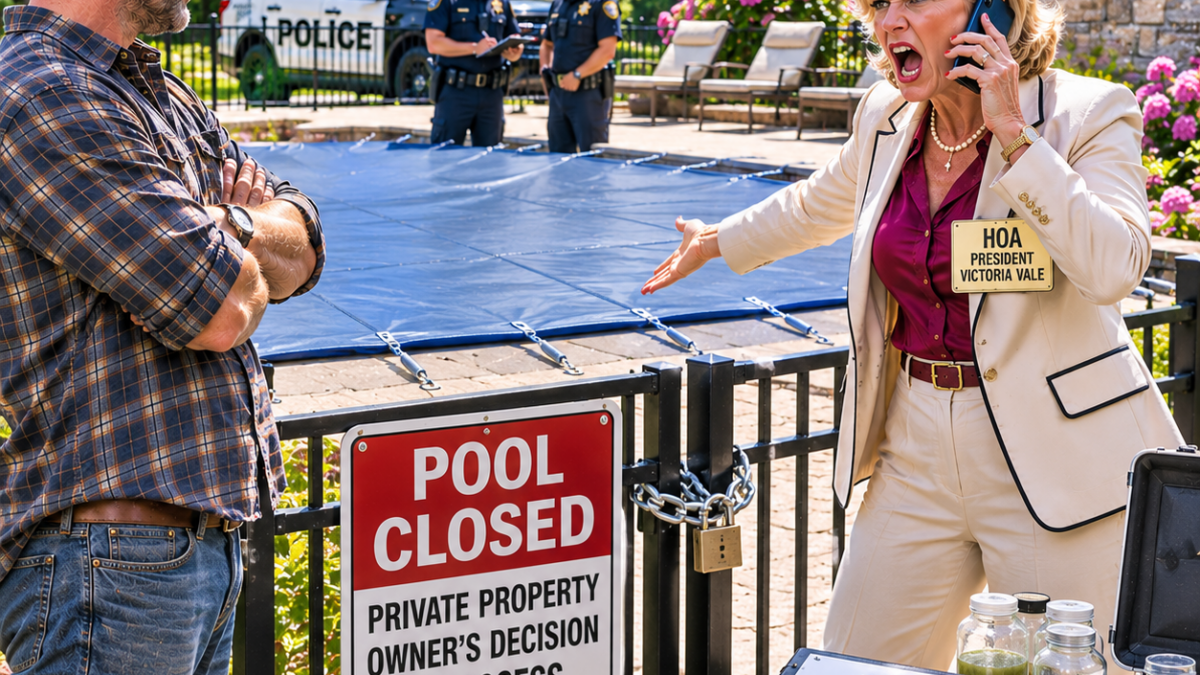
The fourth time that week I found fresh tire tracks carved through my cornfield, I stood between two flattened rows and realized the woman driving the white Escalade wasn’t confused, lost, or mistaken—she simply believed her HOA title gave her the right to use my farm as a private highway.
I had already shown her the deed, sent certified warnings, posted NO TRESPASSING signs, and even installed a steel gate, but she answered every boundary I set by crossing it harder, until one reckless morning her roaring engine frightened one of my pregnant cows badly enough that I lost something no apology could ever bring back.
What Victoria Pemberton never understood was that by the time I finally stopped arguing with her, I had stopped improvising too—and the next trip she took across my land was going to expose much more than her fake “easement.”
My name is Marcus Chen.
I’m forty-seven, and three years before all this happened, I walked away from a twenty-five-year career in logistics management because I was tired of living inside conference rooms.
For decades, my life revolved around shipment schedules, quarterly targets, missed deadlines, warehouse disputes, and people calling me at midnight because a truck was sitting in the wrong state.
I saved carefully.
Invested carefully.
Then I found eighty acres in rural Nebraska.
Rolling farmland.
A creek along the eastern edge.
An old farmhouse.
A weathered barn.
Enough pasture for cattle.
And, most importantly, the property sat completely outside Meadowbrook Estates, a gated HOA development bordering my western line.
I had nothing against the residents.
I simply didn’t want anyone telling me how tall my grass could grow while I owned eighty acres of it.
I renovated the farmhouse, repaired the barn, started with twenty head of cattle, and planted corn and soybeans.
For the first two and a half years, it was everything I wanted.
Quiet mornings.
Work that left dirt on my boots instead of stress behind my eyes.
Then Victoria Pemberton discovered my farm was a faster way to reach County Road 47.
The first time, I heard her before I saw her.
A powerful engine came roaring across the western field.
I turned and watched a white Cadillac Escalade cut diagonally through my corn.
Not along a road.
Not along a marked trail.
Through the crop itself.
Stalks folded beneath the tires.
Mud sprayed behind her.
The SUV disappeared through an old opening near Meadowbrook’s back boundary.
I stood there wondering what kind of emergency could justify that.
Two days later, she did it again.
The third time, I parked my truck across her path.
The Escalade stopped maybe twenty feet away.
The driver’s window lowered.
A woman in expensive sunglasses looked at me as though I had personally inconvenienced her morning.
“This is private property,” I said.
She laughed.
Actually laughed.
“There’s an easement.”
“There isn’t.”
“It dates back to the sixties.”
“I own this land.”
“And I’ve lived here longer than you.”
“That doesn’t create an easement.”
She tilted her head.
“You must be Marcus.”
That bothered me.
“Who are you?”
“Victoria Pemberton. Meadowbrook Estates.”
Like that explained everything.
“My husband is HOA president. I’m the treasurer.”
“Congratulations.”
Her smile disappeared.
“You should check your records before embarrassing yourself.”
“I checked them when I bought the property.”
“You’re new.”
“I’ve owned it three years.”
“And we’ve been using this route much longer.”
“No, you haven’t.”
She put her sunglasses back on.
“You don’t understand how things work around here.”
Then she steered around my truck.
Not onto an existing path.
Through another section of corn.
I watched stalk after stalk disappear beneath her tires.
That afternoon, I called the lawyer who handled my purchase.
Jim Sutton ordered a full title search.
Two days later, he called me.
“Marcus, your title is clean.”
“No easement?”
“None.”
“Historical right-of-way?”
“None.”
“HOA access agreement?”
“Absolutely nothing.”
“So she’s trespassing.”
“Completely.”
I thought that would end it.
I was wrong.
When I told Victoria, she started driving through twice a day.
Morning.
Evening.
Sometimes she honked while crossing the pasture.
And every time I watched those white taillights disappear toward Meadowbrook, I understood a little more clearly that this had stopped being about convenience.
Victoria wasn’t taking a shortcut anymore.
She was proving that she could.
PART 2
At first, I tried to treat it like a normal property dispute.
That was my mistake.
Normal people respond to evidence.
Normal people hear, “You’re on private land,” check the paperwork, realize they were wrong, and adjust.
Victoria treated evidence as an insult.
Once Jim confirmed there was no easement, I drafted a simple letter.
Not threatening.
Not emotional.
Just facts.
The property belonged to me.
No recorded right-of-way existed.
Her vehicle had repeatedly damaged planted crops.
She had no permission to enter.
Continued access would be considered trespassing.
Jim reviewed it before I mailed it.
“Certified,” he said.
“Obviously.”
“Keep the receipt.”
“I keep receipts for tractor filters.”
“That’s why I like you.”
Victoria signed for the letter three days later.
I knew because the tracking confirmation hit my email while I was repairing a fence.
That evening, I heard the Escalade.
I stepped outside.
Victoria drove across the field.
Her window was down.
The envelope I had sent her was in one hand.
She tore it in half while driving.
Then again.
The pieces flew out the window and scattered over the mud behind her.
She hit the horn.
Long.
Deliberate.
Then accelerated away.
I stared after her.
There are moments when anger feels hot.
That wasn’t one.
Mine went cold.
I collected every piece of the letter from the field.
Photographed them.
Saved the delivery confirmation.
Added both to a folder.
Then I called the sheriff.
Deputy Aaron Morrison arrived about an hour later.
Young guy.
Early thirties.
Calm.
He listened more than he talked, which I appreciated.
I showed him the tire tracks.
The crushed corn.
The boundary markers.
My deed.
The title report.
The certified letter.
He looked toward Meadowbrook.
“She says there’s an easement?”
“Yes.”
“But your title company found nothing.”
“Nothing.”
He nodded.
“I’ll speak with her.”
He returned nearly two hours later.
His expression told me I wasn’t going to like the conversation.
“She showed me paperwork.”
“What paperwork?”
“Copies of what she says are historical access records.”
“Actual recorded easement?”
“I can’t determine that roadside.”
“My lawyer already did.”
“I understand.”
“So arrest her the next time she drives through.”
Morrison sighed.
“She’s characterizing it as a disputed property right.”
“Because she knows that turns trespassing into paperwork.”
He looked at me.
“Maybe.”
“She also lied and said I threatened her, didn’t she?”
His silence gave him away.
“What exactly did she say?”
“That you’ve been confronting her aggressively.”
“Have I?”
“I haven’t witnessed it.”
I laughed without humor.
“Deputy, I’ve spent twenty-five years moving freight through ports, warehouses, strikes, storms, and union negotiations. If I were aggressively confronting that woman, we wouldn’t be wondering.”
He almost smiled.
Then became serious.
“I believe there’s a real problem here. But right now, the claimed easement complicates enforcement.”
“There is no easement.”
“Then your lawyer needs to establish that formally if she keeps claiming otherwise.”
“In the meantime, she destroys my crop.”
“I’m documenting your complaint.”
“That doesn’t replant corn.”
“No.”
At least he didn’t pretend otherwise.
I thanked him.
Then I called Jim.
He listened.
“This is exactly what I was afraid of.”
“What?”
“She’s producing enough paper to muddy the issue.”
“Fake paper.”
“Probably.”
“You sound annoyingly calm.”
“That’s what you pay me for.”
“How do we stop her?”
“Start with physical access.”
So I installed a gate.
Not a decorative farm gate.
A heavy steel one anchored properly across the route she kept using.
Chain.
Lock.
PRIVATE PROPERTY signs.
No ambiguity.
I finished Friday evening.
I stood back afterward and felt ridiculous for being proud of a gate.
Saturday morning, I learned pride was premature.
I was drinking coffee when I heard brakes.
Then shouting.
Then metal striking metal.
I set down the mug and ran outside.
Victoria stood beside the gate.
Bolt cutters in both hands.
For a second, even I couldn’t believe what I was seeing.
She clamped the jaws around my chain.
“Victoria!”
She looked at me.
Then squeezed.
The chain dropped.
“What the hell are you doing?”
“Removing an illegal obstruction.”
“That is my gate.”
“It blocks established access.”
“You were formally notified there is no access.”
She tossed the cut chain aside.
“You don’t get to decide that.”
“I own the land.”
“My attorney says otherwise.”
“Then let your attorney drive across it.”
Her face twisted.
She pulled the gate open.
“You think you’re funny.”
“No.”
She walked back to the Escalade.
I raised my phone.
“Victoria, if you drive through that gate, you’re knowingly entering after I’ve expressly told you to leave.”
She opened her door.
“Record whatever you want.”
Then she drove through.
As she passed me, she lifted one hand.
Middle finger.
The Escalade disappeared across the field.
I stood beside the broken chain.
Then I smiled.
Not because anything was funny.
Because Victoria had forgotten about the trail camera mounted in a tree forty feet away.
It had captured everything.
Her arrival.
The bolt cutters.
The chain falling.
My warning.
Her driving through.
I called Morrison.
This time, when he watched the footage, his jaw tightened.
“That’s property damage.”
“Yes.”
“She brought bolt cutters.”
“Yes.”
“You told her not to enter.”
“Yes.”
“And she entered.”
“Yes.”
He looked toward the trail.
“I’ll file this separately.”
“Can you charge her?”
“Potentially. The prosecutor will review.”
“Potentially.”
“I know you hate that word.”
“I’m developing feelings about it.”
He handed the phone back.
“Marcus, this is escalating.”
“She’s escalating.”
“I agree.”
“Then stop her.”
“The more documentation you give us, the stronger the case.”
“By the time the case is strong enough, I’m going to harvest tire tracks instead of corn.”
He didn’t have an answer.
The following Tuesday, a letter arrived from a law firm in Omaha.
Victoria’s lawyer.
It accused me of interfering with “established historical access.”
It demanded I remove barriers.
It warned that I could be liable for damages caused by blocking “customary ingress and egress.”
Jim read it and laughed.
“Why is that funny?”
“Because they never identify the recorded instrument creating the easement.”
“So?”
“If they had one, they’d cite it.”
“Meaning they’re bluffing.”
“Meaning they’re trying to make you expensive before you become dangerous.”
“Dangerous?”
“To their argument.”
Jim sent a response demanding the exact book, page, filing number, deed reference, or recorded agreement supporting their easement claim.
Nothing came.
Instead, a second letter arrived.
This one from the HOA attorney.
More aggressive.
It referred to “community access understandings.”
Not easement.
Not right-of-way.
Understandings.
I called Jim.
“They changed language.”
“I noticed.”
“Why?”
“Because understandings don’t require county recording.”
“Do they mean anything?”
“Not against your deed unless you agreed to them.”
“So nothing.”
“Legally, probably nothing.”
“Probably?”
He laughed.
“You hate lawyers.”
“I like you less every day.”
“Healthy relationship.”
Then he gave me the number I didn’t want.
“If they force litigation, you could spend thirty thousand dollars before trial.”
I went quiet.
“How long?”
“Twelve to eighteen months isn’t impossible.”
“So Victoria gets another year of destroying my farm.”
“We can seek injunctions.”
“More money.”
“Yes.”
I looked out my window.
The Escalade tracks crossed the field like a scar.
“That’s how she wins.”
“What?”
“She makes stopping her more expensive than tolerating her.”
Jim did not answer immediately.
Then:
“Yes.”
That was when I finally understood Victoria.
It wasn’t that she believed the easement existed.
She believed she could make the distinction irrelevant.
If I couldn’t afford to enforce my rights, then practically speaking, she had won access anyway.
The next weeks became a routine.
At 7:15 most mornings, the white Escalade crossed my property.
Around five, it came back.
Sometimes slowly.
Sometimes fast.
Whenever Victoria saw me, she honked.
At first I thought she was simply being childish.
Then I noticed what it did to the cattle.
Their heads came up.
They shifted.
Moved away.
Three of my heifers were pregnant.
One was Daisy.
Daisy had been part of my first small herd.
Black Angus.
Calm temperament.
Smart enough to learn where I kept treats and stubborn enough to pretend she hadn’t.
I had helped deliver three of her calves.
Her next one was expected in about six weeks.
A rancher learns the animals differently from people.
You don’t romanticize them.
They’re livestock.
Part of the business.
But that doesn’t mean they become machines.
You know personalities.
Patterns.
You know which cow hangs back.
Which one pushes forward.
Which one becomes nervous around unfamiliar engines.
Daisy hated the Escalade.
Every time Victoria came through honking, Daisy moved.
I started keeping the herd farther away.
But pasture has limits.
Then came Tuesday morning.
Cold.
Clear.
Mud still frozen in shaded spots.
I was repairing equipment near the barn when the horn started.
Not one honk.
Several.
Long blasts.
I looked up.
Victoria’s Escalade was coming across the western field faster than usual.
Daisy and two other cows were grazing near the route.
The first horn made them raise their heads.
The second sent them running.
“Stop!”
Victoria couldn’t hear me.
Or didn’t care.
Daisy turned too sharply.
Her rear leg slipped.
She went down hard.
I started running before the Escalade had even passed.
By the time I reached Daisy, she had gotten back up.
But she was breathing fast.
Too fast.
Something felt wrong.
I called Dr. Patterson.
He came immediately.
For the next hour, I watched him examine her.
Then he looked at me.
“Marcus.”
The way he said my name told me.
“No.”
“I’m sorry.”
The calf was gone.
Daisy had miscarried.
Maybe another vet would have phrased causation more cautiously.
Dr. Patterson knew what had happened that morning.
He also knew the pattern of repeated stress I had documented.
He treated Daisy to reduce risk of complications.
Then he sat beside me near the barn.
“She should recover.”
“The calf?”
He shook his head.
I looked toward the field.
“It was Victoria.”
“The fright could absolutely have contributed.”
“She honked on purpose.”
“I can document Daisy’s condition and the likely relationship between acute stress and the loss.”
“Do it.”
He looked at me.
“You all right?”
I laughed once.
“No.”
That was the first time any part of the conflict hurt instead of irritated.
Four thousand five hundred dollars was the estimated financial loss.
That number went into Jim’s file.
But I didn’t care about the number then.
I cared that I had spent months watching someone deliberately terrify my animals because she enjoyed proving I couldn’t stop her.
I took photographs.
Saved the veterinary report.
Filed another sheriff’s report.
Sent another certified demand.
Then I sat beside Daisy in the barn that night.
She was eating again.
That helped.
I rested my hand against her neck.
“I’m sorry.”
Ridiculous thing to say to a cow.
But I meant it.
Daisy had no idea what an HOA was.
No idea what an easement was.
No idea why one human being had decided another human being’s boundary deserved punishment.
She had simply been standing on her own pasture.
Something in me changed.
I did not want to hurt Victoria.
I did not want to threaten her.
I did not want some cinematic revenge where a truck exploded and everyone clapped.
I wanted one thing.
Her vehicle never crossing my field again.
So I returned to Jim.
“There has to be a lawful way to physically stop a repeated vehicle trespasser.”
“There are barriers.”
“She cut the barrier.”
“Stronger barrier.”
“She’ll bring stronger tools.”
Jim sighed.
“What are you thinking?”
“Vehicle deterrents.”
His expression changed.
“Marcus.”
“I’m asking before doing anything.”
“Good.”
“I’m not asking you how to build one.”
“Better.”
“I want a lawful commercial solution that stops unauthorized vehicles without turning my farm into a death trap.”
Jim leaned back.
“That’s the only version of this conversation I’m willing to have.”
We spent days checking options.
My priority was simple.
No concealed hazard.
No homemade device.
No attempt to injure anyone.
No surprise.
Whatever I used would be professionally manufactured, clearly announced, placed entirely on my land, and accompanied by unmistakable warnings.
I also wanted law enforcement to know in advance.
Jim was still uncomfortable.
“So am I,” I said.
“Good.”
“Why good?”
“Because the day you become comfortable damaging somebody’s vehicle is the day I stop liking you as a client.”
“I thought you already disliked me.”
“Professionally.”
We settled on a commercially manufactured vehicle-access deterrent after reviewing the legal risks.
I am deliberately skipping the setup details because what mattered wasn’t how it worked.
What mattered was the warning.
Victoria would know.
In writing.
Repeatedly.
So would her attorney.
So would the sheriff’s office.
I installed large reflective signs along the trespassing route.
PRIVATE PROPERTY.
NO TRESPASSING.
AUTHORIZED FARM VEHICLES ONLY.
VEHICLE DETERRENT SYSTEM IN USE.
DO NOT PROCEED.
I photographed each sign.
Jim drafted a final letter.
It summarized the history.
Repeated trespass.
Destroyed crop.
Cut gate.
Veterinary loss.
Police reports.
Prior cease-and-desist notices.
Then it stated clearly that the route had been physically secured and vehicle deterrents were now in use.
Victoria signed for the letter herself.
Four days before the incident.
Her attorney responded angrily.
They called it threatening.
Jim replied that the safest response was simple:
Do not enter Marcus Chen’s private property.
Then I went to Deputy Morrison.
In person.
“I need you to know what I’ve done.”
He looked at the documents.
Then at me.
“You’re serious.”
“Yes.”
“You realize this could create liability.”
“Yes.”
“You realize I cannot give you legal permission.”
“I’m not asking.”
He studied the warning photographs.
“You sent these to her?”
“Yes.”
“Certified?”
“Yes.”
“Her lawyer?”
“Yes.”
“Signs are visible?”
“Very.”
Morrison exhaled.
“Why not wait for court?”
I looked at him.
“Daisy.”
His expression changed.
He knew.
“I’m not watching another animal get hurt while lawyers exchange letters.”
Morrison nodded.
“I understand.”
“I’m not hiding anything.”
“That helps.”
“I don’t want her injured.”
“That matters.”
“I want the car to stop.”
He closed the folder.
“I hope she reads the signs.”
“So do I.”
That Sunday, the farm was quiet.
Daisy stood with the herd.
Still recovering.
I walked along the western boundary.
Every warning sign was obvious.
No one could honestly claim surprise.
I went to bed hoping Victoria had finally gotten bored.
Monday morning, I woke at six.
Coffee.
Barn.
Camera feeds.
Not because I wanted a show.
Because if anything happened, I wanted complete evidence.
Seven.
Nothing.
Seven ten.
Nothing.
I started feeling relieved.
Maybe she had listened.
Maybe her lawyer had finally convinced her.
Then at 7:14, the white Escalade appeared.
My stomach dropped.
I watched from the barn.
The SUV approached the first sign.
Victoria drove past it.
Second sign.
Past it.
Third.
No slowing.
I whispered:
“Don’t.”
She kept going.
The vehicle crossed the point where she had been told not to proceed.
A moment later, the deterrent did exactly what it had been designed to do.
The Escalade slowed abruptly.
Then continued for a short distance.
Then stopped.
Completely.
I remained where I was.
I did not cheer.
Did not laugh.
Did not run toward her.
I saved the camera feeds.
Copied the recordings.
Then called the sheriff.
“My name is Marcus Chen, County Road 47.”
“Yes, sir?”
“I have a repeat trespasser currently disabled on my property after ignoring the posted vehicle-deterrent warnings.”
“Anyone injured?”
“Not that I can see.”
“Do you require medical?”
“Unknown. Vehicle is stationary. Driver has exited.”
“We’ll send someone.”
“Thank you.”
Only then did I walk out.
Victoria stood beside the Escalade.
She stared at the wheels.
Then at the field.
Then at me.
Her face turned red.
“What did you do?”
I stopped a safe distance away.
“You entered private property after repeated warnings.”
“You destroyed my car!”
“You were explicitly warned not to drive here.”
“You tried to kill me!”
“No.”
“You psycho!”
“I called the sheriff.”
She froze.
Then pulled out her phone.
“Good. I’m calling them too.”
“Go ahead.”
She dialed someone else first.
“Richard!”
Her voice carried across the field.
“He destroyed the Escalade.”
Pause.
“No, I’m on the farm.”
Longer pause.
“I was using the easement.”
Pause.
Then shouting.
“I don’t care what the attorney said!”
That sentence was useful.
Very useful.
Victoria realized I had heard.
She turned away.
“You told me what?”
I asked.
“Stay away from me.”
“Your attorney told you not to come through?”
She ignored me.
I raised my phone.
Recording.
She spun.
“Stop recording.”
“You’re on my property.”
“You trapped me.”
“No one forced you past the warning signs.”
“This route is legal.”
“Show me the easement.”
“My lawyer has it.”
“No, he doesn’t.”
Her face tightened.
“You don’t know that.”
“Jim requested the filing number twice. Nobody produced one.”
“My husband is HOA president.”
“I’m not in your HOA.”
“He can make your life very difficult.”
“Victoria, look around.”
I gestured toward the field.
“This is the part you still don’t understand. Your HOA ends over there.”
I pointed toward the western boundary.
“My land begins here.”
She shook with anger.
“I’ll take this farm from you.”
“Say that again.”
She noticed the phone.
Her mouth closed.
Then she started recording me instead.
“This man has illegally trapped me.”
I looked into her camera.
“My name is Marcus Chen. I own this farm. Victoria Pemberton has repeatedly entered the property without permission despite certified written notices, posted warnings, police reports, and a locked gate she previously cut open.”
“Liar.”
“My attorney has the records.”
“You destroyed a ninety-thousand-dollar vehicle.”
“You drove it where you were told not to.”
“This is attempted murder.”
“No.”
She started talking over me.
I stopped engaging.
That was when Morrison arrived.
He drove slowly into the field.
Victoria ran toward him.
“Deputy! Thank God.”
Morrison stepped out.
“Anyone hurt?”
“He tried to kill me.”
“Are you injured?”
“My car is destroyed.”
“That’s not what I asked.”
“No, but—”
“Any medical emergency?”
“No.”
Morrison looked toward me.
“Marcus.”
“Deputy.”
Victoria noticed recognition.
“You know him?”
“I’ve responded here before.”
“Then you know he’s been harassing me.”
Morrison looked at her.
“I know there’s an ongoing property dispute.”
“There is no dispute. We have an easement.”
“Do you have it?”
“My attorney does.”
Morrison looked toward the warning sign nearest us.
Then another farther back.
Then another.
“Did you see those?”
Victoria crossed her arms.
“They’re illegal.”
“That wasn’t my question.”
“I shouldn’t have to read fake threats on community access property.”
Morrison walked toward the route.
He spent several minutes looking.
Then returned.
“Mrs. Pemberton, I need your driver’s license.”
She stared.
“Why?”
“Because I’m documenting the incident.”
“I called you because he attacked me.”
“Marcus called first.”
She looked at me.
Betrayal.
Like calling law enforcement about someone trespassing on your land violated etiquette.
Morrison took her identification.
Then asked me for my folder.
I had it ready.
Deed.
Title report.
No easement.
Certified warnings.
Delivery signatures.
Photographs of signage.
Gate-destruction report.
Veterinary report.
Past incident numbers.
Morrison turned page after page.
Victoria grew quieter.
He held up the most recent certified-mail confirmation.
“This is your signature?”
She looked.
“I sign lots of things.”
“Did you receive the warning?”
“I don’t remember.”
“Four days ago?”
“My assistant handles correspondence.”
“Your signature is here.”
She said nothing.
Morrison looked toward me.
“Do you want to pursue the trespass complaint?”
I thought about saying no.
Just for a moment.
The Escalade was disabled.
The route had stopped.
Maybe humiliation was enough.
Then I remembered Daisy.
The shredded letter.
The bolt cutters.
The horn.
Six months of Victoria making the same choice because everyone kept giving her another chance to make a different one.
“Yes.”
Victoria stared.
“You wouldn’t.”
I looked at her.
“I already did.”
Her face went pale.
Morrison began writing.
“This matter may also be referred for property-damage review based on the earlier gate incident.”
“I never cut his gate.”
I opened the footage on my phone.
Victoria saw herself on the screen holding bolt cutters.
She stopped talking.
Morrison watched.
Then looked at her.
“Mrs. Pemberton.”
She swallowed.
“That gate was obstructing access.”
“Whether you believe that or not, cutting someone else’s chain creates another issue.”
“This is unbelievable.”
Morrison handed her paperwork.
“You’ll receive information regarding the court process.”
“You’re citing me?”
“Yes.”
“This is civil.”
“Property title issues can be civil. Knowingly entering after repeated notice can become something else.”
Her hands shook.
“This is because you know him.”
“No.”
“You’re taking his side.”
“I’m looking at his deed and your lack of easement documentation.”
“My lawyer—”
“Then bring the easement to court.”
That ended it.
Victoria called Richard again.
No answer.
Then her attorney.
This time, he answered.
I could not hear everything.
I heard enough.
“Victoria, I specifically told you not to use that route until the easement question was resolved.”
She turned away from us.
“You said we had a claim.”
“A claim is not permission to keep driving there.”
Her shoulders dropped.
“I’m stuck.”
“Call roadside assistance.”
“The sheriff is citing me.”
Long pause.
“Stop talking.”
“What?”
“Victoria, stop making statements. Call my office later.”
He disconnected.
She stared at the phone.
For the first time, I saw something other than anger.
Fear.
A tow truck was called.
The driver inspected the Escalade.
He gave Victoria an estimate for extraction and transport.
Her face tightened.
“What about the wheels?”
“You’ll need the shop to inspect them.”
“How much?”
“Could be expensive.”
She looked at me.
“You’re paying.”
Jim would love that sentence.
The tow operator loaded the Escalade.
Victoria stood beside Morrison’s cruiser looking smaller than I had ever seen her.
Before leaving, she turned toward me.
“This isn’t over.”
“No.”
“You’ll lose.”
“Maybe.”
That surprised her.
I continued.
“But now we can let a judge decide.”
She had nothing to say to that.
Morrison drove her home.
The tow truck followed.
I remained in the field.
The silence afterward felt unnatural.
For six months, my mornings had included waiting for Victoria.
Listening.
Watching.
Anticipating.
Now nothing.
I walked back toward the barn.
Daisy was grazing.
I stopped beside the fence.
“You missed the show.”
She kept eating.
Smart cow.
Two days later, I was sued.
Forty-two thousand dollars.
Vehicle damage.
Emotional distress.
Negligence.
Reckless conduct.
Jim called sounding far too cheerful.
“This is good.”
“You say that every time something expensive happens.”
“They overreached.”
“They want forty-two thousand dollars.”
“And we want damages.”
“We already wanted damages.”
“Now they opened the courtroom door themselves.”
He drafted a counterclaim.
Destroyed crop.
Gate damage.
Veterinary loss.
Repeated trespass.
Costs associated with security measures.
Legal expenses where recoverable.
Jim calculated more than twenty-eight thousand dollars in direct and related damages before additional claims.
“Do you want to proceed?”
“Yes.”
“No settlement discussion first?”
“They had six months.”
“Fair.”
His response went out.
Then silence.
No follow-up threat.
No triumphant letter.
Nothing.
A week passed.
Dale called me.
Dale farmed soybeans south of my property.
“You hearing what’s happening inside Meadowbrook?”
“No.”
“You should.”
“What?”
“Victoria used HOA money for the lawyers.”
I stopped.
“What?”
“Assistant treasurer found it.”
“Who?”
“Patricia Chen.”
“No relation.”
“I figured.”
“What exactly did she find?”
“Apparently Victoria billed part of the legal fight with you to the association.”
“That doesn’t surprise me.”
“Gets worse.”
“Of course.”
“Patricia started checking other expenses.”
I waited.
“Spa charges.”
“What?”
“Credit-card transactions.”
“What kind?”
“Personal.”
Dale lowered his voice as though Victoria might be hiding inside my barn.
“Shopping too.”
“How much?”
“No idea yet.”
“Richard knows?”
“Rumor says he tried to stop the board meeting.”
That interested me.
“Why?”
“Because he’s president and his wife is treasurer.”
Conflict of interest had apparently been treated as a decorating style in Meadowbrook.
Over the following days, rumor became fact.
Patricia had access to financial records because she served as assistant treasurer.
The legal bills connected to Victoria’s private fight with me had triggered her suspicion.
Why was Meadowbrook paying lawyers to defend a route outside its legal boundary?
She pulled invoices.
Then statements.
Then reimbursements.
She discovered personal expenses categorized as community costs.
Home improvement work billed under landscaping.
Travel.
Spa purchases.
Charges attached to vague descriptions.
Small amounts.
Repeated.
Sophia—no, Victoria—had apparently understood the simplest rule of financial misconduct:
Large theft attracts attention.
Small irregularities become background noise.
Until someone totals them.
Patricia requested an emergency board meeting.
Richard resisted.
Other directors supported her.
The meeting happened.
Victoria and Richard were suspended pending audit.
I learned that from Dale before any official announcement.
“How do you know everything?”
“Church.”
“Right.”
“The original social network.”
The HOA hired a forensic accountant.
Within weeks, the estimate reached around sixty thousand dollars in improperly diverted or unsupported spending over roughly two years.
Not every dollar necessarily ended up in Victoria’s pocket.
Investigators had to separate incompetence from fraud.
But enough appeared personal that the sheriff opened another case.
Victoria suddenly had bigger problems than my field.
The supposed easement documents became part of the investigation too.
Jim finally received copies through discovery.
He called me.
“You’re going to enjoy this.”
“I’m trying to mature.”
“Do it tomorrow.”
“What?”
“There is no easement.”
“I know.”
“No, Marcus. There isn’t even a convincing fake one.”
“What did she show Morrison?”
“An old farm-access map.”
“From when?”
“Decades ago.”
“Did it cross my parcel?”
“Near it.”
“Near.”
“Not through your current deeded acreage in the way she claimed.”
I laughed.
“She just waved an old map around?”
“Along with an internal HOA memo calling the route historical.”
“An HOA memo.”
“Yes.”
“Created by?”
“Victoria.”
Of course.
“So her proof that Victoria had rights was a document Victoria wrote saying Victoria had rights.”
“Essentially.”
I sat down.
Six months.
Crops.
Gate.
Daisy.
Lawyers.
All because she had enough confidence to make weak paperwork look authoritative.
“What about Richard?”
“His signature appears on some HOA correspondence.”
“Did he knowingly support a fake easement?”
“Not clear.”
“Do you believe he knew?”
“I don’t get paid for belief.”
“You’re exhausting.”
“Also expensive.”
The civil case shifted immediately.
Victoria’s lawyer requested settlement discussions.
Jim met me at his office.
“They want both sides to walk away.”
“No.”
“Expected that.”
“What are they offering?”
“Vehicle claim dismissed. You withdraw some civil damages.”
“No.”
Jim smiled.
“What?”
“Nothing. I like when clients save me time.”
“What do we counter?”
“Full dismissal of their claim, payment for documented agricultural damages, gate damage, veterinary loss, legal expenses to the extent negotiated, and permanent acknowledgment that no easement exists.”
“Add no contact with my property.”
“That may come through the criminal matter.”
“Put it in anyway.”
Jim nodded.
“And Victoria’s lawyer?”
“Sounds tired.”
“Good.”
The trespassing case reached court first.
Victoria entered with a new attorney.
Third, if I counted correctly.
No lavender power suit.
Dark navy.
Minimal jewelry.
She looked older.
Maybe stress does that faster than time.
The prosecutor summarized the documented warnings.
Certified letters.
Signs.
Police reports.
The gate footage.
The vehicle incident.
Victoria eventually accepted a plea resolving the trespass charge and reduced property-damage allegations.
The judge ordered restitution for documented losses.
Eight thousand five hundred dollars.
Not every dollar Jim had claimed.
But enough to acknowledge the damage.
The protective condition mattered more.
Victoria was ordered to stay away from my farm.
No approach.
No shortcut.
No “community access.”
Nothing.
When the judge asked whether she understood, Victoria said:
“Yes.”
One word.
Quiet.
The woman who had spent six months telling everyone what property law meant finally sounded like someone listening to it.
I expected satisfaction.
Instead, I thought of Daisy.
Restitution doesn’t bring back a calf.
It doesn’t rewind a morning.
Justice can compensate.
It cannot reverse.
When court adjourned, Victoria stood with her attorney.
I walked toward the exit.
“Marcus.”
I stopped.
She looked at me.
Her attorney looked nervous.
“I want to say something.”
I waited.
“You destroyed my car.”
I almost laughed.
That was her opening.
“No.”
“Those strips—”
“You were warned.”
“I know.”
That stopped me.
She looked down.
“I know.”
Silence.
“My attorney told me not to use the route.”
“Yes.”
“Richard told me to stop too.”
That was new.
“Then why didn’t you?”
Her jaw tightened.
“You wouldn’t understand.”
“Try me.”
She looked toward the courtroom doors.
“I had been using that route before you started blocking it.”
“For how long?”
“Months.”
“Not decades?”
She closed her eyes.
“No.”
There it was.
Finally.
“So you knew the easement story wasn’t true.”
“I thought there had to be some old right.”
“That isn’t an answer.”
“No.”
“Victoria.”
“No. I knew there wasn’t a recorded easement.”
It was almost disappointing hearing it stated so plainly.
“Why?”
She laughed bitterly.
“Because Meadowbrook’s main entrance adds eleven minutes to my drive.”
I stared.
All that destruction.
All that legal fighting.
Eleven minutes.
“You did this over eleven minutes?”
“At first.”
“At first?”
Her face hardened.
“Then you challenged me.”
I understood.
The shortcut was convenience.
The war was ego.
“You told me I couldn’t.”
“I told you it was my property.”
“Everyone in Meadowbrook listened to me.”
“I don’t live in Meadowbrook.”
“I know.”
Her voice cracked.
“That was the problem.”
I studied her.
She wasn’t apologizing.
Not exactly.
But she was telling the truth.
“You couldn’t stand having authority end at my fence.”
She didn’t answer.
That was answer enough.
Her attorney stepped closer.
“We should go.”
Victoria looked at me one last time.
“I’m sorry about the cow.”
I froze.
“What?”
“Daisy.”
She knew her name.
“You never cared before.”
“I didn’t know she lost the calf until the court records.”
“You were told.”
“I thought you were exaggerating.”
Anger returned.
Fast.
“Of course you did.”
“I’m sorry.”
I walked away.
I wasn’t ready to accept it.
Maybe she meant it.
Maybe she didn’t.
Some apologies arrive after the damage is so thoroughly documented that sincerity becomes impossible to measure.
The restitution check arrived weeks later.
I used it toward a permanent western-boundary fence.
A real one.
Steel posts.
Heavy agricultural fencing.
Proper locked vehicle gates.
Expensive.
More than the restitution.
Worth every dollar.
The first evening after the project was finished, I walked the boundary.
No white Escalade.
No crushed corn.
No horn.
Just fence.
Dale leaned over from his side.
“Looks like Fort Knox.”
“Good.”
“You expecting tanks?”
“Luxury SUVs.”
He laughed.
“Fair.”
Daisy recovered.
That mattered more.
By summer, her health was back.
The vet eventually cleared her for breeding again.
I hesitated.
I worried more than I should have.
But the next year, Daisy delivered a healthy calf.
A heifer.
Black with a tiny white mark near her belly.
I was there.
Dr. Patterson came because I was nervous.
He smiled after everything looked good.
“You can breathe.”
“I am breathing.”
“Not correctly.”
The calf stood eventually.
Wobbly.
Daisy turned and cleaned her.
I leaned against the barn wall and felt something loosen in my chest.
It did not replace what had been lost.
Nothing does.
But life had continued.
I named the calf Hope.
Dale mocked me relentlessly.
“That’s sentimental.”
“I’m allowed one.”
“You’re a forty-eight-year-old rancher with a cow named Hope.”
“I own the farm.”
“Fair point.”
While my farm recovered, Meadowbrook fell apart.
The financial investigation confirmed extensive misuse of association funds.
Victoria was formally charged with fraud-related offenses and embezzlement tied to specific transactions investigators could prove.
The famous sixty-thousand-dollar number became neighborhood shorthand, though the final legal accounting was more complicated.
Richard resigned as HOA president.
His position was impossible.
Maybe he knew.
Maybe he didn’t.
That question divided Meadowbrook for months.
He claimed Victoria had handled finances independently.
Other board members said he ignored warning signs.
From my perspective, the distinction no longer mattered much.
A leader doesn’t get to enjoy authority while outsourcing responsibility.
Richard filed for divorce.
That became gossip immediately.
I tried not to listen.
Dale did enough listening for both of us.
“House is going on the market.”
“I don’t care.”
“They’re separating assets.”
“I really don’t care.”
“He says he didn’t know.”
“Dale.”
“What?”
“Soybeans.”
“What about them?”
“Go look at yours.”
He laughed.
“You’re no fun anymore.”
“Growth.”
Meadowbrook’s new board sent me a formal apology.
It came certified.
I found that funny.
Dear Mr. Chen,
On behalf of the Meadowbrook Estates Homeowners Association, we apologize for prior representations regarding alleged access rights across your property.
Our review confirms that Meadowbrook Estates possesses no recorded easement, right-of-way, or community access agreement across your parcel.
We further regret the association’s involvement in private litigation connected to former officers.
The new board commits to respecting all neighboring property boundaries.
I read it twice.
Then carried it to the barn.
Not because I needed another legal document.
Because I wanted to pin something to the wall.
Next to Daisy’s veterinary recovery report.
One represented the damage.
The other represented the end.
Months passed.
No vehicle crossed my farm.
Corn grew over the ruts.
Rain softened the old tracks.
The land repaired itself faster than people did.
One evening, Patricia Chen stopped by.
No relation despite the name.
She had become interim treasurer after Victoria’s removal.
“I wanted to meet you.”
“You’re the one who found the financial problems.”
“I’m the one who finally looked.”
“That counts.”
She seemed uncomfortable with praise.
“We should’ve looked sooner.”
“Yes.”
She nodded.
“I appreciate you not pretending otherwise.”
We sat on the porch.
She looked toward Meadowbrook.
“Victoria intimidated people.”
“I noticed.”
“But that’s not enough of an excuse.”
“No.”
“I approved some reimbursements.”
That got my attention.
“Victoria’s?”
“Yes.”
“Fraudulent ones?”
“I didn’t know.”
“Why approve them?”
“She told me supporting documents were coming.”
“Were they?”
“Sometimes.”
“And when they weren’t?”
“I asked.”
“What happened?”
Patricia laughed bitterly.
“She would give me twenty more tasks.”
I understood the technique immediately.
“She exhausted you.”
“Yes.”
“And Richard?”
“He hated conflict.”
That phrase again.
Conflict avoidance.
One of the most expensive human habits.
Patricia looked at her hands.
“When the legal bill for fighting you came through, I finally got angry.”
“Why that one?”
“Because it was obviously personal.”
“That’s what triggered the audit?”
“Yes.”
I leaned back.
“So technically the Escalade did uncover the embezzlement.”
She almost smiled.
“Technically.”
“I hate that Dale is going to love this.”
“Who’s Dale?”
“You don’t want to know.”
The new Meadowbrook board changed its rules.
Two-signature requirements.
Independent financial review.
Public monthly ledgers.
No association funds for officers’ personal disputes.
Conflict-of-interest disclosures.
Term limits.
Residents began attending meetings.
Not because they suddenly loved HOA governance.
Because they had learned what happens when nobody watches.
A few residents came over to apologize.
Some had believed Victoria’s easement claim.
One man named Eric admitted he had told others I was “that angry farmer blocking community access.”
I laughed.
“You believed her?”
“She showed us a map.”
“What map?”
“Old one.”
“Did you check it?”
“No.”
“Why?”
He looked embarrassed.
“She was treasurer.”
I nodded.
“That’s not a land-survey credential.”
“I know that now.”
I offered him coffee.
He helped repair a section of cattle fence later that afternoon.
That was good enough for me.
The criminal financial case took longer.
Eventually Victoria entered a plea resolving several charges.
There was restitution owed to the HOA.
Probation-related conditions.
Financial restrictions.
And a period of incarceration tied to the proven offenses.
The exact punishment mattered less to me than people expected.
Dale wanted courtroom drama.
I didn’t.
I attended one hearing because I had been asked to provide a victim-impact statement connected to the trespassing case.
I kept it short.
I did not talk about the Escalade.
I talked about Daisy.
That surprised Victoria.
She sat at the defense table.
I looked at the judge.
“I can calculate corn.”
I paused.
“I can calculate fencing.”
Another pause.
“I can calculate a veterinary bill.”
The courtroom was quiet.
“What I can’t calculate is the number of mornings I stood on my land waiting to hear an engine that had no right to be there.”
Victoria looked down.
“I bought my farm because after twenty-five years of working around other people’s schedules and demands, I wanted peace.”
I looked toward her.
“Mrs. Pemberton turned my own property into a place where I was constantly waiting for conflict.”
Then Daisy.
“She frightened an animal that depended on me to keep her safe.”
My voice caught slightly.
I hated that.
Didn’t hide it.
“The calf never got a second chance.”
I stopped.
“That is all.”
When I sat down, Victoria was crying.
Quietly.
I didn’t know if that meant anything.
At the end of the hearing, as officers prepared to escort her out, she looked toward me.
“Marcus.”
I met her eyes.
“I really am sorry about Daisy.”
This time I believed her.
Not completely.
Maybe belief doesn’t work that way.
But something in her face had changed.
“Thank you.”
That was all I could give her.
Later, Richard sold the Meadowbrook house.
A family named the Parkers bought it.
I met them accidentally at the county feed store.
The husband recognized my name.
“You’re Marcus Chen?”
“Yes.”
His expression changed.
“Oh.”
I laughed.
“What did they tell you?”
“Something about an Escalade.”
“Of course.”
He raised his hands.
“We will not drive through your corn.”
“Strong opening.”
His wife smiled.
“We actually wanted to ask something.”
“Go ahead.”
“Our kids love animals.”
I waited.
“Would it ever be okay for them to see the cows?”
Such a simple question.
Ask.
Wait for permission.
I smiled.
“Sure.”
The following Saturday, they came over.
Two kids.
Eight and ten.
They stood beside the fence while I explained basic cattle safety.
The youngest pointed toward Daisy.
“What’s her name?”
“Daisy.”
“Can I pet her?”
“If she comes over.”
Daisy did.
Eventually.
The kid touched her forehead.
Then noticed Hope nearby.
“Who’s that?”
“Her daughter.”
“What happened to her other baby?”
I went quiet.
The mother looked at me apologetically.
“You don’t have to—”
“It’s okay.”
I gave the simple version.
“There was an accident before Hope was born.”
The child nodded solemnly.
Then said:
“Hope is a good name.”
“Yes.”
“It means you got another chance.”
I looked at Daisy.
“Something like that.”
After they left, I sat in the barn longer than usual.
Sometimes healing sneaks up through somebody else’s child saying exactly the sentence you needed.
The story of the spike strips became local legend.
I disliked that.
People exaggerated it.
Some claimed Victoria hit the deterrent at seventy miles an hour.
She didn’t.
Some said the Escalade flipped.
It didn’t.
One version had me waiting beside the field laughing like a supervillain.
Definitely not.
One claimed police applauded.
They absolutely did not.
The truth was less cinematic.
A person ignored repeated warnings.
Her vehicle was stopped.
The law took over.
That was enough.
The more important story was everything before it.
Six months of boundary pushing.
Everyone assuming Victoria would eventually stop.
A legal system moving slowly.
An HOA backing one of its own without checking facts.
A husband allowing the title “president” to become family power.
A deputy caught between a civil claim and obvious abuse.
Me learning the hard way that having rights on paper and successfully protecting those rights can be two very different things.
And Daisy paying part of the price.
One late summer evening, Jim visited the farm.
Not for legal work.
He claimed he wanted to see the fence.
I knew he wanted steak.
We grilled on the porch.
He looked across the field.
“Remember when you asked me about spike strips?”
“I try not to.”
“I almost fired you as a client.”
“You should have.”
“You would’ve found another lawyer.”
“Probably.”
“Worse one.”
“Definitely.”
He sipped his drink.
“You know what saved you?”
“What?”
“Documentation.”
“I thought you’d say your brilliant representation.”
“That too.”
I laughed.
He continued.
“If you had hidden what you were doing, if the warnings hadn’t existed, if you’d built something reckless yourself, this story could’ve ended very differently.”
“I know.”
“If you had threatened her…”
“I know.”
“If you’d celebrated online…”
“I know, Jim.”
He smiled.
“Just making sure the farmer learned something.”
“I learned lawyers enjoy hearing themselves.”
“That was free.”
We sat quietly.
Then he looked toward Hope grazing near Daisy.
“Worth it?”
“What?”
“The farm.”
I didn’t need to think.
“Yes.”
“Even after all that?”
“Especially after.”
He raised an eyebrow.
“How does that make sense?”
“Because now I know why I wanted it.”
I looked across the eighty acres.
“I thought I wanted space.”
“You don’t?”
“I wanted control over my own time.”
That had been true after logistics.
“But?”
“But land teaches you control is mostly imaginary.”
Jim laughed.
“Now you sound like a philosopher.”
“Cows don’t care about schedules.”
“Neither do courts.”
“Exactly.”
A year after Victoria’s final case wrapped up, I received a letter.
Not from a lawyer.
No HOA logo.
Handwritten.
Return address from a town two counties away.
Marcus,
I debated whether to write.
Probably too long.
I nearly stopped reading.
Then continued.
It was Victoria.
She wrote that she had completed part of her sentence and was working toward restitution obligations.
She was living in a small rental.
No HOA.
That line almost made me laugh.
Then:
I used to think your refusal to let me cross the farm was personal.
I thought you were trying to humiliate me.
Now I understand how strange that sounds.
It wasn’t strange.
It was exactly how she had behaved.
She continued.
The first time I drove through your land, I knew it was private.
I told myself there must have been an old right because someone in Meadowbrook had mentioned farmers using paths there decades ago.
That explanation was enough for me because I wanted the shortcut.
Then when you stopped me, the shortcut stopped mattering.
Winning mattered.
I put the letter down.
Stared at the field.
Then picked it up.
Every warning felt like disrespect.
Every locked gate felt like a challenge.
The fact that you were outside the HOA made it worse because I could not make you comply the way I could pressure residents.
I convinced myself that meant you were hostile.
The truth was simpler.
You were outside my control.
There it was.
No lawyer.
No excuse.
Just truth.
The next section was about Daisy.
I thought you were exaggerating the miscarriage to make me look cruel.
I know now that the vet report was real.
I remember honking.
I remember seeing the cattle move.
I did it because I knew it bothered you.
There is no explanation for that which makes me feel better about myself.
I am sorry.
I had to stop reading again.
That apology meant more than the courtroom version.
Because it named the action.
Not “I’m sorry things happened.”
Not “I’m sorry you were upset.”
I did it.
I knew.
I’m sorry.
Then she wrote about the money.
She didn’t explain every financial charge.
That wasn’t my business.
But she said something I remembered.
I kept taking small amounts because each amount felt too small to destroy anything.
Then one day the total was large enough to destroy almost everything.
That sentence wasn’t really about money.
It was about boundaries.
A shortcut once.
A second time.
A little corn.
A gate.
A horn.
A lie.
A charge.
Small choices.
Accumulated.
People rarely destroy their lives in one giant decision.
Usually they make a hundred smaller decisions and refuse to change direction.
At the bottom:
I hope Daisy is alive.
I hope your farm is quiet.
You do not need to respond.
—Victoria
I sat with the letter for a long time.
Then walked to the pasture.
Daisy was older now.
Still healthy.
Hope grazed nearby.
I took a photograph.
Printed it.
Two days later, I mailed it to Victoria.
No letter.
Just the photograph.
On the back:
Daisy is fine. Hope is hers.
The farm is quiet.
—Marcus
Three months later, a postcard arrived.
Only four words.
I’m glad she’s okay.
That was the last thing Victoria ever sent me.
I didn’t need more.
Meadowbrook improved under new leadership.
I know because its residents stopped being stories Dale told me and became actual neighbors.
The new HOA president, Angela Foster, visited me personally.
She did not bring a lawyer.
No clipboard.
Just a folder.
“We’re updating our maps.”
“Good.”
“I want you to review the western boundary before we approve anything.”
That surprised me.
“You don’t need my approval for your internal map.”
“No.”
She smiled.
“But after what happened, I’d rather ask.”
Ask.
That word again.
I reviewed it.
Their boundary ended exactly where mine began.
“Looks right.”
Angela nodded.
“Thank you.”
She turned to leave.
“Angela?”
“Yes?”
“You know what the easiest way to keep Meadowbrook residents off my farm is?”
She looked worried.
“What?”
“Make your front entrance less annoying.”
She burst out laughing.
“We’re working on it.”
Eventually they did.
The HOA negotiated a road improvement with the county.
Better turning lane.
Faster access.
Victoria’s eleven-minute shortcut became unnecessary even for people who might have wanted it.
Irony works slowly.
The old route across my field disappeared.
I planted over it.
For one season, the soil still showed the compacted line where her tires had traveled.
The corn grew shorter there.
Then the next year, less difference.
By the third, you had to know where to look.
I did.
Every time I crossed that section, I remembered.
Not Victoria.
The feeling.
Being told that another person’s confidence mattered more than my ownership.
That confidence had almost worked.
That was the disturbing part.
If I had been poorer.
Older.
Sicker.
If I had not had Jim.
If I had not kept records.
If Daisy had not pushed me past patience.
Maybe I would have surrendered the route.
Not legally.
Practically.
I understood why people do.
Peace becomes tempting when conflict is expensive.
But surrender purchased under harassment isn’t peace.
It’s rent paid to a bully.
That lesson changed the way I dealt with people afterward.
Firm earlier.
Calmer longer.
Less arguing.
More documentation.
When someone crossed a boundary, I stopped assuming clearer words would automatically solve it.
I gave clear notice once.
Then I followed process.
No theatrics.
No shouting.
No threats.
I had learned from the worst teacher available.
Victoria.
Five years after the first trespass, Daisy died.
Natural causes.
Old age for her line.
It happened quietly.
One cold morning.
I found her near the barn.
I knew before I reached her.
Hope stood nearby.
I sat beside Daisy for a long time.
Maybe longer than made practical sense.
I remembered the lost calf.
Her recovery.
Hope’s birth.
The children from Meadowbrook touching her forehead.
Victoria’s letter.
Life had folded all those years together.
Dr. Patterson came.
He placed a hand on my shoulder.
“She had a good run.”
“Yeah.”
“You gave her a good life.”
“I tried.”
We buried Daisy on the eastern side near the creek.
Not because ranchers usually bury every cow like a family pet.
Because Daisy had become attached to a chapter of my life I needed to mark.
I placed a simple stone.
DAISY
A GOOD COW
A TOUGHER SOUL THAN MOST PEOPLE
Dale stared at it.
“That last line’s dramatic.”
“I own the stone.”
“Fair.”
Hope eventually had calves of her own.
One of them was born almost exactly seven years after the morning Victoria’s Escalade stopped in the field.
I didn’t notice the date until Jim texted me.
You know what today is?
I checked.
Then looked toward the western boundary.
The permanent fence was partly hidden by tall grass.
No warning signs anymore.
No need.
The commercial vehicle deterrents had been stored away years earlier.
I never used them again.
Never wanted to.
I texted Jim:
A normal Monday.
His reply:
Best possible outcome.
He was right.
That evening, I sat on the porch with coffee.
The same kind of quiet I had moved there for.
Not absolute silence.
Cows.
Wind.
A tractor far away.
Birds near the creek.
The occasional vehicle on County Road 47.
Normal noise.
Dale drove past my entrance.
He slowed.
Rolled down the window.
“Shortcut open?”
I raised one finger.
He laughed and drove away.
Some jokes survive because they stop hurting.
The sun dropped behind Meadowbrook.
From where I sat, I could see the roofs of houses beyond the trees.
The community no longer felt like an enemy.
It was simply next door.
That mattered.
Victoria had spent years imagining relationships as hierarchy.
President.
Treasurer.
Resident.
Outsider.
Someone above.
Someone below.
The farm taught me something simpler.
A fence doesn’t mean the person on the other side is your enemy.
It means both people know where responsibility changes hands.
My cattle stay here.
Your car stays there.
My decisions end at your line.
Yours end at mine.
Healthy boundaries don’t destroy communities.
They make communities possible.
Because respect means nothing when it is mandatory.
Generosity means nothing when it is taken.
And permission means nothing if “no” isn’t accepted.
I thought about the original title people in town had given the story.
The Spike Strip Farmer.
I hated it.
Because the spike strips weren’t the lesson.
They were just the loudest moment.
The story actually began with corn.
A woman flattened a few rows because saving eleven minutes felt more important than asking.
The first damage was small.
A few stalks.
Easy to dismiss.
Then she did it again.
And again.
By the time the damage became impossible to ignore, neither of us was really fighting about a shortcut.
She was fighting for the right to ignore a boundary.
I was fighting to make the boundary matter.
Everything after that—the gate, Daisy, the sheriff, the lawyers, the HOA audit, the embezzlement case, the divorce, the restitution—grew from that first simple refusal to respect another person’s land.
Years later, if someone asked whether I felt sorry for Victoria, my answer surprised people.
Yes.
And no.
I felt sorry for the person she eventually realized she had become.
I felt sorry for the years she spent confusing fear with respect.
I felt sorry for Richard too, in a limited way, because living beside destructive behavior while repeatedly choosing convenience can hollow a person out.
But sympathy does not require pretending consequences were unfair.
Victoria needed consequences.
Meadowbrook needed consequences.
So did I, in a different sense.
I needed the consequences of my own delay.
I had spent months hoping she would eventually become reasonable because confrontation was exhausting.
That wasn’t generosity.
It was avoidance.
After Daisy, I stopped confusing patience with passivity.
That lesson stayed.
The sky darkened.
I finished my coffee.
Then walked toward the western fence.
Hope and her newest calf stood nearby.
The calf watched me with enormous dark eyes.
I leaned against the rail.
Beyond them, the corn moved in the wind.
You could no longer see where Victoria had driven.
No ruts.
No compacted route.
No tire marks.
The field had erased her completely.
I liked that.
Not because I wanted to erase the past.
Because land understands something people struggle with.
Damage can become history without becoming identity.
The field was not “the place where Victoria drove.”
It was corn again.
The gate was not “the gate she cut.”
It was a gate.
The farm was not “the property from the lawsuit.”
It was home.
And I was no longer the man waiting for a white Escalade at 7:15 every morning.
I was simply Marcus.
A rancher.
An ex-logistics manager.
A man who had finally learned how valuable an ordinary morning could be.
I reached the gate.
Checked the latch out of habit.
Locked.
Then laughed.
Some habits stay.
I turned toward the barn.
Behind me, Hope’s calf called softly.
The sun disappeared.
And for the first time in a long time, the only tracks crossing my farm belonged to the animals that were supposed to be there.
That was enough.
More than enough.
[END OF STORY]
:::








