PART 2: HOA Karen Had My Mailbox Removed—Then a Postal Inspector’s Visit Made Her Instantly Regret It
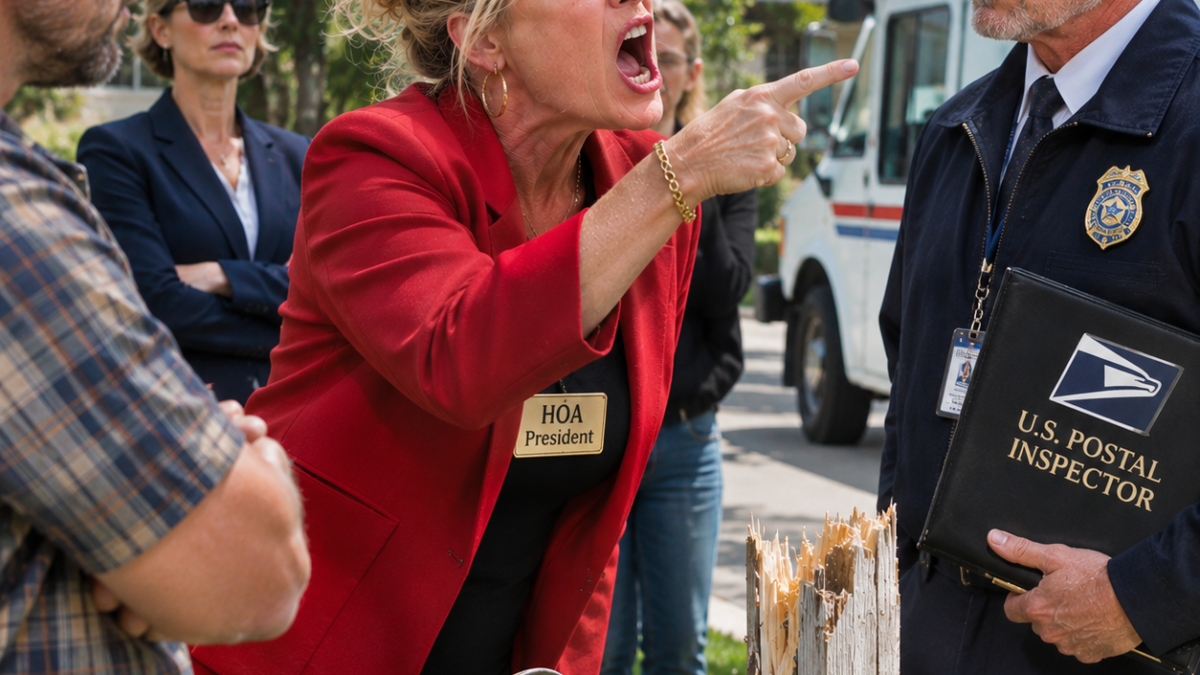
PART 2
## **The Paragraph Karen Forgot**
I went inside and pulled up the HOA bylaws.
Sarah sat beside me at the kitchen table.
“You saved those?”
“I save everything.”
“I know. I married a filing cabinet.”
“Useful today.”
Section 14.
Exterior attachments.
Mail receptacles.
Karen had quoted the correct subsection.
That was almost impressive.
Almost.
The rule said exterior fixtures had to come from an approved list.
Fine.
Then I read the paragraph immediately before it.
And stopped.
Sarah saw my face.
“What?”
“Here.”
I turned the laptop.
The enforcement procedure required an initial certified notice.
Then a final certified notice.
Then a thirty-day cure period.
Only after those steps could the board authorize remedial action.
Sarah read it.
Then again.
“We never got anything certified.”
“No.”
“Any notice at all?”
“No.”
“So she skipped all of this.”
“Yes.”
Sarah leaned back.
“She lied.”
“At minimum, she claimed notices we never received.”
“What do we do?”
I opened a folder on my computer.
Created a new one.
**MAILBOX**
Then another.
I reconsidered.
Deleted it.
Created:
**OPERATION MAIL DOMINANCE**
Sarah stared at the screen.
“You’re sixty years old.”
“I’ve earned whimsy.”
“You’re impossible.”
Maybe.
But I was angry enough that giving the anger structure helped.
## **The Sheriff**
I called the sheriff first.
Not because I expected much.
Because I wanted a report.
Deputy Miller arrived that afternoon.
Young.
Polite.
Tired.
He examined the broken post.
Photographed the tire tracks.
Watched my video.
“Who ordered it?”
“Karen Masterson. HOA president.”
“Contractor?”
I showed him the truck.
Company name.
Plate.
He sighed.
“I understand why you’re upset.”
“That’s never a promising opening.”
He smiled slightly.
“I’m trying to be straight with you.”
“Please.”
“The HOA will say the covenants gave them authority over exterior fixtures.”
“They didn’t follow the covenant procedure.”
“And you’ll say that.”
“I can prove that.”
“They may claim they mailed notices.”
“Certified mail leaves records.”
He nodded.
“Exactly. Which is why this becomes a dispute over authority and procedure.”
“She paid someone to destroy my property.”
“I know.”
“He drove onto my lawn.”
“I know.”
“How is that not trespass and vandalism?”
Miller shifted his belt.
“Because they’ll claim contractual authority.”
“Bad contractual authority.”
“Maybe.”
“Definitely.”
“Sir, I don’t disagree with you.”
He looked genuinely frustrated.
“But if I charge the contractor today, his lawyer says he believed he had lawful authorization from the HOA. If I charge Karen, she says she acted under governing documents.”
“So nobody gets arrested because they printed something official-looking?”
“That isn’t what I’m saying.”
“It sounds close.”
He gave me an incident number.
Then:
“Talk to an attorney.”
I thanked him.
After he left, Sarah said:
“You handled that better than I expected.”
“I’ve had training.”
“You looked like you wanted to eat his badge.”
“Also training.”
## **The Question That Changed Everything**
I went back to the bylaws.
Exterior fixture.
Mail receptacle.
Delivery.
Then something clicked.
The HOA controlled architectural rules.
But it didn’t control the mail.
A mailbox isn’t simply decoration.
It’s part of a delivery system.
I searched.
United States Postal Inspection Service.
Mail obstruction.
Destruction of receptacles.
Federal jurisdiction.
I didn’t assume I understood the law after ten minutes online.
That’s how Karens are born.
Instead, I called.
## **The Postal Inspection Service**
A woman answered.
Calm voice.
Professional.
I explained only what I could prove.
“My HOA president hired a contractor to remove and destroy the mailbox used for delivery to my residence.”
“Was the box in active use?”
“Yes.”
“Was mail delivery interrupted?”
“Yes.”
“How do you know?”
“My carrier drove past after the removal. No receptacle.”
“Did you authorize removal?”
“No.”
“Did the Postal Service direct its removal?”
“No.”
“Do you know who ordered it?”
“Yes.”
“Who?”
“Karen Masterson, president of Sterling Creek Estates HOA.”
“Do you have documentation?”
“Video, photographs, contractor information, license plate, HOA notice, sheriff incident number.”
There was typing.
Then:
“Did the HOA notify you beforehand?”
“They claim they did. Their own bylaws require certified notices. I received none.”
More typing.
Finally:
“Mr. Davison, we’ll open a case file. An inspector may contact you. Preserve all physical and digital evidence.”
“Understood.”
“Do not alter original files.”
“I won’t.”
“And if the HOA contacts you?”
“Document it.”
“Yes.”
That sounded familiar.
The call ended.
I sat still.
Sarah asked:
“Well?”
“They’re looking at it.”
“Federal?”
“Yes.”
Her eyes widened.
“All because of a mailbox?”
“No.”
I looked at the broken post.
“Because somebody interfered with mail delivery.”
## **The Neighborhood History**
While I waited, I started researching Karen.
Not stalking.
Public records.
Neighborhood posts.
Old meeting notes.
Her full name:
Karen Masterson.
Fifteen-year resident.
Ten years on the board.
Recently president.
Her late husband had owned a construction business.
That explained why contractors seemed to appear whenever she wanted something done.
Then I found the private neighborhood group.
Dozens of complaints.
Trash cans.
Holiday lights.
Basketball hoops.
Vehicles.
Flower beds.
Visitors.
A woman wrote:
**Karen threatened daily fines because my wreath was still up January 6.**
Another:
**She measured our grass while we were at my mother’s funeral.**
Another:
**She told us our son’s basketball hoop attracts the wrong element.**
That phrase bothered me.
Not because it was illegal.
Because it revealed the kind of control Karen enjoyed.
The mailbox wasn’t an isolated act.
It was escalation.
## **Mark**
Two houses down lived Mark Ellis, his wife Jessica, and their two kids.
I found Mark organizing tools in his garage.
He saw me.
“Hey, John.”
“Got a minute?”
“Sure.”
“You saw what happened yesterday?”
His face tightened.
“Mailbox?”
“Yes.”
“I thought they were repairing it.”
“They removed it.”
“What?”
“Karen ordered it.”
He stared.
“Because?”
“Wrong model.”
Mark laughed.
Then realized I wasn’t joking.
“You’re serious.”
“Very.”
He shook his head.
“That woman is insane.”
“She’s confident.”
“Same thing sometimes.”
I asked whether he’d had problems.
He snorted.
“Garden hose.”
“What about it?”
“Not coiled correctly.”
I waited.
He lifted both hands.
“Her words were ‘perfectly circular.’”
I stared.
Mark laughed bitterly.
“We’ve talked about moving.”
“Because of a hose?”
“Because every week it’s something.”
I told him about the bylaw procedure.
Then the postal case.
“A federal investigation?”
“Possibly.”
He leaned against the workbench.
“What do you need?”
“Nothing dramatic.”
“Meaning?”
“Talk to people.”
“About what?”
“Their experiences.”
He nodded slowly.
“For what?”
“To find out whether Karen’s power is real or whether everybody’s just afraid they’re the only target.”
Mark’s expression changed.
That was the first small crack in her system.
## **Arthur Pennington**
Mark sent me to Arthur.
Seventy-eight.
Perfect shirt.
Perfect posture.
Rose garden worthy of a botanical society.
He invited me inside and served lemon tea.
Before I had finished explaining Karen, he said:
“Classic authoritarian personality.”
I smiled.
“You’ve diagnosed her?”
“Informally.”
“Good.”
“I spent forty years at the IRS.”
That explained the tone.
Arthur listened to the Postal Inspection Service part.
His eyes brightened.
“You went around her.”
“Meaning?”
“You didn’t appeal to the board.”
“No.”
“You found a jurisdiction she doesn’t control.”
“Yes.”
“Excellent.”
Then Arthur surprised me.
“Would you like to hear something more interesting?”
“Always.”
“I’ve suspected financial irregularities for years.”
My smile disappeared.
“What kind?”
“Opaque spending.”
“Examples?”
“Grounds maintenance.”
“Legal.”
“Administration.”
“Those are normal categories.”
“Exactly.”
He steepled his fingers.
“Normal categories hide abnormal numbers beautifully.”
He had requested itemized expenditures before.
Denied.
Vendor confidentiality.
Board discretion.
Administrative burden.
Arthur said:
“Those excuses irritate forensic accountants.”
“You’re a forensic accountant?”
“Retired.”
Of course he was.
I had accidentally assembled a task force.
## **Inspector Miller**
The call came next morning.
“Mr. Davison?”
“Yes.”
“Inspector David Miller, United States Postal Inspection Service.”
His voice had none of Karen’s theatrical authority.
That made it more effective.
“I’ve reviewed the preliminary report.”
I sat at my desk.
“What do you need?”
He walked through every detail.
Time.
Date.
Mailbox type.
Carrier route.
Contractor.
Karen.
Bylaws.
Notices.
Sheriff report.
Then I sent the video.
Photos.
Neighborhood screenshots.
The HOA document.
He stayed quiet.
Finally:
“You keep excellent records.”
“Marine habit.”
“Helpful habit.”
“Is this something your office handles?”
“We’re reviewing potential federal violations related to obstruction of mail delivery and destruction or interference involving a mail receptacle.”
“Understood.”
“We’ll interview the contractor.”
“Good.”
“We’ll also speak with Ms. Masterson.”
I felt the old adrenaline.
Miller added:
“Do not contact her about our investigation.”
“I won’t.”
“And don’t try to provoke anything.”
“I won’t.”
“People in these situations sometimes overplay their hand once they feel control slipping.”
I looked at Karen’s original removal notice.
“She’s already good at that.”
## **The Invoice**
That afternoon, certified mail arrived.
Karen.
I opened it.
**Emergency Removal of Non-Compliant Fixture: $350**
Then:
**Architectural Violation Fine: $500**
Sarah read over my shoulder.
“She had your mailbox destroyed.”
“Yes.”
“And now she’s billing us for destroying it.”
“Yes.”
“You’re smiling.”
“Yes.”
“Why?”
I scanned the letter.
“Because she mailed this.”
Sarah stared.
Then understood.
“Oh.”
I forwarded it to Inspector Miller.
Subject:
**Additional Documentation**
Reply:
**Received. Very helpful.**
Karen had put a postage stamp on evidence and sent it directly to me.
## **Daily Fines**
Days passed.
No replacement mailbox.
I was temporarily collecting mail through arrangements with the local post office while the situation was documented.
Karen sent another letter.
$50 per day.
Retroactive.
Then another.
Late fee.
Then a warning.
Then lien threat.
Every letter went to Miller.
Every letter went into Operation Mail Dominance.
Sarah was less amused.
One evening she placed the latest envelope on the table.
“I hate seeing these.”
“I know.”
“It feels like she’s inside our house.”
“She isn’t.”
“She sits across the street.”
That part was true.
Karen had begun parking her golf cart near our property.
Not always.
Enough.
Clipboard.
Watching.
Sometimes for twenty minutes.
Sarah noticed every time.
“So what do we do?”
“Nothing.”
She looked at me.
“I hate that answer.”
“So do I.”
My instinct wanted confrontation.
Walk over.
Demand she leave.
End it.
But I understood what Miller had told me.
Document.
Don’t feed the story she wanted.
So I took photographs.
Dates.
Times.
No words.
## **The Contractor Returns**
One evening, knock.
I opened the door.
The contractor stood there holding his cap.
His name was Rick Talbot.
Mid-forties.
Tired face.
“Mr. Davison.”
“Rick.”
He looked surprised I knew his name.
“I got a visit today.”
“Postal inspector?”
He nodded.
“They’re saying this could be serious.”
I didn’t answer.
“I need you to know something.”
“Okay.”
“Karen told me your mailbox had already been through the full HOA process.”
“Did you see paperwork?”
“Work order.”
“Anything proving notice?”
“No.”
“Why did you do it?”
He looked down.
“She sends me a lot of jobs.”
There it was.
“She said if I refused she’d make sure the HOA stopped using me.”
Sarah stood several feet behind me.
Rick continued.
“I’ve got employees.”
“I understand.”
“No, I’m not making excuses.”
“Good.”
“I knew it felt wrong.”
“Then you should’ve stopped.”
“I know.”
He looked older when he said that.
“I told the inspector everything.”
“What everything?”
“Her call. Work order. Text messages. Her saying you were a problem resident.”
“Did she tell you to take the box?”
“Yes.”
“Destroy it?”
“She said remove it however necessary.”
He reached into his pocket.
Cash.
“Three hundred fifty she paid me.”
Then more.
“Another five hundred. For a replacement.”
I didn’t take it.
“Keep it.”
He blinked.
“What?”
“Get legal advice.”
“But your mailbox.”
“Tell the truth.”
“I will.”
“That’s enough.”
He looked relieved.
Before leaving:
“I’m sorry.”
This time I believed him.
Not absolved.
But believed.
## **The Weapon Turns Around**
The contractor had been Karen’s tool.
Now he had texts.
Work order.
Payment.
Instructions.
A witness.
The investigation no longer relied only on me.
That changed everything.
## **Arthur’s Records Request**
Arthur drafted a formal financial inspection request.
Five years.
Contracts.
Invoices.
Bank statements.
Vendor records.
Board minutes.
Expense reports.
Signed by twenty families.
Certified mail.
Karen signed.
Then refused.
Her response said:
**Overly broad and unduly burdensome.**
She promised a summary at the annual meeting.
Arthur read it.
Then smiled.
I was starting to worry about how happy retired professionals became when somebody made a procedural mistake.
“This is excellent.”
“You all say that.”
“She is required to provide records under applicable association law.”
“What happens?”
“We escalate.”
“To court?”
“Possibly.”
He leaned back.
“Or state regulators.”
## **The Liberation Front**
Our group grew.
Twenty families became thirty.
Then nearly fifty.
Someone jokingly called us the Sterling Creek Liberation Front.
The name stuck.
I hated it.
Sarah loved it.
Mark created a secure group.
People uploaded documents.
Garden-hose notice.
Basketball hoop.
Visitor warning.
Flower species dispute.
Sale paperwork delay.
Trash can.
Recycling bin.
One elderly woman had been threatened because her daughter stayed for a week while helping after surgery.
One young couple trying to sell their home said Karen delayed required HOA paperwork because she disliked their for-sale sign.
Different grievances.
Same method.
Control through inconvenience.
## **Arthur Follows the Money**
Karen’s budget summary listed:
**Grounds Maintenance: $150,000**
Arthur whistled.
“For this neighborhood?”
“High?”
“Potentially.”
Then:
**Administrative and Legal: $75,000**
No detail.
He started searching vendors.
Jessica helped.
Graphic designer.
Worked with local businesses.
She recognized one name.
Evergreen Landscaping Solutions.
Arthur pulled corporate records.
Registered owner:
Frank Miller.
Not our Mark.
Different Miller.
Then Jessica found social media.
Frank’s wife:
Susan.
Susan’s maiden name:
Masterson.
Karen’s relative.
Specifically, her brother-in-law through the family connection documented in the source records.
Arthur sat silently.
Then:
“There it is.”
I wasn’t ready to call it embezzlement.
Arthur wasn’t either—not yet.
But it was a major undisclosed relationship involving the HOA’s largest vendor.
No-bid.
Eight years.
Rates significantly above comparable market quotes Arthur collected.
That was enough to justify much harder questions.
## **The Binder**
We built one.
Thick.
Tabs.
Mail incident.
Contractor.
HOA procedure.
Financials.
Vendors.
Resident affidavits.
Meeting records.
Fine patterns.
Arthur drafted a petition asking the state attorney general’s office to review potential financial mismanagement and refusal to provide records.
He wrote like a man who had spent forty years turning arithmetic into fear.
I respected it.
## **Karen’s Nuclear Threat**
Then came the lien notice.
My daily mailbox fines had climbed over one thousand dollars.
Karen gave me ten days.
Pay or face a lien.
I forwarded it to Inspector Miller.
His reply:
**Understood. Timetable accelerated. Be prepared for further contact.**
That was it.
Sarah read the screen.
“What does that mean?”
“No idea.”
“You look like you have an idea.”
“I have hopes.”
“John.”
“I will remain professionally calm.”
“You created something called Operation Mail Dominance.”
“Professionally calm can have branding.”
## **The Annual Meeting**
Sterling Creek’s annual meeting had historically drawn maybe fifteen residents.
This year almost everybody came.
We had submitted agenda items according to the bylaws.
First:
Independent forensic audit.
Second:
Vote of no confidence in Karen.
We had nearly seventy percent homeowner support.
Karen ignored the submission.
No acknowledgment.
No revised agenda.
That alone told me she believed control existed because she refused to recognize opposition.
## **Miller Calls**
The day before the meeting:
“John.”
Inspector Miller used my first name now.
“Yes?”
“Our investigation has reached a point where we’ll be taking formal action.”
My pulse rose.
He continued carefully.
“You don’t need to do anything.”
“Understood.”
“We may attend tomorrow’s meeting.”
I was quiet.
“Does Karen know?”
“No.”
“When?”
“You’ll know.”
That was all.
I hung up.
Sarah stared.
“What?”
“Federal inspectors may attend.”
She sat down.
“Oh.”
“Yeah.”
“John?”
“Yeah?”
“Whatever happens tomorrow, don’t enjoy it too much.”
I thought about Karen across the street.
The broken mailbox.
The threats.
Then Rick’s face.
The elderly residents.
“I don’t think I will.”
## **The Room**
Packed.
Hallway too.
Karen saw the crowd and hesitated.
Just one second.
Then she became Karen again.
Gavel.
“Sterling Creek Estates annual meeting is hereby called to order.”
Carol sat beside her.
Bob on the other side.
Her loyal board.
Karen started reading.
I stood.
“Point of order.”
Her eyes narrowed.
“Sit down.”
“Agenda approval requires member vote.”
“You are out of order.”
“Homeowners submitted two additional items with signatures exceeding the required threshold.”
“New business will be handled later.”
Mark stood.
“I second John’s motion to amend.”
People began murmuring.
Karen struck the gavel.
“This is my meeting.”
The room went quiet.
Not because she regained control.
Because everyone heard the sentence.
Arthur whispered:
“Her meeting.”
Exactly.
## **The Vote She Didn’t Want**
Residents demanded the agenda amendment.
Karen refused.
People shouted:
“What are you hiding?”
“Let us vote!”
“Where are the financial records?”
Carol looked terrified.
Bob angry.
Karen kept striking the gavel.
I raised one hand.
The room gradually quieted.
Not for Karen.
For me.
That wasn’t a feeling I particularly wanted.
Power feels good.
That’s why people abuse it.
I had to remember why we were there.
## **The Mailbox**
“I want to start with something small.”
I held up a photograph.
My mailbox.
Before.
Then after.
Broken post.
“This started because Karen ordered a contractor to remove my mailbox.”
Karen shouted:
“Noncompliant fixture!”
I nodded.
“Your own bylaws required certified notices and a thirty-day cure period.”
I held up records.
“I received none.”
“You ignored repeated communications!”
“Produce the certified-mail receipts.”
Silence.
“Then you billed me for the removal.”
I held up the invoice.
People laughed.
“Then fined me for not having a mailbox.”
More laughter.
Karen’s face reddened.
“Then daily fines.”
I held those up.
“And finally, a lien threat.”
The laughter disappeared.
## **Arthur**
Then I looked at Arthur.
He stood with the financial binder.
“For the past several months,” he began, “homeowners have requested detailed association records.”
He spoke calmly.
No emotion.
That made every sentence heavier.
“Those requests were refused.”
Karen interrupted.
“Because they were harassment!”
Arthur ignored her.
“We reviewed available corporate filings and vendor information.”
First:
Evergreen Landscaping Solutions.
Then ownership.
Frank Miller.
Then family connection.
Then rates.
Then years.
Then total approximate spending.
Arthur said:
“We believe the association needs an immediate independent forensic audit.”
Karen stood.
“Defamation!”
“No,” Arthur said.
“Questions.”
“You are accusing me of stealing!”
“I am asking why the largest contractor appears connected to your family and why homeowners cannot inspect the detailed records.”
Karen pointed at him.
“I will sue you.”
Arthur smiled slightly.
“I’ve been audited by people scarier than you.”
The room laughed.
Karen lost another piece of control.
## **The Door Opens**
Then the clubhouse doors opened.
Two people entered.
Dark suits.
Badges.
I recognized Miller.
Karen didn’t.
Not immediately.
He walked toward the front.
No hurry.
No drama.
The crowd parted.
“Karen Masterson?”
She stared.
“Yes?”
He displayed credentials.
“I’m Inspector David Miller with the United States Postal Inspection Service.”
Everything stopped.
Even Karen.
His colleague stood beside him.
Miller continued:
“We need to speak with you regarding an active federal matter.”
Karen found her voice.
“This is a private association meeting.”
“Understood.”
“This is about him, isn’t it?”
She pointed at me.
Miller didn’t look at me.
“Ma’am, step away from the table.”
Her face lost color.
“What is this?”
His colleague moved closer.
Miller spoke quietly.
“We have a warrant.”
The room inhaled as one organism.
## **The Moment Karen Finally Looked Afraid**
She looked at Carol.
Then Bob.
Then me.
Then the residents.
Nobody moved to help her.
“This is about a mailbox.”
Miller answered:
“This concerns allegations involving interference with mail delivery and related conduct under federal law.”
“That’s civil.”
“That issue has been reviewed.”
“You don’t understand HOA law.”
I almost closed my eyes.
Even now.
Miller remained calm.
“Ma’am.”
That one word ended the argument.
She stepped away.
His colleague took her arm.
Read her rights.
Karen’s face twisted.
“This is ridiculous.”
No one laughed.
The click of handcuffs was quiet.
Far quieter than her gavel had ever been.
And far more final.
## **I Didn’t Feel What I Expected**
I thought I would feel triumphant.
I didn’t.
My first thought was:
Sarah was right.
Karen had built her entire identity around control.
Now she had none.
That wasn’t satisfying.
It was sad.
Necessary, perhaps.
But sad.
As inspectors escorted her out, Arthur stood again.
“Well.”
Nervous laughter.
Then:
“I believe we still have an agenda.”
That broke the tension.
## **Carol and Bob**
The no-confidence motion passed overwhelmingly.
Carol tried to argue.
Bob said the meeting had become invalid.
Homeowners disagreed.
Both were removed according to the process laid out by the governing documents.
The irony mattered.
We used the rules.
Not Karen’s version.
The actual rules.
## **A New Board**
Mark was elected interim president.
The man who had once whispered to me in his garage because he feared Karen now stood at the front of the room.
His hands shook.
But he stood.
Arthur became treasurer.
A legal-aid attorney named Rachel Lawson became secretary.
They asked me to join.
I declined a formal board seat.
“I’ll advise.”
Mark nodded.
“Why not president?”
“Because I’ve had enough commanding officers for one life.”
People laughed.
Then the new board’s first action:
Freeze discretionary spending pending audit review.
Second:
Formally cooperate with state investigators.
Third:
Suspend collection of disputed fines.
Fourth:
Begin review of Karen-era enforcement.
People cried.
Literally.
Over HOA fines.
That’s how much fear had accumulated.
## **The State Investigation**
With the new board cooperating, Arthur got the records.
All of them.
Boxes.
Digital accounting.
Contracts.
Bank statements.
Invoices.
The financial picture was worse than expected.
The source story ultimately placed improper losses above seven hundred thousand dollars across years.
Vendor overbilling.
Family-linked contracts.
Questionable reimbursements.
Poor controls.
Not every dollar was theft.
But enough evidence existed for state authorities to pursue serious charges involving Karen and related parties.
Evergreen’s owner also faced scrutiny.
Suddenly the mailbox case was no longer the biggest thing in Karen’s life.
Not even close.
## **The Plea**
Months passed.
Federal case.
State case.
Lawyers.
Negotiations.
Karen ultimately accepted a plea resolution consistent with the source story.
Federal custody.
Restitution.
Financial consequences.
Her house was eventually caught in the process of satisfying judgments and restitution obligations.
People told me I should feel vindicated.
I did.
But vindication isn’t happiness.
It’s the relief of knowing you weren’t crazy when someone insisted you were.
## **Rick**
The contractor cooperated fully.
His situation was treated differently because he provided evidence and admitted his role.
I ran into him months later at a hardware store.
He looked embarrassed.
“Mr. Davison.”
“John.”
“Business survived.”
“Good.”
“I don’t work for HOAs anymore.”
I smiled.
“That seems extreme.”
“I’m serious.”
“Then at least ask for proof of authority next time.”
He nodded.
“I think about that day all the time.”
“So do I.”
“I’m sorry.”
“I know.”
This time, I shook his hand.
People can make a bad decision without becoming permanently bad people.
If they learn from it.
## **The Mailbox Committee**
One Saturday, a flatbed truck arrived.
Sarah called from the window.
“John.”
“What?”
“There are twelve people in our driveway.”
“That sounds illegal.”
“Mark has a shovel.”
More concerning.
I went outside.
On the truck:
A new mailbox.
Custom steel.
Heavy.
Black.
Deep black.
Beautiful.
Mark smiled.
“HOA-approved.”
I stared.
“Really?”
Arthur held up a printed sheet.
“New temporary guideline.”
It contained one sentence:
**Mailboxes must comply with postal and local safety requirements and be reasonably maintained.**
“That seems dangerously sensible.”
“We’re experimenting.”
The box had been built by a neighborhood metalworker.
Reinforced post.
Locking door.
Simple design.
No decorative nonsense.
Sarah touched the finish.
“What shade?”
Mark grinned.
“Noncompliant Black.”
Everyone laughed.
We installed it together.
Deep hole.
Concrete.
Level.
Square.
Permanent.
## **The First Letter**
The first thing delivered into my new mailbox was an official HOA letter.
I carried it inside.
Sarah looked worried.
“Already?”
I opened it.
**FORMAL RESCISSION OF ALL MAILBOX-RELATED FINES AND CHARGES**
Below:
**The association apologizes for the unauthorized removal of your property and for the distress caused to you and your family.**
Sarah read it.
Her eyes watered.
Mine almost did.
“That,” she said, “is the letter I wanted.”
Not the money.
Not Karen arrested.
The acknowledgment.
Because for months, the system had treated us like we were the problem.
Now it said plainly:
We were wrong.
## **The Great Mailbox War**
That’s what neighbors started calling it.
I hated the name.
It stayed.
Kids knew it.
New homeowners heard about it.
Someone once asked if the mailbox itself had “federal protection.”
I told them:
“Please don’t get legal advice from neighborhood folklore.”
The story grew.
According to one version, postal inspectors arrived with twelve agents.
Not true.
Another claimed Karen tried to run.
Also not true.
Another said I had deliberately installed the mailbox as a federal trap.
Absolutely not true.
Reality was enough.
## **Bylaw Reform**
The new board formed a resident committee.
We reviewed everything.
Karen’s favorite words disappeared:
**aesthetic disharmony**
**community visual disturbance**
**excessively festive**
Yes.
That had been real.
Rules became simpler.
Safety.
Maintenance.
Nuisances.
Major construction review.
Actual problems.
Not garden-hose geometry.
The architectural committee lost most of its enforcement authority.
Appeals moved to a broader resident panel.
No single board member could authorize entry onto private property for remedial work without documented procedure and legal review.
That last rule existed because of me.
I wished it hadn’t needed to.
## **Arthur’s Accounting Revolution**
Arthur treated HOA finances like a federal case.
Every expenditure itemized.
Vendor bids posted.
Conflict disclosures mandatory.
Monthly statements online.
He renegotiated contracts.
Evergreen disappeared.
New landscaping contract cost dramatically less.
Within months, dues dropped.
Reserve contributions improved.
Residents kept asking Arthur when he’d retire from retirement.
His answer:
“When numbers stop lying.”
## **The Basketball Hoop**
The Henderson family’s hoop stayed.
One afternoon I walked past.
Their son was shooting with three friends.
Ball bouncing.
Laughter.
Nothing special.
That’s why it mattered.
Before, the sound would’ve made them nervous.
Now it was just childhood.
## **Arthur’s Flowers**
Karen once fought Arthur over flower species.
After reform, his garden became even more elaborate.
He planted bright red tulips one spring.
I asked:
“Approved?”
He looked horrified.
“Never use that word in my presence.”
## **Sarah Finally Sleeps**
The biggest change happened inside our house.
Sarah stopped looking through the window when a car slowed down.
Stopped flinching at certified mail.
Stopped asking whether Karen was sitting across the street.
One evening we sat on the porch.
My new mailbox at the curb.
Kids biking.
Someone mowing.
Normal.
Sarah said:
“This is why we moved here.”
“What?”
“This.”
I listened.
Nothing dramatic.
“That?”
“Yes.”
I understood.
Peace doesn’t sound like silence.
It sounds like ordinary life that doesn’t require vigilance.
## **The Barbecue**
The neighborhood held a barbecue in the park.
Nearly everyone came.
Potluck.
Music.
Children everywhere.
Mark gave a speech.
I tried hiding near the back.
Didn’t work.
“John Davison.”
People turned.
I sighed.
Mark continued:
“This guy started all of this.”
I walked forward.
“No.”
He ignored me.
“He refused to be bullied.”
Applause.
I hated being the center of it.
Then Arthur shouted:
“Show them the mailbox!”
More laughter.
I raised my hands.
“Please remember that federal investigators did not overthrow your HOA because I disliked a mailbox rule.”
Arthur replied:
“Ruining the legend.”
I laughed too.
## **Why the Neighborhood Changed**
Karen had created order through fear.
That can look stable for a while.
Grass trimmed.
Trash cans hidden.
No toys.
No arguments.
But fear doesn’t build community.
It builds silence.
After she left, things became messier.
People disagreed at meetings.
Good.
Kids left chalk on sidewalks.
Fine.
Doors appeared in colors Karen would’ve hated.
Better.
Neighbors actually knew one another.
Best.
Sterling Creek looked less perfect.
It felt more alive.
## **The Postcard**
Months after Karen’s sentencing, I checked the mail.
Postcard.
Beach on front.
No return address.
Three words on the back:
**You ruined me.**
The handwriting looked like hers.
I stood by the curb.
Read it again.
Sarah came outside.
“What?”
I handed it to her.
She sighed.
“Of course.”
I walked back inside.
For a moment, anger returned.
After everything, Karen still believed I had done this to her.
Not the removal.
Not the lies.
Not the financial conduct.
Not the threats.
Me.
Sarah asked:
“What are you going to do?”
I held the postcard.
Then tossed it into the fireplace.
Flames curled the edge.
“You’re not keeping that as evidence?”
“Case is over.”
“Growth.”
“Don’t get used to it.”
We watched the card burn.
## **I Didn’t Ruin Her**
That’s the part Karen never understood.
I did not call the Postal Inspection Service because I wanted her life destroyed.
I called because someone had removed an active mailbox and disrupted delivery.
I didn’t organize neighbors because I wanted her humiliated.
I organized them because fear works best when people stay isolated.
Arthur didn’t ask for financial records because he hated Karen.
He asked because homeowners were entitled to know where their money went.
The contractor didn’t cooperate because I threatened him.
He cooperated because consequences made honesty better than loyalty to a bad client.
Karen’s downfall was a chain of her own decisions.
I only stopped absorbing them quietly.
## **What I Would Have Accepted**
Had Karen come to my door the day after the removal and said:
“John, we overstepped. We’ll replace the mailbox and rescind the fine.”
I probably would’ve stopped.
Even after the contractor.
Even after the damage.
Why?
Because I wanted peace.
Not conquest.
But instead:
Invoice.
Fine.
Daily fine.
Lien threat.
Surveillance.
Stonewalling.
Every exit appeared.
Karen refused it.
## **Power Loves Silence**
Arthur once said:
“Fraud isn’t protected by complexity. It’s protected by people deciding the numbers are too boring to examine.”
Karen’s HOA control worked the same way.
Nobody wanted a fight over a hose.
Or flowers.
Or trash cans.
Each issue seemed too small.
That’s how abuse became normal.
The mailbox crossed a threshold because physical property was destroyed.
But the larger revolution came from people finally comparing small stories.
Twenty dollars here.
Fifty dollars there.
A threatening letter.
A delayed approval.
One family considering moving.
Another too embarrassed to complain.
Together, they revealed the system.
## **Mark Changes**
My favorite transformation was Mark.
First time we spoke, he kept looking toward the street.
Afraid Karen might see us.
Months later, he chaired meetings.
Not perfectly.
He stumbled.
Forgot agenda items.
Once accidentally scheduled a meeting on Super Bowl Sunday and nearly got recalled himself.
But he listened.
When somebody disagreed, he didn’t punish them.
That’s leadership.
Not being the smartest person.
Creating room for everyone else.
## **Arthur Refuses a Statue**
Someone proposed naming the community garden after Arthur.
He said:
“If you put my name on anything larger than a spreadsheet, I will resign.”
No garden name.
## **The Mailbox Remains Black**
I occasionally get asked why I didn’t repaint it.
Because I like black.
That’s it.
No constitutional statement.
No symbolic rebellion.
I like black.
The fact that Karen once called that shade a blight makes me like it slightly more.
I’ll admit that much.
## **The Contractor’s Work Order**
Inspector Miller eventually returned copies of evidence when permitted.
One document stayed in my personal file.
Karen’s signed work order.
**Emergency removal — noncompliant receptacle.**
Emergency.
A mailbox color.
That word explained Karen better than anything.
Every preference became urgent when someone resisted her.
## **Inspector Miller**
A year later, I sent Miller a thank-you card.
Through the mail.
Of course.
He replied.
Short note:
**Glad things worked out. Please keep the mailbox upright.**
I framed that one.
Sarah approved.
## **The Federal Part Wasn’t Magic**
People sometimes tell the story as though calling a federal agency automatically saved me.
No.
Evidence mattered.
Records mattered.
Jurisdiction mattered.
The contractor’s cooperation mattered.
Karen’s own letters mattered.
And the agencies made their own decisions.
I didn’t control the outcome.
That’s important.
The difference between accountability and revenge is often whether you’re trying to control the punishment.
I reported.
They investigated.
Courts decided.
## **The State Case**
Same with the financial investigation.
Arthur didn’t convict Karen.
He found discrepancies.
Homeowners requested records.
Authorities reviewed them.
Karen’s financial consequences grew from evidence beyond my mailbox.
That distinction matters too.
Bad stories become unbelievable when the hero controls every agency, judge, prosecutor, and outcome.
I didn’t.
I was a homeowner.
A stubborn one.
## **The House She Lost**
When Karen’s house was eventually sold as financial consequences and restitution mounted, some neighbors celebrated.
I didn’t.
Sarah asked why.
“Because a house is still a home.”
“She threatened ours.”
“I know.”
“Doesn’t that make it fair?”
“Fair isn’t the same as enjoyable.”
That was something twenty years in uniform had taught me.
Necessary consequences aren’t entertainment.
## **The New Owners**
A family bought Karen’s old house.
Two kids.
Dog.
The first week, their recycling bin stayed visible overnight.
Nobody cared.
The second week, they installed a bright yellow birdhouse.
Arthur photographed it.
Sent the picture to me.
Caption:
**Civilization survives.**
## **The Old HOA Office**
Karen had kept the HOA office sterile.
Files locked.
Residents discouraged from visiting.
New board installed open office hours.
Arthur put a glass bowl of candy by the door.
Mark added children’s drawings to the wall.
The room looked less professional.
It functioned better.
## **Sarah’s Rule**
Sarah created one personal rule for me:
No HOA discussion after eight p.m.
I violated it twice.
She enforced the rule with actual authority.
First violation:
One glare.
Second:
She took my binder and locked it in the guest room.
I complied.
Good governance.
## **The First Quiet Christmas**
That December, lights appeared everywhere.
Tasteful.
Gaudy.
Blinking.
Inflatable reindeer.
One house had something visible from space.
Karen would’ve lost consciousness.
The new HOA sent one holiday message:
**Please ensure extension cords do not obstruct sidewalks. Happy holidays.**
Perfect.
## **The Elderly Woman and Her Daughter**
The woman Karen had fined because her daughter stayed after surgery eventually joined the social committee.
Her daughter attended the barbecue.
She found me.
“You’re the mailbox guy.”
Unfortunately, yes.
She hugged me.
I froze.
Then returned it awkwardly.
“Thank you.”
“For what?”
“My mother was afraid to let me visit.”
That sentence hurt.
No homeowner should feel their family is a violation waiting to happen.
## **The Most Emotional Apology**
The new board sent formal apology letters to households with unsupported or retaliatory enforcement.
One went to an older widower Karen had repeatedly fined over yard maintenance while he was undergoing cancer treatment.
He brought the letter to a meeting.
Voice shaking.
“I thought everybody here wanted me gone.”
Silence.
Mark said:
“We didn’t know.”
The man replied:
“You should’ve.”
That was true.
Communities fail when nobody knows what happens to the person next door.
The mailbox story had been loud enough to force everyone to look.
## **My Own Blind Spot**
I had lived there for years.
Karen had bullied people before me.
I didn’t notice.
That’s uncomfortable to admit.
I paid dues.
Mowed grass.
Closed my garage.
Ignored gossip.
As long as her letters weren’t addressed to me, I treated the problem as somebody else’s drama.
Then she reached my driveway.
I wish I could claim I would’ve organized residents without being personally targeted.
I can’t.
That’s one lesson I carried afterward:
Pay attention before injustice needs your address.
## **The New Financial System**
Arthur created monthly dashboards.
Income.
Expenses.
Reserve balances.
Contracts.
Bid comparisons.
Even I thought it was excessive.
Residents loved it.
Within six months, nobody had to wonder where dues went.
If landscaping cost twenty thousand, you saw the invoice.
If pool equipment needed repair, you saw bids.
Transparency made rumors weaker.
It also made corruption harder.
## **Dues Drop**
With better contracts and fewer legal battles, dues fell about thirty percent from the bloated level under Karen.
People joked that removing the dictator was the best cost-saving measure Sterling Creek ever adopted.
Arthur refused credit.
He said:
“I merely stopped paying family prices.”
## **The Steel Box**
My mailbox became a local landmark.
Not because it was beautiful.
Honestly, it looked industrial.
But people knew the story.
A new resident once stopped while I was checking mail.
“Is that it?”
“That what?”
“The famous mailbox.”
I sighed.
“Yes.”
He took a picture.
I said:
“Please don’t make it weird.”
Too late.
## **The Kid With the Big Wheel**
Mark’s youngest son eventually grew out of the plastic ride-on toy that had once helped start his parents’ resentment toward Karen.
At a yard sale, Mark put it near the curb.
I walked by.
“Violation.”
He laughed.
“Twenty-five dollars.”
“Fine?”
“Sale price.”
I bought it for my grandson.
Best HOA-related transaction I ever made.
## **Rick’s New Policy**
Rick the contractor later told me his company added a requirement:
Any HOA request involving removal of homeowner property had to include written proof of authority and documented notice.
His employees could refuse if uncertain.
“That cost you business?”
“Some.”
“Worth it?”
He nodded.
“I sleep better.”
Good.
Accountability should improve behavior when possible.
Not merely destroy people.
## **The Thing Karen Never Learned**
Karen believed authority meant being obeyed.
She was wrong.
Authority without legitimacy is just pressure.
Legitimate authority has limits.
Procedures.
Appeals.
Oversight.
A president who cannot be questioned is not stronger.
She’s simply less accountable.
## **The Gavel**
After the old board dissolved, Mark asked what to do with Karen’s gavel.
Arthur suggested auctioning it.
Sarah suggested firewood.
I said:
“Keep it.”
“Why?”
“Reminder.”
The gavel now sits in a display case in the clubhouse with a small card:
**Board authority is granted by the homeowners and limited by governing documents and law.**
No Karen name.
No humiliation.
Just lesson.
## **Five Years Later**
Five years later, Sterling Creek feels nothing like the neighborhood Karen ran.
Still an HOA.
Still rules.
Still occasional arguments.
One meeting spent forty minutes debating pool chairs.
Democracy isn’t always dignified.
But nobody is afraid of the president.
That’s enough.
## **Mark Steps Down**
Mark eventually declined reelection.
Karen had held power for years.
Mark left after two terms.
At his last meeting, someone asked why.
“Because if you start believing nobody else can do the job, that’s when you need to leave.”
The room applauded.
I was proud of him.
## **Arthur Ages**
Arthur slowed down.
Still sharp.
Eventually he resigned as treasurer.
He trained two replacements.
Both had access.
Both understood the books.
No one person controlled everything.
That was deliberate.
Healthy systems survive individuals.
Bad systems depend on them.
## **The Mail Carrier**
Our mail carrier, Lisa, knew the whole story.
One afternoon she delivered a package.
She tapped the black steel box.
“Still standing.”
“Federal-grade stubbornness.”
She laughed.
“Please don’t call inspectors on me.”
“Deliver my junk mail and we’re fine.”
## **The Postcard I Burned**
Sometimes I wonder whether I should have kept Karen’s postcard.
Evidence of her mindset.
Historical artifact.
Then I remember the words.
**You ruined me.**
No.
I didn’t need to preserve that.
Some things deserve files.
Some deserve fire.
## **What Actually Ruined Karen**
Not me.
Not Inspector Miller.
Not Arthur.
Not Mark.
Her decisions.
She could have mailed notices.
She didn’t.
She could have followed the cure period.
She didn’t.
She could have asked me to replace the mailbox.
She didn’t.
She could have reversed course after I objected.
She didn’t.
She could have stopped issuing fines.
She didn’t.
She could have cooperated with financial record requests.
She didn’t.
She could have disclosed family vendor relationships.
She didn’t.
At every point, reality offered an exit.
Karen chose control.
That’s what ruined her.
## **Why the Mailbox Mattered Emotionally**
People laughed.
“All this over a mailbox?”
No.
The mailbox was at the edge of my property.
A small thing.
But that’s often where boundaries become visible.
Karen didn’t just send a letter.
She sent a man onto land I had paid for with twenty years of work and sacrifice.
He destroyed something without permission.
Then she charged me.
For Sarah and me, that changed the feeling of home.
Suddenly our front yard wasn’t fully ours.
Not emotionally.
Until the community corrected it.
That’s why installing the new mailbox together mattered so much.
It wasn’t replacement.
It was restoration.
## **Sarah Understands Before I Do**
One evening, Sarah said:
“You know why everyone came to help install it?”
“Free coffee?”
“No.”
“Curiosity?”
“No.”
“Then?”
“They wanted to put something back.”
I looked at her.
“Not just for us.”
She nodded.
“They’d all had something taken.”
Maybe not physically.
Confidence.
Peace.
Sense of ownership.
Voice.
The mailbox was simply something they could reinstall with their hands.
## **The New Concrete**
We dug deeper than necessary.
Mark complained.
“Are we building a mailbox or an anti-tank barrier?”
“Both.”
Arthur measured the post.
“Perfectly plumb.”
I said:
“Unlike garden hoses, apparently.”
Mark nearly dropped the level laughing.
That morning contained more healing than any judgment.
## **The Neighborhood Motto**
Someone proposed:
**Never Mess With the Mail**
Rejected.
Another:
**United We Stand**
Too dramatic.
Arthur offered:
**Keep Receipts**
That almost won.
We ultimately chose no motto.
Good communities don’t need slogans.
They need habits.
## **The Lesson I Give New Residents**
Occasionally someone asks about HOA governance.
I tell them:
Read the documents.
Vote.
Attend occasionally.
Ask where money goes.
Don’t assume a letter is correct because the letterhead looks official.
And if your neighbor tells you they’re being treated unfairly, listen before deciding it’s none of your business.
That’s it.
No war metaphors required.
## **The Last Time I Drove Past Karen**
Years after everything, Sarah and I were in another part of the county.
At a stoplight, I saw Karen.
Passenger seat of a car.
Older.
She saw me.
Recognition.
No gesture.
Light changed.
We drove on.
Sarah asked:
“Was that her?”
“Yes.”
“How do you feel?”
I thought about it.
“Nothing.”
Sarah smiled.
“That’s probably the win.”
She was right.
Hatred keeps people present.
Indifference finally lets them leave.
## **The Final Meaning of the Mailbox**
Today, the mailbox is still there.
Black steel.
A few scratches now.
Weather.
Normal wear.
It isn’t perfect.
Good.
It doesn’t need to be.
Every morning I walk down the driveway.
Open it.
Bills.
Advertisements.
Birthday cards.
Packages.
Occasionally something important.
Most days, nothing memorable.
That’s exactly what I wanted.
A mailbox should be boring.
Government should often be boring.
HOAs should definitely be boring.
When institutions become exciting because one person needs everyone to feel their authority, trouble has usually started.
## **The Ending**
Karen Masterson thought she was removing an ugly fixture.
That’s how she saw it.
One black steel mailbox.
Wrong model.
Wrong shade.
Wrong homeowner.
She believed the board had voted, therefore the matter was settled.
She believed a contractor with a work order could substitute for consent.
She believed a clipboard could substitute for procedure.
She believed repeated fines could substitute for being right.
She believed a lien threat would eventually make me tired enough to surrender.
She had used those tools on other people.
Most paid.
Some moved.
Some stopped decorating.
Some stopped letting their children play where Karen could see them.
Some stopped inviting family.
Some stopped attending meetings because arguing felt pointless.
Karen mistook exhaustion for respect.
Then she reached my house.
I didn’t win because I was a Marine.
The Corps gave me discipline.
That helped.
I didn’t win because I knew some secret federal trick.
I didn’t.
I simply asked a basic question:
**Who actually has authority here?**
Karen had HOA authority.
Limited authority.
She ignored her own procedures.
Then her actions touched something outside her little kingdom.
The mail.
That brought another jurisdiction.
Her attempt to justify herself produced more paper.
Invoices.
Fines.
Threats.
The contractor had records.
Neighbors had records.
Arthur found financial records.
One document led to another until Karen’s greatest weapon—paperwork—became the thing she could no longer outrun.
And that, more than the arrest, is what I remember.
The slow reversal.
The moment residents stopped whispering.
The moment Mark realized Karen only had power because everyone assumed everyone else was afraid.
The moment Arthur opened the books.
The moment Rick decided telling the truth mattered more than protecting a client.
The moment a room full of homeowners stopped reacting to a gavel.
The moment Karen finally discovered that saying “I am the president” did not end an argument with federal law.
But the best moment came later.
A Saturday morning.
No inspectors.
No attorneys.
No reporters.
No prosecutors.
Just neighbors.
Mark with a shovel.
Arthur with a level.
Sarah laughing.
Children watching.
A black steel mailbox waiting on the truck.
We dug the hole.
Mixed concrete.
Set the post.
Checked it twice.
Mounted the box.
Then stepped back.
Nobody made a speech.
Not at first.
We just looked at it.
The object Karen had tried to erase was back.
Stronger.
Not because I needed a monument to defeating her.
Because the community wanted to restore the thing her abuse had taken away.
Permission wasn’t the lesson.
Boundaries were.
Karen’s board could have rules.
But those rules had limits.
Government had limits.
Residents had obligations.
Boards had obligations too.
And neighbors had responsibilities to one another that no bylaw could fully describe.
Five years later, that mailbox is still at the end of my driveway.
Nobody honks anymore.
New residents don’t always know the story.
Good.
Legends are fun.
Normal life is better.
Children play basketball.
Flowers grow in colors no committee approved.
Garden hoses lie in imperfect shapes.
Visitors stay as long as families need them.
HOA finances are posted openly.
Meetings are dull.
The mailbox fills with ordinary mail.
Sarah and I sit on our porch in the evenings.
And sometimes the sunset hits the black steel just right.
When it does, I remember Karen standing beside the broken post with her clipboard, telling me everything was legal because she said it was.
I remember how angry I was.
Then I remember what happened afterward.
Not her handcuffs.
Not the headlines.
Not the plea.
Not the house.
I remember the neighborhood finding its voice.
That’s the part worth keeping.
Because Karen thought she had removed one man’s mailbox.
What she really removed was the last excuse 150 households had for staying silent.
And once people stopped being silent, her power disappeared faster than the mailbox ever had.
She wrote me one final message from near the place where she was serving her sentence:
**You ruined me.**
She was wrong.
I didn’t ruin Karen Masterson.
Neither did the postal inspector.
Neither did Arthur.
Neither did the neighborhood.
We only stopped protecting her from the consequences of her own choices.
She had spent years building a kingdom out of other people’s fear.
The mailbox was simply the day one homeowner finally looked at the walls and realized they were made of paper.
So no, it was never really about a mailbox.
It was about peace.
Home.
Boundaries.
Rules that apply to the people enforcing them.
And the simple right to open your front door without wondering whether somebody with a clipboard has decided your property belongs to them today.
Karen wanted my mailbox gone because she thought it didn’t fit her vision of Sterling Creek Estates.
In the end, her vision disappeared.
The mailbox stayed.
And every ordinary letter that lands inside it now feels like the quietest possible reminder of how completely she lost.
**She tried to remove my mailbox to prove she controlled the neighborhood.**
**Instead, it became the thing that finally proved she never did.**








