PART 2: HOA Karen Fined Me $500 a Day for My Grandfather’s “Abandoned” Tractor—Then She Learned It Was a 1948 John Deere Worth $120,000
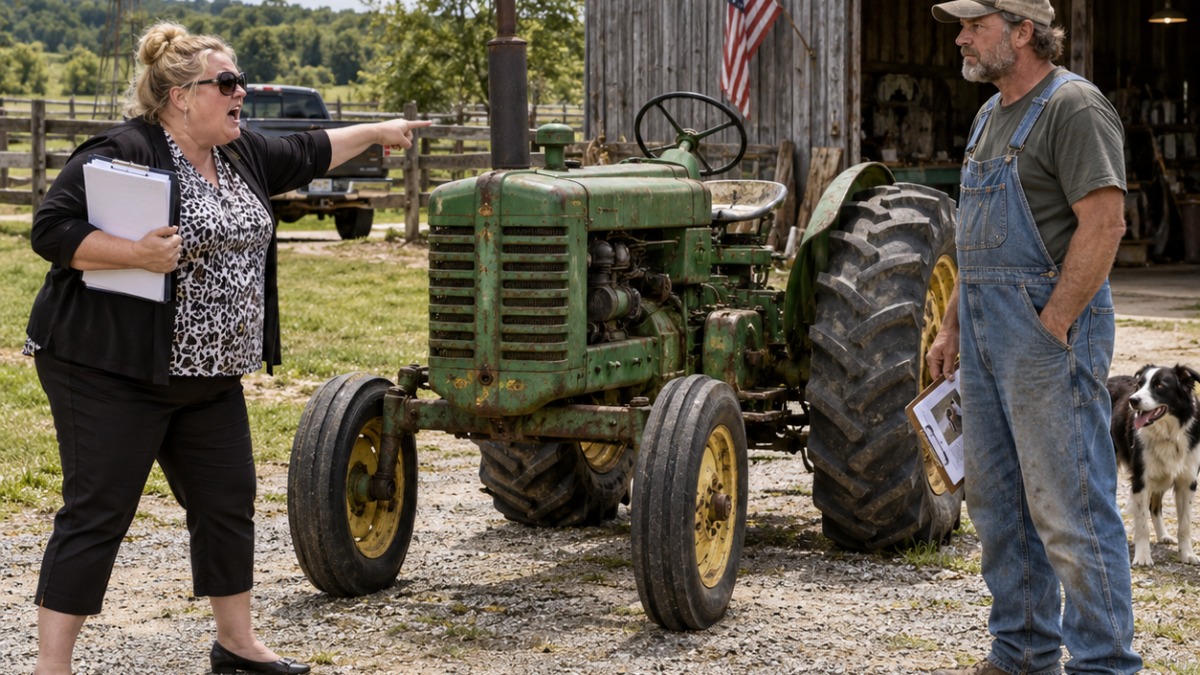
PART 2
The next morning, I read every page of the Oak Meadows governing documents again.
Slowly.
No assumptions.
No anger.
Just a yellow highlighter, a cup of coffee, and eighty pages of the kind of legal language designed to make ordinary people quit after paragraph three.
I had learned long ago that quitting early was where bad systems gained most of their power.
Bylaw 7.14(B), the section Karen cited, prohibited inoperable, unlicensed, or commercial vehicles from being stored in visible residential areas.
That sounded bad until you broke it apart.
My John Deere was licensed.
I had the antique registration.
It was operable.
I had started it less than two weeks earlier.
And it was not a commercial vehicle being stored for business use.
It was a privately owned antique undergoing restoration.
Then came Clause 9.03.
“Classic, antique, collectible, or hobbyist vehicles undergoing active restoration may be maintained on residential property with written approval of the Architectural Review Committee.”
I read that sentence three times.
Sarah came into the kitchen.
“You found something.”
“Maybe.”
“Good maybe?”
“Interesting maybe.”
She sat across from me.
I showed her the clause.
“So you just apply for approval?”
“In theory.”
“In practice?”
“I need to know who sits on the committee.”
That turned out to be more interesting.
Oak Meadows’ Architectural Review Committee was supposed to contain three members.
Chair.
Member.
Member.
According to meeting records, two members had resigned six months earlier.
One over what the minutes called “procedural disagreements.”
The other because of “personal scheduling conflicts.”
No replacements had been appointed.
The only remaining committee member was Karen.
Sarah stared at me.
“So she’s deciding her own complaints?”
“Looks like it.”
“Is that allowed?”
“Not according to the composition requirement.”
I continued reading.
Requests were supposed to be reviewed by the committee and decided by majority vote.
Majority vote.
Of three.
Not a one-woman decree.
I started a new tab.
**GOVERNING DOCUMENTS.**
Under it went:
Bylaw 7.14(B).
Clause 9.03.
Committee composition requirements.
Board minutes showing the resignations.
Then another tab:
**TRACTOR STATUS.**
DMV antique registration.
Insurance records.
Photographs.
Restoration plan.
Maintenance receipts.
And the appraisal.
I had almost forgotten how strange that document looked beside Karen’s letters.
**1948 JOHN DEERE MODEL M**
Documented family ownership.
Original major components.
Unrestored but substantially complete.
Rare provenance.
Potential collector/auction value following proper restoration and depending on market conditions:
**UP TO APPROXIMATELY $120,000.**
I didn’t believe that number when the appraiser first told me.
Grandpa bought the tractor as a tool.
He never treated it like an investment.
He would have laughed until he coughed if someone told him his little Model M might one day be discussed like artwork.
But collector markets are strange.
Provenance mattered.
Originality mattered.
Family documentation mattered.
Condition mattered.
And mine had all of those.
I photographed the appraisal.
Printed two copies.
Put the original in a fireproof box.
Then I walked outside and started the tractor.
It took two tries.
The old engine coughed.
Shuddered.
Then settled into that unmistakable two-cylinder rhythm.
Pop-pop.
Pop-pop.
Pop-pop.
I filmed the entire thing.
Sarah stood near the garage holding Leo’s hand.
Leo’s eyes widened.
“That’s Grandpa’s tractor?”
“Great-Grandpa’s.”
“Can I ride it?”
“When you’re older.”
“How old?”
“Forty.”
Sarah laughed.
“That seems reasonable.”
I let the engine run for five minutes.
Then shut it down.
Proof.
Operable.
Not abandoned.
Not junk.
I was feeling better.
That lasted until the mail arrived.
Another violation notice.
Another $500.
The running total:
$1,500.
Then another the next day.
Then another.
Karen was not waiting for process.
She was billing me into submission.
I walked across the street one final time.
Not angry.
I had paperwork in my hand.
Karen answered holding a tiny white dog that barked at me as though it had been appointed deputy HOA president.
“Mr. Donovan.”
“Karen.”
“If you’re here to argue—”
“I’m here to give you documentation.”
I held out the antique registration.
She didn’t take it.
“The tractor is registered. It runs. I have video. And your own Clause 9.03 specifically provides for antique vehicles undergoing restoration.”
Her smile disappeared.
“That clause requires approval.”
“Correct.”
“And you don’t have approval.”
“I’d like to submit an application.”
“No.”
I stared at her.
“No?”
“Denied.”
“You haven’t seen the application.”
“I’ve seen the tractor.”
“The governing documents require committee review.”
“I am the committee chair.”
“The committee requires three members.”
Her eyes sharpened.
“I know what the documents say.”
“Good. Then you know two seats are vacant.”
“That doesn’t suspend enforcement.”
“It does create an issue with majority review.”
Her little dog barked again.
Karen adjusted it against her chest.
“You are trying to hide behind technicalities because you refuse to follow community standards.”
“It’s not a technicality when the rule describes the exact thing you’re trying to fine.”
“It is an eyesore.”
“That’s an opinion.”
“My opinion matters.”
“That may be the most honest thing you’ve said.”
She stepped closer.
“Do you have any idea how many people have worked to keep Oak Meadows desirable?”
“I do.”
“How much property values matter?”
“I do.”
“And you think your military service lets you turn your driveway into a junkyard?”
That one got under my skin.
Not because she insulted me.
Because I knew exactly what she was doing.
Trying to make me angry enough to become the version of me she wanted to describe later.
Aggressive veteran.
Unstable neighbor.
Problem resident.
I looked at the little dog.
Then back at Karen.
“My service has nothing to do with this.”
“Good.”
“My property rights do.”
I placed copies of the registration, appraisal summary, and restoration clause on her porch table.
“I’m formally requesting committee review.”
She folded her arms.
“Request denied.”
“Put that in writing.”
“I don’t take orders from you.”
“No.”
I turned.
“You just keep giving me evidence.”
The next envelope arrived the following morning.
She had put it in writing.
**REQUEST DENIED.**
No committee vote.
No hearing.
No explanation beyond:
“Vehicle remains aesthetically incompatible with Oak Meadows community standards.”
I almost thanked her.
Instead, I filed it.
That evening, Frank Kowalski came over carrying a six-pack.
Frank lived diagonally across from us.
Retired Marine Gunnery Sergeant.
White flat top.
Broad shoulders.
Sixty-eight years old.
Still carried himself like he expected somebody to inspect his boots.
He nodded toward the John Deere.
“Ugly thing.”
I stared at him.
He grinned.
“Relax, Devil Dog.”
“Not funny.”
“Little funny.”
He handed me a beer.
We sat on the patio.
He examined the stack of notices.
“How much now?”
“Two thousand five hundred.”
He whistled.
“Karen’s ambitious.”
“That’s one word.”
“She tried to fine me over my flag last year.”
“I heard.”
His expression hardened.
“She said it was excessively faded.”
I knew the flag.
It had flown over a base in Fallujah.
“You told her?”
“I told her exactly where it had flown.”
“What happened?”
“She suddenly discovered historical context.”
I smiled.
Frank took a drink.
“She doesn’t want rules.”
“What does she want?”
“Submission.”
That word fit.
“She picks people she thinks won’t make noise.”
“Why me?”
Frank looked toward the tractor.
“Maybe because you did.”
I shook my head.
“I’ve barely spoken at meetings.”
“Exactly.”
“Then why?”
“You’re quiet. Young family. Mortgage. Kid starting school.”
His eyes met mine.
“She probably figured five hundred a day would scare Sarah before it scared you.”
That angered me more than anything Karen had said.
Because it was working.
Sarah was scared.
So was I.
Frank continued.
“Mrs. Gable paid her.”
“Who?”
“Widow around the corner.”
“For what?”
“Bird feeder.”
I laughed.
Frank didn’t.
“Memorial gift from her kids after her husband died.”
My smile vanished.
“What was wrong with it?”
“Wrong color.”
He took another drink.
“Rodriguez family lost their basketball hoop.”
I looked toward their house.
“Portable one?”
“Yep.”
“Kids used it every day.”
“Karen called it a temporary structure.”
“How do you know all this?”
“Because I pay attention.”
He leaned back.
“Karen survives because everybody thinks their problem is embarrassing and small.”
That sentence landed.
Bird feeder.
Basketball hoop.
Antique tractor.
Individually ridiculous.
Together?
Pattern.
Frank tapped my binder.
“You want to beat her?”
“I want her off my back.”
“That’s not what I asked.”
I thought.
“Yes.”
“Then don’t fight the tractor.”
“What do I fight?”
“The system she built around herself.”
I smiled.
“You rehearsed that?”
“For twenty years.”
He raised his bottle.
“Flank her.”
The certified letter from the HOA’s attorney arrived the next Tuesday.
Seven thousand dollars.
Unpaid fines.
Thirty days to cure.
Then lien proceedings.
Sarah read it once.
Then again.
Her hand began trembling.
“A lien?”
“Yes.”
“They could put one on the house?”
“They can try.”
“Can they take it?”
“Eventually, under the wrong circumstances, HOA liens can become serious.”
That was all she heard.
Her face changed.
“Mike.”
I reached for her hand.
“We’re not there.”
“But they’re threatening our house over a tractor.”
“I know.”
“We have Leo.”
“I know.”
“We can put the tractor in storage.”
“No.”
She pulled her hand away.
For the first time, she looked angry at me instead of Karen.
“Why?”
I didn’t answer fast enough.
“Because of your grandfather?”
“Yes.”
“Mike, I loved your grandfather too.”
“I know.”
“But he would not want us risking our home over a machine.”
“It’s not just the machine.”
“Then what is it?”
“If she can invent authority because we’re scared, what happens next time?”
“That sounds noble.”
“It isn’t noble.”
“Then what is it?”
I looked at the letter.
“It’s a threat against our home designed to make us surrender something she has no right to take.”
Sarah’s eyes filled.
“And if you’re wrong?”
That question hurt.
Not because she doubted me.
Because she needed me to be more certain than I felt.
I knelt beside her chair.
“If I’m wrong, we move it.”
“When?”
“When someone with actual authority proves I’m wrong.”
“Not after we lose the house.”
“Before.”
She stared.
“You promise?”
“Yes.”
I meant it.
Being stubborn is not the same as being reckless.
I needed professional help.
Frank gave me the name.
David Chen.
Former Army JAG.
Now real estate and association law.
His office occupied the second floor of a modest brick building downtown.
I placed my binder on his conference table.
He opened it.
Read.
Slowly.
Twenty minutes passed.
He barely spoke.
Then:
“Who built this?”
“I did.”
“You were military?”
“Marines.”
“That explains the page protectors.”
I smiled.
“What do you think?”
“I think Karen Miller made several mistakes.”
“How many?”
“Enough.”
He turned to Clause 9.03.
“This is strong.”
“The antique exception?”
“Yes.”
“Then fines go away?”
“Not automatically.”
My optimism cooled.
“Why?”
“Because associations can regulate visible restoration projects under properly adopted covenants.”
“But?”
“But yours appears operable, licensed, documented, and specifically contemplated by another section.”
He turned another page.
“And the committee problem matters.”
He looked at the denial.
“She rejected your application alone?”
“Yes.”
“No meeting?”
“No.”
“No other members?”
“Seats vacant.”
David nodded.
“Procedural mess.”
Then the attorney letter.
His expression changed.
“This law firm.”
“What?”
“Name?”
I told him.
He typed.
A minute later:
“Karen’s nephew is a partner.”
I leaned forward.
“You’re kidding.”
“No.”
“Is that illegal?”
“Family relationship isn’t automatically illegal.”
“Conflict?”
“Potentially, depending on disclosure and procurement.”
He tapped the letter.
“But it tells me we should look deeper.”
“What do you recommend?”
“First, we stop the lien threat.”
“How?”
“I send them a cease-and-desist and notice of dispute.”
“Then?”
“We request enforcement records.”
“Why?”
“To establish selective enforcement.”
He turned toward the financial section of the HOA portal I had printed.
“Then financials.”
I frowned.
“This is about a tractor.”
“No.”
David smiled slightly.
“It stopped being about the tractor when they threatened your house.”
I thought about Frank.
Flank her.
David continued.
“People who centralize this much authority tend to make mistakes elsewhere.”
“You think she’s stealing?”
“I think I don’t accuse anyone before records.”
Fair.
“What will this cost?”
He quoted the fee.
My stomach tightened.
We could afford it.
Barely.
But it would hurt.
David noticed.
“Half now.”
I looked up.
“Half when this resolves.”
“Why?”
“Because I’ve seen this type of case.”
He closed the binder.
“And because anybody who threatens a family’s home while ignoring their own rules irritates me.”
I shook his hand.
For the first time since Karen’s first notice, I drove home feeling like the ground beneath us was solid again.
Sarah was at the kitchen counter.
“Well?”
“We have a case.”
Her shoulders dropped.
“Really?”
“Yes.”
“How good?”
“Good enough that David took half his fee later.”
“That sounds like a lawyer’s definition of romance.”
I laughed.
She came around the counter and hugged me.
“Mike.”
“Yeah?”
“Don’t let this become about winning.”
I held her.
“What should it be about?”
“Getting our life back.”
That became the rule.
The next phase was quieter.
I walked more.
Talked less.
Listened.
Mrs. Gable lived four houses down.
Eighty.
Widow.
Soft voice.
Her front window contained framed photographs of a man named Henry.
Frank introduced us.
She showed me the bird feeder.
Stored in a closet.
Bright red roof.
Blue sides.
Hand-painted cardinals.
“My children gave it to me after Henry died.”
“Why?”
“He loved birds.”
She showed me Karen’s fine.
$100.
“Unapproved exterior decorative object.”
The feeder’s colors were “inconsistent with approved neighborhood palette.”
Mrs. Gable had paid.
“Why didn’t you appeal?”
She looked embarrassed.
“I didn’t want trouble.”
“You weren’t wrong.”
“I know that now.”
She touched the feeder.
“At the time I thought maybe everybody else wanted it gone.”
That hurt.
“Did anyone complain?”
“Karen said residents had.”
“Names?”
“No.”
Same pattern.
The Rodriguez family produced their basketball-hoop notices.
Then a military family showed me a fine for moving boxes visible inside an open garage.
Then a retired teacher:
clover.
Then welcome mats.
Treehouse.
Garden decoration.
The absurdity stopped being funny after the tenth story.
Frank was right.
Karen targeted people who would rather pay fifty dollars than spend three nights fighting fifty dollars.
The economics favored her.
Every small surrender trained the next person to surrender faster.
A former board member named Tom Reeves gave us the bigger picture.
We met at a diner.
He had resigned two years earlier.
“She controls everything.”
“Officially?”
“No.”
He stirred coffee.
“That’s the problem.”
He described email votes.
Incomplete notices.
Minutes altered to sound cleaner than meetings felt.
Board members who questioned expenses were called obstructionists.
Committee volunteers resigned.
Karen gradually replaced them with people who rarely challenged her.
Then Tom said:
“Watch the money.”
David had already said the same.
“What specifically?”
“Beautification.”
“Landscaping?”
“Signs. Mulch. Flowers. Tree trimming.”
“Overpriced?”
“I thought so.”
“Vendor?”
“Evergreen Landscaping.”
I wrote it down.
Tom leaned closer.
“Karen pushed them constantly.”
“Competitive bids?”
“Rarely.”
“Why didn’t you stop it?”
His expression changed.
“I tried.”
He looked toward the window.
“Then she made every meeting about whether I supported property values.”
That phrase again.
Property values.
The magical incantation that made questioning spending sound like disloyalty.
David filed formal records requests.
Violation histories.
Meeting minutes.
Board votes.
Financial statements.
Vendor contracts.
Invoices.
The response from Karen’s nephew’s firm was hostile.
But they complied enough to create problems for themselves.
David drafted our formal challenge.
Certified letters went to:
Karen.
Every board member.
Management company.
HOA counsel.
The first section:
tractor.
Operable.
Registered.
Antique.
Appraised.
Restoration exception.
Procedural defects.
The second:
selective enforcement.
Documented examples.
No names yet.
The third:
request for open meeting.
The fourth:
financial-record demand.
Karen responded by email.
I printed it immediately.
**You want a public meeting? Fine. We will settle this in front of the entire community. Be prepared to be embarrassed, Mr. Donovan.**
Sarah read it.
“She actually wrote that?”
“Yes.”
“Your lawyer is going to love her.”
“He already does.”
The daily fines stopped.
That was the first crack.
Then the financial records became available.
David brought in Maria Patel, a forensic accountant.
Not because we had proof of theft.
Because we needed someone who could distinguish sloppy bookkeeping from meaningful misconduct.
We spent six hours inside a windowless room at the management company.
Invoices.
Checks.
Budgets.
Bank statements.
At first:
nothing.
Pool service.
Insurance.
Electricity.
Maintenance.
Reserve transfers.
Then Maria stopped.
“Evergreen Landscaping.”
I looked over.
“What?”
“Round invoices.”
“Meaning?”
“Five thousand.”
Next.
“Five thousand.”
Next.
“Ten thousand.”
Another.
“Fifteen.”
“What’s wrong with round numbers?”
“Nothing by itself.”
She flipped pages.
“But detailed landscaping projects usually have detail.”
Labor.
Material.
Equipment.
Quantities.
These did not.
Just descriptions.
**SPRING BEAUTIFICATION — $12,000.**
**ENTRANCE ENHANCEMENT — $18,000.**
**TREE MAINTENANCE — $9,500.**
Across two years:
more than $80,000.
“Competing bids?” I asked.
Maria searched.
None.
“Board approvals?”
Sparse.
Some minutes said only:
“President presented landscaping proposal. Approved.”
No alternative pricing.
No conflict disclosure.
I searched Evergreen Landscaping LLC on the state business registry.
Owner:
Paul Miller.
I stared.
Karen Miller.
Paul Miller.
Could still be coincidence.
I checked social media.
Family photographs.
Christmas.
Birthday.
Caption:
**Happy birthday to my wonderful brother-in-law Paul!**
I turned my phone toward Maria.
She stared.
“Oh.”
“That bad?”
“Potential conflict of interest.”
“Illegal?”
“Depends.”
“You accountants love that word too.”
“We enjoy staying employed.”
She made copies.
All of them.
Then compared market pricing where possible.
Several projects appeared significantly above normal ranges.
Not proof of embezzlement.
Enough for serious questions.
David was thrilled in the deeply unsettling way lawyers become thrilled by terrible documents.
“This changes the meeting.”
“What’s our objective?”
“Truth.”
“David.”
“And removal if residents choose.”
“Better.”
“We don’t engineer the vote.”
“No.”
“We present evidence.”
“What about my tractor?”
He smiled.
“Karen will present that for us.”
Two weeks later, the community center was packed.
Largest meeting Oak Meadows had ever seen.
Karen sat at the front table in a dark blazer.
Two board members beside her.
George and Alan.
Both looked nervous.
Frank sat beside me.
Mrs. Gable.
The Rodriguez family.
Sarah.
Leo stayed with my sister.
I didn’t want him there.
Not because I expected danger.
Because children shouldn’t watch adults enjoy destroying each other.
My binder rested on my knees.
Karen called the meeting.
Then projected a photograph.
My tractor.
Worst possible angle.
Cloudy day.
Faded paint exaggerated.
She spoke for ten minutes.
Eyesore.
Abandoned equipment.
Property values.
Uniform standards.
Community expectations.
Then:
“Mr. Donovan apparently believes his personal attachment to an old farm machine places him above the same rules everyone else follows.”
I stood.
“No.”
She smiled.
“Then perhaps you’d like to explain.”
“I’d love to.”
I walked forward.
“My grandfather bought that tractor new in 1948.”
A photograph appeared on the projector.
Grandpa.
Young.
Standing beside the John Deere on his Ohio farm.
I had given David the image beforehand.
“He came home from war and used that machine to build a farm.”
Next photo.
Grandpa older.
Me as a boy beside the tractor.
“He taught me mechanics on it.”
I turned toward the room.
“When he died, the farm was sold. I kept the tractor.”
Then the DMV registration.
“Registered antique.”
Video still.
“Operable.”
Clause 9.03.
“Specifically covered by your antique-restoration provision.”
Then the committee record.
“Denied without the required committee structure or majority review.”
Karen interrupted.
“This is emotional manipulation.”
I looked at her.
“You called it abandoned.”
“Because it is.”
I clicked one final slide.
The appraisal.
A number appeared.
**ESTIMATED AUCTION POTENTIAL: UP TO $120,000, DEPENDING ON RESTORATION AND MARKET CONDITIONS.**
The room erupted.
“What?”
“That thing?”
“Hundred twenty thousand?”
Karen stared at the screen.
For perhaps the first time, she looked at the tractor as something other than ugly.
I continued.
“I’m not telling you that because value determines whether I deserve fair process.”
The room quieted.
“If it were worth twelve hundred dollars, the rules would still matter.”
David smiled from his seat.
Good line.
“But Karen’s entire case depends on calling this junk.”
I looked toward the screen.
“It isn’t.”
Then I changed direction.
“And this meeting isn’t only about my tractor.”
Mrs. Gable stood.
Her voice trembled.
She held the bird feeder.
The room went silent.
“My husband Henry died last year.”
She told them.
Cardinals.
Gift.
Fine.
She looked at Karen.
“I paid because you told me neighbors complained.”
Karen shifted.
“I never identified specific complainants.”
Mrs. Gable nodded.
“That’s true.”
Then:
“I asked fourteen neighbors this week.”
Pause.
“None complained.”
A murmur.
The Rodriguez family stood.
Basketball hoop.
The military family.
Boxes.
Teacher.
Clover.
Story after story.
Karen’s face hardened.
“This is a coordinated attack.”
David stood.
“My name is David Chen, counsel for Michael Donovan.”
Karen snapped:
“This meeting is about his tractor.”
“No.”
His voice remained calm.
“This meeting is about governance.”
He connected his laptop.
First invoice.
Evergreen Landscaping LLC.
$12,000.
Second.
$18,000.
More.
Then total:
more than $80,000.
Karen’s face changed.
David displayed the business registration.
**PAUL MILLER — OWNER.**
“Mrs. Miller, what is your relationship to Mr. Paul Miller?”
Silence.
“Karen?”
“My brother-in-law.”
The room detonated.
Shouts.
Questions.
George turned toward her.
“You told us Evergreen was independent.”
“They are independent.”
“From your family?”
“That has nothing to do with their work.”
David raised a hand.
“We are not alleging that family connection alone proves wrongdoing.”
That was important.
“But these contracts appear to have been awarded without competitive bidding and without documented disclosure of the relationship.”
George looked sick.
“I didn’t know.”
Karen turned on him.
“You approved them!”
“You presented them as best-value vendors.”
“They were!”
“Based on what bids?”
No answer.
Frank stood.
He didn’t yell.
That was why people listened.
“Everybody sit down.”
Strangely, they did.
“Shouting won’t fix anything.”
He looked at the board.
“I move for a vote of no confidence in President Karen Miller and an immediate independent audit.”
Someone seconded.
Then another.
Karen grabbed the microphone.
“You cannot remove me based on slander from a disgruntled homeowner!”
David answered:
“The homeowners decide that.”
Karen glared at him.
Frank looked toward the board.
“Follow the bylaws.”
For once, the bylaws worked against her.
The vote happened.
Nearly unanimous.
Karen lost.
Fifteen minutes.
That was all it took to remove a power structure she had spent years building.
Not because I was brilliant.
Because power dependent on fear can disappear remarkably fast when people stop being afraid together.
Karen stood.
For a moment I thought she might scream.
Instead, she gathered her papers.
Her hand shook.
She looked at me.
“This is your fault.”
I could have answered.
I didn’t.
She left.
The next morning, the interim board rescinded every fine against my property.
Seven thousand dollars.
Gone.
Formal apology.
Written acknowledgement that the antique-vehicle provision had been mishandled.
Sarah read the letter.
Then sat down.
“Is it really over?”
“The tractor part.”
She started crying.
Not dramatic.
Quiet relief.
I held her.
“I’m sorry.”
“For what?”
“Letting it get this far.”
“You didn’t make it get this far.”
“I could have moved the tractor.”
She pulled back.
“No.”
That surprised me.
“You wanted me to move it.”
“I wanted to stop being afraid.”
She looked toward the garage.
“That’s different.”
I kissed her forehead.
Our life was starting to come back.
For Oak Meadows, the larger story was only beginning.
The interim board authorized a five-year forensic audit.
Maria Patel led it.
What she found went beyond inflated landscaping work.
Some HOA funds had been used through transactions that lacked proper authorization.
There were payments tied to Evergreen that could not be supported with adequate invoices.
Certain reimbursements led back toward Karen.
Others appeared connected to personal expenses.
The matter went to the district attorney.
I stayed out of that part.
Important boundary.
I had exposed records.
Professionals investigated.
That distinction mattered.
The audit also reviewed Karen’s enforcement history.
Dozens of penalties lacked consistent documentation.
Some were valid.
Many were not.
Residents demanded refunds.
The board created a review process.
Mrs. Gable received her hundred dollars back.
She did not care about the money.
She put the bird feeder outside that afternoon.
Frank and I stood across the street.
Within twenty minutes, a cardinal landed on it.
Mrs. Gable saw it through the window.
She covered her mouth.
Frank looked away.
So did I.
Some victories are worth more than the check attached to them.
The Rodriguez boys got another basketball hoop.
Bigger.
Their father installed it properly at the edge of the driveway.
The first afternoon they played, half the neighborhood’s kids joined them.
I walked past.
Mr. Rodriguez tossed me the ball.
“Take a shot.”
“I’m terrible.”
“Then Karen really did win.”
I shot.
Missed everything.
Children booed.
Community restored.
Frank became HOA president after the special election.
He protested.
Loudly.
Everyone elected him anyway.
His acceptance speech lasted twenty-one seconds.
“I don’t want this job. That’s probably why you idiots gave it to me. First rule: nobody gets fined because somebody on the board had a bad morning. Meeting adjourned.”
People loved him.
Of course, governing turned out to be harder.
Frank eventually learned residents could argue for thirty minutes about mailbox posts.
He called me afterward.
“Mike.”
“Yes?”
“I owe every officer I ever complained about an apology.”
“What happened?”
“Three shades of black.”
“What?”
“We spent half an hour debating three shades of black.”
“HOA leadership.”
“Kill me.”
But he did the work.
Committees were rebuilt.
Real members.
Real votes.
Financial disclosure.
Competitive bids for large contracts.
Appeal rights.
Warnings before fines whenever reasonable.
Rules simplified.
The “whimsical welcome mat” language disappeared.
Frank held a small ceremony when they deleted it.
He fed the printed page into a shredder.
David Chen objected.
“Keep official records.”
Frank stopped halfway.
Lawyers ruin everything.
Then came Karen’s case.
The district attorney eventually filed fraud and embezzlement-related charges against Karen and Paul.
The allegations centered on improper HOA payments and financial benefits tied to the family-connected landscaping arrangements.
Both ultimately accepted plea agreements.
Karen received probation.
Restitution exceeding fifty thousand dollars.
And a prohibition on serving in fiduciary board positions.
Paul also faced financial penalties and restitution obligations.
I did not attend sentencing.
Frank did.
“Why?” I asked afterward.
“Community deserved representation.”
“How was it?”
“Sad.”
That surprised me.
“Sad?”
“Yeah.”
Frank sat on my porch.
“No clipboard. No fancy glasses. Just a woman at a table hearing a judge explain how much money she owed.”
He shook his head.
“People think consequences feel like fireworks.”
“They don’t?”
“Mostly paperwork.”
I understood.
Karen’s house eventually went up for sale.
The day the moving truck arrived, I was outside polishing a chrome piece from Grandpa’s tractor.
She carried boxes.
Robert carried furniture.
No crowd.
No reporters.
Nothing theatrical.
Karen noticed me.
We looked at each other across the street.
I remembered her first sentence.
“That pile of rust is an eyesore.”
I could have pointed toward the tractor.
Could have reminded her of the appraisal.
Could have smiled.
Instead, I nodded.
She looked away.
Then got into her car.
Drove off.
That was the last time I ever saw her.
I felt no joy.
Relief, yes.
Satisfaction, maybe.
But watching someone lose everything is different when you actually see the boxes.
Karen had hurt people.
She deserved accountability.
But accountability had arrived.
I didn’t need to become cruel to prove she had been.
Sarah came outside.
“She gone?”
“Yes.”
“How do you feel?”
I considered lying.
“Tired.”
She put her arm around me.
“Good.”
“Good?”
“You’re supposed to be tired after carrying something heavy.”
She looked toward the tractor.
“Now fix that thing.”
She was right.
For months, the John Deere had been evidence.
Exhibit.
Headline.
Symbol.
I wanted it to be Grandpa’s tractor again.
So that winter, restoration began.
Frame-off.
Every bolt.
Every panel.
Every component.
I photographed everything before disassembly.
Tagged parts.
Bagged fasteners.
Made diagrams.
The garage became organized chaos.
Leo sat on a stool watching.
“What does this do?”
“Governor linkage.”
“What does that do?”
“Controls engine speed.”
“What does that do?”
“Why don’t you hand me the half-inch wrench?”
“That’s not an answer.”
“You’re five.”
“So?”
Sarah stood in the doorway.
“He gets that from you.”
Grandpa had taught me with patience.
I tried to do the same.
Some parts cleaned beautifully.
Others needed repair.
A few had to be replaced.
I resisted modern upgrades when they changed character.
The point was not making the tractor new.
It was bringing back what had always been there.
Frank visited constantly.
Usually with beer.
Usually offering criticism.
“That paint prep looks terrible.”
“You haven’t seen the paint prep.”
“I’m preparing you emotionally.”
The Rodriguez boys came over too.
Carlos and Mateo.
Their basketball hoop had been restored to its proper place.
They became fascinated by the tractor.
I gave them sandpaper.
Showed them how to work slowly.
“With the grain.”
“There’s grain on metal?”
“Figure of speech.”
They sanded one fender for almost an hour.
Then Carlos asked:
“Is this the hundred-twenty-thousand-dollar tractor?”
“Maybe.”
“What if we scratch it?”
“You are scratching it.”
His eyes widened.
“On purpose.”
“Oh.”
I laughed.
That appraisal number had become neighborhood mythology.
People started saying the tractor was worth exactly $120,000.
It wasn’t that simple.
Appraisals aren’t guarantees.
Auction value depends on restoration quality, collector demand, provenance, timing.
I corrected everyone.
Nobody listened.
To the neighborhood, it was the $120,000 tractor.
To me, it remained Grandpa’s.
One Saturday, I opened an old toolbox from the farm.
Inside were Grandpa’s greasy wrenches.
A spark-plug gauge.
Cotter pins.
A folded cloth.
And an envelope.
I had never noticed it.
My name on front.
Michael.
Grandpa’s handwriting.
My hands shook.
I sat on the garage floor.
Opened it.
The letter was short.
Grandpa had written it during his last year.
He said he knew the farm would probably be sold.
He understood.
Land changes.
Families move.
Time does what time does.
Then:
**If you keep one thing, keep whatever reminds you where you came from. Doesn’t have to be the tractor. Doesn’t have to be anything expensive. Just keep something that makes you remember that nobody in this family ever got anywhere by quitting when work became inconvenient.**
I stopped reading.
Leo came closer.
“Dad?”
“I’m okay.”
“You’re crying.”
“Dust.”
“There’s no dust.”
“Go find your mother.”
He ran.
Smart kid.
The final line said:
**Take care of your family before you take care of any machine. But if you can do both, that old Deere still has some years in her.**
I sat there a long time.
The irony almost hurt.
I had spent months defending the tractor because I believed Grandpa would expect me to.
His letter reminded me Sarah and Leo mattered more.
Maybe Sarah had been right to ask whether the fight had become too much.
Maybe I had been right not to surrender.
Both things could be true.
When Sarah came in, I handed her the letter.
She read it.
Then looked at me.
“Your grandfather was smarter than you.”
“Clearly.”
She pointed to the sentence.
“Take care of your family first.”
“I see it.”
“Just making sure.”
I pulled her close.
“I’m sorry you were scared.”
“I’m sorry I asked you to give it up.”
“You were protecting us.”
“So were you.”
That mattered.
Not every disagreement inside a marriage needs a winner.
Sometimes two people are standing on opposite sides of the same fear.
By spring, the frame was clean.
Engine rebuilt.
Transmission inspected.
Steering tightened.
Sheet metal straightened.
Then paint.
That John Deere green changed everything.
For months, the tractor had looked tired.
After the first proper coat, I stood staring.
Grandpa’s tractor was coming back.
Yellow wheels followed.
Chrome polished.
Decals carefully applied.
Seat restored.
Every piece returned.
The first full start after reassembly happened on a Saturday morning.
Half the neighborhood appeared.
I hadn’t invited half the neighborhood.
Frank had.
Traitor.
Mrs. Gable came.
Rodriguez family.
George from the old board.
David Chen.
Even Maria Patel.
Sarah stood beside Leo.
I climbed onto the seat.
Turned fuel.
Checked neutral.
Ignition.
Cranked.
Nothing.
Frank shouted:
“Hundred twenty grand!”
Everyone laughed.
I tried again.
Cough.
Then:
Pop-pop.
Pop-pop.
Pop-pop.
The engine caught.
A cheer went up.
I swear that sound went through my chest.
For one second, I wasn’t forty-something in a suburban driveway.
I was ten years old in Ohio.
Grandpa beside me.
His hand over mine.
Fresh dirt.
Diesel.
Summer.
I gripped the steering wheel.
My vision blurred.
Sarah knew.
She put one hand on Leo’s shoulder.
I drove the tractor slowly down the driveway.
Turned.
Came back.
Frank saluted.
Ridiculous man.
Mrs. Gable clapped.
The Rodriguez boys ran beside me.
No violation notice appeared.
No clipboard.
Just neighbors.
The tractor had changed from target to gathering place.
That summer, a local antique tractor club invited me to their show.
Then came the state fair.
I almost refused.
Too much attention.
David said:
“You fought all year for people to stop calling it junk. Now show them what it is.”
So we entered.
The morning of the fair, I loaded the John Deere onto a trailer.
Sarah packed sandwiches.
Leo wore a little green cap.
At the show field, tractors stretched in rows.
Farmalls.
Fords.
Allis-Chalmers.
Deeres.
Machines older than most of the people admiring them.
Collectors stopped at mine.
Asked about documentation.
Original ownership.
Restoration.
Then the story.
“You’re the HOA tractor guy?”
Apparently that was my identity now.
“Yes.”
One elderly man studied the engine.
“Your grandfather buy it new?”
“1948.”
“You got papers?”
I showed a copy of the original purchase documentation.
He whistled.
“Keep that.”
“I plan to.”
Judging happened after lunch.
I tried not to care.
That lasted about three minutes.
Sarah caught me watching the judges.
“You’re pretending not to care.”
“I don’t.”
“You polished the same bolt four times.”
“Maintenance.”
“Mike.”
“Fine.”
Best Restored Utility Tractor.
Blue ribbon.
Then Best in Show.
When they placed the ribbon on the grille, I stopped hearing the crowd.
I saw Grandpa’s photograph in my mind.
Young.
Proud.
Hand on that same hood.
Leo tugged my shirt.
“Dad.”
“Yeah?”
“Did we win?”
“We did.”
“Is Great-Grandpa happy?”
My throat closed.
“I think so.”
The local paper photographed us.
Me.
Sarah.
Leo.
The Deere.
Blue ribbon.
Headline:
**PRIZE TRACTOR WINS BIG AFTER WINNING NEIGHBORHOOD WAR**
Cheesy.
I framed it anyway.
Hung it beside Grandpa’s old farm photograph.
Two pictures.
Seventy years apart.
Same tractor.
Different family generation.
Same pride.
The appraisal value came up again after the show.
A collector approached.
Serious buyer.
He had followed the story.
Asked whether I would consider selling.
“How serious?”
He wrote a number.
More than I expected.
Near the appraisal range.
I stared at it.
For a moment, financial logic became loud.
Mortgage.
Leo’s education.
Savings.
It was an old tractor.
Grandpa himself had written:
Family before machine.
I took the offer home.
Sarah read it.
“That’s a lot.”
“Yes.”
“Do you want to sell?”
“I don’t know.”
She folded the paper.
“Yes, you do.”
“What?”
“You know.”
“Then why ask?”
“Because you need permission not to be practical.”
I laughed.
“I don’t need permission.”
“Good.”
She handed the offer back.
“Then keep Grandpa’s tractor.”
I did.
Maybe someday Leo will sell it.
Maybe his children.
Maybe no one will care about antique tractors in fifty years.
That is not mine to decide.
My responsibility is now.
Take care of your family.
Take care of what matters.
Know the difference.
Oak Meadows continued changing.
Frank served two years as president.
Then refused re-election.
“Any man who enjoys this job should be disqualified from having it.”
That became an unofficial neighborhood rule.
Mrs. Gable’s bird feeder stayed.
Cardinals came every winter.
The Rodriguez boys got older and stopped using the basketball hoop as often.
Their parents kept it anyway.
Sometimes symbols outlive their practical purpose.
The HOA focused on boring things.
Road drainage.
Pool repairs.
Insurance.
Playground equipment.
Actual common property.
Nobody measured whimsical welcome mats.
Not officially, anyway.
The financial reforms stayed.
Major vendor contracts required competitive bids.
Family relationships disclosed.
Invoices detailed.
Resident access to records improved.
Architectural Review Committee returned to three members.
Then five.
No president chaired it automatically.
Appeals went to an independent board panel.
Those changes mattered more than Karen’s punishment.
That became clearer with time.
Punishing one bad leader does not fix the system that allowed her to become powerful.
Systems require friction.
Checks.
People willing to say:
Show me the vote.
Show me the invoice.
Show me the rule.
Show me where it says you can do that.
Karen had benefited from everyone assuming somebody else was watching.
Now people watched.
Not obsessively.
Responsibly.
A year after the state fair, Oak Meadows held a neighborhood cookout.
Frank insisted I bring the tractor.
I drove it there.
Slowly.
Children followed.
Someone placed a little sign beside it:
**1948 JOHN DEERE MODEL M — PLEASE DO NOT TOUCH WITHOUT PERMISSION.**
I added beneath it with a marker:
**NOT ABANDONED.**
People laughed.
Even George, the former board member, laughed.
He had apologized months earlier.
“I should have questioned her sooner.”
“Yes.”
I didn’t make it easy.
He nodded.
“I deserved that.”
Then I added:
“But you helped fix it.”
He looked relieved.
People can fail without being irredeemable.
George had been passive.
Cowardly at times.
But once exposed, he helped authorize the audit.
Supported reforms.
Showed up.
Not heroic.
Useful.
Communities need more useful people than heroes.
Near sunset, Mrs. Gable walked over to the tractor.
She touched the fender.
“Your grandfather would be proud.”
I smiled.
“I hope so.”
“He would.”
“How do you know?”
She looked toward the children playing near the basketball hoop.
“Because you didn’t just save this.”
She tapped the Deere.
“You made everybody else stop being afraid.”
I almost corrected her.
Then didn’t.
Maybe that was too generous.
But I understood what she meant.
I had started the fight.
Frank joined.
David knew the law.
Maria followed the money.
Residents told their stories.
Board members finally acted.
Investigators did their jobs.
No one person liberated Oak Meadows.
We did it together.
Years later, Leo became old enough to drive the tractor.
Not forty.
Sarah overruled me.
He was twelve the first time.
Large enough to reach everything safely with me beside him.
We drove on a friend’s farm.
Open field.
Low gear.
I placed my hand over his on the wheel.
Then stopped.
The gesture hit me.
Grandpa had done exactly that.
Leo looked up.
“What?”
“Nothing.”
“You’re being weird.”
“Drive straight.”
“I am.”
“You’re drifting.”
“I’m not.”
“You are.”
He sighed.
“Dad.”
Then the engine settled into its rhythm.
Pop-pop.
Pop-pop.
The smell of earth.
Warm metal.
Summer air.
Time folded.
For one impossible second, Grandpa’s hands were there too.
Not literally.
I’m not sentimental enough to claim ghosts.
But memory is powerful.
You can stand inside a moment with people who are gone if enough of the details remain.
Same wheel.
Same sound.
Same lesson.
“Listen to the engine,” I told Leo.
“What am I listening for?”
“Anything different.”
“How do I know what different sounds like?”
“You learn normal first.”
That sentence came out before I understood it.
Learn normal first.
Maybe that was everything Oak Meadows had failed to do under Karen.
People got used to abnormal.
Daily fines.
Threats.
Secret decisions.
One-person committees.
Family-connected contracts.
Because each change happened slowly.
Normal moved.
That is how unhealthy systems survive.
Not through one dramatic seizure of power.
Through small things people tolerate because fighting each one feels exhausting.
A bird feeder.
A basketball hoop.
A welcome mat.
A tractor.
Then suddenly everyone realizes normal has moved a mile.
Frank once told me Karen picked people who wouldn’t fight.
I think that was partly true.
But the deeper truth was that most people did not know a fight was happening.
They thought they were dealing with isolated annoyances.
The power came from fragmentation.
The answer was connection.
That lesson stayed with me longer than the lawsuit.
Karen became a story people told less often as years passed.
Good.
I didn’t want Oak Meadows defined forever by the worst person who had led it.
New families moved in.
Some never knew her name.
One young couple bought her old house.
Nice people.
Baby.
Golden retriever.
The husband came over one afternoon because he had heard I knew something about small engines.
Their mower wouldn’t start.
I helped.
He noticed the John Deere.
“Beautiful.”
“Thanks.”
“Neighbor told me there’s some crazy story about it.”
“There is.”
“Something about the previous owner of our house?”
I looked toward Karen’s old place.
Then his.
Different curtains.
Baby swing on the porch.
Dog toy in yard.
I could have told him everything.
Instead:
“She and I disagreed about whether this belonged here.”
He waited.
“You won?”
“I’m still here.”
He laughed.
That was enough.
People deserve the chance to live somewhere without inheriting old wars.
Karen’s history belonged in records.
Not on that family’s shoulders.
A decade after Grandpa died, I visited Ohio.
The farm no longer belonged to us.
Developers had not destroyed it.
Another farmer owned the land.
The old barn remained.
I stopped by with permission.
Stood where Grandpa’s equipment shed used to be.
The ground looked smaller than childhood.
Everything does.
The current owner, a man named Evan, came outside.
“You’re Jack’s grandson?”
“Michael.”
“Heard about the tractor.”
Of course he had.
He showed me an old nail in the barn where Grandpa once hung a grease gun.
Then a faint tire mark preserved in one old photograph.
We talked.
Before leaving, Evan gave me something.
A small green metal toolbox he had found in the loft.
Grandpa’s initials scratched underneath.
J.D.
Inside:
rusted bolts.
Old shop rag.
Nothing valuable.
I almost laughed.
A whole public fight had begun because Karen saw old metal and assumed worthless.
Now I was holding another rusty object that meant everything.
I brought it home.
Placed it beside the John Deere.
No appraisal.
No insurance rider.
No auction estimate.
Just value.
Different kind.
Sometimes people ask whether I would have fought as hard if the tractor were worth only $1,200.
Yes.
I believe that.
The $120,000 figure made the story dramatic.
It made reporters care.
It made Karen’s “pile of rust” comment look foolish.
But market value was never the reason the fight mattered.
If Grandpa’s tractor had been worth five hundred dollars, Karen still had no right to ignore fair process.
Mrs. Gable’s bird feeder was probably worth forty dollars.
Did that make her grief worth forty?
The Rodriguez hoop was cheap.
Did that make their children’s joy disposable?
Value and price are cousins.
Not twins.
Karen never understood that.
She saw property through resale.
Uniformity.
Aesthetics.
Numbers.
Grandpa saw tools through usefulness.
Care.
History.
The John Deere eventually became both.
Worth money.
Worth memory.
But only one value made me refuse to move it.
One fall evening, Sarah and I sat inside the garage after Leo had gone to bed.
The tractor gleamed under overhead lights.
She rested her feet on a stool.
“You know what I remember most?”
“What?”
“The lien letter.”
“Really?”
“I was terrified.”
“I know.”
“I thought you were choosing the tractor over us.”
That hurt even years later.
“I wasn’t.”
“I know that now.”
I waited.
“When did you know?”
“When you hired David.”
“Why?”
“Because you stopped pretending you could handle everything alone.”
Fair.
She smiled.
“You Marines are exhausting.”
“JAG lawyers are worse.”
“You weren’t JAG.”
“Exactly.”
We sat quietly.
Then:
“Would you do it again?”
I looked at the tractor.
“At first?”
“All of it.”
I thought.
“I’d call David sooner.”
“Good answer.”
“And listen to you sooner.”
“Excellent answer.”
“But I still wouldn’t move it just because Karen demanded it.”
Sarah nodded.
“I wouldn’t either.”
That surprised me.
“What changed?”
She looked toward the framed photograph of Grandpa.
“The ending.”
No.
I shook my head.
“The evidence changed.”
She smiled.
“Fine, Marine.”
We both understood.
Courage does not mean refusing every compromise.
Sometimes retreat is smart.
Sometimes moving the tractor would have been reasonable.
But surrendering because a bully manufactured fear?
That teaches the wrong lesson to everyone involved.
Especially your children.
Leo grew up with the tractor story.
Maybe too much.
His kindergarten class once had an assignment:
**Draw something important to your family.**
Other kids drew houses.
Pets.
Parents.
Leo drew a green tractor.
Above it, in shaky letters:
**MY DAD FOUGHT A LADY FOR THIS.**
Sarah kept it forever.
When he was older, he understood the story differently.
At sixteen, he helped me change oil on the Deere.
He asked:
“Was Karen really evil?”
The question surprised me.
“No.”
He looked disappointed.
“Seriously?”
“She did bad things.”
“That sounds like a dodge.”
“It isn’t.”
I wiped my hands.
“Calling people evil makes it too easy.”
“How?”
“Because then you imagine only monsters abuse power.”
He waited.
“Most people who cause damage think they have reasons.”
“Karen thought she was right?”
“Sometimes.”
“And the money?”
“Harder to justify.”
“So why not call her evil?”
“Because I want you watching behavior, not waiting for horns.”
He laughed.
“You’re weird.”
“People can smile, lead committees, talk about property values, and still make harmful choices.”
I pointed the wrench at him.
“Judge actions. Check systems. Don’t assume authority equals integrity.”
He nodded.
“Got it.”
Then:
“Can I drive?”
“No.”
“I’m sixteen.”
“You’re reckless.”
“You let me drive at twelve.”
“I was reckless.”
He smiled.
The story kept teaching me new things long after Karen disappeared.
Accountability without obsession.
Memory without bitterness.
Boundaries without isolation.
Community without conformity.
Those are harder than winning a meeting.
Anyone can enjoy a villain falling.
Building something better afterward takes patience.
Oak Meadows eventually became exactly what an HOA should probably be.
Mostly boring.
When the pool pump failed, they fixed it.
When storm drainage backed up, they hired professionals.
When somebody wanted to repaint a house bright purple, the architectural committee had an actual process.
They compromised on a less radioactive purple.
Democracy survived.
Frank moved away eventually to be closer to his daughter.
At his last cookout, Oak Meadows gave him a plaque.
He hated it.
I gave him something better.
A small framed photograph.
The night of Karen’s removal.
Frank standing in the aisle.
Finger raised.
Motion of no confidence.
On the back I wrote:
**FLANK HER.**
He laughed.
“Damn right.”
Then he became serious.
“You know what bothers me?”
“What?”
“We waited.”
“For?”
“All of us.”
He looked toward Mrs. Gable’s house.
“Karen didn’t become Karen overnight.”
“No.”
“We let little things go.”
“Yes.”
He nodded.
“That’s on us too.”
Not equally.
Victims are not responsible for abuse inflicted on them.
But communities do have responsibilities to one another.
To notice.
To ask.
To make systems transparent.
To not look away because today’s unfair fine belongs to somebody else.
That became perhaps the most valuable thing Oak Meadows learned.
When a new homeowner received a questionable violation years later, three neighbors helped her appeal.
No uprising.
No scandal.
Just procedure working.
That is success.
Preventing a story before it becomes dramatic.
The 1948 John Deere still sits in my garage.
Not under a tarp.
Not hidden.
Polished.
Maintained.
Driven occasionally.
Insurance value updated.
Every now and then, collectors contact me.
Offers come.
Some impressive.
I decline politely.
One day, maybe the answer changes.
Objects should not become prisons either.
Grandpa would hate that.
For now, it belongs here.
Near the framed state fair ribbon.
Near Leo’s kindergarten drawing.
Near Grandpa’s farm photograph.
Near the toolbox from Ohio.
Four objects.
Four kinds of value.
Money.
Achievement.
Family.
Memory.
Karen had looked at one of them and seen only rust.
That was her mistake long before the financial scandal.
She assumed appearance told her worth.
It didn’t.
The old machine had spent decades under sun and rain.
Paint faded.
Metal oxidized.
But underneath, the structure remained.
Sound.
Repairable.
Strong.
Oak Meadows turned out to be similar.
Karen’s leadership damaged it.
Fear spread.
Trust corroded.
But the neighborhood itself was not broken beyond repair.
Once people stripped away the bad processes, replaced what failed, and rebuilt what mattered, community came back.
Maybe that was why restoring the tractor felt so satisfying.
The work paralleled everything else.
Disassemble.
Inspect.
Clean.
Repair.
Replace only what cannot be saved.
Rebuild carefully.
Test.
Then listen.
Pop-pop.
Pop-pop.
Normal again.
Years after the fight, Mrs. Gable died peacefully at ninety-one.
Her children sold the house.
Before they did, one daughter came to see me.
She carried the bird feeder.
“Mom wanted you to have this.”
I shook my head.
“It belongs with your family.”
“She wrote your name on the bottom.”
I turned it over.
In faded marker:
**FOR MIKE — THANK YOU FOR PUTTING THE BIRDS BACK.**
That nearly broke me.
I accepted.
The feeder now hangs outside my workshop.
Cardinals visit.
Sometimes while I’m working on the John Deere.
The bright colors Karen once considered unsuitable have faded.
I refuse to repaint it.
Some wear should remain.
Evidence that something lived.
One morning, a cardinal landed while Leo—now grown—was visiting.
He pointed.
“That the famous feeder?”
“Yes.”
“Worth $120,000 too?”
“More.”
He laughed.
Then stopped.
“You’re serious.”
“Completely.”
He understood.
Price is easy.
Worth takes longer.
And that is ultimately what Karen’s $500-a-day fine taught me.
The tractor had an auction estimate.
The house had a market value.
The HOA had reserves.
Karen had invoices.
Everything could be assigned a number.
But the things that mattered most did not fit neatly in columns.
Sarah feeling safe in her own home.
Leo learning not to surrender to intimidation.
Mrs. Gable watching cardinals again.
The Rodriguez kids playing basketball.
Frank leaving behind a fairer board.
Neighbors trusting each other enough to speak.
Grandpa’s hand remembered on an old steering wheel.
No appraiser could price those.
On the anniversary of the state fair win, I drove the John Deere through Oak Meadows.
Not a parade.
I was headed to a local tractor club event.
But neighbors came outside anyway.
Kids waved.
Someone shouted:
“Hey, Mike! That junk still running?”
I recognized George.
I raised one hand.
“Barely!”
The engine answered for me.
Pop-pop.
Pop-pop.
At the end of the street, I passed Karen’s old house.
The new family had planted flowers.
Different ones from her regimented beds.
A child’s bicycle lay on the grass.
One trash can was still visible.
Nobody appeared to be panicking about property values.
I smiled.
Then turned onto the road.
Open field ahead.
Sunlight on the hood.
The John Deere moved at exactly the speed old tractors move.
Slow enough that you notice everything.
Wind.
Trees.
Engine rhythm.
People waving.
I thought about the first day Karen stood beside my driveway.
Forty-eight hours.
Five hundred dollars a day.
Remove it.
Or else.
She thought pressure created authority.
It didn’t.
She thought age meant junk.
It didn’t.
She thought fear meant agreement.
It didn’t.
And she believed one person with a clipboard could be stronger than a neighborhood full of people who had finally decided to compare notes.
She was wrong about all of it.
Grandpa used to say:
“Take care of her and she’ll take care of you.”
He meant the tractor.
Oil.
Grease.
Maintenance.
Attention.
But I came to understand his words differently.
Anything worth keeping requires care.
A marriage.
A family.
Property.
Institutions.
Community.
Rights.
Ignore them long enough and corrosion begins.
Sometimes slowly enough you don’t notice until something seizes.
The answer is not rage.
It is maintenance.
Pay attention.
Ask questions.
Repair early.
And when somebody tries to convince you that the rules belong only to them, read the rules yourself.
That old John Deere never made me rich.
I never sold it for $120,000.
It gave me something more useful.
A reason to stand my ground.
A reason for my neighbors to start talking.
A lesson for my son.
And, unexpectedly, a way to keep my grandfather present in our lives long after the farm was gone.
Karen called it abandoned.
She was wrong.
Nothing about that tractor was abandoned.
Not the history.
Not the work.
Not the family behind it.
Not me.
And when I park it inside the garage now, shut off the engine, and hear that final two-cylinder rhythm fade into silence, I sometimes place my hand on the hood exactly where Grandpa used to.
Then I look at his photograph.
“You were right,” I tell him.
That old tractor took care of us.
Just not in any way either of us could have imagined.
[FULL STORY END]








