PART 2: HOA Karen Filed a 5 A.M. Noise Complaint on My Rooster—Then the Mayor Walked In and Said, “That Bird Is Mine”
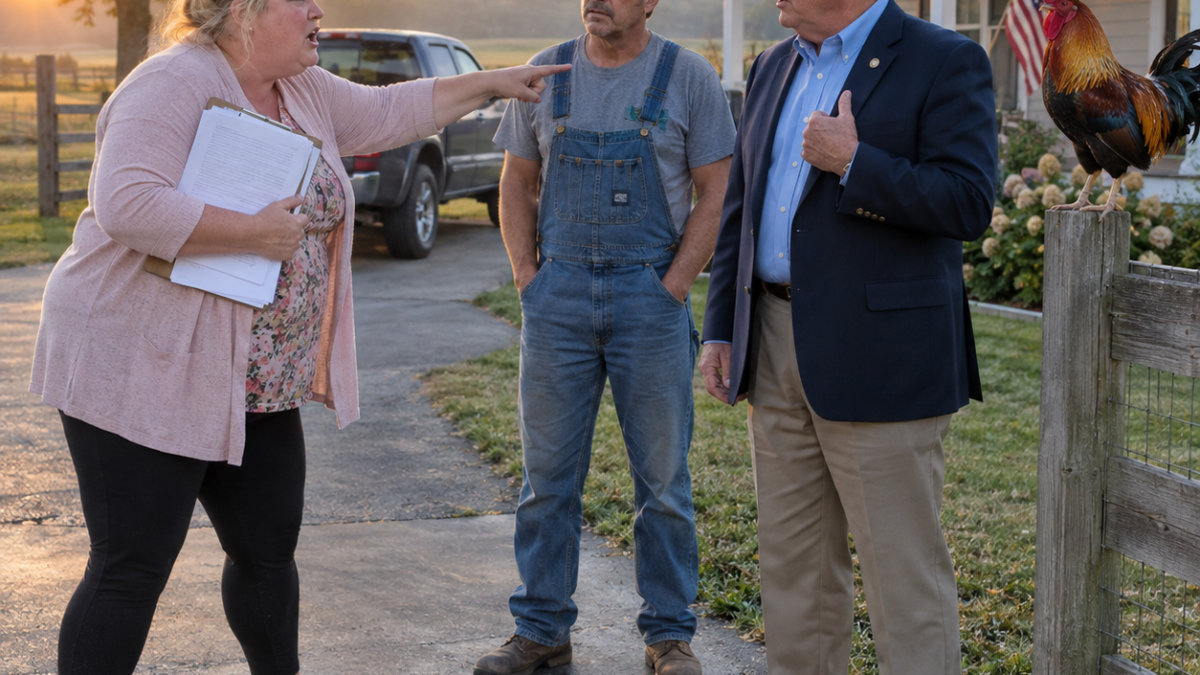
PART 2
The first thing I did was call the HOA.
Not a lawyer.
Not the sheriff.
Not Mayor Tom Connolly.
The HOA.
That decision mattered later.
If you spend enough time around legal disputes, you learn that the person who tries to solve something reasonably at the beginning often looks very different from the person who keeps escalating after being shown the facts.
At 9:32 a.m., I dialed Harmony Glen’s public number.
A woman answered.
“Harmony Glen Estates Homeowners Association. How may I direct your call?”
“My name is Jack Riley. I own Parcel 7B-4 on Ridge Road.”
There was a pause.
“Oh.”
That told me my name already had a file.
“I received a violation notice this morning.”
“One moment.”
Paper rustled.
Keyboard clicks.
Then:
“Yes. Unauthorized livestock and nuisance noise.”
“I’m calling to document that the notice was issued in error.”
Another pause.
“Sir, according to our records—”
“My parcel is expressly excluded from Harmony Glen’s declaration and covenants.”
“I understand, but—”
“I have the recorded plat in front of me.”
She lowered her voice.
“Sir, I’m just administrative staff.”
“That’s fine. I’m not asking you to make a legal determination. I’m requesting that the notice be withdrawn and that my request be recorded.”
“Let me get President Thorne.”
Of course.
Thirty seconds later:
“Mr. Riley.”
Karen’s voice could make good coffee taste bitter.
“Karen.”
“If you’re calling to argue about the rooster, my answer has not changed.”
“I’m calling because your notice asserts authority your association does not possess.”
“You are surrounded by Harmony Glen.”
“I’m aware of geography.”
“You benefit from our roads, our property values, our landscaping—”
“The road is county-maintained.”
Silence.
I continued.
“My grandfather’s property is expressly excluded from your association. Parcel 7B-4 is not subject to your covenants.”
“The rooster is affecting our members.”
“If a legitimate county noise ordinance applies, you may make a complaint through the county.”
“We have our own standards.”
“They do not apply to me.”
“Then we’ll make them apply.”
I wrote that down.
Word for word.
“Karen, are you refusing to withdraw the violation?”
“Yes.”
“And you still intend to assess the five-hundred-dollar fine?”
“Yes.”
“Despite knowing the property is outside the HOA?”
“For all practical purposes, you live inside Harmony Glen.”
“There’s no legal category called ‘for all practical purposes.’”
“You’ll learn.”
Click.
She hung up.
I stared at the phone.
Then entered the log.
**9:32 a.m. — Called Harmony Glen HOA. Requested rescission. President Thorne refused. Reaffirmed intent to fine excluded parcel. Stated: “Then we’ll make them apply.”**
I printed the call log.
Operation Rooster had its second exhibit.
Then I contacted Tom.
I kept the text simple.
**Tom, Jack Riley here. General Patton is fine and crowing with enthusiasm. Minor complication: Harmony Glen’s HOA president has issued a $500 fine against my excluded parcel because of him and threatened a lien. I have it under control but wanted you informed. Enjoy the trip.**
I stared at the message before sending.
Sarah watched me.
“That’s it?”
“What else should I say?”
“Your rooster may trigger municipal warfare?”
“He’s on vacation.”
“You know he’s going to call.”
“He doesn’t need to.”
I sent it.
Tom did not immediately respond.
Good.
I wanted him with his family.
This was my land.
My fight.
The rooster was only the excuse.
I spent the afternoon documenting the property.
Survey markers.
Fence line.
Parcel boundaries.
Barn.
Coop.
Distance from the nearest Harmony Glen residence.
I filmed the entrance to my driveway and the old stone marker my grandfather had placed there.
Then I scanned the deed.
The tax assessor map.
Recorded survey.
Title documents.
Every page went into a digital folder and a physical binder.
Sarah stood in my office doorway around four.
“You’re enjoying this.”
“No.”
“You alphabetized the dividers.”
“That is not enjoyment.”
“You color-coded them.”
“That is efficiency.”
She smiled.
“I married a dangerous man.”
“Finally, some appreciation.”
General Patton crowed outside.
Sarah glanced toward the window.
“What happens when Tom comes home?”
“Rooster goes home.”
“And if Karen backs off?”
“Then this ends.”
I meant it.
At that moment, I genuinely wanted the whole thing to end.
Karen could withdraw the notice.
Send a short apology.
Acknowledge the boundary.
Done.
No lawsuits.
No public humiliation.
No revenge.
People later assumed I had planned her downfall from the beginning.
I hadn’t.
I gave her exits.
She kept sealing them shut.
Six days later, the certified letter arrived.
Five hundred dollars.
Unauthorized livestock.
Nuisance noise.
Failure to comply.
Attached was a photograph of my barn taken from the public road with a long lens.
That bothered me.
Not because photographing something visible from public space was automatically illegal.
Because it showed intent.
Somebody had been watching.
The photo included General Patton near the fence.
At the bottom:
**PAYMENT DUE WITHIN SEVEN DAYS. FAILURE TO CURE WILL RESULT IN ESCALATING FINES AND COLLECTION ACTION.**
I filed it.
One week later, another certified envelope.
One thousand dollars.
Total:
$1,500.
And this time:
**NOTICE OF INTENT TO LIEN.**
I stopped at the kitchen table.
Sarah saw my face.
“What?”
I handed her the document.
She read.
“They can’t.”
“No.”
“They know they can’t.”
“Yes.”
“Then why would they put this in writing?”
That was the question.
The threat stated that if the balance remained unpaid, Harmony Glen intended to record a lien against my land.
A lien could create title problems even when invalid.
It could interfere with refinancing.
Sale.
Estate planning.
Insurance.
A fraudulent lien is not merely rude paperwork.
It can become a weapon.
Sarah sat down.
“This feels different.”
“It is.”
“What are you going to do?”
I took the notice back.
“Read.”
The following Saturday, I drove to the county records office.
I already had my deed.
I wanted Harmony Glen’s records.
The development file filled multiple binders.
Site plans.
Declarations.
Amendments.
Corporate documents.
Plat maps.
Developer submissions.
I started from page one.
People think legal research is dramatic because television shows lawyers finding a miracle sentence at the last second.
Real research is mostly boredom.
Read.
Turn page.
Read.
Turn page.
Coffee.
Read.
Then, eventually, something changes.
On page three of Harmony Glen’s founding declaration, I found the development map.
A red boundary surrounded the association.
My ten acres sat inside the overall geography but outside the legal line.
Next to it:
**PARCEL 7B-4, RILEY FAMILY ESTATE — EXPRESSLY EXCLUDED FROM ALL HARMONY GLEN COVENANTS, RESTRICTIONS, ASSESSMENTS, AND GOVERNANCE.**
I read it twice.
Then photographed it.
Requested a certified copy.
That alone could have ended everything.
But I was already there.
And Karen had threatened to seize my land.
So I kept reading.
I searched property records for Harmony Glen.
Liens.
Transfers.
Foreclosures.
Something began bothering me.
Three homes near the development’s outer edge had changed hands under strange circumstances over the previous five years.
Each owner had been older.
Each property had accumulated multiple HOA violations before sale.
I pulled records.
The first belonged to Harold Henderson.
Rose bushes extending slightly over a walkway.
Mailbox trim.
Roof discoloration.
Landscape stones.
Fines grew.
Then a lien threat.
Then the house sold.
Sale price:
far below surrounding comparable homes.
Buyer:
Glen Development LLC.
Second property.
Mrs. Diaz.
Widow.
Violations for a bicycle in front.
Trash container timing.
Exterior decorations.
Escalating penalties.
Sale.
Buyer:
Glen Development LLC.
Third.
Same pattern.
Different trivial violations.
Same buyer.
That stopped feeling coincidental.
I searched corporate records.
Registered agent:
Robert Thorne.
Karen’s husband.
I sat back.
There are moments when a dispute changes shape instantly.
That was one.
A rooster complaint had led me into county records.
County records led me to property transfers.
Property transfers led me to Karen’s husband.
The possibility in front of me was ugly.
Maybe nothing illegal had happened.
Maybe elderly homeowners were fined legitimately and independently chose to sell.
Maybe Robert’s company happened to buy distressed homes.
Coincidences happen.
I knew enough not to accuse anyone yet.
But I also knew what patterns looked like.
I started a second file.
Label:
**POTENTIAL PROPERTY ACQUISITION PATTERN.**
Not “fraud.”
Not “conspiracy.”
Facts first.
I found Harold Henderson’s new address.
Senior living complex.
Twenty miles away.
It took me three days to decide whether visiting him was appropriate.
Finally, I called first.
“Mr. Henderson?”
“Yes?”
“My name is Jack Riley. I own the old farm parcel beside Harmony Glen.”
Silence.
Then:
“The rooster man?”
News travels.
“That would be me.”
He laughed weakly.
“What can I do for you?”
“I came across records involving your former home.”
His tone changed.
“What about it?”
“I’m dealing with Karen Thorne.”
Long silence.
Then:
“Come tomorrow.”
Harold was eighty-eight.
Thin.
Careful movements.
Kind eyes.
His apartment was neat but small.
One wall held photographs of a house I recognized from county records.
Harmony Glen.
He noticed me looking.
“My wife loved that place.”
“Martha?”
He turned sharply.
“How do you know her name?”
“Deed records.”
He nodded.
“Of course.”
He offered coffee.
We sat.
I explained my situation.
The rooster.
Fines.
Lien threat.
When I mentioned Karen’s name, Harold looked toward the window.
“She’ll never stop.”
“What happened to you?”
He hesitated.
Then slowly opened a closet.
Inside sat a cardboard box.
He carried it to the table.
Letters.
Hundreds.
Violation notices.
Fine schedules.
Certified envelopes.
Harold touched the stack.
“Started with roses.”
He smiled sadly.
“Martha grew roses.”
“How serious was the violation?”
“One branch over the sidewalk.”
He held his fingers perhaps an inch apart.
“Karen said it created liability.”
The first fine:
$50.
Then trim color.
Another.
Then his mailbox.
Then lawn treatment.
Then a holiday wreath left up two days after the approved removal date.
The fines accumulated.
Harold appealed.
Denied.
Asked for payment plans.
Received legal threats.
Karen began driving past regularly.
Sometimes parking across the street.
“Maybe she had business nearby,” I said.
Harold shook his head.
“She watched the house.”
His voice cracked.
“Martha started panicking every time an envelope came.”
I said nothing.
“She had heart problems already.”
He wiped one eye.
“I’m not saying Karen killed my wife.”
Important distinction.
“But the stress… it didn’t help.”
After Martha died, Harold stopped fighting.
Then a representative from Glen Development LLC contacted him.
Cash purchase.
Quick closing.
No repairs.
The offer was low.
Very low.
“I knew it was low.”
“Why accept?”
He stared at the box.
“I was tired.”
That answer hurt.
Not stupid.
Not uninformed.
Tired.
Sometimes people lose homes because the opposing side has more money.
Sometimes because they have better lawyers.
And sometimes because they simply have enough energy to keep making tomorrow worse than today.
“Did you know Glen Development was connected to Karen?”
His face went blank.
“What?”
“Registered agent is Robert Thorne.”
Harold stared at me.
“Her husband?”
“Yes.”
His hand began shaking.
I regretted telling him so directly.
He looked at the photographs.
“My house?”
“I don’t know enough yet to say what the connection means.”
“But her husband bought it.”
“The company did.”
His eyes filled.
“That woman fined me until I couldn’t breathe, then her husband bought my house?”
I lowered my voice.
“Mr. Henderson, I’m not accusing anyone of anything yet.”
He opened one of the letters.
“You should.”
The anger in his voice startled me.
Then disappeared.
He looked suddenly very old.
“What do you need?”
“Permission to copy these.”
“All of them.”
“And eventually, perhaps, a sworn statement.”
He nodded.
“I’ll sign whatever tells the truth.”
Before leaving, I asked him one question.
“If you could have done anything differently, what would it be?”
Harold looked at Martha’s photograph.
“Asked for help sooner.”
That sentence followed me home.
Sarah found me scanning Harold’s letters at midnight.
“What happened?”
I told her.
She sat beside me.
“That poor man.”
“Yes.”
“Can he get the house back?”
“I don’t know.”
“You think Karen planned it?”
“I think we have a pattern.”
“But?”
“But patterns need proof.”
Sarah leaned against me.
“This isn’t about General Patton anymore.”
“No.”
Outside, as though hearing his name, the rooster crowed.
At midnight.
Sarah stared toward the yard.
“What is wrong with that bird?”
“Leadership.”
She laughed despite everything.
Over the next week, I attended a Harmony Glen community barbecue.
Not secretly.
I had been invited by David Mercer, one of the few residents who occasionally waved when I passed.
I brought potato salad.
Nobody suspects potato salad.
I did not start with Karen.
I listened.
A woman complained about a $200 fine because her garbage can remained visible forty-five minutes after collection.
A couple had been cited because their children drew hopscotch squares in chalk.
A man had been fined for a garden gnome.
Apparently the approved decorative-object guidelines allowed “traditional landscape accents,” and his gnome had been deemed “novelty décor.”
I almost asked whether Karen had appointed herself Minister of Gnomes.
I resisted.
What mattered was fear.
Every complaint ended with the same sentence.
“Don’t tell Karen I said anything.”
That was power.
Not bylaws.
Fear.
People imagined they were isolated.
I quietly contacted four residents afterward.
Coffee shops.
Parks.
Never dramatic gatherings.
I showed them records.
Harold’s story.
The shell company connection.
My excluded-parcel language.
Fine notices.
The lien threat.
Their fear changed.
Not into confidence immediately.
First disbelief.
Then anger.
One woman named Laura stared at the corporate filing for Glen Development.
“That’s her husband?”
“Yes.”
“She threatened foreclosure on my parents.”
“For what?”
“Tree removal.”
“Did they sell?”
“No. I helped them pay.”
She closed her eyes.
“Oh my God.”
We started a private evidence group.
No gossip.
No insults.
No revenge fantasies.
Upload documents.
Dates.
Notices.
Appeal responses.
Invoices.
Screenshots.
The group grew.
Operation Rooster became a three-inch binder.
Karen kept mailing me fines.
Two thousand.
Three thousand.
Five.
Each time, I responded in writing:
No jurisdiction.
Parcel excluded.
Fines disputed.
Withdraw.
She never did.
Eventually, I took the binder to Captain Maria Flores.
Not my tenant from the other story of my life.
This Maria was an attorney.
Former Army JAG.
Sharp enough to shave steel.
Her downtown office had one plant and no decoration.
I placed the binder on her conference table.
“The inciting incident is a rooster.”
She stared.
“I’m sorry?”
“The rest requires coffee.”
She opened the binder.
For the next hour, she barely spoke.
Founding declaration.
Fines.
Lien notices.
Corporate records.
Property sales.
Harold’s letters.
Resident affidavits.
When she finished, she leaned back.
“Jack.”
“Yes?”
“You have two cases.”
“I thought so.”
“Your case is simple.”
“Good.”
“Your parcel is excluded. They have no lawful basis to assess association fines.”
“And the lien?”
“If they file one after being notified of exclusion, we go after them hard.”
“And the other case?”
She tapped Harold’s documents.
“That’s complicated.”
“Fraud?”
“Potentially.”
“Extortion?”
“Maybe.”
“Predatory acquisition?”
“Maybe.”
“You’re saying maybe a lot.”
“Because lawyers who say definitely before discovery become unemployed.”
I smiled.
“Fair.”
She turned serious.
“If the evidence shows Karen used HOA enforcement selectively to financially pressure targeted homeowners, while her husband’s entity positioned itself to buy distressed properties, that is serious.”
“How serious?”
“Civil conspiracy serious. Fraud serious. Potential criminal referral serious.”
She looked at me.
“But we do this correctly.”
“What’s first?”
“One last exit.”
“For Karen?”
“Yes.”
Maria drafted the cease-and-desist.
It was beautiful.
Polite.
Controlled.
Devastating.
It quoted Harmony Glen’s own founding charter.
Attached the certified plat.
Listed my parcel exclusion.
Disputed every fine.
Demanded all collection action stop.
Warned that recording a lien despite actual knowledge that I was not subject to the association could expose the board and individuals involved to substantial civil liability.
It also demanded preservation of all communications, enforcement records, vendor relationships, and documents related to Parcel 7B-4.
“Preservation language?” I asked.
Maria smiled.
“I want them deleting nothing.”
We served it three ways.
Certified mail.
Email.
Process server.
Karen could not plausibly claim ignorance.
Residents in our evidence group became nervous.
“What if she stops?” Laura asked.
“Then she stops.”
“But after everything?”
“The goal is to stop the harm.”
I meant that too.
Part of me wanted exposure.
But Maria reminded all of us:
“You do not manufacture misconduct because you want a better case.”
So we waited.
Seven days.
Then the county clerk envelope arrived.
Official.
Stamped.
Lien:
$7,500.
Harmony Glen HOA against Parcel 7B-4.
I stared at it for a long time.
Sarah walked in.
“She did it?”
“Yes.”
“After the lawyer letter?”
“Yes.”
Sarah shook her head.
“Why?”
“Because she thinks nobody can tell her no.”
I scanned the lien.
Sent it to Maria.
Subject:
**CHECKMATE.**
Her reply:
**FILING TOMORROW.**
Then my phone rang.
International number.
Tom.
I answered.
“Mayor.”
“Don’t Mayor me.”
His voice was angry.
“Jack, what in God’s name is happening?”
“Vacation going well?”
“My office forwarded me something about a property dispute involving General Patton.”
“He remains healthy.”
“Jack.”
I sighed.
Then explained everything.
The first complaint.
The fines.
The excluded parcel.
The lien.
Then Harold.
Glen Development.
Robert Thorne.
Tom became completely silent.
“Still there?”
“Yes.”
“I’m trying very hard not to say something unhelpful.”
“Appreciated.”
“My daughter’s rooster is being used as the reason for a fraudulent lien?”
“That’s the simplest version.”
“And you weren’t going to call me?”
“I texted.”
“You said ‘minor complication.’”
“At the time it was.”
“Jack.”
“Tom.”
He breathed.
“I fly home Tuesday.”
“Good.”
“HOA meeting Thursday?”
“How do you know?”
“Public calendar.”
Of course.
“I’m attending.”
“No.”
“Excuse me?”
“Not as mayor.”
His voice softened.
“I was going to say exactly that.”
I waited.
“I’m attending as General Patton’s owner.”
“That I can live with.”
“And as your friend.”
I said nothing.
“And Jack?”
“Yes?”
“If Karen brings up the rooster, don’t answer for me.”
I smiled.
“Understood.”
Thursday evening, Harmony Glen’s community room overflowed.
Usually, maybe fifteen people attended.
That night:
Every chair.
People standing along walls.
Whispers everywhere.
Karen sat at the raised board table looking delighted.
She mistook attendance for admiration.
That was characteristic.
I sat near the center.
Maria beside me.
Harold Henderson had come too.
Seeing him there affected me more than I expected.
He wore a suit.
Old-fashioned.
Dark.
Martha’s wedding ring hung from a chain beneath his shirt.
“You sure?” I asked.
He nodded.
“I left once.”
His voice was steady.
“Not tonight.”
Karen began.
Budget.
Landscaping.
Pool maintenance.
Then new business.
I stood.
“My name is Jack Riley.”
Karen immediately grabbed the gavel.
“You’re not a member.”
Maria stood beside me.
“Section Eight, Paragraph Three allows non-members directly affected by board action to address the board.”
Karen glared.
Maria smiled.
“Would you like a copy?”
The room chuckled.
Karen said:
“Five minutes.”
“Plenty.”
I held up the founding declaration.
“My property is Parcel 7B-4.”
Slide on screen.
Boundary map.
Red line.
Excluded parcel.
I read the exact language.
Residents murmured.
Several looked toward Karen.
I held up the first $500 fine.
Then $1,000.
Then later notices.
“Despite being given certified proof that my land is outside Harmony Glen, President Thorne continued assessing HOA penalties.”
Then the lien.
“And after receiving a formal cease-and-desist from counsel, the association recorded this seven-thousand-five-hundred-dollar lien against my property.”
A board member named Eric leaned toward Karen.
“You said his parcel was annexed.”
I heard that.
So did Maria.
Karen hissed:
“It effectively is.”
Eric stared.
“Effectively?”
Maria wrote something.
I continued.
“Unfortunately, my case is not the only concern.”
Laura stood.
She told her story.
Then David.
Then another couple.
Garden gnome.
Paint shade.
Children’s chalk.
Escalating fines.
Harold stood last.
He walked slowly toward the microphone.
The room became still.
“My name is Harold Henderson.”
Some older residents recognized him immediately.
“I used to live at 116 Willow Bend.”
Karen looked down.
Harold removed a photograph.
He held it toward the room.
“My wife Martha and I bought that house thirty-eight years ago.”
His voice trembled.
“We raised our daughters there.”
He told them about the roses.
Fines.
Letters.
Threats.
Martha’s illness.
Her death.
The exhaustion.
Then the low purchase offer.
“I thought selling would make the letters stop.”
He looked directly at Karen.
“They did.”
Then I displayed the corporate filing.
Glen Development LLC.
Robert Thorne.
The room erupted.
Karen stood.
“This is defamatory!”
Maria stepped forward.
“It is a public corporate record.”
“Sit down!”
“No.”
Karen pounded the gavel.
“Order!”
Residents shouted questions.
“Did your husband buy his house?”
“How many?”
“Did you fine people to force sales?”
Karen’s face reddened.
“These accusations are outrageous.”
I raised my voice only enough to carry.
“The evidence will be tested in court.”
That quieted people slightly.
“And all of this started because President Thorne attempted to fine my excluded property over a rooster.”
Karen saw an opening.
Her eyes flashed.
“Yes!”
She pointed at me.
“Exactly! The rooster!”
She grabbed her binder.
“Whatever technical property loophole Mr. Riley hides behind, that animal is creating a nuisance affecting our residents!”
I almost felt sorry for her.
Almost.
“It crows before five in the morning!”
General Patton usually waited closer to dawn, but details had never been Karen’s strongest field.
“It is loud, disruptive livestock!”
Karen looked around, desperate for agreement.
“And I don’t care who owns it. If that rooster remains on property surrounded by Harmony Glen, it is a nuisance!”
The main doors opened.
I did not turn immediately.
I already knew.
The room did.
Whispers moved backward to forward.
“Mayor?”
“Oh my God.”
Tom Connolly walked down the center aisle.
No suit.
No staff.
Polo shirt.
Jeans.
He looked like a father returning from vacation.
Which was exactly what he was.
Karen froze.
Tom stopped at the microphone.
“Good evening.”
Nobody spoke.
“My name is Tom Connolly.”
Someone laughed nervously.
Everybody knew.
Tom continued.
“I apologize for interrupting.”
He looked toward Karen.
“But I understand my personal property has become a matter of HOA business.”
Karen’s mouth opened.
“What property?”
Tom smiled slightly.
“The rooster.”
Silence.
Then several people laughed.
Not loudly.
Disbelievingly.
Tom said:
“General Patton belongs to my daughter.”
Karen’s face emptied.
“He is her prize-winning 4-H rooster.”
Tom nodded toward me.
“My family was overseas for three weeks. Jack Riley agreed to care for him.”
Karen stared at me.
Then Tom.
Then the room.
Tom continued.
“So I want to be certain I understand.”
His voice stayed calm.
“You issued thousands of dollars in HOA fines against a parcel your own founding documents exclude.”
No response.
“You then filed a lien against that property.”
Karen finally spoke.
“The rooster violated community noise expectations.”
Tom nodded.
“We’ll get there.”
A few people laughed.
“You used my daughter’s animal as the original basis for enforcement against a veteran’s private land.”
“It was creating a nuisance.”
“If there was a legitimate county noise violation, why didn’t you use the county ordinance?”
Karen faltered.
“We have standards.”
“For members?”
“Yes.”
“Is Jack a member?”
Silence.
Tom leaned closer to the microphone.
“I’m not here as mayor.”
That sentence changed the room.
Because he removed the political weapon before Karen could accuse him of using it.
“I’m here as a father whose daughter’s pet was dragged into a private campaign.”
Then:
“As a friend.”
He looked toward Harold.
“And as a citizen who is deeply concerned by what I’ve heard tonight.”
Karen swallowed.
Tom finished:
“I suspect the courts and appropriate regulators will have more to say about the lien and the property transactions.”
Then he looked directly at her.
“But as for General Patton, Karen?”
Pause.
“He goes home with me tomorrow.”
Somebody laughed.
Then applauded.
Others joined.
Tom raised one hand.
“This isn’t funny to the people who lost money or homes.”
The room quieted instantly.
That was leadership.
Not volume.
Not humiliation.
Perspective.
He nodded to Harold.
“Mr. Henderson, I’m sorry.”
Harold whispered:
“Thank you.”
Tom turned toward me.
“Sergeant.”
“Sir.”
“Your bird-sitting assignment ends tomorrow.”
“Yes, sir.”
Then he walked out.
Karen stood motionless.
The room exploded.
Board members called an emergency executive session.
Karen tried to follow.
Eric blocked her.
“I think you should stay here.”
She stared at him.
“I am president.”
“Pending what we just heard, that may change.”
For the first time in months, Karen had no answer.
Residents demanded resignation.
Refunds.
Audits.
Explanations.
Karen sat alone behind the table.
The gavel in front of her.
Nobody obeyed it.
The next morning, Maria filed suit.
Wrongful lien.
Harassment.
Fraud-related claims.
Civil conspiracy allegations tied to property acquisitions.
Intentional infliction claims where supported.
Requests for injunctive relief.
Accounting.
Document preservation.
Damages.
The complaint named Karen.
Robert.
Glen Development LLC.
And the HOA where association conduct created liability.
More importantly, several targeted homeowners joined.
Harold became central.
News broke by afternoon.
The headline was ridiculous enough to travel:
**HOA TRIES TO LIEN VETERAN’S LAND OVER MAYOR’S ROOSTER.**
But the rooster was only what got attention.
Reporters quickly found the property records.
Then Harold.
Then other homeowners.
Harmony Glen’s board suspended Karen within forty-eight hours.
The association’s insurer appointed counsel.
Their first public statement said Karen had acted beyond authorized authority in several enforcement actions.
She responded with her own statement blaming “disgruntled residents and politically connected outsiders.”
Tom refused comment beyond:
“The courts should determine the legal issues.”
Smart.
I gave no interview initially.
Maria ordered me not to.
“Why?”
“Because you enjoy explaining.”
“I do not.”
“You were JAG.”
“Paralegal.”
“Worse.”
Discovery began.
Emails.
Texts.
Board minutes.
Fine databases.
Vendor records.
Corporate records.
Karen’s communications with Robert.
What emerged was worse than our public evidence.
One email regarding Harold:
**He’s exhausted. Keep pressure on. Robert thinks he’ll take 210 if we get another lien letter out before Friday.**
I read it twice.
Then pushed the paper away.
Harold sat across Maria’s conference room.
He had already read it.
His face was blank.
“What was your house worth then?” Maria asked gently.
Harold answered:
“About four hundred.”
Glen Development had bought it for barely more than half.
Another text:
**Diaz can’t afford counsel. Don’t waive the penalties yet.**
Another:
**Corner property is important if we ever expand common access.**
Maria closed the file.
“Nobody says another word publicly.”
Harold stared at the table.
“Martha was still alive when they wrote this?”
I checked the date.
“Yes.”
His eyes closed.
That moment burned away the last fun I had found in Operation Rooster.
This was not a game.
Not a viral HOA story.
Not a funny fight about a bird.
People had been intentionally worn down.
Maybe not every fine was fabricated.
Maybe not every sale unlawful.
But the communications showed something unmistakable:
Karen had considered financial pressure a tool for acquisition.
Settlement negotiations began.
The insurer wanted global resolution.
Maria refused quick money.
“Our clients need structural reform.”
The demands became clear.
First:
Remove my lien immediately.
Not merely release it.
Record a formal correction acknowledging it should never have attached to Parcel 7B-4.
Second:
Void all fines against me.
Third:
Karen’s permanent resignation from any Harmony Glen position.
Fourth:
Independent forensic audit covering a decade.
Fifth:
Review every enforcement fine issued under Karen’s architectural committee leadership for five years.
Where improper:
Refund.
Sixth:
Independent review of distressed-property sales connected to Glen Development LLC.
Seventh:
Dedicated compensation process for affected former owners, including Harold.
The insurer called it excessive.
Maria said:
“Then we proceed.”
Depositions were scheduled.
Karen’s personal attorney changed.
Then changed again.
Robert’s company records showed profit from reselling the Henderson property.
Other transactions looked similar.
State investigators became interested.
The attorney general’s consumer-protection division requested documents.
Once that happened, the HOA insurer changed tone.
Settlement became real.
My lien disappeared first.
I received the certified county recording.
**LIEN RELEASED AND DECLARED INVALID AS TO NON-ASSOCIATION PARCEL.**
I framed it.
Sarah hated that.
“You framed a lien release?”
“It’s historical.”
“It’s ugly.”
“History is sometimes ugly.”
“You’re becoming your grandfather.”
“Compliment accepted.”
Then refunds began.
Residents received checks.
Some hundreds.
Some thousands.
The architectural-review fines from the worst years were reassessed.
Not every fine was voided.
Maria insisted on that.
“If somebody truly violated a legitimate rule through a fair process, we don’t rewrite history.”
Important.
Justice is not reversing abuse by making every opposing rule meaningless.
It is applying rules honestly.
But hundreds of penalties lacked proper procedure or consistent basis.
Those came back.
David received money for garbage-can penalties.
The chalk family got refunds.
Garden gnome man bought an even larger gnome with his check.
He placed it in compliance.
Barely.
Harold’s case took longer.
His home could not simply be returned.
Glen Development had renovated and resold it.
A new family lived there.
They were innocent.
Harold did not want them displaced.
“I know what losing a home feels like,” he told Maria. “I’m not doing that to them.”
So settlement focused on money.
The final amount was confidential.
But I can say this:
Harold left the senior apartment.
He bought a small one-story house three blocks from his daughter.
Two bedrooms.
A porch.
Garden space.
The first spring, he planted roses.
Sarah and I visited.
He stood beside a newly planted Peace rose.
“Martha’s favorite.”
“I remember.”
He touched one leaf.
“This one’s staying.”
“No HOA?”
He grinned.
“Never again.”
Harmony Glen elected a new board.
Karen lost every official position.
The new president was Elaine Porter, a retired middle-school principal.
She began her first meeting with:
“If anybody sees me driving slowly past their house with binoculars, call my children because I’ve lost my mind.”
The room laughed.
Good start.
They rewrote enforcement procedure.
Warnings before fines when appropriate.
Clear hearings.
No president acting alone.
No liens without board approval plus independent legal review.
Financial conflicts disclosed.
Vendor relationships audited.
And a rule I particularly liked:
No enforcement action could be taken against non-member parcels without written opinion from association counsel confirming jurisdiction.
They called it the Riley Rule.
I hated that.
“Call it the Common Sense Rule.”
Elaine smiled.
“Too late.”
As for Karen and Robert, civil consequences were brutal.
Legal fees.
Settlement contributions.
Business scrutiny.
Lost reputation.
Their house eventually entered foreclosure proceedings.
I heard arguments that they deserved worse.
Maybe.
But by then, I wanted out.
Revenge had done its job.
It gave me energy at the beginning.
It did not deserve to run my life afterward.
The final time I saw Karen happened months later.
Tuesday morning.
I was replacing a rotted fence post near the property line.
Manual work.
Post-hole digger.
Gravel.
Concrete.
Simple.
Across Harmony Glen, a moving truck sat in Karen’s driveway.
I saw her carrying a cardboard box.
No pink tracksuit.
No clipboard.
Old jeans.
Gray sweatshirt.
Her blonde hair hung loose and tired.
She stopped when she noticed me.
Distance between us:
maybe eighty yards.
The same ground where she had stood at dawn threatening my land.
We stared at each other.
For a moment I remembered exactly how angry I had been.
Five hundred dollars.
Lien threat.
“Your property seized.”
I remembered Harold’s letters.
Martha.
Emails.
The line:
**Keep pressure on.**
Part of me wanted to say something.
“You should have left the rooster alone.”
Too petty.
“Technicality won.”
Too clever.
“How are property values?”
Cruel.
So I said nothing.
Karen said nothing.
I gave one slow nod.
Not forgiveness.
Not friendship.
Completion.
Then I turned back to the fence post.
I heard her car door close eventually.
Engine start.
When I looked again, she was gone.
That afternoon, I drove to Harold’s new house.
He was sitting on his porch.
“Need something?” he asked.
“No.”
“Then why are you here?”
“Karen moved.”
He looked toward his roses.
“Good.”
“That’s it?”
“What should I do?”
“I don’t know.”
Harold smiled.
“Jack, I spent years giving that woman space in my head.”
He tapped one temple.
“She doesn’t get the new house too.”
That may have been the wisest thing anyone said during the entire case.
Karen didn’t get the new house.
She didn’t get my ten acres.
She didn’t get Harmony Glen anymore.
She didn’t get Harold’s future.
So why should she get ours?
General Patton returned to the Connolly family the week after Tom came home.
His daughter Emily arrived wearing a 4-H jacket.
She ran straight to the coop.
“General!”
The rooster strutted toward her as though returning from deployment.
Emily hugged him.
He tolerated it.
Barely.
Tom stood beside me.
“I hear he caused trouble.”
“He maintained operational discipline.”
“Did he attack anyone?”
“Only sunrise.”
Emily came over.
“Mr. Riley?”
“Yes?”
“Dad said a lady got mad because General crowed.”
“That happened.”
“Did he do something wrong?”
I looked at Tom.
He looked away, wisely leaving me to answer.
“No.”
“But she complained.”
“People are allowed to complain.”
“Then why did she get in trouble?”
Good question.
“Not because she complained about the rooster.”
Emily waited.
“She got in trouble because she used authority she didn’t have and kept hurting people after being shown she was wrong.”
Emily looked toward General.
“So he didn’t get her fired?”
“No.”
She seemed disappointed.
Tom laughed.
“Sorry, sweetheart. Your rooster is not legally trained.”
General crowed.
Emily smiled.
“I think he knew.”
After they left, the farm became strangely quiet.
For weeks I had grown accustomed to General Patton announcing the morning before I was ready.
Then nothing.
The first morning without him, I woke at five anyway.
Habit.
I walked onto the porch.
Coffee.
Dark sky.
Harmony Glen lights in the distance.
No pink tracksuit.
No clipboard.
No crow.
Just wind moving through the field.
Peace.
But unlike the old peace, this one felt earned.
A month later Tom came over for coffee.
We sat on the back porch.
He looked toward Harmony Glen.
Kids were playing basketball in driveways.
Someone had chalk drawings near the sidewalk.
A garbage can remained visible long after collection.
Civilization somehow survived.
Tom said:
“You know, General Patton should get a civic award.”
“No.”
“He exposed corruption.”
“He crowed.”
“He awakened democracy.”
“He screamed at sunlight.”
“Same thing.”
I laughed.
Tom became serious.
“You could have called me sooner.”
“I know.”
“Why didn’t you?”
“Didn’t want the mayor solving a private fight.”
“Good.”
I looked at him.
“You agree?”
“Completely.”
“That surprises me.”
Tom leaned back.
“If I had called Karen as mayor after the first complaint, what would everyone say?”
“That you used office to help a friend.”
“Correct.”
“And if she backed down?”
“We never find Harold.”
Exactly.
Tom swirled his coffee.
“You did it right.”
“Maria did.”
“Your lawyer?”
“Yes.”
“She terrifies me.”
“She should.”
We sat quietly.
Then from far across town came a faint crow.
General Patton.
Tom grinned.
“He misses you.”
“He can stay missed.”
The new Harmony Glen board invited me to a community meeting.
I declined.
Elaine called.
“You need to come.”
“I’m not a member.”
“We know.”
“Then why?”
“Because we’re holding a restitution presentation.”
“I hate presentations.”
“Harold will be there.”
That changed it.
The community center looked different.
Same walls.
Same chairs.
No raised throne atmosphere.
Harold sat near the front with his daughter.
Several residents who had received refunds were there.
Elaine stood at the microphone.
No gavel.
“Tonight is not about celebrating a lawsuit.”
Good.
“It’s about acknowledging that governance failed.”
Better.
She continued.
“A community association can be useful.”
Some people groaned.
Elaine smiled.
“Yes, yes. Roads, common landscaping, pools, maintenance. Try to contain your enthusiasm.”
Laughter.
“But an association becomes dangerous when residents stop paying attention and leaders stop remembering who they serve.”
She looked toward Harold.
“We cannot undo everything.”
He nodded.
“We cannot give back lost years.”
His daughter squeezed his hand.
“But we can tell the truth about what happened and build procedures that make repetition harder.”
That mattered.
Not impossible.
Harder.
Every system can fail.
Responsible people design systems expecting human weakness.
Checks.
Transparency.
Appeals.
Multiple signatures.
Independent review.
Not because everyone is dishonest.
Because nobody should be required to be perfect for a system to remain safe.
Elaine invited Harold forward.
He hated public speaking.
You could tell.
He held a folded paper.
“My wife Martha loved Harmony Glen when we moved there.”
His voice trembled.
“We thought we’d die in that house.”
Pause.
“She did.”
Silence.
“I thought leaving meant I lost everything.”
He looked toward me.
“But I have another home now.”
Then his daughter.
“And my family.”
Then the residents.
“I don’t want anybody here spending the next ten years hating Karen.”
Several people shifted.
“She did wrong.”
His voice hardened.
“Very wrong.”
Then softened.
“But hatred will charge you rent forever.”
I thought of his earlier words.
She doesn’t get the new house too.
Harold folded the paper.
“Make this place better instead.”
The room stood.
Applause.
Harold looked embarrassed.
I clapped hardest.
Afterward, residents approached him.
Some apologized for not noticing.
One woman cried.
“I thought the fines meant you were irresponsible.”
Harold smiled sadly.
“So did I after a while.”
That sentence said everything about harassment.
Repeat an accusation long enough and eventually even the target starts asking whether they deserve it.
I understood why Karen’s notices worked.
Official letterhead.
Deadlines.
Legal language.
Threats.
People see those things and assume legitimacy.
That’s why documentation mattered.
Not because paper is magical.
Because truth needs records too.
Years passed.
Harmony Glen became boring.
I mean that as praise.
Board meetings returned to landscaping budgets.
Pool maintenance.
Insurance.
Parking.
No fraudulent liens.
No distressed-property acquisitions linked to board spouses.
No gnome wars that I heard about.
Elaine served two terms then stepped down.
She refused a third.
“Power needs expiration dates.”
I liked her.
The Riley Rule remained.
Eventually residents stopped calling it that.
Thank God.
Harold’s roses flourished.
Every spring he sent Sarah photographs.
One year, he mailed us a cutting.
We planted it near our porch.
Peace rose.
Yellow with pink edges.
The first bloom opened at sunrise.
Sarah stood beside it.
“You know what’s strange?”
“What?”
“This whole thing started with something waking up at sunrise.”
I looked at the rose.
“General Patton had better timing than we gave him credit for.”
She laughed.
By then Emily Connolly had taken General to several competitions.
He won two.
Tom sent me photographs of ribbons.
One caption:
**Public nuisance continues criminal career.**
I responded:
**Keep him contained.**
Years later, after General died, Emily called me.
She was older.
Heading to college.
Her voice cracked.
“I thought you’d want to know.”
“I’m sorry.”
“He was ancient.”
“For a rooster.”
“He was mean at the end.”
“He was mean at the beginning.”
She laughed through tears.
“I’m going to miss him.”
“Me too.”
And I did.
Not the five-a.m. crowing exactly.
But what it came to represent.
General Patton never knew he had become Exhibit One in a case that exposed years of abuse.
He didn’t know the mayor walked into an HOA meeting because of him.
He didn’t know Harold bought another house.
He didn’t know families received refunds.
He was a rooster.
That may be why the story remained funny at its center despite everything painful around it.
Entire systems can unravel because of something absurd.
A noise complaint.
A garden gnome.
A mailbox.
A rooster.
The small event matters only because it opens a door.
What waits behind that door depends on what people have been hiding.
Sometimes nothing.
Sometimes everything.
I kept the original five-hundred-dollar violation notice.
Operation Rooster binder eventually moved to the top shelf of my office.
Most legal files I shredded when retention periods ended.
Not that one.
Sarah calls it sentimental clutter.
She is correct.
Inside:
Karen’s first notice.
The excluded-parcel declaration.
Fine letters.
Lien.
Cease-and-desist.
Harold’s copies.
Corporate filing.
Lawsuit.
Settlement terms.
Lien correction.
And one photograph Emily gave me.
General Patton.
Chest out.
Red comb bright.
Blue ribbon beside his name.
On the back she wrote:
**To Mr. Riley — Thanks for babysitting the rooster that saved the neighborhood.**
Technically inaccurate.
I kept it anyway.
One morning many years later, I sat on the porch before sunrise.
The world looked almost exactly like it had that first morning.
Mist over the field.
Cool wood beneath my feet.
Coffee.
Harmony Glen beyond the fence.
Different board.
Different atmosphere.
A few homes repainted in colors Karen would have despised.
Someone had a basketball hoop.
Someone else grew vegetables in raised beds.
I heard a rooster far away.
Not General.
Just another bird greeting daylight.
For half a second, I expected Karen’s voice.
“That infernal creature has to go!”
I smiled.
Then the crow came again.
Ordinary.
Rural.
Alive.
I thought about my grandfather.
He had refused to sell because he loved those ten acres.
At the time, people called him stubborn.
Developers offered good money.
He still said no.
He told me once:
“Land means something different when somebody before you worked to keep it.”
I understood that better now.
The lien Karen filed never had a chance of taking the property legally once challenged.
But the threat mattered because it treated Grandpa’s choice as disposable.
For Karen, boundaries existed only until she wanted something beyond them.
That was her central mistake.
She thought authority expanded automatically.
It doesn’t.
A title is a boundary too.
President of an HOA.
Not owner of every house.
Not mayor.
Not judge.
Not sheriff.
Not landlord.
Not master of neighboring farms.
Just president of an association whose authority came from specific documents and the people governed by them.
Tom understood that.
That is why he entered the meeting as a father and rooster owner, not as mayor demanding obedience.
Maria understood it.
That is why she used courts and records rather than threats.
Elaine understood it.
That is why she eventually stepped down.
Good leaders know where their power ends.
Karen never did.
That was why she lost it.
People still ask me about the best moment.
Was it Tom walking through the doors?
That was satisfying.
Karen’s face certainly deserves preservation in memory.
Was it the lien being removed?
More meaningful.
Harold buying a new home?
Better.
Refund checks?
Good.
Karen moving away?
Closure.
But none of those became my favorite.
My favorite happened at Harold’s new house one spring.
Sarah and I visited.
Martha’s Peace rose had finally produced its first strong bloom.
Harold stood beside it with pruning shears.
Careful.
Patient.
He cut one rose.
Then handed it to Sarah.
“For Jack.”
She laughed.
“I’m Sarah.”
“I know.”
He looked at me.
“Jack would kill it before getting home.”
Accurate.
Sarah accepted the flower.
Harold looked around.
Small house.
Simple yard.
No HOA.
His daughter lived nearby.
Grandchildren’s bicycles were scattered beside the driveway.
He smiled.
“I used to wake up every morning wondering what letter would come.”
“And now?”
“I wonder if rabbits ate the roses.”
“Improvement.”
“Massive.”
We sat on his porch.
No reporters.
No lawyers.
No mayor.
No rooster.
Just coffee.
That was victory.
Because revenge is loud at first.
Justice becomes quiet when it works.
It looks like a clean property title.
A refunded check.
A new set of bylaws.
A man tending roses without fear.
Children drawing chalk pictures nobody classifies as structural alteration.
A widow keeping her home.
A veteran drinking coffee on land his grandfather refused to sell.
And somewhere, perhaps, a rooster crowing before anyone wants to hear it.
Karen wanted silence.
Uniformity.
Compliance.
Everything trimmed, approved, measured, and controlled.
General Patton represented everything she hated.
Loud.
Unapologetic.
Unapproved.
Impossible to reason with.
In that sense, maybe he really was the perfect opponent.
He didn’t care about Covenant Seventeen-B.
He didn’t care about property values.
He didn’t care that Karen had a clipboard.
Every morning, the sun appeared.
And General Patton did what roosters do.
He crowed.
Karen mistook the sound of ordinary life for rebellion.
Then she built an entire campaign around stopping it.
That campaign exposed her.
Years later, that is the lesson I remember most.
A person obsessed with controlling small things often reveals the large things they should never have been trusted to control.
Karen came after a rooster.
We found a fraudulent lien.
We found frightened homeowners.
We found distressed property sales.
We found her husband’s company.
We found Harold.
We found each other.
And once everybody compared what had happened to them, Karen’s power disappeared because isolation had been the foundation underneath it.
She hadn’t ruled Harmony Glen because she was strong.
She ruled because everyone thought they were alone.
The minute they realized they weren’t, her kingdom lasted less than one meeting.
I never joined Harmony Glen.
Never will.
My ten acres are still Parcel 7B-4.
Excluded.
Independent.
Mine.
But I stopped thinking of the houses beyond my fence as Karen’s beige kingdom.
They became neighbors.
David.
Laura.
Elaine.
Families I know.
People who wave.
People who borrow tools.
People who bring food when somebody is sick.
Harold doesn’t live there anymore, but his story does.
New residents occasionally hear about him.
Somebody always tells the rooster story too.
Usually badly.
In one version, General Patton belonged personally to the governor.
In another, Tom sent state police.
Neither happened.
The truth is better.
A mayor walked into a neighborhood meeting in jeans and politely said:
“That rooster is mine.”
And suddenly a woman who had built her authority on making everyone feel small discovered she was sitting in a room full of people who finally understood the truth.
She was only one person.
So was I.
So was Harold.
So was Tom.
So was Maria.
But one person standing beside another becomes something different.
That’s community.
Not identical mailboxes.
Not approved paint swatches.
Not fines.
Not covenants.
People.
Standing together when somebody needs them.
The first morning Karen came to my porch, she told me I had two choices.
Pay.
Or lose.
She was wrong about that too.
There was a third choice.
Read everything.
Document everything.
Tell the truth.
Find the people who had been told they were alone.
And refuse to surrender something simply because the person threatening you sounded certain.
That is what I did.
General Patton merely provided the soundtrack.
And even now, when some distant rooster announces dawn before my coffee is ready, I never hear a nuisance.
I hear five fifteen in the morning.
I see Karen’s clipboard.
I see a five-hundred-dollar notice lying on my porch.
I see Harold planting roses beside a new home.
I see Tom stepping into that meeting.
I see neighbors raising their voices for the first time.
And I remember how an ordinary rooster, doing exactly what nature designed him to do, accidentally exposed a system built on fear.
Karen wanted General Patton silenced.
Instead, he became the loudest witness she ever created.
A few years after Karen left Harmony Glen, something changed that I never expected.
People stopped telling the story as Karen’s downfall.
They started telling it as Harold’s comeback.
That was better.
Karen had occupied enough space in everyone’s lives.
She didn’t deserve to remain the main character forever.
Harold did.
His little house near his daughter became exactly the kind of place he should have had all along.
One story.
Two bedrooms.
A narrow porch facing west.
A small patch of lawn.
And behind the house, a garden.
Not a landscaped “outdoor living area.”
A garden.
Real dirt.
Crooked rows.
Old wooden stakes.
Roses that grew wherever Harold thought they belonged.
No committee.
No approved plant list.
No measurements.
No violation notices.
The first spring after he moved in, Sarah and I helped him plant a Peace rose in memory of Martha.
He had carried a photograph of her garden from Harmony Glen in his wallet for years.
The picture was creased from being folded and unfolded.
Martha stood beside a rose bush wearing gardening gloves and laughing at something outside the frame.
Harold handed me the photograph.
“She planted the original one the year our youngest daughter graduated high school.”
“That long ago?”
“Longer than you’ve been stubborn.”
“That’s impossible.”
He smiled.
Then his face softened.
“When we left the house, I didn’t take a cutting.”
I understood.
He had not known there would be a final day.
People rarely do.
You think you can return next week.
Or next month.
Then paperwork moves faster than grief.
The property changes hands.
The locks change.
And suddenly the place where you lived half your life belongs to someone else.
So we planted another Peace rose.
Not the same plant.
Not the same soil.
But sometimes rebuilding is less about recreating the past and more about giving memory somewhere new to live.
Harold pressed the soil around the roots with both hands.
When he finished, he sat back on his heels.
“Martha would say I planted it too deep.”
“Did you?”
“Probably.”
Sarah laughed.
“We can fix it.”
Harold shook his head.
“No.”
He looked at the rose.
“She spent fifty-two years fixing things I did wrong.”
A smile appeared.
“I think she’d enjoy knowing I still need supervision.”
That first rose bloomed in May.
Harold called us as if somebody had announced a birth.
“You need to come over.”
“For what?”
“It opened.”
“What opened?”
“The rose, Jack.”
I glanced at Sarah.
She was already reaching for her keys.
We drove over.
One flower.
Yellow near the center.
Pink along the outer petals.
Harold stood beside it in a clean button-down shirt like he had dressed for company.
Sarah touched the bloom gently.
“It’s beautiful.”
Harold stared at it.
“Yeah.”
Then his eyes filled.
Nobody said anything.
Some moments become smaller if you try to explain them.
We sat on his porch afterward and drank coffee.
Children’s bicycles lay in his daughter’s driveway three houses down.
His grandchildren came running over sometime before lunch.
One of them left a soccer ball on Harold’s lawn.
I pointed at it.
“Violation.”
Harold laughed so hard he started coughing.
“No approved recreational equipment.”
“Seventy-five-dollar fine.”
“Double if not cured in seven days.”
His granddaughter looked confused.
“What are you talking about?”
Harold wiped his eyes.
“Nothing, sweetheart.”
Then he looked at me.
“Ancient history.”
That phrase stayed with me.
Ancient history.
Not forgotten.
Just no longer controlling the present.
Harmony Glen learned the same lesson.
The first year after Karen, meetings were packed.
Everybody was afraid the old system might return.
Residents read every financial statement.
Every invoice.
Every legal bill.
Elaine Porter, the new president, joked that she had never seen so many people voluntarily interested in reserve-account spreadsheets.
Then attendance slowly dropped.
At first, Elaine worried.
I didn’t.
“That’s a good sign,” I told her.
“How?”
“People attend meetings when they’re terrified.”
“They also attend when they care.”
“True.”
“So shouldn’t I want more people?”
“You should want enough.”
She frowned.
“That sounds suspiciously vague.”
“Welcome to leadership.”
Eventually Harmony Glen found a balance.
People paid attention.
But they also trusted the processes they had built.
Large liens required independent legal review.
Significant fines needed documented hearings.
Conflicts of interest had to be disclosed.
Board members could not conduct enforcement decisions involving companies connected to relatives.
Financial reports were posted for residents.
Property owners received clear appeal rights.
And perhaps most importantly, nobody was allowed to create policy by simply saying:
“For all practical purposes.”
That phrase became a neighborhood joke.
One Halloween, somebody put a sign beside an inflatable dragon:
FOR ALL PRACTICAL PURPOSES, THIS IS AN APPROVED LAWN ORNAMENT.
Elaine sent me a photograph.
I replied:
Fine: $500.
She responded:
Lien paperwork already filed.
We had learned to laugh at what once frightened people.
That mattered.
Fear loses part of its power when people can finally joke about it.
But the neighborhood never forgot Harold.
At the first anniversary of Karen’s removal, residents invited him back.
He nearly refused.
“I don’t live there anymore.”
“That’s exactly why you should go,” his daughter told him.
I drove him.
As we entered Harmony Glen, he grew quiet.
The old Henderson house appeared around the curve.
New owners.
Young couple.
Two children.
Bikes near the garage.
A wreath on the front door.
Harold looked straight ahead.
“You want to stop?”
“No.”
“You sure?”
He nodded.
“That house belongs to them now.”
There was no bitterness in his voice.
Only sadness.
Then:
“I hope they’re happy.”
That was Harold.
The community meeting that evening wasn’t elaborate.
No television cameras.
No legal speeches.
Elaine simply stood before the residents and said:
“We cannot change what happened here. But we can decide what kind of place this becomes afterward.”
Then she introduced Harold.
The entire room stood.
He froze.
His face turned red.
He leaned toward me.
“You set this up?”
“No.”
“Liar.”
“I swear.”
People applauded.
Not because Harold had defeated Karen.
He hadn’t.
He had survived her.
There is a difference.
Harold eventually walked to the front.
He didn’t have prepared remarks.
He held the microphone with both hands.
“For a long time,” he said, “I was embarrassed.”
The room went still.
“I thought maybe the fines happened because I was getting old.”
He swallowed.
“Maybe I forgot things. Maybe my yard really was bad. Maybe I was becoming the kind of neighbor people didn’t want.”
Several residents lowered their eyes.
“That’s what happened when the letters kept coming.”
His voice shook.
“You start believing the paper.”
I felt Sarah’s hand slip into mine.
Harold continued.
“My wife kept telling me we hadn’t done anything wrong.”
He paused.
“Martha was usually right.”
A few people laughed softly.
“After she died, I didn’t have anybody reminding me anymore.”
Silence.
“So I gave up.”
He looked toward me.
“Then this fool showed up at my apartment asking about a rooster.”
The room laughed.
I shook my head.
Harold smiled.
“He showed me something I wish I had known sooner.”
He looked around.
“When somebody is trying to make you feel alone, that is exactly when you need to start talking to people.”
That became the line everyone remembered.
Not mine.
Harold’s.
Harmony Glen eventually painted it on a small plaque inside the community center.
Not because it sounded heroic.
Because it was practical.
Isolation had been Karen’s strongest tool.
Every homeowner thought their fight was private.
Every fine seemed too small to bother anyone else with.
Every threat sounded embarrassing.
Who wants to tell neighbors they’re being bullied over a mailbox?
Or chalk?
Or roses?
Or a rooster?
But once people compared letters, patterns appeared.
Once patterns appeared, fear changed into evidence.
And evidence changed everything.
General Patton became famous for something he never understood.
Tom’s daughter Emily took him to the state fair that autumn.
He won his class.
Tom sent me a photograph of Emily holding the ribbon while General stood beside her looking deeply unimpressed.
I printed it.
Put it beside the original violation notice.
Sarah walked into my office.
“You’re not creating a rooster shrine.”
“It’s historical documentation.”
“It’s a shrine.”
“It’s evidence.”
“The case is closed.”
“Archival evidence.”
She stared at me.
“You need hobbies.”
“I have ten acres.”
“Normal hobbies.”
Years later, when General finally died, Emily called personally.
By then she was preparing for college.
Her voice sounded older.
Still sad.
“He went in his sleep.”
“That’s good.”
“I buried him near the old maple.”
“Good place.”
“Dad wanted to put up a plaque.”
“What would it say?”
She laughed.
“GENERAL PATTON — ROOSTER, 4-H CHAMPION, DESTROYER OF CORRUPT BUREAUCRACIES.”
I laughed harder than I should have.
“Your father needs supervision.”
“He says you encouraged him.”
“He lies.”
Then Emily became quiet.
“Mr. Riley?”
“Yes?”
“Did General really change everything?”
I thought carefully.
“No.”
She seemed surprised.
“He just crowed.”
“That’s all?”
“That’s all.”
“Then why does everybody tell the story?”
“Because sometimes a small thing reveals a big problem.”
I looked toward Harmony Glen.
“Your rooster didn’t create what Karen was doing.”
“He just made her come after someone who had the time and knowledge to look deeper.”
“So he was lucky?”
“Very.”
She laughed.
“I’m still putting it on the plaque.”
“Fair.”
After that call, I went outside.
The property line looked different than it had during Karen’s reign.
Not physically.
Same fence.
Same survey markers.
Same pasture.
But emotionally, the line had stopped feeling defensive.
Neighbors sometimes crossed it now.
With permission.
David borrowed my post-hole digger.
Elaine brought Christmas cookies.
A family from Willow Bend came over because their child wanted to see the barn.
I occasionally attended Harmony Glen barbecues.
Never board meetings unless invited for something specific.
I maintained that distinction deliberately.
Friendship did not require membership.
Community did not require surrendering boundaries.
That may have been the most important lesson of all.
Karen believed unity required control.
If my land sat inside the geographic shape of Harmony Glen, then she believed it should obey Harmony Glen.
But respectful communities do not erase boundaries.
They recognize them.
My property remained mine.
Their association remained theirs.
And because both sides understood that, we became better neighbors.
One evening Tom and I sat on my porch watching the sun drop over the field.
No rooster anymore.
Just cicadas.
Tom lifted his coffee.
“You miss him?”
“Who?”
“General.”
“No.”
“Liar.”
“I miss parts.”
“The crowing?”
“Absolutely not.”
Tom smiled.
“You know, I still think the funniest part was Karen’s face when I said he was mine.”
“That was satisfying.”
“She thought I was there to save you.”
“You weren’t.”
“No.”
He looked toward me.
“You didn’t need saving.”
I shook my head.
“That’s not true.”
Tom frowned.
“Harold saved the case.”
“How?”
“He made it impossible to treat what happened as a property technicality.”
I looked toward Harmony Glen.
“My deed proved Karen was wrong about me.”
“But?”
“Harold proved the system was hurting people.”
Tom nodded slowly.
“And the others proved it wasn’t isolated.”
“Yes.”
“So who saved whom?”
I smiled.
“That’s the point.”
A community is strongest when nobody needs one hero.
One person notices.
Another speaks.
Another keeps records.
Another knows the law.
Another has the courage to stand in a room and say:
This happened to me too.
That was what finally defeated Karen.
Not the mayor.
Not me.
Not General Patton.
Connection.
Years later, when people ask me whether I enjoyed watching Karen lose everything, my answer is more complicated than they expect.
At first?
Yes.
I wanted consequences.
I wanted her to understand what it felt like to receive a letter that threatened your home.
I wanted her to feel powerless for once.
But satisfaction fades.
What lasts is what comes afterward.
Harold’s roses.
Refunded fines.
A clean title.
A fair board.
Kids drawing chalk pictures in driveways.
Neighbors who no longer lower their voices when discussing association business.
A mayor who can laugh about his daughter’s ridiculous rooster without the story being about his office.
And ten acres that still belong to my family.
That is the ending I prefer.
Not Karen carrying boxes from her house.
Harold standing beside a rose.
Not reporters outside Harmony Glen.
Children riding bicycles past homes their parents no longer fear losing over trivial fines.
Not a courtroom filing.
A quiet porch at sunrise.
The first light spreading across my grandfather’s field.
Sometimes a rooster crows somewhere in the distance.
Every time, I smile.
Because I remember the morning Karen arrived at 5:15 believing she had found the weakest possible excuse to force me into compliance.
A noisy bird.
A five-hundred-dollar fine.
A frightened homeowner.
That was the script she expected.
But she misunderstood three things.
The rooster wasn’t mine.
The land wasn’t hers.
And the neighbors she had spent years keeping isolated were far stronger together than she ever understood.
Karen wanted General Patton gone because his crow disturbed the perfect silence she had created.
In the end, that silence was exactly what needed to be broken.
And once people finally started speaking, no clipboard in Harmony Glen was powerful enough to make them quiet again.
[FULL STORY END]








