PART 2: HOA Karen Demolished My Grandfather’s Bridge and Thr3w a Party—Then 63 Families Realized They Had No Way Home
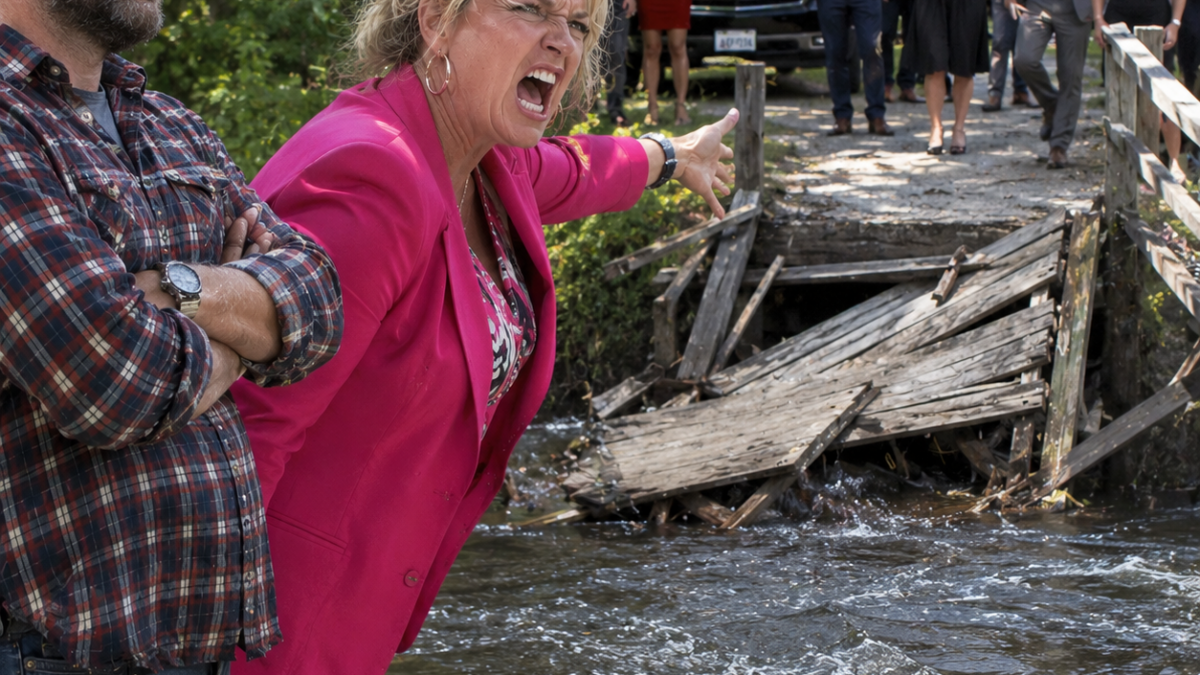
PART 2
The first county inspector showed up six days later.
Thursday morning.
I was in the workshop checking a set of drawings when I heard tires on gravel.
The truck had Williamson County markings.
A man in khaki pants stepped out carrying a clipboard.
“Colton Briggs?”
“That’s me.”
“County Building Inspections.”
I already knew.
“What’s the complaint?”
He looked slightly embarrassed.
“Unpermitted accessory structures.”
I glanced toward the workshop.
“Which structures?”
“That’s what I’m here to determine.”
His name was Mark Ellis.
Good guy.
Methodical.
I walked him through everything.
House.
Workshop.
Horse shed.
Storage building.
Then the bridge.
He checked permits.
Compared the deed.
Looked at the county plat.
Everything was fine.
At the bridge, he stood looking at the steel.
“You build bridges?”
“Design them.”
“You inspect this one?”
“Monthly.”
He tapped the railing.
“Looks old.”
“It is.”
“Unsafe?”
“No.”
“I didn’t think so.”
He closed the clipboard.
“I’m marking the complaint unfounded.”
“Who filed it?”
“Anonymous.”
Of course.
Two days later, he came back.
This time:
Illegal dumping near a waterway.
I walked him to the creek.
Nothing.
No trash.
No construction waste.
No debris.
He looked almost offended on my behalf.
“This is getting ridiculous.”
“Same complainant?”
“I can’t tell you.”
His eyes drifted toward Ridgewood.
He didn’t have to.
Four days later:
Unpermitted commercial business.
I owned a structural engineering company, but my office was in Round Rock.
I didn’t operate it from the property.
Complaint dismissed.
Then the anonymous letters started.
No return address.
Printed paper.
The first said:
**WE KNOW YOU’RE TRYING TO EXTORT THE NEIGHBORHOOD.**
The second:
**YOUR GRANDFATHER WOULD BE ASHAMED OF YOU.**
That one hurt.
I wish I could say it didn’t.
Grandpa had never charged Ridgewood a dime.
People used that bridge for decades because he believed allowing it was the decent thing to do.
Now Diane had taken that generosity and turned it into an accusation against me.
The third letter:
**WE’VE CONTACTED THE SHERIFF ABOUT YOUR BEHAVIOR. YOU SHOULD BE CAREFUL.**
I photographed all three.
Bagged them.
Logged dates.
Put them into a folder.
My profession teaches you something useful.
Failures leave evidence.
Before a steel connection gives way, there are often cracks.
Before concrete spalls, water has usually found a path.
Before a bridge collapses, it usually spends years telling somebody what is happening.
People do the same thing.
Diane kept leaving cracks.
I decided to record them.
Larry Caldwell helped.
Larry was eighty-one and lived three houses into Ridgewood.
He’d known Grandpa.
He came across the bridge every few weeks in an old Ford Ranger and sat on my porch drinking iced tea.
One afternoon, he said:
“She’s telling people you’re going to close the bridge.”
“I’m not.”
“I know.”
“She says I want to charge tolls.”
“That too.”
“I’ve never charged anyone.”
“I know.”
I stared toward Ridgewood.
“What else?”
Larry took a drink.
“She says you’re unstable.”
I laughed once.
“She hosts meetings at her house. Food, wine, the works.”
“About me?”
“Calls them community safety meetings.”
I shook my head.
“She’s good, Colton.”
“At lying?”
“At making lies feel respectable.”
That sentence stayed with me.
I installed four trail cameras.
One at each bridge corner.
Small.
Motion activated.
Cloud upload.
I mounted them inside rough cedar boxes so they looked like birdhouses.
Nobody noticed.
I kept inspecting the bridge every morning.
Steel solid.
Timber aging but serviceable.
The more Diane pushed, the calmer I became.
I’d already spoken to Russell Haynes, a property attorney in Austin.
I sent him the HOA easement demand.
The complaints.
Letters.
The deed.
He called me.
“Don’t respond emotionally.”
“I’m not.”
“Good.”
“Can repeated complaints matter?”
“They can.”
“For what?”
“Potential abuse-of-process issues. Interference with your property rights. Depends on facts.”
“I’m documenting.”
“Keep doing it.”
“What if she escalates?”
Russ paused.
“Then she gives us more.”
Diane thought silence meant pressure was working.
It wasn’t.
It meant I was waiting.
Then I had to leave town.
Wednesday morning, I drove west for a bridge inspection in El Paso.
Four-day job.
Routine.
I left before dawn.
Six hours later, I stopped for fuel outside Fort Stockton.
My phone buzzed.
**MOTION DETECTED — SOUTH BRIDGE CAMERA.**
I opened the feed.
At first, I thought there had been an accident.
Two flatbed trucks.
Tracked excavator.
Three men in hard hats.
Then I saw chains.
One man was fastening them around the main steel beam.
Another stood at the excavator controls.
Then the camera angle changed.
Diane.
White linen blazer.
Oversized sunglasses.
Arms crossed.
Standing on my property.
I sat in the truck.
For several seconds I couldn’t understand what I was looking at.
Then the excavator bucket came down.
It hit the timber deck.
Once.
Boards snapped.
Again.
More wood broke.
I called the camera feed full screen.
“Jesus Christ.”
The demolition crew kept working.
One man pointed.
Diane nodded.
The excavator shoved.
The first section of deck collapsed.
I called Russell.
Straight to voicemail.
“Russ, call me. Now.”
Then Sheriff’s dispatch.
Before I dialed, I stopped.
I was six hundred miles away.
If I called immediately and the crew left, maybe we’d preserve the bridge.
Part of me wanted that more than anything.
But another part was watching.
Diane was standing there.
Visible.
Camera recording automatically to the cloud.
The crew vehicles.
Faces.
Equipment.
Every minute.
I called anyway.
Reported an active trespass and property destruction.
But response out there would take time.
By the time anyone could stop it, most of the damage would already be done.
And Diane knew that.
That was why she waited until I was away.
I watched from a gas station parking lot as men destroyed something my grandfather had built forty years earlier.
The cutting torch came out.
Orange sparks sprayed into the morning.
The first I-beam separated.
My grandfather had hauled that beam himself.
I knew the story.
He borrowed a flatbed from the agricultural co-op.
The trailer tire blew halfway home.
He spent three hours beside the road fixing it with a jack that barely lifted the load.
Grandma told me he arrived after midnight covered in grease and smiling.
“He got his bridge steel,” she used to say.
On my phone, that steel hit the creek.
I heard almost nothing through the tiny speaker.
But in my head, the sound was enormous.
By noon, the bridge was gone.
Not damaged.
Gone.
Timber shattered along the banks.
Steel twisted into the water.
Concrete abutments broken apart.
The footer with Grandpa’s thumbprint cracked.
I stared at the screen.
My coffee sat untouched.
Trucks passed on I-10 behind me.
Normal life.
People going places.
Nobody knew a piece of my family’s history had just been smashed apart while I watched through a phone.
I turned the truck around.
Six hundred miles back east.
For most of the drive, I said nothing.
No music.
No podcasts.
Only road noise.
Anger came in waves.
But underneath it was grief.
I kept thinking about Grandpa.
He had been the kind of man who would stop whatever he was doing to help a stranger with a flat tire.
The kind of man who loaned tools and forgot who had them.
The kind who built a bridge and allowed an entire development to use it because people needed a way home.
Diane had called him a fool.
Maybe generosity always looks foolish to people who only understand leverage.
I got home after midnight.
Drove straight to the creek.
My headlights reached the bank.
Then stopped.
Where the bridge should have been was open space.
Water reflected the light.
A broken steel beam stuck up from the creek.
Timber floated against the bank.
The air smelled like burned metal.
Wet limestone.
Diesel.
I walked down.
My boots slipped on loose debris.
Then I found part of the south footer.
I knelt.
Ran my hand across the broken concrete.
There.
Half the thumbprint remained.
I sat beside it.
I don’t know how long.
Twenty minutes.
An hour.
Eventually I said:
“I’m sorry, Grandpa.”
The creek kept moving.
At home, I downloaded every camera file.
Four angles.
Continuous footage.
Diane arriving.
Crew arriving.
Diane speaking to the foreman.
Chains attached.
Excavator.
Torch.
Final beam falling.
I copied the files onto three drives.
One went in my safe.
One to Russ.
One to cloud storage.
Then I called the sheriff again.
Filed the formal criminal-mischief report.
Estimated loss?
“At least eighty-five thousand.”
The deputy went quiet.
“You have proof of who ordered it?”
“Video.”
“Clear?”
“Crystal.”
“Send it.”
Next call:
County Building Permits.
Unauthorized demolition.
Then TxDOT regional office.
Then Russell.
He answered at 6:12 in the morning.
“Colton?”
“She demolished it.”
“I got your voicemail.”
“I have four camera angles.”
“How much damage?”
“Eighty-five minimum.”
“Jesus.”
“She watched.”
“On camera?”
“Every minute.”
Russ was quiet.
Then:
“This is no longer an HOA dispute.”
“I know.”
“If valuation exceeds thirty thousand, potential criminal exposure gets serious.”
“I know.”
“You need an independent appraisal.”
“I’ll get one.”
“Do not contact her.”
“I wasn’t planning to.”
“Do not threaten her.”
“I won’t.”
“Do not post anything.”
“I don’t use Facebook.”
“Good.”
I looked through the kitchen window toward the creek.
“Russ.”
“Yeah?”
“They destroyed the direct access to Ridgewood.”
Pause.
“What?”
“The subdivision’s primary road crosses my bridge.”
“I know.”
“The bridge is gone.”
Another pause.
Then:
“Oh.”
“They did this without an alternate crossing.”
“Colton…”
“What?”
“You’re thinking about landlocked access.”
“I’m thinking about reality.”
“Be careful with that word.”
“The reality is nobody can cross where the bridge was.”
“That’s true.”
“And the only other route is that old northern detour.”
“Forty-plus minutes?”
“About forty-seven.”
Russ exhaled.
“That’s going to become a major county-access problem.”
“I didn’t create it.”
“No.”
“She did.”
“Yes.”
Before sunrise, Larry arrived.
He looked exhausted.
He carried a glossy flyer.
“You need to see this.”
I took it.
Bright colors.
Barbecue stock photograph.
Balloons.
**RIDGEWOOD ESTATES — FREE AT LAST!**
Underneath:
**BRIDGE REMOVAL CELEBRATION**
Saturday.
Brushy Creek Park.
Food.
Music.
Community.
At the bottom:
**WE’VE BEEN LIBERATED FROM EXTORTION.**
I stared at the paper.
“She’s throwing a party?”
Larry nodded.
“For destroying my bridge?”
“Apparently.”
I almost admired the insanity.
“People going?”
“Probably.”
“Why?”
“Because she told them you were trying to hold the neighborhood hostage.”
“I literally allowed them across for free.”
“I know.”
“She destroyed the thing they need.”
“I know.”
“Does nobody understand that?”
Larry gave me a tired look.
“They will.”
Saturday arrived hot.
Perfect Texas sky.
The party was four miles from Ridgewood on the highway side of the creek.
That detail mattered.
People drove out of the neighborhood before the celebration.
Across the crossing route that had existed while demolition equipment was being moved around the site.
By party time, the bridge was already gone, but many residents apparently assumed Diane had arranged some replacement access.
Why wouldn’t they?
She had told everybody removing the bridge would “free” them.
Sixty-three residents showed up.
I know because the county later recorded statements.
Catering truck.
Brisket.
Smoked sausage.
DJ.
Balloons.
Children.
A banner:
**OUR COMMUNITY, OUR ROAD, OUR FUTURE.**
Another:
**NO MORE BRIGGS BRIDGE TOLL.**
There had never been a toll.
Around one, Diane gave a speech.
Larry recorded part of it.
He sent me the video.
She stood at a microphone in a coral dress.
Gold bracelets.
Perfect hair.
Smiling.
“For too long,” she said, “one individual has held our entire community hostage.”
Applause.
“One individual believed he could control our access simply because of a technicality involving ownership.”
Technicality.
Ownership.
I replayed that word.
“One individual believed he could dictate terms to eighty families.”
More applause.
“Well, that bridge is gone.”
Cheering.
“And so is his leverage.”
They raised glasses.
People clapped.
At that exact moment, I sat at my kitchen table.
Three phones in front of me.
Legal pad.
Trail-camera stills.
Property plat.
Russ on speaker.
He said:
“You sure you want to petition for formal access review?”
“Yes.”
“That process could trigger a determination that Ridgewood’s current direct entrance is unusable.”
“It is unusable.”
“It may create serious hardship for residents.”
“I’m aware.”
“Some of them didn’t authorize the demolition.”
“I know.”
“You don’t sound happy about this.”
“I’m not.”
That was true.
I wasn’t sitting there imagining families stranded and smiling.
I thought about school buses.
Ambulances.
Older residents.
Kids.
My anger was with Diane.
But consequences don’t always land only on the person who creates them.
Russ said:
“We can request county emergency-access review and declaratory relief. But understand something.”
“What?”
“This is going to explode.”
“She already used an excavator.”
“Fair point.”
At 3:30, the party began winding down.
Parents loaded coolers.
Kids got into cars.
Balloons were tied to mirrors.
Some people still had **FREE AT LAST** signs taped inside windows.
They left Brushy Creek Park and headed toward Ridgewood.
Normal drive:
Eight minutes.
They turned onto the subdivision approach.
Road descended toward Onion Creek.
First vehicle was reportedly a silver minivan driven by Steve Callaway.
His wife beside him.
Two children in back.
The road curved.
Then ended.
Steve stopped.
Got out.
Walked forward.
Where the bridge had been, brown creek water rushed eight feet below.
Broken steel protruded through the current.
Opposite bank:
Road.
Subdivision.
Houses.
Home.
Less than forty feet away.
Completely unreachable by vehicle.
Second car stopped behind him.
Then third.
Ten.
Twenty.
Thirty.
The queue backed up the approach road.
People got out.
Confusion first.
Then frustration.
Then fear.
Imagine standing less than a hundred yards from your own house and realizing you cannot reach it because the structure you celebrated destroying three hours earlier was the structure carrying your road.
The irony was brutal.
But the people who worried me weren’t the ones holding party balloons.
Dale and Margaret Henderson were both in their eighties.
Dale had a bad hip.
Margaret used supplemental oxygen.
They had attended because Diane personally invited them.
Now Margaret stood beside a vehicle on a gravel road in Texas heat with an oxygen tank.
Children started crying.
Phones came out.
People called Diane.
HOA emergency number.
Sheriff.
Family members already inside the subdivision.
At the back of the line, Diane finally realized traffic had stopped.
Her Escalade moved slowly forward until she couldn’t go farther.
Then she got out.
Still wearing the coral dress.
She walked toward the creek.
People parted.
Nobody applauded now.
At the crossing, she stared.
I wasn’t there.
I was on my porch on the far side.
Through the trees, I could see vehicles.
Hear horns.
Voices.
I could have walked down.
I didn’t.
I had nothing to say.
The bridge was gone.
That fact belonged to her.
At 4:07, the first 911 call came in.
Then another.
Then several more.
“We can’t reach our houses.”
“There are elderly people here.”
“The bridge is gone.”
“Children are stranded.”
Deputy Travis Webb arrived first.
Then Brushy Creek Volunteer Fire Department.
Paramedics.
The deputy saw cars stretching nearly a quarter mile.
Balloons tied to mirrors.
Residents standing everywhere.
Children.
Elderly people.
Margaret’s oxygen tank.
He walked to the creek edge.
Looked at the wreckage.
Then radioed for additional help.
The creek was running too fast to wade.
Firefighters launched a shallow-draft rescue boat.
Children first.
Then elderly residents.
Medical needs.
I watched from a distance.
And that was the moment my anger changed.
Seeing a five-year-old wearing a life jacket because Diane demolished a bridge she didn’t own wasn’t satisfying.
It was infuriating.
She hadn’t only damaged me.
She had endangered everybody she claimed to represent.
Deputy Webb found her beside the Escalade.
“Mrs. Prescott?”
“Yes.”
“You’re HOA president?”
“I am.”
“Who removed the bridge?”
“The HOA authorized removal.”
Webb checked his tablet.
“Which board vote?”
Diane hesitated.
“It was an executive safety determination.”
“Do you have documentation?”
“The bridge was unsafe.”
“Who determined that?”
“We had concerns.”
“That isn’t what I asked.”
She folded her arms.
“The bridge was on community property.”
Webb looked at the county plat again.
“No, ma’am.”
Diane removed her sunglasses.
“What?”
“It’s on parcel owned by Colton Briggs.”
“That’s incorrect.”
“County records show the structure was entirely on Briggs property.”
“There must be some mapping issue.”
“No.”
Her face changed.
Webb continued.
“Mr. Briggs filed a criminal-mischief report.”
Silence.
“Estimated damage exceeds thirty thousand dollars.”
Diane’s lips parted.
“You can’t be serious.”
“I’m also documenting the emergency-access issue created by removal.”
“I acted for community safety.”
“You removed the crossing without establishing alternate emergency access.”
“I was told—”
“By whom?”
She stopped.
“I want my lawyer.”
“Absolutely.”
She received a criminal summons before dark.
The fire department made thirty-one boat trips.
Portable lights went up.
Some residents eventually took the forty-seven-minute northern detour.
It ran over roads most had barely used.
Narrow.
Poorly maintained.
Potholes.
Blind cedar curves.
A low-water ford.
The irony of the party disappeared very quickly.
By Monday morning, reality set in.
School bus service couldn’t use the detour safely.
Parents had to drive children to a highway pickup point before sunrise.
Ambulance response changed dramatically.
Fire department flagged Ridgewood as an emergency-access concern.
Garbage collection suspended regular service.
Delivery companies started refusing routes.
For the first week, people tried to treat it like temporary inconvenience.
By week two, property values entered the conversation.
One resident hired an appraiser.
The informal estimate was ugly.
Potential reductions around thirty percent if direct legal access wasn’t restored.
A $350,000 house potentially valued around $245,000.
A $400,000 property around $280,000.
Suddenly Diane’s “liberation” had a price.
Larry forwarded me HOA email threads.
They were vicious.
**WHO AUTHORIZED DEMOLITION?**
**WHY DIDN’T ANYONE CHECK THE DEED?**
**MY MOTHER CAN’T REACH DIALYSIS WITHOUT THE DETOUR.**
**WHO IS PAYING FOR THIS?**
**DID DIANE HAVE A BOARD VOTE?**
Then:
**SHE NEEDS TO RESIGN.**
The same people who had applauded her were furious.
I didn’t celebrate that either.
Fear makes people easy to manipulate.
Diane had given them a simple villain.
Me.
The greedy bridge owner.
The outsider.
The man supposedly extorting Ridgewood.
Some believed her because trusting their HOA president was easier than pulling a property deed.
That was foolish.
But not criminal.
Diane tried holding a board meeting.
Six people attended.
Larry was one.
He told me she sat at the head of the table in a black silk top and pearls.
She blamed the contractor.
Claimed she believed the bridge was HOA property.
Claimed safety concerns required immediate removal.
A resident asked:
“Where’s the engineering report?”
No answer.
Another:
“Where’s the board vote?”
No answer.
“Who authorized eighty-five thousand dollars in demolition?”
Silence.
“What was the replacement-access plan?”
Nothing.
Larry said that was the moment her hands started shaking.
Not much.
Just enough to make her coffee cup rattle against the saucer.
Forty-two Ridgewood families eventually hired their own attorney.
Not to sue me.
To sue Diane personally.
Diminished value.
Negligence.
Loss of access.
Emergency impacts.
Claimed damages exceeded four million dollars.
Her attorney argued she acted as HOA president.
HOA insurer reviewed the incident.
Unauthorized demolition.
No valid ownership check.
No permit.
No documented board authorization.
Coverage denied.
Diane was on her own.
Meanwhile, my case continued.
Independent bridge valuation came back at ninety-two thousand dollars.
Replacement costs.
Engineering.
Debris removal.
Concrete.
Steel.
Timber.
But no appraisal could value the thumbprint.
I went down to the wreckage almost every morning.
Creek moved around broken steel.
Silt collected.
Timber darkened.
I found pieces of the original deck and stacked them near the barn.
One chunk of footer containing Grandpa’s thumbprint I salvaged carefully.
It weighed almost eighty pounds.
I cleaned it.
Set it inside my workshop.
Russ visited one afternoon.
He saw it.
“That the famous footer?”
“Part of it.”
He crouched.
“Thumbprint?”
“Grandpa’s.”
Russ didn’t say anything for a moment.
Then:
“We can ask restitution for the physical structure.”
“I know.”
“But not this.”
“I know.”
He stood.
“You okay?”
“No.”
“Good answer.”
Four months later, Diane’s criminal case went to trial.
Trail-camera footage was Exhibit A.
Twenty-seven minutes of the demolition condensed for presentation.
Diane.
Excavator.
Steel.
Concrete.
No ambiguity.
Her defense attorney was experienced.
He dressed the case in softer language.
Community misunderstanding.
Safety concern.
Longstanding community use.
Confusion over property status.
Diane testified.
Navy blazer.
Minimal jewelry.
Reading glasses.
Quiet voice.
She looked nothing like the woman raising a glass at the party.
She said she believed the bridge was unsafe.
She said residents had expressed concern.
She said she acted under her understanding of HOA responsibility.
The prosecutor let her speak.
Then asked:
“Mrs. Prescott, before authorizing demolition, did you visit the Williamson County Clerk’s office?”
“No.”
“Did you obtain the recorded deed?”
“No.”
“Did you obtain a boundary survey?”
“No.”
“Did you request an engineering inspection?”
She hesitated.
“No.”
“Did any licensed structural engineer condemn the bridge?”
“No.”
“Did you obtain a demolition permit?”
“No.”
“Did your HOA hold a recorded vote authorizing destruction?”
Her attorney objected.
Overruled.
Diane looked down.
“No.”
The prosecutor paused.
“So you authorized destruction of a structure valued at tens of thousands of dollars, on land you had never verified the HOA owned, based on no engineering report and no recorded board vote?”
“I believed—”
“That wasn’t my question.”
Silence.
“Yes.”
That was it.
Not dramatic.
No screaming.
Just one word.
The jury deliberated for three hours.
Guilty.
Criminal mischief.
Reckless-endangerment-related consequences tied to access failure.
Probation.
Restitution.
Court costs.
Community service.
Diane stood while the sentence was read.
The posture I remembered was gone.
That perfect straight-backed certainty.
Gone.
She looked down at the floor.
I thought I would feel triumphant.
Instead, I thought about Grandpa.
If he had been there, he wouldn’t have enjoyed watching someone fall.
He might have said:
“She should’ve left what wasn’t hers alone.”
Then he would’ve gone home and fed the horses.
The week after sentencing, Ridgewood called a special HOA meeting.
Agenda:
Board dissolution and replacement.
Vote:
Seventy-one to four.
Diane’s board was gone.
The HOA itself remained.
New board elected.
Quiet people.
Larry joked that none of them owned a clipboard.
President was Tom Waverly.
Retired schoolteacher.
He called me.
“Mr. Briggs?”
“Colton.”
“Colton, then.”
“What can I do for you?”
“We need to talk about the bridge.”
“There isn’t one.”
“I know.”
Silence.
“We want to fix that.”
I met the new board at my property.
Not at the clubhouse.
At the creek.
Tom stood looking at the wreckage.
There were six board members.
Some couldn’t look me in the eye.
One woman finally said:
“I went to the party.”
I nodded.
“I clapped.”
Another pause.
“I believed her.”
I didn’t respond.
“I’m sorry.”
That was the first apology I had received from Ridgewood.
Then another board member spoke.
“We should’ve checked.”
“Yes.”
Tom cleared his throat.
“We’re prepared to fund reconstruction.”
I looked at him.
“No.”
They exchanged glances.
He said:
“Colton, we need the access.”
“I know.”
“What would you consider?”
“A new agreement.”
He nodded.
“What terms?”
“First, bridge remains private property.”
“Agreed.”
“Recorded in writing.”
“Agreed.”
“Second, HOA pays annual maintenance.”
“How much?”
“Twenty-four hundred.”
He calculated.
“Two hundred a month.”
“Correct.”
“Reasonable.”
“Third, permanent non-interference clause.”
“What exactly?”
“No HOA board touches, modifies, restricts, demolishes, claims, alters, or encumbers the bridge or any other structure on my land.”
Tom looked at the others.
Then back.
“Agreed.”
“One more thing.”
He waited.
“You maintain the approach roads like the original developer promised my grandfather.”
Tom smiled slightly.
“That sounds fair.”
Russ drafted everything.
Recorded.
Signed.
Not a handshake.
I loved Grandpa.
But I had learned that goodwill lasts only as long as people remember where it came from.
The new bridge would be different.
Wider.
Stronger.
Emergency rated.
Modern guardrails.
Improved drainage.
Reflective markers.
A bridge my grandfather couldn’t have built with scrap steel and a lawnmower-powered mixer.
But one he would understand.
Construction started in September.
First we removed wreckage.
Every beam cataloged.
Timber removed.
Concrete recovered where possible.
I saved anything connected to Grandpa.
Then new pilings.
Abutments.
Galvanized steel.
White-oak decking.
I worked with the crew during the day.
Then stayed late.
Hand-fitting planks.
Drilling bolt holes.
Tightening stainless carriage bolts.
There is something honest about rebuilding.
Demolition happens fast.
One excavator can erase decades in hours.
Building is slower.
Measure.
Cut.
Check.
Level.
Bolt.
Test.
Again.
Maybe that is why rebuilding heals things destruction cannot.
Two weeks after sentencing, Diane listed her house.
It sold well below what she had paid.
She moved on a Tuesday.
The new bridge wasn’t finished.
So she had to take the forty-seven-minute detour.
Larry called me.
“You watching?”
“No.”
“Why not?”
“Got work.”
“You’re no fun.”
I was fitting bridge decking.
That mattered more.
Nobody threw a party when Diane left.
No banners.
No champagne.
No applause.
She simply disappeared from Ridgewood.
That felt appropriate.
First Saturday in November, we finished.
Cool air.
Clear sky.
Pecan leaves going gold.
Live oaks still green.
The new bridge stretched clean across Onion Creek.
Silver-gray steel.
Pale oak deck.
Proper rails.
Fresh concrete.
The new board wanted a ceremony.
I resisted.
Tom said:
“Not for you.”
“For who?”
“Your grandfather.”
That got me.
So I agreed.
No DJ.
No catering company.
No balloons.
Neighbors came with folding chairs.
Kids sat in the grass.
People stood on both banks.
Someone hung a hand-painted bedsheet between cedar posts.
**BRIGGS BRIDGE — BUILT BY FAMILY, RESPECTED BY COMMUNITY**
I stared at it for a long time.
Larry crossed first.
Eighty-one years old.
Polished boots.
Slow steps.
His hand slid along the guardrail.
When he reached me, he nodded.
That was Larry’s version of a speech.
Dale and Margaret Henderson crossed next.
Dale used his cane.
Margaret held his arm.
They stopped in the center.
Looked down at the creek.
Margaret said:
“Your grandfather would have liked this bridge.”
“I hope so.”
“He would.”
Then children rode bicycles across.
Thump.
Thump.
Thump.
Dogs followed.
Families walked.
A woman I didn’t recognize approached.
“Mr. Briggs?”
“Colton.”
“Thank you.”
“You’re welcome.”
“We didn’t deserve this.”
I didn’t know what to say.
She looked toward the bridge.
“After what happened.”
I finally answered:
“My grandfather didn’t build the first one because people deserved it.”
She looked at me.
“He built it because they needed it.”
Her eyes filled.
“That sounds like a good man.”
“He was.”
Tom called everyone together.
He gave a short speech.
Thanked me.
Acknowledged what had happened.
No excuses.
Then he said something I remember.
“Ridgewood learned that authority is not the same thing as ownership, and ownership is not the same thing as decency.”
I liked that.
Then he handed me a framed photograph.
Black and white.
Grandpa.
Standing on the original bridge around 1985.
Maybe forty years old.
One boot on the lower rail.
Cigarette between his fingers.
Squinting into Texas sun.
I had never seen the picture.
“Where did you get this?”
“Old community newsletter.”
I turned the frame.
On the back:
**EARL BRIGGS, 1985 — THE MAN WHO CONNECTED US.**
My throat closed.
For a second, I couldn’t speak.
The entire story compressed into that photograph.
A man built something because neighbors needed it.
Nobody signed a contract.
Nobody paid him.
He gave access freely.
Years later, someone mistook generosity for surrender.
Then destroyed the gift because she couldn’t own it.
I ran my thumb over the frame.
“Thank you.”
That evening, everyone went home.
Across the bridge.
No rescue boats.
No detours.
No arguments.
Just cars crossing.
Exactly what bridges are supposed to do.
I walked down alone at sunset.
Creek low and clear.
About two feet.
Limestone visible beneath the surface.
I stood in the center.
Put my hand on the new rail.
Cool steel.
Smooth.
Solid.
Then I walked to the south abutment.
Three weeks earlier, while the concrete was curing, I had done something.
Pressed my thumb into it.
Beside mine was another impression.
Not Grandpa’s actual hand.
A cast I made from the surviving piece of his 1981 footer.
Two thumbprints.
Forty years apart.
I crouched.
Touched his.
Then mine.
Same creek.
Same family.
Different bridge.
I thought about Diane.
The party.
The balloons.
The sixty-three people stranded.
The trial.
For months, people called what happened revenge.
Some neighbors said I “let” them become landlocked.
Others said I should have rebuilt immediately.
Maybe.
But there is a difference between revenge and consequence.
I did not tear down the bridge.
Diane did.
I did not block an existing public road.
Diane destroyed a private structure the neighborhood relied on.
I did not tell sixty-three families to attend a celebration on the wrong side of the creek.
Diane invited them.
I did not create the forty-seven-minute detour.
I simply refused to pretend an eighty-five-thousand-dollar bridge could be smashed into a creek and still somehow carry traffic.
Consequences are strange.
People often blame the person who refuses to erase them.
Diane spent weeks telling everyone I was punishing Ridgewood.
But rebuilding immediately, at my own expense, without an agreement, would have taught exactly the wrong lesson.
It would have said:
You can destroy my property.
You can smear my name.
You can celebrate it.
And I will still clean up your mistake before you have to feel it.
Grandpa was generous.
He wasn’t weak.
I had to learn the difference.
Months later, Russ and I were having lunch in Austin.
He asked:
“Would your grandfather have signed the easement?”
I thought.
“No.”
“You sure?”
“Yes.”
“He gave them access for free.”
“That’s not the same thing.”
“How?”
“Because he chose every day.”
Russ nodded.
“That’s ownership.”
Exactly.
A favor is valuable because it can be given.
If someone can force you to continue it forever, it stops being generosity.
It becomes obligation.
Diane never understood that.
Maybe she never would.
The new agreement changed Ridgewood.
Not because twenty-four hundred dollars a year was significant.
It wasn’t.
Residents paid more for landscaping.
What mattered was acknowledgment.
Every year, when the HOA sent that maintenance payment, they were acknowledging:
This bridge belongs to someone.
We are crossing because an agreement allows us.
That changed behavior.
People started waving again.
At first awkwardly.
Then normally.
Children came back to fish along the creek.
I allowed it.
A teenager asked permission to take graduation photos on the bridge.
I said yes.
A family left a Christmas card at my mailbox.
I didn’t become a member of Ridgewood.
Never wanted to.
But the creek stopped feeling like a battle line.
Larry kept visiting.
One afternoon, he sat on my porch holding iced tea.
“You know what Diane’s biggest mistake was?”
“Which one?”
“Thinking people loved her.”
I frowned.
“She had plenty of supporters.”
“People liked being on her good side.”
“Difference?”
“Huge.”
He took a drink.
“Fear looks like loyalty until the consequences arrive.”
I thought about the party.
Sixty-three people cheering.
Then the HOA vote.
Seventy-one against her board.
“Fair point.”
Larry looked toward the bridge.
“Your granddad knew that.”
“Knew what?”
“People are people.”
“That sounds profound.”
“It isn’t.”
He smiled.
“He just didn’t expect them to be better than they were.”
I looked at him.
“Does that mean he was cynical?”
“No.”
“It means he was kind without being stupid.”
I laughed.
“I wish I’d learned that earlier.”
“You did.”
“Thirty-eight isn’t early.”
“Try eighty-one.”
Time moved.
The legal cases settled.
Diane completed community service.
Restitution payments came through.
I used most of mine on the bridge.
Some residents recovered portions of losses through their own claims.
Insurance complications dragged on.
Property values gradually recovered once legal access was restored.
Garbage trucks returned.
School buses crossed the new bridge.
Ambulance response returned to normal.
One morning, I stood beside the road when the first school bus crossed.
Yellow body.
Heavy diesel.
Exactly the kind of load Grandpa’s original bridge was never designed for.
The new span barely noticed.
That made me proud.
Not because it was bigger.
Because it was safer.
A little boy near the window waved.
I waved back.
Then the bus disappeared toward the highway.
Bridges rarely receive gratitude when they work.
That is the best compliment.
Nobody thinks about them.
That was what Grandpa understood.
Build it right.
Then let people forget it is there.
One spring morning, a storm came through.
Hard rain.
Onion Creek rose quickly.
Brown water.
Branches.
Debris.
The old bridge might have made me nervous.
The new bridge had better clearance.
Better abutments.
I stood in rain gear watching water pass beneath.
Larry called.
“How’s the bridge?”
“Fine.”
“You sure?”
“I designed it.”
“That wasn’t my question.”
I laughed.
“It’s fine.”
He paused.
“You sleeping?”
“Yes.”
“Good.”
After the storm, I inspected everything.
No damage.
At the south abutment, mud had splashed across the thumbprints.
I washed them clean.
Grandpa’s.
Mine.
I realized something then.
When I was younger, inheritance meant property.
Land.
House.
Bridge.
Money.
Things.
After Grandpa died, I learned inheritance can also mean responsibility.
You don’t only receive what someone built.
You receive the choice of what to protect.
And what to change.
The first bridge was his.
The second was mine.
But both carried the same idea.
Connection should be built on respect.
Not entitlement.
A year after the demolition, Ridgewood held its summer gathering.
Different park.
Different board.
Tom called.
“You coming?”
“I don’t do HOA parties.”
“Not an HOA party.”
“What is it?”
“Neighborhood picnic.”
“That sounds exactly like an HOA party.”
“No speeches.”
“Suspicious.”
“No banners.”
“Better.”
“Larry says you have to come.”
“That’s abuse of authority.”
Eventually I went.
No caterer.
People brought food.
Kids played.
Tom grilled burgers.
Margaret Henderson sat under shade with her oxygen concentrator.
Dale Henderson argued with Larry about baseball.
Nobody mentioned Diane.
That surprised me.
I expected her to hover over everything.
She didn’t.
People had moved on.
A little girl approached.
“Are you the bridge man?”
Her mother turned red.
“Emily.”
“It’s okay.”
I crouched.
“Which bridge?”
“The new one.”
“I helped.”
“My dad says you made it because the old one broke.”
I looked at her father.
He suddenly became very interested in his hamburger.
“Something like that.”
She said:
“I like the noise when my bike goes over.”
“What noise?”
“Bump-bump-bump-bump.”
I smiled.
“That’s the deck joints.”
She had no idea about the party.
The lawsuits.
The rescue boats.
To her, the bridge had always been there.
That felt like success.
Later, Margaret sat beside me.
“I need to tell you something.”
“All right.”
“I went to Diane’s party.”
“I know.”
“I clapped.”
I nodded.
“I believed you were trying to charge us.”
“I know.”
“She told us you were going to close everything.”
“I know.”
Margaret looked toward the children.
“When we got stranded, I hated you.”
That surprised me.
“Me?”
“For maybe an hour.”
“Why?”
“Because it was easier.”
She looked embarrassed.
“Easier than admitting I’d cheered when someone destroyed the thing I needed.”
I said nothing.
“Then Deputy Webb told us whose bridge it really was.”
She looked at me.
“I’m sorry.”
“You already told me.”
“I needed to say it again.”
“Okay.”
She reached over and squeezed my hand.
“Your grandfather was good to us.”
“Yes.”
“We forgot.”
That hurt more than the accusation.
Because it was true.
People get used to gifts.
Do something kind long enough and eventually someone starts calling it a right.
Grandpa’s bridge became invisible.
Nobody thought:
Earl Briggs allows us across.
They thought:
This is our road.
Diane only pushed that assumption to its ugliest conclusion.
She thought if everyone used something, ownership no longer mattered.
But ownership matters most when generosity exists.
Without it, giving becomes confiscation.
Later that year, I found another old photograph.
Grandma’s belongings had been stored in boxes.
I was cleaning the attic.
There it was.
Grandpa building the bridge.
Summer 1981.
No shirt.
Jeans.
Work boots.
Standing beside the drum mixer.
Steel beam behind him.
Grandma had written on the back:
**EARL SAYS IT’LL LAST LONGER THAN HE DOES.**
I sat on the attic floor laughing and crying at the same time.
He was right.
The original bridge did outlast him.
Not by much.
But it did.
And even after Diane destroyed it, part of it remained.
Thumbprint.
Stories.
The habits he taught me.
When the new bridge needed its first annual inspection, I did exactly what he used to do.
Walked slowly.
Hand along steel.
Checked fasteners.
Tapped timber.
Listened.
Larry watched from his truck.
“You know you have instruments for that.”
“I do.”
“Then why are you hitting wood with a hammer?”
“Because Grandpa did.”
“Highly scientific.”
“Very.”
He laughed.
I completed the formal inspection afterward.
No deficiencies.
I sent the report to the HOA.
Two days later, Tom replied:
**RECEIVED. THANK YOU FOR TAKING CARE OF THE BRIDGE.**
Five ordinary words.
I stared at them longer than I expected.
Thank you.
Grandpa never asked for it.
Maybe that was why it mattered.
One afternoon several years later, a young structural engineering student emailed me.
He had heard about the Briggs Bridge case in a property-and-infrastructure seminar.
He asked if he could visit.
I agreed.
His name was Noah.
Twenty-one.
Engineering student at Texas A&M.
We walked the bridge.
He wanted to talk about structural design.
Then property rights.
Then ethics.
Finally he asked:
“Would you have rebuilt if the new board refused the maintenance agreement?”
I looked at the creek.
“Eventually?”
“Yes.”
“Probably.”
“Even after everything?”
“People still needed access.”
He frowned.
“Then why wait?”
“Because rebuilding immediately would’ve preserved the same broken relationship.”
He thought.
“The structural problem wasn’t the only problem.”
“Exactly.”
I tapped the railing.
“A bridge works because both ends are supported.”
He smiled.
“That sounds like a professor line.”
“I’m stealing it for future use.”
He laughed.
Then asked:
“Do you hate Diane?”
That question surprised me.
“No.”
“You don’t?”
“No.”
“Why?”
I thought about the woman in the coral dress.
The excavator.
The courtroom.
“Hatred is expensive.”
He waited.
“She already cost me one bridge.”
I looked at him.
“I wasn’t giving her anything else.”
That answer was more honest than forgiveness.
I didn’t forgive her in some dramatic spiritual moment.
I simply stopped allowing her to occupy space in my life.
The bridge deserved more attention than she did.
Grandpa deserved more.
The creek deserved more.
Peace deserved more.
The final piece came years later.
Williamson County proposed upgrading part of the approach road.
An engineer called me.
They needed temporary access near the bridge.
I laughed when he asked.
“What?”
“Nothing.”
“We’ll need an agreement.”
“Yes.”
“We can compensate you.”
“Yes.”
“We’ll restore everything when done.”
“Put it in writing.”
He did.
That was all.
No conflict.
No threat.
No excavator appearing while I was away.
Just adults respecting ownership.
The project took six weeks.
Finished perfectly.
It reminded me what the original dispute should have looked like.
Diane could have negotiated.
The HOA could have contributed to maintenance.
We could have formalized Grandpa’s handshake arrangement.
Everyone would have won.
Instead, she decided agreement was weakness.
She wanted permanent control without permanent responsibility.
That choice cost her nearly everything.
And it cost innocent neighbors months of chaos.
People sometimes think revenge stories are satisfying because someone bad suffers.
I disagree.
The suffering was never the satisfying part.
The satisfying part was the moment the new bridge opened.
Larry walking across.
Margaret looking down at the creek.
Children riding bicycles.
The first ambulance crossing safely.
The first school bus.
The first annual maintenance payment arriving exactly on schedule.
The satisfaction was order returning.
But better than before.
Grandpa’s bridge was a gift.
My bridge was an agreement.
Both were generous.
Only one was protected.
I wish Grandpa had lived long enough to see the difference.
Maybe he would’ve teased me.
“Lawyers ruin everything.”
Then I’d remind him a handshake arrangement nearly cost us the crossing.
He would probably shrug.
“Worked twenty years.”
Hard to argue with that.
One November evening, I walked out after dinner.
No traffic.
Stars clear.
Onion Creek moving beneath.
I carried Grandpa’s framed photograph.
The one from 1985.
I set it on the rail.
For a minute, it looked like he was standing on both bridges at once.
Young Earl in black and white.
Me on the bridge forty years later.
I touched the two thumbprints.
His cast.
Mine.
People say bridges connect places.
That is true.
But sometimes they connect time.
The man who poured concrete in 1981.
The grandson who pressed his thumb beside his decades later.
A neighborhood that forgot a favor.
A neighborhood that learned respect.
An old bridge destroyed.
A new one built.
I stood there until headlights appeared in the distance.
A car approached from Ridgewood.
Slowed.
Crossed.
The driver waved.
I waved back.
Then darkness again.
That was enough.
Diane’s party had ended years before.
The balloons disappeared.
The banners disappeared.
The applause disappeared.
Even the legal headlines eventually vanished.
The bridge remained.
That is what structures do when they are built correctly.
They outlast noise.
The next morning, I found a small envelope taped to the guardrail.
No name outside.
Inside was a handwritten note.
**Mr. Briggs, my daughter had an asthma emergency last night. The ambulance reached us in eight minutes because of this bridge. Thank you.**
I read it twice.
Then folded it.
Put it in my pocket.
I never learned which family wrote it.
Didn’t need to.
Grandpa had built the original bridge because people needed a way across.
All those decades later, that was still the only reason that really mattered.
I walked to the south abutment.
Placed my thumb over Grandpa’s impression.
Then mine.
Concrete cold beneath my hand.
Some things you inherit.
Some things you earn.
And some things you build twice because somebody mistook your kindness for weakness and tried to take them away.
The first bridge taught me generosity.
The second taught me boundaries.
I needed both lessons.
The creek kept running below me.
Cars crossed overhead.
And for the first time since Diane Prescott sent that cream-colored easement letter, nothing about the sound bothered me.
No anger.
No tension.
No waiting for the next attack.
Just tires rolling over oak planks.
People going home.
Exactly the way Grandpa intended.








