PART 2: HOA Karen Cut Through My Cattle Field Every Day—So I Turned Her Shortcut Into a Federally Protected Lake Forever
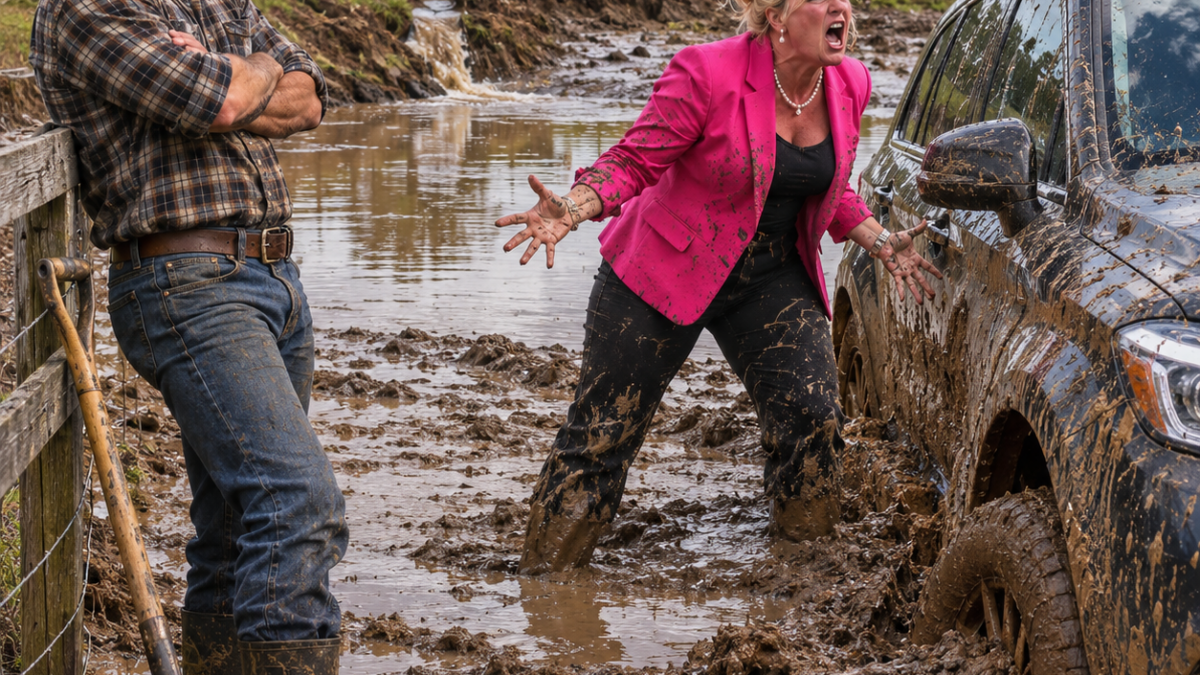
PART 2
Two weeks after Tammy stood in my yard and called sixty years of family ownership “adorable,” I reinforced the west boundary.
I didn’t make a performance of it.
No threatening signs.
No angry social-media posts.
No phone call to the HOA.
I replaced weak posts, repaired every strand of barbed wire, added heavy steel cable to the sections that had been cut, and installed padlocks on the gates.
Ellie helped me one Saturday morning.
She sat on the tailgate stripping insulation from a length of tie wire while I worked.
“Is this because of that lady?”
I looked over.
“What lady?”
“The blonde one.”
“You’ve met her?”
“No. I saw her car.”
I drove another staple into a cedar post.
“She thinks people from the subdivision should be allowed to cross here.”
Ellie frowned.
“Why?”
“Because it saves them time.”
“That’s dumb.”
I laughed.
“That is a very concise legal opinion.”
She handed me the wire.
“Are they allowed to?”
“No.”
“Then why are we fixing the fence?”
That question followed me the rest of the day.
A child looks at a boundary differently.
If something belongs to somebody else, you ask permission.
If they say no, you stay out.
Adults manage to complicate that whenever money or convenience gets involved.
I finished the cable.
Locked the gate.
For about a month, the tire tracks stopped.
I started believing maybe Tammy had finally accepted the answer.
Then a county inspector arrived.
His name was Dwight.
Late fifties.
Sunburned forehead.
Clipboard tucked under one arm.
He looked apologetic before he even introduced himself.
“Mr. Hendricks?”
“That’s me.”
“County Health Department.”
“What can I do for you?”
He glanced toward the cattle.
“We received a formal complaint alleging biological contamination associated with your livestock operation.”
I leaned against the barn door.
“Biological contamination.”
“Yes, sir.”
“From cows.”
“Yes.”
“On a cattle ranch.”
He almost smiled.
“Complaint specifically alleges manure runoff entering Cypress Creek and creating an immediate public-health risk to residents of Ridgewood Estates.”
There were phrases in the report like biological hazard, dangerous bacterial loading, and drinking-water emergency.
Whoever wrote it had even cited an E. coli limit that didn’t exist in any regulation I knew.
I didn’t need Tammy’s signature.
The language sounded exactly like her.
I could have gotten angry.
Instead I said:
“Come with me.”
For the next two hours, I walked Dwight through the ranch.
Concrete-lined collection areas.
Graded drainage channels.
Buffer vegetation.
Creek setback.
Water trough placement.
Runoff control.
Everything.
I had designed most of it myself using standards not very different from systems I had helped build for federal installations.
Dwight sampled the creek at four locations.
Checked drainage elevations.
Photographed cattle areas.
Made notes.
When we reached his truck, he leaned against the driver’s door and wiped his forehead.
“Mr. Hendricks, I’ve inspected somewhere around thirty cattle operations this year.”
“That good or bad?”
“Yours might be cleaner than my kitchen.”
I laughed.
Ten days later, the county dismissed the complaint.
No violations.
No water-quality issue.
No biological hazard.
I thought that would embarrass Tammy.
People like Tammy don’t experience embarrassment the way normal people do.
They experience contradiction as insult.
That same week, she posted on Ridgewood’s neighborhood page.
The county inspection had been “questionable.”
The inspector had been “unusually friendly” with me.
Families should avoid “outdoor water features.”
There was still a “health emergency.”
Eighty-four households saw it.
The comments began.
Has anyone tested our drinking water?
What about the kids?
Why is the county protecting him?
Can the HOA force the ranch to move the cattle?
Within a week, I wasn’t Colt Hendricks anymore.
I was the rancher poisoning Ridgewood.
I didn’t care what strangers online thought about me.
Then Ellie came home from school.
She dropped her backpack on the kitchen floor.
Hard.
“Hey.”
Nothing.
“You hungry?”
“No.”
She went toward her room.
“El.”
She stopped.
“What happened?”
“Nothing.”
“Try again.”
She stood with her back to me.
Then turned.
Her eyes were red.
“A girl said your cows are making people sick.”
I felt something cold settle in my stomach.
“Who?”
“Doesn’t matter.”
“It matters to me.”
“She lives in Ridgewood.”
I pulled out a chair.
“Sit.”
“I don’t want to.”
“Okay.”
So I stayed standing too.
“What exactly did she say?”
Ellie looked down.
“She said her mom says everybody knows our ranch water is contaminated. She said they’re going to get rid of the cows.”
“Your teacher hear that?”
“Yes.”
“What did she say?”
“Nothing.”
That bothered me even more.
I kept my voice level.
“The county tested the creek.”
“I know.”
“It’s clean.”
“I know.”
“Our operation passed inspection.”
“I know, Dad.”
“Then don’t let some kid—”
“That’s not the point.”
Her voice cracked.
I stopped.
She wiped her face angrily.
“If it’s not true, why does she get to say it?”
I didn’t have a good answer.
“Why doesn’t somebody stop her?”
Again, no answer.
Not yet.
That night, after Ellie went to bed, I opened my laptop.
Screenshots.
Tammy’s posts.
Comments.
Dates.
Shares.
I saved everything.
Then copied it to an external drive.
The next morning, I called Trent Mercer.
Not related to the HOA.
Old friend from my Corps days.
Now a civil litigator in San Antonio.
I explained what was happening.
He listened.
Then said:
“Document everything.”
“I am.”
“No, Colt. I mean everything.”
“Explain.”
“Every complaint. Every post. Every letter. Every dollar she costs you. Every damaged fence. Every hour of lost work.”
“What for?”
“Because a pattern matters.”
I leaned against the kitchen counter.
“If she’s filing knowingly false complaints and interfering with your business or property rights, that can become more than annoying neighborhood behavior.”
“How much do I need?”
“Don’t worry about how much.”
He paused.
“People like this usually keep helping you.”
“What do you mean?”
“They think escalation is pressure. Most of the time it’s evidence.”
I looked at the folder on my laptop.
“Let her keep swinging?”
“Exactly.”
I didn’t like that strategy.
Especially after Ellie.
But I understood it.
Patience had been part of engineering too.
Water rarely destroys a structure in one dramatic moment.
It finds weakness.
Keeps pressure on it.
Waits.
Early March, before sunrise, I drove toward the west pasture.
Something felt wrong immediately.
Cattle were bunched farther from the fence than usual.
I got out.
Walked the boundary.
The heavy cable had been cut.
Three places.
Not broken.
Not stretched.
Cut clean.
Industrial bolt cutters.
I followed the opening.
Tracks crossed the grass.
Then I counted cattle.
Once.
Twice.
Fifteen missing.
I got in the truck and started searching.
Sheriff’s dispatch called at 6:15.
Two calves had been hit on Ranch Road 648.
My stomach dropped.
I left Ellie sleeping.
Hoped I could handle it before she woke.
I couldn’t.
The delivery truck sat at an angle on the shoulder.
Hazards blinking.
Black skid marks cut across the asphalt.
The driver sat on his bumper with both hands over his face.
He looked maybe twenty-five.
He wasn’t injured.
He was shaking.
The calves were small.
Three months old.
Spring calves.
One had been thrown toward the ditch.
The other lay closer to the road.
I won’t describe more than that.
I had raised them from birth.
Ellie had bottle-fed one for three days after its mother struggled to nurse.
Her name for him was Button because of a white spot under his jaw.
He was the one nearest the ditch.
Sheriff Boyd Lawson stood beside me.
Mid-fifties.
Quiet.
Heavy shoulders.
He let me stand there before he spoke.
“Driver says they came out of nowhere.”
“I believe him.”
“He wasn’t speeding.”
“I believe that too.”
We drove to the fence.
Lawson crouched beside the cut steel cable.
Touched the edge.
“Fresh.”
“Yes.”
“Could livestock break this?”
“No.”
“Equipment?”
“Not clean like that.”
He stood.
“You think you know who?”
“I know who benefits.”
“That isn’t the same thing.”
“I know.”
He looked toward the subdivision roofs in the distance.
“I need evidence, Colt.”
“My word isn’t enough?”
“Your word gets me interested.”
He nodded toward the cable.
“Evidence gets me a warrant.”
Then he put one hand on my shoulder.
“Get me something I can use.”
Ellie was waiting in the kitchen when I got home.
She had seen the county truck.
“Where were you?”
I set my hat down.
“Fence trouble.”
She stared at my jeans.
There was blood on one knee.
Her face changed.
“Which cows?”
“Ellie.”
“Which?”
I didn’t answer quickly enough.
“Button?”
I closed my eyes.
She made one sound.
Small.
Then pushed past me and ran outside.
I followed her.
She went all the way to the barn before she stopped.
I let her cry.
There are moments as a father when you want to repair what’s hurting your child.
This wasn’t repairable.
“Did that woman do it?”
“I don’t know.”
“You know.”
“I suspect.”
“Same thing.”
“No.”
She looked at me.
“That distinction matters.”
“To lawyers.”
“To us too.”
She wiped her eyes.
“If we become willing to accuse without proof because we’re angry, then we become like her.”
Ellie hated that answer.
I did too.
But it was true.
That afternoon, I drove to the feed store and bought four trail cameras.
Infrared.
Motion activated.
Weatherproof.
I mounted three near the cut locations and one facing the main gate.
Covered them.
Adjusted angles.
Tested motion.
Then waited.
Eleven days.
At 2:14 one morning, two men appeared.
Dark work clothes.
White pickup.
Bolt cutters.
They walked straight to the repaired fence.
No hesitation.
They knew exactly where to cut.
Five minutes.
Three gaps.
Then one man walked beneath camera two.
The truck door behind him reflected enough infrared for me to read the logo.
**FULLERTON PROPERTY SERVICES.**
Tammy’s husband Dale owned that company.
I watched the video three times.
Then copied it.
External drive.
Cloud storage.
USB locked in barn safe.
The next week, certified letters began arriving from the Ridgewood HOA.
Formal demands.
Remove cattle within five hundred feet of the Ridgewood boundary.
Two hundred dollars per day for noncompliance.
I read the first letter while eating breakfast.
Ellie sat across from me.
“Can they do that?”
“No.”
“How do you know?”
“Because we don’t belong to their HOA.”
“That’s it?”
“That’s it.”
“So the letter means nothing?”
“It means evidence.”
She stared at me.
“You’re starting to sound like Uncle Trent.”
“Terrifying.”
I took the trail-camera footage to Sheriff Lawson.
He watched both clips.
Then read the HOA letters.
“This gives me something.”
“Enough?”
“Enough to open stronger.”
“What about arrest?”
“Dale has friends.”
I knew.
He sat on the county planning commission.
Lawson continued.
“If I move too fast and his lawyer punches holes in this, we lose leverage.”
“What do you need?”
“More.”
I hated that word.
But I understood.
On the way home, I called Walt Pickett.
Walt owned the ranch north of mine.
Seventy-one.
Had known Dad most of his life.
I asked one question.
“When Ridgewood was built, was there ever supposed to be another road?”
Silence.
Then:
“Come over.”
Walt’s kitchen smelled like black coffee and bacon grease.
Exactly the way it had when I was a kid.
He poured a cup.
“Original plan had two access roads.”
I sat forward.
“Where was the second?”
“East boundary.”
“To FM 2093?”
“Straight out.”
“That would’ve solved the fourteen-minute loop.”
“That was the point.”
“What happened?”
“Road disappeared.”
“Why?”
Walt stared into his coffee.
“Cost.”
“How much?”
“Hartley said around $1.2 million.”
I leaned back.
“Developer saved that by deleting the road.”
“Looks that way.”
“Planning commission approved it?”
“Dale Fullerton signed the revised plan.”
There it was.
I let the silence sit.
“Anything else?”
Walt’s eyes narrowed.
“You didn’t hear this from me.”
“I’m listening.”
“Dale bought a forty-foot boat six weeks after that approval.”
“That proves nothing.”
“No.”
“What do you think?”
“I think county commissioners don’t usually buy boats like that on county salaries.”
I stared at the table.
The shortcut suddenly looked different.
Hartley saved over a million dollars.
Dale approved removal of the required road.
Tammy’s residents were left with one inconvenient entrance.
Then Tammy treated my pasture as the missing access route.
Maybe the trespassing hadn’t been planned from day one.
Maybe it had.
Either way, the economics made sense.
My property was being used to solve a problem somebody else had paid not to solve.
That afternoon, I filed a public-records request.
Everything related to Ridgewood.
Original site plans.
Revisions.
Commission minutes.
Emails.
Developer submissions.
Financial disclosures.
Correspondence.
I asked for all of it.
They estimated three to four weeks.
Fine.
I had learned patience.
Tammy hadn’t.
Three days later, she organized a protest.
She called it a “Community Safety Walk.”
Thirty-something Ridgewood residents marched along Ranch Road 648 beside my fence.
Handmade signs.
**SAFE STREETS, NOT CATTLE DRIVES.**
**OUR CHILDREN DESERVE BETTER.**
Tammy carried a bullhorn.
Her voice rolled across the pasture.
The cattle nearest the road startled.
Bunched.
Moved away.
I walked toward the fence.
Tammy saw me.
“Here’s the property owner responsible for this situation!”
I stopped behind my fence.
She pointed the bullhorn toward me.
“Mr. Hendricks, when will you remove the livestock creating this danger?”
“When will you stop trespassing?”
Some residents looked uncomfortable.
Tammy smiled.
“The community has a historic access pattern.”
“No.”
“Your gates interfere with public movement.”
“No public road crosses my ranch.”
“You cannot isolate an entire neighborhood.”
“I didn’t design Ridgewood.”
That landed.
Tammy’s smile disappeared.
“I would be very careful about accusing people.”
“I didn’t accuse anybody.”
“You implied—”
“I said I didn’t design your subdivision.”
She lifted the bullhorn again.
I turned around and walked away.
Then I noticed a woman near the back.
Short brown hair.
About forty.
She met my eyes.
Gave me a small apologetic nod.
After the march passed, she returned alone.
Her name was Gail Pemberton.
“I’m sorry.”
“For what?”
“Being there.”
“Why were you?”
She looked toward the road.
“Tammy controls the fines.”
“That doesn’t explain marching.”
“It does if you live there.”
I waited.
“She doubles assessments when people question her.”
“Can she?”
“Probably not.”
“So why pay?”
“Because fighting costs time and money.”
I thought about Ellie asking why nobody stopped her.
Gail continued.
“She added a landscaping fee last year. Nobody voted. People complained. She threatened enforcement.”
“So residents are afraid.”
“Yes.”
“Of their own HOA president.”
“Yes.”
I looked toward the subdivision.
Those people weren’t all my enemies.
Some were scared.
Some were tired.
Some had been manipulated.
The line between victim and participant was getting complicated.
That night, I sat on the porch.
Cypress Creek was audible in the darkness.
Sarah used to call it the only music the ranch needed.
I could almost see her carrying that old coffee mug.
I thought about Tammy.
Dale.
Greg Hartley.
The missing road.
The dead calves.
Ellie crying.
And the low area where vehicles had worn my pasture to dirt.
A natural depression.
I had noticed standing water there during heavy rain since childhood.
I looked toward the creek.
Not yet.
Just a thought.
The records arrived three and a half weeks later.
Four hundred twelve pages.
A cardboard box on my porch.
I opened it at the kitchen table.
Ellie worked algebra across from me.
“You’re actually reading all that?”
“Yes.”
“Why?”
“Because people hide important things in boring paperwork.”
She looked at the box.
“That’s evil.”
I smiled.
“Accurate.”
At 8:20 p.m., I found the original 2019 Ridgewood site plan.
Two entrances.
Main road.
Secondary road east to FM 2093.
A note next to it cited county subdivision ordinance 4.12.
**REQUIRED.**
I put a yellow sticky note there.
At 9:05, I found the revised 2020 plan.
Same lots.
Same subdivision.
Secondary road gone.
In its place:
**Access study deferred pending future development.**
Dale Fullerton’s signature approved the revision.
No obvious public discussion in the meeting minutes.
No hearing.
I kept reading.
At 10:42, I found the check.
$45,000.
Hartley Development LLC.
Payable to Fullerton Family Trust.
Dated three weeks before Dale approved the roadless site plan.
I stopped breathing for a second.
Ellie looked up.
“What?”
“Go finish your homework.”
“That means something happened.”
“It means finish your homework.”
She narrowed her eyes but went back to algebra.
I kept reading.
Dale’s financial disclosure.
No mention of the payment.
No disclosure of a relevant family trust.
No acknowledgement that his wife was about to become HOA president of the development connected to his vote.
I leaned back.
Forty-five thousand dollars.
A missing road.
A million-plus dollars in developer savings.
A forced shortcut across my ranch.
The scheme finally had a shape.
I walked outside after midnight.
The air smelled like cedar.
Creek running low.
Late summer.
I stood at the southwest pasture looking toward the worn dirt path.
That depression had naturally collected water for decades.
If Cypress Creek were redirected through a controlled conservation channel into that basin…
I knew the gradient.
I knew the soil.
I knew water law well enough to know you don’t simply dam or divert a creek because you feel like it.
You do it legally.
Permits.
Hydrology.
Purpose.
Wetland restoration.
I whispered:
“I think I know how to stop them, Sarah.”
Next morning, I called the Texas Commission on Environmental Quality.
Three transfers later, I reached Nina Vasquez.
Environmental compliance officer.
I explained the ranch.
The creek.
Riparian rights.
Seasonal basin.
Potential agricultural wetland restoration.
Then I mentioned my background.
“You were Corps?”
“Six years.”
“Hydrology?”
“Yes.”
“That explains why your application idea sounds like an engineering brief.”
I smiled.
“I can submit a full flow assessment.”
“Do that.”
“Drainage contours?”
“Yes.”
“Species projections?”
“Helpful.”
She paused.
“I’d like to see the property.”
Two weeks later, Nina came out.
We walked for hours.
She carried GPS equipment and a soil probe.
I carried maps.
The plan was simple in concept.
Two low limestone check structures.
A diversion channel.
Natural gravity flow.
No pumps.
No concrete.
No plastic liner.
Water would follow existing contour toward the low pasture.
The same low pasture Tammy had turned into a road.
Nina tested the soil.
Red clay mixed with limestone.
Enough retention capacity for wetland conditions.
She studied the drawing.
“This is unusually well developed.”
“Compliment?”
“Yes.”
Then she looked at me.
“You understand what happens if this gets delineated?”
“Yes.”
“This stops being just a wet patch on your ranch.”
“I know.”
“Future fill or development becomes highly regulated.”
“I know.”
“Road construction becomes difficult.”
I met her eyes.
“That’s part of the conservation value.”
She gave me a long look.
Then nodded.
“Submit it.”
While the permit moved through review, I hired a licensed surveyor.
Every inch of the shortcut was inside my boundary.
No easement.
No right-of-way.
No recorded access agreement.
Nothing.
Tammy had not been using disputed land.
She had been trespassing.
I sent the records to Trent.
Trail-camera footage.
Dead-calf report.
Fence damage.
HOA letters.
False posts.
Survey.
Public documents.
Canceled check.
“Prepare the complaint.”
“You’re ready?”
“Almost.”
“What are you waiting for?”
“Water.”
He was quiet.
“I’m afraid to ask.”
“You’ll see.”
Then I called Jenna Caldwell at the Fredericksburg Standard-Radio Post.
County-government reporter.
Known for not letting go once she found something.
I told her the story off record.
Missing road.
Planning vote.
Forty-five-thousand-dollar check.
Family trust.
HOA pressure.
She didn’t interrupt.
When I finished:
“This is front page.”
“Not yet.”
“When?”
“When I call.”
“You better call.”
I also met with Gail.
She brought two Ridgewood residents she trusted.
Phil Ingram.
Retired teacher.
Sully Barnes.
Young contractor.
They told me about Tammy’s assessments.
Fees nobody remembered approving.
Threats over trash cans.
Retaliatory violations.
“She runs Ridgewood like a toll booth,” Sully said.
“Pay or suffer.”
Phil nodded.
“I got a two-thousand-dollar threat because my trash can was visible ten minutes too long.”
I looked at them.
“Why didn’t anybody vote her out?”
Gail gave a tired laugh.
“You think people are thinking about HOA elections while raising kids, working jobs, paying mortgages?”
She leaned closer.
“Tammy makes resistance expensive.”
That sentence explained almost everything.
Over the next three weeks, I built the wetland system.
Legally.
Carefully.
Ellie helped after school.
We moved limestone.
Set grades.
Cut the diversion channel with a rented mini excavator.
Built check structures by hand.
One evening, she sat on a rock near the new channel.
Water had begun trickling through.
“Dad?”
“Yeah?”
“Is this revenge?”
I stopped stacking stone.
“What do you think?”
“I don’t know.”
I sat beside her.
“Revenge would be doing something just to hurt Tammy.”
“Aren’t we?”
“No.”
“She’s going to hate this.”
“That isn’t the same thing.”
She looked unconvinced.
“The purpose is restoration. Water control. Habitat.”
“And stopping her shortcut.”
“Yes.”
“So partly revenge.”
I smiled.
“Maybe partly satisfaction.”
She laughed.
Then got serious.
“Is this going to stop her?”
“No.”
Her face fell.
I continued.
“It’s going to stop the next person too.”
That mattered.
A fence can be cut.
A gate can be opened.
A sign can be ignored.
A protected wetland is harder to bully.
Tammy noticed construction early.
She parked the pearl-white Escalade on Ranch Road 648.
Took pictures.
No confrontation.
That worried me more than shouting would have.
Three days later, certified mail arrived.
Ridgewood HOA petition.
Eminent domain.
Eighty-nine signatures.
Tammy wanted the county to condemn a corridor through my property for public access.
She described my ranch as an “unreasonable obstruction to essential community infrastructure.”
I sat on the porch.
Read it twice.
Then laughed.
Ellie came outside.
“What?”
“She just made a mistake.”
“What kind?”
“The useful kind.”
For eminent domain, the county would have to justify necessity.
Necessity meant explaining why Ridgewood had inadequate access.
That meant examining the original plan.
The removed road.
Dale’s approval.
The check.
Tammy had just asked government officials to reopen the exact file her husband needed kept closed.
I put the petition in the evidence drawer.
The planning commission considered it the following Thursday.
Dale sat at the center.
Blue suit.
Professional expression.
Tammy sat front row in coral.
I sat in back.
Dale presented the proposal.
“Public safety.”
“Traffic congestion.”
“Emergency egress.”
“Community access.”
Never once:
My wife is HOA president.
Never once:
Original road was deleted.
Never once:
Hartley paid our family trust.
Three commissioners approved a study.
One opposed.
One abstained.
I wrote down every vote.
Then left.
In the parking lot, I called Nina.
“Any update?”
“I was going to call you.”
My heart sped up.
“Your permit is approved.”
I closed my eyes.
“Thank you.”
“Documents should arrive within five business days.”
I hung up.
Then called the Army Corps Galveston District and started the wetland-delineation process.
Pieces moving.
Permit approved.
Federal review beginning.
Lawsuit prepared.
Press ready.
Criminal investigation building.
Tammy had made her access claim public.
That evening, I opened the first diversion.
Water moved into the depression.
Only a few inches at first.
Reddish mud.
Old tire tracks disappearing.
A frog landed beside a limestone block.
I thought about Sarah.
She would have loved the frog.
Then somebody tried to destroy the project.
Monday morning.
Dawn.
I saw the pile before I reached the basin.
Broken concrete.
Twisted rebar.
Construction waste.
Three truckloads at least.
Six feet high in places.
The new wetland area buried beneath rubble.
Fence cut again.
Deep tire tracks in wet soil.
For a moment, I couldn’t move.
I heard frogs beneath the debris.
That made the anger worse.
Life had started appearing almost immediately.
And somebody had dumped trash on top of it.
I checked the cameras.
1:12 a.m.
Two dump trucks.
White pickup leading.
Fullerton Property Services.
One driver stepped into the camera’s view.
Reflective vest.
Company name.
Clear.
I called Nina before breakfast.
She arrived the next afternoon.
One colleague.
Field kits.
Photos.
Samples.
After four minutes, she was furious.
“Who did this?”
“Footage shows Fullerton Property Services vehicles.”
“Do you have copies?”
“Yes.”
“Preserve everything.”
“I already did.”
She removed her gloves.
“This may be a Clean Water Act issue.”
I nodded.
“Because active review?”
“And because the area is now connected to a permitted restoration activity.”
She looked at the debris.
“This just became much larger.”
I almost felt sorry for Tammy.
Almost.
Ellie and I spent two days cleaning.
Mini excavator.
Chains.
Hand tools.
Mud up to our ankles.
Twisted rebar was the worst.
Late second afternoon, Ellie shouted.
“Dad!”
I shut down the excavator.
She held a muddy piece of paper.
“What is it?”
“Invoice.”
I climbed down.
Fullerton Property Services.
Load count.
Date.
Signature.
I stared at her.
Ellie grinned.
“Evidence?”
“Evidence.”
She held it up triumphantly.
“I’m learning.”
“Unfortunately.”
We sealed it in plastic.
Barn safe.
When the basin was clear, I opened the final diversion gate.
Water entered steadily.
Not violently.
That’s the thing about well-designed systems.
Drama usually means bad engineering.
The creek followed gravity.
Across limestone.
Through the channel.
Into the low ground.
Twenty-four hours.
Mud expanded.
Forty-eight.
Standing water connected.
Seventy-two.
The shortcut was gone.
Two acres.
Twelve to eighteen inches deep across much of it.
Brown-red water.
Soft bottom.
Cattails beginning to appear.
No SUV was crossing it.
No pickup.
No commuter trying to save twelve minutes.
I stood beside Ellie.
A great blue heron landed near the second check dam.
She whispered:
“Whoa.”
The bird stood perfectly still.
Sunset reflected orange.
“It’s actually beautiful,” she said.
I put an arm around her.
“Your mom would’ve called it a feature.”
Ellie laughed.
A real laugh.
The first I had heard from her since Button died.
I looked across the water.
Something inside me loosened.
Not victory.
Relief.
A place created out of conflict had already become something more.
The county hearing came weeks later.
Old limestone courthouse in Fredericksburg.
Packed.
Ridgewood left side.
Ranchers right.
Press in front.
Sheriff Lawson near the back.
Tammy spoke first.
Of course.
She walked to the microphone in a blazer and heels.
Six minutes.
My ranch was a health hazard.
My cattle were dangerous.
The wetland was “environmental vandalism.”
I had “deliberately flooded” a route used by residents.
She wanted immediate eminent-domain action.
When she finished, a few people clapped.
Not many.
Judge Harlan Kemp looked at me.
“Mr. Hendricks?”
I carried my file box forward.
“Thank you. I’ll keep it factual.”
I held up the 2019 site plan.
“This is Ridgewood’s original development submission.”
Two roads.
I pointed.
“Secondary access to FM 2093.”
Then the note.
“Required under subdivision ordinance 4.12.”
I set it down.
Held up the revision.
“2020.”
Same homes.
No second road.
I looked at the board.
“No public hearing reflected in the minutes.”
Then toward Dale.
“This revision bears Commissioner Fullerton’s signature.”
Murmurs.
Dale’s face tightened.
Tammy shifted.
Next document.
Canceled check.
“Forty-five thousand dollars from Hartley Development LLC to the Fullerton Family Trust.”
Room changed.
Not just sound.
Energy.
Tammy stood.
“That is a lie!”
Judge Kemp raised a hand.
“Mrs. Fullerton, sit down.”
She remained standing.
I continued.
“The check is dated three weeks before the revised plan was approved.”
Dale looked down.
I opened the laptop.
First video.
Two men.
Bolt cutters.
Fence.
Fullerton Property Services truck.
Second video.
Dump trucks.
Construction debris.
Same company.
I let the footage finish.
Nobody spoke.
“This material was dumped into a permitted wetland-restoration site under active environmental review.”
I held up Nina’s documentation.
“TCEQ has opened enforcement proceedings.”
Then the water-use permit.
“This project is legal.”
I looked directly at Tammy.
“The shortcut she refers to is not a public road.”
Survey.
“No easement.”
“No right-of-way.”
“No access agreement.”
I paused.
“It is my property.”
Tammy’s mouth tightened.
I said:
“You wanted a shortcut through my cattle field.”
The room waited.
“Now it’s a wetland.”
Somebody laughed.
Then more people.
I didn’t.
“And once federal delineation is complete, filling, draining, or developing that area will require federal approval.”
I set the paper down.
“So no, Mrs. Fullerton.”
I met her eyes.
“You are not getting your shortcut back.”
The room erupted.
Judge Kemp called for order.
Sheriff Lawson came down the aisle.
He stopped beside Tammy.
Handed her paperwork.
She stared at it.
“What is this?”
“Criminal summons.”
Her voice dropped.
“For what?”
“Trespassing. Property destruction. Conspiracy related to illegal dumping.”
Dale received separate papers.
Ethics investigation.
Failure to disclose a financial conflict.
Potential abuse of office.
For the first time since I met Tammy Fullerton, she had nothing to say.
No bullhorn.
No insult.
No threat.
Nothing.
I returned to my seat.
Gail squeezed my hand as I passed.
That was enough.
The fallout was fast.
Tammy faced state charges.
Trespassing.
Property damage.
Conspiracy.
The dumping triggered separate environmental enforcement.
My civil case moved forward too.
Dead calves.
Fence repairs.
Lost grazing.
Cleanup.
Defamation.
Legal expenses.
Restitution eventually totaled $178,000.
Dale resigned from the planning commission the morning after the hearing.
Ethics investigators examined the Hartley payment.
His real-estate license was suspended.
The people who had once treated him as untouchable suddenly stopped returning his calls.
Greg Hartley lawyered up.
Hard.
Ridgewood held an emergency HOA election.
Tammy lost.
112 to 4.
Gail became president.
Her first meeting lasted nearly three hours.
She called me afterward.
“Colt?”
“Yeah?”
“We approved funding.”
“For what?”
“The road.”
I sat down.
“What road?”
“The eastern access road Hartley should’ve built.”
“You’re serious?”
“Yes.”
“Residents agreed to pay?”
“Not happily.”
I laughed.
“No assessment is happy.”
“But they understand now.”
Six months later, construction finished.
Proper road.
Drainage.
Culverts.
Shoulders.
Safe access to FM 2093.
Nobody had any reason to cross my field again.
The old dirt track disappeared under water.
Then plants.
Jenna’s story ran front page.
**CREEK, CASH AND CONFLICT: HOW A HILL COUNTRY RANCHER EXPOSED AN HOA ACCESS SCHEME**
Regional outlets picked it up.
Agriculture publications called.
Radio stations.
For two weeks, my phone rang more than the barn bell.
I hated it.
Ellie loved teasing me.
“You’re famous.”
“I’m feeding cows.”
“Famous cow feeder.”
“Go do homework.”
“Famous homework dictator.”
Then life returned.
That’s what small towns do.
Big scandal.
Bigger gossip.
Then somebody’s tractor catches fire and attention moves on.
Tammy sold her Ridgewood house.
The white Escalade disappeared.
I admit I enjoyed that.
But the wetland surprised me most.
Four months after the application, the Army Corps completed delineation.
Two acres officially recognized.
Protected.
Cattails.
Native sedges.
Standing water.
Limestone bank.
The old shortcut completely submerged.
Then wildlife arrived.
Herons first.
Egrets.
Frogs.
Turtles.
A beaver family built a lodge in the north channel.
One morning, Ellie ran into the house.
“Dad!”
“What’s wrong?”
“Nothing. Come outside.”
“Why?”
“Just come!”
We drove down.
Two beavers swimming near the bank.
One carried a willow branch.
Ellie laughed.
“Mom would lose her mind.”
“She’d name them.”
“She’d name all of them.”
“She named spiders.”
“She named one spider.”
“She named four spiders. Same name.”
“Because she couldn’t tell them apart.”
I laughed.
Those conversations were easier now.
Sarah’s name used to stop the room.
Now sometimes it warmed it.
That felt like healing.
Texas Parks and Wildlife contacted us.
They wanted to list the area in a wetland inventory.
Then the elementary school asked about field trips.
The first group arrived in spring.
Twenty-two second graders.
Bright backpacks.
Too much energy.
Their teacher pointed at a turtle.
Explained ecosystems.
Water storage.
Bird habitat.
Native plants.
I stood near the fence.
One little boy looked at me.
“Did you make this lake?”
“Helped.”
“Why?”
I thought about what answer to give.
Because an HOA president trespassed for two years sounded excessive for a seven-year-old.
“Water needed somewhere good to go.”
He nodded as if that made perfect sense.
Maybe it did.
I looked at the teacher holding a little girl’s hand while they crossed the limestone bank.
Sarah would have loved that day.
That realization hurt.
But not the way it once would have.
I used part of the restitution money to create the Hill Country Youth Agriculture Scholarship.
Two awards each year.
One thousand dollars each.
Students pursuing agriculture, conservation, or environmental science.
Ellie helped design the application.
“What should the essay be?” I asked.
She thought.
Then said:
“What does the land where you grew up mean to you?”
I looked at her.
“That’s good.”
“I know.”
“Modest.”
“Learned from you.”
She had Sarah’s sarcasm.
We used her question.
The first winner wanted to study range management.
The second wanted environmental engineering.
At the ceremony, the engineering student shook my hand.
“I read about the wetland.”
“Sorry.”
He laughed.
“It’s why I picked this major.”
That stayed with me.
Something born from anger had pushed a kid toward a future.
Life does strange things with the material we give it.
One evening, months later, I built another cedar chair.
Same dimensions as Sarah’s old one.
Her original chair had weathered badly.
I didn’t replace it.
I left it beside Cypress Creek.
That belonged to our past.
The new chair went near the wetland.
Facing west.
Ellie helped carry it.
“You’re getting old.”
“You’re carrying one end.”
“I’m carrying most.”
“You weigh less than the chair.”
“That’s rude.”
We set it on a limestone pad.
Sat.
Herons moved through shallow water.
Frogs started as the sun went down.
Ellie watched the light.
“Mom would’ve loved this.”
I nodded.
“She would.”
“Do you think she knows?”
That question caught me.
I looked at my daughter.
Fourteen years old.
Still a kid.
Not a kid.
Grief does that.
Makes children older in certain places.
“I don’t know what happens after we die,” I said.
She looked down.
“But I know your mom is in everything we remember about her.”
She didn’t answer.
I continued.
“So when you sit here and hear her voice in your head…”
Ellie smiled.
“She tells me not to slouch.”
I laughed.
“That sounds like your mother.”
“She tells me you’re stubborn.”
“She definitely said that while alive.”
“She says you think you’re always right.”
“Okay, now you’re inventing things.”
She leaned against my shoulder.
The sun disappeared.
The water turned purple.
Somewhere in the reeds, a frog started.
Then ten.
Then dozens.
Sarah used to love frogs.
We sat until dark.
The federal enforcement case against the illegal dumping continued for a long time.
Government cases move slowly.
That stopped bothering me.
I already had the thing I wanted most.
Peace.
No vehicles.
No cut fences.
No HOA threats.
No daughter coming home ashamed because of another adult’s lies.
Gail changed Ridgewood.
Not overnight.
She couldn’t erase years of fear with one election.
But she opened the books.
Published assessment votes.
Created an appeals process.
Stopped retaliatory fines.
People started attending meetings.
That alone mattered.
One afternoon, Gail drove to the ranch.
She stopped at the gate.
Didn’t enter.
That made me smile.
I walked over.
“You know you can come in.”
“I figured I should ask.”
“Already better president.”
She laughed.
Then handed me an envelope.
“What’s this?”
“A formal apology from the HOA.”
“I don’t need one.”
“I know.”
I opened it.
Ridgewood acknowledged no easement existed.
Acknowledged prior threats had been improper.
Acknowledged damage caused by individuals connected to the previous administration.
I folded it.
“Thank you.”
Gail leaned on the fence.
“I’m sorry it took all this.”
“So am I.”
“Some residents still hate the wetland.”
“I imagine.”
“They say it forces them to use the road.”
“That is generally what roads are for.”
She laughed.
“Can I tell them you said that?”
“Please do.”
Before she left, she looked toward the water.
“It’s pretty.”
I nodded.
“Turns out.”
“Tammy used to call it the mud lake.”
“She would.”
“What do you call it?”
I thought.
“Nothing.”
“No name?”
“Sarah had a name for Cypress Creek.”
“What?”
“Home.”
Gail smiled.
Then left.
The next year brought more rain.
Wetland expanded slightly within its designed basin.
Cattails grew taller.
Dragonflies everywhere.
Waterfowl came through during migration.
A wildlife biologist counted species.
Ellie kept a notebook.
Not because school assigned it.
Because she wanted to.
“Great blue heron.”
“Already have it.”
“Black-necked stilt?”
“Dad, that wasn’t a stilt.”
“It had legs.”
“Excellent scientific method.”
“Write it down.”
She rolled her eyes.
One Saturday, Walt Pickett came over.
We stood on the bank.
He whistled.
“Never thought I’d see water here.”
“Seasonally there always was.”
“Not like this.”
“No.”
He pointed toward where the shortcut had run.
“That the exact track?”
“Pretty much.”
He laughed.
“Somewhere under there are a lot of expensive tire prints.”
“Gone now.”
Walt looked at me.
“Your grandfather would approve.”
I wasn’t sure.
Granddad had been suspicious of anything that made pasture harder to graze.
“He’d complain about losing two acres.”
“Yes.”
“Then approve.”
“Exactly.”
Walt grew serious.
“You ever regret not stopping Tammy sooner?”
That question had lived in me.
“Every time I think about the calves.”
He nodded.
“I should’ve put cameras up after the first cut.”
“You couldn’t know.”
“I knew somebody was cutting.”
“You didn’t know they’d open enough fence to put cattle on the road.”
“I should have.”
Walt looked out over the water.
“You know what ranchers do?”
“What?”
“Take responsibility for weather.”
I laughed.
“True.”
“Storm kills a calf, we ask what we should’ve done. Drought ruins grass, we ask why we didn’t prepare. Somebody else does evil, we still ask how we could have prevented it.”
He kicked a pebble.
“That doesn’t make it yours.”
I didn’t answer.
He was right.
That didn’t make the regret vanish.
But it gave it a boundary.
I taught Ellie that too.
One night she said:
“If I hadn’t named Button, maybe it wouldn’t hurt so much.”
I turned away from the stove.
“What?”
She shrugged.
“It was stupid.”
“No.”
“I get attached.”
“That’s the point.”
“To cows?”
“To living things.”
She stared.
“If you stop caring because caring might hurt, Tammy wins something she doesn’t deserve.”
Ellie looked toward the back door.
“Do you miss Mom more because you loved her more?”
My throat tightened.
“Yes.”
“Would you love her less if you could?”
“No.”
She nodded.
“Okay.”
Then went upstairs.
Children ask questions adults spend decades avoiding.
Years later, I suspect that conversation will stay with me longer than the courthouse hearing.
Tammy appealed parts of the civil outcome.
Her lawyers argued.
Paper moved.
Deadlines passed.
I rarely attended.
Trent handled it.
One afternoon he called.
“You know, you’re disappointingly uninterested in revenge.”
“I flooded her shortcut.”
“Legally restored a wetland.”
“Right.”
He laughed.
“She expected you to become obsessed.”
“With her?”
“With winning.”
“I won when people stopped crossing my field.”
“Rest is accounting.”
“Exactly.”
Trent paused.
“That’s healthier than most clients.”
“Don’t spread it around.”
The truth was I had been obsessed for a while.
Every letter.
Every noise at night.
Every white vehicle near the road.
Tammy had occupied space in my head she didn’t own.
Even after she left Ridgewood, I would sometimes see a white Escalade and feel my shoulders tighten.
That anger took time to leave.
Sarah helped.
Not literally.
Memory.
Whenever I got too consumed, I remembered something she once told me during an argument.
We had been fighting over money in our first years of marriage.
I wanted to prove I was right.
She finally said:
“Colt, being right is not the same as having a life.”
At the time I thought it was ridiculous.
Now I understood.
Tammy could spend the rest of her life dealing with consequences.
I didn’t need to spend mine watching.
I had cattle.
A daughter.
Creek.
Wetland.
Scholarship.
Life.
Two years after the main hearing, the eastern access road opened.
Gail invited me to the ribbon cutting.
I said no.
She called again.
“Come on.”
“Why?”
“Because none of this would exist without you.”
“It would exist if the developer had done his job.”
“Exactly. Come stand there and make everyone uncomfortable.”
That convinced me.
Ellie came.
County officials spoke.
Nobody mentioned Dale.
Nobody mentioned Tammy.
A councilman cut the ribbon.
Cars drove legally toward FM 2093.
I stood beside Gail.
“Twelve minutes saved,” she said.
“Fourteen.”
“You timed it?”
“For two years.”
She smiled.
A Ridgewood family drove past.
Driver waved.
I waved back.
No anger.
Just road.
That afternoon, I rode the ranch boundary.
The old shortcut entrance was covered with vegetation.
No tire path.
No cut wire.
At the wetland, I dismounted.
Sarah’s new chair stood on the bank.
I sat.
There is a particular silence after a long conflict ends.
Not empty.
Spacious.
For years, any quiet at the ranch meant I was waiting for the next problem.
Next fence.
Next complaint.
Next truck.
Now quiet was just quiet.
I watched a heron lift from the water.
Its wings moved slowly.
Almost lazy.
I thought about Grandpa.
He wanted a place where he could stand on his porch and not see another roofline.
He wouldn’t recognize the horizon now.
Ridgewood roofs in the east.
Road beyond them.
Development comes.
Time comes.
You cannot freeze land in 1961.
But you can decide what you preserve.
Our cattle operation.
Creek.
Oaks.
Wetland.
A place for Ellie to remember her mother.
That was enough.
The scholarship expanded in year three.
A local feed company added money.
Then a conservation group.
We awarded four students instead of two.
At the ceremony, Ellie was seventeen.
She stood at the podium.
I didn’t know she planned to speak.
She talked about Sarah.
About the creek.
About Button.
About the wetland.
Then she said:
“My dad says land isn’t valuable because nobody can touch it. It’s valuable because what we do with it outlives us.”
I had never said that.
Not exactly.
It sounded like something Sarah would have said.
Afterward I asked:
“Where’d you get that line?”
“You.”
“I never said that.”
“You say lots of things without saying them.”
“Terrifying answer.”
She smiled.
“Also Mom.”
That made sense.
When Ellie left for college, the ranch changed again.
Too quiet.
I still had cattle.
Work.
Wetland visitors.
But no backpack hitting the kitchen floor.
No boots beside the door.
No one correcting my bird identification.
Her first semester, she called.
“Dad.”
“What’s wrong?”
“Nothing.”
“Then why are you calling at eleven?”
“I miss home.”
My chest tightened.
“Home misses you.”
“How’s the wetland?”
“Still wet.”
“Funny.”
“Beavers still freeloading.”
“They’re ecosystem engineers.”
“They don’t pay property tax.”
“Dad.”
I laughed.
Then walked outside while we talked.
Cypress Creek sounded in the darkness.
“Can you hear that?” she asked.
I moved the phone closer.
Water over limestone.
She stayed quiet.
Then:
“Mom’s creek.”
“Yeah.”
“Goodnight, Dad.”
“Goodnight, sweetheart.”
After we hung up, I walked to the wetland.
Moonlight on water.
Frogs.
The old shortcut under mud.
Completely invisible.
That was when I realized the title people gave the story was wrong.
They said I “turned Tammy’s shortcut into a mud lake.”
It was never her shortcut.
That was the whole point.
It was my pasture.
My creek rights.
My responsibility.
My family land.
Tammy’s biggest mistake was not trespassing.
It was deciding that repeated trespassing eventually becomes ownership.
That convenience can become entitlement if you repeat it long enough.
That a path made by stolen access becomes a road.
It doesn’t.
A lie repeated for two years remains a lie.
A tire track does not become an easement.
An HOA letter does not become jurisdiction.
A powerful husband does not become law.
And fear does not become consent.
I learned that from Gail.
From Ruthless county politics.
From Ellie.
Mostly, I learned it from Sarah.
Sarah hated bullies.
Not loudly.
She rarely raised her voice.
She once told me:
“People who push boundaries are always counting on you to feel rude for defending one.”
At the time we were talking about a relative who kept showing up unannounced.
Funny how lessons travel.
Years later, standing beside a federally protected wetland that existed because somebody refused to respect a boundary, I finally understood exactly what she meant.
The last time I saw Tammy was accidental.
Fredericksburg grocery store.
I was buying coffee.
She was at the end of an aisle.
No blonde perfection.
No HOA badge.
No pearl-white Escalade outside.
She recognized me.
I recognized her.
For a second, we simply stood there.
Then she walked toward me.
“Colt.”
“Tammy.”
She looked older.
So did I.
“I heard the wetland made the state inventory.”
“It did.”
Her mouth tightened.
“Congratulations.”
“Thank you.”
That surprised her.
She expected sarcasm.
“You enjoyed what happened to us.”
There it was.
I leaned against the cart.
“I enjoyed getting my property back.”
“Dale lost everything.”
“I didn’t take a bribe.”
“He made a mistake.”
“A forty-five-thousand-dollar mistake.”
Her eyes flashed.
“You destroyed our lives.”
“No.”
She stepped closer.
“You exposed us.”
“Yes.”
“Same thing.”
“No.”
I shook my head.
“That difference matters.”
She looked away.
Then said:
“You could have just given us access.”
I almost laughed.
After all those years.
All those consequences.
Still.
“You still think that.”
“The road was inconvenient.”
“Fourteen minutes.”
“People had jobs.”
“So did I.”
“Children had school.”
“So did my daughter.”
“You had hundreds of acres.”
I stared at her.
“And?”
“You wouldn’t have even noticed a road.”
I thought about Button.
Cut fences.
Sarah’s creek.
Ellie crying.
“No, Tammy. You wouldn’t have noticed the road.”
She looked confused.
“Because it wasn’t yours.”
Silence.
That was the entire conflict in one sentence.
She measured my loss by what she would care about.
Not what I cared about.
I picked up my coffee.
“Take care.”
She didn’t answer.
I walked away.
I didn’t feel victory.
I felt finished.
That was better.
Today, the wetland is several years old.
People who visit assume it has always been there.
That makes me smile.
Cattails thick enough to hide the old tire route.
Herons nesting.
Frogs loud at dusk.
Beavers still refusing to pay rent.
School buses arrive a few times each spring.
Kids walk along the designated path with clipboards.
One teacher calls the place “a restored hydrological habitat.”
I call it the southwest pasture.
Ellie calls it Mom’s second creek.
Maybe she has the best name.
The original cedar chair beside Cypress Creek finally collapsed one winter.
I found one arm broken after a storm.
For a while, I couldn’t move it.
Then Ellie came home.
She was older.
College student.
Hair longer.
Sarah around the eyes more every year.
She looked at the broken chair.
“We should replace it.”
“I already built the wetland chair.”
“I mean here.”
“This one was your mom’s.”
“I know.”
“So…”
“So Mom would tell you to stop worshiping rotten lumber.”
I stared at her.
Then laughed.
“You’ve gotten disrespectful at college.”
“Education.”
We built a replacement together.
Same cedar.
Same measurements.
We saved one good piece from the old chair.
The back rail.
Weathered gray.
I sanded it lightly.
Worked it into the new one.
Not everything old has to remain unchanged to remain part of what comes next.
That lesson took me a long time.
We carried the chair down.
Set it where Sarah used to sit.
Ellie poured coffee from a thermos.
One cup for me.
One for herself.
We watched Cypress Creek.
After a while, she said:
“Do you ever wish none of the Tammy stuff happened?”
“Yes.”
She looked surprised.
“Even with the wetland?”
“Yes.”
“Scholarship?”
“Yes.”
“Road got fixed.”
“Yes.”
“People exposed corruption.”
“Yes.”
“Still?”
I nodded.
“I’d trade all of it for Button and that other calf alive, and for you not to have been bullied at school.”
She thought.
“Mom used to say good things coming from bad things doesn’t make the bad thing good.”
I looked at her.
“She did say that.”
“About cancer.”
I remembered.
One of her last months.
A nurse told her illness had “brought the family closer.”
Sarah waited until the nurse left.
Then said:
“We were already close. Cancer doesn’t get credit.”
I laughed so hard I nearly cried.
Ellie smiled.
“Exactly.”
The wetland didn’t justify what happened.
It was what we built afterward.
That distinction matters.
People like clean narratives.
Villain attacks.
Hero gets revenge.
Villain loses.
Happy ending.
Life is messier.
Tammy hurt people.
Dale abused power.
Two calves died.
Ellie lost some innocence.
Our ranch lost grass.
I lost months of peace.
No amount of water changes that.
But we got to choose what came next.
That is where satisfaction lives.
Not in suffering.
In restoration.
The shortcut disappeared.
A real road got built.
Residents gained control of their HOA.
A corrupt process got exposed.
A wetland grew.
Students received scholarships.
Children learned what ecosystems are.
My daughter learned land can hold grief and still become something new.
And I learned something about Sarah’s creek.
Water remembers no insult.
It does not care that Tammy once drove an Escalade across the dirt.
It doesn’t remember the bullhorn.
The letters.
The check.
The hearing.
Water goes where gravity takes it.
Seeds grow.
Birds arrive.
Mud settles.
Life occupies whatever space anger leaves behind.
That might be the best part.
Tammy wanted a shortcut.
Now no one can see where it was.
You can stand on the limestone bank and search.
Nothing.
No tire ruts.
No hard-packed dirt.
No cut cable.
Just reeds.
Water.
Sky.
Somewhere beneath two feet of wet soil is the path she once believed she owned.
Maybe that’s justice.
Not that the shortcut became unusable.
That it became irrelevant.
One evening last fall, Ellie and I walked down there.
She was home from school.
Sun dropping behind the ridge.
A heron stood in the shallows.
She sat in Sarah’s second chair.
I sat beside her on a rock.
“Dad?”
“Yeah?”
“People online still talk about this story.”
“So?”
“They call you the guy who flooded an HOA Karen’s shortcut.”
“Great legacy.”
She laughed.
“Do you regret it?”
I looked across the water.
“No.”
“Any of it?”
“I regret what happened before.”
She nodded.
“But the wetland?”
I thought about that.
“No.”
“Why?”
“Because this is what the land wanted to do anyway.”
She smiled.
“That sounds like something Mom would say.”
“Your mother thought trees had opinions.”
“She was right.”
“She talked to houseplants.”
“They grew better.”
“Because I watered them.”
“Debatable.”
We sat quietly.
The frogs started.
First one.
Then another.
Then a whole wall of sound.
Ellie closed her eyes.
“Sounds like home.”
There it was.
Grandfather bought land because he wanted a horizon.
Dad ran cattle because he wanted continuity.
Sarah sat beside a creek because she wanted peace.
Ellie heard frogs and called it home.
Maybe property is never really about acreage.
It’s about the meaning layered onto it.
That is what Tammy never understood.
She saw a quarter-mile path.
I saw grandfather’s labor.
Dad’s recovery after his heart attack.
Sarah’s final walks.
Ellie’s childhood.
Calves born in spring.
Fence repaired after storms.
Creek water over limestone.
She saw fourteen minutes.
I saw everything.
You cannot explain that to someone who values only convenience.
Sometimes you stop explaining.
Sometimes you draw a boundary.
Sometimes, if you happen to be a former hydrologist and the law allows it, that boundary fills with water.
Permanent water.
Protected water.
Water full of frogs, turtles, reeds, and herons.
Water that does not care how expensive your SUV is.
Water that does not care who your husband knows.
Water that follows gravity instead of authority.
The sun disappeared behind the ridge.
Ellie stood.
“Dinner?”
“Yeah.”
We walked toward the house.
Behind us, frogs kept calling.
Cypress Creek continued feeding the basin.
The cattails moved in the evening wind.
And somewhere under that dark, living water, Tammy Fullerton’s shortcut was still there.
Buried.
Useless.
Gone without being gone.
Exactly where a shortcut across somebody else’s land belongs.
I looked back once before we crossed the pasture.
The wetland reflected the first stars.
Sarah would have loved it.
Maybe that was enough.
Maybe more than enough.
Because the best revenge I ever got wasn’t watching Tammy receive a criminal summons.
It wasn’t watching Dale lose his position.
It wasn’t the money.
It wasn’t the newspaper headline.
It wasn’t even telling her that her shortcut had become a protected wetland.
The best part came years later when a school bus stopped beside my pasture.
Twenty children climbed out.
A teacher led them toward the water.
One child pointed at a heron.
Another knelt to look at frog eggs.
Nobody knew there had ever been a road there.
Nobody cared.
Tammy had fought for a shortcut.
The land became something worth stopping for.
And every time I look at it, I think that would have made Sarah smile.








