PART 2: HOA Karen Cut My Heat Over a Fake $20K Fine—She Never Asked Who Owned the Boilers Keeping 60 Mansions Warm
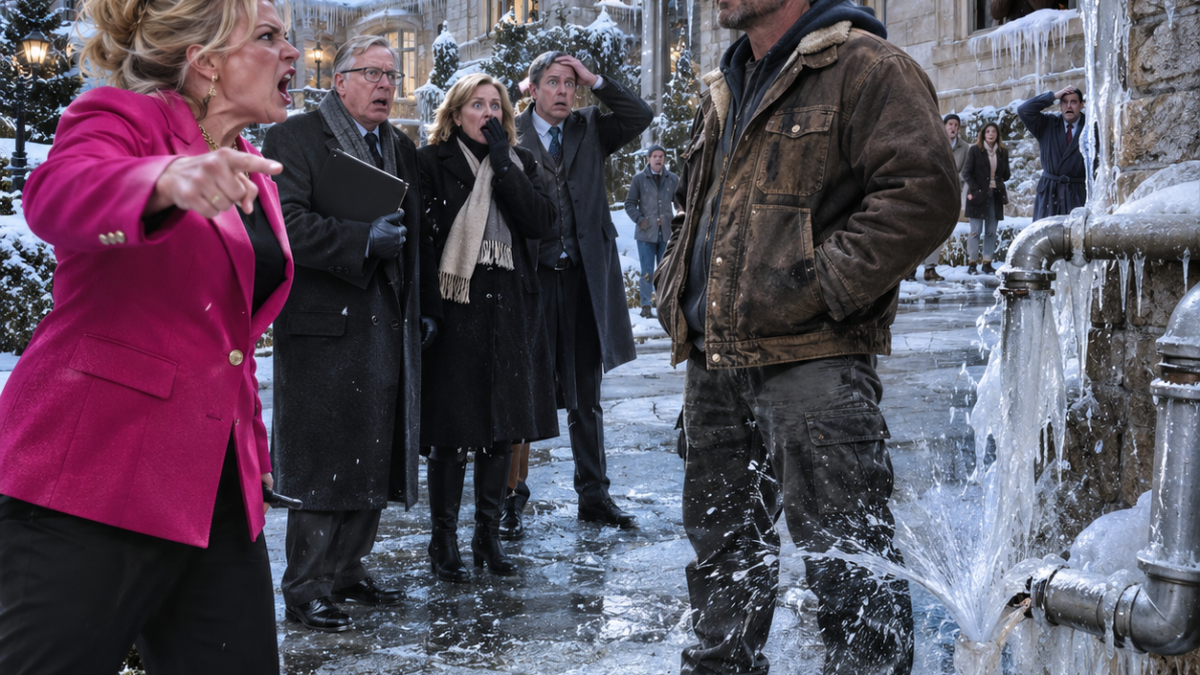
PART 2
Pamela had served as president of the Summit Ridge HOA for eight years.
Blonde.
Heavyset.
Always dressed like a charity event might suddenly break out near the mailbox.
Her black Range Rover carried vanity plates that read:
**PREZ-1**
The first time I saw them, I assumed somebody was joking.
Nobody was.
Her husband, Glenn Whitfield, was a real-estate attorney and HOA board member.
He had the kind of perfectly pressed appearance that made me suspect somebody ironed his jeans.
Together, they ran Summit Ridge like a private club.
Pamela provided the personality.
Glenn provided the legal vocabulary.
The first violation arrived in September.
Exterior paint color inconsistent with approved community palette.
I stood on my porch holding the notice and looked at my house.
Natural wood stain.
Same finish it had worn since before half the mansions uphill had foundations.
That night I opened the CC&Rs.
Forty-seven pages.
No approved paint palette.
No architectural color schedule.
Nothing.
So I responded politely.
I quoted the sections.
Attached photographs.
Asked Pamela to identify the rule.
Three days later, Glenn came to my house.
Cashmere overcoat.
Leather gloves.
Envelope.
He handed it to me.
“The board rejected your appeal.”
“Based on what rule?”
“The board determines what is appropriate.”
“That’s not a rule.”
“It is the board’s interpretation.”
I leaned against the doorway.
Behind him, twenty feet away, my boiler plant hummed.
Hot water was moving through the main line.
Up the mountain.
Toward Glenn’s own house.
“You drove here personally to tell me your wife can invent rules?”
His smile stayed fixed.
“The board speaks collectively.”
“Interesting.”
He turned.
I watched him walk toward the Range Rover.
“Glenn.”
He looked back.
“Tell Pamela I’ll comply when she can show me the covenant.”
He said nothing.
Drove away.
I thought the matter was finished.
Instead, it became a hobby for her.
Over the next four months, six notices arrived.
Mailbox two inches too tall.
I measured it.
Same Postal Service standard as everybody else.
Snow fence made from unapproved material.
The CC&Rs didn’t regulate snow fences.
Blue spruce trees insufficiently maintained.
I had planted them.
Trimmed them myself every year.
Exterior lighting excessively warm in color temperature.
That one almost made me laugh.
Apparently my porch bulb had become a threat to property values.
Then the trash enclosure.
Visible from the main access road, according to Pamela.
It sat behind the house facing forest.
Then the masterpiece:
My door nameplate used a font inconsistent with community signage standards.
I stared at that letter for a full minute.
Then looked at Boiler.
“What do you think?”
He lifted his head.
“Exactly.”
Six notices.
Twenty thousand dollars in accumulated fines.
Not one supported by the governing documents.
For every notice, I responded the same way.
Date.
Photograph.
Measurement.
Applicable covenant section.
Professional tone.
No anger.
No insults.
Pamela rejected every appeal.
The rejection letters became almost identical.
**The board has reviewed your submission and upholds the assessed fine.**
No reasoning.
Five signatures.
Pamela.
Glenn.
And three board members Pamela had appointed over the years.
I started a file.
Not because I expected war.
Because tradespeople learn early that if it isn’t written down, eventually somebody will claim it never happened.
Then Pamela held a closed meeting.
Five board members.
No resident observers.
They voted to disconnect my house from the central heating system until I paid all twenty thousand dollars.
The resolution called it:
**A lien on services.**
That term did not exist in our covenants.
It did not exist in the service agreement.
It was something Pamela invented because it sounded official.
The technician arrived at ten on a Thursday night in late January.
I did not hear him.
I was asleep.
Wind hit the house hard enough to shake the chimney cap.
Boiler was curled against my legs.
What woke me was silence.
If you live around mechanical systems long enough, you stop hearing them consciously.
The pump hum becomes part of the building.
The circulator vibration.
Water moving through baseboard lines.
Low metal expansion noises.
You don’t notice them until they disappear.
I opened my eyes.
Dark room.
Nothing.
Then Boiler shifted.
Whined.
He pushed closer against me.
I breathed.
White vapor appeared in front of my face.
I sat up.
The thermometer beside the bed read thirty-eight degrees.
Falling.
Outside forecast:
Minus fifteen.
I pulled on pants.
Sweatshirt.
Jacket.
Boots.
Walked downstairs.
The floor was already painfully cold.
Basement.
Main heating supply.
Valve closed.
Not malfunctioning.
Not frozen.
Closed.
Someone had physically shut off my loop.
I stood there with one hand on the valve.
For a moment, instinct told me to reopen it.
I owned the system.
I could have.
But there was something about the deliberate nature of the act that stopped me.
Pamela had ordered somebody to enter my heating infrastructure at ten at night in a Colorado winter and shut service to an occupied home.
That wasn’t a warning letter anymore.
That could kill someone.
I went upstairs.
Lit the wood stove Laura and I had kept for outages.
Three pieces of dry pine.
Match.
Kindling.
Flame caught quickly.
Resin smell filled the room.
Boiler lay directly in front of the stove.
I pulled another blanket over him.
Then I listened.
The pipes inside the walls were beginning to complain.
A low metallic groan.
Water cooling.
Copper contracting.
Potential freezing.
At fifteen below, stationary water inside pipe is not patient.
First comes ice.
Then expansion.
Then split copper.
Then flooding when the system thaws.
At 5:30 in the morning, I called Harlan Briggs.
Harlan lived four houses uphill.
Seventy-one.
Retired master plumber.
He had helped me commission the boiler plant the first winter.
He answered sounding like gravel.
“Somebody dead?”
“Not yet.”
“That sounds optimistic.”
“They cut my heat.”
Silence.
“Who?”
“HOA.”
Longer silence.
“The heat you built?”
“Yes.”
“The system you own?”
“Yes.”
“What’s it outside?”
“Minus twelve now.”
I heard him breathe.
Then:
“Wyatt.”
“Yeah?”
“They just made the worst decision of their lives.”
I looked at Boiler asleep by the stove.
“I think you may be right.”
Sun began rising over the Continental Divide.
The snow went pink.
My porch thermometer read minus twelve.
Somewhere uphill, Pamela was probably making coffee in a kitchen heated by water coming from my boilers.
I poured my second cup.
Opened the CC&Rs.
Pulled out a legal pad.
And began writing.
The next morning, I drove to the county offices with a manila folder.
Six violations.
Correspondence.
CC&Rs.
Side-by-side comparisons.
Betty at the clerk’s counter had been handling development paperwork longer than Summit Ridge had existed.
She wore glasses low on her nose.
Read everything.
Then looked at me.
“Honey.”
“Yes?”
“This isn’t enforcement.”
She tapped the folder.
“This is harassment.”
“Can the county do anything?”
“Not directly on HOA fine disputes.”
I expected that.
She copied the documents.
Entered my complaint.
Then lowered her voice.
“You’re not the first Summit Ridge homeowner to come here.”
That caught my attention.
“How many?”
“Enough.”
“With fake fines?”
“People complain.”
“Anyone bring records?”
She shook her head.
“Not like this.”
I picked up my folder.
At the door, Betty called after me.
“Mr. Callahan?”
I turned.
“Keep every piece of paper.”
“I plan to.”
“Good.”
Three days later, Glenn escalated.
Certified mail.
Whitfield and Associates letterhead.
Amount demanded:
$23,500.
Twenty thousand in fines.
Three thousand five hundred in “administrative and legal fees.”
Pay within sixty days.
Or the association would begin foreclosure proceedings.
I read the notice once.
Then again.
Then a third time.
They were threatening to take my house.
The house Laura loved.
Over a font.
A porch light.
A snow fence.
Rules that didn’t exist.
I flattened the letter on the kitchen table.
Then called Harlan.
“I need your paperwork.”
“What paperwork?”
“Every fine Pamela ever sent you.”
Pause.
“All of it?”
“All of it.”
I went to Harlan’s that afternoon.
His wood stove was burning.
His house smelled like pine smoke and menthol cough drops.
His wife Maggie had cancer.
Chemo.
Appointments in Denver several times a week.
Harlan pulled out a folder nearly three inches thick.
Fine:
$8,000.
Violation:
Wood-stove smoke exceeding opacity standards.
I looked up.
“What opacity standard?”
“Exactly.”
He sat across from me.
“I searched county code. State air-quality rules. CC&Rs.”
“Nothing?”
“Nothing.”
“Why pay?”
His hands trembled slightly.
Not age.
Anger.
“Maggie started chemo that week.”
He stared at the table.
“I had appointments. Insurance. Medication. I couldn’t fight Pamela too.”
My jaw tightened.
“She knew?”
“She delivered the notice herself.”
“When?”
“Two days after Maggie started losing her hair.”
That changed something.
Not because my fines mattered less.
Because suddenly they were part of a pattern.
“How many other people?”
Harlan held up three fingers.
“The Torres family.”
“What happened?”
“Twelve thousand dollars.”
“For?”
“Holiday lights.”
I frowned.
“Christmas lights?”
“They left them up through January sixth.”
“Epiphany.”
“Apparently God violated the architectural guidelines.”
Despite everything, I laughed.
“Who else?”
“The Prescotts.”
Different Prescott family.
Not related to anyone from my other nightmares.
“Six thousand five hundred.”
“For what?”
“Driveway salt residue.”
I stared.
“They have a disabled son.”
Harlan nodded.
“Wheelchair. They salt the slope heavily so he doesn’t slide.”
“And Pamela fined them.”
“Called it aesthetic damage.”
Harlan pushed another page across the table.
“Then the Dunbars. Bird feeders.”
“How much?”
“Four thousand.”
I leaned back.
Every fine.
Every letter.
Every threat.
Signed by Pamela.
Legal language from Glenn.
Harlan looked at me.
“There’s something else.”
“What?”
“I’ve never seen these fines in the financial report.”
“What report?”
“Exactly.”
HOA fines should show somewhere.
Revenue.
Operating funds.
Reserve funds.
Accounting.
Summit Ridge had never produced a real audited financial report in eight years.
I drove home with copies stacked on my passenger seat.
Outside, snow shadows turned blue as the sun dropped.
Inside the truck, the heater ran full blast.
I looked uphill at enormous homes glowing warm behind glass walls.
Pamela was collecting fines from people she knew were vulnerable.
But the question had changed.
It was no longer:
Did she have authority?
Now it was:
Where was the money going?
Then she made another move.
Email to all sixty homeowners.
Subject:
**CRITICAL INFRASTRUCTURE VOTE**
Mandatory attendance recommended.
One agenda item:
**Acquisition of Boiler Facility for Community Benefit**
Harlan forwarded the message.
One sentence:
**You need to see this.**
I opened it while standing inside the boiler plant.
Three units running.
Six pumps working.
Nine miles of buried pipe carrying my heat into homes that had never once asked who owned the system.
Pamela wanted the HOA to buy it.
Price:
One dollar.
I stared at the email.
Then at Boiler Number Two.
“You hear that?”
The flame kept burning.
“You’re apparently worth thirty-three cents.”
The community meeting was held in the clubhouse.
Wood-paneled room.
Stone fireplace that hadn’t worked in three years because nobody had hired me to repair it.
About forty homeowners attended.
Pamela stood at the podium.
Cream cashmere sweater.
Pearls.
Clipboard.
Glenn sat nearby with his portfolio.
Three other board members behind them.
Pamela began.
“As you all know, the boiler facility serving Summit Ridge is currently controlled by a single private individual.”
Interesting wording.
Not owned.
Controlled.
“This represents a vulnerability.”
She used the word community repeatedly.
Critical infrastructure.
Community benefit.
Community protection.
Community continuity.
She never used my name.
Then Glenn spoke.
He claimed the HOA could acquire the plant under a shared-infrastructure provision.
Then he used a phrase that nearly made me choke:
“Constructive eminent domain.”
That is not how eminent domain works.
An HOA is not a government.
It cannot simply seize privately owned infrastructure because a board likes the idea.
But Glenn said it in a lawyer’s voice.
Confidence is often mistaken for accuracy.
The proposed compensation:
One dollar.
For infrastructure that had cost roughly $480,000 to install twelve years earlier.
Replacement today would have exceeded a million.
I sat in the back.
Recorded everything.
Did not interrupt.
During the vote, four board members supported the acquisition.
One objected.
Arthur Foley.
Retired civil engineer.
“I’d like to see the legal authority supporting eminent domain by a private HOA.”
Pamela smiled.
“Thank you, Arthur.”
No answer.
Vote passed four to one.
Afterward, Pamela intercepted me in the hall.
“I hope you’ll consider the offer.”
“I am considering it.”
“It’s best for the community.”
Warm air blew from the ceiling vent.
Air heated through my plant.
I looked at Pamela.
Then at Glenn.
“Interesting meeting.”
I walked away.
Behind me, Glenn spoke quietly.
“He’ll fold.”
Pamela answered.
“And if he doesn’t, we take it.”
Then:
“Who’s going to stop us?”
Someone else heard it.
Keith Alderman.
Homeowner.
Unit 37.
Quiet man.
Mid-forties.
Worked from home.
Also a staff reporter for the Summit County Gazette.
He was putting on gloves by the coat rack.
Our eyes met.
Neither of us spoke.
But I knew that expression.
Professional curiosity.
Pamela had finally become interesting to a reporter.
I drove home.
Went to the basement.
Opened the fireproof safe.
Laura’s wedding ring.
Property deed.
Old contracts.
And a folder I had not opened in years.
The Morrison bankruptcy settlement.
Eleven pages.
Recorded.
Notarized.
Signed by the trustee.
I sat on the basement floor beneath a bare bulb.
Read it carefully.
Section 3.1.
Assets transferred to me:
Boilers.
Pumps.
Distribution piping.
Control systems.
Heat exchangers.
Subsurface conduits.
Real property under the plant.
I stopped.
Read it again.
I didn’t only own the boiler building.
I owned the pipes.
Every buried distribution line.
Every inch running beneath Summit Ridge.
The developer had intended a later transfer.
Bankruptcy happened first.
No transfer ever occurred.
Then I found Exhibit D.
Service agreement.
Me:
Infrastructure owner.
Summit Ridge HOA:
Service recipient.
Fourteen pages.
At the time, I had treated it as boring legal boilerplate.
That was a mistake.
Clause 14.3:
If the association terminated, interrupted, or restricted heat to any individual unit without a valid court order, the provider could suspend heating service to the association after seventy-two hours written notice.
I read it three times.
Pamela had cut my heat.
No court order.
The clause was triggered.
Legally.
Contractually.
I kept reading.
Section 8.2.
Annual maintenance fee:
$42,500.
I checked my records.
Last eight years:
Nothing.
Zero.
The HOA had not paid the contractual maintenance fee once.
Eight years.
$340,000 before interest.
I sat on the basement floor staring at the paper.
Laura’s ring glinted inside the safe.
She used to tease me for keeping every invoice.
Every receipt.
Every warranty.
Every inspection sheet.
“You build things like somebody’s going to challenge them in court.”
She would laugh.
Apparently she knew me better than I did.
Pamela had a clipboard.
Glenn had a law degree.
They had five votes.
I had the deed.
Settlement.
Service agreement.
And eight years of unpaid invoices.
The next morning, I called Nora Pennington.
Contract attorney in Denver.
Former corporate litigator.
She had moved into HOA disputes after watching her own mother get bullied by a condo association.
I explained the situation.
Silence for ten seconds.
Then:
“Wyatt, bring me that agreement.”
I drove to Denver in a snowstorm.
I-70.
Wipers fighting ice.
Truck sliding twice near Loveland Pass.
Nora’s office occupied a converted Victorian near Cheesman Park.
Warm.
Books everywhere.
Coffee.
She read the settlement.
Then the service agreement.
Then Clause 14.3.
Looked up.
“They cut your heat?”
“Yes.”
“No court order?”
“No.”
“Board resolution?”
“Yes.”
“You have the minutes?”
“Yes.”
She leaned back.
“Wyatt.”
“What?”
“They triggered this themselves.”
“I thought so.”
“You own the system.”
“Yes.”
“They owe you maintenance.”
“Yes.”
“And their own contract gives you the right to suspend service.”
“Yes.”
Nora smiled slightly.
“You do not need a judge to make them honor their own contract.”
“What do I need?”
“Certified mail.”
We worked the strategy.
Step one:
Demand $340,000 in unpaid maintenance fees plus contractual interest.
Step two:
Record certified copies of the settlement documents again so no one could pretend ownership was unclear.
Step three:
Issue seventy-two-hour suspension notice under Clause 14.3.
Step four:
Notify appropriate safety officials about maintenance and ownership issues.
But before I sent anything, I did something else.
Harlan.
Torres family.
Prescott family.
Dunbars.
The people Pamela had already hurt.
I visited each house.
Propane heaters.
Extra cylinders.
Electric space heaters.
Carbon-monoxide alarms.
I installed anything requiring setup myself.
Harlan watched me test his heater.
“You’re really doing this.”
“They cut mine first.”
“That’s not what I asked.”
I looked at him.
“Yes.”
He smiled.
“Good.”
Maggie sat wrapped in a blanket nearby.
She looked exhausted from treatment.
“Don’t freeze anybody to death proving a point.”
“I won’t.”
I meant it.
That part mattered.
Then I checked the weather.
Arctic air mass moving south from Canada.
Forecast:
Minus twenty to minus twenty-five for days.
Wind chills below minus forty.
The coldest front in more than a decade.
I timed the notice so the seventy-two hours would expire at six Thursday morning.
The same morning the front arrived.
The HOA would have three full days.
Restore my heat.
Rescind fraudulent fines.
Address unpaid fees.
Negotiate.
Do anything rational.
If Pamela did nothing?
Then the contract gave me my remedy.
Monday morning:
Certified mail.
Hand-delivered copy.
Email to each board member.
Read receipts.
Pamela opened the email at 9:14.
Downloaded PDF at 9:16.
At 9:38, she forwarded it to Glenn.
Her message appeared later during discovery.
Two sentences.
**Handle this.**
**He’s bluffing.**
At ten, Glenn called.
Attorney voice.
Slow.
Measured.
“Mr. Callahan, if you interfere with heating service, the association will seek an injunction.”
“Read Clause 14.3.”
“You may face catastrophic civil liability.”
“Read Section 8.2 too.”
“You could lose your home.”
“That sounds familiar.”
Silence.
“Are you threatening me?”
“No, Glenn.”
I looked at the copy of his lien letter.
“I’m quoting your contract.”
He hung up.
Two hours later, he filed for a temporary restraining order.
Hearing next afternoon.
Judge Catherine Mercer.
Nora sat beside me.
Glenn opposite.
Pamela in the gallery.
Nora presented:
Settlement.
Ownership records.
Service agreement.
Board minutes showing my heat was intentionally cut.
Glenn argued that the heating system had become de facto community property through long-term use.
Judge Mercer interrupted.
“Mr. Whitfield.”
“Yes, Your Honor?”
“Can you produce a deed?”
He paused.
“A title transfer?”
Silence.
“Recorded conveyance?”
He opened his portfolio.
Pages.
More pages.
Nothing.
“Not at this time.”
Judge Mercer looked at him.
“Then on what basis do you claim ownership?”
Glenn tried explaining common benefit.
Reliance.
Community necessity.
The judge waited.
Then:
“Necessity is not title.”
The restraining order was denied.
The court would not compel a private owner to continue providing services without compensation when the contract explicitly provided a suspension remedy.
Outside the courthouse, Glenn called Pamela.
I was walking toward my truck when I heard him.
“The judge said no.”
Even through his phone, Pamela’s voice carried.
“What?”
“He owns it.”
“The building?”
“Everything.”
“What do you mean everything?”
“The pipes.”
Pause.
“That’s impossible.”
“No. It’s recorded.”
“They serve our homes.”
“That doesn’t mean we own them.”
Long silence.
Then Pamela:
“Drop the fines.”
“What?”
“Tell him we drop every fine if he tears up the notice.”
A minute later, Glenn called me.
“Wyatt, the board is prepared to rescind the fines.”
“The fines were fake.”
“And restore your heat immediately.”
“You should have done that before court.”
“In exchange, you withdraw the suspension.”
“$340,000.”
“Be reasonable.”
“Contractual maintenance fees.”
“We dispute those.”
“Then dispute them in writing.”
“Wyatt—”
“This conversation is over.”
I hung up.
Dashboard clock:
4:47 p.m.
Thirty-seven hours and thirteen minutes remained.
Pamela panicked.
She called HVAC companies across Summit County.
Then Grand County.
Then Eagle County.
She wanted bypass equipment.
Temporary heat.
Someone to modify my system.
First contractor arrived.
Looked at the boiler plant.
Asked:
“Who owns this?”
Pamela said the HOA.
“Show me the deed.”
She couldn’t.
He left.
Second contractor asked ownership over the phone.
Declined.
Third company sent two technicians.
They saw the private-property signs.
Locked steel door.
Called headquarters.
Refused to touch the system.
No licensed contractor wanted to tamper with someone else’s utility equipment.
Pamela had spent eight years assuming tradespeople were interchangeable.
She was learning that licensed professionals care about ownership.
By the final night, twelve hours remained.
That was when Glenn stopped behaving like an attorney and started behaving like a burglar.
Eleven p.m.
I was eating chili.
Boiler asleep on the rug.
Phone vibrated.
Motion alert.
Camera feed.
Glenn Whitfield.
Dark clothes.
Ski mask rolled beneath his chin.
Bolt cutters.
I stared.
“Glenn.”
Boiler lifted his head.
“He really did.”
Glenn tried the cutters on the lock.
Hardened steel.
No luck.
Then pry bar.
Steel door held.
He found a side ventilation panel.
Levered it loose.
Squeezed through.
Interior camera caught everything.
He stumbled between the boilers.
Looked around.
Obviously no idea what he was seeing.
Eventually he approached the main distribution assembly.
Started grabbing fittings.
At one point, he tried forcing the wrong component.
His plan was apparently to prevent me from shutting down the system.
He didn’t even know which valve mattered.
I called Deputy Scott Annis.
“Scott.”
“What’s up?”
“Man inside my boiler plant.”
“Authorized?”
“No.”
“Armed?”
“Pry bar and bolt cutters.”
“Stay out.”
“I’m home watching cameras.”
Fourteen minutes.
Cruiser headlights.
Scott entered.
Flashlight beam.
Interior camera showed Glenn freeze.
Pry bar in hand.
Vent panel hanging loose.
The look on his face was extraordinary.
Not fear.
Realization.
Like an attorney watching his own argument collapse in real time.
Scott led him outside.
Criminal trespass.
Utility tampering.
Burglary tools.
Glenn stood in the snow with hands restrained behind him.
Breath crystallizing in headlights.
Pamela arrived twelve minutes later.
Range Rover.
Bathrobe under a winter coat.
She stood silently while her husband was placed in the patrol car.
For once, no speech.
No clipboard.
No board authority.
Keith Alderman had heard the sirens.
Reporter instincts took over.
By one in the morning, he was digging.
HOA records.
Meeting minutes.
Fine totals.
Financial statements.
Or more accurately:
The missing financial statements.
What Keith eventually found was worse than I had expected.
Three years of documented fines:
$46,500.
Not deposited into the HOA’s operating account.
Not reserve.
Personal account.
Names:
Pamela and Glenn Whitfield.
But that revelation was still coming.
First came Thursday morning.
5:45 a.m.
I entered the boiler plant.
Outside:
Minus twenty-three.
Wind:
Thirty miles per hour.
Wind chill:
Around minus forty-two.
Boiler lay on a heated mat by the control panel.
Three boilers ran side by side.
Blue flames behind inspection glass.
Pumps humming.
Copper headers hot beneath my palm.
Twelve years.
Thousands of winter nights.
I thought about Laura.
She would have called me stubborn.
Then righteous.
Then kissed me and said:
“Good. Be both.”
5:59.
No payment.
No agreement.
No restoration of my heat before the deadline.
No legitimate proposal.
I looked at the control panel.
6:00.
I shut down Boiler One.
Flame disappeared.
Pump wound down.
Boiler Two.
Quiet.
Then Three.
The last circulation pump slowed.
For the first time since commissioning day, the plant fell silent.
I heard wind pushing against the building.
The ticking of cooling metal.
Boiler breathing on his mat.
I locked the plant.
Walked home.
My house stayed warm enough with the stove and backup heaters.
The mountain didn’t.
Two hours later, phone calls began.
At first:
Confusion.
Thermostats calling for heat.
Nothing.
Indoor temperatures dropped below fifty by noon.
Mid-thirties by late afternoon in some houses.
People used fireplaces.
Portable heaters.
Anything they had.
Pamela tried telling residents the system had suffered a mechanical failure.
That story lasted until somebody forwarded my seventy-two-hour notice.
By ten that night, pipes began freezing.
A pipe doesn’t usually announce failure dramatically.
Sometimes it is a small crack.
Then pressure.
Then water when thawing or adjacent sections remain live.
Radiant-floor tubing split.
Supply lines burst.
Finished basements flooded.
Hardwood buckled.
Drywall collapsed.
A large home on the upper ridge lost water from an attic supply failure into the second floor.
By the next morning:
Forty-seven of sixty homes reported at least one burst line.
Some had several.
Estimated damage would later reach approximately $2.4 million.
Was I happy about that?
No.
That matters.
The damage was real.
Families had their homes flooded.
People who had nothing to do with Pamela lost floors and walls.
I had given the legally required warning.
I had protected the most vulnerable people I knew.
The HOA had been given time.
A judge had confirmed my contractual position.
Still, seeing the damage was not satisfying.
But Pamela had built a system where residents had no idea their board had spent years ignoring the contract keeping their homes alive.
Now everybody knew.
Emergency meeting:
Six p.m.
Community room.
No heat.
That room depended on my system too.
Nearly two hundred residents packed inside wearing coats.
Breath visible.
People angry enough that the room almost felt warm.
Pamela stood at the podium.
Down jacket.
Clipboard trembling.
She tried beginning.
“This deliberate act of sabotage by Mr. Callahan—”
The room exploded.
Not applause.
Shouting.
Sixty families talking at once.
“What did you do?”
“Why didn’t you pay him?”
“You cut his heat?”
“Who owns the boilers?”
“What happened to our fees?”
Pamela hit the microphone.
“Order!”
Nobody cared.
Eventually noise lowered.
I stood from the fourth row.
Same flannel.
Same work boots.
Nora beside me with exhibits.
I walked forward.
For eleven minutes, I explained everything.
Not emotionally.
Not dramatically.
Like explaining a mechanical system.
First:
Recorded Morrison settlement.
I owned the plant.
Next:
Transfer schedule.
I owned distribution piping.
Next:
Service agreement.
Clause 14.3.
HOA had no right to cut an individual unit’s heat without court order.
If it did, I could suspend service after seventy-two hours.
Next:
Board minutes.
Pamela and Glenn voted to cut mine.
Next:
Seventy-two-hour notice.
Delivered.
Opened.
Read.
Next:
Judge Mercer’s ruling.
HOA failed to prove ownership.
My contractual remedy remained enforceable.
Then:
Six violation letters.
Paint.
Mailbox.
Snow fence.
Trees.
Lighting.
Trash enclosure.
Door font.
I showed the corresponding CC&R pages.
No rules.
No basis.
The audience changed.
People started looking at one another.
Because many had received similar letters.
Then I showed Glenn’s lien notice.
Threat of foreclosure.
Twenty-three thousand five hundred dollars.
Then Nora handed me the bank records Keith had helped obtain.
I paused.
“This is where the issue stops being about heat.”
The room became still.
“Three years of collected fines.”
Slide.
$46,500.
“Destination.”
Next slide.
Personal account.
Pamela Whitfield.
Glenn Whitfield.
Silence.
Pamela stood.
“That account was used for association expenses.”
A resident yelled:
“Then show us!”
Another:
“Where are the statements?”
Glenn was not at the table.
He had already been arrested the previous night.
Pamela looked suddenly very alone.
From the back wall, Deputy Annis stepped forward.
Two warrants.
One related to Glenn’s criminal conduct and financial allegations.
One for Pamela related to fraud and embezzlement allegations.
Pamela’s face went white.
“No.”
The deputy approached.
“No.”
She gripped the podium.
“This is my community.”
Nobody spoke.
“I have protected every person in this room for eight years.”
Harlan stood.
His voice was calm.
“You fined me while my wife was in chemo.”
Pamela stared.
Harlan continued.
“You knew.”
Pamela said nothing.
Mrs. Torres stood.
“You took twelve thousand dollars because my Christmas lights stayed up six extra days.”
The Prescott family’s father stood.
“You fined us for salting a wheelchair ramp.”
Then Mrs. Dunbar.
“Four thousand dollars for bird feeders.”
One by one.
For years, Pamela had isolated each homeowner.
Made each believe the dispute belonged only to them.
Now they were in one room.
Comparing notes.
That was what she had always feared.
Not lawyers.
Not me.
Neighbors talking to each other.
Deputy Annis took her wrists.
Handcuffs closed.
Pamela looked around the room.
For the first time in eight years, nobody looked afraid of her.
A motion came from the floor.
Remove Pamela from the board immediately.
Vote:
187 to remove.
Three to retain.
Apparently her book club was loyal.
I almost respected that.
After the vote, I walked to the microphone.
The room was cold.
People waited.
“I’ll restart the heat tonight.”
A murmur moved through the crowd.
“But we’re doing something different now.”
I looked around.
“Before tonight, most of you had no idea who owned the pipes under your house.”
Nobody spoke.
“You should.”
I placed the service agreement on the podium.
“The next contract will be transparent.”
I paused.
“You’ll know what the system costs.”
Another pause.
“You’ll know who maintains it.”
Then:
“And no board member will ever again use heat as punishment.”
That got applause.
I didn’t want applause.
I wanted to go back to work.
Nine p.m.
Boiler plant.
I unlocked the steel door.
Boiler followed me inside.
Number One first.
Ignition.
Blue flame appeared.
Pump engaged.
Vibration through the concrete floor.
Number Two.
Then Three.
One by one, six circulation pumps came alive.
Hot water moved through nine miles of pipe.
The plant regained its heartbeat.
Laura’s heartbeat.
Within an hour, mains warmed.
Within three hours, surviving heating loops were pushing warmth into homes.
Repairs to broken lines would take much longer.
But the mountain was alive again.
The new board formed that same night.
Arthur Foley joined.
Harlan refused.
“Too old for meetings.”
Then attended every meeting anyway.
Within two weeks, we signed a new service agreement.
Twenty-year term.
$42,500 annually.
Quarterly payments.
Scheduled maintenance.
Annual inspection.
Clear ownership language.
And a provision requiring review by a licensed engineer before any HOA action that could affect the system.
Nora drafted it.
We signed it in the same room where Pamela had proposed buying my plant for one dollar.
Arthur pushed the document toward me.
“Anything else?”
I smiled.
“Yeah.”
“What?”
“Pay me.”
He laughed.
First quarterly check arrived on time.
Civil settlement came in April.
$340,000 in unpaid historical maintenance.
Another $85,000 covering damages, wrongful disconnection, legal expenses, fraudulent fines, and emotional harm.
HOA’s insurer paid.
Nobody wanted to defend Pamela’s conduct.
The forty-seven families with water damage filed claims.
Their insurers paid immediate losses.
Then pursued recovery against the people responsible.
Approximately $2.4 million in aggregate property damage.
Pamela and Glenn’s personal insurance did not cover intentional wrongdoing.
They sold their Summit Ridge house.
Moved to a rental in Colorado Springs.
Glenn’s law license was suspended while the criminal case moved forward.
Someone told Harlan Pamela’s pearl necklace ended up in a consignment shop.
He told me.
I told him I didn’t care.
He replied:
“You cared enough to smile.”
Fair.
Glenn eventually faced charges including tampering, burglary-related conduct, embezzlement, and fraud.
His attorney negotiated.
Three-year prison sentence.
He took the plea.
Pamela received probation.
Community service.
And a permanent bar preventing her from serving on another HOA board in Colorado.
I expected that news to feel triumphant.
It didn’t.
By then, the best part had already happened.
Harlan got his eight thousand back.
Torres family:
Twelve thousand.
Prescott family:
Six thousand five hundred.
Dunbars:
Four thousand.
Every household Pamela had hit with fabricated charges received review and refunds.
Arthur Foley personally delivered formal apology letters from the new board.
Harlan opened his while I was sitting at his kitchen table.
He read silently.
Then placed it down.
“Eight thousand dollars.”
“Yep.”
“Maggie could’ve used that during chemo.”
“I know.”
He looked at me.
“That’s the part I can’t forgive.”
I didn’t tell him to forgive.
Some things don’t require it.
Maggie reached across the table.
Took his hand.
“Then don’t.”
Harlan looked at her.
She smiled.
“Spend the refund on something stupid.”
He laughed.
“What?”
“Boat.”
“We live on a mountain.”
“Exactly.”
She was still fighting cancer.
Still tough.
Still funny.
That mattered more than Pamela.
I used part of my settlement to start the Callahan Winterization Fund.
A small nonprofit.
Purpose:
Heating inspections.
Pipe insulation.
Emergency repairs.
Low-income families.
Elderly residents.
People in Summit County who could not afford a winter failure.
The first year we serviced thirty-eight homes.
Harlan became lead volunteer inspector.
Seventy-one.
Bad knees.
Still better with a pipe wrench than men half his age.
One morning I found him crawling beneath a trailer helping insulate supply lines.
“Harlan.”
“What?”
“You’re seventy-one.”
“I checked this morning.”
“Get out from under there.”
“Send someone competent.”
“I did.”
“Who?”
“Me.”
He kept working.
I gave up.
The fund mattered because what happened at Summit Ridge reminded me of something people with money forget.
Heat is not luxury at ten thousand feet.
It is life safety.
A frozen pipe is expensive.
A frozen house can be deadly.
Pamela used heat as leverage because she thought utilities were just another HOA privilege.
They are not.
Every system people depend on exists because somebody designed it.
Installed it.
Maintains it.
Pays for it.
The mountain had forgotten that.
Then winter reminded everyone.
About a month after the legal settlement, Harlan came to the boiler plant.
Sunday afternoon.
He carried a thermos.
We sat on folding chairs between Boilers Two and Three.
Pipes hummed.
Pumps pulsed.
Boiler the dog slept under the control panel.
His nose rested against a warm copper run.
Harlan poured two cups.
I smelled whiskey.
“This isn’t coffee.”
“It contains coffee.”
“That’s not the same.”
He handed me one.
We clinked cups.
For a while, we watched the blue pilot flame.
Then Harlan said:
“Laura would’ve been proud.”
I looked down.
“She would’ve shut the heat off sooner.”
Harlan laughed hard enough to cough.
“She sounded like my kind of woman.”
“She was.”
“Miss her?”
“Every day.”
He nodded.
No useless advice.
No “she’s in a better place.”
Just understanding.
That evening I sat on the porch.
Snow falling.
Boiler in my lap even though he was too large to be a lapdog.
The house was warm.
Mountain warm.
System running.
Steady.
Paid.
For years, I had measured my life by that hum.
Before Laura died, it was background.
After she died, it became memory.
During the fight with Pamela, it became leverage.
Afterward, it became something else.
Responsibility.
I had come dangerously close to thinking about the infrastructure only as mine.
Legally, it was.
But sixty families depended on it.
That meant ownership carried obligations too.
The new contract reflected that.
Emergency procedures.
Resident notification.
Independent engineering review.
Backup planning.
Clear responsibilities.
No board member could cut an individual homeowner off to punish them.
No owner, including me, could suspend service without defined contractual conditions and notice.
Structure.
Boundaries.
Real ones.
Not made-up mailbox rules.
Keith Alderman’s newspaper series ran for several weeks.
First headline focused on the heating crisis.
Second on fraudulent fines.
Third on HOA financial governance.
He interviewed residents.
Me.
Arthur.
Harlan.
County officials.
I refused to pose beside the boiler plant like some conquering hero.
Keith complained.
“Pictures help.”
“Take a picture of the boilers.”
“People like faces.”
“The boilers are prettier.”
He used a photograph of Pamela’s empty Range Rover instead.
Good enough.
One afternoon, Betty from the county office called.
“Mr. Callahan.”
“Wyatt.”
“Wyatt, I thought you’d enjoy something.”
“What?”
“Three HOA presidents came in this week asking how to properly document fine procedures.”
I laughed.
“That your doing?”
“Apparently your mountain scared every board in the county.”
“Good.”
She lowered her voice.
“People read Keith’s articles.”
“I know.”
“Receipts matter.”
“They do.”
“You brought receipts.”
I smiled.
“I was told to.”
“Smart clerk.”
“The best.”
Life slowly became ordinary.
That was the real reward.
No certified letters.
No Range Rover pulling into my driveway.
No invented violations.
No Glenn on my porch.
No wondering whether my heat would disappear overnight.
Snow fell.
I shoveled.
Boiler rolled in it.
The plant ran.
Maggie’s treatment continued.
Harlan complained about everything.
Normal.
One afternoon, Arthur came by the boiler plant.
He stood inside staring at the piping.
“You really built all this?”
“With a crew.”
“You designed it?”
“Yes.”
He looked at the main header.
“Beautiful work.”
Engineers and tradespeople have strange definitions of beauty.
To me, perfectly aligned copper runs are more attractive than sculpture.
“Thanks.”
Arthur rubbed his chin.
“Pamela wanted to buy this for a dollar.”
“Generous.”
“Do you know what replacement cost is now?”
“Over a million.”
“Closer to one and a half if you include excavation.”
I whistled.
Arthur looked at me.
“Why didn’t you tell people you owned it?”
“Nobody asked.”
“That simple?”
“For twelve years, yes.”
He shook his head.
“There’s a lesson there.”
“Several.”
The new board posted monthly financials online.
At first, residents actually read them.
Every page.
Every expense.
Then months passed.
Trust returned.
Downloads dropped.
Arthur complained.
“Nobody reads the statements anymore.”
I smiled.
“That may be progress.”
“How?”
“Transparency works best when it becomes boring.”
He thought.
“Fair.”
Pamela had made HOA governance dramatic.
Everything personal.
Everything adversarial.
A healthy board should mostly be invisible.
Snow removal gets paid.
Insurance gets renewed.
Common areas maintained.
Meetings end before dinner.
Nobody needs a pearl necklace.
The Winterization Fund grew.
Local HVAC companies donated labor hours.
Plumbing suppliers gave us pipe insulation.
A hardware store provided discounted thermostats.
One retired electrician joined.
Then another plumber.
First winter, thirty-eight homes.
Second winter, sixty-three.
We caught dangerous situations before they became emergencies.
Unvented heaters.
Old boilers.
Frozen crawlspace lines.
Bad valves.
A widow in Silverthorne had been heating her kitchen with the oven.
Harlan walked into her house, saw the open oven, and nearly had a heart attack.
“Ma’am.”
She looked embarrassed.
“I only use it when it gets very cold.”
“No.”
He closed the oven.
“That is not a heating system.”
She said:
“It works.”
“So does setting your house on fire.”
We replaced her failed furnace two days later.
Free.
Afterward, Harlan stood in my shop.
“That one was worth everything.”
“What?”
“The whole Pamela mess.”
I looked at him.
“I wouldn’t go that far.”
“If it leads to that fund?”
He shrugged.
“Maybe.”
I thought about it.
Pain doesn’t become good because something useful comes after.
Laura’s death taught me that.
You don’t call tragedy a blessing because it changes you.
But you can choose what grows after it.
That is different.
Pamela’s harassment was wrong.
The frozen pipes were terrible.
Families lost money.
Homes were damaged.
But afterward, we built better safeguards.
Better governance.
Better winter help.
That didn’t erase anything.
It just meant the damage wasn’t the last chapter.
One winter night, nearly a year after Pamela’s removal, I woke around two.
Boiler was sleeping on Laura’s side of the bed.
Outside:
Minus eleven.
Snow against the windows.
I lay still.
Listening.
Hum.
Low.
Steady.
Heating loop.
For one instant, I was back on the night my heat stopped.
Same darkness.
Same winter.
Then Boiler sighed.
Warm air moved.
I realized my shoulders were tense.
I forced them down.
The system was fine.
The mountain was fine.
I was fine.
Grief and fear do strange things.
Your body remembers before your mind does.
I got up anyway.
Walked to the window.
Looked toward the boiler plant.
Small exterior light over the door.
Snow around it.
Laura used to call it:
“The little building that keeps the rich people from freezing.”
She wasn’t wrong.
I smiled.
Then went back to bed.
Harlan’s wife Maggie eventually finished treatment.
The first scan came back encouraging.
He called me from the hospital parking garage.
“We got good news.”
I sat down in the boiler plant.
“How good?”
“Doctor used the word remission.”
I closed my eyes.
“Harlan.”
“I know.”
His voice cracked.
“I know.”
We didn’t talk for several seconds.
Then:
“What are you doing?”
“Working.”
“Stop.”
“Why?”
“We’re drinking tonight.”
“I’ll drive.”
“You always ruin things.”
That evening, Maggie raised a glass of sparkling water because her doctor said no alcohol.
Harlan drank enough for both of them.
At one point, she looked at me.
“You know what Pamela never understood?”
“What?”
“People remember how you treat them when they’re weak.”
I nodded.
Pamela fined them the week Maggie’s hair fell out.
I would never forget that.
Neither would Harlan.
But Maggie continued:
“That works both directions.”
She touched the heater I had installed in their home during the shutdown.
Still stored neatly in a corner.
“You remember who helps too.”
That meant more to me than any settlement check.
The old fraudulent lien documents stayed in my files.
I could have thrown them away.
Didn’t.
Not because I feared Pamela returning.
Because documentation matters.
My father taught me that when I was young.
“Keep receipts.”
For everything.
Tools.
Materials.
Contracts.
He once kept a receipt for a chainsaw twenty-two years.
I made fun of him.
Then the manufacturer recalled it.
He got a replacement.
He looked at me.
“Who’s laughing now?”
I stopped laughing at receipts.
Years later, a bankruptcy settlement nobody cared about became the document that stopped an HOA from stealing infrastructure worth more than a million dollars.
Paper can be boring right up until it saves your life.
A new family bought Pamela and Glenn’s former mansion.
The Hollands.
Nice couple.
Two teenagers.
The first winter, Mr. Holland came down to the plant.
Knocked.
I opened the door.
“Can I see it?”
“What?”
“The system.”
“Why?”
He shrugged.
“We bought a house heated by it. Thought I should know what it is.”
That was new.
I let him in.
Showed him boilers.
Pumps.
Headers.
Controls.
He asked good questions.
“Who owns the buried lines?”
“I do.”
“And our HOA pays service?”
“Quarterly.”
“What if something breaks under my lot?”
“Depends which side of the interface.”
I showed him.
He nodded.
“Thank you.”
“For what?”
“Explaining.”
Simple.
That was all Pamela had needed to do twelve years earlier.
Ask.
Learn.
Respect the answer.
Instead, she had assumed infrastructure existed because wealthy people paid HOA dues.
Most people rarely think about the systems keeping them alive.
Water arrives.
Lights turn on.
Heat comes through floors.
Snow disappears from roads.
Trash leaves.
But somewhere behind each convenience is equipment.
And behind that equipment is a person.
An operator.
Technician.
Plumber.
Engineer.
Linemen.
Mechanic.
People with dirty boots.
Pamela looked at my small house and saw someone beneath her.
The mansions were expensive.
My house wasn’t.
She confused wealth with importance.
That mistake cost her everything.
One spring afternoon, I was repairing insulation on a distribution manifold when Arthur stopped by.
“Community meeting tonight.”
“I know.”
“You coming?”
“No.”
“Why?”
“Nothing controversial.”
“Exactly.”
He laughed.
“We’re voting on flower beds.”
“Then I definitely won’t be there.”
“You know people trust you now.”
“I’m a plumber.”
“You own the infrastructure.”
“That does not qualify me to vote on petunias.”
He left.
Perfect.
I never wanted Pamela’s place.
That would have defeated the entire point.
Power was not the prize.
Boundaries were.
The new board understood that.
Harlan sometimes joked that I should run for president.
I always replied:
“I’d rather crawl through frozen sewage.”
He respected that answer.
The Callahan Winterization Fund eventually developed a simple winter checklist we distributed throughout Summit County.
Inspect boilers before the first hard freeze.
Insulate exposed pipes.
Know where your shutoff valve is.
Keep carbon-monoxide detectors functional.
Never use ovens for heat.
Have emergency numbers.
Simple information.
The sort of thing Laura would have loved.
She had been the practical one.
If a storm was forecast, she filled the pantry before everyone else remembered bread existed.
She stored batteries.
Checked flashlights.
Kept blankets in the truck.
The fund felt like something she might have built.
One December, we held a volunteer training inside my boiler plant.
Twenty people.
Too crowded.
Harlan stood near the control panel.
“Rule one.”
A volunteer raised a hand jokingly.
“What?”
“Don’t touch anything Wyatt owns unless you want a lawsuit.”
Everyone laughed.
I threw a rag at him.
Then he became serious.
“Rule one is you never leave somebody without heat because they can’t pay you that night.”
He looked around.
“You secure the system. You make it safe. Then you solve money.”
That came directly from what Pamela had done.
She used cold as punishment.
We built the fund around the opposite principle.
Heat first.
Paperwork second.
That was worth keeping.
Years later, if you drive through Summit Ridge in winter, you won’t know anything happened.
Mansions glow.
Driveways clear.
Pines heavy with snow.
Steam rises from vents.
Children sled near the clubhouse.
The boiler plant still looks like a shed.
My little house still looks out of place.
I like it that way.
The steel door has newer cameras now.
Not because of Glenn.
Because equipment worth that much deserves cameras.
Inside:
Boilers replaced and upgraded gradually.
Pumps serviced.
Controls modernized.
Some of my original copper remains.
Still straight.
Still clean.
Every time I run my hand across one of those old solder joints, I think about the night Laura joked that I built things to outlive us.
She was right.
The system outlived her.
Someday it will outlive me too.
That used to make me sad.
Now it feels right.
Things built well should continue.
Agreements too.
Communities too.
If the people taking care of them understand what they actually own.
One evening, Harlan and I sat in the plant again.
Boiler was older.
Gray around the muzzle.
He still slept beneath the panel.
Harlan poured coffee.
Actual coffee this time.
I checked first.
“You don’t trust me?”
“No.”
“Wise.”
Snow struck the steel roof.
Harlan looked at the flames.
“You ever regret turning it off?”
I knew what he meant.
The burst pipes.
Damage.
Families.
I thought a long time.
“I regret that it got that far.”
He nodded.
“Different question.”
“I know.”
“Do you regret doing it?”
I looked around.
“They had seventy-two hours.”
“Yep.”
“A judge told them I owned it.”
“Yep.”
“They could’ve restored my heat.”
“Yep.”
“Paid the contract.”
“Yep.”
“Negotiated.”
“Yep.”
I sighed.
“No.”
Harlan took a sip.
“Me neither.”
“But I hated the damage.”
“I know.”
“I don’t want that part turned into some heroic thing.”
He looked at me.
“It wasn’t heroic.”
“Good.”
“It was consequences.”
That word fit.
Consequences.
Pamela wanted punishment.
That is why she cut my heat.
The distinction matters.
Punishment is about power.
Consequences are what happen when you ignore contracts, warnings, ownership, court rulings, safety, and reality long enough.
She had seventy-two hours.
Then thirty-six.
Then twelve.
Even after Glenn was arrested inside my plant, she did nothing.
She still believed I would fold.
Because everyone before me had.
Harlan paid.
Torres paid.
Prescotts paid.
Dunbars paid.
Pamela’s experience had taught her an ugly lesson:
Push hard enough and people surrender.
Then she found someone with the documents to push back.
That was all.
I wasn’t smarter because I built boilers.
I wasn’t stronger because I owned the pipes.
I had paperwork.
And I read it.
That is the least cinematic answer in the world.
It is also the truth.
The last time I saw Pamela was not in a courtroom.
It was months later.
I was loading copper fittings into my truck outside a supplier in Colorado Springs.
A woman walked across the far end of the parking lot.
No pearls.
No Range Rover.
Winter coat.
Shopping bag.
Pamela.
She saw me.
Stopped.
For half a second, I considered walking toward her.
What would I say?
You lost.
You were wrong.
You hurt people.
None of that would change anything.
She looked away first.
Kept walking.
I did too.
That felt better than any final speech.
Because when someone has occupied your thoughts for months, the real victory is eventually not needing anything from them.
Not apology.
Not fear.
Not recognition.
Nothing.
Laura taught me that too, though she never knew it.
After she died, I spent years wanting answers from a world that couldn’t give them.
Why her?
Why that trail?
Why that day?
Eventually, grief became livable only when I stopped expecting an answer.
Pamela was simpler.
There were answers.
Contracts.
Bank records.
Votes.
But the emotional ending was the same.
At some point, you stop asking the person who hurt you to understand.
You just keep living.
My house stayed small.
I never expanded it.
Could have.
Settlement money made it possible.
Didn’t want to.
Two bedrooms were enough.
Laura’s garden remained beside the porch.
Boiler still slept on her side of the bed until age finally made climbing difficult.
Then I built him a small platform.
He pretended not to appreciate it.
Every winter, when the first major storm arrived, I walked to the boiler plant before bed.
Checked pressure.
Temperatures.
Pump status.
Fuel.
Controls.
Then I stepped outside.
Looked uphill.
Sixty homes.
Warm windows scattered across white slopes.
There was a time I looked at those mansions and thought about Pamela.
Not anymore.
Now I thought about the people.
Harlan and Maggie.
Arthur.
Torres kids.
Prescott family and their son.
Dunbars feeding birds.
New families who had nothing to do with the old fight.
They were the community.
Not the board.
Not the clubhouse.
Not the Range Rover.
A community is the people relying on each other without always realizing it.
The plumber.
The neighbor with a heater.
The retired engineer asking the uncomfortable question.
The reporter who looks at missing numbers.
The lawyer who actually reads Clause 14.3.
The clerk who tells you to keep receipts.
The old man who paid an unfair fine but still shows up to help someone else insulate pipes.
That was Summit Ridge after Pamela.
Messier.
More skeptical.
Much healthier.
One Sunday afternoon, Harlan and Maggie came by.
Maggie carried a pie.
Harlan carried nothing.
“Why aren’t you carrying the pie?”
“I’m management.”
Maggie rolled her eyes.
We sat on my porch.
Boiler lay at our feet.
Sun on the snow.
The plant humming nearby.
Maggie looked uphill.
“Beautiful.”
“Cold.”
“Both.”
Harlan ate pie.
Then Maggie looked at me.
“Laura really loved this place?”
“More than I did.”
“Why?”
“She said the mountains made people feel appropriately small.”
Maggie smiled.
“I like that.”
“She also liked the boiler noise.”
“That part is strange.”
“Yes.”
We sat quietly.
Then Maggie said:
“She’d probably like what you did with the fund.”
I looked toward the plant.
“Maybe.”
“No maybe.”
I didn’t argue.
Some compliments are easier to accept when they come from people who have earned the right to give them.
As the light faded, the boiler plant exterior light came on automatically.
Harlan looked at it.
“Heartbeat.”
I turned.
“What?”
“You told me Laura called it that.”
I nodded.
“The building hum.”
He listened.
“You can hear it from here.”
Low.
Steady.
Warmth traveling underground.
I smiled.
“Yeah.”
The mountain was breathing.
That was enough.
For all the legal letters, fines, arrests, frozen pipes, money, court orders, and public meetings, the ending I remember most is quiet.
Snow falling through pine branches.
My dog asleep.
A warm house.
No fear of the mailbox.
No one threatening to take what Laura and I built.
The boiler plant doing exactly what it had been designed to do.
People sometimes ask why Pamela lost.
Because I owned the system?
Partly.
Because the contract favored me?
It didn’t favor me.
It simply protected the owner if the HOA abused service authority.
Because she embezzled money?
That destroyed her credibility and eventually her position.
But the deeper reason was simpler.
Pamela spent eight years assuming nobody would check.
Nobody would read.
Nobody would compare her invented rules with the real rules.
Nobody would ask where the fines went.
Nobody would examine the deed.
Nobody would open an old safe and read a twelve-year-old service agreement.
She confused people’s exhaustion with consent.
That was her mistake.
A title is not ownership.
A board vote cannot create a property right.
A lawyer saying “eminent domain” does not give a private HOA eminent domain.
And an official-looking letter cannot turn an invented rule into a real one.
Documentation is boring.
Until it matters.
Then it becomes armor.
The last thing Laura ever told me about the boiler plant was on a January evening two winters before she died.
We were standing outside.
Snow falling.
She looked at the little steel building.
“You know what I like about that thing?”
“What?”
“Nobody notices it.”
“That’s what you like?”
“Yep.”
She smiled.
“It just works.”
I laughed.
“That’s the goal.”
She leaned against me.
“The best things are like that.”
At the time, I thought she meant plumbing.
Maybe she did.
Now I think she meant more.
Trust.
Marriage.
Neighbors.
Heat.
Systems that work without needing someone to stand over them demanding credit.
Pamela needed credit.
Control.
Attention.
Laura needed none of it.
Years later, the mountain remembers Laura more than it remembers Pamela.
Her name is on a small plaque inside the Winterization Fund office.
Nothing dramatic.
**IN MEMORY OF LAURA CALLAHAN
KEEP PEOPLE WARM**
That was Harlan’s idea.
I pretended to object.
Lost the vote.
I’m glad I did.
On the coldest nights, when our volunteer phone rings because an elderly resident has lost heat, somebody answers.
Sometimes me.
Sometimes Harlan.
Sometimes a younger technician we trained.
Truck starts.
Tools get loaded.
Someone goes.
That is Laura’s legacy now.
Not Pamela.
Not the fight.
Warmth.
And every time I return home afterward, Boiler—or his old empty bed after the years finally caught up with him—reminds me where the whole thing began.
One winter night.
A silent heating loop.
A dog shaking under the blankets.
A fake twenty-thousand-dollar fine.
And a woman who thought she had turned off the heat to the weakest house on the mountain.
She never understood that the little house was connected to everything.
Neither did the neighborhood.
Until the day the hum stopped.
Now they know.
So do I.
Ownership is not about having the most expensive house.
Authority is not about having the loudest voice.
And power is not about who can punish someone first.
Sometimes real power is a deed locked in a basement safe.
A contract nobody bothered to read.
A valve someone else assumes belongs to them.
And enough patience to let the truth catch up.
The boilers still run.
The mountain is warm.
The bills get paid.
The contracts are clear.
The board stays boring.
And on nights when the temperature drops below zero, I can lie in bed and hear the low vibration moving through the walls.
Steady.
Reliable.
Exactly the way I built it.
Exactly the way Laura loved it.
A heartbeat in the dark.








