PART 2: HOA Karen Cemented Over My Well to “Teach Me a Lesson”—Then the Fire Marshal Tested Her Street’s Hydrants
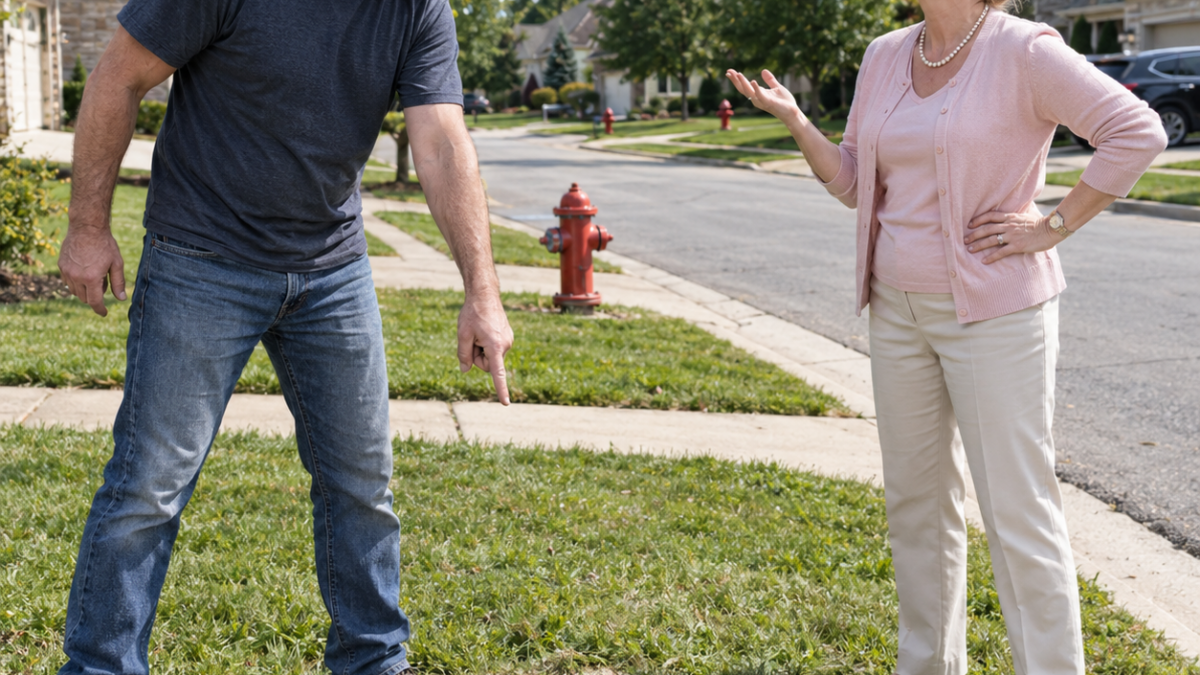
PART 2
I stared at Karen’s address for several seconds.
Then I went back to the old utility drawing.
I read it once.
Then again.
Then a third time, slower.
The agricultural well on my property wasn’t merely an old piece of farm infrastructure.
When Whispering Pines had been planned in the late 1970s, engineers had discovered a problem. Municipal pressure at the far end of the first phase of the subdivision wasn’t expected to provide the firefighting capacity the county required.
So the developer had made an agreement.
The existing agricultural well on the neighboring farm—my well—would remain available as a supplementary emergency water source.
A booster system connected it to the fire-suppression network serving the first section of Whispering Pines.
And the first section was Magnolia Circle.
Karen’s street.
I sat alone beneath the humming fluorescent lights of the county records office, looking at the faded paper in front of me.
For six months, Karen had called that well ugly.
She had called it unsafe.
She had called it an illegal industrial fixture.
She had fined me over it.
Harassed me over it.
And finally, she had waited until I was out of town and paid somebody to bury it beneath concrete.
All because she didn’t like seeing the steel cap during her morning walk.
Yet according to the county’s own records, that “eyesore” was part of the emergency system designed to help firefighters protect her house.
I leaned back in the chair.
For the first time since I had seen the concrete, I almost laughed.
Not because any of this was funny.
It wasn’t.
If the documents were still valid, Karen hadn’t merely damaged my property.
She might have compromised fire protection for an entire street.
That meant this was no longer just my dispute.
And that changed everything.
I copied every page.
The easement.
The original subdivision approval.
The utility schematic.
The pump connection.
The county signatures.
The phase-one map.
Then I paid for certified copies.
Before leaving, I asked the clerk, “Has this easement ever been released?”
She searched the property index.
“No release that I can see.”
“You’re sure?”
She turned the monitor slightly toward me.
“If it had been formally terminated and recorded, it should be here.”
It wasn’t.
I thanked her, put the documents in my folder, and walked outside.
The afternoon sun felt almost painfully bright after hours under fluorescent lights.
I stood beside my truck and looked across town toward Whispering Pines.
Every instinct told me to drive straight to Karen’s house, drop the papers on her porch, and watch her face change.
I didn’t.
Twenty years in the Corps of Engineers had taught me something else.
Never reveal your strongest position before you understand the entire system.
If the well actually fed a booster pump, I needed the fire department to confirm it.
If Karen had authorized the concrete, I needed proof.
If HOA money had paid for it, I needed proof of that too.
One dramatic confrontation might feel satisfying for five minutes.
A complete paper trail could end the problem forever.
So I folded the utility map and placed it inside my folder.
Then I called A1 Concrete.
A woman answered.
“A1 Concrete, how can I help you?”
I looked at the gray slab from my kitchen window.
“I’m looking to get a small pad poured,” I said.
She became cheerful immediately.
“Sure. What size?”
“Maybe ten by ten. Generator pad. Something like that.”
“We do those all the time.”
“I figured. A neighbor over near Whispering Pines had one done recently. Looked solid.”
There was a pause while she typed.
“Whispering Pines? Yeah, we’ve done some work around there.”
“I was hoping to talk to whoever handled that job. I wanted to ask how they prepared the soil.”
Another pause.
“Let me get Dave.”
Thirty seconds later, a man came on the line.
“This is Dave.”
We talked concrete for maybe two minutes.
Thickness.
Rebar.
Gravel base.
Drainage.
Then I stopped pretending.
“Dave, I need to tell you why I’m really calling.”
Silence.
“My name is Mark Davies. Your crew poured a ten-by-ten slab on my property Saturday.”
Nothing.
“It was poured over my private water well.”
Still nothing.
“My security camera cable was cut before your crew arrived.”
I heard him exhale.
“That job was ordered by the HOA.”
“The HOA doesn’t own my property.”
Another silence.
Longer this time.
I continued calmly.
“I have the survey. I have photographs. I have a witness who saw your equipment. The sheriff already has a report.”
“Mr. Davies—”
“I’m not accusing your crew of knowing the full situation. Maybe somebody told them it was HOA property. Maybe they believed her. But right now, your company is attached to an illegal entry and destruction of private property.”
Dave’s voice changed.
He no longer sounded like a salesman.
He sounded like a man mentally calculating insurance deductibles.
“We were told it was community property.”
“By whom?”
“I can’t discuss customer information.”
“That’s your choice.”
I kept my voice even.
“But if I have to obtain your records through litigation, A1 Concrete gets named in the lawsuit. Your employees get deposed. Your insurer gets involved. And the question becomes why your company poured concrete over a functioning well without verifying who owned the land.”
He swore softly.
“Look, I wasn’t there.”
“Then help me establish what happened.”
“What do you want?”
“The work order. Who authorized it. Who paid.”
He went quiet again.
Then he said, “Send me your address.”
I did.
Forty-three minutes later, an email arrived.
I opened the attachment.
There it was.
A1 Concrete.
Ten-by-ten slab.
Customer description: patio pad.
Location: the corner of my property where the well stood.
Amount: $3,000.
Billing party: Whispering Pines Homeowners Association.
Authorized by: Karen Johnson, President.
And at the bottom was her signature.
I stared at it.
She had handed me the evidence herself.
Not only had she ordered the work.
She had paid for it using HOA money.
Money collected from the very residents she claimed to protect.
My phone rang.
Dave.
“I talked to my foreman,” he said immediately. “He said the woman who met them on-site told them the well was abandoned and the HOA had authority over that strip of land.”
“Did your crew cut my camera cable?”
“No.”
“You’re certain?”
“He says when they got there, the camera wasn’t working.”
I wrote that down.
“Was Karen there?”
“Yes.”
“For the whole job?”
“Most of it.”
“Would your foreman state that?”
Dave sighed.
“If I’m subpoenaed, yes.”
“I’m hoping it doesn’t have to get that far.”
“So am I.”
Before hanging up, he added something.
“She was very specific.”
“About what?”
“That the concrete needed to completely cover the metal cap. The crew suggested boxing around it in case someone needed access later. She said no.”
I stopped writing.
“She specifically refused access?”
“That’s what my guy says.”
“Thank you, Dave.”
I ended the call.
For a moment, I just sat there.
That detail bothered me more than I expected.
Karen hadn’t accidentally covered the well while pouring something nearby.
She had wanted it inaccessible.
Permanent.
That had been the word she used.
A permanent solution.
I called my lawyer.
His name was Tom Reynolds.
We had served together years earlier. He’d been a JAG officer before entering private practice, and he possessed the useful ability to become quieter as a situation became more serious.
I sent him the contractor paperwork.
Then the county records.
Then photographs of the concrete.
Then the sheriff’s report.
He called me nine minutes later.
“Mark.”
“Yeah?”
“What kind of lunatic pours concrete over somebody else’s well?”
“The elected kind.”
“I’m serious.”
“So am I.”
He gave a short laugh, then stopped.
“I’m looking at the work order. She used HOA funds?”
“Apparently.”
“And you’re certain your property is excluded from the HOA?”
“I’ve sent you the deed three times.”
“I know. I’m asking because what I’m about to write is going to make some people extremely unhappy.”
“Good.”
“No, not good. Useful.”
That was Tom.
Precise even when irritated.
I told him about the old fire-suppression easement.
He stopped me.
“Say that again.”
I explained it.
When I finished, the line was silent.
“Have you called the fire marshal?”
“Not yet.”
“Do that before you tell anyone else what you found.”
“That was my plan.”
“Good. Because we need to separate two issues. One is the trespass and property damage. The other may be public safety. Don’t mix them until the county confirms the second.”
“I understand.”
“And Mark?”
“Yeah?”
“Do not touch that concrete yourself.”
“I wasn’t planning to.”
“Good. Because if that well is tied into emergency infrastructure, I want the condition documented exactly as it is.”
That afternoon, Tom prepared a demand letter.
It was eight pages long.
No insults.
No threats written in capital letters.
No emotion.
That made it far more frightening.
It documented the property boundary.
The previous certified warnings.
The concrete work.
The contractor’s signed work order.
The damaged camera system.
The estimated cost to remove the slab safely.
The cost of inspecting and recertifying the well.
The legal expenses.
The total came to just under fifteen thousand dollars.
But Tom did something Karen hadn’t expected.
He did not send the letter only to her.
We mailed certified copies to every board member.
Arthur Pimm, the HOA treasurer.
Dr. Robert Albright, the vice president.
Karen Johnson, president.
Each received the same documents.
Each received the contractor’s work order.
Each received the survey.
Each was formally notified that association money had apparently been used to pay for work on property the HOA did not own.
“You know why this matters?” Tom asked me.
“Karen can’t bury it.”
“Exactly.”
That phrase hung between us.
She had buried my well.
But she wasn’t going to bury the paperwork.
After we finished, I made another call.
The county fire marshal’s office.
I expected to leave a message.
Instead, a man named Chief Miller answered.
I introduced myself.
“I own the property west of Whispering Pines.”
“All right.”
“I’ve been reviewing the original subdivision records, and I found a recorded easement showing an agricultural well on my land as a supplementary water source for the phase-one hydrant system.”
His tone sharpened slightly.
“Is the well still there?”
“Yes.”
“Operational?”
“That’s what I need you to determine.”
There was a pause.
“What happened?”
I looked through the kitchen window at the slab.
“It may have been obstructed.”
“Obstructed how?”
“Someone poured concrete over the access point.”
The pause that followed was different.
“Concrete?”
“Yes.”
“How much concrete?”
“Approximately a ten-by-ten slab.”
“Over the well?”
“Yes.”
“Who did that?”
“The president of the neighboring HOA authorized it.”
He was silent for a second.
Then his voice became entirely professional.
“Do you have the easement documents?”
“Certified copies.”
“Do you have the original utility diagram?”
“Yes.”
“I want to see them.”
“When?”
“Tomorrow morning. Nine.”
I checked the clock.
Karen’s special community meeting was that evening.
The meeting she had called to discuss me.
“Tomorrow at nine works.”
“Do not disturb the well before we arrive.”
“My attorney told me the same thing.”
“Good.”
He hung up.
I sat back.
Two separate clocks were now running.
Karen had ten business days to answer our legal demand.
She had less than eighteen hours before the fire marshal tested her street.
And she knew about neither.
At six that evening, George called.
“You planning to go to the meeting?”
“I am.”
He chuckled.
“She’s been busy.”
“What did she do?”
“Mass email.”
I had not received it, of course. I wasn’t part of the HOA.
George forwarded it.
The subject line read:
URGENT COMMUNITY MEETING — THREAT TO PROPERTY VALUES AND FINANCIAL SECURITY.
I read the message twice.
It was impressive in a terrible way.
Karen described me as an “aggressive adjacent landowner.”
She said I had rejected repeated “good-faith attempts at cooperation.”
She accused me of threatening the HOA with expensive litigation.
She referred to the well as an “unsafe industrial installation.”
Then she wrote that the board had taken “necessary protective action.”
I called George back.
“She says the board approved it.”
“Did they?”
“The work order has one signature.”
“Hers?”
“Hers.”
George whistled.
“That meeting should be interesting.”
“It might be.”
“You sound awfully calm.”
“I’m trying to remain polite.”
“Mark, I’ve known you for three years. When you get that polite, somebody’s about to have a terrible day.”
I smiled despite myself.
At seven fifteen, I loaded a projector into my truck.
Tom had questioned that idea.
“A PowerPoint?”
“She wants a public meeting.”
“You’re going to give an HOA president a PowerPoint presentation?”
“Six slides.”
He laughed.
“I wish I could attend.”
“You’d bill me.”
“Absolutely.”
The Whispering Pines clubhouse parking lot was nearly full when I arrived.
People stood in small groups under the lights.
Some stopped talking when they saw me.
Others stared openly.
Karen had done a good job preparing them.
Fear is effective.
Tell homeowners that somebody is threatening their property values, and suddenly a property dispute becomes personal.
I walked inside carrying my bag.
About seventy people were packed into folding chairs.
Arthur Pimm sat at the board table looking pale.
Dr. Albright kept rearranging a stack of papers.
Karen stood behind the podium wearing a bright red blazer.
She saw me immediately.
And smiled.
Not warmly.
Triumphantly.
She believed I had walked into an ambush.
I sat in the back row beside George.
He leaned over.
“You’re popular.”
“I noticed.”
A woman in front of us glanced backward, recognized me, and whispered something to her husband.
He shook his head.
Karen tapped the microphone.
A sharp squeal echoed through the room.
“Thank you, everyone, for coming.”
The chatter stopped.
She began gently.
That was one of her talents.
Karen could make control sound like concern.
She thanked residents for supporting the board.
She talked about safety.
Community harmony.
Property values.
The sacrifices volunteer board members made.
Then she changed direction.
“Unfortunately,” she said, “our community is facing a serious challenge from an outside property owner who has repeatedly refused to respect the standards that make Whispering Pines such a wonderful place to live.”
Heads turned toward me.
I remained seated.
Karen continued.
“For months, the board has attempted to resolve this matter peacefully.”
Arthur stared at the table.
Dr. Albright adjusted his glasses.
Neither interrupted her.
She described my land as poorly maintained.
She called my mailbox “nonconforming,” which almost made George laugh out loud.
Then she arrived at the well.
“Many of you have seen the exposed industrial equipment near the western boundary.”
I heard someone whisper, “That thing?”
Karen nodded solemnly.
“Yes. That structure presented both an aesthetic concern and, more importantly, a potential safety hazard.”
George leaned close to me.
“Safety hazard to what? Her eyesight?”
I put a finger to my lips.
Karen continued.
“After repeated notices were ignored, decisive action became necessary.”
There it was.
Decisive action.
She made trespassing sound like municipal leadership.
“The board secured the hazard.”
A woman raised her hand.
“What does that mean?”
Karen hesitated.
“We had it permanently contained.”
“With what?”
“Concrete.”
A murmur moved through the room.
That detail apparently had not been widely shared.
Karen quickly continued.
“Unfortunately, instead of appreciating our concern for community safety, the adjacent owner has now responded with a demand for nearly fifteen thousand dollars.”
The room reacted instantly.
“What?”
“Fifteen thousand?”
“From our dues?”
Karen raised her voice over them.
“This is exactly why we must remain united.”
Then she pointed at me.
“Mr. Davies is here tonight.”
Every face turned.
Karen smiled.
“Perhaps he would like to explain why he believes he is above the rules everyone else follows.”
George whispered, “Oh, she really shouldn’t have done that.”
I stood.
Carried my bag forward.
And walked past the podium.
Karen frowned.
“What are you doing?”
“You asked me to explain.”
“This meeting has an agenda.”
“So did you want an explanation or not?”
A few people laughed nervously.
Karen’s face tightened.
“Five minutes.”
“I’ll try.”
I placed the projector on a side table.
Connected my laptop.
Turned down the nearest light.
The county survey appeared on the blank clubhouse wall.
I faced the room.
“My name is Mark Davies. Some of you know me. Most don’t.”
I pointed at the image.
“This is my property.”
The next slide outlined Whispering Pines.
“This is yours.”
Then the legal boundary appeared in red.
“The important part is the line between them.”
I looked toward Karen.
“My land is not part of this HOA. It has never been part of this HOA. I have provided your president with this survey and my deed repeatedly.”
I clicked.
A photograph of the well cap appeared.
A few residents leaned forward.
“This is the dangerous industrial structure you were just told about.”
The image showed a polished steel cap rising modestly from the grass.
Someone near the front said, “That’s it?”
“Yes,” I said. “That’s it.”
I explained the inspection.
The new pump.
The secured cap.
The fifteen-foot distance from the boundary.
Then I clicked again.
The concrete slab filled the wall.
The reaction changed immediately.
People gasped.
The slab looked even more absurd projected eight feet wide.
“This,” I said, “is what your president calls permanently containing the hazard.”
Karen interrupted.
“It was approved community work.”
I changed slides.
My attorney’s certified letter appeared.
“No, Karen. This was sent to you months before the work happened. It includes the survey and explicitly tells you the HOA has no authority on my property.”
She opened her mouth.
I clicked again.
A1 Concrete’s work order appeared.
Her signature was enlarged across the wall.
Nobody spoke.
“This is the authorization for the concrete.”
Arthur Pimm looked up sharply.
Dr. Albright leaned toward the image.
I pointed to the billing section.
“Three thousand dollars.”
Then the payment source.
“Whispering Pines Homeowners Association.”
A man in the second row turned around.
“Arthur, did you approve that?”
Arthur looked stunned.
“I… I didn’t see that invoice.”
Karen slammed one hand on the podium.
“This is completely inappropriate.”
I looked at her.
“Which part?”
“This presentation.”
“Is the document false?”
She hesitated.
“That’s not the point.”
“Is the signature yours?”
Silence.
The crowd noticed.
I turned back toward them.
“The contractor says Karen represented my land as HOA-controlled property. She told the crew the well was abandoned. According to the owner, she specifically instructed the crew to cover the access completely.”
Karen’s face had turned dark red.
“He’s twisting everything!”
I clicked to the repair estimate.
“Twelve thousand dollars to remove the concrete safely, inspect the casing, test the pump, repair the camera system, and recertify the well.”
Then I shut off the projector.
The wall went blank.
I faced the residents.
“I did not create this expense.”
Nobody said anything.
“I did not enter your property.”
Silence.
“I did not spend your HOA money.”
I looked toward Karen.
“And I did not pour concrete over someone else’s well because I didn’t like looking at it.”
A voice from the back said, “Then why is she saying you’re suing us?”
“I’m demanding compensation for damage done to my property.”
I paused.
“Your board received that demand because your president used HOA money and claimed to be acting in the association’s name.”
Arthur Pimm’s face went pale.
Dr. Albright whispered something to him.
A woman raised her hand.
“Were we told about this before tonight?”
Arthur shook his head.
“No.”
Karen snapped, “Arthur.”
He flinched.
Then something changed in his face.
Maybe it was embarrassment.
Maybe anger.
Maybe simply realizing that seventy homeowners were staring at him.
“No,” he repeated, louder. “I was not shown this invoice before the work was done.”
The room erupted.
“Then who approved it?”
“How can one person spend that?”
“What else has she paid for?”
“Did our lawyer approve it?”
Karen began pounding the microphone.
“Order! Order!”
Nobody listened.
That was the first real crack in her authority.
Not my presentation.
Not the invoice.
The moment people discovered they no longer had to become silent because she demanded it.
A woman named Linda stood.
Karen had once fined her because her daughter drew a rainbow in sidewalk chalk.
“You told us the board voted.”
“We discussed the issue.”
“That isn’t what I asked.”
Karen glared at her.
Linda didn’t sit down.
“Did the board vote?”
Dr. Albright cleared his throat.
“No.”
The room exploded again.
Karen spun toward him.
“Robert!”
He removed his glasses.
“You told us afterward that it had already been handled.”
“You agreed with me.”
“I said we needed legal advice.”
“You’re lying.”
Dr. Albright stared at her.
And for the first time, he didn’t look nervous.
“No, Karen. I’m finally saying it where everyone can hear.”
The applause came suddenly.
Not huge.
But enough.
Karen looked around the room as if the furniture had betrayed her.
I packed my projector.
She saw me.
“You’re not leaving.”
“I think I’ve explained myself.”
“We’re not finished.”
“I am.”
“You come into our clubhouse, attack me, and walk away?”
I stopped.
“No.”
I looked directly at her.
“You invited me here because you thought seventy angry homeowners would frighten me.”
Her face froze.
“You wanted a public discussion.”
I lifted my bag.
“Now you have one.”
Then I left.
George caught up outside.
“Mark.”
I turned.
He was trying not to grin.
“I have attended every HOA meeting for seven years.”
“And?”
“That is the first one worth the dues.”
I laughed.
Then my phone rang.
My daughter Emily.
I answered as I walked toward my truck.
“Dad?”
“Hey, kiddo.”
“What are you doing?”
“Leaving an HOA meeting.”
There was a pause.
“Oh no.”
She knew about Karen.
I had tried not to burden her with most of it, especially while she was starting college.
“What happened?”
“Nothing I can’t handle.”
“That means something happened.”
I leaned against my truck.
For a moment, all the strategy drained out of me.
She sounded far away.
Her dorm was two states over.
I remembered carrying boxes up three flights of stairs only a few days earlier, watching her arrange photographs on a desk, pretending I wasn’t struggling with the fact that the house would be quieter when I returned.
Karen had chosen that weekend because my truck had been gone.
Because she thought absence meant weakness.
“I’m okay,” I told Emily.
“Promise?”
“Promise.”
“What did she do?”
I looked across the clubhouse lot.
People were spilling outside in groups, talking intensely.
“She made a mistake.”
“Is she finally leaving you alone?”
I thought of Chief Miller arriving the next morning.
“I think she might.”
I didn’t tell Emily more.
Not yet.
At 8:57 the next morning, I heard the diesel engine.
A county fire pumper rolled into Magnolia Circle.
Behind it came a white fire marshal SUV.
The pumper was impossible to ignore.
People came outside immediately.
Garage doors opened.
Curtains moved.
A man carrying coffee stepped halfway down his driveway.
Chief Miller parked beside the hydrant closest to Karen’s house.
I was waiting on my side of the fence with the certified utility plans.
He walked toward me.
“Mr. Davies?”
“Yes.”
We shook hands.
I handed him the documents.
He spread the schematic across the hood of his SUV.
Two firefighters joined him.
He traced the old utility line with his finger.
“This booster still exists?”
“As far as I know.”
“You’ve never disconnected it?”
“No.”
“Serviced the well recently?”
“Last major upgrade was about three years ago.”
He nodded.
“Let’s establish current hydrant performance first.”
Karen appeared before they even removed the gauges from the truck.
She wore a pink tracksuit and enormous sunglasses.
“What is this?”
Chief Miller barely looked up.
“Fire department inspection.”
“You cannot block this street.”
“We’ll move the apparatus if emergency access is needed.”
“I’m Karen Johnson, HOA president.”
He nodded once.
“All right.”
She seemed offended by the lack of reaction.
“We have procedures for outside contractors.”
“We’re not contractors.”
“Then somebody should have notified the association.”
Chief Miller turned toward one firefighter.
“Start here.”
That was all.
Karen stood beside him for a moment, visibly struggling with the experience of giving an order that disappeared into the air.
The firefighters connected a flow meter and pressure gauge.
Metal clanged against metal.
The hydrant wrench turned.
Water surged.
The firefighter studied the instruments.
His expression changed.
“Chief.”
Miller walked over.
“What’ve you got?”
“Static is already weak.”
They opened the hydrant further.
Water thundered through the equipment.
The firefighter watched the readings.
“Barely forty PSI.”
Chief Miller wrote something.
“Flow?”
“Under five hundred gallons per minute.”
Miller frowned.
“Run it again.”
They did.
Same result.
Karen looked from one firefighter to another.
“What does that mean?”
Nobody answered immediately.
Chief Miller said, “It means this hydrant failed the performance test.”
The man with the coffee cup lowered it.
Karen laughed nervously.
“That can’t be right. These hydrants have always passed.”
Miller looked at the utility drawing.
“We’ll test the next one.”
They moved down Magnolia Circle.
By then, more residents were outside.
George crossed his yard and joined me near the fence.
“What’s happening?”
“They’re testing pressure.”
He looked at the first hydrant.
“And?”
“Failed.”
His expression sobered.
The second hydrant failed too.
Then the third.
Chief Miller walked back toward his SUV.
Karen followed him.
“I want the name of whoever filed this complaint.”
“This isn’t a complaint.”
“You don’t arrive with a fire truck for no reason.”
He looked at her.
“We received information that a supplementary water source may have been compromised.”
Her mouth stopped moving.
Only for a second.
But I saw it.
Then Chief Miller turned toward me.
“Mr. Davies.”
I walked over.
He unfolded the schematic.
“This document identifies the supplementary source as a well on your parcel.”
“Yes.”
“Can you show me the access point?”
I looked toward the center of my lawn.
Then pointed.
“At the moment?”
“Yes.”
“It’s under that.”
Chief Miller followed my finger.
His eyes landed on the concrete slab.
He stared.
One firefighter looked too.
Then another.
Miller slowly lowered the utility drawing.
“That slab?”
“That slab.”
He walked toward my fence.
“How thick?”
“Contractor paperwork says approximately six inches.”
“And the well access is directly underneath?”
“Yes.”
“Who poured it?”
Before I could answer, Karen’s voice came from behind him.
“This is getting ridiculous.”
Chief Miller turned.
I handed him the A1 work order.
He read it.
His jaw tightened.
Then he looked at Karen.
“Mrs. Johnson?”
“Ms.”
“Did you authorize this concrete work?”
She lifted her chin.
“As president of the HOA, I authorized the correction of a longstanding safety and aesthetic problem.”
Chief Miller looked down at the paper.
“Did you authorize the slab covering the well?”
“It wasn’t a functional well.”
I spoke for the first time.
“You never asked.”
Karen snapped toward me.
“You told me it was private.”
“That isn’t the same as abandoned.”
“It looked abandoned.”
“It had a new steel cap.”
“It was ugly!”
The word came out louder than she intended.
Several neighbors heard it.
Chief Miller stared at her.
“So this was aesthetic?”
Karen realized the trap immediately.
“No. There were safety concerns too.”
“What concerns?”
“Children could have—”
“It’s fifteen feet inside his property behind a fence.”
“Well—”
“And according to county records, the well is part of the supplementary fire-suppression system serving this street.”
Her face changed.
Not gradually.
Instantly.
Color drained from her cheeks.
“What?”
Miller held up the utility map.
“This well.”
He tapped the paper.
“Is identified in the approved subdivision utility plan as the auxiliary source feeding the booster arrangement for phase one.”
Karen removed her sunglasses.
“That’s impossible.”
“It is recorded with the county.”
“Nobody told me.”
Chief Miller’s voice remained calm.
“Did you investigate the equipment before having it buried?”
“I shouldn’t have to research every ugly thing someone puts beside our community.”
A neighbor shouted from across the street.
“It was there before the community!”
Karen spun around.
“Stay out of this, George.”
George folded his arms.
“It’s my hydrant too.”
That sentence changed the mood.
Until then, people had been spectators.
Now they understood the word my.
My hydrant.
My house.
My family.
My insurance.
My street.
Chief Miller pointed toward the failed hydrant.
“With the current pressure and flow, these hydrants do not meet the required operating condition indicated for this system.”
A woman standing barefoot in her driveway hugged her arms around herself.
“What happens if there’s a fire?”
Miller chose his words carefully.
“We adapt. Firefighters have other operational methods and water-supply options. But this system is not performing as designed, and that is a serious deficiency that has to be corrected immediately.”
She looked at Karen.
“You did this?”
Karen shook her head.
“No. No, this is being exaggerated.”
Chief Miller’s tone hardened.
“Three hydrants just failed.”
“I mean his well can’t possibly control the whole system.”
“It does not control the whole municipal system.”
He pointed at the plan.
“It is a supplementary source designed specifically because this section had limited pressure under firefighting demand.”
Karen’s mouth opened.
Nothing came out.
Then Miller said the sentence that destroyed what remained of her authority.
“By making that well inaccessible without determining its function, you interfered with documented fire-suppression infrastructure.”
The street went quiet.
Even Karen stopped arguing.
Miller took out his citation book.
“We’re issuing an immediate deficiency notice.”
Karen recovered enough to speak.
“To him, correct?”
She pointed at me.
Miller looked at her as though he had misunderstood.
“To the responsible association and property interests involved in restoring the system.”
“But the well belongs to him.”
“The well is on his property. He didn’t bury it.”
She blinked.
“The HOA did.”
“You signed the work order.”
Silence.
“And until this is corrected, my office will document the elevated fire-protection deficiency and require remediation.”
Karen’s voice dropped.
“How much is the fine?”
“That will be determined under the applicable enforcement process.”
“Can’t we just uncover it?”
“Not by attacking the slab with a sledgehammer.”
He looked toward me.
“The well must be exposed without damaging the casing, then professionally inspected and recertified. The booster connection needs to be evaluated. After that, we retest the hydrants.”
Karen stared at the concrete.
For the first time since this started, she seemed to understand what she had actually done.
Not to me.
To herself.
Doors continued opening up and down the street.
News traveled faster than the fire engine.
A man named Paul crossed the road.
“My bedroom is twenty feet from that hydrant.”
Karen held up a hand.
“Everyone needs to calm down.”
Paul ignored her.
“You told us last night this was about protecting us.”
“It was.”
“You shut down part of the fire system.”
“I didn’t know!”
He stared at her.
“That’s supposed to make me feel better?”
Another woman walked closer.
“My mother lives with us. She can barely walk.”
Karen stepped backward.
“This isn’t helping.”
“No,” the woman said. “Apparently you weren’t helping either.”
I had expected anger.
What I hadn’t expected was fear.
That changed my own feelings.
For months, Karen’s behavior had been infuriating because it was petty.
Grass.
Mailbox paint.
A steel well cap.
But looking at the residents of Magnolia Circle, I understood why the fire marshal’s discovery struck them so differently.
They had trusted the HOA board with dues, landscaping, contracts, neighborhood rules.
No one had imagined the president might spend their money entering somebody else’s property and disabling infrastructure she hadn’t bothered to understand.
Arthur Pimm arrived in slippers.
He looked at the fire truck.
Then Karen.
Then the concrete.
“What happened?”
Three neighbors answered simultaneously.
Arthur went pale.
“What?”
Chief Miller asked, “You’re another board member?”
“Treasurer.”
“Were you aware of the work?”
Arthur looked at Karen.
“No.”
She snapped, “Arthur, be careful.”
He stared at her.
Something in him finally broke.
“No, Karen.”
His voice shook.
“You be careful.”
She stepped toward him.
“We discussed Mark’s violations.”
“We discussed your complaints.”
“You agreed he was a problem.”
“I never agreed to spend three thousand dollars pouring concrete on his property.”
“You signed monthly expenditures.”
“Not that one!”
People began shouting questions.
Arthur raised both hands.
“I didn’t see the invoice until Mr. Davies sent it yesterday.”
Karen’s face tightened.
“You’re protecting yourself.”
“Yes,” he said.
It was so unexpectedly honest that everyone fell quiet.
Arthur swallowed.
“Yes, Karen. I am protecting myself now, because apparently I should have started doing that months ago.”
Dr. Albright arrived ten minutes later.
By then, someone had already created an electronic petition demanding Karen’s removal.
George showed me his phone.
“Thirty-eight signatures.”
I looked at him.
“It’s been fifteen minutes.”
“Forty-one now.”
Dr. Albright walked directly to Chief Miller.
After hearing the explanation, he looked toward the concrete slab.
Then at Karen.
Then he simply sat down on the curb.
I almost felt sorry for him.
Almost.
He had been weak.
Weakness on a board can be almost as damaging as aggression when everyone knows something is wrong and nobody is willing to say no.
After several minutes, he stood again.
“We need an emergency board meeting.”
Karen laughed.
“We had one yesterday.”
“No. A real one.”
“I am the president.”
“For the moment.”
Her head snapped toward him.
“You don’t have authority to remove me.”
“The membership might.”
“Robert—”
He turned away.
That was it.
Her kingdom had lasted for years because people treated her anger like a natural disaster.
Unpleasant.
Inevitable.
Something to hide from until it passed.
But authority based on fear has one weakness.
The moment enough people stop being afraid together, it evaporates.
By noon, an emergency meeting had been scheduled for three.
I didn’t attend.
I didn’t need to.
This was their association.
Their decision.
For once, Karen’s future wasn’t mine to control.
I went home and sat on my porch.
My coffee had gone cold.
The concrete slab remained in the grass.
Ugly.
Heavy.
Silent.
I looked at it and realized how close all of this had come to ending differently.
If I had exploded the first morning, Karen would have called me unstable.
If I had demolished the slab myself, I might have destroyed evidence or damaged the well.
If George hadn’t noticed the concrete trailer, finding the contractor could have taken longer.
If the contractor hadn’t kept records, proving authorization would have become harder.
If I hadn’t gone through the old subdivision files, I might never have known about the emergency easement until something much worse happened.
People like Karen counted on reaction.
They pushed.
Provoked.
Humiliated.
Then waited for you to become angry enough that your anger became the story.
I had almost given her that story more than once.
Now the documents were telling a different one.
At 3:42, George called.
“She’s out.”
“That fast?”
“Unanimous board vote.”
“Did she attend?”
“No.”
“What about the homeowners?”
“They’re calling for a full financial audit.”
That caught my attention.
“Why?”
“People are asking what else she authorized.”
I leaned back.
“That sounds reasonable.”
George laughed.
“You know what Linda said?”
“What?”
“She wants the flower-color rule suspended until further notice.”
“Revolutionary.”
“Mark, this place may never recover.”
That evening, Dr. Albright called me.
His voice sounded exhausted.
“Mr. Davies.”
“Doctor.”
“I’m serving as interim HOA president.”
“My condolences.”
There was a brief silence.
Then, to my surprise, he laughed.
“I probably deserved that.”
“What can I do for you?”
“Actually, I’m calling to ask what we can do for you.”
I said nothing.
“The board has reviewed your attorney’s demand.”
“And?”
“We will pay it.”
“No negotiation?”
“No.”
That surprised me.
“We will cover removal of the concrete, inspection and recertification of the well, your security repairs, and the legal expenses stated in the demand.”
“What about the fire department?”
“The association will address whatever remediation and penalties the county requires.”
I looked at the slab.
“Tom will want that in writing.”
“You’ll have it tonight.”
He hesitated.
“Mr. Davies?”
“Yes?”
“I owe you an apology.”
“You didn’t pour the concrete.”
“No.”
His voice lowered.
“But I knew Karen was getting out of control.”
That was not what I expected him to say.
“I kept telling myself it was easier to let her handle things. She liked confrontation. I didn’t. Arthur didn’t. So every time she pushed a little further, we convinced ourselves it wasn’t worth the fight.”
He breathed out.
“Then one day we looked around and realized nobody was actually governing with her. We were just signing things and trying not to set her off.”
“That happens.”
“It shouldn’t have.”
“No.”
He was quiet.
“I’m sorry.”
This time, I believed him.
“Then fix the system,” I said.
“The water system?”
“The board.”
Another pause.
“Yes.”
“Make it impossible for one person to spend association money on something like this without approval.”
“We will.”
“Require legal review before the HOA asserts authority over property outside its boundary.”
“We will.”
“And maybe let people leave their recycling bins outside for four hours.”
He laughed again.
“I think we can manage that.”
After we hung up, I called Emily.
“How’s college?” I asked.
“You called me.”
“I’m aware.”
“So how’s the HOA war?”
“Finished.”
“No way.”
“Pretty close.”
I told her what had happened.
Not dramatically.
Just the facts.
When I got to the part about the well feeding the hydrant booster, she went silent.
“Dad.”
“Yeah?”
“She covered that with concrete?”
“She did.”
“Her own hydrants?”
“Apparently.”
Emily laughed.
Then stopped.
Then laughed again.
“I’m sorry. I know it’s serious.”
“It is.”
“But that is the dumbest thing I have ever heard.”
“I’m not arguing.”
Then her voice became softer.
“Are you okay?”
I looked across my property.
The evening light had turned the oak trees gold.
“I am now.”
“You sounded different the other night.”
“I was angry.”
“You never sound angry.”
“I was trying not to.”
“That’s worse.”
I smiled.
“You know me too well.”
“Dad?”
“Yeah?”
“You don’t have to win every battle alone.”
The words caught me off guard.
For years, that had been my job.
Solve problems.
Carry weight.
Make sure the people I loved didn’t have to.
After my wife died, that instinct had gotten stronger.
Emily had been thirteen.
I had learned how to braid hair badly.
How to attend school conferences after overnight work.
How to make macaroni without burning the bottom.
How to stand outside her bedroom when she cried and understand that fixing a broken heart wasn’t the same as fixing a bridge.
Now she was in college.
And somehow she was giving me advice.
“I know,” I said.
“Do you?”
“I’m working on it.”
“Good.”
She paused.
“So what happens to Karen?”
“That’s not up to me entirely.”
“But you’re suing her.”
“Yes.”
“Dad.”
“What?”
“That sounds a little bit up to you.”
I laughed.
“Fair point.”
My lawsuit did continue.
Not because I wanted to ruin her.
And not because the HOA settlement failed to cover my immediate costs.
It continued because Karen’s actions hadn’t begun with the concrete.
For months, she had deliberately harassed me despite repeated proof that her organization had no jurisdiction.
She had issued false fines.
Sent threatening notices.
Entered my land.
Authorized destruction of my property.
Used association funds to pay for it.
And somewhere along the way, she had become convinced that nobody would ever force her to answer for any of it.
I wanted that belief corrected.
Three days later, the HOA’s attorney called Tom.
Then Tom called me.
“This is getting uglier.”
“What now?”
“The association is pursuing Karen personally.”
“For what?”
“The unauthorized expenditure, your settlement, and potentially part of the remediation costs.”
“Can they?”
“They can try. Their bylaws and insurance will matter. But they’re also doing a financial review.”
I stared at the phone.
“You think they’ll find something else?”
“I don’t know.”
That was important.
We weren’t going to invent crimes because Karen was unpleasant.
Facts mattered.
If the audit cleared everything else, then it cleared everything else.
But residents had a right to know.
The local news picked up the story two days later.
I found out because George appeared at my door holding his phone like he had discovered buried treasure.
“You’re famous.”
“I don’t want to be famous.”
“Too late.”
He showed me the headline.
Former HOA President Accused of Covering Emergency Well in Neighborhood Dispute.
I groaned.
“Wonderful.”
“They called her?”
“I assume.”
“Oh, they called everybody.”
George scrolled.
“They have a statement from the fire marshal confirming the hydrant deficiency.”
That part mattered.
“What did Karen say?”
“‘No comment through counsel.’”
“Smartest thing she’s done all month.”
The article spread.
By lunch, Emily had texted me.
Dad. Please tell me this is not you.
Below it was the link.
I replied:
Unfortunately.
She answered:
I have shown this to exactly zero people.
Three dots appeared.
Then:
That is a lie.
I laughed harder than I had in weeks.
But public embarrassment wasn’t the part that gave me satisfaction.
The real turning point came during the concrete removal.
A professional demolition crew arrived early Tuesday.
Their supervisor, Carlos, walked the perimeter with me.
“We’ll saw relief cuts first,” he explained. “Then take it out in sections. We don’t want uncontrolled impact directly over the casing.”
“Whatever protects the well.”
“That’s the plan.”
A county representative attended.
So did the well technician.
Chief Miller stopped by.
The HOA paid every bill.
Karen did not appear.
At 8:14, the first saw started.
The sound was enormous.
Concrete dust rose into the morning air.
Then came the jackhammer.
Thud.
Thud.
Thud.
I sat on my porch with coffee.
George came over carrying two folding chairs.
“You looked lonely.”
“I have chairs.”
“Mine are better.”
He set one beside me.
For hours, we watched the slab disappear piece by piece.
There was something symbolic about it that I tried not to enjoy too much.
“Think she can hear this from her house?” George asked.
“Probably.”
“Good.”
“George.”
“What?”
“We’re taking the high road.”
“I am sitting peacefully in a chair.”
“With an enormous grin.”
“I can’t control my face.”
At noon, Carlos called me over.
“We’re close.”
The crew slowed down.
The last large section was lifted carefully.
Beneath it was compacted soil.
Then dirt.
Then, finally, steel.
The well cap.
Dusty.
Scratched.
But intact.
I felt a weight leave my chest.
Until that moment, none of us knew whether the concrete’s weight or installation had cracked the casing below.
A damaged casing could have turned a fifteen-thousand-dollar dispute into something far more expensive.
The well crew cleaned the area.
Removed debris.
Opened access.
Then began testing.
A camera went down the casing.
I watched the monitor beside the technician.
Dark cylindrical walls moved slowly past the lens.
Every few feet he paused.
“No deformation.”
Further down.
“No visible fracture.”
Then deeper.
“Casing still looks good.”
I hadn’t realized how tightly I had been clenching my jaw until it finally relaxed.
They tested the pump.
Electrical load normal.
Motor normal.
Flow normal.
Then sampled the water.
The hydrogeologist spent most of the afternoon moving between instruments and notes.
At almost five, he walked toward me.
“Well, Mr. Davies.”
I braced myself.
“You got lucky.”
“How lucky?”
“The casing held. Pump is functioning. No structural damage we can identify.”
I exhaled.
“We’ll flush it, complete the water-quality testing, and document the system. Assuming the remaining results come back where they should, I’m comfortable recertifying it.”
I shook his hand.
“Thank you.”
He looked toward the broken concrete loaded into the dump trailer.
“That was a ridiculous thing to do.”
“You won’t get an argument from me.”
The following morning, Chief Miller returned.
This time there was no crowd waiting.
But when the fire engine appeared, people came outside again.
The well had been reconnected to the booster arrangement.
The firefighters attached their meters.
Chief Miller gave the signal.
The hydrant opened.
Water roared.
One firefighter looked at the gauge.
Then smiled.
“Hundred fifty PSI.”
“Flow?”
He checked.
“Over fifteen hundred gallons per minute.”
Chief Miller nodded.
“Again.”
They repeated the test.
Strong.
They moved to the second hydrant.
Strong.
Third.
Strong.
Chief Miller signed the inspection sheet.
Then he came to my fence.
“Mr. Davies.”
“Chief.”
He held out his hand.
“Everything is back in service.”
I shook it.
“Good.”
“You did the right thing reporting this.”
“I didn’t know if the old easement was still relevant.”
“It was.”
He glanced toward Magnolia Circle.
“You may have saved everyone a much more unpleasant discovery later.”
That hit me harder than I expected.
I had spent weeks thinking of this as my fight with Karen.
My property.
My well.
My rights.
But standing beside a functioning hydrant, listening to children playing somewhere down the street, it no longer felt like revenge.
It felt like relief.
A week later, Dr. Albright came up my driveway carrying an envelope and a bottle of wine.
He stopped about ten feet from the porch.
“Am I trespassing?”
I looked at him.
Then I laughed.
“You’re fine.”
He walked closer.
“I thought I should ask.”
“Probably a good new HOA policy.”
He handed me the envelope.
The settlement check.
Everything promised.
Inside was also a formal apology signed by all remaining board members.
“We’ve adopted temporary financial controls,” he said.
“Such as?”
“Two signatures for expenditures over a set amount. Recorded board votes for nonroutine projects. Attorney review before enforcement actions involving disputed property boundaries.”
“Good.”
“We’re also forming a committee to rewrite parts of the enforcement policy.”
“That sounds painful.”
“It is.”
“Good.”
He smiled.
“There’s something else.”
“What?”
“The residents voted to suspend all nonessential fines for sixty days while we review them.”
“So no mailbox emergencies?”
“Not unless your mailbox attacks somebody.”
“I’ll keep an eye on it.”
He looked toward the red mailbox at the road.
“I always liked that color.”
“No, you didn’t.”
“No.”
He laughed.
“But I’m learning.”
I accepted the apology.
That mattered more than I expected.
Not because I needed Whispering Pines to admit I had been right.
The survey had already done that.
The work order had done that.
The fire marshal had definitely done that.
What mattered was that the new board understood how the problem had happened.
Karen’s power had not appeared overnight.
People had surrendered little pieces of responsibility to her because arguing was exhausting.
She enjoyed confrontation.
They didn’t.
So they let her handle difficult residents.
Then enforcement.
Then money.
Then decisions.
Eventually, questioning Karen became harder than simply agreeing.
Until she crossed a boundary so undeniable that silence was no longer comfortable.
George brought me an apple pie the following Saturday.
“Homemade,” he announced.
“You baked?”
“My wife baked. I transported.”
“Important role.”
“Critical.”
We sat on the porch.
New sod covered the area where the concrete had been.
The well cap stood clean and bright.
George stared at it.
“You know something?”
“What?”
“For five years, people have been afraid of that woman.”
I cut the pie.
“Why?”
“Because she always made the punishment more annoying than the disagreement.”
He accepted a slice.
“Question a fine, she inspected your yard. Ask about money, suddenly your trash cans were a violation. Challenge her at a meeting, and you got three letters the following week.”
“Why didn’t anyone remove her?”
“Everybody thought everybody else supported her.”
That was interesting.
He took a bite.
“Turns out almost nobody did.”
“Then how did she keep winning elections?”
“Nobody ran against her.”
I looked at him.
He shrugged.
“Same reason. Who wanted the headache?”
We sat silently for a moment.
Then George pointed toward the well.
“You didn’t just get your property back.”
“What do you mean?”
“You embarrassed the rest of us into remembering we had spines.”
“That wasn’t my intention.”
“I know.”
He smiled.
“That’s probably why it worked.”
The lawsuit against Karen took longer.
Real accountability usually does.
Television stories make legal consequences look immediate.
They aren’t.
There were letters.
Responses.
Motions.
Insurance questions.
Depositions.
Scheduling conferences.
Months passed.
Karen hired an attorney who initially argued that she had acted in her official capacity as HOA president.
Tom’s response was simple.
Official authority did not create jurisdiction over land the association didn’t control.
The work order became central.
So did my attorney’s certified letter from months earlier.
Karen could not plausibly say she had misunderstood the property boundary.
She had received the deed.
She had received the survey.
She had received written notice that the well was private.
During her deposition, Tom placed the certified letter in front of her.
“Is that your signature on the return receipt?”
“Yes.”
“So you received this?”
“Yes.”
“Did you read it?”
“I skimmed it.”
“Did you see the enclosed survey?”
“I don’t recall.”
Tom placed another document in front of her.
“This is an email you sent Mr. Davies four days afterward.”
Karen read it.
Her face tightened.
The email said:
Your refusal to voluntarily comply does not relieve you of your obligation to maintain visual compatibility with Whispering Pines.
Tom asked, “Were you aware when you wrote that email that Mr. Davies disputed HOA jurisdiction?”
“Yes.”
“Were you aware that his attorney had provided documentation?”
“I was aware they claimed his property was excluded.”
“Did you obtain a legal opinion establishing that the HOA controlled his well?”
“Our bylaws gave us authority to protect community aesthetics.”
“That wasn’t my question.”
She shifted.
“No.”
“Did you ask the county?”
“No.”
“Did you order a survey?”
“No.”
“Did you verify ownership with the recorder?”
“No.”
“Did you ask the well owner for permission to enter his land?”
“No.”
“Did you obtain a court order?”
“No.”
“Did you obtain a board vote?”
She hesitated.
“We had discussed the problem.”
“Did you obtain a board vote?”
“No.”
“Did you authorize A1 Concrete?”
“Yes.”
“Did you sign this work order?”
“Yes.”
“Did you use HOA funds?”
“I used association funds for association business.”
Tom leaned back.
“Who decided it was association business?”
“I did.”
That answer probably ended her case.
When Tom told me about it later, he almost sounded disappointed.
“She admitted everything.”
“That’s good, isn’t it?”
“For you. Terrible for an attorney hoping for intellectual stimulation.”
The contractor’s foreman also gave a statement.
Karen had met the crew.
Pointed out the well.
Described the land as HOA-controlled.
Told them the well was abandoned.
Rejected their suggestion to preserve access.
Then stayed long enough to ensure the metal cap disappeared.
She had even complained that a small section remained visible during the first pour and ordered them to add concrete.
When I heard that, the old anger returned.
Not because it surprised me.
Because it proved how deliberate the act had been.
Tom noticed my expression.
“Don’t.”
“Don’t what?”
“Turn this into something personal again.”
“It was personal.”
“To her, apparently.”
He tapped the file.
“You’re winning because you kept your side factual.”
I knew he was right.
“What does she want?”
“Settlement.”
“How much?”
He gave me the number.
It was substantial.
Not life-destroying.
Not theatrical.
But enough to hurt.
Enough to acknowledge the months of harassment and deliberate damage.
“What do you think?”
“I think litigation always contains risk. I also think this settlement gives you what you asked for.”
“Accountability.”
“Yes.”
I stared through his office window.
“What about admitting wrongdoing?”
“The agreement can include acknowledgment of unauthorized entry and property damage without requiring some dramatic confession.”
I smiled.
“You know me too well.”
“I know you want her to stand in the town square ringing a bell.”
“No.”
“Maybe a small bell?”
“Tom.”
He grinned.
“Take the settlement.”
I did.
When the check arrived, I didn’t buy anything dramatic.
No new truck.
No vacation.
No giant sign facing Karen’s house.
I deposited it into Emily’s education account.
When I told her, she objected immediately.
“Dad, that money is yours.”
“It is.”
“So keep it.”
“I am keeping it.”
“In my account.”
“Exactly.”
“That is not what keeping means.”
“It is from where I’m sitting.”
She sighed.
“You’re impossible.”
“I’ve heard.”
“What if you need it?”
“I’m fine.”
“You always say that.”
I knew what was underneath her argument.
She didn’t want my fight to become her benefit.
She didn’t want to feel as if someone else’s ugliness had paid for her education.
So I told her the truth.
“That money came from a boundary being restored.”
She was quiet.
“Use it to build something.”
“Dad.”
“I mean it.”
Another pause.
Then she said, “Okay.”
That was enough.
The HOA’s internal audit eventually found sloppy procedures and questionable judgment, but nothing else I was willing to characterize beyond what the documents actually showed.
That mattered.
Some residents wanted Karen blamed for every problem Whispering Pines had experienced in ten years.
I didn’t.
Truth loses its power when you stretch it.
She had done enough.
There was no need to invent more.
The association pursued reimbursement from her for the unauthorized concrete expenditure and portions of the resulting loss that its attorneys believed were recoverable.
Those negotiations were not my business.
I stayed out of them.
Karen stopped walking past my property.
For a while, she barely seemed to leave her house.
Her lawn service came.
Packages appeared at the door.
Curtains remained closed.
Then a FOR SALE sign went up.
George called within five minutes.
“You see it?”
“I have windows.”
“She’s selling.”
“So it appears.”
“How do you feel?”
I thought about that.
Months earlier, I would have imagined satisfaction.
Maybe even triumph.
Instead, I felt tired.
“I hope she finds somewhere she’ll be happier.”
George stared at me.
“That is disgustingly mature.”
“I’m serious.”
“She poured concrete over your well.”
“I remember.”
“She endangered half the street.”
“I remember that too.”
“And you hope she’s happy?”
“I hope she learns something.”
George considered it.
“That’s less mature.”
“Thank you.”
Karen’s house sold several weeks later.
I saw the moving truck one morning.
For a moment, I considered staying inside.
Then I walked to the mailbox.
Karen was standing near her driveway.
We saw each other across the road.
Neither of us spoke.
She looked different.
Smaller somehow.
Not physically.
Just without the podium.
Without the board title.
Without people waiting for her approval.
She glanced toward my property.
The well cap gleamed in the morning sun.
Then she looked at me.
“You got what you wanted.”
It was the first thing she had said to me directly in weeks.
I rested one hand on the mailbox.
“No.”
Her mouth tightened.
“Don’t pretend.”
“I wanted you to leave my property alone.”
“You humiliated me.”
“You called a public meeting.”
“You turned everyone against me.”
“I showed them documents.”
“You called the fire marshal.”
“Yes.”
“You knew what would happen.”
“No.”
That stopped her.
I continued.
“I knew the old records said the well supported the hydrant system. I didn’t know whether the connection still mattered. That’s why I called someone qualified to determine it.”
She folded her arms.
“You could have warned me.”
I stared at her.
“Karen, my attorney warned you before you poured the concrete.”
“That’s not what I mean.”
“I know.”
She looked away.
For a moment, neither of us spoke.
Then she said something unexpected.
“I thought you were doing it on purpose.”
“Doing what?”
“Defying me.”
I almost laughed.
But she looked serious.
“The grass. The mailbox. The well. Every time I sent a notice, you refused.”
“Because your rules didn’t apply to me.”
“I know that now.”
“You knew it then.”
“No.”
She shook her head.
“I knew what the papers said. I didn’t believe the distinction mattered.”
That was probably the closest Karen would ever come to explaining herself.
To her, the fact that my property sat beside Whispering Pines meant I should behave as though it belonged to Whispering Pines.
My refusal wasn’t simply disagreement.
She had interpreted it as disrespect.
And because her position depended on being obeyed, every “no” felt like an attack.
“You could have stopped,” I said.
“So could you.”
“No.”
I shook my head.
“That’s the part you still don’t understand.”
Her eyes narrowed.
“I wasn’t fighting for a red mailbox.”
I pointed toward my land.
“I was fighting over whether someone else gets to decide what happens on property they do not own.”
She looked toward the well again.
“I lost everything over that stupid thing.”
“No.”
Her eyes returned to mine.
“You lost your position because of what you chose to do about it.”
Her face hardened.
For a second, I saw the old Karen.
The one behind the podium.
The one tapping a microphone and demanding order.
Then it passed.
She turned toward the moving truck.
I could have ended the conversation there.
Instead, I said, “Karen.”
She stopped.
“I didn’t want your house.”
She looked back.
“I didn’t want your money.”
Silence.
“I wanted you to stop.”
For once, she had no answer.
She walked away.
The moving truck left that afternoon.
I never saw her again.
A young couple bought the house.
Their first week there, they came walking past my fence with a golden retriever.
The dog stopped to sniff the grass near the well.
The husband waved.
“Morning.”
“Morning.”
He pointed at the steel cap.
“Is that the famous well?”
I groaned.
“George?”
He smiled.
“George.”
“I’m going to charge him admission.”
His wife laughed.
“We heard it saved the neighborhood.”
“That’s an exaggeration.”
“It feeds the hydrants, though?”
“Supplementary booster source.”
The husband nodded.
“Still pretty important.”
The dog pulled toward my fence.
I scratched his ears.
Nobody complained about the appearance of the well.
Nobody measured my grass.
Nobody mentioned my mailbox.
The new HOA board became almost boring.
Which was perfect.
Meetings had written agendas.
Expenditures required approval.
Financial statements were posted.
Residents could appeal violations before independent review.
The association attorney examined jurisdiction questions before enforcement.
And, according to George, one of the liveliest debates that year concerned whether residents should be allowed dark green front doors.
Civilization survived.
My red mailbox remained.
Actually, it became redder.
One Saturday, after noticing that months of weather had faded the paint, I drove to the hardware store.
I stood in the paint aisle longer than necessary.
Then bought a can of rustic red.
Back home, I removed the mailbox.
Sanded it.
Wiped it clean.
Applied the first coat.
Then the second.
By late afternoon, it was bright enough to be seen from halfway down Magnolia Circle.
George wandered over.
He stared at it.
“That’s aggressive.”
“It’s paint.”
“That shade has intent.”
“I have no idea what you mean.”
“You could have chosen brown.”
“I could have.”
“Black.”
“Yes.”
“Beige.”
I stared at him.
He raised both hands.
“Sorry. Too soon.”
When the paint dried, I put the mailbox back on its post.
Then I stepped into the road and looked at it.
A red mailbox.
Five acres.
An old barn.
A steel well cap.
Nothing remarkable.
Except all of it was mine.
That was what Karen had never understood.
Freedom usually doesn’t look dramatic.
Sometimes it looks like choosing your own mailbox color.
Sometimes it looks like grass growing an inch taller than somebody prefers.
Sometimes it looks like an old well sitting quietly fifteen feet inside a property line.
You barely notice those things until somebody decides you shouldn’t be allowed to have them.
A month later, Emily came home from college.
She dropped her bags inside and immediately walked out back.
“Show me.”
“Show you what?”
“The well.”
“You’ve seen the well a hundred times.”
“Not since it became famous.”
I shook my head.
We walked across the pasture.
She stood beside the steel cap.
“That’s it?”
I gave her a look.
“That was everyone’s reaction.”
She crouched and touched the metal.
“All that over this?”
“All that over someone being told no.”
Emily stood again.
She was quiet for a moment.
Then she looked toward Whispering Pines.
“Were you scared?”
The question surprised me.
“No.”
She waited.
Children know when their parents are giving the automatic answer.
Even when they’re no longer children.
I sighed.
“A little.”
“Of Karen?”
“Not exactly.”
“What then?”
“That I’d miss something.”
She frowned.
“That the well was damaged?”
“That. Or that I’d handle it wrong.”
I looked across the field.
“When somebody does something outrageous, you want to respond immediately. You want them to feel what they made you feel.”
“Revenge.”
“Sometimes.”
She smiled slightly.
“You definitely wanted revenge.”
“I wanted consequences.”
“That is dad-language for revenge.”
I laughed.
“Maybe at first.”
“And later?”
“Later I wanted the problem fixed.”
She nodded.
“That sounds healthier.”
“College has made you annoying.”
“I’ve been there three months.”
“Very efficient program.”
We started walking back.
Halfway to the house, Emily stopped.
“Dad?”
“Yeah?”
“I’m proud of you.”
I looked at her.
The sentence hit somewhere unexpectedly deep.
When she was little, I had said those words to her constantly.
First bike ride.
Good grades.
Driver’s license.
Graduation.
College acceptance.
I couldn’t remember the last time anyone had said them to me.
“Thank you.”
She slipped her arm through mine.
“You’re still impossible.”
“I know.”
That evening, we ate on the porch.
The sun dropped behind the oaks.
A fire truck passed on the road beyond Whispering Pines.
Nothing urgent.
No siren.
Just the low sound of its engine moving through town.
I watched it disappear.
Then I looked toward the well.
The county had attached a new access marker near it after the repairs.
The new HOA board had also added the emergency utility arrangement to its official records so nobody in the future could claim ignorance.
That might have been the most important change of all.
Systems shouldn’t depend on one person remembering something.
Good systems document.
Verify.
Require checks.
Make it harder for arrogance, carelessness, or simple ignorance to cause damage.
That was true in engineering.
It was true in government.
And apparently, it was true in homeowners associations.
The following spring, Whispering Pines held its annual election.
George called me afterward.
“You’ll never believe it.”
“What?”
“Three people ran for president.”
“That’s healthy.”
“Four for treasurer.”
“Even healthier.”
“And Linda won a board seat.”
“Sidewalk-chalk Linda?”
“The very same.”
“What’s her platform?”
“Less nonsense.”
“I support it.”
“You can’t vote.”
“Then I emotionally support it from fifteen feet beyond your jurisdiction.”
He laughed.
Before hanging up, he became serious.
“You know, things really are different.”
“How?”
“People speak at meetings now.”
“That’s allowed?”
“Apparently.”
“Dangerous.”
“They ask where money goes. They read minutes. They question fines.”
“Sounds exhausting.”
“It is.”
George paused.
“But it feels like ours again.”
That stayed with me.
It feels like ours again.
Maybe that was the real ending.
Not Karen leaving.
Not the settlement.
Not the news story.
Not even the restored well.
The victory was a neighborhood realizing that authority belongs to the people who grant it.
A board is supposed to serve.
Rules are supposed to solve real problems.
And no title turns a person’s opinion into law.
Karen had forgotten that.
For a while, everyone around her had forgotten too.
All it took to remind them was one slab of concrete.
The summer after the incident was hot and dry.
One afternoon, lightning struck a pine tree near the edge of Whispering Pines.
The trunk split.
A small grass fire started beneath it.
Someone called 911.
I heard the siren from my barn.
By the time I reached the fence, firefighters were already connecting to a hydrant on Magnolia Circle.
The valve opened.
Water surged through the hose.
Strong.
Immediate.
Exactly as it should.
The crew knocked the fire down before it reached the nearest backyard.
No houses were damaged.
Nobody was hurt.
Most people probably forgot about it within days.
I didn’t.
I stood beside my fence watching water arc through the afternoon light.
Chief Miller happened to be there.
He noticed me.
Even from a distance, he recognized me.
He raised one hand.
I raised mine back.
That was all.
No speech.
No dramatic acknowledgment.
None was necessary.
The system worked.
The well worked.
The hydrant worked.
The firefighters had what they needed.
Behind me stood the steel cap Karen had tried to bury because she thought it ruined her morning view.
I placed one hand on it.
The metal was warm from the sun.
George walked over after the fire trucks left.
“Well,” he said.
“Well what?”
“That answers any remaining questions.”
“About?”
He pointed at the wet pavement around the hydrant.
“Whether that ugly old thing matters.”
I looked down at the polished steel.
“It’s not ugly.”
George smiled.
“I know.”
We stood there for another minute.
Across Magnolia Circle, residents were coming outside.
Some talked to firefighters.
Others checked the blackened patch beneath the pine.
Then people went back into their houses.
Normal life resumed.
And that was exactly what I wanted.
Not an empire.
Not obedience.
Not revenge forever.
Just normal life.
The kind where your neighbor waves.
The kind where a board meeting is boring.
The kind where a red mailbox is just a red mailbox.
And a well is allowed to do its job without somebody deciding it offends the color scheme.
People sometimes ask whether watching Karen lose her presidency was satisfying.
Yes.
I would be lying if I said otherwise.
Watching the truth dismantle months of bullying felt good.
Watching residents finally challenge her felt good.
Watching the concrete break beneath a jackhammer felt very good.
But those moments weren’t the ones I remember most.
I remember Deputy Miller looking at my dead camera cable and telling me proof might be difficult.
I remember George squinting as he tried to recall the contractor’s name.
I remember the county clerk turning an old record toward me.
I remember finding Magnolia Circle on that faded utility map.
I remember Chief Miller staring at the concrete slab after I pointed to it.
I remember the fear on the residents’ faces when they understood what had happened.
I remember the sound of water roaring through the hydrants after the well was restored.
And I remember my daughter telling me she was proud of me.
Those are the moments that stayed.
Because this story was never really about defeating Karen Johnson.
It was about what happens when somebody believes your patience means weakness.
Karen interpreted every calm response as surrender.
Every polite letter as fear.
Every refusal to fight on her terms as proof she could push farther.
She was wrong.
Calm is not surrender.
Documentation is not weakness.
Walking away from a shouting match does not mean you have nothing to say.
Sometimes the quiet person in the room is simply collecting evidence.
Sometimes the neighbor who refuses to argue is reading the deed.
Sometimes the man staring silently at ten feet of wet concrete is already thinking three steps ahead.
Karen wanted me angry.
Instead, I became careful.
She wanted a confrontation.
I gave her paperwork.
She wanted to prove she controlled my property.
I brought out the survey.
She wanted the neighborhood on her side.
I showed them the invoice.
She wanted my well gone.
The fire marshal showed everyone why it had to remain.
In the end, I never had to destroy Karen.
I simply stopped protecting her from the consequences of her own decisions.
And that turned out to be more powerful than any revenge I could have invented.
Years from now, the people who live on Magnolia Circle probably won’t remember every detail.
Some will move away.
New families will arrive.
The HOA board will change.
Rules will be rewritten.
The old drama will become one of those neighborhood stories people tell at cookouts.
Someone will point toward my property and say, “That’s the well.”
Maybe they’ll get parts of the story wrong.
Maybe the concrete slab will grow from ten feet to twenty in the retelling.
Maybe Karen will become meaner.
Maybe I’ll become smarter.
Stories do that.
But the county records will remain.
The easement will remain.
The new access marker will remain.
And as long as I own those five acres, the steel cap will remain.
So will the mailbox.
Bright red.
I repainted it again last fall.
Not because Karen once hated it.
At least that’s what I tell myself.
I painted it because I like red.
Because it looks good against the green pasture.
Because my father had a red mailbox when I was a kid.
Because I am allowed to choose.
One morning, I walked down the driveway carrying my coffee.
The neighborhood was quiet.
Sprinklers clicked across Magnolia Circle.
A dog barked somewhere behind a fence.
George waved from his porch.
The sun caught the top of the well cap.
For a second, it flashed like polished silver.
I thought about the concrete that had once covered it.
Three cubic yards of somebody else’s arrogance.
Gone.
The grass had grown back so completely that if you didn’t know where the slab had been, you would never guess.
That seemed fitting.
Concrete feels permanent when it is poured.
So does power.
So does fear.
But none of them are as permanent as people imagine.
The right tools can break concrete.
Facts can break false authority.
And sometimes one person calmly saying, “No, this is mine,” is enough to remind an entire neighborhood that bullies only look unbeatable while everyone else is standing alone.
I took another sip of coffee and looked across my five acres.
My barn still stood where it had stood before Whispering Pines existed.
The grass beside my fence was definitely taller than four inches.
The well was running perfectly.
The hydrants had pressure.
My daughter was doing well in college.
George still complained about HOA meetings and attended every single one.
And my red mailbox remained at the end of the driveway, bright enough to make a certain former HOA president furious from another county.
I smiled at that thought.
Then I went back inside.
There were no violation notices taped to my door.
No contractors trespassing in my yard.
No certified letters waiting to be written.
Just a quiet house, an open pasture, and the ordinary peace I had bought those five acres to find in the first place.
Karen had poured concrete over my well because she thought authority meant getting the last word.
She was wrong.
The last word was never mine either.
It belonged to the sound that came from Magnolia Circle whenever firefighters opened one of those hydrants.
A deep metallic turn.
A sudden rush.
Then water.
Strong, clear, and unstoppable.
Exactly where it was supposed to be.
And every time I heard it, I remembered the morning Karen stood beside that wet concrete and smiled because she thought she had finally buried my defiance.
What she had actually buried was the truth.
And truth, unlike a well cap, does not stay under concrete forever.
[FULL STORY END]








