PART 2: HOA Karen Called My Fence “Rotten Junk”—Then She Learned Every Board Was Worth $600
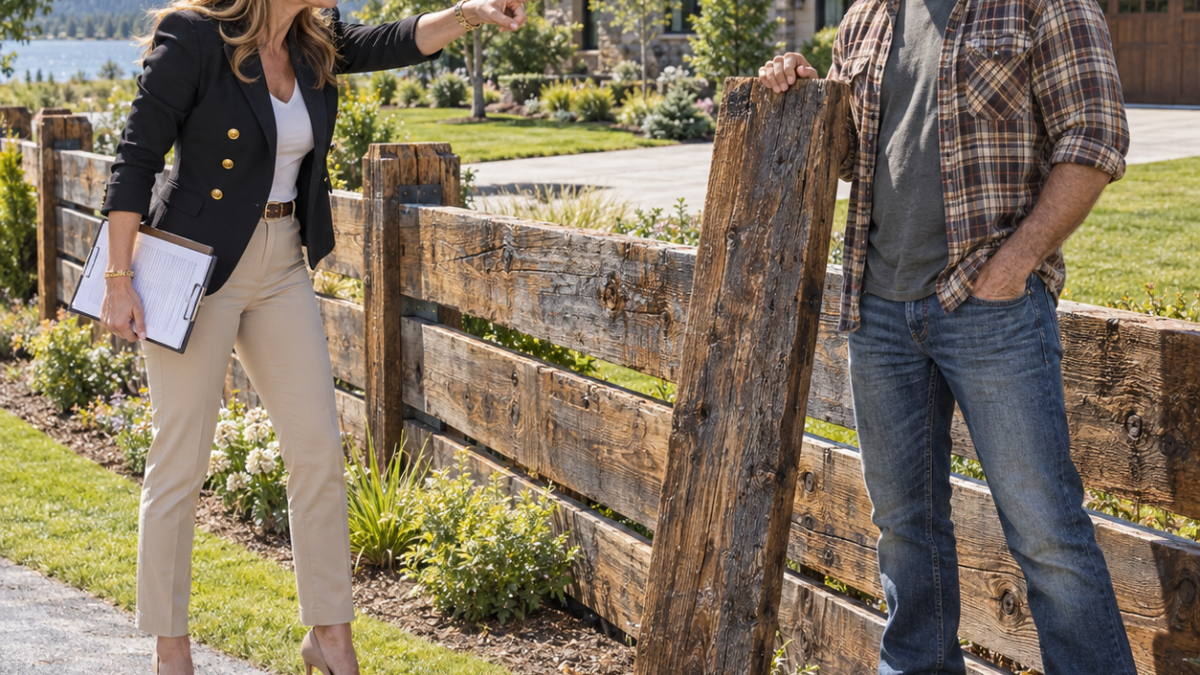
Karen gave me forty-eight hours to tear down the fence I had spent six months building, then smiled when she announced the HOA would fine me five hundred dollars for every day I refused.
She called it “rotting driftwood” in front of my wife, my daughter, and half the block, never realizing the century-old reclaimed cypress beneath her red-painted fingernail was worth roughly six hundred dollars per board.
What she understood even less was that by attacking my fence, she had finally given me a reason to look closely at everything she had been doing to our neighborhood for years.
“That disgusting pile of driftwood is coming down, Mr. Evans.”
Karen Miller stood just beyond my gate in a pink tracksuit bright enough to be seen from orbit.
Her clipboard was pressed against her chest.
Her other hand pointed toward two hundred and twenty feet of hand-fitted sinker cypress fencing that curved along the edge of my property.
I rested my palm on the gate.
The wood beneath it was cool.
Dense.
Almost silky from weeks of sanding and oiling.
It had been underwater longer than anyone in Oakridge Meadows had been alive.
Late nineteenth-century logging crews had lost enormous cypress logs in Florida rivers before they ever reached a mill. The oxygen-poor river bottom preserved them for generations. Minerals darkened the grain into colors modern lumber simply could not reproduce.
Some pieces carried amber streaks.
Others went almost chocolate brown.
A few had gray lines that looked like smoke trapped inside wood.
Karen saw junk.
I saw one hundred years of history.
More than that, I saw six months of work after twelve years in the Marine Corps had left me with a damaged knee, too many memories, and a desperate need to build something that did not disappear.
Woodworking had become the quiet place in my head.
My wife, Sarah, understood that.
Our daughter Lily, who was seven, understood it in the simple way children understand what matters to their parents.
Every afternoon while I built the fence, she would bring me lemonade and ask which board was the oldest.
I always told her the same thing.
“They all have stories.”
Now Karen wanted to send those stories to a landfill.
“The fence meets the covenant,” I said.
Karen laughed.
“The covenant does not say you can build whatever ugly thing you want simply because the measurements are correct.”
“It says wood, stone, or iron.”
“This is scrap.”
“It’s cypress.”
“It looks like it came off a shipwreck.”
“That’s not a prohibited material.”
Karen’s mouth tightened.
“The Architectural Review Committee disagrees.”
“How many people are on that committee?”
Her eyes changed.
Only slightly.
“Enough.”
“That isn’t a number.”
“Three, if you must know.”
I knew that was a lie.
I had never seen anyone except Karen sign an ARC notice.
But at that moment, I still believed the problem could be solved with paperwork.
I had spent my adult life as a combat engineer.
Rules mattered.
Specifications mattered.
Measurements mattered.
If something met the standard, I assumed the standard would protect it.
Karen had spent years proving that a person could hold the rulebook in one hand and ignore every page with the other.
“You have forty-eight hours,” she said.
“And if I refuse?”
“The fine begins at five hundred dollars per day.”
“That number isn’t in the covenants.”
“The board has enforcement discretion.”
“Show me the vote.”
Karen stepped closer to the gate.
“Mr. Evans, you are new enough to this community that perhaps you don’t understand how things work.”
Sarah had come onto the porch behind me.
Lily stood beside her holding a purple watering can.
Karen noticed them.
She raised her voice.
“We maintain standards here because responsible homeowners care about property values.”
I looked back at my daughter.
Then at the fence.
Then at the clipboard Karen was clutching like a badge.
“You called this rotten wood.”
“It is visually deteriorated.”
I almost smiled.
“What would you say if I told you the material alone is worth more than a hundred thousand dollars?”
Karen stared at me.
Then laughed so loudly Lily flinched.
“That pile?”
“Yes.”
“You expect me to believe that?”
“No.”
I opened the gate.
Karen looked triumphant, apparently assuming I was surrendering.
Instead, I stepped onto the sidewalk and met her eyes.
“I expect you to put every threat you just made in writing.”
Her smile disappeared.
“Gladly.”
“Good.”
Because that afternoon I still thought I was defending a fence.
I had no idea I was about to uncover illegal fines, fraudulent liens, a fake landscaping company, money flowing to Karen’s own family—and a letter from another family that would make the value of my fence feel almost meaningless.
PART 2
The first thing I did after Karen left was inspect the gate.
Not metaphorically.
Literally.
I checked every board.
Every fastener.
Every hinge.
Every corner where her finger had touched the wood.
That probably sounds irrational.
But after months of carefully fitting those boards together, I knew every mark.
The fence was the largest woodworking project I had attempted since leaving the Marines.
More than two hundred feet.
Tongue-and-groove panels.
Custom posts.
Reinforced gate framing.
Every board selected individually.
The sinker cypress had cost me more than I had admitted to Sarah at the beginning.
She figured it out anyway.
Wives do.
“You told me the wood was expensive,” she had said while reviewing our bank statement.
“It is.”
“You did not say ‘used car’ expensive.”
“It will last longer than a used car.”
“That is not a defense.”
I kissed her.
It did not help.
The material had taken two years to secure.
A salvage crew working permitted recovery sites on the Suwannee River had located several old-growth logs believed to have sunk during the logging boom of the late 1800s.
Modern cypress is beautiful.
Old-growth sinker cypress is something else.
Tight growth rings.
Natural oils.
Dense grain.
Wood from trees that may have been standing before the United States existed.
After recovery, the logs had to be dried carefully.
Then milled.
Then shipped.
By the time I bought them, each finished board carried a value that made ordinary cedar look cheap.
A timber appraiser later estimated many of the fence boards at roughly six hundred dollars each depending on size, grain, and provenance.
The entire fence came in north of a hundred thirty thousand dollars in material and finished-work value.
I did not build it to show off.
Most people had no idea.
That was part of what I loved.
Something valuable did not have to look expensive.
It could simply be good.
Strong.
Honest.
Old.
Karen understood none of that.
And I might have forgiven her ignorance if ignorance had been the problem.
It wasn’t.
The next evening, I sat at my desk and wrote the most professional letter I could manage.
Sarah leaned against the doorframe.
“You’re being very calm.”
“I’m writing.”
“That wasn’t what I said.”
I glanced at her.
“I am calm.”
“You alphabetized your attachments.”
“I always alphabetize attachments.”
“You only do that when you’re angry.”
Fair.
I cited the fence provisions.
Height.
Setback.
Permitted materials.
I attached photographs.
Invoice records.
The salvage documentation.
The timber appraisal.
A short article about sinker cypress.
I explained that the uneven coloration was natural patina, not decay.
Then I requested the written ARC decision, meeting minutes, names of committee members, and legal basis for the threatened fine.
Sarah read it.
“You didn’t call her unreasonable.”
“No.”
“She is.”
“I know.”
“You didn’t mention the tracksuit.”
“Sarah.”
“I’m just saying it weakened her position.”
I sent one copy certified.
Hand-delivered another.
Saved a digital copy.
Twelve years in the Marines had taught me that memory is unreliable and paper is patient.
The response arrived five days later.
Not through certified mail.
Not through email.
Karen stuck an orange violation sticker directly onto the center board of my gate.
I saw it from the kitchen.
My stomach dropped.
I went outside slowly.
The sticker had aggressive adhesive.
Cheap industrial stuff.
The kind used on towing notices.
I tried lifting one corner.
Fibers moved with it.
“Damn it.”
Sarah came outside.
“What?”
Then she saw it.
“Oh, Jack.”
Lily followed.
“Daddy, what did somebody do?”
I turned toward her.
“Nothing we can’t fix.”
She stared at the orange square.
“Is the fence in trouble?”
That question hurt more than it should have.
“No.”
“Promise?”
“Yes.”
I spent almost an hour removing the adhesive without damaging the patina.
Heat gun on low.
Citrus solvent.
Microfiber cloth.
Patience.
Under the sticker, a faint square remained.
It was barely visible.
I could see it.
That was enough.
The violation notice was stuffed into my mailbox.
My supporting documents were behind it.
Folded.
Crumpled.
One page had food grease on the corner.
Karen had not read them.
The fine had been increased to one thousand dollars per day.
Retroactive.
The current balance allegedly exceeded five thousand.
The notice listed four violations.
Unapproved fence.
Unapproved materials.
Failure to obtain ARC approval.
Unapproved landscape modification.
I read it twice.
Then once more.
Sarah watched my face.
“What?”
“She’s inventing violations.”
“Can she?”
“She just did.”
“I mean legally.”
“I don’t know.”
That bothered me.
I knew what the covenants said.
But I had not studied state HOA law.
Yet.
I took photographs of everything.
Orange sticker.
Adhesive residue.
Returned appraisal.
Envelope.
Fine notice.
Then I went inside and pulled a new three-inch binder from the cabinet.
Black.
Heavy.
I printed a label.
**OAKRIDGE MEADOWS HOA — EVANS PROPERTY**
Sarah sighed.
“There it is.”
“What?”
“The binder.”
“You make that sound ominous.”
“Because I’ve seen you create a binder before.”
“Documentation is not ominous.”
“The last time you made one this thick, a contractor lost his license.”
“He falsified engineering reports.”
“I know.”
She kissed my cheek.
“Try not to destroy anybody before dinner.”
I started reading.
Oakridge Meadows’ governing documents ran close to one hundred fifty pages.
Declaration.
Bylaws.
Rules.
Architectural standards.
Amendments.
Enforcement procedures.
I highlighted every reference to fences.
Then committees.
Then fines.
Then hearings.
At midnight, Sarah found me still reading.
“Jack.”
“One minute.”
“You said that an hour ago.”
“I found something.”
She came behind me.
The bylaws required the Architectural Review Committee to contain at least three appointed members.
Names were supposed to appear in annual meeting minutes.
I pulled the recent minutes from the HOA website.
Karen’s name appeared repeatedly.
No committee appointments.
No recorded ARC membership.
Interesting.
Not enough.
I needed somebody who knew history.
So I did what Marines have done since the invention of smoke.
I fed people.
Saturday morning, I put a pork shoulder in the smoker.
By noon, hickory drifted down the street.
Sarah invited a few neighbors.
I told myself it was social.
She did not believe me.
Neither did I.
Twenty people showed up.
Some had never spoken to us for more than thirty seconds.
Food creates temporary courage.
People admired the fence.
A young couple across the street, Tyler and Megan, ran their hands over the cypress.
“This is incredible.”
Tyler looked closely at the grain.
“What kind of wood?”
“Sinker cypress.”
“As in underwater?”
“For about a century.”
Megan stared.
“You’re serious?”
“Yes.”
Karen had called it rotten scrap.
Megan laughed.
“That woman wouldn’t know craftsmanship if it filed a complaint against her.”
Tyler glanced over his shoulder.
“Meg.”
“What?”
“You know how she is.”
That sentence mattered.
You know how she is.
People said it the way families talk about a volatile relative.
It meant:
Don’t provoke her.
Don’t disagree.
Keep your head down.
An older man named Arthur Collins stood quietly near the gate.
Thin.
Gray hair.
Thick glasses.
He touched the fence once.
Then looked at me.
“How much is she fining you?”
I hesitated.
“One thousand a day.”
Arthur almost dropped his iced tea.
“She can’t.”
“That’s what she says.”
“No.”
He shook his head.
“I mean she legally can’t.”
“You sure?”
“I used to be treasurer.”
That got my attention.
“For Oakridge?”
“One year.”
“Why’d you quit?”
Arthur looked toward Karen’s house three doors down.
“Karen.”
That was answer enough.
He lowered his voice.
“State law limits fines. There’s a hearing process. Committee review. Notice requirements.”
“I haven’t received a hearing.”
“Of course you haven’t.”
“Why?”
“Because hearings create records.”
I stared at him.
Arthur’s expression changed.
He realized he had said too much.
“What do you mean?”
He looked around.
“Not here.”
We met the next morning.
Arthur brought old HOA documents.
He had been treasurer six years earlier.
Karen was vice president then.
According to Arthur, she treated the board like a private business.
“I asked too many questions.”
“About what?”
“Expenses.”
“What kind?”
“Landscaping. Repairs. Vendor checks.”
“Anything illegal?”
“I couldn’t prove it.”
“Suspicious?”
“Very.”
He removed his glasses.
“Then Karen became president.”
“And?”
“She stopped providing full backup documentation.”
“You resigned.”
“I did.”
“Why didn’t you tell homeowners?”
Arthur looked embarrassed.
“Because I was afraid.”
That surprised me.
He was in his seventies.
Quiet.
Financially comfortable.
“What could she do?”
“Ask the Millers.”
“Who?”
His face darkened.
“Family who used to live on Juniper Court.”
He told me their story in fragments.
Fines.
Landscape dispute.
Lien.
Forced sale.
“They had a sick boy,” Arthur said.
“What happened?”
“They left.”
He looked down.
“I never heard the rest.”
That afternoon I called Dave Morgan.
Dave and I served together in the Marines.
He left after eight years, went to law school, and became a civil attorney.
He had the personality of a bulldozer with bar credentials.
I explained everything.
He interrupted only when necessary.
When I finished, he asked:
“You photographed the sticker?”
“Yes.”
“Saved it?”
“Yes.”
“Certified mail?”
“Yes.”
“Returned documents?”
“Yes.”
“Grease mark?”
“Yes.”
Dave laughed.
“God, I miss working with you.”
“What’s funny?”
“You’re the only man I know who preserved a greasy fingerprint from an HOA letter.”
“I didn’t preserve the fingerprint. It’s just there.”
“Sure.”
I told him what Arthur said about fine limits.
“Check the current statute,” Dave said.
“Never rely on old board memory alone.”
I did.
Arthur had been substantially right about the protections and procedural requirements applicable to fines under our source framework.
Karen’s one-thousand-dollar-a-day threat had major problems.
No proper hearing.
No documented committee.
No legitimate ARC composition.
Potentially unlawful fine structure.
Dave listened.
“Good.”
“Good?”
“She’s sloppy.”
“That’s good?”
“If somebody insists on being your adversary, you want them sloppy.”
“What next?”
“Find the Millers.”
That took two days.
Public property records showed Oakridge Meadows had recorded a fourteen-thousand-dollar lien against them.
I found other liens too.
Basketball hoop.
Boat.
Satellite dish.
Landscape issue.
More than fifty thousand dollars combined.
The Millers had moved to another state.
I found a mailing address and sent a letter.
Then waited.
Meanwhile, Karen kept firing.
A new violation appeared.
Leftover construction material stored improperly.
She meant a neatly stacked bundle of reclaimed cypress behind my garage.
Five hundred dollars.
I photographed it.
Filed it.
Did not respond.
A week later, a large envelope arrived.
From the Millers.
The letter inside was handwritten.
Five pages.
I read the first page standing at the kitchen counter.
By the second, I sat down.
Their son’s name was Daniel.
He had leukemia.
During treatment, the family fell behind on yard maintenance for two weeks.
Karen cited them.
They fixed the lawn.
Then she challenged their small vegetable garden.
Mrs. Miller wrote that Daniel had wanted fresh tomatoes because chemotherapy had changed how food tasted.
The family built three little beds.
Karen called them unapproved landscape modifications.
Fines accumulated.
The family appealed.
Rejected.
They missed HOA meetings because Daniel was hospitalized.
Karen recorded a lien.
Legal fees stacked up.
Eventually, exhausted and terrified of foreclosure, they sold the house at a loss.
Daniel died six months later.
Mrs. Miller wrote:
**The worst part was not losing the house. It was watching my son think the trouble was his fault because we had planted the garden for him.**
I stopped reading.
Sarah was across the table.
“What?”
I handed her the letter.
She read.
Then covered her mouth.
Lily was playing in the living room.
We could hear her laughing at a cartoon.
Sarah looked toward the sound.
Then back at me.
“Jack.”
“I know.”
“She did that?”
“Apparently.”
“To a family with a sick child?”
I nodded.
Sarah put the letter down carefully.
For weeks she had been urging caution.
That night something changed.
“Don’t stop.”
I looked at her.
“What?”
“Whatever you’re doing.”
Her eyes were wet.
“Don’t stop until people know.”
That letter changed the fight.
The fence mattered to me.
The money mattered.
But my pride no longer mattered at all.
I created a new binder section.
**VICTIM STATEMENTS**
Mrs. Miller’s letter went first.
Then Dave told me to request financial records.
Arthur helped draft the scope.
Five years.
Bank statements.
Check registers.
Vendor contracts.
Invoices.
Receipts.
Board minutes.
Approval records.
Karen could ignore me.
She could not legally ignore every member’s record rights forever.
We sent the demand to the entire board.
Not just Karen.
That was deliberate.
“Why everyone?” Sarah asked.
“Because silence gets comfortable when one person takes responsibility for all the wrongdoing.”
Dave had taught me that.
“If every director receives notice, every director has a decision to make.”
Ten business days later, documents arrived.
An inch-thick stack.
Bank statements.
Budgets.
Some invoices.
Missing check registers.
Missing minutes.
Pages blurred.
Documents duplicated.
Arthur spread them across our dining table.
“This is garbage.”
“She complied.”
“No.”
He held up a page.
“She performed compliance.”
There was a difference.
Arthur loved numbers the way I loved wood.
He could see patterns other people missed.
Two hours into the review, he stopped.
“What?”
He pointed.
“Evergreen Services.”
Monthly payment.
$350.
Common area maintenance.
“So?”
“We already pay Lawnscapes eight hundred a month.”
“Maybe Evergreen does something else.”
“Then where’s the invoice?”
None.
We searched state corporate records.
No Evergreen Services matching the payments.
Electronic payment details contained an address.
Residential.
Thirty miles away.
Owner:
Pamela S. Weaver.
Arthur shook his head.
“Who is that?”
I searched social media.
Ten seconds later, Karen appeared on my laptop.
Arm around another woman.
Birthday photo.
Family caption.
Pamela Weaver.
Karen’s sister.
Arthur’s face drained.
“Oh, God.”
“Could be legitimate.”
“No invoices.”
“That doesn’t prove fraud.”
“No vendor contract.”
“Still not proof.”
“No business registration.”
“We keep digging.”
Arthur stared at me.
“You’re calmer than I am.”
“No.”
I wasn’t.
But anger has to serve something.
Otherwise it serves itself.
We sent another records request.
Specific this time.
Evergreen contract.
Vendor insurance.
Invoices.
Approvals.
Check registers.
Karen responded with a new fine.
That told me enough about her emotional state.
Dave called it “predictable stupidity.”
Then I found the insurance clause.
Buried deep in the covenants was an indemnification provision covering damage caused by association agents under certain circumstances.
That gave Dave an idea.
“Get a formal appraisal.”
“I already have one.”
“How current?”
“Six months.”
“Update it.”
I hired a certified timber appraiser.
He spent half a day examining the fence.
Grain.
Board dimensions.
Recovery documentation.
Condition.
Market comparables.
Historic provenance.
When he finished, he looked at me.
“You know this is insane material for a suburban fence.”
“I’ve heard.”
“I mean that as praise.”
The final appraisal:
$132,450.
Sarah stared at the number.
“You put a hundred thirty thousand dollars around our yard?”
“Apparently.”
“You told me one hundred.”
“I rounded.”
“Down?”
“Optimism.”
She shook her head.
“Do not tell Lily.”
“Why?”
“She draws on everything.”
Fair.
We sent the appraisal to the HOA’s insurer.
That was when the fight truly changed.
The letter was calm.
Karen had threatened forced removal.
We documented the fence’s value.
We documented the questionable ARC structure.
We documented the potential invalidity of her process.
We put the insurer on notice that if the HOA or its contractors damaged the fence, we would seek full recovery.
Not six hundred dollars.
Not six thousand.
More than one hundred thirty thousand dollars before labor, legal fees, and additional claims.
Insurance companies understand risk better than Karen did.
Within forty-eight hours, the carrier contacted the board.
Arthur heard through a former director that the call had not gone well.
“They’re terrified.”
“Who?”
“Gerald and Brenda.”
The other directors.
“What about Karen?”
Arthur smiled weakly.
“Furious.”
That tracked.
For seven days, silence.
No stickers.
No letters.
No Karen crawling past in her car.
It felt wrong.
Then the emergency-meeting notice arrived.
Karen had decided to go public.
**EMERGENCY COMMUNITY MEETING**
**NONCOMPLIANT PROPERTY — 124 OAK STREET**
**AUTHORIZATION FOR REMEDIAL ACTION**
Sarah read it.
“She’s going to vote to tear it down.”
“She’s going to try.”
“What if people vote yes?”
“Their vote doesn’t legalize an improper act.”
“You’re sure?”
“Yes.”
She looked at the fence through the window.
“Jack.”
“What?”
“I don’t care what the wood costs.”
“I know.”
“I care what this is doing to you.”
I sat beside her.
She continued.
“You came home from the Marines because we wanted normal.”
The words hurt.
She was right.
When I came back medically discharged, I spent months feeling like the world moved at the wrong speed.
People complained about traffic.
Restaurant reservations.
Cable service.
Meanwhile, part of my mind was still somewhere else.
Woodworking had brought me back gradually.
The smell of cedar.
The weight of oak.
The certainty of a square corner.
You cut wrong, the piece doesn’t fit.
No politics.
No ambiguity.
Sarah had watched me rebuild myself one project at a time.
Now Karen had turned that sanctuary into conflict.
“I’m sorry,” I said.
“Don’t apologize.”
“I brought this home.”
“No.”
Sarah took my hand.
“She did.”
Then she looked at me.
“Finish it.”
The clubhouse was packed.
Karen wore a dark power suit.
Gerald and Brenda sat beside her looking like people who had just discovered the chair beneath them was connected to explosives.
Arthur sat on my left.
Sarah on my right.
I had my laptop.
Projector.
Binder.
The Millers’ letter.
The appraisal.
Bank statements.
Karen started exactly as expected.
She called me defiant.
Arrogant.
A threat to community standards.
The fence appeared on the projector behind her in an intentionally ugly photograph taken on a gray day.
“That,” she said, “is what happens when one homeowner believes his personal preferences are more important than the collective property values of everyone here.”
A few supporters applauded.
Karen held up my fine statement.
“More than twenty thousand dollars remains unpaid.”
Gasps.
She smiled.
Then she announced the board intended to hire a contractor to remove the fence and charge me.
“All in favor—”
I stood.
“Point of order.”
Her face hardened.
“You’ll speak afterward.”
“No.”
I held up the bylaws.
“Members subject to disciplinary action have a right to be heard before the vote.”
Gerald leaned toward Karen.
“He’s right.”
She whispered angrily.
He shook his head.
Karen looked back at me.
“Five minutes.”
“I’ll need less.”
I set up the projector.
First slide:
The fence.
Sunset.
Close-up grain.
Historic documentation.
Then:
**APPRAISED VALUE: $132,450**
The room inhaled.
Karen laughed.
“Nonsense.”
I held up the signed report.
“Certified timber appraisal.”
A man in the second row called out:
“Six figures?”
“Yes.”
Karen banged the gavel.
I continued.
“The boards are reclaimed old-growth sinker cypress recovered from historic Florida logging stock. Many individual pieces are valued at roughly six hundred dollars depending on dimension and grain.”
Megan whispered loudly from the front:
“She called it rotten.”
People laughed.
Karen did not.
Second slide.
Fine statute.
Her one-thousand-dollar daily notices beside it.
“Karen has repeatedly imposed fines without the required process and at amounts that do not match the applicable legal framework governing these enforcement actions.”
Gerald stared at the screen.
Brenda looked at Karen.
Third slide.
ARC requirement.
Minimum three members.
Then ARC appointment records.
Blank.
“Mrs. Miller claims the Architectural Review Committee unanimously rejected my fence.”
I looked at Karen.
“Please identify the three committee members.”
She said nothing.
“Karen?”
“This is not an interrogation.”
“No. It’s a community meeting.”
Someone shouted:
“Who’s on the committee?”
Another:
“I got rejected last year too!”
Then Arthur stood.
“I served as treasurer.”
The room quieted.
“To my knowledge, no properly appointed three-member ARC has existed for years.”
Karen turned on him.
“You resigned in disgrace.”
Arthur’s hands trembled.
But his voice did not.
“I resigned because you would not provide proper financial records.”
That changed the room.
I clicked again.
Evergreen Services.
Payments.
No contract.
No invoices.
Address.
Pamela Weaver property record.
Then Karen’s family photo.
For the first time, Karen looked afraid.
“This is defamatory.”
I kept my voice calm.
“Then explain the payments.”
“They are legitimate expenses.”
“For what service?”
“Landscaping support.”
“Where?”
“Common areas.”
“Lawnscapes maintains the common areas.”
Karen’s face reddened.
“Evergreen provided supplementary services.”
“Show the invoices.”
Silence.
“Show the contract.”
Nothing.
I turned toward the residents.
“Over several years, Oakridge Meadows has paid thousands of dollars to an unregistered vendor tied to the HOA president’s sister, while other legitimate vendors were already being paid for the same stated category of work.”
The room exploded.
I hadn’t called Karen a thief.
Not yet.
I didn’t need to.
People understood.
Gerald stood.
“Karen, is this true?”
She pointed at me.
“He has illegally obtained confidential financial information.”
Arthur answered.
“No.”
Everyone turned.
“These are association records members are entitled to inspect.”
Karen pounded the gavel.
“Sit down!”
Arthur did not.
For years, he had been scared of her.
I watched that fear leave his face.
“No.”
One word.
The room fell silent.
Arthur walked toward the front.
“Six years ago I resigned because I believed association funds were being handled improperly.”
Karen looked ready to explode.
“I should have spoken then.”
Arthur turned to the crowd.
“I didn’t.”
His voice cracked.
“I was afraid of what she would do to me.”
Nobody laughed.
Nobody moved.
“I am sorry.”
Then he looked at Karen.
“But I’m not afraid anymore.”
That was the moment Karen lost Oakridge Meadows.
Not when I showed the expensive fence.
Not the statutes.
Not Evergreen.
When Arthur said no.
Other people began standing.
A woman named Denise described a fine over her mailbox.
Tyler described warnings about his work truck.
An elderly man described being cited for leaving Christmas lights up three days too long after his wife went into the hospital.
Then someone shouted:
“What about the Millers?”
Karen froze.
Arthur looked at me.
I had not planned to read their letter publicly.
It was too personal.
Instead, I said:
“I contacted them.”
The room quieted.
“They confirmed they were fined and liened during their son’s cancer treatment.”
Murmurs.
“Enough pressure accumulated that they sold their home.”
Karen shouted:
“They violated the covenants!”
Sarah stood.
She had been silent all night.
Until then.
“A child was dying.”
Karen stopped.
Sarah continued.
“You made his parents fight about a vegetable garden while their son had cancer.”
Karen looked around.
Nobody defended her.
Sarah’s voice shook.
“What kind of person does that?”
There was nothing Karen could say.
Arthur called for a no-confidence vote.
Gerald seconded.
Brenda seconded too.
Karen stared at both of them.
“You cannot do this.”
Gerald looked sick.
“We should have done it years ago.”
The vote was nearly unanimous.
Karen was removed.
She screamed about procedure.
Threatened litigation.
Accused me of staging a coup.
Two off-duty police officers who lived in Oakridge Meadows calmly escorted her outside at the board’s request after she refused to leave the lectern.
Her clipboard remained on the table.
Someone held it up.
The room laughed.
I didn’t.
I looked at Sarah.
She was crying.
Not from joy.
From release.
Gerald’s first motion as interim president rescinded every fine against my fence.
Passed unanimously.
Second motion:
Formal recognition that the fence complied with written standards.
Passed.
Third:
Independent forensic audit.
Passed.
Fourth:
Suspend all nonessential spending until records were secured.
Passed.
Fifth:
Notify the HOA insurer and fidelity-bond carrier of suspected financial misconduct.
Passed.
Arthur became interim treasurer.
He looked terrified.
“Congratulations,” I told him.
“I hate you.”
“You volunteered.”
“I was emotional.”
“Numbers will calm you.”
They did.
The audit took six weeks.
Evergreen was only the beginning.
Karen had charged gasoline to the HOA card.
Groceries.
Restaurant meals.
Spa services labeled “clubhouse supplies.”
Her cousin’s pool company had received a no-bid contract at nearly twice market rate.
Several invoices appeared altered.
Cash reimbursements lacked documentation.
The total confirmed misuse eventually reached $48,750.
Arthur called me after the auditor’s final meeting.
“Forty-eight seven-fifty.”
I closed my eyes.
“You sure?”
“Yes.”
“The carrier?”
“Fidelity claim filed.”
“Police?”
“The board voted.”
“To refer?”
“Yes.”
Arthur’s voice became quiet.
“Jack.”
“What?”
“I should have stopped this years ago.”
“No.”
“I saw warning signs.”
“You did.”
“I left.”
“Yes.”
“That makes me responsible.”
“No.”
“It makes me afraid.”
“That’s different.”
He was silent.
“I don’t feel different.”
“I know.”
Karen was charged later.
Grand theft.
Fraud-related offenses.
The local news picked up the story.
They loved the fence angle.
Of course they did.
The segment showed Karen’s mug shot.
Then my gate glowing in afternoon sun.
The reporter actually touched the wood on camera.
“Each of these reclaimed boards,” she said, “can be worth hundreds of dollars.”
My woodworking business exploded.
Emails.
Calls.
Custom orders.
People wanted dining tables.
Mantels.
Doors.
Fences.
One customer joked:
“I want the Karen package.”
“No.”
“What’s that?”
“I don’t know. But no.”
Sarah laughed for ten minutes after I told her.
The phrase “justice fence” started appearing online.
I hated that too.
Business tripled anyway.
For the first time since leaving the Marines, woodworking became financially viable enough that I could choose projects rather than chase them.
I hired a young veteran named Marcus Cole.
Army.
Twenty-six.
Quiet.
Recently separated.
He struggled with crowds.
I understood.
His first week, I taught him how to plane reclaimed oak.
He rushed.
The grain tore.
“Slow down.”
“I’ve got it.”
“No.”
He tried again.
Tear-out.
I took the board.
“Wood tells you when you’re going the wrong direction.”
Marcus looked irritated.
“It’s wood.”
“So listen better.”
A month later, he was better than I was at reading difficult grain.
That mattered more than the television story.
Karen’s criminal case moved slowly.
Her attorney initially claimed misunderstanding.
Poor accounting.
Delegation.
The audit contradicted that.
Bank records contradicted that.
Her sister’s testimony did not help.
Eventually Karen accepted a plea.
Felony grand theft.
Probation.
Restitution.
She was permanently barred from serving in fiduciary positions under the final arrangement described in the source.
No dramatic prison scene.
No courtroom screaming.
Just signatures.
Deadlines.
Repayment.
A woman who once controlled meetings reduced to compliance with terms written by somebody else.
I thought that would satisfy me.
It didn’t.
Not the way I expected.
The moment that satisfied me came through a phone call.
Unknown number.
I answered.
“Mr. Evans?”
“Yes.”
“This is Laura Miller.”
I sat down.
Mrs. Miller.
“I hope I’m not bothering you.”
“No.”
“Arthur gave us your number.”
“That’s fine.”
There was a long silence.
“I got the check.”
The new HOA had reimbursed some of the fines and financial harm it could document from the Miller case after recovering funds.
Not enough.
Nothing could be enough.
“I’m glad.”
“It isn’t about the money.”
“I know.”
Her voice broke.
“They sent an apology.”
I waited.
“It said Daniel’s name.”
I closed my eyes.
For years, Karen had reduced their son’s illness to noncompliance.
Now the formal board apology acknowledged what happened.
Laura cried quietly.
“We thought nobody remembered.”
“I remembered after you told me.”
“No.”
She inhaled.
“You listened.”
I did not know what to say.
She continued.
“Daniel used to grow tomatoes with his father.”
Sarah entered the room and saw my face.
I put the phone on speaker after asking Laura.
She told us about Daniel.
Funny kid.
Bad jokes.
Hated hospital food.
Loved yellow tomatoes because he thought red ones looked “too normal.”
After the call ended, Sarah sat beside me.
“That’s the victory.”
I nodded.
Not Karen’s mug shot.
Not my business.
Not the fence appraisal.
That.
Somebody who had been erased by bureaucracy had his name spoken again.
The new board changed Oakridge Meadows.
Gerald stayed interim president only long enough to organize elections.
He refused to run.
“I am never sitting behind that table again.”
Fair.
A school principal named Maya Patel became president.
Arthur remained treasurer.
His financial reports were legendary.
Every dollar.
Every vendor.
Every contract.
Monthly online posting.
He once included a seven-dollar discrepancy in a five-page explanatory appendix.
Maya threatened to ban spreadsheets over ten pages.
Arthur called her reckless.
The ARC was rebuilt properly.
Three members.
Architect.
Retired contractor.
Landscape designer.
Real meetings.
Written decisions.
Appeals.
No Karen.
The clubhouse changed too.
Karen had loved beige.
Walls.
Carpet.
Curtains.
Everything beige.
Maya asked residents to choose new colors.
They chose warm blue and soft cream.
At the unveiling, Tyler whispered:
“Property values survived.”
I whispered back:
“Barely.”
The fence became a neighborhood landmark.
People stopped during walks.
Asked about it.
Touched the grain.
I installed a small bronze plaque on one gate post.
Nothing dramatic.
**RECLAIMED 19TH-CENTURY SINKER CYPRESS**
**SOME THINGS ARE BUILT TO LAST**
Lily helped me screw it into place.
She was eight by then.
“Is this because of the mean lady?”
“Partly.”
“Is she still mean?”
“Probably.”
“Where does she live now?”
Karen’s house had gone on the market.
“Not here much longer.”
Lily looked at the fence.
“Good.”
Children possess clarity adults spend years complicating.
Karen moved three months later.
The morning of the moving truck, I was oiling the fence.
She came out carrying a box.
Saw me.
Stopped.
For almost a year we had been fighting.
Letters.
Meetings.
Fines.
Investigations.
Police.
Court.
Now there was nothing left.
Karen looked older.
No tracksuit.
No clipboard.
Just jeans and a sweater.
“You got what you wanted.”
I put down the cloth.
“No.”
She frowned.
“What else could you possibly want?”
“I wanted you to leave my fence alone.”
Her face twisted.
“You humiliated me.”
“You called a public meeting.”
“You destroyed my reputation.”
“You spent HOA money through your sister.”
“You turned everyone against me.”
“I showed them records.”
She shook her head.
“You think you’re some hero.”
“No.”
That surprised her.
“I think you made a lot of bad decisions because nobody stopped you early.”
Karen looked toward the fence.
“I still think it’s ugly.”
I laughed.
For the first time, genuinely.
“Then we finally agree on something.”
Her eyes narrowed.
“What?”
“You never understood it.”
She stared.
I continued.
“You thought value meant looking expensive.”
“I thought communities needed standards.”
“So do I.”
That stopped her.
“But standards need rules. And rules need accountability.”
Karen looked away.
I wiped oil into the wood.
“You wanted obedience.”
She said nothing.
The moving truck door slammed.
Karen carried her box away.
That was the last time I saw her.
I didn’t nod.
Didn’t smile.
Didn’t need to.
The fence remained.
That was enough.
About six months later, a regional home-and-garden magazine contacted me.
They wanted to photograph the cypress.
The writer was less interested in Karen than the material.
Thank God.
She asked where the logs came from.
How long they had been submerged.
What mineral staining did to the grain.
Why old-growth cypress survived underwater.
That article led to a call from a Florida history museum.
They were preparing an exhibit on river logging.
They wanted photographs of the fence and a small sample board showing finished sinker cypress.
I sent them one.
A month later, Lily and I visited the exhibit.
She stood in front of the display.
There was a photograph of our gate.
She looked at me.
“Our fence is in a museum?”
“A picture.”
“That counts.”
She read the label slowly.
Then pointed.
“It says nineteenth century.”
“Yes.”
“How old is that?”
“Very.”
“Older than Grandpa?”
“Yes.”
“Older than Arthur?”
“Which Arthur?”
“The neighbor.”
“Yes.”
She looked impressed.
“Don’t tell him.”
We told him.
He pretended to be offended.
By then Arthur had become family.
Sunday dinners.
Porch conversations.
Budget complaints.
He taught Lily card games Sarah hated.
Lily called him Grandpa Numbers.
He pretended to dislike it.
He absolutely loved it.
One evening, about a year after the emergency meeting, Arthur and I sat on the porch with iced tea.
Sunset lit the fence.
The cypress grain seemed almost bronze.
Arthur nodded toward Karen’s old house.
“New family installed a fence.”
“What kind?”
“White vinyl.”
I laughed.
Of course.
Arthur grinned.
“Very compliant.”
“Tragic.”
We sat quietly.
Then he said:
“She never understood.”
“The wood?”
“Anything.”
I looked at him.
Arthur continued.
“She thought your fence was dangerous because it was different.”
“That sounds dramatic.”
“No.”
He adjusted his glasses.
“Karen needed sameness because sameness was easy to control.”
He gestured toward the houses.
“Same mailbox. Same colors. Same approved plants. Same committee opinions.”
“Uniformity isn’t always bad.”
“I know.”
Arthur looked toward the fence.
“But she didn’t want standards. She wanted permission to be the person who granted exceptions.”
That hit differently.
Power is not only telling people no.
Sometimes it is making everyone come ask you first.
The fence offended Karen because I had built something beautiful without needing her personal blessing.
I had followed the written rule.
That wasn’t enough for her.
She wanted submission to the unwritten one.
Ask Karen.
That rule was gone.
Oakridge Meadows slowly became more interesting.
A dark blue front door appeared.
Then a brick mailbox.
A vegetable garden.
A pergola.
Nothing crazy.
Nothing that destroyed property values.
Just people.
The neighborhood looked less like a catalog.
More like a place where human beings lived.
The community garden opened two years later.
Sarah pushed for it.
So did Lily.
Maya asked me to build raised beds.
I used ordinary cedar.
Arthur looked horrified.
“No six-hundred-dollar boards?”
“Community budget.”
“Good.”
The garden included one bed dedicated to families who had moved away.
Sarah suggested a small plaque.
No names initially.
Then Laura Miller gave permission.
The plaque read:
**DANIEL’S GARDEN**
**GROW SOMETHING KIND.**
The first tomatoes planted there were yellow.
Laura sent the seeds.
When they ripened, Sarah called her.
I stood beside the bed while they spoke.
Laura cried.
So did Sarah.
I pretended to examine irrigation.
Marines maintain standards.
The business continued growing.
Marcus became my foreman.
Then partner.
We hired another veteran.
Then a young woman named Elena who had learned cabinetmaking from her father.
The shop became noisy.
Healthy noisy.
Saws.
Sanders.
Arguments about grain direction.
Music nobody agreed on.
One day Marcus held up a beautiful piece of reclaimed pine.
“What’s this worth?”
“Depends.”
“Karen price?”
“There is no Karen price.”
“There should be.”
“Stop naming business concepts after people with felony convictions.”
He laughed.
I eventually gave up trying to stop the jokes.
The fence story became part of our company identity whether I liked it or not.
But I made one rule.
We never sold fake “justice fence” packages.
If somebody wanted reclaimed timber, I explained what it was.
Where it came from.
Why it mattered.
History deserved better than a gimmick.
Years later, Lily began helping in the shop.
She started with sweeping.
Then sanding.
At twelve she built her first box.
At fourteen, a side table.
At sixteen, she asked whether she could make something from leftover sinker cypress.
I hesitated.
“What?”
“You looked like I asked to cut up the Constitution.”
“It’s expensive.”
“I know.”
“What are you making?”
She showed me a drawing.
A small memory box.
“For Grandpa Numbers.”
Arthur’s health had declined.
His eyesight was poor.
He had stopped driving.
Still attended HOA meetings remotely because apparently spreadsheets were medically necessary.
Lily built the box.
Perfect miters.
Brass hinges.
No stain.
Just oil.
She gave it to Arthur on his eighty-second birthday.
He ran his fingers over the grain.
“Same wood?”
“Yes.”
“As the fence?”
She nodded.
Arthur cried.
So did I.
Again, privately.
Inside the box Lily had placed copies of the first transparent HOA budget Arthur published after Karen.
He laughed when he found them.
“This is the nerdiest gift I have ever received.”
“You love it.”
“Yes.”
He kept that box until he died.
After his funeral, his daughter returned it to Lily.
There was a note inside.
**KEEP ASKING WHERE THE MONEY WENT.**
Classic Arthur.
His death hurt more than I expected.
He had been afraid when we met.
People remember him later as courageous because he stood up at that meeting.
But courage without fear is something else.
Arthur was terrified.
He stood anyway.
That is why I respected him.
At the next annual HOA meeting, Maya proposed naming the financial transparency policy after him.
**THE ARTHUR COLLINS OPEN BOOK STANDARD**
Passed unanimously.
I voted yes.
Then told everyone the name was terrible.
Arthur would have agreed.
The recovered money stabilized the HOA.
Dues actually decreased one year.
Residents nearly rioted from confusion.
Maya had to explain that responsible budgeting occasionally results in lower assessments.
Nobody believed her.
Then the check arrived.
Lower.
People treated Arthur’s old spreadsheet templates like sacred documents.
By the fifth anniversary of Karen’s removal, Oakridge Meadows looked completely different without changing very much physically.
Same roads.
Same houses.
Same pool.
Same trees.
The difference was social.
People spoke.
Board members answered questions.
Records appeared without warfare.
Complaints began with conversations.
A child’s basketball hoop did not trigger legal correspondence.
A garden did not threaten foreclosure.
Ordinary life became ordinary again.
That was the best possible outcome.
One Saturday morning, Lily and I were oiling the fence together.
She was fifteen.
Almost as tall as Sarah.
She ran the cloth along a dark section of cypress.
“Dad?”
“Yeah?”
“Would you build it again?”
“The fence?”
“Yes.”
“Absolutely.”
“Even knowing everything?”
I stopped.
That was harder.
Karen.
Fines.
Millers.
Audit.
Court.
Arthur.
Business.
Daniel’s garden.
All of it began here.
“Knowing what?”
“All the trouble.”
I looked down the line of boards.
Two hundred twenty feet.
Still straight.
Still solid.
Patina deeper now.
“Yes.”
“Why?”
“Because trouble wasn’t caused by the fence.”
She thought about that.
“Karen?”
“Partly.”
“And everyone who was scared of her?”
I looked at Lily.
She had grown up listening better than I realized.
“Yes.”
“And people who didn’t read the rules?”
“Yes.”
“And the board?”
“Yes.”
She nodded.
“So a lot of people.”
“Systems usually fail with help.”
“That’s depressing.”
“Systems get fixed with help too.”
She smiled.
“That sounds like something Grandpa Numbers would say.”
“It probably is.”
We kept working.
At the gate, the faint outline from Karen’s orange sticker was still barely visible if the light hit just right.
I had never sanded it out completely.
Sarah once asked why.
At first, I said I didn’t want to remove more patina.
That was true.
But not the whole truth.
I kept the mark because I liked what it became.
Not damage.
Evidence.
A tiny scar on wood more than a century old.
The tree survived storms.
Logging.
A river.
A century underwater.
Salvage.
Milling.
Transport.
Then Karen Miller.
The wood handled her too.
Maybe that was why I had always loved reclaimed material.
New lumber tells you what it might become.
Old wood tells you what it already survived.
I understood that.
After the Marines, people sometimes treated me like something damaged.
Bad knee.
Nightmares.
Years of memories I did not discuss.
Woodworking taught me a different definition.
Weathered was not ruined.
Scarred was not useless.
Old material could carry more character because of what happened to it.
My fence was never just expensive lumber.
It represented the belief that history could be built into something new without erasing what came before.
Karen wanted smooth.
Uniform.
Approved.
I wanted real.
Years after the fight ended, Laura Miller visited Oakridge Meadows.
It was her first time back.
She almost canceled.
Sarah convinced her.
Laura stood at the entrance for several minutes before driving in.
When she reached our house, I met her at the gate.
She touched the fence.
“So this is it.”
“This is it.”
She laughed softly.
“All that because of wood.”
“No.”
I shook my head.
“Wood just started the conversation.”
We walked to Daniel’s garden.
Yellow tomatoes hung heavy on the vines.
Laura stopped.
For a long time she said nothing.
Then she knelt.
Touched one leaf.
“My son would have loved this.”
Sarah stood beside her.
“I know.”
Laura cried.
We let her.
Afterward, she asked to see the clubhouse.
The last place where Karen had once ruled.
The walls were blue now.
Photos of community events replaced framed violation notices.
Children’s art from a neighborhood contest hung near the entrance.
Laura looked around.
“She would hate this.”
“Karen?”
“Yes.”
“Probably.”
Laura smiled.
“Good.”
Before leaving, she handed Maya an envelope.
Inside was a small donation for Daniel’s garden.
Maya tried to refuse.
Laura insisted.
“I want something good to grow where something bad happened.”
That sentence stayed with me.
Because that was exactly what happened to Oakridge Meadows.
Karen’s downfall was satisfying.
I won’t lie.
Watching her authority collapse felt good after months of threats.
Seeing the fines rescinded felt good.
Seeing the audit expose the fraud felt good.
Knowing she had to repay what she stole felt good.
But those things faded.
What remained was everything people built afterward.
The garden.
Transparent budgets.
Friendships.
A stronger board.
My business.
Marcus finding a career.
Lily learning woodworking.
Arthur finding courage late in life.
Laura hearing her son’s name honored instead of buried beneath a violation file.
Those things lasted.
The fence lasted too.
A decade after construction, a regional appraiser updated its valuation.
The number had increased.
I didn’t tell Sarah immediately.
She found the report.
“Jack.”
“Yes?”
“How much is our fence worth now?”
“I don’t know.”
“You do.”
“I forgot.”
“You laminated the appraisal.”
“I laminate many things.”
She stared.
I surrendered.
She read the number.
Then pointed toward the yard.
“If a hurricane comes, I’m sleeping beside it.”
“Bad structural plan.”
“More valuable than the house.”
“Also inaccurate.”
“Debatable.”
The sinker cypress never cared about its market value.
Rain hit it.
Sun faded it.
Children touched it.
Birds sat on it.
It simply existed.
That became another lesson.
Karen’s first mistake was assuming something that looked old had no value.
Her bigger mistake was assuming she alone got to decide what value meant.
A community can do that too.
We value uniform lawns and ignore frightened neighbors.
Value property prices and ignore decency.
Value enforcement and ignore fairness.
Value quiet and mistake it for peace.
Oakridge Meadows had been quiet under Karen.
Very quiet.
People whispered complaints inside their homes.
Avoided meetings.
Paid fines.
Moved away.
That wasn’t peace.
That was fear with landscaping.
Real peace came later.
It was louder.
People argued at meetings.
Questioned budgets.
Challenged decisions.
Then went home still liking each other.
Healthy communities are not silent.
They are safe enough for disagreement.
That was what we finally built.
Years later, when Lily left for college, she stood beside the gate before loading the last box into her car.
She ran her hand over the cypress.
“You going to miss me?”
“No.”
She smiled.
“Mom says you already cried.”
“Your mother is unreliable.”
Sarah called from the porch.
“He cried.”
Betrayal.
Lily hugged me.
Then looked at the plaque.
**SOME THINGS ARE BUILT TO LAST.**
“You think that’s true?”
“Yes.”
“Everything ends.”
“Lasting doesn’t mean forever.”
She waited.
“It means long enough to carry something forward.”
Lily looked at the wood.
Then hugged me again.
After she drove away, Sarah stood beside me.
“You did cry.”
“Dust.”
“No dust.”
“Pollen.”
“Winter.”
I gave up.
The house felt quieter without Lily.
The fence did not.
It held its line.
That is what fences do.
But ours no longer felt like a barrier.
Neighbors opened the gate without hesitation.
Arthur had.
Laura did.
Kids did.
Marcus sometimes came through without knocking and stole coffee.
It had started as my fortress.
Eventually it became a boundary with a door.
That distinction mattered.
Karen had believed boundaries existed to keep people controlled.
I learned they exist to make consent possible.
My property.
Your property.
My choice.
Your choice.
Then we decide when to open the gate.
Near my seventieth birthday, Lily came home with her husband and their little boy.
His name was Daniel.
Not because of the Miller family specifically, though Laura cried when she learned.
It was her husband’s grandfather’s name too.
Funny how names travel.
Little Daniel was four.
He immediately discovered the gate.
“Grandpa?”
“Yeah?”
“This wood is bumpy.”
“Good observation.”
“Why?”
“Because it’s old.”
“How old?”
“Very.”
“Older than you?”
“Watch it.”
Lily laughed.
Daniel pressed his palm against the board.
“Mom says a mean lady wanted to break it.”
I looked at Lily.
“She simplified.”
“She’s four.”
Daniel looked concerned.
“Did she break it?”
“No.”
“Why?”
I could have told him about statutes.
Fraud.
Audits.
Votes.
Insurance.
Court.
Instead I said:
“Because enough people finally told her no.”
He considered that.
Then pushed the gate open.
“Can I go play?”
“Yes.”
He ran inside.
Simple.
The story had become simple after all.
Not because the facts were simple.
Because time stripped away the noise.
Karen wanted control.
People were afraid.
I documented.
Arthur spoke.
Others joined.
Truth became harder to ignore than fear.
Then the community changed.
That was it.
One evening, long after Karen’s name had stopped appearing in neighborhood conversation, I sat on the porch with Sarah.
The sunset caught the fence exactly as it had the night after the first barbecue.
Dark grain glowing.
Edges silvered by age.
“You know what’s funny?” she asked.
“What?”
“You built that because you wanted privacy.”
“I still like privacy.”
“You held a barbecue to investigate neighbors.”
“That was tactical hospitality.”
“You became friends with half the neighborhood.”
“Operational failure.”
“You started a community garden.”
“Under protest.”
“You hired people because of a fence.”
“Coincidence.”
“You are terrible at retirement.”
“I’m not retired.”
“That proves my point.”
She leaned her head on my shoulder.
For a while we listened to children laughing somewhere down the street.
No gavel.
No screaming.
No certified letters.
No engines from tow trucks.
Just evening.
Arthur once told me Karen never understood the fence.
He was right.
But I’m not sure I understood it either when I built it.
I thought I was building something strong because I needed strength.
Something old because I needed connection.
Something expensive because I believed craftsmanship was worth paying for.
I thought the line of cypress would separate my family’s space from the world outside.
Instead, it became the thing that connected us to everyone around us.
Karen attacked it because she saw independence.
Arthur defended it because he saw injustice.
The Millers gave the fight meaning beyond me.
My neighbors saw evidence that Karen could be challenged.
Sarah saw me become part of a community instead of retreating into my workshop.
Lily grew up understanding that rules deserve respect only when the people enforcing them respect the rules too.
That is more than I expected from a fence.
The original appraisal sits in my office.
$132,450.
Every few years somebody hears the story and asks the same question.
“Would you really have sued the HOA for the entire value if they tore it down?”
Yes.
Absolutely.
Not because I worship money.
Because destroying something valuable out of arrogance should have consequences.
But they didn’t tear it down.
That was the better outcome.
Karen once stood on my lawn and called the wood rotten.
Years later, the fence was still standing.
Her presidency wasn’t.
She called it ugly.
A museum featured it.
She called it scrap.
Collectors offered thousands for leftover boards.
She said it hurt property values.
Local realtors later pointed it out as a distinctive feature of the neighborhood.
She threatened to fine me until I surrendered.
Instead, the investigation into those fines exposed the way she had treated families for years.
She wanted one fence removed.
She lost an entire system of control.
And the part I found most satisfying had nothing to do with six-hundred-dollar boards.
It was this:
One morning, years after everything ended, I walked outside and found an orange piece of paper taped to the gate.
For half a second, my body reacted before my mind did.
My chest tightened.
Karen.
Violation.
Then I looked closer.
Crayon.
Lily’s son Daniel had drawn a picture.
Our house.
The fence.
A giant yellow sun.
Three stick figures.
At the top, in crooked letters:
**GRANDPA’S STRONG FENCE**
I stood there laughing.
Sarah came outside.
“What happened?”
I showed her.
She smiled.
“Better than Karen’s sticker.”
“Much.”
I taped Daniel’s picture inside the workshop.
The orange violation notice from years earlier still existed in my binder.
I could have thrown it away.
I kept it.
Not as a trophy.
As contrast.
One orange paper had tried to turn fear into obedience.
Another orange paper was drawn by a child who had never known a neighborhood where people were afraid of the HOA president.
That was progress.
The cypress fence has outlasted storms.
Florida heat.
Humidity.
Arguments.
Karen.
It will probably outlast me.
That no longer bothers me.
The trees those boards came from grew for centuries before anyone cut them.
Then they sank.
Waited underwater for generations.
Were recovered.
Milled.
Rebuilt into something nobody originally imagined.
That is the nature of good material.
It survives being transformed.
Maybe people do too.
Maybe communities do.
Karen thought strength meant controlling everyone around her.
The fence taught me something different.
Strength is staying intact without needing everything else to look like you.
Every board in that fence is different.
Dark.
Light.
Straight grain.
Wild grain.
Mineral streaks.
Knots.
Scars.
Together, they make something stronger and more beautiful than uniform plastic ever could.
Oakridge Meadows eventually learned the same lesson.
And that was the victory I carried with me long after Karen, the fines, the audit, and the courtroom faded into history.
I had come home from the Marines wanting to build something that would last because too much of my life had taught me how quickly things could disappear.
I thought that something was a fence.
I was wrong.
The fence was only the first board.
What we really built afterward was trust.
Accountability.
Friendship.
A community where a frightened old accountant could finally stand up.
Where a grieving mother could hear her son remembered.
Where children could grow tomatoes without somebody calculating a fine.
Where rules protected neighbors instead of frightening them.
Karen once mocked my fence because she could not understand why anybody would spend so much time and money preserving wood that looked old.
But old things are not worthless because they carry scars.
Sometimes the scars are proof of value.
Sometimes survival is the value.
I learned that in the Marines.
I learned it again from timber pulled out of a river.
And Oakridge Meadows learned it from a fence Karen tried to destroy.
Even now, whenever I step through that gate, I rest my hand on the same dark cypress board she pointed at all those years ago.
The grain is a little smoother.
The color is deeper.
The wood remains solid.
And if the evening sun catches it just right, I can still see the faint square where her violation sticker once clung to the surface.
I never removed that last ghost of adhesive completely.
I decided it belonged there.
Not as Karen’s mark.
As ours.
Proof that she tried.
Proof that the fence stayed.
Proof that the community changed.
And proof that sometimes the most expensive board on your property is not valuable because it is worth six hundred dollars.
It is valuable because it reminds you exactly what you refused to surrender.








