PART 2: HOA Karen Called ICE to Humiliate My Farm Crew—Then She Learned I Was the Federal Judge in Her District
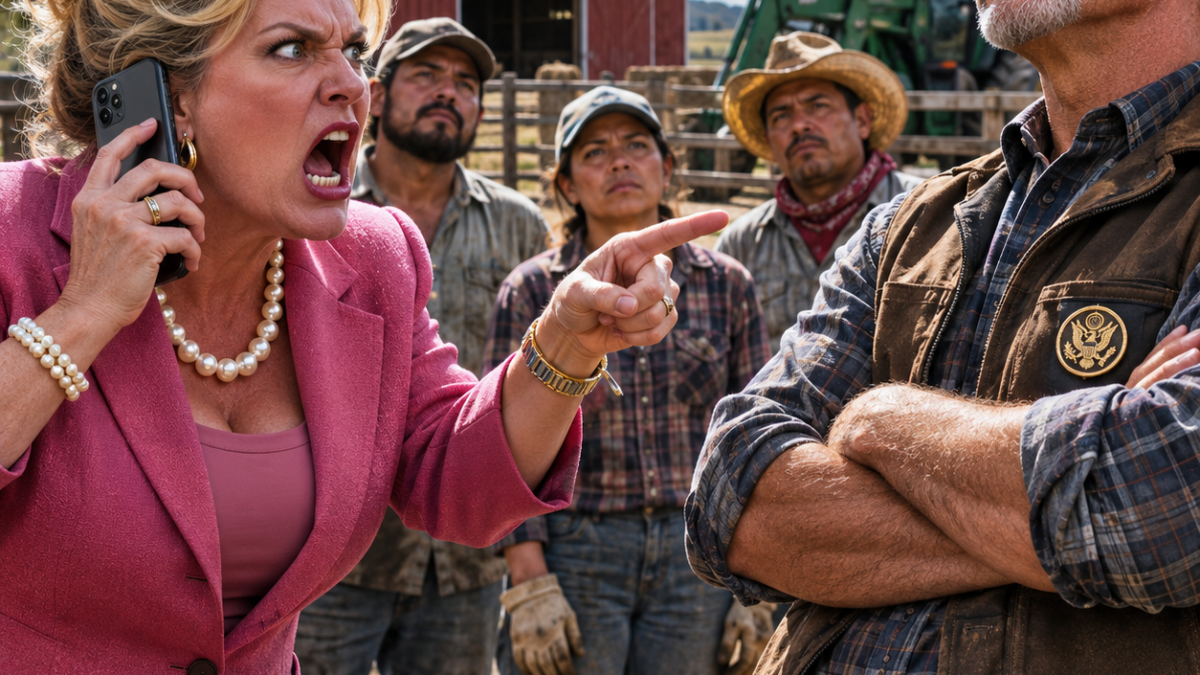
PART 2
The senior agent was standing near the first SUV, speaking quietly with another officer while flipping through a clipboard.
I walked toward him slowly.
Years in a courtroom had taught me that the first few minutes of any confrontation usually determined everything that followed.
The loudest person rarely controlled the room.
The calmest one often did.
I stopped several feet away.
“Agent Diaz?”
He looked up.
“Yes?”
I had read the name on his vest.
“My name is Marcus Thorne. I own this property, and I am the legal employer of every worker you are questioning.”
He studied me.
There was no aggression in his face. No arrogance either.
Just professional caution.
“We received a report regarding undocumented employees working at this location.”
“I understand.”
Karen was close enough to hear us.
She immediately interrupted.
“A credible report.”
Diaz glanced at her.
Then back at me.
I continued.
“I maintain complete employment documentation for everyone working here.”
“That would be helpful.”
“I’ll get it.”
Karen laughed behind me.
“You can print whatever you want after the fact.”
I turned.
“Karen.”
“What?”
“Stop talking.”
Her face hardened.
“Excuse me?”
“You made your report. Federal agents are now conducting their investigation. Let them do their jobs.”
Her mouth opened.
Then closed.
I walked toward my truck.
After the first several HOA notices, I had developed an instinct that something worse was coming. I didn’t know it would be this, but I had begun keeping duplicate employment records in a waterproof case behind the rear seat.
I pulled it out.
Passports.
Work authorizations.
Visa documentation.
Permanent resident documentation.
Employment eligibility forms.
Everything was organized alphabetically.
I carried the binder back to Diaz.
He opened it.
Within minutes, his expression changed.
Not dramatically.
Professionals rarely show much.
But I noticed.
He flipped through Hector’s section.
Then another.
Then another.
He called one of the other agents over.
They spoke quietly.
Karen became impatient.
“Well?”
Neither agent answered.
She stepped closer.
“Officer, I’m the one who contacted your office.”
Diaz continued reading.
“These records appear to be in order.”
Karen’s voice sharpened.
“They’re lying.”
Diaz looked up.
“Ma’am?”
“I told your office there are illegal workers here.”
“And what evidence did you have?”
She hesitated.
I watched the moment carefully.
“I’ve seen them.”
Diaz stared at her.
“You’ve seen them?”
“Working.”
“That isn’t evidence of unlawful immigration status.”
Karen’s face reddened.
“They barely speak English.”
Hector looked down.
My hands curled at my sides.
Diaz closed the binder.
“Mr. Garcia?”
Hector raised his eyes.
Diaz walked toward him.
A second later, the handcuffs came off.
The metallic click was small.
But I will remember that sound for the rest of my life.
Diaz spoke to Hector quietly.
Then he ordered his team to release everyone else.
Karen rushed forward.
“What are you doing?”
Diaz turned.
“Ma’am, step back.”
“You can’t just leave.”
“Yes, we can.”
“They’re illegal.”
“No, ma’am. Based on the documentation we’ve reviewed, everyone here is authorized to work.”
“But I called you.”
“That does not make your allegation true.”
The entire farm seemed to go silent.
Karen looked from Diaz to me.
Then back to Diaz.
Her authority had always depended on people accepting it.
This man didn’t care that she was HOA president.
He cared about facts.
She pointed toward me.
“He probably forged everything.”
That was when Diaz’s patience disappeared.
“Ma’am, you need to be very careful about what you say next.”
Her hand slowly dropped.
Diaz handed my binder back to me.
“Judge Thorne.”
Karen’s head snapped toward him.
Judge.
One word.
That was all it took.
She stared at me.
“What did he call you?”
I didn’t answer her.
Diaz continued.
“Your records are unusually thorough.”
“I’ve always believed paperwork matters.”
A faint smile crossed his face.
“I’m beginning to understand why.”
Karen looked between us.
“What judge?”
I finally turned toward her.
“Federal.”
Her face changed.
Not fear.
Not yet.
Confusion first.
Then disbelief.
She laughed.
“You?”
“Yes.”
“You told me you were retired.”
“I told you I had stepped back from a full daily docket. I never told you I had forgotten the law.”
Her mouth tightened.
Diaz looked at Karen again.
“If knowingly false information was provided to federal officers, that can create problems far beyond this property dispute.”
“I didn’t lie.”
“That will be for someone else to determine.”
The agents returned to their vehicles.
Before Diaz climbed inside, he looked at me.
“Sorry for the disruption.”
“You were responding to information you received.”
He nodded.
Then the SUVs backed down my driveway and disappeared toward the county road.
Dust hung in the air behind them.
Karen remained.
For perhaps ten seconds, neither of us spoke.
Finally she said, “This changes nothing.”
I looked toward Hector, who was rubbing his wrists.
“It changes everything.”
“You think being a judge scares me?”
“No.”
I stepped closer.
“And you should understand something, Karen. I will never use my position improperly against you.”
She smirked.
“Then I guess we’re done.”
“I didn’t say that.”
Her smile disappeared.
“I said I will not use my position improperly. I don’t need to.”
“What is that supposed to mean?”
“It means from this moment forward, everything you do will be documented.”
She stared at me.
“Every notice. Every fine. Every letter. Every phone call. Every statement. Every dollar.”
Her eyes narrowed.
“Are you threatening me?”
“No.”
I looked directly at her.
“I’m promising you due process.”
For the first time that morning, Karen had nothing to say.
She turned and walked toward the road.
Halfway there she stopped.
“This farm is a problem for Oak Haven.”
“My farm existed before most of Oak Haven.”
“I’ll find a way.”
I almost felt sorry for her.
Almost.
Because she still believed the fight would be about strawberries, fences, compost, and landscaping.
She had no idea that what she had done to Hector had changed the scale of the conflict.
I walked back to my crew.
“I’m sorry.”
Hector shook his head.
“You didn’t do it.”
“It happened on my property.”
“That woman did it.”
“I know.”
The others gathered around.
Some were angry.
Others embarrassed.
One younger worker kept looking toward the road as though another government vehicle might appear.
That bothered me more than anything else.
“You’re all being paid for the full day,” I said. “But go home. Be with your families.”
Hector shook his head.
“We can still work.”
“No.”
“The berries—”
“Can rot.”
He stared at me.
I pointed toward his wrists.
“You matter more than strawberries.”
Something moved in his expression.
He looked away quickly.
I lowered my voice.
“And take tomorrow off too.”
“Judge—”
“That wasn’t a request.”
A few of the men laughed.
It was the first normal sound I had heard since the SUVs arrived.
Within an hour, the farm was empty.
I walked alone through the strawberry field.
Fruit already softened under the heat.
I took photographs.
The crates.
The tire marks.
The location where Hector had been restrained.
The field that had gone unharvested.
Every detail.
Then I went inside.
My office occupied the back corner of the farmhouse.
When I renovated the house, I had intentionally made it feel nothing like a courtroom.
Eleanor would have hated that.
But I had kept my law books.
Thousands of pages of rules, cases, statutes, opinions, and decisions from a professional life I thought I was ready to leave behind.
I sat at my desk.
Took out a yellow legal pad.
And wrote one word at the top.
KAREN.
Then I stopped.
That was wrong.
This wasn’t about one woman.
I crossed her name out.
Underneath it, I wrote:
OAK HAVEN ESTATES HOMEOWNERS ASSOCIATION.
Then beneath that:
HARASSMENT.
FALSE REPORT.
SELECTIVE ENFORCEMENT.
FINANCIAL RECORDS?
I stared at the last two words.
Financial records.
Power leaves footprints.
So does corruption.
If Karen truly believed she owned Oak Haven, I wanted to know how she had been running it.
I picked up my phone and called Ben Carter.
Ben had clerked for me years earlier.
Brilliant.
Relentless.
Annoyingly cheerful when litigation became ugly.
He now worked for one of the strongest civil firms in the state.
He answered on the second ring.
“Judge?”
“Ben.”
“You sound serious.”
“I am.”
“What happened?”
“An HOA president called immigration enforcement on my farm workers.”
Silence.
Then:
“Are they legal?”
“Every one.”
Another silence.
Longer this time.
“Tell me she didn’t know who you were.”
“She knows now.”
I heard him exhale.
“What do you want to do?”
I looked through the window at Eleanor’s orchard.
“I want to find out exactly what kind of organization I’m dealing with.”
Ben understood immediately.
“I’ll clear my afternoon.”
That was how the war began.
Not with revenge.
With discovery.
Karen made her next move before Ben had even arrived.
The following morning, a courier brought a certified letter from Oak Haven Estates.
I opened it at the kitchen table.
Five thousand dollars.
That was the “emergency assessment” they claimed I owed.
The reason?
Costs associated with an emergency government response caused by activity on adjacent property.
I read it twice.
Then a third time.
She had called immigration enforcement on my workers.
Her accusation had been disproven.
And now she was billing me for the raid she had initiated.
Attached behind the assessment were three additional violations.
Commercial vehicle violation.
Odor nuisance.
Vegetation violation.
The commercial vehicle was my produce truck.
The odor nuisance was compost.
The vegetation violation concerned dandelions growing beside my fence.
Two hundred dollars.
For dandelions.
Ben arrived shortly afterward.
I slid the stack across the table.
He read silently.
Then he started laughing.
“This is either the stupidest woman you’ve ever met or the most confident.”
“Those categories often overlap.”
“She’s trying to fine property that isn’t even inside the association.”
“Yes.”
“Did your title company confirm the boundary?”
“Twice.”
“Survey?”
“In the cabinet.”
“Plat?”
“Same drawer.”
He grinned.
“Judge, you’ve made my week.”
“I’m not paying you to enjoy yourself.”
“You haven’t agreed to pay me anything yet.”
“I assumed you’d bill me.”
“Oh, absolutely.”
I smiled despite myself.
For two days we studied everything.
My deed.
Recorded plats.
Oak Haven’s declaration.
Its bylaws.
Amendments.
Enforcement procedures.
Meeting rules.
Fining procedures.
Records-access provisions.
I had spent decades watching attorneys overwhelm juries with complexity.
But complexity usually hides something simple.
In Oak Haven’s case, the simple truth was this:
Karen had behaved as though the HOA’s authority ended wherever she personally decided it ended.
The governing documents said otherwise.
My farm was not a member property.
The board had no authority to levy assessments against it.
None.
The five-thousand-dollar demand was legally indefensible.
But I didn’t merely send them a letter saying no.
That would have been too easy.
I drafted a formal response identifying the relevant provisions of their own bylaws.
I attached my deed.
The county plat.
The survey.
A legal description of the property.
Then I sent copies to the HOA, its attorney, its registered corporate agent, and the appropriate state consumer-protection office.
Ben looked over the final package.
“You know this is going to terrify their lawyer.”
“That isn’t the purpose.”
“It’s still going to.”
The smaller violations were more entertaining.
Technically, because my farm wasn’t part of the HOA, I could have rejected them outright.
Instead, I looked at Karen’s own enforcement process.
Every accused owner had a right to request a hearing.
So I requested one.
For every violation.
Commercial truck?
Hearing.
Compost?
Hearing.
Dandelions?
Hearing.
Fence color?
Hearing.
Agricultural equipment visible from the road?
Hearing.
I demanded written findings after each proceeding.
I requested meeting minutes.
I requested copies of the evidence relied upon.
I requested the names of the people who submitted complaints.
I requested proof that each rule applied to my property.
Ben watched me sign the sixth hearing demand.
“You’re clogging their entire enforcement system.”
“I am exercising the rights described in their own documents.”
He smiled.
“You were terrifying on the bench.”
“So I’ve been told.”
But the real pressure point was buried much deeper.
Financial transparency.
Oak Haven’s bylaws gave members the right to inspect association financial records.
Strictly speaking, I was not a member.
But dozens of Oak Haven homeowners were.
And I knew exactly where to find one.
Arthur Vance lived across the road.
I had seen him tending roses almost every morning since I moved to the farm.
Quiet man.
Late seventies.
Always polite.
Always cautious.
Three days after the immigration raid, Arthur appeared at my gate carrying an envelope.
“Judge Thorne?”
“Arthur.”
He glanced toward Oak Haven before walking in.
It was such a small gesture.
But I noticed it.
He was checking to see whether someone was watching.
I invited him into the kitchen.
Coffee sat between us.
For several minutes, he said almost nothing.
Then he placed the envelope on the table.
Inside were HOA violation notices.
Dozens.
“Those yours?”
He nodded.
“Some.”
“Some?”
“The rest are my wife’s.”
I looked at the dates.
Fines.
Late fees.
Hearing charges.
Administrative fees.
Then I found photographs of a wheelchair ramp.
“What happened here?”
Arthur’s eyes dropped.
“My wife has severe arthritis. Some days she can barely bend her knees.”
He swallowed.
“I built her a ramp.”
“It looks well constructed.”
“It was.”
“Then why the fines?”
“Wrong material.”
I looked at him.
“Wrong material?”
“The architectural committee approved cedar.”
“This is composite.”
“Yes.”
“Composite lasts longer.”
“I know.”
“Safer when wet.”
“I know.”
“Lower maintenance.”
“I know.”
His voice cracked.
I stopped.
Arthur stared down at the coffee.
“Karen told me the material didn’t preserve the architectural character of Oak Haven.”
I felt my jaw tighten.
“What happened?”
“They fined me every week until I removed it.”
“And your wife?”
“She stayed inside.”
The room went very quiet.
Arthur continued.
“Eventually I had the approved ramp built.”
He pulled out another photograph.
It was steeper.
Narrower.
Decorative railings took up usable space.
“She hates it,” he said. “She’s afraid of falling.”
“Did you request a disability accommodation?”
“I didn’t know I could.”
“Did the board tell you that you could?”
He laughed bitterly.
“No.”
“What did Karen say?”
Arthur stared toward the window.
“She told me rules are rules.”
I had heard that phrase thousands of times.
Usually from people who believed rules existed to protect authority rather than people.
Arthur rubbed both hands across his face.
“I’m not proud of this, Judge.”
“Of what?”
“I’m afraid of her.”
I said nothing.
“I fought in Korea,” he continued. “I was twenty years old. I’ve been shot at. I’ve buried friends. But every time I see that woman walking toward my house holding one of those envelopes…”
His eyes filled.
“I feel sick.”
That was when my case stopped being personal.
Karen had embarrassed Hector.
She had invaded my farm.
She had attempted to punish me.
But Arthur showed me something much bigger.
A system built on fear.
And systems leave records.
“Arthur,” I said, “would you be willing to request the HOA’s financial documents?”
He looked nervous.
“Can she punish me for that?”
“No.”
“Will she?”
“She may try.”
His hands trembled slightly.
I leaned forward.
“If you do this, you will not be doing it alone.”
He stared at me for several seconds.
Then he nodded.
“What do I sign?”
That afternoon we prepared the request.
Three years of bank statements.
Invoices.
Contracts.
Vendor agreements.
General ledgers.
Reimbursement records.
Legal expenses.
Insurance payments.
Checks.
Receipts.
Everything.
Arthur signed the letter.
Then two other homeowners signed identical requests.
Certified mail.
Return receipt.
Thirty days.
The clock started.
Karen responded by increasing the pressure.
Arthur received another violation.
Dave Callahan, a Marine veteran three houses away, received a notice demanding that he shorten his flagpole by two inches.
The Millers, a young family with two children, were threatened with escalating fines over a backyard playset painted the wrong shade of blue.
A widow named Susan Palmer was fined for leaving a Christmas wreath on her front door two days past the association deadline.
One family had planted a tree in memory of their daughter.
Karen ordered it removed because the species wasn’t on the approved landscaping list.
Every story sounded ridiculous alone.
Together, they were terrifying.
Control had become culture.
People had stopped asking whether rules were reasonable.
They only asked what Karen would do if they resisted.
I began inviting residents to my farmhouse.
The first gathering had six people.
The second had thirteen.
By the fourth, people were sitting on folding chairs in the hallway.
I never gave them a speech about rebellion.
I gave them copies of the bylaws.
That was far more dangerous to Karen.
“You have rights,” I told them.
A woman in the back laughed.
“Not according to Karen.”
“Karen is not the law.”
People exchanged looks.
Some almost seemed uncomfortable hearing it.
“She is president of a private association. Her authority comes from documents. Those same documents restrict her.”
I placed a copy of the bylaws on the table.
“She can only do what the governing documents and applicable law allow.”
Dave leaned back in his chair.
“So why has nobody stopped her?”
I looked around the room.
“Because she deals with you individually.”
No one spoke.
“She fines Arthur. Arthur thinks it’s Arthur’s problem. She threatens the Millers. They think it’s their problem. She orders Susan to remove a wreath. Susan thinks it’s her problem.”
I pointed around the room.
“But if the same person selectively applies rules, denies reasonable requests, hides records, and retaliates against anyone who challenges her…”
Dave finished the thought.
“Then it isn’t twenty problems.”
“No.”
“It’s one problem.”
“Exactly.”
That changed something.
Fear works best in isolation.
Community destroys isolation.
Within weeks, residents began sharing documents.
Karen had no idea how much evidence she had created against herself.
Every threatening letter.
Every arbitrary fine.
Every inconsistent decision.
Every special exception given to a friend.
Every rule ignored at her own property.
The flagpole violation became my favorite example.
Karen was fining Dave fifty dollars per day because his pole stood two inches above the permitted height.
Then someone sent me a photograph of Karen’s house.
A decorative flag display attached to her second-story balcony extended beyond the same dimensional limit she was enforcing against Dave.
I printed both photographs.
Side by side.
Selective enforcement almost never looks good when reduced to two photographs.
Thirty days passed.
The requested financial records did not arrive.
Instead, Oak Haven’s attorney sent a letter.
The request, he claimed, was overly broad and burdensome.
The HOA was willing to allow Arthur one hour in the association office to review a summarized financial statement.
No copies.
No photographs.
No electronic records.
No raw bank statements.
No contracts.
Ben read the letter twice.
“They’re hiding something.”
“That’s my interpretation.”
“Motion to compel?”
“Yes.”
“You already drafted it, didn’t you?”
I slid a folder across the table.
He laughed.
“I miss working for you.”
“No, you don’t.”
“No. I really don’t.”
While Ben prepared the court filing, I went back into Oak Haven’s bylaws.
I found the special-meeting provision.
Ten percent of homeowners could force a meeting.
Oak Haven had roughly two hundred homes.
We needed twenty signatures.
We collected fifty-seven.
Karen could ignore letters.
She could intimidate individuals.
She could bury complaints.
But she couldn’t pretend fifty-seven signatures didn’t exist.
The petition demanded a special meeting on three subjects:
Board conduct.
Financial transparency.
Independent forensic audit.
We sent the petition by certified mail.
Karen scheduled the meeting for a Wednesday night.
Seven-thirty.
Her notice called it a discussion of routine budgetary matters.
She was hoping people wouldn’t come.
She was wrong.
But before the meeting arrived, Ben called me.
I was repairing irrigation lines when my phone rang.
“You sitting down?”
“No.”
“Sit down.”
“That usually means something expensive.”
“It means something criminal.”
I stopped.
“What did you find?”
“I started checking their vendors.”
“And?”
“Evergreen Solutions.”
I knew the name.
The landscaping company had received more than two hundred thousand dollars from Oak Haven over three years.
“What about it?”
“It doesn’t exist.”
I slowly lowered myself onto an overturned bucket.
“Explain.”
“No business registration under that name that matches the invoices. No active contractor licensing. No meaningful business address. Just a post-office box.”
“Checks?”
“Cashed.”
“Where?”
“A company account.”
“Owned by?”
“Karen Miller.”
I frowned.
“Who is Karen Miller?”
“Karen Whitmore.”
I said nothing.
“Her maiden name.”
The orchard around me seemed to disappear.
Ben kept talking.
“The payment trail goes from HOA accounts to vendor invoices, then into accounts tied to a shell entity controlled by Karen.”
“How much?”
“Evergreen alone? More than two hundred thousand.”
“That doesn’t prove all of it was stolen.”
“No. But it proves the HOA was paying a company she controlled without properly disclosing it.”
“Other vendors?”
“I’m checking.”
“Don’t jump to conclusions.”
“I knew you’d say that.”
“Evidence first.”
“I know.”
“Ben.”
“Yes?”
“Find everything.”
His voice changed.
The excitement disappeared.
“I will.”
Three days later, he found more.
Maintenance invoices inflated beyond market rates.
Consulting fees.
Suspicious reimbursements.
Payments to entities with overlapping addresses.
Contracts approved without proper board votes.
The pattern grew.
This wasn’t an overbearing HOA president bending neighborhood rules.
This was potentially something else entirely.
I sat alone in Eleanor’s kitchen that night.
For the first time since the immigration raid, I felt unsettled.
Not victorious.
Unsettled.
Because corruption sounds satisfying when it happens to a villain in a story.
In real life, stolen money belongs to someone.
Arthur’s money.
The Millers’ money.
Susan’s money.
Dave’s money.
Retirees.
Young parents.
People working overtime.
People delaying vacations.
People cutting groceries.
Karen hadn’t simply bullied them.
If Ben’s records were accurate, she had been feeding on them.
I looked across the kitchen at a photograph of Eleanor.
She was standing in our old garden, laughing because I had planted tomato seedlings too close together.
She always had a better instinct for people than I did.
“You would have hated this,” I whispered.
Then I corrected myself.
“No. You would have hated her hurting them.”
Wednesday arrived.
By seven o’clock, cars lined both sides of Oak Haven’s streets.
The clubhouse parking lot filled.
Then the overflow lot.
Then the grass beside the tennis courts.
Karen’s low-turnout strategy had failed before the meeting even began.
I entered with Arthur.
His wife had wanted to come but wasn’t physically comfortable navigating the clubhouse entrance.
That fact stayed in my mind.
Dave came wearing his Marine dress uniform.
I looked at him.
“You didn’t have to do that.”
“I know.”
“Then why?”
He adjusted one cuff.
“My father’s flag deserves representation.”
I nodded.
Nothing more needed to be said.
Inside, nearly every chair was occupied.
People stood along the walls.
Karen sat behind the board table with two other directors.
One looked pale.
The other avoided eye contact.
Karen struck the gavel.
“This special meeting of the Oak Haven Estates Homeowners Association is now called to order.”
The room quieted.
“The sole purpose tonight is a discussion of routine budgetary matters.”
I stood.
“Point of order.”
Her eyes immediately found me.
“Sit down, Mr. Thorne.”
“The petition calling this meeting states the agenda explicitly.”
“You are not an Oak Haven member.”
“Correct. Arthur Vance is.”
Arthur stood beside me.
“So am I,” Dave said.
Then Susan stood.
Then the Millers.
Within seconds, half the room was standing.
Karen’s face tightened.
Arthur cleared his throat.
His voice shook.
But he spoke.
“Madam President, I formally recognize Judge Thorne as my representative for purposes of presenting the documents I submitted with the meeting petition.”
Karen slapped one hand on the table.
“This is ridiculous.”
I remained standing.
“The association bylaws adopt parliamentary rules for special meetings. The petition defines the meeting’s purpose. You may not unilaterally substitute a different agenda after receiving the required signatures.”
Karen looked toward the HOA attorney seated at the end of the table.
He leaned toward her.
Whispered.
Her jaw tightened.
Finally she said, “Fine.”
That single word sounded like glass breaking.
“You wanted your meeting. Have it.”
I walked toward the projector.
My son had helped set everything up.
The first slide appeared.
One sentence.
WHERE DID YOUR MONEY GO?
The room went still.
I faced the homeowners.
“I want to begin with something important. Everything I show tonight is based on records, correspondence, photographs, filed documents, or financial material obtained lawfully.”
Karen interrupted.
“This is harassment.”
I ignored her.
“No rumors.”
I clicked.
“No anonymous accusations.”
Another click.
“No revenge.”
Another.
“Just documents.”
The first section concerned enforcement.
Arthur’s wheelchair ramp.
I showed the original ramp.
Then the replacement.
Then the fines.
Then the bylaw provision permitting reasonable exceptions.
Arthur stared at the floor.
I looked at him.
“Arthur asked for help because his wife has severe arthritis.”
A woman in the audience whispered, “My God.”
“The original ramp allowed her to leave her home comfortably. It was ordered removed because of the surface material.”
Karen spoke.
“It violated architectural standards.”
I turned.
“Was a medical accommodation discussed?”
“She never filed the correct form.”
Arthur looked up.
“You never told us there was a form.”
Karen hesitated.
“That isn’t my responsibility.”
The room reacted immediately.
Murmurs.
Angry whispers.
I clicked to Dave’s flagpole.
“The association fined Mr. Callahan fifty dollars per day because this pole exceeded the height restriction by approximately two inches.”
Karen folded her arms.
“Rules exist for everyone.”
“Good.”
I clicked again.
Her own house appeared.
The decorative flag fixture extended beyond the same restriction.
Someone laughed.
Then another.
Karen stood.
“That is completely different.”
“Why?”
“It’s attached to the structure.”
“The rule does not distinguish between freestanding and attached flag displays in the section cited against Mr. Callahan.”
“That’s your interpretation.”
“No.”
I pointed toward the text projected beside the photograph.
“That’s the wording.”
The laughter stopped.
Something was happening in that room.
People were no longer afraid of Karen.
Not because I had humiliated her.
Because they were seeing her authority reduced to what it truly was.
Paper.
Votes.
Rules.
Records.
Nothing mystical.
Nothing absolute.
I moved to the Millers’ playset.
Susan’s wreath.
The memorial tree.
Each time, I placed the violation beside contradictory enforcement elsewhere in the neighborhood.
Then I stopped.
“This would already justify serious review of board conduct.”
I looked toward Karen.
“But that is not why we requested access to financial records.”
Her face changed.
Barely.
But I saw it.
Fear.
I clicked.
The HOA attorney immediately stood.
“I advise the board that financial allegations should not be discussed publicly without—”
Arthur stood.
“This is our money.”
Applause erupted.
The attorney raised both hands.
“I’m not saying you have no right—”
“Our money!” someone shouted again.
The applause became louder.
Karen hammered the gavel.
“Order!”
Nobody listened.
I waited.
Eventually the room settled.
The next slide displayed the HOA’s letter refusing full access to financial records.
“The board was asked to provide records available for inspection under its governing documents and applicable state requirements.”
Click.
“They refused full access.”
Click.
“They offered a summary.”
Click.
“They prohibited copies.”
Click.
“They prohibited photographs.”
I turned toward the audience.
“That made several homeowners curious.”
I clicked.
Evergreen Solutions appeared.
$214,680.
Three years.
Landscaping.
I let the number sit on the screen.
“Evergreen Solutions received more than two hundred thousand dollars from this association.”
Karen’s attorney stood again.
“I strongly object to where this is going.”
I looked at him.
“This is not a courtroom.”
“No, Judge, it is not.”
“Then you may sit down.”
Several people laughed.
He didn’t.
I continued.
“We attempted to verify the company.”
Click.
No matching operating registration.
Click.
No identified physical business location.
Click.
Post-office box.
Click.
Shell entity.
Click.
Bank account.
Then I stopped.
Karen’s face had lost all color.
I clicked once more.
Her former name appeared.
Karen Miller.
The room became absolutely silent.
I could hear the air-conditioning unit.
A chair creaked somewhere behind me.
I looked at Karen.
“Is Karen Miller your maiden name?”
She said nothing.
“Karen?”
Her attorney stepped between us verbally.
“My client will not respond to accusations—”
“I asked a factual question.”
Silence.
Karen stared at the screen.
Finally she said, “Yes.”
The room exploded.
People shouted.
Some stood.
Arthur remained perfectly still beside me.
Karen grabbed the gavel.
“Sit down!”
No one obeyed.
“This is slander!”
I turned toward her.
“Is the account yours?”
“My lawyer said—”
“Did you control the entity receiving HOA funds?”
“This is being taken out of context.”
“What context?”
“You don’t understand how association management works.”
“Then explain it.”
“I don’t have to explain myself to you.”
That was her fatal sentence.
Not legally.
Emotionally.
Because two hundred homeowners were sitting behind me.
I stepped aside so she could see them.
“No,” I said. “Not to me.”
I pointed toward the room.
“To them.”
Karen looked out.
For years, those people had lowered their eyes when she entered a room.
Not tonight.
Arthur was standing.
Dave was standing.
Susan.
The Millers.
Dozens more.
Karen had finally encountered the one thing every bully fears.
People who were no longer alone.
Arthur spoke.
“I want an audit.”
His voice did not shake this time.
Someone shouted, “Second!”
I looked toward the board.
“The petition includes a motion to suspend current board financial authority pending an independent forensic audit and to appoint temporary oversight.”
Karen laughed nervously.
“You can’t do that.”
Her attorney whispered something.
She turned on him.
“What?”
He whispered again.
Her expression collapsed.
She could.
Or rather, the membership could.
The motion was read.
The vote was called.
Hands rose.
Not a few.
Almost every hand in the room.
Even one of Karen’s fellow board members raised his.
She stared at him.
“You coward.”
He looked away.
The second board member followed.
Karen was alone.
The vote passed.
For several seconds, no one celebrated.
The reality was too heavy.
Then Arthur sat down and covered his face.
I walked to him.
“You all right?”
He nodded.
Tears slipped between his fingers.
“I haven’t slept normally in three years.”
That was the victory.
Not Karen’s humiliation.
Arthur breathing as if a weight had been removed from his chest.
Karen stuffed papers into her purse.
As she moved toward the door, people stepped aside.
No one touched her.
No one needed to.
At the threshold, she turned toward me.
“You did this.”
I shook my head.
“No.”
“You turned them against me.”
“I introduced them to each other.”
Her eyes burned.
“You’ll regret this.”
“Karen.”
She stopped.
“Do not threaten me again.”
She left.
The next morning, the temporary committee froze discretionary access to the HOA’s accounts.
They hired an independent forensic accounting firm.
Within a week, the first preliminary findings arrived.
Evergreen was only the beginning.
Inflated maintenance invoices.
Payments to entities connected through relatives and associates.
Unexplained consulting fees.
Questionable reimbursements.
Money moving in circles.
By the time investigators had reconstructed several years of transactions, the suspected losses exceeded half a million dollars.
Arthur came to the farm the morning we learned the approximate number.
He sat in my kitchen holding the report.
“Half a million.”
“Yes.”
“How?”
“Slowly.”
He looked up.
“What?”
“That’s usually how this happens.”
I poured coffee.
“Nobody wakes up one morning and steals five hundred thousand dollars from two hundred neighbors. It starts with something small.”
I sat across from him.
“A reimbursement nobody questions. Then an inflated invoice. Then a company nobody checks. Each successful theft makes the next one easier.”
Arthur stared at the papers.
“All while she was fining my wife over a ramp.”
“Yes.”
His face hardened.
“I want her destroyed.”
I understood.
After years of fear, anger can feel intoxicating.
But I had spent too long around punishment to confuse it with justice.
“No.”
He looked surprised.
“No?”
“I want her held accountable.”
“What’s the difference?”
“Destruction is personal. Accountability is measured.”
“She deserves—”
“Arthur.”
I waited.
“We don’t become her.”
His shoulders slowly relaxed.
I pushed the report back toward him.
“We document. We disclose. We recover what can be recovered. We let the proper authorities decide criminal consequences.”
He stared toward the orchard.
Finally he nodded.
“All right.”
That distinction mattered to me.
I was angry.
Deeply.
Especially when I remembered Hector standing in handcuffs.
But I knew what would happen if I allowed anger to drive everything.
Karen would become the center of my life.
I had already lost Eleanor.
I would not surrender what remained of my peace to another person’s cruelty.
So Ben handled the civil case.
The auditors handled the books.
The new committee handled Oak Haven.
And because of my judicial role, I stayed carefully outside any official criminal decision-making.
Evidence went where evidence was supposed to go.
Authorities made their own decisions.
Weeks passed.
Then one morning I was pruning apple trees when Hector called from the far edge of the field.
“Judge!”
I looked up.
Three dark government sedans were turning into Oak Haven.
For one terrible instant, my stomach tightened.
The memory of the immigration SUVs came back with startling clarity.
Then the cars passed the entrance to Eleanor’s Grove.
They continued toward Karen’s house.
Federal agents stepped out.
Not immigration officers.
Investigators.
They walked to Karen’s door carrying paperwork.
A search warrant.
I stayed on my side of the fence.
No celebration.
No shouting.
Hector stood beside me.
“That is for her?”
“It appears so.”
He looked at me.
“You knew?”
“I knew evidence had been submitted.”
“And now?”
“Now it belongs to investigators.”
For hours, agents carried boxes from Karen’s house.
Computers.
Files.
Storage devices.
Neighbors gathered in small groups along sidewalks.
I told Arthur to go home.
“Why?”
“Because you don’t need to watch this.”
“I think I do.”
“No.”
He looked toward Karen’s house.
“I watched her destroy my wife’s ramp.”
“And today you have a chance to be better than she was.”
He considered that.
Then nodded.
“Coffee tomorrow?”
“Seven.”
He walked home.
By afternoon, local reporters had arrived.
Karen stood on her lawn looking smaller than I had ever seen her.
Her arms were crossed.
Not defiantly.
Protectively.
A reporter shouted a question.
She hurried inside.
I felt no joy.
That surprised me.
For weeks, I had imagined accountability as a satisfying moment.
But actual accountability often looks sad.
A person’s worst decisions eventually become impossible to outrun.
That is not entertainment when you are standing close enough to see it happen.
Ben called that evening.
“You saw?”
“Yes.”
“Still want to tell me not to enjoy it?”
“Yes.”
“You’re no fun.”
“Ben.”
His voice became serious.
“The numbers are worse.”
“How much?”
“Preliminary estimate is above five hundred thousand. Possibly more when penalties and missing funds are calculated.”
I closed my eyes.
“Any chance it’s explainable?”
“Not all of it.”
“Then keep the civil case clean.”
“Always.”
“And Ben?”
“Yeah?”
“Make sure Hector and the crew are separated from the financial case unless their testimony is genuinely needed.”
“Why?”
“They have already been through enough.”
“Understood.”
The indictment came later.
Multiple federal charges involving financial misconduct.
Additional state consequences followed.
Karen’s former allies began cooperating.
The same board members who once nodded beside her at meetings were suddenly providing documents, emails, and testimony.
Her authority evaporated almost overnight.
But the neighborhood still had to live with what she had done.
That became my priority.
Oak Haven elected a new board.
Dave was chosen to lead it.
His first meeting lasted forty-three minutes.
No screaming.
No threats.
No dramatic gavel pounding.
When it ended, he drove straight to my farm.
“How bad?”
I asked.
He laughed.
“I think half the neighborhood expected me to become Karen the moment they voted me in.”
“Don’t.”
“That’s your advice?”
“That’s my entire advice.”
He sat on the porch.
“We want to erase all the improper fines.”
“Good.”
“Review every active violation.”
“Good.”
“Create an accommodation procedure for medical and disability issues.”
“Very good.”
“And amend the flagpole rule.”
I smiled.
“I wondered how long that would take.”
He pointed toward the road.
“My pole stays.”
“I assumed.”
The new board’s formal apology arrived one week later.
It addressed me.
Hector.
The entire farm crew.
And the residents harmed by selective enforcement.
I read it at the kitchen table.
Then I drove to Hector’s house.
His wife answered.
“Judge!”
She hugged me before I could respond.
Hector came from the backyard wiping his hands on a towel.
“What happened?”
I handed him the letter.
He read slowly.
When he reached the paragraph about the immigration raid, he stopped.
His wife read over his shoulder.
For a long moment neither spoke.
Then Hector folded the letter.
“Keep it,” I said.
He shook his head.
“No.”
“Why?”
“You keep it at the farm.”
“It belongs to you too.”
He looked toward his wife.
Then back at me.
“I don’t need paper to know what happened.”
His voice softened.
“But maybe someday someone else will.”
I understood.
The letter went into a frame in the farm office.
Not as a trophy.
As a warning.
Systems fail when people stop questioning authority.
The Millers’ fines disappeared.
Their blue playset remained exactly where it was.
The first time I drove past their house after the new board’s vote, both children were climbing on it.
Their mother waved from the porch.
“That blue still bothering you, Judge?”
I slowed my truck.
“Terribly.”
She laughed.
It was a ridiculous little structure.
Plastic slide.
Two swings.
Wooden roof.
Bright blue panels.
And somehow it looked like freedom.
Susan put her Christmas wreath back on the door.
In March.
Nobody said anything.
Dave kept his flagpole.
The board amended the height provision.
And Arthur?
Arthur called me one Saturday morning.
“Bring tools.”
“For what?”
“My ramp.”
I arrived to find fifteen neighbors standing in his driveway.
Composite boards were stacked beside the porch.
The original material.
The material Karen had forbidden.
Arthur’s wife sat behind the screen door watching.
Dave handed me a drill.
“You know how to use this?”
“I own a farm.”
“That wasn’t an answer.”
By sunset, the ramp was finished.
Wide.
Stable.
Low incline.
Non-slip surface.
Exactly what she needed.
Arthur opened the front door.
His wife stood behind him using her walker.
Everyone moved back.
She stepped onto the ramp.
Slowly.
One step.
Then another.
Arthur stood beside her but did not touch her unless she asked.
Halfway down, she stopped.
I worried something was wrong.
Then she looked toward the setting sun.
Closed her eyes.
And smiled.
Arthur began crying.
Not loudly.
He simply turned away and wiped his face.
His wife reached the bottom.
“It’s perfect,” she said.
That moment meant more to me than every legal motion we had filed.
No courtroom could have improved it.
A woman had regained a small piece of her life.
That was justice.
The farm changed too.
For a while after the raid, Hector’s crew had been quieter.
Whenever unfamiliar vehicles turned down the drive, someone watched.
That broke my heart.
Fear survives long after the person who caused it leaves.
So I decided we needed something stronger than reassurance.
We needed new memories.
Eleanor’s Grove had its first community harvest day that October.
Everyone came.
Families from Oak Haven.
Farm workers and their families.
Local restaurant owners.
Neighbors I had barely known six months earlier.
Hector became the unofficial master of ceremonies.
He showed children how to choose tomatoes.
“Not that one.”
A little boy frowned.
“Why?”
“Too green.”
The boy pointed to another.
“That?”
Hector squeezed it gently.
“Too soft.”
“How do you know?”
Hector placed the child’s hand on a third tomato.
“This one.”
The boy’s eyes widened.
“You can feel it!”
Hector laughed.
“Yes.”
His son Mateo had come home from the university for the weekend.
He stood near the barn explaining sustainable irrigation to several Oak Haven residents.
I watched Hector watching him.
Pride transformed his face.
Months earlier Karen had pointed toward Hector as though he were something contaminating the neighborhood.
Now dozens of people were listening to his son describe the future of agriculture.
There are forms of revenge louder than anger.
Success is one.
Dignity is another.
Belonging may be the strongest.
We sold produce that afternoon.
Every dollar went into a community restoration fund for families harmed financially by previous HOA enforcement.
Arthur tried to object.
“You’re giving away farm revenue.”
“Not giving it away.”
“What would you call it?”
“Investing.”
“In what?”
I looked toward the crowd.
“This.”
He smiled.
“Eleanor would have liked you today.”
That caught me off guard.
I stared at him.
Arthur immediately looked embarrassed.
“I’m sorry. I shouldn’t have—”
“No.”
My voice failed for a moment.
“No, Arthur.”
I looked across the orchard.
“She would have loved today.”
Eleanor’s absence had been the reason I came to the farm.
For two years, I had treated grief like something to survive privately.
Work.
Plant.
Repair.
Harvest.
Sleep.
Repeat.
I told myself I wanted peace.
But what I really wanted was isolation.
Karen had shattered that isolation in the worst possible way.
Ironically, fighting her had forced me back toward people.
Arthur.
Dave.
The Millers.
Hector’s family.
Neighbors.
Children running through the pumpkin patch.
Maybe Eleanor’s Grove had never been intended to become my hiding place.
Maybe it was supposed to become this.
Months later, the criminal case neared resolution.
Karen chose not to take the evidence to trial.
She entered a guilty plea to a reduced set of charges.
The sentence included federal imprisonment and restitution exceeding six hundred thousand dollars.
Her house had to be sold.
Assets were liquidated.
The authority that had once seemed absolute vanished.
The day she left Oak Haven, I was on the tractor preparing soil for winter cover crop.
A white moving truck stood outside her house.
Workers carried furniture through the front door.
Nobody gathered to watch.
That mattered.
The neighborhood had moved on.
By afternoon, the truck was gone.
I was checking a new grape trellis with Hector when a sedan approached.
It slowed near the entrance to Eleanor’s Grove.
Then stopped.
Karen sat behind the wheel.
For a second, neither of us moved.
She looked different.
No expensive suit.
No bright jacket.
No immaculate hair.
Just a tired woman in a plain blouse.
Her face seemed older.
Smaller.
Stripped of the title that had once defined her.
Hector noticed.
“Is that her?”
“Yes.”
Karen looked at me through the windshield.
I wondered what she saw.
The man she had tried to intimidate?
The federal judge she had underestimated?
The neighbor who organized the rebellion?
The person she blamed for losing everything?
Maybe all of them.
I could have smiled.
I could have waved.
I could have reminded her of the day she stood in this same driveway while Hector wore handcuffs.
Part of me remembered every word.
“These people.”
“They don’t belong here.”
“Your little hobby farm.”
“I’ll ruin you.”
But revenge had already run its course.
Anything I did now would be cruelty.
So I simply looked at her.
And nodded once.
Not forgiveness.
She had never asked for it.
Not friendship.
That would have been dishonest.
Just acknowledgement.
This happened.
You made choices.
Those choices had consequences.
Now it is over.
Karen looked away.
The sedan moved forward.
Dust rose behind the tires.
Within seconds, she disappeared around the curve.
Hector stood beside me.
“The men were angry at you once.”
I turned.
“At me?”
“Not angry.”
He searched for the English word.
“Worried.”
“Why?”
“Because we thought maybe after immigration came, you would decide having us here was too much trouble.”
That hurt.
“Hector.”
“I know now.”
“No.”
I stepped closer.
“You should have known then.”
He looked at me.
“If I ever made you feel that your place here depended on whether having you around was convenient for me, I failed you.”
He shook his head.
“You did not.”
“But listen anyway.”
I pointed toward the fields.
“You built half of this.”
“Your farm.”
“Our work.”
I pointed toward the pear orchard.
“Who grafted those?”
He smiled.
“Me.”
“Who saved the south apple row after the fungus outbreak?”
“Me.”
“Who told me my irrigation design was stupid?”
His smile widened.
“It was stupid.”
“Exactly.”
He laughed.
I placed a hand on his shoulder.
“Karen thought belonging came from a deed, an HOA membership, a title, or permission from someone like her.”
I looked toward the road where her car had disappeared.
“She was wrong.”
Hector nodded slowly.
“We protect each other.”
“Yes.”
That evening, we set up one long table inside the barn.
No press.
No speeches.
No celebration banners.
Just dinner.
My son came.
Hector brought his family.
Mateo drove back from the university.
Arthur and his wife arrived together, she moving comfortably down the ramp and into their car for the first time in years.
Dave came carrying a pie nobody believed he had baked.
The Millers brought potato salad.
Susan brought flowers.
We ate food grown on the farm.
The conversation moved from crops to football to grandchildren to Arthur’s terrible jokes.
At one point I stepped away from the table.
Nobody noticed.
I stood outside the barn.
The fields were dark.
A few lights from Oak Haven glowed beyond the fence.
For years, I had believed justice was something that happened in courtrooms.
I had worn the robe.
Listened to arguments.
Read briefs late into the night.
Signed orders.
Imposed sentences.
Dismissed cases.
Protected rights.
I had believed justice lived in law.
I was wrong.
Law is one instrument of justice.
Not justice itself.
Justice was Arthur’s wife standing in sunlight at the end of a ramp someone once told her she couldn’t have.
Justice was Dave raising his father’s flag without checking whether a ruler said the pole was two inches too tall.
Justice was the Miller children climbing on a ridiculous blue playset while their parents no longer feared losing their home over fines.
Justice was Hector walking through my fields without looking over his shoulder when a strange vehicle entered the driveway.
Justice was his son studying agricultural science because someone had given him the chance to dream beyond the rows where his father worked.
Justice was a neighborhood discovering that rules were supposed to serve people—not provide weapons for whoever happened to hold the gavel.
And justice was also restraint.
It would have been easy to enjoy Karen’s fall.
For a while, I thought I would.
But sitting in that barn surrounded by people who had suffered because of her, I realized something.
Her punishment was not our victory.
This was.
The laughter.
The food.
The rebuilt friendships.
The absence of fear.
Karen had spent years measuring her power by how uncomfortable she could make other people.
We measured our recovery by how safe people finally felt.
Hector appeared beside me.
“You are hiding.”
“I’m thinking.”
“Dangerous.”
“So I’ve been told.”
He held out a plate.
A slice of pie sat on it.
“Dave says he made it.”
“Do you believe him?”
“No.”
“Neither do I.”
Hector laughed.
Then he looked toward the long table.
“You miss her tonight?”
He meant Eleanor.
I nodded.
“Every day.”
“She would like this.”
“That’s what Arthur said.”
“Arthur is smart.”
“I’ll tell him you said that.”
“Please don’t.”
We stood quietly.
Then Hector said, “Maybe she is here.”
I looked at him.
He gestured toward the orchard.
“Not like a ghost.”
“Good clarification.”
He smiled.
“I mean because you built this for her. And now all these people are here because of this place.”
I looked toward the farmhouse.
The barn.
The orchard Eleanor and I once sketched on restaurant napkins.
The rows of trees that had begun as grief.
Maybe Hector was right.
Eleanor’s dream had been a farm.
I had thought fulfilling it meant owning land.
But perhaps the land had only been the beginning.
A farm is not fields.
It is relationships.
People relying on weather, soil, labor, patience, and each other.
A community works the same way.
Neglect it and weeds take over.
Control it too tightly and nothing healthy grows.
Care for it properly and eventually people begin feeding one another.
I took the plate from Hector.
“All right.”
“All right what?”
“Let’s go inside before Dave asks whether we like his pie.”
“You do not like it?”
“I haven’t tasted it.”
He gave me a suspicious look.
“You are a federal judge. You should not prejudge.”
I stared at him.
He began laughing before he finished the sentence.
I followed him back inside.
Everyone looked up when we returned.
Dave pointed at my plate.
“Well?”
“I haven’t tried it.”
“Try it.”
“Why is everyone watching me?”
“Because you’re the judge.”
“That is not how judicial review works.”
“Eat the pie, Marcus.”
So I did.
It was terrible.
Absolutely terrible.
The crust was burned.
The filling was strangely sour.
I swallowed with difficulty.
Dave leaned forward.
“Well?”
The entire table waited.
I looked at him.
Then at the pie.
Then at everyone else.
“After careful review of the evidence…”
Arthur started laughing.
“…I find the defendant guilty.”
The barn erupted.
Dave threw a napkin at me.
Someone nearly knocked over a pitcher of tea.
Arthur’s wife laughed so hard she had to wipe tears from her eyes.
And for the first time in a very long time, I laughed until my chest hurt.
Not courtroom laughter.
Not polite laughter.
Not the tired laugh you give someone because silence would feel uncomfortable.
Real laughter.
The kind Eleanor used to pull from me.
I looked around that table and understood that my retirement had finally begun.
Not when I left the daily courtroom.
Not when I bought the farm.
Not even when Karen left Oak Haven.
It began when I stopped treating peace as the absence of other people.
Peace was this.
A table crowded with them.
Years from now, people may remember the story differently.
Some will say it was about an HOA president who called immigration authorities on the wrong farmer.
Some will say it was about a federal judge who used an HOA’s own bylaws against its president.
Others will remember the shell companies, the audit, the investigation, the criminal case, or the night nearly an entire neighborhood raised its hands to remove a board that had forgotten who it served.
But that isn’t the version I carry with me.
I remember Hector’s wrists.
I remember Arthur whispering that he was afraid.
I remember his wife stepping onto her new ramp and stopping halfway down simply because the sun felt good on her face.
I remember children climbing on a blue playset.
I remember Karen’s car disappearing down the road.
And I remember the long wooden table inside my barn.
Because in the end, the most important thing we took from Karen was not her title.
Not her house.
Not her money.
Not even her power.
We took back something she had convinced an entire neighborhood it no longer possessed.
The right to stand beside one another without fear.
The right to ask questions.
The right to say no.
The right to demand that authority explain itself.
The right to protect people who were being treated as smaller than they were.
And the right to decide what kind of community we wanted to become.
Karen had called immigration enforcement because she believed certain people did not belong.
She was wrong about Hector.
Wrong about his crew.
Wrong about me.
Wrong about Arthur.
Wrong about everyone she had frightened into silence.
Belonging was never hers to grant.
That was the lesson she learned too late.
And it was the lesson the rest of us would never forget.
The next spring, the pear trees flowered so heavily that from the farmhouse porch the orchard looked covered in snow.
Hector stood beside me holding two cups of coffee.
“Good year,” he said.
“Maybe.”
He frowned.
“You always say maybe.”
“Frost could still come.”
“No frost.”
“You don’t know that.”
“I know.”
“You’re impossible.”
He smiled.
Beyond the fence, Arthur was helping his wife toward the mailbox.
Dave’s flag moved slowly in the morning wind.
Somewhere behind the houses, children were shouting.
Oak Haven was no longer Karen’s kingdom.
It was simply a neighborhood.
Which was all it should ever have been.
Hector handed me a coffee.
“So, Judge. What fight today?”
I looked over Eleanor’s Grove.
Young trees.
Green fields.
People already beginning work between the rows.
I smiled.
“No fight.”
He lifted an eyebrow.
“Really?”
“Really.”
I took a sip.
“Today we grow things.”
And after everything we had survived, that felt like the best ending I could possibly ask for.








