PART 2: HOA Karen Called Cops to Throw Me Out of My $5.2M Estate—Then the Deputy Saw Me and Said, “Good to See You, Sir”
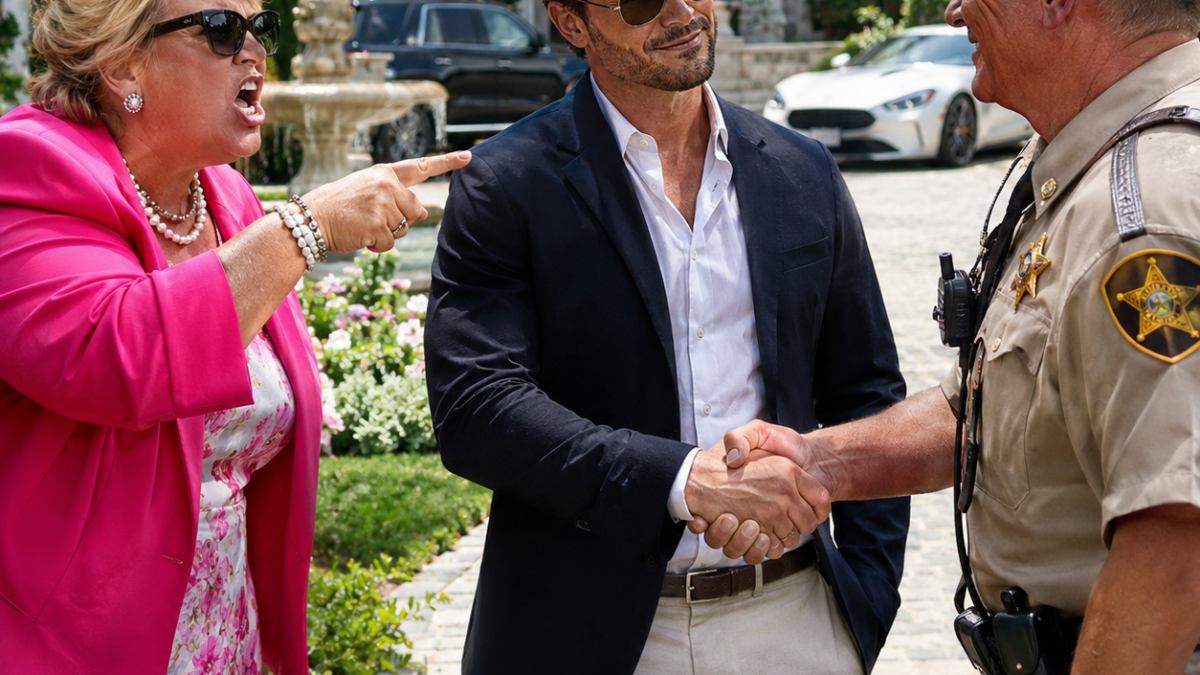
PART 2
The first county complaint concerned my horse barn.
According to the report, runoff from my property was contaminating a shared drainage channel and my horses were creating a “biohazardous waste condition” near a residential neighborhood.
Two horses.
On thirty-eight acres.
I almost admired the wording.
A county code officer named Ray Toombs came out.
He inspected the barn.
Pasture.
Drainage.
Composting system.
Pond.
Veterinary records.
Feed storage.
Everything.
Duke, my chestnut quarter horse, watched him suspiciously.
Pearl, the gray mare, ignored him.
When Ray finished, he stood beside his county truck and pushed his hat back.
“Mr. Beaumont?”
“Yes?”
“This is one of the cleaner equestrian properties I’ve seen in this county.”
“Appreciate that.”
“I’ll file the report.”
“Anything wrong?”
“No.”
He hesitated.
Then:
“Whoever filed this complaint either has no idea what a horse property looks like or knew exactly what one looks like and wanted us out here anyway.”
I already knew which one.
“Can I get the report?”
“Absolutely.”
I put it in the drawer with Patricia’s letters.
A month later, another complaint.
Noise.
Cleared.
Then odor.
Cleared.
Then fire safety.
Cleared.
Then unpermitted structures.
Cleared.
Every inspector said essentially the same thing.
Your property is fine.
By then, I wasn’t irritated by the inspections themselves.
Inspectors were doing their jobs.
I knew what it felt like to receive a complaint and have no choice but to investigate.
What bothered me was the purpose.
Patricia wanted government vehicles in my driveway.
She wanted a record of investigations even if every investigation ended in my favor.
Because accusations have a strange advantage.
They are dramatic when made.
The correction is usually a paragraph nobody reads.
That was an old law-enforcement lesson too.
The accusation travels.
The acquittal walks.
So I filed a Freedom of Information request.
Every complaint involving Whitfield.
Nine business days later, I received the answer.
Seven complaints in three months.
Every one submitted from the same IP address.
Palmetto Crest HOA office.
The computer Patricia used.
I printed the record.
Added it to the drawer.
By then, one drawer had become two.
Harlan called.
“You sound calm.”
“I am calm.”
“That worries me more than yelling.”
“She’s documenting herself.”
“Exactly.”
“Anything else?”
“Yes.”
“What?”
“She’s talking about you publicly.”
That part was new.
At the next HOA meeting, Patricia had given a presentation titled:
BOUNDARY CONCERNS: PROTECTING OUR COMMUNITY CHARACTER
Photographs of my property.
My barn.
My horses.
My tree line.
My gate.
She described Whitfield as a “non-conforming agricultural holdout” that threatened property values.
Twenty-eight homeowners voted to escalate complaints to the planning commission.
Eleven voted against.
I didn’t blame most of them.
They had never met me.
They trusted the woman they elected.
Then Patricia created a neighborhood Facebook page.
Protect Palmetto Crest.
She posted photos of Duke and Pearl grazing peacefully.
Caption:
Is this what you want beside your children’s playground?
She shared livestock ordinances but cropped out the parts showing that Whitfield exceeded every required setback.
She organized a neighborhood “safety walk” and told residents my property was under active county investigation.
Technically true only in the sense that she kept creating investigations.
Every one had already cleared me.
Then Harlan discovered something that changed how I saw the entire campaign.
Three Palmetto Crest families listed their homes.
Their disclosures cited concerns about neighboring agricultural use.
Patricia sold all three.
Average sale price around $520,000.
Her commission?
Approximately $46,800.
Harlan called me.
“She’s monetizing you.”
“What?”
“She creates fear about your property.”
“Then sells homes?”
“Yes.”
“And makes commission?”
“Yes.”
He continued.
“It gets better.”
“That usually means worse.”
“In eleven of fourteen Palmetto Crest listings, she markets the homes as having an ‘estate-adjacent setting,’ ‘mature tree canopy,’ or ‘pastoral views.’”
I stared toward my pasture.
“She’s using my property as an amenity.”
“While telling existing residents it’s a threat.”
I sat quietly.
Harlan said:
“James?”
“I’m here.”
“You aren’t her neighbor.”
“What am I?”
“Inventory.”
That word stayed with me.
Inventory.
Patricia was selling my trees.
My pasture.
My river view.
The quiet I had spent a lifetime earning.
Then using fear about the same land to generate more listings.
That was no longer an overbearing HOA president with a clipboard.
It was a business model.
I spread the evidence across my study.
FOIA complaints.
Clean inspection reports.
HOA letters.
MLS listings.
Sales records.
Commission calculations.
For almost thirty years, I had looked at case files the same way.
Never start with what you feel.
Start with what happened.
Who acted?
When?
Who benefited?
Who knew?
What can be proved independently?
Patterns matter more than adjectives.
The pattern around Patricia was becoming obvious.
I called Harlan.
“I’m ready to file.”
“For what?”
“Everything.”
“Harassment.”
“Yes.”
“Defamation.”
“Yes.”
“Tortious interference.”
“Yes.”
“Real-estate misconduct.”
“Yes.”
He was silent.
Then:
“We could file now.”
“I hear a but.”
“But if you wait, she may give us something much cleaner.”
“How clean?”
“Public. Intentional. Impossible to call an administrative misunderstanding.”
I looked through the window toward Palmetto Crest.
“How long?”
“Patricia Davenport doesn’t strike me as patient.”
He was right.
The next move came with survey stakes.
A white pickup appeared near my eastern pasture.
A worker in an orange vest was hammering a wooden stake about forty feet inside my property.
I walked over.
“Morning.”
He looked up.
“Morning.”
“What are you doing?”
“Boundary survey.”
“Whose boundary?”
“Palmetto Crest.”
He handed me a work order.
HOA letterhead.
Signed:
Patricia Davenport.
The map moved the Palmetto Crest boundary forty feet west.
Into Whitfield.
Part of my horse pasture.
Part of the spring-fed pond.
Now labeled:
PALMETTO CREST COMMUNITY GREEN SPACE
I looked at the worker.
“You licensed?”
“No, sir. Crew only.”
“Who signed the survey?”
“Dennis Corley.”
I knew that name.
Corley had done development work for Greer Whitman Partners, the company that built Palmetto Crest.
Not neutral.
Not independent.
I photographed everything.
Truck.
Work order.
Stake.
Crew.
Then I said:
“Pull those stakes and leave my property.”
He did.
Quickly.
Harlan contacted the state registration board that afternoon.
No lawful survey of Whitfield had been authorized.
The crew had entered private property without consent.
Dennis Corley suddenly had his own licensing problem.
Then Harlan obtained Palmetto Crest’s financial records.
That was where the case stopped being primarily about me.
For four years, Palmetto Crest homeowners had been paying a special line item:
Shared Boundary Infrastructure Upkeep
$150 per household annually.
122 houses.
Four years.
Approximately $73,200.
There was one problem.
No shared boundary infrastructure existed.
The tree line separating our properties belonged to me.
No shared fence.
No shared trail.
No shared improvement.
The money entered the HOA operating fund.
Then a large portion moved through an account Patricia controlled.
Around $61,000 in checks for things like:
Administrative services.
Consulting.
Community liaison expenses.
Payees included Patricia.
Her husband.
Her sister.
Harlan spread the records across his conference table.
“This is potentially criminal.”
“How bad?”
“If the records are authentic and there’s no legitimate underlying service, very.”
I stared at the numbers.
One hundred twenty-two families.
Paying dues.
Trusting someone to manage common property.
“Do the homeowners know?”
“Not yet.”
“Don’t tell them through me.”
Harlan looked up.
“What?”
“If this becomes criminal, let investigators do it.”
“You still want to wait?”
“Yes.”
He raised one eyebrow.
“Interesting.”
“I want a case. Not a neighborhood war.”
So we kept building.
Harlan filed a complaint with the South Carolina Real Estate Commission regarding Patricia’s conduct as a licensed agent.
He documented the contradiction.
Publicly:
Whitfield threatened Palmetto Crest values.
Privately:
Whitfield’s pastoral setting increased value in her listings.
Fear going out.
Commission coming in.
Meanwhile I hired my own surveyor.
Martha Haynes.
Sixty-two years old.
Three decades surveying Lowcountry properties.
She treated property corners with the seriousness of a surgeon marking an incision.
Three days.
GPS.
Transit.
Historic descriptions.
Monuments.
Recorded plats.
When she finished, she placed the certified survey on my kitchen table.
“Your 1927 line is correct.”
“And Patricia’s?”
“Forty feet wrong.”
“Accident?”
Martha gave me a look.
“I don’t speculate about motive.”
I smiled.
“You’d have been good in federal court.”
She tapped her map.
“I’m better on dirt.”
Fair.
Her plat was recorded with the county.
Then I built a fence.
Not out of spite.
Because boundaries work better when people can see them.
Six-foot welded steel.
Flat black.
Set in concrete.
Exactly on the certified line.
Not one inch toward Palmetto Crest.
Not one inch away from it.
Eight cameras went up too.
Fence.
Gate.
Barn.
Driveway.
Motion activated.
Infrared.
Cloud backup.
Patricia watched the installation from the HOA walking trail.
She said nothing.
Online, apparently, she called it a prison wall.
I didn’t have Facebook.
That simplified my life enormously.
Buddy Phelps, the contractor who built the fence, came back a week later.
Checked the corner posts.
Then looked toward the subdivision.
“She’s going to do something stupid.”
“I know.”
“You sound happy.”
“I’m not.”
“Sounds like it.”
“I want her to stop.”
“And if she doesn’t?”
I looked toward the cameras.
“Then I want her to do it where everyone can see.”
Her next move was political.
She circulated a petition asking Beaufort County to rezone Whitfield from agricultural to residential.
Seventy-one signatures.
The theory was obvious.
Residential zoning could complicate my horses.
Barn.
Traditional use.
The county planning commission rejected it in six business days.
No valid public-interest basis.
Historical agricultural use consistent with county plans.
Patricia moved immediately to the next tactic.
Access.
Whitfield had a permanent recorded right-of-way connecting my gate to County Road 9.
Part of that lane ran alongside Palmetto Crest.
One afternoon while I was in Charleston, HOA landscapers placed three massive decorative concrete planters directly in the access corridor.
Each roughly eight hundred pounds.
Positioned so a small sedan might weave through.
My F-250 pulling a horse trailer?
Impossible.
I came home.
Stopped.
Looked.
Then called the sheriff.
I did not touch the planters.
That detail mattered.
A deputy named Cole Mitchell arrived.
The moment he stepped out, I recognized him.
Six years earlier, Cole had been a young county deputy assigned to a federal fugitive task force.
For eighteen months, he worked under me.
I taught him warrant operations.
Door approaches.
Arrest planning.
The difference between control and aggression.
The value of slowing down when everyone around you is speeding up.
He looked at me.
“Marshal Beaumont.”
“Cole.”
He still called me Marshal.
Old habit.
He photographed the planters.
Measured the obstruction.
Checked the recorded easement.
“These need to move.”
“I figured.”
“I’ll document it.”
“How long?”
“Seventy-two hours before county removal authority becomes an issue.”
I nodded.
He looked at me.
“You didn’t move them yourself.”
“No.”
He almost smiled.
“Still practicing what you preached.”
“I’m trying.”
The planters vanished before sunrise.
Patricia knew when the record was against her.
At least sometimes.
I assumed that might finally convince her to stop.
Then came Saturday.
June.
Hot day.
By seven in the evening, the heat had broken.
I sat on the veranda with sweet tea and a Robert Caro biography.
Captain asleep under the rocking chair.
Duke and Pearl out in the pasture.
For the first time in weeks, I wasn’t thinking about Patricia.
At 6:53 p.m., she called 911.
I learned the exact time later.
What I knew in the moment was this:
At about seven, I heard gravel.
Two sheriff’s cruisers came through the live-oak alley.
Lights on.
No sirens.
Captain lifted his head.
I closed the book.
Set down my tea.
Stood slowly.
That instinct never leaves you.
When armed officers approach, your movements matter.
I kept my hands visible.
Two deputies stepped out.
The younger one I didn’t know.
Maybe twenty-five.
His hand stayed near his duty belt.
The second deputy came from the driver’s side with a flashlight.
Cole Mitchell.
His beam passed across Captain.
Rocking chair.
Tea glass.
Then my face.
The flashlight lowered.
His shoulders changed.
Barely.
A shift only another cop might notice.
Then he smiled.
“Good to see you, sir.”
The younger deputy looked at him.
Then at me.
Then back at him.
Cole made a small hand gesture.
Relax.
He walked up the veranda steps.
“Marshal Beaumont.”
“Cole.”
“You having a quiet evening?”
“I was.”
He almost laughed.
Then professionalism returned.
“We received a report of an armed trespasser at this address.”
I looked toward Palmetto Crest.
“Let me guess.”
He didn’t confirm.
“The caller described this property as vacant and said the man on the porch had no authority to be here.”
“Interesting.”
The young deputy stepped forward.
“Sir, can you verify ownership?”
“Of course.”
I moved one hand slowly toward my shirt pocket.
The young deputy tensed.
Cole didn’t.
He knew exactly what I was doing.
I removed the folded certified copy of my deed.
I had carried it for months.
Ridiculous maybe.
Useful now.
The young deputy read it.
Once.
Then again.
His expression changed.
Suspicion.
Confusion.
Embarrassment.
“I’m sorry, sir.”
“No.”
He looked at me.
“You did your job.”
He seemed surprised.
“You responded to the call you were given. You asked for proof. You checked it. That’s how this is supposed to work.”
Cole looked toward the driveway.
Then:
“Caller said previous owner had died and the estate was unclaimed.”
I stared at him.
That was worse.
Patricia knew exactly who I was.
She had mailed letters to me.
Filed complaints naming me.
Tried to annex me.
Tried to rezone me.
Tried to move my boundary.
Then told dispatch I was a stranger squatting on abandoned property.
“That’s knowingly false.”
“Yes, sir.”
“Do you have the recorded call?”
“Dispatch does.”
“Preserve it.”
Cole almost smiled.
“You haven’t changed.”
“No.”
“Sir, I’m going to document this as a potential false police report.”
“I know.”
The younger deputy looked between us.
I said:
“South Carolina has a statute covering knowingly false reports to law enforcement.”
Cole shook his head.
“You could have let me explain one thing tonight.”
“Old habits.”
He smiled.
Then asked:
“Is there something larger happening between you and this caller?”
I looked toward the two file drawers visible through my study window.
“About twelve pounds larger.”
He understood.
Before leaving, Cole stood at the bottom of the veranda steps.
“Marshal?”
“Yes?”
“Dispatch says this address has generated seven complaints in nine months from the same source.”
“I know.”
“You building a case?”
“I built it six months ago.”
He waited.
“I’m just letting her add to it.”
Cole nodded.
He had learned patience from me.
Now he got to see whether I actually believed my own lessons.
The next morning, I called Harlan.
“She did it.”
“What?”
“False 911 call.”
Silence.
Then:
“Tell me everything.”
I did.
Vacant property.
Unknown man.
Armed.
Trespasser.
Remove him immediately.
Previous owner dead.
None of it true.
And all contradicted by her own previous documents.
Harlan was quiet for eight seconds.
Then:
“That’s our last page.”
“You were waiting for this?”
“I was waiting for something like this.”
“Meaning?”
“A public act with documented intent that connects the harassment campaign to abuse of government process.”
I looked at Captain sleeping beside the chair.
“So we file.”
“Monday morning.”
“I want everything.”
“You already told me.”
“No, Harlan.”
I thought about the young deputy arriving with his hand near his weapon because Patricia wanted me scared out of my own house.
“Everything.”
His voice became serious.
“I understand.”
The civil complaint was forty-seven pages.
Patricia individually.
Her husband, Todd.
The HOA as an entity where appropriate.
Harassment.
Defamation.
Tortious interference with property rights.
Unauthorized survey and trespass.
Real-estate fraud.
HOA fund misuse.
Abuse of process.
Damages sought:
$1.4 million.
Not because I expected a cartoonishly perfect payout.
Because Harlan calculated documented losses, statutory claims, professional misconduct, commissions tied to misleading listings, and the full course of conduct.
The sheriff’s office opened its criminal case.
False police report.
Misuse of emergency services.
Then county prosecutors began examining the financial records.
The HOA board held an emergency meeting.
I did not attend.
I didn’t need to.
Nora Pemberton, the HOA secretary, had been quietly preserving records.
Checks.
Invoices.
Minutes.
Vendor records.
The first time she reviewed Harlan’s evidence, apparently she cried.
Not because she liked me.
She barely knew me.
Because she realized homeowners had been paying a woman who was using their trust like a personal account.
One hundred nine homeowners attended the removal vote.
109 to zero.
Patricia lost the presidency.
Her husband lost his position as well.
The South Carolina Real Estate Commission opened its own case.
Fourteen listings where Whitfield had been represented as a marketable amenity.
While Patricia simultaneously depicted my estate publicly as a dangerous agricultural nuisance.
Her license was suspended pending review.
When Harlan told me, I was repairing a hinge on the barn door.
“You listening?”
“Yes.”
“Her license is suspended.”
“Okay.”
“That’s all?”
“What do you want me to say?”
“I’ve had clients open champagne over less.”
“I have horses to feed.”
He laughed.
“You really are retired law enforcement.”
“No.”
“What then?”
“Tired law enforcement.”
The civil case moved for seven months.
Discovery was ugly.
Patricia’s emails.
HOA records.
Real-estate communications.
Vendor relationships.
The survey incident.
County complaints.
Facebook posts.
The 911 recording.
Hearing Patricia’s voice on that call was strange.
I had read the transcript.
But the audio was different.
Urgency in her tone.
Fear carefully manufactured.
“He may be armed.”
Technically true.
I owned firearms.
I was a retired marshal.
But she had not seen a weapon.
“He’s been trespassing.”
False.
“The estate is vacant.”
False.
“Previous owner passed away.”
False.
“No one has claimed it.”
False.
“I want him removed.”
That part was honest.
She wanted me removed from my own home.
Not because she truly believed I didn’t belong.
Because I would not belong to her HOA.
That was the line running through everything.
She wanted Whitfield annexed.
Why?
Control.
Annual dues.
Architectural authority.
Trail access.
Potential property-value leverage.
Maybe eventually development possibilities.
When I refused, the property became the problem.
If I wouldn’t join willingly, she would make living outside the HOA expensive enough to change my mind.
Government complaints.
Social pressure.
Fear.
Boundary manipulation.
Access blockade.
Finally police.
Each escalation looked different.
The motive stayed the same.
Harlan deposed her.
I attended.
She wore a dark suit.
No planner.
No smile.
Harlan began with simple questions.
“Mrs. Davenport, when did you first meet Mr. Beaumont?”
She gave the date approximately.
“At his front gate?”
“Yes.”
“Did he identify himself?”
“Yes.”
“As the owner?”
“He claimed ownership.”
Harlan placed the deed before her.
“Did you later mail violation notices addressed to James Beaumont at Whitfield Estate?”
“Yes.”
“Did you send him an annexation agreement?”
“Yes.”
“As the owner?”
“As the occupant.”
Harlan paused.
“You requested the occupant sign a legal agreement annexing thirty-eight acres he did not own?”
Patricia’s lawyer objected.
Harlan smiled slightly.
He knew the answer.
Next.
County complaints.
“Did you identify Mr. Beaumont as the responsible property owner?”
Sometimes.
“Yes.”
Next.
Survey.
“Did you authorize work moving the claimed boundary forty feet onto Whitfield?”
“I authorized verification.”
“Did Mr. Beaumont consent?”
“No.”
“Did a county survey establish your claimed line?”
“No.”
Then the 911 call.
Harlan played the audio.
Patricia’s face changed when she heard her own voice.
Not dramatically.
Just enough.
“Who did you believe was sitting on the porch?”
“I was concerned about an unknown individual.”
“Was that individual Mr. Beaumont?”
“I couldn’t be certain.”
“Had you met Mr. Beaumont?”
“Yes.”
“How many times had you seen him?”
“I don’t know.”
“More than once?”
“Yes.”
“More than five?”
“Possibly.”
“Had you taken photographs of him?”
Her attorney objected.
Harlan produced Facebook material.
A photograph of me near the fence.
Caption accusing me of threatening community standards.
He placed it beside the 911 transcript.
“You publicly identified this man as James Beaumont, owner of Whitfield Estate.”
Patricia said nothing.
Harlan continued.
“Then two weeks later you told 911 you had never seen him as a lawful occupant and that the estate was vacant.”
“I was afraid.”
“Of what?”
“He may have been armed.”
“Did he threaten you?”
“No.”
“Approach you?”
“No.”
“Speak to you that evening?”
“No.”
“Display a weapon?”
“No.”
“Leave the veranda?”
“No.”
“So your emergency was a man sitting on his own porch?”
Her lawyer:
“Objection.”
Harlan:
“Withdrawn.”
But everyone in the room had heard it.
That was the case in one sentence.
A man sitting on his own porch.
The financial deposition was worse.
$73,200 collected under boundary infrastructure.
No infrastructure.
$61,000 in payments tied to Patricia and family.
Some had legitimate descriptions on paper.
The services underneath were another matter.
County prosecutors handled the criminal analysis.
Harlan’s job was civil proof.
Then there were the real-estate commissions.
Families had sold because Patricia told them Whitfield depressed value.
New buyers were told Whitfield’s trees and pastoral landscape enhanced value.
Harlan called it a two-sided funnel.
Fear on one side.
Premium branding on the other.
Commission at both ends.
Patricia’s attorney tried to argue real-estate descriptions were ordinary marketing language.
Maybe.
But combined with the public campaign against the same land?
It looked different.
Context always matters.
The settlement discussions started after the insurer reviewed everything.
Patricia’s side initially offered low.
Harlan declined.
Then higher.
Declined.
At one point he asked me:
“What do you actually want?”
I thought about that.
Money was not why I had filed.
But money is how civil courts quantify harm.
“I want the false claims stopped.”
“Done.”
“I want the HOA permanently acknowledging Whitfield is outside its jurisdiction.”
“Possible.”
“I want compensation for the campaign and legal expense.”
“Yes.”
“I want homeowners not carrying the cost of her personal misconduct where it can be avoided.”
“That complicates insurance allocation.”
“Still.”
Harlan looked at me.
“And Patricia?”
“What about her?”
“What do you want from her?”
I thought about the 911 cruisers.
The flashlight.
The younger deputy’s hand.
What if Cole hadn’t been there?
Would the outcome still have been fine?
Probably.
I knew exactly how to behave.
I had a deed.
But Patricia had intentionally made the encounter more dangerous than it needed to be.
“I want accountability.”
“That isn’t a number.”
“No.”
“Civil law likes numbers.”
“Then find one that hurts enough to be remembered.”
Eventually:
$680,000 from insurance coverage.
$92,000 personally from Patricia.
Total civil recovery:
$772,000.
Her BMW was sold.
A brokerage account was liquidated.
The settlement included legal acknowledgments and restrictions preventing further false assertions against Whitfield.
Was it $1.4 million?
No.
Real settlements rarely match complaint headlines.
Was it meaningful?
Yes.
Then the criminal case.
Patricia pleaded no contest to filing a false police report and one embezzlement count.
Eighteen months probation.
Two hundred hours of community service.
Permanent criminal record.
People asked whether I was disappointed she didn’t go to prison.
No.
The point of justice is not maximizing suffering.
The point is accountability proportional to proven conduct.
A criminal record mattered.
Probation mattered.
Community service mattered.
Losing her board position mattered.
Losing her real-estate standing mattered.
Civil repayment mattered.
And most importantly to me:
She could no longer use the HOA, county departments, or the sheriff’s office as extensions of her personal will.
Her house went on the market the week after sentencing.
Sold in forty-one days.
She did not collect the commission.
I heard that detail from Harlan.
He found it poetic.
I found it appropriate.
Then he asked what I intended to do with the settlement.
I didn’t need the money for the mortgage.
There wasn’t one.
I didn’t need a new car.
I liked my truck.
So I donated part to the Beaufort County Sheriff’s Benevolent Association.
Not because law enforcement had rescued me.
Because the deputies had done exactly what I spent twenty-eight years teaching officers to do.
Respond.
Observe.
Verify.
Correct course when facts change.
The young deputy could have been embarrassed and defensive when he realized who I was.
He wasn’t.
He apologized.
I told him not to.
He had been given bad information.
He checked it.
That is the job.
The rest of the money went into a trust for Whitfield.
Live oaks.
Barn.
Pond.
Road.
Maintenance.
The place Patricia tried to absorb would now have resources to outlive both of us.
That felt right.
Palmetto Crest changed too.
The new HOA board brought in outside accountants.
Vendor conflicts reviewed.
Financial disclosures strengthened.
Major expenditures required additional approval.
Resident access to records improved.
The “shared boundary infrastructure” fee disappeared.
Nora Pemberton became one of the most trusted people in the neighborhood because she had preserved records when keeping quiet would have been easier.
She came to see me once.
Walked up the live-oak alley carrying a pie.
I opened the door.
“Mrs. Pemberton.”
“Please call me Nora.”
“James.”
She held up the pie.
“Peace offering.”
“You weren’t at war with me.”
“No.”
She looked uncomfortable.
“But I voted for some of Patricia’s proposals.”
“That’s different.”
“I believed her.”
“So did others.”
“I should have checked.”
“Yes.”
She blinked.
I smiled.
“You didn’t come here for me to tell you responsibility doesn’t matter.”
“No.”
“Good.”
She laughed nervously.
Then:
“I’m sorry.”
“I accept.”
We sat on the veranda.
She told me what happened inside Palmetto Crest.
Patricia controlled information.
Meeting agendas.
Vendor communication.
Committee appointments.
People didn’t see entire records.
They saw summaries.
Patricia’s summaries.
“You know what scares me?” Nora asked.
“What?”
“She didn’t look corrupt.”
I considered that.
“What does corrupt look like?”
“I don’t know.”
“Exactly.”
Patricia looked organized.
Professional.
Community-minded.
That was why it worked.
People imagine abuse of authority as someone yelling.
Sometimes it is a woman with a leather planner using the right vocabulary.
Safety.
Values.
Standards.
Community.
Protection.
Every word respectable.
The action underneath can still be rotten.
Nora asked:
“How did you know?”
“I didn’t.”
“But you said you recognized the type.”
“I recognized somebody who enjoyed authority.”
“That’s not the same.”
“No.”
I took a drink of coffee.
“So I kept records until the difference became clear.”
That was the most important habit my career gave me.
Don’t decide too early.
Suspect.
Observe.
Document.
Test.
Evidence either supports the theory or kills it.
Patricia kept supporting it.
One action at a time.
Cole Mitchell still visited.
Sometimes on patrol.
Sometimes off duty.
He’d park outside the gate, walk up, accept coffee.
First visit after sentencing, he sat in the same chair where my book had been the night of the 911 call.
“Feels different.”
“What?”
“The porch.”
“It’s a porch.”
“You know what I mean.”
I did.
He looked toward the alley.
“Do you ever think about what could’ve happened if I wasn’t on the call?”
“Yes.”
“Concern you?”
“No.”
He looked at me.
“Really?”
“Younger deputy asked for proof.”
“He was nervous.”
“That’s allowed.”
“He might have ordered you down.”
“I would’ve complied.”
“Might have cuffed you while verifying.”
“I would’ve complied.”
Cole nodded.
“You always were annoying about procedure.”
“It keeps people alive.”
He stared into his coffee.
“She knew what she was doing when she said armed.”
“Yes.”
“She wanted us scared.”
“Yes.”
That was the part neither of us needed to romanticize.
False police reports are not harmless.
You are shaping another person’s perception before they arrive.
Patricia knew saying “armed trespasser on vacant property” would create a different response than:
“My neighbor I have a civil dispute with is sitting on his own veranda.”
The first creates danger.
The second creates questions.
She chose danger.
That mattered to me more than the insults.
I asked Cole:
“Did you ever listen to the complete dispatch audio?”
“Yes.”
“What did you think?”
“That you were right to sue.”
“Before that.”
He sat quietly.
“Angry.”
“Why?”
“Because she tried to use us.”
Exactly.
Law enforcement authority belongs to the public.
Not Patricia.
Not me.
Not even Cole.
You don’t get to borrow armed government power because a neighbor won’t join your HOA.
That was the line she finally crossed too publicly to explain away.
One afternoon, the younger deputy came back.
His name was Evan Brooks.
I had learned it from the report.
He stood awkwardly at the gate.
“Sir?”
“Come in.”
“I’m off duty.”
“That’s fine.”
He walked up.
Captain sniffed his shoes.
Evan looked younger without the uniform.
“I wanted to apologize again.”
“No.”
He frowned.
“You don’t need to.”
“I showed up ready for an armed trespasser.”
“You showed up ready for what dispatch gave you.”
“My hand was on my weapon.”
“Your hand was on your belt.”
“Still.”
I looked at him.
“Did you point it at me?”
“No.”
“Did you give an unlawful command?”
“No.”
“Did you refuse to look at the deed?”
“No.”
“Then what are you apologizing for?”
He thought.
“For believing her.”
“You believed dispatch.”
“Same thing.”
“No.”
That distinction mattered.
Dispatch had no reason initially to know Patricia was lying.
Evan had no reason to assume the caller invented the story.
His job was to arrive prepared and update his assessment.
He did.
I said:
“The dangerous officer isn’t the one who arrives cautious.”
“What is?”
“The one who refuses to change when the facts change.”
He nodded.
“I’ll remember that.”
“Good.”
Then:
“Cole talks about you a lot.”
“That’s unfortunate.”
Evan laughed.
We drank coffee.
A quiet ending to what could have been something much worse.
Whitfield changed after the lawsuit only in small ways.
I repaired portions of the eastern fence.
Planted more live oaks near the boundary.
Not to hide Palmetto Crest.
Just because trees are better neighbors than politics.
The barn remained.
Duke remained.
Pearl remained mostly offended by everybody.
Captain got older.
Slept more.
The pond kept producing bream.
The river kept moving.
That continuity healed things faster than court.
A lawsuit makes you think the conflict is the center of the world.
Land disagrees.
Rain comes.
Grass grows.
Horses need feeding.
Oak limbs fall.
The world does not care that you won.
That is comforting.
One winter morning, I found one of Patricia’s first violation letters while cleaning the study.
“Unmaintained vegetation.”
I walked outside.
Looked at the live oaks.
Some were more than a century old.
Branches twisting over the drive.
Spanish moss hanging low.
Patricia wanted them trimmed to fit community sightlines.
I laughed.
Then shredded the duplicate letter.
Not the original.
Harlan would object.
Retired marshal or not, lawyers make you keep records forever.
The original stayed in the file.
But the file no longer occupied two drawers.
Most material went into archival storage.
That was important.
When evidence takes over your desk, the person you’re fighting still owns part of your day.
Eventually I wanted my study back.
History books.
Maps.
Rebecca—no, there was no Rebecca here; that belonged to another man’s story. My story had Captain asleep by the desk and river maps on the wall.
No Patricia.
I kept one object from the whole dispute.
Her first business card.
Why?
Because the first thing she ever did was offer to sell my estate.
Before she tried to control it.
Before the complaints.
Before the survey.
Before the 911 call.
She had looked through my gate and seen inventory.
The card reminded me to notice motives early.
Not assume them.
Notice them.
There is a difference.
Years later, a new real-estate agent called.
A legitimate one.
“I have a client interested in properties along the Broad River. Would you entertain an offer?”
“No.”
“Even if it’s above market?”
“No.”
“May I ask why?”
“I like where I live.”
She laughed politely.
“Fair enough.”
End of conversation.
No annexation paperwork.
No intimidation.
No government complaint.
People can hear no.
Most do.
That was another useful reminder.
Patricia was abnormal not because she wanted something.
Everyone wants things.
She was abnormal because she treated refusal as evidence the other person was wrong.
The new Palmetto Crest board reached out eventually about the eastern boundary.
They wanted to plant a native buffer on their side.
They sent plans.
Stayed entirely within their line.
Asked whether I had concerns.
I wrote back:
No objection.
Simple.
They planted magnolias and native grasses.
It looked good.
No fight.
Boundaries do not prevent cooperation.
They make cooperation possible.
If nobody knows where authority ends, every request becomes a power contest.
Once the line was respected, we could be neighbors.
Patricia had spent years trying to erase the line.
The new board learned to work beside it.
One spring, Palmetto Crest invited me to its community barbecue.
I declined.
Nora called.
“You’re holding a grudge?”
“No.”
“Then come.”
“I don’t like HOA barbecues.”
“You’ve never been.”
“Exactly.”
She laughed.
Eventually Cole convinced me.
“You’ll survive.”
“I’ve arrested armed fugitives.”
“Then potato salad shouldn’t scare you.”
I went.
For an hour.
Residents were polite.
A few apologized.
Most didn’t mention Patricia.
Good.
One man approached.
“I voted for the rezoning petition.”
I nodded.
“She told us the horses were affecting water quality.”
“I know.”
“I believed her.”
“I know.”
“I’m sorry.”
“Thank you.”
Then he looked toward Duke in the distance.
“Beautiful horse.”
“He thinks so.”
That was it.
No speech.
People don’t need public humiliation to learn.
Sometimes they need accurate information and time.
The neighborhood itself had been manipulated too.
That mattered.
Not every resident became guilty because their president lied.
I could recognize that without pretending nobody had responsibility.
Both things can be true.
The real-estate commission’s investigation ended Patricia’s active career in the way she had known it.
No more selling Palmetto Crest homes.
No more using Whitfield’s views in listings.
The irony was obvious.
She had earned tens of thousands of dollars selling proximity to something she tried to destroy.
Then lost her ability to sell because of the scheme.
Harlan enjoyed that more than I did.
He called one afternoon.
“Tell me this isn’t poetic.”
“What?”
“Her license status.”
“Administrative consequence.”
“You are impossible.”
“I spent three decades writing reports.”
“Your soul is a report.”
“Probably.”
He laughed.
Then became serious.
“You know you could write a book about this.”
“No.”
“Why?”
“I don’t want to spend more years with Patricia.”
Good answer.
The best revenge against someone who consumes your attention is eventually giving them none.
I took time getting there.
At first, every white BMW caught my eye.
Every county truck made me wonder whether another complaint had been filed.
Every HOA envelope tightened my shoulders.
Even after settlement.
The body remembers patterns.
Then months passed.
Nothing.
One morning a county vehicle came up the drive.
My stomach tightened.
Ray Toombs stepped out.
He laughed when he saw my face.
“Relax.”
“What do you want?”
“Fishing.”
“What?”
“Day off.”
“You drove a county truck?”
“Personal vehicle’s in the shop.”
I stared at him.
“You could’ve called.”
“Wouldn’t be funny.”
I let him fish.
He caught nothing.
Served him right.
That was the moment I realized I could joke about inspectors again.
Normal was returning.
Captain aged faster than I wanted.
Eventually climbing veranda steps became hard.
Cole built him a small ramp one weekend.
I told him it was crooked.
He told me to arrest him.
Captain didn’t care.
He liked it.
That dog had slept through most of the 911 incident.
Probably understood more than the rest of us.
Threat assessment:
No one had entered the porch.
No one had raised a voice.
Therefore nap.
Good system.
When Captain died, Cole helped me bury him beneath one of the live oaks.
No uniform.
No titles.
Just two men and a shovel.
Afterward we sat on the porch.
His empty place beneath the rocking chair hurt.
Cole said:
“He was there that night.”
“Yes.”
“Barely woke up.”
“He had good instincts.”
“He liked me.”
“He liked anyone with food.”
“Still counts.”
Loss has a way of shrinking old conflicts.
Patricia had once seemed enormous.
That evening she didn’t enter my mind until Cole mentioned the night.
Then passed.
I preferred it that way.
Years after retirement, I sometimes spoke to young deputies at the academy.
Cole talked me into it.
I did not tell the Patricia story in detail.
I used one moment.
Two deputies respond to an armed trespass call.
One officer recognizes the subject.
Does recognition end the investigation?
No.
Verify identity.
Verify ownership.
Verify the call.
Do not assume the caller is truthful.
Do not assume the subject is truthful.
Update based on evidence.
Authority is not a volume knob.
The younger recruits usually listened when I said that.
Maybe because old marshals have built-in credibility.
Maybe because Cole threatened them.
One recruit asked:
“Were you angry at the caller?”
“Yes.”
“Did you confront her?”
“No.”
“Why?”
“Nothing useful would have happened.”
That answer confused him.
Young people often believe every injustice requires a confrontation.
Sometimes it requires a file.
Sometimes a subpoena.
Sometimes a recorded deed.
Sometimes the strongest thing you can do is make sure the next person who reviews the facts doesn’t have to trust your personality.
That is what I wanted.
I did not want Judge, sheriff, commission, insurer, or homeowner board believing me because I was a retired marshal.
I wanted them believing the documents.
My career taught me reputation can open a door.
Evidence keeps it open.
Patricia misunderstood that.
She thought status was authority.
HOA president.
Committee chair.
Real-estate agent.
Connected vendor relationships.
She stacked titles around herself until she confused them with truth.
Then she met a deed older than her subdivision.
A boundary survey.
Financial ledger.
911 recording.
Those things did not care about her title.
Neither did the court.
One of the last legal documents Harlan sent me was the final settlement release.
I signed.
He asked:
“Feel finished?”
“Legally?”
“Yes.”
“Yes.”
“Emotionally?”
“I’m a former federal employee. We don’t discuss emotions.”
He laughed.
“River’s still there?”
“Yes.”
“Horses?”
“Yes.”
“Gate?”
“Closed.”
“Then you’re fine.”
Maybe.
Not immediately.
But eventually.
The trust funded maintenance.
We restored a section of the old veranda.
Repaired the barn roof.
Cleaned the pond overflow.
Had an arborist inspect every major live oak.
One tree near the drive needed cabling.
The arborist stood beneath it.
“Probably been here 130 years.”
Patricia once called that tree unmaintained vegetation.
I smiled.
“What?”
“Nothing.”
He looked up.
“Somebody want you to cut it?”
“Once.”
“Glad you didn’t.”
“Me too.”
The tree will probably outlive me.
Good.
Whitfield had outlived cotton merchants.
Trusts.
Developers.
HOA presidents.
It would outlive James Beaumont too.
Ownership teaches humility if you’re paying attention.
You don’t truly possess land permanently.
You are responsible for it during your part of the timeline.
Patricia wanted control now.
I wanted continuity later.
Those are different ambitions.
One evening, Pearl stood by the fence staring at the new Palmetto Crest landscaping.
Nora was walking on the HOA trail.
She waved.
I waved.
Pearl ignored both of us.
Perfect.
That was what peace looked like.
Not friendship.
Not enemies.
Neighbors with a line between them.
No one trying to move it.
I remembered the fake survey stake forty feet inside my property.
If I had simply pulled it up and thrown it away without documenting it, the moment would have vanished.
Instead:
Photo.
Work order.
Crew identity.
Licensing complaint.
Survey.
Certified plat.
The truth gained weight.
That became a metaphor for the whole case.
Patricia kept creating moments.
I kept converting them into records.
Moment:
Violation letter.
Record:
File.
Moment:
County complaint.
Record:
FOIA trail.
Moment:
Facebook accusation.
Record:
Screenshots.
Moment:
Fake survey.
Record:
Photos and board complaint.
Moment:
Financial line item.
Record:
Bank analysis.
Moment:
911 lie.
Record:
Dispatch audio.
Anger evaporates.
Records persist.
Maybe that sounds cold.
It worked.
The last time I saw Patricia was from a distance.
Charleston parking lot.
She was walking toward a car I didn’t recognize.
She saw me.
Stopped.
We were maybe sixty feet apart.
No words.
She looked older.
So did I.
For half a second, I wondered whether she would approach.
Apologize.
Blame.
Say something.
She didn’t.
Neither did I.
I got into my truck.
Drove home.
Some people expect the final scene to be bigger.
It wasn’t.
No perfect apology.
No speech.
I didn’t need one.
The deed did not require her apology.
My gate did not require her apology.
My peace definitely did not require her apology.
That is freedom.
The first year, I wanted her to understand exactly what she had done.
Years later, I didn’t care whether she understood.
I understood.
The court understood.
Her neighbors understood.
Enough.
Cole stopped by the next morning.
He had moved up in rank by then.
Still called me Marshal.
I still told him not to.
He still ignored me.
We drank coffee.
Mist hung over the Broad River.
Duke grazed.
Pearl stood beneath an oak.
Cole asked:
“Ever miss the job?”
“Sometimes.”
“What part?”
“Good people.”
“Not fugitive warrants?”
“No.”
“Court protection?”
“No.”
“Three a.m. callouts?”
“Absolutely not.”
He laughed.
Then:
“You know that 911 call turned into academy training locally.”
“I heard.”
“False reporting case.”
“Good.”
“Your name isn’t used.”
“Better.”
Cole looked toward the river.
“She wanted you out of your own house.”
“Yes.”
“You ever think about that?”
“Less now.”
He nodded.
“That’s probably healthy.”
I looked at him.
“You a therapist now?”
“Promotion came with new duties.”
“Demote yourself.”
He smiled.
We sat quietly.
That was how Whitfield ended the Patricia chapter.
Not with a gavel.
Coffee.
River.
Old colleague.
No one discussing HOA bylaws.
One morning I found Patricia’s business card in the desk.
The one she pushed through my gate the first day.
PATRICIA DAVENPORT
LUXURY REAL ESTATE SPECIALIST
I turned it over.
Blank.
For years I kept it because it represented where the whole thing began.
Then I realized I no longer needed it.
I tore it in half.
Dropped it into the trash.
No ceremony.
Later that afternoon, trash collection took it away.
I never thought about the card again until telling this story.
That is how things should end.
Not every piece of evidence deserves to become a shrine.
Some are useful until they aren’t.
Whitfield remained mine.
More accurately:
I remained responsible for Whitfield.
The gate stayed closed.
The live oaks stayed untrimmed according to any HOA aesthetic.
The barn remained exactly where it had stood.
Duke eventually aged.
Pearl aged.
I aged.
Palmetto Crest changed presidents several times.
No one tried to annex me.
No one sent horse violations.
No one called my pond a biohazard.
No one moved my boundary.
Imagine that.
The neighborhood survived perfectly well with a farm estate beside it.
Property values did not collapse.
Children survived the terrifying sight of horses.
The world continued.
A few Palmetto Crest families even brought their children to see Duke after asking permission.
That part made me laugh.
Patricia once posted:
Is this what you want beside your children’s playground?
Years later, those same kinds of children fed Duke carrots over the fence.
With me standing there.
With permission.
That word again.
Permission.
Patricia wanted access without it.
Authority without it.
Control without it.
Her entire collapse could almost be summarized as a refusal to accept that other people get to say no.
No to annexation.
No to trail easement.
No to fake violations.
No to moving the boundary.
No to blocked access.
No to being removed from my own property.
She heard every no as a challenge.
Eventually the law answered louder.
But by then, I had learned something too.
You don’t need to match volume.
If your position is sound, volume can actually weaken you.
I never once screamed at Patricia.
Not because I’m saintly.
Because I knew exactly how angry people look in reports.
“Subject became agitated.”
“Raised voice.”
“Made threatening movements.”
I had written those sentences myself.
I wasn’t giving her one.
That restraint became part of my credibility.
The 911 call was a perfect example.
When the cruisers arrived, I could have stormed down the steps yelling about harassment.
Instead:
Book down.
Tea down.
Stand.
Hands visible.
Wait.
When asked:
Produce deed.
That sequence was almost boring.
Boring saves lives.
Boring wins cases.
People who want drama hate boring.
That might be why it works so well.
The $772,000 settlement number spread around Beaufort County.
People treated it like a jackpot.
It wasn’t.
Litigation costs money.
Attorney time.
Expert work.
Months of life.
Stress.
The number represented civil accountability, not a lottery.
I did not suddenly become richer in any meaningful way.
I already owned the estate outright.
What I gained was something money didn’t buy.
A formal boundary no one could pretend to misunderstand.
An HOA acknowledgment.
A record of Patricia’s actions.
And the freedom to stop defending my own existence.
That was valuable.
I remember one night before the settlement when I sat in my study surrounded by documents.
Captain asleep.
Two drawers open.
I had the odd thought:
What if I just sell?
Take the money.
Move somewhere no HOA exists.
Then I laughed.
Patricia had originally given me her card because she wanted the listing.
Selling because of her would have been the one outcome she might interpret as victory.
But that wasn’t why I stayed.
Spite is too expensive a reason to own property.
I stayed because I loved Whitfield.
River.
Oaks.
Barn.
Horses.
Quiet.
That mattered more than her.
Always had.
Once I remembered that, the case became easier emotionally.
I wasn’t fighting Patricia.
I was protecting the ability to live the life I had already chosen.
She was temporary.
The life wasn’t.
One autumn evening, after Palmetto Crest’s new board had been in place for a while, I received a letter.
Not an HOA violation.
A thank-you.
Several residents had signed.
They apologized for supporting Patricia’s boundary campaign without independently reviewing the facts.
One sentence stood out.
We confused confidence with credibility.
I kept that letter.
Not as a trophy.
As a reminder.
Confidence is easy.
Credibility costs time.
Patricia could fill a room with confidence.
Planner.
Statistics.
Committees.
Charts.
I spent almost a year quietly accumulating credibility.
Inspection reports.
Deed.
Survey.
FOIA.
Financial records.
911 audio.
When the two finally met in court and regulatory proceedings, one survived.
That lesson applies beyond HOAs.
I had seen it with fugitives too.
People will say anything when cornered.
Your job is not to react to confidence.
Your job is to test claims against reality.
I retired from law enforcement.
Apparently law enforcement did not retire from me.
Still, I’m grateful the last major case I ever built did not involve chasing anyone.
No handcuffs by me.
No gun.
No pursuit.
Just patience.
Paper.
And a woman who kept believing one more abuse of authority would finally make me surrender.
It never did.
The final time Cole and I spoke about Patricia happened years later.
Sunrise.
Mist.
Coffee.
He asked:
“What do you think she should’ve done after the first attorney letter?”
“Stopped.”
“That’s it?”
“That’s it.”
“Could she have approached you about the trail easement?”
“Yes.”
“Would you have agreed?”
“Probably not.”
He laughed.
“Then what?”
“She could have accepted no.”
Cole nodded.
“That simple.”
“Yes.”
Most disasters become complicated after somebody refuses a simple answer.
That is something twenty-eight years in law enforcement taught me.
The first exit is usually the cheapest.
Patricia had dozens.
My first refusal.
Harlan’s letter.
Clean county inspections.
Failed rezoning.
Survey warning.
Removed planters.
Any of them.
She could have stopped.
Instead she kept walking deeper because every retreat felt like losing authority.
Eventually she discovered the truth:
Authority you cannot surrender voluntarily is not authority.
It owns you.
She lost her HOA position.
Her license.
Money.
Standing.
Criminal record.
House.
All because she could not leave one man alone on thirty-eight acres that never belonged to her.
I don’t celebrate that.
I recognize it.
Consequences do not require celebration to be real.
Today, when I sit on the Whitfield veranda before sunrise, the river looks the same as the morning before Palmetto Crest existed.
Maybe a few more roofs are visible through trees.
That’s all.
Mockingbirds still argue.
Mist still sits over the water.
The live oaks still make a tunnel down the drive.
The gate still closes.
Sometimes a county cruiser turns in.
Usually Cole.
He parks.
Walks up.
I pour coffee.
He no longer lowers a flashlight at me.
He doesn’t need to.
We sit.
Talk about horses.
Fishing.
Weather.
People we used to know.
Almost never Patricia.
That is the ending I prefer.
The viral version of the story is the moment the deputy recognized me.
HOA Karen calls police on a man in a $5 million estate.
Deputy arrives.
“Good to see you, sir.”
Instant humiliation.
Good headline.
But that moment wasn’t the victory.
It was just when Patricia finally made her private pattern public.
The victory came afterward.
When homeowners saw the financial records.
When regulators saw the listings.
When the court saw the harassment.
When the sheriff heard the 911 recording.
When the real-estate commission saw the contradiction.
When every piece that had been sitting quietly in my drawers became one story nobody could dismiss as a neighborhood misunderstanding.
Patricia tried to create a story where I was dangerous.
A trespasser.
An agricultural nuisance.
An obstacle to property values.
A man who did not belong.
The evidence told a different story.
I was the owner.
She was the one crossing boundaries.
Physical.
Financial.
Professional.
Legal.
The difference between us was not money.
Not age.
Not my old badge.
It was that when I had authority, I had spent twenty-eight years learning it had limits.
Patricia got a little authority and decided limits were for everyone else.
Eventually the limits found her.
That is why, when people ask whether I enjoyed seeing her removed from the HOA, I give them the same answer.
No.
What I enjoyed was sitting on my veranda afterward without wondering what complaint would arrive tomorrow.
I enjoyed watching Duke graze without seeing a surveyor in my pasture.
I enjoyed opening the mailbox without finding another gold-embossed threat.
I enjoyed seeing a county cruiser and knowing it was probably Cole coming for coffee.
I enjoyed hearing “no” become enough again.
Peace is rarely dramatic.
But once someone has spent a year trying to take it from you, peace feels expensive.
Maybe that is why Whitfield feels different now.
I paid $5.2 million for the land.
But the quiet?
That cost me patience.
And patience was harder.
One evening, I walked down the live-oak alley toward the gate.
The sun was behind the trees.
Spanish moss moved in the breeze.
Palmetto Crest’s fountain was barely audible in the distance.
At the fence line, their side ended.
Mine began.
No argument.
No survey stake.
No petition.
Just a line everybody finally understood.
I rested one hand on the gate.
For a moment, I remembered Patricia’s first day.
Her business card.
The smile.
“If you ever think about listing this place…”
I had thought she was just ambitious.
Maybe she was.
Ambition isn’t a crime.
But ambition without boundaries becomes something else.
She wanted the estate in her orbit.
Couldn’t buy it.
Couldn’t annex it.
Couldn’t regulate it.
Couldn’t frighten me out.
So she eventually tried to use police authority to have me removed.
And that was the moment the entire structure she built around herself began collapsing.
Not because I was a retired U.S. Marshal.
That made for a satisfying surprise.
But if I had spent my career selling propane like my father, the deed still would have been mine.
That point matters.
I didn’t deserve my property more because I wore a badge once.
I deserved the same legal protection any owner deserves.
Cole recognizing me simply exposed how absurd Patricia’s lie was.
The real hero of that evening was not my old title.
It was verification.
“Can you prove you own the property?”
“Yes.
Here is the deed.”
Everything after that followed from facts.
That is the story I would rather people remember.
You may not have a federal law-enforcement career.
You may not know the responding deputy.
You may not own a $5.2 million estate.
But paper still matters.
Boundaries still matter.
Records still matter.
And “no” still matters.
You do not need to become louder than somebody abusing authority.
Sometimes you need to become more organized.
I spent twenty-eight years arresting people who believed they were smarter than the systems trying to catch them.
Most were not.
Patricia made the same mistake in a nicer outfit.
She thought official-looking letters made authority.
They didn’t.
She thought an HOA vote made jurisdiction.
It didn’t.
She thought repeated complaints created truth.
They didn’t.
She thought a survey stake could move property.
It couldn’t.
She thought a 911 call could turn an owner into a trespasser.
It couldn’t.
Reality kept refusing to cooperate.
Eventually so did everyone else.
The HOA board.
The real-estate commission.
The sheriff.
The insurer.
The court.
Her neighbors.
All she had left was the story she originally told herself:
That she was protecting the community.
Maybe part of her still believes it.
I don’t know.
I stopped needing to know.
That might be the last privilege retirement gave me.
The right not to care what Patricia Davenport thinks.
I close the gate at night.
Walk back beneath the live oaks.
The house glows at the end of the alley.
White brick.
Black shutters.
Veranda facing the river.
Exactly where it was before Patricia.
Exactly where it will remain after me.
Sometimes I think about the younger version of myself.
Propane-driver’s son.
Pell Grant.
Dishwashing at a rib shack.
Federal recruiter telling me:
“You look like a man who finishes things.”
Maybe he was right.
Twenty-eight years of federal service.
Then Whitfield.
Then Patricia.
I did finish it.
Just not the way she expected.
She wanted me removed from my own estate.
Instead, her false report became the evidence that helped remove her from the position she had been abusing.
She wanted my land brought under HOA control.
Instead, the property line became more thoroughly surveyed, recorded, fenced, and protected than ever.
She used homeowners’ money to build power.
Those homeowners removed her unanimously.
She used my estate to make money selling houses.
The real-estate commission suspended her ability to sell them.
She called the police hoping armed deputies would treat me like an intruder.
The deputy who stepped out had once worked beside me.
But the line that mattered wasn’t:
“Good to see you, sir.”
The line that mattered came later.
When Cole looked at her 911 report and understood she had knowingly lied.
That was when the final page wrote itself.
I never had to raise my voice.
Never had to threaten her.
Never had to trespass on her property.
Never had to invent a story.
I only had to keep the real one.
Every letter.
Every complaint.
Every inspection.
Every listing.
Every check.
Every photograph.
Every survey.
Every call.
Then let her make one move too many.
She did.
People like Patricia usually do.
Because if entitlement has worked nine times, the tenth feels inevitable.
Until it doesn’t.
Tonight, the veranda is quiet.
Cole hasn’t stopped by in a few weeks.
Duke is older now.
Pearl still acts offended by the concept of humanity.
The river is dark beyond the railing.
No cruiser lights.
No HOA letters.
No cameras pointed at me from across a boundary.
Just Whitfield.
I paid $5.2 million for this estate because I wanted somewhere quiet enough to hear myself think after spending almost three decades inside other people’s worst days.
Patricia almost turned it into another case.
For a while, she succeeded.
But cases end.
Files close.
Defendants move on.
Trees remain.
River remains.
Morning returns.
And in the end, the most satisfying thing was not seeing Patricia lose her title, her money, her license, or her home.
It was standing on my own veranda one evening, looking down the live-oak alley toward a closed gate, and realizing there was nobody left outside it trying to tell me I didn’t belong.
I had belonged there the whole time.
The deed said so.
The law said so.
And eventually, even Patricia Davenport had no choice but to live with it.








