PART 2: HOA KAREN Called Cops and APS to Take My Son From My Inherited Home—She Didn’t Know I Was a Retired Army Colonel
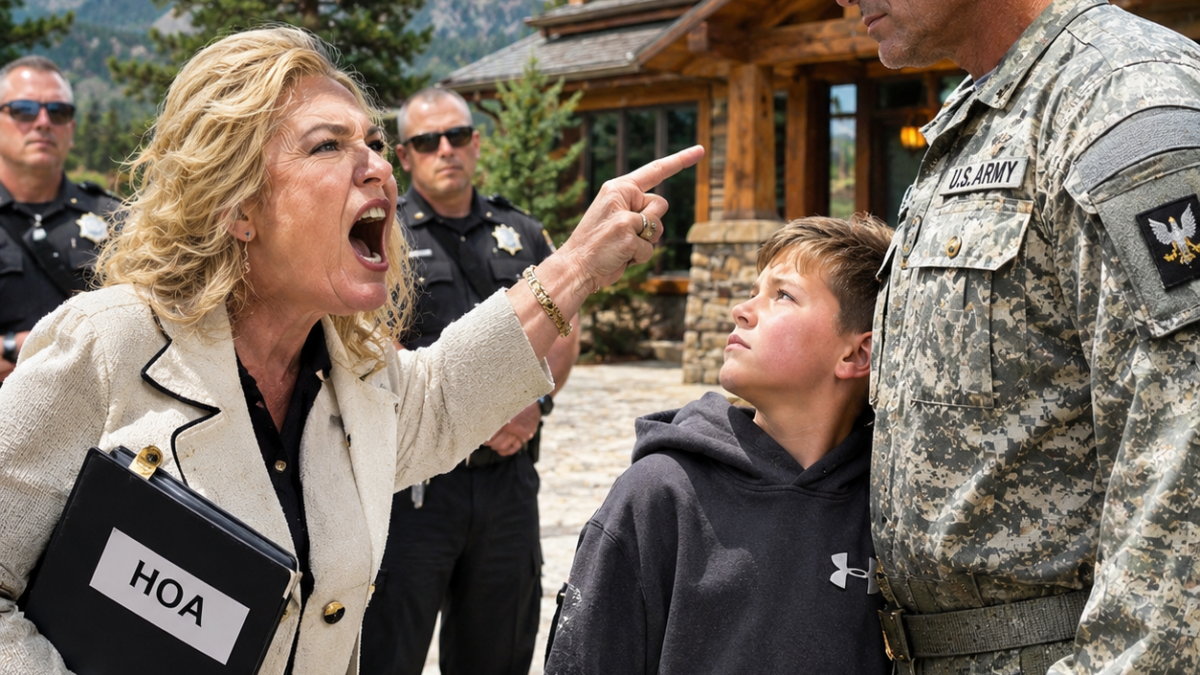
The first morning after I inherited my mother’s house, a woman I had never met stood in my driveway and told me I could not move in unless her HOA approved me, then threatened to call the police while my twenty-two-year-old son slept in the truck behind me, unaware that she was already looking for a way to make him the reason we would be forced out.
By the end of that week, Beverly Martinez had turned our names into a neighborhood warning, described my son as “mentally unstable,” buried us under fake violations, and convinced people who had never spoken to us that letting us live peacefully in my mother’s home somehow endangered the entire community.
What she never understood was that I had spent twenty-eight years in the United States Army learning what happens when someone mistakes intimidation for authority, and the more confidently she kept escalating, the more certain I became that the most important evidence in this fight would eventually come from Beverly herself.
I had driven fourteen hours from Fort Bragg to Arizona, and by the time I reached Willowbrook Estates, I was running on coffee, grief, and the kind of exhaustion that settles behind your eyes.
My mother, Eleanor Rodriguez, had died a month earlier. She had lived in that house for thirty-one years. She trimmed her lawn every Saturday, watered her roses before sunrise, and still mailed birthday cards because she said text messages were “too easy to forget.”
Her will left the house to me.
There was no dispute.
No competing heir.
No unfinished mortgage problem.
Just a son returning to the last place that still smelled like his mother.
Donald was asleep in the back seat when I pulled into the driveway.
At twenty-two, he was studying astrophysics through an online university program. He could talk for an hour about gravitational lensing and still struggle with a thirty-second conversation at a grocery checkout. Sudden changes were hard for him, so when I saw Beverly standing beside the garage in a white polo embroidered with WILLOWBROOK ESTATES HOA, I decided not to wake him yet.
“You’re not allowed to be here,” she said.
Not hello.
Not condolences.
Not even a question.
I stepped out and closed the truck door quietly.
“I’m Joseph Rodriguez. Eleanor Rodriguez was my mother.”
“I know who you are.”
“Then you know she passed away.”
Her expression didn’t change.
“I’m Beverly Martinez, HOA president. This property has seventeen unresolved violations, and Willowbrook requires approval before new residents take occupancy.”
“New residents?”
“You and the adult male in your vehicle.”
I looked at my own front door.
“This house was left to me.”
“That doesn’t exempt you from community rules.”
“May I see the violations?”
For the first time, she hesitated.
Barely.
“I’ll email them.”
“Good.”
“In the meantime, you should find temporary accommodations.”
I almost smiled.
“You want me to leave my inherited home because you haven’t emailed me paperwork yet?”
Her jaw tightened.
“I’m trying to help you avoid a difficult situation.”
Twenty-eight years in uniform had taught me to recognize real authority.
Real authority explains jurisdiction.
Real authority cites rules.
Real authority does not rely on tone.
Beverly had brought none of those things.
Only confidence.
I opened the rear door and touched Donald’s shoulder.
“We’re here.”
He removed his headphones slowly.
“Grandma’s house?”
“Yeah.”
Then he saw Beverly.
“Who’s that?”
“Nobody you need to worry about.”
We walked past her.
She didn’t physically stop us.
Inside, the house smelled like cinnamon candles.
Donald went straight to the bedroom he used during childhood visits and looked up at the ceiling.
The glow-in-the-dark stars we had stuck there when he was twelve were still in place.
“Grandma kept them.”
His smile nearly broke me.
Then I saw the yellow paper on the refrigerator.
NOTICE OF VIOLATION.
Failure to maintain exterior.
Fine: $500.
Due in fourteen days.
The date was two weeks after my mother died.
I read it again.
Donald came beside me.
“Dad.”
“Yeah?”
“The font is wrong.”
I looked at him.
“What?”
“The HOA notices Grandma used to get had a different header.”
He was right.
This one looked official from ten feet away.
Up close, it looked improvised.
I photographed it and emailed my mother’s real-estate attorney.
Then I looked through the kitchen window.
Beverly was still outside, speaking to a neighbor and pointing toward my house.
The neighbor kept nodding without looking up.
That was when I noticed the elderly woman across the street pull her curtains closed the instant Beverly glanced in her direction.
I had arrived expecting a dispute over seventeen ridiculous violations.
Instead, I was beginning to suspect the violations were only the part Beverly wanted me to see.
PART 2
The email arrived at 11:47 that night.
I didn’t see it until 5:30 the next morning.
Twenty-eight years in the Army had permanently damaged my ability to sleep past sunrise, so while Donald was still upstairs, I made coffee in my mother’s kitchen and opened my laptop.
The subject line read:
**CHEN PROPERTY VIOLATION REPORT**
I stared at it.
My last name was Rodriguez.
My mother’s last name was Rodriguez.
Nobody named Chen had ever owned the house.
That one mistake told me more than Beverly intended.
The seventeen violations had not been carefully documented against my mother’s property.
Someone had taken a template and changed enough details to make it look specific.
Not all of them, apparently.
I downloaded the attachment.
Seventeen pages.
Grass exceeding four inches.
$150.
Mailbox color noncompliance.
$100.
Garage-door paint deterioration.
$200.
Trash collection violation.
$75.
Improper landscaping edge.
$150.
Unfamiliar vehicle parked in driveway.
$50.
I stopped there and looked through the window.
My truck sat exactly where I had left it.
The “unfamiliar vehicle” was apparently mine.
By the final page, Beverly claimed we owed $2,350.
Payment due in seven days.
Not one accusation cited a section of the CC&Rs.
Not one included evidence that the HOA board had reviewed anything.
Some photographs were undated.
One image of the lawn appeared to have been taken during winter.
Another showed a trash container that wasn’t even my mother’s.
I called Robert Finch at eight.
He answered with, “Please tell me you’ve had breakfast.”
“Coffee.”
“That’s not breakfast.”
“I got the violation report.”
His sigh told me he already knew where this was going.
“Let me guess. Willowbrook?”
“Seventeen violations.”
“Beverly Martinez.”
“You know her?”
“I know of her.”
“That sounds ominous.”
“Joseph, I’ve handled three matters involving Willowbrook in six years.”
“And?”
“All settled before trial.”
“Because Beverly was right?”
“No.”
That got my attention.
“Why?”
“Because homeowners got tired.”
I leaned back.
“Define tired.”
“Fines. Letters. Legal fees. Community pressure. Complaints to agencies. One family sold. Another paid a settlement just to stop the harassment.”
“How long has she been president?”
“Eleven years.”
“Election history?”
“I’d have to check.”
“Check.”
I heard typing.
“What else?”
“Arizona HOA procedure. Cure periods. Record-access rights. Board authorization for fines.”
“Already on it.”
“Robert.”
“Yeah?”
“My mother lived here thirty-one years.”
“I know.”
“She never told me any of this.”
“Parents hide things from their children.”
“So do commanders.”
That answer hit harder than he meant it to.
I had done exactly that for most of my career.
Every deployment, I told Donald and my mother I was fine.
Every dangerous operation became “routine.”
Every injury became “nothing serious.”
Protection can look a lot like silence when you’re the one being protected.
“Send a formal request for Willowbrook’s financial records,” I said. “Meeting minutes too. Elections, fine approvals, reserve statements.”
“That will get Beverly’s attention.”
“I think I already have it.”
Robert promised to file the request that afternoon.
Then I downloaded the recorded Willowbrook CC&Rs from the county recorder.
If Beverly wanted to hide behind rules, I intended to read them.
I was repainting my mother’s mailbox later that afternoon when the elderly woman from across the street appeared.
She stopped at the edge of her property.
“Eleanor’s son?”
I set down the brush.
“Yes, ma’am.”
“I’m Helen Patterson.”
I recognized the name. My mother had mentioned Helen more than once.
“She said you made the best lemon cake in Arizona.”
Helen’s face softened.
“She lied.”
“That sounds like her.”
For half a second, the street felt normal.
Then Helen glanced toward Beverly’s house.
“Be careful.”
“With the paint?”
“With Beverly.”
I wiped my hands on a rag.
“What happened to the people who weren’t careful?”
Helen’s eyes lowered.
I thought she might retreat.
Instead, she stepped closer.
“The Thompsons lived on Oak Crest.”
“What happened?”
“They had a son with a medical condition. Sometimes he had episodes.”
“What kind?”
“I don’t know. I never asked. It wasn’t my business.”
Good answer.
“Beverly said the noise affected property values. Started fining them.”
“How often?”
“Every day at one point.”
I stopped moving.
“Every day?”
Helen nodded.
“They hired a lawyer.”
“And?”
“Someone reported them to Adult Protective Services.”
My hand tightened around the rag.
“Who?”
“No one ever proved it.”
“But you have an opinion.”
Helen looked toward Beverly’s house again.
“The complaint said they were neglecting their son.”
“What happened?”
“Eight months of investigations. Interviews. Doctors. Lawyers. They were cleared.”
“So they won.”
Helen gave me a sad look.
“They sold the house.”
That was the real outcome.
Not guilty.
Not responsible.
Not vindicated.
Gone.
“Did Beverly buy it?”
“No. Someone else did.”
“Connected to her?”
“I don’t know.”
Helen lowered her voice.
“The Thompsons spent nearly everything they had defending themselves. By the end, they didn’t care who won. They just wanted out.”
I remembered Robert’s word.
Tired.
That was the mechanism.
Not necessarily beating people in court.
Making the fight cost more than surrender.
“Why are you telling me this?”
Helen looked at my mother’s house.
“Because Eleanor never liked what Beverly became.”
“Became?”
Helen nodded slowly.
“She wasn’t always this bad.”
“What changed?”
“Power, maybe.”
She looked embarrassed by the answer.
“Or maybe we just stopped telling her no.”
Before I could ask more, a car turned onto the street.
Helen stiffened.
“I should go.”
“Mrs. Patterson.”
She stopped.
“Thank you.”
She gave me one quick nod and returned home.
Her curtains closed minutes later.
That evening, Donald sat at my mother’s kitchen table with a notebook covered in equations.
He tapped his pen twice against the page.
“Dad.”
“Yeah?”
“Mrs. Patterson was scared.”
I looked up from the CC&Rs.
“How could you tell?”
“Her voice changed every time she looked down the street.”
He tapped the pen again.
“And she stood exactly on her side of the property line.”
I hadn’t noticed that.
“She didn’t want anyone to accuse her of being on our property.”
Donald nodded.
“That’s what I thought.”
For all the social cues Donald found difficult, he had an extraordinary ability to detect patterns.
Numbers.
Speech rhythms.
Repeated behaviors.
Small inconsistencies other people dismissed.
“She was afraid Beverly would see her talking to us,” I said.
Donald’s pen stopped.
“Do we have to be afraid too?”
The question punched through every legal thought in my head.
I looked at my son.
“No.”
“Because you were a colonel?”
“No.”
He waited.
“Because fear works best when you don’t understand where it’s coming from.”
Donald considered that.
“And we understand it?”
“Not yet.”
I looked at the stack of HOA documents.
“But we will.”
The next morning, Robert called.
“Arizona law gives homeowners a cure opportunity before many non-emergency fines are enforced. The details can depend on the governing documents and violation, but Beverly’s seven-day payment demand already looks problematic.”
“And the records?”
“Written request went out yesterday.”
“Deadline?”
“Ten business days for the records we requested under the applicable process.”
“Good.”
“You sound disappointed.”
“I was hoping she’d refuse immediately.”
Robert laughed.
“Retirement has made you strange.”
“Retirement did nothing.”
He hung up.
By noon, Beverly made the next move.
Robert texted:
**Check Willowbrook community board. Now.**
Every resident was required to use an app for HOA notices.
I opened it.
At the top was a post from Beverly.
**COMMUNITY ALERT**
I started reading.
An “unknown man” had moved into the late Eleanor Rodriguez property without approval.
That was me.
She wrote that I claimed to be a military veteran but had “refused to verify my status.”
She had never asked.
Then came Donald.
**The individual has brought an adult male displaying concerning and highly unusual behavior, including lack of eye contact, repetitive movements, and apparent psychological instability. Residents with children are advised to avoid contact and report suspicious behavior.**
I read the paragraph twice.
My chest tightened.
One hundred twenty-seven reactions.
Forty-three comments.
**Thank you for keeping us safe, Beverly.**
**Why was this allowed?**
**Has anyone called the police?**
**We have kids on this street.**
**Maybe APS should be notified.**
I screenshotted everything.
Then I heard Donald behind me.
He held his phone.
His face had gone still.
Too still.
“Dad.”
I closed the laptop halfway.
“She wrote about me.”
“Donald—”
He read the phrase aloud.
“‘Apparent psychological instability.’”
His fingers began tapping against his thigh.
Faster than usual.
“Is that what people think when they see me?”
There are questions a father can prepare for.
That wasn’t one of them.
I had faced soldiers who needed to know whether a mission would succeed.
Families who needed to hear that someone wasn’t coming home.
Officers who had made mistakes with consequences that couldn’t be undone.
None of those conversations felt as dangerous as the five seconds before I answered my son.
“No.”
“You don’t know what everyone thinks.”
“You’re right.”
He looked at me.
“So you can’t say no.”
“I can say Beverly doesn’t know you.”
His tapping continued.
“She described what I do.”
“She described what she saw and invented a reason for it.”
He looked down.
I pulled out the chair across from him.
“Sit with me.”
He did.
“Remember what Dr. Reeves told you after your diagnosis?”
Donald nodded.
“My brain processes some things differently.”
“Exactly.”
“Not incorrectly.”
“Exactly.”
He inhaled.
Then said, “Spock.”
I blinked.
“What?”
“Spock processed things differently from the humans around him.”
I almost smiled.
“Okay.”
“He was still first officer.”
“True.”
“Sometimes people disliked him because they misunderstood him.”
“Also true.”
Donald looked at the HOA post again.
“Beverly would hate Vulcans.”
I laughed despite myself.
“Probably.”
That finally pulled the corner of his mouth upward.
“Then we beat her like Spock.”
“How does Spock beat an HOA president?”
“Logic.”
He answered immediately.
“Evidence.”
I leaned back.
“Patience.”
Donald nodded.
“Logical.”
I forwarded the screenshots to Robert.
His reply arrived less than an hour later.
**Do not answer publicly. Preserve everything.**
I called him.
“Defamation?”
“Potentially very serious. She’s making factual implications about Donald’s mental condition and dangerousness without basis.”
“She’s setting up an APS complaint.”
“Maybe.”
“Helen said she did it to the Thompsons.”
“Joseph.”
“I know. Evidence first.”
“Good.”
“I hate when lawyers say my own words back to me.”
“That’s why we charge hourly.”
That afternoon, Donald and I walked through the neighborhood.
I wanted him out of the house.
I also wanted to see the effect of Beverly’s post.
We found out within five minutes.
A father played football with two young children in a front yard.
When he saw us, he stopped.
His eyes moved to Donald.
Then to me.
He gathered both children and hurried them inside.
The front door closed.
Blinds followed.
Donald stared at the house.
“He didn’t know us.”
“No.”
“He recognized us from the post.”
“Yes.”
We kept walking.
After a minute, Donald said, “This is what happened to the Thompsons.”
“Maybe.”
“She made everybody afraid of them first.”
I looked at him.
He continued.
“Then when government people showed up, nobody defended them because everyone already thought something was wrong.”
My son had just identified the strategy more clearly than I had.
Isolation first.
Institutional pressure second.
Exhaustion last.
At our front walk, Donald stopped.
“This isn’t just about our house anymore.”
“What do you mean?”
“If she did this before, she’ll do it again.”
I waited.
“To whoever says no next.”
His jaw tightened.
“Then we have to stop her.”
Not avenge ourselves.
Not humiliate her.
Stop her.
I put one hand on his shoulder.
“We do it by the book.”
“Like Spock.”
“Like Spock.”
Day five, I finished reading Willowbrook’s forty-seven pages of recorded governing documents.
Seven provisions stood out.
The most important involved fines, financial reporting, and elections.
Fines required board authorization under the governing structure.
Where were the meeting minutes supporting my seventeen violations?
Annual financial reports were supposed to be distributed.
My mother kept decades of paperwork.
I found tax records from 1998.
Warranty documents for a toaster she no longer owned.
Receipts for landscaping stones purchased seventeen years earlier.
I found no HOA annual financial reports.
Then elections.
The president’s term was two years.
Beverly had been president eleven.
I called Helen.
“When was the last HOA election?”
Silence.
“Mrs. Patterson?”
“I honestly don’t remember one.”
“Eleven years?”
“We get notices saying the board will continue serving.”
“Anyone challenge it?”
A humorless laugh.
“You’ve met Beverly.”
That wasn’t an answer.
It was.
Robert called shortly after.
“Records request update.”
“She complied?”
“No.”
“Better.”
“She says she’ll respond within thirty days.”
“What does the law say?”
“You already know.”
“Ten business days.”
“Correct.”
I smiled.
“One documented refusal.”
“Delay,” Robert corrected.
“Lawyers ruin everything.”
“Joseph, don’t underestimate her.”
“I don’t.”
“She has survived eleven years because she understands how to make people look unreasonable.”
“Then I’ll be reasonable until it hurts.”
That evening, I drafted a complaint to state regulators.
Seven pages.
Procedural irregularities.
Election issues.
Record-access problems.
Questionable fines.
My cursor hovered over SEND.
Then I stopped.
Beverly had spent eleven years handling complaints.
If I moved too early, she would produce excuses.
Administrative oversight.
Miscommunication.
Temporary accounting problems.
Volunteer board confusion.
Nothing I had yet proved was bigger than bureaucracy.
I deleted the draft.
Not yet.
The breakthrough came from Helen.
She called from a number I didn’t recognize.
“I gave your number to someone.”
“Who?”
“Gary Morrison.”
“Should that mean something?”
“He used to be on the board.”
“When?”
“Eight years ago.”
“Why did he leave?”
“Ask him.”
Gary wanted to meet fifteen miles away.
Not Willowbrook.
That told me enough before we sat down.
He was seventy-four and carried himself like an accountant even in retirement.
Shirt tucked in.
Pen in pocket.
Receipt folded beneath his coffee cup.
“I served on the board for three years,” he said.
“Under Beverly?”
“Unfortunately.”
“What happened?”
“I asked about money.”
I waited.
Gary smiled without humor.
“That was my first mistake.”
“What did you find?”
“Reserve discrepancies. Vendor contracts without bids. Payments approved outside meetings.”
“Did you challenge them?”
“Yes.”
“And?”
“Beverly held an emergency meeting while I was visiting my daughter in California.”
“For what?”
“She changed internal attendance rules.”
I frowned.
“While you were gone?”
“Required one hundred percent board attendance.”
“That’s absurd.”
“Then I was removed for missing the meeting where they created the rule.”
I stared.
“Who voted?”
“Beverly and her husband.”
“That’s it?”
“Enough, apparently.”
He reached into his jacket and removed a USB drive.
“I kept copies.”
I didn’t touch it immediately.
“Why?”
“Because I was angry.”
“Why keep them eight years?”
His expression changed.
“Because I became ashamed.”
I finally picked up the drive.
“What’s on it?”
“Emails. Real meeting minutes. Financial statements. Vendor invoices. Everything I saved.”
“Why give it to me?”
Gary stirred his coffee.
“The Thompsons.”
He looked toward the window.
“Then the Gaines family.”
“Who are they?”
“Gone.”
He swallowed.
“Family on Maple Lane too. I can’t even remember their names anymore.”
His eyes returned to mine.
“That bothers me.”
“What?”
“People disappear and the neighborhood keeps going.”
He leaned closer.
“I was afraid when Beverly removed me. I had a wife. A mortgage. Grandkids visiting. I told myself keeping quiet protected them.”
“And now?”
“My wife died two years ago.”
I waited.
“I’m seventy-four.”
He slid the USB closer.
“I’ve run out of reasons to be scared.”
That night, after Donald went upstairs, I opened Gary’s files.
He had organized them by year.
Of course he had.
Eight years earlier, the HOA reserve fund showed $412,000.
Current public filings showed approximately $285,000.
Difference:
$127,000.
That alone wasn’t proof of theft.
Reserve funds get spent.
So I traced expenses.
Pool equipment replacement.
I had walked past the pool.
The equipment looked old.
Road resurfacing.
The asphalt showed no evidence of the claimed work.
Major landscaping upgrade.
Same vendor.
Same routine maintenance.
No large project described.
I built a spreadsheet.
Payment dates.
Vendor names.
Approval dates.
Minutes.
Missing minutes.
Amounts.
Patterns emerged.
Some expenses existed only on paper.
Others were suspiciously rounded.
Several lacked invoices.
I sat back around midnight.
“Dad?”
Donald stood in the doorway.
“You should be asleep.”
“You said that at ten.”
“What time is it?”
“12:14.”
“Then I was right at ten.”
He came closer.
“What is that?”
“HOA finances.”
“Fun.”
“Very.”
He looked at my spreadsheet.
“Those numbers repeat.”
I turned.
“What?”
“Here.”
He pointed.
Three landscaping payments.
Then two maintenance reimbursements.
Same ending digits.
Different amounts.
“What are the odds?”
“I’d need more data.”
“Of course you would.”
Donald sat.
For twenty minutes, we looked together.
He noticed duplicated invoice identifiers that had been formatted differently.
One with a dash.
One without.
Same underlying sequence.
I checked Gary’s originals.
Donald was right.
“Could be copied invoices,” I said.
“Or reused numbers.”
“Either way.”
“Pattern.”
I looked at my son.
“Exactly.”
By two in the morning, we had a list.
That didn’t prove Beverly personally took $127,000.
But it proved the official accounting deserved scrutiny.
Robert reviewed it the next day.
His reaction was immediate.
“Do not confront her.”
“I wasn’t planning to.”
“Good.”
“What do you think?”
“I think an accountant should examine it.”
“Gary is an accountant.”
“A forensic accountant who can testify.”
“Fine.”
“And Joseph?”
“Yeah?”
“You were right not to file the regulatory complaint yet.”
That surprised me.
“Why?”
“Because this just stopped being about bad governance.”
“What is it?”
“Potential financial misconduct.”
“Embezzlement?”
“Potential.”
I groaned.
“You lawyers really love that word.”
“It keeps clients from getting sued.”
We kept building.
I thought Beverly might finally become cautious.
Instead, she overreached.
Day seven.
Certified mail.
Maricopa County Superior Court return address.
I signed for the envelope.
Inside was a document titled:
**TEMPORARY RESTRAINING ORDER**
My name.
Beverly’s name.
A judge’s signature.
The document prohibited me from coming within five hundred feet of Beverly, barred me from community functions, and warned that violation could result in arrest.
For ninety seconds, I thought she’d beaten me.
If real, the order would create immediate problems.
Beverly lived inside Willowbrook.
Community events were effectively off limits.
Depending on geography, her movements could complicate mine.
Then training took over.
Read.
Verify.
Don’t react.
I studied the page.
The case number bothered me.
Wrong format.
The seal looked pixelated.
The judge’s signature looked reproduced.
I opened Arizona’s court-access system.
Entered case number.
Nothing.
My name.
Nothing.
Beverly Martinez.
Nothing.
I tried variations.
No case.
No petition.
No judge assignment.
No order.
The paper in my hands was fake.
I sat very still.
Forgery of a court document wasn’t an HOA infraction.
It wasn’t aggressive leadership.
It wasn’t a gray area.
Someone had created an official-looking judicial order and sent it to intimidate me.
My first instinct was to call police.
Then I stopped.
If Beverly had simply mailed the document, she could blame someone else.
An assistant.
A printer.
A “draft.”
A misunderstanding.
If she tried to use it officially, that changed things.
I called Robert.
He was silent for several seconds after I sent the scan.
“You checked the docket?”
“Yes.”
“Again?”
“Three times.”
“I’m checking too.”
Five minutes later:
“Nothing.”
“So fake.”
“It appears fraudulent.”
“Appears?”
“Joseph.”
“Fine.”
His voice hardened.
“Do not violate anything written on it intentionally.”
“It isn’t real.”
“I know.”
“Then I can attend whatever I want.”
“Don’t be clever.”
“I wasn’t.”
“You were about to be.”
I smiled.
“What would you do?”
“Preserve original envelope. Fingerprints may or may not matter. Scan everything. Don’t write on it.”
“Already done.”
“And call law enforcement.”
“Not yet.”
Silence.
“Explain.”
“I want to know whether she intends to use it.”
“Joseph, this isn’t a military operation.”
“No.”
“It’s your life and your son’s.”
“I know.”
“You don’t bait someone into committing a bigger crime.”
“I’m not baiting her.”
“What are you doing?”
“Waiting.”
“For what?”
“For her to tell someone official that this is real.”
Robert exhaled slowly.
“I don’t like it.”
“Neither do I.”
“If anything changes, you call me.”
“I will.”
My second call went to a former Army colleague now working federal white-collar matters in Phoenix.
I did not ask him to open a case.
I told him what I had found and that evidence was being preserved.
His advice was simple.
“Don’t play cop.”
“I’m not.”
“You were a colonel.”
“Retired.”
“Which means you still think everything needs an operational plan.”
I laughed.
“Possibly.”
“Let local authorities document whatever happens.”
“Understood.”
My third call was to a trusted military colleague near Fort Huachuca.
I gave instructions for a sealed evidence package.
If anything serious happened to me or Donald, copies went to Robert, the state attorney general’s office, federal authorities, and selected media.
Not because I expected violence.
Because redundancy keeps evidence alive.
Donald found me studying the fake order that evening.
“What is it?”
I told him.
He read it carefully.
“If it’s fake, why don’t you report it immediately?”
“Because I need to know how Beverly uses it.”
He stared at me.
“You’re setting a trap.”
“I’m preserving an opportunity for her to make her intent clear.”
“That’s a very military way to say trap.”
I laughed.
“Fair.”
“What do I do?”
“Nothing different.”
He frowned.
“That doesn’t sound useful.”
“It is.”
“How?”
“You stay calm. Don’t confront her. Don’t answer messages. If anybody official comes here and I’m not with you, call Robert first, then 911 if you feel unsafe.”
“Why Robert first?”
“Because police handle emergencies. Lawyers handle complicated.”
Donald nodded.
“Logical.”
Then he surprised me.
“I’m not scared.”
I looked at him.
“I am.”
His expression shifted.
“You are?”
“Of course.”
“You don’t look scared.”
“That’s not the same thing.”
He thought about it.
“I thought being brave meant not being scared.”
“No.”
I folded the fake order.
“Brave means fear doesn’t get to choose what you do next.”
He was quiet.
Then:
“Grandma used to say you were stubborn.”
“She was correct.”
“She said it like an insult.”
“She usually did.”
Day nine, I was repairing a weathered fence panel when a sheriff’s cruiser pulled up.
I set down the drill.
The deputy stepped out.
Mid-thirties.
Professional posture.
Nameplate:
**WILLIAMS**
“Mr. Rodriguez?”
“That’s me.”
“I’m Deputy Jake Williams. Could we talk privately?”
Not an accusation.
Not a command.
A request.
I looked toward neighboring windows.
Several curtains moved.
“Inside.”
Donald sat at the kitchen table watching an online lecture.
When Williams entered, Donald removed one earbud.
“It’s okay,” I told him. “Keep studying.”
Williams waited until we sat.
Then he lowered his voice.
“I’m going to be direct.”
“I prefer that.”
“I’ve received multiple calls from Beverly Martinez about you.”
“I’m shocked.”
He almost smiled.
“Threats. Suspicious behavior. Concerns about your son.”
My expression changed.
Williams noticed.
“I haven’t found evidence supporting them.”
“Then why are you here?”
“Because hers aren’t the first calls I’ve received.”
I waited.
“She’s called about other households.”
“How many?”
“Dozens over the last few years.”
“Results?”
“Usually nothing.”
“Usually?”
“Noise complaint becomes nothing. Welfare concern becomes nothing. Suspicious person becomes a homeowner sitting in their own garage.”
He rubbed one hand over his coffee mug.
“Eventually those families move.”
“Thompsons?”
Williams looked up.
“You know about them.”
“Helen told me.”
He nodded.
“That one bothered me.”
“Why?”
“Because when government shows up at your door, even if you’ve done nothing wrong, the experience itself becomes punishment.”
Exactly.
“Why tell me?”
Williams looked toward Donald.
Then back at me.
“Because I’m tired of being part of that punishment.”
I said nothing.
“If Mrs. Martinez makes a formal allegation, I have to respond.”
“I understand.”
“But I can respond correctly.”
“What does that mean?”
“Body camera on. Exact statements documented. No assumptions.”
He met my eyes.
“I can’t investigate her because I dislike the pattern.”
“No.”
“But if she lies to us officially?”
“Then you document the lie.”
“Yes.”
I leaned back.
“Deputy Williams, has she mentioned a restraining order?”
His eyes narrowed.
“No.”
“Interesting.”
“You have one?”
I chose my words.
“I received a document claiming to be one.”
“Claiming?”
“I’ve verified no matching case exists.”
Williams sat forward.
“Do you have it?”
“Yes.”
“May I see a copy?”
I considered Robert’s warning.
Then showed him the scan.
Williams looked at it for a long time.
“This doesn’t look right.”
“It isn’t in the system.”
He handed the phone back.
“You need to make a report.”
“I will.”
“When?”
“When it becomes clear who created it.”
He frowned.
“You’re waiting for Beverly.”
“I’m waiting for evidence.”
Williams studied me.
Then said, “Colonel?”
“Retired.”
“Figured.”
“How?”
“You answer questions like you’re at a briefing.”
That evening, messages began arriving.
First:
**Mr. Rodriguez, my name is Linda Torres. I live on Maple Lane. I saw Beverly’s post. I don’t believe it. If you need a witness, call me.**
Then:
**Dave Kowalski, 78 Willowbrook Drive. Beverly did this to us two years ago. We almost sold.**
Then another.
And another.
Eleven households in two hours.
Each had a story.
Bogus fines.
Threats.
Anonymous complaints.
Public posts.
Claims of liens.
Letters suggesting legal action that never materialized.
One family said Beverly contacted their adult daughter’s employer after an HOA dispute and described her as unstable.
The daughter lost her job.
Another paid thousands in fines that didn’t appear in financial reports.
One person wrote:
**We call her the HOA Hydra. Cut off one head and two more grow back.**
I gave every person the same instructions.
No confrontation.
No public posts.
Send documents privately.
Dates.
Screenshots.
Bank records.
Letters.
Recordings lawfully obtained.
Forty-eight hours later, nine families had sent files.
Robert called.
His voice sounded almost energized.
“I hate to say this.”
“Then don’t.”
“This is extraordinary.”
“That’s never good from a lawyer.”
“We have evidence of a pattern.”
“Civil case?”
“Potentially much broader. Fraud. Extortion-type conduct. Misappropriation. Depending on proof, maybe racketeering theories.”
“RICO?”
“Possibly. Don’t get excited.”
“I’m not excited.”
“You sound excited.”
“I sound organized.”
“Same thing with you.”
Then something happened that mattered more to Donald than any legal evidence.
He was reading on the front porch when a young man approached.
I watched through the living-room window.
Maybe twenty.
Baseball cap backward.
Hands in pockets.
“Hey,” he said.
Donald looked up.
“You’re the guy Mrs. Martinez keeps posting about?”
My hand moved toward the door.
Donald answered.
“Yes.”
The young man nodded.
“My mom told me not to talk to you.”
Donald blinked.
“Then why are you talking to me?”
The young man laughed.
“Because you’re reading a book about planets.”
“Exoplanets.”
“Whatever.”
Donald held up the cover.
“Planets outside our solar system.”
“Cool. I’m Tyler.”
“Donald.”
Tyler sat on the porch step.
No invitation.
No fear.
“What’s the weirdest planet?”
Donald paused.
That was the wrong question if Tyler had somewhere to be.
An hour later, they were still talking.
Hot Jupiters.
Tidally locked worlds.
Video games.
Artificial intelligence.
Donald occasionally went quiet for several seconds before answering.
Tyler waited.
Donald launched into long explanations.
Tyler asked questions instead of looking bored.
When Tyler finally left, Donald came inside.
His entire posture looked different.
“Dad.”
“What?”
“I think I made a friend.”
I smiled.
“I think you did.”
He looked back through the window.
“His mom still thinks I’m dangerous.”
“Give her time.”
“Tyler said she believes everything Beverly posts.”
“People can change their minds.”
Donald nodded slowly.
“Evidence.”
“Exactly.”
That night, after he went upstairs, I sat alone in my mother’s living room.
Her photographs surrounded me.
Donald at five.
Donald at twelve.
Me in uniform.
My parents on their wedding day.
For days I had told myself I was fighting Beverly because of the house.
That wasn’t true anymore.
The house mattered.
My mother mattered.
But what I wanted most was simple.
I wanted Donald to be able to sit on his grandmother’s porch and talk about planets without a neighborhood being warned that his existence was dangerous.
I wanted Helen to speak to a neighbor without checking whether Beverly was watching.
I wanted a family to disagree with an HOA president without wondering which government agency would appear at breakfast.
I had commanded soldiers in situations where the enemy was obvious.
Willowbrook was harder.
Nobody wore a uniform.
The weapon was paperwork.
Fear.
Rumor.
Social exclusion.
Official systems manipulated one complaint at a time.
And Beverly had spent eleven years learning exactly how far she could push without anyone pushing back.
Day twelve began with coffee at 5:30.
Donald’s astronomy podcast drifted downstairs.
At 9:47, the doorbell rang.
Sharp.
Repeated.
I opened the camera feed.
Two sheriff’s cruisers.
A white sedan marked Arizona Adult Protective Services.
My body went cold.
Not panic.
Recognition.
This was it.
I opened the door.
Deputy Williams stood on the porch.
His expression was tense.
Beside him was an older deputy.
**HARMON**
Behind them, a woman held a clipboard.
“Mr. Rodriguez?”
“Yes.”
“I’m Charlotte Price with Adult Protective Services.”
I nodded.
“We received a report involving a vulnerable adult at this address.”
Behind me, Donald’s footsteps stopped.
“What allegation?”
Charlotte checked the clipboard.
“An adult male with documented mental-health concerns is allegedly being held against his will, denied appropriate care, and may present a danger to himself or others.”
Each accusation was designed to trigger urgency.
Held against his will.
Denied care.
Danger.
I kept my hands loose.
“Who filed the report?”
“Confidential.”
Of course.
Deputy Harmon stepped forward.
“Sir, if you’ll let us inside, we can clear this up.”
“Do you have a warrant?”
His face tightened.
“No.”
“Documented exigent circumstances?”
“We have a welfare complaint.”
“That’s not what I asked.”
Harmon rested one hand on his belt.
“Let’s not make this harder than it needs to be.”
Williams looked toward him.
I kept my voice neutral.
“Deputy, I spent twenty-eight years in the United States Army, including fifteen working regularly with JAG personnel and law-enforcement partners. I respect your job. I also understand that absent a warrant or exigent circumstances, you do not have automatic authority to enter my private home simply because an anonymous caller made an accusation.”
Harmon opened his mouth.
Then Donald appeared beside me.
Jeans.
Andromeda Galaxy T-shirt.
Hair uncombed.
He looked at the group.
“Dad?”
“It’s okay.”
Charlotte turned to him.
“Are you Donald Rodriguez?”
“Yes.”
“I’m with Adult Protective Services.”
Donald looked interested.
“Are you state government?”
“Yes.”
“What do you do?”
“We investigate situations where adults may need protection.”
“From what?”
“Abuse. Neglect. Exploitation.”
Donald nodded.
“That makes sense.”
Charlotte glanced at me, then back at him.
“We received a report that you may need help.”
Donald frowned.
“With what?”
“There were concerns about your wellbeing.”
“I’m fine.”
He paused.
“I’m working on a paper about tidal heating.”
Charlotte blinked.
“What?”
“Europa.”
Donald pointed upward as though Jupiter might be hovering above Arizona.
“One of Jupiter’s moons. It probably has a liquid ocean under the ice because tidal forces generate heat.”
Williams looked down.
His mouth twitched.
Donald continued.
“The interesting part is whether chemical gradients near hydrothermal vents could support microbial life.”
He stopped suddenly.
“Sorry.”
Charlotte’s face softened.
“Why are you apologizing?”
“I talk too much when somebody mentions something related to space.”
“No apology necessary.”
She looked at her clipboard.
Then at me.
“Mr. Rodriguez, your son appears able to communicate his wishes.”
“He can.”
Donald added, “I’m also twenty-two.”
Charlotte almost smiled.
“Yes.”
Then a voice came from the driveway.
“Why isn’t he arrested yet?”
Every head turned.
Beverly marched toward us.
White blouse.
Sunglasses.
Face flushed.
There are moments when years of patience are rewarded all at once.
That was one.
Williams’s body camera was recording.
So was Harmon’s.
Charlotte was present.
Donald stood beside me.
And Beverly was walking straight into the evidence I had waited for.
“I filed that report,” she snapped.
Charlotte stiffened.
Confidentiality had just become irrelevant because the caller identified herself.
Beverly pointed toward Donald.
“He is unstable. He’s dangerous.”
Donald stared at her.
Then she pointed at me.
“And this man is violating a restraining order by being anywhere near me.”
Williams looked at me.
I said nothing.
He turned back to Beverly.
“What restraining order?”
“The court order.”
“What court?”
“Maricopa County.”
Williams’s expression changed.
“We checked before responding today.”
Beverly hesitated.
He continued.
“There is no active restraining order involving Mr. Rodriguez and you in the county system.”
Her face lost color.
“Yes, there is.”
“No, ma’am.”
“I have a copy.”
“So does Mr. Rodriguez.”
That surprised her.
Her eyes snapped to mine.
I spoke for the first time.
“Mrs. Martinez, are you telling these deputies that the document sent to me is a valid court order?”
She opened her mouth.
Stopped.
I continued.
“Because I’ve searched the docket. So has my attorney. Deputy Williams has now confirmed there is no case.”
Beverly’s fingers twitched.
“My lawyer handled it.”
“What lawyer?”
She looked toward Harmon.
Then Charlotte.
Then Williams.
“My attorney.”
“Name?”
Silence.
I kept my voice almost gentle.
“I’d like to contact them.”
“There must be a filing delay.”
Williams spoke.
“Court orders don’t become enforceable before a case exists, ma’am.”
Beverly’s face went from pale to red.
“You’re taking his side.”
“I’m stating what we verified.”
“He threatened me.”
“When?”
“Repeatedly.”
“Dates?”
She faltered.
“He follows me.”
Williams glanced at me.
I still hadn’t moved from the doorway.
Beverly saw the hesitation in everyone’s faces and panicked.
“This is exactly what he does. He intimidates people. He thinks because he was some colonel—”
Charlotte interrupted.
“Mrs. Martinez, did you personally file the APS report?”
Beverly looked at her.
“Yes.”
“Did you personally observe Mr. Donald Rodriguez being held against his will?”
Beverly stopped.
“Well, no, but—”
“Did you personally observe neglect?”
“No, but his behavior—”
“What behavior?”
Beverly pointed.
“He doesn’t look people in the eye. He makes repetitive movements. He sits outside talking about bizarre things.”
Donald spoke quietly.
“Planets aren’t bizarre.”
The absurdity of that sentence in the middle of the confrontation nearly cracked Williams’s composure.
Charlotte did not smile.
She looked at Beverly.
“Those are not evidence of abuse.”
Beverly’s voice rose.
“You don’t understand. He’s not normal.”
Donald went still.
I felt something inside me snap tight.
Not break.
Tighten.
I had promised myself no anger.
No performance.
No words Beverly could use.
So I turned to my son.
“Donald.”
He looked at me.
“You good?”
He took one breath.
Then another.
“Yes.”
I faced Beverly.
“You’re done talking about my son.”
She laughed sharply.
“You don’t tell me what I can say.”
“No.”
I glanced at Williams’s body camera.
“But evidence does.”
She followed my eyes.
And finally understood.
Body camera.
Witnesses.
Her own statements.
The fake court order.
The admitted APS report.
Eleven years of confidence collapsed into one moment of recognition.
Her hands started shaking.
Not theatrically.
Actually shaking.
“My attorney sent the order.”
“Name?” Williams asked.
Beverly couldn’t answer.
“I need to go.”
Harmon stepped slightly sideways.
“Ma’am, don’t leave yet.”
Her eyes widened.
“I’m not under arrest.”
“No one said you are.”
“I know my rights.”
For the first time since I met her, I almost felt sorry for her.
Almost.
Charlotte closed her clipboard.
“Mr. Rodriguez, based on my interaction with Donald today, I don’t have grounds for emergency removal.”
Beverly stared at her.
“You’re just leaving him?”
Donald answered before I could.
“I live here.”
Charlotte nodded.
“Yes, you do.”
That was the sentence that mattered.
Not a legal ruling.
Not a dramatic arrest.
Three ordinary words from a government employee Beverly had tried to weaponize.
You live here.
Donald heard them too.
His shoulders lowered.
Beverly had come to my mother’s house expecting to watch strangers remove my son.
Instead, the entire operation had documented her.
Forty-eight hours later, the machinery started moving.
Deputy Williams filed a complete report with body-camera footage.
I turned over the original fake restraining order and envelope.
Robert submitted the evidence packet we had built.
Gary’s financial files.
The $127,000 discrepancy.
Nine households’ records.
Threatening messages.
The older recording in which Beverly told residents she would “make their lives hell” if they voted against her.
My preserved screenshots of the post targeting Donald.
The seventeen unsupported violations.
The delayed record request.
The election irregularities.
The APS incident.
Everything.
For nearly two weeks, I had felt like we were collecting loose stones.
Now they became a wall.
A real forensic review of the HOA finances followed.
Investigators didn’t rely solely on Gary’s spreadsheet.
They subpoenaed bank records.
Vendor records.
Invoices.
Checks.
Electronic transfers.
The pattern sharpened.
Money had left reserve accounts for projects that either never occurred or cost dramatically less than reported.
Some vendor payments routed through entities with personal connections investigators linked back to Beverly’s circle.
The total questioned amount aligned closely with the $127,000 Gary had flagged.
The fake court document created its own problems.
Forgery.
Use of a false judicial instrument.
The false law-enforcement narrative created more.
The APS report itself was investigated in context with earlier complaints.
Then the state attorney general’s office began reviewing whether Beverly had systematically used HOA authority and government complaints to coerce homeowners.
My federal contact called once.
Only once.
“Things are moving.”
“How far?”
“I can’t discuss an active matter.”
“You called me.”
“To tell you not to call me.”
I laughed.
“Understood.”
“And Joseph?”
“Yeah?”
“Let local investigators work.”
“I am.”
“No victory laps.”
“I’m seventy percent offended you think I would.”
“Only seventy?”
“Twenty-eight years around lieutenants destroyed my optimism.”
He hung up.
Beverly hired a real defense attorney.
Robert told me before I heard it from anyone else.
“Good lawyer,” he said.
“How good?”
“Good enough to tell her to stop speaking publicly.”
The Willowbrook message board went silent.
No Beverly posts.
No warnings.
No community alerts.
No accusations.
The silence felt unnatural.
For years, Beverly’s voice had filled every space.
Now residents began filling it themselves.
Linda Torres organized a private meeting.
Then Dave Kowalski.
Then three more families.
Nobody asked me to lead.
That mattered.
This wasn’t supposed to become Joseph Rodriguez replacing Beverly Martinez as the next person everyone obeyed.
People needed to remember how to govern themselves.
Helen knocked on my door one evening.
No casserole.
No whispering.
She stood in full view of the street.
“Can I come in?”
“Of course.”
Donald and Tyler were in the backyard with the telescope.
Helen looked through the glass door.
“He made a friend.”
“Yeah.”
“Tyler’s mother came to see me.”
I turned.
“That sounds dangerous.”
Helen smiled.
“She apologized.”
“To Donald?”
“Not yet. To me.”
“For what?”
“For believing Beverly.”
Helen sat at the kitchen table.
“I’ve been thinking about the Thompsons.”
“So have I.”
“I could have helped them.”
“Maybe.”
“I didn’t.”
I waited.
“Eleanor tried.”
That caught me.
“My mother?”
Helen nodded.
“She spoke at a board meeting.”
“When?”
“Years ago.”
“What did she say?”
“That Beverly had no right to discuss the Thompson boy’s medical issues publicly.”
I felt a pressure behind my eyes.
“She did that?”
“She stood up in front of everyone.”
“What happened?”
“Beverly fined her the next week for landscaping.”
I laughed once.
Of course she did.
Helen’s eyes filled.
“Your mother stopped attending meetings after that.”
“Why didn’t she tell me?”
“Because she knew you’d come.”
That hurt.
Helen continued.
“She was proud of you. Also terrified you’d try to fix everything.”
“She knew me.”
“She did.”
I looked toward the refrigerator where the post-death violation notice had hung.
My mother had fought too.
Quietly.
Not successfully.
But she had said no.
I wanted one more conversation with her.
Not about the house.
Not about Beverly.
Just to tell her I knew now.
Donald came inside carrying the telescope lens case.
“Helen.”
“Hi, Donald.”
“Do you want to see Jupiter?”
Helen looked startled.
“Now?”
“It’s visible.”
She glanced at me.
I shrugged.
“That’s basically an order.”
Ten minutes later, the three of them stood in the backyard.
Donald adjusted the telescope.
Helen bent over the eyepiece.
“Oh.”
Donald smiled.
“You can see four of the Galilean moons tonight.”
Helen stayed there longer than necessary.
When she finally stood, her eyes were wet.
“Your grandmother loved this telescope.”
Donald nodded.
“She bought it.”
“I know.”
Then Helen looked toward me.
“She’d like this.”
Not the legal case.
Not Beverly’s downfall.
This.
Home.
Backyard.
Donald explaining Jupiter to a neighbor who was no longer afraid to be seen with us.
The criminal and civil consequences developed over the next three months.
Nothing happened as dramatically as television would make it seem.
No squad of agents stormed an HOA meeting.
No helicopter circled Beverly’s house.
Real accountability is usually paperwork before handcuffs, interviews before headlines, negotiations before judgments.
Beverly faced charges tied to the fraudulent court document and false reporting.
The financial investigation established serious irregularities requiring restitution.
Her attorney negotiated.
The final agreement included two years of supervised probation, restitution of $127,000 to the HOA reserve fund, and a ten-year prohibition on holding an HOA or community-organization leadership position.
Other possible claims and investigations were resolved or handled according to the evidence available.
Some neighbors were angry that she did not receive prison time.
Dave Kowalski came to my house after the deal became public.
“Two years probation?”
“Yes.”
“She ruined families.”
“I know.”
“She stole money.”
“Restitution.”
“She tried to have your son taken.”
“I know.”
Dave paced across the porch.
“You’re okay with this?”
“No.”
He stopped.
“Then why aren’t you furious?”
“I was.”
“And now?”
“I’m tired.”
The word surprised both of us.
The same weapon Beverly had used on everyone else.
Exhaustion.
But this time it didn’t mean surrender.
It meant I no longer wanted my peace tied to how miserable her punishment was.
“Would prison fix the Thompsons?” I asked.
“No.”
“Give the Gaines family their years back?”
“No.”
“Make Donald forget what she wrote?”
Dave looked down.
“No.”
“Then I care more about whether she can do it again.”
He leaned against the porch rail.
“Ten years off any board.”
“Yes.”
“Financial audits coming?”
“Yes.”
“Money returned?”
“Yes.”
He exhaled.
“I still wanted to see her in handcuffs.”
“I didn’t say you had to become enlightened.”
That made him laugh.
Beverly put her house up for sale.
Nobody forced her as part of the criminal resolution.
She left because Willowbrook changed around her.
People stopped dropping their voices when she walked past.
Stopped asking permission to challenge fines.
Stopped treating a social-media post as law.
Stopped believing.
Fear is strange.
It can look permanent because everyone experiences it privately.
Then one person says, “I’m not afraid anymore.”
A second realizes they don’t have to be either.
Soon the thing that looked like authority is just a woman standing alone with a title nobody respects.
The day the FOR SALE sign appeared, Donald noticed first.
“Beverly is moving.”
“Looks that way.”
“Are you happy?”
I thought about it.
“A little.”
“That’s not very philosophical.”
“I’m a retired colonel, not a monk.”
He nodded.
“Logical.”
Two weeks after the plea agreement, Willowbrook held its first legitimate election in more than a decade.
I went because Helen asked.
Not because I wanted office.
Eighty-nine residents participated in the vote to dissolve the old board structure and replace it with a three-member board operating under term limits, published minutes, and mandatory financial review.
The number should have been higher.
But it was a beginning.
Helen Patterson was elected president.
When her name was announced, she froze.
People applauded.
She looked toward me like this was somehow my fault.
I shook my head.
Afterward, she cornered me.
“You knew.”
“Knew what?”
“That they were going to nominate me.”
“I had suspicions.”
“Joseph.”
“You’ll be fine.”
“I spent eleven years avoiding that woman.”
“Which is exactly why you’ll understand people who are afraid to speak.”
She crossed her arms.
“You should join the board.”
“No.”
“You’d be good at it.”
“I’ve commanded enough people for one lifetime.”
“This isn’t command.”
“Exactly. So don’t make me do it.”
At the next community meeting, several residents asked publicly.
I stood.
“No.”
Someone laughed.
I continued.
“I didn’t move here to run Willowbrook. I came because my mother left me a house and my son needed a home.”
The room became quiet.
“If the lesson from Beverly is that one strong personality should control everything, then we learned nothing.”
Helen nodded.
“You elect your board. You read your documents. You ask questions. You demand records.”
I looked around.
“And when somebody tells you questioning them is disloyal, ask more questions.”
That earned applause.
I didn’t stay for the rest.
I slipped out.
The Arizona evening had cooled.
As I walked home, neighbors waved.
Not everyone.
Some people still avoided us.
Trust doesn’t reset because a plea agreement gets signed.
But the atmosphere had changed.
At Dave’s house, smoke rose from a barbecue.
“Colonel!”
I kept walking.
“Joseph!”
I turned.
“You want food?”
“What are you cooking?”
“Burgers.”
“Then why is the smoke black?”
“Mind your business.”
I laughed and went over.
Donald joined twenty minutes later.
Tyler was already there.
For the first time since arriving, I watched my son sit at a neighborhood table without anyone studying him like he was a problem.
He talked too long about an astronomy documentary.
Dave pretended to understand.
Tyler actually did.
Helen arrived with lemon cake.
I tasted it.
She watched expectantly.
“My mother lied.”
Her mouth fell open.
Everyone laughed.
That was Willowbrook without Beverly.
Not perfect.
Not transformed into some fantasy community.
Just people.
Arguing.
Eating.
Misunderstanding each other.
Trying again.
Exactly what a neighborhood is supposed to be.
A month later, I received a letter from the Thompson family.
Robert had located them through their former attorney after I asked whether they wanted copies of anything from the investigation.
The letter was handwritten.
They lived in New Mexico now.
Their son was doing well.
They had read about Beverly’s case online.
The father wrote:
**For years I thought leaving meant she beat us. Maybe it did. But knowing someone finally proved what she was doing matters more than I expected.**
Then:
**Please tell your son there was never anything wrong with being the person other people didn’t understand. Our boy spent years thinking he caused what happened to us. He didn’t. Neither did yours.**
I read that sentence twice.
Then took the letter upstairs.
Donald was working.
“Can I interrupt?”
“How long?”
“Two minutes.”
He saved his document.
I gave him the letter.
He read slowly.
When he reached the part about him, he stopped.
Then read it again.
“Can I write back?”
“Of course.”
“What should I say?”
“Whatever you want.”
He opened a blank document.
For five minutes, he stared at it.
Then typed.
I started to leave.
“Dad.”
“Yeah?”
“Do you think their son likes space?”
“I have no idea.”
“I could ask.”
“You could.”
Donald nodded.
“That would be a good beginning.”
A few weeks later, Tyler’s mother came to our door.
Her name was Amanda.
She looked terrified.
“Mr. Rodriguez.”
“Joseph.”
“Can I talk to Donald?”
I studied her.
“Why?”
She swallowed.
“I owe him an apology.”
I let her in.
Donald came downstairs.
Amanda stood.
Her hands twisted together.
“I believed Beverly’s post.”
Donald said nothing.
“I told Tyler not to talk to you.”
“I know.”
“He ignored me.”
“Yes.”
A tiny smile passed over her face.
“He does that.”
Donald waited.
Amanda took a breath.
“I was wrong.”
Donald’s fingers tapped once against his leg.
“You thought I was dangerous.”
“Yes.”
“Because I don’t make eye contact.”
“Partly.”
“That doesn’t make logical sense.”
Amanda’s eyes filled.
“No. It doesn’t.”
“Did you think I was mentally unstable?”
“I didn’t know what to think.”
“But you believed her.”
“Yes.”
Donald looked toward me.
I gave him nothing.
This was his conversation.
Finally he said:
“Tyler told me you make good enchiladas.”
Amanda laughed through a tear.
“I do.”
“You can apologize by making those.”
She stared at him.
Then laughed harder.
“Deal.”
After she left, I looked at Donald.
“That was very forgiving.”
“I still want enchiladas.”
“Ah.”
“Also she admitted she was wrong.”
“Good enough?”
He considered.
“Yes.”
I learned something from my son during those months.
I had spent my career thinking accountability meant a precise response to misconduct.
A failed order gets corrected.
A broken procedure gets fixed.
A serious violation receives serious consequences.
Donald looked at things differently.
He cared deeply about accuracy.
Once someone admitted the truth and changed behavior, he often saw little value in forcing them to suffer beyond that.
Not always.
He still called Beverly “the HOA supervillain.”
But he didn’t spend every day thinking about her.
I did.
For a while.
I replayed the morning in the driveway.
Her pointing at Donald.
“Dangerous.”
“Mentally ill.”
“Why isn’t he arrested?”
Sometimes I imagined different responses.
Angrier ones.
Sharper ones.
Things I could have said.
Things that would have felt satisfying.
Then I remembered Donald standing there calmly explaining Europa to an APS investigator.
He had defeated Beverly’s story simply by being himself.
No speech I could have made would have been stronger.
Three months after Beverly moved away, Robert finally obtained the complete updated HOA financial report.
Helen brought a copy to my house.
“Want to see something beautiful?”
“That sounds suspicious.”
She put it on the table.
Independent audit.
Every reserve account.
Every expenditure.
Every vendor relationship.
Published.
“Page twenty-two,” she said.
I flipped.
**RESTITUTION RECEIVED: $127,000.**
The money had been restored to the reserve fund.
“What are you doing with it?”
“Nothing yet.”
“Good.”
“We’re creating a capital plan first.”
I stared at her.
“Who are you and what have you done with Helen?”
She smiled.
“Gary is helping.”
“That explains it.”
Gary eventually joined the finance committee.
Not the board.
He refused.
“I already had one tour in hell.”
His words.
He reviewed every account quarterly.
The first time a landscaping invoice lacked detail, he sent it back.
The contractor complained.
Gary reportedly replied:
**Then itemize it.**
No threats.
No drama.
Just accounting.
Exactly the kind of boring governance Beverly had avoided.
The old Willowbrook entrance sign changed too.
For years it had included a smaller plaque:
**A Beverly Martinez Community**
Helen brought the plaque to a board meeting.
She put it on the table.
“What should we do with this?”
Someone suggested throwing it away.
Another wanted to smash it.
Dave proposed using it as a barbecue tray.
Helen looked at me.
I shook my head.
“Don’t ask.”
Donald, who had come because Tyler was there, raised his hand.
The room turned.
He said, “Archive it.”
People stared.
“Why?”
“Because pretending Beverly never existed would be inaccurate.”
The room went quiet.
Donald continued.
“If you keep records of what happened, future boards can see why the new rules exist.”
Gary smiled.
“Kid’s right.”
So the plaque went into the HOA archive.
Not honored.
Not displayed.
Preserved.
History, not authority.
That was better.
The house changed slowly.
At first, I had treated everything like a museum.
My mother’s mug stayed beside the sink.
Her reading glasses stayed on the end table.
I couldn’t throw away expired spices because her handwriting was on the labels.
Donald finally called me out.
“Grandma wouldn’t leave cumin from 2017 in the cabinet.”
“How do you know?”
“She threw away food before expiration dates.”
True.
“So?”
“So keeping old cumin doesn’t honor her.”
I looked at the jar.
“You’ve become ruthless.”
“It could be unsafe.”
We cleaned the kitchen.
Not all at once.
One drawer.
One cabinet.
Some things stayed.
Most didn’t.
The glow-in-the-dark stars stayed.
Obviously.
The telescope stayed.
Her cinnamon candles stayed until we burned the last one.
On the evening it disappeared, Donald noticed.
“The house smells different.”
“I know.”
“Do you miss it?”
“Yes.”
He thought.
“Could buy more.”
“It wouldn’t be the same.”
“Why?”
“Because she lit those.”
He nodded.
“That is not logical.”
“No.”
“But I understand.”
Grief had been waiting underneath the HOA fight.
Once Beverly was gone, it finally had room.
I missed my mother in ordinary ways.
The way she answered the phone.
The way she complained about military acronyms.
The way she called me Joseph only when annoyed and Joey when she was scared.
I found one of her voicemails saved on my phone.
Six months old.
“Joey, call me when you have a minute. Nothing urgent. I just want to hear your voice.”
I listened to it three times.
Then sat alone at the kitchen table.
Nothing urgent.
That’s the trap.
We postpone people because nothing is urgent.
Until suddenly everything is permanent.
Donald found me.
He didn’t ask why I was crying.
He sat across from me.
After a minute, he said:
“Grandma knew you loved her.”
“I should’ve visited more.”
“Yes.”
I looked up.
He wasn’t trying to hurt me.
Donald rarely softened facts to make them comfortable.
I almost laughed.
“Thanks.”
“You would tell me not to lie.”
“True.”
He continued.
“You should have visited more.”
“I know.”
“But she knew you loved her.”
Both could be true.
That was harder than easy forgiveness.
Also better.
The following spring, Willowbrook held another election.
Actual ballots.
Candidate statements.
Published vote totals.
Term limits.
Helen ran again.
This time someone opposed her.
A retired teacher named Malcolm Hayes.
At the candidate meeting, Malcolm criticized Helen’s proposal for higher reserve contributions.
Old Willowbrook would have treated disagreement as rebellion.
Helen answered:
“He may be right.”
People laughed.
Malcolm looked surprised.
She continued.
“That’s why we’re showing you the numbers.”
He still disagreed.
Nobody fined him.
Nobody inspected his mailbox.
Nobody called APS.
Helen won narrowly.
Malcolm joined a budget committee.
That election was more satisfying to me than Beverly’s plea agreement.
Because this was what correction looked like.
Not removing one bad leader.
Building a system that could survive good leaders too.
Power needed limits even when the person holding it was Helen.
Especially then.
One afternoon, Deputy Williams stopped by.
Off duty.
Jeans.
No cruiser.
He carried a six-pack of soda.
“I don’t drink beer,” he said.
“I didn’t ask.”
“You look like somebody who judges guests.”
“Military habit.”
We sat on the porch.
Tyler and Donald were in the backyard discussing something incomprehensible involving telescope mounts.
Williams watched them.
“Your son doing okay?”
“Better.”
“APS?”
“Closed the matter.”
He nodded.
“Good.”
For a while, neither of us spoke.
Then I asked:
“Why did you really come that day?”
He knew which day.
“Before APS?”
“When you warned me.”
Williams leaned back.
“Thompsons.”
“I figured.”
“I responded to three calls involving them.”
“What kind?”
“Noise. Welfare. Threatening neighbor.”
“Any true?”
“One noise complaint had some basis.”
“That’s it?”
“That’s it.”
He rubbed his hands together.
“Every time Beverly sounded reasonable.”
“That’s her talent.”
“Professional. Concerned. Never hysterical.”
“Until my driveway.”
Williams smiled.
“Until your driveway.”
His smile faded.
“I watched that family disappear.”
“You weren’t responsible.”
“I helped create the pressure.”
“You did your job.”
“That’s what everybody says when they don’t want to examine how their job is being used.”
I respected that.
“What changed?”
“Your case?”
He thought.
“No. Honestly?”
“Please.”
“I got tired of seeing the same caller and different victims.”
Pattern.
Donald would approve.
Williams continued.
“You gave me the chance to document it correctly.”
“You did that yourself.”
“Maybe.”
He stood.
“Anyway, I wanted you to know.”
“What?”
“Departments remember cases like this.”
“Meaning?”
“Next time someone uses a welfare call as a neighborhood weapon, more people will ask questions.”
That mattered.
More than he knew.
The last time I saw Beverly was almost a year after she left Willowbrook.
I was at a grocery store twenty minutes away.
I turned into the coffee aisle.
There she was.
Older somehow.
Not physically much different.
But the posture was gone.
No HOA polo.
No people orbiting her.
Just Beverly with a shopping cart.
She saw me.
For a second, neither of us moved.
Then she said:
“Colonel.”
“Joseph.”
Her mouth tightened.
“Fine. Joseph.”
I waited.
“I heard Helen is still president.”
“She won an election.”
The word election landed intentionally.
Beverly heard it.
“I made mistakes.”
I said nothing.
She looked toward the shelves.
“You think I was always like that?”
“No.”
That surprised her.
“How would you know?”
“I wouldn’t.”
She frowned.
“Then why say no?”
“Because nobody is born HOA president.”
A reluctant sound escaped her.
Almost a laugh.
Then she looked serious.
“When my husband was alive, he handled finances.”
I waited.
“After he died, everything felt like it was coming apart.”
“That’s not an excuse.”
“I know.”
“Then why tell me?”
“Because I spent years telling myself control was the same thing as keeping things together.”
I thought about Donald’s question in the backyard.
Was she always like that, or did she become that way?
Maybe this was the answer.
Not one moment.
One compromise at a time.
One rule stretched.
One opponent punished.
One lie justified because the community supposedly needed stability.
Until Beverly stopped protecting Willowbrook and started protecting Beverly’s control over Willowbrook.
She looked at me.
“I am sorry about your son.”
My jaw tightened.
“That is the one thing you don’t get to make yourself feel better about with me.”
Her face changed.
“I understand.”
“Do you?”
“I shouldn’t have written it.”
“You shouldn’t have thought his differences made him useful as a target.”
Beverly looked down.
“No.”
“He read your post.”
“I know.”
“He asked me whether that’s what people see when they look at him.”
Her eyes filled.
I didn’t enjoy that.
Not even a little.
“I’m sorry,” she said again.
“You should be.”
Then I took the coffee I wanted from the shelf.
I started to leave.
“Joseph.”
I turned.
“Is he okay?”
I thought about Donald.
His classes.
Tyler.
The telescope.
Amanda’s enchiladas.
His emails with the Thompson son.
“He’s doing well.”
Beverly nodded.
“Good.”
I walked away.
I never told Donald about the encounter until months later.
When I did, his reaction was predictable.
“Did she apologize?”
“Yes.”
“Did you forgive her?”
“I don’t know.”
Donald frowned.
“How can you not know?”
“People are complicated.”
“That is inefficient.”
“Very.”
He considered.
“You don’t have to forgive her to stop thinking about her.”
I stared at him.
“Where did you get that?”
“Internet.”
“Of course.”
He adjusted the telescope.
“I think forgiveness is treated like a binary variable when maybe it isn’t.”
“English, professor.”
“You can stop wanting revenge without deciding what she did was okay.”
I smiled.
“That I understand.”
The sky above Arizona was clear that night.
Jupiter rose near the horizon.
Donald aligned the telescope.
“Come look.”
I bent over the eyepiece.
A bright disk.
Tiny moons.
Points of light separated by distances too large for my mind to hold comfortably.
Donald stood beside me.
“Europa is there.”
He pointed, though I couldn’t tell which light he meant.
“The one you told APS about?”
“Yes.”
“You realize you may be the only person in Arizona who defeated a false welfare complaint with Jupiter.”
“That is not what happened.”
“It’s how I’m telling it.”
“Inaccurate.”
“Emotionally accurate.”
He sighed.
“I hate when you do that.”
I straightened.
The backyard was quiet.
My mother’s telescope.
My mother’s house.
My son.
A community that no longer treated one woman’s fear as law.
That was the part of the story people misunderstood when they heard about Beverly.
They wanted the dramatic version.
The retired colonel destroys HOA tyrant.
Fake court order exposed.
Police body cameras catch her lies.
Money recovered.
President forced out.
Those things happened.
But the moment I remember most isn’t Beverly shaking in my driveway.
It isn’t the legal filings.
It isn’t the first real election.
It isn’t even seeing $127,000 returned to Willowbrook’s reserve fund.
It’s Donald standing in my mother’s kitchen after reading Beverly’s post.
“Is that what people see when they look at me?”
That question changed the fight.
Because I couldn’t control what strangers saw.
I couldn’t promise Donald the world would always understand him.
I couldn’t promise nobody would ever be cruel.
What I could do was make sure he never mistook someone else’s ignorance for evidence that he was less worthy of being here.
Beverly had tried to turn his differences into a weapon against us.
Instead, those same differences helped expose her.
Donald noticed the wrong font.
He spotted invoice patterns.
He understood Helen’s fear.
He connected Beverly’s treatment of us to the Thompsons before I fully did.
He refused to let a neighborhood post define him.
And in the end, the man Beverly had publicly described as unstable understood justice better than almost anyone involved.
One night, about eighteen months after we moved in, Donald came downstairs carrying a printed email.
“I got accepted.”
“Where?”
He handed it to me.
A university research program.
Astronomy.
Remote work with an in-person summer component.
I read the first paragraph twice.
Then looked at him.
“You got it.”
“Yes.”
“Donald.”
“I know.”
I hugged him.
He stiffened for half a second.
Then hugged back.
When we separated, he looked almost annoyed.
“You’re crying.”
“I’m not.”
“You are.”
“Colonels don’t cry.”
“You retired.”
“Exactly. No witnesses.”
He smiled.
“Grandma would have told everyone.”
That hurt in the best possible way.
“Yes.”
“She would.”
We put the acceptance letter on the refrigerator.
Exactly where Beverly’s fake violation notice had once hung.
I didn’t plan that symbolism.
Donald did.
He taped it up and stepped back.
“That looks better.”
“Much.”
On the other side of the refrigerator was the old yellow notice.
I had kept it.
Not because it mattered legally anymore.
Because it reminded me of the first clue.
Fine imposed after my mother died.
No code citation.
Wrong format.
Paper designed to look official.
Performance pretending to be authority.
I eventually moved it into a folder with the rest of the case.
The refrigerator belonged to the living.
Research acceptance.
Tyler’s invitation to a game night.
Helen’s community barbecue flyer.
A photograph of my mother holding Donald as a baby.
That was enough history.
Two years after Beverly left, Willowbrook had its first completely clean independent audit.
No missing reserve money.
No unexplained invoices.
No phantom road projects.
Gary brought the report to the annual meeting and held it up.
“Boring.”
Everyone laughed.
He smiled.
“Boring is beautiful.”
I agreed.
Helen gave a short president’s report.
Actual numbers.
Actual questions.
No speeches about loyalty.
Then she announced she would not run for another term.
People protested.
She held up one hand.
“That’s the point.”
Silence.
“The rules say term limits.”
Someone called, “We can change them.”
Helen shook her head.
“That is exactly how the last problem started.”
The room laughed, but uneasily.
She continued.
“If a rule only applies when the person in office is someone you dislike, then it isn’t a rule.”
I looked at Donald.
He whispered:
“Logical.”
Helen finished her term and left the presidency willingly.
That may have been Willowbrook’s greatest victory.
Not choosing a better permanent ruler.
Learning there should never be a permanent ruler.
Later that night, Helen came to our backyard.
Donald had set up the telescope.
Again.
It had become something of a neighborhood ritual.
Sometimes Tyler came.
Sometimes Amanda.
Sometimes Dave brought terrible hamburgers.
That night it was just the three of us.
Helen looked through the eyepiece.
“Which one is Jupiter?”
Donald patiently explained that the extremely bright object centered in the telescope was, in fact, Jupiter.
“I knew that.”
“No, you didn’t.”
“I was testing you.”
Donald looked at me.
“She is lying.”
“HOA president habit.”
“Former president,” Helen corrected.
We laughed.
Then she became quiet.
“I need to tell you something.”
“What?”
“The day Beverly first confronted you, I was watching.”
“I know.”
“I almost came over.”
I waited.
“I didn’t.”
“You were scared.”
“Yes.”
She looked toward my mother’s house.
“For eleven years, every time somebody got targeted, I found a reason not to become involved.”
“Most people did.”
“That doesn’t make it right.”
“No.”
She nodded.
“Eleanor didn’t.”
I felt my throat tighten.
“No.”
Helen looked at Donald.
“Your grandmother was braver than all of us.”
Donald adjusted the telescope.
“She was stubborn.”
Helen smiled.
“Very.”
Then Donald said, “Dad says bravery means fear doesn’t choose what you do.”
I stared at him.
He continued adjusting the focus as though he hadn’t just repeated something I’d forgotten saying.
Helen looked at me.
“Sounds like Eleanor.”
“No.”
I smiled.
“That one’s mine.”
She nodded.
“Then maybe she raised you right.”
The Arizona sky stretched above us.
I thought about the day we arrived.
Beverly in the driveway.
Donald asleep in the truck.
Seventeen violations.
A neighborhood afraid to make eye contact.
I had believed then that the house was my inheritance.
I was wrong.
The house was part of it.
The real inheritance was everything my mother had quietly protected inside it.
Donald’s childhood stars still stuck to the ceiling.
Her telescope.
Her ridiculous spice collection.
The neighbors who remembered her standing up at a meeting when everyone else stayed seated.
The belief that a home should be somewhere a person can exist without asking permission to be themselves.
Beverly almost took that from us.
Not legally.
Emotionally.
She nearly made Donald feel like his presence required justification.
She nearly made me believe the only way to protect him was to destroy her.
Neither was true.
We didn’t need Beverly destroyed.
We needed her power limited by evidence, law, transparency, and people finally willing to say no.
She lost the presidency.
Lost access to HOA leadership.
Returned the missing money.
Left Willowbrook.
Her fake court document became evidence against her instead of a weapon against me.
Her own call to authorities created body-camera footage that exposed what she was doing.
The trap she built for us closed around her because she couldn’t imagine anyone would question her version of events.
That was the revenge, if you want to call it that.
I never had to invent anything.
Never had to threaten her.
Never had to use my military rank to intimidate a neighbor.
I only had to document what she did and give her enough room to keep doing it until other people could see.
For eleven years, Beverly’s greatest protection had been everyone else’s silence.
The moment that silence ended, her power vanished.
Donald looked up from the telescope.
“Dad.”
“Yeah?”
“Jupiter is moving out of frame.”
I laughed.
“Then fix it.”
“The Earth is moving.”
“Then fix the Earth.”
He stared at me.
“That is not within the telescope’s capabilities.”
“Government equipment would be better.”
“It isn’t government equipment.”
“Your grandmother bought it.”
“Exactly.”
Helen laughed.
Donald shook his head and adjusted the mount.
I leaned back in my chair.
For once, there was nothing to investigate.
No notice taped to the refrigerator.
No anonymous complaint.
No patrol car pulling toward the house.
No HOA president watching from the street.
Just my son under the Arizona sky, tracking a planet hundreds of millions of miles away through the telescope his grandmother gave him.
A porch light glowed next door.
Someone laughed down the block.
Willowbrook sounded ordinary.
That was all I had ever wanted.
Not victory.
Not control.
Not revenge.
A home.
And after everything Beverly Martinez tried to take from us, that was the one thing she never managed to touch.
[END OF STORY]








