PART 2: HOA Karen Built a 3-Car Garage Across My Disabled Dad’s Only Driveway—So I Got a Court Order and Tore It Down While She Watched
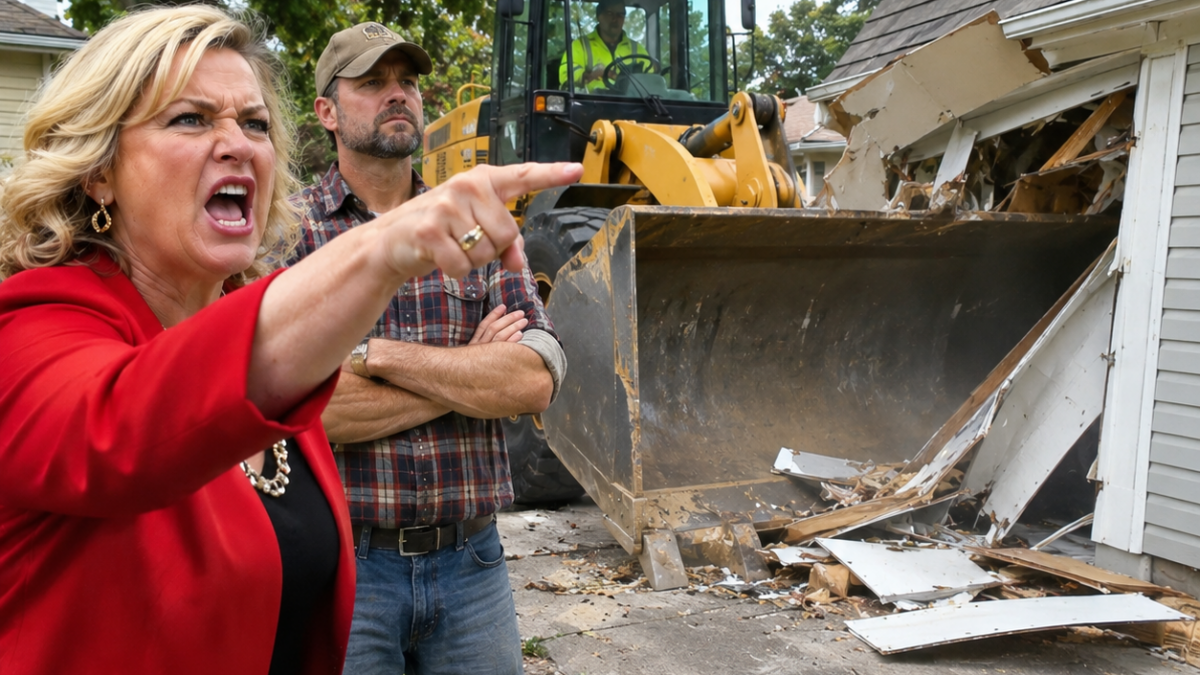
The evening I came home from a two-week survey job and found a brand-new three-car garage being poured directly across the only driveway to my house, leaving a gap too narrow for my disabled father’s wheelchair van to reach the ramp I had built with my own hands, I didn’t scream at the HOA president watching from her porch with a pink drink in her hand—I simply opened my truck, pulled out the same steel tape I had used for twenty-two years to settle property disputes across Tennessee, and started measuring while she laughed at me.
What Pam Westbrook didn’t know when she told me the HOA had “reassigned” my recorded driveway for community use was that she had already asked Maury County for permission to legally erase that exact easement eight months earlier, received a written denial explaining that she had no right to touch it, and then decided to pour concrete anyway because she believed a nine-year reign as HOA president gave her more authority than my deed, the county records, and a property line that had existed since 1986.
And by the time she finally understood why I had never raised my voice, never threatened her crew, never rammed my truck through her construction, and never touched a single board of that garage while she was building it, a thirty-ton excavator was idling at the end of Old Beachcroft Lane with a sheriff’s deputy watching, my father sitting beside me in his wheelchair, a court order in my hand, and half the neighborhood waiting to see what happens when a bully builds four feet and two inches too far onto the wrong man’s land.
My name is Garrett Pruitt.
I’m forty-seven years old.
For twenty-two of those years, I’ve been a licensed land surveyor in Maury County, Tennessee.
It isn’t glamorous work.
Most days, it’s me, a tripod, a GPS rover, and enough humidity to make your shirt stick to your back before breakfast.
I’ve walked creek beds.
Crawled through briars.
Found iron monuments buried under twenty years of leaves.
Stood in cow pastures waiting for satellites to lock while deer flies treated my neck like an all-you-can-eat buffet.
But I love the work.
Because property lines are honest.
People lie.
Maps get copied wrong.
Neighbors remember things the way they wish they happened.
But a properly recorded deed, an original monument, and a competent survey tell you where one person’s rights stop and another person’s begin.
That matters to me.
Especially because of where I live.
My house sits at the end of Old Beachcroft Lane in a subdivision called Hawthorne Ridge, right where Spring Hill suburbia gives up and Tennessee pasture begins.
My parcel is a flag lot.
The house sits behind the neighboring properties.
The only vehicle access is a long gravel driveway running beside the lot next door.
That driveway belongs to my parcel through a recorded ingress-egress easement dating back to 1986.
Book 412.
Page 88.
I know that number the way some people know their anniversary.
The property beside it belonged to Pam Westbrook.
She had been president of Hawthorne Ridge HOA for nine years.
And Pam believed nine years of nobody successfully telling her no had somehow converted her opinions into law.
She first came after me over a wheelchair ramp.
My father Earl had Parkinson’s.
After my mother died, his tremor got worse.
Then came the falls.
Then the walker.
Then the chair.
My marriage had already ended, and I had a spare bedroom, so there was never much of a decision.
Dad moved in.
I built a ramp.
Added a turnaround beside the porch.
Widened my gravel access by three feet so his wheelchair lift could deploy safely.
Pam sent me a violation letter.
UNAPPROVED EXTERIOR MODIFICATION.
The “modification” was the ramp that allowed my father to enter his own home.
I kept the letter.
I should have known then.
But I didn’t understand how far Pam was willing to go until I came home that Friday evening and hit the brakes so hard gravel exploded beneath my truck.
Raw lumber stood across my driveway.
A wet concrete slab.
Three garage openings.
Construction equipment.
And Pam on her porch.
She lifted her glass.
“Evening, Garrett.”
I got out.
Measured the remaining gap with my eyes.
About seven feet.
Dad’s van needed nine.
“Pam.”
She smiled.
“Don’t throw a fit. The board approved it.”
“My father can’t get through.”
She took a slow drink.
“Then maybe it’s time he lived somewhere with proper care.”
I looked toward my house.
The blue light of Dad’s television flickered through the front window.
He didn’t know yet that somebody had just built a wall between him and the road.
Pam pointed toward his ramp.
“Maybe now you’ll finally keep some of that ugly accessibility equipment out of sight.”
I looked back at her.
Then at the fresh slab.
And instead of answering, I walked to my truck.
Opened the toolbox.
Pulled out my tape.
Pam laughed.
“You measure all you want, honey.”
I hooked the steel tape to the corner of her foundation.
She had no idea those measurements were the first numbers in the calculation that would eventually tear the entire garage back down.
PART 2
That evening, the sun disappeared behind the pasture while I measured.
Pam’s husband Roger had hired a small crew.
Technically, it was his crew.
Roger Westbrook ran a remodeling business out of a metal building outside town.
Decks.
Sunrooms.
Additions.
Garages.
Mostly cash jobs.
The sort of contractor who could make something appear quickly if you weren’t too particular about permits.
His men were packing up.
One of them kept looking at me.
Young guy.
Sawdust in his hair.
He finally said:
“Sir, we were told this was cleared.”
“By who?”
He glanced toward Pam.
“You already know.”
“County permit?”
He didn’t answer.
“Setback variance?”
Nothing.
“Recorded easement release?”
His eyes dropped.
That told me enough.
Pam shouted from her porch:
“Don’t harass my workers, Garrett.”
“I’m asking a question.”
“They don’t answer to you.”
“They’re standing partly on my property.”
She laughed.
“Your property ends at the old gravel edge.”
I looked down.
That was interesting.
“Who told you that?”
“The board.”
“Boards don’t establish property boundaries.”
“Ours does.”
I almost smiled.
Almost.
Instead, I photographed the slab.
Every corner.
Fresh concrete.
Tire ruts.
Crew trailer.
Existing fence.
Old iron marker.
The cement truck had crushed a line of daylilies beside the drive.
My grandmother planted those before I was born.
Dad had kept them alive all these years.
Pam saw me looking.
“They were weeds.”
I turned toward her.
“Those were my grandmother’s.”
For half a second, she seemed surprised.
Then:
“They were encroaching on common landscaping.”
“No.”
“Yes.”
“They’re on my deeded parcel.”
She raised her drink.
“Talk to the board.”
“I am looking at the board.”
Her smile disappeared.
I walked inside.
Dad was in his recliner.
Blanket over his knees.
He looked at me.
“You’re late.”
“Traffic.”
“Liar.”
I smiled.
Dad had been a diesel mechanic for forty years.
Parkinson’s had taken his steadiness.
Not his ability to read me.
“What happened?”
I sat across from him.
“Pam built something.”
He frowned.
“What?”
“A garage.”
“Good for her.”
“Across the drive.”
His face changed.
He looked toward the front door.
“How much room?”
“Seven feet.”
“The van needs nine.”
“I know.”
Dad was quiet.
Then:
“Did you hit her?”
“No.”
“Good.”
“I measured.”
That got the faintest smile.
“Better.”
I made coffee.
Dad’s hand trembled when he lifted the mug.
I reached automatically.
He glared.
“I’ve got it.”
I let go.
He got it.
That mattered to him.
Independence shrinks in strange increments.
First you stop driving.
Then stairs become difficult.
Buttons.
Coffee cups.
Doorways.
Every small thing somebody else can take over feels like another piece of your life disappearing.
That’s why I built the ramp the way I did.
Not because Dad couldn’t be carried.
Because he shouldn’t have to be.
And now Pam had taken away the one route that let him leave in his own van.
That night, after Dad fell asleep, I pulled the deed.
Then the 1986 subdivision plat.
Spread both across my kitchen table.
Hanging light above.
Magnifier.
Scale.
Notes.
The language was clean.
My parcel held a recorded ingress-egress easement.
Permanent.
Specific.
No HOA approval required.
No clause allowing reassignment.
No board termination provision.
No mechanism for Pam to take a vote and erase it.
I read it again.
Then a third time.
Dad woke around midnight and rolled into the kitchen.
“You still up?”
“Yes.”
“You find it?”
“I already knew where it was.”
“I meant the part that buries her.”
I smiled.
“Not yet.”
He rolled closer.
Looked at the plat.
“You know, your granddad used to say there are two kinds of fools.”
“What kinds?”
“Men who argue with surveyors about lines.”
“And?”
“Surveyors who marry women with opinions about property.”
I laughed.
“Mom had opinions.”
“Exactly.”
He pointed at the easement.
“That’s yours?”
“Yes.”
“Recorded?”
“Yes.”
“Then what are you worried about?”
“Time.”
Dad looked toward the dark driveway.
Then down at his chair.
“Yeah.”
That was the problem.
Eventually, I was going to win.
But Dad had a neurologist appointment in six days.
And he was already trapped.
The next morning, I drove to the Maury County Permits Office.
Surveyors spend enough time in government offices that clerks eventually stop treating us like visitors.
Carol was behind the counter.
She had worked there almost as long as I’d been licensed.
“Morning, Garrett.”
“Morning.”
“What did somebody build where they shouldn’t?”
I laughed.
“How do you know?”
“Your face.”
I gave her Pam’s address.
“Anything in the last ninety days?”
She typed.
Paused.
Typed again.
Then frowned.
“No.”
“Garage?”
“No.”
“Grading?”
“No.”
“Setback?”
“No.”
“Variance?”
“Nothing.”
“Search Roger Westbrook.”
She did.
“No active permit associated with that address.”
I felt something in my chest settle.
Not happiness.
Clarity.
“Print that?”
Carol gave me the look county clerks reserve for surveyors.
“How many copies?”
“Three.”
“Of course.”
She stamped them.
Dated them.
I drove home.
The garage was still there.
No crew.
No work.
I didn’t knock on Pam’s door.
Being right isn’t the same as winning.
I’d watched people destroy good cases because they needed the emotional satisfaction of confrontation before the legal work was ready.
I wasn’t doing that.
I unloaded my total station.
Set up on the original front monument.
Iron pin.
1986.
Still where the recorded plat called for it.
Backsight.
Control.
Then I shot the garage corners.
One.
Two.
Three.
Four.
Shot the easement.
Property line.
Slab.
I let the coordinates resolve.
Then stared at the screen.
The garage didn’t merely obstruct my easement.
Its northwest corner crossed the deeded boundary.
Four feet.
Two inches.
4′ 2″.
Not easement.
Actual land.
My tax parcel.
My deed.
My dirt.
I laughed once.
Alone.
Not because it was funny.
Because Pam had somehow managed to make the case worse for herself than I could have designed.
I took photographs of the instrument setup.
Recorded field notes.
Exported coordinates.
Printed a preliminary plot.
Then Dad rolled onto the porch.
“Well?”
“Four feet two.”
He looked at the building.
“That’s a lot?”
“In boundary litigation?”
“Yes.”
“It’s not inches.”
He nodded.
“You going to tear it down?”
“Not yet.”
“Why?”
“Because I want someone else to tell me the same number.”
Dad smiled.
“That’s why you’re better at your job than I ever was at mine.”
“Because I don’t trust myself?”
“Because you trust evidence more.”
Monday morning, Pam escalated.
I was drinking coffee when I heard the beep of heavy equipment.
Two of Roger’s workers were placing limestone boulders across the remaining open section of my drive.
Big ones.
Machine-set.
Pam stood nearby with a clipboard.
White capri pants.
Sunglasses.
Little dog on a leash.
“What are you doing?”
She looked pleased.
“Restoring common area.”
“That’s my driveway.”
“It was unlawfully expanded.”
“It’s recorded access.”
“The HOA reviewed it.”
“When?”
“Recently.”
“Who voted?”
“The board.”
I looked at the boulders.
Then at her.
“Move them.”
“No.”
“Dad has an appointment Thursday.”
“Then arrange medical transport.”
“His van needs this drive.”
She handed me a paper.
“Four-hundred-dollar fine for unauthorized gravel expansion.”
I read it.
She continued.
“Boulders remain until you remove the ramp, the van, and the unapproved modifications.”
I looked up.
Then smiled.
For the first time.
“Thank you.”
Pam blinked.
“For what?”
“For signing this.”
Her face changed.
I folded the notice.
Went inside.
Dad looked at me.
“More?”
“Rocks.”
“Big ones?”
“Big.”
He sighed.
“I’ve rebuilt transmissions less complicated than that woman.”
Thursday came.
Dad missed the neurologist appointment.
The doctor’s office called.
I explained.
The nurse stopped speaking for several seconds.
“Mr. Pruitt, are you telling me your father cannot physically leave because someone blocked his accessible driveway?”
“Yes.”
“Is he safe?”
“Yes.”
“Do you want us to involve social services?”
“No.”
“Police?”
“Not yet.”
“Why not?”
Because I wanted more than a temporary argument over rocks.
I wanted the underlying right fixed permanently.
But I couldn’t say that without sounding insane.
“I’m handling it legally.”
The nurse said:
“Please reschedule as soon as you can safely transport him.”
I hung up.
Dad was sitting at the kitchen table.
He had heard.
“I’m sorry.”
I looked at him.
“For what?”
“All this.”
“Dad.”
“If I weren’t here—”
“No.”
He looked down.
“This ramp. The van. The boulders.”
“No.”
“Garrett—”
I put my coffee down harder than I intended.
“You didn’t build that garage.”
He looked at me.
“You didn’t move those rocks.”
Silence.
“You are not the inconvenience here.”
His eyes got wet.
He looked away.
That conversation stayed with me longer than the lawsuit.
Pam wasn’t only blocking access.
She was making a sick man feel guilty for needing it.
Two days later, another notice appeared.
Stapled to a cedar post.
CONTINUING VIOLATION.
Wheelchair ramp.
Wheelchair van.
Work truck.
Trail camera.
The trail camera, according to Pam, created:
AN ATMOSPHERE OF HOSTILITY.
Total fines:
$1,600.
I removed the notice carefully.
Plastic sleeve.
Folder.
Date.
Then I found Glenda Hoyt.
Retired teacher.
HOA board member.
Decent woman.
I caught her near the mailbox.
“Glenda.”
“Garrett.”
“Question.”
She looked nervous immediately.
“Did the board vote to authorize Pam’s garage across my access?”
Her face went pale.
“What?”
“Pam says you did.”
“No.”
“You sure?”
“There was never a vote.”
“What was there?”
“An email.”
“From Pam?”
“Yes.”
“What did it say?”
“That she had handled the access issue with you.”
“Handled?”
Glenda nodded.
“We assumed you two reached an agreement.”
I looked toward the garage.
“No.”
Her eyes followed mine.
“Oh, God.”
“Would you put what you just said in writing?”
She hesitated.
Then:
“Yes.”
“Thank you.”
That night Dad sat on the porch.
Coffee.
Cicadas.
Trembling hands.
He watched me update my folder.
Then said:
“You’ve got that look.”
“What look?”
“Your granddad’s.”
“What’s that mean?”
“Means somebody’s going to regret something.”
I laughed.
Dad didn’t.
“Don’t do anything that’ll put you in a cell.”
“I won’t.”
He set the mug down.
“But God help her if you do it right.”
The next morning, I called Ned Caldwell.
Licensed surveyor.
Thirty years.
More stubborn than limestone.
I intentionally told him very little.
“Need an independent boundary and easement survey.”
“Litigation?”
“Probably.”
“Your property?”
“Yes.”
“Then you stay out of my way.”
“Exactly.”
Ned ran his own control.
Recovered monuments.
Reviewed deed calls.
Located slab corners.
Did the work cold.
When he finished, he pulled off his gloves.
“Four two.”
“Exactly?”
“Four feet two inches inside your fee boundary at the northwest slab corner.”
“And easement?”
“Blocked.”
“Any ambiguity?”
Ned looked insulted.
“Garrett.”
“Had to ask.”
“You’ve got a permanent structure on another man’s titled property, sitting across a recorded easement, apparently without a permit.”
He folded his field book.
“This isn’t gray.”
“What is it?”
“A gift to a property lawyer.”
Wade Hollis worked from a converted house off the square.
No marble lobby.
No giant firm.
Hunting prints.
Old coffee pot.
Twenty-five years of property litigation.
He read:
My deed.
Recorded plat.
Easement.
Ned’s sealed survey.
Permit search.
Pam’s fines.
Glenda’s statement.
Then removed his glasses.
“You’re a surveyor.”
“Yes.”
“Twenty-two years?”
“Yes.”
“So you know you’re right.”
“I know what the evidence says.”
He smiled.
“Same thing when you say it.”
Then he leaned back.
“We can file quiet title.”
“Okay.”
“Mandatory injunction.”
“Okay.”
“Ask for removal at her expense.”
“Good.”
“But.”
I waited.
“I want her property file.”
“Why?”
“People who do something this deliberate usually tried the legitimate route first.”
That was a good instinct.
Wade’s paralegal pulled years of public records.
Deeds.
Zoning requests.
Complaints.
Permit history.
Older correspondence.
I sat in Wade’s office and read everything.
Page after page.
Near the bottom of one zoning file was a letter.
Eight months old.
Request:
Pamela and Roger Westbrook petition to vacate private ingress-egress easement affecting adjacent parcel.
I stopped.
Read it again.
Then the county response.
DENIED.
The county had explained that the easement served my parcel.
Vacating it required rights and approvals Pam did not possess.
She had asked.
She had been told no.
Then she built the garage anyway.
I handed the letter to Wade.
He read.
Whistled.
“There it is.”
“Good-faith defense is gone.”
“Burned to the ground.”
Pam could no longer say:
I thought it was common area.
I misunderstood.
I didn’t know.
She knew.
Government letter.
Her name.
Her address.
Her request.
Denial.
Eight months later:
Concrete.
Wade tapped the page.
“She handed us the knife and sharpened it.”
I drove home with copies on the passenger seat.
Dad was on the porch.
Boulders still across the drive.
I sat beside him.
“I found it.”
“What?”
“She asked the county to erase the easement.”
“And?”
“They told her no.”
Dad stared toward Pam’s garage.
“And she built anyway.”
“Yes.”
He smiled slowly.
“Oh.”
“Yeah.”
“How long now?”
“I need you to be patient.”
He looked at me.
“I’ve been patient seventy-eight years.”
“I’m serious.”
“So am I.”
I took his hand.
His fingers trembled around mine.
“I’m going to fix it.”
“I know.”
“I’m going to fix it so nobody can do this again.”
He nodded.
“That’s worth waiting for.”
Then we stopped reacting.
And started building.
First:
Quiet title action.
Confirm my property line.
Confirm recorded easement.
Second:
Mandatory injunction.
Declare the garage an unlawful encroachment.
Order removal.
Third:
County code enforcement.
Pam was served while watering hydrangeas.
According to the process server, she threw the papers into the road.
The county response was quieter.
Della Briggs arrived in steel-toe boots.
Tablet.
No patience.
She walked the structure.
Checked permit history.
Measured setbacks.
Looked at the garage.
Then at me.
“This active?”
“Not since I complained.”
“No permit.”
“I know.”
“No inspections.”
“I know.”
She printed a bright orange tag.
STOP WORK.
UNPERMITTED STRUCTURE.
She stapled it to the framing.
Front-facing.
Visible from the road.
Roger’s crew never returned.
Pam hated that orange sign.
I could tell because she tore it off the first evening.
Della came back the next morning.
Put up another.
Photographed it.
Then warned Pam in writing that removing the county notice did not erase the order.
Another document.
Another date.
Another signature.
Wade told me:
“Let her keep helping.”
Then we started collecting witnesses.
Lorraine Sutter lived three doors down.
Widow.
Pam had fined her six hundred dollars over a handrail.
Lorraine invited me inside.
Sweet tea in a jelly jar.
She brought down a shoebox.
Three years of letters.
Pam’s warnings.
Fines.
Threats.
The handrail had been built by Lorraine’s late husband Walt.
Six weeks before his heart attack.
“I couldn’t remove it,” she told me.
Her eyes filled.
“It was the last thing he built.”
“So you paid?”
“Six hundred.”
She pushed the box toward me.
“You take these.”
“Lorraine—”
“Do what I couldn’t.”
Something changed in me that day.
Until then, I wanted to win for Dad.
For my access.
For my land.
Now I wanted Pam’s power exposed.
Not destroyed unlawfully.
Exposed.
Hank was next.
Former Marine.
Pam had fined him over his flagpole.
He listened without interrupting.
Then went inside.
Returned carrying a triangular flag case.
“My boy carried the twin of this flag in Fallujah.”
I said nothing.
“She charged me four hundred dollars because my pole was eighteen inches too high.”
He looked toward Pam’s house.
“You tell your lawyer I’ll sign anything legal.”
He paused.
“And I’ll say it to her face.”
Eleven affidavits.
Eleven neighbors.
Nine years of patterns.
Fines.
Threats.
Selective enforcement.
Intimidation.
One by one, people who had believed they were alone discovered they were not.
Pam responded exactly the way Wade predicted.
Mass email.
A disgruntled resident is burdening the HOA with frivolous litigation.
Legal costs could raise dues.
She wanted the neighborhood scared of my lawsuit.
Lorraine printed the email.
Wrote one word across it in red:
NO.
Then left it under Pam’s windshield wiper.
I liked Lorraine.
Next:
Pam filed a professional complaint against my surveyor license.
Claim:
I fabricated a boundary to steal her land.
The problem?
The legal survey wasn’t mine.
It was Ned’s.
Independent.
Sealed.
And consistent with my own data, the recorded plat, and the original monuments.
The state dismissed the complaint quickly.
Pam had managed to create another official record documenting her attack.
Then she tried kindness.
One evening she came to my porch.
Plate of brownies.
Checkbook.
Hair done.
Smile.
“Garrett.”
“Pam.”
“I think things have gotten unnecessarily unpleasant.”
“You built a garage over Dad’s driveway.”
“Yes, well.”
She held up the brownies.
“I thought perhaps we could reset.”
I stared.
“How?”
“Five thousand dollars.”
“What about it?”
“I’ll write you a check.”
“For?”
“You withdraw the suit.”
“And the garage?”
“Stays.”
“The boulders?”
“We can discuss that.”
“Dad’s access?”
“You can create another solution.”
I looked at the brownies.
Then at her.
“My attorney handles settlement communication.”
Her smile disappeared.
“This is neighbor to neighbor.”
“You stopped being a neighbor when Dad couldn’t reach his neurologist.”
Her mouth tightened.
“Think carefully.”
“I have.”
I closed the door.
She threw the brownies in my trash can.
The next morning, Facebook rumors said I was under investigation for survey fraud.
Lorraine posted the county denial letter.
Caption:
ASK HER ABOUT THIS.
Dozens of likes.
Pam deleted the thread.
That should have told her the neighborhood had changed.
It didn’t.
Then came the survey monument.
6:00 a.m.
My phone buzzed.
Motion alert.
Trail camera.
I opened the feed.
Roger.
Sledgehammer.
At my front corner.
Pam behind him.
Bathrobe.
Pointing.
Roger swung.
One.
Two.
Three.
The iron monument came loose.
He pulled it out.
Threw it into brush.
Kicked soil over the location.
Pam’s voice was audible.
“Right there. Hit it right there.”
I sat at the kitchen table.
Not angry.
Almost amazed.
Survey monuments are legal evidence.
You don’t casually destroy them.
Wade had been calling my case strong.
After that video, he called it:
“The collection.”
I sent the footage to Wade.
Then Deputy Sorenson.
Old high school acquaintance.
He opened a separate investigation.
Ned and I reset the monument properly.
Documented.
Recorded.
Witnessed.
Before the hearing, neighbors gathered on my porch.
A dozen people.
Dad sat among them.
I explained what an easement actually was.
Not an HOA favor.
A property interest.
Recorded.
Running with the land.
I explained quiet title.
Mandatory injunction.
County permitting.
Public records.
Hank raised his hand.
Like school.
“You’re telling me all these years, every time Pam scared people with one of those letters, somebody could have made her prove it?”
“Yes.”
“That’s it?”
“In many cases.”
He stared.
Lorraine said quietly:
“She counted on us being afraid.”
I nodded.
“She counted on you arguing instead of checking.”
Glenda wiped her eyes.
Dad looked around the porch.
Then at me.
Something in his face made me understand the case had become bigger than the garage.
We had eleven witnesses now.
Not eleven frightened neighbors.
Witnesses.
People ready to speak.
The hearing was Tuesday.
Old limestone courthouse.
Columbia Square.
Judge Harold Whitcomb.
Thirty years of property cases.
Zero patience for theater.
Pam arrived in a navy suit.
Nashville attorney.
Expensive watch.
Roger sat behind them.
Wade and I had three boxes.
Dad couldn’t attend easily.
The drive was still blocked.
That fact made Wade furious.
The court began.
Wade started with the deed.
Book 412.
Page 88.
Ingress-egress easement.
Then the 1986 plat.
Then Ned’s survey.
Then mine.
Same result.
Four feet two inches.
Then permit search.
No building permit.
No grading permit.
No variance.
Della testified.
She explained the stop-work order.
Pam’s attorney began building a good-faith argument.
His client believed the easement had become common area.
She believed HOA approvals were sufficient.
She misunderstood.
She relied on information from others.
Wade listened.
Then stood.
“Your Honor, may I mark the next exhibit?”
“Yes.”
He carried the county denial letter forward.
Handed copies.
Pam saw it.
Her expression changed instantly.
The judge read.
Then again.
“Mrs. Westbrook.”
Pam straightened.
“Yes, Your Honor?”
“You petitioned Maury County to vacate this easement approximately eight months before construction.”
Pam’s attorney started to stand.
Judge Whitcomb raised a hand.
“Sit.”
He looked back at Pam.
“The county denied you.”
Silence.
“You received the denial?”
“I would have to check—”
“It is addressed to you.”
Silence.
“Certified delivery.”
Her lawyer whispered something.
Judge Whitcomb continued.
“And after being told that the easement could not be vacated by your request, you constructed a permanent structure across it.”
Pam finally said:
“The HOA board believed—”
“The HOA board does not own Mr. Pruitt’s easement.”
She stopped.
“The HOA board does not overrule county property records.”
Silence.
“And the HOA board did not vote anyway, according to an affidavit from one of your board members.”
Pam looked toward Glenda.
Glenda was seated behind us.
For once, she didn’t look away.
Wade said:
“Your Honor, there is more.”
He played the trail-camera footage.
Roger.
Sledgehammer.
Pam.
Bathrobe.
“Right there. Hit it right there.”
The courtroom was so quiet I could hear the HVAC.
Roger stared at the floor.
Pam visibly flinched.
Judge Whitcomb leaned back.
Then looked at Wade.
“Anything else?”
“We can present eleven witnesses regarding pattern and damages, Your Honor.”
The judge looked at the file.
Then Pam.
“I don’t need eleven witnesses to determine this boundary.”
He ruled from the bench.
Title confirmed in my favor.
Easement confirmed.
Garage declared a willful, unpermitted encroachment.
Mandatory injunction.
Remove it.
Thirty days.
Pam’s sole expense.
Survey costs awarded.
Attorney fees awarded.
Damages associated with interference with access.
Including the documented consequences of Dad being unable to attend his medical care.
Monument-tampering evidence referred for further review.
Pam sat motionless.
Her attorney whispered.
Wade closed his binder.
Outside, September sun hit the courthouse steps.
I was halfway to my truck when Pam grabbed my sleeve.
Not hard.
Desperate.
“Please.”
I removed her hand.
“Do you know what demolishing that garage will cost?”
I looked at her.
For months I had imagined a speech.
Something devastating.
Instead, all I said was:
“More than it would have cost to build it on your land.”
Then I walked away.
Dad was waiting at home.
I placed the court order on the table.
He put on his reading glasses.
Read slowly.
When he got to the removal section, he stopped.
“Thirty days?”
“Yes.”
“You believe she’ll do it?”
“No.”
“Me neither.”
He smiled.
“Then what?”
I tapped the final clause.
“If she doesn’t, I’m authorized to remove the encroachment and recover the cost.”
Dad looked up.
“You’ve already called somebody.”
“Yes.”
He laughed so hard he started coughing.
Pam did nothing.
Day ten.
Nothing.
Day twenty.
Nothing.
Day twenty-nine.
Garage untouched.
The orange county tag faded in the sun.
Her lawyer sent Wade letters.
Requests.
Delays.
Arguments.
No valid stay.
No appellate order.
No removal.
Day thirty passed.
On day thirty-one, I pulled my permit.
Demolition permit.
Legal.
Stamped.
Contractor insured.
Utility locates completed.
Safety plan.
Everything by the book.
Saturday morning in October.
Maples turning gold.
Cool air.
Lowboy trailer.
Thirty-ton excavator.
Hydraulic thumb.
Diesel rumble.
By 8:30, neighbors started appearing.
Lorraine brought a folding chair.
Hank brought his flag.
Glenda had coffee.
Deputy Sorenson parked at the curb.
Not to assist demolition.
To keep the peace.
A young reporter from the Columbia paper arrived.
Someone had apparently called her.
I still deny knowing who.
Dad sat beside me in his wheelchair.
Blanket over his legs.
Parked near the bottom of his ramp.
He looked tired.
Parkinson’s had been worse that month.
But his eyes were clear.
Pam appeared on her porch.
Bathrobe.
Phone.
She started shouting before the excavator unloaded.
“You can’t do this!”
I held up the folder.
“Court order.”
“My attorney is filing an emergency motion.”
“No stay exists.”
“You’ll be sued.”
“Tell Wade.”
“This is vandalism!”
Deputy Sorenson called from the curb:
“Ma’am, the demolition contractor has valid authorization.”
Pam turned toward him.
“This is my property!”
“No, ma’am.”
She pointed toward me.
“He manipulated the court!”
Sorenson didn’t answer.
There wasn’t anything to answer.
Roger was gone.
His truck hadn’t been there for days.
The HOA board wasn’t answering Pam.
Her attorney had withdrawn from active representation after unpaid fees and the lost hearing.
For nine years, Pam had been able to make a phone call and somebody moved.
That morning:
Nobody moved.
Except the excavator.
The operator looked at me.
Ready?
I looked down at Dad.
His hand rested on the wheelchair arm.
I held mine out.
He took it.
For once, the shaking almost stopped.
“Do it right, son.”
“I will.”
I nodded.
The excavator rolled forward.
Tracks crushing gravel.
Slow.
Controlled.
The boom rose.
Hydraulic thumb opened.
It bit into the exact northwest corner.
Four feet.
Two inches.
The portion sitting on my deeded land.
First pull:
Siding peeled away with a metallic scream.
Pam shouted.
Second pull:
Framing cracked.
Special carriage-style garage door folded inward.
Dust rose.
The operator paused.
Checked.
Then continued.
No showboating.
No wild swings.
Section by section.
Roof material separated.
Stud walls lowered.
Debris placed in piles.
Watching it felt nothing like I expected.
I thought I would feel victorious.
Instead, I remembered Dad sitting at the kitchen table apologizing for being the reason Pam targeted the ramp.
I remembered the neurologist nurse asking if he was safe.
I remembered those boulders.
The blocked van.
Pam saying he belonged somewhere with proper care.
Every wall coming down felt less like revenge than correction.
The machine wasn’t destroying a garage.
It was restoring a road.
Lorraine reached across from her chair.
Put her hand on Dad’s shoulder.
He looked at her.
“You comfortable?”
She asked.
“Best seat I’ve had in years.”
Hank stood beside his flag.
Glenda cried quietly.
Not over the structure.
Over all the years people had been afraid.
The neighbors never cheered.
I’m glad.
It would have cheapened it.
They watched.
Quiet.
Satisfied.
When only the slab remained, the operator replaced the bucket with a breaker.
The hydraulic hammer rose.
Then came down.
Crack.
The sound echoed across Hawthorne Ridge.
Concrete split at the corner sitting inside my line.
Again.
Crack.
Dad squeezed my hand.
The operator broke the slab systematically.
Hauling took two more days.
Concrete on the encroaching area removed.
Remaining illegal structure removed as required.
Debris hauled.
Then we removed the boulders.
Regraded.
Restored drainage.
But I wasn’t putting gravel back.
Not this time.
I had the access rebuilt properly.
Twelve-foot-wide paved driveway.
Good base.
Proper cross slope.
Drainage.
Accessible turnaround.
Smooth connection to Dad’s ramp.
No mud.
No loose stone under wheelchair wheels.
The first afternoon after the asphalt cured, I brought Dad’s van around.
Lift down.
Dad rolled out.
No assistance.
Down the lift.
Onto asphalt.
Up the driveway.
Through the turnaround.
To the ramp.
He reached the porch.
Turned his chair.
Closed his eyes.
Sun on his face.
I stood beside the van.
“Dad?”
“Give me a minute.”
I waited.
Finally:
“I forgot what this felt like.”
“What?”
“Leaving without asking somebody.”
I looked away.
That was the real victory.
Not the garage.
Not the judge.
That.
Dad being able to leave his own home.
Pam resigned as HOA president before the survey-monument matter finished working through the system.
The board didn’t ask her to reconsider.
People who had spent years afraid of opposing her suddenly discovered elections.
Lorraine ran.
Won by a landslide.
Widow.
Handrail.
Shoebox full of fines.
Now HOA president.
Her first board meeting was standing room only.
She opened with:
“I have exactly one goal.”
Hank shouted:
“Ban blondes?”
Everybody laughed.
Even Lorraine.
“No.”
She held up the governing documents.
“We are going to stop pretending this binder outranks state law.”
The board changed its procedures.
No fine without notice and hearing.
Accessibility modifications handled consistently with applicable protections rather than aesthetic whim.
Recorded easements off limits to HOA interference.
Transparent minutes.
Appeal process.
And one clause:
No HOA board, officer, committee, or agent may obstruct, alter, reassign, improve upon, or otherwise interfere with a recorded access easement without the express written consent of the rights holder and any legally required governmental approval.
Somebody named it the Pruitt Rule.
I hated that.
Then Dad heard.
His eyes filled.
“Keep it.”
“It’s embarrassing.”
“Good.”
“Why good?”
“Means they remember.”
So it stayed.
Then Lorraine asked:
“What do we do with the spot where Pam’s garage stood?”
It was part driveway.
Part regraded shoulder.
Open space near the lane.
Dad said:
“Build ramps.”
Everyone looked at him.
He shrugged.
“Woman spent all that energy fighting one ramp.”
His hand shook against the wheelchair arm.
“Seems fitting.”
That was how the Old Beachcroft Accessibility Fund started.
Nothing fancy.
Neighborhood chili cook-off.
Silent auction.
Local donations.
Surveyors.
Contractors.
Church groups.
Businesses.
Every fall, the neighborhood gathered near the end of my driveway.
Where Pam’s garage had stood.
Hank ran the grill.
Lorraine ran the auction.
Glenda handled paperwork.
I handled measurements.
Dad handled opinions.
The first year, we raised enough for three accessibility projects.
Second year:
Six.
Third:
Nine.
Wheelchair ramps for elderly residents.
Grab rails.
Threshold changes.
Accessible landings.
One family lived outside Columbia.
Their mother had been discharged after a stroke.
She couldn’t safely get into the house.
We built the ramp on a Saturday.
Dad came.
By then his Parkinson’s was worse.
His scissors shook during the little ribbon-cutting.
Lorraine steadied his hand.
Nobody rushed him.
It took almost a minute to cut the ribbon.
Everybody waited.
Dad smiled.
“That took longer than demolition.”
I laughed.
The homeowner’s daughter hugged him.
“Thank you, Mr. Pruitt.”
He pointed at me.
“Thank him. He’s the surveyor.”
She shook her head.
“He said this was your idea.”
Dad gave me a look.
“Snitch.”
I treasure that memory.
Pam eventually paid the demolition costs.
Not voluntarily.
The judgment became enforceable against her property.
Legal fees.
Survey costs.
Demolition.
Damages.
By the time everything was over, the financial consequence of building that garage was many times what doing the project legally would ever have cost.
That’s the irony.
Had she come to me before construction and said:
Garrett, I want to build a garage. Can we work around your easement?
I would have pulled the plat for free.
Set the line.
Explained the required clearance.
Suggested a legal location.
Probably saved Roger money.
Instead, she wanted control.
Control is expensive when it collides with recorded property rights.
Roger’s business suffered too.
Unpermitted work attracts attention.
Especially when photographs of an orange stop-work tag and court-ordered demolition end up in the newspaper.
He stopped doing business in Hawthorne Ridge.
Eventually, he and Pam separated.
I never asked for details.
Not my business.
Pam sold the house later.
By then, Lorraine had been HOA president long enough that the neighborhood felt different.
People spoke at meetings.
Asked questions.
Requested records.
Nobody acted like disagreement was rebellion.
Hank’s flagpole stayed up.
Lorraine’s handrail stayed.
Paint colors became less important.
Wheelchair ramps stopped being treated like visual defects.
Children left bicycles outside.
Somebody put a garden gnome beside the clubhouse.
I suspect Tommy from Cedar Court did that specifically because Pam hated them.
Nobody fined him.
Dad got weaker.
Parkinson’s does not care whether you win lawsuits.
There’s no quiet-title action against time.
He still sat on the porch.
Still drank coffee.
Still told the same engine stories.
But his voice softened.
His hands shook more.
Some mornings I fed him breakfast.
Some evenings I helped him into bed.
He hated needing help.
I learned not to announce it.
You don’t say:
Let me do that for you.
You just stand close enough that the thing becomes easier.
One evening, about six months after the garage came down, we sat outside.
Cicadas.
Warm air.
New asphalt dark beneath the porch light.
Dad looked toward the road.
“You know what I was scared of?”
“What?”
“When she blocked the drive.”
I waited.
“Not missing the doctor.”
“No?”
“Being stuck.”
I understood.
“Couldn’t leave without somebody solving something for me.”
He stared at his hands.
“When your body quits cooperating, you spend a lot of time pretending you still control things.”
I said nothing.
“That garage made it impossible to pretend.”
He looked at me.
“You gave some of that back.”
My throat tightened.
“I should’ve stopped her sooner.”
“No.”
“Dad—”
“You did it right.”
He smiled faintly.
“That’s what I asked.”
Earl died the following spring.
Peacefully.
In the spare bedroom that had become his room.
Morning light.
Window open.
He had rolled in and out of that house on his own until the last weeks.
That mattered to me more than I can explain.
The day after the funeral, I sat on the porch.
His mug was still on the small table.
Cold coffee stain inside.
For the first time in years, the house felt empty.
I almost took down the ramp.
Not because I didn’t want it.
Because seeing it hurt.
Then Lorraine came over.
She didn’t bring food.
Didn’t give a speech.
She sat beside me.
We watched the driveway.
After a while, she said:
“We’re building another one Saturday.”
“What?”
“Ramp.”
I looked at her.
“Family off Hampshire Pike.”
She handed me a folder.
“Eighty-one-year-old man. Hip surgery. Wife can’t get him over the steps.”
I stared.
“Garrett.”
“I know.”
“Your dad would yell at you if you sit here feeling sorry for yourself while somebody needs a grade calculation.”
That sounded true.
I opened the folder.
Four steps.
Thirty-two inches total rise.
Landing constraint.
I started thinking.
Lorraine smiled.
“There he is.”
Work helped.
Not because grief disappears when you stay busy.
It doesn’t.
But grief likes purpose.
The next ramp was for Walter Gaines.
Eighty-one.
Former postal worker.
When we finished, Walter rolled outside.
His daughter had a small brass plate.
She asked:
“Would you mind if we put this here?”
I read it.
IN MEMORY OF EARL PRUITT, WHO GOT HOME.
I couldn’t speak.
Hank took the plate from me.
Installed it himself.
Lorraine squeezed my arm.
Walter rolled up and down the ramp twice.
“Smooth.”
I laughed through tears.
“Surveyed.”
He didn’t know why that was funny.
That was okay.
The Accessibility Fund grew.
County businesses donated.
A lumber yard discounted material.
An occupational therapist volunteered design input.
Roger’s former crew chief—the young man who had refused to meet my eyes the evening Pam poured the garage slab—called me one afternoon.
“Mr. Pruitt?”
“Yeah?”
“This is Mason.”
I recognized the name.
“What can I do for you?”
Silence.
Then:
“I worked on the garage.”
“I remember.”
“I should’ve stopped.”
“You were an employee.”
“I knew something was wrong.”
“That happens.”
“I heard about the ramp fund.”
“Okay.”
“I’m working for another contractor now.”
“Good.”
“We’d like to donate labor.”
I sat back.
“You don’t owe me.”
“I know.”
“Then why?”
He took a breath.
“Because the night we poured that slab, your dad was watching through the window.”
I froze.
“I saw him.”
Silence.
“I’ve thought about it ever since.”
I closed my eyes.
“Saturday at eight.”
His crew came.
They built three ramps with us that year.
People change.
Sometimes guilt is useful if you turn it into labor.
Years after Pam left Hawthorne Ridge, new people moved into her house.
Young couple.
Two children.
The husband knocked on my door.
“I’m Daniel.”
“Garrett.”
“I think you know our house.”
I laughed.
“Historically.”
He looked embarrassed.
“The title company told us about an old easement dispute.”
“That’s polite.”
“They showed us the Pruitt Rule.”
“That’s less polite.”
He smiled.
“I want to build a detached garage.”
I stared.
His face dropped.
“Oh.”
Then I laughed.
“Come on.”
“What?”
“Show me where.”
We walked over.
He had preliminary plans.
I pulled out a tape.
We found the easement.
Measured setbacks.
I pointed to a location twenty-two feet farther north.
“Put it here.”
“Will that work?”
“Probably. Get it surveyed and permitted.”
He laughed.
“Definitely.”
“Good.”
Months later, his legal garage went up.
Permit.
Inspection.
No encroachment.
No drama.
The first time I saw it finished, I stood in my driveway and smiled.
That was how it should have happened the first time.
One conversation.
Respect the line.
Build on your dirt.
Everyone goes home.
The case became something surveyors around the county knew.
Not because it was legally revolutionary.
It wasn’t.
Recorded easements are not mysterious.
Encroachment law is not magic.
What made it memorable was the absurdity of it.
An HOA president knowingly building a three-car garage across a wheelchair access route after the county explicitly told her no.
Then destroying a survey monument on camera.
My younger colleagues asked me about it.
“What was your best evidence?”
They expected:
Ned’s survey.
Maybe the video.
I always answered:
“The denial letter.”
“Why?”
“Intent.”
Survey establishes where the line is.
Permit search establishes legality.
Trail camera proves later conduct.
But that denial letter proved Pam knew before construction.
Knowledge changes everything.
A mistake can be corrected.
A deliberate choice gets judged differently.
That’s true in property cases.
And life.
At the state surveying conference, somebody once introduced me as:
“The guy who bulldozed an HOA garage.”
I corrected him.
“I didn’t bulldoze anything.”
“You hired the bulldozer.”
“Excavator.”
People laughed.
“And I had a court order.”
That part matters.
Stories sound better when they say:
He bulldozed her garage.
But what actually made the story satisfying was that I didn’t do it when I was angry.
I waited.
Documented.
Filed.
Won.
Gave her thirty days.
Then got a demolition permit.
Had law enforcement present for peace.
Hired professionals.
The machine was the last step.
Not the first.
Anybody can knock something down.
The difficult part is earning the lawful right to do it.
Years later, I drove past a property dispute on a county road.
Two men shouting near a fence.
One holding a shovel.
The other filming.
I stopped.
Old reflex.
“Everything okay?”
One man shouted:
“He moved my fence!”
The other:
“He’s on my land!”
I asked:
“Either of you have a survey?”
Silence.
“Deed?”
Silence.
“Recorded plat?”
One man said:
“My grandfather put that tree there.”
I nodded.
“Call a surveyor.”
The angry one said:
“I don’t need a surveyor. I know where my land is.”
I almost laughed.
“That’s usually when you need one most.”
I gave them my card.
Drove away.
No punches.
No police.
Maybe they listened.
Maybe not.
Dirt is patient.
It can wait for people to stop yelling.
Hawthorne Ridge became quieter too.
Not silent.
HOA meetings still had arguments.
Budget.
Landscaping.
Pool maintenance.
One memorable forty-minute debate over whether Halloween decorations could include inflatable dragons.
Lorraine ruled that dragons were protected under “reasonable holiday nonsense.”
Nobody appealed.
I liked those meetings.
Disagreement without fear.
That is what healthy communities look like.
Not everybody agreeing.
Everybody believing they can speak.
One year, Lorraine decided not to run again.
Hank nominated Glenda.
Glenda won.
No campaign.
No drama.
She called me afterward.
“Any advice?”
“Don’t build on my driveway.”
She laughed.
“I wrote that at the top of my notebook.”
The Accessibility Fund eventually built its fiftieth ramp.
We held a cookout.
Dad had been gone several years.
His photograph sat beside the sign-in table.
Not because I requested it.
Lorraine did.
The fiftieth recipient was a Vietnam veteran named Dale Mercer.
He had lost mobility after a stroke.
Hank shook his hand.
They spoke quietly about places neither of them wanted to explain to the rest of us.
When Dale rolled down the finished ramp, his wife cried.
I looked at Dad’s picture.
Fifty.
All because one woman tried to ban one ramp.
Life has a strange sense of symmetry.
The spot where Pam’s garage stood is almost impossible to identify now.
Part asphalt.
Part grass.
A small maple tree nearby.
No monument.
No plaque saying:
HERE STOOD THE GARAGE OF AN HOA TYRANT.
I didn’t want one.
Pam didn’t deserve a monument.
Dad did.
So the fund has his name on its annual award.
The Earl Pruitt Access Grant.
Every year, one larger accessibility project gets extra funding.
Wheelchair lift.
Major ramp.
Bathroom modification.
Something expensive.
Something a family couldn’t manage alone.
That name matters.
Pam’s doesn’t.
That may be the cleanest kind of revenge there is.
Not making your enemy famous.
Making the person they hurt remembered instead.
I still have the original violation letter for Dad’s ramp.
Framed.
It hangs in the fund’s storage office.
UNAPPROVED EXTERIOR MODIFICATION.
Below it is a photograph of our fiftieth ramp.
Sometimes volunteers ask:
“Why frame something that ugly?”
Because it reminds us what happens when people mistake aesthetics for humanity.
A ramp is not ugly when somebody needs it.
A wheelchair van is not an eyesore when it is the difference between being trapped and being free.
Accessibility is not a favor.
That lesson cost Pam dearly.
But the neighborhood learned it.
One autumn afternoon, I sat on the porch alone.
Cicadas mostly gone.
Leaves turning.
A van came down the paved drive.
Wide enough.
Smooth enough.
It belonged to the Accessibility Fund.
Mason was driving.
Lorraine in the passenger seat.
Lumber strapped to the roof.
They stopped.
“You coming?”
“Where?”
“Ramp.”
“I thought that was tomorrow.”
“It was.”
“Then why are you here?”
“Hank says rain tomorrow.”
I checked the sky.
Blue.
“Forecast says twenty percent.”
Lorraine stared.
“You surveyors trust satellites too much.”
I laughed.
Grabbed my boots.
Before leaving, I looked at Dad’s old ramp.
Still solid.
I never removed it.
No reason.
Sometimes kids from the neighborhood sit on it.
Sometimes delivery drivers use it.
Sometimes nobody notices it.
That’s good.
Accessibility should be ordinary.
Dad would have liked that.
People still occasionally ask whether I feel guilty watching Pam’s garage come down.
No.
But not because I enjoyed her pain.
I enjoyed Dad getting his driveway back.
There’s a difference.
The garage itself was lumber and concrete.
It had no feelings.
Pam had been warned.
Given notice.
Given due process.
Given a court order.
Given thirty days.
She chose defiance at every stage.
The excavator was not revenge in the way people imagine revenge.
It was enforcement.
The emotional satisfaction came from something else.
Pam had spent years making neighbors believe her authority was limitless.
Then, on one cold October morning, everybody watched a legal system quietly demonstrate the limit.
Her authority ended at my property line.
Four feet.
Two inches.
The whole story fits inside that measurement.
Four feet two inches between arrogance and ownership.
Four feet two inches between an HOA vote and a recorded deed.
Four feet two inches between:
“I can do what I want.”
And:
“No, you can’t.”
I never needed to shout it.
The survey did.
The county record did.
The judge did.
The excavator did.
Years later, I found Dad’s old coffee mug in a cabinet.
Blue ceramic.
Chipped handle.
I almost threw it away.
Then I remembered him sitting on the porch the morning of demolition.
“Do it right, son.”
I kept the mug.
Not everything needs to be practical.
Lorraine once asked me:
“What do you think Pam’s biggest mistake was?”
I said:
“The garage.”
She shook her head.
“No.”
“The easement petition?”
“No.”
“The survey pin?”
“No.”
“What then?”
“She assumed you being quiet meant you were afraid.”
I thought about it.
She was probably right.
Pam understood confrontation.
She knew how to win shouting matches.
Board meetings.
Threats.
Facebook arguments.
Fines.
But patience?
Records?
Someone willing to let her keep making mistakes?
She never understood that.
Every time I stayed calm, she escalated.
Every escalation created evidence.
The garage.
Boulders.
Fine.
False board claim.
License complaint.
Survey monument.
She built my case herself.
One signed page at a time.
That’s why I tell younger surveyors:
When somebody is wrong, don’t always interrupt immediately.
Document.
Give them an opportunity to clarify.
Ask the question.
Get the answer in writing.
Because people who believe they cannot lose often explain their intent more clearly than any investigator could.
Pam did.
The courtroom only had to listen.
The final court costs took time to collect.
Lien.
Payment plan.
Property settlement.
Eventually, everything was satisfied.
Wade called me.
“Closed.”
“What?”
“Westbrook judgment.”
“Paid?”
“Final dollar.”
I looked toward the driveway.
Dad was already gone by then.
“Okay.”
Wade waited.
“That’s all?”
“What do you want me to say?”
“I don’t know. Usually clients celebrate.”
“I celebrated years ago.”
“When?”
“The first time Dad drove his chair up the new asphalt.”
Silence.
Then Wade said:
“Fair enough.”
Money closes cases.
Moments close wounds.
Sometimes.
Not always.
But sometimes.
My ex-wife visited once after Dad died.
We hadn’t been angry with each other for years.
Just people whose lives had split.
She stood on the porch.
Looked at the driveway.
“I read about the garage.”
“Most people did.”
“You always were stubborn.”
“Occupational requirement.”
She smiled.
Then looked at Dad’s ramp.
“You did good by him.”
That mattered.
More than I expected.
“I tried.”
She nodded.
“That’s all anybody gets.”
Then she left.
No reconciliation.
No dramatic second chance.
Just peace.
Not every ending needs to put everything back.
Sometimes an ending means you stop wishing it had been different.
Dad had been home.
That was enough.
The day we built the hundredth accessibility ramp, a local television station came.
I hated cameras.
The reporter asked:
“Mr. Pruitt, this entire program started because of an HOA dispute?”
“Basically.”
“What happened?”
“Someone blocked my father’s accessible driveway.”
“And you sued?”
“Yes.”
“And demolished the garage?”
“Eventually.”
She smiled.
“People love that part.”
“I know.”
“What part do you love?”
I looked at the new ramp.
A little girl was pushing her grandmother up.
“That.”
The camera turned.
Good.
That was the story.
The bulldozer made a better title.
The ramp made a better ending.
I still survey.
Not as much.
My knees aren’t interested in steep hills anymore.
I mentor younger surveyors.
Teach them to recover evidence.
Respect old monuments.
Never assume a fence is the line.
Never assume it isn’t.
Read deeds.
Read exceptions.
Understand easements.
And document everything.
Sometimes I show them the Westbrook case.
First slide:
1986 plat.
Second:
Independent survey.
Third:
County denial letter.
Fourth:
Photo of garage.
Fifth:
Trail-camera image of Roger with the sledgehammer.
Last slide:
Dad on the new driveway.
I never show demolition video.
Students always ask.
“Do you have it?”
“Yes.”
“Can we see?”
“No.”
“Why?”
“Because the demolition is not the lesson.”
“What is?”
“Everything that made it lawful.”
A young surveyor once said:
“That’s less fun.”
I nodded.
“Law is often less fun than revenge.”
Then I smiled.
“But the result lasts longer.”
Old Beachcroft Lane looks different now.
Not dramatically.
Same houses.
Same pasture.
Same cicadas.
The maple beside the drive is taller.
Lorraine has gray hair now.
Hank walks with a cane.
Glenda moved closer to her grandchildren.
New families arrived.
Most don’t know Pam personally.
They know the Pruitt Rule.
They know accessibility projects get a generous review.
They know recorded easements are not board toys.
That is enough.
Pam became history.
Dad became legacy.
That’s a trade I can live with.
On the anniversary of Earl’s death, I usually make coffee.
Too strong.
Like he liked it.
Sit on the porch.
Sometimes I pour a second cup.
Ridiculous, maybe.
The driveway catches morning light.
Smooth asphalt.
No garage.
No boulders.
No orange stop-work order.
Just access.
That word sounds boring.
Access.
Until you lose it.
Then you understand it means:
Doctor.
Grocery store.
Grandchildren.
Church.
Fresh air.
Independence.
Home.
Pam thought she was fighting about property values.
I was fighting over whether my father could leave the house without being carried.
Those were never equal things.
The law eventually recognized that.
The neighborhood eventually did too.
If Earl were sitting beside me now, he’d probably complain that the asphalt needs sealing.
He’d tell me the pickup sounds rough.
He’d repeat the story about the 1981 Detroit Diesel for the thousandth time.
And eventually he’d ask:
“You still think you won because you tore down that garage?”
I’d say no.
I know that now.
I won because Dad got home.
I won because Lorraine kept Walt’s handrail.
Hank kept his flag.
Neighbors stopped being afraid of paper they hadn’t read.
People learned that an HOA president is not a king.
We built ramps.
A lot of them.
And the place where Pam tried to trap one disabled man became the place where an entire neighborhood started helping disabled people get through their own front doors.
That is better revenge than rubble.
Still—
I won’t lie.
The rubble was satisfying.
That Saturday morning stays clear in my memory.
Diesel exhaust.
Cold air.
Leaves.
Hydraulic hiss.
Dad’s hand in mine.
Pam silent on the porch.
The operator waiting.
And my father saying:
“Do it right, son.”
So I did.
Not fast.
Not angry.
Not illegally.
Right.
The arm came down.
The wall fell.
And behind it, for the first time in months, I could see a clear road all the way from my house to Old Beachcroft Lane.
That’s what I remember most.
Not Pam’s face.
Not the crowd.
Not even the garage collapsing.
The open road behind it.
Because sometimes the best part of tearing down the thing somebody built to control you isn’t watching it fall.
It’s finally seeing where you can go once it’s gone.








