PART 2: HOA Had My Restored Piper Cub Towed as “Ugly Junk”—Then the FAA Asked Who Authorized It
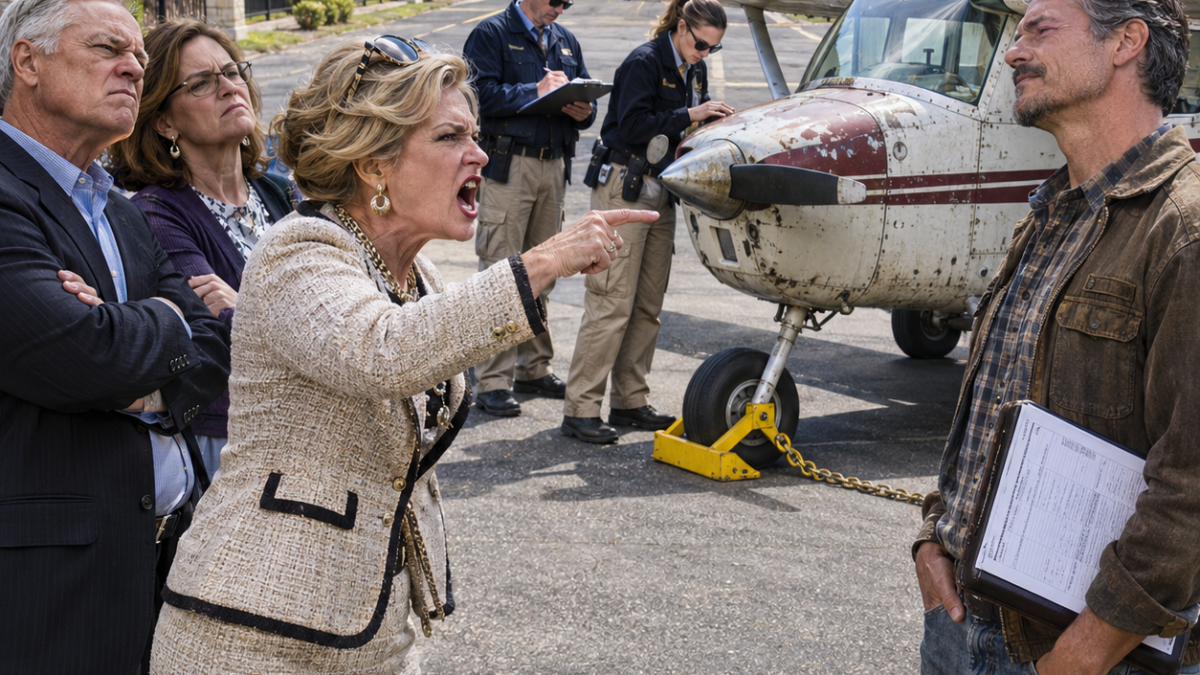
PART 2
The letters were simple.
**FAA.**
Not because I believed federal agents were going to descend from helicopters and drag Karen away in handcuffs.
Real life doesn’t work like that.
But aircraft are different from lawn tractors, old cars, trailers, and most of the other objects HOAs spend their time arguing over.
Aircraft have registrations.
Logbooks.
Airworthiness records.
Maintenance requirements.
Operating limitations.
Ownership records.
And, depending on what happened to them, agencies that care deeply about who moved them, how they were moved, and whether they were damaged.
Karen had spent years using uncertainty as a weapon.
She counted on people not knowing which rules applied.
This time, she had walked into a world where I knew the rules better than she did.
My first call was still local.
Sheriff’s department.
A dispatcher answered.
“County Sheriff’s Office. What’s the nature of your call?”
“I need to report property removed from my land without permission.”
“What kind of property?”
“An airplane.”
Pause.
“I’m sorry?”
“A 1946 Piper J-3 Cub.”
Longer pause.
“An actual airplane?”
“Yes, ma’am.”
“Was it stolen?”
“That depends on what your investigators call a towing company entering my private property under instructions from an HOA president who doesn’t own the aircraft.”
She put me on hold.
A sergeant came on several minutes later.
“Mr. Henderson?”
“Yes.”
“I’m Sergeant Wallace. Walk me through this.”
I did.
HOA dispute.
Previous letters.
Private hangar.
Karen’s derelict-vehicle interpretation.
Aircraft gone.
Tow company identified.
He listened.
Then said the words I expected.
“This may ultimately be a civil dispute.”
“I understand.”
“HOA matters usually are.”
“I understand that too.”
“Then what exactly are you asking for?”
“A report number.”
Silence.
I continued.
“I am the registered owner of aircraft N46PC. Someone entered my property and removed it without my authorization. I am documenting that before I contact the FAA.”
That changed his tone.
Not dramatically.
Just enough.
“You’ve got registration records?”
“Yes.”
“Hangar on your property?”
“Yes.”
“Any court order?”
“None.”
“Repossession?”
“No.”
“Mechanic’s lien?”
“No.”
“Tow company?”
“Big Mike’s Towing and Recovery.”
I heard typing.
“All right. I’ll create an incident report. Deputy can come out tomorrow.”
“Thank you.”
“I’m not promising criminal charges.”
“I didn’t ask you to.”
Another pause.
“I appreciate that.”
He gave me the report number.
First link.
Then I called Big Mike’s.
It took five calls to towing companies before I found the right one.
A gravelly voice answered.
“Big Mike’s.”
“I’m looking for a yellow Piper Cub.”
Silence.
Then:
“The little plane?”
“Yes.”
“Yeah, we got it.”
My chest tightened.
“Condition?”
“Looks like a plane.”
“That wasn’t my question.”
“Who is this?”
“Frank Henderson. Registered owner.”
“Oh.”
I heard papers shuffling.
“Lady from the HOA had paperwork.”
“What paperwork?”
“Work order.”
“Signed by who?”
“Karen Peters.”
“Did she provide proof she owned the aircraft?”
“She said the association authorized removal.”
“Did she provide proof the association owned my hangar?”
Pause.
“We just tow what we’re contracted to tow.”
“From private property?”
“Look, mister, I don’t make HOA law.”
“Neither does Karen.”
He exhaled.
“You want it back?”
“Yes.”
“Two hundred dollars a day storage.”
“How much to release it today?”
“Tow fee plus storage.”
“Tow fee?”
He quoted the number.
I wrote it down.
Then I asked:
“How was the aircraft transported?”
“What?”
“What lifting points did you use?”
“It’s a little airplane.”
That answer scared me more than the storage fee.
“Did you roll it onto a flatbed?”
“Something like that.”
“Did you remove the wings?”
“No.”
“Did you attach a hook to the landing gear?”
Silence.
“Sir, you can discuss condition when you pick it up.”
“I need you to preserve the aircraft exactly as it is.”
“Why?”
“Because it may be evidence in an FAA investigation.”
Another silence.
That one had weight.
“You called the FAA?”
“I am.”
I hung up.
My next two hours were paperwork.
Aircraft registration.
Airworthiness certificate.
Serial number.
Photographs showing the Cub inside my hangar before removal.
Property records.
HOA notices.
Sheriff incident number.
Chronological description.
I submitted a complaint to the appropriate FAA office and included enough documentation that anyone reading it could understand exactly what had happened without listening to me rant.
No words like *tyrant.*
No *Karen from hell.*
No speculation.
Dates.
Names.
Aircraft number.
Location.
Tow company.
Documents.
Then I scanned Karen’s latest violation notice.
Attached it.
Clicked submit.
2:08 a.m.
I leaned back.
The house was silent.
My wife, Linda, had died twelve years earlier.
We never had children.
For years afterward the Cub had been my way of filling evenings that otherwise felt too large.
I had my friends.
Neighbors.
Veterans.
Flying club.
But the airplane occupied a particular place.
My father had been a mechanic too.
Not military.
He worked at a municipal airport in Ohio.
When I was eleven, he took me up in an old Cub that belonged to a friend.
Yellow.
Fabric wings.
Doors open on a summer day.
I remember looking down and realizing roads, houses, fields, all the serious problems adults complained about, looked tiny from a thousand feet.
Dad shouted over the engine:
“Different perspective up here!”
I couldn’t hear every word.
Didn’t matter.
I understood.
He died before I joined the Air Force.
Every airplane I maintained afterward carried a little of that first flight.
F-4s early in my career.
Then transports.
Tankers.
Training aircraft.
Thirty years of checklists and inspections.
When I retired as a chief master sergeant, people assumed I wanted nothing to do with airplanes.
They were wrong.
I wanted one that nobody could order me to fix.
That’s why I bought the Cub.
It was essentially scrap when I found it.
I paid too much.
Everybody told me.
The restoration took a decade because I refused to rush.
Engine rebuilt.
Steel tubing inspected.
Wood replaced where necessary.
Fabric redone.
Control cables.
Instruments.
Wiring.
Magnetos.
Every system touched.
Every log entry precise.
When she finally flew again, I cried.
Not dramatically.
Just a few tears after landing.
Nobody saw except Dave Morales, a retired Marine gunnery sergeant who lived two doors down.
Dave pretended not to.
That’s why the empty hangar felt like grief.
Karen hadn’t just inconvenienced me.
She had removed something deeply connected to my history.
But I was not going to make the mistake she expected.
I wasn’t going to scream at her.
I wasn’t going to tow it back myself.
I wasn’t going to give her a scene she could describe as threatening behavior.
I was going to make records.
The next morning Deputy Carson arrived.
Young.
Polite.
Clearly expecting a ridiculous HOA dispute.
Then he saw the hangar.
The logbooks.
Registration.
Photographs.
His expression became more serious.
“So they went inside?”
“Yes.”
“Hangar locked?”
“Side door latched. Main doors secured.”
“Any damage?”
“Not obvious.”
He photographed the wheel tracks.
Marks near the hangar threshold.
My driveway.
Karen’s violation notice.
When I finished explaining, he rubbed his chin.
“I’m still not sure where the criminal-civil line lands.”
“Fair.”
“You contacted the FAA?”
“Yes.”
He looked toward the empty hangar.
“We get calls from this neighborhood.”
“I suspected.”
“Usually noise complaints, parking, signs, HOA arguments.”
“Karen?”
He gave me a careful law-enforcement smile.
“I didn’t say that.”
“You didn’t have to.”
Before leaving, he said:
“Keep everything.”
“I’ve been doing that for thirty years.”
He smiled.
“Military?”
“Air Force.”
“That explains the labels.”
He drove away.
Then I started talking to neighbors.
Not to build a mob.
To understand the battlefield.
Mrs. Evelyn Gable lived four houses down.
Eighty-two.
Widow.
Prize-winning roses.
She had been fined over a bird feeder.
Karen claimed it attracted rodents.
Evelyn replaced it with a smaller model.
Karen fined that too because the color wasn’t approved.
When I told her about the Piper, she slammed her pruning shears shut.
“That woman.”
“Apparently I’m storing lawn debris now.”
“She called an airplane debris?”
“Derelict vehicle.”
Evelyn’s eyes narrowed.
“She’s getting worse.”
Then she told me about a board resolution allowing HOA funds to cover officers’ legal costs related to enforcement actions.
“How much has she spent?”
“No idea.”
“Who approved it?”
“Her board.”
“Any independent review?”
She laughed.
“You haven’t been to many meetings lately, have you?”
I hadn’t.
That was on me.
I paid dues.
Kept the house maintained.
Ignored politics.
Karen benefited from people like me.
People who assumed somebody reasonable would stop unreasonable behavior.
Evelyn continued.
“You know the Fentons?”
My next-door neighbors.
“Yes.”
“They haven’t paid full dues in two years.”
“How do you know?”
“I volunteered in the office before Karen pushed me out.”
“Why?”
“She said I was creating administrative confusion.”
Translation:
Evelyn asked questions.
“What do the Fentons do?”
“You’ve seen them watching everybody.”
I had.
Curtains.
Cameras.
Photographs.
Karen had included photos of my hangar taken from the Fentons’ upstairs window.
Evelyn lowered her voice.
“She calls them block coordinators.”
I laughed.
“That’s not a thing.”
“It is if Karen says it often enough.”
That sentence captured her whole presidency.
Next stop:
Mike and Angela Miller.
No relation to Karen.
Young couple.
Three children.
Basketball hoop dispute.
Mike opened the garage door while working on a lawnmower.
When I told him my plane had been towed, he dropped the wrench.
“She actually did it?”
“You heard?”
“She threatened something at the last meeting.”
“What?”
“She said a homeowner on Cedar Court was maintaining commercial equipment.”
“My Cub?”
“Didn’t say.”
Mike shook his head.
“She put a lien on us.”
“For the basketball hoop?”
“Five hundred dollars in fines. We were refinancing. Lender wouldn’t close until it was cleared.”
“Did you challenge it?”
“We talked to a lawyer.”
“And?”
Mike laughed bitterly.
“He said we’d probably win.”
“That sounds good.”
“Then he said it might cost us five grand to prove it.”
There was the system.
Karen didn’t need to be legally right every time.
She needed resistance to be more expensive than surrender.
People paid.
Removed things.
Repainted.
Stayed quiet.
Authority by exhaustion.
Dave Morales was next.
Retired Marine gunnery sergeant.
If Karen intimidated him, she hid it well.
He listened.
“What’s the plan, Chief?”
“Don’t call me Chief.”
“You were a chief.”
“Air Force chief.”
“Still sounds fancy.”
“Dave.”
“What?”
“Focus.”
He grinned.
“What’s the plan?”
“FAA.”
His grin widened.
“Now we’re talking.”
“Also recall.”
“That too.”
“I haven’t decided.”
“You will.”
“How do you know?”
“Because you’re talking to neighbors.”
Fair.
Karen delivered the official bill that afternoon.
$2,500.
Threatened lien after thirty days.
Attached letter from HOA counsel ordering me to cease “harassing” board officers.
My harassment consisted of asking where my airplane was.
I scanned everything.
Sent it as an addendum to the FAA complaint.
Then I followed the HOA’s internal appeal process.
That part irritated me.
Karen chaired the architectural review committee.
Meaning the person who authorized removal would hear my challenge to the removal.
Still, procedure mattered.
If I skipped their process, they’d use that against me later.
My appeal requested:
Immediate release of N46PC.
HOA payment of towing and storage.
Inspection by an appropriately qualified aircraft mechanic before further movement.
Rescission of all fines.
Preservation of board communications relating to my aircraft.
I sent it certified.
The hearing was scheduled during the next board meeting.
Dave insisted on attending.
So did Evelyn.
Mike and Angela.
Several others.
Karen misunderstood the growing attendance.
She entered the clubhouse smiling.
Brenda Jones sat at her right.
Gary Smith on the left.
Karen tapped the gavel.
The first hour was painfully ordinary.
Petunias.
Mailbox flags.
Pool chairs.
Seasonal decorations.
Then:
“Mr. Henderson.”
I walked to the podium.
“You have five minutes.”
I placed one photograph on the stand.
My Cub at last year’s fly-in.
Bright yellow.
Clean.
Airworthy.
People leaned forward.
“This is what Karen classified as derelict debris.”
Murmurs.
Karen interrupted.
“Mr. Henderson—”
“I have four minutes thirty seconds.”
A few people laughed.
Karen’s jaw tightened.
I held up registration documents.
“This aircraft is registered as N46PC.”
Then:
“Current airworthiness documentation.”
Then:
“Maintenance records.”
I looked at Gary.
“You said in your letter the plane was abandoned.”
Gary glanced at Karen.
“I relied on committee findings.”
“Who inspected the aircraft?”
Silence.
Karen said:
“That’s irrelevant.”
“Who determined it was inoperable?”
“It hadn’t flown recently.”
“I was waiting on a scheduled inspection.”
“You admit it couldn’t fly.”
“I admit aviation maintenance exists.”
Laughter.
Karen banged the gavel.
“This is not a comedy club.”
“No.”
I looked at the residents.
“This is my property.”
Then back to Karen.
“You authorized a towing company to enter my private hangar.”
She said:
“The bylaws permit abatement.”
“For weeds.”
“Derelict vehicles.”
“This is not a car.”
“It is a vehicle.”
“So is a bicycle.”
Karen’s face reddened.
I continued.
“The incident is documented with the sheriff’s department.”
That created movement.
People whispered.
“And I submitted a formal complaint to the Federal Aviation Administration.”
The room went quiet.
Gary leaned toward Brenda.
Karen stared.
“The FAA?”
“Yes.”
“For what?”
“Your board’s interference with a registered aircraft.”
“You’re trying to intimidate us.”
“No.”
I looked at her.
“I’m informing you.”
Dave’s voice came from the back.
“Who complained about the plane?”
Karen snapped:
“Confidential.”
Mike said:
“I live three houses away. I didn’t.”
Another neighbor:
“Neither did I.”
The Fentons were seated in front.
Both suddenly fascinated by their shoes.
Karen hit the gavel.
“Order.”
I finished.
“The plane must be returned at the association’s expense after inspection for damage caused during the tow.”
Gary leaned into his microphone.
“What damage?”
“I don’t know yet.”
“Then you’re speculating.”
“I know you authorized non-aviation personnel to remove an aircraft from a hangar.”
Karen said:
“You’re out of time.”
I looked at the wall clock.
I actually had twelve seconds.
Didn’t matter.
I closed the folder.
“One final sentence.”
“No.”
I said it anyway.
“Your HOA rules do not change what that aircraft is.”
I returned to my seat.
Evelyn began clapping.
Slowly.
Dave joined.
Then Mike.
Then more.
Karen’s face turned crimson.
She slammed the gavel.
“Appeal denied.”
There it was.
Not investigation.
Not caution.
Not consultation with someone who understood aircraft.
Denied.
I almost thanked her.
Instead, I wrote it down.
Afterward, people stopped me outside.
One man had been fined for an oil spot on his driveway.
A woman fought six months over window trim.
Another resident received notices whenever his work van stayed overnight.
Patterns.
Dave invited everyone to his house the following Saturday.
Twelve people came.
Then sixteen.
Then twenty.
One resident surprised us.
Sarah Kim.
Thirty-two.
Attorney.
Recently moved into Eagle’s Landing.
Karen had already cited her because she replaced dead azaleas with native shrubs.
Sarah listened for almost an hour.
Then said:
“Stop talking about how unfair everything feels.”
Dave frowned.
“Encouraging.”
She smiled.
“I’m serious.”
She pointed toward a stack of violation notices.
“Feelings are terrible evidence.”
She picked up Evelyn’s bird-feeder letter.
“This is evidence.”
Mike’s lien record.
“Evidence.”
My tow authorization.
“Evidence.”
Then the Fenton dues records Evelyn had copied years earlier.
“Potential evidence.”
Sarah looked at all of us.
“If this board has engaged in selective enforcement, improper financial benefits, retaliation, or violations of the governing documents, document it.”
Mike asked:
“Class action?”
“Maybe.”
“Recall?”
“Much faster if the bylaws allow.”
They did.
We needed signatures.
Dave volunteered to canvass.
Evelyn volunteered to write the local newspaper.
I said no to publicity for the moment.
“Why?”
“Because I want the FAA process clean.”
Sarah nodded.
“Good.”
Then she looked at me.
“Your airplane is the strongest event because it crosses outside ordinary HOA interpretation.”
“I agree.”
“But don’t exaggerate the law.”
“I won’t.”
“Don’t tell people federal agents are coming to arrest Karen.”
“I won’t.”
Dave looked disappointed.
Sarah continued.
“Let the investigator decide what the FAA cares about.”
Exactly.
The call came the next morning.
Blocked number.
“Frank Henderson?”
“Yes.”
“This is Martin Cole with the FAA Flight Standards District Office.”
I stood.
“Yes, sir.”
“I’ve reviewed the materials you submitted regarding N46PC.”
My pulse accelerated.
“I have questions.”
“Go ahead.”
“Aircraft currently located at Big Mike’s Towing and Recovery?”
“Yes.”
“Has anyone moved it since your complaint?”
“Not to my knowledge.”
“Have you inspected it?”
“No.”
“Good.”
That word worried me.
“Why good?”
“Because if it was improperly handled, I want condition documented before additional movement.”
I sat down.
Cole continued.
“Your description is unusual.”
“I imagine.”
“I’d like to meet this afternoon.”
“At my house?”
“First your property. Then the tow yard.”
“Absolutely.”
Martin Cole looked nothing like people imagine federal investigators.
No dark suit.
No dramatic badge presentation.
Polo shirt.
Khakis.
Tablet.
Mid-fifties.
Calm.
He arrived exactly on time.
We sat at my kitchen table.
He reviewed everything.
Karen letters.
Registration.
Airworthiness documentation.
Photographs.
Hangar.
Sheriff report.
Tow invoice.
He asked careful questions.
“Who had keys?”
“Me.”
“Door damage?”
“No obvious damage.”
“How could tow company enter?”
“Main doors aren’t locked with a keyed lock when I’m working locally. They were closed and secured.”
“Were you notified before removal?”
“No.”
“Any mechanic’s lien?”
“No.”
“Airport seizure?”
“No.”
“Court order?”
“No.”
“Repossession issue?”
“No.”
“Ownership dispute?”
“No.”
He nodded.
Then looked toward the hangar.
“Let’s go see the location.”
He photographed tire tracks.
Measurements.
Door clearances.
Marks on the floor.
Then we drove to Big Mike’s.
The tow yard was a graveyard.
Wrecked sedans.
Pickups.
Construction equipment.
Old RVs.
And in the back:
A blue tarp shaped wrong.
My Cub.
Seeing it outside in a tow yard hurt more than I expected.
Mike came out.
Large man.
Sweaty.
Suspicious.
“You Henderson?”
“Yes.”
He looked at Cole.
“And you?”
Cole showed identification.
The change was immediate.
Mike stood straighter.
Cole said:
“We need the tarp removed.”
Mike hesitated.
Then complied.
Yellow fabric appeared.
Dirty.
Greasy fingerprints.
Scratch on the cowling.
I walked around the left side.
Then stopped.
Landing gear.
The geometry was wrong.
One strut showed an obvious bend.
I whispered:
“Damn.”
Cole crouched.
Photographed it.
Then examined the belly.
Wing roots.
Engine-mount area externally.
Control surfaces.
He didn’t touch more than necessary.
“Do you have the work order?”
he asked Mike.
“Yeah.”
“Copy.”
Mike went inside.
I stared at the Cub.
Ten years restoring her.
A morning for them to damage her.
Cole said:
“Don’t assume worst case yet.”
“That strut wasn’t bent.”
“I believe you.”
“How do you move a Cub incorrectly enough to do this?”
He looked at the marks.
“Improper lift or tie-down pressure could do it.”
Mike returned with the work order.
Signed:
Karen Peters.
President, Eagle’s Landing HOA.
Authorization language:
**Remove derelict vehicle from HOA-controlled residential property.**
Cole looked at me.
“Your hangar is HOA-owned?”
“No.”
“Common area?”
“No.”
“Association easement?”
“No.”
He photographed the work order.
Then addressed Mike.
“This aircraft is not to move until I authorize release from this condition-documentation process.”
Mike nodded quickly.
“Understood.”
“No additional storage handling.”
“Okay.”
“Preserve all photographs, dispatch records, driver notes, billing, and communications with the HOA.”
Mike swallowed.
“Okay.”
Back in Cole’s car, he exhaled.
“What happens now?” I asked.
“I speak with parties.”
“Karen?”
“Yes.”
“I’d like to be there.”
“No.”
Fair.
He drove to Eagle’s Landing.
I followed separately.
Cole parked near Karen’s house.
I stayed across the street.
He rang.
Karen opened.
From where I sat, I could see her expression.
Annoyed.
Then confused.
Then performative.
Hands moving.
Clipboard mentality without the clipboard.
She was explaining.
Cole barely moved.
Then he handed her his card.
Everything changed.
Shoulders.
Face.
Mouth.
Her hands stopped.
He spoke for several minutes.
Karen responded.
Then disappeared inside.
Returned with a binder.
Of course.
She tried to hand it to him.
Cole looked at the binder.
Then shook his head.
I laughed inside my truck.
He returned fifteen minutes later.
“How’d it go?”
“She believes HOA bylaws authorize removal.”
“I warned you.”
“She attempted to give me a copy.”
“I saw.”
“I explained that association covenants do not answer the questions I’m investigating.”
“And?”
“She said her lawyer will contact the office.”
Cole started the engine.
Before leaving, he looked at me.
“Mr. Henderson.”
“Yes?”
“Do not retaliate.”
“I won’t.”
“Do not contact the tow operator unnecessarily.”
“Understood.”
“Do not attempt to recover the aircraft yourself until inspection arrangements are finalized.”
“That hurts.”
“I know.”
He drove away.
The shock wave hit Eagle’s Landing the next day.
Brenda emailed an emergency board meeting.
Legal matters.
Closed session.
Karen started calling directors.
Residents whispered.
Dave collected recall signatures.
Thirty percent.
Forty.
Fifty.
Sixty percent.
Sarah Kim drafted the formal petition.
Under the bylaws, that triggered a special membership meeting.
Karen tried to reject several signatures.
Sarah challenged her.
Management company reviewed.
Valid.
Meeting scheduled.
Meanwhile, the FAA investigation continued.
Cole interviewed the tow driver.
That mattered.
The driver admitted they had never moved an aircraft before.
They treated the Cub like lightweight equipment.
No aviation mechanic present.
No consultation.
No specialized rigging.
One worker attached lifting equipment near landing-gear components that weren’t intended for that load.
The result was predictable.
Damage.
Cole arranged for an appropriately qualified mechanic to inspect the aircraft at the tow yard before release.
The report made my stomach turn.
Bent landing gear.
Suspected stress at an engine-mount point.
Damage to several wing-rib areas from handling pressure.
Cowling damage.
Fabric scuffs requiring evaluation.
Potential hidden structural stress.
The Cub couldn’t simply be rolled home.
It needed professional transport to a repair station.
I drove back from the inspection in silence.
Dave called.
“How bad?”
“Thirty years maintaining aircraft.”
“What?”
“I spent thirty years telling young airmen not to shortcut handling procedures.”
Pause.
“And some tow truck operator damages my Cub because Karen wanted an eyesore removed.”
Dave’s voice softened.
“Chief.”
“Yeah?”
“Don’t make this about the tow guy.”
I almost snapped at him.
Then stopped.
He was right.
Mike’s crew should have known enough to refuse work they didn’t understand.
But Karen created the situation.
Anger wants the nearest target.
Discipline chooses the right one.
The recall meeting arrived two weeks later.
The clubhouse was packed.
Not curious this time.
Angry.
A representative from the property-management company chaired because the recall bylaws required neutrality.
Karen tried to protest.
Her lawyer whispered.
She sat.
Sarah Kim presented our case.
She did it perfectly.
No rant.
No insults.
Timeline.
Karen elected.
Expansion of committees.
Selective enforcement complaints.
Financial irregularities requiring review.
Fenton dues waiver allegation.
Mike Miller lien.
Evelyn Gable fines.
Other documented cases.
Then my aircraft.
Sarah projected the work order.
**DERELICT VEHICLE.**
Then photograph.
My Cub at an air show.
The room murmured.
Then inspection photographs from the tow yard.
Bent gear.
Scratch.
Handling damage.
Evelyn gasped.
Sarah said:
“This is not about whether you like Mr. Henderson’s airplane.”
She looked around.
“It is about whether a volunteer board should authorize entry onto a homeowner’s property, removal of expensive registered personal property, and thousands of dollars in fines without competent investigation, legal certainty, or procedural restraint.”
She paused.
“If they can do that to him because they dislike a plane, what exactly prevents them from doing it to you tomorrow?”
Silence.
Then applause.
The board’s lawyer spoke next.
He tried.
Really tried.
Board discretion.
Community standards.
Good-faith enforcement.
Ambiguous covenant definitions.
But the room had moved beyond technical excuses.
Then Karen demanded the microphone.
Her lawyer touched her arm.
She pulled away.
“You people have no idea what I’ve done for this community.”
Here we go.
“I spent five years protecting your property values.”
Someone yelled:
“By putting liens on us?”
Karen ignored it.
“I enforce standards nobody else has the courage to enforce.”
Evelyn said:
“You fined my bird feeder.”
“That feeder attracted vermin!”
“It attracted cardinals!”
Laughter.
Karen’s face reddened.
She pointed toward me.
“And this man thinks because he wore a uniform he can ignore our rules.”
That was a mistake.
Not because I needed military respect.
Because many people in the room knew I had followed more procedures than Karen had.
I stood.
“Sit down, Frank.”
Sarah whispered.
I did.
Let Karen continue destroying herself.
She said:
“I removed dangerous ugly junk.”
The room froze.
Her lawyer closed his eyes.
Even Gary looked at her.
Dangerous ugly junk.
After FAA involvement.
After damage photographs.
After all of it.
She still didn’t understand.
Dave stood at the back.
“That plane flies.”
Karen snapped:
“It doesn’t belong in a residential community.”
I finally spoke.
“Then you should have changed the rule lawfully before touching it.”
She looked at me.
“You always think you’re smarter than everyone.”
“No.”
I pointed toward Sarah.
“She’s smarter than me.”
Laughter.
Even Sarah smiled.
Then I became serious.
“But I knew enough not to tow somebody else’s aircraft.”
The vote began.
Paper ballots.
Karen removed.
Gary removed.
Brenda removed.
Overwhelming margins.
Karen sat motionless.
The same woman who had run meetings with a gavel like a weapon was now silent while a management employee announced that she no longer held office.
An interim board had to be selected.
Mike Miller was nominated.
Sarah Kim.
Dave.
Evelyn.
Evelyn declined.
“I don’t have time. The cardinals expect breakfast.”
Mike became interim president.
Sarah legal/governance director.
Dave at-large member.
Their first motion:
Rescind all fines against me.
Unanimous.
Second:
Authorize immediate aircraft recovery, repair evaluation, and payment of legitimate costs by the HOA subject to later recovery from responsible parties and insurance.
Unanimous.
Third:
Open financial and governance review of prior board actions.
Unanimous.
Then Mike looked at me.
“Frank.”
“Yes?”
“On behalf of Eagle’s Landing, I’m sorry.”
The room applauded.
I didn’t want applause.
I wanted my Cub.
But I appreciated the apology.
Karen stood.
Her lawyer helped gather her papers.
As she passed my row, she stopped.
For a second, we looked at each other.
No shouting.
No threat.
She looked exhausted.
“You ruined me.”
I almost answered angrily.
Then I remembered Cole.
Discipline.
“No.”
Her eyes narrowed.
“You did.”
“You ordered my plane removed.”
“You escalated everything.”
“I documented everything.”
“Same thing.”
“No.”
I looked toward the residents.
“They voted.”
She swallowed.
Then walked out.
That wasn’t the end.
Removing Karen didn’t repair aluminum, steel, fabric, and wood.
Insurance became the next battlefield.
The HOA’s carrier initially questioned coverage.
Was Karen acting within official duties?
Was the action intentional?
Was property damage accidental?
Did exclusions apply?
Lawyers.
Adjusters.
Letters.
The new board cooperated.
Karen hired separate counsel.
Gary and Brenda claimed they had relied on Karen.
The towing company notified its insurer.
Everybody suddenly discovered nuance.
I didn’t care who ultimately paid as long as the Cub was made right.
The repair station gave me the estimate.
Just over thirty thousand dollars.
I sat in the shop office reading it.
Mechanic named Luis Romero sat across from me.
“Could be worse.”
“That’s supposed to help?”
“The fuselage is repairable.”
“Wing?”
“Repairable.”
“Engine mount?”
“Replace.”
“Landing gear?”
“Replace the damaged components.”
“Fabric?”
“Some sections.”
“Airworthiness?”
“When we’re done and everything passes.”
I rubbed my face.
“Three months?”
“Approximately.”
I looked through the window at my airplane.
Wings supported.
Cowling removed.
Not beautiful.
But alive.
Luis said:
“You rebuilt her once.”
“Ten years.”
“We’re not starting from zero.”
That mattered.
Insurance eventually resolved enough of the dispute to fund repairs.
Then insurers pursued reimbursement from parties they believed responsible.
The towing company’s own exposure became significant.
So did the former board’s.
I stayed out of most of that.
Not my mission.
My mission was N46PC.
The neighborhood changed before the airplane returned.
First thing I noticed:
Basketball.
Mike’s kids put the hoop back.
No temporary rebellion.
No dramatic announcement.
Just three children shooting baskets.
The first evening I heard the ball hitting pavement, I stood in my driveway longer than necessary.
Bounce.
Bounce.
Rim.
Laughter.
Normal.
Evelyn installed another bird feeder.
Larger.
Dave built the mounting post.
Sarah reviewed the bylaws before installation.
Evelyn called that “overkill.”
I called it growth.
The new board ended the Fenton dues arrangement after reviewing records.
The Fentons denied spying.
Then listed their house.
Moved two months later.
No goodbye.
Nobody threw a party.
At least not officially.
The board hired an outside accountant.
Reserve funds were worse than expected.
Not stolen.
Mismanaged.
Legal spending excessive.
Enforcement revenue improperly treated as dependable income.
Contracts renewed without competitive bids.
Administrative fees inflated.
Again, no dramatic bags of cash.
Just years of bad decisions.
Sarah insisted residents hear that clearly.
“Corruption doesn’t always look like theft,” she told a meeting.
“Sometimes it looks like power without oversight.”
That became the lesson.
Committees were reorganized.
Appeals couldn’t be heard solely by the person who issued the violation.
Conflict disclosures required.
Dues waivers needed recorded votes.
Legal spending thresholds.
Lien procedures.
Notice requirements.
And perhaps my favorite:
Before classifying unusual personal property as prohibited, the HOA had to obtain competent factual information about what the property actually was.
Dave called it the Frank Rule.
I hated that.
Evelyn called it the Don’t Tow Airplanes Rule.
Better.
During those three months, I visited the repair station every Friday.
Luis probably regretted giving me access.
I checked everything.
Not because I distrusted him.
Because aircraft maintenance was still in my blood.
New engine mount.
Landing gear component.
Rib repair.
Fabric work.
Rigging.
Inspection.
Log entries.
One Friday, Luis handed me a wrench.
“You want to help?”
“Legally?”
“Supervised.”
I took it.
For two hours, I was twenty-eight again.
Hands dirty.
Tools.
Torque.
No HOA.
No lawyers.
Just mechanics.
At the end, Luis said:
“You smile more around broken airplanes than most people.”
“Broken airplanes make sense.”
“How?”
“They don’t lie.”
A bent part is bent.
A crack is a crack.
Measurement.
Tolerance.
Repair.
People are harder.
The FAA investigator called periodically.
Cole remained careful about what he could say.
His investigation focused on the aircraft handling and circumstances surrounding interference.
The towing company faced regulatory and financial consequences related to how the aircraft had been moved and damaged.
The HOA’s former leadership became part of the factual record.
Karen’s attempt to treat FAA paperwork like another HOA memo never worked.
The funniest part came when Cole told me about their first conversation.
“She handed me the bylaws.”
“I saw.”
“She opened to the derelict-vehicle section.”
“What did you say?”
“I asked whether the bylaws included aircraft-handling procedures.”
I laughed.
“What did she say?”
“No.”
“And?”
“I said that was part of the problem.”
Classic Cole.
Months later, I saw Karen once at the grocery store.
She stood at the end of an aisle.
No clipboard.
Plain sweatshirt.
She saw me.
I saw her.
For a moment neither moved.
Then she approached.
“I heard your plane is being repaired.”
“Yes.”
“How much?”
“Enough.”
She winced.
“I didn’t know they would damage it.”
I believed that.
That didn’t excuse her.
“I know.”
“They told me they could move it.”
“Of course they did. You were paying them.”
She looked down.
“I thought it was basically a lawn ornament.”
“Why?”
“You never flew it.”
“I flew from the airstrip.”
“I never saw.”
I nodded.
“That was part of your problem.”
Her eyes narrowed slightly.
“What?”
“You treated what you personally saw as the limit of reality.”
She looked offended.
Then tired.
“I was trying to clean up the neighborhood.”
“My plane was inside a hangar.”
“The doors were sometimes open.”
“Because I worked on it.”
She had no answer.
After a moment:
“People hated me even before this.”
“That should have told you something.”
She laughed once.
Bitter.
“You really don’t pull punches.”
“I spent months pulling punches.”
That was true.
Karen looked toward the frozen-food case.
Then back.
“I lost friends.”
“I’m sorry.”
She seemed surprised.
“You are?”
“I don’t need your life ruined.”
“You got me removed.”
“Your neighbors did.”
“Because of you.”
“Because you gave them reasons.”
She looked away.
I could’ve walked off.
Instead:
“Karen.”
She looked at me.
“If you’d called me before the tow and said, ‘Frank, I think the Cub violates this rule. Explain why it doesn’t,’ we’d have argued.”
She smiled faintly.
“Definitely.”
“But nobody’s plane gets damaged.”
She swallowed.
“I know.”
It wasn’t an apology.
But it was the first crack of understanding.
We left separately.
The repair station called on a Tuesday morning.
“She’s ready.”
Two words.
I drove to the airport before lunch.
N46PC sat outside the shop.
Sunlight on yellow fabric.
Straight landing gear.
Clean cowling.
No scratches.
No blue tarp.
No tow-yard grime.
I walked around once.
Then again.
Luis followed with paperwork.
“Take your time.”
I did.
Control surfaces.
Fuel.
Oil.
Landing gear.
Hardware.
Fabric.
Tail.
Prop.
Engine compartment.
Everything.
Then logs.
Maintenance entries.
Inspection.
Return-to-service documentation.
Luis leaned against the hangar door.
“You going to fly?”
“If weather holds.”
“Perfect day.”
It was.
Blue sky.
Light wind.
Visibility forever.
I climbed into the Cub.
Old leather smell.
Fuel.
Fabric.
Metal.
Home.
Master.
Fuel.
Mixture.
Mags.
Prime.
Prop clear.
Starter.
The Continental engine turned.
Cough.
Then settled into that familiar uneven little idle.
I closed my eyes for half a second.
Dad.
A summer field in Ohio.
His voice:
Different perspective up here.
I taxied.
Run-up.
Controls free and correct.
Mag check.
Carb heat.
Trim.
Everything normal.
Tower at the small field wasn’t controlled, so I made my radio call.
Entered.
Lined up.
Throttle forward.
The Cub accelerated slowly because Cubs do everything without urgency.
Tail lifted.
Then wheels left pavement.
Three months of lawyers, meetings, tow yards, fines, complaints, repair estimates, and anger fell away beneath me.
The ground dropped.
The airplane climbed.
I laughed.
Out loud.
Nobody heard.
Perfect.
I turned toward Eagle’s Landing.
From eight hundred feet, the subdivision looked peaceful.
Rows of roofs.
Lawns.
Cul-de-sac.
No politics visible from above.
Mike’s basketball hoop was a tiny black line.
Evelyn’s garden a patch of color.
Dave’s truck a speck.
My house.
My hangar.
The empty space waiting for the Cub.
I circled once.
People came outside.
Dave recognized the engine first.
He waved both arms.
Mike’s kids ran into the driveway.
Evelyn stood near her roses.
I rocked the wings gently.
Then continued toward the fields.
I stayed up nearly an hour.
Not because I needed to.
Because I could.
That first flight should have been the ending.
It wasn’t.
The real aftermath took longer.
Communities don’t repair as quickly as airplanes.
Metal can be measured.
Trust can’t.
The new board held monthly open meetings.
Attendance remained high at first.
Then gradually dropped.
Some people saw that as apathy returning.
Sarah disagreed.
“Healthy organizations are boring.”
She was right.
People stop packing meeting rooms when they trust somebody isn’t stealing their freedom between agendas.
The new president Mike hated the job.
I reminded him he volunteered.
He reminded me I encouraged him.
We considered it a draw.
One evening he called.
“You know how many messages I got about Christmas lights?”
“No.”
“Forty-three.”
“Welcome to leadership.”
“You want this job?”
“Absolutely not.”
“I hate you.”
“Goodnight, Mike.”
Evelyn eventually joined a resident advisory committee.
Not the board.
She said board meetings interfered with rose maintenance.
Dave became head of emergency preparedness.
Perfect role.
Sarah Kim served two years, then stepped down after rewriting governance policies.
She later told me:
“You know what the biggest reform was?”
“What?”
“Making everybody read the documents.”
“That simple?”
“Yes.”
Karen’s power had relied partly on nobody checking.
Nobody read the bylaws.
Nobody reviewed financial statements.
Nobody questioned exceptions.
She knew details others ignored.
Then she interpreted those details however she wanted.
When residents learned the documents themselves, her mystique disappeared.
One rule became famous:
The HOA could regulate certain exterior conditions.
It could not simply enter a private enclosed structure and remove personal property because the president disliked it.
Obvious.
Apparently not obvious enough.
The association eventually recovered some costs from insurers and responsible parties.
Karen’s own financial settlement became confidential.
Gary and Brenda claimed they had merely followed her lead.
That defense only went so far.
The towing company changed its policies.
Big Mike called me personally months later.
I almost didn’t answer.
“Mr. Henderson?”
“Yes.”
“Mike.”
“I know.”
Pause.
“I owe you an apology.”
“Yes.”
He probably expected me to say no.
I didn’t.
“You’re right.”
Another pause.
“We should never have touched that plane.”
“No.”
“My guy thought because it was light, we could treat it like equipment.”
“I saw.”
“He feels awful.”
“Tell him to learn from it.”
“We all did.”
I softened.
“How’s business?”
“Still here.”
“Good.”
“You mean that?”
“Yes.”
Mike hesitated.
“Why?”
“Because putting you out of business doesn’t fix my Cub.”
He sighed.
“I appreciate that.”
“We’re done, Mike.”
“Fair enough.”
No friendship.
No revenge.
Done.
The Piper returned to air shows.
At the first one after repair, I parked her beside other restored aircraft.
A father brought his little boy over.
Boy couldn’t have been more than eight.
“Is this really from 1946?”
“Yes.”
“Can it fly?”
I smiled.
“Very well.”
“How fast?”
“Not very.”
The father laughed.
“What happened there?”
He pointed at a subtle repaired area.
“Long story.”
“Crash?”
“No.”
“Storm?”
“No.”
“What?”
I looked at him.
“Homeowners association.”
The father stared.
I laughed.
“Like I said. Long story.”
I didn’t tell it.
That day wasn’t about Karen.
It was about airplanes.
Aviation history.
Kids pressing faces near cockpit openings.
Old pilots telling stories.
Engines starting.
The Cub belonged there.
Not in the narrative of an HOA dispute.
Eventually, that’s what I wanted most.
For the airplane to stop being “the plane Karen towed.”
For it to become my Cub again.
That happened gradually.
At first everybody asked about the HOA.
Then fewer.
Then almost nobody.
Years later, new residents moved into Eagle’s Landing who had never met Karen.
They knew nothing about the recall.
One young family bought the Fentons’ old house.
The husband introduced himself.
“Tom Alvarez.”
“Frank.”
He pointed toward my hangar.
“Do you have an airplane in there?”
“I do.”
“Seriously?”
I opened the door.
His eyes widened.
“Wow.”
No suspicion.
No complaint.
Just admiration.
His daughter came running.
Yellow Piper.
She asked a thousand questions.
Tom said:
“I hope the HOA doesn’t mind.”
I laughed so hard he looked concerned.
“What?”
“Nothing.”
Then I explained only this:
“The airplane predates the current board’s interest.”
He didn’t understand.
Fine.
Not every scar needs a story.
One summer evening, Dave and I sat in lawn chairs outside my hangar.
The Cub glowed in sunset.
He opened a beer.
“You know what bothers me?”
“That you drink terrible beer?”
“That too.”
He pointed at the plane.
“Karen almost won.”
I looked at him.
“No.”
“She got it removed.”
“For three months.”
“She caused thirty grand in damage.”
“Insurance fixed it.”
“She made your life miserable.”
“Temporary.”
Dave shook his head.
“You know what I mean.”
I did.
If I hadn’t kept records.
If I hadn’t reported quickly.
If the FAA hadn’t taken the complaint seriously.
If neighbors hadn’t organized.
If Sarah hadn’t understood the bylaws.
If people kept paying fines quietly…
Karen would’ve remained president.
Maybe the Cub would’ve returned eventually.
Maybe not.
Maybe the storage fees would’ve become leverage.
Maybe I’d have sold.
Moved.
Given up.
Systems matter.
Documentation matters.
But community matters more than I expected.
I said:
“I thought I was fighting for an airplane.”
Dave drank.
“You weren’t?”
“Not by the end.”
He nodded toward the houses.
“Yeah.”
A child bounced a basketball somewhere.
Birds moved through Evelyn’s garden.
Normal sounds.
“We were fighting the idea that authority is the same thing as being right.”
Dave grinned.
“That’s too philosophical for Air Force.”
“Shut up, Marine.”
“Chief.”
“Stop.”
Years later, Evelyn died.
Ninety-one.
At her memorial, her niece gave me a small envelope.
Inside was a photograph.
Me standing beside the Cub at an air show.
Evelyn in front, holding a ridiculous oversized bird feeder she’d bought after Karen left.
On the back:
**For the man who taught an old woman not to be scared of cream-colored envelopes.**
I sat in my truck and cried.
I hadn’t taught Evelyn courage.
She had plenty.
But maybe we’d reminded each other.
Her family donated one of her bird feeders to the community garden.
Mike tried to approve it through the board.
Dave threatened to recall him as a joke.
Everybody laughed.
The board meetings became more ordinary.
Pool budget.
Storm drainage.
Roof repairs on clubhouse.
Actually useful things.
Nobody created a Holiday Decorations Enforcement Subcommittee again.
That part became almost sacred.
Karen’s old house changed owners twice.
The second owner painted the front door blue.
Karen would’ve hated it.
The current design guidelines allowed it.
I didn’t care.
That’s another sign of healing.
Eventually, you stop measuring every new decision against the person who hurt you.
The Cub aged too.
So did I.
Old airplanes require constant attention.
Fabric inspections.
Engine work.
Magnetos.
Control cables.
Tires.
Little things.
I loved it.
Machines tell you when they’re aging.
People pretend.
At seventy-two, getting into the rear seat became less graceful.
Dave enjoyed pointing that out.
“You need a hoist.”
“I need better friends.”
“HOA might classify you as derelict.”
“I’ll call the FAA.”
That joke never got old.
For him.
One October morning, I flew north.
Autumn colors.
Clear air.
The Cub moved at seventy-five miles an hour, which gives you time to look at the world.
Highways curved.
Farms.
Rivers.
Suburbs.
I thought about my father.
Then Karen.
Strange combination.
Dad taught me something Karen accidentally reinforced.
Perspective matters.
From the ground, a disagreement can feel enormous.
From the air, property lines disappear.
So do HOA boundaries.
You can’t see who has a bird feeder.
Whose trim is the wrong white.
Who left a basketball hoop out.
You see roofs.
Roads.
Trees.
People living very close together.
That’s the absurd beauty of neighborhoods.
We create tiny kingdoms inside something much larger.
Sometimes we forget.
I landed after an hour.
Taxiing toward the hangar, I noticed a woman standing with Mike.
I recognized her before I shut down.
Karen.
Older.
Gray in her hair.
No clipboard.
My first reaction surprised me.
Not anger.
Tired curiosity.
I climbed out.
“What are you doing here?”
Mike looked uncomfortable.
“She asked to see you.”
I wiped my hands.
Karen stared at the Cub.
“You still have it.”
“Yes.”
“It looks good.”
“It is.”
She stepped closer but didn’t touch.
“I heard you were flying today.”
“Who told you?”
“Mike.”
I looked at him.
He raised both hands.
“I’m leaving.”
Coward.
Karen waited until he was gone.
Then:
“I moved back to the county.”
“Okay.”
“Not Eagle’s Landing.”
“I didn’t ask.”
“I know.”
Silence.
Then she looked at me.
“I owe you something.”
“Money?”
To my surprise, she laughed.
“No.”
“Then what?”
“An apology.”
I didn’t answer.
She looked at the Cub.
“When I had this removed, I really believed I was protecting the neighborhood.”
“I know.”
“That doesn’t make it better.”
“No.”
“I convinced myself you were being defiant.”
“I was.”
“You were also right.”
I smiled faintly.
“Those aren’t mutually exclusive.”
“No.”
She touched her hands together nervously.
“I kept thinking that if I backed down once, nobody would listen to me again.”
There it was.
Same psychology I’d seen in supervisors, managers, commanders, anyone who confused correction with humiliation.
“So you doubled down.”
“Yes.”
“Even after the FAA?”
Her face reddened.
“That was stupid.”
“Yes.”
She nodded.
“I deserved that.”
“What do you want from me?”
“Nothing.”
I believed her.
She looked through the open hangar.
“I saw the newspaper article when it flew again.”
“That was years ago.”
“I kept it.”
That surprised me.
“Why?”
“I don’t know.”
She took a breath.
“Maybe because it reminded me of the worst thing I ever did.”
I wasn’t prepared for that.
She continued.
“I hurt people before you.”
“Yes.”
“Mrs. Gable.”
“Yes.”
“The Millers.”
“Yes.”
“Others.”
“Yes.”
“I always told myself they were exaggerating.”
She looked toward the houses.
“After I left, I started seeing how I talked to people.”
“What changed?”
“My daughter.”
I waited.
“She became president of her condo board.”
I almost laughed.
Karen did too.
“She called me complaining about a resident.”
“What happened?”
“She was furious because a man installed a wheelchair ramp without submitting the right color sample.”
I stared.
“And?”
“I heard myself coming out of her mouth.”
Karen’s eyes filled.
“I told her to stop.”
That was something.
“She did?”
“Yes.”
“Good.”
“She asked why I cared.”
Karen looked at me.
“I told her about the airplane.”
I glanced at the Cub.
“That’s one expensive teaching aid.”
She laughed through tears.
“I know.”
Then she said:
“I’m sorry, Frank.”
No excuses.
No *but.*
Just the words.
Years earlier, I’d imagined her saying them.
In those fantasies, I gave a brilliant speech.
Made her understand everything.
Reality didn’t need one.
“Thank you.”
She seemed surprised.
“That’s it?”
“What else do you want?”
“I don’t know.”
“I can’t undo it.”
“No.”
“You can’t undo it.”
“No.”
“The Cub flies.”
“Yes.”
“The neighborhood changed.”
“Yes.”
I looked at her.
“So let’s leave it there.”
She nodded.
Before walking away, she turned.
“Can I ask one thing?”
“What?”
“Why yellow?”
I smiled.
“Because my father’s Cub was yellow.”
She nodded.
Then left.
I never saw her again.
That conversation didn’t excuse what happened.
Apologies don’t erase damage.
But they can prevent damage from becoming the only truth someone carries.
I preferred knowing she eventually understood.
Years after that, I had to make the hardest aviation decision of my life.
Medical certification.
Age.
Reaction time.
Nothing dramatic.
No diagnosis that ended everything overnight.
Just honest assessment.
I could still fly.
But should I keep flying alone?
Airmen know the difference.
I talked to my doctor.
Flight instructor.
Mechanic.
Dave.
Dave’s opinion was useless.
“You’re younger than the airplane.”
“That’s not reassuring.”
Eventually, I chose to stop solo flying.
Not because somebody grounded me.
Because I decided.
That difference mattered more than I expected.
I still flew with another qualified pilot sometimes.
But I began thinking about the Cub’s future.
Sell?
Museum?
Flying club?
Then I met a seventeen-year-old named Noah.
His mother worked with Sarah Kim.
Noah wanted to become an aircraft mechanic.
Couldn’t afford aviation school easily.
He visited my hangar once.
Then every Saturday.
He asked good questions.
Not flashy ones.
Why safety wire direction matters.
Why fabric tension changes.
Why log entries matter.
Why old engines teach patience.
I liked him.
Eventually I let him help with maintenance under appropriate supervision.
Years passed.
He earned certifications.
Worked at the local airport.
And when I finally decided the Cub needed a new caretaker, I sold it to him for far less than market value.
He thought I made a mistake.
“I can’t pay what it’s worth.”
“You are.”
“No, Mr. Henderson.”
“Frank.”
“Frank, I’ve looked up Cubs.”
“So?”
“This is too low.”
“Then promise me something.”
“What?”
“Don’t call it scrap metal.”
He stared.
Then laughed.
“Deal.”
I signed the papers.
The Cub left my hangar voluntarily.
That was harder than when Karen took it.
Much harder.
Because this time there was no enemy to fight.
No anger to hide grief behind.
No FAA complaint.
Just goodbye.
Noah started the engine.
Taxied.
Took off.
I stood beside Dave.
The yellow wings climbed.
Dave said:
“You okay?”
“No.”
“Good.”
I looked at him.
“What?”
“Means it mattered.”
The Cub circled once.
Noah rocked the wings.
Same gesture I’d made over Eagle’s Landing years before.
Then flew toward the horizon.
The hangar became empty again.
White sunlight crossed the floor.
Exactly like the day Karen had taken it.
But it didn’t feel violated.
It felt finished.
That’s the difference consent makes.
I stood there for a long time.
Then went inside.
The old Operation Homecoming legal pad still sat in a drawer.
I found it.
First page:
**FAA**
Below it, everything that followed.
Sheriff.
Tow yard.
Board appeal.
Neighbors.
Recall.
Repair.
Flight.
I flipped through.
Most of it felt like another man’s life.
Angrier.
Sharper.
Ready for war.
On the last blank page, I wrote:
**MISSION COMPLETE. AIRCRAFT TRANSFERRED TO NEXT CUSTODIAN.**
Military habits die hard.
Then I closed the pad.
Eagle’s Landing is still there.
Mike eventually moved.
Sarah became HOA president for one term and hated every second.
Dave refused office because he enjoyed criticizing leaders too much.
The community garden is named after Evelyn.
There’s still a bird feeder.
Several, actually.
The basketball hoop remains at the Miller house even though the children grew up.
Nobody bothered removing it.
The Fentons’ old home belongs to Tom Alvarez and his family.
Their daughter became obsessed with aviation after seeing the Cub.
She later started flight lessons.
Funny how things spread.
The HOA still has rules.
It should.
Nobody wants abandoned cars leaking oil into the street or neighbors building unsafe structures.
The lesson was never that rules are bad.
The lesson was that authority has limits.
You verify before you accuse.
You investigate before you punish.
You listen before you enter somebody’s property.
And if you don’t understand what something is, you don’t call it junk just because it doesn’t fit your idea of what belongs.
Especially when the “junk” has a registration number.
I sometimes drive past the local airstrip and see Noah flying N46PC.
Yellow against blue.
Every time, I pull over.
Not because I’m worried.
Because I like watching.
The first time I saw him bring a kid up, I thought of my father.
A Cub.
Open door.
Summer air.
Different perspective.
Maybe fifty years from now somebody else will own that airplane.
Maybe they’ll know nothing about me.
Nothing about Karen.
Nothing about Eagle’s Landing.
Good.
Machines shouldn’t be trapped inside old grudges.
They should do what they were built to do.
Fly.
People should too.
Karen tried to ground me by taking an airplane.
For a while, I thought winning meant grounding her in return.
Recall.
Financial consequences.
Loss of power.
Those things happened.
They were consequences.
But they weren’t freedom.
Freedom came later.
When the Cub was repaired.
When the wheels left the runway.
When the neighborhood below became small enough that I couldn’t see a single violation notice.
When I realized Karen no longer controlled my mood.
That was the real victory.
Not watching her lose.
Watching the ground fall away.
I still remember that first flight after repair better than almost any flight I’ve taken.
The Cub climbing.
Engine vibrating through the seat.
Sky widening.
Eagle’s Landing beneath me.
Children playing basketball.
Evelyn’s garden.
Dave waving.
My hangar waiting.
I had spent months buried in rules because Karen abused hers.
Up there, rules still mattered.
Airspeed.
Altitude.
Weather.
Fuel.
Airspace.
Maintenance.
But they had purpose.
They kept people alive.
That’s the difference between good rules and bad power.
Good rules serve reality.
Bad power tries to force reality to serve it.
Karen had looked at a registered, airworthy aircraft and declared it lawn debris because her paperwork said she could.
Reality answered eventually.
The sheriff report.
The tow damage.
The FAA investigator.
The repair station.
The recall vote.
The insurance claims.
But the most satisfying answer was simpler.
N46PC flew again.
For years.
Long after Karen’s clipboard disappeared.
Long after the fines were rescinded.
Long after nobody in Eagle’s Landing cared who had been president during that strange summer.
The little yellow Cub kept climbing.
And every time I saw sunlight pass through those wings, painting the inside of the cockpit gold, I remembered the empty hangar floor and the woman who thought she could take the sky away from me.
She couldn’t.
Nobody could.
Because the sky was never hers to regulate.
And once the Cub’s wheels left the ground again, neither was I.
[END OF STORY]








