PART 2: HOA Guards Blocked Me From My Grandfather’s Farm—They Had No Idea I Investigated Financial Crime for the FBI
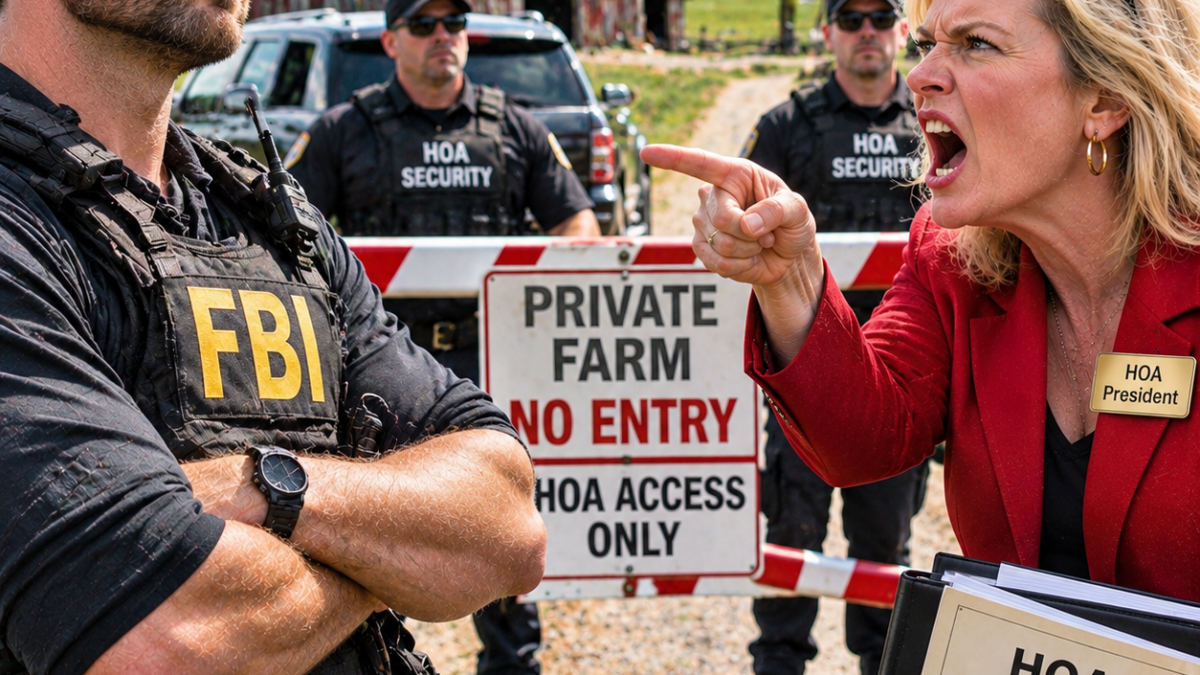
PART 2
The Madison County Recorder’s Office opened at 8:30 Monday morning.
I was in the parking lot fifteen minutes early with bad coffee in one hand and Grandpa’s letter folded inside my coat pocket.
I had barely slept.
Every time I closed my eyes, I saw the chain around the farm gate.
Then Brenda’s smile.
Then Grandpa’s handwriting.
They’re trying to take the farm.
I had spent twelve years working financial crimes. I knew what sophisticated fraud looked like, but most fraud wasn’t sophisticated in the way people imagined. There were no genius masterminds sitting in dark rooms planning perfect crimes.
Most successful fraud was repetition.
One lie that worked.
Then another.
A loophole nobody challenged.
A frightened victim who didn’t have enough money to fight.
A county employee who looked the other way.
A lawyer who knew how to make illegitimate pressure sound legal.
A security guard who stood in the right place and made the wrong authority feel real.
Fraud did not need to be perfect.
It only needed to last longer than the victim’s resistance.
Brenda had expected mine to last less than a weekend.
That was her first mistake.
Inside the recorder’s office, an older woman behind the counter looked up from her computer.
“Can I help you?”
“I need the complete recording history on a parcel.”
She asked for the number.
I gave it to her.
She typed.
“What specifically are you looking for?”
“Everything in the last three years. Liens, transfers, management agreements, encumbrances, corrective deeds, anything involving Heartland Asset Management, Meadowbrook Estates, or Henry Bailey.”
She glanced up.
“You’re family?”
“Grandson.”
Her expression softened just slightly.
“Sorry for your loss.”
“Thank you.”
She turned the monitor toward me.
I started with the simplest question.
If Grandpa really owed Meadowbrook $47,322.17, a recorded lien should exist.
Nothing.
I checked again.
No HOA lien.
No foreclosure filing.
No collection judgment.
No recorded management agreement.
No legal instrument giving Brenda authority to chain me out.
I pointed at the empty section.
“If an HOA claims forty-seven thousand dollars in secured debt, wouldn’t a lien normally appear?”
“If they filed one.”
“They didn’t.”
“Not that I can see.”
“And any management agreement granting control of the property?”
She searched.
Nothing.
I felt the first clean shift in the case.
Brenda’s strongest-looking document existed only inside Brenda’s folder.
That mattered.
A legitimate recorded agreement invites scrutiny.
An unrecorded agreement works better as theater.
You flash it.
You threaten.
You hope nobody checks.
I asked for tax history next.
Grandpa had paid every year.
On time.
For decades.
Then eighteen months earlier, the payer changed.
HEARTLAND ASSET MANAGEMENT LLC.
I stared at the screen.
“Who is that?”
The clerk shrugged.
“Third-party payer.”
“Did ownership change?”
“No.”
“Any authorization recorded?”
“No.”
“Yet they’ve paid the taxes?”
“Looks that way.”
I wrote the first date down.
Eighteen months ago.
Exactly around the period when Grandpa’s medical file showed early Alzheimer’s symptoms on top of advanced Parkinson’s.
Then fourteen months ago, he supposedly signed Brenda’s agreement.
Then three months ago, he died.
Now I arrived.
And Brenda was waiting.
I thanked the clerk and drove to the parking lot without starting the engine.
Instead, I called Helen Chavez.
Helen and I had worked together for five years.
She was one of those agents who could turn a pile of unrelated corporate filings into a map of who actually controlled the money.
She answered on the second ring.
“You sound terrible.”
“Thanks.”
“Funeral trip?”
“Estate.”
“Worse?”
“Possibly.”
“Talk.”
“I need public corporate research only. No protected databases unless this becomes official.”
That got her attention.
“Personal connection?”
“My grandfather.”
“Alex.”
“I know.”
“No, you know the phrase conflict of interest. I want to know whether you understand it.”
“I’m not opening a Bureau case.”
“Yet.”
“Yet.”
She exhaled.
“What names?”
“Heartland Asset Management LLC. Meadowbrook Estates HOA. Brenda Holloway. Victor Shaw. Derek Nash if you find him.”
“Location?”
“Nebraska. Madison County.”
“What are we looking for?”
“I don’t know yet.”
“Very reassuring.”
“I need ownership, registered agents, related entities, property transfers that are publicly searchable, anything obvious.”
“Send spelling.”
I did.
Before hanging up, she said:
“Do not use your badge to solve an inheritance dispute.”
“I’m not.”
“Do not access Bureau systems for your own property.”
“I won’t.”
“And if this turns criminal?”
“I call Omaha.”
“Immediately.”
“Yes.”
“You hesitated.”
“No.”
“You always hesitate half a second when you intend to be difficult.”
“You’ve known me too long.”
“Unfortunately.”
The line went dead.
I drove back toward the farm.
Not because I planned to confront Brenda.
I wanted to observe.
The guards were gone.
So was the Lexus.
But a flatbed truck sat beside Grandpa’s barn.
Two men were loading equipment.
His tractor.
I recognized it before I recognized either man.
Green paint faded almost gray on the hood.
One rear tire replaced after I was fifteen because I had driven over a broken fence post and punctured the old one.
Grandpa had yelled for twenty minutes.
Then made me help change it.
The men chained the tractor to the trailer.
My hand moved toward my phone.
Sheriff.
Anybody.
I stopped.
The management agreement, if forged, still gave Brenda a story.
She could claim equipment preservation.
Authorized maintenance.
Debt recovery.
Estate protection.
Was that lawful?
Probably not the way she was doing it.
But I still did not know who had drafted the agreement, whether Grandpa had signed anything else, whether the guards were aware of the scheme, or whether local law enforcement was neutral.
A premature confrontation would announce that I was investigating.
So I did what I was trained to do when emotion wanted control.
I observed.
Photographed.
Recorded.
License plate.
Truck markings.
Faces.
Equipment serial numbers where visible.
Time.
Direction of departure.
I watched the tractor roll away.
That hurt more than Brenda’s threat.
Grandpa had bought it in 1992.
He used to tell me machinery was like people.
“Listen long enough and it tells you what’s wrong.”
I had been eight the first time he put me in the seat.
He kept one hand on the fender and shouted instructions while I drove badly enough to flatten half a row of beans.
Now strangers were hauling it away while I sat on the county road and collected evidence.
My jaw hurt from clenching it.
I whispered:
“I’m sorry, Grandpa.”
Then I photographed the truck turning onto the highway.
Evidence over anger.
I repeated that phrase to myself all week.
It sounded noble.
Most of the time it felt awful.
Back at the motel, I opened Grandpa’s medical file.
Parkinson’s diagnosis eight years earlier.
Progressive fine-motor deterioration.
Tremor.
Difficulty signing.
Later notes about memory.
Confusion with dates.
Early Alzheimer’s.
I compared those records with Brenda’s timeline.
Someone had not just found an old man with a neglected farm.
Someone had watched an old man get weaker.
My phone rang.
Helen.
“I found Heartland.”
“Go.”
“Registered three years ago.”
“Agent?”
“Victor Shaw.”
I looked at his business card on the motel desk.
“Same guy representing Brenda.”
“Apparently.”
“Ownership?”
“Still tracing through filings.”
“Property connections?”
“At least a few.”
“How many?”
“Give me a day.”
I explained the tax payments.
“Eighteen months?”
“Yes.”
“Before the management agreement?”
“Four months before.”
Helen was quiet.
“So whoever paid taxes was already involved before the supposed agreement.”
“Exactly.”
“That’s useful.”
“It’s a sequence.”
“Don’t fall in love with your sequence yet.”
“I know.”
“Do you?”
“Yes.”
She changed subjects.
“How are you sleeping?”
“Poorly.”
“How much?”
“Three hours.”
“Eat.”
“I did.”
“What?”
“Coffee.”
“That isn’t food.”
“Neither is Bureau vending-machine oatmeal and you eat that.”
“Different.”
“How?”
“I’m not emotionally compromised by oatmeal.”
I laughed despite myself.
“Get me Victor.”
“Tomorrow.”
Tuesday began with a letter under my motel-room door.
No stamp.
No postmark.
Somebody had hand-delivered it during the night.
Victor Shaw letterhead.
CEASE AND DESIST
I was instructed to stop interfering with property under Heartland Asset Management’s lawful control.
No contact with Meadowbrook officials.
No surveillance.
No harassment.
No attempt to enter the farm.
Seventy-two hours.
Then restraining orders.
Civil damages.
Attorney’s fees.
I read it twice.
Most people see legal letterhead and react to the tone.
Investigators look at details.
No Nebraska bar number.
No firm registration.
No citation to a court order.
No recorded interest.
No case number.
But I still did not know whether Victor was simply sloppy or fraudulent.
At 12:06, Sheriff Raymond Alvarez knocked on the motel door.
He was in his late fifties.
Weathered face.
Gray in his mustache.
Not aggressive.
That almost made the visit worse.
“Mr. Bailey?”
“Yes.”
“Can we talk?”
“About?”
“Complaint filed this morning.”
He handed me a photocopy.
Brenda Holloway.
Harassment.
Interference.
Trespass.
“I haven’t crossed the gate.”
“I’m aware.”
“Then what exactly are you investigating?”
“I’m not opening anything formal right now.”
“Then why are you here?”
He looked tired.
“Courtesy.”
“For Brenda?”
“For everyone.”
I gave him the letter from Victor.
He read it without expression.
“Do you know this guy?”
“Victor Shaw?”
“Yes.”
“Name’s familiar.”
“Is he licensed in Nebraska?”
“I’m not the bar association.”
“That’s not an answer.”
His eyes narrowed.
“Mr. Bailey, small communities work differently than Washington.”
“There it is.”
“What?”
“The ‘small communities’ speech.”
“I’m trying to keep this from escalating.”
“My grandfather is dead. His tractor was removed yesterday. I’m chained off inherited property by private guards based on an unrecorded document. Escalation appears to have started before I arrived.”
The sheriff shifted.
“I don’t know the details.”
“Then maybe don’t warn me on behalf of the people creating them.”
Silence.
He folded the complaint.
“I’m asking you to stay calm.”
“I am calm.”
“That’s usually what angry people say.”
I smiled slightly.
“That’s usually what authority figures say when they don’t have a legal basis for what they’re asking.”
His expression hardened.
For one second I thought I had pushed too far.
Then he handed the complaint back.
“No charges.”
“Good.”
“But if something happens—”
“Call me.”
He stared.
Then turned toward the door.
Before leaving, he said:
“Brenda is well connected.”
I answered:
“That sounds like advice you probably shouldn’t be giving.”
He left without another word.
At four, the motel removed me.
I returned from getting copies made and found my door open while a housekeeper stripped the bed.
“Excuse me?”
She froze.
“Sir, front desk said the room’s being released.”
“I paid for four more nights.”
“I’m sorry.”
I went downstairs.
The manager would not meet my eyes.
“Corporate canceled your reservation.”
“Why?”
“Liability.”
“What liability?”
“Ongoing litigation.”
“There is no litigation.”
“Sir, I just follow instructions.”
“Who contacted corporate?”
“I don’t know.”
I watched his face.
He was lying about one thing.
Not necessarily because he supported Brenda.
Because he was afraid.
“Did someone threaten the motel?”
He looked down.
“I have a family.”
That was enough.
I did not push him.
I packed.
At sunset, I sat in the rental car with my luggage in the back seat and the heater blasting.
Legal threat.
Sheriff visit.
Motel cancellation.
One day.
Three pressure tactics.
This was not Brenda having a bad temper.
It was process.
Threaten.
Isolate.
Exhaust.
Force the target to choose peace over ownership.
Most people would.
That was why it worked.
Grandpa had been sick.
He did not have a federal salary.
He did not have colleagues in financial crimes.
He did not have the strength to spend weeks sleeping in motels while strangers stole equipment.
He had me.
And I had ignored the first letter for two weeks.
I pressed my forehead against the steering wheel.
For a few minutes, I was not an agent.
I was the grandson who had been busy when an old man asked for help.
That guilt had been sitting beneath everything.
Brenda could not see it.
But she was using it anyway.
I started the car.
Guilt would not fix the farm.
Evidence might.
I drove to Martha Jennings’s house.
County property records showed she had lived next to Grandpa for more than forty years.
She opened the door with a chain still on.
“Can I help you?”
“I’m Henry Bailey’s grandson.”
Her face changed.
“Alexander?”
“Yes.”
She opened the door.
“I wondered when you’d show up.”
Her kitchen smelled like coffee and old wood.
She poured a cup without asking.
We sat.
Before I could begin, she said:
“They got to Henry the same way they got to the others.”
My pen stopped.
“What others?”
She told me about three farms.
Older owners.
Children living elsewhere.
Strange HOA assessments.
Maintenance violations.
Legal notices.
Then management agreements.
Then ownership shifts.
“Heartland?”
Martha nodded.
“Or another company with a different name.”
“What happened to the families?”
“One fought and went broke.”
“Another?”
“Moved.”
“Third?”
“Owner died. Kids didn’t want the mess.”
“Did they know Brenda?”
“Everybody knows Brenda.”
“What about Victor Shaw?”
Her mouth tightened.
“He sends the letters.”
“And guards?”
“Derek Nash.”
“Heartland Security?”
“You already found him?”
“Name only.”
“He’s the one Brenda sends when paper doesn’t scare you.”
Martha looked toward her window.
“They parked outside my house three nights.”
“Threatened you?”
“Never said a word.”
“Why?”
“My son lives in Omaha. He brought down a lawyer and started demanding original records. Suddenly the notices stopped.”
“Do you still have them?”
Martha stood.
Returned with a shoebox.
Inside:
Assessment notices.
Victor’s letters.
Violation reports.
And a property-management agreement.
Her name at the bottom.
“I never signed that.”
I took a photograph.
Same format as Grandpa’s.
Same language.
Same notary.
Linda Price.
“What did you do?”
“Told them to get off my land.”
“What did Brenda say?”
“That I was confused.”
“Were you?”
Martha laughed.
“I’m seventy-four, not dead.”
I smiled.
Then she became serious.
“Henry was scared.”
I looked down.
“Did he talk about it?”
“Sometimes.”
“What did he say?”
“That he had a grandson who’d know what to do.”
That hurt.
“He had too much faith in me.”
“No.”
Martha studied me.
“He had exactly enough.”
I left after dark.
The second motel was thirty miles away.
I checked in using my middle name.
Not because I wanted to deceive anyone criminally.
Because I wanted one night before Brenda figured out where I was.
Back in the room, I mapped everything.
Brenda Holloway.
HOA authority.
Victor Shaw.
Legal paperwork.
Derek Nash.
Intimidation.
Heartland Asset Management.
Property acquisition.
Linda Price.
Notary.
At least four known targeted properties.
Grandpa was not a one-off.
I picked up my Bureau phone.
One call to Omaha.
Then stopped.
The conflict issue was serious.
I could not simply turn myself into the case agent for a fraud targeting my own inheritance.
That would invite suppression arguments, credibility attacks, internal discipline.
Worse, it could poison a legitimate federal case.
But if I handed over what I had too early and the federal hook was weak, the matter could be kicked back to state authorities.
Then Brenda would know exactly what I had.
She would lawyer up.
Align witnesses.
Destroy records.
I had seen it before.
The safe move was to call now.
The effective move might be to wait forty-eight more hours.
I hated that those were not necessarily the same thing.
Wednesday morning, I went to the only diner in town Grandpa used to mention.
The bell above the door rang.
Five people looked at me.
Then looked away.
I sat.
Five minutes.
No waitress.
Ten.
A woman refilled every table around mine.
Finally I caught her eye.
“Coffee?”
She hesitated.
“Sure.”
“And eggs.”
She wrote it down without speaking.
Behind me, two men whispered.
“That’s him.”
“The grandson?”
“Yeah.”
“Brenda said he left Henry alone.”
My hands tightened beneath the table.
Then another voice.
“Only came back when there was money.”
I stared at the tabletop.
That one found the wound.
Because in some ways, it was true.
Not the greed.
The absence.
I had built a life in Washington.
Grandpa stayed in Nebraska.
I visited less after Grandma died because every trip felt like seeing time move forward without permission.
Then work got busier.
One missed Thanksgiving.
One canceled summer trip.
Calls instead of visits.
The last letter sat on my desk for two weeks while I chased fraud in Virginia.
When I finally called, Grandpa’s voice was weaker than I expected.
He said:
“Don’t worry about me.”
I believed him because believing him was convenient.
Now Brenda had turned that private shame into community propaganda.
I could stand up.
Show my credentials.
Tell everyone she was under investigation.
Except she wasn’t yet.
And I still did not have the full case.
Anger makes you reveal your hand before the other side has shown theirs.
So I ate cold eggs.
Left cash.
Walked out.
Helen called before I reached the car.
“Victor Shaw.”
“Tell me.”
“No active Nebraska law license.”
I stopped.
“Where is he admitted?”
“Kansas, twelve years ago.”
“Current?”
“No.”
“Why?”
“Suspended eight years ago for misappropriating client funds.”
“Reinstated?”
“No.”
I pulled Victor’s cease-and-desist letter from the passenger seat.
“Yet he’s presenting himself as attorney at law.”
“Yep.”
“That changes things.”
“It gets better.”
“Derek?”
“Heartland Security. Prior aggravated-assault conviction. Served eighteen months. The record was later cleared in a way that may limit ordinary background visibility, but federal files still show it.”
“Violence history.”
“Yes.”
“Company licensed?”
“Appears active, but I’m still checking scope.”
“Heartland Asset Management?”
“Connected through public filings to two South Dakota LLCs.”
My pulse rose.
“Names?”
“Prairie Holdings and Plains Equity Services.”
“Property transfers?”
“Seven rural parcels across Nebraska and South Dakota.”
“All Heartland?”
“Directly or through affiliates.”
“Previous owners?”
“Mostly elderly. Several died or were declared incapacitated near the transfer period.”
There it was.
Cross-state pattern.
Not proof of federal crimes by itself.
But enough to justify a legitimate referral.
Helen continued.
“One case stands out. Earl Thompson. Eighty. Farm transferred two years ago. Son fought in civil court. Ran out of money.”
“Name?”
“Benjamin White.”
“Where?”
“Outside Lincoln.”
She texted the address.
Then her tone changed.
“Alex.”
“I know.”
“No. Listen.”
“I’m listening.”
“You’re getting close enough that you need supervision.”
“I know.”
“You’re an heir.”
“I know.”
“You are emotionally involved.”
“Yes.”
“You’re not allowed to decide that the rules are optional because the suspects are terrible.”
“I know.”
“That answer finally sounded honest.”
I sighed.
“One more witness.”
“Then call Omaha.”
“Yes.”
“One.”
“Yes.”
Benjamin White opened his front door Thursday morning.
Early forties.
Tired eyes.
I said:
“Henry Bailey was my grandfather.”
He stared at me.
“Meadowbrook?”
“Yes.”
“Brenda Holloway?”
“Yes.”
He opened the door.
His kitchen table looked like a failed lawsuit had exploded across it.
Folders.
Court papers.
Medical records.
Bank statements.
“I knew somebody would come eventually,” he said.
“Why?”
“Because they did it again.”
He poured coffee.
“My father was Earl Thompson. Eighty years old. Still running his farm.”
“What started it?”
“HOA assessment. Twelve thousand dollars.”
“Legitimate?”
“No.”
“Then?”
“Three months later, management agreement.”
He handed it over.
Linda Price notary.
Same format.
Same language.
Same clean signature.
“Did Earl sign?”
Benjamin shook his head.
“My father had arthritis. He was slow, but mentally sharp.”
“What happened next?”
“Stroke.”
“How long after?”
“Six months.”
“Power of attorney?”
“I got it after.”
“Too late?”
He nodded.
“By then they claimed Heartland had management authority.”
“How?”
“Taxes. Maintenance bills. Paperwork.”
“Then?”
“Quitclaim deed.”
He handed over another copy.
I read it.
Ownership moved to another shell entity.
“What did your attorney argue?”
“Forgery.”
“What did they argue?”
“That Dad was confused and had authorized everything.”
“Evidence?”
Benjamin’s face twisted.
“They submitted medical records saying he had early dementia.”
“Did he?”
“No.”
“Clinic?”
“Omaha.”
“Did he receive treatment there?”
“Never.”
“Subpoena?”
“We tried. Original records disappeared.”
I leaned back.
Fabricated medical incompetency.
That was more aggressive than Grandpa’s case.
“Sale price?”
“Four hundred twenty thousand.”
“Buyer?”
“Developer.”
“Where did proceeds go?”
Benjamin pulled a final folder from underneath everything.
“These are the only reason I still have hope.”
Bank records obtained during his lawsuit.
Developer paid Heartland.
Heartland wired to Prairie Holdings in South Dakota.
Prairie Holdings wired again.
Final destination:
HOLLOWAY FAMILY TRUST.
I read it twice.
There are points in a case where you stop asking whether a pattern exists and start asking how wide it goes.
This was that point.
Seven properties.
Three corporate entities.
Two states.
Money ending at Brenda’s family trust.
“You gave these to your attorney?”
“Yes.”
“Why didn’t the case continue?”
“Money.”
He laughed without humor.
“Brenda had lawyers. We had a mortgage, two kids, medical bills from Dad’s stroke. Every motion cost something. Every delay cost something. Eventually our lawyer said we could spend another hundred grand and still lose.”
“What did your father think happened?”
Benjamin looked away.
“He blamed himself.”
The room went quiet.
“He thought he signed something wrong.”
His voice cracked.
“He died believing he lost our farm because he got old.”
I stopped photographing documents.
Benjamin rubbed both hands over his face.
“If you can prove he didn’t do this to us, I don’t care if we get a dollar.”
“That may not be how you feel later.”
“I know.”
“But right now?”
“Right now I want my father’s name back.”
I understood that.
More than he knew.
I photographed everything.
Then asked him to preserve originals.
No social media.
No calls to Brenda.
No confrontation.
He nodded.
When I left, I called Helen from the driveway.
“This is federal.”
“Finally.”
“I’m calling Omaha.”
“Good.”
“After I tell you one thing.”
“What?”
“Money from Earl Thompson’s sale ended in Holloway Family Trust.”
Silence.
“Documented?”
“I have copies of bank statements.”
“Alex.”
“I know.”
“Call.”
I called.
Special Agent in Charge Patricia Reeves came onto the line after my identity was verified.
I gave her the shortest possible version.
Vulnerable elderly property owners.
Forged management agreements.
Expired or questionable notarizations.
Shell companies across Nebraska and South Dakota.
Wire transfers.
Security intimidation.
A fake attorney.
My grandfather as current target.
Pending estate dispute.
Then I stopped talking.
Reeves did not.
“You should have called sooner.”
“I know.”
“You are not investigating your own case.”
“Understood.”
“You are a witness and potential victim representative.”
“Understood.”
“Everything you collected before this call gets documented as privately obtained material unless otherwise established.”
“Yes.”
“You do not issue directions.”
“Yes.”
“You do not contact suspects on behalf of the Bureau without approval.”
“Yes.”
“You do not use your badge unless there is a safety reason or authorized operational need.”
“Yes.”
“Do you understand?”
“Yes.”
Pause.
“What’s the time pressure?”
“I don’t know yet.”
That changed two hours later.
Helen found a corrective deed application.
Heartland Asset Management had filed it three weeks earlier against Grandpa’s farm.
Basis:
Management agreement.
Tax payments.
Alleged custodial authority.
“Status?”
“Pending.”
“Deadline?”
“Twelve days.”
“If approved?”
“Title becomes contested at minimum. They’ll have another document to wave around.”
“They filed two weeks before I arrived.”
“Someone knew you were coming.”
Grandpa’s probate attorney.
County clerk.
HOA.
Plenty of possibilities.
The important thing was the clock.
Twelve days.
I sent everything to Reeves.
By evening, Omaha formally opened a preliminary matter.
Morrison and Tan were assigned as case agents.
I was instructed to stop doing anything that could be characterized as an independent federal investigation.
That was harder than I expected.
For a week, I had controlled every decision.
Now I had to hand over the wheel.
Morrison called me.
“Agent Bailey?”
“Alexander is fine.”
“Nope.”
I smiled.
“You’re difficult.”
“I hear that a lot.”
“We need originals where available.”
“I have location logs.”
“Good.”
“We need Benjamin interviewed.”
“He’ll cooperate.”
“Martha?”
“Yes.”
“Grandfather’s attorney?”
“Probably.”
“Your personal notes?”
“Yes.”
“All of them.”
“You sure?”
“Especially those.”
I laughed once.
“Understood.”
Morrison continued.
“One more thing. Brenda still thinks you’re just the grandson?”
“Yes.”
“Keep it that way.”
Friday, four days before the corrective-deed filing deadline, I called Brenda.
Not because I was improvising.
Because Morrison and Reeves approved a controlled approach.
I told her what she wanted to hear.
“I’m tired.”
Her voice softened immediately.
“I understand.”
“Legal fees are going to bury me.”
“That’s what we’ve been trying to explain.”
“I want this over.”
Pause.
Then warmth.
“Well, Alexander, I’m glad we can finally talk reasonably.”
I almost laughed.
“What do you suggest?”
“A meeting.”
“Where?”
“Community center. Monday. Ten.”
“Who?”
“Myself. Mr. Shaw. Perhaps one representative from property management.”
“Derek?”
Another pause.
“If security is necessary.”
“Fine.”
After the call, Morrison said:
“She moved fast.”
“She thinks I broke.”
“Did you?”
“Little.”
“That wasn’t sarcasm?”
“No.”
He looked at me differently.
“Good. Means you’ll sound convincing.”
Saturday, I spent twelve hours organizing evidence for the Bureau.
One hundred forty-three documents.
Sixty-seven photographs.
Twenty-two pages of timeline.
Grandpa’s medical records.
Recorder searches.
Martha’s paperwork.
Benjamin’s bank statements.
Corporate registrations.
Victor’s letters.
Photographs of equipment removal.
Security company records.
Every source identified.
Every copy labeled.
No shortcuts.
At 11:45 p.m., I uploaded the final index.
Sunday morning, Reeves called.
“Meeting approved.”
“Wire?”
“Yes.”
“Morrison and Tan in position.”
“Arrest authority?”
“If probable cause exists based on the total investigation. You don’t control that.”
“I know.”
“You’re going to want to.”
“I know.”
“Good.”
Then:
“Courier coming.”
The package arrived Sunday afternoon.
Victor Shaw.
Twenty-two pages.
SETTLEMENT AGREEMENT AND PROPERTY TRANSFER
I read it slowly.
Heartland would forgive all claimed HOA obligations.
I would receive ten thousand dollars.
In exchange, I would sign a quitclaim deed transferring Grandpa’s farm to Heartland Asset Management.
Ten thousand dollars.
For a farm worth more than three hundred thousand before potential appreciation.
Buried on page nineteen:
I acknowledged the transfer was voluntary.
Without coercion.
I had been advised to obtain independent counsel.
I called Morrison.
“This is useful.”
“Why?”
“They claim they already control the property, but now they want a voluntary deed.”
“Exactly.”
“And the non-coercion clause.”
“Shows awareness that coercion is an issue, not necessarily guilt by itself.”
“I know.”
“Do you?”
“Yes.”
Morrison laughed.
“I understand why Chavez warned us about you.”
Helen sent another message.
Linda Price notary commission expired four years ago. No renewal found.
I checked Grandpa’s management agreement.
Linda Price.
Then Earl Thompson.
Linda Price.
Martha Jennings.
Linda Price.
Same stamp.
One more structural weakness.
Sunday night, I drove to the farm.
The gate was still chained.
The sign still said:
PROPERTY UNDER MANAGEMENT
I stood in the dark.
Behind the gate, the farmhouse was silent.
I could see where Grandma used to hang Christmas lights.
The second porch step Grandpa repaired three times because frost kept lifting it.
The barn where he once made me spend an entire Saturday restacking hay because I had complained that manual labor was “inefficient.”
He had laughed.
“You want efficient? Don’t knock it over.”
I smiled at the memory.
Then took his letter from my coat.
They’re trying to take the farm.
I read the sentence under my flashlight.
“You told me.”
My voice sounded strange in the empty road.
“And I was late.”
Wind moved across the frozen grass.
“I’m sorry.”
For twelve years, I had interviewed victims who apologized for getting tricked.
I always told them the same thing.
“The criminal owns the crime. Not you.”
I believed that.
Yet I still blamed myself for Grandpa.
Maybe guilt is just grief trying to invent control.
If I could blame myself, then maybe there had been a version of events where I saved him.
Where I answered the letter the same day.
Where I flew home.
Where he lived longer.
Where Brenda never got close.
That version did not exist.
All I had was Monday.
At seven in the morning, Morrison fitted the transmitter.
At ten, I entered the Meadowbrook community center.
Brenda sat at the head of a conference table.
Blonde highlights.
Designer blazer.
Controlled smile.
Victor Shaw sat to her left.
Derek Nash stood near the wall.
Brenda gestured.
“Alexander. Thank you for coming.”
I sat.
Said nothing.
Reeves had reminded me:
Silence is not weakness in an interview.
People rush to fill it.
Brenda did.
“I know this has been very difficult.”
Still nothing.
“We genuinely want to help your family put this matter behind you.”
Victor pushed the folder across the table.
“This is straightforward.”
I opened it.
“Ten thousand dollars.”
Brenda nodded.
“And forgiveness of every outstanding obligation.”
“Forty-seven thousand?”
“Yes.”
“For a property worth over three hundred thousand.”
Victor leaned forward.
“Your valuation ignores encumbrances.”
“What encumbrances?”
“Back taxes. HOA assessments. maintenance obligations. Legal costs.”
“There are no back taxes.”
His eyes flicked toward Brenda.
“Heartland paid them.”
Brenda answered.
“That was part of protective management.”
“No recorded agreement exists.”
“These matters aren’t always recorded.”
“No HOA lien either.”
“Administrative delay.”
“No lawsuit.”
“Not yet.”
I looked at her.
“Then what legal fees do I owe?”
For the first time, she hesitated.
Victor stepped in.
“Mr. Bailey, the important thing is that your grandfather voluntarily placed the farm under management.”
“With this?”
I held up the agreement.
“Yes.”
“He had Parkinson’s.”
“We’re aware.”
“Alzheimer’s symptoms.”
Brenda’s expression hardened.
“He understood what he was signing.”
“Did Linda Price watch him sign?”
Victor said:
“Yes.”
“Interesting.”
“Why?”
“Her notary commission expired four years before this document.”
Silence.
Victor’s color changed.
Derek uncrossed his arms.
Brenda looked from Victor to me.
“That’s a technical issue.”
“No.”
“It can be cured.”
“Maybe some defects can. Not a signature Grandpa didn’t make.”
Victor slammed his palm lightly against the table.
“That is a serious accusation.”
“So is impersonating an attorney.”
His face drained.
Derek looked at Victor.
Brenda said:
“What are you talking about?”
I turned the cease-and-desist letter toward her.
“Victor Shaw. Attorney at law. Except his Kansas license was suspended eight years ago.”
Victor pushed back his chair.
“This meeting is over.”
“No,” Brenda said sharply.
That was interesting.
She needed the deed more than Victor needed comfort.
“Sit down.”
Victor stared at her.
Then sat.
I looked at Brenda.
“Why does Heartland want this farm?”
“Because they have invested in it.”
“Paying someone else’s property taxes without permission isn’t ownership.”
“It demonstrates responsibility.”
“Toward what?”
“The property.”
“Or the paper trail?”
Derek shifted again.
Brenda’s voice became colder.
“You came here wanting a resolution.”
“I did.”
“Then sign.”
I flipped to page nineteen.
“Voluntary. Without coercion.”
“Yes.”
“Why put that in?”
“Standard.”
“Is threatening forty-seven thousand dollars in fake debt coercion?”
She leaned forward.
“Those debts are not fake.”
“Show me the lien.”
“We’ve covered this.”
“Show me.”
“Alexander—”
“Earl Thompson.”
She stopped.
Victor stared at me.
Derek’s head moved slightly.
I continued.
“Martha Jennings.”
No answer.
“Prairie Holdings LLC.”
Victor whispered:
“Brenda.”
“Holloway Family Trust.”
Her hand tightened around a pen.
There.
The reaction.
I said:
“Four hundred twenty thousand dollars from Earl Thompson’s farm. Heartland to Prairie Holdings. Prairie Holdings to Holloway Family Trust.”
“How did you get that?”
She asked it too quickly.
Victor shut his eyes.
Brenda realized the mistake immediately.
I let silence do the work.
Finally she said:
“Those transactions were legitimate.”
“What was legitimate?”
“Acquisition.”
“Whose acquisition?”
“Heartland’s.”
“Based on what?”
“Management authority.”
“From forged documents?”
She snapped:
“They weren’t forged.”
“Grandpa’s?”
“He agreed.”
“Earl Thompson?”
“He agreed.”
“Martha?”
“She was confused.”
“Martha never transferred anything.”
“Because her son interfered.”
I stopped.
Morrison, listening outside, would have caught that.
So would Tan.
“What do you mean interfered?”
Brenda realized again that she had spoken too freely.
“Nothing.”
Victor stood.
“Stop answering.”
Brenda ignored him.
She had spent years being the person in control.
She was not accustomed to being told when to stop.
“These people needed help,” she said. “Their properties were deteriorating. Families disappeared until there was money.”
That accusation hit me personally.
She saw it.
Used it.
“Where were you when Henry couldn’t drive?”
I kept my face still.
“When he forgot medication?”
Silence.
“When the roof leaked?”
My jaw tightened.
“You showed up after he died.”
That was the shot.
The one designed for me.
For half a second, I was not a cooperating witness.
I was Grandpa’s grandson.
I wanted to tell her I knew I had failed him.
I wanted to throw the folder back.
I wanted to stand up and end the interview.
Reeves’s voice from the morning returned.
Grandson second. Witness first.
I inhaled.
“Did his loneliness give you ownership?”
Brenda smiled without warmth.
“It gave us responsibility.”
“Responsibility to forge his name?”
“You keep saying that.”
“Responsibility to send guards?”
“He was vulnerable.”
“Responsibility to take his tractor?”
“Assets under management can be liquidated.”
There it was.
Another admission.
“What was the tractor sold for?”
She stopped.
I looked at Derek.
He looked away.
“Who removed it?”
No answer.
I turned back to Brenda.
“How many farms?”
Nothing.
“How many families?”
Victor said:
“Meeting over.”
I opened my coat.
Removed my credentials.
Placed them on the table.
Brenda looked down.
Then up.
For the first time since I met her, her face emptied completely.
“Special Agent Alexander Bailey.”
Nobody moved.
“FBI Financial Crimes.”
Victor whispered:
“Oh, God.”
“This matter was formally referred to the Omaha field office. The evidence you’ve discussed has been under review by agents independent of me because my grandfather’s property is involved.”
Derek took one step toward the door.
It opened.
Morrison and Tan entered.
Morrison said:
“Stay where you are.”
Brenda looked at me.
“You lied.”
“I never told you what I did.”
“You manipulated me.”
“You offered to take my grandfather’s farm.”
“You set a trap.”
“No.”
I looked at the settlement.
“You wrote it.”
Victor stood.
“I invoke my right to counsel.”
Tan nodded.
“You’ll have that opportunity.”
Derek stayed still.
He had been through arrests before.
He knew movement at the wrong time made things worse.
Brenda did not.
“This is abuse of federal authority.”
Morrison answered this time.
“Agent Bailey is not the case agent.”
She looked toward him.
“This operation is supervised through Omaha. You’ll receive information about the allegations and your rights.”
The next minutes moved slowly.
Identification.
Phones secured.
Documents preserved.
Rights read.
Separate interviews declined or requested through counsel.
No television chaos.
No desks overturned.
Just procedure.
That was appropriate.
People like Brenda built their authority on procedure.
Now the same kind of careful process she had abused was being applied correctly.
Before agents led her out, she turned to me.
“Henry agreed.”
“No.”
“You weren’t here.”
That one hurt.
I answered quietly.
“No. I wasn’t.”
Her eyes sharpened, thinking she had found the opening.
I continued.
“But that didn’t give you permission to steal from him.”
She looked away.
Outside, a small crowd had formed.
Neighbors.
Farmers.
People from the diner.
Martha stood near the edge.
When Brenda emerged in handcuffs, conversation died.
Not cheering.
That surprised me.
Most people do not cheer when someone they trusted is arrested.
They stare.
Because seeing a person lose public authority forces you to reevaluate every time you believed them.
Martha walked to me.
Took my hand.
Her eyes filled.
“You got her.”
“Investigation isn’t over.”
A man approached.
“Is it true?”
“What?”
“She was taking farms?”
I chose my words carefully.
“There is a federal investigation into property transfers involving elderly owners.”
“My mother got HOA letters.”
“Keep them.”
“We threw some away.”
“Find whatever remains.”
Another woman stepped closer.
“My uncle signed something last year.”
“Call Omaha.”
Someone asked:
“Were you really FBI this whole time?”
“Yes.”
“Why didn’t you say?”
“Because then today wouldn’t have happened.”
News spread before official statements did.
Phones rang.
By noon, local reporters were outside Meadowbrook.
By evening, Omaha had received dozens of tips.
Search warrants followed.
Heartland Asset Management.
Victor’s office.
Derek’s security records.
Storage lockers.
Computers.
Bank accounts.
Linda Price’s files.
Investigators uncovered additional properties.
Some were legitimate.
Some were questionable.
A few were clearly tied to the same pattern.
That distinction mattered.
We did not need every deal to be fraudulent.
We needed to prove the ones that were.
Morrison became the center of the criminal investigation.
I stepped back.
That was harder than the confrontation.
When a case becomes personal, control feels like safety.
But if I wanted it to survive court, I had to let agents without my conflict make decisions.
So I became what the case required.
Witness.
Document source.
Estate representative.
Grandson.
Not lead agent.
The search results filled in the structure.
Brenda’s HOA position gave her access to information.
Who was elderly.
Who lived alone.
Whose children lived far away.
Who missed meetings.
Who struggled with maintenance.
Victor created legal-looking pressure.
Assessment notices.
Cease-and-desist letters.
Management agreements.
Settlement documents.
Derek provided physical intimidation.
Cars parked outside homes.
Security guards at gates.
Presence without explicit threats.
Heartland paid taxes and some maintenance expenses, creating records that made them look responsible.
Then transfers appeared.
Properties moved.
Sales followed.
Funds passed through Prairie Holdings or related entities.
Money eventually reached interests connected to Brenda’s family.
Linda Price’s expired notary seal helped create the appearance of legitimacy.
Not every participant had equal knowledge.
Some security guards thought they were enforcing real HOA rights.
Some clerical workers processed papers without understanding the pattern.
That became important later.
Justice is less satisfying when it is accurate.
People want villains lined up neatly.
Reality gives you degrees.
Brenda knew.
Victor knew.
Derek knew enough to intimidate people who resisted.
Linda knew she had no active commission and still stamped documents.
Others were more complicated.
Benjamin White gave a formal interview.
So did Martha.
Then three additional families.
A widow in South Dakota brought letters almost identical to Grandpa’s.
Another family produced a management agreement signed after their father’s dementia diagnosis.
One man had paid fourteen thousand dollars in assessments because he believed the HOA could take his mother’s house immediately.
Each story sounded slightly different.
The structure beneath them was the same.
One afternoon, Morrison called.
“We recovered your grandfather’s tractor.”
I sat up.
“Where?”
“Equipment yard outside Norfolk.”
“Condition?”
“Used.”
“Can I get it back?”
“Eventually. It’s evidence right now.”
I laughed.
“That tractor has been evidence of bad judgment since I was eight.”
“What?”
“Nothing.”
Months passed.
The farm remained in probate while the corrective deed was formally rejected.
The county recorder refused Heartland’s application after supporting documents were challenged and invalidated.
The chain came down.
Two county employees arrived with cutters.
One held them out.
“You want to do it?”
I looked at the lock.
For weeks I had imagined cutting it myself.
Something dramatic.
Symbolic.
Then I shook my head.
“No.”
“Sure?”
“Yeah.”
He cut it.
The chain dropped into frozen dirt.
Just metal.
No music.
No speech.
I opened the gate.
Drove through.
The farmhouse looked smaller than it had through the fence.
The porch sagged.
Paint peeled.
The barn door hung crooked.
Inside, Grandpa’s coffee mug still sat beside the sink.
Blue ceramic.
Chip near the handle.
I touched it.
Then picked it up with both hands.
Fourteen months earlier, Brenda claimed Grandpa had confidently signed legal control of the farm away.
Fourteen months earlier, he needed two hands for this mug.
I sat at the kitchen table.
No badge.
No recorder.
No interview.
Just silence.
“I’m sorry.”
The words came out before I planned them.
“I should’ve answered.”
My voice broke.
“I should’ve come.”
The kitchen stayed quiet.
I cried there longer than I want to admit.
Not because the farm was safe.
Because saving property is not the same as saving the person who asked you to protect it.
That distinction took me months to accept.
Six months after the arrests, federal court in Omaha was packed for Brenda’s sentencing.
By then, plea negotiations had resolved most of the criminal case.
The prosecution’s evidence included wire transfers, recorded statements, fraudulent property documents, victim testimony, internal communications, and the financial trail through the shell companies.
Brenda pleaded guilty to federal fraud-related charges and money laundering.
Victor pleaded to fraud, conspiracy, and criminal impersonation connected to holding himself out as an attorney.
Derek pleaded to conspiracy and intimidation-related conduct.
Linda Price cooperated.
At sentencing, Judge Catherine Webb reviewed letters from victims.
Benjamin sat near the front.
Martha beside him.
I sat farther back.
Brenda wore gray.
No highlights.
No smile.
Judge Webb looked directly at her.
“You exploited trust.”
Brenda stared downward.
“You identified vulnerability and turned it into opportunity.”
Nobody moved.
“You targeted people who were isolated.”
Martha’s hands tightened.
“You targeted illness.”
Benjamin looked at the floor.
“You used legal-looking documents and intimidation to convert confusion into financial gain.”
Brenda’s shoulders lowered slightly.
The sentence was nine years in federal prison.
Three years supervised release.
Restitution exceeding $1.2 million.
No applause.
No celebration.
Just the sound of the judge moving to the next matter.
Victor received six years.
Derek four.
Linda received probation and community service after substantial cooperation.
The Holloway Family Trust was seized in part toward restitution.
Heartland Asset Management was dismantled.
Property cases followed.
Slower.
Much slower.
Earl Thompson’s farm became one of the first restored interests.
Benjamin called me the morning the title cleared.
“It’s back.”
I knew immediately what he meant.
“The farm?”
“Yeah.”
His voice broke.
“I’m standing at the gate.”
I waited.
“I wish Dad knew.”
I looked at Grandpa’s letter pinned above my desk.
“So do I.”
Benjamin renovated his father’s farmhouse.
Months later, he sent a photograph.
New gate.
Fresh paint.
A sign:
THOMPSON FARM
I printed it.
Martha received refunds of fraudulent assessments.
The replacement Meadowbrook board sent her an apology.
She called me furious.
“What’s wrong?”
“They called it ‘regrettable administrative conduct.’”
“That’s very HOA.”
“They tried to steal my land.”
“Ask them to rewrite.”
“I already did.”
Of course.
Two South Dakota families recovered property interests or received settlements.
Other cases were messy because land had been resold to innocent third parties.
Courts had to untangle money instead of simply returning acres.
That was frustrating.
But real justice often looks like accountants, title lawyers, and three years of motions.
Not a single courtroom speech.
Meadowbrook itself survived, but barely.
The old board resigned.
New elections.
Annual audits.
Term limits.
Public financial reporting.
Recorded votes.
Independent legal counsel.
Verified licensing.
Special protections before enforcement against elderly or incapacitated homeowners.
The new president called.
“Would you speak at our first annual meeting?”
“No.”
“Why?”
“I’m not joining your HOA.”
“We aren’t asking that.”
“Good.”
“People trust you.”
“That’s exactly why I shouldn’t become another personality everyone blindly trusts.”
He went quiet.
Then:
“That’s a fair point.”
I went anyway.
Not to speak.
To sit in the back.
Martha saw me.
“You said no.”
“I said I wouldn’t speak.”
“Coward.”
“Absolutely.”
The meeting was boring.
Budget review.
Road maintenance.
Insurance.
Minutes approval.
It was one of the best things I had seen all year.
Nobody threatened anyone.
Nobody produced a fake management agreement.
Nobody stood at a gate.
Boring was healthy.
My biggest surprise came when Morrison called about the tractor.
“Released from evidence.”
I drove to the storage yard.
There it was.
Dustier.
Scratched.
One headlight cracked.
But still Grandpa’s tractor.
The manager handed me the keys.
“You driving this home?”
“Eventually.”
“You know how?”
“I learned when I was eight.”
“That doesn’t answer the question.”
Fair.
I climbed in.
The seat had been replaced at some point.
The steering wheel still had a split near the bottom.
I turned the key.
The engine coughed.
Stopped.
I tried again.
It caught.
For the first time in months, I laughed without forcing it.
I remembered Grandpa shouting from the ground:
“Easy on the clutch!”
I had ignored him.
The tractor lurched forward and nearly knocked down a fence post.
He chased me for twenty yards before I stopped.
Later he made hot chocolate like nothing happened.
I sat in the recovered tractor with both hands on the wheel.
Then cried again.
Grief is rude that way.
It shows up after legal victories.
In storage yards.
At stoplights.
When somebody says a name.
When an engine sounds exactly the way it did thirty years earlier.
I hired a trailer and brought the tractor home.
Martha watched from the roadside.
“That thing?”
“What about it?”
“Henry should’ve sold it twenty years ago.”
“He said it would outlive both of us.”
“Henry said lots of stupid things.”
I smiled.
“He was right about this one.”
Spring came.
I repaired the farmhouse.
Not completely.
Enough.
New paint.
Porch corner lifted and reinforced.
Barn stabilized.
Fence repaired.
I replaced the chain at the front gate with nothing.
No lock.
Just a latch.
Then I carved a wooden sign.
BAILEY FARM
The letters were uneven.
Martha complained.
“You’re FBI and you can’t measure?”
“They’re level.”
“They’re not.”
“I used a laser.”
“Your laser is crooked.”
I left them.
One afternoon, I found a photograph in Grandpa’s desk.
Me after FBI Academy graduation.
Suit.
Badge.
Too serious.
On the back, Grandpa had written:
Maybe now you’ll finally learn to ask better questions.
I laughed so hard I had to sit down.
That was Grandpa.
People think old men become sentimental near the end.
Mine became more sarcastic.
I placed the photograph beside his final letter.
For months, I had treated the letter like evidence.
Eventually, I stopped.
It was not evidence anymore.
It was his voice.
That summer, Benjamin came to visit.
He wanted to see where the case started.
We walked to the barn.
He stopped in the doorway.
“My dad had one just like this.”
“Full of broken equipment nobody can throw away?”
“Exactly.”
We laughed.
Then he saw the tractor.
“That the one they took?”
“Recovered.”
“Still runs?”
“Mostly.”
“Dad had a Farmall that smoked so badly neighbors used it to tell wind direction.”
I smiled.
For a while we talked about machinery instead of fraud.
Then Benjamin became quiet.
“You know what I thought?”
“What?”
“That when we got the farm back, I’d feel fixed.”
I looked at him.
“And?”
“I don’t.”
“Me neither.”
“But it helped.”
“Yes.”
We stood in the barn doorway.
That word mattered.
Helped.
Not erased.
Not healed completely.
Helped.
Later that year, Helen visited on her way through Nebraska.
She walked the farm in shoes completely wrong for mud.
“This is what caused six months of paperwork?”
“Show respect.”
“To dirt?”
“To the land.”
“You sound like Henry.”
“You never met him.”
“I’ve read enough of his letters.”
She looked at the tractor.
“That’s the famous machine?”
“Yes.”
“It’s terrible.”
“Leave.”
She laughed.
Then we sat on the porch.
“Any regrets?” she asked.
“About?”
“Waiting before calling Omaha.”
I thought carefully.
“Yes.”
She nodded.
“I figured.”
“I wanted the case too much.”
“Because of Henry.”
“Because I was angry.”
“That too.”
“I told myself I needed more evidence.”
“You did need more.”
“I also wanted Brenda personally.”
Helen looked at me.
“That’s why supervision exists.”
“I know.”
“You handled the conflict eventually.”
“Eventually.”
She took a drink.
“You should tell trainees this story.”
“Absolutely not.”
“Why?”
“Because the lesson is that I almost crossed lines.”
“That is why you tell it.”
I looked at her.
“What do you think the lesson is?”
She smiled.
“That even people who investigate fraud for a living can become emotionally stupid when someone hurts their family.”
“Very inspirational.”
“I try.”
We sat quietly.
After a while she said:
“Henry would’ve liked this.”
“The repairs?”
“No.”
She nodded toward the gate.
“No chain.”
That stayed with me.
Grandpa’s last months had been filled with people telling him what he could not do.
Could not manage.
Could not own.
Could not understand.
Could not protect.
Brenda’s scheme depended on treating age like surrender.
So I decided the farm would not become a fortress.
No dramatic fencing.
No cameras on every tree.
No locked gates unless needed.
I wanted it to feel like Grandpa’s place again.
Open.
Practical.
Ordinary.
I leased most acreage to a neighboring farmer named Caleb Jensen.
First meeting, Caleb said:
“I heard all about the FBI thing.”
“I’m sure.”
“People say you arrested Brenda yourself.”
“No.”
“People say you wore a wire.”
“That part’s true.”
“They say you pulled a gun in the HOA office.”
“Absolutely false.”
“Thought so.”
“Why?”
“You don’t look fast enough.”
I liked him immediately.
Caleb farmed the land.
I visited several times a year.
Washington remained home for work.
Nebraska became something else.
Not a duty.
Not an inheritance problem.
A place I chose to return to.
One visit, I went to see Martha.
She had slowed down.
Still sharp.
Still difficult.
She gave me coffee.
“You talk to Meadowbrook?”
“Sometimes.”
“New board’s annoying.”
“How?”
“They ask permission now.”
“That’s an improvement.”
“It’s exhausting.”
I laughed.
Then she said:
“Henry was scared at the end.”
I grew quiet.
“You told me.”
“No. I didn’t tell you everything.”
I looked at her.
“What?”
“He blamed himself for calling you.”
That surprised me.
“Why?”
“He thought he was dragging you into his problems.”
“That makes no sense.”
“To him it did.”
Martha stirred her coffee.
“He said you had important work.”
I looked down.
“He was more important.”
“Maybe.”
Her voice softened.
“But people don’t always know they’re near the last conversation.”
That sentence stopped me.
Nobody does.
We live like there will be another call.
Another visit.
Another Christmas.
Another chance to say what mattered properly.
Grandpa had not known his last letter would become the last request.
I had not known my delayed answer would become something I carried forever.
Martha continued.
“He said, ‘Alex fights people I wouldn’t know how to fight.’”
My throat tightened.
“He really said that?”
“Yes.”
“Why didn’t you tell me earlier?”
“Because you were busy being guilty.”
I looked at her.
“That sounds like something Grandpa would say.”
“I learned from him.”
For the first time, the memory of his letter felt less like accusation.
More like trust.
Not:
You failed me.
But:
I know who you are.
That was different.
Two years after Brenda’s arrest, Meadowbrook invited the families affected by the scheme to a restitution meeting.
Not legal restitution.
Community acknowledgment.
I almost skipped it.
Benjamin convinced me.
“Come.”
“Why?”
“Because Earl doesn’t get to.”
That was enough.
The community center looked completely different.
Same beige walls.
Same bad carpet.
But no Brenda.
At the front sat photographs submitted by victim families.
Earl Thompson.
Grandpa Henry.
An elderly woman from South Dakota.
Two others whose estates had recovered property.
The new HOA president spoke briefly.
No dramatic apology.
No attempt to claim Meadowbrook itself was innocent.
He said:
“This organization was used as a tool against people it should have served. We cannot undo that. We can record it honestly.”
That was the right sentence.
Benjamin stood beside his father’s photograph.
Martha beside Grandpa’s.
I stayed in the back.
Then a woman approached.
I recognized her vaguely from the diner.
“You’re Henry’s grandson.”
“Yes.”
“I was there the morning people were talking about you.”
I remembered.
Cold eggs.
Whispers.
She looked embarrassed.
“I believed Brenda.”
“A lot of people did.”
“I said you only came because there was money.”
I waited.
“I was wrong.”
“Yes.”
She looked surprised.
Most people expect forgiveness to begin with denial.
It’s okay.
Sometimes it is not okay.
But wrong does not have to become permanent.
She nodded.
“I’m sorry.”
“Thank you.”
That was enough.
No hug.
No speech.
She left.
I realized later that the exchange mattered because Brenda’s scheme had done more than steal property.
It had rearranged relationships.
Neighbors stopped trusting families.
Families blamed elderly parents.
Children blamed themselves.
People believed the victim was difficult because that explanation was easier than believing the system was corrupt.
Repair had to happen socially too.
Slowly.
Awkwardly.
One conversation at a time.
The Holloway case became training material in several fraud presentations, though my personal connection was minimized where possible.
I refused media interviews.
Not because I was noble.
Because reporters kept asking the same question.
“How did it feel to reveal you were FBI?”
That was the least important moment.
The important moments happened before.
Grandpa writing the letter.
Martha keeping the shoebox.
Benjamin keeping bank records after giving up the lawsuit.
Linda’s commission expiration.
Heartland paying taxes too early.
The shell companies.
The families nobody had connected.
A badge did not solve the case.
Records did.
People did.
Patience did.
One reporter asked:
“Was Brenda shocked?”
“Yes.”
“Did you enjoy it?”
I thought about the conference room.
Her face when I placed my credentials down.
The part of me that had wanted revenge did enjoy it.
For about five seconds.
Then the agents took over.
Then victims had to relive everything.
Then Grandpa remained dead.
I answered:
“It was satisfying to stop the scheme. That’s different from enjoying someone’s destruction.”
The reporter looked disappointed.
That answer did not make a dramatic headline.
Good.
The farm stayed.
Caleb planted corn one year, soybeans the next.
The barn roof stopped leaking.
The tractor ran badly but consistently.
I repaired Grandpa’s old workbench.
One summer I found his pocketknife behind a drawer.
The same one he used to teach me to whittle.
I sat on the porch with a scrap of cedar.
My hands were much larger than they were when he taught me.
I tried carving the way he did.
It looked terrible.
Martha saw it later.
“What is that?”
“Fox.”
“That’s not a fox.”
“It’s abstract.”
“It’s ugly.”
I left it on the porch anyway.
One November evening, I received a Bureau email from Helen.
Subject:
Thought you’d want this.
Attached was a note forwarded through the victim-services office.
A South Dakota family had recovered partial ownership interests connected to the Heartland scheme.
The daughter wrote:
We reopened our mother’s files because we heard about Henry Bailey’s case. We had assumed she was confused. She wasn’t. Thank you for giving us a reason to look again.
I read it twice.
Then walked outside.
The Nebraska sky was clear.
Cold.
Stars everywhere.
Grandpa used to complain that city people paid money to vacation where farmers lived for free.
I sat on the porch.
For months after his death, I wanted a version of the story where I saved him.
There wasn’t one.
But maybe he had saved somebody else.
His letter started my questions.
His farm exposed the pattern.
His records helped break the scheme.
Other families reopened boxes.
Other children learned their parents had not failed.
That mattered.
The next spring, Benjamin and I met at a diner halfway between our farms.
Not the Meadowbrook diner.
Neither of us wanted that place.
He brought a folder.
“What’s this?”
“Dad’s papers.”
“Why?”
“I’m donating copies to the legal-aid clinic.”
I smiled.
“Good.”
“You still have Henry’s letter?”
“Yes.”
“You ever think about giving it to an archive?”
“No.”
“Why?”
“Because it’s mine.”
He nodded.
“Fair.”
We ate breakfast.
Warm eggs this time.
Nobody stared.
Nobody whispered.
When the check came, Benjamin grabbed it.
“I’ve got it.”
“No.”
“You helped get our farm back.”
“You helped prove the case.”
“Still.”
“You have kids.”
“So?”
“I have federal health insurance and terrible spending habits.”
He laughed.
We split it.
That felt right.
One Saturday in late spring, I drove to Bailey Farm after a storm.
The road was muddy.
Fields dark and wet.
I stopped at the gate.
The wooden sign had weathered.
BAILEY FARM
Still crooked, according to Martha.
I opened the latch.
No chain.
No padlock.
No security guards.
I drove toward the farmhouse.
The tractor sat beneath the barn roof.
Caleb had left a note on the windshield:
Starter acting weird again. Henry’s ghost refuses retirement.
I laughed.
Inside, Grandpa’s blue mug sat on a shelf.
Not beside the sink anymore.
I had washed it.
Kept it.
I poured coffee into it.
The chip near the handle fit against my thumb.
I carried it to the porch.
For the first time, I realized I could hold that mug with one hand without thinking.
Grandpa could not near the end.
That physical truth had been the first thing that told me Brenda’s signature was wrong.
His weakness had become evidence.
That used to make me angry.
Now it made me sad.
There is a difference.
I unfolded a photocopy of his final letter.
The original remained protected with the estate papers.
His handwriting shook.
Some words leaned.
Others almost disappeared.
Brenda’s forged signature had been perfect.
Grandpa’s real hand was not.
But the imperfect letter survived.
The perfect signature did not.
I read the last line.
You’ll know.
I smiled.
“No, Grandpa.”
The wind moved through the trees.
“I didn’t.”
I folded the paper.
“But I figured it out.”
Then I finished the coffee, walked down the porch steps, and crossed toward the barn as the morning light spread over the fields.
The gate behind me stayed open.
[END OF STORY]








