PART 2: HOA Demolished My Grandma’s House Over $127 — Then Their President Froze When She Saw My Federal Badge
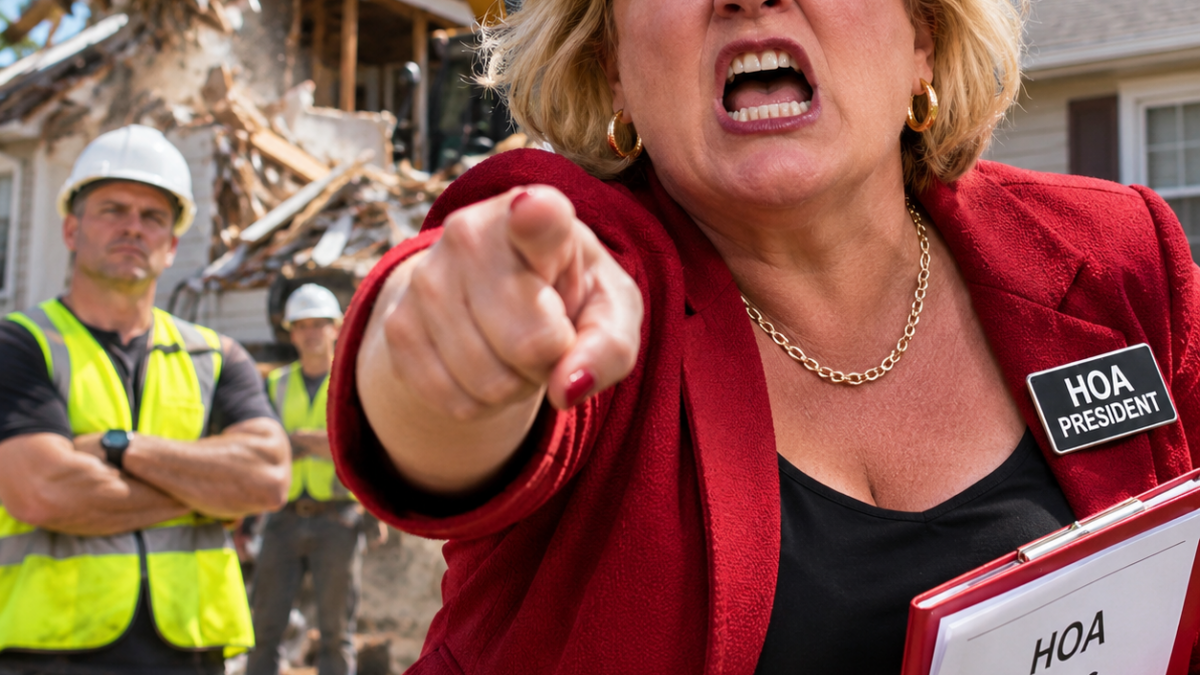
PART 2
Three weeks earlier, the biggest problem in my life had been deciding what to do with fifty-eight porcelain cats.
Grandma Rosalie loved those things.
Large ones, tiny ones, white ones, painted ones, one ugly orange cat with green glass eyes that had terrified me when I was six.
When she died, she left me the ranch house on Maple Street along with almost everything inside it.
Willowbrook Estates sat outside Denver, one of those Colorado neighborhoods built to look effortlessly perfect.
The lawns were clipped.
Mailboxes matched.
Trees lined the streets.
People waved from SUVs while privately complaining about each other’s trash cans.
Grandma’s house was older than most of the development around it. She had bought it in 1962, long before Willowbrook became the polished little kingdom it was now.
To me, it was never valuable because of the land.
It was valuable because I could walk through that front door and remember who I had been before life got complicated.
Sarah understood that.
She had loved the place almost as much as I did.
During the final months of her illness, when we both knew the treatments were no longer working, she once told me, “Promise me you won’t spend the rest of your life living like everything you love has already disappeared.”
I told her I wouldn’t.
I lied.
After she died, I spent almost two years moving between work assignments and an apartment that never felt like mine.
Then Grandma passed.
Suddenly I had another empty house and another goodbye.
But instead of selling, I decided to renovate.
Maybe Sarah had been right.
Maybe a house could become a beginning instead of another reminder of what I had lost.
That idea lasted about four days.
The first HOA letter arrived on a Tuesday.
**DELINQUENT ASSESSMENT: $127.**
I almost laughed.
I called the number on the letter.
Delilah answered personally.
“Oh, Rex, honey,” she said. “I’m glad you called.”
I already disliked being called honey by strangers.
Especially strangers who sounded like they were smiling while charging me money.
“I received a delinquency notice,” I said. “I just inherited the property. I’d like a breakdown of the balance.”
“Of course.”
“And a copy of the applicable covenant.”
“Absolutely.”
“And confirmation that the account was current when ownership transferred.”
A pause.
Tiny.
But noticeable.
“Certainly.”
“When can I expect that?”
“We’re very busy, Rex.”
“I’m not in a hurry. Email is fine.”
Another pause.
Then she laughed softly.
“Well, you’re certainly detail-oriented.”
“Occupational habit.”
“What do you do?”
“Government work.”
That was all I told her.
Not because my job was secret.
It wasn’t.
I simply didn’t see any reason my profession mattered to an HOA president.
Her tone changed anyway.
“What kind of government work?”
“Building-related.”
“City?”
“No.”
“County?”
“No.”
Another little pause.
Then her sweetness returned.
“Well, I’ll have our office send everything.”
Nothing arrived.
A week later, the $127 balance had become $2,847.
Late penalties.
Administrative charges.
Processing fees.
Collection fees.
Compliance review costs.
When I called, Delilah blamed a computer issue.
Two days later, she said their accountant was sick.
After that, the files were supposedly in storage.
Every answer created a new reason I couldn’t see the documents I was legally entitled to review.
That was the first time I began taking notes.
Not because I expected a criminal conspiracy.
At that point I assumed I was dealing with incompetence mixed with arrogance.
I had dealt with plenty of both.
My job involved inspecting federally used buildings, reviewing construction compliance, documenting deficiencies, and occasionally helping build cases when contractors or property owners crossed the line from sloppy work into fraud.
Fifteen years had trained me to do one thing almost automatically.
Document first.
Argue later.
So I saved every letter.
Logged every call.
Recorded dates.
Requested the same documents in writing.
And waited.
Delilah kept asking about my travel schedule.
At first, I thought she was making conversation.
“Still traveling for work, Rex?”
“Sometimes.”
“Denver?”
“Sometimes.”
“Long trips?”
“Depends.”
Only later did I understand what she was doing.
She wasn’t being friendly.
She was figuring out when I wouldn’t be home.
The Wednesday my grandmother’s house was demolished, I had been attending a mandatory federal meeting nearly three hours away.
At two that afternoon, the HOA board held what they called an emergency session.
Four members attended.
All four voted to authorize “immediate structural remediation” at my property.
The minutes later claimed my house presented an urgent danger to the community.
By four, Ashworth Construction Services was on my lawn.
By the time a neighbor called me, the first section of wall was already gone.
I drove home faster than I should have.
And arrived just in time to watch the second strike.
That was the day Delilah thought she defeated me.
It was also the day she gave me the first piece of evidence that would eventually destroy everything she had built.
The morning after the demolition, I woke up in the back bedroom because it was one of the few rooms still protected from the weather.
Blue tarps covered part of the roof.
Plastic sheeting moved whenever the wind blew.
A section of the living room was exposed to the yard.
I made coffee using bottled water because I didn’t trust what the demolition crew might have damaged.
Then I stood in what remained of the kitchen and stared at the cracked ceramic mug in my hand.
Sarah had bought it for me.
It said:
**I INSPECT BUILDINGS BECAUSE PEOPLE ARE TERRIBLE AT FOLLOWING DIRECTIONS.**
She thought it was hilarious.
For the first time since her death, I heard her voice so clearly in my memory that I almost turned around.
“Don’t let bullies win, Rex.”
I closed my eyes.
Then someone knocked.
Or tried to.
My front door was gone.
Delilah simply stepped through the opening.
She had a clipboard.
Of course she did.
“Rex, honey.”
I didn’t answer.
“I wanted to check on you.”
“You demolished my house.”
Her smile faltered.
“It was partial emergency remediation.”
“You demolished my house.”
“We had community safety obligations.”
“Show me the permit.”
She adjusted the papers on her clipboard.
“The board had emergency authority.”
“That isn’t a permit.”
“The HOA’s counsel—”
“Delilah.”
I set down my coffee.
“Show me the demolition permit.”
She stared at me.
Then she changed the subject.
“Unfortunately, because of your refusal to cooperate, additional costs have been added to your account.”
She handed me a sheet of paper.
Balance due:
**$8,450.**
I almost admired the audacity.
“What’s this?”
“Demolition expenses. Debris removal. Administrative costs. Community disruption penalties.”
“You’re charging me for the demolition you ordered?”
“We wouldn’t have needed to take action if you had resolved your violations.”
I looked around the room.
Rainwater had stained the ceiling.
Insulation hung from one torn wall.
Grandma’s old bookcase was covered in white dust.
Then I looked at Delilah.
“Who owns Ashworth Construction Services?”
She froze.
Barely.
But I saw it.
“Why?”
“Curiosity.”
“It’s a local contractor.”
“That wasn’t what I asked.”
Her jaw tightened.
“You’re becoming hostile.”
“No. I’m becoming specific.”
She turned toward the opening that used to be my front door.
“You should focus on getting your account current, Rex.”
“And you should send me that permit.”
She walked away without answering.
That afternoon, I drove to the county offices.
There is nothing dramatic about a government records counter.
No cinematic lighting.
No tense music.
Just fluorescent lights, old carpet, plastic chairs, and people waiting to ask questions about things nobody thinks about until their property is in trouble.
I spent hours pulling records.
Building permits.
Demolition permits.
Emergency orders.
Structural reports.
Municipal correspondence.
Nothing.
There was no legal demolition authorization for my house.
No emergency declaration.
No municipal engineer had condemned it.
No building department had ordered partial removal.
No safety inspector had signed off on the work.
The HOA had simply hired a demolition company and sent it onto private property.
Then I searched Ashworth Construction Services.
Owner:
Marcus Ashworth.
Delilah’s husband.
I sat back in the chair.
That changed everything.
This was no longer a dispute over HOA dues.
It was a conflict of interest involving unauthorized demolition and a contractor financially connected to the person ordering the work.
I kept digging.
Marcus was also a city council member.
Interesting.
I searched business registrations.
Property transfers.
Corporate filings.
At first, the names meant nothing.
Mountain View Properties LLC.
Cedar Ridge Holdings.
Front Range Residential Investments.
The deeper I looked, the more the same family names appeared.
Ashworth.
Carter.
Roe.
Different companies.
Same addresses.
Same registered agents.
Same circle of people.
I printed everything.
The next morning, I filed for an emergency injunction to prevent further demolition.
The filing cost less than Delilah’s latest “administrative fee.”
My argument was painfully simple.
The HOA had failed to produce legal authority for the demolition.
There was no city permit.
There was no emergency condemnation.
There was a continuing threat of irreparable property damage.
The court granted temporary relief.
Everything stopped.
Within hours, Delilah’s attorney called.
His voice had none of her confidence.
“Mr. Caldwell, I believe there may have been some procedural misunderstandings.”
“Is that what we’re calling it?”
“We’d like to resolve the situation without unnecessary escalation.”
“Send me the permit.”
Silence.
“I’d prefer to discuss a mutually agreeable solution.”
“Send me the permit.”
Another silence.
Then he said, “I’ll speak to my client.”
I knew two things when that call ended.
First, they were worried.
Second, whatever they were hiding was bigger than the wall they had knocked down.
That night I sent a short anonymous message to an investigative reporter at Channel 7.
I didn’t accuse anyone of anything.
I simply wrote:
*You may want to review demolition practices and property transfers involving Willowbrook Estates HOA and Ashworth Construction Services.*
Then I attached public records.
Reporters love documents.
Documents don’t get nervous.
Documents don’t forget.
Documents don’t care who sits on city council.
For the first time since the demolition, I slept more than four hours.
Delilah responded to the injunction by declaring bureaucratic war.
Violation notices began arriving almost daily.
My damaged roof violated appearance standards.
The debris created by their demolition violated landscaping standards.
The blue tarps protecting my exposed rooms were the wrong color.
My temporary repairs constituted unauthorized structural modifications.
Living in the surviving portion of my own house supposedly violated occupancy rules.
Each notice carried fines.
Some accumulated daily.
I spread them across Grandma’s dining table one evening and laughed.
Not because anything was funny.
Because sometimes the alternative to laughing is putting your fist through a wall, and I had too few walls left.
I began entering every notice into a spreadsheet.
Date.
Amount.
Alleged violation.
Applicable covenant.
Supporting photograph.
HOA signature.
By the end of the week, something became obvious.
Many of the notices cited rules that didn’t appear in the copy of the HOA documents I had finally obtained from county records.
So I widened the search.
That was when I found Mrs. Henderson.
Seventy-eight.
Widowed.
Former owner of a house on Oak Street.
Her violation history was ridiculous.
Garden decorations.
Paint color.
Shrubs.
A mailbox.
Eventually the fines climbed above $15,000.
She sold the property for far below market value because she could no longer afford to fight.
The buyer?
Mountain View Properties LLC.
I found another.
The Martinez family.
Their conflict began after they decorated their property for their daughter’s quinceañera.
The HOA accused them of violating “community character standards.”
The phrase made my stomach turn.
After months of fines and legal pressure, they sold.
Buyer?
Another LLC tied to Marcus.
Then Mr. Kowalski.
Structural violations.
Foreclosure pressure.
Forced sale.
Same network.
I stared at the property records until after midnight.
Three families.
Different violations.
Different years.
Same result.
Manufacture pressure.
Escalate fees.
Make ownership unbearable.
Buy the property below market value through a related company.
This wasn’t overzealous HOA management.
It looked like a business model.
The next morning I drove to Sunset Manor to see Mrs. Henderson.
She was smaller than I expected.
White hair.
Careful movements.
Hands that trembled slightly when she poured coffee from the machine in the visitors’ lounge.
I introduced myself and told her I had inherited Rosalie Caldwell’s house.
Her expression changed.
“Oh,” she whispered. “You’re the one.”
“The one?”
“Whose house they tore apart.”
News traveled fast in Willowbrook.
I showed her the property records.
Then the corporate filings.
Then the demolition connection.
She stared for a long time.
“They told me I was crazy,” she finally said.
“Who?”
“Everyone.”
Her eyes became wet.
“They said I had become confused after my husband died. Delilah told the board I wasn’t capable of understanding the rules anymore.”
My jaw tightened.
“What was your husband’s name?”
“Walter.”
“What did he do?”
“He worked for the DEA before he retired.”
I stopped writing.
“Federal?”
“Yes.”
A small detail.
Maybe coincidence.
I continued.
“Did the HOA know?”
“Everyone knew. Walter used to joke about it.”
She reached across the table and touched one of the documents.
“Are you saying they had no right to do what they did?”
“I’m saying I have enough questions that somebody needs to answer them.”
Her mouth trembled.
“That house was where Walter died.”
I knew that kind of sentence.
I knew what it meant when a building stopped being lumber and drywall and became the last physical place where you could still imagine someone you loved sitting in a chair.
I thought of Sarah.
“I’m going to find out what happened,” I said.
Mrs. Henderson looked directly at me.
“Don’t promise me something you can’t do.”
“I don’t.”
That was the moment this stopped being about revenge for my house.
My anger had been personal before.
Now it had witnesses.
I found the Martinez family at their auto repair shop.
Mr. Martinez listened quietly while I showed him the records.
When I mentioned the language used in the HOA complaints about their daughter’s quinceañera, his expression hardened.
“My daughter cried for weeks,” he said.
His wife stood beside him.
“She thought she had embarrassed us.”
“You didn’t embarrass anyone,” I said.
Mr. Martinez looked down at his hands.
“They told us the decorations were too loud. Too cultural. Delilah said we should remember what kind of neighborhood we lived in.”
There it was.
Not just greed.
Humiliation.
Control.
The ability to make decent people question whether they deserved to belong in their own homes.
Mr. Martinez looked at me.
“Can we do anything?”
“Yes.”
“What?”
“Save everything.”
He frowned.
“Everything?”
“Letters. Emails. Photographs. Old bills. Voicemails. Closing documents. Anything that felt unimportant at the time.”
He nodded.
“And Rex?”
“Yes?”
“If she did this to all of us…”
He didn’t finish.
He didn’t need to.
Mr. Kowalski was living in his nephew’s basement.
Boxes filled half the room.
Twenty years of paperwork, photographs, financial statements, and pieces of a life compressed into cardboard.
He had spent two decades working in EPA enforcement before retirement.
Another federal connection.
I began to feel a chill that had nothing to do with the basement.
Mrs. Henderson’s husband: DEA.
Martinez family: Mr. Martinez’s father had worked as a Border Patrol supervisor.
Kowalski: EPA enforcement.
Me: federal building inspector.
Four households.
Four federal connections.
All targeted.
Now coincidence was becoming harder to believe.
I contacted my supervisor.
I had deliberately kept my agency out of my personal property dispute until then.
I explained the harassment.
The demolition.
The corporate relationships.
The pattern involving federal households.
She listened without interrupting.
Then she said, “Send me everything.”
An hour later, she called back.
Her tone had changed.
“Rex, we need to talk.”
“What did you find?”
“Not on this line.”
That got my attention.
The next morning we met in Denver.
She had two investigators with her.
One of them slid a folder across the table.
“We’ve seen complaints involving federal employees and HOA groups in other states.”
“How many?”
“Enough that we’re interested.”
“Same people?”
“Not necessarily. Similar methods.”
Manufactured violations.
Aggressive assessments.
Property pressure.
Complaints to employers.
Attempts to isolate or discredit residents.
I leaned back.
“What are you telling me?”
“I’m telling you your HOA problem may overlap with something larger.”
For the first time, I understood how badly Delilah might have miscalculated.
She thought she had targeted a grieving widower living in an inherited ranch house.
Instead, she may have stepped directly into a pattern federal investigators were already examining.
My supervisor looked at me.
“From this point forward, you do not freelance anything involving federal systems.”
“Understood.”
“You preserve evidence. You cooperate. You do not provoke.”
I thought of Delilah.
“That last one may be difficult.”
“I’m serious, Rex.”
“So am I.”
She slid another page toward me.
“And one more thing. We received complaints about you.”
I stared at her.
“What kind of complaints?”
She smiled.
That was unexpected.
“Apparently you’re unstable, obsessed with an innocent female community leader, and threatening to use something called ‘federal demolition protocols’ against civilians.”
I blinked.
“Federal demolition protocols?”
“Yes.”
“That isn’t even a thing.”
“I know.”
We both laughed.
Then the humor disappeared.
“Someone is trying to damage your credibility at work,” she said.
I knew who.
The intimidation escalated.
Utility crews began appearing outside my property for unexplained “emergency repairs.”
Trucks blocked my driveway on days I needed to travel.
Anonymous reports reached my office.
Rumors spread through the neighborhood that I was unstable.
Then Delilah began approaching female residents and asking whether I had ever made them uncomfortable.
That tactic made my skin crawl.
My neighbor Carol told me first.
“She stopped me at the mailbox,” Carol said.
We were standing in my damaged living room while wind pressed against the temporary sheeting.
“What did she say?”
“She asked if you’d ever behaved inappropriately around me.”
I stared at her.
“What?”
“I told her no.”
Carol folded her arms.
“She kept pushing. Asked whether maybe there was something I was afraid to admit.”
I felt my anger rising.
“She asked you to invent something?”
“She didn’t use those words.”
“But that was what she wanted.”
Carol nodded.
I walked to the exposed section of wall and looked out at the street.
Delilah was no longer trying to enforce HOA rules.
She was trying to manufacture a scandal.
That was dangerous.
Not because I believed people would automatically believe her.
Because false accusations could ruin lives even before anyone investigated them.
“Carol, write down everything she said while it’s fresh.”
“I already did.”
I turned.
She held up her phone.
“I’m learning from you.”
For the first time that week, I smiled.
Delilah’s biggest weakness was the same one shared by most people who control others through fear.
She assumed everyone was alone.
Once people started comparing notes, her power began collapsing.
Neighbors came to me quietly.
Some brought letters.
Others brought stories.
One man had paid thousands in fines rather than challenge the board.
A couple had been threatened over a wheelchair ramp they installed for an elderly parent.
Another family had received penalties after refusing to hire an HOA-recommended landscaping company.
The recommended company belonged to Delilah’s brother.
Soon I had twelve households documenting patterns of abuse.
I called our informal group Operation Suburban Justice.
Mrs. Henderson hated the name.
“It sounds ridiculous.”
“It is ridiculous.”
“We are serious people.”
“We’re twelve angry homeowners meeting in a half-demolished living room that smells like wet insulation.”
She considered that.
“Fine. Keep the name.”
The investigation into the Ashworth family network continued.
Marcus controlled Ashworth Construction Services.
His brother Todd owned the landscaping company receiving favored contracts.
A cousin managed properties acquired after forced sales.
A sister-in-law worked in real estate appraisal.
Properties were repeatedly undervalued before companies connected to the family bought them.
The structure was simple enough that once you saw it, you wondered how it had survived so long.
Then we found the document that changed the entire case.
The original Willowbrook HOA declaration contained an expiration provision.
The covenants had not been renewed correctly.
The association’s enforcement authority had expired years earlier.
I read the clause three times.
Then I took the records to an attorney and asked him to confirm I wasn’t seeing what I wanted to see.
He reviewed the documents.
Then he looked up.
“Rex.”
“Yes?”
“This is a mess.”
“Good mess or bad mess?”
“For them?”
He turned the declaration around and tapped the page.
“Catastrophic.”
The HOA had been acting as though it possessed powers that, at minimum, were subject to a serious legal challenge and potentially no longer existed in the form Delilah claimed.
That meant years of fines, liens, enforcement actions, and property pressure could be questioned.
I drove home feeling something I had not felt since the wrecking ball struck Grandma’s wall.
Hope.
Not triumph.
Not yet.
Hope.
I stopped at the edge of the property before going inside.
The late afternoon sun came through the damaged roof and lit the dust suspended in the air.
Grandma’s house looked wounded.
I thought of her walking through the kitchen.
I thought of Sarah standing at the counter drinking tea.
And for the first time, I allowed myself to cry.
Not because of the money.
Not because of Delilah.
Because I had spent weeks treating the house like evidence.
Photographing it.
Measuring damage.
Labeling photographs.
Tracking costs.
I had almost forgotten to grieve for it.
I sat on a broken section of the porch and covered my face.
“I’m sorry, Grandma,” I whispered.
I don’t know why I apologized.
Maybe because I had failed to protect the house.
Maybe because part of me already knew I might never restore it exactly the way it had been.
Then I remembered something Grandma used to say whenever storms damaged the garden.
“Things can be rebuilt, Rex. People are what matter.”
I wiped my face.
She was right.
The Ashworths had destroyed lumber.
They had not destroyed what the house meant.
And they had definitely not destroyed me.
The confrontation that exposed my identity happened on a Tuesday.
I was repairing drywall when Delilah arrived with Marcus and two board members.
She didn’t knock.
Again, there was no real door to knock on.
“Rex.”
I kept working.
She hated being ignored.
“Rex, I’m speaking to you.”
“I heard you.”
She stepped closer.
“This little performance ends today.”
“What performance?”
“This refusal to comply.”
I set down the drywall knife.
Marcus stood behind her, arms folded.
One board member wouldn’t meet my eyes.
Delilah raised a document.
“Your total outstanding balance is now forty-seven thousand eight hundred fifty dollars.”
I stared at her.
Then I laughed.
She turned red.
“You think this is funny?”
“I’m trying to understand how one hundred twenty-seven dollars became almost forty-eight thousand.”
“Penalties. Legal costs. Emergency remediation. Continued violations.”
“Violations created by the damage you caused.”
“Actions have consequences.”
I looked at her.
That phrase.
She said it with such certainty.
Such satisfaction.
As though she were delivering a lesson to a child.
Outside, neighbors were beginning to gather.
Delilah noticed them.
Her posture changed.
She liked audiences.
“You could have avoided all of this,” she announced loudly. “You should have simply followed the rules like everyone else.”
I wiped the drywall dust from my hands.
“You know what, Delilah?”
She smiled.
“You’re right.”
That caught her off guard.
“Excuse me?”
“Actions do have consequences.”
I reached inside my shirt pocket.
The room became strangely quiet.
I pulled out my federal credentials.
Not because the badge gave me magical authority over an HOA dispute.
It didn’t.
But because Delilah had spent weeks assuming my vague references to government work meant I was some harmless desk employee she could intimidate.
I held the credentials where she could see them.
“My name is Rex Caldwell. I’ve spent fifteen years as a federal building inspector working on construction compliance, contractor fraud, and regulatory investigations.”
The color left her face.
Marcus unfolded his arms.
One of the board members whispered, “Oh my God.”
Delilah stared at the badge.
“You’re…”
“Federal.”
“You said you worked for the government.”
“I do.”
She looked at Marcus.
He looked at her.
I continued.
“For the last several weeks, every demolition order, every invoice, every violation notice, every threat, and every attempt to interfere with my employment has been documented.”
Delilah’s clipboard slipped from her hand.
It hit the floor.
The sound was small.
But in that room it felt like a gunshot.
Marcus stepped forward.
“This doesn’t change anything. Federal employee or not, you owe legitimate HOA assessments.”
I took out my phone.
“Would you like to explain Ashworth Construction Services?”
His mouth tightened.
“Perfectly legal company.”
“Then producing the demolition permit should be easy.”
No answer.
“And the emergency structural order.”
No answer.
“And the independent engineering report.”
Silence.
“And maybe you can explain why the company billing the HOA for demolition is owned by the husband of the HOA president who ordered the demolition.”
“That’s not—”
“Or why properties pressured into below-market sales keep ending up in LLCs connected to your family.”
Delilah found her voice.
“You can’t prove any of that.”
“I already did.”
The neighbors outside went silent.
Her eyes widened.
I stepped closer, but kept my voice calm.
“You made one mistake over and over again.”
She said nothing.
“You assumed nobody would check.”
Her face twisted.
“This is harassment.”
“No, Delilah. Harassment is blocking my driveway with fake utility work. Harassment is filing false complaints with my employer. Harassment is approaching women in this neighborhood and trying to manufacture allegations against me.”
Carol spoke from outside.
“He’s telling the truth.”
Delilah spun toward her.
Carol didn’t move.
Another neighbor spoke.
“She did it to me too.”
Then another.
The power shifted so quickly you could feel it.
For years, Delilah had controlled the neighborhood because she confronted people one at a time.
A widow.
A family.
A retiree.
A homeowner frightened of legal bills.
But now they were standing together.
Delilah looked around as if seeing the neighborhood for the first time.
Not subjects.
Witnesses.
“You’re all being manipulated,” she said.
Mrs. Henderson stepped forward from the sidewalk.
I hadn’t known she was coming.
She leaned on a cane.
Delilah’s face changed when she saw her.
“Remember me?” Mrs. Henderson asked.
Delilah said nothing.
“You told everyone I was confused after my husband died.”
“Mrs. Henderson, this is not the place—”
“You took my house.”
“No one took anything. You sold voluntarily.”
“After you buried me in fines.”
“You violated community standards.”
“Which standards?”
Delilah’s mouth opened.
Mrs. Henderson’s voice shook, but she continued.
“The ones that expired?”
That landed.
Marcus turned sharply toward Delilah.
She stared at him.
For the first time, I realized she may not have told him everything I had uncovered.
I put my credentials away.
“Leave my property.”
Delilah’s face hardened.
“This isn’t over.”
“No,” I said. “It isn’t.”
She stepped through the gap in the wall.
Marcus followed.
The two board members hurried after them.
Neighbors moved aside.
Nobody spoke until Delilah reached her BMW.
Then someone behind me said quietly, “I think she finally looks scared.”
She did.
I should have felt victorious.
Instead, I looked at Grandma’s broken house and felt tired.
Because revealing my job had not repaired a single board.
It had not returned Mrs. Henderson’s home.
It had not erased the humiliation suffered by the Martinez family.
It had only changed the balance of fear.
But sometimes that is where justice begins.
Delilah became more dangerous after that day.
Not smarter.
More desperate.
Those are not the same thing.
Two days later, she arrived with a settlement offer.
She stood outside rather than entering.
I noticed that.
“Rex,” she said, “I think we’ve both allowed this situation to become unnecessarily adversarial.”
“We?”
She ignored me.
“We’re prepared to waive all outstanding fines.”
“How generous.”
“In return, you sell the property to a community-approved buyer.”
“For how much?”
She handed me an appraisal.
I looked at the number.
Forty-five percent below comparable market value.
I laughed.
Her face tightened.
“What?”
“You demolished part of my house, then had someone value it after the damage, and now you want me to sell at the reduced price.”
“It’s a reasonable offer under the circumstances.”
“You created the circumstances.”
“Rex.”
Her voice lowered.
“Some fights aren’t worth having.”
I looked at her for a long moment.
Sarah had said something similar during chemotherapy once.
Not about surrender.
About choosing which battles deserved the time we had.
This one did.
“You’re right,” I said.
Relief flashed across Delilah’s face.
I handed the papers back.
“Fortunately, this fight is worth every second.”
Her smile vanished.
The next morning, my water stopped working.
A utility employee came out.
Then another.
Eventually they found the main line had been deliberately damaged.
The basement flooded.
I stood ankle-deep in cold water while an industrial pump sucked mud and water toward the stairs.
The technician shook his head.
“This wasn’t an accident.”
“I know.”
“How?”
I pointed toward a camera mounted beneath the surviving eave.
We reviewed the footage.
At 2:31 in the morning, Delilah’s adult son Trevor entered my property carrying a trenching shovel.
His face was visible.
His vehicle was visible.
His license plate was visible.
He spent twenty-three minutes damaging the line.
I watched the recording twice.
Then I sent copies to the appropriate investigators and my attorney.
I didn’t call Delilah.
I didn’t confront Trevor.
That surprised people.
The old version of me might have.
The angry grandson who had watched the wrecking ball hit Grandma’s house wanted to drive straight to their home and demand an explanation.
But the inspector in me knew better.
Never interrupt a person who is creating evidence against himself.
By then, Channel 7 had begun investigating publicly.
Reporter Jenny Martinez—no relation to the family in our group—appeared outside an HOA board meeting.
Delilah tried to walk past her.
“Mrs. Ashworth, can you explain why your husband’s construction company received contracts for emergency demolitions ordered by a board you control?”
Delilah stopped.
“Those contracts are competitively awarded.”
“Can you provide the bids?”
“No comment.”
“Why were no municipal demolition permits issued for the Caldwell property?”
“No comment.”
“Were HOA funds used for improvements at your personal residence?”
Delilah turned.
“Absolutely not.”
Unfortunately for her, the reporter already had photographs.
Landscaping crews.
Invoices.
Payments.
The story aired that evening.
I watched it from Grandma’s surviving kitchen.
Mrs. Henderson sat beside me.
So did Carol.
Mr. and Mrs. Martinez brought food.
Kowalski brought beer.
For the first time since the demolition, the damaged house felt alive again.
When the broadcast showed Delilah hurrying away from the camera, Mrs. Henderson smiled.
“I shouldn’t enjoy this.”
“You absolutely should,” Kowalski said.
She looked at me.
“Is that official federal advice?”
“No,” I said. “That’s neighbor advice.”
Everybody laughed.
I hadn’t realized how much I missed hearing laughter in that house.
Then the reporter displayed a map.
Properties lost after HOA disputes.
Companies connected to the Ashworth family.
Transaction dates.
The laughter stopped.
The pattern looked worse when shown visually.
Mrs. Martinez squeezed her husband’s hand.
“That was our home.”
He nodded.
I watched them.
That was when I understood something important.
For me, revenge had started as an emotion.
I wanted Delilah to feel what I had felt.
Helpless.
Humiliated.
Afraid.
But that kind of revenge would never be enough.
Even if I destroyed her reputation, Grandma’s house would still be damaged.
Even if Marcus lost his company, the Martinez family would still have lost their property.
Real revenge—the only kind that could satisfy me now—had to restore something.
Money.
Homes.
Dignity.
Choice.
Otherwise I would simply be another angry man standing in ruins.
The investigation expanded.
My supervisor informed me the broader federal inquiry now included similar allegations in multiple states.
The details were handled by people with authority far beyond mine.
That distinction mattered.
I was a witness.
A victim.
A technical professional who understood construction records.
I wasn’t a one-man federal army.
And I didn’t need to be.
The evidence was doing the work.
Postal inspectors examined mailed demands.
State investigators reviewed real estate licensing issues.
County officials examined construction and permitting.
Attorneys reviewed property transfers.
Journalists interviewed homeowners.
The most damaging evidence came from the Ashworths themselves.
Every threat arrived in writing.
Every inflated assessment came with a signature.
Every questionable transaction created a public record.
People who believe they control the rules often document their own misconduct because they cannot imagine anyone ever challenging their authority.
One Wednesday morning, a certified letter arrived.
The original $127 had now become:
**$67,325.**
I read the number twice.
Then the breakdown.
Emergency water-line repair.
Structural remediation.
Community safety penalties.
Administrative processing.
Legal review.
They were charging me for repairing the water line their own son had damaged.
The final paragraph threatened total property seizure and complete demolition unless payment was made within twenty-four hours.
And there, beneath everything, was Delilah’s signature.
I sat at Grandma’s kitchen table and laughed until tears came out of my eyes.
Not because it was funny.
Because it was unbelievable.
She had taken every questionable demand from the previous month and packaged it into one signed document.
Then she had sent it through certified mail.
My phone rang.
Delilah.
I answered.
“Hello?”
“This is your final opportunity.”
Her voice was no longer sweet.
“Good morning to you too.”
“You pay the assessments or we finish demolishing that property.”
“I have your letter.”
“Then you understand the consequences.”
“I do.”
“You have twenty-four hours.”
“Delilah.”
“What?”
“You know these calls are being preserved, right?”
Silence.
Then she said, “You can’t intimidate me.”
“I’m not trying to.”
“You think that badge makes you untouchable?”
“No.”
I looked around at the water-stained walls.
“It just means I spent fifteen years learning how important documentation is.”
She hung up.
That afternoon, Marcus drove past my house six times.
By sunset, news vans had begun gathering near the community center.
Delilah had called a special HOA meeting for Thursday night.
Her notice claimed the meeting would address “outside interference” and “restore confidence in community governance.”
Mrs. Henderson read the notice and laughed.
“She actually called a meeting?”
“Yes.”
“With reporters watching?”
“Yes.”
“With investigators looking at her?”
“Yes.”
She shook her head.
“Maybe she really is stupid.”
“I think she’s spent so many years being obeyed that she can’t imagine a room where she isn’t in control.”
The special meeting became the place where everything finally broke.
By seven-thirty, the community center parking lot was full.
Homeowners stood along the walls.
Reporters set up cameras.
Investigators sat quietly among residents.
Attorneys were present.
Former homeowners came back.
Families who had moved away watched online.
I wore a suit.
My federal credentials were clipped where they could be seen—not because I planned to threaten anyone with them, but because I was done hiding the part of my life Delilah had spent weeks trying to weaponize against me.
Before leaving Grandma’s house, I stood in the damaged living room.
The blue tarps moved softly above me.
I touched the surviving section of the doorway.
“This is for you,” I whispered.
I meant Grandma.
Then I thought of Sarah.
“And you.”
The community center went silent when Delilah entered.
She wore bright pink.
Of course she did.
Marcus walked behind her.
His face looked gray.
Two board members sat at the front table.
Another seat was empty.
Delilah adjusted the microphone.
“Good evening, everyone.”
No one answered.
She tried again.
“As you know, Willowbrook Estates has recently experienced significant disruption caused by misinformation, outside interference, and certain residents who refuse to respect long-established community standards.”
Someone laughed.
Delilah ignored it.
“For more than a decade, this board has protected property values through consistent enforcement.”
That statement was almost perfect.
Because it established exactly how long they had been exercising the authority now under challenge.
She continued.
“We have successfully resolved difficult properties using our violation assessment and remediation procedures.”
I looked toward one investigator.
He was writing.
Delilah moved to the next page.
“Unfortunately, certain individuals have attempted to portray legitimate governance as—”
I stood.
She saw me.
Her voice stopped.
The room shifted.
Not loudly.
Just enough.
Every face turned.
I walked toward the front.
“Mr. Caldwell,” Delilah said. “You will have an opportunity during resident comment.”
“I think the community should hear this before you continue.”
“You are out of order.”
“Then call security.”
She looked around.
Nobody moved.
I reached the microphone.
“My name is Rex Caldwell.”
Several people smiled.
“Most of you know me as Rosalie Caldwell’s grandson. Some of you know me as the man whose house was partially demolished after an alleged $127 delinquency.”
Murmurs moved through the room.
“I’ve spent fifteen years working as a federal building inspector. My work has taught me something simple: authority has to come from somewhere. A permit. A statute. A contract. A valid regulation. A legal order. You don’t get authority because you print a letterhead and carry a clipboard.”
Delilah stood.
“This is inappropriate.”
I looked at her.
“You’ll want to hear this part.”
The projector came on.
The first document appeared.
Original Willowbrook declarations.
I enlarged the relevant section.
“These are the HOA’s governing documents.”
Delilah’s face tightened.
“This provision sets out the term of the covenants and renewal requirements.”
I displayed the related filings.
“Our legal review found a serious problem.”
The room became completely silent.
“The authority this board has been claiming was not properly renewed in the manner Delilah has represented to homeowners.”
Someone shouted, “What does that mean?”
“It means years of enforcement actions may have been taken without the authority residents were told existed.”
The room erupted.
Delilah grabbed the microphone.
“That is a deliberate misrepresentation!”
I put up the next slide.
County records.
Property transfers.
Company names.
Ashworth connections.
“Here are homeowners who faced escalating violations before selling below market value.”
More slides.
“Here are the buyers.”
Another.
“Here are the ownership connections.”
Marcus stood.
“We are leaving.”
He headed toward the side aisle.
Two investigators moved casually into the path.
They didn’t touch him.
They didn’t need to.
He stopped.
I continued.
“Here is the demolition order for my house.”
Then the permit search.
“Here is the municipal demolition permit.”
The screen was blank.
“There isn’t one.”
A voice from the crowd said, “Jesus.”
“Here is the contractor paid for the work.”
Ashworth Construction Services appeared.
“And here is its owner.”
Marcus Ashworth.
People began shouting.
Delilah’s face had gone white.
“You’re twisting everything!”
Mrs. Henderson stood.
Her voice carried across the room.
“Put mine up.”
I hesitated.
She nodded.
I displayed her property.
The violations.
The sale.
The buyer.
She turned toward the crowd.
“My husband and I lived there for forty-one years.”
Her voice broke.
“After he died, they told everyone I was confused. They fined me until I couldn’t fight anymore.”
Delilah shook her head.
“You signed the sale.”
Mrs. Henderson looked at her.
“You made me believe I had no choice.”
The Martinez family stood.
Then Kowalski.
Then Carol.
Then others.
One after another.
Not shouting.
Testifying.
That was more powerful.
The board table suddenly looked very small.
Delilah looked around at the people she had controlled individually for years.
Together, they were impossible to dismiss.
Then a federal postal inspector stepped forward and identified herself.
Another investigator followed.
A state licensing representative confirmed that matters involving Delilah’s real estate activities and Marcus’s contracting work were under review.
No theatrical music played.
No one needed it.
The sound of papers shifting and people whispering was enough.
Delilah stared at me.
“This is because of you.”
I thought about that.
Then I shook my head.
“No.”
I pointed toward the homeowners.
“This is because of them.”
Her eyes filled with rage.
“You started this.”
“You demolished my grandmother’s house.”
“Because you refused to pay!”
“One hundred twenty-seven dollars.”
“You were delinquent!”
“You never proved that.”
“You could have ended this at any time!”
“So could you.”
She stared at me.
I stepped away from the microphone.
Then I stopped.
There was one thing I had wanted to say since the day of the demolition.
I turned back.
“Delilah, you told me actions have consequences.”
Her lips parted.
“You were right.”
For once, she had nothing to say.
The meeting ended in chaos.
Reporters surrounded the Ashworths.
Homeowners demanded records.
Investigators spoke with witnesses.
Board members began distancing themselves from Delilah so quickly it would have been funny under different circumstances.
Marcus tried to leave through a rear door.
He didn’t get far.
I walked outside instead.
The Colorado air was cold.
I could hear voices behind me.
Mrs. Henderson came out a few minutes later.
She stood beside me.
“Is that it?”
“No.”
“I didn’t think so.”
“Investigations take time.”
She looked disappointed.
People imagine justice as a door slamming shut.
In reality, it is usually paperwork.
Interviews.
Motions.
Hearings.
Audits.
Subpoenas.
Arguments.
Months of waiting.
Mrs. Henderson sighed.
“I wanted handcuffs.”
I smiled.
“You watch too much television.”
“So do you.”
“Probably.”
She took my arm.
“But tonight mattered.”
“Yes.”
For the first time in weeks, I looked toward Willowbrook and didn’t feel like the neighborhood belonged to Delilah.
It belonged to the people who lived there.
That was enough for one night.
The next seventy-two hours were brutal for the Ashworth family.
The HOA board suspended enforcement actions.
Delilah stepped down under pressure, though she insisted publicly that it was temporary.
Marcus faced scrutiny over construction contracts and city relationships.
Real estate regulators opened formal proceedings.
Additional former Willowbrook residents contacted investigators.
Once the story aired statewide, people from other communities began sending documents.
The pattern expanded.
The most surprising part was how quickly Delilah’s allies disappeared.
People who had praised her leadership suddenly claimed they had always been uncomfortable.
Board members said they had relied on her representations.
Contractors said they simply followed instructions.
City acquaintances stopped returning Marcus’s calls.
Power attracts crowds.
Trouble reveals how few of those people were ever friends.
Trevor’s recorded attack on my water line became another piece of the case.
His attorney eventually contacted mine about restitution.
I felt no satisfaction seeing his name added to the legal mess.
He had done something stupid and destructive because he had grown up believing his family’s connections erased consequences.
In some ways, he was another product of the same arrogance.
But sympathy did not mean immunity.
He had damaged my property.
He had flooded my basement.
He had made a choice.
Choices have consequences.
Months passed.
Grandma’s house remained partially boarded while insurance claims, legal disputes, and engineering reviews crawled forward.
I could have moved out.
Friends begged me to.
My supervisor told me I was insane for staying.
But I stayed.
Not every night.
Sometimes repairs made the place impossible to occupy.
But I spent as much time there as I safely could.
I needed to see it through.
During those months, something unexpected happened.
The house stopped feeling like a crime scene.
Neighbors helped.
Mr. Martinez and his sons repaired temporary framing.
Carol organized meals.
Kowalski brought tools.
Mrs. Henderson sat in the yard directing everyone despite having no construction experience whatsoever.
“You missed a spot,” she told me once.
“I’m hanging drywall.”
“I can still tell.”
“From thirty feet away?”
“I have excellent eyes.”
“You wear bifocals.”
“For reading. Not criticizing.”
I laughed so hard I almost dropped the drill.
One Saturday afternoon, we found one of Grandma’s porcelain cats beneath a cabinet in the damaged living room.
Its tail had broken off.
Otherwise it was intact.
Mrs. Henderson held it up.
“This ugly thing survived?”
“That was Grandma’s favorite.”
“It’s horrifying.”
“Sarah hated it.”
“Your wife had good judgment.”
I took the cat from her.
For a moment, grief hit me again.
Sarah standing in the kitchen.
Grandma laughing.
Two women gone.
One ridiculous porcelain cat still here.
I placed it on the windowsill.
Mrs. Henderson touched my shoulder.
“You okay?”
“Yeah.”
I looked at the little orange cat.
“I think so.”
That was healing.
Not the dramatic kind.
The quiet kind.
The kind that happens while people help you rebuild a wall.
The legal cases eventually produced results.
Some came through settlements.
Some through licensing actions.
Some through criminal proceedings.
I won’t pretend every accusation became a conviction exactly as anyone hoped.
Real cases are more complicated than neighborhood gossip.
But enough was proven.
Enough records matched.
Enough money had moved through connected companies.
Enough homeowners had suffered the same pattern.
The Ashworth network collapsed.
Delilah lost her real estate license.
Marcus lost his council position and contracting relationships.
Companies connected to their property acquisitions faced asset claims and litigation.
Money was recovered.
Properties were returned in cases where restoration was legally possible.
Other victims received compensation.
Mrs. Henderson’s case was one of the first that made me cry.
She called me.
“Rex?”
Her voice sounded strange.
“What happened?”
“I got it.”
“Got what?”
“My house.”
I sat down.
“What?”
“They reached an agreement. I’m getting the house back.”
For once, I had no clever response.
She began crying.
Then I did too.
“I don’t know if I can live there anymore,” she said. “Too many stairs.”
“You don’t have to.”
“But it’s mine again.”
“Yes.”
“That’s all I wanted.”
I understood.
Ownership isn’t always about possession.
Sometimes it is about having the thing that was taken from you returned long enough that you can decide for yourself what happens next.
Mrs. Henderson eventually sold the house on her own terms.
At market value.
She used part of the money for better care and put the rest into accounts for her great-grandchildren.
The day she signed the sale documents, she called me.
“I chose the buyer.”
“I know.”
“I chose the price.”
“I know.”
“No one forced me.”
“No.”
There was a pause.
“Feels different.”
“I bet it does.”
The Martinez family recovered compensation and eventually acquired a larger property near their repair shop.
A year after everything began, they held the quinceañera celebration their daughter had been denied.
They invited half the neighborhood.
Music filled the parking lot.
Lights hung from the building.
There were flowers everywhere.
At one point, Mr. Martinez stood beside me holding a plate of food.
He nodded toward his daughter.
She was dancing.
“You know what Delilah would say about these decorations?”
“I can imagine.”
He smiled.
“We added more.”
“Good.”
Kowalski used part of his settlement to establish a small scholarship for children of public-service workers.
Carol joined a community oversight committee.
Several former board members publicly apologized to residents.
Not everyone accepted.
They didn’t have to.
Accountability doesn’t require forgiveness.
As for Delilah and Marcus, their criminal cases took longer.
The evidence extended beyond my property.
Mail fraud allegations.
Financial misconduct.
Conspiracy issues.
Improper property transactions.
Civil-rights concerns.
The exact charges shifted as prosecutors narrowed what they could prove.
That frustrated some people.
They wanted every rumor prosecuted.
That isn’t how justice works.
Justice has to survive evidence rules, defense challenges, and courtrooms.
Eventually, both entered the kind of legal nightmare they had spent years creating for other people.
The difference was that theirs came with due process.
Delilah eventually received a federal prison sentence after conviction on charges tied to the broader fraudulent operation.
Marcus received his own sentence for his participation.
Their shell-company network was dismantled.
Assets connected to unlawful transactions were seized or used in restitution.
Their mansion was sold.
Their influence disappeared.
I watched the sentencing from the courtroom.
Delilah looked smaller.
Not physically.
Something else.
The pink suits were gone.
The clipboard was gone.
The people who used to orbit around her were gone.
When she saw me, she stared.
I expected anger.
Maybe hatred.
Instead, she looked tired.
For one second, I almost felt sorry for her.
Then the prosecutor described Mrs. Henderson.
The Martinez family.
Kowalski.
The homeowners pressured into selling.
The people humiliated and frightened for years.
I remembered the wrecking ball.
The applause.
“You should have paid your $127 dues, Rex.”
My sympathy disappeared.
At sentencing, Delilah spoke.
She said she had only wanted to protect property values.
She said things got out of control.
She blamed bad advice.
She blamed Marcus.
She blamed aggressive residents.
She blamed confusing regulations.
She blamed almost everything except herself.
The judge listened.
Then he asked a simple question.
“At what point did you believe destroying someone’s home without proper authorization was an acceptable method of protecting a community?”
Delilah had no answer.
Neither did her attorneys.
I walked out of the courthouse without celebrating.
People expected me to.
Reporters wanted a triumphant quote.
One asked whether I felt vindicated.
I thought before answering.
“I feel relieved.”
“Not victorious?”
I looked at the courthouse behind her.
“A house was destroyed. Families lost years of their lives. Nobody wins that.”
“Then what does today mean?”
“It means they don’t get to do it again.”
That was enough.
The question of Grandma’s house remained.
Insurance and restitution funds gave me enough to rebuild.
Everyone assumed I would recreate the original ranch exactly as it had been.
I thought I would too.
Then one morning I stood where the old living room had been and realized I didn’t want to.
That surprised me.
For months, I had fought because the house represented Grandma.
Sarah.
Childhood.
Safety.
But rebuilding every wall exactly where it had been would not bring any of them back.
Sarah’s voice came to me again.
*Every house should be a home, not just an investment.*
A home is not a museum.
It changes.
So I made a different decision.
I rebuilt a smaller house on part of the property.
Warm.
Simple.
Wide porch.
Large kitchen.
Enough room for people to gather.
I kept pieces of the original hardwood and used them in a wall near the entrance.
The old fireplace bricks became part of the new hearth.
Grandma’s surviving kitchen table was restored.
And the ugly orange porcelain cat with the broken tail sits on the mantel.
I never repaired the tail.
Some things should show what they survived.
The remaining portion of the land became a neighborhood green space.
People told me I was crazy.
“That lot is worth a fortune,” one developer said.
“I know.”
“You could sell it.”
“I know.”
“Then why donate part of it?”
Because I remembered standing there while Delilah clapped.
Because she saw property as something to control.
Something to acquire.
Something to turn into leverage.
I wanted the land to become the opposite.
A place nobody could use to push another family out.
The neighborhood built a small park.
Nothing extravagant.
Grass.
Benches.
A playground.
A few trees.
One bench has a plaque.
It reads:
**ROSALIE & SARAH
A HOME IS WHERE PEOPLE ARE PROTECTED, NOT CONTROLLED.**
The first time I saw it, I had to walk away.
I sat on my porch and cried until I couldn’t see the park clearly anymore.
Mrs. Henderson sat beside me.
She didn’t say anything.
That is one of the reasons I love her.
Some people try to fill grief with words.
She just sat there.
Eventually I said, “Sarah would have liked this.”
Mrs. Henderson nodded.
“Your grandmother too.”
“Grandma would complain about the playground color.”
“Probably.”
“And Sarah would tell her to stop.”
“Definitely.”
I laughed.
Then we watched children run across the grass.
That was the moment the property became a home again.
Not because the walls had been rebuilt.
Because life had returned.
The settlements left me with more money than I needed.
For months I struggled with what to do with it.
Keeping all of it felt wrong.
The entire case had only succeeded because people shared information.
Mrs. Henderson’s files.
The Martinez documents.
Kowalski’s records.
Carol’s statement.
Neighbors who stopped being afraid.
Public employees who did their jobs.
Investigators who followed evidence.
Attorneys who took the records seriously.
Reporters who asked uncomfortable questions.
So I created a nonprofit in Sarah’s name.
The Sarah Caldwell Foundation.
Its purpose was simple.
Help homeowners understand the difference between legitimate community governance and abuse disguised as authority.
We connected people with legal resources.
Taught them how to preserve records.
Helped them locate public filings.
Explained how to challenge questionable fines through proper channels.
Referred possible discrimination or fraud to appropriate professionals.
And most importantly, we taught people the lesson Willowbrook had learned the hard way.
Don’t fight alone.
Abuse grows in isolation.
Delilah had never needed everyone to believe her.
She only needed each victim to believe everyone else did.
Once we started comparing stories, the illusion collapsed.
A year after the demolition, I was sitting on the new porch drinking coffee when a woman called from Florida.
She sounded exhausted.
“My HOA says they’re foreclosing.”
“What happened?”
“They say my grass is the wrong type.”
I stared across the park.
Kids were climbing on the playground.
A man was walking his dog.
Mrs. Henderson was arguing with a landscaper about flowers even though she did not live in the neighborhood anymore.
Some things never change.
“Do you have the notices?” I asked.
“Every one.”
“Good.”
“Good?”
“Yes.”
“Why?”
“Because paper tells a story.”
She became quiet.
“I don’t know what to do.”
That sentence took me back to Grandma’s front yard.
The dust.
The wrecking ball.
The helplessness.
I knew exactly how dangerous that feeling could be.
“You don’t have to know everything today,” I told her. “Start by sending the documents to our intake team. We’ll help you understand what you’re looking at and connect you with someone licensed in your state.”
She began crying.
“I thought nobody would believe me.”
“I believe documents.”
That made her laugh.
“Is that supposed to make me feel better?”
“It should. Documents are stubborn.”
After the call, I walked into the house.
Sunlight came through the front windows.
The kitchen smelled like coffee instead of wet drywall.
The walls were dry.
The roof was whole.
On the mantel, Grandma’s ugly porcelain cat stared at me with its ridiculous green eyes and broken tail.
I picked it up.
“You caused all of this,” I told it.
Obviously, it didn’t answer.
Sarah would have laughed at me.
I put it back.
Then I noticed something through the window.
A little girl had fallen near the playground.
Her father ran over and helped her stand.
She cried for a moment.
Then she brushed dirt off her knees and ran back toward the slide.
I smiled.
That was the entire story, really.
Things break.
People get hurt.
Sometimes somebody breaks them on purpose.
But broken is not the same as finished.
Delilah believed that when the wrecking ball went through Grandma’s wall, she had reduced me to a frightened homeowner who would either pay or leave.
She believed authority came from making other people afraid.
She believed a title made her powerful.
She believed money could turn pressure into ownership.
And she believed one hundred twenty-seven dollars gave her the right to decide what my grandmother’s home was worth.
She was wrong about all of it.
The badge didn’t save me.
That’s the part people usually misunderstand when they hear the story.
My federal credentials startled her.
They made her realize she had underestimated me.
But the badge itself did not rebuild my house.
It did not restore Mrs. Henderson’s dignity.
It did not return property to victims.
It did not expose the Ashworth network by magic.
Evidence did.
Patience did.
Neighbors did.
People who had been isolated finally speaking to one another did.
And the law—slow, frustrating, imperfect law—did what revenge alone never could.
It made the consequences real.
Sometimes I still wake before sunrise and remember the sound of the wrecking ball.
For a few seconds, I smell drywall dust.
Hear glass breaking.
See Delilah standing in her pink blazer.
Then I open my eyes.
The new house is quiet.
Grandma’s table is downstairs.
Sarah’s photograph is beside my bed.
Outside, the park waits for morning.
And every time that memory comes back, I remind myself how the story actually ended.
Delilah destroyed a wall.
She thought she was destroying my home.
Instead, she exposed an entire system that depended on people being too frightened, too exhausted, or too alone to fight back.
She took a $127 dispute and turned it into the investigation that ended her own empire.
She tried to make me surrender Grandma’s property.
Instead, her family lost the businesses they had used to prey on others.
She tried to bury me in penalties.
Instead, her own signed letters became evidence.
She tried to destroy my reputation.
Instead, the neighbors she attempted to manipulate became witnesses.
She tried to make my home an example.
In the end, it became one.
Just not the kind she intended.
A few months ago, someone asked me whether I ever wished I had simply paid the original $127.
I didn’t even have to think.
“No.”
“Even knowing what happened to the house?”
“Even then.”
They looked surprised.
I explained.
“If the debt had been legitimate, I would have paid it.”
That was never the issue.
The issue was what Delilah believed would happen if I didn’t obey without asking questions.
She expected silence.
That expectation was what had allowed the scheme to survive.
Paying $127 might have saved my wall.
But it would not have saved the next family.
And maybe that is the part Grandma would have understood best.
She spent sixty years turning that little ranch house into a place where people felt safe.
Children slept there.
Families argued there.
Christmas dinners burned there.
Sarah laughed there.
Grandma grew old there.
When Delilah tore through the front wall, she thought all she was destroying was wood and drywall.
She never understood what Grandma had built.
A home is not the walls.
It is the promise behind them.
You are safe here.
You belong here.
No one gets to decide your worth for you.
That promise survived the wrecking ball.
It survived Delilah.
And every afternoon, when children race across the grass where the ruined section of Grandma’s house once stood, I hear something stronger than the sound of demolition.
I hear laughter.
I hear neighbors talking.
I hear life continuing.
The first time Delilah stood on my lawn, she smiled while my world came apart.
The last time I saw her, she stood in a courtroom listening while a judge explained the consequences of what she had done.
She looked at me once.
I didn’t smile.
I didn’t need to.
Because revenge had turned into something better.
Restitution.
Accountability.
Homes returned.
Families compensated.
A neighborhood freed from fear.
A park where children played.
And a new home built from the pieces she failed to destroy.
I drove back to Willowbrook that evening.
The sun was setting behind the Colorado mountains.
For a moment the sky was the exact same shade of pink as one of Delilah’s old power suits.
I laughed at the coincidence.
Then I pulled into my driveway.
Mrs. Henderson was sitting on my porch.
“You’re late,” she said.
“I didn’t know we had plans.”
“We didn’t.”
“Then how can I be late?”
“I’ve been waiting twenty minutes.”
“That doesn’t answer the question.”
She handed me a folder.
“What’s this?”
“New case.”
I groaned.
“Please tell me nobody demolished another house.”
“Not yet.”
“Comforting.”
“A board in the next county is trying to fine a veteran because his wheelchair ramp doesn’t match the approved porch design.”
I looked at her.
“You’re joking.”
“I never joke about ugly porches.”
“About the fine.”
“No.”
I opened the folder.
Letters.
Photographs.
Meeting minutes.
Assessments.
I felt the familiar part of my brain switch on.
“Has he spoken to an attorney?”
“Tomorrow.”
“Good.”
“Foundation already made the referral.”
“Then what do you need me for?”
Mrs. Henderson smiled.
“I thought you might enjoy the paperwork.”
I stared at her.
“You’re a terrible person.”
“So I’ve been told.”
I sat beside her.
The park across the street was almost empty now.
One mother was calling her children home.
Lights were beginning to come on in neighboring houses.
Not perfect houses.
Not matching houses.
Homes.
I opened the first letter.
Mrs. Henderson glanced toward the orange porcelain cat visible through my window.
“You still keeping that hideous thing?”
“Forever.”
“Why?”
I thought about Grandma.
Sarah.
The wrecking ball.
The dust.
The badge.
The courtroom.
The new house.
The park.
Then I smiled.
“Because it survived.”
Mrs. Henderson nodded.
For once, she didn’t argue.
And as darkness settled over Willowbrook Estates, I realized that was the ending I had been searching for all along.
Not seeing Delilah lose.
Not watching Marcus lose his businesses.
Not even rebuilding Grandma’s house.
The ending was knowing that what they had tried to destroy had outlived them.
My family’s memories were still mine.
The neighborhood belonged to its residents again.
The people they had frightened had found their voices.
And the home Delilah thought she could erase over $127 had become the place where we learned how to make sure nobody like her could ever do it again.
Actions have consequences.
Delilah taught me that.
She just never imagined the lesson would apply to her.








