PART 2: HOA Called 911 to Have Me Removed From My Own Ranch Lake — They Had No Idea the Call Came Straight Into My Office
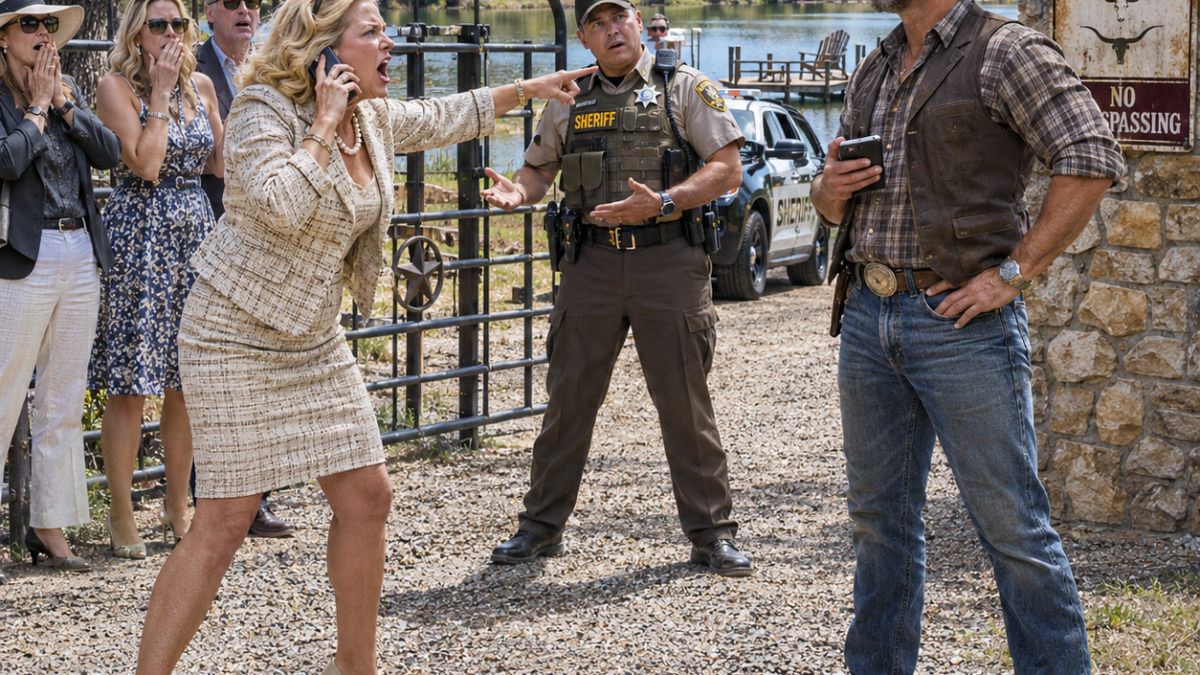
PART 2
“There’s an ongoing ownership dispute,” Deirdre snapped through the speaker. “The records are outdated. Just send a deputy.”
Rhonda looked at me again.
I didn’t move.
The office smelled like burnt coffee, printer toner, and that warm electrical smell old radio equipment gives off after being powered all day.
Behind Rhonda, one of the county maps hung crooked on the wall.
I had stood in that room during wildfires, rollover accidents, cardiac arrests, missing-child searches, and winter pileups.
I knew what a real emergency sounded like.
This wasn’t one.
This was somebody using the emergency system like a customer-service department.
Rhonda kept her voice professional.
“Ma’am, are you physically present at the property?”
“No.”
“Can you see the person you’re reporting?”
“I have information from residents.”
“So you are not witnessing a trespass?”
“I am the HOA president.”
“That wasn’t my question.”
Deirdre went quiet.
Rhonda’s expression hardened.
“Are you reporting an immediate threat to life or property?”
“The man is hostile.”
“What has he done?”
“He refuses to recognize our authority.”
I almost laughed.
Instead, I closed my eyes.
That sentence explained more than Deirdre realized.
Rhonda muted the line.
“Chief?”
“I heard it.”
“You want me to dispatch?”
“You follow protocol.”
She nodded.
That was another thing eighteen years in emergency service had taught me.
You don’t use your position to bend procedure just because you’re angry.
Rhonda returned to the caller.
“Ma’am, county records identify the lake as privately owned by Flint Dockery. I’m documenting your complaint, but I do not have verified grounds for an emergency trespass response.”
Deirdre raised her voice.
“I am telling you he is occupying contested property.”
From the radio behind us, Sheriff Wade Pernell came on.
“Dispatch, I’m three minutes from Dockery Road. I’ll check the location and document.”
Rhonda acknowledged him.
Then Wade added, “Flag the original call for review.”
Deirdre apparently heard the transmission.
“Review for what?”
Rhonda didn’t answer that question.
“Deputy is checking the location. Remain available by phone.”
The call ended.
The room became quiet.
I stared at the console.
Rhonda swiveled toward me.
“You okay?”
“Ask me after I decide whether I’m furious or impressed.”
“Impressed?”
“That she lied to 911 about property ownership when the property database is sitting in front of you.”
Rhonda shook her head.
“People think dispatch is magic until they learn we have computers.”
Ten minutes later Wade radioed back.
“Dispatch, Copper Ridge Lake secure. No trespasser. No complainant on scene. No emergency conditions.”
He paused.
“Property confirms as Dockery deeded parcel. Closing call unfounded.”
Rhonda typed the disposition.
I watched the words appear.
**UNFOUNDED COMPLAINT.**
It should have felt satisfying.
It didn’t.
Because Deirdre had crossed a line I understood better than most people.
False emergency calls don’t just waste a deputy’s time.
They can pull resources from a wreck.
A domestic violence call.
A child choking.
A house fire.
In a county our size, ten unnecessary minutes can matter.
I had watched homes burn while waiting for mutual-aid tankers.
I had watched people bleed beside roads while ambulances came from forty miles away.
Emergency systems were not toys.
That was the first time I stopped seeing Deirdre as merely entitled.
She was willing to risk consequences she didn’t understand.
Wade came by the station twenty minutes later.
He closed the office door.
“Flint.”
“Wade.”
“You want to tell me why your HOA friend thinks she owns your lake?”
“She isn’t my HOA friend.”
“Good. I was worried your standards were slipping.”
He sat.
Wade and I had known each other since high school. He had served in the Marines, come home, joined the sheriff’s department, and eventually taken over the office with the same attitude he brought to everything else: facts first, nonsense never.
He placed a printed call log on my desk.
“This is recorded.”
“I figured.”
“You were lucky.”
“How?”
“She made the ownership claim directly. No ambiguity.”
“You think there’ll be charges?”
“Maybe. Depends on intent, exact statute, county attorney. But there’s definitely a report.”
I leaned back.
“I don’t want a slap on the wrist.”
Wade studied me.
“That’s not how criminal cases work.”
“I know.”
“Then what do you want?”
I thought about it.
“I want to know why she keeps doing this.”
His eyebrows rose.
“You think there’s more?”
“Don’t you?”
Wade looked down at the call sheet.
“People lie for two reasons. Because telling the truth costs them something, or because lying gets them something.”
“That’s what I’m thinking.”
He pushed the paper toward me.
“Then figure out what she gets.”
That night I couldn’t sleep.
Jolene was beside me, breathing evenly, but my mind kept replaying the call.
**We have jurisdiction over this property.**
Not “we should have access.”
Not “we believe there’s an easement.”
Jurisdiction.
She needed the lake to be theirs.
Needed it badly enough to trespass, lock gates, file complaints, spend HOA money, smear me online, and now lie to 911.
Around midnight, I got up.
Our kitchen table became an archive.
HOA letters.
Survey reports.
County plats.
Attorney correspondence.
Inspection reports.
Screenshots from Copper Ridge Estates’ website.
I made coffee and started reading from the beginning.
At one-thirty, Jolene came downstairs in a robe.
She stood in the doorway.
“Couldn’t sleep?”
“No.”
“That makes two of us now.”
“Sorry.”
She poured herself tea.
“What are you looking for?”
“The reason.”
“For Deirdre?”
“For all of it.”
Jolene sat across from me.
“Maybe she’s just a bully.”
“Bullies usually want obedience.”
“She wants that.”
“She also wants the lake.”
“Because it looks pretty from her deck?”
I slid the first demand letter toward her.
Five-foot walking trail.
Seasonal dock rights.
Fishing access.
She read it.
Then another.
Then the bill from the HOA’s law firm.
Jolene looked up.
“How much have they spent?”
“At least twenty-three thousand that we know about.”
“For twelve houses?”
“Exactly.”
“That’s insane.”
“Unless access is worth more than the legal bill.”
That was when I remembered something.
The original sales brochure.
When Copper Ridge Estates was being built, a real estate agent had mailed glossy promotional material all over the county.
I had thrown mine away.
But the internet rarely forgets.
I searched archived pages.
Fifteen minutes later, I found a PDF.
Copper Ridge Estates.
**Luxury Montana Living With Private Water Recreation.**
My stomach tightened.
I opened it.
Page one showed mountain homes.
Page two showed hiking trails.
Page three showed a couple drinking wine beside a firepit.
Page four showed Copper Ridge Lake.
My lake.
A telephoto shot from the HOA property, cropped so tightly the private fence line disappeared.
Caption:
**Copper Ridge Lake — Your Private Oasis for Fishing, Boating and Family Memories.**
I stared.
“Jo.”
She came around the table.
“Oh.”
“Yeah.”
“That’s our dock.”
“Yeah.”
“They used a photo of your dad’s dock.”
“Looks like it.”
She sat slowly.
“Did the developer promise access?”
I pulled the HOA covenants from the pile.
Those had been attached to Deirdre’s original letter.
I searched “lake.”
Section Seven.
Recreational Amenities.
Then the paragraph.
**Residents shall enjoy exclusive recreational access to Copper Ridge Lake for fishing, boating, and swimming as secured by permanent easement.**
I read it twice.
Then a third time.
Jolene leaned over my shoulder.
“Permanent easement.”
“There isn’t one.”
“They wrote that there is.”
“There isn’t.”
“How do you know?”
“Because I paid three thousand dollars to prove it.”
She sat back.
“Flint.”
“I know.”
“No, I don’t think you do.”
I looked at her.
“These people bought expensive homes believing they had lake access.”
I felt the realization settle.
“And somebody has to explain why they don’t.”
“Deirdre.”
“Maybe.”
I pulled up county planning archives.
The developer had submitted several early applications before construction.
Buried in one packet was a request dated 2019.
**Proposed recreational access easement to Copper Ridge Lake.**
Denied.
Planning board notes cited private property rights and lack of owner consent.
My own signature appeared on a letter opposing the request.
I remembered it now.
At the time I had treated it as ordinary developer pressure.
I had written three paragraphs.
No.
The board had agreed.
The developer built anyway.
Sold anyway.
Advertised anyway.
Promised anyway.
Jolene whispered, “They knew.”
“At least somebody knew.”
I opened HOA meeting minutes Greer had obtained during the dispute.
February.
A section labeled **Lake Access Legal Strategy.**
I read aloud.
“Counsel advises association to evaluate prescriptive, adverse, historical-use, and necessity-based theories regarding lake access. Board authorizes litigation reserve of fifty thousand dollars to secure recreational rights and protect association from potential owner claims.”
Jolene sat completely still.
“Owner claims?”
“Homeowners.”
“Against the HOA?”
“Or developer. Maybe both.”
I pushed back from the table.
There it was.
Deirdre wasn’t trying to get access because she wanted a fishing dock.
She needed access because if the residents learned their million-dollar homes had been sold with a fictional amenity, somebody was going to pay.
Possibly the developer.
Possibly the association.
Possibly board members who had repeated the promise.
And if Deirdre could establish a story that HOA residents had always used my lake—or force me into signing access rights—then she could make the old marketing look less fraudulent.
Every trespass suddenly looked different.
The survey crew.
The locked gate.
The claims that my lake was common property.
The photos.
The public posts.
Even the 911 call.
She wasn’t merely trying to use the lake.
She was manufacturing a history in which the lake had always been theirs.
“She’s trying to rewrite the facts,” I said.
Jolene looked pale.
“To save the HOA?”
“To save somebody.”
“Maybe herself?”
I thought about her obsession.
Probably.
Jolene put her hand on mine.
“What do we do?”
I closed the laptop.
“Stop defending.”
“What does that mean?”
“It means Greer gets everything tomorrow.”
“And Wade?”
“Everything.”
“You sound happy.”
“I’m not.”
“You have that look.”
“What look?”
“The one you had when the equipment shed caught fire and the insurance company told you lightning caused it before you showed them the fuel can.”
I almost smiled.
“That was a good day.”
“The shed burned down.”
“The second half was good.”
She squeezed my hand.
“Just don’t become her.”
That wiped the smile away.
“I won’t.”
“Promise.”
“I promise.”
The next morning, Wade and I met at Magpie’s Diner.
He ordered a cinnamon roll the size of a hubcap.
I brought two binders.
He stared at them.
“You know breakfast is supposed to involve food.”
“Read.”
For twenty minutes, I walked him through the development brochure, covenants, denied easement application, HOA minutes, trespassing incidents, gate obstruction, agency complaints, and the 911 recording.
Wade stopped eating.
That told me more than anything.
When I finished, he leaned back.
“So she’s trying to establish access.”
“Looks that way.”
“Can that actually work?”
“That’s Greer’s department.”
“But motive.”
“Exactly.”
Wade tapped the 911 call sheet.
“The false report is still chargeable.”
“I know.”
“You want me to move?”
“Not yet.”
He frowned.
“Why?”
“Because if we charge her with one small thing now, she turns herself into a martyr.”
“Flint.”
“She’s already telling people you’re protecting me.”
“That doesn’t influence criminal decisions.”
“I know. I’m asking whether holding the misdemeanor while investigators document the larger pattern hurts anything.”
Wade considered.
“I’ll talk to the county attorney.”
“That’s all I’m asking.”
He studied me.
“You want her discredited.”
“I want her stopped.”
“Same thing?”
“Not always.”
He nodded slowly.
“Good answer.”
Greer’s office smelled like leather, old books, and expensive copier toner.
She read everything.
Twice.
Then she removed her glasses.
“Your HOA president has a problem.”
“What kind?”
“Several.”
“Start with my favorite.”
“The developer’s marketing.”
“Fraud?”
“Potentially. I’m not making that claim without discovery. But promising an easement that doesn’t exist is not a typo.”
“And Deirdre?”
“Her attempt to force access is now much easier to explain.”
“So what do we do?”
She pulled out a yellow pad.
“Three fronts.”
I leaned forward.
“First, we sue.”
“For what?”
“Trespass, interference with access, harassment-related damages, reputational harm where supportable, and declaratory relief confirming the lake and relevant access rights.”
“How much?”
“Seventy-five thousand to start.”
“That seems high.”
“You’ve lost work time, spent legal fees, paid surveys, dealt with inspections, and had your reputation attacked. I’m not promising a jury gives you every dollar.”
“What’s the point?”
“Discovery.”
I smiled.
“There it is.”
“Exactly. You file, their insurer gets involved, counsel has to assess risk, and financial records connected to the access campaign may become relevant.”
“Second?”
“We contact the developer.”
“What do we say?”
“The truth. Their marketing created exposure. Their old easement request proves somebody knew access wasn’t secured. If they want to reduce the chance of homeowner fraud claims, they need to correct the record immediately.”
“You think they’ll cooperate?”
“People become remarkably cooperative when you show them a complaint that could be attached to a class action.”
“And third?”
“We attack the narrative.”
I raised an eyebrow.
“Publicly?”
“Legally.”
She tapped the 911 transcript.
“Every false statement. Every anonymous complaint traceable to the HOA. Every claim your ranch is common property. We create one clean timeline.”
“I already have one.”
She smiled.
“Of course you do.”
She stood.
“Flint, you’re angry.”
“Yes.”
“Good.”
“That sounds unhealthy.”
“Anger tells you a boundary has been crossed. It just shouldn’t decide the strategy.”
“Jolene said basically the same thing.”
“Smart woman.”
“She married me.”
Greer considered.
“Everybody makes one mistake.”
The lawsuit was filed two days later.
Forty pages.
Exhibits.
Maps.
Photographs.
Emails.
Inspection reports.
The false 911 record.
We requested a formal accounting of HOA expenditures related to the lake campaign.
Then Greer sent the developer a letter.
Professional.
Measured.
Terrifying.
Their attorney called within two hours.
By the end of the day, they agreed to issue a written clarification to every homeowner.
Copper Ridge Lake was privately owned.
No recorded permanent easement had ever been secured.
The original promotional language had been inaccurate.
They apologized.
When that letter reached Copper Ridge Estates, the neighborhood exploded.
I know because my phone started ringing.
The first call came from a man named Dennis Harlow.
He lived two houses from Deirdre.
“Mr. Dockery?”
“Yes.”
“I owe you an apology.”
I waited.
“I thought you were denying us access we purchased.”
“I understand.”
“No, I mean I really thought it was ours.”
“That’s what you were told.”
“Did Deirdre know?”
“I don’t know what she knew when.”
“That’s not an answer.”
“It’s the only honest one I have.”
He sighed.
“Are you going to sue all of us?”
“No.”
“The HOA?”
“Yes.”
“That means us.”
“Indirectly.”
“Wonderful.”
“I didn’t create the problem.”
“I know.”
He sounded tired.
“That’s why I’m calling.”
Over the next week, more residents reached out.
Some apologized.
Some accused me of destroying their property values.
One woman cried because lake access had been the reason she convinced her husband to buy.
I didn’t enjoy those conversations.
It would have been easier if every person in the HOA were like Deirdre.
They weren’t.
Most were ordinary people who had believed a brochure.
That mattered.
Greer proposed mediation.
Neutral county office.
HOA counsel.
Board representatives.
County attorney as observer.
Wade present because the false-report matter remained open.
Deirdre agreed immediately.
Greer hung up and smiled.
“She thinks we’re going to offer access.”
“Are we?”
“No.”
“What are we offering?”
“A door out.”
“For her?”
“For the HOA.”
I understood.
Remove Deirdre.
Correct the record.
Pay my legal fees.
End the harassment.
Criminal matters proceed separately.
It seemed almost clean.
Then the cattle got sick.
I found them near the east trough on a cold October morning.
Normally, cattle hear my truck and start moving before I stop.
That morning, several barely lifted their heads.
One heifer stumbled.
Another stood with saliva hanging from her mouth.
I was out of the cab before I killed the engine.
“Come on, girl.”
The heifer tried to move.
Her legs looked wrong.
Weak.
I called Doc Reardon.
He arrived forty minutes later.
Large-animal vets don’t waste words.
He examined three animals, drew blood, checked the trough, and collected water samples.
Then he smelled the water again.
His face changed.
“Flint.”
“What?”
“Keep every animal away from this trough.”
“What is it?”
“I need the lab to confirm concentration, but I’m getting ethylene glycol.”
I stared.
“Antifreeze?”
“Yes.”
“How?”
He looked toward the culvert feeding the trough.
“Not naturally.”
My stomach dropped.
“Somebody poured it in.”
“I can’t tell you who. I can tell you this isn’t something cattle generate.”
I looked at the heifer.
She was trembling.
“How bad?”
“If exposure is limited, we may be okay. If they keep drinking—”
He stopped.
He didn’t need to finish.
I called Wade.
Then Greer.
Then Jolene.
Dad came down from his cabin while the vet treated the sickest animals.
Hank was ninety-one and moved slowly, but his eyes missed almost nothing.
“What happened?”
“Contamination.”
“From?”
“Antifreeze.”
He looked toward the road.
“Her?”
“We don’t know.”
He spat into the dirt.
“Know enough.”
“Dad.”
“You think I’m old, not stupid.”
“I think we need proof.”
His jaw tightened.
“Proof.”
“Yeah.”
“You always were more patient than me.”
“That is absolutely false.”
“Maybe age improved you.”
I walked the culvert.
The spring crossed beneath the county road near the HOA boundary.
Anybody could pull onto the shoulder.
No camera.
That mistake was mine.
I installed one that afternoon.
A game camera hidden deep in brush.
Another unit farther back.
Then I waited.
The first night, nothing.
Second night, coyotes.
A raccoon.
One pickup that never stopped.
At dawn on the third morning, I pulled the card.
2:17 a.m.
White Tesla Model X.
Headlights off.
My pulse jumped.
The driver’s door opened.
Dark clothes.
Headlamp.
Plastic jug.
The figure walked toward the culvert.
Crouched.
Poured.
For several seconds, the face was hidden.
Then the person stood and turned.
The headlamp caught her features.
Deirdre.
I replayed it.
Again.
Again.
My hand began shaking.
Not fear.
Rage.
I thought about the heifer stumbling.
My father’s cattle.
My grandfather’s ranch.
Living animals that had nothing to do with property lines or easements or HOA politics.
She had poisoned them because they were useful pressure.
I made copies.
Laptop.
Cloud.
Two drives.
Then I drove to Wade.
He watched in silence.
When the video ended, he didn’t make a joke.
“This is different.”
“I know.”
“You have the vet report?”
I handed it over.
“Plate visible?”
“Yes.”
“Vehicle registered to her?”
“Yes.”
He stood.
“I’m calling Patricia.”
Patricia Carr, the county attorney, came down twenty minutes later.
She watched the footage.
Asked questions.
Chain of custody.
Camera placement.
Property access.
Water samples.
Then she said, “We’ll seek a warrant.”
I leaned against Wade’s desk.
“Today?”
“Yes.”
They searched Deirdre’s garage that afternoon.
Wade called me just before dinner.
“Found antifreeze.”
“That alone doesn’t prove anything.”
“Same brand. Half-empty container.”
I closed my eyes.
“Anything else?”
“Plastic funnel. Gloves with residue. We’ll let the lab work.”
“Arrest?”
“Patricia wants to finish a couple evidentiary steps.”
“When?”
“Soon.”
I looked toward the lake.
The mediation was two days away.
“Can she still attend?”
Wade paused.
“Why?”
“I want the HOA board to see everything.”
“That’s your civil matter.”
“I know.”
“Flint, don’t turn this into theater.”
I bristled.
“She poisoned my cattle.”
“I know.”
“You think I’m trying to have fun?”
“No. I think you’re angry enough to confuse humiliation with justice.”
That shut me up.
Wade continued.
“If Patricia decides an arrest happens before mediation, that’s what happens. If not, she attends. You don’t get to schedule cuffs for emotional effect.”
I exhaled.
“You’re right.”
“I usually am.”
“Don’t ruin the moment.”
He laughed once.
“Go take care of your cows.”
Three recovered quickly.
The heifer took longer.
Dad named her Deirdre.
I objected.
“Why would you do that?”
“So every time she gets healthy, it annoys the real one.”
“You are ninety-one years old.”
“Means I’ve had longer to practice spite.”
Jolene almost dropped a plate laughing.
That small joke saved something in me.
The next morning, I received an email from the HOA.
Settlement offer.
Thirty thousand dollars.
No admission of wrongdoing.
I would dismiss the lawsuit, release the association from claims, and recognize “reasonable recreational access” to Copper Ridge Lake.
I forwarded it to Greer.
She called.
“Absolutely not.”
“I figured.”
“This is Deirdre trying to buy the very thing she couldn’t steal.”
“I know.”
“Stop saying that.”
“I know.”
She hung up.
By then, the HOA board was fracturing.
Two members resigned.
One of them, retired accountant Marvin Bell, contacted Greer privately.
He had opposed Deirdre’s spending for months.
He sent meeting notes.
Invoices.
Emails.
One message from Deirdre caught my attention.
**If we concede Dockery’s ownership position, members may pursue the association for failure to deliver promised amenities. We must preserve the historical-use narrative.**
Historical-use narrative.
There it was in her own words.
Not truth.
Narrative.
Greer read it twice.
“This goes in the mediation package.”
The day before mediation, Deirdre went to television.
A regional station out of Billings sent a young reporter named Trevor Lang.
The headline she wanted was obvious.
**Powerful Local Rancher Uses Political Connections Against Retirees.**
Trevor called me.
“Mr. Dockery, would you be willing to speak on camera?”
“No.”
“Can I ask why?”
“I don’t want to become television.”
“Mrs. Vandermeer says you’re refusing every compromise and using your fire-chief position and relationship with the sheriff to intimidate residents.”
“That’s false.”
“She says the lake is historically community property.”
“That’s false.”
“She says you threatened her surveyor.”
“Also false.”
“Then you might want to respond.”
“I’ll give you documents.”
“On camera?”
“Paper doesn’t get nervous.”
We met at Magpie’s.
I brought the binders.
The developer correction letter.
The denied easement request.
The 911 recording transcript.
Gate-lock footage.
Inspection reports.
Lawsuit.
Vet report.
Search-warrant return.
Trevor started skeptical.
Then stopped interrupting.
Forty minutes later, he leaned back.
“This isn’t the story she told me.”
“I assumed.”
“She said the livestock poisoning was invented after mediation talks failed.”
“The vet report predates her interview.”
He stared at the date.
“Yeah.”
“She said Wade searched her home because you ordered him to.”
“I’m a volunteer fire chief. I cannot order the sheriff to search somebody’s home.”
“You’ve known him for years.”
“I’ve known half this county for years.”
He looked through the 911 transcript.
Then stopped.
“Wait.”
“What?”
“You were in dispatch?”
“Yes.”
“When she called?”
“Yes.”
His eyes widened.
“She called 911 to remove you from your own lake while you were sitting next to the dispatcher?”
“That’s about the size of it.”
He shook his head.
“That’s unbelievable.”
“It was more annoying in real time.”
He looked at the camera operator.
Then back to me.
“Can we use the dispatch audio if the county releases it?”
“Ask the county.”
Two days later, the story aired.
Trevor used Deirdre’s interview first.
She looked composed.
Wounded.
Reasonable.
“I’ve simply tried to protect elderly homeowners who purchased lake rights in good faith.”
Then came the developer correction letter.
Then county maps.
Then the 911 audio.
Her voice filled my living room.
**He refuses to leave private HOA property.**
Rhonda:
**County records show Copper Ridge Lake is owned by Flint Dockery.**
Then Deirdre:
**The records are outdated. Just send someone.**
Jolene sat beside me.
Dad was in the recliner.
When the segment showed Deirdre locking my pasture gate, Hank muttered something I won’t repeat.
Then came the poisoning footage.
The station blurred part of Deirdre’s face until charges were formally confirmed, but her Tesla and the timeline were clear.
Trevor ended outside my ranch entrance.
“What began as a dispute over promised recreational access has expanded into allegations of false emergency reporting, repeated trespass, misuse of government complaint systems, and livestock poisoning. County prosecutors say the investigation remains active.”
When the broadcast ended, nobody spoke.
Then Dad said, “Boy needs a better hat.”
I stared at him.
“That’s your takeaway?”
“Everything else I already knew.”
My phone started vibrating.
Messages.
Calls.
Residents.
Friends.
Firefighters.
People I hadn’t heard from in years.
I turned it off.
Jolene watched me.
“You okay?”
“I hate this.”
“The news?”
“Being known for this.”
She rested her head against my shoulder.
“Then finish it.”
That evening, Marvin texted Greer.
**Six board members resigned. Deirdre effectively has no functioning board majority. Insurance carrier denying defense for intentional criminal conduct. Most residents want her removed.**
Then Deirdre emailed me directly.
Three sentences.
**I will resign if you dismiss the civil suit and ask the county not to pursue charges. I made mistakes. I do not deserve to have my life destroyed.**
I read it twice.
Jolene read it.
Her expression softened.
“Part of me feels sorry for her.”
“Me too.”
She looked surprised.
“You do?”
“I feel sorry for anybody who gets so far into a lie they think the only direction is deeper.”
“Are you going to answer?”
“No.”
“Why?”
“Because feeling sorry for someone isn’t the same as protecting them from consequences.”
Jolene nodded slowly.
“That sounds like your father.”
“God help me.”
Dad shouted from the living room.
“I heard that.”
The mediation took place the following morning at the county commissioner’s office.
County Commissioner Albert Kohler had been a judge before retirement.
He had the kind of face that looked carved specifically for disappointment.
Greer and I sat on one side.
Deirdre and her lawyer sat opposite.
Wade stood near the back.
Patricia Carr, the county attorney, sat at the head.
Three remaining HOA representatives occupied chairs against the wall.
A court reporter waited in the corner.
Deirdre looked exhausted.
Heavy makeup.
Hands trembling slightly.
She avoided my eyes.
Commissioner Kohler began.
“This session is intended to explore resolution of civil property disputes and related association issues. Criminal matters remain entirely separate.”
Good.
Clear.
Greer had insisted on that.
Kohler looked toward me.
“Mr. Dockery?”
I stood.
“I don’t want lake-access mediation.”
Deirdre’s lawyer immediately moved.
“Then why are we here?”
Greer raised one hand.
“Let him finish.”
I looked at the commissioner.
“For six months, Mrs. Vandermeer has claimed there is some legitimate uncertainty about my property. I’m here because that uncertainty needs to end in front of witnesses.”
I connected my laptop.
“First, ownership.”
County maps.
Deed.
Survey.
Developer correction letter.
“No easement exists.”
Deirdre stared down.
“Second, trespass.”
Video.
She and the board crossing my ranch with the surveyor.
“Third, obstruction.”
Gate footage.
Deirdre at dawn locking my access.
The audio played.
**Let’s see him get through now.**
One board member covered her mouth.
“Fourth, false complaints.”
A chart appeared.
Health department.
Environmental quality.
Zoning.
All within forty-eight hours.
All unfounded.
All from HOA-domain email addresses.
“Fifth, the emergency call.”
I pressed play.
The room heard her lie to 911.
Not a summary.
Her voice.
Her confidence.
Her insistence that my lake was HOA property.
Then Rhonda correcting her.
When the recording ended, I looked directly at Deirdre.
“I was ten feet from dispatch when you made that call.”
Her eyes finally met mine.
“I didn’t know.”
“I know.”
For the first time in months, she had nothing to say.
I changed slides.
“Sixth, motive.”
The glossy development brochure filled the wall.
My lake.
My father’s dock.
**Your Private Oasis.**
Then the denied easement application.
Then the HOA covenant promising permanent access.
Then the meeting minute authorizing litigation to “protect association from member claims.”
Marvin’s email appeared last.
**We must preserve the historical-use narrative.**
The room became silent.
I turned toward the HOA representatives.
“You were sold access your developer never secured.”
A woman against the wall whispered, “We know that now.”
I nodded.
“Mrs. Vandermeer tried to solve that problem by making my property become yours after the fact.”
Deirdre finally spoke.
“That is not fair.”
Everyone looked at her.
“We were promised the lake.”
I took a breath.
“You were.”
“People paid premiums because of it.”
“I believe you.”
“You don’t understand what it means to tell retirees that the biggest amenity in their purchase never existed.”
“No. I understand exactly what it means.”
“You could have fixed this.”
“How?”
“Access.”
“So because somebody lied to you, I owe you my land?”
Her face tightened.
“We could have negotiated.”
“You didn’t negotiate. You trespassed.”
“We believed—”
“You locked my gate.”
“I was protecting—”
“You filed fake complaints.”
“I was under pressure!”
“You called 911.”
“I panicked.”
Then she stopped.
Her lawyer leaned toward her.
Too late.
I changed slides.
The east trough appeared.
My sick heifer.
Vet report.
Then the nighttime footage.
White Tesla.
Jug.
Headlamp.
Deirdre’s face.
Nobody moved.
I heard the court reporter’s keys.
That was it.
The sound of consequences becoming record.
Deirdre stared at the screen.
“No.”
I said nothing.
“That isn’t me.”
Greer placed the search inventory on the table.
“Antifreeze consistent with the contaminated trough supply was recovered from your garage along with items submitted for residue testing.”
Her lawyer closed his eyes.
“Deirdre, stop talking.”
She didn’t.
“He was destroying us.”
I felt something inside me settle.
There are moments when anger burns itself out so completely there is nothing left but clarity.
I looked at her.
“You poisoned cattle.”
Tears appeared.
“I didn’t mean to kill them.”
Patricia Carr’s pen stopped.
Deirdre’s lawyer went pale.
“Do not say another word.”
But the sentence had already landed.
**I didn’t mean to kill them.**
Not denial.
Intent minimized.
Patricia looked toward Wade.
He nodded once.
Greer whispered, “That’s enough.”
I turned off the projector.
Patricia spoke.
“Mr. Dockery, are you seeking criminal charges where supported?”
“Yes.”
Deirdre stared at me.
“Flint.”
It was the first time she had said my name without contempt.
I hated that it made her sound human.
“Yes,” I repeated.
Greer stood.
“The civil matter can be resolved separately. Our proposal is straightforward. The association permanently recognizes the Dockery property boundaries and Copper Ridge Lake as private. It retracts prior public statements. It reimburses Mr. Dockery’s documented legal expenses. It issues a written apology. In return, Mr. Dockery will dismiss the civil damages claim against the association.”
One board representative immediately nodded.
Deirdre snapped toward her.
“You cannot agree to that.”
“You’re not president anymore.”
Deirdre froze.
The woman’s voice shook, but she continued.
“Six of us resigned last night. The remaining members voted this morning to suspend you pending removal.”
“You don’t have the authority.”
“We do.”
“I built this association.”
“No,” the woman said quietly. “You controlled it.”
Deirdre looked around the room.
Nobody came to her defense.
Her lawyer stared at the table.
Then Wade stepped forward.
“Deirdre Vandermeer.”
Her face crumpled.
He continued carefully, reading from the warrant.
He placed her under arrest on charges connected to livestock poisoning and false reporting, along with any additional matters determined by prosecutors.
No dramatic speech.
No applause.
Just procedure.
“Stand up, please.”
Deirdre didn’t move.
“Deirdre.”
She looked at me.
“You ruined my life.”
The words almost pulled anger back out of me.
Almost.
“No.”
My voice came out quieter than I expected.
“I kept records.”
Wade cuffed her.
The click sounded very small.
For months, I had imagined that moment.
I thought it would feel like victory.
Instead, I looked at a fifty-eight-year-old woman standing in a county conference room with mascara beginning to run down her face, and I felt mostly tired.
She had made terrible choices.
She had hurt people.
She had endangered animals.
She had abused public systems.
But she was still a human being watching the life she had constructed collapse in front of witnesses.
Justice can be necessary without being enjoyable.
That surprised me.
After Wade escorted her out, the room remained silent.
Then Commissioner Kohler cleared his throat.
“I assume the association wishes to respond to the civil proposal.”
The woman against the wall nodded.
“We accept.”
Greer looked at me.
I nodded.
The agreement was drafted that afternoon.
Legal fees.
Eighteen thousand dollars.
Written acknowledgment.
No lake easement.
No historical-use claim.
No interference with ranch access.
Public apology.
When it was signed, I walked outside.
Bright October sun.
Cold air.
Greer joined me.
“How do you feel?”
“Hungry.”
“That’s it?”
“And tired.”
“You won.”
I looked toward the courthouse steps.
“I don’t know if that’s the word.”
“What word would you use?”
“Finished.”
She smiled slightly.
“Give it time.”
The criminal case took three months.
Real cases do.
Lab reports.
Plea negotiations.
Statements.
Restitution.
The final resolution was less cinematic than people expected after seeing the television coverage.
Deirdre pleaded guilty to reduced charges.
She received probationary supervision, substantial restitution, community-service requirements, and financial penalties connected to the criminal conduct.
She also lost the real-estate license she had maintained for luxury property work.
The state licensing board concluded that her conduct was incompatible with professional standards.
Her Copper Ridge home sold.
At a loss.
She moved out of Montana.
I never learned whether Arizona was permanent.
I never tried to.
The HOA paid my legal expenses.
Then came the apology.
It appeared in the county newspaper.
**Copper Ridge Estates Homeowners Association acknowledges that Copper Ridge Lake has always been privately owned by the Dockery family and that no permanent recreational easement exists. The association apologizes to Flint and Jolene Dockery for unauthorized entry, unfounded complaints, and public statements made during the dispute.**
Then came the line Greer loved.
**We recognize Mr. Dockery’s patience and professionalism throughout an unnecessarily adversarial situation.**
Greer framed it.
Hung it in her office.
When I saw it, I pointed at the frame.
“You have actual diplomas.”
“This is more satisfying.”
“You’re strange.”
“You paid me to be strange professionally.”
The story could have ended there.
For a week, I wanted it to.
I wanted silence.
No reporters.
No HOA.
No deputies.
No documents.
Just cattle and fence repair.
Then one afternoon, I saw two Copper Ridge kids standing near the public road.
They were looking through the pines toward the lake.
Not trespassing.
Just looking.
One was maybe ten.
The other younger.
The older boy pointed.
“That’s the lake.”
I don’t know why that got to me.
Maybe because they had done nothing wrong.
They hadn’t written brochures.
They hadn’t lied.
They hadn’t locked gates.
They had been told their neighborhood came with a lake.
Then adults turned the whole thing into a war.
That evening, I told Jolene I wanted to invite the residents over.
She stared at me.
“Who are you?”
“Be serious.”
“I am.”
“Barbecue.”
“For the HOA?”
“For the people.”
“You spent six months suing them.”
“I sued the association.”
“The association is the people.”
“Technically.”
She narrowed her eyes.
“You’ve been spending too much time with Greer.”
I laughed.
“Open house. One day. Ranch tour. Food. Let people see the boundaries themselves.”
“And the lake?”
“They can look at it.”
“Can they fish?”
I thought about Dad.
Then about the kids by the road.
“Maybe.”
Jolene smiled.
“There he is.”
“Who?”
“The man I married before property litigation turned him into a filing cabinet.”
We mailed invitations.
I expected ten people.
Forty-three came.
Families.
Retirees.
Board members.
People who had defended Deirdre online.
People who had apologized.
People who hadn’t.
They brought pies.
Beer.
Casseroles.
One couple brought flowers for Jolene.
Another brought a handwritten letter.
An elderly woman named Ruth approached me near the lake.
She held a rhubarb pie.
“We owe you an apology.”
“You don’t owe me pie.”
“I disagree.”
I took the pie.
“Then apology accepted.”
Her husband looked toward the dock.
“We really believed it was ours.”
“I know.”
“We thought you were some rancher trying to take away a right we paid for.”
“I know.”
“You keep saying that.”
“Because I do.”
Ruth’s eyes filled.
“We said terrible things.”
“You were angry at the wrong person.”
“That doesn’t excuse it.”
“No.”
I let that sit.
Then I added, “But we don’t have to live there forever.”
Her husband laughed softly.
“Can we at least look at your lake?”
I pointed.
“You’ve been looking at it for five years.”
“You know what I mean.”
I smiled.
“Come on.”
Dad was already on the dock.
Hank had apparently decided he was master of ceremonies.
A ten-year-old girl stood beside him holding a fishing rod.
Her mother looked mortified.
“Mr. Dockery, I told her she couldn’t—”
Dad waved her off.
“She asked.”
I looked at him.
“This is still my ranch.”
“You’re taking too long making rules.”
The girl looked up at me.
“Can I fish?”
I glanced at Jolene.
She smiled.
“Catch and release,” I said.
The girl grinned.
Dad handed her the rod.
That afternoon changed everything.
Not legally.
The lake remained private.
The deed remained mine.
The boundaries stayed.
But people stopped seeing the fence as an act of war.
They began seeing it as a boundary.
There’s a difference.
By spring, we started Copper Ridge Community Fishing Day.
Twice a year.
Reservation required.
Limited numbers.
Catch and release.
Twenty dollars per person.
Barbecue included.
Every dollar went to the volunteer fire department.
The first event sold out.
Eighty people.
Kids everywhere.
Dad on the dock teaching knots.
Jolene running food.
Wade cooking burgers and telling everybody he was only there in an official capacity.
Rhonda, the dispatcher, brought her grandchildren.
At one point she stood beside me watching a boy cast.
“You realize none of this happens if Deirdre doesn’t call 911.”
I looked at her.
“That’s a terrible way to frame it.”
“I’m just saying.”
“She could’ve simply asked to fish.”
“Would you have said yes?”
“Maybe.”
Rhonda laughed.
“No, you wouldn’t.”
“I might.”
“You made your own children request advance permission.”
“That was different.”
“How?”
“They’re dangerous.”
Tyler, home from Billings, heard me.
“Nice.”
He was twenty-three by then.
Madison came home the same weekend.
They had both grown up around Copper Ridge Lake but had missed most of the dispute while building their own lives.
Watching them return after everything was strangely emotional.
Tyler stood at the shore.
“I forgot how clear it is.”
“You forgot?”
“I was busy.”
“With what?”
“Having a life.”
“Overrated.”
Madison joined us.
“Mom says Grandpa has started lying about his fishing numbers.”
Dad shouted from the dock.
“I can hear you!”
Madison yelled back.
“Then stop lying!”
He raised one finger.
I’ll let you guess which.
The restitution money came later.
Twenty-five thousand dollars.
For weeks, I didn’t touch it.
Every time I looked at the bank statement, I saw a sick heifer.
Money felt wrong.
Then Jolene said, “Make it become something else.”
“What?”
“The money.”
I understood immediately.
Dad didn’t.
When I told him we were creating the Hank Dockery Land Stewardship Scholarship, he stared at me like I had announced I was naming a landfill after him.
“Absolutely not.”
“It’s done.”
“Flint.”
“Two thousand five hundred dollars a year for a Larksburg County student studying agriculture, land management, environmental science, or something related.”
“You named it after me?”
“Yes.”
“I’m not dead.”
“That was deliberate.”
He scowled.
“You’re supposed to wait until people die before embarrassing them publicly.”
“Then behave.”
Jolene laughed so hard she had to sit down.
The first recipient was a sixteen-year-old girl named Emily Bell.
Marvin Bell’s granddaughter.
Marvin had been one of the board members who finally turned against Deirdre.
Emily wanted to study rangeland ecology at Montana State.
When she came to the ranch to receive the scholarship certificate, Dad wore his only suit jacket.
He complained the entire morning.
Then Emily told him she wanted to study drought-resistant grazing systems that could keep Montana ranches viable for future generations.
Dad’s eyes filled.
He turned away.
I pretended not to notice.
Later, on the porch, he said, “Your grandfather would’ve liked her.”
“Yeah.”
“He believed land wasn’t really owned.”
“That’s an unusual belief for a rancher.”
“He said you borrow it.”
I looked at him.
“From who?”
“The people after you.”
That stayed with me.
For months, I had fought because the lake was mine.
Legally.
Historically.
Emotionally.
And I was right to fight.
But Dad’s point wasn’t about surrendering ownership.
It was about responsibility.
If you inherit something valuable, your job isn’t merely to defend it.
Your job is to leave it worth inheriting.
That idea became the final part of what we built.
The northwest corner of the ranch was steep timber.
Beautiful.
Bad for cattle.
Forty acres.
I placed it under a conservation easement with the county land trust.
Not transferred out of family ownership.
Protected from future development.
Permanent restrictions.
No subdivision.
No luxury homes.
No commercial clearing.
The trailhead sign went up the following spring.
**DOCKERY FAMILY CONSERVATION EASEMENT**
Dad stood beside me when they installed it.
“Looks expensive.”
“It was donated.”
“The sign.”
“I don’t know.”
“You should know. Your taxes pay for everything.”
“You’ve become very political at ninety-one.”
“I’ve always been political. People just stopped listening.”
We stood there quietly.
Then he touched the sign.
“This will outlive me.”
“Probably.”
“You too.”
“Thanks.”
“Don’t get sentimental.”
“I wasn’t.”
“You were getting there.”
The local newspaper ran a follow-up story.
The photograph showed me in my fire-chief jacket beside Copper Ridge Lake.
The headline read:
**FROM CONFLICT TO COMMUNITY: RANCHER TURNS PROPERTY FIGHT INTO FIRE FUND, SCHOLARSHIP AND CONSERVATION PROJECT**
Jolene framed it.
I protested.
She hung it in the kitchen beside the HOA apology.
“You’re creating a shrine.”
“I’m documenting history.”
“You sound like Greer.”
“Best compliment you’ve given me all week.”
Dad’s health improved after the fight ended.
Stress had been harder on him than he admitted.
For a while, he had stopped fishing every morning.
After Deirdre left, he returned to the dock.
Same stool.
Same dented tackle box.
Same ridiculous hat.
One November morning I joined him.
Frost covered the cedar planks.
Steam lifted from our coffee.
He cast without looking at me.
“You ever think about her?”
“Deirdre?”
“Who else?”
“Not much.”
“Good.”
A trout broke the surface.
Dad watched the rings expand.
“She almost got what she wanted.”
“No.”
“She almost made you hate the place.”
That caught me.
I looked at him.
He kept staring at the water.
“For a while,” he continued, “every time you came down here, you were checking cameras. Checking fences. Looking for tracks.”
“I had to.”
“I know.”
“But?”
“But she moved into your head before she ever got onto the property.”
I didn’t answer.
He reeled slowly.
“That’s the dangerous kind of trespassing.”
I smiled.
“You practice these lines?”
“Ninety-one years. Eventually you say something worth remembering.”
We sat.
After a while, I said, “You were scared too.”
His reel stopped.
“During the poisoning.”
“Yeah.”
He nodded.
“I was.”
“You never said.”
“I’m saying now.”
“What scared you most?”
He looked at the lake.
“That I’d live long enough to watch somebody take apart what my father built.”
My throat tightened.
“That wasn’t going to happen.”
“You didn’t know that.”
“No.”
He turned toward me.
“But you acted like it.”
I looked down at my coffee.
“I was terrified.”
“I know.”
“How?”
“Because courage only counts when you are.”
That was Dad.
One sentence.
Then back to fishing.
Two years after the dispute, Copper Ridge Community Fishing Day became a county tradition.
We capped attendance because I refused to let the place become a carnival.
Kids learned to cast.
Volunteer firefighters ran safety demonstrations.
Jolene organized a book table from the school library.
Wade taught children how not to behave around emergency vehicles.
Rhonda gave tours of the communications trailer.
Greer showed up once.
Once.
She caught a trout.
Then complained there was no contractual guarantee of fish.
I told her to sue.
The HOA changed too.
Marvin Bell became president for one term.
He reduced the rulebook.
Published financial reports.
Required outside review of major legal expenditures.
Most importantly, the association removed every reference to Copper Ridge Lake as a community amenity.
Property values did not collapse.
The neighborhood did not implode.
People still bought houses.
Families still lived there.
Turns out peace has value too.
One evening, Ruth and her husband came to the ranch for dinner.
She looked toward the lake.
“You know, when we bought, I thought access to that water was what made our house special.”
“And now?”
She smiled.
“Now I think knowing our neighbors matters more.”
“That sounds suspiciously wholesome.”
“Don’t ruin it.”
I laughed.
She grew serious.
“We were scared after the developer letter.”
“About suing?”
“About losing money.”
“Understandable.”
“Deirdre used that.”
“Yes.”
“She convinced us if you won, our homes would become worthless.”
“I know.”
Ruth looked at me.
“How did you not hate all of us?”
I thought about that.
“I did for about three days.”
She laughed.
“Seriously?”
“Pretty much.”
“What changed?”
“I realized you weren’t the people sneaking onto my ranch.”
She nodded.
“Boundaries.”
“Exactly.”
The strangest part came three years after the 911 call.
A letter arrived.
Arizona postmark.
Deirdre.
I knew before opening it.
I almost threw it away.
Instead, I took it to the dock.
Dad was beside me.
“Who’s that from?”
“You know.”
He squinted at the envelope.
“Burn it.”
“Jolene said I should read it.”
“That’s why you married her and not me.”
“That is one reason.”
He grunted.
I opened the letter.
Four pages.
Her handwriting was neat.
Controlled.
Very Deirdre.
She wrote that moving had been humiliating.
That she had lost friends.
Her real-estate work.
Her marriage.
Her reputation.
She wrote that for months she blamed me, Wade, Greer, the board, the developer, the media.
Everyone.
Then came a sentence I wasn’t prepared for.
**I spent years believing that if I could control every outcome, I could prevent people from seeing how afraid I was of losing anything.**
I read it again.
Dad watched my face.
“What?”
“Nothing.”
“That’s a lie.”
I kept reading.
She admitted the first lake claim had begun as a strategy suggested during HOA discussions.
She had convinced herself the Dockery family was being unreasonable by refusing access residents had been promised.
Then, once homeowners began asking questions, she became terrified that the association would collapse under lawsuits and she would be blamed.
The lies got bigger.
The harassment got worse.
She wrote:
**By the time I called 911, I had repeated the story so many times that part of me expected the dispatcher to accept it as fact.**
Then the poisoning.
That paragraph was short.
No excuses.
**What I did to your cattle is the thing I cannot explain away. I was angry and afraid and wanted you to feel vulnerable. I knew it was wrong before I did it.**
I stopped.
Dad was quiet.
At the end, Deirdre wrote:
**I do not expect forgiveness. I wanted you to know I finally understand that you did not destroy my life by refusing to give me your property. I destroyed it because I decided every boundary was an attack on me.**
I folded the letter.
Dad cast.
“Well?”
“I don’t know.”
“She apologize?”
“Sort of.”
“Sort of isn’t a word that belongs in apologies.”
“She admitted it.”
“That’s different.”
“Yeah.”
He looked at me.
“You writing back?”
“I don’t know.”
“Don’t ask me.”
“I wasn’t.”
“I’d tell her to go to hell.”
“Which is why I wasn’t asking.”
He nodded.
“Smart.”
I carried the letter for two weeks.
Finally, I wrote three sentences.
**I received your letter. I appreciate that you took responsibility without asking me to change what happened. I hope whatever you build next does not require taking something from somebody else.**
I mailed it.
That was the last contact we had.
I don’t know whether she changed.
I hope she did.
Not because she deserved a happy ending more than anyone else.
Because if people cannot become better after consequences, then punishment is just storage.
Years passed.
Dad reached ninety-three.
Then ninety-four.
He slowed down.
His hands shook more.
But he kept fishing.
One spring morning, I found him on the dock before sunrise.
He had fallen asleep in the chair.
Rod beside him.
Hat pulled low.
For one terrifying second, I thought he was gone.
Then he snored.
I nearly kicked the chair.
He opened one eye.
“You look stupid.”
“You scared ten years off my life.”
“You don’t have ten to spare.”
“Dad.”
He smiled.
That summer, his health declined.
Nothing dramatic.
No sudden accident.
Just age doing what age does.
One afternoon, he asked me to drive him around the ranch.
We took the old Ford.
Past the cattle.
Past the conservation sign.
Past the east trough where Deirdre had poisoned the water years earlier.
He tapped the window.
“That one.”
“What?”
“That’s Deirdre?”
I laughed.
The heifer had become an old cow by then.
“Still alive.”
“Outlived the original.”
“Probably.”
He smiled.
We ended at the lake.
I helped him down to the dock.
He sat.
No rod that day.
Just watched.
“Flint.”
“Yeah?”
“Don’t make this place a museum.”
“What?”
“When I’m gone.”
I looked at him.
“Dad.”
“Listen.”
I did.
“Land dies if everybody gets so scared of changing it they stop living on it.”
“I’m not turning it into condos.”
“Obviously.”
He gestured toward the lake.
“Kids should still fish. Cattle should still make a mess. Your grandchildren should build stupid things in the barn.”
“I don’t have grandchildren.”
“You will.”
“You know something?”
“No. But Tyler’s not careful.”
“Jesus, Dad.”
He laughed until he coughed.
Then he rested.
“Your grandfather made mistakes here. So did I. So will you.”
“That’s encouraging.”
“The point is, protect it without freezing it.”
I looked across Copper Ridge.
“What do you want done with the lake?”
“Nothing.”
“Nothing?”
“It knows what it’s doing.”
That was our last long conversation.
Dad died that winter.
At home.
Peacefully.
Jolene beside him.
Me on the other side.
His old fishing hat hanging on the bedpost.
The morning after the funeral, I walked to the lake alone.
Snow covered the dock.
I carried his tackle box.
Inside were thirty-seven fishing notebooks.
1984 through his final season.
Every date.
Weather.
Water temperature.
Species.
Catch count.
Tiny notes.
**Flint fell in.**
**Jolene caught bigger trout. He sulked.**
**Tyler first fish.**
**Madison refused worms. Sensible girl.**
Then, years later:
**HOA trouble. Fishing still good.**
I laughed and cried at the same time.
On the final page he had written one sentence.
**Lake belongs to family, but joy belongs to whoever you invite.**
I sat there until my hands went numb.
The following spring, we renamed the scholarship.
The Hank Dockery Memorial Scholarship.
This time, he couldn’t complain.
Community Fishing Day became the first event after his death.
I almost canceled it.
Jolene refused.
“He told you not to turn the place into a museum.”
So eighty people came.
Kids.
Neighbors.
Firefighters.
HOA residents.
Emily Bell returned from Montana State and gave a short talk about rangeland ecology.
At sunrise, before everyone arrived, I placed Dad’s old chair on the dock.
His hat rested on the back.
No sign.
No plaque.
Nothing dramatic.
People who knew understood.
Around noon, a little girl maybe nine years old stood beside me holding a rod.
“Mr. Dockery?”
“Yeah?”
“My dad says your dad taught him how to tie a fishing knot.”
I looked toward her father.
Dennis Harlow.
The first HOA resident who had called to apologize years earlier.
“Apparently.”
“Can you teach me?”
I almost said I wasn’t very good.
Then I heard Dad in my head.
Stop making excuses.
I crouched.
“Show me what you’ve got.”
She made an absolute disaster of the line.
Dad would have loved it.
I untangled it.
Taught her a clinch knot.
She cast.
The lure landed about eight feet out.
She looked disappointed.
“Again,” I said.
Second cast went farther.
Third farther still.
Then she smiled.
Not because she caught anything.
Because she had improved.
I sat in Dad’s chair after everyone left.
The lake was quiet.
Copper Ridge Estates lights glowed through the pines.
Years earlier, those houses had felt like an invading army.
Now they were just houses.
Some held friends.
Some held people I barely knew.
Some held people who still thought I was stubborn.
They were probably right.
The lake remained private.
The boundaries remained recorded.
Nobody had an automatic right to cross my land.
That mattered.
But twice a year, the gate opened.
Children came through.
Neighbors carried coolers.
The fire department raised money.
A scholarship helped young people learn how to care for land.
Forty protected acres stayed wild.
And the lake my grandfather had protected became more meaningful because I had finally learned that defending something and sharing it were not opposites.
I looked at Dad’s empty chair.
Then at the dispatch pager clipped to my belt.
It buzzed.
Not an emergency.
A station reminder.
For a second, I remembered Deirdre’s voice coming through that office speaker all those years earlier.
**Send a deputy. There’s a dangerous trespasser at Copper Ridge Lake.**
She had wanted a uniform to arrive and tell me I didn’t belong on my own land.
Instead, her call became the first recorded piece of evidence that showed exactly how far she was willing to bend reality.
But when I think about that day now, the 911 call isn’t what stays with me.
Neither are the handcuffs.
The lawsuit.
The television story.
The apology.
What stays with me is a nine-year-old girl standing on my father’s dock, concentrating so hard on a fishing knot that her tongue stuck out between her teeth.
It’s Jolene carrying lemonade down the hill.
Wade burning burgers while insisting they’re “Montana style.”
Rhonda laughing with her grandchildren.
Neighbors who once believed I was their enemy waving as they cross the ranch with permission.
And Dad’s hat hanging on the back of an empty chair.
I spent six months fighting to prove who owned Copper Ridge Lake.
The deed had answered that question before the fight ever began.
The harder question was what kind of man I wanted to be after I won.
I looked across the water one last time before heading home, and under the fading evening light, the lake reflected the same pines my grandfather had seen, the same hills my father had watched for nearly a century, and the first stars my children once tried to count from the dock.
The land was still ours.
The peace was finally ours again.
And every spring and fall, when I unlock the ranch gate and watch families walk toward the lake carrying fishing poles, I remember exactly why I fought so hard to keep the choice of opening it in my own hands.
[END OF STORY]








