PART 2: HOA Built an 8-Foot Berm Across My Only Ranch Road—Then They Learned What Else That Road Served**
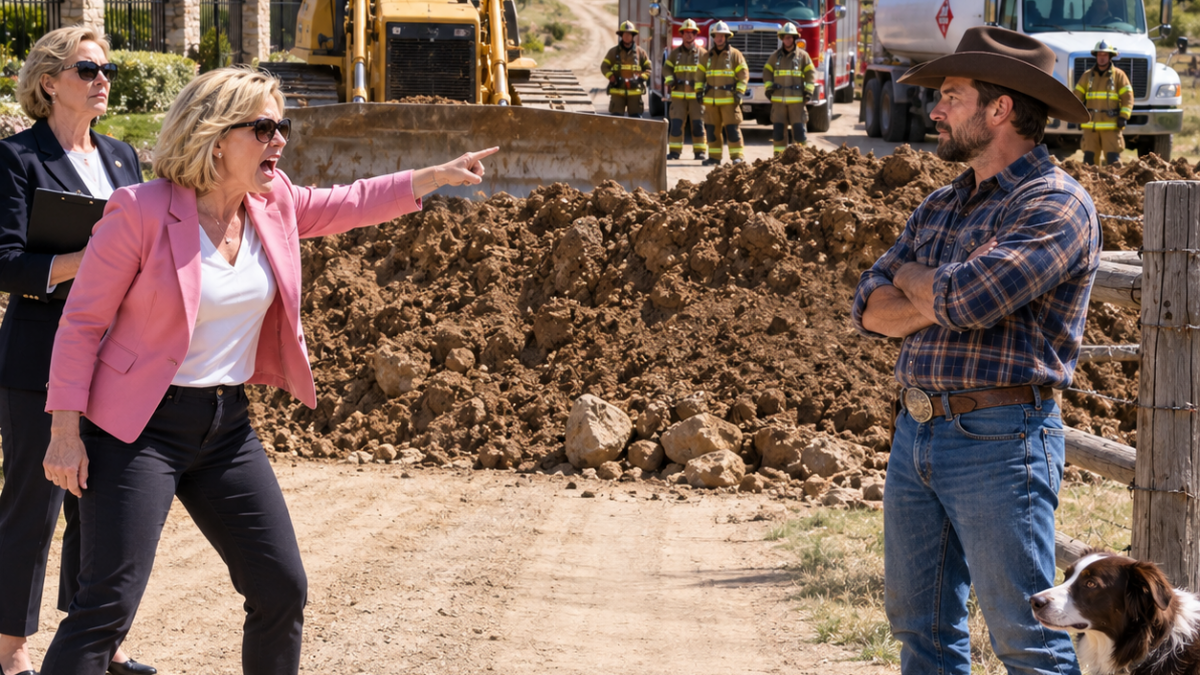
PART 2
My first call went to the county planning and zoning office.
A woman named Brenda answered.
At first she sounded exactly like someone who had spent the morning explaining setback requirements to people who didn’t want to hear them.
“Planning and zoning.”
“My name is Arthur Donaldson. I need to report unpermitted grading across a recorded access easement.”
Keyboard noise stopped.
“What kind of grading?”
“An approximately eight-foot-high earth berm constructed across the full width of a shared gravel road.”
“Eight feet?”
“Approximately.”
“Purpose?”
“To prevent me from using the road.”
There was a pause.
“Who constructed it?”
“The president of Willow Creek Estates hired the equipment.”
“Is Willow Creek your HOA?”
“Yes, but the easement is separately recorded with my deed and serves two properties.”
More typing.
“Did you consent to the work?”
“No.”
“Do you know whether a grading permit was issued?”
“No. That’s why I’m calling.”
She asked for the parcel numbers.
I gave them.
Then I listened to her keyboard for almost a minute.
“I’m not seeing a grading permit.”
“That doesn’t surprise me.”
“I also don’t see an erosion-control filing.”
“That surprises me even less.”
“Sir.”
“Sorry.”
She almost laughed.
Then her tone returned to business.
“We can send an inspector. It may not be today.”
“That’s fine.”
“Do not alter the site if you can safely avoid it. Take photographs.”
“I have roughly two hundred.”
Silence.
“Two hundred?”
“And drone footage.”
Another pause.
“Email the clearest ones to me.”
She gave me an address.
Before we hung up, she asked, “You said this is your only vehicular access?”
“Yes.”
“That may involve other departments.”
“Which ones?”
“Fire prevention, possibly emergency management.”
That was the moment the situation stopped being merely infuriating.
I looked out my window toward the berm.
I had been thinking about lawsuits.
Karen had been thinking about punishment.
Brenda was thinking about an ambulance.
“Please make whatever referrals you need.”
“I will.”
My second call was to Frank Ellis.
Frank had served as a JAG officer during the last few years of my military career.
He had a dry voice, no patience for bureaucratic bullying, and a habit of becoming happiest when everyone else in a legal dispute was miserable.
He now practiced real-estate and contract law.
He answered with, “Arthur, if you’re calling me before lunch, somebody has done something stupid.”
“How stupid do you want?”
“Surprise me.”
“The HOA president hired a bulldozer and built an eight-foot berm across my only access easement.”
Nothing.
Then:
“She did what?”
I explained.
The fake road assessment.
The propane truck.
The bulldozer.
The drone.
The blocked access.
Frank let me finish.
“Do not touch that berm.”
“Wasn’t planning to.”
“Do not argue with her.”
“Also wasn’t planning to.”
“That part I don’t believe.”
“I’ve matured.”
“No, you’ve aged.”
I heard paper moving.
“Send me your deed, easement instrument, plat, covenants, every notice she has sent you, your photos, and the drone video.”
“Already organized.”
“Of course it is.”
“What are we looking at?”
“At minimum? Interference with a recorded easement. Potential private nuisance. Property damage from grading if she crossed your ownership line. Possibly more depending on how the HOA authorized this.”
“She thinks the board can suspend my access.”
“Can it?”
“Not according to the easement.”
“That was rhetorical.”
“Then no.”
Frank laughed once.
“Good.”
I leaned back in my chair.
“County is sending someone.”
“Excellent. Let them go first.”
“Why?”
“Because right now Karen thinks the dispute is between you and her.”
He paused.
“Let the government explain that dirt obeys rules too.”
I smiled.
Then Frank asked, “You said propane?”
“Yes.”
“Both houses?”
“Yes.”
“How large is her tank?”
“Thousand gallons.”
“And that road is the delivery route?”
“Only route a bobtail can use.”
“What about another driveway?”
“Nothing that can handle a truck. There’s an old grass service path along the ridge, but it narrows between trees and drops into a drainage swale.”
“Emergency vehicles?”
“Same problem.”
Frank’s voice changed.
“Call your propane supplier.”
“I’m not canceling her deliveries.”
“I didn’t tell you to.”
“What am I telling them?”
“The truth.”
He began listing it.
“Their normal service route is obstructed. The obstruction is unpermitted. Heavy equipment altered drainage. Access to the tank’s emergency shutoff may be compromised. Ask for the regional safety manager.”
“Frank.”
“Yes?”
“You’re enjoying this.”
“Immensely.”
“I’m trapped on my own property.”
“And that is why I can enjoy it on your behalf.”
I hung up and called the propane company.
Customer service transferred me twice before I reached a man named Bill Carver.
He handled regional safety and operations.
I kept the call factual.
The shared road.
The berm.
The tank locations.
The drone video.
The county report.
Bill asked only a handful of questions.
“How close is the berm to the line feeding the Miller residence?”
“Maybe a hundred fifty feet from the tank. I don’t know where all the underground routing is.”
“You see exposed piping?”
“No.”
“Any soil pushed against the tank?”
“No.”
“Can our truck reach the tank by another approved route?”
“Not one I know of.”
“Can emergency personnel reach it?”
“On foot.”
“That isn’t what I asked.”
“No.”
Bill exhaled.
“Send me the video.”
I did.
He called back twenty minutes later.
“We’re flagging the site.”
“What does that mean?”
“No delivery until we confirm safe legal access.”
“I want to be clear—I’m not asking you to shut off her service.”
“You didn’t.”
“Good.”
“We’re not shutting off anything. We’re declining to drive a forty-thousand-pound fuel truck over an improvised route or toward an obstructed site.”
“What about my tank?”
“Same road?”
“Yes.”
“Same issue.”
That sobered me.
I had been so focused on Karen’s house that I’d forgotten my own fuel access.
“You’re suspending me too?”
“Until the road is open.”
Fair.
Consequences rarely choose sides perfectly.
I checked my gauge.
Sixty-three percent.
Enough for weeks if I conserved.
Karen’s tank?
I had no idea.
But I remembered that heated pool.
My next call came from the county before I could make another.
“Mr. Donaldson?”
“Yes.”
“This is Captain Reynolds with county fire prevention. Planning forwarded your complaint.”
I looked toward the berm again.
“Yes, sir.”
“You have a single access route exceeding twelve hundred feet from the county road?”
“About half a mile to my house. Karen’s place is farther.”
“And it has been physically obstructed?”
“Yes.”
“Could an engine pass?”
“Not unless it sprouts wings.”
He didn’t laugh.
“Could an ambulance?”
“No.”
“Any occupied structures beyond the obstruction?”
“Two.”
“Fuel storage?”
“Two propane tanks.”
Another pause.
“We’ll be out.”
“When?”
“Today.”
That was faster than zoning.
The military part of my brain appreciated it.
Firefighters understand blocked routes.
Routes are either open or they aren’t.
At 2:18 that afternoon, a red county SUV appeared on the public side of the berm.
Two fire-prevention officers got out.
Karen came down from her house on foot.
She must have seen them from a window.
I stayed on my side.
Captain Reynolds climbed partway up the earth pile, stared across at me, then looked toward Karen.
“Who ordered this?”
Karen answered instantly.
“The association.”
“Who specifically?”
“I’m the board president.”
“Permit?”
“This is private property.”
“That was not my question.”
Her face changed.
“We don’t need county permission to maintain our private road.”
Reynolds looked at the eight-foot wall.
“You call this maintenance?”
“It is a temporary access-control measure.”
“Against whom?”
She pointed at me.
“Him.”
I gave Reynolds a small wave.
He didn’t smile.
“Ma’am, can Engine 14 reach your home right now?”
Karen hesitated.
“We have alternate access.”
“Show me.”
She pointed toward the grassy ridge track.
Captain Reynolds followed her finger.
“That goes where?”
“Behind my property.”
“Width?”
“I don’t know.”
“Load rating?”
“It’s ground.”
“Grade?”
“I don’t know.”
“Bridge or culvert crossings?”
“There’s a drainage ditch.”
He looked at her.
“So no approved emergency access.”
“It’s temporary.”
“If your house catches fire tonight, temporary won’t matter.”
That finally landed.
Karen’s eyes shifted toward her mansion.
Reynolds placed a red notice beside the county’s future inspection point and photographed the scene.
Then he walked closer to me, stopping at the berm.
“Mr. Donaldson.”
“Yes?”
“You have any medical conditions we need to know about?”
“No.”
“Anyone else living with you?”
“No.”
“Cell service?”
“Yes.”
“Until this is corrected, if you have an emergency, tell dispatch the access road is blocked. We’ll stage and adapt.”
“Understood.”
“Do not attempt to climb this in a vehicle.”
“I wasn’t planning to.”
He looked at my pickup.
“Veterans plan things.”
“Fair.”
Karen heard that.
“This is ridiculous,” she snapped. “He caused this problem by refusing to comply with road rules.”
Reynolds turned slowly.
“No, ma’am.”
His voice stayed calm.
“The problem I’m addressing is the eight-foot pile of soil across the road.”
That ended the conversation.
Karen walked uphill without another word.
That night felt different.
I had been deployed to places where leaving a compound required planning.
I never expected to feel that way in rural America.
I could climb the berm.
I could walk the half mile to the county road.
If I absolutely had to, I could probably cut across the back acreage on an ATV.
But my truck couldn’t leave.
An ambulance couldn’t enter normally.
A fire engine couldn’t enter.
My sense of confinement was not dramatic.
It was practical.
That was worse.
At 1:30 a.m., I woke to a noise outside and immediately sat upright.
Nothing.
A branch.
Wind.
I lay back down.
Then I thought about fire.
Not Karen’s house.
Mine.
I mentally walked through extinguishers.
Breaker panel.
Propane shutoff.
Shop suppression equipment.
I hadn’t done that since my service days—run emergency scenarios because sleeping felt irresponsible.
That made me angrier than the berm itself.
The next morning, zoning arrived.
The inspector’s name was Hank Lawson.
He wore muddy boots, a county vest, and the expression of a man who had already decided he did not enjoy what he was looking at.
He measured.
Photographed.
Checked drainage.
Walked the easement boundaries.
He asked Karen for permits.
She produced HOA paperwork.
He barely glanced at it.
“I need county permits.”
“We are exempt.”
“Based on?”
“Private road maintenance.”
“This isn’t road maintenance.”
“It is erosion control.”
Hank stared at the raw berm.
Water was already seeping from one side because the bulldozer had interrupted the drainage ditch.
“You blocked drainage.”
Karen’s mouth opened.
He continued.
“You disturbed more soil than your exemption threshold, placed fill in a drainage course, blocked a recorded access, and created a potential erosion discharge downslope.”
He pulled a bright red form from his clipboard.
Karen pointed.
“What is that?”
“Stop-work order.”
“The work is finished.”
“Then consider it a stop-existing-like-this order.”
I almost choked.
Karen glared toward me.
I looked at the ground.
Hank drove a wooden stake into the berm and stapled the notice to it.
The red sheet snapped in the wind.
Karen had built a monument to her power.
The county put a red flag on top.
By that afternoon, Frank had sent his first formal letter.
It demanded restoration of the easement.
Preservation of all HOA records related to the berm.
Identification of the contractor.
Copies of board authorization.
Insurance information.
And compensation for direct losses caused by the obstruction.
He also warned that continued denial of access after official notice would increase the potential damages.
Karen’s attorney responded two days later.
I expected an apology.
I got three pages of denial.
The berm, they claimed, was “temporary grading undertaken as part of private-road maintenance and safety management.”
My use of the road had allegedly become “commercial in character” because of deliveries to my property.
That was ridiculous.
Propane was residential.
UPS was residential.
My project car didn’t generate commercial traffic.
Frank called me after reading it.
“She found a lawyer.”
“A good one?”
“He used nice paper.”
“That wasn’t my question.”
“He is doing what lawyers do when their client has given them an ugly fact pattern.”
“Which is?”
“Putting a tie on it.”
We filed.
Not the sprawling lawsuit Karen probably imagined.
Targeted.
Interference with easement rights.
Injunctive relief.
Property damage.
Nuisance.
Damages.
Frank also asked the court for an expedited order requiring restoration of access.
The HOA’s insurance carrier received notice.
So did the HOA board.
That last part mattered.
Karen had been speaking as if she and the association were the same organism.
Once the letters went separately to the other directors, they started asking questions.
I learned that later.
At the time, all I saw was Karen becoming quieter.
No golf-cart patrols.
No violation notices.
No calls.
Just that ugly berm.
And then the cold arrived.
The first week after construction had been mild.
The second wasn’t.
A northern front pushed through.
Daytime temperatures dropped into the forties.
Nights touched freezing.
I reduced my thermostat.
Used the wood stove in the garage office.
Stopped heating spaces I didn’t need.
My propane gauge fell slowly.
Karen’s situation was different.
Her house was nearly four times the size of mine.
She had the pool heater.
The generator.
Multiple fireplaces.
At least two outdoor heaters on the patio.
None of that was my concern.
Her tank level became my concern only because she called.
Sunday evening.
6:12.
Unknown number.
I answered.
“Arthur.”
No greeting.
“Karen.”
“You called the propane company.”
“I reported the blocked access.”
“You had no right to interfere with my utilities.”
“I didn’t interfere with anything.”
“They refuse to deliver.”
“They refuse to drive over the berm.”
“You poisoned them against me.”
I stared at my kitchen wall.
“Karen, they have drone footage.”
Silence.
Then:
“You’re enjoying this.”
“No.”
“Yes, you are.”
I thought about the first morning.
Her standing beside the dozer.
Her saying find another way out.
Part of me was enjoying the reversal.
I didn’t like that part very much.
“I’m enjoying not being bullied.”
Her voice hardened.
“You could fix this immediately.”
“How?”
“Remove the berm.”
I actually laughed.
“You built it.”
“You have equipment.”
“I’m not disturbing a site under county enforcement and litigation.”
“Then allow my contractor through your yard.”
“Have your lawyer call Frank.”
“This is between neighbors.”
“It stopped being between neighbors when the bulldozer arrived.”
She hung up.
The next morning, a man named Dave from A-1 Excavation called.
“Mr. Donaldson?”
“Yes.”
“Ms. Miller hired us to remove an earth berm.”
“Good.”
“She says we can access from your parcel.”
“No.”
Pause.
“She said it was arranged.”
“It isn’t.”
“We just need to cross maybe two hundred yards of grass with an excavator and two dump trucks.”
“Across my yard.”
“Yes.”
“Do you have a certificate of insurance naming me as additional insured for the operation?”
Silence.
“A what?”
“Do you have a written access agreement?”
“No.”
“Restoration bond?”
“No.”
“Utility locate?”
“Not yet.”
“Then you don’t have permission.”
He sighed.
“Look, man, I’m just trying to do a job.”
“I know. Call my lawyer.”
“She said this had to happen today.”
“That sounds urgent.”
“It is.”
“For her.”
He laughed despite himself.
“Okay.”
Frank called twenty minutes later.
“You magnificent bureaucratic bastard.”
“I learned from the best.”
“She wants access.”
“Under conditions.”
“Good. I’m drafting a temporary license.”
I sat forward.
“You’re going to let them through?”
“If they meet reasonable conditions.”
Part of me was disappointed.
Frank heard it.
“You wanted me to tell her to freeze?”
“No.”
“Good. Because courts like reasonable plaintiffs.”
“I am reasonable.”
“You took photos with a telephoto lens.”
“For evidence.”
“You own a drone.”
“For surveying.”
“You labeled two hundred images.”
“For organization.”
“Arthur.”
“All right.”
The access license required:
Proof of insurance.
Protective mats.
No work outside specified hours.
No use of my driveway beyond the defined route.
Repair of any turf or drainage damage.
An escrow deposit.
County approval of the removal plan.
Karen rejected it.
Not the contractor.
Karen.
Frank forwarded me her attorney’s email.
**Mrs. Miller will not agree to extortionate conditions imposed by Mr. Donaldson as leverage in an unrelated dispute.**
Frank added one line:
**Then she may comply from her own property.**
The problem was obvious.
The berm itself occupied the narrowest portion of the road.
Heavy equipment positioned uphill could not safely reach the lower face without crossing unstable fill.
The ridge track was useless for dump trucks.
Karen had built the wall in precisely the place that made removal hardest.
She had trapped herself logistically.
The county fines began accruing.
Not astronomical.
Enough.
The fire-access violation remained open.
The propane delivery suspension remained in place.
And then Willow Creek homeowners learned there might be an HOA bill attached to all of it.
That changed everything.
The first person to come to me was Miguel Garcia.
He and his wife, Sarah, lived three streets into the subdivision.
They parked at the public end of the road and walked around the berm.
Miguel was about thirty-five, solid build, nervous expression.
Sarah carried a thick file.
“You Arthur?”
“Yes.”
“I’m Miguel.”
“This is Sarah.”
She shook my hand.
“I’m a paralegal.”
“That explains the file.”
She smiled.
“Unfortunately.”
We went into my garage.
Miguel looked around at the project car.
“Nice Chevelle.”
“Thank you.”
Then he looked toward the road.
“Karen really did that.”
“You saw it.”
“We thought maybe the pictures were exaggerated.”
“What pictures?”
“She sent an HOA email saying you had ‘refused road-safety improvements’ and were spreading misleading images.”
I blinked.
“She emailed the neighborhood?”
Sarah opened the file.
“We brought a copy.”
There it was.
Karen’s version.
The berm was described as a temporary traffic-control feature.
I was described as a homeowner conducting excessive heavy deliveries.
The county dispute was called a “technical permitting disagreement.”
The lawsuit was called frivolous.
Then came the sentence Karen should never have written:
**Any legal costs associated with Mr. Donaldson’s actions may ultimately become a common association expense.**
Miguel tapped it.
“That got everybody’s attention.”
“I imagine.”
Sarah opened another section of the file.
“She’s been fining us for this.”
Photo.
Wooden swing set.
Backyard.
Small.
Ordinary.
“You can’t see it from the street,” Miguel said.
“Karen can from behind the common walking trail.”
“She fined you?”
“Two hundred dollars a week.”
“For what rule?”
“Unapproved recreational structure.”
Sarah shook her head.
“The covenants require architectural approval for permanent structures. This thing sits on grass with ground anchors.”
“Why not fight it?”
Miguel looked embarrassed.
“We have two kids. Jobs. Mortgage. Her lawyer sends letters. At some point you start asking whether being right is worth spending five grand.”
That sentence stayed with me.
Because it explained Karen’s entire system better than any legal theory.
She did not need to be right.
She needed resistance to be expensive.
Sarah Garcia leaned toward me.
“Your lawyer filed publicly?”
“Yes.”
“I read the complaint.”
“What do you think?”
“I think Karen finally picked someone who has time to say no.”
I almost corrected her.
I didn’t have time.
I was simply angry enough to make it.
Miguel said, “We want to help.”
“With my lawsuit?”
“With getting her removed.”
I looked at Sarah.
“Can that happen?”
She opened the HOA bylaws.
“I’ve been reading.”
Of course she had.
“Twenty-five percent of lot owners can petition for a special recall item.”
“How many lots?”
“Sixty.”
“So fifteen signatures.”
“We have six already.”
I didn’t answer immediately.
Frank had warned me not to turn litigation into a political vendetta.
But removing Karen was the residents’ issue.
Not mine.
“I won’t organize an HOA recall.”
Sarah nodded.
“You don’t have to.”
“But I’ll give you any public documents about what she did to me.”
“That’s all we need.”
Then Miguel said, “There’s someone you should meet.”
“Who?”
“Mr. Henderson.”
I had heard the name.
Their old house had sold two years earlier.
Quick sale.
Below what similar Willow Creek homes fetched.
“He doesn’t live here anymore,” I said.
“No.”
Sarah’s expression changed.
“Karen helped with that.”
Mr. Henderson lived in a condo downtown.
Fourth floor.
Small balcony.
Six rose bushes growing in pots.
He was seventy-eight, thin enough that his shirt hung loosely from his shoulders.
When I introduced myself, he looked at me for a long time.
“Donaldson.”
“Yes.”
“The man behind the dirt wall.”
“That’s me.”
He smiled faintly.
“Come in.”
His living room held photographs of a woman in nearly every decade of her adult life.
Wedding.
Children.
Garden shows.
Christmas.
A silver-haired woman standing beside roses so enormous they looked unreal.
“Eleanor,” he said.
“My wife.”
“She grew those?”
“All of them.”
He touched one photograph.
“She could look at a dying rose and tell you what it needed before breakfast.”
We sat.
I told him about the berm.
He wasn’t surprised.
Not even a little.
“That woman likes to isolate people.”
“What happened to you?”
His hands folded slowly.
“When Karen became president, Eleanor had already been sick.”
“Heart?”
“Yes.”
“She still gardened?”
“Every day she could.”
Then the letters started.
Rose trellises.
Unapproved.
Plant varieties.
Not on the approved landscaping list.
Fertilizer.
Environmental concern.
A decorative bench.
Wrong finish.
The HOA fined them.
Mr. Henderson fought at first.
Karen increased scrutiny.
A cracked driveway.
A faded shutter.
An oak root lifting one corner of sidewalk.
Then came a special assessment for sidewalk repair.
Thousands.
“We had savings,” he said.
“That wasn’t the problem.”
“What was?”
He looked toward the balcony.
“Eleanor started listening for the mail truck.”
My chest tightened.
“She’d hear it downstairs and ask me if there was another letter.”
He swallowed.
“Some days there wasn’t.”
“Some days?”
“There was.”
He stared at his hands.
“She stopped going to garden club because she was embarrassed.”
“Embarrassed about what?”
“That we were being fined.”
I shook my head.
“She hadn’t done anything shameful.”
“I know.”
He looked up.
“She didn’t.”
Then his voice hardened.
“But fear makes decent people feel guilty.”
I thought about Miguel saying being right can cost five thousand dollars.
Mr. Henderson continued.
“We sold.”
“Because of Karen?”
“Because we were tired.”
He looked at Eleanor’s photograph.
“She died six months later.”
“I’m sorry.”
“The doctor said her heart was failing anyway.”
He paused.
“I’m not stupid enough to claim Karen killed my wife.”
That mattered.
“But she took the last good year Eleanor had and filled it with anxiety.”
Silence settled over the room.
I had come for evidence.
I forgot about evidence for a while.
We drank tea.
He told me about Eleanor winning a county rose competition three years in a row.
About the first bush they planted after buying the Willow Creek house.
About how Karen had once complimented those same roses before she became president.
Then he said, “You’re fighting her?”
“Yes.”
“Can you win?”
“I think I can reopen the road.”
“That’s not what I asked.”
I understood.
“My lawyer says the case is strong.”
Mr. Henderson stood slowly.
He went to a desk.
Opened a drawer.
Brought back a folder.
Not thick.
Carefully organized.
Violation letters.
Photographs.
Payment receipts.
The sidewalk assessment.
An email from Karen:
**Continued resistance will only increase the financial burden on your household.**
I read it twice.
He watched me.
“Will that help?”
“Yes.”
“Take copies.”
“Would you sign a statement?”
His eyes moved to Eleanor’s picture.
“Yes.”
I left with more than documents.
I left angry in a new way.
The berm was personal because it trapped me.
The Henderson story made the pattern real.
Karen’s power wasn’t dramatic.
She wore people down.
One letter at a time.
One fine.
One threat.
Until surrender felt cheaper than dignity.
I called Frank from the truck.
“I found a former resident.”
“What kind?”
“The kind who saved paper.”
“That’s my favorite kind.”
I told him the story.
Frank went quiet.
Then he said, “Useful for pattern and possibly credibility. Don’t oversell causation.”
“I know.”
“Arthur.”
“I know.”
He understood my anger.
“Keep your objective.”
“Road.”
“Road first.”
“Karen second?”
“No.”
I frowned.
“Peace second.”
That irritated me because he was right.
Over the next week, Willow Creek changed.
Not publicly.
Quietly.
Sarah and Miguel collected signatures.
I let people meet in my garage because Karen couldn’t control it.
The irony was obvious.
To reach the meetings, they had to park beyond her berm and walk around it.
Every person who arrived had to physically see what she had done.
The first meeting had eight people.
The second had fifteen.
By the third, I ran out of folding chairs.
A woman named Denise brought a notice for a satellite dish.
Federal rules protected many satellite installations, but Karen had threatened her anyway over appearance.
A father named Kevin had basketball-hoop letters.
Another family had replaced an entire section of lawn because Karen said the grass variety created “visual discontinuity.”
A widower had been fined because his trash cans remained visible during the week he was hospitalized.
Some complaints were ordinary HOA disputes.
I refused to turn every disagreement into abuse.
Sarah Garcia agreed.
“We only use what we can document.”
That became our rule.
No rumor.
No revenge stories.
No anonymous claims we couldn’t verify.
Paper.
Dates.
Photos.
Emails.
Mr. Henderson’s affidavit was the emotional center.
Sarah helped draft it.
Not theatrical.
Not accusing Karen of causing Eleanor’s death.
Just what happened.
The notices.
The fines.
The anxiety.
The sale.
Eleanor abandoning her garden.
The truth was enough.
Miguel designed a one-page information sheet.
Headline:
**WHAT DID THE BERM COST WILLOW CREEK?**
County violation exposure.
Potential legal fees.
Fire-access issue.
Road restoration.
Insurance questions.
Then:
**Do you believe the board should discuss this publicly?**
No insults.
No caricatures.
No “Queen Karen.”
Sarah insisted.
“If we look like a mob, she gets sympathy.”
We obtained nineteen signatures.
Four more than necessary.
The petition went to the HOA secretary by certified mail.
Karen responded within twenty-four hours.
Not to us.
To the entire neighborhood.
The recall effort, she wrote, was being led by “a small group influenced by an outside resident engaged in hostile litigation against the association.”
Me.
She accused Sarah Garcia of misrepresenting legal issues.
She called the Henderson affidavit “emotionally manipulative.”
That phrase cost her.
Mr. Henderson read it.
Then called me.
“I want to come to the meeting.”
“You don’t live there anymore.”
“I know.”
“You may not be allowed to speak.”
“Then I’ll sit.”
“Are you sure?”
“Son.”
His voice strengthened.
“She made my wife afraid to walk to our mailbox.”
Pause.
“I’m not afraid of her clubhouse.”
The propane situation worsened.
Bill from the supplier called.
“Just keeping you informed.”
“Okay.”
“Mrs. Miller contacted customer service repeatedly.”
“I assumed.”
“She requested delivery with a smaller vehicle.”
“Can you?”
“We evaluated it.”
“And?”
“No safe approved access.”
“She has the ridge track.”
“Our safety supervisor reviewed aerials.”
“You saw those?”
“She sent them.”
I laughed.
“She tried to prove access?”
“Apparently.”
“How’d that go?”
Bill paused.
“Arthur, there is a drainage culvert halfway through that route that I would not drive a pickup across without checking.”
“So no.”
“No.”
Then:
“She threatened to change suppliers.”
“That’s her right.”
“Yes.”
“Would another company deliver?”
“That’s their decision.”
Two days later, I saw a truck from another propane company stop at the county road.
The driver got out.
Walked to the berm.
Took a photograph.
Left.
I almost felt sorry for her.
Almost.
Then the fire district escalated.
Captain Reynolds returned with a battalion chief.
The county had received confirmation that the road served two occupied residences and propane installations.
The chief handed Karen a formal emergency-access notice.
I couldn’t hear everything.
I heard enough.
“The obstruction must be removed.”
“I am trying.”
“Then remove it.”
“He won’t let equipment cross his property.”
The chief looked toward me.
“Did you construct the obstruction?”
“No.”
“Did you block the original access?”
“No.”
He turned back to Karen.
“Then his yard is not the cause of the access problem.”
Karen’s shoulders lifted.
“He is using this to punish me.”
The chief remained still.
“Ma’am, if there is a structure fire at your residence, an engine cannot reach it.”
“You could use the other route.”
“Not with an apparatus.”
“My house has sprinklers.”
“That does not eliminate response requirements.”
“What do you expect me to do?”
“Restore the road.”
He said it so simply that even I felt embarrassed for her.
Later that day, Frank received a call from the HOA’s insurance counsel.
That was when the board finally started panicking.
The insurer had issued a reservation of rights.
Some claims might be covered.
Intentional conduct could create coverage problems.
The directors wanted to know whether settlement was possible.
Frank told them:
“Open the road first.”
Karen still resisted my access conditions.
Her lawyer proposed reduced terms.
Frank countered.
Insurance.
Protective mats.
County-approved plan.
No waiver of my claims.
Reasonable deposit.
Karen said no.
Again.
Her pride was costing her more every day.
Then the forecast dropped.
Thirty degrees overnight.
Cold rain.
Wind.
I was in my office reviewing deposition notes when I saw a bright umbrella moving through the trees.
Karen.
She walked from her house.
Around the ridge.
Through wet grass.
Toward the berm.
She climbed halfway up.
Mud clung to her shoes.
For once, she wasn’t carrying a clipboard.
“Arthur.”
I stepped outside.
“We need to talk.”
I stayed under the garage overhang.
“Your lawyer has Frank’s number.”
“Not lawyer to lawyer.”
She looked exhausted.
Her hair had come loose in the rain.
The woman who had stood beside the bulldozer like a commander now looked like somebody who hadn’t slept.
“This has gotten ridiculous.”
“You built an eight-foot wall across the road.”
“I know what I did.”
That surprised me.
Then she corrected herself.
“I mean, I know what happened.”
There she was again.
“What do you want?”
“I need the excavator through your property.”
“Sign the access agreement.”
“The deposit is insulting.”
“It covers damage.”
“I don’t have time for all these conditions.”
“You had time to hire the bulldozer.”
Her jaw tightened.
I almost regretted it.
Almost.
“My propane company won’t service the house.”
“I know.”
“You called them.”
“I sent them accurate information.”
“My generator runs off that tank.”
“I know.”
“My pool system could freeze.”
“Turn it off.”
“You think this is funny?”
“No.”
She looked at me.
For the first time, the anger left her face.
“My husband is furious.”
I said nothing.
“He told me not to build the berm.”
There it was.
A crack.
“Then why did you?”
Her eyes returned to the dirt wall.
“Because every time I told you something, you challenged me.”
“Because some of it was wrong.”
“You made me look powerless.”
I absorbed that.
That might have been the first honest thing she had said since I met her.
“Karen.”
She looked at me.
“This was never about the road.”
Her mouth tightened.
“No.”
“It was about me saying no.”
She didn’t answer.
Rain struck the berm between us.
I continued.
“You thought if you made the consequences big enough, I’d stop saying it.”
“You think running a community is easy?”
“I didn’t say that.”
“People complain constantly.”
Her voice rose.
“Grass. Dogs. Parking. Trees. Noise. Their neighbor’s lights. Their neighbor’s kids. Everybody wants rules until the rules apply to them.”
That part was probably true.
“I spend hours every week dealing with problems nobody else wants.”
“I believe you.”
She blinked.
It wasn’t the response she expected.
“But that doesn’t give you ownership of the road.”
“I was trying to maintain order.”
“You blocked fire access.”
Her face hardened again.
“I made one mistake.”
“No.”
I shook my head.
“The berm was one mistake.”
“What is that supposed to mean?”
“Ask Mr. Henderson.”
Her face went still.
“Henderson.”
“You remember Eleanor’s roses?”
“That situation was years ago.”
“He remembers.”
She looked away.
“You’re collecting people.”
“No.”
“You’re turning them against me.”
“They were already angry.”
“Because rules are unpopular.”
“Maybe.”
I stepped closer to the edge of my side of the berm.
“But you made them afraid.”
Karen’s eyes flashed.
“Spare me the speech.”
“Then sign the agreement.”
She stared at me.
“Drop the lawsuit.”
“No.”
“Remove the county complaint.”
“I can’t. The county decides that.”
“Tell the propane company access is safe.”
“It isn’t.”
“I’ll drop every violation against you.”
“You don’t have leverage left.”
That landed.
Her face crumpled for half a second.
Then the mask returned.
“You’re vindictive.”
I could have answered with something cruel.
Something about blankets.
Something about the heated pool.
Something that would feel satisfying for thirty seconds and ugly later.
Instead I said:
“I want the road restored professionally and legally.”
Silence.
“You created the problem.”
I pointed toward my garage.
“I gave your contractor a legal path to fix it.”
“Under your terms.”
“Under terms that protect my property.”
She shook her head.
“You’re enjoying watching me suffer.”
I thought about that.
Then answered honestly.
“Part of me is.”
That stopped her.
“I’m not proud of that part.”
She stared.
“But the bigger part wants you to stop doing this to people.”
Rainwater ran from the umbrella.
Karen looked suddenly older than fifty-five.
“The annual meeting is a setup.”
“No.”
“You’re going to stand there and humiliate me.”
“I’m not a member.”
“You know what they’re planning.”
“I know there’s a recall petition.”
“Because of you.”
“Because nineteen homeowners signed it.”
She descended from the berm.
At the bottom she turned.
“If I lose that vote, this community will fall apart.”
Maybe she believed it.
That was the sad part.
“Then let them decide.”
She walked away.
That night the temperature hit twenty-nine.
My wood stove kept the house comfortable.
The propane furnace barely ran.
Karen’s mansion went dark around ten.
Then lights returned fifteen minutes later.
Generator?
Maybe.
If it was connected to propane, she wasn’t going to waste fuel.
I never found out.
I stopped watching.
The next morning Frank called.
“She signed.”
“The access agreement?”
“Yes.”
“What changed?”
“Cold weather is a persuasive negotiator.”
“When do they remove it?”
“County wants revised erosion plan first. Two days.”
“Before the meeting?”
“Maybe.”
Then he added, “Arthur.”
“Yes?”
“You did the right thing.”
“By not making her freeze?”
“By giving her a lawful way out.”
“She didn’t give me one.”
“That is why you are in the stronger position.”
The annual HOA meeting came first.
The clubhouse parking lot overflowed.
Sixty houses.
One vote per lot.
Almost every household represented.
Former homeowners didn’t vote, but Mr. Henderson came as Sarah Garcia’s guest.
Karen entered wearing a thick sweater beneath a blazer.
Her face looked pale.
She sat at the center table.
Treasurer to her right.
Secretary to her left.
No smile.
The room quieted when she struck the gavel.
“The annual meeting of Willow Creek Estates Homeowners Association will come to order.”
She tried to follow the ordinary agenda.
Treasurer’s report.
Landscaping.
Road maintenance.
That last phrase produced laughter.
Karen’s face tightened.
“Please conduct yourselves appropriately.”
Someone muttered, “Like bulldozing roads?”
More laughter.
Sarah Garcia stood.
“Point of order.”
Karen sighed.
“Yes?”
“The properly submitted recall petition is on the agenda.”
“We will address it under new business.”
“It is new business.”
“I am aware.”
Karen rushed through everything else.
Ten minutes later she had nowhere to go.
She looked down.
“Next item. Motion for a vote of no confidence and recall of the board president.”
The room became absolutely still.
“Is there a second?”
Miguel stood.
“I second.”
Karen closed her eyes briefly.
“Discussion.”
Miguel walked forward.
Karen raised a hand.
“You have three minutes.”
Sarah stood beside him.
“As petition representative, we requested fifteen.”
“You requested.”
The secretary leaned toward Karen.
“The bylaws allow ten.”
Karen looked at her.
Even her secretary was no longer simply obeying.
“Ten.”
Miguel started with the swing set.
Not dramatic.
Dates.
Fines.
Appeals.
Emails.
Then Sarah explained legal exposure.
She was good.
Better than I expected.
“The berm was not approved through any transparent road-maintenance process we can locate,” she said.
“The county has cited the grading.”
She held up the notice.
“Fire prevention has identified emergency-access concerns.”
Another document.
“The association is now defending litigation related to interference with a recorded easement.”
She held up the complaint.
“The insurer has issued coverage questions.”
That made people sit straighter.
Sarah continued.
“This is not about whether you like Arthur Donaldson.”
She pointed toward me.
I was in the front row but outside the voting membership.
“It is about whether one officer can expose sixty households to liability because a homeowner disputed a five-hundred-dollar assessment.”
No shouting.
No insults.
Just math.
Karen looked increasingly uncomfortable.
Then Sarah said, “Mr. Henderson asked to speak.”
Karen immediately shook her head.
“He is not an owner.”
A woman near the back called, “Neither is Arthur, but we’re discussing his lawsuit.”
Karen struck the gavel.
Sarah said, “The members can vote to permit a guest.”
Someone moved.
Someone seconded.
The motion passed almost unanimously.
Mr. Henderson rose.
He wore a navy tie patterned with tiny red roses.
I hadn’t noticed until then.
He walked slowly.
Miguel offered an arm.
Mr. Henderson waved him off.
At the front, he set one photograph on the table.
Eleanor.
Standing among roses.
Karen looked at it.
Then away.
“My wife loved this neighborhood.”
His voice was quiet.
People leaned forward.
“She loved the house. Loved the oak tree. Loved the neighbors.”
He touched the photograph.
“Most of all, she loved that garden.”
Karen shifted.
“When the letters started, we thought they were mistakes.”
Mr. Henderson described them.
The trellis.
Fertilizer.
Bench.
Sidewalk assessment.
He didn’t dramatize.
That made every detail heavier.
“My wife had heart disease.”
He looked at Karen.
“I am not standing here to tell you this woman killed Eleanor.”
The room held its breath.
“That would be dishonest.”
Karen looked at him.
For the first time that evening, I saw something like relief in her expression.
Then he continued.
“But she made the end of my wife’s life smaller.”
Karen’s relief vanished.
“Eleanor stopped entering rose shows because she was embarrassed.”
His voice shook.
“She started asking me whether the mail had come.”
He paused.
“She stopped planting.”
Someone in the audience began crying.
Mr. Henderson steadied himself against the table.
“You can say those were only letters.”
He looked at the photograph.
“To her, they became permission slips for whether she was allowed to enjoy her own home.”
Silence.
“When we sold, Karen came to the closing walkthrough.”
I hadn’t heard this part.
Mr. Henderson looked directly at her.
“She told Eleanor, ‘You’ll probably be happier somewhere with fewer maintenance responsibilities.’”
A sound moved through the room.
Karen said, “I was trying to be kind.”
Mr. Henderson nodded slowly.
“I believe you probably thought you were.”
That hurt more than anger.
“She died six months later.”
He picked up the photograph.
“I brought this tonight because I wanted you to remember that rules land on human beings.”
He returned to his seat.
Karen didn’t speak for several seconds.
Then she said, “May I respond?”
No one objected.
She stood.
I had expected rage.
What we got was more complicated.
“I have served this community for seven years.”
Her voice trembled at first.
Then strengthened.
“I have worked without salary.”
She listed problems she had handled.
Storm cleanup.
Vendor disputes.
Water leaks.
Late-night calls.
Delinquent dues.
A dog-bite complaint.
Road repairs.
Insurance renewals.
“People call me when a streetlight goes out.”
She looked around.
“They call me when their neighbor parks wrong.”
A few residents looked down.
“They demand enforcement, then call me a tyrant when enforcement affects them.”
Fair.
That was fair.
“I have made mistakes.”
Her eyes moved toward me.
“The road was a mistake.”
The room reacted.
First time she had admitted it publicly.
“But I made it because Mr. Donaldson repeatedly ignored what I believed were valid community obligations.”
I nearly stood.
Sarah Garcia looked at me.
Don’t.
I stayed seated.
Karen continued.
“I believed strong action would force resolution.”
There it was.
Not an apology.
An explanation.
“I was wrong about the method.”
Then she looked at Mr. Henderson.
“And perhaps I was too rigid in other situations.”
His face didn’t change.
Karen gripped the edge of the table.
“But if you remove every person who enforces an unpopular rule, you will not have a functioning association.”
She sat.
The room stayed quiet.
I almost admired the argument.
Karen wasn’t stupid.
She had built power because she understood how to frame control as duty.
Sarah Garcia stood.
“No one is asking whether rules should exist.”
Karen looked at her.
“We’re asking whether rules belong to all of us or only to the president.”
Applause started.
Karen struck the gavel.
Not hard.
Almost automatically.
Then Miguel said, “Arthur should show the photograph.”
Heads turned toward me.
Karen’s jaw tightened.
“He is not a member.”
Sarah looked around.
“Motion to permit Mr. Donaldson five minutes.”
Seconded.
Passed.
I walked forward carrying one poster board.
Not my entire evidence file.
One image.
The drone photograph.
I set it on the easel.
From above, Willow Creek looked peaceful.
Green lawns.
Trees.
My brick house.
Karen’s mansion.
The long gravel road.
And the enormous brown berm severing it.
“This is what happened.”
My voice carried without a microphone.
“I am not here to tell you how to vote.”
Karen watched me.
“I bought my property knowing there was an HOA beside it. I knew the road was shared.”
I pointed to the image.
“What I did not agree to was having my access blocked because I disputed a five-hundred-dollar assessment.”
Someone murmured.
I continued.
“The county can decide grading violations. The court can decide easement rights. The fire district decides what emergency access it needs. The propane company decides where its trucks can safely drive.”
Then I looked at Karen.
“But one person decided she could make all of those decisions first.”
Karen looked down.
“The thing I want you to understand is that the berm did not only affect me.”
I pointed uphill on the image.
“It blocked her too.”
Then toward the entrance.
“It blocked fuel trucks.”
Then the house.
“And fire apparatus.”
I looked at the residents.
“If there had been a medical emergency, a structure fire, or a propane leak, nobody would care whose side of the argument they agreed with.”
The room was dead silent.
“Roads like this are boring until somebody needs them.”
I let that settle.
“I spent twenty years learning that access matters.”
I looked at the berm again.
“I don’t want your HOA.”
A few people laughed.
“I don’t want Karen’s house.”
More nervous laughter.
“I want my road open.”
Then I turned toward the residents.
“And whatever happens after that is your business.”
I sat.
The vote came twenty minutes later.
Paper ballots.
One per lot.
The secretary and two homeowners counted them in front of observers.
Fifty-eight to two.
Karen and the treasurer.
That was all.
The secretary read the result.
Karen didn’t move.
Sarah Garcia had been nominated as interim president if the recall passed.
She stood near the side wall looking almost frightened by what had just happened.
Karen stared at her.
“You think you can do this?”
Sarah answered softly.
“I think we can do it differently.”
That sentence ended the meeting more effectively than any gavel.
Karen gathered her papers.
Nobody jeered.
Nobody shouted.
Mr. Henderson stood.
For a second I thought he might approach her.
He didn’t.
Karen walked past him.
She stopped.
Looked at the rose tie.
Then at him.
“I am sorry about Eleanor.”
His expression changed.
Was it enough?
No.
Could anything be enough?
Probably not.
But he nodded once.
“Thank you.”
Karen left.
The new board met immediately.
First vote:
Authorize the previously negotiated access agreement for berm removal.
Unanimous.
Second:
Suspend all disputed discretionary violations issued during Karen’s final six months pending independent review.
Unanimous.
Third:
Retain outside counsel to evaluate the lawsuit and insurance exposure.
Unanimous.
Fourth:
Open HOA financial and decision records related to the berm to the membership.
Unanimous.
The difference was almost boring.
Which was beautiful.
The excavation crew arrived the next morning.
Not through Karen’s authority.
Through a written, insured, county-approved temporary license signed by the new board and me.
They laid heavy composite mats over the edge of my field.
No tearing up the lawn.
No surprise equipment.
No verbal promises.
Paper.
Frank would have been proud.
I stood with coffee while the excavator bit into the berm.
Bucket by bucket, Karen’s wall disappeared.
Wet earth loaded into trucks.
Drainage restored.
Gravel replaced.
Compacted.
Graded.
By late afternoon I could see the county road again.
I didn’t realize how much that view mattered until it returned.
The foreman walked over.
“Want to be first through?”
I looked at my pickup.
Then the road.
“No.”
He raised an eyebrow.
“Why not?”
“Let the fire department inspect it.”
He laughed.
“You’re serious.”
“Very.”
Captain Reynolds came the following morning.
Engine 14 came too.
Not an emergency.
Access verification.
The engine rolled slowly from the county road, tires crunching on fresh gravel.
Past the place where the berm had stood.
Past my driveway.
Up toward Karen’s house.
It turned around.
Came back.
Reynolds lowered the window.
“That’ll work.”
I nodded.
That was enough.
An hour later, a propane truck arrived.
It serviced my tank first.
Then continued uphill.
I watched the white truck disappear toward Karen’s property.
Some part of me had expected triumph.
Instead I felt relief.
That surprised me.
Maybe Frank had been right from the beginning.
Road first.
Peace second.
Karen later.
The lawsuit took another month.
The new board’s lawyer was practical.
So was the insurer once it understood the evidence.
Frank demanded my legal fees.
Repair costs.
Loss of normal use.
Expenses created by alternative transportation.
Damage from grading.
A payment reflecting the deliberate nature of the obstruction.
The association wanted peace too.
Karen had authorized the berm as president, but questions remained about how much authority she actually had and what insurance would cover.
Eventually, we settled.
I agreed not to discuss the confidential dollar amount.
It was substantial enough to pay every legal bill, repair the property, and leave me compensated for what had happened.
The written terms mattered more.
Permanent acknowledgment of the recorded easement.
No unilateral obstruction.
Any future road work required proper notice, permits where applicable, and preservation of emergency access.
The HOA issued a formal apology.
Karen issued one too.
Her letter was shorter.
**Mr. Donaldson, I acknowledge that directing construction of the berm was an error in judgment and that it wrongfully interfered with your access. I apologize for the consequences caused by that decision.**
Not poetry.
Not remorse carved into stone.
Enough.
I put it in the file.
Then stopped thinking about it.
The new board audited Karen’s recent expenditures.
They discovered the bulldozer had been paid partly from a discretionary road-maintenance account without a full board vote.
That angered homeowners almost as much as the berm itself.
Sarah Garcia instituted a rule requiring multiple approvals over a spending threshold.
Meeting minutes went online.
The association attorney reviewed enforcement procedures.
A lot of Karen’s favorite vague language disappeared.
“Visual harmony.”
“Community spirit.”
“Appropriate residential character.”
Rules became specific.
Measurable.
Appealable.
The Garcia swing set stayed.
Denise kept her satellite dish.
Kevin’s basketball hoop remained exactly where it had been.
Nobody’s property value collapsed.
No civilization ended.
The biggest surprise was Mr. Henderson.
He started visiting Willow Creek again.
Not his old house.
He refused to go near it.
But he came to meetings occasionally.
Sarah asked him to join a landscape-advisory group as a nonresident volunteer.
He laughed at her.
“I escaped your HOA.”
“We’re asking about roses.”
“That’s different.”
He helped redesign the clubhouse garden.
No approved-varietal list.
No color mandate.
Just plants suited to the climate.
On planting day, he brought cuttings from Eleanor’s surviving roses.
The same ones he kept on his balcony.
He planted six.
One outside each clubhouse window.
Then he came to my place carrying a seventh in a black plastic pot.
“This is for you.”
I looked at it.
“No.”
He frowned.
“You don’t like roses?”
“I kill houseplants.”
“Then learn.”
I crouched beside the pot.
A single dark-red bloom had opened.
“Eleanor’s?”
He nodded.
“Cutting from her favorite bush.”
I didn’t know what to say.
Mr. Henderson touched one leaf.
“When we moved, I took pieces of the plants.”
His voice softened.
“Couldn’t save the garden.”
He looked at me.
“Saved enough to start again.”
That hit me harder than the settlement.
He helped me plant it beside my front porch.
Good sun.
Protection from north wind.
Drainage.
He was extremely particular.
“Not too deep.”
“It’s a plant, Mr. Henderson.”
“It is a rose.”
“I apologize.”
“You should.”
The bush struggled the first winter.
He called every two weeks.
“How’s Eleanor?”
“You named the plant after your wife?”
“I did not. You did.”
“I absolutely did not.”
“Check the leaves.”
I checked the leaves.
By spring, new growth appeared.
Mr. Henderson came out and inspected it.
“See?”
“What?”
“She’s stubborn.”
I didn’t argue.
Karen remained in Willow Creek for less than two months after the recall.
I saw the FOR SALE sign first.
Then the moving truck.
Her husband handled most of the loading.
Karen stayed inside until late afternoon.
I watched from my garage, then felt ashamed of myself for watching.
I returned to the Chevelle.
Ten minutes later, an engine approached.
Her silver Lexus.
It stopped near my driveway.
Window lowered.
Karen sat behind the wheel.
For several seconds neither of us spoke.
“I’m leaving.”
“I figured.”
She looked toward the rose bush.
“Is that Henderson’s?”
“Yes.”
Her expression shifted.
“He always did have beautiful roses.”
“Eleanor did.”
Karen nodded.
“Right.”
Silence.
Then she said, “Everyone thinks I’m a monster.”
I leaned against the garage door.
“I don’t.”
That surprised her.
“You don’t?”
“No.”
“What do you think?”
I considered lying.
“I think you got used to people backing down.”
Her jaw tightened.
I continued.
“And eventually you stopped asking whether they were backing down because you were right or because fighting you was exhausting.”
Karen looked toward Willow Creek.
“You think Sarah will last?”
“I don’t know.”
“She’ll learn.”
“Learn what?”
“That everyone wants fairness until fairness inconveniences them.”
I remembered her speech at the recall meeting.
There was truth in it.
“Maybe.”
She looked at me.
“You’ll see.”
“Maybe.”
She seemed disappointed I wasn’t fighting.
“I really did think the road needed control.”
“I believe you.”
“The truck damaged it.”
“It left ruts.”
“You dismissed me.”
“I disagreed.”
“That’s easy for you to say.”
She gripped the steering wheel.
“You spent twenty years in a system where people followed orders.”
I laughed quietly.
“Karen.”
“What?”
“You clearly never served.”
Her eyebrows drew together.
“The military taught me exactly when an order does not become legitimate simply because somebody with a title gives it.”
She looked forward.
Her husband’s car waited down the road.
“I hope you’re happy.”
That question sounded sadder than angry.
I thought about it.
“My road is open.”
“That isn’t what I asked.”
“No.”
I looked toward the rose.
“I’m getting there.”
She rolled up the window.
The Lexus drove down the same gravel easement she had tried to block.
At the county road she turned left.
I never saw her again.
Willow Creek changed slowly after that.
Not perfectly.
That’s important.
There were still arguments.
One homeowner painted a garage door neon turquoise and the architectural committee nearly had a collective stroke.
Someone kept parking an RV in a place the covenants clearly prohibited.
A dog escaped repeatedly.
A drainage fight consumed three meetings.
Sarah Garcia discovered that being president meant getting blamed by both sides.
One evening she walked down to my garage.
“I owe Karen one thing.”
“That sounds dangerous.”
“I understand why she became angry.”
“Already?”
“Do you know how many emails I got today?”
“No.”
“Forty-three.”
“That seems excessive.”
“One man sent eight about a hedge.”
I laughed.
“He has diagrams.”
“Of course.”
She sat on the workbench.
“The difference is I have a board that argues with me.”
“That helps?”
“It’s annoying.”
“Same thing.”
She looked toward the road.
“I think Karen stopped hearing disagreement as information.”
I nodded.
“She heard it as disrespect.”
Sarah sighed.
“I can see how that happens.”
“You worried?”
“Yes.”
“Good.”
She looked at me.
“Good?”
“People who worry about having too much power are usually safer with it.”
She laughed.
“You sound like Frank.”
“Don’t insult me.”
The road itself became boring again.
Exactly what a road should be.
Gravel.
Dust in summer.
Mud at the shoulders after rain.
Occasional pothole.
The HOA and I split maintenance according to the recorded easement agreement.
Real maintenance.
Grading.
Gravel.
Drainage.
No walls.
When propane season came around, Bill called.
“Road still open?”
“Yes.”
“Any new fortifications?”
“None.”
“Good. Driver is scheduled Tuesday.”
The truck arrived.
Filled my tank.
Continued uphill to the new owners of Karen’s house.
Young couple.
Two kids.
They turned off the pool heater permanently because, according to the husband, “Nobody needs to swim in January badly enough to pay that bill.”
I liked them immediately.
The fire department came through once a year as part of rural access familiarization.
The first time after the berm fight, Captain Reynolds stopped.
“You keeping everyone honest?”
“Trying.”
He looked toward Willow Creek.
“They keeping you honest?”
“Unfortunately.”
“Good system.”
Then he drove on.
Mr. Henderson’s rose became the marker of time.
First spring:
Three blooms.
Second:
Nine.
Third:
I stopped counting.
He visited often enough that I bought a second patio chair.
One afternoon he sat beside the bush with coffee.
“Eleanor would have liked this place.”
“The five acres?”
“The quiet.”
I nodded.
Then he said, “She would have hated Karen losing everything.”
I looked at him.
That surprised me.
“After what happened?”
“Eleanor wasn’t like me.”
“What are you like?”
“Petty.”
I laughed.
He smiled.
“Eleanor would have wanted Karen to learn something and stay.”
“You think she learned?”
“No.”
He took a drink.
“Maybe leaving was the only way.”
We watched a propane truck move along the road.
Mr. Henderson said, “Funny.”
“What?”
“She built that thing to trap you.”
“Yeah.”
“Ended up cutting herself off.”
I looked at the road.
“That’s usually how walls work eventually.”
He grunted.
“Careful. Sounds like philosophy.”
“I apologize.”
“Accepted.”
The deeper change took longer for me.
For months after the berm was removed, heavy-equipment noise woke me instantly.
A grader came down the county road one morning and I was dressed before I realized what I was doing.
Truck keys in hand.
Heart pounding.
I stood in the kitchen feeling ridiculous.
There was no berm.
No Karen.
Just the county grading a shoulder.
That angered me.
Not at anyone.
At myself.
I had spent twenty years in the service.
I knew what real danger felt like.
Why did a suburban property dispute get under my skin?
Frank answered when I complained.
“Because home is supposed to be where you stop defending ground.”
That shut me up.
He continued.
“She turned your exit into leverage.”
“Yeah.”
“That gets primitive fast.”
“So what do I do?”
“Use the road.”
“What?”
“Drive it.”
“That’s your legal advice?”
“My legal advice is billable. This is free.”
So I drove.
For no reason sometimes.
County road.
Gas station.
Coffee.
Back home.
Normal trips.
I stopped checking the berm site.
Grass grew over the scars along the shoulder.
Rain flattened what remained.
Within a year, someone who didn’t know the story would never have guessed an eight-foot wall once stood there.
That helped.
The lawsuit file moved from my desk to a cabinet.
Then from the front of the cabinet to the back.
Karen’s apology went with it.
So did the county notices.
The drone photograph stayed.
Not because I wanted revenge preserved.
Because perspective mattered.
From ground level, the berm had looked like a wall aimed at me.
From the air, it was obvious it cut everything.
My road.
Karen’s road.
Fuel.
Fire access.
Her own escape.
That image taught me more than the legal case did.
Angry people often build consequences too close to themselves to see the full shape.
Years later, Willow Creek decided to replace the wooden entrance sign.
Sarah called.
“We’re taking bids.”
“Why are you telling me?”
“Community transparency.”
“I’m not in your HOA.”
“Honorary nuisance.”
“I reject the title.”
“You’re getting the email anyway.”
They chose a local carpenter.
Simple cedar sign.
No giant stone columns.
No fountain.
No landscaping budget large enough to fund a small government.
Mr. Henderson donated two rose bushes for either side.
At the dedication, somebody asked him to say a few words.
He refused.
Then spoke for ten minutes.
Of course.
He talked about Eleanor.
Not Karen.
That mattered.
He said:
“She taught me that a good garden needs rules.”
People laughed.
“Water matters. Light matters. Pruning matters.”
He looked at Sarah.
“But if all you do is cut things back because you’re afraid they might grow differently than you planned…”
He paused.
“…you don’t have a garden.”
Nobody needed him to explain.
Afterward he handed me a small pair of pruning shears.
“What’s this?”
“Your rose.”
“You’re outsourcing labor.”
“I’m almost eighty.”
“You were almost eighty when you made me plant it.”
“And I’m wiser now.”
He showed me where to cut.
I listened.
By then, the story of the berm had become neighborhood history.
New families heard versions.
Some exaggerated.
Someone told the new owners that Karen had built a twenty-foot wall.
Another claimed the National Guard removed it.
Miguel repeated that one to me.
“National Guard?”
“I corrected him.”
“What did you say?”
“County fire department.”
“That isn’t who removed it either.”
“I got tired.”
The truth was less cinematic and better.
One angry woman.
One bulldozer.
One recorded easement.
A series of ordinary professionals doing their jobs.
A county inspector.
A fire-prevention officer.
A propane safety manager.
A lawyer.
A paralegal.
Residents willing to sign their names.
An old man willing to talk about his wife.
No superhero.
No perfect victim.
No magical authority arriving to fix everything.
Just systems working because people finally used them.
I had spent enough years believing strength meant being ready to act alone.
Willow Creek taught me the opposite.
My documentation mattered.
Frank mattered.
County enforcement mattered.
But Karen did not lose power because I outsmarted her.
She lost it when the people she governed stopped lending her their fear.
That was more important.
One fall afternoon, five years after the berm, I was underneath the Chevelle when I heard tires on gravel.
I slid out.
A fire engine.
Engine 14.
New crew.
They were doing access checks.
The driver slowed and waved.
Behind them came a propane truck.
For a second both vehicles occupied the same stretch of road.
Red engine.
White fuel truck.
Rolling freely past the exact place the berm once stood.
I laughed.
Couldn’t help it.
Then I noticed Mr. Henderson’s rose bush beside the porch.
Dark-red flowers moving in the breeze.
The three things Karen had once managed to put on opposite sides of a wall were all in one frame.
Emergency access.
Fuel.
Home.
I took a photograph.
Not with the drone.
Just my phone.
I sent it to Frank.
His reply came a minute later.
**Please tell me you are not starting another case.**
I wrote:
**Road’s clear.**
He answered:
**Best possible outcome.**
Mr. Henderson died the following winter.
Peacefully.
His daughter called me.
I had met her only twice.
“He talked about you.”
“I’m sorry.”
“He wanted you to have something.”
A week later, a package arrived.
Inside was a photograph of Eleanor in the Willow Creek garden.
Roses behind her.
She was smiling toward someone outside the frame.
On the back, Mr. Henderson had written:
**Keep something growing where someone once tried to stop it.**
I sat at my kitchen table for a long time.
Then I took the photograph outside.
The rose bush was dormant.
Bare stems.
Thorns.
Nothing beautiful about it.
But I knew spring would come.
When it did, I added another trellis beside the porch.
Metal.
Made it myself.
Technically decorative.
Absolutely visible from the road.
Five years earlier Karen would probably have required architectural approval.
I smiled at that.
Then stopped smiling.
She wasn’t part of the moment anymore.
That was the real freedom.
Not defeating someone.
Outliving the need to think about them.
The following May, the rose climbed halfway up the trellis.
One morning I was drinking coffee on the porch when a familiar engine note came from the road.
Propane truck.
The driver was new.
He slowed near my driveway.
“Donaldson?”
“That’s me.”
“Need a fill?”
“Forty percent. Might as well.”
He backed carefully toward the tank.
While he connected the hose, he looked down the road.
“Pretty narrow access.”
“Used to be narrower.”
“How narrow?”
“Zero feet.”
He laughed.
I didn’t explain.
When he finished, he handed me the ticket.
Then a fire engine appeared in the distance.
The propane driver moved completely off the travel lane.
Engine passed without difficulty.
No one noticed.
No one stopped.
No one took pictures.
No red notices.
No angry president.
Just two vehicles using a road for exactly what roads are supposed to do.
Connect people to where they need to go.
I stood beside the rose bush after they left.
Mr. Henderson’s photograph was inside on my desk.
The gravel road ran past the property and climbed toward Willow Creek.
Kids were somewhere up there laughing.
A basketball bounced.
A mower started.
Normal sounds.
The kind of sounds Karen once tried to regulate into obedience.
I thought about that morning years earlier when she stood beside the bulldozer and told me:
“You can find another way out.”
She had been wrong in more ways than she understood.
There had never been another road.
Not for me.
Not for her.
Not for the fire department.
Not for the propane truck.
That was the entire point of an easement.
Shared access means shared dependence.
She believed blocking my way would increase her control.
Instead, she discovered that when two people depend on the same road, you cannot bury your neighbor’s freedom beneath eight feet of dirt without eventually standing behind the same wall yourself.
I reached down and cut one dead branch from the rose.
Exactly where Mr. Henderson had taught me.
Then I went back inside.
The road remained open behind me.
No drama.
No victory parade.
No wall.
Just a gravel lane stretching all the way to the county highway, carrying fuel trucks, fire engines, neighbors, children, deliveries, and ordinary life in both directions.
That was the only revenge I still cared about.
Karen had built a barrier to prove one man could be isolated.
What survived her was a road everyone had learned they needed.
[END OF STORY]








