PART 2: HOA Broke Into My Garage to Steal the Deed—Then She Called the Sheriff on Me
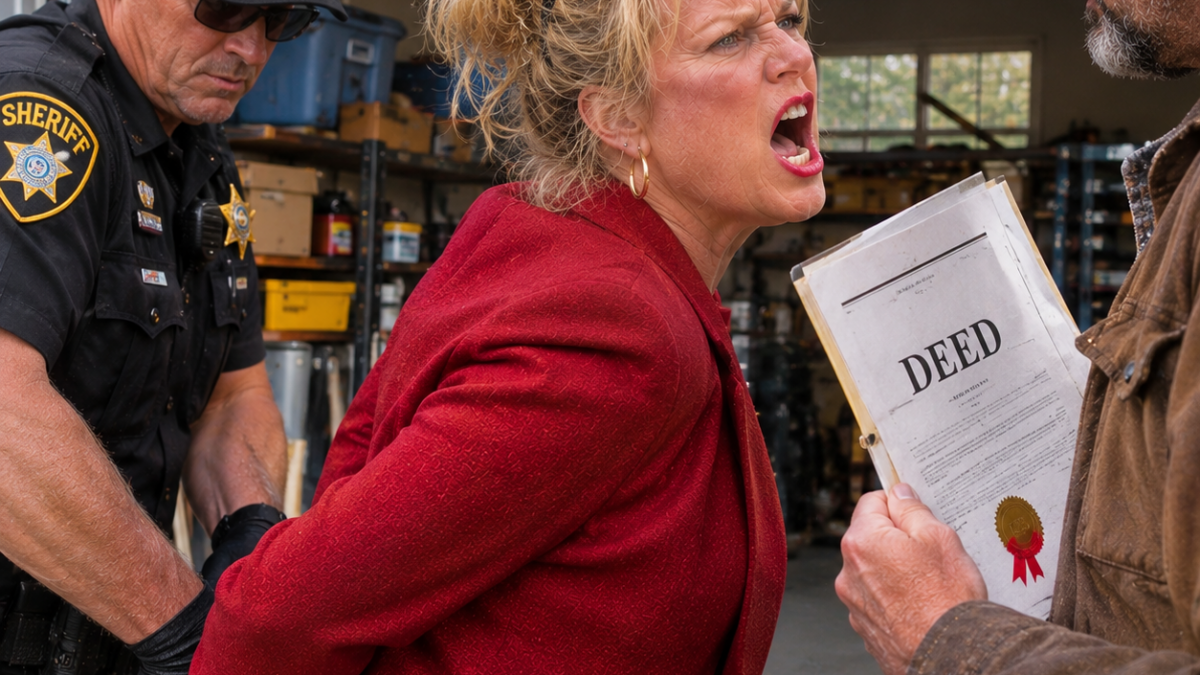
PART 2
I did not open the filing cabinet that night.
That probably sounds strange.
A normal person would have gone straight into the garage, yanked every drawer open, and started digging.
But by then I had learned something about Lauren Chavez.
She expected panic.
She depended on it.
People under pressure make bad decisions.
They pay charges they do not understand.
They sign documents without reading them.
They sell houses because the alternative feels more frightening.
I did not want to become another person reacting to whatever deadline she placed in front of me.
So I left the cabinet alone.
Instead, the next morning, I started with public records.
Property transactions.
Corporate filings.
Prior deeds.
Anything tied to Benson Development LLC.
I spent three evenings after work building a spreadsheet.
Addresses.
Purchase dates.
Sale prices.
Resale dates.
HOA liens where I could find them.
Five Pinewood Heights homes had been purchased by Benson Development over the previous five years.
All below market.
All resold within six months.
Most for significantly more.
My house was one of the repeated targets.
That interested me.
Same address.
Three owners before me.
Three increasingly aggressive HOA enforcement histories.
Three exits.
Then Benson appeared.
I wanted a lawyer before I went further.
Timothy White’s name came up repeatedly in Texas property disputes and HOA cases.
He was in his early sixties, tall, wire-rimmed glasses, calm enough to make a fire alarm sound negotiable.
His office was forty-five minutes away.
I brought everything.
Violation notices.
Canceled checks.
Lien notice.
Benson offer.
Property records.
My written request for HOA account documents.
Timothy read in silence.
Finally he tapped the lien.
“This has procedural problems.”
“How serious?”
“Potentially very.”
“Meaning?”
“If an association wants to enforce a claimed debt against a homeowner, it has to follow the governing documents and applicable state law. Notice matters. Accounting matters. Opportunity to cure matters. You cannot simply invent a number and attach it to a title.”
“I asked for an itemized statement.”
“And?”
“Nothing.”
“How long?”
“More than thirty business days.”
He made a note.
“Any certified-mail receipts from them?”
“No.”
“Any account ledger?”
“No.”
“Any explanation for how $225 became $2,400 and then $4,800?”
“No.”
He looked at me.
“Then I would challenge the lien.”
“What if it was knowingly fabricated?”
“That changes the discussion.”
“Criminal?”
“Potentially. Fraudulent property records can create criminal exposure depending on exactly what was filed, who knew what, and the intent behind it.”
I nodded.
“I need proof.”
“Yes.”
“I think the HOA president benefits financially from Benson Development.”
His pen stopped.
“What makes you think that?”
“Pattern.”
“That is not proof.”
“I know.”
He leaned back.
“Good.”
“What?”
“You did not argue.”
“I’m not here to have you agree with me. I’m here to find out what I can prove.”
That earned the first hint of a smile.
“Then keep doing that.”
Before I left, Timothy warned me about something else.
“HOA abuse cases are rarely one-person operations if they go on for years.”
“Meaning board members?”
“Maybe.”
“Developer?”
“Possibly.”
“Officials?”
“Sometimes people simply look the other way. Sometimes they have reasons.”
“That sounds ominous.”
“It’s meant to sound cautious.”
I went home and kept digging.
The connection appeared in a county filing I almost skipped.
Three of the deeds from Benson Development referenced a beneficiary interest held by the **L. Chavez Family Trust**.
I searched the name.
Then searched again.
Eventually I found an assignment of membership interest.
Four years earlier, Carl Benson, managing member of Benson Development LLC, had transferred a fifteen-percent ownership interest to the Chavez family trust.
I stared at the screen.
Lauren was not merely friendly with the developer.
Her family trust owned part of the company.
I printed the filing.
Then another.
Then everything around it.
The pattern finally made sense.
Lauren created the pressure.
Benson supplied the exit.
The homeowner sold low.
The violations disappeared.
Benson resold high.
Lauren collected through the trust.
If that was what the records truly meant, Pinewood Heights was not dealing with an overbearing HOA president.
It was dealing with a business model.
The next decision I made was personal.
I installed cameras.
Not the obvious ones under the eaves.
Small units covering the front walk, driveway, side garage door, backyard gate, and the area near the detached utility box.
Cloud backup.
Motion alerts.
Independent storage.
I did not want footage disappearing if someone damaged the equipment.
My second decision was professional.
I contacted the Madison County District Attorney’s Office.
I asked for a confidential meeting involving potential fraud connected to an HOA and real-estate transactions.
I also disclosed that I was personally involved.
That mattered.
Because there was something Lauren did not know.
I was not simply Gary Stewart, divorced homeowner with a new mortgage and long work hours.
I was Sheriff Gary Stewart.
I had served in Madison County law enforcement for more than twenty years.
I had become sheriff four years earlier.
When I bought the house, I did not announce it to the neighborhood.
I drove an unmarked county vehicle most days.
My campaign signs were gone.
I worked irregular hours.
And Lauren apparently paid far more attention to property values than local government.
Once I realized there might be a criminal case involving my own home, I knew I could not run it.
That would be improper.
Every official step would need to happen outside me.
The DA agreed.
Until I formally met with his office, I collected only what any citizen could collect.
My own records.
Public filings.
My own security footage.
Nothing from restricted law-enforcement databases.
Nothing from subordinates acting on my private theory.
No favors.
No shortcuts.
If Lauren went down, she was going down because the evidence held.
Not because I had a badge.
By then, the HOA had forty-three days remaining on the foreclosure timeline it had threatened.
I expected Lauren to keep sending letters.
Instead, Christine knocked on my door.
“Can you come over?”
“What happened?”
“I want to show you something.”
Her home smelled like coffee and tomato plants.
She led me into a study with four security feeds displayed on a monitor.
“I installed cameras after somebody broke into my shed three years ago.”
She opened an archived clip.
Timestamp:
11:47 p.m.
Two weeks earlier.
A woman entered the frame.
Lauren.
She crossed my lawn.
Walked to my garage.
Examined the side door.
Looked through the small window.
Tested the handle.
Then left.
Christine pulled up another date.
Same thing.
“What did she tell you about this?”
“Nothing.”
“Did you ask?”
“No.”
“Why?”
Christine looked embarrassed.
“Because people around here learned not to challenge her unless they were ready for a letter the next morning.”
That was the atmosphere I had felt when I moved in.
Not perfection.
Fear.
I went home and checked my new cameras.
Five days of footage.
Lauren already appeared once.
10:31 p.m.
She walked up my driveway.
Tried the garage handle.
Stood looking through the window for nearly a minute.
Then left.
I saved copies.
Three locations.
Local storage.
Cloud.
Encrypted drive.
At the HOA meeting the following Thursday, I attended for the first time.
Thirty residents.
Lauren sat at the center table.
Her husband Ronald sat beside her.
He was HOA treasurer.
Kevin Marsh, another board member, sat at the other end.
Kevin barely looked up.
Lauren ran the meeting with military precision.
Two-minute speaking limit.
No follow-ups.
No spontaneous motions.
A woman complained about selective enforcement.
Lauren cut her off.
“Board decisions are final.”
A man questioned a forty-percent dues increase.
“If you are unhappy with the financial obligations of community living, you are always free to sell.”
Several people looked at the floor.
I sat in the back.
Took notes.
Did not speak.
Afterward, I walked toward my truck.
Footsteps behind me.
“Mr. Stewart.”
I turned.
Lauren stood ten feet away.
No Ronald.
No neighbors nearby.
“I noticed you didn’t speak tonight.”
“I noticed you did.”
Her smile tightened.
“Most new residents have concerns.”
“I’m listening.”
“To what?”
“Everything.”
That irritated her.
She stepped closer.
“I hope you’re seriously considering the Benson Development offer.”
“I haven’t responded.”
“It is generous.”
“It’s below market.”
“It gives you certainty.”
“So does clear title.”
Her expression hardened.
“I’ve seen many people come and go from Pinewood Heights.”
“I know.”
“The ones who cooperate generally have an easier time.”
“And the ones who don’t?”
A pause.
“They rarely stay long.”
I let silence sit between us.
Then:
“Is that a threat?”
“Of course not.”
She smiled.
“An observation.”
My phone was recording inside my jacket pocket.
Not because I expected a confession.
Because I no longer trusted conversations that existed only in memory.
Lauren tilted her head.
“I’ve run this community for eight years. I know who fits here.”
“Do I?”
“No.”
That answer came too quickly.
Then she corrected herself.
“I mean you seem uncomfortable with community standards.”
“I’m uncomfortable with fake invoices.”
Her smile disappeared.
“If you make accusations you cannot prove, there are consequences.”
“I agree.”
She stared at me.
Then walked away.
I uploaded the recording.
Three nights later, my phone buzzed at 11:22.
**MOTION DETECTED — FRONT YARD.**
I was still at the station.
Most employees were gone.
I had been finishing budget paperwork.
I opened the feed.
Lauren was walking up my driveway.
Dark pants.
Light jacket.
Flashlight.
Something in her hand.
She went directly to the side garage door.
Then began working on the lock.
For several seconds, I watched.
My heart beat harder than I expected.
This was no longer a questionable HOA visit.
No clipboard.
No daylight.
No pretense.
She was breaking into my home.
I saved the clip.
Forwarded a copy to secure storage.
Then stood.
Deputy Shawn Baker saw me heading for the exit.
“Sheriff?”
“What?”
“You okay?”
I stopped.
This was the moment where being sheriff created a problem.
If I drove home and confronted her personally, every defense attorney later would say I had transformed a private dispute into a law-enforcement operation using my office.
So I did not.
“Shawn, I need you to call it in through dispatch.”
He frowned.
“What?”
“Burglary in progress at my address.”
His expression changed.
“Your house?”
“Yes.”
“Who?”
“Lauren Chavez.”
He understood immediately.
“You want patrol?”
“Yes. Normal response. I’m not assigning anyone. I’m not directing the stop. Have dispatch handle it.”
“You staying here?”
“For now.”
He nodded.
“I’ll notify dispatch that the complainant is the homeowner and you’re recused.”
I stood in the parking lot watching the security feed on a four-inch screen.
Lauren got the door open.
Flashlight moved through the garage.
She opened bins.
Looked behind shelves.
Checked boxes.
Not random.
She knew what she wanted.
Then she reached the old filing cabinet.
The one the previous owners left.
Top drawer.
Folders.
One after another.
She stopped.
Her body changed immediately.
Straightened.
Moved faster.
She pulled out a folder thick with papers.
Tucked it under her arm.
Headed for the door.
Twenty-three minutes after Shawn contacted dispatch, my phone rang.
It was Deputy Ellis.
“Sheriff.”
“Go ahead.”
“We have Mrs. Chavez detained at your residence.”
“What happened?”
“Located exiting through the side garage door.”
“Anything in her possession?”
“Folder she says belongs to HOA.”
“Do not treat anything differently because it’s my property.”
“Understood.”
“What’s her explanation?”
“Compliance inspection.”
“At eleven-thirty?”
“That was my question.”
“And?”
“She says she believed the house was vacant.”
I looked at the live feed still running.
“My truck isn’t there.”
“Yeah.”
“Anything else?”
“When I told her the camera shows her manipulating the lock, she requested counsel.”
“Good. Stop questioning.”
“Already did.”
“Handle it through normal procedure.”
“Yes, Sheriff.”
I stayed away.
That was harder than people might think.
My home had been burglarized.
Someone had entered my garage and taken papers.
Every instinct wanted me there.
But the cleaner the separation, the stronger the case.
Lauren was booked for burglary-related and trespass allegations based on the responding deputies’ investigation.
The folder recovered from her contained old records from the previous owners.
HOA correspondence.
Property documents.
Copies of violation notices.
And one item nobody expected.
A handwritten ledger.
Initials.
Dates.
Amounts.
Repeated entries beside the letters **LC**.
The next morning I met District Attorney Robert Harmon.
Late fifties.
Career prosecutor.
He had the exhausted expression of a man who had seen every creative way people convince themselves fraud is not fraud.
I put everything on his table.
My paid violations.
The $4,800 lien.
No supporting account statement.
Certified records request.
No response.
Benson offer.
Transaction history.
Chavez Family Trust ownership filing.
Audio of Lauren’s threat.
Christine’s footage.
My footage.
Arrest report.
Recovered folder.
Ledger.
Harmon read for nearly an hour.
Finally:
“How long have you been sitting on this?”
“Six weeks.”
“Why didn’t you bring it sooner?”
“I had suspicion. I wanted evidence.”
“You’re sheriff.”
“That’s exactly why I waited.”
He looked at me.
“Explain.”
“I’m the victim. I have a conflict. If I open an official case through my office, every decision gets attacked as personal retaliation.”
“That’s true.”
“I’m recusing from investigative authority.”
He nodded.
“That’s the right call.”
He tapped the lien.
“This alone concerns me.”
Then the corporate filing.
“This concerns me more.”
Then the ledger.
“This could matter a great deal if we authenticate it and determine what the entries mean.”
“You think kickbacks?”
“I think I do not know yet.”
I smiled slightly.
“That’s why I came to you.”
He looked at the old-owner papers.
“What was she looking for?”
“My guess?”
“Clearly label it as a guess.”
“The previous owners left fast. Maybe they kept records of what the HOA did to them.”
“And Lauren knew.”
“Maybe.”
Harmon looked at the ledger again.
“We’ll trace it.”
I told him something else.
Carl Benson had a prior fraud conviction from years earlier.
He was structured as an investor rather than serving personally as the licensed real-estate professional in the transactions.
Harmon made another note.
“You found that publicly?”
“Yes.”
“Good.”
“What happens now?”
“Lauren gets counsel. We verify records. We trace money. Grand jury if the evidence supports it.”
“Timeline?”
“I’m not promising one.”
“Fair.”
“And Gary?”
“Yes?”
“Stay out of my investigation.”
I almost laughed.
“Gladly.”
“No sheriff calls to witnesses.”
“Understood.”
“No deputies doing favors.”
“Understood.”
“No county systems used to satisfy your curiosity.”
“Understood.”
“You get information when any other victim would.”
“That’s what I want.”
“Good.”
Lauren posted bond that afternoon.
By evening, Shawn told me through ordinary administrative channels that her attorney had contacted several people.
Carl Benson.
Ronald Chavez.
Kevin Marsh.
At least one person connected to deed processing.
That could mean nothing illegal.
People under investigation contact lawyers and associates.
I did not treat it as proof of coordination.
The evidence already existed.
That night my cameras captured Lauren driving slowly past my house.
11:14 p.m.
She did not stop.
I saved it.
Thirty-seven days remained on the foreclosure timeline.
But for the first time, the number did not frighten me.
Timothy filed a formal challenge to the lien.
Harmon’s office had the criminal evidence.
Benson’s offer was preserved.
Lauren’s scheme, if that was what it proved to be, was no longer happening in darkness.
Still, she did not know one thing.
Who I was.
That sounds almost impossible.
But I had never introduced myself by title.
My HOA paperwork said **Gary Stewart**.
My work schedule kept me gone.
I drove an unmarked vehicle.
Christine knew I worked for the county but apparently had never asked where.
Pinewood Heights sat far enough from the courthouse that residents dealt more often with city police than the sheriff.
Lauren had spent months studying my lawn.
Not my life.
Nine days after her arrest, she came to my front door.
Saturday afternoon.
I was home organizing documents for the grand-jury process.
My doorbell camera showed her marching up the driveway.
Navy blazer.
Pearl earrings.
The uniform of someone determined to look in control.
I opened the door before she knocked.
She stopped.
“Mr. Stewart.”
“Mrs. Chavez.”
“We need to talk.”
“Your attorney probably disagrees.”
“This has gone far enough.”
I leaned against the frame.
Said nothing.
She filled the silence.
“The charges against me will be dismissed.”
I waited.
“My attorney has already filed the appropriate motions.”
Still nothing.
“And when this is over, I’m going to make sure you regret ever moving into Pinewood Heights.”
My doorbell camera recorded everything.
“Mrs. Chavez, you were arrested after deputies found you leaving my garage.”
“I was conducting HOA business.”
“At eleven-thirty at night?”
“The property appeared vacant.”
“You picked the lock.”
“I did not.”
“There’s video.”
“That footage can be manipulated.”
“Then your lawyer can challenge it.”
She stepped closer.
“The documents were planted.”
“Which documents?”
She froze.
Just slightly.
I continued.
“I didn’t tell you what was recovered.”
Her face tightened.
“You set me up.”
“No.”
“You moved in here pretending to be some helpless homeowner.”
“I never pretended anything.”
“You knew what you were doing.”
“I bought a house.”
“You think you’re clever?”
“No.”
“I know people in this county, Mr. Stewart.”
There it was again.
Not quite a threat.
Designed to sound like one.
“I’ve been running this community eight years.”
“I know.”
“I have connections you cannot imagine.”
“Maybe.”
“And when I’m finished, you’ll wish you had taken Benson’s offer.”
I remained still.
Every word recorded.
Then Lauren took out her phone.
“I’m done with this.”
“What are you doing?”
“Calling the sheriff.”
I nearly smiled.
Didn’t.
“I’m reporting harassment.”
“Okay.”
“Stalking.”
“Okay.”
“Threats.”
“Okay.”
That irritated her more.
“You won’t be so calm when they investigate you.”
She dialed.
I watched her posture change as soon as someone answered.
“Yes. I need the sheriff immediately.”
Pause.
“This is Lauren Chavez, president of the Pinewood Heights Homeowners Association.”
Pause.
“I’m at a residence where the homeowner is threatening and harassing me.”
Dispatch asked for the address.
She gave it.
Then silence.
Longer this time.
Confusion crossed her face.
“I’m sorry?”
Another pause.
Her eyes moved toward me.
Then toward my waist.
My jacket had shifted.
The badge clipped to my belt was visible.
Her phone slowly lowered.
“You…”
I said nothing.
“You’re…”
I reached for my shoulder radio.
“Dispatch, Sheriff Stewart.”
The answer came instantly.
“Go ahead, Sheriff.”
Lauren’s face emptied.
“I have Mrs. Lauren Chavez at my residence. She’s currently on bond in connection with the prior burglary case. Please send a patrol unit to document contact.”
“Copy, Sheriff. Unit en route.”
Lauren stepped backward.
“You’re the sheriff.”
“Yes.”
“You’re the sheriff?”
“Yes.”
She looked at the badge.
Then my face.
Then the phone in her hand.
For almost three months, she had treated me like a man who did not understand rules.
Now she was trying to understand how she had never asked the most basic question.
“You set me up.”
“No.”
“You deliberately hid who you were.”
“I bought a house. I did not owe the HOA my résumé.”
“This is abuse of power.”
“No.”
“You’ve been investigating me.”
“I have not used my office to investigate you.”
“Liar.”
“I used public records. My security cameras. My own documents. I recused from the criminal investigation before it formally opened.”
She stared at me.
“The district attorney controls it.”
Her mouth tightened.
“The responding deputies arrested you without direction from me.”
“You called them.”
“Deputy Baker contacted dispatch through normal procedure after I reported a burglary occurring at my residence.”
“You watched me.”
“My security camera watched you.”
She took another step back.
“This is entrapment.”
“No one asked you to enter my garage.”
That shut her up.
A patrol car arrived.
Two deputies stepped out.
Christine was standing across the street.
Of course she was.
Garden hose in one hand.
Phone in the other.
Lauren noticed.
Humiliation flashed across her face.
One deputy approached.
“Mrs. Chavez?”
“Yes.”
“We’re here to document the contact.”
“I want it noted that Sheriff Stewart is using his position to intimidate me.”
The deputy looked at me.
I said:
“Document her statement exactly.”
Lauren glared.
The deputies took statements.
No theatrics.
No handcuffs.
No dramatic arrest.
Her attorney would later argue about whether the contact violated bond conditions and whether further restrictions were necessary.
That was for the court.
Not me.
When Lauren finally left, Christine called across the street:
“You could have told me.”
I looked over.
“About what?”
“You being sheriff.”
“You never asked.”
She stared at me.
Then started laughing.
I went inside.
Three days later, Harmon called.
“Indictments returned.”
I sat down.
“Lauren?”
“Yes.”
“Ronald?”
“Yes.”
“Benson?”
“Separate federal component is moving too.”
“Charges?”
He explained carefully.
Lauren faced charges connected to burglary, fraud-related conduct, conspiracy allegations, and fraudulent property filings supported by the grand jury’s findings.
Ronald faced conspiracy and fraud-related counts tied to his role as treasurer and his approval of fabricated account materials.
Carl Benson’s operation had crossed county lines and electronic-payment channels.
Federal authorities had taken interest.
Kevin Marsh did what frightened secondary participants often do.
He cooperated.
His attorney approached Harmon within forty-eight hours.
Kevin’s testimony filled gaps no bank statement could.
He explained how Lauren chose board members.
People who owed favors.
People who disliked conflict.
People she could pressure.
He described violation generation.
Not every violation was fabricated.
That would have been too obvious.
Instead, genuine violations were mixed with manufactured ones.
Randomized.
Enough truth to make the system look legitimate.
Target selection was worse.
Older homeowners.
Single-income households.
People facing divorce.
New arrivals.
Owners working long hours.
Anyone less likely to fight.
My file had checked several boxes.
New.
Divorced.
Living alone.
Gone for long shifts.
House already used successfully in prior turnover cycles.
I sat across from Harmon when he explained that.
“They profiled me.”
“Looks like it.”
“What did Kevin say about the house?”
“According to him, Lauren called it ‘reliable inventory.’”
That phrase made me angrier than anything she had said to my face.
Not house.
Not home.
Inventory.
Three families before me had been processed through the same address.
Fine.
Pressure.
Lien.
Offer.
Sale.
Flip.
Profit.
Then repeat.
I called Christine.
“Do you know where the Hendersons went?”
She did.
Timothy located them through ordinary contact channels.
So did investigators.
Then the Nguyen family.
Then the Porters.
Their stories differed in details.
Same shape.
The Hendersons had two children and a medical bill problem.
Fines accumulated faster than they could challenge them.
Benson offered cash.
They sold.
The Nguyens hired counsel.
Legal fees became another burden.
Eventually they accepted an offer just to end the fight.
The Porters lasted six months.
Lauren had threatened foreclosure while one of them was between jobs.
They left believing they had failed as homeowners.
When investigators showed them the ownership link between Lauren’s trust and Benson Development, Mrs. Porter cried.
Not from relief.
From anger.
“She told me I was irresponsible.”
That sentence stayed with me.
Months passed before trial.
That mattered.
Criminal cases do not become television finales because evidence looks strong.
There were motions.
Challenges.
Authentication hearings.
Financial experts.
Disputes over admissibility.
Defense theories.
Lauren’s attorneys argued that she believed violations were legitimate.
That Benson’s ownership connection through the family trust did not automatically make every sale fraudulent.
That the ledger had been created by someone else.
That the garage incident was misunderstood.
Some arguments failed.
Some narrowed evidence.
That is how court works.
Not every accusation survives simply because the defendant is disliked.
The strongest evidence came from patterns.
Financial records.
Trust distributions.
Board records.
Homeowner files.
Kevin’s testimony.
Recovered documents.
Emails.
Lien irregularities.
And the difference between what Lauren claimed publicly and what she discussed privately with Benson.
Ronald’s role was smaller.
He had signed documents.
Approved account statements.
Failed to question things he later claimed he did not understand.
Prosecutors treated him differently.
That mattered to me.
Being married to Lauren did not make him equally responsible for everything.
His actual conduct had to determine his consequences.
Carl Benson’s case moved in federal court.
The multi-county transactions expanded the scope.
Wire transfers.
Property-management companies.
Interstate financial activity.
A structure investigators argued had been designed to repeatedly pressure homeowners and acquire distressed property through coordinated fraud.
Benson’s attorneys fought the enterprise characterization.
Prosecutors fought back.
I testified only where necessary.
Mostly as victim and document witness.
I hated it.
Cross-examination is different when you are sheriff.
Defense counsel wanted to make my badge the story.
“Sheriff Stewart, you had tremendous power over Mrs. Chavez, correct?”
“Official power?”
“Yes.”
“I recused.”
“But deputies worked for you.”
“They work for the county under my office.”
“And they arrested her.”
“They responded through dispatch and made their own probable-cause determination.”
“You watched the burglary live?”
“Yes.”
“You could have stopped her sooner?”
“Possibly.”
“But you didn’t.”
“No.”
“Because you wanted evidence.”
“Yes.”
“So you allowed an alleged crime to continue.”
“I avoided personally intervening in a case where I was the victim and preserved the evidence.”
“You wanted Mrs. Chavez arrested.”
“I wanted whoever entered my garage without permission dealt with according to law.”
“Did you dislike her?”
“Yes.”
That answer surprised him.
He paused.
“You disliked her.”
“Yes.”
“Strongly?”
“She had filed a lien against my home for charges I believed were fabricated.”
“So you were biased.”
“I was the victim.”
A few jurors looked up.
Defense counsel changed direction.
That was the danger of pretending I felt nothing.
Of course I was angry.
Of course I disliked what Lauren did.
The question was whether official evidence had been manufactured because of that anger.
It had not.
The cameras existed before the break-in.
Christine had independent footage.
County filings predated my involvement.
The trust documents were public.
Kevin’s testimony came after indictment.
Financial records came through warrants and subpoenas handled by prosecutors.
My badge did not create any of it.
Lauren’s trial ended with convictions on the charges the jury found proven.
She received a multi-year state prison sentence, followed by supervision, and restrictions that prevented her from returning to positions of authority within an HOA during the applicable period.
The exact number in the judgment was four years.
When the judge pronounced sentence, Lauren looked smaller than I remembered.
Not physically.
Authority had always added inches to her.
Without the board table, clipboard, letters, and frightened homeowners, she was simply a woman who had made years of decisions and finally had to answer for them.
I did not smile.
Christine sat behind me.
She whispered:
“I thought I’d feel happier.”
“So did I.”
Ronald received a lesser sentence involving probation and substantial community-service obligations based on his narrower proven role.
He lost his accounting job.
Kevin received the benefits negotiated for cooperation.
Some neighbors hated that.
I understood.
But prosecutors use cooperating witnesses because complex schemes often depend on insiders finally explaining what documents alone cannot.
Carl Benson’s federal case lasted longer.
Three weeks of trial.
Financial records.
Prior transactions.
Emails.
Company structures.
Testimony from former homeowners.
His defense argued aggressive business was being criminalized after the fact.
The jury disagreed.
He was convicted on the federal counts submitted to them.
The sentence was six years.
Benson Development was dismantled through the legal process, with available assets directed toward restitution and claims.
Then came the hardest part.
Fixing what had already happened.
Seven families had been affected across the broader pattern investigators proved.
Money does not restore years of anxiety.
It does not restore marriages strained by debt.
It does not give children back the house they thought they would grow up in.
But seized assets, insurance recoveries, court orders, and restitution gave victims something.
Some families accepted money and moved on.
Three former Pinewood owners wanted their homes back.
That created difficult negotiations because innocent later buyers were living in some of them.
Nobody deserved to be punished for buying without knowing the history.
The solutions varied.
Compensation.
Repurchases.
Settlements.
Voluntary transfers where everyone agreed.
Nothing was simple.
Nothing was instant.
But for the first time, the people who had been targeted were not being told to take whatever deal made Lauren’s problem disappear.
They had counsel.
Information.
Choice.
My own lien was voided.
Every fabricated balance tied to it disappeared.
One afternoon I received a formal title confirmation from the county recorder.
I stood in my kitchen reading it.
**No enforceable lien recorded in favor of Pinewood Heights Homeowners Association relating to the disputed charges.**
I read it twice.
Then framed it.
Christine saw it later.
“You framed legal paperwork?”
“Yes.”
“That’s depressing.”
“You’re retired. Go away.”
She smiled.
“Never.”
The Pinewood Heights HOA did not disappear.
That surprised some people.
Residents still had shared landscaping.
Common areas.
Road-related obligations.
Community insurance.
The problem had never been the mere existence of an association.
The problem was what Lauren had turned it into.
A new board was elected.
Christine Clark became president.
When she told me, I laughed for nearly a minute.
“This is not funny.”
“It’s extremely funny.”
“I only agreed because nobody else would.”
“That is how every dictatorship starts.”
“Get off my porch.”
“You’re on mine.”
She looked down.
“Fine. Then get me coffee.”
Her first board actions were boring.
That made them excellent.
Independent legal review before major lien action.
Detailed accounting.
Homeowner access to enforcement records.
Appeals handled by people who were not the same person issuing the violation.
Conflict-of-interest disclosures.
No board member or close family trust holding undisclosed ownership interests in companies buying distressed homeowner property.
That last one received unanimous approval.
Christine also created a homeowner advocacy committee.
She called it “a committee for people who are scared to ask questions.”
Not elegant.
Useful.
The HOA issued formal apologies to former residents.
Some accepted them.
Some did not.
Both reactions were fair.
Mrs. Porter wrote back:
**An apology is appreciated. It does not change what happened.**
Christine read that at a meeting.
Nobody argued.
That was progress.
I stayed in the house.
People assumed I would move.
I had bought it for a fresh start, and for months it had been the center of a criminal case.
But eventually the house became quiet again.
I replaced the garage side door.
Better deadbolt.
Reinforced strike plate.
Cameras remained.
Not because I expected Lauren to return.
Because once you have watched somebody pick your lock from a phone screen, you stop laughing at security.
Christine waved every morning when I left.
The neighborhood slowly changed.
Not the landscaping.
The people.
They stopped lowering their voices when discussing HOA issues.
Residents attended meetings.
Some disagreed loudly.
Christine hated that.
I told her:
“That’s democracy.”
She said:
“That’s migraines.”
One Saturday afternoon, the Henderson family came back.
They had not lived in Pinewood Heights for years.
Their children were older.
They stood in front of my house staring at it.
I walked outside.
Mr. Henderson looked embarrassed.
“Sorry. We should’ve called.”
“It’s fine.”
His wife looked at the garage.
“That cabinet still there?”
I felt something tighten in my chest.
“Yes.”
She laughed once.
Not happily.
“We left half our paperwork in it.”
“I know.”
Her eyes moved to mine.
“That’s what Lauren wanted.”
“I think so.”
“She knew?”
“Apparently enough to be looking.”
Mr. Henderson shook his head.
“We were in such a hurry.”
“What happened?”
He looked at his wife.
She answered.
“Our son needed surgery.”
I waited.
“We were already stretched thin. Then the fines started.”
“How much?”
“Eventually thousands.”
“Did you challenge them?”
“Yes.”
“Lauren?”
“She told us litigation would cost more than moving.”
Mr. Henderson said:
“Then Benson called.”
“Immediately?”
“Within a week.”
“What did you think?”
“That somebody was giving us a way out.”
Mrs. Henderson’s eyes filled.
“I thanked her.”
“Lauren?”
“Yes.”
That hurt.
She looked toward the house.
“I thanked the woman who was helping take it from us.”
I did not know what to say.
She continued.
“Do you know what she told me?”
“No.”
“She said, ‘Sometimes responsible adults know when it’s time to cut their losses.’”
I remembered Mrs. Porter saying Lauren called her irresponsible.
Same weapon.
Shame.
The Hendersons eventually received restitution.
They chose not to return.
Too many memories.
Before leaving, Mrs. Henderson asked:
“Why didn’t she know you were sheriff?”
I smiled.
“I’ve wondered that.”
Mr. Henderson said:
“She never cared who people were.”
“What do you mean?”
“She cared what made them vulnerable.”
That sentence stayed with me longer than most courtroom testimony.
Lauren had looked at me and seen:
Divorced.
Alone.
New.
Long hours.
Discount purchase.
Potential equity.
She did not see Gary.
Certainly did not see Sheriff Stewart.
Not because I hid well.
Because people running predatory systems often reduce others to categories.
Useful.
Difficult.
Profitable.
Weak.
Target.
The badge mattered only at the end because it shattered her assumption.
But the badge was not what actually beat her.
That part became important to me.
After the case, people around the county told the story wrong.
“HOA woman tried to scam the sheriff.”
“Karen broke into the sheriff’s garage.”
“She called the sheriff on the sheriff.”
That was the funny version.
And yes, the look on Lauren’s face when dispatch told her whose house she was standing at was unforgettable.
But if I let that become the story, then everything important disappeared.
Christine’s cameras mattered.
Public filings mattered.
Canceled checks.
Certified mail.
County deeds.
The trust assignment.
The ledger.
Former homeowners willing to talk.
Kevin finally deciding to cooperate.
Timothy reading the lien carefully.
Harmon insisting on independent process.
Deputies doing their job without taking orders from the victim.
The badge was the twist.
Documentation was the case.
I said that at a neighborhood meeting a year later.
A resident asked:
“Would Lauren have been caught if you weren’t sheriff?”
I thought about it.
“Yes.”
“You’re sure?”
“If somebody did the same work.”
“That sounds like a big if.”
“It is.”
I looked around the room.
“That’s why the new procedures matter.”
Christine nodded.
“Records should not require a sheriff to understand them.”
Exactly.
The HOA started publishing clearer financial reports.
Violations included photographs and specific rule citations.
Homeowners could challenge factual errors before fines escalated.
No more vague balances.
No more “internal records” used as a shield.
The first time someone successfully appealed a grass-height violation, Christine called me.
“This is your fault.”
“What happened?”
“Board measured wrong.”
“Tragic.”
“We dismissed the fine.”
“Civilization survives.”
“I hate you.”
“That seems hostile for an HOA president.”
She hung up.
My divorce stopped feeling like the defining event of my move.
That surprised me.
When I first arrived at Pinewood Heights, I thought everything in my life could be divided into before and after my marriage ended.
Then Lauren happened.
The house became something different.
At first, escape.
Then target.
Then evidence.
Eventually it became home.
I painted the spare bedroom.
Built shelves in the garage.
Opened every drawer of the old filing cabinet.
Most contained junk.
Receipts.
Old appliance manuals.
Warranties.
Children’s drawings the Hendersons must have forgotten.
I mailed those back to them.
The bottom drawer held nothing dramatic.
That almost made me laugh.
Lauren had risked prison over a cabinet that contained useful evidence only because previous families had been too rushed and exhausted to clean it out properly.
Her own fear finished what my investigation had started.
One rainy evening, Timothy came by to drop off final civil paperwork.
He stood in the garage looking at the cabinet.
“That thing?”
“Yes.”
“She broke in for that?”
“Apparently.”
“Ugly.”
“You’re charging me by the hour to insult furniture?”
“Absolutely.”
He handed me the file.
“Your civil matters are closed.”
“All?”
“Your title is clean. Disputed charges gone. Related claims resolved.”
I opened the folder.
For months, every piece of paper had meant threat.
Now the final papers meant nothing more was required.
I closed it.
Timothy looked at me.
“You all right?”
“Yes.”
“You look disappointed.”
“I’m tired.”
“Different.”
“Maybe.”
He looked toward the driveway.
“You know what happens now?”
“What?”
“You live here.”
That sounded almost too simple.
But he was right.
So I did.
I planted a tree in the backyard.
Not because it symbolized anything.
Christine insisted I needed shade.
A year later, the branches were still thin.
Two years later, enough for a chair underneath.
Three years later, I started drinking coffee there before work.
One morning Christine leaned over the fence.
“You’re violating the approved tree-height schedule.”
I looked at her.
“There is no tree-height schedule.”
“Good. You’re learning.”
She walked away laughing.
Pinewood Heights never became perfect.
No neighborhood does.
People argued over parking.
Dues.
Dogs.
Fence stain.
Whether basketball hoops belonged in driveways.
The difference was that disagreement no longer felt dangerous.
Nobody believed one complaint would lead to a mysterious lien.
Nobody whispered when the HOA president walked by.
Christine carried a clipboard occasionally.
Residents made fun of her for it.
She encouraged them.
That was probably healthy.
Years later, I found my original notepad in the glove box of my old vehicle.
The first page contained the notes I wrote the night I saw Lauren on my lawn.
**11:03 p.m.**
**Female. Mid-50s.**
**Flashlight.**
**Garage handle checked.**
Then one sentence beneath it.
**Document first. React second.**
I had written that from habit.
Law-enforcement habit.
But reading it years later, I realized that sentence had probably saved me.
If I had jumped out of the truck that night and confronted her immediately, she would have denied everything.
If I had used my badge to frighten her, she would have made herself the victim.
If I had ordered deputies to investigate my personal dispute, every later step would have been questioned.
Instead, I watched.
Recorded.
Checked documents.
Let the evidence grow.
Patience did not make me passive.
It made the final case stronger.
I placed the notepad in the framed box beside the county letter clearing my title.
Christine saw that too.
“You are turning paperwork into home décor.”
“I’m a sheriff.”
“That doesn’t explain anything.”
One autumn evening, I sat in my driveway after work.
Garage door open.
Lights on.
No reason to close it immediately.
That detail mattered.
For months after the burglary, I had shut the garage before I even stepped out of my vehicle.
Automatic.
Security before comfort.
That night I left it open while I carried groceries inside.
Christine was watering tomatoes next door.
A teenage boy rode past on a bicycle.
Somebody farther down the street was grilling.
Normal sounds.
Normal evening.
I walked back outside.
The old filing cabinet stood against the garage wall.
I considered throwing it away.
Then decided against it.
Not because it was evidence anymore.
The case was long over.
Because the dents and scratched paint reminded me of something useful.
Lauren had believed the most important thing in that garage was a deed.
A ledger.
Old records.
Something she could remove and make disappear.
She had spent years operating that way.
Make the notice disappear.
Make the accounting disappear.
Make the connection to Benson disappear.
Make the previous homeowner disappear.
Then repeat.
But she misunderstood what evidence becomes once enough people have seen it.
You can steal a folder.
You cannot steal every copy.
You cannot erase a certified filing already downloaded.
You cannot remove footage already backed up.
You cannot make neighbors forget what they watched.
And you cannot force a lie back into secrecy after people finally start comparing what they know.
A car slowed in front of my house.
For half a second, old instincts returned.
Then the window lowered.
Christine.
She had driven to the grocery store even though it was four blocks away.
“You working tomorrow?”
“Yes.”
“HOA meeting at seven.”
“That sounds like your problem.”
“You own property here.”
“That was apparently controversial once.”
She rolled her eyes.
“We’re voting on playground repairs.”
“Thrilling.”
“You’re attending.”
“No.”
“I know where you live.”
“That threat used to mean more around here.”
She laughed.
Then drove into her driveway.
I stood there smiling.
The garage remained open.
No flashlight moving through the darkness.
No one testing the lock.
No lien letter waiting on the kitchen table.
No developer offering to rescue me from a problem his partner had created.
Just my house.
My garage.
My neighbors.
My paperwork where I left it.
The title was clean.
And the woman who once believed she could decide who belonged in Pinewood Heights no longer had any power over the people living there.
The funny part of the story will probably always be the phone call.
Lauren Chavez standing on my porch, telling dispatch she needed the sheriff to protect her from me.
The pause.
Her face changing.
Her eyes finding the badge.
“You’re the sheriff?”
Yes.
I was.
But that was never the reason she lost.
She lost because she finally targeted someone who kept the receipts.
[END OF STORY]








