PART 2: HOA Blocked My Bridge With 9 SUVs—Then They Learned the Woman They Stopped Was the County Sheriff
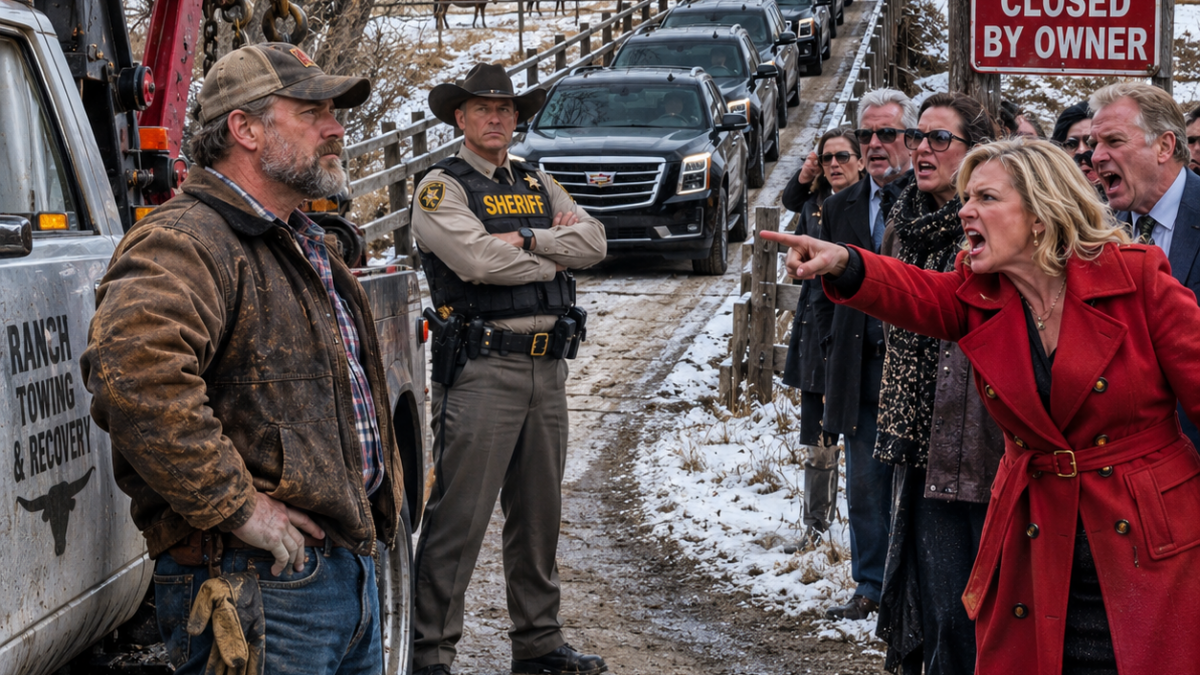
PART 2
The company name on Tessa’s screen was **Harrow Strategic Holdings**.
I looked at the phone.
Then at Celeste.
Then back at the phone.
“Run the corporate registration.”
“Already doing it.”
Dorian was still standing near the lead SUV, but he had stopped filming.
Celeste had noticed us looking at her.
“What?” she called.
I did not answer yet.
Tessa’s phone buzzed.
She read silently.
Then raised her eyes.
“Registered eighteen months ago. Business address is a suite outside the county.”
“Managing members?”
She scrolled.
One name appeared.
Celeste Harrow.
I breathed out slowly.
Four of the nine SUVs were registered directly to Harrow Strategic Holdings. Two more were leased through a commercial fleet account linked to the same address.
The remaining three were registered to Dorian and two other board members.
This was not nine homeowners spontaneously deciding to protest.
Somebody had assembled a fleet.
I walked toward Celeste.
“Who owns Harrow Strategic Holdings?”
Her face did not change.
“My family has several business entities.”
“What does this one do?”
“Consulting.”
“What kind?”
“Security. Development. Property services.”
“That’s broad.”
“It’s a broad company.”
“And these vehicles?”
“Part of a community security initiative.”
“Paid for by the HOA?”
“That’s none of your concern.”
“It becomes my concern when the vehicles are intentionally blocking a county bridge.”
She crossed her arms.
“We’re protecting residents.”
“From what?”
She glanced toward Dorian.
That tiny movement was enough to tell me the answer had not been rehearsed as well as the rest.
“Traffic problems,” she said.
“What traffic problems?”
“Unauthorized access.”
“To a public road?”
“This leads directly into Silver Creek.”
“That doesn’t make the bridge private.”
“You keep saying that.”
“Because you keep ignoring it.”
Tessa approached.
“Sheriff, traffic cameras.”
“What about them?”
“County entrance camera covers the western approach.”
“Pull the morning footage.”
Celeste stepped forward.
“You need a warrant to investigate our association.”
“I’m not searching your association.”
I pointed toward the camera mounted on a county pole.
“I’m reviewing county traffic footage of a county roadway.”
Her jaw tightened.
For the first time that morning, I saw calculation replace arrogance.
That was more interesting.
People who believe they are right tend to argue.
People who know evidence exists start calculating.
I turned to Deputy Rourke.
“Tessa, document every vehicle before anything moves.”
“Already started.”
“VINs, plates, exact positions, photographs from both ends.”
“Got it.”
“Get statements from anyone who saw them arrive.”
Celeste laughed sharply.
“You’re treating this like a crime scene.”
“I’m treating it like nine vehicles deliberately obstructing a public roadway.”
“No emergency exists.”
“That ambulance won’t care if one starts.”
As if the morning wanted to prove my point, a pickup pulled up behind my car.
The driver leaned out.
“Sheriff, I need to get through.”
“Give us a few minutes.”
He looked at the blockade.
“What the hell is this?”
“Working on it.”
Celeste stepped between us.
“Silver Creek residents are allowed through.”
I turned.
“How?”
She froze.
There was literally no path.
Not one lane.
Not a shoulder.
Not even enough space between SUVs for a car to squeeze past.
“Exactly,” I said.
The county property record came back next.
I already knew what it would say, but I wanted confirmation before I acted.
The bridge belonged to the county.
Not Silver Creek.
Not the HOA.
Not Harrow Strategic Holdings.
The HOA’s only recorded obligation involved limited maintenance of several hundred feet of private access road on the subdivision side.
No ownership.
No closure rights.
No authority to regulate county traffic.
I showed Celeste the record on my tablet.
She barely looked.
“Our attorney disagrees.”
“Your attorney can disagree from the courthouse.”
“This association has maintained access for twenty years.”
“You can maintain landscaping next to the courthouse too. That won’t make you the judge.”
Dorian spoke up.
“That’s disrespectful.”
I looked at him.
“What’s disrespectful is blocking a bridge thousands of people have the right to use because your board decided it felt powerful this morning.”
His phone came back up.
Good.
I wanted that sentence recorded.
Celeste stepped closer.
“You need to be very careful, Sheriff.”
“About?”
“This county has worked with Silver Creek for years.”
“That sounds like a threat.”
“It’s a reminder.”
“Of what?”
She did not answer.
I called Blaine Mercer.
Blaine owned the biggest towing company in the county.
I had known him for fifteen years, since I was a deputy and he was still driving recovery trucks himself.
“Blaine.”
“Mara?”
“I need nine heavy tow units at Silver Creek bridge.”
Silence.
Then:
“Nine?”
“Nine.”
“You starting a dealership?”
“Bring dollies, winches, and somebody comfortable with locked all-wheel-drive SUVs.”
He laughed.
“Now you have my attention.”
“How soon?”
“First trucks in thirty-five.”
“Document condition before touching anything.”
“Always.”
I ended the call.
Celeste had heard.
“You tow one of those vehicles and I’ll sue you personally.”
“You’re entitled to contact counsel.”
“You’ll lose your badge.”
“That’s possible.”
My answer clearly surprised her.
“You don’t care?”
“Of course I care.”
I looked at the bridge.
“I just don’t care more about it than I care about doing the job.”
That sentence came from somewhere older than this case.
A memory I did not enjoy revisiting.
When I was twenty-seven, still new enough to believe every uniform automatically meant integrity, I responded to a fatal collision involving a developer’s son.
Alcohol.
Speed.
One dead college student.
By Monday, calls were coming down from people whose names carried weight.
Evidence was suddenly being described as “uncertain.”
Witnesses were pressured.
The case did not disappear completely, but it became smaller every time someone important touched it.
I watched a family sit through that.
I watched them understand that money could make truth negotiable.
I promised myself afterward that if I ever held enough authority to stop that from happening in front of me, I would.
That promise had cost me promotions.
Friends.
Votes.
Sleep.
I had never regretted it.
The traffic-camera footage arrived nineteen minutes later.
Tessa and I reviewed it in her cruiser.
5:04 a.m.
First black SUV entered the frame.
Celeste driving.
Another followed twelve seconds later.
Then another.
Nine vehicles.
Tight formation.
They did not hesitate at the bridge.
They positioned themselves deliberately.
One at the near entrance.
Three midspan.
Five at the far side.
People got out.
Dorian walked between vehicles, motioning drivers forward or backward until spacing was exactly right.
Celeste stood near the center using her phone.
No confused residents.
No spontaneous protest.
A coordinated operation.
Tessa paused the footage.
“That looks planned.”
“It was.”
“Question is why.”
I looked through the windshield toward Celeste.
She was on her phone again.
“Exactly.”
I sent Deputy Hollis to check the undeveloped parcels across the river.
Silver Creek ended near several hundred acres of wooded land that had remained mostly untouched for decades.
There had been rumors about development.
Nothing concrete enough for me to pay attention.
Twenty-five minutes later Hollis called.
“You’re going to want to see this.”
“What?”
“Survey stakes.”
“That’s not illegal.”
“No.”
“What else?”
“Grading equipment.”
“Operating?”
“Staged.”
“Company?”
He read the name.
Harrow Development Group.
I closed my eyes briefly.
“Photograph from public access only. Don’t enter without permission.”
“Already doing that.”
When I told Tessa, she frowned.
“Celeste owns that too?”
“We’ll check.”
The corporate registry confirmed it.
Harrow Strategic Holdings and Harrow Development shared an address and several officers.
Now we had a blockade.
A development project.
A bridge Celeste falsely claimed belonged to the HOA.
And corporate vehicles positioned to seal it.
Still not enough to tell me why.
Not yet.
The first tow truck arrived.
Celeste walked straight into its path.
The driver stopped.
I approached.
“Move off the roadway.”
“No.”
“Celeste.”
“You’re not taking these.”
“You’ve been given multiple opportunities to move them voluntarily.”
“They are lawfully parked.”
“They are blocking both lanes of a county bridge.”
“This is a protest.”
“You didn’t tell me it was a protest.”
“I’m telling you now.”
“Then it’s still obstructing the roadway.”
She pointed toward several residents filming.
“You arrest me and this becomes national news.”
“I haven’t said anything about arresting you.”
“Yet.”
“Move off the roadway.”
She stepped aside slowly.
Not because she had accepted anything.
Because she wanted to see how far I would go.
Blaine climbed down from the tow truck.
Gray beard.
Orange safety vest.
Old work gloves.
“Mara.”
“Blaine.”
He looked across the bridge.
“Impressive.”
“Can you clear it?”
“Eventually.”
“Eventually?”
“These are heavy SUVs, several all-wheel-drive. Depends whether we have keys.”
Celeste said, “You don’t.”
Blaine looked at her.
“Then eventually.”
Tessa came over.
“Sheriff, registration records show several fleet policies.”
“Insurance current?”
“Still checking.”
I nodded.
Celeste pulled a folder from her SUV.
“I’ve had enough of this.”
She marched toward me.
“Here.”
Inside was a document with a county seal.
The heading read:
**COUNTY TRANSPORTATION ACCESS AUTHORITY — SILVER CREEK COMMUNITY MANAGEMENT ORDER**
At first glance, it looked official.
Stamped.
Signed.
File number.
Legal language.
Celeste watched my face.
“You wanted documentation.”
I read the first paragraph.
Then looked at the seal.
Something was wrong.
Not dramatically.
Just wrong.
I had signed enough county documents to recognize the old emblem.
Our transportation office had been reorganized four years earlier.
The seal changed.
So did the department name.
This document used both the old seal and the new director’s title.
That combination had never existed.
I looked at Celeste.
“Where did you get this?”
“Our attorney.”
“Name.”
She hesitated.
Dorian spoke quickly.
“Association counsel.”
“Name.”
He looked at Celeste.
Neither answered.
I handed the paper to Tessa.
“Photograph it. Bag the original.”
Celeste reached toward it.
“You cannot seize association property.”
“I can secure suspected evidence of a forged county document voluntarily presented to me during an active investigation.”
“It isn’t forged.”
“Then the records check will clear it.”
Tessa searched the file number.
Nothing.
She tried the legacy system.
Nothing.
Called the transportation office.
No record.
No order.
No authorization.
I turned to Celeste.
“Who made this?”
Her lips tightened.
“I’m done answering questions.”
“That’s your right.”
That answer bothered her more than argument would have.
I did not need a confession on the bridge.
I needed evidence that survived a courtroom.
My phone rang.
County Commissioner Edwin Hall.
I had known him seven years.
We were not friends.
We were professionally polite.
“Mara.”
“Commissioner.”
“I’m hearing there’s some sort of confrontation at Silver Creek.”
“There’s an unlawful roadway obstruction under investigation.”
“HOA dispute?”
“More than that.”
“Celeste Harrow says you’re impounding vehicles.”
“I’m clearing a county bridge.”
He sighed.
“Do we really need to make a spectacle?”
I looked across the roadway.
Residents everywhere.
Phones raised.
Nine black SUVs.
“I didn’t bring the spectacle.”
“I’m asking whether this could be handled quietly.”
“How?”
“Give them time to resolve it internally.”
“The bridge is county property.”
“I understand.”
“Then there is nothing internal about blocking it.”
His voice softened.
“Mara, use judgment.”
“I am.”
“I mean political judgment.”
There it was.
A sentence I had heard in different forms throughout my career.
I felt twenty-seven again.
Flashing lights.
Broken glass.
A mother crying in a hospital corridor while somebody important called somebody else important.
“No.”
The commissioner went silent.
“No?”
“I’m documenting this call.”
“Mara—”
“You contacted the sheriff during an active investigation and suggested political considerations should affect enforcement. I’m documenting the exact time and substance.”
“That is not what I said.”
“Then your recollection can be included later.”
He hung up.
Tessa had heard enough to understand.
“You okay?”
“Fine.”
“You don’t look fine.”
“I hate déjà vu.”
I immediately dictated a memorandum.
Time.
Caller.
Words as accurately as I could remember them.
Then I contacted the state investigative bureau and requested an outside review of any political interference connected to the case.
I did that before I knew whether Hall had done anything more serious than make a stupid phone call.
Because once corruption becomes part of your theory, you do not investigate your own friends and call that independence.
The tow company completed its insurance checks while all of this was happening.
Blaine walked over carrying a clipboard.
“You’re going to enjoy this less than you think.”
“What?”
“None of the corporate vehicles has a current valid policy in the system.”
“All?”
“All six tied to the companies.”
“What about the others?”
“Tessa says one expired. Two private policies active.”
I looked at Celeste.
That was another layer.
Not the main one.
But enough to eliminate any argument that we were casually releasing the vehicles back onto the road.
“Document everything.”
“Already did.”
The first SUV came off the bridge at 10:41.
Blaine’s crew used wheel dollies to lift it cleanly.
Celeste stood on the shoulder with her arms folded.
When the truck moved away, a handful of residents applauded.
I turned toward them.
“Please don’t.”
The applause died.
This was not entertainment.
Not yet.
The second vehicle came free.
Then the third.
Dorian had gone quiet.
The fourth caused trouble.
Its electronic parking brake would not release.
No key.
Locked steering.
The rear wheels refused to roll.
Blaine’s operator climbed down.
“We can wait for the rotator.”
“How long?”
“Forty-five minutes.”
The bridge had already been closed for hours.
I looked at the winch setup.
“You have snatch blocks?”
Blaine stared at me.
“No.”
“You absolutely do.”
“I meant no, you are not touching my truck.”
“Why?”
“Because you’re the sheriff.”
“I worked heavy rescue before I was sheriff.”
“Twenty years ago.”
“Fifteen.”
“That does not improve the sentence.”
I pulled on gloves.
He laughed.
“You damage my equipment, county buys me a new one.”
“Send the invoice to Celeste.”
She heard her name.
“What are you doing?”
“Clearing the bridge.”
I climbed onto the operator platform.
The old muscle memory returned faster than I expected.
Control lever.
Cable tension.
Anchor angle.
Blaine supervised because I was not interested in proving anything badly enough to hurt somebody.
We rigged the SUV.
Steel cable tightened.
The vehicle resisted.
Tires dragged.
For several seconds nothing happened.
Then the winch pulled harder.
The SUV lurched.
A tire squealed across asphalt.
The crowd reacted.
Celeste shouted:
“STOP!”
I kept my attention on the line.
Blaine raised one hand.
“Easy.”
I eased tension.
Changed the angle.
Pulled again.
The SUV moved another four feet.
Enough.
The operator took over and positioned it for the tow.
When I climbed down, Blaine shook his head.
“You’re going to put that in your campaign ad, aren’t you?”
“I would rather retire.”
Behind him, Celeste looked at the now-empty section of bridge.
Three hours earlier she had stood there certain I would leave.
Now four of her vehicles were gone.
The fifth and sixth came off without resistance.
Dorian moved his own SUV voluntarily only after Tessa explained that physically interfering again could lead to arrest.
The seventh was towed anyway because it had been part of the documented obstruction and evidence processing was not finished.
Eight.
Then nine.
At 12:56, the final tow truck crossed the eastern line.
The bridge was open.
Tessa stood beside me.
“That all of them?”
“All nine.”
She looked back at the empty asphalt.
“Feels smaller now.”
“Most displays of power do after the vehicles leave.”
Traffic began moving slowly.
I had deputies control the first several minutes to prevent people from rushing the span.
A school bus returning from an athletic event crossed.
Then a delivery van.
Then ordinary residents.
No cheering.
Just people going where they had always had the right to go.
That should have been the end of my Saturday.
Instead, a man appeared from the crowd.
Mid-forties.
Baseball cap.
Gray sweatshirt.
He walked fast toward me.
Tessa noticed him first.
“Sheriff.”
I turned.
The man raised both hands.
“I’m not armed.”
“Stop there.”
He stopped six feet away.
Then held out a black flash drive.
“You need this.”
“Who are you?”
“Doesn’t matter.”
“It matters to me.”
He looked toward Celeste.
She was fifty yards away speaking to Dorian.
“You arrest her now, you’re only going to get the bridge.”
“What does that mean?”
“Everything else disappears.”
“What’s on the drive?”
“Meetings.”
“What meetings?”
He pushed it into my palm.
“Ask why she really wanted the bridge closed.”
“Name.”
He stepped backward.
“Please.”
“Sir—”
He turned.
Tessa moved.
I stopped her.
“Let him go for now.”
“You sure?”
“No.”
We watched him disappear among residents.
I looked down at the drive.
A tiny piece of black plastic.
The kind of thing that can carry family photographs.
Tax records.
Or enough evidence to ruin half a county.
“We don’t plug this into anything connected to our network,” I said.
Tessa nodded.
“Forensics?”
“Forensics.”
By three that afternoon, we were in a secure workroom at the sheriff’s office.
A technician created a forensic image of the drive.
No malware.
No obvious tampering.
The first video opened.
Conference room.
Unknown location.
Long table.
Celeste at the head.
Dorian beside her.
Three people I did not recognize.
The timestamp was six weeks earlier.
Celeste’s voice was clear.
“If the bridge becomes unreliable, landowners on the east side lose confidence.”
Someone off camera asked:
“How long?”
“As long as necessary.”
“What if residents complain?”
“They’ll blame infrastructure.”
“And if the county intervenes?”
Celeste smiled.
“Mara Voss won’t be a problem. We have someone positioned to handle county interference.”
I felt every muscle in my body become still.
Tessa looked at me.
“You heard that.”
“Yes.”
The video continued.
A presentation appeared on a screen.
Property parcels.
Buyout targets.
Color-coded maps.
Some parcels had red circles.
Others yellow.
Then a spreadsheet flashed briefly.
Payments.
Consulting fees.
An unnamed county official identified only by an initial.
I paused the video.
Zoomed.
The resolution was poor.
Not enough to identify the person.
Enough to know somebody had planned around influence.
The next file was another meeting.
Celeste again.
This time she spoke more directly.
“We do not need everyone to sell. We need enough strategic parcels to control the development footprint.”
A man asked:
“How do we create urgency?”
Celeste answered:
“Access uncertainty.”
My stomach tightened.
The bridge blockade had never been about neighborhood security.
It was leverage.
Make the crossing look unstable.
Make the community look cut off.
Make targeted landowners frightened about access.
Then offer to buy.
Cheap.
I sat back.
Tessa whispered:
“Jesus.”
“Not yet.”
“What?”
“We need provenance.”
“The video is right there.”
“We need to know where it came from.”
“But—”
“A defense lawyer will ask who recorded it, whether it was altered, how it was obtained, whether the device was edited, who handled the files.”
Tessa nodded.
“You’re right.”
“I wish I weren’t.”
The next morning, Odessa Vale called.
I knew the name only because she lived in Silver Creek.
She asked for me personally.
“I think I know what you’re investigating.”
“Why?”
“Because Celeste has been trying to destroy me for six months.”
That got my attention.
Odessa came to the office carrying two grocery bags full of paperwork.
She was sixty-one.
Retired school counselor.
Sharp eyes.
No patience left.
She dumped violation letters across my table.
Grass height.
Trash-bin placement.
Holiday-light timing.
Fence stain.
Parking.
Mailbox decoration.
Several were for things photographs showed nearly every neighbor did.
“Why you?” I asked.
“I opposed the bridge plan.”
“When?”
“January.”
“What bridge plan?”
She stared at me.
“You don’t know?”
“Apparently not.”
Odessa pulled out meeting notes.
Months before the blockade, Celeste had floated “enhanced HOA traffic control” around the bridge.
Odessa questioned whether the HOA owned it.
The next month, violations began.
She appealed.
Denied.
Appealed again.
Denied.
When she threatened mediation, the board initiated a lien process over unpaid fines.
“How much?”
“Started at seven hundred.”
“And now?”
“Almost eleven thousand with penalties.”
“Did you receive a hearing?”
“A hearing where Celeste chaired the board deciding whether Celeste’s fines were valid.”
I leaned back.
Odessa gave a humorless smile.
“Exactly.”
“Do you have any board emails?”
Her face changed.
“As a homeowner, I requested records.”
“And?”
“They gave me more than they meant to.”
She pulled out a printed thread.
Subject:
**BRIDGE PRESSURE STRATEGY — PHASE ONE**
I read it twice.
Then a third time.
The language was cautious.
No one wrote, *Let’s terrorize homeowners into selling.*
People committing sophisticated wrongdoing rarely write sentences that convenient.
Instead:
**Create temporary access uncertainty.**
**Increase perception of transportation vulnerability.**
**Accelerate voluntary disposition of targeted parcels.**
**Coordinate outreach following disruption event.**
I looked at Odessa.
“When did you get this?”
“Three days ago.”
“Why didn’t you bring it sooner?”
“I didn’t understand it.”
“What changed?”
She pointed at the television mounted on our office wall.
Local news footage showed the tow trucks removing SUVs.
“I saw Celeste’s company name.”
That gave us a lawful source independent of the anonymous drive.
We preserved Odessa’s originals.
Verified metadata where possible.
Interviewed her formally.
The email chain led to names.
The names led to records.
Records led to financial subpoenas and warrants.
The bridge was no longer the case.
It was the door.
Celeste came to the sheriff’s office two days later.
Not invited.
She walked through the lobby carrying another leather folder.
I met her in an interview room.
Tessa sat beside me.
Celeste refused water.
“You’ve turned an HOA disagreement into a criminal investigation.”
“No.”
“You impounded private vehicles.”
“Yes.”
“You’re subpoenaing association records.”
“Where legally authorized.”
“You’re harassing board members.”
“If someone claims harassment, we’ll document it.”
She smiled thinly.
“You have an answer for everything.”
“No. That’s why we investigate.”
She slid a paper across the table.
Demand letter.
Her attorney threatened civil action against the county.
Official misconduct.
Selective enforcement.
Political retaliation.
Defamation.
I read it.
“Anything else?”
Celeste stared at me.
“You’re enjoying this.”
“I’ve been accused of that before.”
“You live in Silver Creek.”
“I live near it.”
“You know what happens to property values if this scandal gets out?”
“That sounds like a concern you should have considered before blocking the bridge.”
Her hand tightened on the folder.
“You think you’re untouchable because you have a badge.”
I felt something old wake up inside me.
“No.”
I leaned forward.
“I think the badge is exactly why I’m touchable.”
She frowned.
“It means every decision I make should survive review by somebody who doesn’t like me.”
I pointed toward the door.
“Your lawyer is welcome to challenge every warrant, every tow, every seizure, every report.”
Her mouth hardened.
“But you don’t get to substitute influence for evidence.”
She stood.
“You’re going to regret making this personal.”
“It became personal when you used my name in a meeting and told people someone inside county government could neutralize me.”
She froze.
Barely.
But enough.
“I don’t know what you’re talking about.”
“Then you have nothing to worry about.”
She walked out.
Tessa waited until the door closed.
“She knows about the recording.”
“Maybe.”
“How?”
“Could be guessing.”
“Or leak.”
“Yes.”
That possibility changed everything.
If Celeste had someone inside county government, I could not assume our investigation was secure.
I transferred the corruption component to the state investigative bureau.
Not the whole bridge case.
That remained ours.
But anything involving payments, county officials, permits, or political interference went outside my chain of command.
Some people in my office were offended.
I understood.
I did it anyway.
Trust is not the same as control.
The state investigators moved quietly.
Bank records came back.
Harrow Strategic Holdings had transferred money through consulting companies.
Several payments ended with businesses connected to public officials.
Some had innocent explanations.
Some did not.
One permitting officer appeared repeatedly.
I did not learn his full role until weeks later.
At that stage, all I knew was that the case was spreading.
The HOA called an emergency meeting.
I did not attend in uniform.
I sat in the back in jeans and a plain jacket because I was there as a resident and witness, not as someone commanding the room.
Celeste stood at the podium.
Same white blazer.
Same straight posture.
But the confidence had changed.
It looked rehearsed now.
Defensive.
“I will not allow one sheriff to dismantle a community I have spent years building.”
Several residents applauded.
Fewer than before.
Odessa stood.
She did not wait to be recognized.
“You didn’t build this community.”
Celeste stared at her.
“You fined me eleven thousand dollars because I questioned you.”
“That is false.”
“I brought the letters.”
People turned.
Odessa held up the stack.
“You built a system where disagreeing with you became expensive.”
Celeste struck the gavel.
“This is not the subject of tonight’s meeting.”
“It’s exactly the subject.”
Another resident stood.
“My brother got a buyout offer two weeks after his road-access fine.”
Then another.
“My neighbor did too.”
Another voice:
“Who owns Harrow Strategic?”
The room changed.
Celeste looked at Dorian.
Dorian looked at the floor.
Someone shouted:
“Why were your company vehicles on the bridge?”
Another:
“Why are private developers buying land around us?”
Celeste tried to regain control.
“This community is under attack.”
Odessa answered:
“From inside.”
Silence.
That was the moment Celeste lost the room.
She left before the meeting ended.
No dramatic resignation.
No confession.
She simply walked out.
A deputy assigned to surveillance—not because she was an HOA president, but because we had active warrants and probable-cause concerns related to evidence preservation—followed at a lawful distance.
Her vehicle left the county.
Forty-three minutes later the deputy called.
“She’s at an industrial storage complex.”
“Address?”
He gave it.
“Do not enter.”
“Understood.”
“Photograph from public access. Note the unit. We get a warrant.”
Tessa and I arrived before the warrant did.
Celeste had already left.
The storage unit remained locked.
We waited.
That mattered.
People sometimes think good police work means acting fast.
Usually it means knowing when not to touch the door.
The warrant arrived at 7:18 p.m.
We cut the lock.
The roll-up door rattled upward.
For several seconds nobody spoke.
Boxes filled one wall.
File cabinets another.
Spare plates.
Recording equipment.
Maps.
Property deeds.
Purchase contracts.
Some appeared genuine.
Others immediately raised questions.
A table held duplicate HOA files whose contents differed from versions Odessa had received.
Then Tessa saw a black binder.
“Sheriff.”
The label read:
**BRIDGE CONTROL**
I put on gloves.
Opened it.
Operational schedule.
Vehicle assignments.
Driver names.
Media plan.
Talking points.
Contingency responses.
One section:
**LAW ENFORCEMENT INTERFERENCE**
Another:
**EXTENDED CLOSURE — DAYS 2–5**
The Saturday blockade had only been Phase One.
If we had left, they planned to keep the bridge restricted for days.
Rotate vehicles.
Create controlled openings.
Generate complaints.
Stage photographs.
Circulate claims about county neglect.
Then begin targeted acquisition outreach.
The next folder listed property owners.
Red.
Yellow.
Green.
Red meant “high pressure.”
Odessa’s name was red.
Beside hers:
**Financial stress likely. HOA enforcement effective.**
My stomach turned.
This was not aggressive real-estate negotiation.
It was a machine built to make ordinary people exhausted enough to surrender.
Tessa opened a desk drawer.
Inside was a digital recorder.
We bagged it.
Forensics later recovered audio files.
One contained Celeste’s voice.
Clear.
Unmistakable.
Someone asked whether homeowners might organize against the strategy.
Celeste answered:
“As long as they believe the association exists to protect them, they’ll follow the board longer than they’ll trust each other.”
I listened once.
That was enough.
Intent no longer needed interpretation.
She knew.
She understood exactly what she was exploiting.
We sought an arrest warrant.
By the time it was signed, Celeste was gone.
Phone off.
Home empty.
Office empty.
Known vehicles missing.
For three hours, deputies checked addresses.
Nothing.
Then Hollis radioed.
“Sheriff.”
“Go.”
“We found her.”
“Where?”
He paused.
“The bridge.”
I drove there myself.
Dusk had started settling over the river.
One black SUV sat alone at the center of the span.
Not sideways.
Not blocking both lanes.
Just parked.
Celeste stood beside it.
White blazer gone.
Dark coat.
Thin folder against her chest.
Two deputies waited at opposite ends.
I approached on foot.
She watched me come.
“You won,” she said.
“No.”
A tired laugh escaped her.
“You have warrants. You have my files. My accounts are frozen. The board hates me.”
“That isn’t a victory for me.”
“Of course it is.”
“No.”
I stopped several feet away.
“The people you targeted get to decide what victory looks like.”
She looked down at the river.
For a while neither of us spoke.
Then she said:
“It started with money.”
I said nothing.
“I watched developers come through this county and make fortunes.”
Her voice was quieter than I had ever heard it.
“I sat in HOA meetings arguing over mailbox colors and sprinkler schedules while men who weren’t smarter than me bought land and doubled their money in five years.”
“So you built Harrow Strategic.”
“Yes.”
“And Harrow Development.”
“Yes.”
“You used the HOA.”
She looked at me.
“At first I told myself the projects would help Silver Creek.”
“Did you believe that?”
“Yes.”
“At first?”
“Yes.”
Wind moved across the bridge.
“Then people resisted.”
“People always resist change.”
“Odessa resisted selective fines.”
Celeste’s jaw tightened.
“She was disruptive.”
“You put a lien on her house.”
“She refused to pay valid assessments.”
“After you increased fines against her.”
“She broke rules.”
“Rules everybody else broke.”
She looked away.
I let silence work.
Finally she said:
“I learned something.”
“What?”
“If you push most people long enough, they stop asking whether you’re right.”
That sentence told me more about her than any file.
“They ask what it costs to make you go away,” she continued.
“And you liked that.”
“I liked winning.”
“Same thing?”
She shook her head.
“No.”
For a moment, she looked almost ashamed.
“Winning became the point.”
I thought about how many people in positions of authority reach that place without noticing.
The badge can do it.
A board title can do it.
Money can do it.
A courtroom can do it.
You begin with a purpose.
Then somebody challenges you.
Then protecting the purpose becomes protecting yourself.
After that, you are dangerous.
Celeste hugged the folder against her chest.
“Do you think the system protects you?”
“No.”
That surprised her.
“You filed against a commissioner.”
“Yes.”
“You’ll pay for that.”
“Maybe.”
“You could lose reelection.”
“Yes.”
“Your budget.”
“Yes.”
“Your career.”
“Yes.”
“Then why?”
I thought about that college student from years earlier.
The wreck.
The grieving mother.
The calls.
The way a case had become negotiable.
“Because the first time you change the law for somebody powerful, the second time gets easier.”
Celeste stared at me.
“You really believe that?”
“I’ve watched it happen.”
She looked toward the waiting deputies.
“Was there ever a moment you thought about walking away from this?”
“Yes.”
She seemed genuinely surprised.
“When?”
“More than once.”
“Why didn’t you?”
“Odessa.”
Her brow furrowed.
“That woman hates me.”
“She was supposed to.”
“What?”
“You needed her to feel alone.”
I took a step closer.
“You needed every person you targeted to think resistance was pointless.”
Celeste said nothing.
“If I had backed off because someone made a phone call, I would have proven you right.”
Her face changed.
Something finally landed.
The deputies approached.
Celeste did not resist.
Tessa took the folder.
I read Celeste the warrant information.
She held her wrists behind her back.
Before Hollis guided her toward the patrol car, she turned.
“You don’t understand.”
I waited.
“I’m not the only one.”
“I know.”
She froze.
That answer frightened her more than anything else I had said.
Because it meant the case no longer ended with her.
The state investigation continued for months.
Some rumors were exaggerated.
Some were false.
That always happens when a scandal becomes public.
I refused to repeat anything that had not been established.
The evidence eventually supported charges related to the bridge blockade, forged government records, fraudulent real-estate activity, conspiracy, and financial misconduct.
Other investigators handled the public-corruption case.
That separation mattered to me.
The permitting officer identified through financial records had accepted payments disguised as consulting fees while accelerating applications connected to Harrow entities.
Two HOA board members were charged on narrower fraud-related counts after evidence showed they knew enough about the acquisition strategy to understand that the bridge pressure was not simply a security exercise.
Dorian cooperated eventually.
Not heroically.
Not immediately.
He waited until the evidence around him left very few choices.
His cooperation helped verify meetings, emails, and Celeste’s control over Harrow Strategic Holdings.
The county commissioner’s call became part of the independent review.
Investigators ultimately distinguished between political pressure, poor judgment, and actual criminal conduct rather than pretending every ugly phone call was the same thing.
That was important.
If we expected citizens to trust us, we could not exaggerate wrongdoing simply because someone had tried to interfere with me.
The Silver Creek HOA board collapsed.
Not the association itself.
The community still needed shared landscaping.
Drainage.
Common areas.
Private street maintenance.
What disappeared was the idea that board membership made someone a miniature government.
An interim board took over.
Then residents rewrote the governance structure.
Financial records became easier for homeowners to inspect.
Major enforcement actions required documented hearings.
Conflicts involving board members had to be disclosed.
No action touching a county roadway could occur without county authorization.
Lien procedures received independent legal review.
Odessa attended every meeting.
I once asked her whether she planned to run for the board.
She looked horrified.
“I have suffered enough.”
Tessa laughed.
Odessa became head of a homeowner oversight committee instead.
I told her that sounded suspiciously like joining the board without getting credit.
She said:
“Exactly. I can annoy them without attending landscaping votes.”
Her lien was eventually released after the disputed fines were reviewed.
Some violations turned out to have legitimate technical bases.
Most of the aggressive penalties imposed after she challenged Celeste did not survive scrutiny.
Odessa never asked for special treatment.
She wanted the same rules applied the same way.
That became a phrase people repeated often in Silver Creek afterward.
Not because I said it.
Because they had learned how expensive the opposite could become.
Months after the arrests, Silver Creek held a community meeting.
I almost declined the invitation.
Tessa convinced me.
“You should go.”
“Why?”
“Because they asked.”
“That’s not a reason.”
“It’s the exact reason.”
The clubhouse was full.
No white blazer at the podium.
No Dorian filming.
A temporary board president introduced Odessa.
Odessa spoke for ten minutes.
She thanked investigators.
Then she surprised me.
She criticized residents too.
Including herself.
“We gave the board too much room because checking was inconvenient.”
The room was quiet.
“We wanted somebody else to read the documents, attend the meetings, understand the budgets, and make decisions. Then we were shocked when the people who wanted that much unchecked authority used it.”
She looked around.
“That does not excuse what happened.”
Then:
“But if we want this community to remain ours, governance cannot be something we outsource and complain about afterward.”
I liked that.
A lot.
Then somebody asked me to speak.
I stood.
Kept it short.
“I did my job.”
A man called from the back:
“You personally dragged one of those SUVs off the bridge.”
Laughter.
Blaine Mercer stood near him grinning.
“That was my equipment.”
More laughter.
I pointed at him.
“And he still complains about it.”
“You owe me cable wear.”
“Send it to the impound lot.”
Someone asked:
“What happened to the SUVs?”
Blaine answered before I could.
“Still costing somebody storage money.”
That brought the loudest laugh of the night.
It felt good.
Not cruel.
Release.
People had spent months afraid their homes, property values, or legal rights were going to disappear inside a scheme they barely understood.
Laughter meant they were beginning to feel normal again.
A resident suggested placing a plaque near the bridge.
I said no before the idea could gain momentum.
“Why?” somebody asked.
“Because you don’t need a monument to Celeste.”
“To what happened.”
“Same problem.”
I looked around.
“If this community learned something, prove it in the next meeting.”
A few people smiled.
“Read what you vote on. Ask who benefits. Ask where the money goes. Ask whether somebody actually has the authority they claim.”
Odessa nodded.
“That lasts longer than a plaque.”
Afterward, I drove toward home.
The bridge appeared ahead.
Open.
Empty.
I slowed halfway across.
Then stopped.
Technically, I shouldn’t have.
Tessa pulled up behind me thirty seconds later and activated one quick flash of her lights.
I stepped out.
She walked toward me.
“Sheriff, you are obstructing a county roadway.”
“Write me up.”
“I’ve been waiting years.”
We leaned against the railing.
The river moved slowly below us.
No television cameras.
No tow trucks.
No chanting residents.
Just water and the last orange light of evening.
Tessa asked:
“Do you think they learned?”
“Silver Creek?”
“Yes.”
“Some people.”
“The HOA?”
“It’s made of people.”
“You know what I mean.”
I looked toward the distant rooftops.
“It was never really about an HOA.”
“What was it about?”
“People who discover nobody has challenged them yet.”
She waited.
I continued.
“Sometimes they start confusing lack of resistance with permission.”
Tessa looked down at the river.
“And then?”
“Then eventually they meet somebody who asks for the paperwork.”
She laughed.
“That’s your grand lesson?”
“Paperwork saves civilizations.”
“I’m putting that on your campaign sign.”
“I’ll fire you.”
“You can’t. Union.”
“Damn.”
We stood there another minute.
Then both returned to our vehicles.
Life went on.
That sounds obvious.
But after a case like that, ordinary life feels different.
For months, every black SUV made me look twice.
Every call from a commissioner tightened something in my chest.
Every HOA-related complaint made reporters ask whether another conspiracy had begun.
Usually the answer was no.
Usually a fence really was just a fence.
Usually people argued about trash cans because people have always found strange things to argue about.
Silver Creek became quieter.
Not perfect.
Quieter.
Odessa sent me occasional photographs of board packets thick enough to kill small insects.
“Transparency,” she would write.
Tessa continued teasing me about the tow truck.
Blaine printed a picture someone had taken of me on the winch controls and hung it behind the counter at his business.
Under it:
**COUNTY SHERIFF — PART-TIME TOW OPERATOR**
I threatened to confiscate it.
He made copies.
A year passed.
One Saturday morning, almost exactly twelve months after the blockade, I drove toward the bridge before sunrise.
Not because anything was wrong.
Habit.
The road was empty.
Mist hung over the river.
I remembered the nine SUVs.
How enormous they had looked.
Black steel.
Tinted glass.
A wall designed to communicate one message:
**We control this.**
That was what Celeste had really been selling.
Not security.
Not development.
Not even land.
Control.
She had learned that people are easier to pressure when they believe authority is settled before the argument begins.
That is why she wore the title so heavily.
Why she needed nine vehicles instead of one.
Why she wanted Dorian filming.
Why she needed residents watching.
Power is partly performance.
That morning, the performance met paperwork.
County deed.
Traffic footage.
Registrations.
Emails.
Bank records.
Warrants.
Witnesses.
One by one, every piece of theater lost to something less glamorous and more durable.
Evidence.
I parked near the eastern approach.
Got out.
The county had repainted the center line recently.
Bright yellow.
Clean.
Ordinary.
A pickup crossed.
The driver waved.
I waved back.
Then a woman walking a dog approached.
Odessa.
“You stalking the bridge now?”
“I’m sheriff.”
“That is not an answer.”
“What are you doing here?”
“Walking.”
“At six in the morning?”
“I’m old. We wake up early to judge people.”
I laughed.
She stopped beside me.
“Anniversary.”
“You remembered.”
“Hard not to.”
She looked across the bridge.
“I almost sold.”
I turned.
“What?”
“When the fines started.”
She stared toward the river.
“I had an offer.”
“From Harrow?”
“Company connected to them. I didn’t know that then.”
“How close?”
“To signing?”
She nodded.
“Very.”
“Why didn’t you?”
“My husband built the back porch before he died.”
Her voice changed slightly.
“I kept thinking if I sold because some HOA president made me tired, I’d never forgive myself.”
I understood that better than she knew.
“So you stayed.”
“I stayed.”
She smiled.
“And became everybody’s least favorite records requester.”
“Public service.”
“Exactly.”
We watched another car cross.
She asked:
“Do you ever wonder what would have happened if you weren’t sheriff?”
That question stayed between us.
“Yes.”
“What?”
“I wonder whether Celeste chose that Saturday because she thought I was just another resident.”
“She didn’t know?”
“No.”
Odessa shook her head.
“That was unlucky.”
“For her.”
“What about somebody who isn’t sheriff?”
I looked at her.
“That’s the part I think about.”
Because she was right.
The story people remembered was satisfying.
HOA president blocks bridge.
Unknown woman reveals badge.
Tow trucks arrive.
Convoy disappears.
But that was luck.
A decent system cannot depend on the person being bullied secretly having more authority than the bully.
Odessa should not have needed the sheriff living nearby.
Neither should the other landowners.
That realization influenced changes I pushed inside my own office.
We created clearer reporting channels for coercive property disputes involving organized groups.
Deputies received training on distinguishing civil HOA enforcement from actual governmental authority.
We built relationships with county records staff so ownership and roadway status could be verified faster.
None of it was dramatic.
There were no cameras when we changed procedures.
That is usually where the most useful work happens.
Months later, a deputy handled a dispute in another subdivision.
No conspiracy.
Just an overconfident board member trying to block a contractor from a public street.
The deputy checked ownership.
Explained jurisdiction.
Resolved it in forty minutes.
No tow trucks.
No scandal.
No arrests.
When the report crossed my desk, I smiled.
That was success.
Not another giant case.
A smaller problem that stayed small because everybody understood the line before stepping over it.
The criminal cases took longer.
Years, in some portions.
Law moves slowly when defendants have good attorneys and complicated financial records.
Some charges changed.
Some counts were dismissed.
Others survived.
Plea negotiations happened.
Trials were scheduled and delayed.
I learned long ago never to measure justice by how dramatic an arrest looks.
Handcuffs are the beginning of process, not the end.
The important thing was that evidence reached independent prosecutors and courts instead of disappearing because somebody made a phone call.
The public-corruption investigation produced its own consequences.
The permitting officer resigned before the final proceedings ended.
Financial records documented payments prosecutors alleged were connected to preferential treatment.
The commissioner who called me was not treated as guilty merely because he had tried to influence the tone of my response.
His conduct was reviewed separately, with facts determining consequences rather than my irritation.
That distinction mattered.
Power abused in the name of punishing power is still abuse.
I repeated that to myself often.
Especially during election season.
My opponent used the bridge case against me.
Said I had turned a neighborhood dispute into a spectacle.
Said towing nine vehicles was excessive.
Said requesting outside investigation embarrassed the county.
At one debate, a moderator asked whether I would do it again.
I thought carefully.
“I would change some things.”
My opponent smiled.
“What?”
“I would request outside public-corruption oversight sooner.”
His smile disappeared.
I continued.
“But I would clear the bridge again.”
“Even personally towing vehicles?”
“If necessary.”
People laughed.
I did not.
“A public bridge is not a political prop.”
That was the only campaign line from the case I ever liked.
I won reelection.
Not overwhelmingly.
Enough.
Celeste once asked whether I was willing to lose my career.
The answer had been yes.
That did not mean I wanted to.
There is a difference between courage and pretending consequences do not matter.
I cared.
About my job.
My reputation.
My deputies.
My budget.
My home.
The reason the choice mattered was because I had something to lose.
One evening after the election, I found an envelope on my desk.
No return address.
Inside was a photocopy of the old Bridge Pressure Strategy email.
Across the bottom someone had written:
**You asked the right question before they could finish.**
No signature.
I never found out who sent it.
Maybe the man with the flash drive.
Maybe someone from the board.
Maybe a resident.
I put it in the case archive.
Not on my wall.
I did not want trophies from a situation that had hurt that many people.
Tessa eventually made detective.
I promoted her reluctantly.
She accused me of resenting the fact that she would no longer be available to photograph tow operations.
She was right.
Blaine remained impossible.
Odessa became something of an unofficial institution in Silver Creek.
Whenever a board proposed anything expensive, somebody reportedly said:
“Has Odessa read it?”
Usually she had.
The HOA survived.
That was important.
The scandal did not prove homeowners associations were inherently corrupt.
It proved structures become dangerous when people stop distinguishing delegated authority from absolute authority.
Silver Creek still needed rules.
Still needed maintenance.
Still needed budgets.
But its new board published financial statements.
Residents attended meetings.
Conflicts were disclosed.
People argued.
A lot.
That was healthier than silence.
One Christmas, the new HOA president mailed me a card.
Inside:
**Sheriff Voss, the bridge remains open. We checked.**
I laughed harder than I should have.
A few days later, I drove over there with a box of cookies.
Odessa met me at the clubhouse.
“You brought cookies?”
“Apparently sheriffs are allowed.”
“Did you bake them?”
“Absolutely not.”
“Good. We’ve suffered enough.”
The new president walked over.
His name was Marcus Hale.
Former accountant.
Quiet.
I liked him immediately because he looked uncomfortable behind the podium.
People who love podiums too much worry me.
He said:
“We voted on something.”
I raised an eyebrow.
“No plaques.”
“No plaque.”
“Statues?”
“No.”
“Name the bridge after me and I arrest all of you.”
Odessa laughed.
Marcus handed me a document.
The HOA had created a modest legal-defense assistance fund for residents challenging potentially improper association actions.
Independent counsel.
Not controlled by the sitting board.
“Why?”
Marcus said:
“Because not everybody who gets targeted will have a sheriff standing on the bridge.”
I looked at Odessa.
She smiled.
That may have been the most meaningful thing to come out of the entire case.
Not the arrests.
Not the towing.
Not Celeste losing power.
A mechanism giving ordinary residents a better chance to question authority without risking their homes alone.
I signed nothing.
Approved nothing.
It was their community.
That was the point.
When I left, snow had begun falling.
I drove slowly toward the bridge.
The river below looked black against the white banks.
At the center, I stopped at a pull-off beside the approach.
I got out.
The air smelled like snow and water.
No one else was there.
I walked to the railing.
Years earlier, Celeste had stood near that spot believing nine SUVs could turn a county bridge into private territory.
For a few hours, visually, she had succeeded.
That is the frightening thing about power.
Sometimes it only has to look real long enough for everyone else to behave as though it is.
But appearance has a weakness.
It eventually meets something that can be checked.
A deed.
A permit.
A bank record.
A video.
A witness.
A law.
The river moved beneath me.
Slow.
Uninterested.
I heard tires.
A patrol vehicle pulled up.
Tessa stepped out.
I looked at her.
“Don’t you have detective work?”
“I was nearby.”
“Nobody is ever nearby.”
“You said that to Daniel too.”
“Who?”
She grinned.
“Wrong story, Sheriff.”
I laughed.
She came to the railing.
For a while we stood without talking.
Then she asked the same question she had asked the evening the scandal first broke.
“Think they learned?”
I looked toward Silver Creek.
Christmas lights dotted the distant rooftops.
“Some did.”
“And Celeste?”
“I don’t know.”
“That’s unsatisfying.”
“Real life usually is.”
She bumped my shoulder lightly.
“Come on. Give me something.”
I thought about Celeste on the bridge.
Handcuffs waiting.
Asking whether the system would protect me.
Asking whether the cost was worth it.
Maybe the lesson had never been hers.
Maybe it belonged to the people who watched.
“The bridge is open,” I said.
Tessa sighed.
“That’s your answer?”
“Yes.”
“That’s terrible.”
“It’s enough.”
Because it was.
Cars could cross.
Residents could ask questions.
Documents were public.
People who had once believed resistance was pointless had learned otherwise.
The county had learned too.
So had I.
I had spent much of my career thinking courage meant standing firm when someone threatened you.
That case taught me there was another kind.
The courage to subject your own decisions to scrutiny.
To call outside investigators when your own institution might be compromised.
To admit uncertainty.
To distinguish anger from evidence.
To understand that being sheriff did not make me automatically right any more than being HOA president had made Celeste right.
Authority was not proof.
It never had been.
Tessa started back toward her patrol car.
“Coming?”
“In a minute.”
She left.
I stayed by the railing.
Snow settled on the pavement.
No black SUVs.
No barricades.
No cameras pointed at me.
Nothing blocking either lane.
Just a bridge.
Public.
Open.
Ordinary.
I finally walked back to my car.
Before getting in, I looked once more across the empty span.
Celeste had needed nine SUVs to make everyone believe she owned that road.
In the end, clearing them took tow cables, deputies, warrants, months of investigation, and more paperwork than I ever wanted to see again.
But the part that mattered was simpler.
The bridge had belonged to the public before she arrived.
It belonged to the public after she was gone.
And no title, no money, no political connection, and no convoy parked bumper-to-bumper across the asphalt had ever been enough to change that.
I started the engine.
Then I drove home across an open bridge.
[END OF STORY]








