PART 2: His Soldier Said “I’ll Be Back Soon”—For 4 Years, This Dog Waited at the Window Every Night at 6:15
PART TWO
The first year was the easiest.
That sounds strange now, but it’s true.
Hope is easy when it still has a calendar attached to it.
During those first months, I could explain everything.
Daniel was receiving treatment.
Treatment took time.
Recovery took longer.
Maybe there had been complications.
Maybe doctors were being cautious.
Maybe next week.
Maybe next month.
I always had a maybe.
Bruno didn’t need one.
He simply waited.
Winter arrived early that year.
Snow covered Willow Street in December, and every morning Bruno stood at my back door until I let him into the yard.
He would run to the fence separating my property from Daniel’s, stand there for a few seconds, then look toward his empty house.
Daniel’s place remained exactly as he had left it.
I had the spare key.
He had given it to me before leaving.
Once a week, I went inside.
I collected mail.
Ran the faucets.
Checked the thermostat.
Dust gathered slowly over everything.
Daniel’s coffee mug remained beside the sink.
His boots remained beneath the bench near the door.
A military photograph hung over the fireplace.
Daniel stood in the center of the picture, younger by twenty years, one arm around another soldier.
Every time Bruno came inside with me, he became a different dog.
He searched every room.
Bedroom.
Bathroom.
Kitchen.
Garage.
Then he returned to the living room.
He would sniff Daniel’s old recliner and lie beside it.
The first few times, I waited.
Eventually I would touch his shoulder.
“Come on, Bruno.”
He always obeyed.
But he always looked back.
That was how the first winter passed.
Then came spring.
Daniel called less often.
When he did call, his voice sounded weaker.
One evening in March, he asked me to put him on speaker.
I did.
Bruno was asleep near my feet.
“Bruno,” Daniel said.
The dog shot upright.
I had never seen anything like it.
His head turned toward the phone.
His tail struck the floor.
“Hey, buddy.”
Bruno rushed toward the table and began whining.
Daniel went silent.
“Daniel?”
“I’m here.”
His voice had changed.
“Are you all right?”
Another pause.
“Yeah.”
He wasn’t.
I could hear it.
Bruno pressed his nose against the phone.
Daniel laughed softly.
Then he coughed.
It was a terrible cough.
Deep.
Weak.
I picked up the phone.
“Daniel, what aren’t you telling me?”
“Margaret…”
“What kind of treatment are you getting?”
Silence.
Then he said, “Cancer.”
My hand tightened around the phone.
“What?”
“Lymphoma.”
“How long have you known?”
“Before I left.”
“Daniel!”
“I didn’t want people worrying.”
“You left me your dog and disappeared for five months. I think we passed worrying a while ago.”
He laughed again.
It became another cough.
I sat down.
“Are you going to be okay?”
“I intend to be.”
That was such a Daniel answer.
Not yes.
Not no.
An intention.
“Where are you?”
“Veterans medical center outside Richmond.”
“That’s only four hours away.”
“Margaret.”
“I can visit.”
“Not right now.”
“Why?”
“My immune system’s shot.”
I looked at Bruno.
He was still staring at the phone.
“What about him?”
Daniel was quiet.
“Keep him safe.”
“I am.”
“No matter what happens.”
I felt cold.
“What does that mean?”
“It means exactly what I said.”
“Daniel.”
“Promise me.”
“Don’t talk like that.”
“Promise me.”
I closed my eyes.
“I promise.”
That was the last real conversation I had with him for almost seven months.
After that, there were only three voice messages.
The first came in April.
He sounded exhausted.
“Hey, Bruno. Still fighting, buddy. Be good.”
The second came in June.
His speech was slower.
“Miss you, old man.”
Bruno listened to it twelve times.
I know because I played it twelve times.
The third came in August.
It lasted seven seconds.
“Margaret. Keep him. Please.”
Then nothing.
I called Daniel’s number.
Disconnected.
I called the hospital.
They would tell me nothing because I wasn’t family.
I mailed letters.
No answer.
I called again.
Nothing.
By September, I was frightened enough to contact the only relative I knew Daniel had.
His younger brother.
Charles Whitfield.
I found him through one of Daniel’s old Christmas cards.
The moment Charles answered, I disliked his voice.
That may sound unfair.
But age teaches you to listen to the way people answer simple questions.
“Charles Whitfield?”
“Who’s asking?”
“My name is Margaret Ellis. I’m Daniel’s neighbor.”
Silence.
Then, “Why are you calling me?”
“I’ve been taking care of Bruno while Daniel receives treatment.”
“Oh.”
Just that.
Oh.
“I haven’t heard from Daniel in weeks.”
“He’s very sick.”
My heart dropped.
“How sick?”
“Bad.”
“Can I speak to him?”
“No.”
“Why not?”
“He can’t manage calls right now.”
“Can I visit?”
“No.”
“Charles, I have his dog.”
“I know.”
Something about the way he said it bothered me.
“Daniel asked me to look after him.”
“And you’ve done that.”
“I need to know what’s happening.”
“You don’t need to know anything.”
I went silent.
Charles continued.
“My brother’s medical situation is a family matter.”
“Then perhaps his family should remember that he has spent months worrying about his dog.”
“That mutt?”
My grip tightened around the phone.
“His name is Bruno.”
“Whatever.”
Bruno was sleeping beside my chair.
I looked down at him.
Charles said, “Daniel isn’t coming home anytime soon.”
“What does that mean?”
“It means you should probably find somewhere permanent for the dog.”
I stood.
“Daniel told me to keep him safe.”
“And I’m telling you Daniel isn’t capable of making those decisions right now.”
“Are you?”
“I have power of attorney.”
I didn’t know then how important those four words would become.
Power of attorney.
Charles said them like a crown.
Like permission.
Like ownership.
“I’ll handle Daniel’s affairs,” he told me.
“Bruno is one of Daniel’s affairs.”
“Then send me something in writing.”
Charles laughed.
“Excuse me?”
“If Daniel wants Bruno surrendered, I want it in writing.”
“You’re the neighbor.”
“Yes.”
“I’m his brother.”
“Then getting something in writing shouldn’t be difficult.”
His voice hardened.
“You’re making this complicated.”
“No. I’m making it documented.”
There was a long silence.
Then Charles said something that told me exactly what kind of man he was.
“You old women always think paperwork makes you powerful.”
I hung up.
My hands were shaking.
Bruno lifted his head.
I looked at him.
“Well,” I said, “apparently we’re difficult now.”
His tail moved.
“Good.”
That evening at 6:15, Bruno climbed onto the couch.
A blue sedan turned onto Willow Street.
He stood.
The car passed.
He lay down.
The second year began.
And that was when waiting stopped being the hardest part.
### THE MAN WITH THE POWER OF ATTORNEY
Charles came to Willow Street six weeks later.
It was a cold November afternoon.
I was raking leaves when a silver SUV pulled into Daniel’s driveway.
Bruno saw it first.
He ran to the window.
For half a second, his whole body changed.
Hope.
Pure hope.
Then a stranger stepped out.
Bruno froze.
The stranger was perhaps fifty-five.
Expensive jacket.
Perfect haircut.
Gold watch.
He walked toward Daniel’s front door.
I crossed the lawn.
“Can I help you?”
He turned.
“Margaret?”
I already knew.
“Charles.”
He smiled without warmth.
“So we finally meet.”
He held up keys.
Daniel’s keys.
“Where did you get those?”
“I told you. I handle my brother’s affairs.”
He opened the front door.
Bruno barked.
Charles looked toward my house.
“That him?”
“Yes.”
“He looks old.”
“He’s nine.”
“Same difference.”
I felt my jaw tighten.
Charles disappeared inside Daniel’s house.
I followed.
He began opening drawers.
Cabinets.
Closets.
“What are you doing?”
“Inventory.”
“Why?”
“I’m preparing the property.”
“For what?”
“Sale.”
I thought I had misheard him.
“Daniel’s house?”
“Yes.”
“He’s coming back.”
Charles laughed.
“Margaret.”
“He is.”
“My brother may never live independently again.”
“You said he was sick. You didn’t say—”
“I don’t owe you his medical record.”
He opened a desk drawer.
“Then don’t sell his home.”
“That’s not your decision.”
“Did Daniel tell you to sell it?”
Charles stopped.
“That isn’t how power of attorney works.”
I knew enough to know that wasn’t an answer.
“He loves this house.”
“He can love it from a care facility.”
The cruelty of the sentence stunned me.
Charles continued searching.
“What are you looking for?”
“Documents.”
“Which documents?”
He looked at me.
“Do you always ask this many questions?”
“Yes.”
That was a lie.
I had spent most of my life avoiding other people’s business.
But Daniel’s business included a dog sleeping beside my couch every night, waiting for him.
That made it mine.
Charles found a metal box inside the desk.
Locked.
He tried one key.
Then another.
When neither worked, he carried the box toward the door.
“That belongs to Daniel.”
“So does the house.”
“And?”
“And I’m responsible for both.”
He walked outside.
Before entering his SUV, he looked toward Bruno.
“I’m coming back for the dog.”
“No.”
His eyebrows rose.
“No?”
“Daniel left Bruno with me.”
“You don’t own him.”
“Neither do you.”
“Actually, legally—”
“Show me.”
His face changed.
“You’re going to regret making this difficult.”
At seventy-two, I had already survived a husband dying of a heart attack beside me at breakfast.
There are threats that frighten you.
Then there are threats that simply make you tired.
I looked Charles in the eye.
“Get off my lawn.”
He did.
But he came back.
### BRUNO’S FIRST CHRISTMAS WITHOUT DANIEL
That December, I decorated Daniel’s porch.
I know that sounds foolish.
His house was empty.
Nobody was there to enjoy the lights.
But Bruno watched while I worked.
So I wrapped white lights around the railing.
I placed the old wooden wreath Daniel always used on his door.
At dusk, I plugged everything in.
Bruno sat at the end of the driveway.
For a moment, his eyes moved over the house.
Then he walked to the front door and sat.
I sat beside him.
Snow began falling.
“You remember Christmas with him?”
Bruno leaned against my leg.
“I remember mine with Harold.”
Harold was my husband.
I hadn’t spoken his name aloud that day.
Sometimes grief hides until it recognizes itself in somebody else.
I rested my hand on Bruno’s neck.
“The waiting doesn’t stop just because you know better.”
He looked toward the street.
“That’s the terrible part, isn’t it?”
At 6:15, headlights appeared.
Bruno stood.
A pickup passed.
He remained standing long after it disappeared.
I cried that night.
Not because Daniel was gone.
Because Bruno still believed.
### A LETTER THAT NEVER REACHED ME
In January, I received an envelope.
No return address.
Inside was a Christmas card.
The picture showed a snowy cabin.
The handwriting was shaky.
Margaret,
I don’t know whether this will reach you.
Please tell Bruno I haven’t forgotten.
I am trying to come home.
D.
That was all.
I read it five times.
Then I checked the postmark.
Richmond.
Three weeks earlier.
I sat at my kitchen table and stared at those five words.
I am trying to come home.
Not hoping.
Trying.
I immediately called the number I had for Charles.
“What did you do?”
He sounded half asleep.
“What?”
“I got a letter from Daniel.”
Silence.
“So?”
“He says he’s trying to come home.”
“He’s confused.”
“He wrote my address.”
“He has good days.”
“Where is he?”
“I told you—”
“Where is your brother?”
“Margaret, this has gone far enough.”
“No. It hasn’t gone far enough.”
I rarely raised my voice.
That morning, I did.
“You told me he couldn’t make decisions. You tried to sell his house. Now I have a letter written by the man you’re supposedly protecting telling me he’s trying to get home.”
“He doesn’t understand his condition.”
“Then let me speak to him.”
“No.”
“Why?”
Charles hung up.
I called back.
Blocked.
That afternoon I did something I had not done in decades.
I went to the library and asked for help using public records databases.
The librarian was twenty-four and had purple glasses.
Her name was Erin.
“What are you looking for?” she asked.
“Everything I can legally find about a man named Charles Whitfield.”
She smiled.
“Okay.”
For the next three hours, I learned.
Charles owned a property investment company.
Charles had filed two liens in the previous year.
Charles had been sued by a former business partner.
Charles had sold a condominium belonging to his deceased aunt less than two months after receiving authority over the estate.
None of that proved anything.
But it changed how I saw him.
Then Erin found a county property filing involving Daniel’s house.
A notice of intended listing.
Charles had already begun the sale process.
I printed it.
I drove directly to Daniel’s house.
I stood in his empty living room with the paper in my hand.
Bruno walked toward the recliner.
He sniffed it.
Then lay down.
“I’m sorry,” I whispered.
He looked at me.
“I should’ve paid attention sooner.”
That evening, I called my daughter.
“Susan?”
“Mom, what’s wrong?”
“I need a lawyer.”
There was a long pause.
That was how my quiet retirement ended.
### THE LAWYER WHO BELIEVED ME
Susan knew an attorney named Elena Ruiz.
Elena specialized in elder law.
Two days later, we spoke by video call.
I showed her Daniel’s letter.
The property filing.
I explained Charles’s power of attorney.
Elena listened without interrupting.
Finally she said, “Margaret, a power of attorney does not give someone permission to do whatever benefits them.”
“Can he sell Daniel’s house?”
“Potentially, if the document authorizes it and the sale is genuinely in Daniel’s interest.”
“And if it isn’t?”
“Then Charles could have a problem.”
I leaned closer.
“What kind of problem?”
“Civil.”
She paused.
“Possibly criminal.”
That sentence started something.
Elena asked whether Daniel had veterans benefits.
Yes.
A pension.
Disability payments.
Medical benefits.
“Do you know where his bank statements go?”
“His house.”
“Is mail still arriving?”
“Not much.”
“Charles may have changed the address.”
She told me not to confront him.
Instead, she contacted a veterans advocacy organization.
Three days later, I received a call from Marcus Reed.
“Mrs. Ellis?”
“Yes.”
“My name is Marcus Reed. I served with Daniel.”
The photograph above Daniel’s fireplace.
I knew the name before he said anything else.
“You’re the man in the picture.”
Marcus went quiet.
“What picture?”
“Above his fireplace. Afghanistan.”
He laughed softly.
“That’s us.”
Then his voice changed.
“I’ve been looking for him.”
My heart pounded.
“So have I.”
Marcus lived in North Carolina.
He had lost contact with Daniel six months earlier.
Daniel had called him from a rehabilitation hospital.
“Rehabilitation?”
Marcus sighed.
“Margaret, how much do you know?”
“Cancer.”
“Anything else?”
“No.”
There was a long silence.
Then Marcus told me.
Daniel’s chemotherapy had initially worked.
Then the cancer returned.
Doctors performed a stem cell transplant.
He developed a severe infection.
During that infection, he suffered a stroke.
I sat down.
“Oh, God.”
“He survived.”
I covered my mouth.
“But he lost some speech and movement on his left side.”
That explained the strange voice messages.
The shaky handwriting.
The disappearing calls.
“Why didn’t anyone tell me?”
“Charles controlled contact after Daniel moved into rehab.”
I stopped breathing.
“What?”
“That’s what I’m starting to think.”
Marcus had also tried contacting Daniel.
Charles told him Daniel didn’t want visitors.
Then Charles stopped responding.
“Where is Daniel now?”
“I don’t know.”
“How can you not know?”
“He was transferred.”
“To where?”
“That’s what I’m trying to find out.”
A man didn’t simply disappear.
Not from a hospital.
Not in America.
Not when he had benefits and records.
But when someone controlled the phone, the mail, the paperwork, and the story being told about him?
Apparently he could.
### YEAR TWO
Finding Daniel took three months.
Not because he was hidden in some secret location.
Because bureaucracies are excellent at protecting information even when the person asking for it is trying to help.
Marcus eventually located him in a long-term veterans rehabilitation center ninety miles outside Richmond.
Daniel was alive.
That was the good news.
The bad news was that we still couldn’t reach him directly.
The facility would not discuss his case with me.
Marcus, however, was listed in old military records as Daniel’s emergency contact from years earlier.
With help from the veterans advocate, he got through.
The first time he visited Daniel, he called me from the parking lot afterward.
His voice was shaking.
“He thought Bruno was dead.”
I felt as if someone had punched me.
“What?”
“Charles told him.”
I couldn’t speak.
Marcus continued.
“He told Daniel Bruno got sick.”
I stared across my living room.
Bruno was asleep beneath the window.
“He told him I put Bruno down?”
“Daniel couldn’t tell me exactly. His speech is still difficult when he’s upset. But yes. That’s what he believed.”
I covered my mouth.
For two years, Bruno had waited for Daniel.
And somewhere in Virginia, Daniel had been grieving a dog who was still alive.
“Put me on video,” I said.
“What?”
“Go back inside.”
“Margaret—”
“Go back inside and put me on video.”
Twenty minutes later, my phone rang.
Marcus’s face appeared.
Then the camera turned.
Daniel was sitting in a wheelchair.
I almost didn’t recognize him.
He had lost weight.
His hair was mostly gray.
The left side of his face drooped slightly.
His right hand rested on the wheel.
His left hand lay curled against his thigh.
But his eyes were the same.
“Daniel?”
His face changed.
“M-Margaret.”
I started crying.
He tried to smile.
“Bruno,” he said.
I turned the phone.
“Bruno?”
The dog lifted his head.
“Come here.”
I put the phone on the floor.
Marcus moved his camera toward Daniel.
For one second, Bruno only stared.
Then Daniel said his name.
“Bruno.”
The dog exploded.
There is no other word.
He lunged toward the phone.
Barked.
Whined.
Scratched at the screen.
His entire body shook.
Daniel broke.
The soldier who had spoken through cancer with barely a tremor began sobbing.
“Buddy.”
Bruno licked the phone.
“I’m here,” Daniel said.
The words were slow.
Uneven.
But clear.
“I’m here.”
I sat on the floor beside Bruno and cried with both of them.
For almost ten minutes, nobody said anything useful.
We didn’t need to.
Eventually Daniel looked directly into the camera.
“Home.”
“Yes,” I said.
He nodded.
“Home.”
“You’re coming home.”
His jaw tightened.
Then he shook his head.
“Charles.”
That one name changed the reunion.
“What about Charles?”
Daniel struggled.
“House.”
“We know.”
“Money.”
My stomach tightened.
Marcus leaned closer.
“What money?”
Daniel’s breathing quickened.
“Taken.”
The screen seemed to narrow around his face.
“How much?”
Daniel closed his eyes.
“Everything.”
### WHAT CHARLES HAD REALLY DONE
The next weeks uncovered something far worse than a house sale.
After Daniel’s stroke, Charles had obtained expanded financial authority.
Some of it legitimately.
Daniel had needed someone to pay bills.
Handle insurance.
Manage the house.
But Charles had slowly turned responsibility into access.
He moved Daniel’s pension deposits.
Liquidated investments.
Sold Daniel’s truck.
Emptied a savings account.
He told the rehabilitation center that Daniel had no close friends who needed regular updates.
He changed mailing addresses.
He intercepted correspondence.
And when Daniel began asking about Bruno and returning home, Charles told him the dog was dead and the house needed to be sold to cover treatment costs.
Except Daniel’s treatment was largely covered through veterans benefits and insurance.
Where had the money gone?
Into Charles’s businesses.
At least that was what Elena believed.
Proving it would take time.
Charles did not know we had found Daniel.
We decided to keep it that way.
For the first time, I understood why people use the phrase “keep your cards close.”
We let Charles believe nothing had changed.
Meanwhile, Marcus visited Daniel every weekend.
I video-called every evening.
And Bruno?
Bruno stopped waiting silently.
Now, when Daniel appeared on my phone, he barked so loudly I sometimes had to move the speaker away.
Daniel began physical therapy with a new purpose.
“Walk,” he told me one night.
“You will.”
He shook his head.
“Door.”
“What?”
He pointed.
Then slowly said, “Walk… through… my door.”
I understood.
“You want to walk into your house.”
He nodded.
“With Bruno waiting.”
Another nod.
I looked at the dog beside me.
“Then you’d better work hard, Sergeant.”
Daniel smiled.
It was the first real smile I had seen.
### CHARLES CAME FOR BRUNO
Three months later, Charles returned.
This time he brought papers.
I opened my front door but left the chain attached.
“You need to surrender the dog.”
“No.”
He held up a document.
“I have authority over Daniel’s property.”
“Bruno isn’t furniture.”
“Legally, animals are property.”
“Then show me where Daniel authorized you to dispose of him.”
Charles looked annoyed.
“The dog belongs to Daniel. I represent Daniel.”
“No.”
His eyes narrowed.
“No?”
“You represent yourself.”
That struck something.
He stepped closer.
“You have no idea what you’re involved in.”
“I have a better idea every day.”
For the first time, I saw fear behind his anger.
Tiny.
But there.
“What have you been doing?”
I smiled.
“Watering my flowers.”
His face hardened.
“I’m taking the dog.”
Bruno appeared behind me.
He growled.
I had almost never heard Bruno growl.
Charles looked past me.
“Come here.”
Bruno didn’t move.
Charles snapped his fingers.
“Come.”
Nothing.
“You see?” I said.
“He’s old.”
“No. He’s selective.”
Charles reached toward the door.
Bruno’s growl deepened.
I closed it.
Then Charles made his biggest mistake.
He didn’t leave.
He walked around the side of my house and opened the gate.
I had installed a camera after his previous visit.
It recorded everything.
Charles entered my backyard.
I called the police.
By the time an officer arrived, Charles was standing near my porch arguing that he had legal authority to retrieve Daniel’s property.
The officer asked to see a court order.
Charles didn’t have one.
“Sir, you entered this woman’s fenced property after she denied access.”
“My brother’s dog is inside.”
“That doesn’t give you permission to trespass.”
Charles looked at me.
I will never forget his expression.
Not rage.
Hatred.
“You’re going to wish you’d stayed out of this.”
The officer heard him.
So did the camera.
“Sir,” the officer said, “I strongly recommend you stop talking.”
Charles left.
I stood on the porch afterward, shaking harder than I wanted to admit.
Bruno pressed against my leg.
I called Daniel.
When he learned what happened, he became furious.
His speech deteriorated when he was angry, so Marcus took the phone.
“He wants to come back now.”
“He isn’t ready.”
“I told him that.”
In the background, Daniel shouted something.
Marcus laughed despite himself.
“He disagrees.”
“Tell him I am seventy-three years old and apparently still capable of chasing idiots off my property.”
Daniel’s voice came through.
“Stubborn.”
“You’re one to talk.”
Bruno heard him and began wagging.
For one minute, all the fear disappeared.
### 6:15
Daniel’s return was planned for May.
Nobody told Bruno.
That was Daniel’s request.
“Want… surprise.”
“You’re cruel,” I told him.
He smiled.
By then he could walk short distances with a cane.
His speech had improved dramatically.
The cancer was in remission.
The financial case against Charles had reached investigators.
A temporary court order prevented the sale of Daniel’s house.
Charles’s authority had been suspended.
He still didn’t know the exact day Daniel would return.
May 18 arrived warm and clear.
I spent the morning cleaning Daniel’s house.
Marcus had already arranged a hospital bed for the downstairs guest room, though Daniel insisted he wouldn’t need it for long.
I stocked the refrigerator.
Placed clean towels in the bathroom.
Put Daniel’s favorite coffee mug beside the machine.
At five o’clock, I went home.
Bruno slept most of the afternoon.
At 6:10, he woke.
Like clockwork.
Four years had not changed him.
He climbed onto the couch.
Placed his muzzle against the window.
I stood behind him.
My hands were trembling.
6:12.
Nothing.
6:13.
A delivery van passed.
Bruno lifted his head.
Then lowered it.
6:14.
I looked toward the end of Willow Street.
No car.
I began worrying.
Maybe traffic.
Maybe Daniel had changed his mind.
Maybe something happened.
Then my phone buzzed.
Marcus.
Thirty seconds.
I started crying before anything even happened.
Bruno looked at me.
“Don’t mind me.”
He returned to the window.
At exactly 6:15, a dark blue car turned onto Willow Street.
Bruno stood.
His tail lifted.
The car moved slowly.
He stared.
I could almost see the old disappointments moving through him.
Thousands of cars.
Thousands of false alarms.
The blue car stopped in front of Daniel’s house.
Bruno did not move.
The passenger door opened.
Marcus stepped out first.
Then he turned and reached inside.
A cane touched the pavement.
A shoe.
A hand.
Then Daniel Whitfield stood beside the car.
Bruno made a sound I had never heard before.
Not a bark.
Not a whine.
Something between a cry and a howl.
He flew off the couch.
I barely opened the front door before he pushed past me.
“Bruno!”
He ran.
Daniel saw him.
The cane fell from his hand.
Marcus reached for Daniel’s arm.
Daniel shook him off.
Bruno crossed the lawn.
Daniel took one step.
Then another.
He dropped to his knees.
“Buddy.”
Bruno crashed into him.
Daniel nearly fell backward.
Bruno climbed into his chest, whining, barking, licking his face.
Daniel wrapped both arms around him.
Four years.
Four years of waiting disappeared in ten seconds.
Daniel buried his face in Bruno’s neck.
“I told you.”
His voice broke.
“I told you I’d come back.”
Bruno’s tail struck the ground so hard I could hear it from the porch.
Daniel cried openly.
So did Marcus.
So did I.
A neighbor across the street began filming, then lowered her phone because some moments are too private even when they happen outside.
Daniel held Bruno’s face.
“I’m sorry.”
Bruno licked him.
“I’m so sorry.”
Bruno didn’t care about explanations.
Dogs rarely do.
Daniel had left.
Daniel had returned.
The promise was complete.
Then Daniel looked up at his house.
His expression changed.
“Home.”
I walked over.
“Yes.”
He looked at me.
“You kept it.”
“I tried.”
He looked at Bruno.
“You kept him.”
“I promised.”
Daniel reached for my hand.
For a man who rarely used more words than necessary, he still didn’t.
“Thank you.”
That was enough.
### BUT CHARLES WASN’T FINISHED
The reunion should have been the ending.
It wasn’t.
Three days after Daniel returned, Charles came down Willow Street.
He drove fast.
Too fast.
He stopped halfway across Daniel’s driveway.
Daniel was sitting on his porch.
Bruno lay beside his chair.
I was next door watering flowers I was absolutely going to forget about later.
Charles got out.
His face went white when he saw Daniel.
For several seconds, neither brother spoke.
Then Charles said, “You weren’t supposed to be here yet.”
Daniel’s eyes narrowed.
That may have been the most revealing sentence Charles ever said.
“Supposed?” Daniel asked.
Charles recovered quickly.
“I mean, nobody told me you were discharged.”
Daniel leaned on his cane and stood.
Slowly.
Painfully.
But alone.
“You told me Bruno died.”
Charles glanced at the dog.
Bruno remained beside Daniel.
“I was told he was sick.”
“No.”
“Daniel—”
“You told me Margaret put him down.”
Charles looked toward me.
I did not smile.
Then Daniel said, “You sold my truck.”
“You needed money.”
“You emptied my account.”
“For expenses.”
“You tried to sell my house.”
“You can’t maintain it.”
Daniel took one step forward.
Charles lowered his voice.
“You don’t understand what’s been happening.”
Daniel laughed.
It was quiet.
Bitter.
“For four years, people kept telling me what I didn’t understand.”
Charles glanced toward the street.
“You’ve been manipulated.”
“By Margaret?”
“Yes.”
Daniel looked at me.
The absurdity was almost funny.
Charles continued.
“And Marcus. And whatever lawyer they’ve hired. You’re not well, Dan.”
The use of that nickname seemed to hurt more than the accusation.
Daniel’s jaw tightened.
“I was sick.”
“You still are.”
“No.”
Daniel tapped his cane against the porch.
“I’m injured.”
Then he touched his chest.
“I survived cancer.”
He pointed toward his head.
“I survived a stroke.”
Finally he pointed at Charles.
“And I’m going to survive you.”
Charles’s face changed.
“You need to be careful.”
Daniel smiled.
“No.”
He looked toward my porch camera.
“You do.”
Charles followed his eyes.
He saw it.
I watched the color leave his face.
“You’ve been recording?”
“Every inch of my property,” I said.
Daniel added, “And mine.”
Charles backed away.
“You think you’ve won something?”
Daniel looked down at Bruno.
“No.”
He scratched the dog’s head.
“I got back what mattered.”
Then he looked at his brother again.
“The rest is paperwork.”
Charles left.
The paperwork ruined him.
### DANIEL’S REVENGE
Daniel never used that word.
Revenge.
I did.
Not because he hurt Charles.
He didn’t.
Not because he threatened him.
He never did.
Daniel’s revenge was colder than that.
He documented everything.
Every transfer.
Every sale.
Every altered mailing address.
Every conversation.
The false statement about Bruno.
The attempted sale of the house.
The money moved into Charles’s company.
Elena brought in a forensic accountant.
What they found was astonishing.
Charles had moved more than $180,000 from Daniel’s accounts over three years.
Some payments were disguised as “care management fees.”
Others were loans to Charles’s business.
There was no evidence Daniel had approved them.
Investigators also discovered Charles had attempted to use Daniel’s medical incapacity to obtain authority over additional retirement assets.
Then Marcus found something even better.
Daniel had made an audio recording shortly before his stroke.
He had forgotten about it.
In the recording, Charles asked Daniel to sign a broad property authorization.
Daniel refused.
Clear as day.
“If I’m not dead, you don’t sell my house.”
Charles laughed.
“Fine.”
“Say it.”
“I won’t sell your house.”
That recording destroyed the claim that Charles had simply been acting according to Daniel’s wishes.
The case moved quickly after that.
Charles’s attorneys tried negotiating.
Daniel refused the first offer.
They offered repayment.
Daniel refused again.
“Why?” I asked him.
We were sitting on his porch.
Bruno lay between us.
“You could get the money back.”
Daniel shook his head.
“Not enough.”
“What do you want?”
He looked toward the street.
“Record.”
I understood.
A private repayment would let Charles call the whole thing a misunderstanding.
Daniel wanted the truth attached to his name.
Eventually Charles pleaded guilty to financial exploitation and fraud-related charges.
He avoided a lengthy prison sentence, but he received supervised probation, restitution orders, business restrictions, and a criminal record that destroyed the property company he had spent years building.
People asked Daniel whether he was satisfied.
He always gave the same answer.
“No.”
At first, I misunderstood.
Then he explained.
“Satisfied would mean it never happened.”
He looked at Bruno.
“This is accountability.”
He was right.
But Daniel did allow himself one small act I still consider perfect.
Charles was required to sell several personal assets to satisfy restitution.
Among them was a restored 1967 Mustang he adored.
When Daniel learned the car had sold, he didn’t celebrate.
He simply used part of the returned money to create a fund.
The Bruno Whitfield Veterans Companion Fund.
It paid adoption fees and basic veterinary costs for veterans adopting older shelter dogs.
When I saw the paperwork, I laughed.
“That’s your revenge?”
Daniel looked offended.
“No.”
“What is it, then?”
He looked toward Bruno, who was asleep in the sunlight.
“Use.”
“What?”
“Charles used my money to take things.”
Daniel smiled.
“I’ll use it to give things back.”
Maybe that wasn’t revenge.
Maybe it was better.
### BRUNO’S LAST YEARS
Daniel never fully regained his old walk.
He used a cane.
On difficult days, a walker.
His left hand remained weaker.
But every morning he walked Bruno.
Slowly.
Down Willow Street.
The dog who had once moved perfectly beside a soldier now adjusted his pace to an injured man.
When Daniel stopped, Bruno stopped.
When Daniel stumbled, Bruno leaned against his leg.
Sometimes I watched them from my window.
Neither was young anymore.
Neither moved gracefully.
But they moved together.
One evening, about six months after Daniel returned, I noticed something.
6:15 came.
Bruno was asleep on Daniel’s porch.
A car passed.
He didn’t raise his head.
Another car stopped nearby.
Nothing.
For four years, 6:15 had controlled him.
Now it meant nothing.
Because Daniel was sitting three feet away.
Waiting had ended.
That was when I finally understood the difference between loyalty and suffering.
Bruno had not been loyal because he waited.
He had waited because he loved.
Once the person he loved returned, he no longer needed the ritual.
He could rest.
### THE DAY DANIEL ALMOST LOST HIM
Bruno was thirteen when his back legs began failing.
At first it was subtle.
A slip on the kitchen floor.
Difficulty climbing stairs.
Then one morning, Daniel called me.
“Margaret.”
His voice sounded wrong.
I crossed the lawn without putting on proper shoes.
Bruno was lying beside the couch.
Daniel sat on the floor.
“He can’t get up.”
I knelt.
Bruno tried.
His front legs worked.
His back legs didn’t.
Daniel’s face went pale.
“No.”
“Let’s get him to the vet.”
Marcus happened to be visiting.
The three of us lifted Bruno onto a blanket and carried him to the car.
At the animal hospital, the veterinarian examined him.
Severe arthritis.
Neurological degeneration.
Age.
Words that mean nothing until they are attached to someone you love.
Medication might help.
Physical therapy might help.
But there would be no miracle.
Daniel sat beside Bruno.
He rubbed the dog’s ear exactly the way he had the morning he left four years earlier.
“What do I do?”
The veterinarian spoke gently.
“Give him good days.”
Daniel swallowed.
“And when there aren’t any?”
“You’ll know.”
I watched his face.
He had survived combat.
Cancer.
A stroke.
Financial betrayal.
But that answer terrified him.
For the next eight months, Daniel reorganized his entire life around Bruno.
Ramps.
Rugs.
Medication.
Hydrotherapy.
A support harness.
Bruno adjusted.
Dogs do.
He couldn’t run anymore.
So he walked.
When he couldn’t walk far, Daniel sat with him in the yard.
When Bruno couldn’t climb onto the couch, Daniel lowered a mattress onto the floor beside him.
One afternoon I teased Daniel.
“You do realize you’re sleeping on the floor because of a dog?”
He looked at me.
“He waited four years.”
I had no response to that.
### ONE LAST 6:15
The final morning came in October.
Almost exactly five years after Daniel had first left.
Bruno refused breakfast.
By noon, he could no longer stand even with the harness.
Daniel called the veterinarian.
Then he called me.
I knew before he spoke.
I went next door.
Bruno was lying on a blanket on the porch.
Sunlight touched his face.
Daniel sat beside him.
“Vet’s coming here.”
I nodded.
Neither of us said more.
At 5:30, the veterinarian arrived.
Daniel asked for time.
She waited inside.
6:00.
Daniel rubbed Bruno’s chest.
6:05.
I sat on the porch steps.
6:10.
A breeze moved through the trees.
And then, at 6:15 exactly, Bruno opened his eyes.
Daniel noticed.
“So did I.
Bruno looked toward the street.
For one terrible second, I thought he was returning to the old habit.
Then he turned his head.
He looked at Daniel.
Daniel’s face crumpled.
“I’m here, buddy.”
Bruno’s tail moved once.
Just once.
Daniel leaned closer.
“This time I’m here.”
He placed his forehead against Bruno’s.
“You don’t have to wait.”
I covered my mouth.
Daniel whispered the words he had spoken five years earlier.
“I’ll be back soon.”
Then he shook his head.
“No.”
His voice broke.
“Not this time.”
He stroked Bruno’s face.
“This time you go first.”
Bruno closed his eyes.
Daniel continued whispering.
“You did good.”
Another stroke.
“You waited long enough.”
His shoulders shook.
“Go rest.”
The veterinarian came outside.
Bruno died with Daniel’s hand beneath his muzzle.
Exactly where it had been the day Daniel left.
I had thought the reunion was the emotional ending to their story.
I was wrong.
The ending was this:
Bruno never had to wonder again whether Daniel would return.
He left knowing Daniel was there.
### AFTER BRUNO
Daniel buried Bruno beneath the old maple tree behind his house.
He refused to use a pet cemetery.
“He waited here,” he said.
“He stays here.”
Marcus helped dig the grave.
I planted flowers.
Daniel placed Bruno’s old collar beneath a small stone.
The inscription read:
BRUNO
MY FRIEND
HE WAITED FOR ME
THEN I CAME HOME
For months afterward, Daniel still looked toward my house around 6:15.
Habit.
Grief has routines too.
One afternoon, nearly a year later, he knocked on my door.
He held a leash.
For one terrifying second, I thought I’d gone backward in time.
Then I saw the dog.
An elderly black shepherd mix stood beside him.
Gray face.
One cloudy eye.
Crooked front paw.
“What is this?”
Daniel looked down.
“Name’s Henry.”
“You got another dog?”
“Maybe.”
“Maybe?”
“Shelter says nobody wants him.”
I crossed my arms.
“And naturally this became your problem.”
Daniel nodded.
“Seems so.”
Henry looked at me.
Then leaned against Daniel’s leg.
I smiled.
“How old?”
“Eleven.”
“Medical problems?”
“Several.”
“Expensive?”
“Yes.”
I sighed dramatically.
“Terrible decision.”
“Agreed.”
“Bruno would approve.”
Daniel looked toward the maple tree.
“Yeah.”
His voice became softer.
“I think he would.”
Henry lived three more years.
Then came Lucy.
Then an ancient beagle named Frank who snored loud enough to wake me from next door.
The Bruno Whitfield Fund grew.
Other veterans donated.
Shelters participated.
By the fifth anniversary of Bruno’s death, the fund had helped place eighty-seven older dogs with veterans.
Eighty-seven dogs other people had overlooked.
Eighty-seven people who understood something about scars.
Daniel said old dogs and old soldiers had one useful thing in common.
“We don’t expect perfect.”
### WHAT HAPPENED TO CHARLES
I saw Charles once more.
Seven years after the afternoon he threatened me.
I was leaving a grocery store.
He was coming in.
He looked older.
Smaller somehow.
We recognized each other immediately.
He stopped.
So did I.
For a second, I expected anger.
Instead, he said, “Is Daniel still alive?”
It was such a strange question.
“Yes.”
Charles looked down.
“And the dog?”
“Bruno died years ago.”
Something crossed his face.
Perhaps regret.
Perhaps nothing.
“He really waited?”
I stared at him.
“You know he did.”
Charles nodded.
“I didn’t think dogs understood time.”
I adjusted the grocery bag in my arms.
“They understand absence.”
He winced.
Good.
Then he asked, “Does Daniel hate me?”
I thought carefully.
“No.”
Charles looked surprised.
“He doesn’t?”
“No.”
“What does he feel?”
I remembered Daniel’s words.
Accountability.
Use.
Home.
“I don’t think he spends much time thinking about you.”
That hurt Charles more than hatred would have.
I walked away.
Perhaps that was the final revenge.
Not prison.
Not money.
Not humiliation.
Irrelevance.
Charles had spent years controlling Daniel’s life.
In the end, Daniel rebuilt a life in which Charles occupied no space at all.
### THE LAST HOUSE ON WILLOW STREET
I’m eighty now.
Yes, I am still living in the same house.
Susan has stopped asking me to move.
Mostly.
Daniel still lives next door.
He walks more slowly these days.
So do I.
Every Thursday morning we drink coffee on his porch.
There is usually an old dog between us.
At 6:15 in the evening, Willow Street looks ordinary.
Cars come home.
Garage doors open.
Children ride bicycles.
People carry groceries inside.
Nobody looking at this street now would know what once happened here.
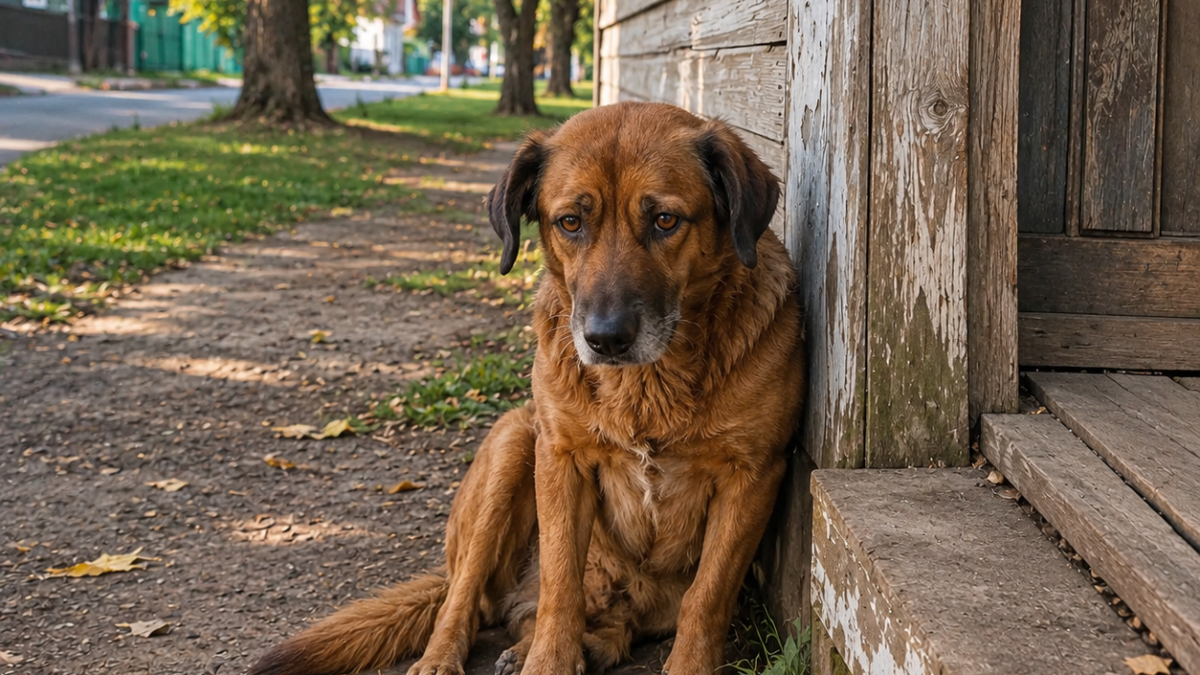
They wouldn’t know that for four years, a brown dog climbed onto my couch every evening and stared toward the corner.
They wouldn’t know how many times I watched hope rise in his body when headlights appeared.
They wouldn’t know about the letters that disappeared.
The money that was stolen.
The brother who lied.
The veteran struggling to learn how to walk again because he wanted to cross his own front porch.
They wouldn’t know how a dog kept one promise alive long after every human around him had begun doubting it.
But I know.
I watched it.
That is why I no longer say dogs are loyal because they don’t understand abandonment.
Bruno understood.
He knew Daniel was gone.
He knew every passing car wasn’t his.
He knew every night ended without the person he loved coming through the door.
And he waited anyway.
Not because he was foolish.
Because Daniel had told him he was coming back.
Four years later, Daniel kept his promise.
And in the years that followed, he kept another one.
He made sure Bruno’s waiting meant something beyond the two of them.
Dozens of old dogs found homes.
Veterans who had spent too many nights alone found someone waiting behind their doors.
Money stolen for selfish reasons came back and became food, medicine, adoption fees, and second chances.
Charles tried to reduce everything to property.
A house.
A bank account.
A dog.
But that was why he lost.
He never understood value.
Daniel did.
Bruno did.
Eventually, so did I.
A few months ago, Daniel and I were sitting on his porch when a young veteran came walking down the sidewalk with a white-faced Labrador beside him.
“Sergeant Whitfield?”
Daniel looked up.
The young man introduced himself.
His dog had been adopted through the Bruno Fund.
“She wouldn’t leave the back corner of her kennel,” he said.
Daniel looked at the Labrador.
“What changed?”
The young man smiled.
“I sat there.”
“How long?”
“Three hours the first day.”
Daniel laughed.
“Stubborn.”
“My wife says the same thing.”
The Labrador walked to Daniel.
She sniffed his hand.
Then placed her chin on his knee.
Daniel stopped laughing.
His eyes filled.
He scratched behind her ear.
“What did you name her?”
“Hope.”
I nearly groaned.
“That’s a little obvious.”
The young man laughed.
Daniel didn’t.
He looked toward Bruno’s tree.
“No,” he said quietly.
“Sometimes obvious is right.”
That evening, after everyone had gone home, I sat alone beside my front window.
6:15 arrived.
For years, I had hated that time.
Then I had loved it.
Now it was simply part of the evening.
A car turned onto Willow Street.
For one second, I remembered Bruno standing there.
Ears high.
Tail beginning to move.
Certain that perhaps this one was Daniel.
The car passed.
I smiled.
“You were right, Bruno.”
The room was quiet.
“He came back.”
Across the lawn, Daniel switched on his porch light.
An old rescue dog rose from beside his chair and followed him inside.
The door closed.
No one was left waiting.
And after everything that happened, I think that is the ending Bruno deserved most.
Not revenge.
Not punishment.
Not even justice.
Home.
Because sometimes the most powerful victory isn’t watching the person who hurt you lose everything.
Sometimes it’s surviving long enough to build a life where they can never take anything from you again.
Daniel came home.
Charles lost his control.
Bruno’s promise was kept.
And every evening after that, when 6:15 came and went, the window was finally empty.
Because the dog who had spent four years waiting no longer had anyone to wait for.








