PART 2: His Family Drove Away and Left Their Golden Retriever on the Porch—Two Weeks Later, He Was Still Watching the Road
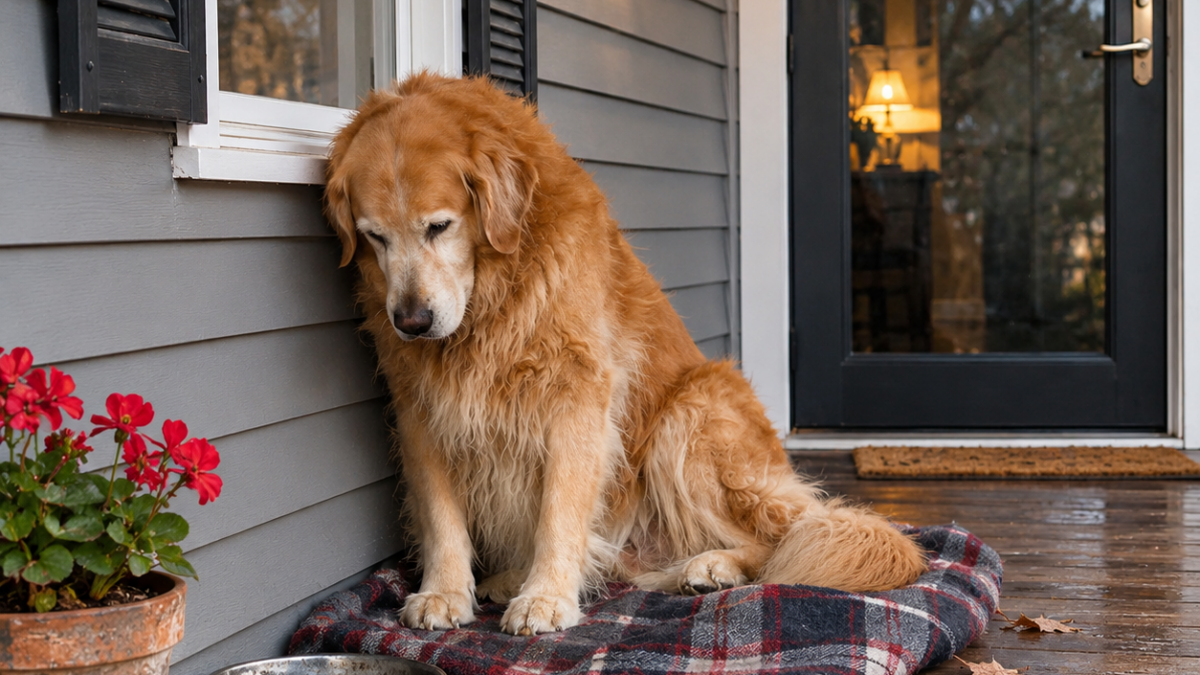
PART 2
I did not answer Thomas immediately.
There were too many things I did not know.
Who was he?
Why should I trust a stranger from the internet?
People can write beautiful things and still be terrible in real life.
I had been alive long enough to know that.
I clicked his profile.
Thomas Hale was fifty-six.
Widower.
Worked as a high school woodworking teacher for nearly thirty years before retiring early.
There were photographs of furniture he had built.
A garden.
An old blue pickup truck.
And a Golden Retriever.
The dog appeared in photograph after photograph.
As a puppy.
At a lake.
Sleeping beside a Christmas tree.
Gray-faced in his final years.
The last photograph had been posted almost two years earlier.
The caption was simple.
**Goodbye, Cooper. Fifteen years was never going to be enough.**
I stared at it.
Then I returned to Thomas’s message.
Max remained beside me.
“You’re making my life complicated.”
His tail moved once.
I wrote back.
**Come tomorrow at ten. Don’t bring a leash. Don’t bring a crowd. And don’t expect anything.**
Thomas replied less than a minute later.
**Understood.**
Then another message.
**Would chicken be considered bribery?**
Despite myself, I smiled.
**Probably. Bring it anyway.**
The next morning, Thomas arrived at 9:52.
That mattered to me for some reason.
Not early enough to pressure me.
Not late enough to make me wonder.
He parked halfway down the street.
He did not approach the porch immediately.
He came to my house first.
Medium height.
Gray hair.
Work boots.
Faded denim jacket.
The hands of someone who had spent his life building things.
He held a paper bag.
“Chicken?”
I asked.
He lifted it.
“No seasoning.”
“Prepared.”
“I’ve owned a Golden before.”
“Apparently that qualifies you for military planning.”
He smiled, but his eyes moved toward the neighboring house.
Max had not changed position.
“Is that him?”
“Yes.”
Thomas stood quietly.
The smile disappeared.
“How long has he been exactly there?”
“Two weeks.”
“Every night?”
“Yes.”
“Rain?”
“Yes.”
Thomas closed his eyes for half a second.
Then he looked at me.
“Can I go over?”
“Slowly.”
I led him through the side gate.
Max heard us.
His ear moved.
Nothing more.
Thomas stopped ten feet from the porch.
He did not say Max’s name.
He did not crouch and clap his hands.
He simply sat down on the walkway.
The concrete was cold.
I stayed near the fence.
Thomas opened the paper bag.
Took out one small piece of chicken.
Placed it on the ground.
Then waited.
Max looked at him once.
Then back toward the road.
Five minutes.
Ten.
Twenty.
Thomas said nothing.
Eventually I became uncomfortable on his behalf.
“You know you can move closer.”
“No.”
“He’s not aggressive.”
“I know.”
“Then?”
Thomas kept his eyes on the yard rather than directly on Max.
“He’s had enough people deciding what happens next.”
I stopped talking.
Half an hour passed.
A car turned onto the street.
Max’s head shot up.
His body tensed.
The car passed.
Not them.
His chin slowly returned to his paws.
Thomas watched the entire thing.
I saw his jaw tighten.
He understood now.
Not intellectually.
He had seen it.
The hope.
Then the disappointment.
Repeated in seconds.
He put another piece of chicken on the ground.
Max ignored it.
Thomas stayed for three hours.
When he finally stood, Max had not touched him.
Had barely looked at him.
“You okay?” I asked.
“Yes.”
“Disappointed?”
“No.”
He looked toward the porch.
“Can I come back tomorrow?”
That was the answer I wanted.
“Yeah.”
He did.
Next day.
Same time.
Same paper bag.
This time Thomas sat slightly closer.
Max eventually ate the first piece of chicken.
Not from his hand.
From the ground.
Thomas acted as if nothing significant had happened.
That impressed me more than anything.
On the third day, Thomas brought a book.
He sat beneath the porch steps and read.
Max watched the road.
On the fourth, rain came.
Thomas brought an umbrella.
He did not hold it over Max.
Max hated umbrellas.
We discovered that immediately.
Instead, Thomas sat in the rain with him until I brought out an awning chair and called both of them idiots.
By the fifth day, people online had begun asking why Max had not been “rescued yet.”
Some were kind.
Some were not.
**Just take him.**
**This is cruel.**
**Why are you letting him sit outside?**
I understood the frustration.
But Max was not starving anymore.
The veterinarian who had come to check him said he was physically stable.
Animal control was documenting the abandonment and determining when legal ownership could be transferred.
Dragging Max from the only spot he still associated with his family might have been faster.
Fast is not always kind.
Thomas agreed.
“Everyone wants the moment where the dog jumps into the new owner’s car.”
He said it while sitting on my porch one evening.
“Real life is messier.”
I handed him coffee.
“When Cooper died, how long did you leave his bed where it was?”
Thomas looked at me.
“How did you know?”
“Because I left my husband’s shoes by the back door for nine months after he died.”
That surprised him.
“You were married?”
“Thirty-one years.”
“I’m sorry.”
“So am I.”
My husband, Robert, had been gone six years.
Cancer.
Quick enough to shock us.
Slow enough to make us understand what was happening.
After he died, everyone told me I was strong.
I hated that word.
Strong often means people are relieved you are not making your grief inconvenient.
I kept living.
That was all.
Maybe that was why Max bothered me so much.
He was doing openly what people had expected me not to do.
Waiting.
Refusing to rearrange his heart simply because reality had changed.
Thomas stared into his coffee.
“I kept Cooper’s bowl for a year.”
“Empty?”
“No.”
He smiled faintly.
“I put my keys in it.”
“Practical grief.”
“Exactly.”
The following morning, Thomas sat closer to Max.
Not intentionally.
The porch was wet.
Max stood.
For a moment, I thought he might retreat.
Instead, he walked three steps.
Sniffed Thomas’s sleeve.
Thomas froze.
Max returned to his spot.
Thomas’s eyes filled.
I pretended not to notice.
On day seven of Thomas’s visits, something changed.
Max stopped staring exclusively at the road.
He started watching Thomas leave.
The first time I saw it, I said nothing.
Thomas walked to his truck.
Max lifted his head.
Followed him with his eyes.
Until the truck disappeared.
That evening, when another car passed, Max still looked.
But only briefly.
The next morning Thomas arrived.
Max stood.
His tail moved.
Not the weak little flick he gave me.
A real wag.
Thomas stopped halfway across the yard.
“Hey, buddy.”
Max walked toward him.
Three steps.
Five.
Then pressed his head against Thomas’s knee.
Thomas dropped to the ground.
His arms hovered in the air.
He did not touch Max until Max leaned again.
Then he placed one hand on that golden head.
“Okay.”
His voice broke.
“Okay.”
I turned away because suddenly I was crying too.
We did not put Max in Thomas’s truck that day.
Or the next.
The legal situation needed to be resolved.
And Max still would not willingly cross the property gate.
He would walk around the yard with Thomas.
Sit beside him.
Take food from his hand.
But when Thomas approached the gate, Max returned to the porch.
So Thomas changed the goal.
He brought a dog bed.
Placed it on the porch.
Max ignored it for two days.
On the third, he slept on it.
Then Thomas brought one of Cooper’s old blankets.
Freshly washed.
Max sniffed it.
Circled twice.
Lay down.
Thomas looked at me.
“Cooper would be furious.”
“Why?”
“That was his favorite.”
“Apparently he authorized the inheritance.”
The post about Max continued spreading.
By then a local television reporter had contacted me.
I refused the first interview.
The second.
Then animal control suggested publicity might help because there was still a question they wanted answered.
Why had nobody from the former family contacted anyone about Max?
The family had moved nearly four hundred miles away.
The phone number associated with the property was disconnected.
Mail forwarding had been set.
Utility accounts closed.
Everything about the move had been planned.
Except Max.
That detail mattered.
The reporter came on a Thursday afternoon.
Her name was Claire Morgan.
She did not film Max closely at first.
She stood across the street.
She interviewed me.
Then Thomas.
“What do you want to happen?” she asked him.
Thomas looked toward Max.
“I want him to decide there’s something worth walking toward.”
“Do you want to adopt him?”
“Yes.”
“What if he never leaves that porch willingly?”
Thomas thought about it.
“Then I’ll keep visiting until someone wiser than me tells me it’s hurting him.”
Claire paused.
“You wouldn’t take him?”
“Eventually medical or safety needs might require that.”
He nodded toward Max.
“But I don’t want his next home to begin with another person forcing him into a vehicle.”
That clip went everywhere.
The story changed.
People stopped asking why Max had not been dragged away.
They started following the waiting.
**DAY 17: MAX ATE FROM THOMAS’S HAND.**
**DAY 18: MAX WALKED TO THE GATE BUT TURNED BACK.**
**DAY 19: MAX SLEPT ON THE BLANKET THOMAS BROUGHT.**
I disliked how public his grief became.
But something good happened too.
People donated food to our county shelter.
Senior dogs were adopted.
A rescue group began a small fund for abandoned animals.
Then came day twenty.
I was inside washing dishes when I heard Thomas call my name.
Not loudly.
“Anna.”
Something in his voice made me run.
Thomas stood outside the open gate.
He had not called Max.
Had not pulled him.
Max was standing halfway between the porch and the sidewalk.
His body was rigid.
He looked back at the empty front door.
Then toward Thomas.
Then back again.
I stopped breathing.
Thomas crouched.
Not asking.
Just there.
Max took one step.
Stopped.
Another.
His tail hung low.
At the gate, he froze.
For almost a full minute, nothing happened.
Then a car turned onto the street.
Max spun toward it.
The car came closer.
Passed.
Not them.
Max watched it disappear.
Then he turned toward Thomas.
And stepped through the gate.
Thomas covered his mouth.
I cried.
Claire’s cameraman happened to be across the street filming follow-up footage.
He caught the entire thing.
But the part I remember most never made television.
Once Max had crossed the gate, he stood beside Thomas.
Then looked back at me.
I walked over.
“You’re allowed.”
He watched me.
“You don’t have to keep waiting.”
My voice shook.
“You didn’t do anything wrong.”
Max came to me.
I put both hands around his face.
“They left.”
There.
I finally said it.
“They’re not coming back.”
His eyes stayed on mine.
“But somebody did.”
I looked at Thomas.
Max turned too.
Then he walked to Thomas’s truck.
Not all the way.
He stopped ten feet short.
Thomas opened the rear door.
A ramp had already been installed.
Of course it had.
Cooper had needed one during his final years.
Max stared at it.
Then the truck.
Thomas waited.
Max walked up the ramp.
He turned around once inside.
Looked toward the empty house.
Then lay down.
Three weeks after his family drove away, Max left the street.
Not chasing them.
Following someone else.
Thomas became his foster placement first.
The county required it while the abandonment investigation concluded.
I expected Max to struggle.
He did.
The first night, he refused to sleep inside.
Thomas sent me a photograph at midnight.
Max was lying on the front porch of his new house.
I called him.
“You’re letting him stay outside?”
“I’m sitting here too.”
“You’re both ridiculous.”
“He won’t come in.”
“Food?”
“Nothing.”
I heard wind over the phone.
“Thomas.”
“I brought a blanket.”
“You are fifty-six years old.”
“Thank you for confirming.”
“You cannot sleep on a porch.”
“I have before.”
“Why?”
“Marriage.”
Despite everything, I laughed.
The next morning Max was still outside.
But when Thomas went inside to make coffee, Max followed him to the doorway.
Stopped.
Thomas left the door open.
He sat at the kitchen table.
Did nothing.
Twenty minutes later, Max stepped inside.
He explored one room.
Then another.
Found Cooper’s old bed.
Thomas had bought a new one but had not been able to throw Cooper’s away.
Max sniffed it.
Lay down.
Thomas sent me one sentence.
**He came in.**
I cried in the grocery store.
A week later, I visited.
Max heard my car.
He came running.
Running.
Not waiting.
His tail whipped from side to side.
He almost knocked me over.
“You remember me?”
He leaned into me.
Thomas stood on the porch smiling.
“He remembers everyone who feeds him.”
“I resent that.”
Max led me inside.
The house looked like Max had always belonged there.
Food bowl near the kitchen.
Leashes by the door.
A basket of toys.
Thomas had not removed Cooper’s photographs.
I liked that.
There was room for both dogs in the house.
The living and the dead.
Max still had issues.
If Thomas packed a suitcase, Max panicked.
The first time it happened, Thomas was preparing for an overnight visit to his brother.
Max saw clothes going into a bag.
He began pacing.
Then ran to the front door.
Thomas stopped packing.
“He thought I was leaving.”
“What did you do?”
“Unpacked.”
“You canceled your trip?”
“Yes.”
“That can’t be the permanent solution.”
“I know.”
So Thomas worked with a behaviorist.
Suitcase on the floor.
Nothing happened.
Next day, one shirt inside.
Nothing happened.
Then several shirts.
Thomas stayed home.
Eventually Max learned that bags did not always mean disappearance.
Cars were difficult too.
He loved Thomas’s truck once he was inside.
But moving trucks terrified him.
Whenever one entered the neighborhood, Max hid.
That told us more than any human explanation could.
Then, nearly two months after Max had left the porch, his former family contacted animal control.
Not me.
Not Thomas.
Animal control.
The news had finally reached them.
Their last name was Reynolds.
Michael and Jennifer Reynolds.
Two children.
Same family I had watched load boxes while Max stood nearby.
Their explanation spread quickly.
They claimed Max had been scheduled to travel with Jennifer’s brother the following morning.
According to them, the brother failed to pick him up.
They said they did not learn Max had been left until weeks later.
I wanted to believe that.
Truly.
Because deliberate abandonment was harder to accept.
Then animal control asked one question.
“When did you contact your brother after the move?”
Their story became less clear.
Michael said immediately.
Jennifer said three days later.
The brother said nobody had arranged anything with him.
Then I remembered something.
My doorbell camera.
I had one covering part of my front yard and the street.
It did not directly face their house.
But on moving day, it had captured portions of the activity.
I pulled up the date.
Friday.
The truck.
Boxes.
Children.
Then something else.
At 4:18 p.m., the moving truck was gone.
The Reynolds SUV sat at the curb.
Michael loaded the last suitcase.
Max stood beside the vehicle.
Jennifer came out.
She stroked his head.
Then opened the rear passenger door.
For one second, Max started toward it.
She blocked him with her leg.
Closed the door.
I felt sick.
The camera had no clear audio from that distance.
But the image was enough to make my hands shake.
Then their daughter came out.
Maybe ten years old.
She hugged Max.
Her mother took her by the shoulders.
Pulled her toward the car.
The girl looked back three times.
Max followed them to the edge of the driveway.
The SUV left.
Max ran after it.
Only to the end of the property.
Then stopped.
Six minutes later, he returned to the porch.
I watched the footage twice.
Could not watch it a third time.
I called animal control.
The officer came that evening.
Her name was Renee.
She watched without speaking.
When the video ended, she leaned back.
“Well.”
“That wasn’t an accident.”
“No.”
“They knew.”
“It appears that way.”
I looked at the frozen image of Max beside the driveway.
“The little girl knew too.”
Renee sighed.
“Children don’t control these decisions.”
“I know.”
But it mattered.
Someone in that car had loved him.
Maybe all of them did.
That made it worse.
People like clean villains.
Sometimes people love you and still choose convenience.
The video became evidence.
The Reynolds family was notified.
Their story changed again.
They now said their new rental did not allow large dogs.
They claimed they had planned to find Max another home but the move happened too quickly.
They insisted they had left food and water.
I laughed when Renee told me.
“Food?”
“Yes.”
“There was nothing.”
“I know.”
“I brought the first bowl.”
“I know.”
“What did they think would happen?”
Renee had no answer.
Then came the part nobody expected.
The Reynolds wanted Max back.
Not immediately.
First they said they only wanted to see him.
Then the television segment about Max crossing the gate went national.
Suddenly messages online began identifying the family.
We had never released their names.
Someone from their new town apparently recognized them.
Their social media filled with angry comments.
I hated that.
Whatever they had done, threats were wrong.
The children especially had no responsibility for strangers attacking them.
But public pressure changed their behavior.
Michael Reynolds contacted Thomas directly.
I was at Thomas’s house when it happened.
His phone rang.
Unknown number.
He answered on speaker because he recognized the area code.
“Thomas Hale?”
“Yes.”
“This is Michael Reynolds.”
Max was asleep nearby.
Thomas’s face changed.
I stood straighter.
“The Reynolds family?”
“Yes.”
A pause.
“I’m Max’s owner.”
Thomas looked at Max.
“Former owner.”
“He’s legally still ours.”
“That is under review.”
“We want him back.”
Max’s head lifted at Michael’s voice.
That broke something inside me.
He recognized him.
Max stood.
Walked toward the phone.
Sniffed it.
Michael heard his tags.
“Max?”
Max’s ears lifted.
His tail moved.
Once.
“Buddy?”
Max stared at the phone.
Then let out a low whine.
Thomas immediately took the call off speaker.
I looked away.
That sound was horrible.
Because Max still loved him.
Of course he did.
Abandonment does not erase love on command.
Thomas spoke calmly.
“What do you actually want?”
“My dog.”
“You left him.”
“It was complicated.”
“You drove away.”
“We made a mistake.”
“A three-week mistake?”
“We thought someone would take him.”
“Who?”
Silence.
Thomas’s voice remained controlled.
“You didn’t call a shelter.”
No answer.
“You didn’t call animal control.”
Nothing.
“You didn’t call Anna.”
Michael’s tone hardened.
“We don’t owe you an explanation.”
“Then you’re not calling for Max.”
“What?”
“If this were about Max, you’d be explaining everything.”
Thomas paused.
“You’re calling because people found out.”
The line went quiet.
Then Michael said, “You don’t know anything about our family.”
“You’re right.”
Thomas looked at Max.
“But I know what your dog does when he sees a suitcase.”
Michael said nothing.
“I know he hides when a moving truck passes.”
Silence.
“I know he slept on my porch because he was afraid coming inside meant he might lose the road.”
Thomas’s voice finally cracked.
“And I know he waited fourteen days because you taught him your car always came back.”
Michael hung up.
Thomas stood in his kitchen holding the phone.
Max came closer.
Thomas crouched.
Max put his head against his chest.
I sat down because my knees suddenly felt weak.
Two days later, a letter from an attorney arrived.
The Reynolds family asserted legal ownership and demanded Max be returned.
Thomas hired an attorney.
So did the rescue organization supporting the foster placement.
I had never imagined a dog waiting on a porch would end with lawyers.
Max did not understand any of it.
He understood breakfast.
Walks.
Thomas.
Me.
Squirrels.
Tennis balls.
And a particular blue blanket he carried from room to room.
The legal question became whether the family had intentionally abandoned him.
Their attorney argued they had temporarily left Max while arranging transport.
Our evidence argued otherwise.
The doorbell video.
My statement.
Neighbors who saw Max alone.
No food delivery.
No contact with animal services.
No missing-dog report.
No calls for weeks.
Then the former landlord produced something devastating.
An email.
Three days before the family moved, Jennifer Reynolds had written:
**We will be leaving the dog behind temporarily. If the new owner doesn’t want him, animal control can probably pick him up.**
I stared at the printout.
Temporarily.
That word.
As if Max were a chair.
A grill.
Something too inconvenient for the truck.
Renee shook her head.
“They knew.”
“Yes.”
“Did the new homeowner know?”
“The house was not sold yet.”
I looked at her.
“So there was no new owner.”
“No.”
It became impossible to describe as a misunderstanding.
The county formally cited the family for animal abandonment under the applicable local provisions.
The ownership dispute moved toward resolution.
Before the hearing, something unexpected happened.
Their daughter contacted me.
Her name was Sophie.
She was eleven.
Her message came through her aunt’s account.
**Are you the lady who sat with Max?**
I stared at the screen for several minutes.
Then answered.
**Yes.**
A reply came.
**Is he happy?**
I swallowed.
**He is doing much better.**
Three dots appeared.
Disappeared.
Returned.
**I told them not to leave him.**
I closed my eyes.
There it was.
The part the video had shown without sound.
**I’m sorry, Sophie.**
Her next message took almost five minutes.
**They said the apartment didn’t take dogs and Dad said someone would get him. I thought Grandpa was coming. Then nobody would tell me where he was. I saw him online.**
I cried.
Not for Michael.
Not for Jennifer.
For the child in that SUV turning around three times.
**Max remembers you.**
I almost deleted that sentence.
Then sent it.
She answered:
**Really?**
**Yes.**
**Does he hate us?**
That was impossible.
Dogs do not organize pain into moral categories the way humans do.
I wrote:
**I don’t think Max knows how to hate you.**
Then:
**But he was very hurt and confused.**
Sophie sent one final message.
**Please don’t make him come back if he doesn’t want to.**
That message changed the legal fight for me.
Until then, I wanted the Reynolds family to lose.
I wanted consequences.
I wanted them to look at the video and feel what I had felt watching Max wait.
But Sophie reminded me that families are not one person.
Punishment spreads.
Children absorb adult decisions they never made.
The revenge I wanted began to feel smaller than the outcome Max deserved.
At the hearing, I testified.
Thomas testified.
Renee testified.
The former landlord provided the email.
Michael and Jennifer sat across the room.
I expected anger.
Instead, Jennifer looked exhausted.
Michael looked defensive.
Their attorney argued that leaving Max had been temporary and that the family had always intended to arrange care.
The county attorney asked Michael:
“Who was supposed to retrieve the dog?”
“My brother-in-law.”
“Did you confirm that with him?”
“I believed my wife had.”
Jennifer looked at him.
The attorney turned to her.
“Did you?”
She hesitated.
“No.”
“Did you contact any rescue organization before leaving?”
“No.”
“Animal control?”
“No.”
“Neighbor?”
“No.”
“Veterinarian?”
“No.”
“Boarding kennel?”
“No.”
“Did you leave written instructions at the property?”
“No.”
“Did you return?”
“No.”
The attorney paused.
“When did you first contact anyone about Max?”
Jennifer looked down.
“After the television story.”
The room became quiet.
The attorney looked toward the judge.
“No further questions.”
Then Michael asked to speak.
His lawyer tried to stop him.
The judge allowed a brief statement.
Michael stood.
“I loved that dog.”
I believed him.
That was the worst part.
“We had Max since he was eight weeks old.”
He looked toward Thomas.
“He slept at the foot of our bed. He grew up with our kids.”
Thomas said nothing.
Michael’s voice cracked.
“We were losing the house. My job had changed. The only rental we found had a no-pet policy.”
For the first time, I heard the whole truth.
Not an excuse.
The truth.
“We kept thinking we’d solve it.”
He swallowed.
“Then moving day came.”
He looked at the floor.
“And I made the worst decision of my life.”
Jennifer began crying.
“I told myself somebody would find him.”
Michael continued.
“I told myself that street had people who knew him.”
His eyes moved toward me.
“It did.”
I wanted to be angry.
I still was.
But there was something cowardly about imagining the decision as an act of cruelty made without feeling.
Sometimes cruelty comes from choosing relief from your own problem over responsibility for someone who depends on you.
That is still cruelty.
Maybe more frightening because ordinary people can do it.
The judge reviewed the records.
Then spoke.
The family had intentionally left Max without a confirmed caretaker and made no meaningful effort to reclaim or locate him until after publicity.
Their ownership claim was denied.
The abandonment finding stood.
Max would not be returned.
Thomas closed his eyes.
I exhaled.
Jennifer covered her mouth.
Michael stared at the table.
There was no cheering.
Real victories are rarely cinematic when someone on the other side is grieving too.
Outside, Michael approached us.
Thomas tensed.
I moved between them without thinking.
Michael stopped.
“I’m not here to fight.”
He looked older than he had inside.
He held something in one hand.
A red rubber ball.
Worn.
Chewed.
“He used to sleep with this.”
Thomas looked at it.
Michael’s hand shook.
“I found it in a box after we moved.”
He swallowed.
“I thought…”
He could not finish.
Thomas took the ball.
“Thank you.”
Michael looked at me.
“Does he still wait by doors?”
“Not the way he did.”
“Does he still hate thunderstorms?”
“Yes.”
“Chicken?”
“Obsessed.”
A tiny smile appeared.
Then vanished.
“Could I see him?”
Thomas looked at me.
Not my decision.
I looked away.
Thomas thought for a long time.
“Not today.”
Michael nodded.
“But maybe someday.”
That surprised me.
“Why?”
Thomas looked toward the parking lot.
“Because he loved you for seven years.”
Michael’s eyes filled.
“And I’m not going to punish him for that.”
I think that sentence hurt Michael more than anger would have.
Good.
Maybe that was the revenge.
Not humiliation.
Being shown a kind of loyalty he had failed to give.
Thomas officially adopted Max the following week.
I attended.
Of course.
Renee handled the paperwork.
“Name?”
Thomas looked down.
“Max.”
“Changing it?”
“No.”
“Last name?”
Thomas smiled.
“Hale, apparently.”
I laughed.
Max’s tail moved.
Then Renee asked the ceremonial question she asked every adopter.
“Do you understand that you are accepting full responsibility for Max for the remainder of his life?”
Thomas looked at the dog.
“Yes.”
No hesitation.
No qualifiers.
No “unless I move.”
No “unless he gets old.”
Yes.
He signed.
On the way out, Max stopped near the shelter door.
My heart jumped.
For one awful second, I saw the porch again.
Waiting.
Refusal.
Thomas stopped too.
“What is it?”
Max turned.
A little boy was sitting in the lobby with an elderly beagle.
The dog looked frightened.
Max walked toward them.
Sniffed the beagle.
The little dog’s tail began moving.
Thomas laughed.
“You’re collecting strays now?”
Max leaned against the beagle.
I smiled.
“Apparently someone taught him waiting matters.”
The first year with Thomas was not perfect.
That is important.
People like rescue stories to end when the adoption papers are signed.
Real life continues.
Max developed separation anxiety.
Thomas could not walk to the mailbox without Max following him to the window.
So they trained.
One minute alone.
Then three.
Then five.
Thomas recorded his voice.
Used puzzle feeders.
Never disappeared without routine.
Eventually Max learned:
Thomas leaves.
Thomas returns.
That sequence became medicine.
At first, Max waited by the front window whenever Thomas went grocery shopping.
Then he started waiting on the couch.
Later, he slept.
The first time Thomas came home and found Max asleep rather than watching the road, he called me.
“He didn’t wait.”
His voice sounded emotional.
“That’s good.”
“I know.”
“He trusted you’d come back.”
“I know.”
Neither of us said anything for a moment.
That was healing.
Not forgetting the porch.
No longer needing it.
Sophie eventually wrote again.
Her parents knew this time.
She asked whether Thomas would allow a video call.
We discussed it with a behaviorist.
There was no obvious harm.
So we tried.
Thomas placed the phone on the floor.
Sophie appeared on screen.
“Max?”
His head lifted immediately.
The reaction was instant.
He walked to the phone.
Sniffed it.
Tail wagging.
Sophie began crying.
“Hi, Maxie.”
Max whined.
Then licked the screen.
She laughed through tears.
“I miss you.”
I stood in Thomas’s kitchen pretending not to cry.
She told Max about school.
Her new room.
A friend.
Completely ordinary things.
Then she said:
“I’m sorry we left you.”
Max tilted his head.
Of course he did not understand the apology.
Maybe that was mercy.
Sophie looked toward Thomas.
“Does he sleep in your room?”
“Every night.”
“Can he still have carrots?”
“He hates carrots.”
Sophie laughed.
“He always did. Mom said they were good for him.”
Max walked away from the phone and brought his red ball.
The old one Michael had given Thomas.
Sophie froze.
“You have it.”
Thomas nodded.
“Your dad gave it to me.”
She covered her mouth.
Max dropped the ball beside the phone.
Sophie cried harder.
After the call, Max slept for three hours.
No panic.
No frantic searching.
He had heard a voice from the past.
And remained in the present.
Months later, Thomas allowed Michael and Jennifer to meet Max at a neutral park.
I did not attend at first.
I told myself it was because they needed privacy.
Really, I was afraid.
Thomas later told me what happened.
Max saw them.
He knew them instantly.
He ran.
Michael dropped to his knees.
Max nearly knocked him over.
Jennifer sobbed into his fur.
For fifteen minutes, Max was the dog he had been before they left.
Loving them.
No punishment.
No coldness.
Nothing withheld.
Then Thomas called his name.
Max turned.
He looked at the Reynolds.
Then at Thomas.
He walked back to Thomas.
Not running away from the past.
Choosing his present.
Michael cried.
Thomas did too.
Before they separated, Jennifer said:
“He forgave us.”
Thomas answered:
“I don’t know if dogs think that way.”
Then he looked at Max.
“But he didn’t let what you did stop him from loving again.”
Michael later began volunteering with an organization that helped families facing eviction temporarily foster pets.
I learned that through Sophie.
At first, I was cynical.
Convenient redemption.
Then I thought about Max.
If the worst thing Michael had done became the reason he prevented another family from making the same decision, maybe that mattered.
Consequences should change people when possible.
Otherwise they are just pain traveling in another direction.
Two years after the porch, Thomas and I started a small emergency pet foster network in our county.
Nothing grand.
Families facing hospitalization, eviction, domestic violence, or temporary housing problems could request short-term foster placement rather than abandon an animal.
We called it Max’s Porch.
Thomas hated the name.
I loved it.
“Too sentimental.”
“You cried when I suggested it.”
“Allergies.”
“You were indoors.”
“Severe allergies.”
Max became the unofficial logo.
Not the sad photograph.
I refused that.
We used a new picture.
Max sleeping on Thomas’s porch.
Eyes closed.
Completely relaxed.
Because the point was not to preserve him forever as the abandoned dog.
The point was what came after.
The first year, Max’s Porch helped nineteen animals stay connected with their families.
A woman receiving cancer treatment placed her two cats with a volunteer for six weeks.
An elderly man recovering from surgery temporarily fostered his Lab.
A mother leaving an abusive relationship placed her dog safely until she found housing.
A family evicted after a job loss placed their senior terrier for three months.
They got him back.
I attended that reunion.
The terrier screamed.
Literally screamed.
Ran between the children.
Climbed into the mother’s lap.
The foster family cried.
Everyone cried.
On the drive home, I thought of the empty Reynolds house.
How different Max’s story might have been if one phone call had existed.
One option.
One person saying:
*Don’t leave him. We can hold him until you get stable.*
Would Michael have used it?
I don’t know.
Responsibility still mattered.
But prevention mattered too.
Max aged.
Gold became white around his face.
He slowed.
His hips became stiff.
Thomas bought another ramp.
“The old one still works,” I said.
“This one has better traction.”
“You have become ridiculous.”
“I learned from you.”
“False.”
Max developed arthritis at ten.
Medication helped.
At eleven, his hearing weakened.
At twelve, he stopped running after tennis balls but still demanded Thomas throw them.
He would watch the ball land.
Then look at Thomas as if expecting him to retrieve it.
“Retirement,” Thomas explained.
At thirteen, Max started sleeping more.
But every morning, he walked onto the porch.
Not to wait.
Just to lie in the sun.
That difference mattered.
Sometimes I visited and found him asleep with his back to the road.
The first time I saw that, I stood in Thomas’s yard crying.
Thomas came outside.
“What?”
I pointed.
He looked at Max.
“I know.”
“He’s not watching.”
“I know.”
For years, Max had needed to see every approaching car.
Now he could sleep through them.
That might have been the most beautiful ending I could imagine.
But we were not done.
One autumn morning, Thomas called.
His voice sounded wrong.
“Anna.”
I sat immediately.
“What happened?”
“Max collapsed.”
My chest tightened.
“Where are you?”
“Veterinary hospital.”
“I’m coming.”
Max had a mass on his spleen.
It had started bleeding.
At thirteen, surgery carried major risks.
Without surgery, the bleeding might stop temporarily.
Or it might not.
Thomas sat on the floor beside Max.
I had never seen him look so old.
“What would you do?”
He asked the veterinarian.
Dr. Benton answered carefully.
“If Max were my dog, I would ask what gives him the best chance of having more comfortable life, not simply more time.”
Thomas stared at Max.
“What are the odds?”
Not good enough.
Not terrible.
The cruel middle.
Thomas chose surgery.
He looked at me afterward.
“What if I’m being selfish?”
“You could ask the same thing if you didn’t do it.”
“That doesn’t help.”
“I know.”
We waited.
Two hours.
Then three.
The surgeon came out.
Max survived.
The mass was removed.
Biopsy later showed cancer.
Aggressive.
The surgeon estimated months.
Maybe six.
Maybe less.
Thomas cried in the parking lot.
“I thought we had more.”
Nobody ever thinks they have enough.
Max recovered from surgery surprisingly well.
For almost four months, he seemed like himself.
Slower.
But himself.
We made a ridiculous list.
Thomas called it Max’s retirement tour.
Lake.
Chicken from his favorite diner.
Visit Sophie.
Visit the old street.
That last one worried me.
“Why?”
Thomas shrugged.
“I don’t know.”
“Do you think he needs it?”
“No.”
“Then why?”
“Maybe I do.”
So one Sunday morning, we brought Max back.
The old house had new owners.
A young couple.
Baby.
They knew the story.
Everyone did by then.
They allowed us into the yard.
Max stepped out of Thomas’s truck.
Looked around.
For a moment, I was afraid.
His nose lifted.
He walked toward the porch.
Slowly.
The concrete had been repainted.
Different chair.
Different doormat.
Same three steps.
Max climbed them.
Stood in the exact place where I had first seen him.
Thomas stopped at the walkway.
I stood beside him.
Max looked toward the bend in the road.
One car passed.
He watched.
Then another.
His tail moved.
I did not know what he remembered.
Maybe everything.
Maybe only smells.
Then he turned around.
Walked down the steps.
Went directly to Thomas.
And leaned against his leg.
Thomas put a hand on his head.
“You ready?”
Max looked toward the truck.
We left.
No drama.
No waiting.
The porch had become just a porch again.
Three weeks later, Sophie visited.
She was fourteen now.
Taller.
Older.
She had asked if she could see Max because she knew he was sick.
Her parents brought her.
Michael stayed near the driveway.
Jennifer stood beside him.
Sophie sat beneath Thomas’s oak tree.
Max slowly walked to her.
She wrapped both arms around him.
“Hi, old man.”
His tail moved.
She cried into his fur.
“I’m sorry.”
Again.
Years later.
Still carrying it.
I sat beside her.
“Sophie.”
She looked at me.
“You were ten.”
“I should have done something.”
“What?”
“I don’t know.”
“Exactly.”
She stared at Max.
“I left too.”
“No.”
Her face crumpled.
“I got in the car.”
“You were a child.”
She wiped her face.
“He watched me.”
I knew.
I had seen the video.
“Sophie, listen to me.”
She did.
“Adults are responsible for choices children cannot control.”
I looked toward her parents.
They heard me.
Good.
“You loved him.”
“I still do.”
“I know.”
“And he knows.”
Max rested his chin on her knee.
That was enough.
Michael later approached Thomas.
“Thank you.”
Thomas nodded.
“For letting her see him.”
“He’s her dog too.”
Michael looked down.
“Was.”
Thomas considered that.
“Love doesn’t always end when ownership does.”
Michael cried.
That day healed something I had not realized still needed healing.
Not everything.
Some things remain.
But enough.
Winter came.
Max’s cancer progressed.
He stopped eating breakfast first.
Then longer walks became difficult.
Thomas began carrying him up the porch steps.
One night Thomas called me.
“He won’t get up.”
I drove over.
Max was lying on his bed.
Thomas beside him.
The red ball rested nearby.
Max’s Porch volunteers had given Thomas a new one years earlier.
He still kept the original.
I sat.
Max opened his eyes.
Tail moved once.
“Hey, buddy.”
I put my hand on his head.
His fur was thin now.
Soft.
Thomas had already called the veterinarian.
She would come in the morning if Max remained comfortable overnight.
If he deteriorated, emergency clinic.
We stayed on the floor.
Around midnight, Max became restless.
Thomas asked:
“You want outside?”
Max tried to stand.
Could not.
Thomas lifted him carefully.
We carried him to the porch.
The same kind of place where his story had started.
But nothing else was the same.
He lay on a thick bed.
Warm blanket.
Thomas on one side.
Me on the other.
No empty house.
No vanished family.
No cold concrete.
The road beyond Thomas’s yard was quiet.
A car passed.
Max did not lift his head.
Thomas noticed too.
“He doesn’t care anymore.”
I smiled through tears.
“He knows who’s coming back.”
Thomas lowered his face.
Max pressed his nose against Thomas’s hand.
At dawn, Dr. Benton arrived.
One look at Max told us.
It was time.
Thomas knew.
I knew.
Max knew only that his person was beside him.
Dr. Benton prepared the medication.
Thomas’s hands shook.
“I can’t.”
I put my hand over his.
“You can.”
“He waited for people who left him.”
“I know.”
“I promised I wouldn’t.”
“You’re not leaving.”
Thomas looked at me.
“You’re staying all the way.”
That was different.
He understood.
Thomas lay beside Max.
He pressed his forehead against Max’s.
“You remember the first day?”
Max breathed slowly.
“I sat in the rain like an idiot.”
His voice broke.
“You wouldn’t look at me.”
Max’s eyes remained half-open.
“I thought I was waiting for you.”
Thomas stroked his face.
“But you were teaching me.”
He swallowed.
“Love isn’t proving somebody will never leave.”
I looked away.
Thomas continued.
“It’s proving you won’t leave when staying becomes hard.”
Dr. Benton gave the first injection.
Max relaxed.
Thomas wrapped both arms around him.
“You’re okay.”
Max exhaled.
“You don’t have to wait anymore.”
Those words broke me.
Thomas kissed his head.
“I’m right here.”
The final medication went in.
Max’s breathing slowed.
Then stopped.
He died on a porch.
But not the porch where he had been abandoned.
This one was home.
For a long time, nobody moved.
Eventually, Thomas whispered:
“He finally stopped waiting.”
I shook my head.
“No.”
Thomas looked at me.
“He learned the difference.”
Between waiting for someone who had chosen to leave—
and resting because you know the person beside you stayed.
We buried Max’s ashes beneath the oak tree in Thomas’s yard.
Sophie came.
Michael and Jennifer came too.
That was Thomas’s choice.
Some people criticized it.
I didn’t.
Max had loved them.
His funeral was not the place for our anger.
Michael brought the red ball.
The original.
Thomas had returned it to him a month earlier after making a difficult decision.
“Maybe Sophie should keep it.”
At the memorial, Sophie held it against her chest.
She read a short note.
“I’m sorry for what happened to you.”
She stopped.
Cried.
Then continued.
“But I’m glad your life didn’t end where we left you.”
There was no accusation in her voice.
That made it harder.
Jennifer wept openly.
Michael stared at the ground.
Sophie finished:
“Thank you for waiting long enough for Anna to notice you.”
She looked at Thomas.
“And thank you for learning when to stop waiting.”
That was Max’s story.
For months afterward, people kept sending messages to Max’s Porch.
Most had never met him.
Some had followed his photograph years earlier.
They remembered the Golden Retriever staring down an empty road.
But by then, I no longer liked that photograph as the image people associated with him.
So on the anniversary of his adoption, I posted another one.
Taken during his final summer.
Max asleep on Thomas’s porch.
Back turned to the street.
Sun on his gray face.
No tension in his body.
No waiting.
The caption said only:
**This is the picture I want you to remember.**
It became more popular than the first.
I was glad.
Max’s Porch continued.
Five years after the original post, we had helped more than three hundred animals avoid permanent surrender during temporary family crises.
Some stayed with fosters for days.
Others months.
Most returned home.
Not all.
Sometimes families disappeared.
Sometimes circumstances changed.
Sometimes returning was not safe or responsible.
But at least nobody had to leave a dog on a porch because they believed there was no other option.
Michael eventually became one of our volunteer transport drivers.
That surprised me.
The first time I saw his name on the roster, I called Thomas.
“You approved this?”
“Yes.”
“Why?”
“Because he asked.”
“That isn’t an answer.”
Thomas sighed.
“Anna.”
“What?”
“If we tell people they should become better and then refuse to believe them when they try, what exactly are we asking for?”
I hated when he made sense.
Michael did not become some heroic figure.
He showed up.
That was all.
He transported dogs from emergency housing situations to foster families.
He rarely spoke about Max.
Once, after nearly three years volunteering, he brought a Golden Retriever to my house.
The dog’s owner, an elderly woman, had broken her hip.
Temporary foster needed.
The dog refused to leave the owner’s porch.
Of course.
Michael sat beside him.
For two hours.
I watched from the window.
Eventually the dog walked to Michael’s van.
Michael looked at me.
Neither of us spoke.
We did not need to.
Sometimes justice is punishment.
Sometimes justice is forcing someone to live long enough with the truth that they become incapable of making the same choice again.
Michael could not undo what he did to Max.
But another dog did not have to experience it.
I accepted that as something worthwhile.
Thomas adopted another dog two years after Max died.
Not a Golden.
A ten-year-old black mutt named Walter with one ear and terrible manners.
Thomas called me from the shelter.
“I’m not sure.”
I laughed.
“That’s new.”
“He’s difficult.”
“You sat in the rain for a dog who ignored you.”
“True.”
“Take Walter home.”
“What if I’m replacing Max?”
“You can’t.”
Silence.
“Really?”
“Thomas, Max wasn’t a piece of furniture.”
He laughed softly.
“I hate when you’re right.”
“Rare event. Enjoy it.”
Walter went home with him.
Max’s old bed remained in the living room.
Walter refused to use it.
Good.
He chose the couch.
Different dog.
Different life.
That was how it should be.
As for me, I still live on the same street.
Thirty years now.
Families continue to come and go.
Children grow.
Cars change.
Houses are repainted.
The Reynolds home has changed owners twice.
The current family has a young Golden Retriever named Sunny.
The first time I saw him lying on the porch, my heart stopped.
Then the front door opened.
A little boy ran out.
Sunny exploded to his feet.
They disappeared into the house together.
I stood at my mailbox smiling like an idiot.
Sometimes ordinary things become precious once you have seen the alternative.
A dog hearing the door open.
Someone saying his name.
Someone coming back.
I occasionally think about the first Tuesday morning when I found Max.
I wonder how long he would have waited if nobody intervened.
Another week?
A month?
Until hunger finally pulled him away?
Until animal control physically removed him?
There is no answer.
That is not the question that matters anymore.
The question is why he stayed.
People say dogs are loyal.
We use the word casually.
But loyalty has a dark side when it is given to someone who no longer deserves it.
Max’s loyalty trapped him on that porch.
He had built his entire understanding of home around people who drove away.
He could not imagine that home might exist somewhere else.
Thomas never taught him to stop loving his old family.
That would have been impossible.
And unnecessary.
He taught Max something more important.
Love can happen again.
Trust can have a second address.
A car leaving does not mean every car leaves forever.
A packed suitcase does not always mean abandonment.
A porch can be a place where you wait for someone who is gone.
Or it can be a place where you sleep peacefully because you know the person inside will still be there when you wake up.
That transformation did not happen in one dramatic moment.
It happened through repetition.
Thomas leaving for groceries.
Coming back.
Thomas going to the doctor.
Coming back.
Thomas walking to the mailbox.
Coming back.
Again.
Again.
Again.
Until Max’s nervous system understood what his heart had been too frightened to believe.
Some people return.
That is the miracle.
Not that nobody ever leaves.
People leave.
They die.
They change.
They fail.
They make selfish decisions.
Sometimes they apologize.
Sometimes they do not.
The miracle is that losing one person does not make every future connection impossible.
Max proved that.
The first photograph I posted showed a dog whose entire world was behind him.
The last photograph showed a dog sleeping with his back to the road.
Those two pictures are the whole story.
Waiting.
Then trust.
Pain.
Then rest.
The Reynolds family thought they were leaving a dog behind.
In a way, they did.
The Max who watched their car disappear never completely existed again.
But what replaced him was not a broken dog.
It was a dog who learned that being abandoned once did not make him disposable.
A dog who became the reason frightened families across our county learned they had options before giving up their pets.
A dog who taught a widower he could open his home again.
A dog who taught an eleven-year-old girl that a mistake made by adults did not mean she had to carry the guilt forever.
A dog who even forced the man who failed him to become useful to animals facing the same danger.
That is a bigger life than a porch.
Far bigger.
People sometimes ask me whether I regret posting the photograph.
There were ugly moments.
Threats.
Anger.
People wanting punishment more than solutions.
But no.
I do not regret it.
Because someone had to see Max.
Not just look at him.
See him.
That is where almost every rescue begins.
A dog beside a highway.
A cat beneath a dumpster.
A person on a bench.
A child sitting alone.
Something is wrong.
Most of us feel that instinct.
The difficult part is stopping.
Max taught me to stop.
Thomas taught me to wait.
And together they taught me that rescuing someone does not always mean pulling them immediately away from what hurts.
Sometimes rescue means sitting beside them long enough for them to believe there is somewhere else to go.
Max spent two weeks looking at the road because he believed love would come back in the same car that had taken it away.
It never did.
Love came from the opposite direction.
In an old blue pickup.
Carrying a paper bag of chicken.
It sat down in the rain.
It did not demand anything.
It waited.
And when Max was finally ready, love opened a door—
and came back every single time.








