PART 2: Her Skull Was Shattered at Just One Month Old—After 7 Days of Walking in Circles, Valentina Faced an Impossible Surgery
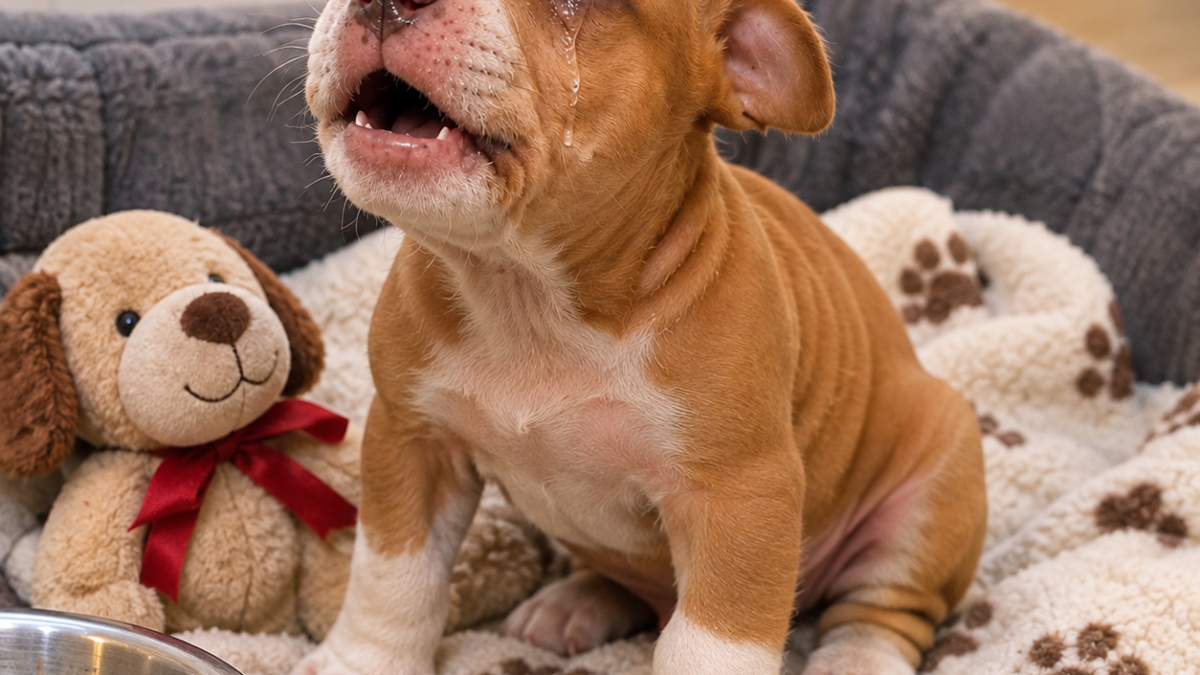
The first time I saw Valentina, she was only one month old, yet the left side of her tiny head had swollen so badly that her face no longer looked like a puppy’s, blood kept seeping from her mouth, and every few steps she turned into another helpless circle as though her own brain had forgotten how to tell her body where forward was.
For seven days, her family had watched that swelling grow without a single proper painkiller, not because they didn’t love her, but because they were living in the kind of poverty where even a basic emergency visit meant choosing between treatment they couldn’t afford and food they still needed to put on the table.
What none of us understood when we finally reached her just before one in the morning was that the injury we could see was only the beginning, and the next set of images would leave a room full of veterinarians staring at a one-month-old puppy and wondering how she was still alive.
My name is Elena, and I had answered enough late-night rescue calls to know that people often wait too long before asking for help.
Sometimes they’re ashamed.
Sometimes they’re scared.
Sometimes they keep convincing themselves tomorrow will be better because admitting today is an emergency would force them to face a problem they have no money to solve.
Valentina’s family had done all three.
The call came from a woman named Marisol, who lived several streets away from them and had finally seen the puppy in person.
“She’s walking in circles,” Marisol told me.
“How long?”
“I don’t know exactly.”
“Is she eating?”
“A little.”
“Drinking?”
“Yes.”
“Bleeding?”
A pause.
“From the mouth.”
I was already reaching for my keys.
“How old?”
“One month.”
I stopped.
“One month?”
“Yes.”
“What happened?”
“They say the mother dog hurt her.”
“How?”
“I think she bit or struck her during an accident with the litter. I don’t know. Please just come.”
We arrived at the family’s home at 12:47 a.m.
The house was small, unfinished, and dark except for one yellow bulb hanging near the doorway.
Valentina’s family was waiting outside.
Her owner, a woman named Rosa, held the puppy in both hands.
The first thing I saw was the swelling.
The second was blood.
The third was the way Valentina’s paws moved when Rosa lowered her onto a blanket.
One step.
Two.
Then a slow turn.
Another step.
Another circle.
She wasn’t choosing the path.
Her body was trapped inside it.
Rosa started crying.
“I thought she would get better.”
I knelt.
“Seven days?”
She nodded.
“Why didn’t you take her to a clinic?”
Her face collapsed.
“We asked how much.”
That answer told me everything.
“How much did they quote?”
She whispered the number.
For her family, it might as well have been a million dollars.
“We don’t have it.”
“Did anyone give her pain medication?”
“No.”
My chest tightened.
Seven days.
One-month-old puppy.
Fractured skull.
Possible brain injury.
No pain relief.
I wanted to be angry.
Then I looked at Rosa’s face.
She had been watching her puppy suffer too.
Poverty can create cruelty without a cruel person standing anywhere in the room.
I touched Valentina gently.
She flinched.
Blood stained the towel beneath her mouth.
Her head felt hot.
The swollen area was tense.
“Has it gotten bigger?”
“Every day.”
“Has she fallen?”
“Yes.”
“Any seizures?”
“We don’t know.”
“Has she stopped eating?”
“Not completely.”
That mattered.
A little.
I slid my hands under her.
Valentina weighed almost nothing.
She trembled when I lifted her.
Rosa grabbed my arm.
“Will she live?”
I hated that question.
“I don’t know.”
Her eyes filled.
“Please don’t let her die because we’re poor.”
That sentence stayed with me for years.
I held Valentina closer.
“She’s coming with us now.”
Rosa nodded.
“Do everything.”
“We will do what she can survive.”
“No matter what it costs.”
I looked at her.
She knew she could never pay it.
So did I.
“We’ll figure out the money later.”
At 12:58 a.m., I carried Valentina into the rescue van.
Behind us, Rosa stood barefoot under that single yellow bulb, crying as though she had just handed me the last piece of hope her family had left.
I looked down at the puppy turning weakly against the towel.
“Stay with me.”
Her eyes moved.
Her body tried to circle again.
And for the first time that night, I understood we weren’t taking her to the hospital simply because she was hurt.
We were racing whatever was happening inside her skull.
PART 2
The emergency hospital was twenty-four minutes away.
At that hour, the roads were almost empty, but every intersection still felt too long.
Valentina lay inside a padded carrier beside me while Nina drove.
I kept one hand against her chest.
Not pressing.
Just feeling.
Breathing.
Heart.
Movement.
Anything.
Every few minutes, Valentina tried to raise herself.
Her tiny paws scratched against the towel.
Then the neurological pull would begin again.
Left.
Turn.
Left.
Another circle.
She would lose balance and fall against the side of the carrier.
“Easy.”
I supported her head.
The swelling was so pronounced that I was afraid touching it would hurt.
It probably did.
Nina looked toward us.
“Still awake?”
“Yes.”
“Good?”
“I don’t know.”
That was the truth.
Consciousness after head trauma can be reassuring.
Abnormal movement can be terrifying.
Valentina gave us both at once.
Then blood appeared at the corner of her mouth again.
“Nina.”
“I see the hospital.”
She accelerated.
## 1:21 A.M.
Two veterinary technicians were waiting at the emergency entrance.
We had called ahead.
The moment the van stopped, I lifted Valentina carefully and transferred her onto a padded stretcher.
Dr. Samuel Warren met us inside.
He looked at the swelling.
His expression changed immediately.
“How old?”
“About one month.”
“Trauma when?”
“Seven days ago.”
He stopped walking.
“Seven?”
“Yes.”
“No treatment?”
“Not proper treatment.”
His jaw tightened.
“Let’s move.”
Valentina disappeared behind the treatment-room doors.
Oxygen.
IV line.
Pain medication.
Antibiotics.
Temperature.
Heart rate.
Neurological examination.
Blood pressure.
Blood work.
Everything started at once.
I stayed outside because there are moments when rescuers become obstacles instead of help.
Nina sat beside me.
“You okay?”
“No.”
“Good answer.”
I stared at the door.
“What if we’re too late?”
Nina didn’t answer.
She knew better than to promise.
## Pain Relief
The first thing Dr. Warren told us when he returned was something that should have felt obvious.
“We’ve controlled her pain.”
I closed my eyes.
Seven days.
That puppy had spent a quarter of her entire life in pain.
One week sounds short when you’re an adult.
For a four-week-old animal, it is enormous.
“Is she calmer?”
“Yes.”
“Neurologically?”
“Still abnormal.”
“The circling?”
“Yes.”
“What does it mean?”
“It can indicate several things after head trauma—swelling, focal brain injury, pressure, vestibular problems. We need imaging.”
“Can she survive imaging?”
“X-rays first.”
“And the swelling?”
He looked toward the room.
“That needs attention now.”
## The Fluid Beneath Her Skin
The swollen area wasn’t simply tissue inflammation.
Blood and infected material had collected beneath the injury.
Pressure had been building.
For days.
Dr. Warren wanted to drain it.
“Will that hurt her?”
“She’s medicated.”
“Risk?”
“Everything has risk right now.”
I hated hearing that.
“What happens if you don’t?”
“The pressure and infection continue.”
“Do it.”
The procedure was delicate.
Valentina was tiny.
Everything about her was tiny.
Veins.
Skull.
Jaw.
Body.
But the swelling on her head looked grotesquely large by comparison.
Dr. Warren inserted the drainage equipment.
Dark fluid came first.
Blood.
Then thick infected material.
Pus.
The room became quiet.
One technician looked away.
Nina whispered:
“She lived with that for a week?”
“Yes.”
The fluid kept coming.
That was the part I couldn’t stop thinking about.
Every hour the swelling had grown, pressure had increased inside a body barely old enough to understand being alive.
## Rosa Calls
My phone vibrated at 2:06 a.m.
Rosa.
I stepped into the hallway.
“Is she alive?”
“Yes.”
The relief on the other end came out like a sob.
“What did they say?”
“They’re draining the swelling.”
“Is it bad?”
“Yes.”
Silence.
Then:
“Is she suffering?”
“Not like she was. She’s medicated.”
Rosa started crying.
“Thank God.”
I leaned against the wall.
“Rosa, I need you to tell me exactly what happened.”
“I told you.”
“Tell me again.”
She breathed slowly.
“The mother dog was with the puppies. Valentina went near her food. The mother jumped suddenly. We heard Valentina cry.”
“Did you see a bite?”
“No.”
“Could she have stepped on her?”
“Maybe. Or hit her against something.”
“So you’re not sure the mother intentionally attacked.”
“No. No. She is normally good with them.”
That mattered.
I didn’t want a villain where none existed.
“What happened next?”
“Valentina’s head swelled.”
“How quickly?”
“Same day.”
“And then?”
“She started turning.”
“Why didn’t you call sooner?”
Rosa cried harder.
“I thought you’d take all the dogs away.”
There it was.
Fear.
Not cruelty.
Fear can still be dangerous.
“You should have called.”
“I know.”
“She needed help.”
“I know.”
“Seven days is too long.”
“I know.”
I heard her children in the background.
Then Rosa said:
“If she dies, it’s because I waited.”
I softened.
“If she dies, it will be because the injury was catastrophic. But yes, next time you ask for help immediately.”
“I will.”
“Promise me.”
“I promise.”
## The First X-Ray
At 3:17 a.m., Dr. Warren called us into imaging.
He didn’t need to explain much.
Even I could see it.
The skull was not intact.
There were multiple fractures.
More than one line.
Several.
Some displaced.
Nina put a hand over her mouth.
“How?”
Dr. Warren shook his head.
“A tremendous amount of force relative to her size.”
“Can a mother dog cause this?”
“Yes. A large adult dog can, accidentally or intentionally. We can’t determine the mechanism from the X-ray.”
“Brain?”
“X-rays can’t tell us enough.”
“CT?”
“Yes.”
“When?”
“When she’s stable enough and when we get neurology involved.”
“Tonight?”
“No.”
I stared at him.
“No?”
“She is too unstable for what comes next.”
“But her brain—”
“Elena.”
“What if we wait and lose time?”
“What if we anesthetize a fragile puppy tonight and lose her on the table?”
Silence.
That was rescue medicine.
Every decision carried another danger.
## Stabilize First
The plan became brutally simple.
Control pain.
Control infection.
Reduce swelling.
Maintain hydration.
Support nutrition.
Monitor neurological status.
Keep her alive.
Then reassess.
We were not fixing Valentina yet.
We were buying her enough stability to discover whether fixing her was possible.
## The First Morning
At sunrise, Valentina slept.
Actually slept.
No circles.
No constant attempts to stand.
No crying.
Pain relief had finally allowed her body to stop fighting every second.
I stood beside her kennel.
Her entire body could have fit inside a kitchen bowl.
That was the puppy we were discussing brain surgery for.
Dr. Warren came beside me.
“Go home.”
“No.”
“You’ve been awake all night.”
“So has she.”
“She is sedated.”
“Lucky.”
He sighed.
“You’re useless exhausted.”
“I can sit.”
“You can sit somewhere else.”
I ignored him.
## Her Family Arrives
Rosa came later that morning with her husband, Mateo.
Their clothes told me more about their finances than any explanation could.
Work boots repaired with tape.
An old shirt.
Rosa carried a small plastic bag.
Inside was Valentina’s blanket.
“I thought she might know the smell.”
That almost broke me.
People who don’t love animals don’t bring familiar blankets to emergency hospitals.
Rosa approached the kennel.
“Valentina?”
The puppy’s ear moved.
Rosa covered her mouth.
“She knows me.”
“Yes.”
She knelt.
“I’m sorry.”
Valentina slept.
Mateo stood behind his wife, silent.
Then he asked:
“How much?”
Not “How much is she worth?”
“How much will treatment cost?”
I gave him the early estimate.
His face changed.
He looked at Rosa.
Then at the floor.
“We can’t.”
“I know.”
“What happens?”
“The rescue takes financial responsibility if you surrender treatment authority.”
He looked at me.
“Does that mean she’s not ours?”
Not immediately.
But I knew where this might eventually go.
“It means we can authorize emergency treatment.”
Rosa hugged the blanket to her chest.
“Do it.”
Mateo closed his eyes.
“Do everything.”
## The Internet’s Cruelty
Once the rescue posted a brief update about Valentina to explain the emergency expenses, people reacted.
Most were compassionate.
Some weren’t.
“Why have a dog if you’re poor?”
“Arrest the owners.”
“They let her suffer.”
“Take all their animals.”
I hated those comments.
Yes, Rosa and Mateo had waited too long.
That mattered.
But poverty is not the same as indifference.
The family had not beaten Valentina.
They had not deliberately denied treatment to punish her.
They had become trapped between fear, money and ignorance until waiting became dangerous.
I refused to turn them into monsters because social media wanted an easy villain.
Real life rarely provides one.
## Day Two
Valentina woke more alert.
Still circling.
Still unstable.
But she ate.
Soft recovery food.
Tiny portions.
She took it from a syringe at first, then from a shallow dish.
Dr. Warren smiled.
“Eating is good.”
“How good?”
“Don’t make me rank everything.”
“Very good?”
“Good.”
I’ll take good.
## The Drain
The wound continued producing fluid.
At first, thick yellow-green material.
Then thinner.
Still infected.
Still blood mixed through it.
We changed dressings constantly.
Valentina hated it.
That was encouraging.
A dog strong enough to protest is stronger than a dog too weak to care.
“Drama queen,” Nina whispered while holding her.
Valentina squeaked.
“Yes, yes. File a complaint.”
## Day Three
The pus decreased.
That was our first measurable victory.
The fluid became clearer.
More blood-tinged than infected.
Dr. Warren showed us.
“This is better.”
I stared at the container.
Our lives had become celebrating fluid quality.
“Her neurological signs?”
“Still present.”
“Circling?”
“Yes.”
“Worse?”
“No.”
“Better?”
“Not clearly.”
Hope is frustrating when it refuses to move in straight lines.
## The Specialist
Dr. Warren contacted veterinary neurologist Dr. Claire Morgan.
She reviewed the X-rays remotely.
Her response was short.
**Needs CT when stable. Multiple fractures concerning. Surgical planning impossible from plain films.**
“Impossible.”
I hated that word.
Then beneath it:
**Survival for seven days suggests remarkable resilience.**
I liked that one better.
## Day Four
Valentina stood more steadily.
Still turned left.
Still fell sometimes.
But she began wagging when nurses approached.
That confused me.
She had every reason to associate hands with discomfort.
Drainage.
Needles.
Medication.
Bandage changes.
Yet she wagged.
Dogs often forgive the process because they understand intention better than we give them credit for.
Or maybe they simply live in the current moment.
Either way, Valentina greeted people as if the world had not just shattered around her.
## The Mother Dog
We checked Rosa’s other animals.
That mattered.
The mother dog, whom the family called Bella, was examined.
Healthy enough.
Stressed.
No evidence of intentional ongoing aggression.
The puppies were separated and managed safely.
Rosa listened carefully to every recommendation.
“You aren’t taking Bella?”
“Not if there’s no welfare reason.”
“She didn’t mean it.”
“We don’t know exactly what happened.”
Rosa cried.
“She sleeps with the puppies.”
Accidents happen.
Especially when adult dogs and tiny puppies share cramped spaces and food.
The lesson wasn’t to punish Bella.
It was to prevent another injury.
## Day Five
Valentina tried to play.
With the corner of her blanket.
One bite.
Tiny tug.
Then she lost balance and fell sideways.
Nina laughed and cried at the same time.
“That’s the saddest game I’ve ever seen.”
Valentina tried again.
That was her personality emerging.
Not just surviving.
Playing.
## The CT Decision
By Day Six, bloodwork improved enough that Dr. Morgan felt CT imaging could be attempted with careful anesthesia.
I signed the rescue authorization.
Rosa signed consent too.
Her hand shook.
“If they find something bad?”
“We deal with it.”
“What if they say surgery?”
“We deal with that.”
“What if she dies?”
I looked at her.
“We deal with that too.”
No promises.
Only presence.
## CT Day
Valentina was transferred to the specialty hospital.
The building was clean.
Bright.
Too calm.
Neurology hospitals always make me nervous because the calm usually hides difficult problems.
Dr. Morgan met us.
She was younger than I expected.
Direct.
“I’ve reviewed the X-rays.”
“And?”
“I don’t want to speculate until CT.”
“What are you worried about?”
“Skull fragmentation, displaced bone, infection extending inward, pressure effects, possible brain injury.”
“Can you fix it?”
“Depends what I see.”
Again.
Depends.
Maybe.
We’ll see.
Medicine is full of words rescuers hate because honesty is less comforting than certainty.
## The Scan
Valentina disappeared into imaging.
Twenty minutes.
Thirty.
Forty.
Nina paced.
Rosa prayed quietly.
Mateo sat beside her with both hands clasped.
I drank coffee that had gone cold.
Finally, Dr. Morgan entered carrying a tablet.
Her face was serious.
Very serious.
She pulled up the images.
“This is worse than the X-rays suggested.”
Rosa began crying before the explanation started.
Dr. Morgan enlarged the scan.
Bone should form a protective shell.
Valentina’s skull looked like somebody had taken that shell and cracked it in multiple directions.
Fragments.
Irregular edges.
Sections displaced.
Areas missing normal support.
I stared.
“How much is broken?”
Dr. Morgan hesitated.
“Much of the affected side.”
“Half?”
“It’s not useful to reduce it to a percentage.”
That meant bad.
“Brain?”
“There is evidence of traumatic injury and inflammatory change, but I’m surprised by how stable she is clinically.”
“Why?”
Dr. Morgan looked directly at me.
“Because I’ve seen older, stronger animals die from less.”
Silence.
## Nearly Her Entire Tiny Skull
Later, after reviewing all planes and discussing the images with another surgeon, Dr. Morgan said the sentence none of us forgot.
“Functionally, a very large portion of this puppy’s skull has been shattered.”
Rosa sobbed.
Mateo put his arm around her.
I stared at Valentina through the recovery window.
She was waking from anesthesia.
Tiny tail moving.
Completely unaware that specialists were amazed she was alive.
## Why She Circled
The neurological trauma explained the circling.
Inflammation.
Brain irritation.
Altered balance and orientation.
Perhaps pressure effects from infection and fragments.
No one could guarantee the behavior would resolve.
“Could she always circle?”
“Yes.”
“Could she have seizures later?”
“Yes.”
“Could she have developmental problems?”
“Yes.”
“Could she still be normal?”
Dr. Morgan paused.
“Define normal.”
That question changed everything.
## Surgery
She needed surgery.
Not that day.
First, more stabilization.
Infection control.
Nutrition.
Weight.
Strength.
The operation would involve opening the damaged region, removing unstable or infected bone fragments, cleaning abscessed tissue, protecting the brain and deciding how best to manage the skull defect.
“Implant?”
“Possibly.”
“What kind?”
“Depends on the defect and tissue condition.”
“Cost?”
Dr. Morgan gave the estimate.
Rosa began crying again.
Not because she expected to pay.
Because numbers reminded her how impossible this would have been without rescue intervention.
She whispered:
“She would have died with us.”
I answered carefully.
“You called eventually.”
“Too late.”
“But you called.”
Both statements were true.
## Waiting for Surgery
The next week was emotionally brutal.
Valentina improved enough to make us hope.
Then one bad night made us afraid again.
She vomited.
Refused one meal.
Later ate.
She stumbled badly.
Then wagged.
One temperature spike.
Then normal.
Healing is rarely a clean staircase.
It’s a jagged line.
## Her Personality
Valentina became obsessed with shoelaces.
Tiny puppy.
Shattered skull.
Potential neurosurgery.
Shoelaces.
She would grab them and pull.
Nina called it neurological rehabilitation.
Dr. Warren called it nuisance behavior.
I called it excellent.
## Rosa Visits Every Day
This mattered.
People online accused the family of abandonment.
Rosa took two buses every afternoon.
Sometimes with her youngest child.
She sat beside Valentina.
Talked.
Brought the same blanket.
Never asked whether we would send Valentina home immediately.
She began understanding something painful.
Love might require letting the puppy go somewhere with more resources.
## The Surrender Conversation
I didn’t want to have it.
Rosa knew before I started.
“You want us to give her up.”
“I want to talk about her future.”
“Same thing.”
“No.”
She looked at me.
“Can she come back to our house after surgery?”
“Maybe physically.”
“But?”
“She may need long-term neurological follow-up. Strict safety. Medication. Possible future surgery. Rehabilitation.”
“We can learn.”
“I know.”
“We love her.”
“I know.”
“Then why?”
“Because love and resources aren’t always the same thing.”
That sentence hurt both of us.
Rosa looked through the glass.
Valentina was asleep.
“If we sign her over, can we still know she’s okay?”
“Yes.”
“Will you find somebody good?”
“Yes.”
“Promise?”
That was a promise I could make.
“Yes.”
She cried for a long time.
Then signed.
No villain.
Just a mother choosing another home for a puppy because keeping her might mean failing her again.
## Surgery Day
Valentina had gained enough strength.
Infection had improved.
Blood work acceptable.
The day arrived.
Dr. Morgan met us at 7:10 a.m.
“She’s small.”
“I noticed.”
“Anesthesia is a significant risk.”
“I know.”
“Surgery may be longer than expected.”
“I know.”
“If I find infection extending deeper—”
“I know.”
She smiled faintly.
“Do you want me to stop explaining?”
“No. I want to stop hearing.”
Fair.
Rosa came to say goodbye before anesthesia.
She kissed Valentina’s nose.
“Come back.”
Valentina licked her chin.
That destroyed us.
## The Doors Close
We watched the surgical doors.
That’s all you can do.
Wait.
People imagine rescue as action.
Sometimes rescue is sitting in a plastic chair unable to do anything while someone else holds the life you care about.
One hour.
Two.
Three.
No update.
Nina paced.
I stopped checking the clock because every glance made time move slower.
At nearly four hours, a nurse came out.
“She’s stable.”
“Done?”
“Not yet.”
“How much longer?”
“We don’t know.”
That was not reassuring.
## Inside the Skull
When Dr. Morgan finally came out, she looked exhausted.
Her cap was off.
Hair flattened.
There were lines on her forehead from the mask.
“She made it.”
Rosa made a sound somewhere between a laugh and a sob.
I grabbed the edge of the chair.
“Tell me.”
“It was more complicated than CT suggested.”
Of course.
She pulled out photographs.
I didn’t want to see.
I looked anyway.
Loose bone fragments.
Inflamed tissue.
Pockets of infection.
Edges that could continue irritating or damaging surrounding tissue.
They removed the dangerous fragments carefully.
Cleaned the infected areas.
Released abscessed material.
Protected the tissue beneath.
Then came the surprising part.
“We did not place the implant.”
I stared.
“Why?”
“Her body has already begun building protective fibrous tissue and healing structures around the area.”
“So you’re leaving her brain unprotected?”
“No.”
Dr. Morgan shook her head.
“Not in the way you’re imagining. The tissue coverage is developing remarkably. An artificial implant in this contaminated, infected field could create more complications right now.”
“Will bone grow?”
“Some remodeling may occur as she grows. Fibrous protection can strengthen. We will monitor.”
“You trust her body?”
“I trust what I’m seeing.”
Rosa whispered:
“She was healing herself?”
“Partly.”
Dr. Morgan nodded.
“More than I expected.”
## The Puppy Who Built Her Own Protection
That phrase stayed with us.
Her body had been attacked.
Bone shattered.
Infection spread.
Yet while everyone debated whether she could survive, Valentina had already begun constructing a biological defense around her own brain.
Not enough.
She still needed surgery.
Still needed antibiotics.
Still needed people.
But her body had not been waiting passively.
It had been working.
## ICU Again
Postoperative recovery was rough.
Pain.
Swelling.
Sedation.
Monitoring.
Valentina looked worse before she looked better.
That’s common after major surgery.
Knowing doesn’t help.
The bandage covered most of her head.
She looked impossibly small beneath it.
Rosa sat beside her.
“You look ridiculous.”
Valentina’s tail moved.
Even sedated.
We laughed.
## First Night Post-Op
No seizure.
Good.
Stable blood pressure.
Good.
Pain controlled.
Good.
No major bleeding.
Good.
We collected tiny victories because large ones were still unavailable.
## Day Two After Surgery
Valentina stood.
Wobbly.
No circle.
Then she turned.
Once.
Not the endless compulsive rotation we’d seen before.
Dr. Morgan watched.
“Interesting.”
“Good interesting?”
“Potentially.”
I hated specialist vocabulary.
## Day Three
Eating.
Tail wag.
Trying to bite bandage.
Excellent.
Nina said:
“She is going to destroy thousands of dollars in surgery because she wants to scratch.”
Valentina tried again.
Cone.
She hated us.
Good.
## The First Straight Walk
It happened in a hallway.
Valentina walked toward Rosa.
Six steps.
Straight.
Not perfect.
But no circle.
Rosa dropped to her knees.
“Valentina.”
The puppy reached her.
Rosa held her carefully.
I turned away because sometimes other people’s joy deserves a little privacy.
## Going Home to Foster
Weeks after the first rescue call, Valentina left the specialty hospital for a medical foster home.
She could not return to the original household—not because they were monsters, but because she needed controlled care, follow-up and a safer environment than they could realistically provide.
Her foster was a woman named Claire Hudson.
Retired pediatric nurse.
Quiet home.
No other dogs initially.
Single-story.
Experience with neurologic animals.
Basically perfect.
Claire met Valentina.
The puppy chewed her shoelace.
Approved.
## Learning Puppyhood
For the first time, treatment stopped occupying every minute.
Valentina discovered toys.
Grass.
Sunlight.
Kitchen sounds.
Blankets.
The strange joy of carrying something much larger than herself.
She had missed part of puppyhood.
She made up for it aggressively.
## The Foster Yard
Claire sent a video.
Valentina stood in the grass.
Looked around.
Then ran.
Not far.
Maybe eight feet.
But ran.
The puppy who had wandered in circles now chose a direction.
That was enormous.
## The Setback
Three weeks into foster recovery, Claire called at 6:12 a.m.
Her voice was controlled.
Too controlled.
“Elena, the incision opened.”
I sat upright.
“How much?”
“Enough.”
“Bleeding?”
“Some.”
“Fluid?”
“Yes.”
“Temperature?”
“Normal.”
“She’s acting okay.”
That didn’t matter enough.
I called Dr. Morgan.
We drove.
## Wound Dehiscence
Part of the surgical incision had reopened.
Could have been healing tension.
Could have been infection.
Could have been Valentina’s relentless attempts to scratch despite protection.
Regardless, the wound needed intervention.
Dr. Morgan examined it.
“We’re going back.”
“Surgery?”
“Yes.”
My stomach dropped.
Rosa arrived after hearing.
“No.”
I understood.
We had finally believed the nightmare was ending.
Now another operating room.
Another anesthesia.
Another wait.
## Rosa’s Anger
For the first time, Rosa became angry.
Not at us.
At life.
“How many times?”
She cried.
“How many times does she have to fight?”
I had no answer.
“She already survived everything.”
“I know.”
“Isn’t that enough?”
“Yes.”
“Then why again?”
Because survival doesn’t negotiate.
Complications don’t care about fairness.
Valentina had won one impossible battle.
That didn’t exempt her from the next.
## Second Surgery
The second operation was shorter.
Debridement.
Cleaning.
Revision.
Closure.
The deeper repair remained stable.
That was good.
No catastrophic new infection.
Better.
Valentina recovered from anesthesia.
Best.
When the nurse called to say she was awake, Rosa sat on the floor.
She simply couldn’t stand anymore.
## Getting Back Up
That’s where I learned something about courage.
People say courage means not being afraid.
No.
Valentina was probably afraid often.
Courage was her body waking up from another surgery and still eating when food came.
Still wagging when Claire spoke.
Still trying to bite the cone she hated.
Still standing.
Getting back up is sometimes the entire definition.
## Stricter Recovery
We became paranoid.
Protective cap.
Cone.
Supervision.
Activity restriction.
No scratching.
No rough play.
No unsupervised freedom.
Valentina hated every rule.
Claire called her “a criminal in rehabilitation.”
The puppy tried to escape every barrier.
Excellent neurological function.
Terrible patient.
## Healing Again
This time the incision held.
Day after day.
No opening.
No drainage.
No fever.
The swelling disappeared.
Hair grew back around the surgical site.
Scar remained.
Fine.
Scars are allowed.
## Neurology Follow-Up
Dr. Morgan repeated exams.
Valentina’s balance improved.
Circling resolved almost completely.
No seizures.
Normal interaction.
Normal appetite.
Puppy energy.
Some subtle neurological quirks remained.
But functionally?
“She is doing incredibly well.”
I stared.
“Say the word.”
“What word?”
“Normal.”
Dr. Morgan smiled.
“She’s Valentina.”
Better answer.
## Running
Claire sent another video.
Valentina racing across the yard after a soft ball.
Fast.
Too fast.
I texted:
**SHE IS NOT CLEARED FOR THE OLYMPICS.**
Claire replied:
**Tell her.**
Impossible.
## The Original Family Visits
Once Valentina was fully stable, we arranged a visit with Rosa and her children.
I worried.
Would the puppy remember?
Would returning emotions complicate surrender?
Would Rosa regret giving her up?
Valentina heard her voice.
Tail.
Immediate.
She ran toward Rosa.
Straight.
No circles.
Rosa fell to her knees.
Valentina climbed into her lap.
Rosa sobbed.
Her children cried.
Claire cried.
I cried because apparently that’s my job.
## “Take Her Back”
Rosa whispered:
“I wish I could.”
I heard it.
She looked at me.
“I know I can’t.”
“You could apply if circumstances changed.”
She shook her head.
“No.”
That surprised me.
“She needs more.”
She stroked Valentina’s scar.
“We love her enough not to pretend.”
That may have been the strongest thing Rosa ever did.
## Poverty Wasn’t the Ending
People online wanted justice against the family.
I refused.
The family had made a dangerous mistake by waiting.
That truth stayed.
But they also surrendered a puppy they loved because they knew she needed resources beyond what they had.
Punishing poverty would not heal Valentina.
Helping people ask earlier might save the next puppy.
So our rescue changed something.
We began emphasizing emergency-contact options for families who feared cost.
Call first.
Explain later.
Don’t wait seven days because you’re embarrassed.
That was Valentina’s legacy before she was even adopted.
## Adoption Ready
Months passed.
Dr. Morgan finally cleared Valentina for adoption.
With conditions.
Regular veterinary follow-up.
Monitoring for neurological changes.
Extra caution around head trauma.
No reckless rough play.
Future imaging if symptoms returned.
Otherwise?
Dog.
Puppy.
Chaos.
## Applications
Valentina’s story had spread.
People wanted the “miracle skull puppy.”
I hated that phrase.
We rejected applicants chasing a story.
One person wanted to make her a social-media account.
No.
One wanted her because their children “needed inspiration.”
No.
One said:
“She looks normal now, so I assume she doesn’t need follow-up?”
Absolutely no.
Then came a man named Gabriel Santos.
Forty-three.
Widower.
Worked from home.
No children living with him.
One calm older dog named Theo.
Excellent veterinary references.
His application was boring.
I loved it.
He asked:
“What does her medical history require from me at 2 a.m. if something changes?”
That’s the question.
Not:
How cute is she?
What do I do when things go wrong?
## Gabriel Meets Valentina
He sat on the floor.
Valentina entered.
Ignored him.
Found his shoelace.
Pulled.
He laughed.
“So this is the neurologic patient?”
I nodded.
“She has no respect for medical history.”
Valentina climbed into his lap.
Gabriel did not grab her.
Let her choose.
Good.
Theo entered.
Older shepherd mix.
Valentina immediately tried to play.
Theo looked at me as though I personally had ruined his afternoon.
Excellent.
## The Scar
Gabriel asked to see the surgical area.
I showed him.
He touched nothing.
Just looked.
“Does it hurt?”
“Not normally.”
“Is there less bone there?”
“Yes, with protective healing tissue and remodeling.”
“Can I hurt her accidentally?”
“You need reasonable caution, but she doesn’t live in glass.”
He nodded.
“Good.”
That was important.
Special-needs animals shouldn’t be protected so intensely that they never get to live.
## Home Visit
Gabriel’s house had a fenced yard.
Quiet street.
No dangerous stairs.
He moved sharp furniture.
Asked whether rugs mattered.
Prepared a low bed.
Bought toys.
Too many.
I told him:
“She will destroy half.”
“Then I’ll know which half she likes.”
Correct.
## Rosa Meets Gabriel
I didn’t normally arrange that.
This case felt different.
Rosa wanted to know.
Gabriel agreed.
They met at the rescue.
Rosa asked:
“Will you send pictures?”
“Yes.”
“Will you take her to the neurologist?”
“Yes.”
“If she needs surgery again?”
“Yes.”
“What if it’s expensive?”
Gabriel looked at Valentina.
“Then it’s expensive.”
Rosa started crying.
He didn’t make a speech.
Good people rarely need speeches.
## Adoption Day
Valentina wore a yellow harness.
Her scar was barely visible beneath new fur.
She was bigger now.
Still young.
Still ridiculous.
Gabriel arrived with Theo.
Valentina tried to steal his leash.
Of course.
Rosa came too.
That made the goodbye complicated.
Beautiful.
Painful.
Necessary.
## Rosa’s Goodbye
She held Valentina.
Long.
Then whispered something I almost didn’t hear.
“I’m sorry I waited.”
Valentina licked her face.
“I hope you forget that house.”
Another lick.
“You deserve everything.”
Gabriel stood several feet away.
No rushing.
No interruption.
Finally, Rosa handed him the leash.
“Please don’t let her suffer quietly.”
Gabriel nodded.
“I won’t.”
That was the promise.
## Leaving
Valentina walked to Gabriel’s car.
Straight.
That mattered so much I almost laughed.
No circles.
She jumped badly.
Missed.
Gabriel caught her.
Second attempt.
Success.
Window down slightly.
Nose out.
A puppy leaving not an emergency hospital, but for home.
## First Night
Gabriel sent a photo.
Valentina asleep on his chest.
Theo beside them.
Caption:
**She has taken over.**
Second photo:
A destroyed shoelace.
Caption:
**You failed to disclose criminal history.**
I replied:
**It was in the neurological report.**
## The First Month
Valentina adjusted instantly.
Maybe too instantly.
She learned the kitchen.
Bed.
Yard.
Theo’s boundaries.
Gabriel’s work schedule.
She slept under his desk while he worked.
Then woke and attacked his socks.
Normal puppy.
The phrase never stopped making me smile.
## Neurology Check
Three months after adoption, Gabriel brought her back to Dr. Morgan.
The surgeon stared.
Valentina wagged.
Dr. Morgan touched the scar.
Checked pupils.
Gait.
Postural reactions.
Balance.
Everything.
Then she leaned back.
“She shouldn’t look this good.”
I said:
“Medical terminology?”
“Exactly.”
## Bone Remodeling
Follow-up imaging showed healing and remodeling around the skull defect.
Not a perfect skull.
Not untouched.
But stable.
Protective tissue mature.
No active abscess.
No dangerous fragment.
No new surgery.
Gabriel asked:
“So she can live normally?”
Dr. Morgan smiled.
“She already is.”
## The Circle
Once in a while, when excited, Valentina made a small turn before running.
Everyone noticed.
Was it neurological?
Habit?
Puppy behavior?
No one knew.
Gabriel called it her “victory lap.”
I liked that.
## Her First Birthday
One year old.
Think about that.
At one month, we weren’t sure she’d reach morning.
At one year, she had a cake.
Theo stole part.
Valentina stole the rest.
Gabriel laughed.
Rosa received video.
She sent back:
**Thank you.**
Nothing else.
Enough.
## Bella
Valentina’s mother remained with Rosa.
After the accident, the family changed how they managed dogs and puppies.
Separate feeding.
Veterinary help through low-cost programs.
No additional unplanned litters.
That mattered.
The point wasn’t to destroy the family.
The point was to make the next outcome different.
## The Children
Rosa’s children kept Valentina’s photos.
They called her “our sister dog.”
Gabriel invited them to visit once a year with supervision.
Not required.
Kind.
Valentina recognized them by energy more than anything else.
Tail.
Play.
No sadness.
Dogs are good at making complicated human arrangements feel simple.
## Two Years
Valentina grew into a healthy adult dog.
No seizures.
No recurrent infection.
No circling problem.
Head normal enough in appearance that strangers never guessed.
The scar faded.
Her history became invisible.
That was beautiful and strange.
People would meet her and say:
“She looks perfect.”
I learned to answer:
“She always was.”
## The Word Perfect
Not anatomically.
Not medically.
Worth.
Perfect doesn’t mean untouched.
Valentina’s skull had been shattered.
Her body rebuilt around trauma.
That history didn’t lower her value.
## Gabriel’s Routine
Breakfast.
Walk.
Work.
Nap.
Play.
Dinner.
Couch.
Vet visits.
Ordinary.
This was the revenge against the first seven days.
Not drama.
Routine.
Pain had once filled every hour.
Now most hours were boring.
Boring is a luxury.
## Three Years
Valentina became obsessed with tennis balls.
Not shoelaces anymore.
Mostly.
Gabriel bought twenty.
She wanted one particular dirty green ball.
Of course.
Theo grew older.
Valentina adjusted her play.
She became gentler.
The puppy who once couldn’t control her own direction learned to control herself around an old dog.
## Theo’s Goodbye
Eventually, Theo developed cancer.
Gabriel chose palliative care.
Then home euthanasia.
Valentina lay beside him afterward.
Smelled his face.
Waited.
For several days, she searched his bed.
Grief entered her life.
She survived that too.
## Gabriel Almost Adopts Again
He waited a year.
Then fostered a young dog.
Valentina hated the puppy.
Irony.
Gabriel said:
“You were worse.”
Valentina walked away.
No accountability.
## The Rescue Fund
Valentina’s case changed our emergency policy.
We created a small fund specifically for families who had animals with urgent injuries but no immediate money.
No shame-first questions.
No lecture before triage.
Stabilize.
Then solve.
Because seven days taught us what waiting can cost.
## Rosa Volunteers
Years after Valentina’s rescue, Rosa began helping once a month at low-cost vaccination events.
She couldn’t donate much money.
She donated time.
The first day, I saw her explaining to another woman:
“Call before it gets worse.”
That was Valentina continuing through her.
## What “Revenge” Really Meant
People kept asking who should pay.
The mother dog?
No.
Bella was an animal in a cramped situation.
The family?
They carried guilt already.
Poverty?
You can’t put poverty in a courtroom.
The true enemy had been delay.
Fear.
Lack of access.
The idea that asking for help was shameful.
So our revenge was speed.
The next poor family called on Day One.
Not Day Seven.
That mattered more than punishing anyone.
## Four Years
Valentina remained healthy.
Gabriel joked that her only neurological problem was selective hearing.
Dr. Morgan refused to diagnose that.
## The Surgeon Retires
Years later, Dr. Morgan left the specialty hospital for teaching.
At her farewell, she mentioned several cases.
One was Valentina.
She said:
“There are patients who change the way you think about anatomy, prognosis and humility.”
I cried.
Again.
## The Original CT
Dr. Morgan showed us the old scan once more.
I had forgotten how bad it looked.
Bone fragments everywhere.
I looked at Valentina running outside afterward.
Brains are fragile.
Bodies are extraordinary.
Medicine lives between those truths.
## Five Years
Gabriel remarried.
His wife, Anna, had known Valentina for two years before moving in.
Correct approach.
Anna brought a cat.
Valentina learned boundaries quickly.
One claw to nose.
Education complete.
## The New Family
Gabriel.
Anna.
Valentina.
Cat named George.
No children.
Then later, a baby.
We worried about noise and routine changes.
Valentina adapted.
She lay beside the crib.
Never unsupervised.
Always calm.
The puppy once treated like the fragile one became the careful adult dog around somebody smaller.
## Rosa Receives a Photo
Valentina lying beside the baby’s blanket.
Rosa replied:
**She grew up.**
Yes.
That was the miracle.
She got to grow up.
## Six Years
Valentina developed mild arthritis.
Nothing related directly to skull trauma.
Just life.
Gabriel laughed.
“We’re treating normal old-dog problems now.”
Not old yet.
But older.
Normal problems.
Beautiful.
## The Scar Becomes Hard to Find
Fur covered it.
You had to know where to look.
Gabriel could find it with his fingers.
Sometimes he’d touch it while she slept.
Not because he wanted to remember pain.
Because scars can become proof of distance.
## Seven Years
No neurological crisis.
No brain surgery revision.
No seizures.
Dr. Morgan’s old notes had listed all those as possibilities.
Possibility is not destiny.
## The Girl Who Shouldn’t Have Survived
The rescue occasionally shared an anniversary update.
People commented:
“I remember her.”
“Is this really the same dog?”
“Yes.”
Same dog.
Different life.
## Eight Years
Gabriel’s daughter learned to throw Valentina’s tennis ball.
Badly.
Valentina didn’t care.
She chased.
Returned.
Again.
Again.
Again.
The child called her “Tina.”
Valentina accepted.
## Rosa’s Family
Their financial situation improved somewhat.
Not dramatically.
They moved to a slightly better house.
Bella eventually died of old age.
Rosa called me.
“I still think about what happened.”
“I know.”
“I don’t blame Bella.”
“Good.”
“I blame myself.”
I paused.
“How many animals have you helped since?”
She counted.
“Maybe eighty?”
“Then use the guilt. Don’t worship it.”
Silence.
“Okay.”
## Nine Years
Valentina’s muzzle gray.
Her energy lower.
Tennis balls still sacred.
She slept more.
Gabriel began lifting her into the car.
Not because of her skull.
Arthritis.
Again.
Ordinary aging.
That word never stopped feeling like victory.
## The First Neurological Scare
One morning, Valentina stumbled.
Gabriel panicked.
Emergency visit.
Imaging.
No new skull issue.
Vestibular episode related to age.
Treatable.
She improved.
Gabriel called:
“I thought we were back at the beginning.”
“We’re not.”
The beginning is only one place in time.
You can’t accidentally fall all the way back into it.
## Ten Years
Valentina reached ten.
Ten.
A puppy who might not survive one month.
Ten years old.
We held a small reunion.
Rosa came.
Gabriel.
Anna.
Their daughter.
Me.
Nina.
Dr. Warren.
Dr. Morgan joined by video.
Valentina cared about chicken.
Correct.
## The Old X-Ray Beside the Birthday Photo
Someone placed them together.
X-ray.
Birthday hat.
I hated the hat.
Loved the contrast.
A skull that looked impossible.
A dog who had lived a decade.
## Her Final Illness
Eventually, kidney disease arrived.
Age.
Not trauma.
Not infection.
Not the old skull.
Life.
Medication.
Diet.
Fluids.
Monitoring.
Good months.
Then harder ones.
## Gabriel Calls
“She didn’t eat breakfast.”
The sentence every dog family fears.
We arranged evaluation.
Kidneys worse.
Anemia.
Fatigue.
No crisis yet.
Supportive care.
## The Last Summer
Valentina spent mornings in the yard.
No running.
Just sunlight.
Gabriel’s daughter sat beside her.
Tennis ball near one paw.
Sometimes Valentina nudged it.
Sometimes not.
## Rosa Visits
One final visit.
She sat on the grass.
Valentina smelled her.
Tail moved.
Rosa cried.
“Do you remember me?”
We can never know exactly what dogs remember.
Valentina rested her head against Rosa’s leg.
That was enough.
## “I’m Sorry”
Rosa whispered:
“I should have called on the first day.”
I sat nearby.
Valentina breathed slowly.
“You called on the seventh.”
“I know.”
“She got ten years after that.”
Rosa looked at me.
“Does that make it okay?”
“No.”
She nodded.
I continued.
“But a mistake doesn’t have to be the only thing you’re allowed to become.”
That applied to Rosa.
Maybe to all of us.
## The Last Week
Valentina stopped wanting long walks.
Then stopped wanting the yard.
Preferred her bed.
Kidneys failing.
Pain controlled.
Comfort monitored.
Gabriel knew.
Anna knew.
I knew.
## The Question
Gabriel asked the veterinarian:
“Can we get another month?”
Possible.
“But would it be her month or ours?”
That was the right question.
Silence.
Then the answer.
“Mostly yours.”
Gabriel cried.
Decision made.
## The Final Night
Everyone stayed in the living room.
Valentina on her bed.
Gabriel beside her.
Anna.
Their daughter.
One tennis ball.
No hospital.
No drainage tube.
No CT.
No operating room.
No circles.
Just home.
## Morning
I came early.
Nina too.
Rosa asked to come.
Gabriel said yes.
That generosity still amazes me.
We formed a quiet circle around the dog who had once walked in endless circles because her brain could not guide her anywhere else.
Now the circle was ours.
Not hers.
People.
Love.
Presence.
## The Veterinarian
The home-care veterinarian explained everything.
Sedation first.
Then final medication.
No pain.
No fear.
Gabriel nodded.
Rosa held Valentina’s blanket.
The same blanket she had brought to the hospital years before.
She had kept it.
## Goodbye
Gabriel held Valentina’s face.
“You were supposed to be fragile.”
Tail moved.
Anna kissed her head.
Their daughter held the tennis ball.
Rosa whispered:
“I’m sorry.”
I touched Valentina’s shoulder.
Nina cried openly.
Sedation entered.
Valentina relaxed.
No turning.
No tension.
No fight.
For once, her body did not need to fight.
## The Last Breath
Slow.
Quiet.
Then still.
The veterinarian listened.
Waited.
“She’s gone.”
Gabriel pressed his forehead against hers.
Rosa covered her face.
Nobody spoke for several minutes.
## The Skull That Survived
I thought about that CT.
Bone shattered.
Fragments.
Abscesses.
Inflammation.
A surgeon wondering how she was alive.
Then ten years.
The skull never became untouched.
It didn’t need to.
Healing is not restoration to factory condition.
Living bodies improvise.
They scar.
Remodel.
Protect.
Adapt.
Continue.
## The Tennis Ball
Gabriel buried the old dirty green tennis ball beneath a tree in the yard.
Not Valentina.
Her ashes stayed inside.
The ball went outside.
He said:
“She spent enough time chasing it.”
Fair.
## Rosa’s Blanket
Rosa took the old puppy blanket home.
She asked first.
Gabriel said yes.
Two families had loved Valentina in different ways.
One failed her during the worst week.
One carried her through the rest of life.
Love is not always clean.
That doesn’t make every kind equal.
Responsibility matters.
## The Rescue’s Emergency Program
By then, hundreds of animals had received treatment through the fund created partly because of Valentina.
Fractures.
Poisoning.
Infections.
Emergency C-sections.
Hit-by-car injuries.
Families who had money later repaid what they could.
Some never could.
Animals didn’t wait seven days.
That was her revenge against poverty.
Not one family punished.
Hundreds of families given another option.
## The Story People Wanted
People wanted a villain.
“Who did this?”
The honest answer was complicated.
Her mother caused the trauma.
But there was no evidence Bella intended a vicious attack.
Her family waited too long.
But they loved her and were terrified by costs they couldn’t meet.
The system offered too few easy emergency routes.
Fear filled the gaps.
Valentina paid for all of it with pain.
That’s the truth.
## The Story She Got
Pain was only the beginning.
Surgery.
Setback.
Second surgery.
Recovery.
Adoption.
Ten years.
Childhood.
Tennis balls.
Family.
Gray muzzle.
Old age.
Home.
The beginning did not get to own the rest.
## The First Seven Days
Sometimes people ask whether I still think about them.
Yes.
Seven days without adequate pain relief.
Seven days of swelling.
Blood.
Circling.
I wish we could erase them.
We can’t.
But ten good years don’t erase seven bad days either.
That’s not how healing works.
Good does not cancel pain mathematically.
It simply means pain did not receive everything.
## “She Was Already Healing”
The surgeon’s discovery during the first operation remains one of the most extraordinary things I remember.
Healing tissue forming around damage.
The body trying to protect the brain before anyone could finish helping it.
Valentina’s biology refused passivity.
People sometimes turned that into a mystical story.
I didn’t.
Medicine saved her.
Surgery saved her.
Antibiotics saved her.
Nutrition saved her.
People saved her.
And her body participated.
All of those things can be true at once.
## Courage
I used to describe Valentina as brave.
Still do.
But I became careful.
Calling suffering animals brave can make suffering sound beautiful.
It wasn’t.
Seven days of untreated pain were not inspiring.
A shattered skull was not a gift.
Two surgeries were not a blessing.
The beautiful part was what came after because people finally did what suffering required.
Help.
## The Mother Dog
Bella was never punished.
I’m glad.
She was managed more carefully.
Fed separately.
Spayed later through an assistance program.
Lived with Rosa until old age.
The accident did not turn her into a monster either.
Animals are not moral villains in human stories.
## The Family’s Lesson
Rosa told people openly later:
“I waited because I was ashamed I couldn’t pay.”
Then:
“Don’t do what I did.”
That honesty saved more animals than pretending she had always made the right decision.
## Gabriel’s Lesson
When asked why he adopted Valentina, he always gave the same answer.
“She needed a home.”
People wanted more drama.
He never gave it.
“What about her skull?”
“It’s part of her.”
“What about future costs?”
“We planned.”
“Weren’t you scared?”
“Yes.”
“Then why?”
“She needed a home.”
Perfect.
## The Surgeon
Dr. Morgan once told a class of veterinary students about a puppy with catastrophic cranial trauma who survived.
She did not teach them to ignore prognosis.
She taught humility.
“Prognosis guides decisions,” she said.
“It does not predict the future with certainty.”
Valentina became a lesson without ever knowing.
## The Last Photo
My favorite photograph was not rescue night.
Not surgery.
Not the CT.
Not adoption.
Valentina at eight years old lying upside down on Gabriel’s couch with one paw over her face and a tennis ball wedged beneath her back.
Completely undignified.
Completely safe.
Nothing happening.
That is rescue success.
Nothing happening.
## If I Could Go Back
If I could return to 12:47 a.m., I’d kneel beneath that yellow bulb and look at one-month-old Valentina.
Her head swollen.
Blood at her mouth.
Body turning left.
Again.
Again.
I’d tell her:
“We’re late.”
She wouldn’t understand.
“I’m sorry.”
Another circle.
“This is going to hurt before it gets better.”
She’d fall.
“Doctors will drain your head.”
“Take pictures of your broken skull.”
“People will use words like catastrophic.”
“You’ll meet a neurologist.”
“You’ll go into surgery.”
“They’ll find bone pieces where no bone pieces should be.”
“You’ll wake up.”
“Then your wound will open.”
“You’ll go back.”
“You’ll wake up again.”
“You’re going to hate a cone.”
“You’ll destroy shoelaces.”
“You’ll learn to run straight.”
“You’ll find a man named Gabriel.”
“He’ll pay bills without asking what you give him back.”
“You’ll have tennis balls.”
“You’ll become older than anyone in that hospital dares imagine tonight.”
“You’ll get gray.”
“You’ll get arthritis.”
“You’ll get kidney disease.”
“Normal things.”
“And one day, ten years from now, when your body is tired, you will not be circling alone in pain.”
“You will lie still because you are safe enough to rest.”
Then I’d tell her the best part.
“You get a whole life after this.”
## The Revenge
If you still want revenge in Valentina’s story, this is it.
The injury tried to make her first month her last.
It failed.
Poverty tried to make treatment impossible.
A rescue fund answered.
Infection tried to reach deeper.
Antibiotics and surgery stopped it.
Broken bone tried to keep damaging her.
A neurosurgeon removed it.
The wound opened.
They closed it again.
Neurological injury made her walk in circles.
She learned to run straight.
The future looked like disability and complications.
She got tennis balls, couches and old age instead.
That was revenge.
Life continuing beyond what tried to end it.
## What Her Family Lost
Rosa lost the right to call Valentina hers in the everyday sense.
She made that decision voluntarily.
It hurt.
But love isn’t always keeping.
Sometimes love is admitting someone else can provide what you cannot.
That doesn’t erase waiting seven days.
It shows what she did after understanding the mistake.
## What Valentina Gained
Not a replacement family.
A second family.
The first remained part of her history.
Gabriel became her home.
Those two truths did not have to fight.
## The Circle
I think about the circles most.
Rescue night:
Valentina could not move forward.
Only around.
Later:
Straight hallway.
Grass.
Running.
Tennis ball.
Home.
Ten years.
Her life did what her injured brain couldn’t do that first night.
Moved forward.
## THE END
Valentina was one month old when I carried her away from a house lit by a single yellow bulb.
She had already spent seven days in pain.
Her skull was fractured in multiple places.
Blood leaked from her mouth.
Infected fluid had gathered beneath the swollen wound on her head.
Her balance was failing.
Her brain could no longer guide her body normally, so she walked in circles until she fell.
She had no pain medication.
No neurologist.
No CT scan.
No surgery scheduled.
Her family had love.
Love alone wasn’t enough.
That is one of the hardest truths in rescue.
Love matters.
Money matters too.
Access matters.
Knowledge matters.
Speed matters.
You can love an animal deeply and still fail them if fear prevents you from asking for help.
Rosa learned that in the worst possible way.
For years afterward, she never denied it.
She said:
“I waited too long.”
That’s important.
Not:
The rescue exaggerated.
Not:
The doctors were wrong.
Not:
We did everything perfectly.
She owned the mistake.
Then spent years helping other people avoid it.
I respect that more than a fake story in which everyone becomes either hero or villain.
Valentina deserved the truth.
The truth is that Bella, her mother, did not become evil because an accident or maternal conflict caused catastrophic trauma.
The truth is that Rosa did not become evil because poverty froze her into waiting.
The truth is that Valentina still suffered because people waited.
All of those things can be true.
Then another truth arrived.
Help.
At 1 a.m.
Pain medication.
Drainage.
Antibiotics.
Food.
X-rays.
CT.
A specialist.
A surgical team.
People willing to look at a shattered skull and ask not only how terrible it was, but what could still be done.
That question saved her.
Not:
How did this happen?
But:
What do we do now?
During surgery, Dr. Morgan found healing tissue forming around destruction.
I still think about that.
Valentina’s body had been injured beyond anything a one-month-old puppy should have survived.
Yet even before the surgeons finished their work, her body had begun its own.
Building.
Covering.
Protecting.
Trying.
That doesn’t mean the body always wins.
It doesn’t.
We lose animals who fight just as hard.
Survival is not proof of greater courage.
Sometimes biology is simply kinder to one patient than another.
Valentina was fortunate.
Then unfortunate.
Then fortunate again.
That’s life.
Her surgery succeeded.
Then the wound reopened.
If this were a neat inspirational story, that part would have been removed.
People like recoveries that move in a straight line.
Valentina’s didn’t.
She went forward.
Then backward.
Then forward again.
Maybe that’s why the story fits her so perfectly.
The puppy who once physically could not walk straight eventually taught us that healing doesn’t have to.
Second surgery.
Another recovery.
More fear.
More medication.
More waiting.
Then grass.
Running.
Shoelaces.
A foster home.
Gabriel.
Tennis balls.
Ten years.
Ten years.
I still return to that number.
At one month old, specialists wondered whether Valentina would survive one operation.
Then she lived long enough for the surgeon who operated on her to retire.
Long enough for Gabriel to marry.
Long enough to help welcome a baby into the house.
Long enough for her muzzle to turn gray.
Long enough for her joints to become stiff.
Long enough for kidney disease to arrive because bodies eventually become old.
That is the ending I wanted.
Not immortality.
Age.
Ordinary age.
People often think the best rescue ending is:
“She fully recovered.”
I disagree.
The best ending is:
“She lived.”
Fully.
With scars.
With medical history.
With follow-up appointments.
With one strange little turn she sometimes made when she got too excited.
With a skull that never became anatomically untouched.
With a family that didn’t need untouched.
Gabriel knew what he was adopting.
He knew about the first surgery.
The second.
The skull defect.
The possible future complications.
When Rosa asked what he would do if another expensive surgery became necessary, he didn’t make a heroic speech.
He simply said:
“Then it’s expensive.”
That’s love translated into responsibility.
Rosa had once looked at a medical estimate and seen an impossible wall.
Gabriel looked at future care and saw part of having Valentina.
Neither reaction makes one human more worthy than another.
Their circumstances were different.
But the difference mattered to the puppy.
That’s why Rosa let her go.
Years later, when Valentina was dying, Gabriel invited Rosa into the room.
Think about the grace in that.
The woman who had spent seven days terrified and ashamed beside an injured puppy was allowed to hold the blanket again ten years later.
This time there was no screaming.
No swelling.
No blood.
No circles.
Valentina lay quietly.
Safe.
Old.
Loved.
Rosa apologized one last time.
Valentina rested her head against her.
Maybe she remembered.
Maybe she didn’t.
It didn’t matter.
Animals are not judges waiting for our closing argument.
They live inside what we give them now.
And Valentina’s now had been good for a very long time.
When the final medication entered her vein, I thought about the puppy I’d once held during that midnight drive.
Back then, every second mattered because we were trying to prevent death.
Now every second mattered because we were trying to make death gentle.
Same dog.
Different purpose.
That’s what a full life does.
It changes the meaning of goodbye.
Valentina stopped breathing surrounded by the people who had carried different chapters of her story.
Rosa.
The beginning.
Me and Nina.
The rescue.
Gabriel and Anna.
Home.
Their daughter.
The future Valentina almost never had.
No villain stood outside being punished.
No courtroom was necessary.
No revenge scene could have improved it.
The victory was already lying on the bed.
Gray muzzle.
Old body.
Scar hidden beneath fur.
Ten years of proof.
Proof that the first month does not own the last.
Proof that a terrible decision can be followed by better ones.
Proof that poverty should never be allowed to become a death sentence when communities can build another option.
Proof that sometimes a surgeon can look at a shattered skull and still say:
We can try.
And proof that a puppy who once could only move in circles can still spend the rest of her life moving forward.
Valentina’s story began with a broken skull.
It did not end there.
It ended at home.
And that made all the difference.
**THE END**








