PART 2: Her Owner Said, “Take Her as Far Away as Possible”—He Never Realized Pobi Would Be the One Puppy Who Survived
PART 2
The first time the investigator called me, Pobi was asleep against my leg.
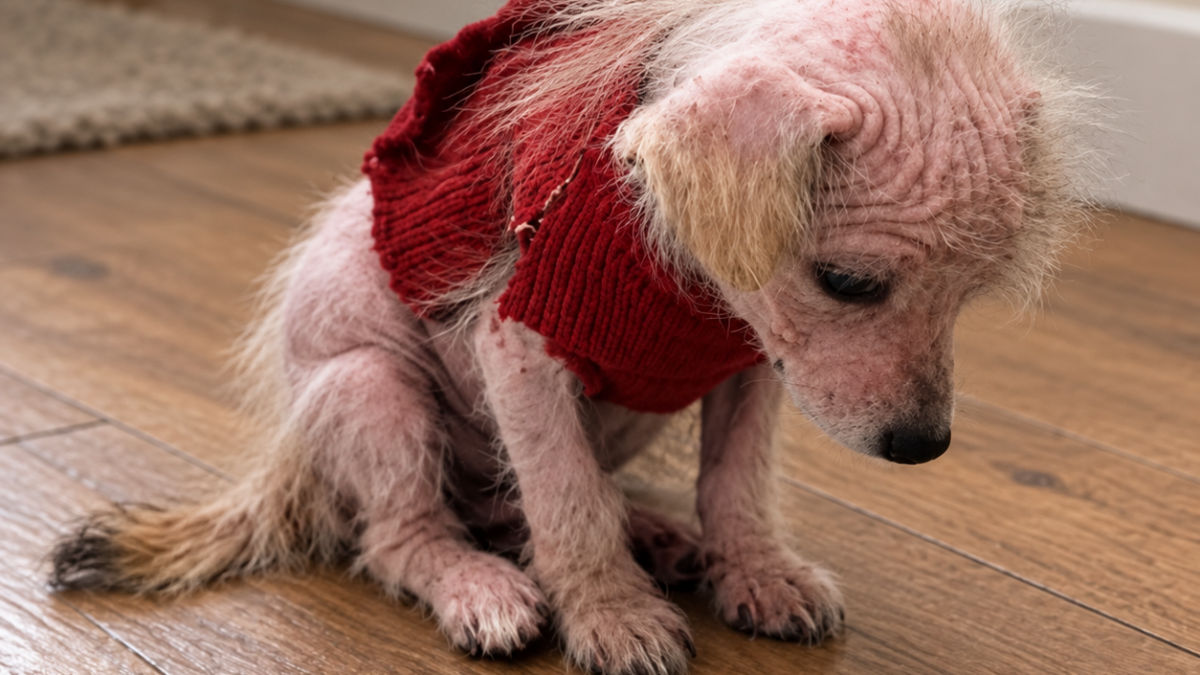
She had just finished one of her medicated baths, and the thin shirt I used to protect her skin was hanging over the back of a chair to dry. Without it, the extent of the damage was impossible to ignore. Her little body looked patchy and fragile, with irritated skin showing through where fur should have been.
I answered quietly because I didn’t want to wake her.
“Hello?”
“Is this the person currently caring for the puppy called Pobi?”
“Yes.”
“My name is Daniel Carter. I’m following up on an animal welfare report involving her previous owner.”
I looked down at Pobi.
Her front paws twitched in her sleep.
“Yes. I filed the report.”
“We’ve spoken with him.”
Something in Daniel’s tone made me sit straighter.
“And?”
“He says the puppies weren’t his.”
I frowned.
“What does that mean?”
“He claims he found the litter beside the road several weeks ago. According to him, he took them in temporarily, tried to feed them, and most of them were already too weak to survive.”
I stared at the wall.
“That isn’t what he told me.”
“What did he tell you?”
“He told me he was tired of taking care of puppies. He didn’t say anything about finding them.”
“Did he say where their mother was?”
“No.”
“Did he ever mention their mother?”
“No.”
Daniel paused.
“We have reason to believe his account may not be complete.”
That was putting it politely.
I remembered the way the man had stood near Pobi’s enclosure.
No grief.
No urgency.
No confusion.
Only impatience.
Take her as far away as possible.
I lowered my voice.
“Pobi was in terrible condition when we got her.”
“We have the veterinary report.”
“She had mange. A severe skin infection. Fever. She was scratching herself until she cried.”
“I’ve read the report.”
“She’s not even two months old.”
“I know.”
My anger sharpened.
“And he wants you to believe he was rescuing her?”
Daniel was quiet for a second.
“That’s why we’re still investigating.”
After we hung up, I looked at Pobi again.
She had woken.
Her eyes followed me.
“Your old owner is suddenly a hero.”
Pobi tilted her head.
I reached down and rubbed carefully between her ears.
“Don’t worry. Nobody here believes every word yet.”
Her tail moved once.
I smiled.
“You only care about dinner, don’t you?”
That was becoming more true every day.
Pobi’s appetite had improved dramatically.
The veterinarian had recommended a special diet to support her skin and help her regain strength without upsetting her already sensitive stomach.
Thankfully, Pobi loved it.
Actually, loved might have been too gentle a word.
She attacked the bowl.
The first time she finished an entire portion, I stood over her in disbelief.
“Slow down.”
Pobi looked up with food on her nose.
“You’re going to make yourself sick.”
She immediately returned to eating.
The larger dogs sat several feet away watching.
Max, an old shepherd mix, looked at me with what appeared to be deep concern.
“I know,” I told him. “She has no manners.”
Pobi finished and wandered over to Max’s bowl.
He stepped aside.
“No.”
I intercepted her.
“You have your own food.”
Pobi protested with a tiny squeak.
Max looked guilty.
“Don’t encourage her.”
Within days, she had discovered something else she loved.
Fingers.
Not hands.
Not toys.
Fingers.
If I sat on the floor and wiggled my fingers, Pobi became completely focused.
She pounced.
Missed.
Pounced again.
Caught one.
Then gently chewed as though she had captured the greatest prey in the world.
Sometimes she could do it for an entire evening.
I would sit there laughing while she climbed over my lap, rolled onto her back, grabbed my hand with both front paws and kicked at the air.
It was difficult to reconcile that puppy with the one I had first carried from the enclosure.
But recovery was uneven.
Some mornings, Pobi woke energetic.
Other mornings, she looked exhausted.
Her diarrhea continued.
The cough improved, then returned.
The fever finally broke, but her body still seemed to be fighting several battles at once.
Twice a week, I gave her medicated baths.
She hated the water.
The first few times, she shook from fear before I even turned on the faucet.
I kept the water warm.
Moved slowly.
Talked constantly.
“You’re okay.”
Pobi pressed herself against my wrist.
“I know you hate this.”
Her eyes looked betrayed.
“It’s helping.”
She disagreed.
After each bath, I wrapped her in a towel and held her until the trembling stopped.
Then came the massage.
That was the part she loved.
I used the veterinarian-approved lotion on the driest areas and gently worked around the healing skin.
Within minutes, her eyelids became heavy.
Sometimes she fell asleep with her chin across my arm.
Those were the moments that stayed with me.
People often think rescue is one dramatic act.
Opening a cage.
Cutting a chain.
Carrying an animal away.
Sometimes it is.
But most rescue happens after the photograph.
It is medication at six in the morning.
Washing towels at midnight.
Checking diarrhea.
Measuring food.
Driving to appointments.
Watching a puppy breathe because you’re afraid something will change while you sleep.
Cleaning the same wound again.
Holding a frightened animal through the same necessary treatment again and again until eventually they learn you are not the person who hurt them.
By the end of Pobi’s first week with us, her weight reached 1.65 kilograms.
I nearly celebrated in the examination room.
Dr. Megan Lee smiled.
“She’s gaining.”
“Slowly.”
“Slowly is fine.”
“Is this enough?”
“For now.”
I looked down at Pobi, who was trying to climb into my bag.
“She acts like she hasn’t eaten in a year.”
“She hasn’t been alive a year.”
“You know what I mean.”
Megan laughed.
“She’s a puppy. Appetite is a good sign.”
The skin was improving too.
Not beautifully yet.
But clearly.
Some of the redness had faded.
The raw patches were beginning to dry.
Pobi scratched less.
When she did scratch, it no longer looked like desperation.
The first tiny strands of new hair appeared around her shoulders.
I photographed them.
Megan looked at me.
“You’re taking pictures of hair?”
“Yes.”
“Three hairs?”
“They’re important hairs.”
She smiled.
“Fair.”
Every tiny patch mattered.
We didn’t know whether the coat would return evenly.
The mange had been severe.
Some follicles might have been damaged.
But day by day, little shadows appeared where naked skin had been.
Then fuzz.
Then actual fur.
Pobi didn’t care.
She was too busy learning to play.
The larger dogs had become her strange little security team.
Max was the calmest.
He allowed Pobi to crawl over his paws.
Luna, a black mixed-breed female, wanted to mother her.
Whenever Pobi coughed, Luna immediately came over and sniffed her face.
Rocky, the youngest of the big dogs, wanted to play constantly but somehow understood that Pobi was fragile.
He would bow dramatically, front legs flat, rear end in the air.
Pobi would charge him.
Rocky could have knocked her across the room with one paw.
Instead he moved backward.
Slow.
Careful.
Letting Pobi believe she was chasing him.
For the first time, she was becoming part of something.
One evening, I found all four dogs sleeping together.
Pobi was in the center.
Max on one side.
Luna behind her.
Rocky stretched near their feet.
Pobi was almost invisible beneath them.
I stood in the doorway for a long time.
The puppy nobody wanted had somehow become the center of the room.
That should have been enough to make me happy.
But then Daniel called again.
“We found someone who remembers the mother.”
I went outside to talk because Pobi was sleeping.
“A neighbor?”
“Yes.”
“What did they say?”
“They saw an adult female dog on the property for months before the puppies appeared.”
“So he lied.”
“It appears his claim that he found the litter beside the road is false.”
“Why lie about that?”
“That’s what we’re trying to establish.”
“Where is the mother?”
“We don’t know yet.”
The answer made me feel sick.
“You mean she could still be out there?”
“Possibly.”
“What about the other puppies?”
“We’re asking.”
Daniel explained that several neighbors had seen the adult dog.
A brown female.
Medium size.
Thin.
She spent most of her time near the back of the property.
After she gave birth, people began seeing puppies.
Then fewer puppies.
Then almost none.
The owner had told one neighbor they were sick.
Another neighbor remembered hearing puppies crying at night.
Nobody had entered the property.
Nobody knew exactly what happened.
I hated how familiar that pattern felt.
People noticed.
People wondered.
People didn’t act because the animals belonged to someone else.
I asked Daniel the question that had been bothering me from the beginning.
“Did her siblings really die?”
“We don’t know.”
“He told me they did.”
“He’s changed his story several times.”
“Could some still be alive?”
“We’re checking.”
For the rest of the night, I couldn’t stop thinking about them.
Pobi was sleeping on Max’s front leg.
Safe.
Warm.
Fed.
What about the others?
Were they dead?
Were they somewhere on the street?
Had someone taken them?
Was their mother alive?
The next morning, I drove past the old property.
I stayed on the public road.
The enclosure where Pobi had been kept looked empty.
The man came outside.
He recognized my car.
His face changed.
I didn’t stop.
I had no interest in confronting him alone.
Anger would not find Pobi’s mother.
Evidence might.
Daniel called two days later.
“We spoke with the owner again.”
“And?”
“He admitted the mother belonged to him.”
I closed my eyes.
Finally.
“He owned her?”
“Yes.”
“What happened?”
“He says she left the property.”
“Left how?”
“He claims she began roaming after the puppies were born.”
“Because he let her?”
“He says she escaped.”
I laughed without humor.
“Another convenient story.”
“There’s more.”
I waited.
“He says some of the puppies followed her over time.”
“That makes no sense. They were tiny.”
“I agree the timeline needs clarification.”
“And Pobi?”
“According to him, Pobi was the only one that remained.”
I looked across the room.
Pobi was attacking one of my slippers.
The only one that remained.
Not the only one born.
Not necessarily the only one alive.
The only one left behind.
That distinction changed something inside me.
Pobi had lost everything.
Whether her siblings died or disappeared, they were gone.
Her mother gone.
Her litter gone.
And she had remained inside that enclosure alone.
No wonder she clung to the other dogs.
No wonder she seemed happiest when surrounded by bodies.
She had been born into a family and then watched it vanish.
That night, I let her sleep with Max instead of putting her in her separate recovery bed.
Megan had warned me about keeping her skin clean and monitoring contact, but by then the mange was under control and the dogs were safe to be together.
Pobi crawled against Max’s chest.
He lowered his head beside her.
Within seconds, she slept.
I sat nearby.
“You don’t have to be the last one anymore.”
Max opened one eye.
“I’m talking to her.”
He closed it again.
Pobi slept.
By day fifteen, she still had diarrhea.
The cough was lingering too.
That frustrated me because everything else seemed better.
Her coat was returning.
Her appetite was strong.
She played.
She demanded walks even when I thought she should rest.
But the digestive problems persisted.
One morning, I picked up her harness.
Pobi started bouncing.
“No.”
Bounce.
“You’re tired.”
Bounce.
“You coughed twice last night.”
She ran to the door.
“You need rest.”
Pobi barked.
It was tiny and surprisingly sharp.
I stared at her.
“Excuse me?”
Another bark.
Max got up.
Rocky appeared.
Luna came from the kitchen.
Suddenly I had four dogs staring at the door.
“You’ve started a rebellion.”
Pobi wagged.
I gave in.
“Five minutes.”
The walk lasted twelve.
Pobi sniffed everything.
Grass.
A mailbox post.
A leaf.
Someone’s bicycle tire.
She had spent most of her life inside a filthy enclosure.
The outside world was new.
I understood why she didn’t want to rest through it.
She wanted to experience everything.
The smell of wet dirt.
Wind in the trees.
Cars passing.
A child laughing two houses away.
Her body was still weak, but curiosity had become stronger than exhaustion.
That was another sign of healing.
Sick animals shrink their worlds.
Pobi kept expanding hers.
Gifts began arriving after people heard what happened.
A little bed.
A bag of the special food Megan had recommended.
Soft shirts to protect her skin.
Toys.
Blankets.
One person sent a tiny sweater that looked absurdly expensive.
I put it on Pobi.
She immediately rolled in dirt.
“Excellent.”
Pobi shook herself.
“That person probably spent more on that sweater than you weigh.”
She ran toward Rocky.
The puppy an owner had wanted removed as far as possible was now receiving packages from people who had never met her.
That contrast wasn’t lost on me.
But I tried not to build Pobi’s identity around rejection.
She didn’t need to spend her life proving the old owner wrong.
She needed to become herself.
And Pobi was becoming a character.
She hated closed doors.
If I shut the bathroom door, she sat outside whining.
She loved socks but only clean ones.
She barked at her own hiccups.
She stole food from Max even though Max outweighed her many times over.
She had no understanding of personal space.
And she believed every lap belonged to her.
Her favorite game remained attacking fingers.
I could wiggle one finger beneath a blanket and Pobi would pounce again and again until she fell asleep from exhaustion.
By the third week, her weight passed two kilograms.
The diarrhea finally began improving.
The cough became occasional.
Her nose cleared.
The biggest transformation was her skin.
Healthy pink began replacing angry red.
The scabs disappeared.
New hair spread from her neck down her back.
Her sides filled in more slowly.
The legs came last.
I took pictures every few days.
Side by side, the change was extraordinary.
Week one: nearly bald, raw and exhausted.
Week two: cleaner skin, scattered fuzz.
Week three: visible coat.
Week four: unmistakably puppy-like.
One morning, Megan ran her hand down Pobi’s back.
“This is excellent.”
“All of it coming back?”
“Looks promising.”
“Will she have scars?”
“Maybe small areas.”
I looked at Pobi.
She was chewing a paper towel.
“Stop.”
Megan laughed.
“Scars seem to be the least of her concerns.”
That afternoon, Daniel called with another update.
They had located someone who had seen the mother after she left the property.
“Alive?”
“At least at that time.”
My heart jumped.
“When?”
“Several weeks ago.”
“Where?”
“About two miles from the property.”
“Can we search?”
“We already are.”
The mother had apparently been seen near an abandoned warehouse and a drainage area where several stray dogs sometimes gathered.
I volunteered immediately.
The search started the next morning.
Daniel.
Two animal control officers.
Three volunteers.
Me.
We carried food, slip leads, water and a humane trap.
Pobi stayed home.
I brought one of her blankets.
If the mother was nearby, I didn’t know whether Pobi’s scent would mean anything, but I wanted every chance.
We searched for hours.
Tracks.
Food wrappers.
Stray cats.
Two dogs that weren’t her.
Nothing.
Near sunset, one volunteer found fresh paw prints in soft ground near the drainage ditch.
Medium dog.
Could have been her.
Could have been any dog.
We left food.
Set a camera.
Placed the trap.
Then waited.
The first night, the camera caught raccoons.
The second, a large black dog.
The third night, at 2:17 a.m., a brown female appeared.
Thin.
Low posture.
She approached the food cautiously.
Daniel sent me the picture at six in the morning.
I stared at it.
Pobi’s face.
Not identical.
But close.
Same narrow muzzle.
Same shape around the eyes.
I whispered, “Mama.”
We returned that evening.
The female did not appear until after midnight.
She circled the trap.
Left.
Returned.
The food smell pulled her closer.
She stepped inside.
The door closed.
She panicked immediately.
We covered the trap with blankets.
I crouched nearby.
“Easy.”
Her eyes were terrified.
Her coat was dirty.
Her ribs visible.
But she was alive.
At the shelter, they scanned her.
No microchip.
The veterinarian estimated her age at around three years.
She had signs consistent with having given birth recently.
My hands shook when I called home.
Susan was watching the dogs.
“Bring Pobi tomorrow.”
“You found her?”
“I think so.”
The reunion happened carefully.
Nobody wanted to assume recognition.
Animals do not experience family reunions exactly the way humans imagine.
Time.
Scent.
Stress.
Health.
Everything affects behavior.
We introduced them through a barrier first.
The female stood stiffly.
Pobi bounced toward the gate.
Stopped.
Sniffed.
The mother’s ears lifted.
Pobi sniffed again.
Then something changed.
The female’s body softened.
She moved closer.
Pobi’s tail began wagging so violently that her entire body moved.
I held my breath.
The barrier opened.
Pobi ran forward.
The female smelled her face.
Then her neck.
Then her sides.
Pobi climbed underneath her chest.
The mother licked Pobi’s head.
I turned away because I couldn’t see through tears.
Daniel whispered, “That answers something.”
They remembered enough.
That was all I needed.
We named the mother Hope.
It felt obvious.
Hope’s medical condition was far better than Pobi’s had been, but she was thin and had several old scars.
She was frightened of sudden movements.
She flinched when men approached too quickly.
Nobody could prove what caused every behavior.
We did not invent explanations.
We only worked with what was in front of us.
Hope needed food.
Veterinary care.
Patience.
And a safe place.
I volunteered to foster her.
My home became even more chaotic.
Pobi was ecstatic.
She followed Hope everywhere.
Hope sometimes tolerated her.
Sometimes walked away.
Sometimes corrected her with the kind of gentle warning only another dog seemed capable of delivering perfectly.
Max watched them both like a tired grandfather.
Rocky wanted to join every game.
Luna immediately accepted Hope.
For the first time since Pobi’s rescue, something in our household felt complete.
Not because everything from her past had been repaired.
Her siblings were still missing.
Some may have died.
Some may have followed Hope and been separated.
We never found definitive answers for all of them.
That grief remained.
But Pobi was no longer the last member of her family.
Her mother had survived too.
When Daniel told the former owner Hope had been located, his story changed again.
He claimed she had always been free to leave.
Investigators documented the contradiction.
The case moved forward.
Neglect.
Failure to provide necessary veterinary care.
Unsafe living conditions.
Questions about what happened to the litter.
The owner’s willingness to surrender Pobi for money became part of the record.
So did his conflicting statements.
I attended the hearing months later.
Pobi stayed home.
Hope stayed with her.
The man sat across the courtroom.
He looked exactly as I remembered him.
Impatient.
Uncomfortable.
The prosecutor described Pobi’s condition at rescue.
Photographs were shown.
The enclosure.
The damaged skin.
The fever recorded at the hospital.
The veterinary diagnosis.
Then images from her recovery.
The judge looked closely.
The former owner’s attorney argued that the man had limited resources.
That he had not intentionally tried to harm the puppy.
That he had eventually surrendered her rather than keeping her.
All of that was relevant.
None of it erased the suffering.
Megan testified.
She explained how mange progresses.
How prolonged scratching damages skin.
How untreated infection creates additional risk.
How fever in a puppy that young requires prompt attention.
“How long would the condition have been visible?” the prosecutor asked.
Megan answered carefully.
“Long before the day she arrived at our clinic.”
“Would an ordinary person have been able to tell that the puppy required treatment?”
“In my opinion, yes.”
The defense attorney asked whether some forms of mange could worsen rapidly.
“Yes.”
“Then the condition could have changed quickly?”
“Parts of it, yes.”
He nodded.
Then Megan added, “But the overall presentation—the infection, the extent of skin damage, the body condition—was not something that developed in a few hours.”
That mattered.
The case was not about whether the man hated Pobi.
Intent was not the only question.
Responsibility mattered.
An animal depending on him had needed care.
He did not provide it.
At another hearing, neighbors testified about the mother.
They had seen Hope on the property.
They had seen puppies.
That contradicted the claim that the litter had simply been found beside the road.
The judge asked the former owner directly why his story had changed.
He gave a long answer.
He said he had been confused.
He said other people occasionally fed the dogs.
He said he didn’t consider Hope fully his because she wandered.
He said he had not known Pobi was that sick.
I sat in the back listening.
Months earlier, I would have wanted to stand up and shout.
Now I didn’t.
Pobi’s life had changed so much that his excuses seemed small.
Facts were enough.
The authorities had documented conditions.
Veterinary records existed.
Neighbors had statements.
Hope had been found.
Pobi had survived.
Eventually, the court imposed consequences.
Fines.
Animal ownership restrictions.
Requirements related to future possession of animals.
Responsibility for part of the veterinary costs.
The details mattered legally.
Emotionally, I felt something simpler.
Relief.
He could no longer treat animals as disposable responsibilities without scrutiny.
Outside court, Daniel found me.
“You wanted revenge when this started?”
I looked at him.
“How did you know?”
“You called me every few days asking whether we had enough evidence.”
I laughed.
“I was angry.”
“Still are?”
I thought about Pobi at home.
Probably chewing something she wasn’t supposed to.
Hope sleeping nearby.
“Different kind of angry.”
“What does that mean?”
“I don’t want him hurt.”
Daniel nodded.
“I want what happened to matter.”
“It did.”
That was the revenge I eventually accepted.
Not pain returned for pain.
Accountability.
Removal of control.
Protection for the next animal.
And the humiliating truth that the puppy he had dismissed as a burden had become valuable to everyone except him.
Pobi’s recovery continued.
By the time the case ended, her coat had returned almost completely.
Soft.
Thick.
Slightly darker along the spine.
A few thin spots remained.
I loved them.
They were hers.
Her weight climbed steadily.
Three kilograms.
Then four.
Her legs lengthened.
Her face lost its tiny baby roundness.
One day, I suddenly realized she no longer looked like the sick puppy in the hospital pictures.
She looked like a dog.
A young one.
Healthy.
Curious.
Annoyingly energetic.
Hope improved too.
She gained weight.
Her coat became brighter.
Her fear softened.
Pobi remained attached to her, but their relationship changed as Pobi grew.
They played.
Really played.
Hope chased her through the yard.
Pobi doubled back.
Rocky joined.
Max barked from the porch because he was too old for their nonsense.
Luna stole the toy everyone was fighting over.
I stood outside laughing.
The first time Pobi outran Hope, I thought about the tiny puppy who had once struggled just to stand through a medicated bath.
Now she was flying across the yard.
One afternoon, she skidded to a stop near me.
Mud covered her legs.
Her tongue hung out.
“You’re disgusting.”
Tail wag.
“You need a bath.”
The tail stopped.
I laughed.
“Still hate those, huh?”
Some things survived recovery.
Pobi’s fear of being shut away took longer.
If I closed her inside a room alone, she panicked.
So we worked gradually.
Ten seconds.
Door closed.
Open.
Treat.
Thirty seconds.
One minute.
Five.
Always returning.
Always showing her confinement was temporary.
Eventually she could stay alone without scratching the door.
That was a victory no photograph could show.
The wounds beneath fur healed before some of the wounds inside behavior.
That is often how rescue works.
The body tells one timeline.
Trust tells another.
Hope had her own triggers.
She disliked ropes.
She did not like men holding long objects.
Brooms frightened her.
Again, we never pretended to know exactly why.
We gave her choices.
Distance.
Time.
Consistency.
Months later, Hope allowed Daniel to pet her.
He had visited after the case ended.
At first, Hope stayed behind me.
Daniel crouched sideways.
Didn’t reach.
Waited.
Hope sniffed.
Moved closer.
Then rested her chin briefly against his knee.
Daniel looked at me.
“I feel like I won something.”
“You did.”
“What?”
“Permission.”
That was the right word.
Trust from an animal is not something you take.
It is granted.
Pobi granted hers generously.
Too generously sometimes.
She believed everybody visiting the house had come specifically to see her.
Delivery drivers.
Neighbors.
Repairmen.
Once, an electrician spent more time holding Pobi than checking my outlet.
“She won’t let me work.”
“You encouraged her.”
Pobi licked his chin.
“I may have.”
At around eight months old, Pobi had a growth spurt.
The tiny puppy suddenly had long legs and giant ears.
People who remembered her early photographs could hardly believe it.
Messages arrived.
Is that really Pobi?
Look at her fur.
She’s beautiful.
I appreciated the love.
But what mattered most was that Pobi didn’t know she was impressive.
She simply lived.
Morning meant breakfast.
After breakfast, she chased Rocky.
Then she checked where Hope was.
Then she stole something from me.
Afternoons meant naps.
Evenings meant fingers.
She still loved playing with my hands.
Even after she was too big for it.
I would sit on the couch and wiggle my fingers beneath a blanket.
Pobi’s eyes widened.
She pounced.
Some things carried forward from puppyhood.
I liked that.
Not every old behavior had to come from trauma.
Some came from joy.
Hope eventually became adoptable.
That created a problem.
Several families expressed interest.
All seemed kind.
All passed screening.
Every time I imagined Hope leaving, I looked at Pobi.
Then Hope.
Then the other dogs.
I knew fostering was supposed to create space for the next rescue.
Keeping every animal was impossible.
But Hope and Pobi were different.
They had already lost each other once.
Maybe that shouldn’t decide everything.
But it mattered.
The final decision came from Hope.
A family visited.
They were gentle.
Hope accepted treats.
She allowed petting.
Everything looked good.
Then they walked toward their car with her on the leash to see how she responded.
Pobi stood behind the gate.
Hope looked back.
Stopped.
Pobi whined.
Hope turned around.
The family waited.
Hope refused to move.
I felt embarrassed.
“I’m sorry.”
The woman smiled.
“No.”
She looked at Pobi.
“I think she’s telling us something.”
They adopted another dog from the rescue instead.
Hope stayed.
I signed her paperwork a week later.
When I came home after making it official, Pobi greeted me as though nothing had changed.
To her, nothing had.
Hope was already family.
Paper had simply caught up.
That night, mother and daughter slept side by side.
I looked at them and thought about the old owner’s sentence.
Take her as far away as possible.
He got his wish.
Pobi went far away.
Far from hunger.
Far from infected skin.
Far from an enclosure.
Far from being treated like something inconvenient.
Far from a home where illness was ignored.
She traveled exactly as far away as he asked.
Straight into a life he could never have imagined for her.
That irony satisfied me more than anger ever had.
Years passed.
Pobi became a confident adult dog.
Her coat grew beautifully.
A small thin patch remained near one shoulder.
That was it.
If a stranger saw her, they would never guess how she began.
She loved walks.
Loved children.
Loved lying in sunny spots beside Hope.
Hated medicated shampoo so much that even the smell of a certain bottle made her disappear.
We stopped needing it long before.
I eventually threw the last bottle away.
That felt ceremonial.
“No more.”
Pobi sniffed the trash.
“You won.”
She wagged.
Gifts continued arriving occasionally from people who remembered her story.
But over time, the messages changed.
At first:
Will she survive?
Then:
Is her hair growing back?
Then:
How much does she weigh?
Eventually:
How is Pobi doing these days?
That was my favorite question.
Not is she alive?
How is she living?
The answer was usually something ridiculous.
She stole half a loaf of bread.
She chased a butterfly into the sprinkler.
She fell asleep with a sock in her mouth.
She barked at a pumpkin.
She dug one hole directly beside the hole I had just filled.
That was recovery.
Boring enough to become funny.
Ordinary enough that nobody needed a medical update every day.
When Pobi turned three, I took her back to Megan for a routine examination.
Megan ran her hands through the thick fur.
“Remember when we weren’t sure this would all grow back?”
“I remember photographing three hairs.”
Megan laughed.
“I remember.”
Pobi tried to climb onto her lap.
“You’re not 1.65 kilograms anymore.”
Pobi disagreed.
Megan struggled under her weight.
“She still thinks she is.”
I smiled.
“She thinks every lap fits.”
The bloodwork was normal.
Skin healthy.
Weight healthy.
Lungs clear.
No cough.
No chronic diarrhea.
Nothing.
We drove home with no medications.
No treatment plan.
Just a healthy-dog appointment scheduled for the following year.
I cried at a red light.
Pobi watched me from the passenger-side harness.
“What?”
She wagged.
“I’m allowed.”
There had been a time when every drive home from the clinic came with new instructions.
Now the instructions were simple.
Keep doing what you’re doing.
Years after the investigation, Daniel sent me a message.
The former owner had attempted to acquire another dog.
Because of the ownership restrictions and the record from Pobi’s case, authorities were notified.
The placement did not proceed.
I read the message twice.
Then looked at Pobi asleep beside Hope.
There it was.
The consequence that mattered.
Some future animal had been protected before neglect began.
The past could not be undone.
The future could be interrupted.
That was justice.
Pobi grew older.
Hope aged faster.
Mother dogs often seemed to carry years differently.
By the time Pobi was five, Hope’s muzzle had become gray.
She moved more slowly.
Pobi adjusted instinctively.
As a puppy, she had climbed over her mother without mercy.
As an adult, she waited.
When Hope lagged behind on walks, Pobi stopped.
When Hope struggled to get up, Pobi stood beside her.
When Hope slept, Pobi stayed close.
Their bond had changed again.
The daughter had become the protector.
Watching that made me think about everything we never knew.
Had Hope protected the litter before she disappeared?
Had she tried to find food?
Had she left because she was starving?
Had the other puppies truly followed?
Were some alive somewhere?
Those questions never received complete answers.
I learned to live without them.
Not every rescue story ends with every mystery solved.
Sometimes the most honest ending is admitting the missing pieces remain missing.
What we knew was enough.
Hope had survived.
Pobi had survived.
They had found each other again.
They had years together afterward.
When Hope became seriously ill in old age, Pobi stayed near her constantly.
The final weeks were difficult.
Hope ate less.
Slept more.
Her legs weakened.
Megan helped us manage her comfort.
Pobi seemed to understand before I did.
She stopped bringing toys to Hope.
Instead, she simply lay beside her.
The night before Hope died, Pobi rested her head across her mother’s front paws.
I sat beside both of them.
I remembered the reunion.
Pobi’s tail.
Hope licking her head.
Now they were quiet.
I whispered, “You found each other.”
Hope’s eyes opened.
Pobi didn’t move.
“You got years.”
That became important to me.
Not enough years.
Never enough.
But years.
Hope died at home the next day with Pobi beside her.
Afterward, Pobi searched the house.
Room to room.
Backyard.
Hallway.
Hope’s bed.
That was devastating.
For several days, Pobi ate poorly.
She slept on Hope’s blanket.
I stayed close.
“You were alone once.”
Pobi looked at me.
“Not now.”
Max and Luna were older too.
Rocky still tried to cheer everyone up.
But Hope’s absence was specific.
Nothing replaced it.
Gradually, Pobi adjusted.
She began eating normally.
Played again.
Returned to her walks.
Grief became part of her life without becoming all of it.
That taught me something else.
Rescue does not promise an animal will never hurt again.
Love does not prevent loss.
A safe life still contains grief.
The difference is that Pobi had people and animals beside her while she carried it.
She no longer suffered alone.
On the anniversary of Hope’s death, I planted a small tree in the yard.
Pobi watched.
Then dug beside it.
“Absolutely not.”
She looked proud.
I filled the hole.
She dug another.
“Your mother deserves better landscaping.”
Pobi wagged.
I laughed.
That was Pobi’s gift.
Even grief had trouble staying solemn around her for long.
More years passed.
Her muzzle began showing gray.
The puppy who had once been too young to deserve so much pain became an old dog who had lived enough life to earn white fur.
Every gray hair made me strangely happy.
I had once hoped she would reach two months.
Then six.
Then a year.
Now she was nine.
Ten.
Eleven.
The dog people had worried might not survive mange and infection had become the oldest member of my pack.
Max was gone by then.
Luna too.
Rocky remained for a while, then followed.
Pobi outlived almost everyone who had first welcomed her.
That was bittersweet.
She became the keeper of a household history she could not explain.
Sometimes she slept in Max’s old spot.
Sometimes she paused near the corner where Hope’s bed had been.
I wondered what dogs remembered.
Probably more through scent and feeling than story.
But Pobi knew this place.
She knew it as home.
When arthritis appeared, I panicked more than necessary.
Megan smiled after the examination.
“She’s old.”
“That’s the diagnosis?”
“That’s part of it.”
Pobi stood beside us.
“She was sick as a puppy.”
“I know.”
“Could the early neglect—”
“It may contribute to some things, but mostly this is what happens when a dog gets to become old.”
I went quiet.
Megan understood.
“That’s good news in a strange way.”
“Yes.”
It was.
Old age was the future Pobi had almost been denied.
So we adapted.
Rugs on slippery floors.
A ramp.
Joint medication.
Shorter walks.
Softer beds.
The routine felt familiar.
Years earlier I had rearranged my home for a sick puppy.
Now I rearranged it for an old dog.
At the beginning, she needed help because life had failed her.
At the end, she needed help because life had lasted.
Those were very different reasons.
Pobi remained stubborn.
If I tried to shorten a walk too much, she planted her feet.
“You’re tired.”
No movement.
“We’re going home.”
She stared toward the next block.
“You are twelve.”
Tail wag.
“That is not an argument.”
Eventually, I followed.
Some habits never changed.
One evening, I found the old photographs.
Pobi nearly bald.
Pobi in her tiny protective shirt.
Pobi asleep during a massage.
Pobi at 1.65 kilograms.
Pobi with new hair appearing.
Pobi meeting Hope again.
I laid them across the table.
Old Pobi wandered in.
She sniffed the photographs.
Then stepped directly on them.
“Respect your history.”
She kept walking.
I laughed.
That was probably the correct attitude.
The past was mine to remember.
Pobi had always been more interested in dinner.
The final year of her life was quiet.
Her hearing weakened.
Her eyes became cloudy.
Her legs stiffened.
But she still enjoyed food.
Still loved fingers.
I could wiggle them beside her face and see the puppy return for a second.
Her eyes brightened.
Her paw lifted.
Sometimes she tried to pounce and forgot her body no longer moved that quickly.
I would let her catch my hand.
“Got me.”
Tail wag.
Every time.
On warm afternoons, I carried her bed outside.
Pobi lay in the sun.
The yard had changed over the years.
Hope’s tree was tall.
Max’s favorite corner had flowers.
The fence had been replaced.
But Pobi remained.
Sometimes people who remembered her story visited.
They were shocked by her age.
“That’s Pobi?”
“That’s her.”
“The puppy with mange?”
“The same one.”
“She looks so old.”
I smiled.
“Exactly.”
Old was beautiful.
One evening, Daniel came by.
He had retired from animal welfare work.
Pobi slept beside my chair.
He sat on the porch.
“She’s still here.”
“She refuses to leave.”
“Good.”
We talked about the old case.
He told me he remembered how angry I had been.
“I wanted that man destroyed.”
“I remember.”
“I thought punishment would make me feel better.”
“Did it?”
“Some.”
Daniel nodded.
“What mattered more?”
I looked at Pobi.
“That she got everything he failed to give her.”
Food.
Medical care.
Family.
Time.
A mother returned.
Friends.
Walks.
Toys.
Years.
That was the answer.
The most complete revenge was not that he suffered.
It was that his judgment of Pobi had been so completely wrong.
He had looked at a sick puppy and seen inconvenience.
We looked at the same puppy and found a life.
He wanted her as far away as possible.
She went far enough to become irreplaceable.
When Pobi eventually began refusing food, I knew something serious had changed.
This time, no amount of special food worked.
Chicken.
Nothing.
Her favorite treats.
Nothing.
I called Megan.
Tests confirmed what age had already been telling us.
Pobi’s organs were beginning to fail.
There were treatments we could try.
We tried the reasonable ones.
Some helped briefly.
None turned time backward.
One afternoon, Megan sat with me.
“You saved her once.”
“I know.”
“You don’t have to save her from being old.”
I looked away.
“I know.”
“It’s different.”
“I know.”
But knowing and accepting are different skills.
I had spent Pobi’s first weeks fighting every illness.
Medication.
Baths.
Food.
Appointments.
I had trained myself never to give up on her.
Now loving her required recognizing when fighting was becoming something I wanted more than she did.
We chose comfort.
Pobi spent her final days in familiar places.
The sunny spot.
Her bed.
Hope’s tree.
My lap, even though she was far too big for it.
One evening, I wiggled my fingers beneath the blanket.
Her eyes opened.
For a moment, nothing.
Then one paw moved.
Slowly.
She touched my hand.
I smiled through tears.
“You got me.”
Her tail tapped once.
The next morning was peaceful.
Pobi lay beneath Hope’s tree.
Birds moved along the fence.
A breeze lifted the fur around her ears.
I thought about that first enclosure.
Raw skin.
Fever.
The man telling me to take her away.
If I could have gone back and shown him this dog, would it have changed anything?
I didn’t know.
It no longer mattered.
Pobi did not need his regret.
She had lived beyond his opinion.
I rested my hand along her back.
The coat was thick.
Beautiful.
The very thing we once weren’t sure would return.
“Look at all this hair.”
Pobi opened one eye.
I laughed.
“I know. Very impressive.”
Her breathing became slower.
Megan came to the house later.
We gave Pobi time.
I held her the way I had when she was tiny, though now she barely fit across my lap.
“You know what he said the day I took you?”
Her eyes rested on me.
“He said to take you as far away as possible.”
My voice broke.
“So I did.”
I stroked her ears.
“I took you all the way from unwanted to adored.”
Her tail moved faintly.
“All the way from sick to old.”
Another breath.
“All the way from alone to family.”
I pressed my forehead against hers.
“And you made every mile worth it.”
Pobi died peacefully with my hands around her.
No fever.
No itching.
No dirty enclosure.
No loneliness.
Just age.
Home.
And someone who had spent years proving that she had never been a burden.
For weeks, the house felt wrong.
I kept expecting to hear her paws.
I found one of her old shirts in a drawer.
The tiny one she had worn during treatment.
I held it against my hands.
It seemed impossible that she had ever been that small.
I found the photograph from 1.65 kilograms.
Then a photo of her at twelve years old, gray-faced, sprawled across my entire couch.
I put them beside each other.
Beginning.
Ending.
The distance between them was almost a whole lifetime.
A few months later, I received a letter from Daniel.
Inside was a copy of an old document from Pobi’s case.
One line had been highlighted.
Animal surrendered by owner.
Underneath, Daniel had written:
**He thought surrendering her meant he was getting rid of a problem. He had no idea he was handing you a miracle.**
I cried.
Then I laughed because Pobi would have hated being called a miracle.
She preferred food.
But the sentence stayed with me.
People often remembered Pobi because of how sick she had been.
I remembered her differently.
I remembered the evening she played with my fingers until she fell asleep.
The time she barked at her own hiccups.
The way she demanded walks when she could barely finish them.
The way the larger dogs protected her.
The day Hope licked her head.
The first healthy coat growing across damaged skin.
The muddy sweater.
The stolen bread.
The long walks.
The gray muzzle.
The paw touching my hand one final time.
That was Pobi.
The suffering mattered.
The accountability mattered.
The investigation mattered.
But cruelty did not deserve to become the largest thing about her.
Her former owner had controlled the beginning.
He did not control the rest.
That belonged to Pobi.
And if anyone ever asks me whether the man who neglected her got what he deserved, I tell them the legal system gave him consequences.
But that was not the ending that satisfied me most.
The ending I treasure is simpler.
He said Pobi was a burden.
She became the heart of our family.
He said he was tired of caring for puppies.
We spent years grateful for every day we were allowed to care for her.
He wanted her taken far away.
She went far enough away that she never had to be afraid of him again.
He treated her as though she had little value.
Pobi grew old surrounded by people who knew she was priceless.
That was her revenge.
Not hatred.
Not violence.
Not suffering returned.
A long life.
A healed body.
A mother found again.
Friends who protected her.
A home that changed around her as she aged.
And one person who stayed until the very end.
Pobi began life as the last puppy left behind.
She ended it as the dog none of us could imagine living without.
That is the part I will remember.
Not that everyone else disappeared before she was rescued.
Not that her owner wanted her gone.
Not that mange nearly destroyed her skin.
I will remember that somehow, underneath fever, infection, hunger and fear, there had always been a joyful little dog waiting for someone to give her enough time to appear.
We gave her that time.
And Pobi gave us everything that came after.
The strangest part of losing Pobi was that the house did not immediately understand she was gone.
For weeks, everything continued as though she might walk back into the room at any moment.
Her water bowl was still beside the kitchen cabinet.
The shallow scratch marks she had made on the back door were still there from the years when she would paw at it impatiently whenever I took too long to let her outside.
Her old blanket remained folded beside the couch.
I found one of her toys beneath a chair almost a month after she died.
It was a faded yellow ball with two punctures from her teeth and a dark spot where she had carried it so many times that the fabric had permanently changed color.
I picked it up.
For several seconds, I simply stood there holding it.
Then the memory came back.
Pobi racing through the hallway.
Hope following behind her.
Rocky barking.
Max lifting his head from his bed as though wondering why he had been sentenced to live with such fools.
I could almost hear them.
The house had once been noisy enough to make me complain.
Now I would have given anything to hear that chaos for five more minutes.
I sat on the floor with the yellow ball in my hands.
That was when I finally understood something I had been avoiding since the day Pobi died.
When we rescue an animal, we know there will probably come a day when we lose them.
We know it intellectually.
We sign the adoption paperwork knowing dogs do not get enough years.
We watch their muzzles turn gray.
We buy ramps.
We change their food.
We shorten the walks.
We learn the difference between a tired day and a painful one.
Still, some part of us behaves as though loving them hard enough might make an exception.
Pobi had already survived so many things that should have ended her story early that I had begun to think of her as almost indestructible.
She survived neglect.
Mange.
A terrible skin infection.
High fever.
Diarrhea.
Coughing.
Malnutrition.
She survived losing her siblings.
She survived losing her mother and then, against every expectation, finding her again.
She survived the home where she had been treated like an inconvenience.
She survived long enough for her fur to grow back.
Long enough to run.
Long enough to become healthy.
Long enough to become old.
Maybe that was why the end felt so impossible.
I had spent so much of Pobi’s life believing she could fight anything.
But old age was not another enemy for her to defeat.
It was proof that she had already won.
That understanding came slowly.
A few months after she died, I visited Dr. Megan Lee.
I didn’t have an animal with me.
The receptionist looked surprised when I walked in.
“Everything okay?”
“Yes.”
Then I hesitated.
“I think so.”
Megan came out from the back and immediately understood why I was there.
She hugged me.
No medical explanation.
No advice.
Just a hug.
We went into an empty examination room.
For a while, I stared at the stainless-steel table.
“How many times did she stand on this thing?”
Megan smiled.
“Hundreds.”
“She hated it.”
“She hated the thermometer more.”
“That too.”
We both laughed.
Then I became quiet.
“I keep thinking about whether I waited too long.”
Megan knew what I meant.
The final decision.
The question nearly every person who loves an old animal eventually asks themselves.
Did I wait too long?
Did I do it too soon?
Could there have been one more morning?
One more meal?
One more walk?
Megan sat beside me.
“You made the decision when Pobi’s bad hours began outweighing the good ones.”
“I know.”
“She was tired.”
“I know.”
“She was not afraid.”
“I know.”
“You were there.”
My eyes filled.
“I know.”
“Then don’t turn love into a trial where you’re both the defendant and the judge.”
I looked at her.
“That sounds like something you’ve had to say before.”
“Many times.”
I smiled weakly.
Megan continued.
“Think about the first time she came here.”
I didn’t want to.
But I did.
The tiny body.
The fever.
The damaged skin.
The constant scratching.
Pobi looking exhausted even when she was awake.
“She had almost no control over anything then,” Megan said. “Her comfort depended entirely on people who had already failed her. At the end, it was different.”
I swallowed.
“How?”
“She had you.”
That answer stayed with me.
Pobi’s beginning had been defined by people deciding her discomfort was somebody else’s problem.
Her ending had been defined by someone willing to carry the pain of making a difficult decision so she did not have to carry unnecessary suffering.
That was not abandonment.
That was the final form of staying.
I thanked Megan and drove home.
For the first time since Pobi died, I put away the water bowl.
I washed it.
Dried it.
Then placed it in a box with her collar, her tiny recovery shirt, the yellow ball and several photographs.
I kept Hope’s collar in there too.
Mother and daughter.
Two animals one man had failed.
Two animals who still found their way to years of safety.
I did not close the box for several days.
Every time I walked past, I added something.
A tag.
An old leash.
A picture of Pobi standing beside Hope beneath the tree.
The vet record showing 1.65 kilograms.
Then another record from years later showing a healthy adult weight.
The contrast made me smile.
That first number had once seemed enormous because it meant she was gaining.
Later, I had spent years telling her she needed to lose a little weight.
Life had a strange sense of humor.
Not long afterward, Daniel called.
“I have something you might want to know.”
“What?”
“The restrictions from Pobi’s case came up again.”
My body went tense.
“With him?”
“Yes.”
The former owner had apparently tried to obtain another dog through someone he knew.
The attempt had been flagged because of the previous animal-welfare case.
The placement was stopped.
No new dog went home with him.
I sat quietly.
Daniel waited.
Finally, he asked, “You okay?”
“Yes.”
But I was crying.
Not because I wanted anything worse to happen to the man.
Not because I wanted to reopen the old anger.
I cried because suddenly the case had reached into the future.
All those hearings.
The photographs.
Megan’s testimony.
The neighbors speaking.
The arguments about who owned which dog and when.
The fines.
The restrictions.
At the time, much of it had felt frustratingly small compared with what Pobi suffered.
Now some unknown dog had been protected before suffering began.
That mattered in a way I had not fully understood before.
Justice is rarely dramatic enough to satisfy anger.
Sometimes justice is a file.
A name in a system.
A restriction that becomes relevant years later.
A door that quietly stays closed.
An animal that never knows how close it came to entering the wrong home.
I looked at the photograph of Pobi on my shelf.
“You did that too.”
Of course, Pobi had not asked to become evidence.
She had not suffered for some greater purpose.
I would never tell her story that way.
Nothing about her neglect had been necessary.
Nothing about her pain had been good.
But once the damage existed, people had a choice.
Ignore it.
Or make sure it changed something.
That was the only meaning I was willing to accept.
Pobi’s suffering was not a gift.
What people did afterward could be.
Over the next few years, I stayed involved with animal rescue, although differently than before.
I could not take every case.
No one can.
But whenever someone told me an animal was “probably fine,” I heard Pobi scratching herself inside that enclosure.
Whenever someone said, “The owner says he’s taking care of it,” I remembered the contradictions.
Whenever someone said, “It isn’t my business,” I remembered neighbors who had seen Hope and the puppies.
So I asked one more question.
Made one more call.
Checked one more time.
Not because every suspicion becomes a cruelty case.
Most do not.
But because Pobi had taught me the price of assuming someone else would act.
One winter morning, I got a call about three puppies living beneath an abandoned trailer.
I arrived with two volunteers.
They were frightened but alive.
Their skin was dirty.
Their bellies were round with parasites.
None was as sick as Pobi had been.
We got them into foster care.
Weeks later, I visited.
They were running around a kitchen.
One climbed into my lap and immediately bit my finger.
I laughed.
For a second, I could see Pobi.
Not literally.
This puppy looked nothing like her.
But the gesture brought back evenings when Pobi would play with my fingers for hours.
I whispered, “You would have liked her.”
The volunteer looked at me.
“What?”
“Nothing.”
Some memories do not arrive as sadness.
Sometimes they arrive disguised as laughter.
That surprised me.
Grief became softer over time.
Pobi stopped appearing only in hospital memories or the final day.
She returned to me in ordinary pieces.
The way she barked at her own hiccups.
The dramatic expression she made during baths.
The fact that she could identify the sound of a treat bag from anywhere in the house.
The way she used to sleep upside down with her legs against the wall.
The way she followed Hope.
The way Hope eventually followed her.
The afternoon Pobi chased a butterfly into a sprinkler, then looked personally betrayed when water touched her.
The time she stole half a loaf of bread and hid behind the couch with it.
The way she would refuse to come inside during perfect weather but demand to be carried across wet grass when it rained.
Those memories were not about survival.
That became important.
For years, people who knew Pobi’s story described her as a survivor.
They were right.
But survival is only the doorway.
Nobody should have to spend an entire life being introduced by the worst thing that happened to them.
Pobi had been a survivor.
She was also a thief.
A clown.
A loyal daughter.
An impatient walker.
A professional lap invader.
A dog with an unreasonable hatred of medicated shampoo.
A dog who considered fingers an acceptable toy long after she should have known better.
A dog who turned old age into another form of stubbornness.
That was the Pobi I wanted remembered.
One summer, several years after her death, I returned to the old property where she had been kept.
The place had changed ownership.
The enclosure was gone.
A new fence stood along the back.
Grass had grown where dirt once dominated the yard.
Nobody there knew Pobi.
For some reason, that comforted me.
Painful places do not always need monuments.
Sometimes it is enough for them to stop being painful.
I stood on the public road and looked toward the area where she had once lived.
I tried to picture the tiny puppy.
Almost two months old.
Skin burning.
Scratching constantly.
Alone after her family disappeared.
Then I pictured the final morning beneath Hope’s tree.
An old dog.
Thick coat.
Gray muzzle.
My hands around her.
Those two images seemed impossible to connect.
But between them were years.
That was the part her former owner never understood when he handed her to me.
He thought he was transferring a problem.
He saw medication.
Food.
Mess.
Time.
Responsibility.
I saw a puppy.
At first, maybe that was all rescue required.
Not knowing whether an animal would become beautiful.
Not knowing whether she would be easy.
Not knowing whether she would recover fully.
Not knowing how much money, time or sleep would be lost.
Simply deciding that suffering mattered.
The rest came later.
Pobi’s beauty.
Her confidence.
Her coat.
Her reunion with Hope.
Her personality.
Her old age.
None of that was guaranteed the day I picked her up.
We gave her care before we knew what the ending would be.
That is what made the ending meaningful.
Several years later, I was invited to speak briefly at a small community animal-welfare event.
I almost declined.
I don’t enjoy standing in front of people.
Emily convinced me.
“Tell them about Pobi.”
“They already know rescue stories.”
“Tell them the ending.”
So I did.
I brought two photographs.
The first showed Pobi shortly after rescue.
Bare patches.
Tiny body.
Protective shirt.
The second showed her in old age beneath Hope’s tree.
Gray face.
Full coat.
Eyes half closed in the sunlight.
I held them side by side.
I told the room, “This is the same dog.”
People became quiet.
I explained the beginning.
The neglect.
The illnesses.
The owner wanting her gone.
The investigation.
The mother eventually being found.
Then I stopped talking about the bad parts.
I told them about Pobi growing hair.
Playing with the larger dogs.
Demanding walks.
Reuniting with Hope.
Stealing food.
Growing old.
When I finished, someone asked, “What do you think the lesson is?”
I thought for a long moment.
Finally, I answered.
“Don’t decide what a life is worth based on the condition you find it in.”
That was Pobi’s story more than anything else.
Her former owner saw damaged skin and inconvenience.
The veterinarian saw a patient.
The dogs in my home saw a puppy.
Hope saw her daughter.
I eventually saw family.
Pobi herself probably saw none of those labels.
She simply wanted relief from itching.
Then food.
Then companionship.
Then walks.
Then a comfortable place to sleep.
Animals rarely ask for grand things.
Humans make their lives complicated.
Safety is simple.
Food.
Care.
Protection.
Belonging.
Time.
Pobi got all of them eventually.
The last object I ever added to her memory box was a photograph taken about a week before she died.
She was lying beneath Hope’s tree.
Her eyes were closed.
The afternoon sun covered half her body.
Her fur was thick enough that nobody looking at that picture alone would ever know we had once wondered whether it would grow back.
I wrote the dates on the back.
Then one sentence.
He told me to take her as far away as possible, so I took her all the way home.
That became the sentence I carried with me.
For years, I had thought the most satisfying ending would be seeing her former owner punished.
I had imagined confrontation.
An apology.
Maybe regret.
Eventually, none of those things seemed important enough.
The law gave him consequences.
The ownership restrictions mattered.
The fact that another dog was later kept from entering his care mattered.
But none of it became the center of Pobi’s ending.
Pobi’s real revenge was that the judgment made about her was completely wrong.
She was not worthless.
She was not a burden.
She was not an unwanted problem that needed to disappear.
She was a living creature who had been sick because people failed her.
Once people stopped failing her, she became exactly what she had always had the potential to become.
Joyful.
Loving.
Annoying.
Healthy.
Safe.
Old.
That last word still means the most to me.
Old.
Pobi became old.
The puppy who once seemed unlikely to survive long enough to grow a complete coat lived until age turned that coat gray.
The puppy who had to be massaged because her exhausted body wanted only to sleep spent later years demanding walks longer than I wanted to take.
The puppy who once weighed 1.65 kilograms eventually became too heavy to carry comfortably, then old enough that I carried her again.
The puppy who lost her siblings found her mother.
The puppy whose first family disappeared built another one.
The puppy whose owner wanted her gone became the dog whose absence left an entire house feeling empty.
If there is such a thing as an ending that answers cruelty, that is it.
Not hurting someone back.
Not allowing anger to become another chain.
Giving the animal everything cruelty tried to remove.
Health instead of sickness.
Safety instead of neglect.
Touch that healed instead of ignored.
Company instead of isolation.
Years instead of an early grave.
Pobi’s former owner had a few weeks of influence over her life.
We had years.
And Pobi had the rest.
That distinction became my peace.
Sometimes, on warm afternoons, I still sit beneath Hope’s tree.
The branches are larger now.
The shade covers the place where Pobi’s bed used to lie.
I can picture both of them there.
Hope resting.
Pobi beside her.
Then later, old Pobi by herself.
For a moment, I can almost feel her paw land against my hand.
I imagine wiggling my fingers.
She would pounce.
Even at twelve.
Even slowly.
Even when her joints hurt.
Pobi would always try.
That was who she was.
Not because suffering made her stronger.
I dislike that idea.
She should never have needed strength for those things.
Pobi was strong because strength was already part of her.
Love simply gave it somewhere safe to grow.
When I think of her now, I no longer see the enclosure first.
I see the yard.
I see Hope.
I see a healthy coat moving in the wind.
I see muddy paws.
I see that ridiculous sweater she ruined.
I see an old gray face beneath a tree.
And if somewhere beyond everything we understand Pobi could hear me, there is only one thing I would still want to tell her.
The man who gave you away thought he was getting rid of something unwanted.
He was wrong.
He was wrong about your worth.
Wrong about your future.
Wrong about what you could become.
He said, “Take her as far away as possible.”
So I did.
I took you away from hunger.
Away from infection.
Away from loneliness.
Away from being treated like a burden.
I took you toward doctors.
Toward warm baths.
Toward Max, Luna and Rocky.
Toward your mother.
Toward toys.
Toward walks.
Toward a yard.
Toward old age.
Toward home.
And when you finally reached the end, you were farther away from that first terrible place than distance could ever measure.
You were loved.
Completely.
That was the journey.
That was the consequence.
That was the victory.
Pobi began as the last puppy left behind.
She ended as the dog we would have given anything to keep a little longer.
And no punishment could have proved her former owner more wrong than that.








