PART 2: Her Face Was So Swollen She Could Barely See—But Mika Kept Knocking on Doors Until Someone Finally Opened One
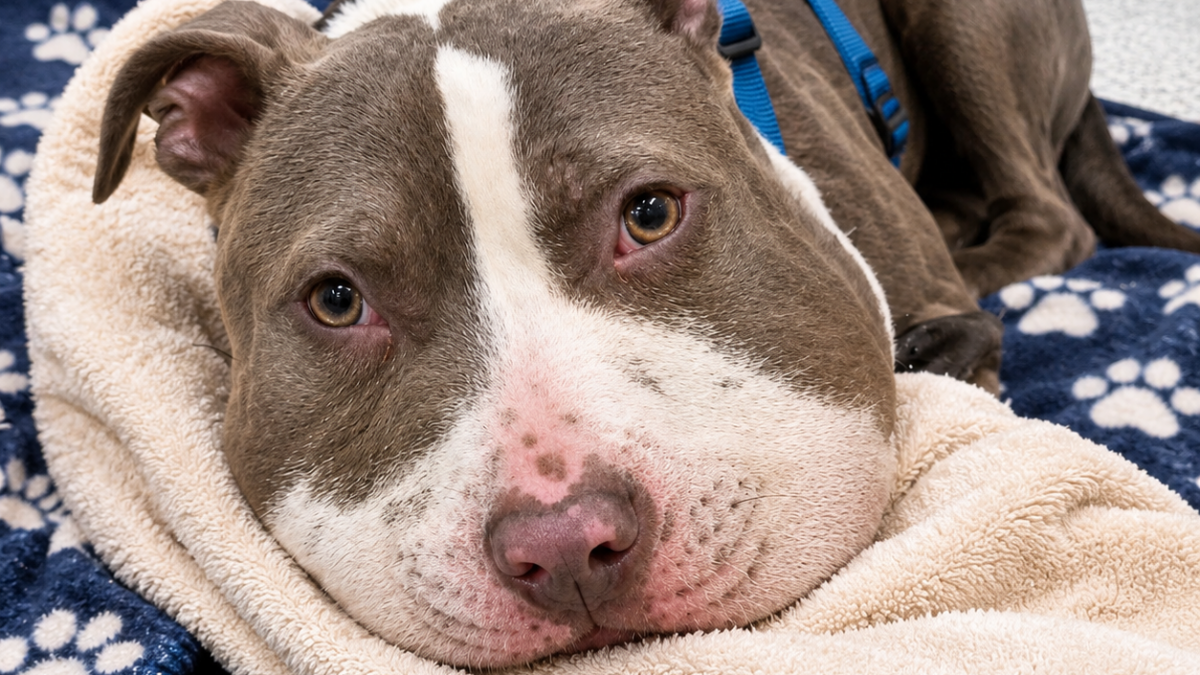
Her face was swollen so badly that she could barely see where she was walking, yet the little dog kept dragging herself from one stranger’s door to the next as if she knew stopping would mean dying alone.
A security camera caught her lifting one trembling paw, scratching at a gate, waiting for help that never came, and then forcing herself down the street to try again.
By the time I saw that footage, I thought I understood what we were racing against—but when I finally found her, one look at what was buried around her neck told me the camera had captured only the beginning.
My name is Rachel, and I had been working with a small animal rescue team for nearly nine years when Mika entered my life.
The call came shortly after seven on a gray Tuesday morning.
I was halfway through my first cup of coffee when our coordinator, Elena, sent me a twelve-second security video without explanation.
I pressed play.
A tiny cream-colored dog staggered into frame outside a narrow metal gate.
At least, I assumed she was cream-colored. Her fur was so dirty that it was difficult to tell.
What I could see clearly was her head.
It was enormous.
Not naturally.
Swollen.
Her cheeks, muzzle, and forehead had puffed so badly that her eyes were reduced to narrow slits.
The little dog stood beneath the camera for several seconds.
Then she lifted one front paw and scratched at the gate.
Once.
Twice.
She waited.
Nobody came.
She scratched again.
Then she lowered her head and stumbled away.
I replayed the footage.
“Where is this?”
Elena called immediately.
“East side. Residential neighborhood near the industrial canal.”
“When was it recorded?”
“Forty minutes ago.”
“Is she still there?”
“No.”
I was already pulling on my jacket.
“Who sent it?”
“A homeowner. He checked his camera after his wife found blood near their gate.”
Blood.
That changed everything.
Elena continued.
“Another resident thinks she saw the same dog yesterday.”
“Yesterday?”
“She was going door to door.”
I stopped.
“What do you mean?”
“Exactly what it sounds like. Walking up to houses. Scratching. Waiting. Moving on.”
I grabbed my keys.
“Send me every location.”
Fifteen minutes later, my partner Marcus and I were in the rescue van.
We drove slowly through the neighborhood with the windows cracked.
Every second mattered.
A dog in Mika’s condition could collapse under a parked car, crawl into an alley, or disappear into one of the construction lots near the canal.
We stopped people.
Showed the video.
Asked questions.
A delivery driver had seen her.
A woman sweeping her sidewalk remembered a “little dog with a strange face.”
A teenager said she had wandered behind a closed mechanic’s shop.
Each sighting led us farther from where the camera had recorded her.
“She’s moving a lot for a dog that sick,” Marcus said.
“She’s looking for something.”
“Food?”
“Maybe.”
But I didn’t believe it.
The dog in the video had not sniffed trash bags.
She had not searched the pavement.
She had walked directly to a gate.
Scratched.
Waited.
Then tried another.
At the fourth street, an elderly man pointed toward an alley.
“Little dog?”
“Yes.”
“She went down there maybe ten minutes ago.”
Marcus and I ran.
The alley ended behind a row of houses.
For a moment, I saw nothing.
Then came a sound.
Scratch.
Pause.
Scratch.
I turned.
A tiny dog stood at the bottom of a blue wooden door.
She raised one paw.
Scratched.
Her legs buckled.
She caught herself.
“Mika?”
We didn’t know her name yet.
I just needed to call her something.
She turned toward my voice.
And I stopped moving.
The security video had not prepared me.
Her head was almost twice the size it should have been.
The skin around her throat was dark and wet.
Something filthy—cloth, rope, maybe part of a collar—had disappeared so deeply into the swollen flesh that I could not see where the material ended and her body began.
Then the wind shifted.
The smell reached us.
Marcus whispered, “Oh, God.”
Rotting tissue.
Infection.
Blood.
Mika stared at me through eyes that could barely open.
I crouched.
She took one step toward me.
Then another.
And collapsed.
I caught her before her face hit the pavement.
As I lifted her, she made one small sound.
Not a scream.
Not even a whimper.
She simply sighed and let her entire body go limp in my arms.
That frightened me more than if she had fought.
Because animals usually fight until they have nothing left.
And Mika had just stopped fighting.
PART 2
For half a second, I couldn’t move.
Mika weighed almost nothing.
Her body was frighteningly light compared with the size of her swollen head. Beneath the dirt, I could feel ribs. Her paws were cold. Her breathing came in shallow bursts against my wrist.
“Marcus.”
“I’m here.”
“Call the hospital.”
He was already dialing.
I pulled my sweatshirt open and wrapped Mika against my chest.
Her head rested in the bend of my arm.
Up close, the injury was worse.
A strip of faded fabric had twisted together with what looked like a thin nylon collar. Both had cut deep into her neck.
The tissue above the constriction had swollen grotesquely.
Fluid had nowhere to drain.
Parts of the skin around the wound were black.
Dead.
I could see tiny movements in one corner of the wound.
I looked away immediately.
Maggots.
“Rachel.”
Marcus was beside me.
“Hospital’s ready.”
“Drive.”
“What about—”
“Drive.”
We ran.
### The Twenty-Minute Ride
I sat in the back of the van with Mika.
Marcus drove faster than I had ever seen him drive.
Not recklessly.
But every red light felt like betrayal.
I kept two fingers beneath Mika’s jaw, monitoring her breathing.
She had no collar tag.
No microchip reader with us.
No name.
Nothing.
Just a body telling us that someone had failed her for a long time.
“Stay with me.”
Her ears barely moved.
“Come on.”
I rubbed her chest.
“We found you.”
Nothing.
“You don’t get to walk door to door asking strangers for help and then quit when somebody finally answers.”
Marcus looked at me in the mirror.
“Rachel.”
“I know.”
I didn’t know.
That was the problem.
Rescue teaches you that sometimes being found is not enough.
Sometimes help arrives after the body has already crossed too many lines.
We were five minutes from the hospital when Mika started making a wet sound with each breath.
I leaned closer.
“No.”
Her tongue was pale.
“Marcus!”
“I’m going.”
“Faster.”
“I’m going as fast as I can.”
I lifted Mika slightly to keep her airway straighter.
Her swollen neck made positioning difficult.
Then she opened one eye.
Just enough for me to see a dark brown iris.
“There you are.”
Her gaze moved toward me.
“You keep that eye open.”
She closed it.
“Mika.”
Open.
Close.
“Mika.”
Open.
I kept saying the name.
Maybe because I was scared that if she became “the little dog” again, she would disappear.
### Emergency Intake
The veterinary team met us at the entrance with a stretcher.
Dr. Helen Carter took one look at Mika.
“What caused the constriction?”
“We don’t know.”
“How long?”
“Unknown.”
“Any medical history?”
“None.”
“Owner?”
“Unknown.”
Helen touched the side of Mika’s neck with one gloved hand.
Mika twitched.
“Pain response. Good.”
It felt strange to be relieved that an animal still had enough strength to hurt.
The team moved immediately.
IV catheter.
Fluids.
Blood draw.
Oxygen.
Pain medication.
Antibiotics.
Temperature.
Blood pressure.
I stood against the wall trying not to interfere.
Helen glanced at me.
“How long has she been like this?”
“I don’t know.”
“This didn’t happen yesterday.”
“I know.”
“She may be septic.”
I knew what that meant.
Infection in the bloodstream.
Organ failure.
Death.
“Can you remove it?”
“We need imaging first.”
“The collar?”
“The material around her neck. We have to know how deep it goes and what structures are involved.”
“She can barely breathe.”
“I know.”
“What are you waiting for?”
Helen stopped.
Not angry.
Calm.
That somehow made me feel worse.
“I’m waiting to find out whether cutting it off immediately will kill her.”
I went silent.
She continued.
“Whatever is embedded there may be compressing damaged vessels. If we remove pressure without understanding what’s underneath, she could hemorrhage.”
I looked at Mika.
“So we leave it?”
“For minutes. Not hours.”
Minutes suddenly felt enormous.
### What the Imaging Showed
A portable ultrasound came first.
Then X-rays.
Mika was too unstable to move more than necessary.
The fabric-collar combination had cut through skin and subcutaneous tissue almost all the way around her neck.
The injury was deepest on the left side.
Her lymphatic drainage had been severely compromised.
That explained the swelling.
But there was another problem.
The constriction had been there long enough for new tissue to begin growing around parts of it.
Her body had tried to heal around the thing that was destroying her.
Helen stood beside the monitor.
“How bad?”
Marcus asked.
She looked at us.
“Bad.”
I hated that word.
Too small.
Too simple.
“Can she survive surgery?”
Helen’s jaw tightened.
“She’s not stable enough for full anesthesia.”
My stomach dropped.
“Then what?”
“We stabilize as much as possible. Sedation. Local blocks where we can. Minimal anesthetic support. Continuous monitoring.”
“How long?”
“As long as it takes.”
“What does that mean?”
“It means if we rush, we tear tissue. If we tear tissue, she bleeds. If she bleeds, we may lose her.”
Marcus stared through the glass.
“Can you wait until she’s stronger?”
“No.”
“Why?”
“The material is strangulating tissue and trapping infection. If we leave it, the swelling worsens. The necrosis worsens. Sepsis worsens.”
“So either way—”
“Either way, we are taking a risk.”
Helen looked at me.
“We need permission from the rescue to proceed.”
I called Elena.
She answered on the first ring.
“Do it.”
No hesitation.
No discussion about cost.
No question about odds.
Just:
“Do it.”
### The Procedure
The operating room doors closed at 9:14 a.m.
I know because I wrote the time down.
I don’t know why.
Maybe when you cannot control an outcome, you start controlling numbers.
9:14.
At 10:02, a technician came out.
Mika was stable.
At 11:27, another update.
They had freed part of the material.
At 12:40, Helen came out briefly.
Her surgical cap was damp with sweat.
“What happened?”
I asked.
“The cloth is worse than we thought.”
“How?”
“It’s braided into the collar. Fibers are embedded in granulation tissue. We have to remove it strand by strand in places.”
“Is she awake?”
“Not fully. Light surgical plane with local anesthesia. We’re keeping her as shallow as possible.”
“Is she in pain?”
“We are controlling it.”
I hated the answer even though I knew it was the best one available.
“Can I see her?”
“No.”
Helen started back.
“Helen.”
She turned.
“Will she make it?”
She looked at me for several seconds.
“I don’t know.”
Then she disappeared behind the doors.
### Hour Four
At one thirty, I stopped drinking coffee because my hands were shaking.
Marcus walked outside.
I thought he needed air.
When he came back, his eyes were red.
I pretended not to notice.
At two fifteen, a technician rushed from the operating room.
Not to us.
Toward the pharmacy.
My heart stopped anyway.
At two twenty-three, an alarm sounded behind the closed doors.
I stood.
No one came out.
“Sit down,” Marcus said.
“I can’t.”
“Rachel.”
“I said I can’t.”
He didn’t argue.
At two thirty-one, the doors opened.
Helen emerged.
My entire body went cold.
“She’s alive.”
I gripped the chair.
“What happened?”
“Blood pressure dropped.”
“And?”
“We corrected it.”
“Are you done?”
“Not yet.”
“How much longer?”
“At least an hour.”
The procedure ultimately lasted five hours and fifty-eight minutes.
Nearly six hours.
When Helen finally came out, she looked as if she had aged.
“We got it all.”
I closed my eyes.
“All of it?”
“All visible foreign material.”
“And Mika?”
“Alive.”
That word.
Alive.
Not safe.
Not recovered.
But alive.
For that moment, it was enough.
### What They Removed
Helen showed us a sealed tray.
I almost wished she hadn’t.
The collar was narrow nylon.
Originally red, maybe.
Hard to tell beneath blood and decomposed tissue.
Twisted through it was a strip of fabric.
Blue and white.
Possibly from a shirt.
Possibly from a homemade tether.
The fabric had wrapped around the neck several times before becoming tangled with the collar.
“How does something like that happen?”
Marcus asked.
Helen removed her gloves.
“Could get caught while tethered. Someone could have tied something around her. Could be accidental initially.”
“Initially?”
I asked.
She looked at me.
“The injury afterward wasn’t accidental.”
That sentence stayed with me.
Because even if the first knot had been an accident, weeks of watching an animal swell, bleed, rot, and suffer were choices.
### The Hyperbaric Chamber
The next challenge was tissue survival.
Large areas around Mika’s neck had been deprived of healthy circulation.
Infection had damaged what remained.
Helen recommended hyperbaric oxygen therapy.
The chamber looked almost futuristic compared with the tiny broken dog placed inside it.
Clear enclosure.
Controlled pressure.
High-concentration oxygen intended to support damaged tissue and help fight certain infections.
The first time they closed the chamber, Mika panicked.
She tried to stand.
Her legs slid.
My instinct was to open it.
Helen stopped me.
“She needs this.”
“She’s scared.”
“I know.”
Mika stared through the clear wall.
I placed my hand against it.
“Hey.”
Her eyes could open slightly more now.
Not much.
But enough.
“Look at me.”
Her breathing slowed.
I stayed there through the entire session.
Forty-five minutes.
My hand on one side.
Mika on the other.
### Night One
Her fever rose.
Then fell.
Then rose again.
Her white blood cell count was frightening.
Kidney values were borderline.
The team worried about systemic infection.
The wound had to remain partly open to drain.
Every few hours, it was cleaned.
Each cleaning hurt despite medication.
Mika trembled.
But she never tried to bite.
That bothered me.
People think a dog that does not bite is automatically gentle.
Sometimes she is.
Sometimes she has simply learned resistance accomplishes nothing.
I wanted Mika to complain.
Growl.
Snap.
Tell us no.
Anything.
Instead, she endured.
At midnight, I sat beside her recovery kennel.
“You are allowed to be angry.”
Her ear moved.
“Seriously.”
Nothing.
“I would be.”
Her swollen head rested on a towel.
“You can hate us for a while.”
Her eyes opened.
Then she slowly moved one front paw.
It reached the kennel door.
I put my fingers through the bars.
She rested her paw on them.
I stopped talking.
### The Security Footage
While Mika fought infection, we began reconstructing where she had come from.
The original homeowner sent us all his camera footage.
Not just the twelve seconds.
Mika first appeared at 5:51 a.m.
She approached the gate.
Scratched.
Waited twenty-seven seconds.
Left.
At 6:18, a camera two houses away caught her approaching another door.
At 6:42, another.
Then 7:03.
7:27.
Different homes.
Same behavior.
Knock.
Wait.
Move.
Door after door.
She wasn’t wandering randomly.
She was asking.
That realization spread quickly through our rescue group.
Marcus watched the compilation without speaking.
Elena whispered:
“How many people saw her?”
We didn’t know.
Several.
Maybe more.
Some opened curtains.
One person looked through a window.
A man stepped outside, saw her, and went back in.
That footage made me angry.
Then I forced myself to remember something.
Not everyone knows what to do.
Not everyone understands how serious an injury is.
Fear makes people freeze.
Disgust makes people back away.
And one homeowner eventually checked his camera and called.
That call saved her.
I tried to hold both truths at once.
### A Name
We learned her name by accident.
Three days after rescue, a post appeared in a neighborhood group.
A woman commented beneath a shared photograph:
I think this is Mika.
Elena contacted her.
Her name was Teresa.
She lived about a mile from where we found Mika.
“Do you know the dog?”
“Yes.”
“Is she yours?”
“No.”
“Whose?”
There was a long pause.
“She belonged to a man named Curtis.”
My stomach tightened.
“Last name?”
“Boyle.”
“Address?”
Teresa hesitated.
Then gave it.
“Why didn’t you report her?”
“I hadn’t seen her in months.”
“What do you mean?”
“She used to be tied outside behind his workshop.”
There it was.
Tied.
The fabric.
The collar.
The wound.
I wrote everything down.
“When did you last see her?”
“Maybe six or seven months ago.”
“Was her neck injured?”
“No. Not like this.”
“Was she fed?”
“I don’t know.”
“Did Curtis still have her?”
“I assumed.”
“Why?”
Teresa’s voice became defensive.
“Because she was his dog.”
Ownership again.
A word that can hide so much.
### Curtis Boyle
The property was three streets from an auto-body workshop.
Curtis lived in a small rental house behind it.
Animal control went first.
Police accompanied them because Mika’s injuries were now being treated as potential criminal neglect.
We did not.
I wanted to.
I was told not to.
Probably wise.
Curtis answered the door.
He claimed Mika had run away two months earlier.
He claimed he had searched.
There was no missing-dog report.
No shelter notification.
No social-media post.
No flyers.
Nothing.
When asked about the collar, he said:
“She always messed with stuff.”
When asked what that meant:
“She chewed ropes.”
When asked whether she had ever become tangled while tethered:
“I don’t know.”
The officers asked to see the backyard.
Curtis initially refused.
Then they obtained permission from the property owner.
Behind the workshop was a dirt area with a rusted metal stake.
A length of frayed blue-and-white fabric was tied to it.
The other end was cut.
### The Match
The fabric was photographed and collected.
Same pattern.
Same width.
Same weave.
Not proof by itself.
But powerful.
Then investigators found something else.
A small section of red nylon collar trapped in the knot near the stake.
The collar around Mika’s neck had been red.
Curtis changed his story.
Now he remembered that Mika had gotten tangled “once.”
“How long?”
“Maybe an hour.”
“Did her neck swell?”
“A little.”
“Did you take her to a veterinarian?”
“No.”
“Why?”
“She seemed fine.”
Mika had not been fine.
### Day Four
Her swelling began to decrease.
Slowly.
For the first time, both eyes opened enough for us to see them.
Brown.
Large.
Watchful.
I stood beside the kennel.
“There you are.”
Mika blinked.
Helen smiled.
“She looks more like a dog.”
I looked offended.
“She always looked like a dog.”
“You know what I mean.”
I did.
For days, the injury had swallowed her face.
Now features were returning.
A muzzle.
Cheeks.
Eyes.
Identity.
That afternoon, Mika ate from a spoon.
Three bites.
Then turned away.
“Is that bad?”
I asked.
Helen shook her head.
“She ate.”
“Three bites.”
“Rachel.”
“Right.”
I had to learn not to demand miracles on schedule.
### The First Growl
On day five, a technician reached toward the wound too quickly.
Mika growled.
Everyone stopped.
The technician stepped back.
“I’m sorry.”
I started smiling.
She stared at me.
“What?”
“She growled.”
“Yes.”
“She growled!”
Helen looked over.
“Why are you celebrating?”
“Because she said no.”
Mika’s eyes moved between us.
Helen understood.
“Oh.”
We adjusted.
Slower approach.
More warning.
More choice.
That tiny growl became one of my favorite sounds.
It meant Mika was learning she could object.
And maybe somebody would listen.
### Curtis’s Text Messages
The investigation expanded after Curtis’s former girlfriend, Amanda, contacted animal control.
She had seen Mika’s picture online.
Amanda provided text messages.
One from nearly three months earlier.
Amanda:
Her neck looks bad. You need to take that dog somewhere.
Curtis:
She pulled that thing tight herself.
Amanda:
Then cut it off.
Curtis:
Can’t get near her. She snaps.
Amanda:
Call somebody.
Curtis:
Not paying a vet $500 for a mutt.
I read that message in the investigator’s office.
Not paying a vet $500 for a mutt.
I had to put the phone down.
Because Mika had walked from door to door carrying rotting flesh around her neck while someone had already decided what her suffering was worth.
Less than five hundred dollars.
### The Missing Months
The timeline slowly became clear.
Mika had been kept tethered behind Curtis’s workshop.
At some point, fabric used as an improvised tether twisted around or through her collar.
She became tangled.
The constriction tightened.
Her neck began swelling.
Instead of seeking help, Curtis apparently tried to cut part of the tether.
He cut the long end.
But left material wrapped around her neck.
The remaining fabric tightened further as swelling increased.
Mika became harder to handle because she was in pain.
Curtis stopped approaching her closely.
Food was tossed from a distance.
Then, according to Amanda, he stopped staying at the property regularly.
Mika was left outside.
Eventually, she disappeared.
Curtis called it “running away.”
I called it escaping.
### Hyperbaric Session Seven
By Mika’s seventh oxygen treatment, she understood the routine.
She still disliked the chamber.
But she no longer panicked.
I sat outside.
She lay down.
At one point, her eyes closed.
She slept.
Helen passed behind me.
“You can leave for forty minutes, you know.”
“No.”
“She’ll survive without your hand on the glass.”
“I’m aware.”
“Are you?”
I ignored her.
Mika slept.
For perhaps the first time in weeks, maybe months, she was warm, medicated, fed, and not fighting just to remain conscious.
I wasn’t leaving.
### The Smell Disappeared
It happened gradually.
One morning I entered the treatment room and realized the smell was gone.
The putrid infection smell.
I stopped.
Helen noticed.
“What?”
“It doesn’t smell.”
“That’s generally considered progress.”
I laughed.
Then cried.
Helen sighed.
“You rescue people cry at very strange things.”
“You cut a collar out of a dog for six hours.”
“Fair.”
The wound still looked terrible.
But healthy pink tissue had begun replacing black tissue.
Granulation.
Healing.
The body trying again.
### Mika’s First Steps Outside
Two weeks after rescue, she was strong enough for a short walk in the clinic courtyard.
She wore a chest harness.
Nothing around her neck.
Probably never again.
The door opened.
Mika froze.
Sunlight.
Grass.
Wind.
She took one step.
Then another.
Her head was still slightly swollen.
Bandages covered her neck.
But she walked.
Five feet.
Stopped.
Looked at me.
“You’re doing great.”
Ten feet.
Then she turned toward the building.
I thought she wanted to go back.
Instead, she walked toward a side door.
Scratched it.
Once.
I froze.
The same behavior as the video.
Scratch.
Wait.
My throat closed.
I opened the door immediately.
“You don’t have to keep asking.”
Mika stepped inside.
I whispered:
“We’ll open it.”
### The Case Becomes Public
When charges were filed, Mika’s story spread.
Local news used the security footage.
The image of her scratching at doors made people furious.
Donations poured into the rescue.
So did comments.
Some demanded extreme punishment.
Some wanted Curtis’s address.
We removed anything that could encourage harassment.
Justice mattered.
Vigilantism did not help Mika.
I wanted the case strong.
Clean.
Documented.
No excuses.
No distraction.
Curtis gave one interview outside court.
He said the rescue was exaggerating.
He said:
“I didn’t do that to her.”
Technically, perhaps he believed that.
He hadn’t placed the infection into her body with his hands.
He hadn’t ordered her face to swell.
He had simply watched the injury develop and failed to act.
Neglect often hides behind passive language.
I didn’t hurt her.
I just didn’t help.
The body does not care about the distinction.
### Mika Meets a Toy
A volunteer placed a stuffed fox near her bed.
Mika stared at it.
Then ignored it for two days.
On the third day, I found the fox beneath her chin.
I smiled.
“Stealing now?”
Mika opened one eye.
I reached toward the toy.
She put one paw over it.
“Oh.”
Possessive.
Good.
“You keep it.”
Her tail moved.
First real wag.
Not dramatic.
Just three taps against the blanket.
I called Marcus.
He rushed in.
“What?”
“Tail.”
He stared.
“You called me away from intake because her tail moved?”
“Yes.”
Mika wagged again.
Marcus smiled.
“Fair.”
### A Setback
Healing is never a straight line.
At three weeks, Mika’s temperature rose again.
The wound looked more inflamed.
Cultures showed a resistant bacterial infection.
Helen changed antibiotics.
Another debridement was necessary.
Smaller than the first surgery.
But still frightening.
When they took Mika away, she looked back at me.
That was new.
She expected me to remain.
“I’ll be here.”
She disappeared through the doors.
I said it again even though she couldn’t hear me.
“I’ll be here.”
The procedure went well.
But that night, she refused food.
The next morning too.
I panicked.
Helen did not.
“Pain. Nausea. Stress.”
“She was eating yesterday.”
“I know.”
“She’s going backward.”
“No.”
“It feels like it.”
“That is not the same thing.”
By evening, Mika ate half a spoonful.
The next morning, more.
Recovery resumed.
### The Woman Who Opened a Door
The homeowner whose camera first captured Mika came to visit.
Her name was Natalie.
She stood outside Mika’s room with tears in her eyes.
“I was asleep.”
“What?”
“When she came to our gate.”
She swallowed.
“I keep thinking if I had heard her…”
“You checked the camera.”
“Later.”
“And you called.”
“But she had already gone.”
“You called.”
Natalie looked at Mika.
“Do you think she knows?”
“Knows what?”
“That I’m sorry.”
I shook my head gently.
“Don’t make her carry your guilt.”
Natalie cried.
That sounded harsher than I intended.
So I added:
“She doesn’t need apologies from everyone who missed her. She needs people to notice the next dog sooner.”
Natalie nodded.
Months later, she became one of our volunteers.
### The Plea Offer
Curtis’s attorney approached prosecutors with a proposed plea.
Animal neglect.
Failure to provide veterinary care.
Improper tethering violations.
Probation.
Fine.
No jail.
I was furious.
“This is it?”
Elena told me:
“It’s an offer. Not final.”
“He watched her rot.”
“I know.”
“He wrote he wouldn’t pay for a mutt.”
“I know.”
“He left.”
“I know.”
“He should—”
I stopped.
Because I knew what I wanted to say.
He should suffer.
That feeling was real.
I did not pretend otherwise.
But anger is not sentencing law.
We provided victim-impact documentation through the rescue.
Veterinary bills.
Procedure notes.
Photographs.
Security footage.
The messages.
Everything.
Let the evidence speak.
### Mika’s Neck
At six weeks, bandages became smaller.
Her face looked almost normal.
Almost.
Scarring pulled the skin along one side of her neck.
Fur might never grow there completely.
There would always be a visible line.
I traced the air near it without touching.
Helen said:
“She’ll carry that.”
“I know.”
“Cosmetically.”
“I know.”
“Functionally, we’re optimistic.”
That mattered more.
Mika ate.
Walked.
Played briefly.
Slept deeply.
Barked at a delivery cart.
Growled when she disliked wound cleaning.
All excellent.
### Foster Placement
The clinic could not be her home.
We needed a foster experienced with medical recovery and fearful dogs.
A woman named Joanne applied.
Fifty-four.
Worked from home.
Quiet house.
No children.
One senior dog named Sam who ignored almost everything.
Joanne met Mika three times before taking her home.
First meeting:
Mika hid behind me.
Second:
She accepted chicken.
Third:
She sat two feet from Joanne.
Joanne said:
“I think she likes me.”
I laughed.
“She tolerates your presence.”
“I’ll take it.”
That was exactly the attitude we needed.
### The Car
Mika hated getting into Joanne’s car.
She planted all four paws.
Backed away.
Trembled.
We did not force her.
Joanne sat on the ground.
Twenty minutes.
Thirty.
Finally Mika stepped onto the ramp.
Paused.
Then entered.
Joanne whispered:
“Good girl.”
Mika looked back at me.
I leaned through the door.
“I’ll see you.”
Her eyes stayed on mine.
The car pulled away.
I cried.
Again.
Marcus handed me a tissue.
“You’re becoming predictable.”
“Shut up.”
### First Night in a House
Joanne texted at 8:03 p.m.
She won’t enter the bedroom.
8:17:
She keeps checking the front door.
8:45:
Sam does not care that she exists.
9:12:
She ate.
10:30:
SHE IS ON THE COUCH.
Photograph.
Mika curled on one end.
Sam on the other.
Three feet between them.
Perfect.
At 2:10 a.m.:
She scratched my bedroom door.
My heart jumped.
Then another message.
I opened it. She came in, looked at me, and went back to the couch.
I smiled.
Mika was still checking whether doors opened.
Joanne always opened them.
### Learning to Ask Differently
At first, Mika scratched every closed door.
Bathroom.
Bedroom.
Pantry.
Closet.
Joanne responded to the important ones but not the pantry.
Mika gradually learned.
Some doors closed temporarily.
People came back.
A closed door was not abandonment.
One evening, Joanne took a shower.
Mika scratched twice.
Then stopped.
When Joanne emerged ten minutes later, Mika was lying outside.
Waiting calmly.
That was progress nobody would see in a before-and-after photograph.
But I did.
### Sam
Sam was thirteen.
Large.
Brown.
Slow.
He did not play.
He tolerated Mika.
Then one thunderstorm changed everything.
Mika panicked at the first crack.
She ran from room to room.
Joanne sat on the floor.
Did not chase.
Sam walked to his bed.
Mika followed.
Another thunderclap.
Mika crawled beside him.
Sam sighed.
Then rested his head over her back.
Joanne sent me a photograph.
Mika’s eyes were wide.
Sam looked annoyed.
They slept like that for two hours.
After that night, Mika followed him everywhere.
### The Trial
Curtis rejected the plea when prosecutors demanded a multi-year animal ownership ban.
He wanted the right to keep dogs.
That decision took the case toward trial.
I could not understand it.
“How can someone fight this hard to own animals after doing this?”
Elena said:
“Sometimes it isn’t about animals.”
“What is it about?”
“Being told no.”
That made sense.
Too much sense.
### Evidence Day
In court, prosecutors displayed the fabric.
The frayed tether from Curtis’s yard.
Photographs of Mika’s embedded collar.
Expert comparison.
Not forensic certainty like television.
But consistency.
Then Amanda’s messages.
The courtroom heard Curtis’s own words read aloud:
Not paying a vet $500 for a mutt.
He stared straight ahead.
The veterinarian testified about the six-hour procedure.
The infection.
The risk of death.
The hyperbaric treatment.
“How long would an injury like this take to develop?”
The prosecutor asked.
Helen answered:
“Long enough for any attentive caretaker to recognize a medical emergency.”
“Could someone reasonably fail to notice?”
“No.”
That answer mattered.
### My Testimony
I hated the witness stand.
My mouth went dry.
The prosecutor asked how we found Mika.
I described the footage.
The search.
The alley.
The door.
“What did Mika do when you approached?”
“She took two steps and collapsed.”
“What did you smell?”
I hesitated.
“Necrotic tissue.”
“What did she look like?”
I looked at Curtis.
I shouldn’t have.
His face was blank.
I turned back.
“Like her body had been trying to survive something nobody should have allowed to continue.”
The defense objected.
Sustained.
Facts only.
Fine.
The facts were enough.
### Curtis Testifies
His attorney surprised everyone by putting him on the stand.
Curtis claimed Mika was difficult.
Aggressive.
Impossible to handle.
He said she bit when he tried to cut the tangled tether.
He said he intended to get help.
He said she disappeared before he could.
The prosecutor stood.
“When did you first notice the swelling?”
Curtis hesitated.
“A few days before she ran off.”
Amanda’s text was dated eleven weeks earlier.
The prosecutor showed it.
Curtis changed his answer.
“Maybe longer.”
“How much longer?”
“I don’t remember.”
“You replied to a message telling you her neck looked bad.”
“Yes.”
“You were advised to call someone.”
“I thought it would clear up.”
“By itself?”
“Yes.”
“With a tether embedded in her neck?”
Silence.
Then the prosecutor asked:
“Why didn’t you call a rescue?”
Curtis looked toward us.
“I didn’t think they’d come.”
I almost laughed.
Mika had walked through a neighborhood knocking on doors because she believed someone might come.
He had not made one phone call.
### Verdict
The verdict came quickly.
Guilty on multiple neglect-related counts.
Guilty on failure to provide necessary veterinary care.
Additional violations tied to tethering and abandonment.
The judge addressed Curtis directly.
She referenced the length of visible suffering.
The text messages.
His failure to seek help.
The cost of veterinary care he refused.
The risk to Mika’s life.
Then she imposed sentence.
Jail time.
Probation.
Restitution.
Mandatory animal-welfare education.
And the part I cared about most:
A lengthy prohibition on owning, possessing, or controlling animals.
Curtis’s face changed.
For the first time, real emotion.
Not when Mika’s photographs were shown.
Not when Helen described dead tissue.
When the judge told him he could not own another dog.
That told me everything.
### Restitution
The court ordered him to contribute toward Mika’s medical expenses.
It would never cover everything.
Not even close.
But I admit there was satisfaction in seeing the number.
He had written:
Not paying a vet $500 for a mutt.
Mika’s care cost many times that.
Surgery.
Hospitalization.
Hyperbaric therapy.
Antibiotics.
Imaging.
Wound care.
Rehabilitation.
Behavioral support.
The court turned the cost he dismissed into a legal obligation.
Not revenge.
Consequence.
### Mika at the Park
Months later, Mika’s foster progress became almost boring.
That was wonderful.
Breakfast.
Walk.
Nap.
Short training.
Dinner.
Sleep.
One Saturday, Joanne took her to a quiet park.
Mika stopped at the entrance.
Cars.
People.
Dogs.
Too much.
Joanne waited.
Sam walked forward.
Mika followed.
They reached a grassy hill.
Mika sniffed.
Then suddenly ran.
Not from fear.
Toward Sam.
A real run.
Her ears bounced.
Her scar stretched along her neck.
Her mouth opened in something that looked unmistakably like joy.
Joanne recorded it.
I watched the video twenty times.
### The First Stranger
For months, Mika avoided unfamiliar people.
Then one day, a mail carrier approached Joanne’s porch.
Mika stood inside.
Watched.
The carrier set down a package.
“Cute dog.”
Mika stepped forward.
Joanne said:
“Don’t reach.”
The carrier nodded.
Mika sniffed his shoe.
Then returned inside.
That was it.
No panic.
No scratching.
No desperate plea.
She met a stranger and did not need him to save her.
I cried when Joanne told me.
Of course.
### Sam’s Lesson
Sam died the following winter.
Old age.
Cancer.
Gentle goodbye at home.
Mika was present.
Afterward, she searched for him.
His bed.
The hallway.
The backyard.
For days, she slept where he had slept.
Joanne worried Mika would regress.
She did, briefly.
More door scratching.
Less appetite.
Restlessness.
Then something happened.
One evening, thunder.
Mika looked toward Sam’s empty bed.
Walked over.
Curled into it.
And stayed.
She had learned comfort from him.
Even after he was gone.
### Adoption
Joanne had always called herself a foster.
For eleven months.
Then Elena sent her an email:
We need to discuss Mika’s adoption listing.
Joanne called within thirty seconds.
“What listing?”
Elena smiled on speakerphone.
“She is adoptable.”
“No.”
I was sitting beside Elena.
I covered my mouth.
“What do you mean no?”
Joanne demanded.
“She’s ready.”
“No.”
“Joanne.”
“No one else knows her routine.”
“That can be taught.”
“She hates metal bowls.”
“We can tell them.”
“She needs the hallway light on.”
“We can tell them.”
“She only eats pills in cream cheese.”
“We can tell them.”
Silence.
Then Joanne said:
“I hate you.”
Elena laughed.
“Do you want the adoption form?”
Another silence.
“Yes.”
Mika never left.
### Her New Name
Joanne kept Mika’s name.
We had eventually confirmed it from Amanda.
It belonged to her.
But Joanne added a nickname.
Knock-Knock.
I hated it.
Mika loved it because it usually preceded chicken.
“Knock-Knock!”
Mika came running.
I told Joanne:
“That is emotionally insensitive.”
“She likes it.”
“She has no taste.”
True.
### A Doorbell
The first time Mika learned what a doorbell meant, she barked.
Huge improvement.
Joanne opened the door.
A neighbor stood outside.
Mika stayed behind Joanne.
No scratching.
No begging.
Just barking because someone had come to her house.
Her house.
That distinction mattered.
Years earlier, Mika had gone from door to door hoping one would open.
Now strangers knocked on hers.
### One-Year Medical Review
Helen examined Mika.
Weight healthy.
Bloodwork normal.
Scar stable.
No active infection.
Minor reduced mobility in the neck due to fibrosis.
Nothing major.
Helen looked at her.
“You are annoyingly healthy.”
Mika wagged.
I asked:
“Can we say she’s fully recovered?”
Helen shook her head.
“From the infection? Yes.”
“From everything?”
She looked at Mika.
“That word is too simple.”
I knew.
Scars are not failure.
Caution is not failure.
Remembering is not failure.
Mika did not need to become the dog she might have been before.
She only needed to become safe in the life she had now.
### Curtis’s Appeal
His attorney filed an appeal on part of the sentence.
For months, the possibility of the animal ownership restriction being reduced worried us.
Eventually, the key provisions remained.
I read the decision twice.
Then closed the file.
That was when I realized the legal story was truly ending.
Mika’s life did not need to remain tied to his case.
### The Letter
A year after sentencing, Curtis sent a letter to the rescue.
He wrote that he regretted “how things turned out.”
Not what he did.
How things turned out.
He asked for a current photograph of Mika.
Elena asked Joanne.
Joanne asked me.
I stared at the letter.
Part of me wanted to send the happiest photograph possible.
Mika on a couch.
Mika running.
Mika sleeping under a blanket.
As if to say:
Look what you lost.
Look what survived you.
Then I stopped.
That would still make Mika part of his story.
I told Elena:
“No.”
Joanne agreed.
We did not answer.
### The Man at the Hardware Store
Years later, I saw Curtis once.
I was buying fence repair supplies for the rescue.
He was in another aisle.
We recognized each other.
For a few seconds, neither moved.
He looked older.
Tired.
Then he said:
“Is the dog alive?”
I stared.
“Mika.”
He looked away.
“Yes.”
“She’s alive.”
He nodded.
“Good.”
The word surprised me.
Maybe there was regret.
Maybe not.
I was no longer interested in diagnosing his conscience.
He said:
“I made mistakes.”
I held the box in my hands.
“Your mistakes almost killed her.”
“I know.”
That was new.
No excuses.
No “she ran away.”
No “she was difficult.”
Just:
I know.
It did not fix anything.
But I nodded.
Then walked away.
I did not tell him where she lived.
I did not show him a photograph.
He no longer had access to her life.
That boundary mattered.
### Mika at Seven
Years passed.
Her muzzle turned gray.
The scar softened but never disappeared.
Children sometimes asked Joanne:
“What happened to her neck?”
Joanne kept the answer simple.
“She got hurt, and then she got better.”
Older children sometimes asked more.
Joanne would say:
“Someone failed to help her when she needed it. Other people helped later.”
No monsters.
No graphic details.
Just responsibility.
### Natalie’s Door
The homeowner whose camera first caught Mika eventually invited Joanne over.
Same house.
Same metal gate.
Same security camera.
We were curious how Mika would react.
Maybe too curious.
We agreed not to force anything.
Mika walked down the sidewalk.
Then stopped.
The gate.
Her body stiffened.
Joanne immediately turned away.
“We can leave.”
Mika stayed.
She sniffed.
Then approached.
Natalie opened the gate.
Mika looked at her.
Natalie crouched but did not reach.
For several seconds, nothing happened.
Then Mika walked through.
No scratching.
No pleading.
Just walked through an open gate.
Natalie started crying.
“I’m sorry.”
Joanne gently said:
“Tell her welcome instead.”
Natalie smiled through tears.
“Welcome, Mika.”
Mika accepted a piece of chicken.
Better ending.
### The Security Camera Still Worked
Natalie showed us the old footage one final time.
I hadn’t watched it in years.
Mika.
Swollen.
Stumbling.
Paw against metal.
Scratch.
Scratch.
Wait.
Walk away.
Then I looked at the dog standing beside me.
Healthy.
Gray around the muzzle.
Blue harness.
No collar around her neck.
It felt impossible that they were the same animal.
But scars connected the two versions.
Not as tragedy.
As proof of distance traveled.
### Mika’s Favorite Thing
Not chicken.
Not the stuffed fox.
Not Joanne.
Although close.
Mika loved open doors.
If weather allowed, Joanne left the back door open with a screen barrier.
Mika would lie where she could see both inside and outside.
Choice.
That became her favorite place.
Half in sunlight.
Half in shade.
Never trapped.
### When Joanne Became Sick
Mika was around nine when Joanne needed knee surgery.
For the first time, she had to stay overnight in a hospital.
Mika remained with Joanne’s sister, Ellen.
That night, Mika scratched the front door repeatedly.
Ellen called me.
“She’s waiting.”
I went over.
Mika saw me and calmed slightly.
But every car made her stand.
Joanne returned the next afternoon on crutches.
Mika lost her mind.
Whining.
Spinning.
Trying not to jump.
Joanne sat down carefully.
Mika pressed her entire body against her legs.
“You thought I left?”
Joanne cried.
“I came back.”
That phrase.
Came back.
Maybe the most important promise in Mika’s world.
### The Scar and the Collar
Mika never wore a neck collar again.
Only harnesses.
Even decorative collars were avoided.
One Christmas, someone gave Joanne a little holiday bandana.
Mika froze when it touched her neck.
Joanne removed it immediately.
No photo was worth fear.
That was another thing I loved about her.
Healing was not about proving Mika could tolerate everything.
It was about not making her.
### Her Tenth Birthday
We did not know Mika’s true birthday.
So Joanne chose the rescue date.
Every year, that became her birthday.
At ten, we held a small picnic.
No crowd.
Me.
Marcus.
Elena.
Helen.
Natalie.
Joanne.
Mika.
A cake made for dogs.
Mika ate too fast.
Some habits remained.
She wore no party hat.
We had standards.
Joanne gave her a new stuffed fox.
Mika ignored it.
She still preferred the original torn one.
### The Rescue Program
Donations from Mika’s case helped us create an emergency veterinary fund for tether injuries and severe neglect cases.
We named it the Open Door Fund.
Not after Mika directly.
But everyone knew.
When a dog arrived with an embedded collar two years later, the fund paid for surgery before paperwork was complete.
That dog survived.
Then another.
Then another.
Mika never met them.
She still changed their lives.
That felt like the best kind of revenge.
Someone had treated her as too worthless for veterinary care.
Her story became the reason other dogs received it immediately.
### Marcus
Marcus eventually left full-time rescue work.
Back problems.
Too many years lifting dogs who did not want to be lifted.
At his farewell dinner, someone asked his hardest case.
He said Mika.
I looked at him.
“Really?”
“Yes.”
“Why?”
He thought.
“Because she asked for help before we ever got there.”
The table went quiet.
He continued:
“Most animals we find because somebody else speaks for them. Mika tried to speak for herself.”
I had never thought of it exactly that way.
### Helen Retires
Dr. Helen Carter retired five years after Mika’s surgery.
At her retirement party, we brought a framed photograph.
Mika sleeping inside the hyperbaric chamber during session seven.
Helen stared at it.
“Why would you give me this?”
“Because you saved her.”
“I had a team.”
“You led it.”
She shook her head.
“Mika saved Mika too.”
I smiled.
“Very philosophical.”
“I’m retired. I can be annoying now.”
### Mika’s Old Age
By twelve, arthritis appeared.
Slowly.
First stiffness in the mornings.
Then hesitation on stairs.
Joanne installed ramps.
Mika hated them.
Naturally.
She preferred being carried.
At twenty pounds, manageable.
Joanne called it royal transportation.
Mika agreed.
Her appetite remained strong.
Her bloodwork was good.
Her scar sometimes became dry in winter.
Special moisturizer.
Nothing serious.
### Another Door
One snowy morning, Joanne found Mika standing at the front door.
Scratch.
One paw.
Joanne’s heart stopped.
Old behavior.
Then she opened it.
Mika walked outside.
Peed.
Came back.
That was all.
Joanne called me laughing.
“She trained me.”
“She always did.”
The scratching no longer meant desperation.
It meant:
Open this. I have business.
Transformation can be that simple.
### The Diagnosis
Mika was estimated to be around thirteen or fourteen when a routine exam found a mass near her spleen.
Ultrasound.
More testing.
Cancer.
The word landed differently after everything else.
Not because it hurt less.
Because it was not cruelty.
Not neglect.
Not preventable suffering ignored.
Just biology.
Age.
Life.
Joanne called me from the parking lot.
“I’m not ready.”
“No one is.”
“They say surgery might help.”
“What does Helen’s old clinic say?”
“Good odds.”
“Then we do what’s best for Mika.”
Joanne laughed through tears.
“You still say we.”
“Always.”
### Surgery Again
Mika underwent surgery.
This time under full anesthesia.
Her heart was strong enough.
The difference was almost unbearable.
Years earlier, surgeons had struggled for six hours because she was too unstable for normal anesthesia.
Now she entered surgery as a well-fed senior dog with healthy organ function.
The mass was removed.
Pathology showed cancer, but margins were favorable.
More time.
We took it.
### One More Summer
That summer, Mika slept in the open doorway.
Half sun.
Half shade.
Joanne read beside her.
I visited every few weeks.
Mika no longer ran to me.
She walked.
Slowly.
Tail wagging.
Age had softened everything.
Except the eyes.
Brown.
Clear.
Still watching.
### The Storm
A severe storm hit one August night.
Power went out.
Thunder shook the windows.
Years earlier, Mika would have panicked.
This time, she walked to Joanne’s bed.
Scratched the mattress.
Joanne lifted her.
Mika curled beside her.
They slept through most of it.
Fear does not always disappear.
Sometimes it learns where to go.
### Recurrence
The cancer returned the following spring.
This time, surgery would not buy enough.
The veterinarian was honest.
Weeks.
Maybe months.
Comfort care.
Joanne called all of us.
No one said “fight.”
That word can become selfish at the end.
Mika had fought enough.
Now the goal was comfort.
### Her Bucket List
We refused anything ridiculous.
No crowds.
No stressful trips.
Mika’s list was simple.
Chicken.
Sunlight.
Open doors.
Slow walks.
Visits from familiar people.
The old stuffed fox.
One cheeseburger.
Helen, retired, approved the cheeseburger medically.
“Half.”
Joanne gave her almost all of it.
Helen pretended not to notice.
### Natalie Visits
Natalie came one afternoon.
She sat beside Mika.
“I’ve wanted to tell you something for years.”
Mika sniffed her hand.
Natalie smiled.
“Your camera video changed my life.”
Mika had no interest.
She wanted the chicken.
Natalie laughed.
“Right. Of course.”
She gave her chicken.
Better communication.
### The Last Door
Mika’s final week came quietly.
She ate less.
Slept more.
One morning, she stood at the open back door.
Joanne watched.
Mika looked outside.
Then back inside.
For years, she had loved lying in the threshold.
That day, she walked onto the grass.
Joanne followed.
Mika reached the garden.
Lay down in sunlight.
Joanne called me.
“Today.”
I understood.
I drove over.
### Everyone Who Came
Not everyone.
That would have overwhelmed her.
Joanne.
Me.
Marcus.
Helen.
Elena.
That was enough.
Mika lay on a thick bed beneath a tree.
No collar.
Blue harness removed.
Nothing touching her neck.
Her scar visible.
Her stuffed fox beside her.
Joanne gave her tiny pieces of chicken.
Mika ate two.
Refused the third.
“Okay.”
No forcing.
She had spent enough of her life having no choice.
### What I Told Her
I knelt beside Mika.
Her eyes opened.
“Hey.”
Tail tap.
One.
“You were really difficult.”
Another tap.
“You cost us a fortune.”
Joanne laughed through tears.
“You made me sit outside a hyperbaric chamber for hours.”
Mika breathed slowly.
“You made Marcus cry.”
“I did not cry,” he said.
“You absolutely cried.”
Mika’s eyes moved toward him.
Marcus crouched.
“Don’t listen to her.”
He touched Mika’s paw.
“I’m glad we found you.”
His voice broke.
Proof.
### Joanne
Joanne lay beside Mika on the grass.
“You knocked on so many doors.”
Her voice shook.
“I’m sorry mine wasn’t the first.”
Mika looked at her.
“But it was the last.”
That sentence destroyed all of us.
Because it was true.
After Joanne, Mika never needed another door.
### Goodbye
The veterinarian came to the house.
Not Helen.
She was retired.
But she stayed beside us.
The first medication relaxed Mika.
Her head settled into Joanne’s lap.
I kept one hand against her side.
No one talked much.
Then Joanne whispered:
“You don’t have to ask anymore.”
Mika’s breathing slowed.
“The door is open.”
One breath.
“You’re home.”
Another.
Then stillness.
No panic.
No swelling.
No infection.
No street.
No closed gate.
Home.
### After Mika
Joanne kept the blue harness.
The stuffed fox stayed on the shelf.
I kept nothing physical.
I already had the footage.
Not saved on my phone.
In my mind.
Scratch.
Wait.
Move.
Scratch.
Wait.
Move.
I used to hate that image.
Now I see something else in it.
Determination.
Mika did not know which door would matter.
So she tried another.
And another.
And another.
### Curtis’s Sentence Ends
Years later, Curtis completed probation.
The animal ownership restriction lasted longer.
Eventually, portions expired according to the court order, though local agencies retained the case history.
I wondered whether he would ever get another animal.
I hoped not.
But by then, Mika’s life had become too full to spend much time thinking about him.
That was the true ending of his role.
Irrelevance.
### The Real Revenge
People sometimes want rescue stories to end with punishment.
The cruel person loses everything.
The animal wins.
Perfect balance.
Life is rarely that clean.
Curtis went to jail.
Paid restitution.
Lost the legal right to own animals for years.
Carried a public conviction.
Those consequences mattered.
But Mika’s best revenge happened far away from court.
She learned to bark at delivery drivers.
She stole chicken.
She slept on couches.
She loved an old dog named Sam.
She survived another surgery years later because her body was healthy enough for anesthesia.
She grew gray.
She became boring.
That might be my favorite part.
Cruelty made every minute of Mika’s early life dramatic.
Safety made the rest wonderfully ordinary.
### The Open Door Fund
The emergency fund created in response to her case continued after her death.
We added her photograph beside the donation ledger.
Not the swollen-face photograph.
Never that one.
A later picture.
Mika in Joanne’s doorway.
Sunlight on her back.
Healthy face.
Scar visible.
Under it:
SHE KEPT KNOCKING.
WE KEEP OPENING.
I liked that.
### A Puppy Named June
Two years after Mika died, we received an emergency call.
A young dog.
Embedded collar.
Severe swelling.
Not as advanced as Mika’s.
Because someone noticed early.
The Open Door Fund covered immediate care.
June recovered quickly.
Three weeks instead of months.
When I visited her, she scratched at the kennel door.
My whole body froze.
Then she wagged.
I opened it.
“Okay.”
She bounced into my arms.
Different dog.
Different story.
Same lesson.
Sooner matters.
### The Homeowner’s Camera
Natalie eventually replaced the old security system.
Before deleting the archive, she asked whether we wanted the original Mika footage.
I said yes.
Then I changed my mind.
We kept one copy in the rescue education file.
Not for social media.
Not for shock.
For training.
New volunteers watch it.
Then they see the recovery photograph.
I tell them:
“Never assume a wandering animal is simply lost.”
Look.
Observe.
Ask.
Call.
Sometimes behavior is communication.
### What Mika Taught Me About Help
Mika did something humans often struggle to do.
She kept asking after being ignored.
Think about that.
One door did not open.
She tried another.
Then another.
Pain did not convince her nobody cared.
Not immediately.
Somewhere inside that tiny exhausted body was a belief—instinct, maybe—that help existed.
She only had to find it.
That belief saved her.
### What We Owe Animals
Not perfection.
Not luxury.
Not expensive beds.
Not birthday cakes.
Basic care.
Food.
Water.
Medical attention.
Protection from preventable pain.
And when we cannot provide those things?
Ask for help.
Surrender.
Call.
There are options imperfect but infinitely better than watching an animal deteriorate.
Curtis’s greatest failure was not poverty.
Not ignorance.
Not even the original accident with the tether.
It was the repeated choice not to ask for help.
Mika did what he would not.
She asked.
Door after door.
### The Scar
People sometimes called Mika beautiful after recovery.
She was.
But I always felt uncomfortable when they said:
“You can barely tell what happened.”
Because you could tell.
The scar remained.
And that was okay.
Healing does not owe us invisibility.
Mika’s body did not need to erase evidence to prove she had recovered.
She carried the scar.
She also carried joy.
Both can be true.
### The Last Photograph
My favorite photograph was taken less than a year before she died.
Mika is asleep in Joanne’s doorway.
Front paws inside.
Back paws outside.
Her scar faces the camera.
The old fox is beside her.
Joanne’s coffee cup sits on the floor.
Nothing dramatic.
If you did not know her story, you would scroll past.
That is exactly why I love it.
She got to become ordinary.
### Years Later
I am older now.
Still in rescue.
Less field work.
More training.
My knees appreciate the change.
When new volunteers ask which case I remember most, I usually hesitate.
There have been many.
But Mika always comes first eventually.
Not because her injury was the worst.
It was close.
Not because her surgery was the longest.
Not because the legal case made news.
Because of that paw against the gate.
Scratch.
Wait.
Move.
She was in unbearable pain.
Could barely see.
Could barely walk.
And still she believed the next door might open.
### Epilogue
There is a small plaque at our rescue center near the front entrance.
Most visitors don’t notice it.
It does not contain Mika’s photograph.
Just words:
FOR MIKA, WHO KEPT KNOCKING.
Underneath:
MAY WE ALWAYS BE THE DOOR THAT OPENS.
Sometimes I stand there before difficult calls.
Embedded collars.
Starvation.
Abandoned litters.
Old dogs left behind.
Cases where anger arrives before hope.
I touch the edge of that plaque.
Then I remember a gray Tuesday morning.
A twelve-second video.
A tiny dog whose face was so swollen her eyes were almost gone.
One paw lifting.
Scratching metal.
Waiting.
No answer.
Walking away.
Trying again.
I remember finding her behind that blue door.
The smell.
The wound.
The moment her legs folded.
I remember carrying her to the van.
Six hours of surgery.
My hand against the hyperbaric chamber.
The first growl.
The first tail wag.
The first time she scratched a door and I opened it immediately.
I remember Joanne telling her on the final day:
“You don’t have to ask anymore.”
And I understand now why that sentence hurt so much.
Mika spent the worst part of her life asking.
For food.
For relief.
For someone to cut away the thing slowly killing her.
For someone to notice.
For a door to open.
It took too long.
But eventually one did.
Then another.
The rescue van.
The hospital.
The operating room.
The oxygen chamber.
Joanne’s front door.
Her backyard.
Her home.
And once those doors began opening, Mika never had to walk the streets begging strangers again.
She lived long enough to learn that a closed door could open.
That people could come back.
That hands could heal instead of hurt.
That she could say no.
That she could growl.
That food would arrive.
That home was not the place where somebody claimed ownership of her.
Home was the place where she no longer had to ask permission to be safe.
Curtis once decided Mika was not worth the cost of treatment.
He was wrong.
But the greatest proof was never the veterinary bill.
It was not the court sentence.
It was not the restitution.
It was the years after him.
Years he did not control.
Years filled with sunlight, chicken, thunderstorms beside Sam, slow walks, open doors, gray fur, and the quiet dignity of becoming old.
That is what I remember when people ask whether Mika won.
Yes.
She won every morning she woke in Joanne’s house.
She won every time she walked through an open doorway without fear.
She won every time a stranger knocked and she barked from inside because that house was hers.
She won when she became old enough to get arthritis.
She won when her face became gray.
She won when the scar around her neck became only one small part of who she was.
And on her final afternoon, she won one last time.
She lay beneath a tree.
No tether.
No collar.
No closed gate.
The woman who loved her held her head.
The people who had fought for her were close.
And the door behind her was open.
Mika had spent so long searching for someone who would answer.
In the end, she never had to knock again.








