PART 2: He Was Left in a Park Unable to Stand—Then the Dog Everyone Had Given Up On Did Something Nobody Expected
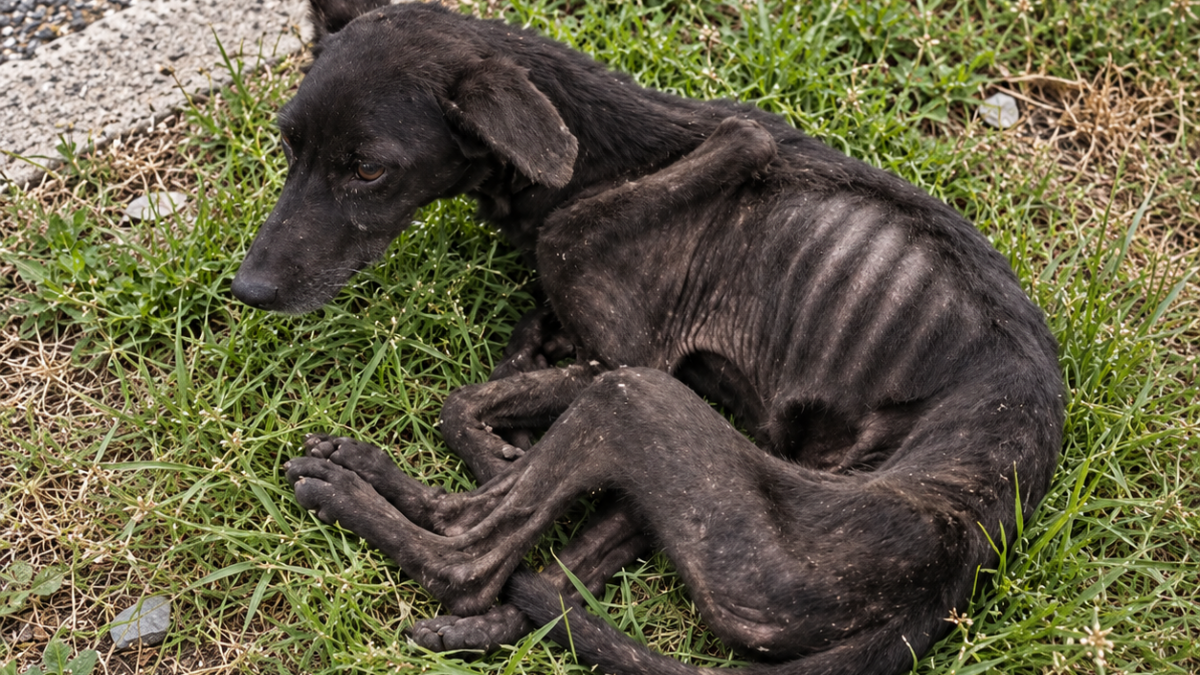
PART 2
I stayed at the clinic after closing.
Nobody asked me to leave.
The lights in the front lobby were turned off, but the treatment area remained bright.
Sombra lay beneath two blankets while fluids moved slowly through the line in his front leg.
Every few minutes, I looked at his chest.
Rise.
Fall.
Rise.
Fall.
It became the only rhythm that mattered.
Dr. Elena Ramirez returned to the kennel carrying a small bowl of soft food.
“Let’s try again.”
I sat on the floor.
“You think he’ll eat?”
“I hope he will.”
She held a little food near his nose.
Sombra sniffed weakly.
For one second, I thought he might take it.
Then he turned away.
Elena tried again.
Nothing.
“He smells it,” I said.
“Yes.”
“So why won’t he eat?”
“Sometimes severely malnourished animals lose appetite even when they desperately need calories. Pain, anemia, dehydration and stress all contribute.”
I looked at the untouched bowl.
“Can he survive without eating tonight?”
“We won’t let it get that far.”
She explained the feeding tube carefully.
I understood perhaps half of the medical details.
What I understood completely was the conclusion.
Sombra needed nutrition.
His body no longer had the luxury of waiting until he felt hungry.
“Do it.”
Elena looked at me.
“He isn’t legally your dog yet.”
“He doesn’t belong to the person who left him.”
“We don’t know that.”
I stared at her.
She held my gaze.
“I agree with you emotionally,” she said. “Legally, we need animal control involved.”
“Will that delay treatment?”
“No. Emergency care comes first.”
“Then treat him.”
She nodded.
“We already are.”
Animal control arrived shortly after midnight.
Officer Marcus Hale had worked with our rescue before.
He stepped into the treatment area, saw Sombra and stopped.
“Jesus.”
Elena looked up sharply.
“Keep your voice down.”
“Sorry.”
Marcus crouched beside the kennel.
“This the park dog?”
“Yes.”
“Any chip?”
“None detected.”
He took photographs.
Body condition.
Collar area.
Legs.
Teeth.
Every injury that might later matter.
Sombra barely reacted.
Marcus stood.
“Anyone see who abandoned him?”
“I asked. Nobody did.”
“Cameras?”
“The park entrance might have one.”
“City-owned?”
“I think so.”
He nodded.
“I’ll check.”
My anger sharpened.
“You think we can find who did this?”
“I think we collect facts first.”
“Someone left a dog who couldn’t stand beside a road.”
“Yes.”
“They knew.”
“Maybe.”
I hated that word.
“Marcus.”
He looked at me.
“If you want a case that survives contact with a prosecutor, let me use words I can prove.”
I said nothing.
He was right.
I still hated it.
Sombra cried when the staff positioned him for the feeding tube.
I stood near his head.
“Look at me.”
His eyes found mine.
“I’m right here.”
His breathing came fast and shallow.
“You don’t know me yet.”
His ear twitched.
“But I’m staying.”
The tube was placed successfully.
The first feeding was tiny.
Measured.
Controlled.
His body had been deprived for so long that even saving him had to happen carefully.
Too much too fast could create another crisis.
That night, I slept in a chair beside the kennel.
At 4:12 in the morning, I woke because something touched my shoe.
Sombra’s front paw had moved through the kennel bars.
Only an inch.
Maybe less.
I lowered my hand.
He did not pull away.
My fingers touched his paw.
“Still here.”
His eyes closed again.
The next morning, his blood values remained frightening.
Elena sat with me in the small consultation room.
“He may need a transfusion if these numbers continue dropping.”
“Can you do that here?”
“Yes.”
“Then do it.”
She almost smiled.
“You keep saying that like money doesn’t exist.”
“I’ll figure it out.”
“The rescue has an emergency fund.”
“Use it.”
“It won’t cover everything.”
“Then I’ll figure out the rest.”
“Maya.”
I looked at her.
“You haven’t slept.”
“I slept in a chair.”
“That does not count.”
“It counted in college.”
“This isn’t college.”
I rubbed my face.
“Tell me what matters.”
She pointed at the chart.
“His red blood cell level is dangerously low. He’s severely underweight. He has pressure sores beginning over his hips. His rear-limb weakness is partly from trauma, partly from muscle wasting.”
“Can he walk again?”
“That is too early to answer.”
I swallowed.
“Could the injury have permanently damaged him?”
“Yes.”
There it was.
The answer I had been avoiding.
“But,” she continued, “I’m not seeing the worst-case spinal damage I feared from the first exam.”
I looked up.
“What does that mean?”
“It means there is reason for cautious hope.”
I hated cautious hope.
I also grabbed it with both hands.
By afternoon, Marcus called.
“I found camera footage.”
I stepped into the hallway.
“From the park?”
“Yes.”
My heart began pounding.
“What does it show?”
“A vehicle entering at 5:43 yesterday morning. Dark pickup. Stops near the east lot.”
“And?”
“Driver exits.”
My fingers tightened around the phone.
“Can you see him?”
“Not well enough for identification from that angle.”
“What happens next?”
Marcus paused.
“You sure you want the details?”
“Yes.”
“He lowers something from the truck bed.”
I closed my eyes.
“Sombra?”
“Looks like him.”
“Lowers?”
“More like drags a blanket with the dog on it.”
Every muscle in my jaw tightened.
“Then what?”
“Leaves.”
“How long was he there?”
“The man?”
“No. Sombra.”
Marcus understood.
“From 5:45 yesterday morning until you picked him up around four in the afternoon today.”
Thirty-four hours.
Sombra had been unable to stand beside that road for more than a day.
People had walked past.
Cars had passed.
Rain had fallen briefly the previous night.
I had seen mud dried into his coat.
“Can you get the license plate?”
“Partial.”
“Enough?”
“Maybe.”
“Find him.”
“Maya.”
“Please.”
“We’re working it.”
I went back into the treatment room.
Sombra was awake.
His eyes followed me.
I knelt.
“You weren’t lost.”
He blinked.
“You didn’t wander there.”
My throat tightened.
“Somebody carried you there because you couldn’t even walk.”
His face rested against the blanket.
I wanted revenge.
Not the word people use casually.
Real revenge.
I wanted whoever had done this to feel helpless.
To depend on someone.
To wait for food.
To know pain without treatment.
The thought frightened me.
So I sat down beside Sombra.
He had already survived cruelty.
He did not need me to create more of it.
He needed me useful.
The next two days were slow.
Pain medication.
Tube feeding.
Fluids.
Monitoring.
More bloodwork.
Sombra spent most of his time asleep.
When awake, he watched doors.
Every time someone entered, his eyes moved first toward their hands.
It told me enough.
On the third morning, I brought chicken and rice prepared exactly the way Elena approved.
“Homemade?”
She examined the container.
“No seasoning.”
“Correct.”
“No onion?”
“Correct.”
“No garlic?”
“Correct.”
“You are trainable.”
“I rescue dogs.”
“Same principle.”
I carried the bowl to Sombra.
He sniffed.
Nothing.
I dipped one finger into the broth and held it close.
His nose moved.
“Come on.”
One lick.
That was all.
I froze.
Elena froze.
Sombra licked again.
I whispered, “Did you see that?”
“I saw.”
He turned away.
Three licks.
Tiny.
Almost nothing.
But I smiled for the first time in three days.
“You tasted it.”
Sombra’s eyes closed.
“Do it again tomorrow.”
The next day, he took five licks.
The day after that, he swallowed a piece of chicken smaller than my fingernail.
I cried.
Elena pretended not to notice.
News about him began spreading through the community.
Someone who had seen our rescue truck at the clinic asked about the black dog.
A volunteer posted a factual update with the clinic’s permission.
No graphic photographs.
No accusations.
Just a dog named Sombra fighting to survive.
Messages began arriving.
A third-grade classroom sent construction-paper cards.
One read:
**Dear Sombra, please get strong. My dog was scared too and now she sleeps on my bed.**
Another said:
**You are not a shadow. You are a star.**
I read that one twice.
A retired man named Walter mailed a handwritten letter.
He wrote that he had served in Vietnam and understood what it meant to come home injured and frightened.
He ended with:
**You don’t have to understand the words. Just stay long enough to hear people speak kindly to you.**
I read it beside Sombra’s kennel.
His eyes were open.
“Walter says you’re stubborn.”
I improvised that part.
Sombra blinked.
“He means it as a compliment.”
I read every letter aloud.
Not because I believed Sombra understood English.
Because tone matters.
Routine matters.
Presence matters.
He heard his name followed by gentle voices.
Day after day.
The tube stayed in place.
But the bowl mattered more.
A week after rescue, I brought his breakfast into the treatment room.
Sombra lifted his head before I reached the kennel.
I stopped.
Elena was behind me.
“Did you see that?”
“He smelled breakfast.”
Sombra’s nose pointed toward the bowl.
I knelt.
“You want this?”
He tried to move forward.
His front paws pulled.
His rear legs dragged slightly.
I pushed the bowl close enough that he did not need to strain.
Sombra lowered his face.
Then ate.
Not one lick.
Not one tiny piece.
He ate.
Slowly.
Weakly.
But voluntarily.
I covered my mouth.
Elena put a hand on my shoulder.
“Let him work.”
Sombra paused.
Looked at me.
Then ate again.
After five minutes, Elena removed the bowl.
“That’s enough.”
I wanted to argue.
Sombra did too.
For the first time, he whined because food had disappeared.
Elena smiled.
“Best complaint he’s made all week.”
Over the next several days, the tube became less important.
His appetite returned.
His bloodwork improved.
Not normal.
Better.
Better became our favorite word.
His gums were less pale.
Better.
His temperature stabilized.
Better.
He held his head up longer.
Better.
He gained less than a pound.
Better.
Then Marcus called.
“We identified the truck.”
I left the clinic room immediately.
“Who owns it?”
“A man named Rafael Ortega.”
“Does he own Sombra?”
“We don’t know yet.”
“Have you spoken to him?”
“Not yet. We’re going now.”
“Take me.”
“No.”
“Marcus.”
“Absolutely not.”
“I found Sombra.”
“And that gives you standing to testify about how he was found. It does not make you part of an interview.”
“I want to see his face.”
“That is exactly why you’re not coming.”
I paced the hallway.
“Call me afterward.”
“When I can.”
The call came three hours later.
Marcus sounded tired.
“Rafael says the dog belonged to his brother.”
I stopped walking.
“Where’s the brother?”
“Different address.”
“Did Rafael admit dumping him?”
“He admitted transporting him to the park.”
“Why?”
“He says his brother told him the dog was dying and wanted him removed from the property.”
My stomach turned.
“Removed?”
“I’m giving you his statement, not endorsing the language.”
“What happened a month ago?”
“We’re working on that.”
“Marcus.”
He sighed.
“Rafael says Sombra was hit by a vehicle outside the brother’s home approximately four weeks ago.”
There it was.
Exactly what Elena suspected.
“What did they do?”
“He says his brother moved the dog into the yard.”
“Did they take him to a vet?”
“Not according to Rafael.”
“Why?”
“Money.”
I laughed once.
Coldly.
“Food costs money too.”
“Yes.”
“And they stopped giving him that?”
“He claims the dog stopped eating.”
“Sombra ate chicken for me after a week of medical stabilization.”
“I know.”
“Did anyone even try to help him?”
“That’s what we’re establishing.”
“Who is the brother?”
“Mateo Ortega.”
“What happens now?”
“We document.”
Again that word.
I understood it better this time.
Documentation was not delay.
It was ammunition.
The next morning, a woman came to the clinic asking for Sombra.
The receptionist called me.
“There’s someone here claiming she knows him.”
I walked into the lobby.
She was perhaps fifty.
Gray sweater.
Red eyes.
She held an old photograph.
“Are you the rescuer?”
“Yes.”
“My name is Teresa.”
She extended the photo.
Sombra was standing in a yard.
Healthy.
Muscular.
Shiny black coat.
Blue collar.
I barely recognized him.
“That’s him?”
She nodded.
“What do you know?”
“I live next door to Mateo.”
My stomach tightened.
“How long?”
“Eight years.”
“Was Sombra his dog?”
“Yes.”
The answer came without hesitation.
“Since he was a puppy.”
I looked again at the photograph.
Sombra looked loved.
That made everything more confusing.
“Was he always treated badly?”
Teresa lowered her eyes.
“No.”
“What happened?”
“Mateo lost his job.”
I waited.
“Then his wife left. He started drinking.”
“That explains him. It doesn’t explain Sombra.”
“I know.”
Her eyes filled.
“I should have done more.”
“What did you see?”
“After the accident, Sombra dragged himself into their driveway.”
“You saw him get hit?”
“No. I heard brakes and then crying. I looked outside.”
“Did Mateo take him anywhere?”
“No.”
“Why didn’t you call animal control?”
“I asked him if he needed help.”
“That’s not what I asked.”
She flinched.
I regretted my tone immediately.
“Sorry.”
“No. You’re right.”
She twisted the edge of her sweater.
“He said a vet wanted too much money. Said Sombra would recover.”
“Did he?”
“You’ve seen him.”
I breathed slowly.
“What happened over the next month?”
“Sombra stayed behind the house.”
“Could he walk?”
“At first, a little.”
“And later?”
She shook her head.
“Less.”
“Was he being fed?”
“I saw bowls.”
“Did you see food in them?”
“No.”
Teresa started crying.
“I brought food twice.”
I stared at her.
“Twice?”
“I put it over the fence when Mateo wasn’t home.”
“Did Sombra eat?”
“The first time.”
“And second?”
“He barely moved.”
“Why didn’t you call someone?”
“I was afraid of Mateo.”
“Why?”
“He gets angry.”
“Did he threaten you?”
“Once. Over another issue.”
I stopped.
This was no longer just simple neglect in my mind.
Fear had surrounded Sombra.
Different people had known pieces.
Nobody had acted soon enough.
“Would you speak to animal control?”
Teresa looked toward the treatment-room door.
“Can I see him?”
“Not yet.”
Her face fell.
“Will you speak to them?”
“Yes.”
“Then I’ll call Marcus.”
Teresa gave a full statement.
She turned over photographs from previous years.
Healthy Sombra sleeping beneath a patio table.
Sombra wearing a Christmas bandanna.
Sombra beside Mateo at a barbecue.
One photograph showed Mateo kneeling with both arms around him.
I hated that one most.
Not because it proved Mateo had never cared.
Because it proved he once had.
Cruelty is easier to understand when you imagine someone incapable of love.
The photograph denied me that comfort.
Mateo had once loved Sombra.
Then at some point, his problems had become more important than the animal depending on him.
That was worse in a different way.
Marcus visited Sombra two days later.
The dog was eating half his meals voluntarily now.
He still could not stand.
Marcus crouched beside him.
“Looking better.”
Sombra sniffed his hand.
“No bite?”
“Not yet.”
Marcus rubbed his ear gently.
I watched.
“Are they being charged?”
“Case is with the prosecutor.”
“Both?”
“Possible charges related to neglect and abandonment are being reviewed.”
I looked at Sombra.
“What about the injury?”
“We have veterinary documentation showing it was old.”
“Can you prove they knew?”
“Teresa says Mateo knew.”
“Rafael knew enough to dump him.”
Marcus glanced at me.
“Yes.”
“Tell me something useful.”
He smiled faintly.
“You’re getting better at asking.”
“So?”
“We recovered messages between the brothers.”
I stopped breathing for half a second.
“What messages?”
“Rafael texted Mateo two days before Sombra was abandoned.”
Marcus paused.
“He wrote: **That dog needs a vet. He can’t get up.**”
My hands became fists.
“And Mateo?”
“He replied: **I’m not paying for that dog. Just get him out of here.**”
The room went quiet.
Even though I had wanted proof, hearing it hurt.
“He said that?”
“Yes.”
“Just get him out of here.”
“Yes.”
I looked at Sombra.
His eyes were half closed.
He had lived with Mateo since puppyhood.
Years.
Then one sentence reduced him to something that needed removal.
Marcus continued.
“Rafael then asked what he was supposed to do with him.”
“And?”
“Mateo told him to leave him somewhere.”
I sat down.
“Does that help the case?”
“Yes.”
“Good.”
I surprised myself with how calm the word sounded.
Not rage.
Not revenge.
Good.
Let the text messages exist.
Let dates exist.
Let the photographs exist.
Let veterinary records exist.
Let everything Sombra could not say become evidence.
Three weeks after rescue, Elena said the words I had been waiting for.
“He can leave the hospital.”
I stared at her.
“Today?”
“Today.”
“Are you sure?”
“You’ve been asking me for three weeks when he can leave.”
“I’m allowed to panic when you finally say yes.”
“He still needs extensive care.”
“I know.”
“Physical rehabilitation.”
“I know.”
“Follow-up bloodwork.”
“I know.”
“Controlled exercise.”
“I know.”
“Possibly long-term weakness.”
“I know.”
“And he needs somewhere calm.”
I smiled.
“We prepared a room.”
Elena raised one eyebrow.
“Of course you did.”
Our rescue shelter had a small medical wing.
Nothing fancy.
Six private rooms.
Rubber flooring.
Washable walls.
Soft beds.
Sombra got the quietest one.
I carried him inside.
He was heavier now.
Still too thin.
But no longer terrifyingly weightless.
“Your room.”
I lowered him onto a thick orthopedic bed.
He sniffed it.
Then looked toward the doorway.
“You’re staying.”
His eyes followed me as I stepped backward.
“I’m not leaving you.”
I sat on the floor.
Sombra rested his head on the bed.
That first night, I slept beside him again.
Not because medically necessary.
Because every time I stood to leave, his eyes widened.
At 2:00 a.m., I woke with his nose pressed against my wrist.
“Personal boundaries.”
His tail moved.
One small thump.
I froze.
“Sombra.”
Another thump.
I sat up.
“Do that again.”
Nothing.
“Come on.”
His eyes closed.
I laughed quietly.
“You’re cruel.”
The next morning, a volunteer walked into the room carrying breakfast.
Sombra’s tail moved twice.
She gasped.
“He wagged!”
“I saw it first.”
“That is not how rescue works.”
“It is today.”
Within a week, his tail wagged regularly.
At food.
At my voice.
At Elena when she visited.
At Teresa when she was finally allowed to see him.
She entered Sombra’s room trembling.
He looked up.
“Sombra?”
His ears lifted.
Teresa dropped to her knees.
“Oh, sweetheart.”
Sombra stared.
Then his tail moved.
Teresa covered her face.
“I’m sorry.”
I stood near the door.
She crawled closer.
“I should have called. I should have made somebody listen.”
Sombra sniffed her hand.
Then rested his chin against her knee.
She cried harder.
“I don’t deserve that.”
I understood.
But Sombra was not interested in deserving.
He recognized a familiar person.
That was enough.
The rehabilitation specialist arrived twice a week.
Her name was Brooke.
She assessed Sombra’s rear legs carefully.
“Muscle loss is severe.”
“Can he walk?”
“Maybe.”
I hated maybe almost as much as cautious hope.
“What determines it?”
“He needs strength, neurological function, pain control and time.”
“Does he have neurological function?”
“Some.”
She pinched gently between his toes.
Sombra pulled the paw away.
Brooke smiled.
“That’s encouraging.”
We used support slings.
At first, standing lasted two seconds.
Then three.
Sombra’s legs shook violently.
I held the harness.
“Easy.”
Brooke watched his feet.
“He’s trying to place them.”
Sombra collapsed.
I caught his weight.
“That enough?”
“For today.”
“He barely stood.”
“That was standing.”
The next session, five seconds.
Then eight.
Then twelve.
Progress in rescue is often measured in ridiculous units.
A spoonful.
A pound.
Three steps.
Five seconds.
One wag.
Every small number can become enormous when the starting point is zero.
One afternoon, nearly six weeks after I found him, Brooke positioned Sombra in the support sling.
“Okay, buddy.”
I stood in front with a piece of chicken.
“That’s cheating,” Brooke said.
“It’s motivation.”
“It’s bribery.”
“Semantics.”
Sombra smelled the chicken.
His front paws moved.
Brooke supported his hips.
One back paw shifted.
Then the other.
“Again.”
I moved backward.
Sombra stepped.
His rear legs trembled.
Another step.
I stopped breathing.
“Sombra.”
He took another.
Three steps.
Then collapsed into the sling.
I dropped to the floor beside him.
“You walked.”
His tail hit the mat.
Brooke wiped her eyes.
“Don’t make this weird.”
“You’re crying.”
“Dust.”
“We’re indoors.”
“Medical dust.”
I kissed Sombra’s forehead.
He tried to reach the chicken.
“Of course.”
I gave it to him.
The case moved forward while Sombra learned to walk again.
Mateo denied intentionally starving him.
Rafael admitted leaving Sombra at the park but claimed he believed somebody would find him.
That statement made me angrier than almost anything else.
When Marcus told me, I said, “He left an immobile dog beside a road and hoped for a stranger?”
“That is essentially his position.”
“During warm weather.”
“Yes.”
“Without water.”
“Yes.”
“After dragging him out of a truck before sunrise.”
“Yes.”
“What if nobody came?”
Marcus looked at me.
“You did.”
“That’s not an answer.”
“No. It isn’t.”
The prosecutor eventually filed charges.
I was called to give a statement, then later asked whether I would testify if necessary.
“Yes.”
No hesitation.
The first court appearance came almost four months after Sombra was found.
By then, he could walk approximately thirty feet with a support harness.
His back legs still crossed occasionally.
He fatigued quickly.
But he walked.
I left him at the shelter with Brooke.
“Don’t let him manipulate you into extra chicken.”
Brooke looked offended.
“I am a medical professional.”
Sombra was already chewing chicken.
“Hopeless.”
At court, Mateo looked older than the photographs.
Rafael looked nervous.
I sat behind Marcus.
Teresa sat two rows back.
Neither defendant looked at us at first.
The prosecutor summarized the evidence.
Veterinary records.
Park camera footage.
Partial plate match.
Rafael’s statement.
Teresa’s observations.
Text messages.
Photographs showing Sombra before and after the untreated injury.
The defense attorney emphasized financial hardship.
That mattered legally as context.
It did not erase responsibility.
At one point he said Mateo had “lacked the resources for veterinary treatment.”
The prosecutor replied that surrendering the dog to animal services, requesting assistance, contacting a rescue or even allowing a neighbor to intervene would have cost nothing compared with leaving Sombra untreated.
I watched Mateo.
He stared at the table.
I wanted him to look at the photograph.
The prosecutor displayed the image from the park.
Sombra lying beside the road.
His hip bones visible.
His back legs useless.
Mateo finally lifted his head.
His face changed.
Maybe shame.
Maybe fear of consequences.
Maybe nothing I could reliably name.
I stopped trying.
My anger did not need his expression.
The evidence existed without it.
The case did not end that day.
Courts take time.
Sombra did not care.
The next morning, while legal paperwork moved slowly through an office somewhere, Sombra walked six steps without the sling carrying his full weight.
Brooke called me from across the room.
“Don’t touch him.”
I froze.
Sombra stood near the wall.
No harness.
No hands.
His legs shook.
I crouched.
“Come here.”
Brooke whispered, “Do not pull him with food.”
“I’m not.”
Sombra took one step.
Then another.
His body swayed.
I held my hands out without touching.
“Come on.”
Third step.
Fourth.
His right rear paw slipped.
He corrected it.
Fifth.
Sixth.
Then he reached me.
I caught him as his legs folded.
“You did it.”
He licked my chin.
Brooke was crying again.
“More medical dust?”
“Shut up.”
Sombra eventually progressed from six steps to ten.
Ten to twenty.
Twenty to crossing the room.
We moved his food bowl farther from his bed.
Not because we wanted to make him work for food.
Because walking toward something he wanted gave him purpose.
One afternoon, I placed the bowl six feet away.
He stood.
No sling.
Walked.
A little crooked.
Slow.
But on his own.
I remembered carrying him from the park because his rear half could not move.
I sat on the floor and cried while he ate.
Sombra glanced at me once as if I was embarrassing him.
Probably true.
Letters continued arriving.
By then, we pinned them to one wall outside his room.
Children’s drawings.
Notes.
Photographs of rescued dogs from other families.
One envelope contained twenty dollars and a message from a woman who wrote:
**I cannot afford much, but nobody should be abandoned because treatment costs money.**
We used donations beyond Sombra’s care for the shelter medical fund.
That decision became important later.
The criminal case resolved before winter.
There was no dramatic jury verdict.
Both men entered agreements based on the evidence and charges applicable to their roles.
Rafael accepted responsibility related to abandonment.
Mateo accepted responsibility related to neglect and failure to provide necessary care.
The court imposed fines and restitution.
There were probation conditions.
Restrictions on animal ownership were included.
The exact legal penalties felt smaller than my anger had once demanded.
But they were documented.
Permanent enough to matter.
Most importantly, neither man could claim Sombra.
When Marcus told me ownership had been legally resolved, I asked the only question I cared about.
“So he’s free?”
“Yes.”
“To be adopted?”
“Yes.”
I looked through the window.
Sombra was asleep upside down in his bed.
“You know he snores now.”
“That relevant?”
“Extremely.”
Marcus smiled.
“You keeping him?”
“No.”
“You answered too fast.”
“I run a rescue.”
“You sleep beside his room.”
“I sleep beside many animals.”
“You built him a ramp.”
“He needs a ramp.”
“You bought him a blanket with his name embroidered on it.”
“That was a volunteer.”
“I saw the receipt.”
I stared at him.
“Investigators are annoying.”
“Occupational hazard.”
I had promised myself Sombra would eventually go to the right home.
Not mine.
My house already had two dogs.
My schedule was chaotic.
Sombra needed continued rehabilitation.
He deserved someone who could focus entirely on him.
That argument lasted until the first adoption application arrived.
The family looked good on paper.
Fenced yard.
Previous dog experience.
Stable household.
One adult worked from home.
I should have been thrilled.
Instead, I hated them instantly.
Not rationally.
They seemed lovely.
That was the problem.
I watched through the observation window while Sombra met them.
He wagged.
Accepted treats.
Allowed the woman to rub his chest.
Their teenage son sat on the floor and let Sombra approach.
Perfect.
I felt sick.
Brooke stood beside me.
“You look terrible.”
“I’m evaluating.”
“You’re jealous.”
“I’m not.”
“You want to bite that family.”
“They’re petting him wrong.”
“They’re petting him normally.”
“He likes slower pressure.”
“Maya.”
“I’m just saying.”
The family left after an hour.
They wanted to proceed.
I reviewed their application again.
Nothing wrong.
That night, I stayed late.
Sombra walked beside me through the shelter hallway.
No sling.
His gait still had a slight hitch.
But he was strong.
We reached his room.
I opened the door.
He entered.
Then turned around.
Instead of going to his bed, he followed me back into the hallway.
“Sombra.”
Tail wag.
“Bed.”
He sat.
“You know this word.”
He did not move.
I pointed.
“Room.”
Sombra stood.
Then walked directly past the room and pressed his body against my leg.
I looked down.
“That is emotionally manipulative.”
His tail hit the wall.
“You’re supposed to make this easier.”
He leaned harder.
I sat on the floor.
Sombra climbed partly into my lap despite being far too big.
I wrapped my arms around him.
“You almost died.”
His head rested beneath my chin.
“You know that?”
He sighed.
“I carried you in here.”
Tail thump.
“I read you letters.”
Another thump.
“I cleaned things I will never discuss publicly.”
He licked my face.
“Disgusting.”
I started crying.
Again.
Sombra did not care.
The next morning, I withdrew him from public adoption.
Our rescue director looked at me over her glasses.
“Reason?”
“Medical foster failure.”
She smiled.
“You mean adoption.”
“I know the terminology.”
“Do you?”
I signed every page.
Name.
Address.
Emergency contact.
Veterinary consent.
Ownership transfer.
When I reached the final line, my hand shook.
I signed.
Then I walked to Sombra’s room.
He was chewing an old rope toy.
“You’re unemployed.”
He wagged.
“You contribute nothing financially.”
Wag.
“You require expensive joint supplements.”
Wag.
“You snore.”
Faster wag.
“And apparently you live with me now.”
Sombra dropped the toy.
He walked toward me.
Then, because life sometimes gives you one perfect scene without asking permission, he rose onto his back legs for half a second and placed both front paws against my waist.
Months earlier, he could not stand.
Now I had to tell him to get down.
I laughed so hard I cried.
“You ridiculous dog.”
He licked my face.
We drove home that afternoon.
My dogs met him slowly.
Sombra was cautious.
Then curious.
By bedtime, he had stolen one bed and abandoned his own.
Typical.
His first night at my house, I expected anxiety.
Instead, Sombra slept for almost eleven hours.
At some point before dawn, I woke and found him beside my bed.
His head rested on my mattress.
“You need something?”
His tail moved.
I lowered my hand.
He licked my fingers.
Then lay down again.
Months passed.
Sombra became stronger.
We continued physical therapy.
Short walks became longer walks.
He still tired faster than a completely healthy dog.
His gait would probably never look perfect.
I stopped caring.
One Sunday morning, we returned to the park.
Not because Sombra needed to.
Because I did.
I parked near the place where I had first seen him.
The grass had grown.
Cars moved along the road.
Nothing marked the spot.
I clipped Sombra’s leash.
He stepped out of the truck.
Strong enough to jump down with assistance.
We walked slowly toward the grass.
I knew the exact tree.
The exact patch of pavement.
The exact place where his body had lain.
Sombra sniffed.
No fear.
No dramatic recognition.
Just smells.
I stood still.
“You spent thirty-four hours here.”
He sniffed a bush.
“Potentially dying.”
He lifted his leg.
I laughed.
“Very respectful.”
Sombra finished.
Then looked at me.
I crouched.
“The first time I saw you here, you couldn’t stand.”
He came closer.
His tail wagged.
“You cried when I picked you up.”
Sombra licked my nose.
“Now you weigh enough to injure my back.”
He sat.
I took out a treat.
His entire posture changed.
“Still food motivated.”
He took it gently.
Then I heard a vehicle behind us.
A dark pickup entered the lot.
My body reacted before my brain did.
My shoulders tightened.
My heart accelerated.
Sombra turned.
The truck parked.
A father and two children got out carrying a soccer ball.
Nothing.
No threat.
No connection.
Sombra watched them.
Then wagged because the children looked interesting.
I realized something.
Sombra had moved on faster than I had.
I had carried the park footage in my mind for months.
The blanket.
The truck.
The road.
Sombra carried something else.
The clinic.
Chicken.
Letters.
A room.
Brooke.
My house.
Morning walks.
Whatever dogs remember, his life had become larger than what happened there.
So mine needed to become larger too.
The restitution money from the case eventually came through.
Not much.
Enough to matter.
We put every dollar into an emergency treatment fund.
Then community donations expanded it.
We called it the Sombra Fund.
Not because his suffering needed memorializing.
Because his survival could become useful.
The first dog it helped was a brown shepherd found with a broken leg.
The owner had died.
No cruelty.
Just bad luck.
The rescue could have faced a choice between euthanasia and a surgery we could barely afford.
The fund covered the gap.
The second was a senior terrier with severe dental infection.
The third was a puppy with parvovirus.
One afternoon, I stood in the shelter office reviewing invoices.
Brooke leaned over my shoulder.
“You realize what this is?”
“An accounting nightmare?”
“Revenge.”
I looked at her.
She nodded toward Sombra, asleep in the doorway.
“The people who abandoned him ended up helping pay for another dog’s treatment.”
I smiled slowly.
“That’s not revenge.”
“What is it?”
I looked at Sombra.
“Better.”
Years later, I received a letter from Mateo.
Not directly.
It came through his attorney because he was not supposed to contact us without permission.
I almost threw it away.
Then curiosity won.
The letter was short.
No excuses.
No dramatic request for forgiveness.
He wrote that after losing work and his marriage, he had stopped taking care of almost everything.
Bills.
House.
Himself.
Sombra.
He admitted that seeing the court photographs forced him to confront how bad things had become.
He wrote:
**I kept telling myself I would deal with him tomorrow. Then tomorrow became weeks. By the time I understood what I had done, I was ashamed to ask anyone for help. Shame became another excuse. None of that is Sombra’s fault.**
I sat with the letter for a long time.
I did not forgive him.
Not because forgiveness was impossible.
Because I did not believe forgiveness belonged to me to give.
Sombra could not consent to it.
What I did feel was something different.
Understanding.
Not approval.
Understanding is not absolution.
It simply means admitting that terrible harm can grow from ordinary failures repeated until they become cruelty.
I showed the letter to Marcus.
“What are you going to do?”
“Nothing.”
“You going to reply?”
“No.”
“Why read it?”
I looked at Sombra asleep beneath my desk.
“To know whether he understood.”
“And?”
“I think he does.”
Marcus nodded.
“That enough?”
“No.”
Then I reconsidered.
“Maybe enough for me.”
Sombra aged.
His muzzle turned gray.
His injured rear legs developed arthritis earlier than expected.
Some mornings, he needed help standing.
The irony hurt.
But this time weakness came with medicine.
Soft bedding.
Warm floors.
Veterinary appointments.
Hands that lifted him without abandoning him afterward.
When he struggled, I used the same support harness from rehabilitation.
He hated it.
“You wore this before.”
Sombra glared at me.
“You used to be grateful.”
He sneezed.
“Rude.”
Our morning walks became shorter.
Then slower.
But we still walked.
One block.
Half a block.
To the mailbox.
Sometimes only to the front yard.
It did not matter.
He had once been unable to take a single step.
Every step after that had always felt like a gift.
On his tenth birthday—or the date we chose as his birthday because nobody knew exactly—I took him to the shelter.
The volunteers had hung old photographs along one wall.
Sombra at the clinic.
Sombra eating for the first time.
Sombra in the sling.
Sombra taking six steps.
Sombra on adoption day.
Children from the same school that had once sent him letters came to visit.
Different children now.
Same teacher.
She brought the original card that said:
**You are not a shadow. You are a star.**
She had kept a copy.
The student who wrote it was in high school.
I sent him a photograph.
Sombra wore a paper birthday bandanna for exactly eleven seconds before pulling it off.
Everyone laughed.
Later, after the visitors left, I sat beside him.
“You’ve had a weird life.”
He leaned against me.
“You know how many dogs your fund helped?”
At that point, dozens.
Emergency exams.
Surgeries.
Medication.
Food.
No dog should be allowed to deteriorate because someone was ashamed to ask for help.
So the rescue added another program.
Owners in crisis could call before abandoning an animal.
Temporary food.
Emergency boarding referrals.
Low-cost veterinary resources.
Anonymous assistance when possible.
We used Sombra’s story carefully.
Not as humiliation.
As warning.
Ask sooner.
Ask before pain becomes neglect.
Ask before shame becomes cruelty.
One winter evening, Sombra had trouble rising.
I slid my arm beneath his chest.
His eyes met mine.
For a second, I was back at the park.
The first lift.
The weightless body.
The cry against my chest.
“Easy.”
I raised him.
His legs found the floor.
He stood.
Old now.
Unsteady.
But standing.
“There you go.”
He walked toward the kitchen.
Of course.
Dinner.
I smiled.
Food had been central to so much of his life.
The starvation.
The feeding tube.
The first chicken.
The carefully measured meals.
The healthy appetite.
The stolen sandwich.
The treat jar he learned to open with his nose.
Now his bowl waited in the same spot every day.
Nobody removed it to punish him.
Nobody forgot.
Nobody left him hungry because tomorrow felt easier.
One night, thunder rolled over the house.
Sombra climbed onto the couch beside me.
He had never been especially afraid of storms.
I rested my hand on his ribs.
Not visible anymore.
Covered by healthy weight, muscle and age.
His breathing was slow.
I thought about the first veterinarian saying she would try to save him.
Try.
Such a small word.
Everything had started with trying.
The clinic tried.
Sombra tried.
Brooke tried.
Marcus tried.
Teresa tried too late, then tried again by telling the truth.
Even the community, through letters and twenty-dollar envelopes, tried.
Nobody knew whether he would stand again.
We acted anyway.
That may be the most important thing rescue ever taught me.
You do not need certainty before kindness.
You help because suffering is in front of you.
The outcome comes later.
When Sombra was very old, I took him to the park one final time.
He could not walk far.
I brought a wagon with blankets.
I lifted him inside.
Much heavier than that first day.
He rode with his head raised.
We stopped near the tree.
I helped him down.
His paws touched the grass.
He stood with the harness.
I supported most of his weight.
“Recognize this?”
He sniffed.
Probably not.
He took one step.
Then another.
Three.
Four.
I laughed softly.
“All these years and you still have to prove something.”
Sombra stopped.
He leaned against my leg.
Traffic moved nearby.
Children played in the distance.
A couple walked past with a young dog.
Nobody knew they were passing the place where a starving animal had once been left to disappear.
That was okay.
The place did not own his story anymore.
I knelt.
Sombra slowly lowered himself beside me.
I stroked the gray fur around his face.
“You were never a shadow.”
His eyes closed halfway.
“You were just waiting for somebody to see you.”
He licked my wrist once.
I sat there until the sun began dropping.
Then I lifted him into the wagon.
Years earlier, I had carried Sombra away from that park because he had no strength left.
This time, I carried him because he had used that strength for an entire lifetime.
At home, he ate dinner.
Not much.
Enough.
Then he walked slowly to his bed.
The yellow light from the hallway fell across his black coat.
Shadow.
That was why I had named him Sombra.
But the name eventually came to mean something else.
A shadow exists because somewhere nearby, there is light.
Sombra found his.
Not all at once.
A clinic light at midnight.
A bowl of chicken.
A letter from a stranger.
A volunteer crying over six steps.
A courtroom where his silent suffering finally had witnesses.
A front door that always opened for him.
A food bowl that was never empty for long.
A hand beneath his chest when his legs grew tired.
When people asked me later what part of Sombra’s story felt like justice, they often expected me to mention the court case.
The charges.
The restitution.
The ownership restrictions.
Those mattered.
But they were not the part I remembered first.
I remembered the man who said Sombra should simply be removed eventually having to answer for that decision.
I remembered money connected to Sombra’s suffering paying for treatment instead of abandonment.
I remembered neighbors learning that fear and silence could have consequences too.
I remembered a shelter creating resources so another desperate owner might choose help before neglect.
Most of all, I remembered Sombra standing.
That was his revenge.
He stood when somebody had left him believing he never would.
He walked when his body had been starved nearly beyond repair.
He ran short, crooked bursts across my yard when his doctors once could not promise he would ever use his back legs normally again.
He grew old in a house where nobody ever had to wonder whether he would be fed.
He became the dog people recognized at the shelter.
The dog children wrote letters to.
The dog whose medical fund kept saving animals long after his own emergency ended.
Somebody had tried to reduce him to a problem that could be left beside a road before sunrise.
Sombra answered by becoming impossible to forget.
And every time I watched him struggle onto his feet, steady himself, and take another determined step toward me, I remembered the dog I had lifted from the grass all those years earlier.
Back then, he had collapsed into my arms because he had no strength left to resist.
Now he came to me because he knew exactly where he belonged.
Sombra had once been abandoned like his life had no value.
By the end of his story, there was no part of his life that had been wasted.
Not even the pain.
Because the dog someone left behind became the reason other dogs were found sooner.
Fed sooner.
Treated sooner.
Saved sooner.
And when I looked at him sleeping safely inside my home, I finally understood that the most satisfying answer to cruelty was never making someone else suffer the same way.
It was making sure their cruelty failed.
They left Sombra beside a road to disappear.
He survived.
They left his injury untreated.
He stood again.
They let him starve.
He spent the rest of his life knowing there would always be another meal.
They treated him like something disposable.
He became deeply, permanently loved.
And the shadow they abandoned in that park became the light that helped lead countless other animals home.
He Was Left in a Park Unable to Stand—Then the Dog Everyone Had Given Up On Did Something Nobody Expected
[FACEBOOK CAPTION — 700–800 WORDS]
The dog beside the road was so badly starved that I thought he was already dead until his eyes moved toward me.
When I lifted him, his useless back legs hung beneath a body that weighed almost nothing, and instead of fighting me, he pressed his face against my chest and began to cry.
I believed abandonment was the worst thing that had happened to him—until the veterinarian showed me what his body had been carrying for nearly a month.
The message reached me shortly before sunset.
Black dog abandoned near the park. Cannot stand.
There was one photograph attached.
A thin body lay beside the pavement, half on the grass, as cars passed only yards away.
I grabbed blankets, water, a leash and my emergency kit.
By the time I reached the park, several people were standing nearby.
Nobody was close to him.
“Is that the dog?” I asked.
A man pointed.
“He’s been there since yesterday.”
I walked slowly toward him.
At first, nothing moved.
Then his eyes followed me.
“Hey, buddy.”
One ear twitched.
That tiny movement felt enormous.
I crouched several feet away and placed a bowl of water on the ground.
He tried to raise himself.
His front legs pushed.
His rear half barely moved.
He collapsed again.
“Don’t.”
I slid the bowl closer.
“You don’t have to come to me.”
He drank lying on his side.
Up close, his condition was horrifying.
His ribs pressed sharply through his coat.
His hips looked enormous because there was almost no muscle left around them.
His belly had pulled inward.
His rear legs rested at an unnatural angle.
“This didn’t happen overnight,” I whispered.
A woman behind me said, “Someone must have dumped him. He wasn’t here the morning before.”
I looked toward the parking lot.
“Did anyone see a vehicle?”
Nobody answered.
I unfolded a blanket beside him.
“I need to move you.”
Dogs in severe pain sometimes bite.
They are not being vicious.
They are protecting themselves.
I kept my hands where he could see them.
He watched every movement.
When I carefully slid one arm beneath his chest and another beneath his hips, his whole body stiffened.
Then he surrendered.
Completely.
He weighed almost nothing.
As I lifted him against my chest, a strange trembling sound came from his throat.
For a second, I thought he could not breathe.
Then I understood.
He was crying.
His face pressed into my shirt.
“I know.”
His body shook.
“I’ve got you.”
He did not know me.
He had no reason to trust me.
Yet he rested against my chest as if he had finally run out of reasons to fight.
The nearest veterinary clinic was almost forty minutes away.
I called while driving.
“I have an emaciated male dog with a possible spinal or pelvic injury. He cannot stand.”
“We’re closing soon,” the receptionist said.
“He might not have until morning.”
There was a brief pause.
“Bring him.”
Two technicians met me at the entrance.
We placed him on a padded stretcher.
He cried again when they touched his hips.
“Easy,” one technician whispered.
Dr. Elena Ramirez examined him immediately.
She checked his gums.
Her expression changed.
“How long has he been like this?”
“I don’t know.”
She gently moved his rear legs.
He whimpered.
“Could he be paralyzed?”
“I need imaging before I answer that.”
Bloodwork came first.
Then X-rays.
Then an IV.
The dog lay beneath warm blankets while I sat beside him.
His black coat cast a thin shadow across the kennel floor.
“You need a name.”
His eyes opened.
“Sombra.”
His ear moved.
“Shadow.”
Almost an hour later, Elena called me into the imaging room.
She pointed toward the lower part of his body.
“This injury is old.”
“How old?”
“Several weeks. Around a month would fit.”
My stomach tightened.
“What happened?”
“Impact trauma is possible. A vehicle strike would fit some of what we’re seeing.”
“A month?”
She nodded.
“He has probably been trying to survive with significant untreated pain.”
I stared through the open doorway toward his kennel.
“And the starvation?”
Elena pulled up the blood results.
“That worries me just as much tonight.”
His blood values were dangerously low.
His body was severely depleted.
This was not a dog who had simply missed several meals after getting lost.
Sombra had been deprived for a long time.
A technician offered him food.
He sniffed.
Then turned his head away.
My stomach dropped.
“He won’t eat.”
Elena looked at him.
“If that continues, we may need a feeding tube.”
I stared through the kennel bars.
Sombra had survived an injury nobody treated.
He had survived weeks of hunger.
He had survived being left beside a road unable to stand.
But lying beneath those blankets, his eyes barely open, he still had one more battle ahead of him.
He had to decide whether his exhausted body could keep fighting.
[END OF FACEBOOK CAPTION]
[FIRST COMMENT / FULL STORY CONTINUATION]
I stayed at the clinic that night.
Nobody told me to.
Nobody needed to.
The front lights went dark after closing, but the treatment room remained bright.
Sombra lay beneath two blankets with fluids running through an IV line in his front leg.
Every few minutes, I checked his chest.
Rise.
Fall.
Rise.
Fall.
That tiny movement became the only thing I cared about.
Elena returned with a small dish of soft food.
“Let’s try again.”
She placed it beneath his nose.
Sombra sniffed.
Nothing.
She touched a tiny amount to his lips.
He turned away.
“He has to eat,” I said.
“Yes.”
“So what happens if he won’t?”
“We support him until he can.”
The feeding tube was placed later that night.
The first meal was tiny.
Everything had to be tiny.
His body had been deprived for so long that even feeding him too aggressively could cause dangerous complications.
I hated that.
A starving dog finally had people willing to feed him, yet we still had to hold back.
At midnight, Officer Marcus Hale from animal control arrived.
He had helped our rescue before.
He took one look at Sombra and stopped.
“Damn.”
Elena glanced at him.
“Quiet.”
“Sorry.”
Marcus photographed everything.
The ribs.
The hips.
The rear legs.
The sores beginning over the bones.
The filthy coat.
The place where a collar had once rested.
“Anyone see who left him?”
“No.”
“Cameras at the park?”
“Maybe near the entrance.”
He nodded.
“I’ll check.”
I followed him into the hallway.
“Marcus.”
“What?”
“Find who did this.”
His expression hardened.
“I’m going to find what I can prove.”
“Someone left him there unable to stand.”
“I know.”
“He could have died.”
“I know.”
“Then find them.”
Marcus held my gaze.
“Evidence first. Anger second.”
I hated hearing it.
But he was right.
At 4:12 the next morning, I woke in a chair beside the kennel because something had touched my shoe.
Sombra’s paw rested against it.
Just the tips of his toes.
I lowered my hand.
“Still here.”
His eyes closed.
For the first time since I had found him, I believed there might be enough time for hope.
The next morning, his bloodwork remained frightening.
Elena sat with me in the consultation room.
“His red blood cells are dangerously low.”
“Will he need a transfusion?”
“Possibly.”
“Do whatever he needs.”
“Maya, treatment is going to become expensive.”
“I’ll figure it out.”
She looked exhausted.
So did I.
“What about his legs?”
“There’s neurological response.”
“Meaning?”
“He can feel them.”
I leaned forward.
“That’s good?”
“It’s better than no response.”
“Will he walk?”
“I can’t promise that.”
I stared at the floor.
“I hate that answer.”
“I know.”
“But you’re not saying no.”
“No.”
That was enough.
Not much.
But enough.
Later that afternoon, Marcus called.
“We found video.”
I stood so quickly my chair scraped the wall.
“From the park?”
“Yes.”
“What does it show?”
“A dark pickup entering before sunrise.”
My stomach tightened.
“The driver stops near the east side.”
“And?”
“He gets out.”
Marcus paused.
“Then he removes the dog from the truck.”
I closed my eyes.
“How?”
“On a blanket.”
Sombra had not walked into that park.
He had not wandered there after becoming injured.
Someone had physically transported a dog who could not stand and left him beside the road.
“What time?”
“5:43 a.m.”
“When did I find him?”
“Just after four the next afternoon.”
More than a day.
Sombra had spent more than thirty hours helpless beside that road.
No food.
No water.
No shelter.
I returned to his kennel.
“You weren’t lost.”
He opened his eyes.
“Somebody put you there.”
My anger became so sharp it frightened me.
I wanted whoever had done it to understand helplessness.
I wanted them to know what hunger felt like.
Then Sombra moved his paw toward me again.
And I understood something.
He did not need my rage.
He needed me useful.
So I sat down.
“I’ll let Marcus handle them.”
His eyes closed.
“You and I have other work.”
For three days, progress was almost invisible.
Tube feeding.
Fluids.
Medication.
Bloodwork.
Sleep.
On the fourth morning, I brought homemade chicken and rice prepared exactly as Elena instructed.
“No seasoning?” she asked.
“No.”
“No onion?”
“No.”
“No garlic?”
“I know how dogs work.”
“That remains under investigation.”
I carried the bowl to Sombra.
His nose moved.
I dipped one finger into the broth.
“Come on.”
His tongue touched it.
Once.
I froze.
Then again.
“Did you see that?”
Elena nodded.
Sombra turned away.
Only two licks.
But they were his choice.
The next day, he took four.
Then a tiny piece of chicken.
By the end of the week, something changed.
I entered with breakfast.
Sombra lifted his head before I reached him.
I stopped.
“He smells it.”
Elena smiled.
I placed the bowl near his face.
He ate.
Slowly.
Weakly.
But by himself.
I covered my mouth.
Sombra paused and looked at me.
Then continued.
When Elena removed the bowl after a carefully measured portion, Sombra actually whined.
She laughed.
“That is the best complaint I’ve heard all week.”
His appetite returned slowly after that.
So did something else.
His personality.
He began watching the door when I arrived.
His tail moved whenever I said his name.
The first wag was so small I almost missed it.
The second was unmistakable.
“That was for me.”
A technician laughed.
“That was for the food.”
“Let me have this.”
Letters began arriving after our rescue posted a careful update.
A classroom sent handmade cards.
One child wrote:
Dear Sombra, my dog was scared when we got her too. Now she sleeps on my pillow. I hope you get a pillow.
Another card said:
You are not a shadow. You are a star.
I read that one aloud twice.
A retired veteran sent a handwritten letter.
He wrote that he understood something about being injured and depending on strangers.
His final line stayed with me.
You don’t have to understand our words, Sombra. Just stay long enough to hear kindness in our voices.
So I read every letter beside his kennel.
Sombra probably understood none of the sentences.
But he learned the sound of his name followed by gentleness.
That mattered.
Ten days after rescue, Marcus called again.
“We identified the truck.”
My hand tightened around the phone.
“Who owns it?”
“A man named Rafael Ortega.”
“Does he own Sombra?”
“He says no.”
“Then why was Sombra in his truck?”
“His brother told him to remove the dog.”
I went silent.
“What brother?”
“Mateo Ortega.”
“Is Mateo the owner?”
“According to Rafael, yes.”
“And the injury?”
“Rafael says Sombra was hit by a vehicle about a month before being abandoned.”
Exactly what Elena had suspected.
“What happened afterward?”
“He stayed in the yard.”
“No vet?”
“Apparently not.”
“Why?”
“Money.”
I looked through the clinic window.
Sombra was licking food from a technician’s hand.
“They couldn’t afford a vet, so they let him suffer?”
“That is what we’re investigating.”
“Did they feed him?”
“Rafael claims Sombra stopped eating.”
“That dog has been eating every day since his pain became controlled.”
“I know.”
“Did Mateo ask a rescue for help?”
“Not that we have found.”
“Animal control?”
“No.”
“A shelter?”
“No.”
The anger returned.
“What did he do?”
Marcus was quiet.
“Eventually he told Rafael to get the dog off the property.”
I gripped the phone.
“And Rafael chose the park.”
“Yes.”
Two days later, a woman named Teresa came to the clinic.
She carried photographs.
Healthy Sombra.
Strong.
Shiny.
Standing beside a barbecue.
Sleeping beneath a patio table.
Wearing a ridiculous Christmas bandanna.
I barely recognized him.
“You knew him?”
“I live beside Mateo.”
“For how long?”
“Eight years.”
“Was Sombra always neglected?”
“No.”
Her answer surprised me.
“Mateo loved him once.”
Once.
That word hurt more than I expected.
Teresa told me Mateo had lost his job.
His marriage fell apart.
He started drinking heavily.
Then Sombra was hit by a vehicle.
“I told him the dog needed a vet,” she said.
“What did he say?”
“That he couldn’t afford it.”
“Did you offer help?”
“I brought food.”
“How often?”
“Twice.”
I swallowed my frustration.
“Why didn’t you call someone?”
She looked ashamed.
“Mateo gets angry.”
“Did he threaten you?”
“Once.”
Teresa began crying.
“I thought Sombra would recover.”
I looked toward the treatment room.
“He didn’t.”
“I know.”
“Will you talk to animal control?”
She nodded immediately.
“Yes.”
That statement became important.
So did a series of messages Marcus later recovered.
Rafael had texted Mateo:
That dog needs a vet. He can’t get up.
Mateo replied:
I’m not paying for that dog. Just get him out of here.
I read the words three times.
Then I stopped.
There was no reason to read them again.
Sombra could not speak.
But now the people responsible had spoken for him.
Their own messages had created the timeline.
Three weeks after rescue, Elena finally said the words I had been waiting for.
“He can leave the clinic.”
I stared at her.
“Today?”
“Yes.”
“Are you sure?”
“You’ve been asking me every day.”
“I didn’t expect you to eventually agree.”
“He still needs rehabilitation.”
“I know.”
“Follow-up bloodwork.”
“I know.”
“Controlled exercise.”
“I know.”
“Possibly lifelong weakness.”
“I know.”
Our rescue had prepared a private medical room.
Soft bed.
Washable flooring.
Quiet walls.
When I carried Sombra inside, he looked around nervously.
I lowered him onto the bed.
“This one is yours.”
His eyes followed me when I stepped away.
I stopped.
“You think I’m leaving?”
His tail moved once.
I sat beside the bed.
“Fine.”
That first night, I slept on the floor beside him.
Around two in the morning, I woke with his nose touching my wrist.
“Personal space.”
His tail thumped.
I smiled.
“That’s becoming a habit.”
Rehabilitation began slowly.
Brooke, our physical rehabilitation specialist, examined his legs.
“Muscle loss is severe.”
“Can he walk?”
“Maybe.”
I groaned.
“What?”
“Everyone says maybe.”
“That’s because honest medicine is boring.”
She fitted a support sling beneath Sombra’s body.
“Okay, buddy.”
He tried to rise.
His front legs straightened.
His back legs shook violently.
Two seconds.
Then he collapsed.
I caught him.
“That’s enough.”
Brooke shook her head.
“That was two seconds.”
“He stood.”
“Yes.”
“Two seconds counts.”
She smiled.
“It absolutely counts.”
Next session: four seconds.
Then seven.
Then eleven.
A week later, I stood six feet in front of him holding chicken.
Brooke supported his hips.
“Don’t overdo the bribery.”
“It’s rehabilitation chicken.”
“That is not a medical term.”
Sombra smelled it.
His front foot moved.
Then one rear foot shifted.
“Good.”
Another step.
“Come on.”
He took three steps.
His legs folded.
I dropped to my knees beside him.
“You walked.”
Sombra tried to reach the chicken.
Brooke laughed.
“He has priorities.”
I gave him the piece.
Three steps became five.
Five became eight.
Weeks passed.
Then one afternoon, Brooke called me from across the room.
“Maya. Don’t move.”
Sombra was standing without the sling.
My heart stopped.
He looked at me.
I crouched.
“Come here.”
One step.
His rear legs trembled.
Second.
Third.
His paw slipped.
He corrected it.
Fourth.
Fifth.
Sixth.
Then he reached me and collapsed against my chest.
I wrapped both arms around him.
“You did it.”
His tail hit the floor.
Brooke wiped her eyes.
“Medical dust,” she said.
“We’re indoors.”
“Very dusty building.”
By then, Sombra’s case had moved into court.
I attended one hearing.
Mateo looked ordinary.
That bothered me.
Cruel people are easier to understand when they look obviously cruel.
Most do not.
The prosecutor showed the messages.
Photos.
Medical records.
Park footage.
Teresa’s statement.
The defense mentioned money.
Financial hardship.
Stress.
Alcohol.
I understood hardship.
What I could not accept was the idea that hardship removed every other choice.
Mateo could have surrendered Sombra.
Called a shelter.
Asked Teresa for help.
Asked animal control.
Asked a rescue.
He could have done almost anything except nothing.
And then, finally, abandon him.
The case ended months later with legal consequences related to neglect and abandonment.
There were fines.
Restitution.
Probation conditions.
Restrictions on animal ownership.
It was not the dramatic punishment my anger had imagined.
But it was real.
Documented.
Permanent.
And Sombra no longer belonged to anyone who had failed him.
When Marcus told me that, I asked one question.
“He’s legally free?”
“Yes.”
“To be adopted?”
“Yes.”
Marcus paused.
“You’re keeping him.”
“No.”
“You built him a ramp.”
“He needs a ramp.”
“You bought him a personalized blanket.”
“That was somebody else.”
“I saw the invoice.”
I stared at him.
“You investigate too much.”
“Occupational problem.”
A wonderful family applied to adopt Sombra.
Fenced yard.
Stable home.
Experience with medical dogs.
They met him.
Sombra liked them.
That should have made me happy.
Instead, I stood behind the observation window criticizing everything.
“They’re petting him too fast.”
Brooke looked at me.
“They’re petting him normally.”
“He prefers slower pressure.”
“You’re jealous.”
“I am evaluating.”
“You want to throw them out.”
I said nothing.
That night, Sombra followed me down the shelter hallway.
I opened his room.
“Bed.”
He stood beside me.
“Room.”
Nothing.
I pointed.
He pressed his body against my leg.
“That is manipulation.”
Tail wag.
I sat on the floor.
Sombra climbed halfway into my lap.
“You’re too big.”
He put his head under my chin.
“You were supposed to get adopted.”
His body relaxed.
“I carried you out of that park.”
Tail thump.
“I sat in that horrible clinic chair.”
Another thump.
“I read you mail.”
He licked my face.
I started crying.
The next morning, I withdrew him from adoption.
Our rescue director had the paperwork ready before I asked.
“That’s offensive,” I told her.
“What?”
“You assumed I’d fail as a foster.”
She smiled.
“We believed in you.”
“Not convincing.”
I signed the final line.
Then went to Sombra’s room.
“You’re unemployed.”
Tail wag.
“You contribute nothing.”
Wag.
“You have expensive joints.”
Wag.
“And apparently you live with me.”
Sombra stood.
Then, for half a second, rose onto his rear legs and placed both front paws against my waist.
Months earlier, he could not stand.
Now I had to tell him to get down.
I laughed so hard I cried.
Sombra came home that afternoon.
The first night, he slept almost eleven hours.
No crying.
No watching the door.
No fear that someone would remove him.
He simply slept.
His body had finally learned what safety felt like.
Months became years.
Sombra grew stronger.
His gait was never perfect.
Nobody cared.
He loved warm laundry.
He stole food from countertops with shocking efficiency.
He hated bananas.
He adored peanut butter.
He learned the sound of the treat cabinet opening from three rooms away.
Once, years after the rescue, I took him back to the park.
I needed to go more than he did.
We stood near the same patch of grass.
Sombra sniffed a bush.
No fear.
No visible memory.
I looked down.
“You spent more than thirty hours here.”
He lifted his leg on the bush.
I laughed.
“Very emotional.”
A dark truck entered the lot.
My entire body stiffened.
Sombra turned.
A father climbed out with two children and a soccer ball.
Nothing more.
Sombra wagged at them.
And that was when I understood.
Sombra had moved forward faster than I had.
I still saw the truck from the security video.
He saw children with a ball.
I carried anger.
He carried today.
The restitution money eventually came through.
Our rescue placed it into an emergency medical fund.
Community donations expanded it.
We named it the Sombra Fund.
The first dog it helped was a shepherd with a broken leg.
Then a senior terrier with a severe dental infection.
Then two puppies with parvovirus.
One afternoon, Brooke stood beside me while I reviewed the invoices.
“You know what this is?”
“What?”
“Revenge.”
I looked toward Sombra sleeping in the doorway.
“No.”
“What would you call it?”
I smiled.
“Something better.”
The money connected to his suffering was now preventing suffering.
That felt right.
Years later, Mateo sent a letter through his attorney.
I almost refused to read it.
Then I did.
He wrote that losing his job, his marriage and his stability had made him stop caring for everything around him.
He admitted that he kept telling himself he would deal with Sombra “tomorrow.”
Tomorrow became a week.
Then another.
Then shame prevented him from asking for help.
He wrote:
None of those things excuse what I did. Sombra depended on me, and I failed him.
I did not forgive Mateo.
Forgiveness was not mine to give.
But I understood something important.
Cruelty does not always begin with hatred.
Sometimes it begins with one ignored responsibility.
Then another.
Then another.
Until an animal suffers because everyone kept waiting for tomorrow.
That lesson changed our rescue.
We began offering emergency food assistance.
Temporary fostering for people facing housing crises.
Low-cost veterinary referrals.
A phone number people could call before desperation became neglect.
Sombra’s story began helping animals before they ever reached the condition he had.
As he grew older, arthritis settled into his damaged rear legs.
Some mornings, he needed help standing.
The first time it happened, my heart hurt.
I slid the old support harness beneath him.
“Remember this?”
Sombra looked annoyed.
“You used to be grateful.”
He sneezed.
“Rude.”
I lifted.
His paws found the floor.
He stood.
Then walked directly toward the kitchen.
Of course.
Food.
I smiled.
The difference between weakness then and weakness now was everything.
Back then, pain had been ignored.
Now he had medication.
Warm beds.
Veterinary care.
Hands ready to lift him.
No suffering was invisible anymore.
On one of his final birthdays, the school that had once sent him letters visited the shelter.
A teacher brought a copy of the card written years earlier.
You are not a shadow. You are a star.
Sombra wore a paper birthday bandanna for eleven seconds before removing it.
Everyone laughed.
I sat beside him after the room emptied.
“You know how many dogs you helped?”
His head rested against my leg.
Dozens by then.
Maybe more.
Dogs receiving surgery.
Medication.
Food.
Temporary care.
Sombra would never understand the numbers.
He did not need to.
The meaning was simple.
Someone had abandoned him because helping felt inconvenient.
His life became a reason other people chose help instead.
One evening, when Sombra was very old, I brought him back to the park one final time.
He rode in a padded wagon.
I lifted him onto the grass near the tree where I had first found him.
His legs trembled.
I supported him with the harness.
“You don’t have to walk.”
Sombra looked forward.
Then took one step.
Another.
Three.
Four.
I laughed quietly.
“Still stubborn.”
He leaned against me.
Cars passed.
Children played somewhere nearby.
Nobody around us knew that years earlier, a dog had been left there to disappear.
That was okay.
The park no longer owned his story.
I knelt beside him.
His muzzle was almost completely gray.
“You were never a shadow.”
His eyes softened.
“You were just waiting for somebody to see you.”
He licked my wrist.
Years earlier, I had carried him away because he had no strength left.
That afternoon, I carried him back to the truck because he had used that strength for an entire lifetime.
When people asked me later whether justice had been served, I never knew how to answer.
The court mattered.
The consequences mattered.
The record mattered.
But justice, to me, became something larger.
Mateo had left Sombra untreated.
Sombra eventually received years of medical care.
Rafael had abandoned him beside a road.
Sombra spent the rest of his life knowing exactly where home was.
They allowed him to starve.
His bowl was never empty for long again.
They treated him like something disposable.
He became the reason strangers sent letters, children drew pictures and other injured dogs received treatment.
That was the only revenge that ever satisfied me.
Not watching someone else suffer.
Watching their cruelty fail.
Sombra stood again.
He walked again.
He learned to run short, crooked bursts through my yard.
He grew old in a warm house.
He became deeply, permanently loved.
And every time I saw him rise carefully onto those once-useless legs, I remembered the dog beside the park road who could not even crawl toward water.
Someone had left him there believing his life was almost over.
They were wrong.
His life was just beginning.
And the shadow they abandoned beside the road became the light that helped lead other forgotten dogs home.








