PART 2: He Waited Six Days Beside the Highway for the Man Who Abandoned Him—Then That Man Came Back for the Worst Possible Reason
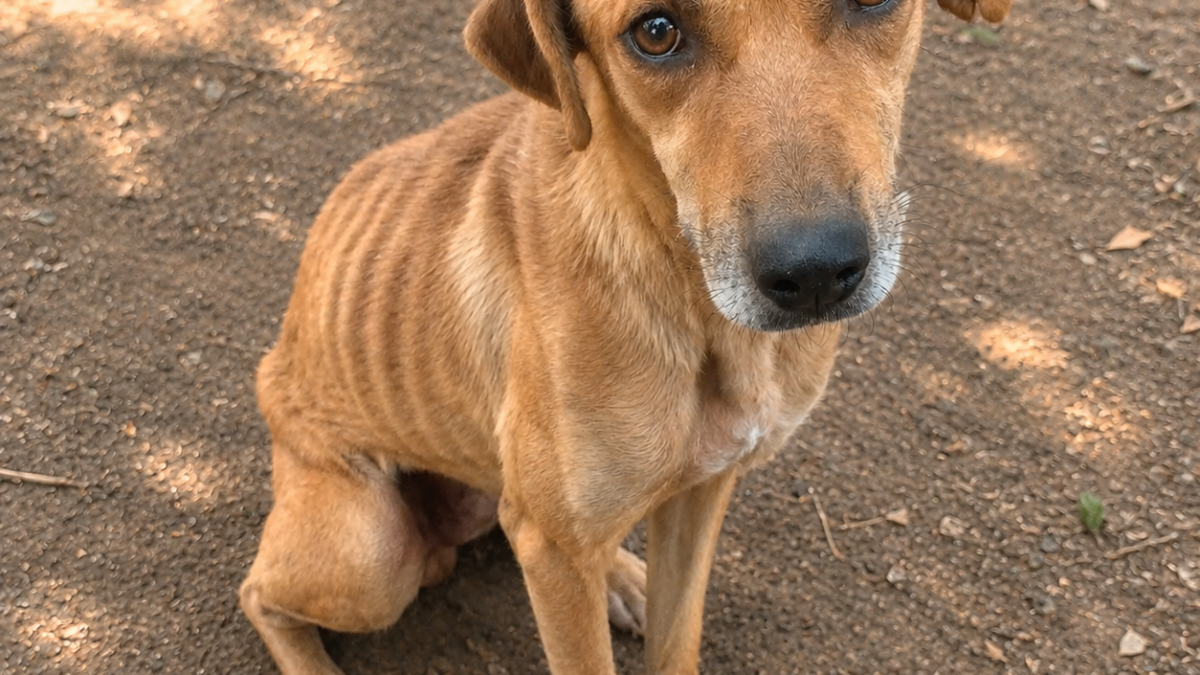
PART 2
I sat beside Benny for another twenty minutes before I tried anything.
The highway roared behind us.
Every few minutes, a truck passed close enough that the wind pushed against my jacket.
Benny no longer watched every vehicle.
His eyes remained closed.
But I could feel the tension in his body.
He had trusted me enough to lie beside me.
That did not mean he trusted what came next.
I reached slowly toward his collar.
His head lifted instantly.
“Okay.”
I stopped.
His eyes moved toward my hand.
“I won’t grab you.”
I withdrew.
Benny lowered his head again.
I had brought a slip lead.
I left it beside me where he could see it.
Five minutes passed.
Then ten.
Eventually Benny sniffed it.
I touched the rope.
He moved backward.
“That’s fine.”
Trust is easiest to destroy immediately after you earn it.
People get excited.
They think one good moment means the fear is gone.
It doesn’t.
Fear waits.
Memory waits.
So I didn’t rush him.
Instead, I stood.
Benny stood too.
I walked toward my car.
He followed three steps.
Stopped.
I kept walking.
Another two steps.
Stopped again.
The car was maybe forty feet away.
It took us almost fifteen minutes to reach it.
When I opened the passenger door, Benny froze.
His body changed completely.
Tail low.
Head down.
Legs braced.
The car meant something.
Maybe all cars did.
Or maybe the last one had taught him exactly what an open door could cost.
I sat on the ground beside the car.
“Not getting in?”
Benny watched me.
“Fair.”
I placed chicken on the floorboard.
He sniffed toward it.
Didn’t move.
I waited.
Ten minutes.
Then twenty.
Benny approached.
One paw came up.
Then down again.
He backed away.
I didn’t react.
A black pickup passed on the highway.
Benny spun.
For one terrible second, the old hope returned.
He ran toward the shoulder.
Stopped.
Watched.
The truck disappeared.
Benny remained motionless.
I could almost see the choice inside him.
Road.
Car.
Past.
Unknown.
Then he turned.
And walked back to me.
That was the real moment I knew he was ready.
Not when he put his head on my foot.
When he chose to come back after another black truck disappeared.
Benny placed one front paw inside my car.
Then the other.
He stretched his neck toward the chicken.
Grabbed it.
Jumped out.
I laughed.
“Negotiator.”
Second piece.
Same thing.
Third.
This time, he kept all four paws inside for three seconds.
Then five.
Then ten.
Eventually, Benny climbed into the passenger seat.
He didn’t lie down.
Didn’t relax.
But he stayed.
I closed the door gently.
His breathing accelerated.
I walked around.
Got into the driver’s seat.
“Still okay?”
Benny stared straight ahead.
I started the engine.
He panicked.
His body slammed against the door.
I shut the engine off immediately.
“No.”
I kept my hands visible.
“No one’s dumping anybody.”
Benny shook.
I waited until his breathing slowed.
Then I opened both front doors.
He could leave.
He stayed.
That mattered.
I started the engine again.
Smaller reaction.
We sat with it idling for several minutes.
Then I drove ten feet.
Stopped.
Benny’s nails scraped the seat.
“Still here.”
Another twenty feet.
Stop.
We moved like that across the parking lot.
Thomas stood near the gas station watching.
When we reached him, he leaned toward my open window.
“You got him.”
“Not yet.”
Thomas looked at Benny.
The dog’s eyes were enormous.
“Where you taking him?”
“Dr. Meyer’s clinic first.”
“He coming back?”
I looked at Benny.
“No.”
Thomas smiled.
“Good.”
Then his face changed.
“He waited so long.”
“I know.”
“He really thought that guy was coming.”
I looked toward the shoulder.
The empty patch of gravel was still there.
A crushed paper cup rolled through the weeds.
For six days, that had been Benny’s entire world.
“He doesn’t have to anymore.”
I hoped that was true.
The veterinary clinic was eight minutes away.
It felt like an hour.
Benny stood the entire ride.
Whenever I slowed, he looked at me.
Whenever I turned, he braced.
When we pulled into the clinic parking lot, I expected him to refuse to get out.
Instead, he jumped down immediately.
Apparently leaving cars was easier than entering them.
Dr. Nathan Meyer met us outside.
I had called ahead.
“That’s him?”
“That’s Benny.”
“You named him already?”
“He needed something better than Highway Dog.”
Dr. Meyer crouched sideways.
Benny moved behind me.
“Okay.”
The vet stood.
“We’ll go slow.”
Benny allowed the examination only because I stayed beside him.
Even then, his body trembled.
He was dehydrated.
About twelve pounds underweight.
Several paw pads were cracked.
He had fleas.
An intestinal parasite.
A mild respiratory infection.
And one old scar along his left flank that could have come from almost anything.
Dr. Meyer scanned him for a microchip.
Nothing.
He checked the collar.
Cheap nylon.
No writing.
No hidden tag.
“You filing found-dog paperwork?”
“Yes.”
“You know what that means.”
I did.
If Benny’s legal owner appeared and could establish ownership, things could become complicated.
I hated that thought.
Dr. Meyer saw it on my face.
“We document his condition.”
“He was dumped.”
“You didn’t see that.”
“Thomas did.”
“Good. Get a written statement.”
“You think the man might come back?”
“I think you prepare for possibilities.”
I looked at Benny.
He had pressed his shoulder against my leg.
“What happens if no one claims him?”
“You can foster through the holding period.”
“I will.”
“And after?”
I looked down.
Benny looked up.
“We’ll see.”
That was a lie.
I already knew.
I took Benny home that afternoon.
My house had not been prepared for a dog.
I lived alone.
No children.
No other animals.
Just me and a small one-story house I’d bought after my divorce seven years earlier.
My life had become intentionally simple.
Work.
Home.
Garden.
Occasional dinner with my sister.
I liked quiet.
Then Benny walked inside.
He stopped in the entryway.
Looked toward the living room.
Kitchen.
Hall.
Then back at the front door.
For the next hour, he stayed within three feet of it.
I placed a bowl of water nearby.
Food farther into the room.
He drank.
Wouldn’t eat.
When I walked toward the kitchen, he followed.
When I returned, he returned.
But every few minutes, he checked the window facing the road.
That first night, Benny refused the dog bed I’d bought on the way home.
He slept beside the front door.
I woke at 1:30 in the morning.
He was sitting.
Looking toward the window.
“Benny.”
His ears moved.
“You’re not going back there.”
He lowered his head.
I brought a pillow and blanket.
Slept on the floor six feet away.
Around three, I woke to weight against my legs.
Benny had moved closer.
Not touching.
Close.
I didn’t move.
At sunrise, his head rested against my ankle.
Exactly like the highway.
The second day was harder.
I had to work.
I took vacation time.
The thought of leaving Benny alone after he had just been abandoned seemed cruel, even if I knew eventually he’d have to learn that departures weren’t permanent.
So we practiced.
I went outside.
Closed the door.
Waited ten seconds.
When I returned, Benny was standing against it.
I walked in calmly.
No excited greeting.
No dramatic reassurance.
Again.
Twenty seconds.
Then one minute.
Five.
Ten.
At ten minutes, Benny began whining.
I waited another thirty seconds before entering so I didn’t teach him whining opened doors.
When I stepped inside, he almost knocked me over.
“You thought I left.”
His body pressed against me.
“I came back.”
That became our lesson.
I leave.
I return.
Again.
Again.
Again.
By the end of the first week, I could go to the mailbox without Benny panicking.
By the second, twenty-minute grocery runs.
By the third, two hours.
Every return changed him a little.
The highway had taught Benny that car doors closed and people disappeared.
I needed repetition to teach the opposite.
The found-dog post went online.
I hated it.
His photograph.
Location.
Red collar.
Approximate age.
I checked my phone constantly.
No one called.
Day two.
Nothing.
Day five.
Nothing.
Day ten.
No lost report.
No message.
No frantic owner.
Thomas provided a written statement.
He described the black pickup.
Male driver.
White.
Maybe late forties or early fifties.
Gray baseball cap.
He remembered part of the plate.
Not enough for an immediate identification.
Animal control filed the case.
“Probably won’t go anywhere,” the officer told me.
“That’s it?”
“With partial plate information and no video, maybe.”
“The gas station has cameras.”
“Already requested footage.”
Hope rose.
Then fell.
The camera facing the highway had been broken for two months.
Of course.
So the person who abandoned Benny remained faceless.
At least for a while.
The legal holding period ended.
I signed adoption papers.
The woman at the shelter desk asked:
“Name staying Benny?”
“Yes.”
“Sure?”
I looked at him.
Benny was lying at my feet.
His eyes followed every person who came through the lobby.
But he no longer rose for every door.
“Yes.”
I signed.
Benny became mine.
Or, more accurately, we became each other’s.
The first month was not a beautiful rescue montage.
It was exhausting.
Benny chewed through two window blinds because he panicked when I left.
He shredded the cushion from his new bed.
Then refused to sleep anywhere except beside my door.
He barked at black pickups.
Every black pickup.
If one parked nearby, he shook.
Once, on a walk, a black Ford slowed at an intersection.
Benny lunged so hard he pulled the leash from my hand.
“Benny!”
He ran after it.
Straight toward traffic.
I sprinted.
A horn blasted.
Benny stopped in the median.
I reached him.
Grabbed his harness.
Dropped to my knees.
He was staring after the truck.
Not at me.
“You can’t do that.”
My voice cracked.
“You cannot keep trying to die for someone who isn’t coming.”
Benny looked at me.
I immediately regretted saying it like that.
He couldn’t understand.
But I could.
Maybe that was why I was so angry.
Not at him.
At the person who had built this reflex inside him.
I hugged him.
He resisted for half a second.
Then leaned into me.
That afternoon, I bought a double-clip safety leash.
We began working with a trainer named Rachel.
No harsh corrections.
No forcing him near vehicles.
Distance.
Desensitization.
Reward.
Choice.
“He’s not being stubborn,” Rachel told me.
“I know.”
“Say it anyway.”
“He’s not being stubborn.”
“He’s having an emotional response.”
“Fear?”
“Fear. Hope. Habit. We don’t know exactly.”
I looked toward Benny.
He was watching traffic from forty yards away.
“Can we fix it?”
Rachel corrected me.
“Can we help him build a different response?”
“Fine.”
“Yes.”
“How long?”
“As long as it takes.”
I hated answers like that.
They were always correct.
Three months passed.
Benny gained weight.
His ribs disappeared.
His coat became glossy.
His cough vanished.
He learned that chicken came from my refrigerator and that sitting politely increased the odds of receiving it.
He discovered tennis balls.
Badly.
I threw.
Benny chased.
Then stood over the ball, confused by the concept of bringing it back.
“That’s the game.”
Nothing.
“You retrieve.”
Benny picked it up.
Walked away.
“Wrong.”
He buried it under a shrub.
Fine.
He preferred sticks.
He also became obsessed with my couch.
For weeks, he wouldn’t climb onto furniture.
Then one evening I fell asleep watching television.
I woke with Benny stretched completely across me.
One paw on my stomach.
Head near my shoulder.
Fifty pounds of dead weight.
“Really?”
His tail tapped once.
“You have your own bed.”
Another tap.
“You destroyed it.”
No response.
He stayed.
That became normal.
The dog who spent six days refusing to leave a highway shoulder became the dog who refused to leave half my couch.
Progress.
Then came the first real sign that he no longer believed every departure was permanent.
I left for work one Monday morning.
Benny watched from the window.
Usually, he remained standing until my car disappeared.
That day, before I reached the end of the driveway, I looked back.
Benny had walked away from the window.
Just left.
Like my departure was boring.
I sat in my car and cried.
My neighbor saw me.
Later she asked if I was okay.
“Dog thing.”
She nodded like that explained everything.
It did.
Life became ordinary.
That was the miracle.
Morning walks.
Food.
Work.
Evenings.
Weekends at the lake.
Benny hated swimming.
Loved boats.
Which made no sense.
He sat proudly in the front of my sister’s small fishing boat while refusing to let his paws touch the water.
The first time a wave splashed him, he looked personally betrayed.
My sister laughed for ten minutes.
“Highway survivor defeated by lake water.”
“He has standards.”
Benny barked at her.
We took him hiking.
He slept in my bed during thunderstorms.
He learned my work schedule.
Every weekday at 5:15, he waited near the front window.
Not anxiously.
Expectantly.
There is a difference.
I always came home.
That difference became his new life.
Almost a year after I found Benny, Thomas called.
I hadn’t spoken to him in months.
“Ellen?”
“Yes?”
“I think he’s here.”
Every muscle in my body tightened.
“Who?”
“The guy.”
I knew.
“What guy?”
“The guy who dumped Benny.”
I was already reaching for my keys.
“What makes you sure?”
“Black pickup. Same damage on the rear bumper.”
“Thomas—”
“And I remember him.”
My heart pounded.
“Is he still there?”
“Yes. Buying cigarettes.”
“Call the animal control officer.”
“I did.”
“Don’t confront him.”
“I wasn’t going to.”
“Thomas.”
“I said I wasn’t.”
I called Rachel.
Then realized that made no sense.
She was a dog trainer, not law enforcement.
Panic makes people stupid.
I left Benny at home.
That choice mattered.
I wasn’t going to drag him into a confrontation.
When I arrived at the gas station, the black pickup was still there.
Older Ford.
Dent near the right taillight.
A man stood beside it talking to an animal-control officer.
Thomas saw me through the window.
He nodded.
The officer approached.
“Ellen?”
“Yes.”
“This is Mr. Calvin Reed.”
The man looked at me.
Mid-fifties.
Work jacket.
Gray cap.
My stomach turned.
“You had a dog?”
He glanced away.
“Yeah.”
“Tan mixed breed? Red collar?”
He didn’t answer immediately.
Then:
“Maybe.”
I wanted to slap him.
Instead, I said:
“His name is Benny.”
Calvin’s face changed.
“Buddy.”
I froze.
“What?”
“That was his name.”
Buddy.
Not Benny.
The old name.
For one second, I imagined saying it at home.
Would Benny react?
Did he still remember?
Of course he did.
“How long did you have him?”
“Six years.”
Six years.
He had dumped a dog who had known only him for six years.
“Why?”
Calvin looked toward the officer.
“This necessary?”
“Yes,” I said.
The officer said more calmly:
“We need your account.”
Calvin rubbed the back of his neck.
“I was moving.”
My anger sharpened.
“So?”
“New place didn’t allow dogs.”
“Then surrender him.”
“Shelters were full.”
“Call a rescue.”
“I tried one.”
“One?”
“I had two days.”
“So you drove him to the highway?”
“It wasn’t the highway.”
I stared.
He actually said it.
“It was a gas station.”
“He sat thirty feet from seventy-mile-an-hour traffic.”
“I figured someone would take him.”
“You figured?”
“He’s friendly.”
“He wouldn’t let anyone touch him for six days.”
Calvin looked uncomfortable.
“I didn’t know that.”
“You didn’t look.”
He said nothing.
The officer stepped between the conversation before I crossed a line.
“Mr. Reed, did you leave the dog intentionally?”
Calvin exhaled.
“Yes.”
“Did you make arrangements for his care?”
“No.”
“Did you notify the gas station?”
“No.”
“Did you leave food or water?”
Calvin looked down.
“No.”
There it was.
Simple.
Ugly.
No dramatic misunderstanding.
No secret emergency.
Convenience.
The officer documented everything.
Because Benny survived and was now legally adopted, the consequences were administrative and misdemeanor-level under local animal abandonment rules.
Calvin was cited.
Required to pay fines.
Potentially responsible for some care costs.
It wasn’t enough for me.
I wanted something bigger.
I wanted the world to punish him proportionally to Benny’s six days of waiting.
But courts don’t measure emotional pain in dog-hours.
Then Calvin asked a question that changed everything.
“Can I see him?”
I laughed.
Actually laughed.
“No.”
The officer looked toward me.
Calvin’s jaw tightened.
“He was my dog.”
“Was.”
“I raised him.”
“And then left him on the highway.”
“I made a mistake.”
“Six days were not a mistake.”
“I mean leaving him.”
I stepped closer.
“A mistake is forgetting to close a gate.”
Calvin’s face reddened.
“I said I was wrong.”
“That doesn’t buy you access.”
The officer intervened.
“Ownership has legally transferred.”
Calvin looked at me.
“So he’s yours.”
“Yes.”
He gave a strange half-smile.
“Bet he still remembers me.”
I hated how certain he sounded.
Not because I thought he was wrong.
Because I knew he was probably right.
Dogs remember.
Love doesn’t always disappear just because somebody deserves to lose it.
Calvin left.
I went home shaking.
Benny met me at the door.
Tail moving.
He pushed his nose into my coat.
Probably smelled gas station.
Maybe Calvin.
I don’t know.
He froze.
His nose moved again.
Then he backed up.
My heart stopped.
“Benny?”
He sniffed my sleeve.
Whined.
Walked toward the front window.
For ten minutes, he paced.
The scent had done something.
Memory.
I sat on the floor.
“I met him.”
Benny looked at me.
“The man.”
His ears rose.
I hated that.
“Buddy.”
Benny froze.
There.
That name still lived inside him.
His head tilted.
Tail moved once.
Then he walked to the window.
My chest hurt.
“You remember.”
Of course he did.
I didn’t say the name again.
That night, Benny slept by the front door for the first time in almost ten months.
I barely slept.
By morning, he was still there.
Not looking toward the road exactly.
But close enough to scare me.
I called Rachel.
“I ruined him.”
“No.”
“I said the name.”
“He responded?”
“Yes.”
“That’s not ruin.”
“He slept at the door.”
“Memory got activated.”
“What do I do?”
“What you did before.”
“Which is?”
“Be boring.”
I almost laughed.
“Excuse me?”
“Routine. Breakfast. Walk. Work. Return. Let his current life reestablish itself.”
“What if he wants Calvin?”
Long silence.
Then Rachel said:
“That’s your fear, not necessarily his.”
I sat down.
“And if he does?”
“We deal with the dog in front of us, not the story in your head.”
Again.
Annoyingly correct.
Benny ate breakfast.
Walked.
Sniffed the same mailbox.
Barked at the same squirrel.
At noon, he slept on the couch.
By evening, he was himself.
Mostly.
Then Calvin complicated things.
Three days later, he called.
I have no idea how he got my number.
Probably public adoption records combined with the shelter post.
“Ellen?”
“How did you get this number?”
“I want to see Buddy.”
“His name is Benny.”
“I named him Buddy.”
“And then you dumped him.”
He sighed.
“I know what I did.”
“Then why are we talking?”
“Because I’ve been thinking.”
“Congratulations.”
“I want to make it right.”
I almost hung up.
“How?”
“Let me see him.”
“No.”
“Ten minutes.”
“No.”
“I won’t take him.”
“Obviously.”
“I need to know he’s okay.”
“He’s okay.”
“I need to see.”
“No. You need to live with not seeing.”
Silence.
That came out harsher than I expected.
I didn’t regret it.
Then Calvin said:
“My daughter wants to see him.”
I paused.
“What daughter?”
“She grew up with him.”
That changed the problem.
“How old?”
“Seventeen.”
“Did she know you dumped him?”
Silence.
“Calvin.”
“No.”
My anger shifted.
“What did you tell her?”
“That he ran away during the move.”
I closed my eyes.
Of course.
“She thinks he’s been missing for a year?”
“Yes.”
“And now?”
“She saw the article online.”
The local paper had recently run Benny’s story after the animal-control citation became public.
“She knows?”
“Yes.”
“What does she want?”
“To see him.”
I didn’t answer.
Children shouldn’t pay for their parents’ cowardice.
Even almost-adult children.
But Benny’s welfare came first.
I spoke to the shelter.
Animal control.
Rachel.
Dr. Meyer.
Then I agreed to a controlled meeting with Calvin’s daughter.
Not Calvin.
Her name was Madison.
She arrived at the training facility on a Saturday.
Calvin drove her but remained outside.
That was the rule.
Madison was tall.
Dark hair.
Red eyes from crying.
She carried something.
An old blue blanket.
The moment Benny saw her through the glass, he froze.
Not like with strangers.
Recognition was instant.
His tail began moving.
Slowly at first.
Then faster.
Madison covered her mouth.
“Buddy.”
Benny whined.
She dropped to her knees.
I opened the door.
Benny ran.
He hit her so hard she fell backward.
Madison wrapped both arms around him.
“Oh my God.”
Benny licked her face.
Cried.
Actually cried.
High-pitched sounds from deep in his throat.
Madison buried her face in his neck.
“I’m sorry.”
I stood there feeling too many things at once.
Jealousy.
Anger.
Relief.
Sadness.
Benny loved her.
That was obvious.
He had waited for a family.
Not just Calvin.
Madison cried for almost ten minutes.
Then she looked at me.
“I didn’t know.”
“I believe you.”
“Dad said he got out.”
Benny lay half across her lap.
“I looked for him.”
Her voice broke.
“I made signs.”
I swallowed.
“You loved him.”
“I love him.”
Present tense.
That mattered.
Madison touched Benny’s red collar.
I had kept it.
Not on him every day, but in a drawer.
She recognized it.
“I bought this.”
“When?”
“For his fifth birthday.”
My anger toward Calvin deepened.
He hadn’t just abandoned a dog.
He had stolen goodbye from his daughter too.
Madison asked:
“Can I take him?”
There it was.
The question I feared.
I sat across from her.
“No.”
Her face collapsed.
“Why?”
“Because he’s legally mine now.”
“But—”
“And because your father abandoned him.”
“I wouldn’t.”
“I know.”
“So why can’t he live with me?”
“Where do you live?”
“With Dad.”
That answered everything.
Madison looked toward the floor.
“I’d protect him.”
“I believe you.”
“Then—”
“But you’re seventeen.”
“So?”
“You don’t control the lease. The house. The money. The decisions.”
She knew.
Tears rolled down her face.
“I hate him.”
“Don’t make decisions from that place.”
“He lied.”
“Yes.”
“He left Buddy.”
“Yes.”
“And now you get him.”
The sentence hurt.
It made me sound like I had won something.
I hadn’t.
Benny was not a trophy in an argument.
I leaned forward.
“Madison, look at me.”
She did.
“I didn’t take Benny away from you.”
She cried harder.
“Your dad did.”
Silence.
That truth had to land somewhere.
I hated being the person delivering it.
“But I’m not going to punish you for what he did.”
She stared.
“What does that mean?”
“You can visit.”
Her face changed.
“If it’s good for Benny.”
“Yes.”
“As long as we agree on boundaries.”
“Yes.”
She wrapped her arms around him again.
“Thank you.”
Benny’s tail thumped.
That became the beginning of a strange arrangement.
Madison visited every other Sunday.
Sometimes at my house.
Sometimes at the park.
Calvin never joined.
For several months, he respected that.
Benny learned that Madison came and left.
And came back.
He loved her.
But after visits, he came home with me.
At first, I watched carefully.
Would he resist getting in my car?
Would he stare after Madison?
He did.
Of course.
But then he’d climb into my car.
Voluntarily.
That mattered.
One Sunday, six months later, something happened that answered the question I had never admitted I was still asking.
Who would Benny choose?
We met at a quiet park.
Madison played fetch with him.
Badly.
Benny still refused to return the ball.
Nothing had changed there.
Then Calvin appeared.
Uninvited.
He walked from the parking lot.
Madison saw him first.
“Dad?”
I stood.
“What are you doing here?”
“I just want to see him.”
“No.”
“Ellen—”
“No.”
Benny heard the voice.
He turned.
His entire body froze.
Calvin stopped twenty feet away.
“Buddy.”
Benny stared.
The world seemed to stop.
Madison whispered:
“Oh my God.”
Benny took one step.
Then another.
Toward Calvin.
My chest tightened.
Calvin crouched.
“Come here, boy.”
Benny walked closer.
Ten feet.
Five.
He sniffed Calvin’s outstretched hand.
His tail moved.
Once.
Calvin’s eyes filled.
“Hey.”
Benny sniffed his jacket.
Then his shoes.
Memory.
Six years of life in those smells.
Calvin reached toward Benny’s head.
Benny flinched.
Not dramatically.
Just enough.
Calvin stopped.
“I’m sorry.”
Benny stared at him.
Then turned.
Walked away.
Past Madison.
Straight to me.
He pressed his body against my legs.
I stopped breathing.
Calvin stared.
Madison covered her mouth.
Benny looked up at me.
I put my hand against his neck.
He stayed.
Calvin stood.
His face had gone pale.
“He chose you.”
No triumph rose inside me.
Only sadness.
“Yes.”
Calvin nodded.
“I guess I deserved that.”
I answered carefully.
“This isn’t about what you deserve.”
He looked at Benny.
“What is it about?”
“What he needs.”
For once, Calvin had no response.
Madison walked toward her father.
“You shouldn’t have come.”
“I know.”
“Why did you?”
He looked at her.
“Because I wanted to know if he still loved me.”
That sentence exposed everything.
The abandonment.
The guilt.
The return.
All of it had been filtered through Calvin’s need.
Did the dog still love me?
Could the dog forgive me?
Would the dog make me feel like I’m not the person who did this?
Benny wasn’t responsible for answering those questions.
Madison said quietly:
“He probably does.”
Calvin looked at her.
“That doesn’t mean he belongs with you.”
I would remember that sentence for years.
A seventeen-year-old understood something her father hadn’t.
Love and belonging are not identical.
Benny could remember Calvin.
Maybe love part of him.
And still choose a safer life.
Calvin left.
This time, Benny watched the truck drive away.
Black Ford.
Same damaged bumper.
For a few seconds, I saw the highway dog again.
Then Benny looked at me.
I held my breath.
He picked up the tennis ball.
Dropped it at my foot.
I laughed.
“Now you retrieve?”
He barked.
Madison started laughing through tears.
I threw the ball.
Benny chased it.
He did not look toward the parking lot again.
That was the revenge.
Not humiliation.
Not punishment.
Choice.
Calvin once decided Benny was disposable.
A year later, Benny decided Calvin was no longer home.
The legal consequences continued.
Calvin paid fines.
Reimbursed some veterinary costs.
Completed a court-ordered animal responsibility class.
I expected him to disappear after that.
Instead, something surprising happened.
He started volunteering.
Not at our shelter.
At a food bank.
Maybe because animal shelters wouldn’t take him.
Maybe because shame needed somewhere useful to go.
Madison told me.
“He’s different.”
“Good.”
“You don’t sound convinced.”
“Change takes time.”
“He says he understands.”
I looked at Benny sleeping beside us.
“Understanding isn’t a sentence.”
“What?”
“It’s behavior.”
She nodded.
Smart kid.
A year later, Calvin sent me a letter.
Not a message.
Paper.
I almost threw it away.
I read it.
He did not ask to see Benny.
That mattered immediately.
He wrote:
**I spent a long time thinking the worst thing I did was leaving him on the road. It was. But the second worst thing was assuming loving him gave me the right to come back whenever I wanted and ask him to make me feel forgiven.**
I kept reading.
**Madison told me that Benny can remember me and still choose another home. I think I finally understand that.**
Then:
**I don’t need you to tell him anything. I don’t need another visit. I just wanted you to know I know what I lost.**
I folded the letter.
Put it in a drawer.
I never answered.
There was nothing to say.
By then, Benny’s life had become much bigger than Calvin.
Madison graduated high school.
She went to college two hours away.
The first time she left, Benny searched my house after her visit.
Then settled.
He had learned departures were not always betrayals.
Madison returned for Thanksgiving.
Benny nearly knocked her down.
She laughed.
“He remembered!”
“Of course.”
When she left again, Benny watched the car.
Then came inside.
That was his new relationship with goodbye.
Sadness without catastrophe.
Absence without abandonment.
Benny turned eight.
Then nine.
I didn’t know his exact birthday, so we used adoption day.
Every year, Thomas came.
The gas-station kid was no longer a kid.
He went to community college.
Then became a paramedic.
He still called Benny “Highway Boy.”
Benny liked him.
Thomas would sit on my porch and say:
“You know, if you’d been ten minutes later that first day, I would’ve taken him.”
“Sure.”
“I would.”
“You watched him for six days.”
“I had work.”
I raised an eyebrow.
“Okay.”
He laughed.
“I was nineteen and stupid.”
“Fair.”
Then he would scratch Benny’s ears.
“I’m glad she stopped.”
Me too.
The gas station eventually replaced the broken camera.
Thomas personally made sure the new one covered the shoulder.
“Never again,” he said.
Not long afterward, footage from that camera helped identify someone who abandoned two puppies in a box.
The puppies survived.
The person was cited.
Thomas called me.
“Benny’s camera got them.”
“Benny doesn’t own the camera.”
“He does spiritually.”
I laughed.
Something else changed.
The gas station placed a sign near the road:
**DON’T ABANDON ANIMALS HERE. ASK INSIDE FOR LOCAL SHELTER RESOURCES.**
It listed three phone numbers.
Shelter.
Animal control.
Emergency foster network.
At first, I thought the sign was too small to matter.
Then one February night, a woman came inside the station crying.
She had been evicted.
A Labrador was in her car.
She said she didn’t know what to do.
She had considered leaving him behind a grocery store.
Instead, she saw the sign.
Thomas called the emergency foster network.
The dog stayed with a foster family for five weeks.
The woman found new housing.
They reunited.
Thomas sent me the video.
A black Labrador running into his owner’s arms.
I cried.
Benny was asleep on my couch.
I sat beside him.
“You did that.”
He opened one eye.
“Not directly.”
Eye closed.
“But your story did.”
That became Benny’s real revenge too.
Not only that he chose me over Calvin.
The roadside where he had been abandoned became a place where other people were given an alternative.
No dog should have to sit six days waiting because a human thought abandonment was the only option.
So we worked with animal control and local businesses.
Simple resource cards.
Temporary foster numbers.
Low-cost surrender information.
Pet-friendly housing lists.
No dramatic nonprofit.
No giant campaign.
Just practical exits before cruelty became convenient.
Some people still abandoned animals.
Human behavior does not become perfect because of one dog.
But some didn’t.
That mattered.
Benny aged.
At ten, his muzzle began whitening.
At eleven, he developed arthritis.
At twelve, he stopped jumping onto my bed.
I bought stairs.
He refused them.
I bought a ramp.
He refused that too.
Eventually, I put a mattress on the floor.
Problem solved.
“You win.”
His tail moved.
He had always been stubborn.
At thirteen, his hearing weakened.
The irony was that black pickups no longer bothered him.
Maybe he couldn’t hear them.
Maybe he simply didn’t care.
I preferred the second explanation.
Madison finished college.
She became a school counselor.
On graduation day, she came straight from the ceremony wearing her cap and gown.
Benny was waiting on my porch.
She knelt.
“I did it.”
Benny licked her face.
She cried into his neck.
“He should’ve been mine.”
The sentence surprised me.
She pulled back.
“Not now.”
She smiled.
“I mean when Dad left him. I should’ve been old enough to stop it.”
“You were sixteen.”
“Seventeen.”
“Still.”
“I think about it.”
I sat beside her.
“Don’t.”
“How?”
“Responsibility belongs to the person with power to make the decision.”
She looked at Benny.
“I had a voice.”
“Not control.”
She nodded.
I had learned something through Benny too.
Guilt loves people who care.
It attaches itself to anyone available.
Sometimes the right thing is to give guilt back to the person who earned it.
Madison visited Calvin occasionally.
Their relationship had changed.
Not ended.
Not repaired completely.
Complicated.
Real.
Calvin eventually adopted no more dogs.
That seemed wise.
But he began donating monthly to the emergency foster network.
Anonymous at first.
Madison told me anyway.
“He doesn’t want credit.”
“Good.”
“Do you hate him?”
I thought about it.
“No.”
“Really?”
“Hate would mean he still has too much space in my head.”
She smiled.
“That’s very counselor of you.”
“You’re the counselor.”
“I’m rubbing off on you.”
Benny groaned.
We laughed.
At fourteen, Benny developed kidney disease.
Dr. Meyer was older too.
He had treated Benny since that first day.
He reviewed the bloodwork.
“We can manage it.”
“How long?”
“Don’t do that.”
“What?”
“Turn medicine into a countdown.”
I sighed.
“I hate you.”
“Everybody says that when I’m right.”
We changed Benny’s diet.
Added medication.
More checkups.
He remained happy.
Slower.
Sleepier.
But happy.
His favorite part of the day became sitting beside me on the porch.
We watched cars.
That detail was not lost on me.
Years earlier, every passing car had been a question.
Now cars were background noise.
Benny barely looked.
Except Madison’s.
He still recognized hers.
Always.
One autumn afternoon, a black pickup slowed near my house.
Benny lifted his head.
I froze out of old habit.
The truck stopped.
A delivery driver climbed out.
Benny yawned.
I laughed so suddenly the driver looked confused.
“Everything okay?”
“Yes.”
More than okay.
The trigger had become nothing.
Maybe healing sometimes looks like boredom too.
Benny reached fifteen.
Old.
Impossibly old considering how he started with me.
His back legs weakened.
He slept most of the day.
But he still insisted on walking to the mailbox every morning.
Fifty feet.
Then back.
One morning, he stopped halfway.
I waited.
He looked toward the road.
Not with the old tension.
Just watching.
Cars moved.
Truck.
Sedan.
SUV.
Black pickup.
Benny watched it pass.
Then looked up at me.
I touched his head.
“You remember?”
His tail moved faintly.
“Me too.”
He continued walking home.
That winter, his kidneys worsened.
Then his heart.
Dr. Meyer came to the house after Benny collapsed near the kitchen.
I already knew.
People who live with old dogs learn to recognize when tired becomes different.
Benny lay on a blanket near the front window.
His breathing came too fast.
Madison drove down immediately.
Thomas came.
My sister.
Even Rachel, his old trainer.
It felt strange seeing everyone.
An entire life gathered in one room.
Benny had brought these people into my world.
Madison sat beside him.
“He waited for Dad six days.”
“Yes.”
“And then for you?”
I looked at her.
“No.”
She smiled through tears.
“He didn’t have to.”
Exactly.
For all the years after the highway, Benny never waited for me like that.
He expected me.
There is a difference.
Waiting comes from uncertainty.
Expectation comes from trust.
Dr. Meyer sat beside me.
“Ellen.”
I shook my head.
“I know.”
“Take your time.”
I did.
Hours.
Benny ate one piece of chicken.
Thomas brought it from the gas station deli.
“Full circle,” he said.
I laughed.
Benny barely chewed.
Still swallowed.
Good boy.
The sun began setting.
Cars moved along the road beyond my front yard.
I sat on the floor.
Benny’s head rested on my foot.
My foot.
Exactly where he had placed it on the sixth morning.
My breath caught.
Madison noticed.
“Oh.”
She covered her mouth.
I looked down at him.
“You remember this position?”
His eyes were cloudy.
But open.
“I named you right here.”
Not technically.
But close enough.
“Benny.”
His ear moved.
The name was his now.
Buddy belonged to the road.
Benny belonged to everything after.
I stroked his face.
“You know what the best part was?”
His breathing slowed.
“You stopped looking.”
I cried.
“Not that morning.”
My hand shook.
“Later.”
Another breath.
“You stopped checking every car.”
Madison held my shoulder.
“You learned people can leave and still come back.”
Another breath.
“You learned a closed door isn’t always goodbye.”
Dr. Meyer prepared the medication.
I looked toward the front window.
Traffic continued.
The world didn’t know.
Didn’t stop.
That’s always strange.
Your whole life can be ending in one room while someone outside is choosing a radio station.
I put my hand beneath Benny’s head.
“Listen to me.”
His eyes found mine.
“You don’t have to wait for anybody.”
Madison sobbed quietly.
“Not Calvin.”
A breath.
“Not Madison.”
Another.
“Not me.”
My voice broke.
“Everybody who loves you is already here.”
Benny exhaled.
His tail moved once against the blanket.
Dr. Meyer gave the sedative.
Benny’s body relaxed.
For fifteen years, some part of me had feared he might die still waiting for a black truck.
He didn’t.
He died watching me.
Warm.
Inside.
Surrounded.
I whispered:
“The next car doesn’t matter.”
Another breath.
“You’re home.”
The final medication entered.
Benny’s breathing slowed.
Then stopped.
I kept my hand beneath his head.
Nobody moved.
Outside, a truck passed.
Then another.
Benny didn’t look.
For the first time, he never needed to again.
We buried his ashes beneath the maple tree behind my house.
Madison brought the old red collar.
Thomas brought a small piece of gravel from the shoulder near the gas station.
At first, I didn’t want it.
Then I understood.
We placed three stones beneath the marker.
One from the highway.
One from my yard.
One from the lake Benny refused to swim in.
His whole life.
Not only the pain.
The marker reads:
**BENNY**
**HE WAITED SIX DAYS FOR SOMEONE WHO LEFT.**
**THEN HE SPENT FIFTEEN YEARS WITH PEOPLE WHO CAME BACK.**
Calvin did not attend.
I didn’t invite him.
But several weeks later, a letter arrived addressed to me and Madison.
Inside was a photograph.
Benny as a puppy.
Tan ears too large for his head.
Red collar brand new.
Madison was maybe six in the picture.
Calvin sat beside them.
All three smiling in different ways.
On the back, Calvin had written:
**Before I failed him, I loved him.**
Then:
**I know one does not erase the other. Thank you for giving him the ending I should have given him from the beginning.**
I cried.
Not because I forgave everything.
Forgiveness is too complicated for one sentence.
I cried because the photograph reminded me Benny’s life before abandonment had not been entirely cruel.
That mattered too.
People want villains simple.
Good.
Bad.
Monster.
Hero.
Life is rarely cooperative.
Calvin loved Benny.
Then failed him catastrophically.
Both were true.
The lesson wasn’t that only heartless people abandon animals.
Sometimes frightened, selfish, overwhelmed people do terrible things while still believing they love what they’re hurting.
Love without responsibility is not enough.
That was Benny’s lesson.
Madison kept the photograph.
I kept the letter.
Years passed.
The gas station changed ownership.
Thomas eventually moved away.
But the sign remained.
Emergency foster numbers updated each year.
A water bowl sat outside.
The shoulder where Benny waited was redesigned after roadwork.
There is now a guardrail.
No exact patch of gravel.
At first, that saddened me.
Then I was glad.
The place didn’t need to remain a shrine.
Benny was bigger than six days beside a road.
That was only the beginning of his second life.
The emergency foster network eventually named one of its programs after him.
I protested.
Lost.
**BENNY’S WAY HOME**
It helps owners facing temporary crises avoid abandonment.
Pet deposits.
Short-term boarding.
Transportation.
Food.
Medical emergencies.
Safe surrender.
The logo is simple.
A dog facing away from a highway and toward a house.
I cried the first time I saw it.
Of course.
One case stays with me.
A man named Luis called after losing his apartment.
He had a shepherd mix named Duke.
Luis was sleeping in his car.
The temporary shelter available to him wouldn’t allow dogs.
He told the hotline:
“I don’t know what else to do.”
The volunteer asked:
“Are you thinking of leaving Duke somewhere?”
Long silence.
“Yes.”
That’s why the question exists.
No judgment.
Ask before the irreversible thing.
Duke went into foster care for six weeks.
Luis found work.
Housing.
Then got his dog back.
The reunion video showed Duke screaming with joy.
I watched it twice.
Then sat beside Benny’s grave.
“You didn’t wait for nothing.”
That’s what I said.
His six days could never become good.
They were still cruel.
Still unnecessary.
But they became useful evidence.
Evidence that abandonment does not begin when a dog is found.
It begins earlier.
At the moment a person thinks:
I have no option.
Or:
Someone else will handle it.
Or:
He’ll be fine.
That’s where intervention belongs.
Before the door opens on the side of the road.
Before the car pulls away.
Before a dog runs after it.
Before six days of waiting begin.
That became Benny’s legacy.
Not waiting.
Prevention.
Madison eventually married.
At her wedding, she reserved an empty chair near the front.
Not for Benny specifically.
For people and animals who had shaped the family and were gone.
She attached Benny’s red collar around one leg of the chair.
I cried before the ceremony even started.
“Seriously?” she whispered.
“You did this intentionally.”
She smiled.
Her father attended.
Calvin sat near the back.
We nodded at each other.
Nothing more.
That was enough.
Years earlier, I would have wanted him publicly confronted.
By then, life had moved beyond punishment.
He lived with what he did.
He also changed because of it.
That doesn’t erase Benny’s suffering.
It simply means Benny’s pain did not produce only pain.
That’s as much justice as real life sometimes gives.
After the wedding, Calvin approached me.
“Can I ask something?”
“Yes.”
“Did he ever stop reacting to black trucks?”
I thought about Benny’s final years.
“Yes.”
Calvin closed his eyes.
“Good.”
“He’d watch them eventually.”
His expression tightened.
“But like any other car.”
He nodded.
“Good.”
I could see relief and pain fighting on his face.
Then he said:
“I used to drive past that gas station sometimes.”
My chest tightened.
“After?”
“Yes.”
“While he was there?”
He shook his head quickly.
“No. Years later.”
I waited.
“I would pull over.”
“Why?”
“I don’t know.”
He looked toward the parking lot.
“Punishment, maybe.”
I thought about it.
“Did it help?”
“No.”
“Then stop.”
He looked at me.
“Stop?”
“Benny stopped waiting there.”
I held his gaze.
“You should too.”
Calvin cried.
Quietly.
I walked away.
That was the last real conversation we ever had.
I’m older now.
I still live in the same house.
Different couch.
Same maple tree.
Benny’s grave is beneath it.
I have another dog.
Her name is June.
She came from the emergency foster network after her owner died.
She is nothing like Benny.
She loves water.
Hates cars.
Steals pillows.
Barks at ceiling fans.
For months, I resisted adopting again.
I told everyone:
“No more.”
Then June climbed into my lap at forty-five pounds.
That was apparently the end of the discussion.
People asked whether I felt guilty.
As if loving June somehow diluted Benny.
No.
Love is not a container with fixed capacity.
Benny taught me that too.
He loved Madison.
Maybe still loved Calvin.
Then loved me.
Those loves didn’t cancel each other.
They became layers.
I keep his old red collar in a drawer.
Sometimes I take it out.
The fabric is faded.
The metal buckle scratched.
One small section still has a brown stain from the roadside mud.
I don’t wash it.
Not because I worship suffering.
Because it reminds me how close a life can come to becoming one terrible moment forever.
If no one stopped, Benny might have been remembered only as:
That dog by the highway.
Instead, he became:
The dog who hated swimming.
The dog who buried tennis balls.
The dog who stole chicken.
The dog who waited at 5:15 because he knew I came home at 5:30.
The dog who loved Madison.
The dog who eventually looked at black pickups and yawned.
The dog who became old.
That last one matters enormously.
Rescue stories often celebrate survival.
I celebrate aging.
An abandoned dog developing arthritis.
Needing kidney medication.
Going gray.
Sleeping more.
Those things sound sad.
They aren’t.
Not entirely.
Old age is a privilege animals like Benny are almost denied.
He got fifteen years.
He got to become inconveniently old.
That is victory.
Sometimes I drive past the gas station.
Not intentionally.
The route still takes me there.
I look toward the new guardrail.
I remember the first Tuesday.
Benny sitting straight.
Eyes on the horizon.
I remember thinking:
Lost dog.
I was wrong.
He knew exactly where he was.
That was the tragedy.
He had returned to the last place he belonged to someone.
He didn’t need directions.
He needed a reason to believe belonging could move.
For six days, he believed home was a person driving back.
Eventually, he learned home could be a person walking toward him instead.
That’s the story.
Not that I saved Benny.
I didn’t.
I stopped.
Then came back.
Again.
Again.
Again.
He did the rest.
He stood up.
Walked toward me.
Got into the car.
Entered the house.
Survived the triggers.
Chose me when his old owner returned.
Learned to sleep through departures.
Grew old.
Trusted.
Benny did all of that.
Rescue is often described as something humans do to animals.
Sometimes rescue is something an animal slowly agrees to participate in.
Benny had every reason to remain at that highway.
Emotionally, anyway.
The road held the last piece of his old life.
Leaving meant accepting uncertainty.
He left.
That was courage.
Years later, when people ask me what I remember most, they expect the highway.
I tell them no.
The moment I remember most happened maybe twelve years later.
Nothing dramatic.
I was leaving for work.
Benny was old.
He lay on the couch.
I picked up my keys.
Once, keys had made him anxious.
Car doors.
Engines.
Departure.
That morning, he barely opened one eye.
“I’m leaving.”
Nothing.
“You want to watch?”
His eye closed.
I laughed.
“Rude.”
I walked out.
Closed the door.
Through the window, I could see him.
Still asleep.
He didn’t need to make sure I came back.
He knew.
That was the end of the highway.
Not adoption day.
Not Calvin’s citation.
Not Benny choosing me in the park.
That ordinary morning.
A door closed.
And Benny slept.
Because somewhere along the way, I had returned enough times that leaving no longer meant forever.
That is trust.
And if there is one image I carry with me more strongly than all the others, it is not the dog staring down traffic.
It is that old tan dog stretched across my couch, gray around the muzzle, sleeping peacefully while my car pulled away.
Six days beside the highway taught Benny that people can disappear.
Fifteen years at home taught him something stronger.
Some people come back.
Every single day.








