PART 2: He Waited Beside the Road for the Man Who Abandoned Him—Then Air Found a Family That Refused to Leave
PART 2
I left the food beside him and sat on the floor.
For a long time, I said nothing.
The clinic had gone quiet around us. Most of the lights in the hallway had been dimmed, the phones had stopped ringing, and somewhere in the treatment area a monitor made the same soft electronic sound every few seconds.
Air stared toward the window.
Every time headlights moved across the wall outside, his ears shifted.
That tiny movement destroyed me.
He remembered.
Maybe not the accident exactly. Maybe not the sequence of events the way a person would remember them. But he knew the person who belonged beside him was missing.
I had spent the day thinking about bones, surgical options, circulation and whether damaged tissue could survive.
Air was thinking about abandonment.
I moved a little closer.
“You think he’s coming back.”
His eyes stayed on the glass.
“I wish I could tell you why he left.”
Nothing.
“I wish I could tell you there was some explanation that would make sense.”
A truck passed.
Air lifted his head.
Then lowered it again.
There was no explanation I could give him.
Maybe his owner panicked after the accident.
Maybe he feared veterinary bills.
Maybe he had never loved Air in the way Air loved him.
Maybe he believed leaving was easier than accepting responsibility.
None of those possibilities mattered to the dog on the blanket.
Dogs do not understand financial excuses.
They do not understand cowardice.
They understand presence.
Voice.
Smell.
Routine.
The person who had been there every day was suddenly gone.
And Air was waiting for the world to correct itself.
It didn’t.
The next morning, Hannah weighed him again.
She stared at the scale.
“He’s losing too fast.”
“How much?”
“Enough that I’m worried.”
“Can we give him something?”
“We can support him medically. We can control pain. We can manage nausea if that’s contributing. But he has to begin taking nutrition consistently.”
“He’ll eat from my hand sometimes.”
“Not enough.”
Air sat on the examination table with his injured leg supported.
He looked smaller than he had only days earlier.
“Could the pain be stopping him?”
“Possibly. But his pain medication is appropriate, and he still refuses foods most dogs would take even when uncomfortable.”
“So what do we do?”
Hannah sighed.
“We keep trying.”
The first surgery went ahead because delaying too long could reduce the chances of preserving the leg.
The orthopedic surgeon, Dr. Marcus Reed, explained the plan carefully.
“We’re trying to stabilize the fracture and protect blood supply to the limb. I need you to understand this may fail.”
“I understand.”
“We may get through surgery and still lose the leg later.”
“I understand.”
“And he is not an ideal surgical candidate because of his nutritional state.”
“I know.”
Marcus looked at me.
“You still want to try?”
I looked at Air.
He was lying on a blanket near my feet.
His eyes were open.
For once, he wasn’t looking toward a door.
“Yes.”
The surgery took hours.
They stabilized what they could.
When Marcus finally came out, his face was tired.
“He made it through.”
I released a breath I hadn’t realized I was holding.
“And the leg?”
“Too early to know.”
That phrase became our life.
Too early to know.
The first twenty-four hours looked cautiously hopeful.
Air’s circulation to the paw remained present.
Swelling was controlled.
Pain was manageable.
But eating remained a battle.
We tried warmed food.
Different textures.
Strong-smelling foods.
Hand-feeding.
Tiny portions.
Air sometimes took one bite because I placed it directly against his lips.
Then he stopped.
He turned his head away.
At one point I sat beside him with shredded chicken in my hand.
“Air, please.”
He looked at me.
Then toward the hallway.
I tried not to let frustration enter my voice.
“You’re allowed to miss him.”
His ears moved.
“But you have to stay alive.”
Air rested his head down.
“You can be sad and still eat.”
Nothing.
I felt ridiculous bargaining with a dog.
Then I felt guilty for being frustrated.
Air had not asked for any of this.
He had not chosen the road.
The accident.
The abandonment.
The hospital.
The surgery.
We were asking him to endure all of it while the one familiar person he wanted was gone.
I put the chicken down.
“I’ll stay anyway.”
That became the promise.
Not you will walk.
Not your leg will survive.
Not everything will become okay.
Promises like that are dangerous because medicine does not obey love.
So I made the only promise I could control.
I’ll stay.
Three days after surgery, the repair began showing signs of failure.
Swelling increased.
The alignment was not holding the way Marcus hoped.
Air’s body seemed unwilling to cooperate with any part of recovery.
His protein levels remained poor.
His weight continued falling.
Marcus reviewed new images.
“We may have to revise.”
“You mean another surgery?”
“Yes.”
“How soon?”
“Soon.”
I looked through the treatment-room window.
Air slept.
He looked exhausted enough to disappear.
“Will he survive another anesthesia?”
“He survived the first.”
“That’s not an answer.”
“No.”
Marcus was quiet.
“No, I can’t promise you he’ll tolerate another procedure well. But if we do nothing, this repair is unlikely to succeed.”
I hated every option.
That became familiar too.
Rescue stories are often retold as clean decisions.
Save the dog.
Do the surgery.
Fight.
Never give up.
Reality is messier.
Every treatment causes stress.
Every surgery carries risk.
Every day in a hospital can exhaust an animal already afraid.
Persistence can be brave.
It can also become selfish if the person making the decisions stops asking whether the animal is benefiting.
I asked Marcus directly.
“Are we doing this for him or because I can’t accept losing the leg?”
He respected the question.
“For now, I believe there’s still a medically reasonable chance to save it.”
“Reasonable?”
“Not high.”
“How low?”
He hesitated.
“Low enough that amputation remains the simpler and more predictable path.”
I looked down.
“If we amputate now?”
“His recovery would likely be shorter.”
“And if we try again?”
“We may save the leg. Or we may put him through another surgery and still amputate.”
There was no heroic answer.
I asked for time.
That evening, I sat with Air again.
He had become so thin that I could feel his spine through the blanket when I adjusted him.
His eyes opened.
“Everybody keeps asking me what I want to do with your leg.”
His ears shifted.
“I wish you could vote.”
Air sighed.
I almost laughed.
“Very helpful.”
I placed my palm near his paw.
“You still don’t care about the leg, do you?”
Air looked toward the doorway.
“No. You care about him.”
I closed my eyes.
A thought came to me then, one I didn’t like.
What if saving the leg didn’t matter because Air was losing the will to live?
We could rebuild bone.
Stabilize joints.
Repair tissue.
But if he refused food, if he continued shrinking, if each morning found less of him than the one before, none of our surgical work would matter.
The second surgery happened two days later.
Another attempt.
Another long wait.
Another careful recovery.
Again, the first signs gave us hope.
Again, problems appeared.
The damaged tissue had been through too much.
Air’s weakened body healed too slowly.
Infection became a concern.
His weight dropped again.
Hannah used the words “skin and bones” during rounds, then immediately looked sorry.
I knew she hadn’t meant it cruelly.
It was simply true.
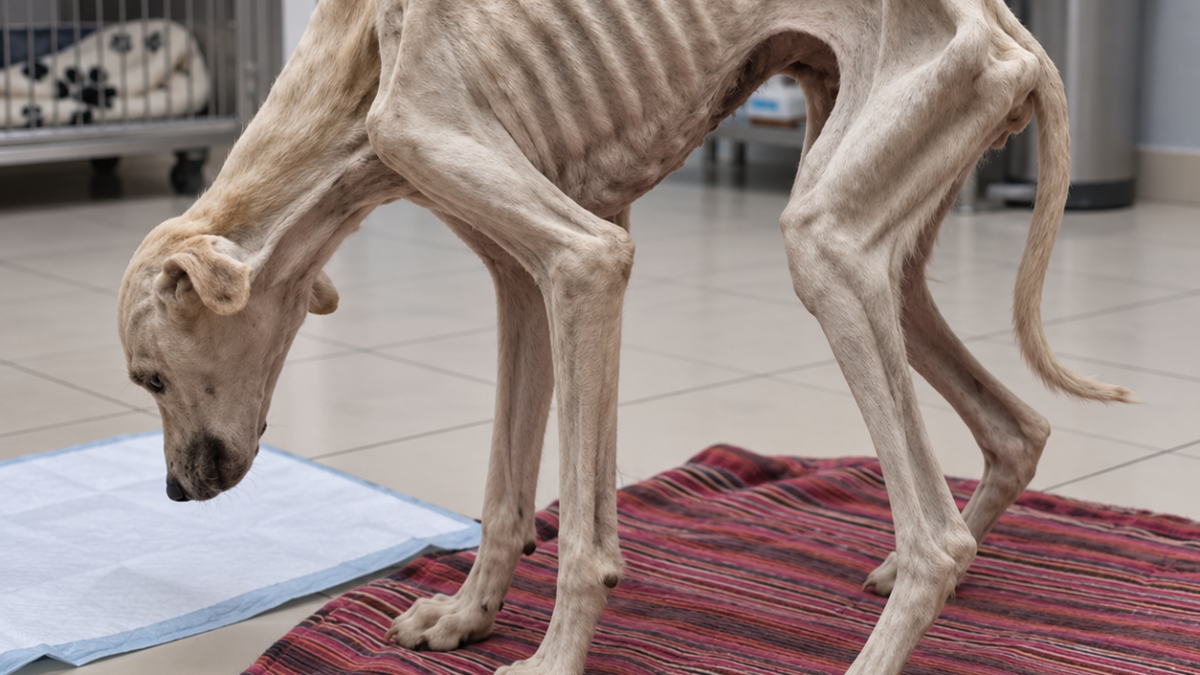
The dog I had carried from the roadside had been injured but still had some body condition.
Now I could count his ribs.
His hip bones looked sharp.
His neck had become narrow.
Sometimes he stood only with assistance.
One afternoon, I tried offering him beef.
He smelled it.
Turned away.
“Air.”
Nothing.
I placed it closer.
He moved his head away farther.
I felt something break inside me.
“You want to die?”
The words came out before I could stop them.
Air looked at me.
I covered my face.
“I’m sorry.”
He had no obligation to fight because I wanted a happy ending.
That thought hurt more than anything.
I sat there until the guilt passed.
Then I whispered, “You don’t owe me anything.”
Air’s eyes remained on me.
“But I’m still going to ask you to stay.”
The third surgery became our final attempt under the original plan.
Marcus changed the stabilization method.
He explained everything carefully.
I heard only parts.
Bone.
Soft tissue.
Perfusion.
Risk.
Postoperative monitoring.
The number three sounded enormous.
Three surgeries for one leg.
Three rounds of anesthesia for a dog who barely ate.
Three times we sent him through doors without knowing whether he would come back.
He did.
But the repair failed again.
Not immediately.
That would almost have been easier.
Instead, we watched over days as the signs slowly turned against us.
A change in swelling.
New imaging.
Poor stability.
The kind of clinical disappointment that arrives in small pieces until someone finally says the sentence everybody already knows.
Marcus stood beside me.
“This approach isn’t working.”
I looked at Air.
“What now?”
“If we follow the same route, I would recommend amputation.”
I had been resisting that word since the first day.
Now I was too tired to react.
“Will he be okay on three legs?”
“Most dogs adapt extremely well.”
“If he eats.”
Marcus didn’t answer.
That was the real problem.
Air’s body could probably adapt to three legs.
His heart had not adapted to losing one person.
I took him back to the shelter in a temporary medical-care area while we reassessed.
I worried that leaving the hospital environment would be too much.
Instead, something unexpected happened the first afternoon.
The other dogs noticed him.
There were four in the adjacent yard.
Milo, an older mixed breed with a white face.
Sophie, a small black dog who believed every visitor existed for her.
Bruno, a large brown dog with a calm temperament.
And Daisy, a young shepherd mix who had recently recovered from her own injury.
Air was resting on a blanket inside a protected pen when Sophie approached the barrier.
She sniffed.
Air lifted his head.
Sophie wagged.
Air looked away.
She remained.
Bruno came next.
He sat outside the barrier.
No excitement.
No barking.
Just presence.
Air watched him.
That was the first time I saw Air study another dog with real curiosity.
The next day, Daisy brought a toy to the gate.
She dropped it.
Air stared.
Daisy picked it up.
Dropped it again.
Air’s ears lifted.
I smiled.
“You have company.”
He looked at Daisy.
She wagged.
Something tiny changed.
That evening, Air ate three bites without being hand-fed.
I counted them.
One.
Two.
Three.
Then he stopped.
I nearly cried.
The next morning, Bruno lay outside Air’s pen again.
Air ate five bites.
The connection felt impossible to ignore.
We began controlled introductions once the veterinary team agreed it was safe.
Bruno entered first.
He approached slowly.
Air stiffened.
Bruno stopped several feet away.
Then lay down.
No pressure.
No demand.
Air watched him.
Five minutes passed.
Then Air shifted closer.
Not much.
Enough.
By the third meeting, Air rested with his body against Bruno’s side.
I stood outside the enclosure staring.
For weeks, I had touched Air.
Fed him.
Sat beside him.
Talked to him.
Tried to convince him the world still contained love.
Bruno did nothing except lie down.
Somehow, that reached Air in a place I couldn’t.
Maybe dogs understand companionship without explanation.
No questions.
No promises.
No language.
Just another warm body saying, in the simplest possible way, I’m here.
Air began changing.
Not quickly.
But visibly.
He started lifting his head when the others entered.
He ate while they ate.
That became important.
We placed his bowl near the barrier during meal times.
Sophie inhaled her food.
Daisy ate carefully.
Bruno took his time.
Air watched.
Then he began eating too.
At first, he stopped after a few bites.
Then six.
Then ten.
One morning, he finished half the portion.
I carried the empty bowl into the kitchen like it was a trophy.
“He ate half.”
The shelter manager laughed.
“I saw.”
“Half.”
“I know.”
“You don’t understand.”
“I absolutely understand.”
His weight stopped falling.
That alone felt miraculous.
Then he gained a little.
Not enough to celebrate publicly.
Enough for us.
The physical therapy team adjusted his exercises because the injured leg still couldn’t bear weight safely.
We used support slings.
Controlled movement.
Massage.
Passive range of motion where appropriate.
Air hated some of it.
He grumbled.
That was another improvement.
Sad Air tolerated everything.
Recovering Air complained.
One afternoon, during therapy, he pulled his paw away and gave me a look so offended I laughed.
“Oh, now you have opinions.”
His eyes brightened.
“Good.”
A dog who objects to inconvenience has started expecting comfort.
That was progress.
For two weeks, we allowed Air’s body and spirit to strengthen while the surgeons reviewed alternatives.
Marcus consulted another orthopedic specialist, Dr. Elena Brooks.
She examined every image from the first three operations.
She studied Air’s current condition.
Then she called me.
“I have an idea.”
Those four words terrified me.
“How experimental?”
“Not experimental. Different.”
She described a staged reconstruction strategy.
It would require multiple surgeries again.
Not one.
Three procedures in relatively close succession.
The first would address failed hardware and prepare the damaged area.
The second would reconstruct and stabilize the leg using a different approach.
The third would correct and secure what remained once healing had begun sufficiently.
It was aggressive.
Difficult.
Expensive.
Painful.
And there were still no guarantees.
I asked the question immediately.
“Would you do it if he were your dog?”
Elena was quiet.
“If his overall health continued improving and he demonstrated the will to participate in recovery, yes.”
That phrase mattered.
The will.
Air had it again.
He was eating.
He was engaging.
He watched the other dogs.
His tail moved when I arrived.
He had begun following Bruno around the yard in his sling like a younger brother.
The dog who had once stared only toward the road now looked toward what was in front of him.
I agreed.
Before the first new surgery, I sat beside Air.
“You know, most dogs get one dramatic medical story.”
Air looked at me.
“You apparently need six surgeries.”
He sighed.
“I agree.”
I scratched behind his ear.
“But this time is different.”
His tail touched the blanket.
“You’re different.”
The first procedure succeeded.
Elena removed compromised material and prepared the leg.
Air woke from anesthesia groggy but stable.
When I entered recovery, he lifted his head.
His tail moved.
That had never happened after the earlier surgeries.
The nurses noticed too.
“He knows you.”
“Yes.”
But something deeper had changed.
Before, waking in a clinic seemed to confirm Air’s worst expectation.
Alone.
Confused.
Person missing.
Now he expected someone to be there.
That expectation might have been the greatest victory we had given him.
The second surgery came several days later.
Longer.
More complicated.
I waited with the same fear, but not the same hopelessness.
Bruno’s blanket was in my car.
I had brought it because it smelled like the shelter.
Air’s new home, even if temporary.
When Elena emerged, she looked exhausted.
“It went well.”
I stared.
“Well?”
“Very well.”
The word felt dangerous.
“Don’t say that unless you mean it.”
She smiled.
“I mean it.”
The stabilization looked strong.
Blood supply remained adequate.
Alignment was good.
There were still risks.
Infection.
Failure.
Soft-tissue complications.
But for the first time, the surgical team sounded genuinely hopeful.
The third procedure was the hardest psychologically.
We had come close enough that failure now seemed even crueler.
I barely slept the night before.
Air did.
He had eaten dinner.
He had even tried to steal a piece of chicken from my hand after finishing his portion.
That made me laugh.
Months earlier, I had begged him for one bite.
Now he was stealing food.
“Thief.”
His tail wagged.
The third operation began early.
Hours passed.
I walked.
Sat.
Stood.
Drank coffee I didn’t want.
Checked my phone every two minutes even though nobody had promised updates that frequently.
When Elena finally came through the doors, I stood before she reached me.
“Well?”
She smiled.
“It worked.”
I stared.
“All three?”
“All three stages went the way we hoped.”
“His leg?”
“Still needs healing and rehabilitation. But structurally, we’re in a much better place.”
I didn’t realize I was crying until she handed me a tissue.
“Don’t celebrate by making him run.”
I laughed.
“He can barely walk.”
“He won’t always barely walk.”
That sentence became another promise.
Not from me.
From possibility.
Air woke slowly.
I sat beside him.
His eyes opened.
This time, he looked at me immediately.
Not the door.
Not the hallway.
Me.
“Hey.”
Tail movement.
“Still here.”
His eyes closed.
I stayed.
Recovery was not magical.
The successful surgeries did not erase months of weakness.
Air had lost enormous amounts of muscle.
His gait was unstable.
His injured leg needed careful protection.
Some days he seemed to improve.
Other days he looked exhausted again.
But his appetite transformed.
Food became one of his favorite things.
The first time he barked because breakfast was late, the entire shelter laughed.
“Air?” I called.
He barked again.
“You refused chicken for weeks.”
Another bark.
“You have no credibility.”
Bruno joined in.
Then Sophie.
Soon four dogs were shouting about breakfast.
I stood in the kitchen shaking my head.
“This is what I wanted?”
Yes.
Exactly this.
Air gained weight.
Slowly at first.
Then steadily.
His ribs became less visible.
His chest filled.
The sunken look around his eyes softened.
His coat improved.
His face changed in ways no surgery could explain.
The sorrow was leaving.
Not disappearing completely.
Some things remained.
If a familiar-looking vehicle slowed near us, Air sometimes stared longer than necessary.
If a man called to a dog in a certain tone, Air’s ears lifted.
Once, during a walk near the rehabilitation center, a truck stopped.
The driver stepped out.
Air froze.
His eyes locked on the man.
For several seconds, I couldn’t breathe.
Was that him?
The man waved at someone across the street.
Air continued staring.
Then Bruno, who was walking with us, nudged Air’s shoulder.
Air looked at him.
The moment broke.
He walked forward.
I looked back once.
The stranger was already gone.
Air did not.
That was healing.
Not forgetting.
Choosing what comes next.
Meanwhile, the question of Air’s previous owner had not disappeared.
The witness from the accident provided a description.
Another person nearby had seen the vehicle.
A business camera captured part of the road.
The footage wasn’t perfect, but it showed enough.
A dark pickup.
Air near the shoulder.
A man beside him.
The man walking back to the truck.
Leaving.
No frantic call.
No waiting for help.
No return.
Animal control opened a formal abandonment investigation.
Officer Daniel Perez asked whether I wanted updates.
“Yes.”
“Even if it becomes frustrating?”
“Yes.”
He warned me that identifying the driver could take time.
It did.
The partial plate from the footage led nowhere at first.
Then a repair shop owner recognized the truck.
A customer had brought in a similar vehicle with damage to a side panel around the same period.
The name attached to the invoice was Thomas Mercer.
Daniel located him.
Thomas initially said he did not own a dog named Air.
Then investigators found veterinary records.
Air.
Male.
Age consistent.
Owner: Thomas Mercer.
The denial changed.
Thomas claimed Air had run away before the accident.
The footage contradicted that.
It showed Thomas standing beside him.
Then Thomas changed his story again.
He said Air had escaped from the truck.
He said the accident happened so suddenly that he panicked.
He said he thought someone else would help.
That sentence made me furious.
Someone else.
Two words that have abandoned more animals than any road ever could.
Someone else will stop.
Someone else will pay.
Someone else will know what to do.
Someone else.
I told Daniel, “He watched him lying there.”
“We have evidence he was present.”
“He left.”
“Yes.”
“He knew Air was alive?”
“That will be part of the case.”
“What did he say?”
Daniel paused.
“He says he was scared.”
I looked toward Air.
He was eating.
Actually eating.
His bowl moved across the floor because he was pushing so hard against it.
“He was scared?”
“I’m not defending him.”
“I know.”
“But fear isn’t always a legal excuse.”
That helped.
Investigators collected Air’s veterinary history.
His old records showed he had lived with Thomas for years.
Vaccines.
Checkups.
A previous minor ear infection.
Nothing in those records suggested long-term neglect before the accident.
That complicated my anger.
Thomas may actually have cared for Air once.
Maybe Air’s love for him had been earned in ordinary years.
Walks.
Meals.
A home.
That made the abandonment harder to understand, not easier.
How does someone become a father in a dog’s mind and then leave him broken beside a road?
I never found a satisfying answer.
The prosecutor did not need one.
The case was about actions.
Failure to provide aid.
Abandonment.
Responsibility after an accident involving an owned animal.
Exact charges depended on local law and the evidence.
I cared less about labels than outcome.
Air’s rehabilitation continued while the case moved.
Week by week, he began using the injured leg.
At first, his paw only touched the ground.
Then he placed partial weight.
One morning, Elena watched him through a hallway window.
“He’s loading it.”
“What?”
“Weight-bearing.”
I stared.
Air took three slow steps.
The injured leg moved with him.
Not dragged.
Not held up.
Used.
I put both hands over my mouth.
“You’re walking.”
Air looked toward me.
He took another step.
Then sat because he was tired.
I laughed and cried.
Elena smiled.
“That’s what we wanted.”
The next month became a series of firsts.
First ten uninterrupted steps.
First full lap around the therapy room.
First time standing to eat without support.
First short outdoor walk.
First time trying to chase Sophie and being immediately stopped because everyone nearly had a heart attack.
“Absolutely not.”
Air looked offended.
“You have spent months in surgery.”
Sophie bounced beside him.
“No.”
Air barked.
“You’re not helping your case.”
His personality kept growing.
Air liked food.
Air hated pills unless hidden perfectly.
Air loved Bruno.
Air tolerated Sophie’s chaos.
Air liked sleeping with his head on someone’s shoe.
Air “talked” when he wanted attention.
Air disliked being alone behind closed doors.
That last one took time.
If I stepped out of sight, he became anxious.
At first, he tried to follow even when physically unable.
So we taught him something through repetition.
Leave.
Return.
Leave.
Return.
Ten seconds.
Thirty.
One minute.
Five.
Air learned that a door closing did not mean abandonment.
That may have been harder than learning to use the leg.
One evening, I stepped outside for nearly twenty minutes.
When I returned, Air was asleep beside Bruno.
He lifted his head.
Saw me.
Then went back to sleep.
I stood in the doorway smiling.
He knew.
People come back.
Not everyone leaves forever.
The legal hearing occurred when Air could already walk across a room without assistance.
I did not bring him.
He had spent enough time proving things to humans.
Thomas sat with his attorney.
He looked older than I expected.
Tired.
Ordinary.
That always unsettles me.
People imagine abandonment belongs to monsters who look like monsters.
Usually they look like people.
The footage played.
Air near the road.
Thomas beside him.
Truck.
Departure.
The prosecutor presented veterinary records confirming ownership.
Then records from the emergency hospital.
The shattered hind leg.
Multiple surgeries.
Weight loss.
Failure to eat.
The defense objected when emotional interpretations entered.
That was fair.
A courtroom needs evidence, not storytelling.
What the evidence showed was already enough.
Thomas had been there.
Air was severely injured.
Thomas left.
He did not contact emergency veterinary services.
He did not contact animal control.
He did not return.
The witness found Air later.
Thomas’s attorney argued panic.
Financial fear.
Confusion.
The prosecutor asked one question.
“What action did your client take after leaving the injured dog?”
There was no good answer.
None.
He did nothing.
That mattered.
The first hearing ended without resolution.
The case continued.
Outside, Daniel asked how I felt.
“Angry.”
“That’s normal.”
“I thought seeing him would help.”
“Did it?”
“No.”
I looked toward the parking lot.
“I keep wondering if Air would recognize him.”
Daniel didn’t answer.
“I’m not bringing them together.”
“Good.”
“I mean it.”
“I know.”
Air did not need closure from the man who left.
Humans love confrontation because we want visible endings.
Animals often need something simpler.
Safety without interruption.
I would not risk reopening Air’s wound just to satisfy human curiosity.
Weeks later, Thomas accepted responsibility under the charges supported by the evidence.
The court imposed fines, restitution toward veterinary expenses, probationary conditions, and restrictions related to future animal ownership.
There was no dramatic apology.
No tearful confession.
No moment when justice suddenly balanced everything.
I left the courthouse feeling almost empty.
Then Daniel stopped me.
“Remember what you said the first time we talked?”
“No.”
“You said you wanted him to understand what leaving Air had done.”
“I still do.”
“He may or may not ever understand emotionally.”
I looked at him.
“But legally?”
“He understands there are consequences.”
That had to be enough.
When I returned to the shelter, Air was outside with Bruno.
He walked toward me.
Walked.
No sling.
No support.
The once-shattered leg touched the ground with every step.
His gait was slightly uneven.
Probably always would be.
I crouched.
“There you are.”
Air came directly to me.
No looking toward the road.
No searching behind me.
He pressed his head against my chest.
That was my verdict.
Not the courtroom.
Not Thomas.
Air choosing where to walk.
The next major question was adoption.
At first, nobody raised it because Air was still recovering.
Then his medical status stabilized.
The leg was saved.
His weight improved.
He was cleared for normal home life with ongoing rehabilitation.
Applications came in.
Good applications.
A retired couple.
A family with another calm dog.
A woman who worked from home and had experience with orthopedic rehabilitation.
I read them all.
Then I avoided deciding.
The shelter manager noticed.
“You’re going to keep him.”
“I foster difficult cases.”
“You have bought him three beds.”
“He needs support.”
“You had a custom ramp built.”
“Rehabilitation.”
“He sleeps in your room.”
“Anxiety management.”
“You changed vehicles because the old one was hard for him to enter.”
I stared at her.
“That was unrelated.”
She laughed.
“No, it wasn’t.”
I looked toward Air.
He was lying beside Bruno.
His injured leg stretched comfortably in front of him.
“Bruno will miss him.”
“Bruno lives here.”
“That is also a problem.”
“You cannot adopt the entire shelter.”
“Watch me.”
Eventually, reality settled it.
Air had already chosen.
When I moved between rooms, he followed.
When he was frightened, he found me.
When he woke, he checked for me.
When I left, he waited calmly because he had learned I returned.
I signed the adoption paperwork.
The line labeled “new owner” made me pause.
Owner.
The word felt wrong after everything.
I wrote my name anyway.
That night, I sat beside Air.
“You know what this means?”
He looked at me.
“Nothing to you.”
Tail wag.
“You already thought you lived here.”
He rested his head against my leg.
The dog abandoned by someone he had considered family had not stopped loving.
That amazed me.
Humans sometimes imagine betrayed animals should become cold.
Air did not.
He became careful.
Then trusting.
Then affectionate.
Love survived.
It simply found somewhere safer to land.
His physical recovery stretched over many months.
Muscle returned to the injured leg slowly.
We continued exercises.
Incline walking.
Controlled steps.
Balance work.
Massage.
Strength training.
He complained dramatically.
“Up.”
Air stared.
“One more.”
He groaned.
“You’ve had six surgeries. Don’t lose to a foam step.”
Another groan.
“Bruno is watching.”
Bruno actually was.
Air stepped up.
“See?”
Tail wag.
Treat.
Eventually therapy became play.
We incorporated toys.
Short games.
Controlled fetch.
Air loved a blue ball.
Not red.
Blue.
He carried it everywhere.
One afternoon, after being medically cleared for a little faster movement, I rolled it across the yard.
Air went after it.
Not fast.
But quicker than a walk.
Three legs seemed to move confidently while the repaired leg joined in.
Then, for several seconds, he trotted.
I shouted.
Air stopped.
Looked back.
“What?”
He barked.
“You trotted.”
His tail wagged.
“You actually trotted.”
Bruno barked from the porch.
I laughed.
“Everybody saw it.”
A month later, Air ran.
Not far.
Ten yards.
Maybe less.
But he ran.
The leg held.
His body moved as one piece.
No collapse.
No sling.
No road.
Just grass.
Air returned carrying the blue ball.
I sat down because my legs stopped working.
The image of him beside the road flashed through my mind.
Motionless.
Waiting.
Now he was running toward me.
Some endings are so different from the beginning that they feel impossible.
That was one.
Air’s appetite became legendary.
The dog who once refused everything became a professional food negotiator.
Breakfast at 7:00 meant 7:00.
At 6:54, Air appeared in the kitchen.
At 6:56, he stared.
6:58, quiet groan.
6:59, louder groan.
7:00, bark.
“You own a clock?”
Bark.
“You’re ridiculous.”
Tail wag.
I loved every second.
The first time he left food unfinished, I panicked.
“Air?”
He looked at me.
“Why aren’t you eating?”
He walked toward the water bowl.
My heart accelerated.
I called Hannah.
She listened patiently.
“How much did he leave?”
“Maybe ten percent.”
“Is he otherwise normal?”
“Yes.”
“Did he eat treats?”
“Yes.”
“Any vomiting?”
“No.”
“Diarrhea?”
“No.”
“Energy?”
“Normal.”
She paused.
“He may simply be full.”
I felt foolish.
“Oh.”
Then she laughed gently.
“You spent months begging him to eat. I understand.”
Air finished the food twenty minutes later.
I watched him.
That behavior, ordinary for most dogs, became one of the most meaningful signs of healing.
He trusted the bowl.
Food did not need to disappear immediately.
Tomorrow existed.
Over time, the road itself became less powerful too.
At first, Air hesitated near traffic.
We chose quiet routes.
Then slightly busier ones.
Always at his pace.
Never forcing.
If he stopped, we stopped.
One day we reached a road that sounded similar to the one where he was found.
Cars passing.
Tires on pavement.
Air froze.
I waited.
His body tightened.
I touched the leash lightly but didn’t pull.
“We can go back.”
Air stared.
Then a car passed.
He flinched.
Another.
He looked toward me.
I stepped backward.
Air didn’t follow.
Instead, he moved forward one step.
Then another.
We crossed at the safe point.
On the other side, Air shook his body as dogs sometimes do after stress.
Then sniffed a patch of grass.
Just like that.
The road became a road.
Not the entire world.
Years passed.
His limp never vanished completely.
Cold weather made the repaired leg stiff.
We managed it with veterinary care, joint support and sensible exercise.
Air adapted beautifully.
He did not think of himself as damaged.
That was a human word.
Air thought of himself as hungry, sleepy, interested, bored, excited or ready for a walk.
Some mornings he climbed out of bed slowly.
Then saw the leash.
Suddenly he remembered youth.
I would laugh.
“Fake injury?”
Air barked.
“Very suspicious.”
He became one of the most social dogs I had ever known.
New rescue dogs often gravitated toward him.
Maybe because he was calm.
Maybe because he remembered fear.
Again, I tried not to invent what dogs think.
But I watched behavior.
Air approached frightened dogs slowly.
He sat near them.
He did not crowd.
More than once, I saw him do exactly what Bruno had done for him.
Lie down nearby.
Wait.
That became his legacy inside the shelter.
Bruno grew old.
His face whitened.
His steps slowed.
Air stayed close to him.
The relationship that had started with Bruno offering silent companionship reversed over time.
When Bruno struggled to stand, Air waited.
When Bruno slept, Air chose the bed beside him.
When Bruno’s appetite weakened, Air ate near him.
I watched and felt my throat tighten.
Love travels.
Someone gives it.
The recipient learns its shape.
Then offers it elsewhere.
Bruno had helped bring Air back when I couldn’t.
Years later, Air gave that presence back.
Bruno died peacefully at an old age.
Air searched for him for several days.
He checked Bruno’s bed.
The yard.
The treatment room.
I sat with him.
“I know.”
Air rested his head on my knee.
“You waited for someone once.”
His eyes closed.
“This time he didn’t leave you.”
That difference mattered.
Bruno had not abandoned Air.
Bruno had simply reached the end of his life.
Loss can hurt without being betrayal.
I think Air learned that too.
He mourned.
Then continued.
At seven years after rescue, Air’s repaired leg developed arthritis.
Hannah and Elena had always warned us.
Multiple fractures.
Multiple surgeries.
Scar tissue.
Age.
We adjusted medication.
Added physical therapy again.
Air was insulted.
“You thought you graduated?”
Groan.
“Apparently not.”
He tolerated the underwater treadmill better than expected, mostly because treats were involved.
Air would do nearly anything for food by then.
The transformation still made me smile.
One technician new to the clinic saw his chart.
“This is the dog who wouldn’t eat?”
“Yes.”
Air was staring at her treat pouch.
“You’re kidding.”
“No.”
“He looks like he’d eat my shoe.”
“He might.”
Air barked.
We laughed.
His body remained healthy otherwise.
His weight stayed stable.
His coat developed gray around the muzzle.
Every year the scarred leg looked slightly more ordinary because the rest of him aged around it.
That became beautiful to me.
The injury stopped being the defining feature.
It became just one part of an old dog.
Thomas’s case resurfaced once.
Years after the ownership restriction, authorities contacted me to confirm details because he had attempted to adopt another dog through a local group.
The rescue organization checked records.
Placement denied.
That was all.
Quiet.
No dramatic confrontation.
No public shame.
Just a dog not entering a home with someone previously found responsible for abandoning an injured animal.
I sat with that information for a long time.
Then I looked at Air sleeping.
That was enough.
The real purpose of consequences had reached forward.
Another animal never had to learn whether Thomas had changed.
Perhaps he had.
Perhaps not.
The system did not gamble the animal’s welfare on hope.
I was grateful.
When Air turned ten, he became selective about weather.
Rain?
Absolutely not.
Cold wind?
Negotiable.
Perfect sunshine?
Walk immediately.
We installed more rugs inside.
A ramp for the car.
A lower bed.
He protested all signs of aging except the softer bed.
That he accepted instantly.
His blue ball remained important even when he no longer chased it.
He carried it from room to room.
Sometimes he slept with it beneath his chin.
One day I found the first photograph from the roadside while organizing files.
Air beside the road.
Dirty.
Injured.
Eyes looking into the distance.
I stared for less than a minute.
Then I closed it.
I no longer needed that picture to remember.
The story had grown too large for one image.
A later photograph showed Air lying on a couch with the blue ball, gray around his muzzle, repaired leg stretched out.
That was him too.
Maybe more him.
Trauma freezes someone at the moment of suffering if we let it.
Recovery returns motion.
Air had moved.
That was the whole point.
At eleven, hearing loss began.
I started touching the floor so vibration would wake him without startling him.
At twelve, cataracts developed.
Nothing severe at first.
At thirteen, the repaired leg became much stiffer.
Some mornings I supported his rear end.
The familiarity of helping him stand brought me back to the rehabilitation center.
But the emotion was different.
Back then, his weakness came from injury and despair.
Now it came from age.
Age was a privilege.
I reminded myself constantly.
One winter morning, Air refused breakfast.
My stomach dropped.
I offered chicken.
He turned away.
The room seemed to collapse backward through years.
Air in the clinic.
Air refusing food.
Air shrinking.
Air giving up.
“Not again.”
He looked at me.
I called Hannah.
By then she had known him for over a decade.
We went in.
Bloodwork showed kidney changes.
Manageable at first.
Diet.
Medication.
Monitoring.
Air ate again later that day.
I cried over the bowl.
He looked confused.
“Long story.”
Tail wag.
For almost another year, we managed well.
Then age accelerated.
Weight loss.
Weakness.
Longer sleep.
Less interest in walks.
Still love for food, but not every meal.
Still blue ball, but mostly carried rather than chased.
His world narrowed gently.
Home.
Yard.
Bed.
Me.
That narrowing scared me because I remembered the way grief had once narrowed his world after abandonment.
But this was different.
Air was not waiting.
He was resting.
He knew where he belonged.
One afternoon, we sat outside.
A truck slowed on the road.
Air lifted his head.
For a second, old instinct moved through him.
Then he looked at me.
Not the truck.
Me.
I smiled.
“Yeah.”
The truck continued.
Air put his head down again.
That moment meant more than I can explain.
Years earlier, every passing vehicle had carried possibility.
Maybe father.
Maybe return.
Maybe the world restoring what had vanished.
Now Air knew who stayed.
He no longer searched every road.
The final months were about comfort.
Pain management.
Soft bedding.
Short walks.
Sunlight.
Favorite foods when medically appropriate.
I stopped caring about perfect routines.
Old dogs deserve some rule-breaking.
Chicken appeared more often.
Air approved.
One evening, I sat beside him while rain tapped the window.
His blue ball lay near his front paw.
“Remember Bruno?”
Ear movement.
“Sophie?”
Tail tap.
“Daisy?”
Another tap.
“You had a lot of friends.”
Air breathed slowly.
“And somehow I’m the one still listening to your complaints.”
He groaned.
I laughed so hard I cried.
Still talking.
Always.
The final decline arrived quietly.
No dramatic emergency.
No road.
No shattered bone.
Just age reaching the places medicine could no longer repair.
Air began struggling to stand even with help.
His appetite faded again.
This time, the sight did not trigger panic the way it once had.
It triggered recognition.
I knew the difference now.
Air was not refusing life because he was waiting for someone.
He was tired because he had lived it.
I called Hannah.
She came to the house.
We sat on the floor beside him.
She examined him carefully.
Air tolerated it, then rested his head on my hand.
Hannah looked at me.
“We’re close.”
“I know.”
“Maybe days.”
“I know.”
“You don’t have to decide this second.”
“I know.”
Everything I said was “I know.”
Knowing did not make it easy.
That night, I slept beside Air on the floor.
At some point I woke and found him watching me.
“Hey.”
Tail movement.
“You checking if I’m still here?”
His eyes stayed on mine.
“I am.”
That was the promise.
From the hospital.
From the shelter.
From every closed door he had learned would reopen.
I’m still here.
The next morning, Air asked to go outside.
I could tell because he looked toward the door and made one low sound.
I helped him stand.
We moved slowly.
The yard was warm.
Sunlight touched his face.
Air lowered himself onto the grass.
I sat beside him.
A car passed beyond the fence.
He did not look.
Another passed.
Nothing.
I laughed softly.
“You finally stopped waiting.”
His ear moved.
I put my hand over his chest.
“You know what I wish?”
Air looked toward me.
“I wish I could take you back to that road for one second.”
My voice broke.
“Not to make you relive it.”
I swallowed.
“Just so I could tell that version of you what happens next.”
Air closed his eyes.
“I’d tell you somebody comes.”
My fingers moved gently through the gray fur around his neck.
“I’d tell you your leg is going to hurt for a long time.”
A tear fell onto my wrist.
“I’d tell you six surgeries is completely unreasonable.”
His tail moved once.
“I’d tell you there’s a dog named Bruno waiting for you.”
Another breath.
“I’d tell you you’re going to love food so much we’ll all regret encouraging you.”
I laughed.
“And I’d tell you the man you’re waiting for doesn’t come back.”
That sentence still hurt.
“But eventually, you stop needing him to.”
Air opened his eyes.
I pressed my forehead against his.
“You find people who stay.”
Hannah returned later that afternoon.
I had already made the decision.
Air was comfortable but clearly exhausted.
We kept him outside.
His blue ball beside him.
No hospital table.
No bright treatment room.
No doors he needed to watch.
I lay in the grass.
Air’s head rested against my arm.
Hannah gave the first medication.
He relaxed.
I whispered, “You can stop waiting.”
His breathing slowed.
“I’m here.”
His eyes closed.
“You’re home.”
My hand stayed on his chest until the last heartbeat.
Then longer.
For years, the story of Air had begun with a road.
After he died, I realized that was no longer where I wanted to start.
Yes, he was hit by a car.
Yes, someone he trusted left him.
Yes, he waited.
Yes, the leg was shattered.
Yes, he nearly gave up.
Yes, three surgeries failed.
Yes, his body wasted away because grief and illness stole his appetite.
All of that happened.
But it was not most of his life.
Most of his life was breakfast at exactly seven.
Most of his life was Bruno.
The blue ball.
Rehabilitation exercises he pretended to hate.
Long naps.
Short walks.
Then longer walks.
Then short walks again when he became old.
Most of his life was learning people return.
Most of his life was knowing where home was.
The former owner faced legal consequences.
That mattered.
The later attempt to acquire another dog was stopped because of the record created by Air’s case.
That mattered too.
But punishment never became the ending I cared about.
Air’s real answer to abandonment was much quieter.
He trusted again.
That was it.
Someone taught him a terrible lesson beside a road:
Love leaves.
Air spent the rest of his life learning the opposite lesson.
Bruno stayed beside his pen.
Doctors kept returning after surgeries.
I came back through every door.
Food arrived every day.
Friends remained.
His bed remained.
His home remained.
Years remained.
Eventually, Air stopped watching vehicles.
That was revenge enough.
The person who abandoned him had taken a few terrible hours and nearly turned them into the definition of his life.
Air refused.
Not consciously.
Not dramatically.
He simply kept living until those hours became smaller.
One day of abandonment.
Then thousands of days of belonging.
One road.
Then hundreds of walks beside someone who never let go of the leash.
One shattered leg.
Then years of using it.
Three failed surgeries.
Then three that succeeded.
One person leaving.
Then an entire family staying.
That was the balance I wanted.
Not pain returned.
Love multiplied.
After Air died, I kept his blue ball.
It sits beside a photograph of him taken several years after the rescue.
He is standing in the yard.
All four paws on the ground.
Head raised.
Mouth open.
Eyes bright.
There is no road in the picture.
No injury.
No owner.
No waiting.
Just Air.
Sometimes people who know the early story see that photograph and ask, “Is that really the same dog?”
I always say yes.
Because that question contains everything.
Is that really the dog who couldn’t move?
Yes.
The dog who refused food?
Yes.
The dog who nearly became skin and bones?
Yes.
The dog whose first three surgeries failed?
Yes.
The dog who watched the road for somebody who abandoned him?
Yes.
Same dog.
Different chapter.
Years later, one of the shelter volunteers told me something I had forgotten.
During Air’s first weeks with the other dogs, there had been one night when everyone expected him to sleep in his usual corner.
Instead, he dragged his blanket closer to Bruno’s pen.
One inch at a time.
Weak body.
Bad leg.
Still healing.
He moved the blanket because he didn’t want to sleep alone.
I cried when she reminded me.
That might have been the first decision Air made toward his new life.
Not surgery.
Not eating.
Not walking.
Choosing company.
Air’s greatest wound had never been only the fractured leg.
It was the belief that the person he loved could disappear while he lay helpless and never return.
The cure was not a single heroic rescue.
It was repetition.
Stay.
Return.
Feed.
Touch.
Wait.
Stay again.
Thousands of ordinary acts until abandonment stopped feeling inevitable.
That is why Air’s ending satisfied me more than any courtroom sentence ever could.
Thomas had left him once.
We stayed for the rest.
Thomas had walked away from Air when he was broken.
We watched him become whole enough that broken no longer described him.
Thomas had left Air beside a road because responsibility became inconvenient.
Years later, Air reached old age as the center of a household that rearranged furniture, schedules and entire days around his comfort.
That contrast was justice.
Air never knew about fines.
Probation.
Ownership restrictions.
Court dates.
He did not need to.
His justice was practical.
Breakfast.
Medication.
Bruno’s warm body beside him.
A repaired leg.
A blue ball.
A home.
A person still there when he woke.
And when his last day finally came, Air did not stare into the distance waiting for somebody to return.
He looked at the person beside him and knew he had already found the one who stayed.
That is how I remember him.
Not abandoned.
Not broken.
Not waiting.
Home.
For a long time after Air died, I kept expecting to hear him before I saw him.
That had been our routine for years.
A low groan from the hallway when breakfast was taking too long.
The soft scrape of his repaired hind leg against the rug when he first got up in the morning.
The thump of his tail against the floor whenever I came home.
Sometimes, if I stayed in another room longer than Air thought was reasonable, he would make that strange talking sound until I answered.
After he was gone, the house became painfully quiet.
Not empty.
There were still other dogs.
There were still bowls on the kitchen floor, leashes hanging near the door and blankets piled in corners.
But Air had occupied the house in a way that was difficult to explain.
Maybe because I had once known what silence meant for him.
On the side of that road, silence had meant nobody was coming.
Later, in our home, Air had filled that silence with demands.
Food.
Walks.
Attention.
Company.
He had learned that he was allowed to ask for things.
That might sound small.
It wasn’t.
An abandoned dog often learns the opposite.
Do not expect.
Do not call.
Do not need too much.
Do not trust that anyone will answer.
Air had spent years unlearning that lesson.
Then suddenly, after all those years, I was the one calling into quiet rooms and receiving no answer.
For weeks, I left his blue ball where he had last dropped it.
Beside the couch.
I could not pick it up.
Sometimes another dog sniffed it and walked away.
Nobody touched it.
Maybe that was coincidence.
Maybe the others understood.
I never knew.
One rainy afternoon, I finally sat on the floor and took the ball into my hands.
Its surface was scratched from teeth.
One side was faded where Air had carried it so often.
I remembered the first time he had run after one.
Not walked.
Not stumbled.
Ran.
I had watched his repaired leg move beneath him and felt something inside me break open.
That dog had once been expected to lose the leg.
Then three surgeries failed.
Then another three surgeries asked everything from him again.
And still, one day, he ran.
I held the ball against my chest.
“You really did it, buddy.”
My voice sounded strange in the quiet room.
“You actually did all of it.”
The road.
The hospital.
The surgeries.
The starvation that followed his grief.
The rehabilitation.
The fear.
The loneliness.
Then Bruno.
Food.
Trust.
Home.
Age.
Air had crossed an enormous distance without ever understanding why everyone around him treated ordinary moments like miracles.
He did not know that walking across the yard could make grown adults cry.
He did not know why we celebrated when he finished a bowl of food.
He did not know why the first time he slept through my leaving the room I stood in the doorway smiling like a fool.
Air simply lived.
Maybe that was why his recovery became so beautiful.
Eventually, he stopped performing survival.
He stopped being “the abandoned dog.”
He stopped being “the dog with the shattered leg.”
He became the dog who demanded breakfast.
The dog who loved blue balls.
The dog who refused to walk in hard rain.
The dog who slept too close to the edge of the bed and somehow always pushed me farther over.
The dog who could recognize the sound of a treat bag from three rooms away even after his hearing began fading.
The dog who once barked at his own reflection in the glass door and then looked embarrassed when he realized the other dog moved exactly when he did.
That was Air.
And I did not want his memory trapped beside the road any more than I had wanted his life trapped there.
About a month after he died, Marcus came to visit.
He had known Air during some of the hardest years.
He had also been there during the better ones.
When he walked into the living room, he stopped beside the empty bed.
For several seconds, neither of us said anything.
Then Marcus looked at the blue ball on the shelf.
“You kept it.”
“Of course.”
He nodded.
“He used to carry that thing everywhere.”
“I bought him at least twenty.”
“Same color?”
“Always blue.”
Marcus smiled.
Then his expression changed.
“I keep thinking about the first day.”
“So do I.”
“He looked down that road like somebody was going to come back.”
I swallowed.
“I know.”
Marcus sat down.
“You ever find out whether Thomas regretted it?”
That question had crossed my mind many times during the early years.
Later, almost never.
“I don’t know.”
“Would you want to?”
I looked toward Air’s photograph.
He was older in it.
Gray around the face.
Standing on all four legs beneath the tree.
“No.”
Marcus seemed surprised.
“Really?”
“I used to think I needed him to understand what he had done.”
“And now?”
“Air understood something more important.”
“What?”
I looked at the empty bed.
“That somebody stayed.”
That became the answer I carried afterward.
Regret from the person who abandoned Air would have been about Thomas.
Air’s healing was about Air.
Those were not the same thing.
I could spend the rest of my life wondering whether Thomas ever thought about the dog lying beside the road.
Whether he ever woke at night and remembered Air’s eyes following the truck.
Whether he regretted driving away.
Whether he told himself a different version of the story until he could live with it.
None of that could change what mattered.
Air had stopped waiting for him long before the end.
That was freedom.
Several months later, I went back to the road.
I had avoided it for years.
There had been no reason to take Air there.
Some people believe healing means returning to the exact place where something terrible happened.
I never agreed.
Air did not owe that road a confrontation.
But after he died, I felt I needed to see it once.
The roadside looked smaller than I remembered.
Traffic moved past steadily.
There was a patch of weeds beside the shoulder and an old sign farther down.
Nothing marked the place.
No memorial.
No evidence that a dog had once lain there unable to stand while the only person he trusted drove away.
I parked safely nearby and walked to the edge.
I stood where I thought Air had been.
Cars passed.
Nobody knew why I was there.
For a while, I simply listened.
Then I looked down the road in the direction Air had stared.
I tried to imagine what the world had looked like through his eyes that day.
Pain in his leg.
Dirt on his body.
Cars.
Noise.
Fear.
And one question he could not possibly understand.
Why isn’t he coming back?
My throat tightened.
“I wish I could have found you sooner.”
The words disappeared into traffic.
“I wish you never had to learn what that felt like.”
A truck went by.
Wind lifted dust from the shoulder.
“But if I could tell you one thing…”
I looked toward the distance.
“You stopped waiting.”
That was when I cried.
Not for the dog on the roadside.
For the old dog in the yard.
The difference between them was everything.
Air had once measured hope by the possibility of one truck turning around.
Years later, hope had become so ordinary that he no longer had to think about it.
His bowl filled.
I returned.
Doors reopened.
Friends waited.
Beds remained where he left them.
The person beside him in the morning was still there at night.
Air’s greatest healing had never been the leg.
It was predictability.
Belonging repeated often enough that fear became unnecessary.
I stayed by the road only a few minutes.
Before leaving, I touched the grass.
“That place doesn’t get to keep you.”
Then I went home.
In the years after Air’s rescue, the shelter had changed too.
Some of those changes were practical.
New rehabilitation equipment.
Better partnerships with orthopedic specialists.
Improved procedures for abandoned injured animals.
But the thing I noticed most was cultural.
People talked differently about frightened dogs.
Air had taught us patience.
Not intentionally.
He had never volunteered for the role.
But after watching Bruno reach him in a way humans could not, we became more aware of how much other animals sometimes matter during recovery.
When appropriate, isolated dogs were introduced carefully to calm companions.
Sometimes nothing changed.
Sometimes everything did.
One young shepherd named Ben came to us after being found beneath an abandoned house.
He was physically healthy but terrified of people.
For days, he stayed pressed against the back of his enclosure.
Then we placed an older, calm dog named Daisy nearby.
Daisy ignored him.
She simply slept.
The next morning, Ben had moved closer to the shared barrier.
Three days later, he ate while Daisy ate.
A week later, he followed her into the yard.
I stood watching them and thought about Bruno lying outside Air’s pen.
I whispered, “Still working, Air.”
His story had kept moving without him.
I was careful about calling that a legacy.
Air did not suffer so we could learn.
His abandonment was not a gift.
I hated when people tried to turn terrible things into something that “needed to happen.”
Nothing about that road needed to happen.
Nothing about six surgeries was necessary.
Nothing about Air refusing food until his bones showed was somehow good because the ending became beautiful.
The good came afterward because people chose to create it.
That distinction mattered to me.
Pain is not redeemed because somebody learns from it.
We simply have a responsibility not to waste the chance to do better once we have seen what pain can do.
Air showed us.
So we changed.
The legal consequences connected to Thomas also mattered long after the courtroom.
Years after the case, a rescue contacted authorities when Thomas attempted to obtain another dog.
The previous restriction surfaced.
The adoption did not go forward.
I never learned the name of that dog.
I didn’t need to.
Somewhere, an animal never became another Air.
That was enough.
Justice had looked disappointing when I first watched it happen.
Paperwork.
Restrictions.
Fines.
Probation.
Nothing seemed large enough compared with a dog waiting injured beside the road.
But years later, the value became clearer.
Justice does not always look backward.
Sometimes its most important work is preventing repetition.
Air never knew.
He didn’t need to.
His world was never about punishment.
His world became about safety.
There were days when I wondered what Air would have done if Thomas had returned years later.
Would he recognize him?
Probably.
Would he wag?
Maybe.
That possibility once made me angry.
Then I understood why.
Dogs do not carry justice the way humans do.
Air could remember love even after betrayal.
That did not make him foolish.
It made him Air.
Maybe he would have approached.
Maybe he would have been afraid.
Maybe he would have stood beside me instead.
I am glad I never found out.
Air did not need to be tested.
He had already proved enough.
The final years of his life were my favorite because almost nothing dramatic happened.
He became slow.
Demanding.
Gray.
Selective about weather.
He sometimes forgot why he had entered a room.
He slept harder.
He snored louder.
He expected chicken whenever medication appeared.
Some days, the repaired leg bothered him.
I would kneel and massage it.
“Worth six surgeries?”
Air would groan.
“I agree. Ridiculous.”
Then he would put his head against my arm.
The leg we had once been desperate to save eventually became just an old leg.
That transformation meant everything.
The scar stopped telling the story of the accident.
It told the story of time.
Old scars change meaning when enough good years grow around them.
Air’s did.
On the first anniversary after his death, I carried his blue ball outside and sat beneath the same tree where we had spent his final morning.
The grass was warm.
A car passed somewhere beyond the fence.
I waited instinctively for Air to lift his head.
He didn’t.
Of course he didn’t.
But in my memory, I could see the old version of him lying there.
He would hear the car.
Maybe open one eye.
Then put his head back down.
That image made me smile.
I placed the ball in the grass.
“You know what I’m proudest of?”
The wind moved through the leaves.
“Not the walking.”
I paused.
“Not even the running.”
My eyes filled.
“You learned to stop looking down the road.”
That was the miracle.
Because Air had once believed love existed behind him.
Everything he wanted was attached to the person who disappeared.
Then the other dogs taught him something new.
Love could sit beside him.
Bruno taught him that.
The doctors taught him that.
The volunteers taught him that.
Eventually, I did too.
And Air became brave enough to look forward.
By the end, he didn’t need proof every minute.
He didn’t need to follow me from room to room.
If I left the house, he slept.
If I closed a door, he waited without panic.
When I returned, he was happy.
But not shocked.
He expected me.
That might sound ordinary.
To Air, it was everything.
The first man taught him that a person could leave and never return.
We spent years teaching him that leaving and abandonment were not the same thing.
People leave for work.
Then return.
They walk outside.
Then return.
They close the bathroom door.
Then return.
They drive away.
Then return.
Repetition turned trust into muscle.
By the time he became old, that muscle was strong.
I sometimes wish humans could heal the same way.
Perhaps we do.
One safe day.
Then another.
Then another.
Until the terrible day becomes part of the past instead of the map for everything ahead.
When people ask me about Air now, they usually know the famous part.
“The dog abandoned after being hit by a car?”
“Yes.”
“The one who had six surgeries?”
“Yes.”
“The one whose friends made him eat again?”
“Yes.”
Then I tell them what I wish more people knew.
He became old.
That sentence changes the entire story.
He became old.
Air did not remain frozen beside the road.
He aged.
His muzzle went gray.
His hearing weakened.
His favorite ball wore out.
His repaired leg developed arthritis.
His appetite became picky again for completely ordinary old-dog reasons.
He needed help getting up.
He slept in sunlight.
He reached the age when people started saying, “He’s doing great for an old guy.”
Every one of those things was a privilege.
The road nearly took them from him.
It didn’t.
Thomas nearly decided where Air’s story ended.
He didn’t.
Air’s ending was written years later in a quiet yard.
No traffic.
No panic.
No waiting.
My hand on his chest.
His blue ball beside him.
Sunlight touching the face of a dog who knew exactly where home was.
That is why I do not picture Thomas when I think about justice anymore.
I picture Air asleep with Bruno.
I picture the first full bowl he finished.
I picture his repaired leg touching the floor.
I picture him running toward me with a blue ball.
I picture him looking at a passing truck and then choosing to look back at me.
I picture the old man he became.
Those memories are larger than abandonment.
Larger than anger.
Larger even than the road.
One person left Air when he needed him most.
That will always be true.
But truth has more than one sentence.
Someone else picked him up.
Doctors fought for his leg.
Other dogs refused to let him disappear inside grief.
Volunteers sat with him.
Food returned.
Strength returned.
Trust returned.
Then joy.
Then years.
Then old age.
That is the full truth.
Air once waited beside a road for a father who never came back.
By the end of his life, he no longer had to wait for anyone.
He had people beside him.
And on the last day, when his tired body finally could not carry him any farther, he did not look toward the distance.
He looked at me.
I was there.
Exactly where I had promised to be.
If I could speak to the frightened dog from that first day one more time, I would not tell him the surgeries would succeed.
I would not promise the pain would disappear.
I would not even tell him his old owner would face consequences.
I would tell him something simpler.
“Air, stop watching the road when you’re ready.”
I would kneel beside him.
“You’re waiting for the wrong ending.”
Then I would point—not backward toward the truck that disappeared, but forward toward everything he could not yet see.
Bruno.
The shelter.
The doctors.
The first full meal.
The first steps.
The blue ball.
The yard.
The years.
The gray muzzle.
Home.
And I would tell him:
“One person leaving you is not proof that everyone will.”
Because that was the lesson Air spent the rest of his life learning.
And by the time he finally closed his eyes for the last time, he knew it.
He had been left once.
But after that, he was loved for the rest of his life.
And in the end, love stayed.








