PART 2: He Waited 812 Days Outside an Abandoned Factory—Then One Stranger Held Out Her Hand and Ended His Longest Goodbye
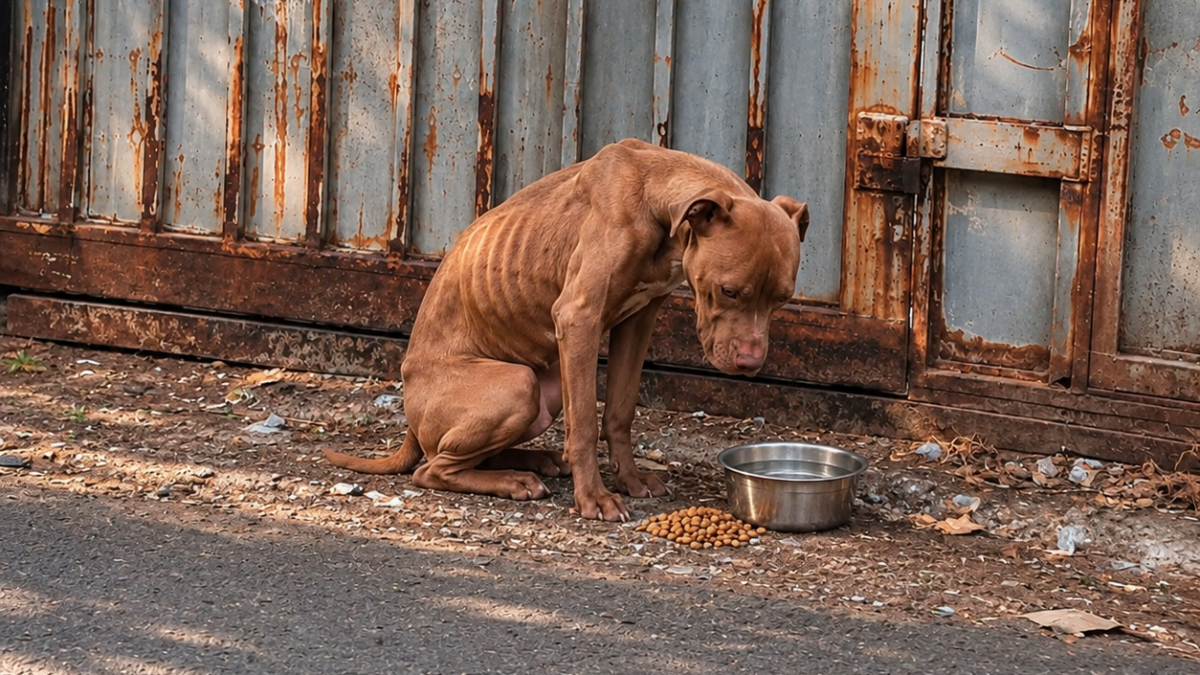
PART 2
I didn’t put a leash on Rocky immediately.
That would have been the kind of mistake rescue workers make when emotion gets ahead of judgment.
Trust is not the same thing as surrender.
Rocky had touched me.
That didn’t mean he was ready to be controlled by me.
So I left my hand exactly where it was.
He stayed.
Five seconds.
Ten.
Maybe twenty.
Then he stepped back.
I let him.
“Good.”
His ears moved.
“You’re allowed to change your mind.”
I pulled a slip lead from my coat pocket but left it beside my leg.
Rocky stared at it.
His body stiffened.
That told me enough.
“Not today.”
I put it away.
He relaxed.
The next morning, I came back.
Rocky approached faster.
Not happily.
Not yet.
But deliberately.
He sniffed my coat.
Then my hands.
On the third morning after that first touch, he allowed me to scratch beneath his jaw.
On the fourth, behind his ears.
On the fifth, I brought an open car door into the equation.
I parked closer.
Opened the passenger door.
Then sat on the ground.
No leash.
No pressure.
Rocky looked at the car for ten minutes.
Walked toward it.
Backed away.
Walked again.
I said nothing.
Eventually, he put his front paws on the floorboard.
Then jumped backward.
“Fair.”
Next morning, same thing.
By day three, he climbed completely inside.
He sniffed the seat.
The dashboard.
The door.
Then jumped back out.
That was enough.
On day four, I placed a blanket inside.
Rocky climbed in.
Lay down.
I didn’t start the car.
I sat on the curb beside the open door for half an hour.
On day five, I started the engine.
He panicked.
Rocky launched out so fast he nearly knocked me over.
I shut the engine off.
“Okay.”
He retreated toward the gate.
For one terrifying moment, I thought I had ruined everything.
Then he stopped.
Looked back.
I sat down.
Didn’t follow.
Ten minutes passed.
Rocky returned.
That was the day I learned what real trust looked like.
Not never being afraid.
Coming back after fear.
Three days later, Rocky rode to Second Chance.
The trip took twelve minutes.
He stood the whole way.
His paws braced against the floor.
His nose near the window.
Every turn made him tense.
Every red light made him look backward.
I kept talking.
“Nobody’s stealing you.”
Rocky’s eyes met mine in the mirror.
“We’re just changing the waiting room.”
At the shelter, I parked in the quietest area behind the building.
My colleague Elena met us.
She knew the plan.
No crowd.
No excitement.
No volunteers gathering around the famous factory dog.
Rocky stepped from the vehicle.
Sniffed the ground.
Then looked behind him.
The direction of the factory.
His tail lowered.
My chest tightened.
“Rocky.”
He looked at me.
We had learned his name from one former factory worker two days earlier.
“Rocky.”
His ears rose at the sound.
That was confirmation enough.
I crouched.
“You can go back if you want.”
Not literally.
I wasn’t going to return him to two more years of rain and starvation.
But he needed to feel that I was not dragging him into a new prison.
I held out my hand.
Rocky came.
Elena quietly clipped a long line to the soft harness we had fitted him with while he was distracted by food.
He noticed.
Froze.
I stayed.
“It’s okay.”
His breathing increased.
“I’m here.”
He looked toward the parking lot.
Then at me.
Slowly, the tension left his body.
We walked inside.
The medical examination was worse than I expected.
Rocky had worms.
A skin infection.
Two broken teeth.
Scar tissue around his neck.
Arthritis in one hind leg.
His paw pads were thickened and cracked from living outdoors.
He was at least fifteen pounds underweight.
And there was an old pellet lodged beneath the skin near his shoulder.
“A pellet?” I asked Dr. Lyle.
“Air rifle, probably.”
My jaw tightened.
“How old?”
“Could be years.”
“Remove it?”
“If it isn’t causing problems, I’d leave it.”
Rocky was sedated for X-rays.
I stayed beside the table.
His fur smelled like wet earth and old rain.
I touched one paw.
Eight hundred and twelve days.
How many cars had passed him?
How many people knew he was there?
How many times had he stood because he thought one vehicle was the right one?
I felt anger rising.
Dr. Lyle noticed.
“Don’t.”
“What?”
“Don’t start imagining an entire crime scene.”
“He was abandoned.”
“Probably.”
“Probably?”
“We know he stayed there.”
“You’re defending whoever left him?”
“No.”
Dr. Lyle removed his gloves.
“I’m protecting you from building certainty where we have gaps.”
I hated when he was reasonable.
“We’ll know what we know.”
“And the rest?”
“Rocky doesn’t need you to prosecute a ghost.”
I looked at the sleeping dog.
“He needs what?”
“A future.”
That shut me up.
The first night at Second Chance, Rocky did not sleep.
Our overnight worker, Mia, sent me a message at 1:13 a.m.
**Still awake. Lying down but watching the door.**
At 2:47:
**Got up when a truck passed. Went back down.**
At 4:02:
**He finally closed his eyes for ten minutes.**
I arrived before six.
Rocky was standing at the kennel door.
The moment he saw me, his body changed.
Tail.
One movement.
Then another.
I stopped.
Elena, standing behind me, whispered:
“Did you see that?”
Rocky stared at me.
His tail moved a third time.
A hesitant wag.
I covered my mouth.
For three weeks, I had seen every emotion in his eyes.
Fear.
Hope.
Suspicion.
Exhaustion.
But not joy.
That morning, something small broke through.
“Hey, Rocky.”
He pressed his nose against the bars.
I entered.
He leaned against my knee.
I cried.
Of course I did.
People imagine rescue work makes you tougher.
It doesn’t.
It just makes you more experienced at crying in inconvenient places.
Rocky’s physical recovery happened quickly.
Food helped.
Medicine helped.
Warmth helped.
Three weeks later, his ribs were less visible.
His coat began filling in.
The infection cleared.
But emotionally, Rocky lived in two worlds.
Inside the shelter, he trusted me.
Outside, he looked for the factory.
Every walk began with him turning toward the road.
Every unfamiliar engine made him stop.
Every man around fifty years old got his full attention.
At first, I thought I understood.
Then a former factory worker named Paul Grady called.
He had seen our social media post.
“You’ve got Danny’s dog.”
The words made me sit down.
“Who’s Danny?”
“Daniel Mercer.”
“Former employee?”
“Forklift operator. Worked there maybe six years.”
“Was Rocky his?”
“Everybody knew it.”
My heart started pounding.
“What happened when the factory closed?”
Silence.
“Paul?”
“It’s complicated.”
“Make it simple.”
“Danny left.”
“And Rocky?”
“Stayed.”
“That isn’t complicated.”
Paul sighed.
“Danny said he’d come back.”
I closed my eyes.
There it was.
The sentence Rocky had spent 812 days believing.
“Why didn’t he?”
“I don’t know.”
“Did anyone contact him?”
“A few guys.”
“And?”
“He stopped answering.”
“Do you have his number?”
“Old number.”
“Address?”
“No.”
I asked Paul to come in.
He arrived two days later carrying photographs.
Rocky saw him through the lobby glass.
His tail moved.
Not excitement exactly.
Recognition.
Paul crouched.
“Hey, Rock.”
Rocky approached.
Sniffed his hands.
Allowed a brief touch.
Then began looking behind him.
Paul’s face collapsed.
“He’s looking for Danny.”
“Yes.”
“Oh, man.”
Paul sat on the floor.
“I thought somebody took him.”
“You knew he was still there?”
“I left town six months after the factory closed. Before that, yeah.”
“Why didn’t you take him?”
The question came sharper than I intended.
Paul flinched.
“My apartment didn’t allow dogs.”
“Rescue?”
“I called one.”
“Which?”
“Don’t remember.”
I wanted to attack every excuse.
Then I stopped.
Paul had not created Rocky’s abandonment.
He had failed to solve it.
Those things are different.
Both can hurt.
But they’re different.
“Tell me about Daniel.”
Paul rubbed his face.
“Loved that dog.”
I almost laughed.
“Apparently not enough.”
“Catherine—”
“He left him.”
“Yes.”
No defense.
That helped.
Paul continued.
“Danny brought Rocky to work almost every day. The supervisor hated it at first. Then everybody got used to him.”
“What happened when the factory closed?”
“Danny was struggling.”
“With what?”
“Money. Drinking. His marriage had ended.”
None of that excused Rocky.
But context isn’t always excuse.
Sometimes it’s simply the shape of the failure.
“Last day, Danny said he couldn’t take Rocky to where he was staying.”
“So he tied him outside?”
“No.”
Paul shook his head.
“Rocky was loose. He always stayed near Danny.”
“What did Danny say?”
“He said his brother was picking Rocky up.”
“Did he?”
“No.”
“Did Danny know?”
“I think eventually.”
“What do you mean?”
“Rocky was still there the next day. Then the day after.”
“And Danny never came?”
Paul looked down.
“No.”
I felt sick.
“Why?”
“I don’t know.”
That sentence followed me for weeks.
Why?
The word rescue workers ask until it becomes useless.
Why abandon a dog?
Why neglect one?
Why keep one chained?
Why wait until the animal is dying before surrendering?
Sometimes there’s an answer.
Sometimes the answer is ugly.
Sometimes the answer is cowardice wrapped in circumstances.
We eventually found Daniel Mercer.
Not through anything dramatic.
Public records.
A former coworker.
A forwarding address.
He lived four hours away.
I did not contact him immediately.
I told myself it was because I wanted to protect Rocky.
Truth?
I was afraid.
If Daniel came back and Rocky recognized him, what then?
Would Rocky choose him?
Would the 812 days disappear in one tail wag?
Would I be able to let him go?
That question exposed something uncomfortable.
I had started thinking of Rocky as mine.
He wasn’t.
Not yet.
Maybe never.
I talked to our director.
She said one sentence:
“This has to be about Rocky.”
I knew.
So I called Daniel.
He answered on the fourth ring.
“Hello?”
“Is this Daniel Mercer?”
“Yes.”
“My name is Catherine Hart. I work at Second Chance Animal Shelter.”
Silence.
“We have Rocky.”
Another silence.
Then:
“He’s alive?”
My grip tightened around the phone.
“Yes.”
“Oh my God.”
His voice broke.
For one second, I heard real emotion.
Then I remembered 812 days.
“You knew he was at the factory.”
Not a question.
Daniel said nothing.
“Did you?”
“Yes.”
“Why didn’t you go back?”
“I couldn’t.”
“You were four hours away.”
“You don’t understand.”
“Then explain.”
His breathing became rough.
“I lost everything.”
“You still had him.”
“That’s not fair.”
“Rocky waited outside those gates for more than two years.”
“I know.”
“You know?”
“I saw pictures online.”
My anger went cold.
“You saw him?”
“Yes.”
“And did nothing?”
“I wasn’t in a place to take care of him.”
“Then surrender him.”
“I thought someone would.”
“He wouldn’t leave.”
“I know.”
Every answer made it worse.
Yet Daniel wasn’t defensive in the way I expected.
He sounded ashamed.
That almost angered me more.
Shame without action had cost Rocky 812 days.
“Do you want to see him?”
The question left my mouth before I had decided to ask it.
Daniel became silent.
“Do you?”
“I don’t know.”
That answer told me everything.
Rocky would have crossed a highway for this man.
The man didn’t know whether he wanted to drive four hours.
“I’ll call you back.”
I hung up.
I did not tell Rocky.
Obviously.
But that evening, I sat in his kennel.
“You deserve someone who’s sure.”
Rocky put his head on my knee.
“You hear me?”
His tail moved.
“You deserve somebody who doesn’t have to think about whether you’re worth the drive.”
Two days later, Daniel called.
“I want to come.”
My stomach tightened.
We arranged a controlled meeting.
No cameras.
No public spectacle.
No emotional reunion video.
Rocky’s welfare first.
Daniel arrived on Saturday.
He looked older than I expected.
Mid-forties.
Thin.
Gray around the temples.
He stood outside the observation room.
Rocky was inside with me.
The moment Daniel stepped into view, Rocky froze.
His ears shot forward.
Every muscle tightened.
Daniel whispered:
“Rock.”
Rocky made a sound.
A cry.
I’ve heard dogs make noises of fear.
Pain.
Excitement.
This was all three.
He ran toward the glass.
Daniel covered his mouth.
I opened the door only after Rocky’s body language stayed soft.
Daniel entered.
Rocky launched himself forward.
Not aggressively.
He crashed into Daniel.
Tail whipping.
Whining.
Jumping.
Daniel fell to his knees.
“Oh, buddy.”
Rocky licked his face.
I looked away.
It hurt more than I expected.
Daniel held him.
“I’m sorry.”
Rocky didn’t care about apologies.
Dogs live in immediacy.
The person he’d waited for was there.
For several minutes, Rocky became a younger dog.
He brought Daniel a toy.
Paced.
Returned.
Leaned against him.
The entire shelter staff watching through the window cried.
Even me.
Especially me.
Then something changed.
Daniel sat in a chair.
Rocky lay against his feet.
Daniel looked at me.
“What happens now?”
I already disliked the question.
“What do you mean?”
“With him.”
“He needs a permanent home.”
Daniel rubbed Rocky’s head.
“I can’t take him.”
There are moments when anger becomes so intense it turns quiet.
I stared.
Rocky leaned harder against Daniel.
“You came four hours.”
“I wanted to see him.”
“You let him believe you came back.”
Daniel’s face tightened.
“I never said—”
“He doesn’t understand words like that.”
“I live in a studio. My job requires travel.”
“You knew that before you came.”
“I thought maybe seeing me would help.”
“Help who?”
He flinched.
Good.
I hated myself for thinking that.
But good.
Daniel stared at Rocky.
“I needed to say goodbye.”
Rocky had already spent 812 days waiting for the first goodbye.
Now Daniel wanted another.
“No.”
He looked at me.
“No?”
“You don’t get to turn him into a prop for your guilt.”
“That isn’t what I’m doing.”
“Then what are you doing?”
He stood.
“I loved that dog.”
I stood too.
“Then why did he sleep outside a factory for two winters?”
His face changed.
“I was drinking.”
“I know.”
“I lost my house.”
“I know.”
“My wife left.”
“I know.”
“I was living in my car.”
“And Rocky?”
Daniel looked away.
“I couldn’t take care of him.”
“You could have asked someone.”
“I was ashamed.”
Rocky stood between us, confused by the raised voices.
I immediately lowered mine.
“That shame became his life.”
Daniel’s eyes filled.
“I know.”
“No.”
I pointed toward Rocky.
“You know now.”
Daniel sat down again.
Rocky approached him.
Placed his head against Daniel’s knee.
Daniel cried.
For several minutes, nobody spoke.
Then he said:
“Don’t give him back to me.”
That surprised me.
I had expected argument.
Ownership.
Entitlement.
Instead, Daniel put both hands around Rocky’s face.
“You deserve better than me.”
Rocky licked his wrist.
Daniel broke.
“I thought if I came back one day when I had my life together, he’d still be there.”
My chest tightened.
“You thought he would wait.”
“Yes.”
“And he did.”
Daniel cried harder.
“That’s the worst part.”
I understood.
Rocky’s loyalty had become a mirror Daniel couldn’t avoid.
He stayed for another hour.
Then he stood.
Rocky immediately stood too.
Daniel looked at me.
“What do I do?”
“Don’t disappear.”
He stared.
“Say goodbye.”
“How?”
“Honestly.”
Daniel crouched.
He held Rocky’s head.
“I’m leaving.”
Rocky wagged.
Daniel swallowed.
“You’re not coming with me.”
The tail slowed.
“I’m sorry.”
Rocky watched him.
“You’re going to have a better home.”
Daniel looked at me.
“Make sure he does.”
“I will.”
Then Daniel left.
Rocky ran to the door.
My heart broke.
He whined.
Scratched once.
Stared through the glass.
The car disappeared.
Rocky sat.
Exactly like the factory.
I almost hated Daniel.
But this time, something was different.
Rocky wasn’t alone.
I sat beside him.
No leash.
No pressure.
Just sat.
Ten minutes later, Rocky leaned against me.
Twenty minutes later, his head came down into my lap.
We stayed there almost an hour.
That night, Rocky slept.
Not well.
But he slept.
The next morning, he ate.
Three days later, he played.
A week later, he stopped running to the lobby every time a gray sedan arrived.
Daniel had reopened the wound.
But maybe he had also closed one part of it.
Rocky now knew.
The waiting had an answer.
Not the answer he wanted.
But an answer.
Two months later, David, Sarah and their twelve-year-old daughter Lily came to Second Chance.
They had lost their senior Labrador six months earlier.
They weren’t looking for a puppy.
That immediately earned points with me.
“We want a dog people overlook,” Sarah said.
“Why?”
David smiled.
“Our old girl was overlooked.”
Lily added:
“She was nine when we adopted her.”
I showed them several dogs.
Rocky was last.
Not because I wanted to hide him.
Because I was protective.
Too protective.
I had watched him survive betrayal twice.
I wasn’t handing him to someone because their daughter liked German Shepherds.
I told them everything.
The factory.
The 812 days.
His fear of strangers.
The waiting.
Daniel’s visit.
The goodbye.
When I finished, Sarah was crying.
David stared at the floor.
Lily said:
“He just wanted somebody to stay.”
I looked at her.
“Yes.”
“Can I sit with him?”
“You can sit.”
“Can I pet him?”
“Not unless he asks.”
“How does he ask?”
I smiled.
“You’ll know.”
Lily entered the quiet room.
Sat on the floor.
Sideways.
No eye contact.
Smart kid.
Rocky stood near the back.
He looked at me.
Then her.
Lily had brought a book.
“What are you reading?” I asked.
“*The Secret Garden*.”
“Good choice.”
She began.
Rocky listened.
Ten minutes.
Twenty.
He moved closer.
Lily didn’t react.
Thirty.
Rocky approached within arm’s reach.
Lily stopped reading.
Not because I told her.
Instinct.
Rocky sniffed her hand.
She kept it loose.
Then he did the thing that changed everything.
He lowered his head.
Into her lap.
Lily’s eyes filled.
She looked at me.
“Is that asking?”
I nodded.
“Yes.”
She touched him.
Slowly.
Rocky’s eyes closed.
I had seen that gesture once before.
My wet hand outside the factory.
His head in my palm.
Now he was offering trust again.
Not because he’d forgotten.
Because he had learned that one betrayal did not mean every future ended the same way.
David and Sarah visited six times before adoption.
Not once.
Six.
Walks.
Quiet room.
Yard.
Car ride.
Home visit.
We tested Rocky with doors.
Traffic.
Unexpected movement.
Men.
Children.
Food.
Everything we could reasonably evaluate.
David never rushed him.
Sarah brought the same treats every time.
Lily read three books.
By visit four, Rocky waited for them.
Not at the shelter gate.
At the quiet-room door.
Different kind of waiting.
Hope without desperation.
On adoption day, I cried before anyone arrived.
Elena found me in the supply closet.
“You’re being ridiculous.”
“I know.”
“You wanted this.”
“I know.”
“Then stop crying.”
“I hate you.”
“No, you don’t.”
Rocky wore a blue collar.
Lily had chosen it.
The tag read:
**ROCKY HART-WILSON**
I objected to my surname being included.
Sarah insisted.
“You’re family too.”
I pretended not to like that.
When they loaded Rocky into their SUV, he looked back at me.
For one terrifying second, the old fear hit.
Was he thinking:
Again?
Another person leaving?
I walked to the open door.
Touched his face.
“This is good.”
His eyes stayed on mine.
“You don’t have to wait for me.”
Lily sat beside him.
Rocky looked at her.
Then back at me.
“You go.”
I stepped away.
David closed the door.
The SUV pulled out.
Rocky watched through the window.
I cried.
But he did not panic.
Three months later, I visited.
The Wilsons lived in a modest house outside town.
Big yard.
Apple trees.
A wooden porch.
The moment I opened my car door, Rocky came running.
Running.
Not cautiously.
Not limping toward a gate.
Running.
His tail whipped so hard his entire body moved.
He hit me at full speed.
“Rocky!”
He knocked me backward into the grass.
I laughed.
He licked my face.
“You idiot.”
Lily came outside.
“He heard your car.”
I sat up.
Rocky rolled onto his back.
Belly exposed.
I froze.
He had never done that with me.
Not once.
Lily smiled.
“He does it all the time now.”
I scratched his chest.
“You’ve become shameless.”
Rocky closed his eyes.
That belly-up posture meant something.
Not universal.
Not magic.
But for Rocky, it meant relaxation.
Vulnerability.
A dog who spent 812 days ready to stand the moment the right car appeared now slept on his back.
That was recovery.
Not forgetting.
Safety.
Lily showed me his bedroom.
Yes.
His bedroom.
Technically it was hers.
Rocky slept at the foot of her bed.
There was a dog bed beside it.
He rarely used it.
Sarah told me he woke Lily every morning by placing his nose against her cheek.
David complained Rocky had learned to open the pantry door.
“Good,” I said.
“You’re encouraging him.”
“He waited 812 days. He gets snacks.”
“That’s not how nutrition works.”
“I’m rescue staff, not a nutritionist.”
Rocky followed us through the house.
He had become ordinary.
I mean that as the highest compliment.
He stole socks.
Barked at delivery trucks.
Snored.
Hated baths.
Loved cheese.
Was afraid of the vacuum.
Chased butterflies badly.
Ordinary.
Abandoned animals deserve ordinary lives.
Not to remain inspiring forever.
Not to be symbols.
Breakfast.
Walks.
Vet appointments.
Mud.
Naps.
Family.
The most beautiful revenge on abandonment is boredom.
A safe dog sleeping through a rainy afternoon.
Rocky’s story spread farther after adoption.
A local newspaper ran a piece.
Then regional television.
Then national animal pages picked it up.
Everyone loved “812 Days.”
I hated the nickname at first.
Rocky was more than the number of days he suffered.
But attention brought donations.
Second Chance repaired two kennel roofs.
Funded medical treatment.
Built a quiet dog room.
So I tolerated it.
Then Daniel contacted me again.
One message.
**Saw the story. He looks happy. Thank you.**
I stared at it.
No request.
No guilt dump.
Just thank you.
I wrote back:
**He is.**
That was enough.
A year passed.
Then the complication I had feared arrived.
Not Daniel.
A lawyer.
The factory property had been sold.
During due diligence, someone found old employee photographs and Rocky’s story.
A reporter contacted Daniel.
Then attention exploded again.
Daniel’s past became public.
Online strangers were vicious.
They called him monster.
Coward.
Abuser.
Some threatened him.
I hated what he had done.
But I hated that too.
Justice is not a mob.
Rocky was safe.
Daniel had surrendered any claim.
There was no value in strangers terrorizing a man trying to rebuild his life.
I released a statement through the shelter.
It said:
“Rocky was abandoned and suffered because of human failure. That fact should not be minimized. But threatening people does nothing to help Rocky or any other animal. If his story moves you, support a shelter, foster a dog, volunteer, or help someone surrender an animal safely before abandonment becomes their choice.”
Some people praised it.
Others accused me of defending Daniel.
I wasn’t.
Accountability and cruelty are not opposites.
You can demand one without becoming the other.
Then something useful happened.
A local workers’ union contacted Second Chance.
Factories around the region sometimes had informal “yard dogs” or employee pets.
When businesses closed suddenly, animals were overlooked.
It sounded absurd.
Then we found three documented cases in five years.
So we developed a protocol.
If a facility closed, someone had to account for animals regularly present on the property.
Not law.
At first.
Just procedure.
Then the county adopted part of it into commercial closure inspections.
People laughed at the name.
**The Rocky Check.**
Before final site closure, inspectors documented whether animals were being left behind.
Dogs.
Cats.
Even feeding colonies.
That mattered.
The dog who had been forgotten at a factory became the reason future animals were specifically checked for.
Now that was revenge.
Not Daniel suffering.
Not public humiliation.
The system that had allowed Rocky to become invisible was forced to start looking.
Two years after adoption, the Wilson family asked me to come to Lily’s school.
She was giving a presentation about animal welfare.
I said no.
She asked again.
I said no.
She sent me a handwritten letter.
I went.
Twelve-year-olds are manipulative.
Lily stood in front of her class beside a photograph of Rocky at the factory.
Then another photograph of him asleep on their couch.
Her final slide said:
**WAITING IS NOT PROOF A DOG IS FINE.**
I stared at it.
She explained:
“People saw Rocky every day. Because he survived, they thought maybe somebody else was helping.”
Exactly.
Bystander comfort.
Someone else fed him.
Someone else called.
Someone else knew.
Rocky survived in the gaps between everyone’s assumptions.
Lily told the class:
“If you see something wrong, don’t just think someone else will fix it.”
I looked down.
There are moments when you realize an animal’s story has moved farther than you expected.
Rocky didn’t know.
He was at home eating something off the kitchen floor.
Good.
He didn’t need to know.
He just needed his ordinary life.
When Rocky turned approximately ten, his arthritis worsened.
David built a ramp to the porch.
Rocky refused to use it.
He climbed the steps.
Slowly.
Stubbornly.
Lily tried treats.
Nothing.
Then she sat on the ramp herself.
Rocky walked up beside her.
Problem solved.
At eleven, he developed cataracts.
At twelve, his hearing weakened.
But he remained happy.
The factory was demolished during his twelfth year.
I attended.
I wasn’t sure why.
The gates were still there.
Same rust.
Same road.
Workers had already removed most of the roof.
I stood where Rocky had sat.
Elena came with me.
“Feel strange?”
“Yes.”
“You want a piece of the gate?”
“No.”
Five minutes later, I asked a worker for a piece of the gate.
Elena said nothing.
Wise.
They cut a small section.
I took it home.
For months, it sat in my garage.
Then Lily had an idea.
“Can we use it for his garden?”
The Wilsons had created a shaded area where Rocky liked to sleep.
David mounted one small piece of the original factory gate along the back fence.
Not like a prison.
A marker.
Beside it, Lily planted lavender.
Rocky sniffed the metal.
No dramatic reaction.
No recognition I could prove.
He urinated beside it.
Perfect.
That was probably the healthiest possible response to his past.
Years earlier, he had lived for that gate.
Now it was landscaping.
I laughed until I cried.
Daniel eventually visited once more.
Not the shelter.
Rocky’s home.
Only because the Wilsons agreed.
Rocky was old by then.
Almost thirteen.
Daniel arrived quietly.
No cameras.
No social media.
He had been sober several years.
That mattered.
Not enough to erase anything.
But it mattered.
Rocky was sleeping beneath the apple tree.
Daniel stopped twenty feet away.
His face changed.
“He’s old.”
“So are you,” I said.
He almost smiled.
Lily was eighteen by then.
She stood beside Rocky.
She knew the entire history.
Daniel asked:
“Can I?”
Lily looked at Rocky.
Then me.
I said:
“Let him decide.”
Daniel sat on the grass.
Didn’t call.
Didn’t reach.
That surprised me.
Maybe he had learned.
Rocky eventually woke.
He sniffed.
His head lifted.
He looked toward Daniel.
For a moment, I wondered whether memory had faded.
Then Rocky stood.
Slowly.
Walked toward him.
Daniel began crying before Rocky reached him.
Rocky sniffed his hands.
His clothes.
Then placed his head against Daniel’s chest.
Daniel wrapped both arms around him.
“I’m sorry.”
Rocky stayed.
No jumping.
No frantic whining like the first reunion.
Just stillness.
After a minute, Rocky stepped away.
Walked back to Lily.
Lay beside her.
Daniel watched.
There it was.
The ending.
No anger.
No punishment.
No dramatic rejection.
Rocky remembered him.
Maybe still loved him in the way dogs remember old attachments.
But home was elsewhere.
Daniel wiped his face.
“He chose her.”
“Yes.”
He nodded.
“Good.”
And for once, I believed he meant it.
Before leaving, Daniel handed Lily an envelope.
She opened it later.
Inside was money.
Not an enormous amount.
Enough to matter.
A donation to Second Chance.
There was a note.
**For the dogs who are still waiting because somebody made the mistake I made.**
I had complicated feelings.
Still do.
But we accepted it.
The money funded emergency surrender assistance.
Temporary boarding.
Transportation.
Food.
Anything that might stop a person from choosing abandonment because they believed they had no alternative.
We called it the Stay Safe Fund.
Not Daniel’s name.
Not Rocky’s.
Just the function.
It helped seventy-three animals its first year.
That became another kind of justice.
A failure converted into prevention.
Rocky lived longer than anyone expected.
Fourteen.
Then fifteen.
His last year was slow.
His walks became the length of the front yard.
Then only the porch.
Lily came home from college every weekend she could.
Rocky still recognized her car.
His ears rose before she reached the driveway.
The first person he’d trusted after me had become his person completely.
I was proud.
Jealous too.
A little.
Rescue workers are allowed emotional contradictions.
One autumn afternoon, I visited.
Rocky was lying beneath the apple tree.
White around the face.
His body thinner.
The lavender beside the old gate section moved in the wind.
I sat next to him.
“Remember the rain?”
His ear twitched.
“Remember refusing to let me touch you?”
Nothing.
“You were difficult.”
His tail moved once.
“Exactly.”
Lily sat across from me.
“Do you think he remembers the factory?”
I thought carefully.
“Yes.”
“How much?”
“I don’t know.”
“Do you think he still misses Daniel?”
Another difficult question.
“Maybe memory isn’t that simple for dogs.”
I touched Rocky’s shoulder.
“He can remember someone and still know where home is.”
Lily nodded.
“I think people are like that too.”
Smart kid.
Not a kid anymore.
Winter came.
Rocky’s body began failing.
Kidneys first.
Then appetite.
Then strength.
The Wilsons did everything responsibly.
Bloodwork.
Medication.
Fluids.
Comfort.
Not desperation.
That’s important.
Love sometimes becomes selfish near the end.
We tell ourselves one more treatment is for them when it’s really for us.
Sarah called me one Friday.
“Catherine.”
I knew from her voice.
“Today?”
“Maybe tomorrow.”
“I’m coming.”
I drove there with the same canned dog food brand I had offered Rocky outside the factory all those years before.
He couldn’t eat much.
I opened it anyway.
He sniffed.
Licked once.
I smiled.
“Full circle.”
Rocky lay in the living room on a thick orthopedic bed.
Lily beside him.
David on the floor.
Sarah holding his paw.
A veterinarian named Dr. Brenner arrived in the afternoon.
Home euthanasia.
The kindest choice.
The hardest.
I sat near Rocky’s head.
For a few minutes, nobody spoke.
Then Lily began reading.
I almost broke.
“What are you reading?”
“*The Secret Garden*.”
The same book she’d read during their first meeting.
Rocky’s eyes were half closed.
Her voice trembled.
She kept going.
The story wasn’t important.
The sound was.
A girl reading to an old dog who once learned to trust her because she sat down and asked for nothing.
When Lily reached the end of the chapter, she closed the book.
Rocky opened his eyes.
She touched his forehead.
“You waited long enough.”
I covered my mouth.
Lily whispered:
“You don’t have to wait anymore.”
There it was.
The sentence.
The final answer to 812 days.
Rocky’s breathing was slow.
I placed my hand beneath his jaw.
“Hey, buddy.”
His eyes found mine.
“I told you I’d stay.”
His tail moved against the blanket.
Once.
Barely.
I laughed while crying.
“Show-off.”
Dr. Brenner gave the sedative.
Rocky’s body relaxed.
Lily put one arm around him.
David and Sarah pressed closer.
I kept my hand beneath his head.
The same position.
My palm.
His weight.
Just like the morning outside the factory.
Only now he wasn’t wet.
Hungry.
Alone.
He was warm.
Old.
Surrounded.
Loved.
I whispered:
“Remember this part.”
Of course he couldn’t understand.
Maybe I was talking to myself.
“This is how your story ends.”
Not at the gate.
Not in the rain.
Not waiting.
Here.
Rocky exhaled.
Then took another shallow breath.
Lily kissed his head.
“We’re here.”
Another breath.
Then stillness.
No one moved.
I looked at my hand beneath his head.
The same dog.
The same trust.
Almost thirteen years between those moments.
I cried until my face hurt.
We buried Rocky’s ashes beneath the apple trees.
Part of them, anyway.
Lily wanted to scatter some near Second Chance.
A little near the hill behind their house.
And one tiny amount near the old factory site.
At first I objected.
“Why there?”
“Because he doesn’t belong to it anymore.”
I understood.
We went together.
The factory was gone.
New warehouses had been built farther back.
The old gate section in Rocky’s garden was now the only physical piece left.
We stood near where he’d waited.
Traffic moved along the road.
Nobody knew.
Lily opened a small container.
The wind carried the ashes into the grass.
She said:
“You can leave now.”
I cried.
Again.
Apparently that was my permanent condition.
The following spring, Second Chance created a small memorial garden.
I fought against naming it after Rocky.
I lost.
Rescue boards are dictatorships disguised as committees.
The stone reads:
**ROCKY**
**812 DAYS WAITING FOR SOMEONE TO RETURN**
**A LIFETIME LEARNING HE DIDN’T HAVE TO**
Underneath:
**For every animal still waiting to be seen.**
I visit sometimes.
But what matters more than the stone is what happened afterward.
The Rocky Check expanded from county procedure into agreements with neighboring municipalities.
Shelters built partnerships with industrial sites.
Animal-control officers received lists when large facilities closed.
Security teams knew to report resident animals.
The Stay Safe Fund grew.
It helped people surrender animals responsibly.
Paid pet deposits.
Temporary boarding.
Emergency veterinary care.
One elderly man entered the hospital without giving up his fourteen-year-old dog because the fund paid for three weeks of foster care.
A woman escaping domestic violence kept her two cats because we found emergency placement.
A factory worker facing eviction surrendered his dog safely instead of leaving her at his workplace.
Every time something like that happened, I thought:
Rocky.
Not because he personally caused every good outcome.
But because suffering had been translated into structure.
That is what satisfying revenge looks like to me now.
Not destroying whoever hurt you.
Building something that makes it harder for the same thing to happen again.
Daniel Mercer never asked to be forgiven.
Years later, he volunteered at a recovery center.
Someone sent me an article.
He spoke about addiction.
Shame.
Avoidance.
At the end, the interviewer asked what he regretted most.
Daniel said:
“A dog named Rocky waited more than two years because I was too ashamed to go back and admit I had failed him.”
I stopped reading.
Then continued.
He said:
“I used to think shame meant I understood what I did wrong. It doesn’t. Shame that doesn’t lead to action is just another form of selfishness.”
I sat with that sentence.
He had learned.
Too late for Rocky’s 812 days.
But not too late for the rest of his life.
That mattered.
I never became his friend.
Never needed to.
Some stories do not require reconciliation.
They require truth.
Rocky’s truth was simple.
He loved.
He waited.
He was failed.
Then somebody else showed up.
That somebody happened to be me.
But I refuse to make myself the hero.
I passed through that industrial neighborhood by accident.
If the highway hadn’t been closed, maybe someone else would have found Rocky weeks later.
Months later.
Maybe not.
What mattered wasn’t me.
What mattered was stopping.
Sitting.
Coming back.
Again.
Again.
Again.
The same lesson followed me throughout Rocky’s life.
People think trust is built through big gestures.
It usually isn’t.
Trust is repetition.
Food arriving tomorrow.
The person returning at the same time.
A hand that doesn’t grab.
A door that opens but doesn’t trap.
A family that comes back after work.
A child who leaves for school and returns in the afternoon.
Rocky had spent 812 days practicing one kind of trust:
**If I wait long enough, the person I love will return.**
His new life taught him another:
**I don’t have to wait because the people I love already come back.**
That’s different.
That difference is everything.
For years after adoption, Sarah told me Rocky still watched the driveway when they left.
At first, he’d sit by the window.
Then he learned the routine.
David returned at 5:30.
Sarah at 4:00.
Lily’s school bus at 3:20.
Predictability became medicine.
By his second year with them, Rocky would sleep through departures.
Think about that.
The dog who once built his entire life around watching someone leave learned he could close his eyes.
Because people came back.
That might be my favorite detail.
Not the viral photograph.
Not the reunion.
Not even his head in my palm.
Sleeping through a door closing.
That’s trust.
After Rocky died, Lily eventually went to college to study social work.
Not veterinary medicine.
People expected that.
She wanted to work with families in crisis.
When I asked why, she said:
“Rocky taught me that sometimes people do terrible things because they’re drowning too. That doesn’t excuse what they do. But if you can help earlier, maybe fewer people and animals get hurt.”
Daniel’s story had affected her.
Rocky’s had shaped her.
Years later, she helped create a local program connecting housing-insecure families with temporary pet foster services.
She called me from her office on the first day.
“Guess what.”
“What?”
“We placed our first dog.”
I smiled.
“Name?”
“Frankie.”
“Owner?”
“Single mother going into transitional housing.”
“How long?”
“Six weeks.”
“And then?”
“Reunification.”
That word.
Reunification.
Not surrender.
Not abandonment.
Temporary separation followed by return.
Everything Rocky never got.
I sat down.
“Good.”
Lily laughed.
“You’re crying.”
“No.”
“You always cry.”
“Occupational allergy.”
She didn’t believe me.
No one does.
The old factory site has changed completely now.
There is a distribution center.
New pavement.
Bright security lights.
Landscaped entrance.
Nobody driving past would know a dog once sat there through 812 sunsets.
But I know.
Sometimes I take the long route to work.
I pass it.
Not often.
Enough.
I look toward the corner where the gate once stood.
I no longer picture Rocky sitting there.
That surprised me.
For years, that was the image.
Thin.
Wet.
Waiting.
Now, when I pass, I see him beneath the Wilsons’ apple trees.
Running.
Tail high.
Lily chasing him.
David laughing.
Sarah carrying groceries while Rocky tries to investigate every bag.
That’s how memory changed.
The painful image didn’t disappear.
It lost authority.
Rocky became bigger than what happened to him.
That’s what I want for every rescue animal.
Not to become “the abandoned dog.”
“The abused dog.”
“The dog who waited.”
Those things happened.
They matter.
But they are not identities.
Rocky was also stubborn.
Funny.
Food-obsessed.
Suspicious of garden hoses.
Terrified of vacuum cleaners.
He loved cheese.
Hated bananas.
Once stole an entire roast from a countertop at the Wilson house and spent three hours pretending innocence while his stomach visibly betrayed him.
He was terrible at catching balls.
He slept with his paws against walls.
He made strange groaning sounds when comfortable.
Those details matter.
They prove he had a life after survival.
A real life.
The kind rescue is supposed to create.
Not permanent tragedy with a happy caption.
Ordinary years.
Thousands of meals.
Hundreds of walks.
Warm winters.
Cool floors in summer.
Vet appointments.
Birthdays.
A teenager becoming an adult beside him.
People growing older.
A dog growing old safely enough to need arthritis medicine.
That is success.
Rocky’s memorial photograph at Second Chance doesn’t show the factory.
I insisted.
It shows him running beneath the apple trees.
Mouth open.
Ears back.
Tail high.
People ask:
“Is that the dog who waited 812 days?”
I answer:
“Yes.”
Then usually add:
“But he ran for years afterward.”
Because both parts matter.
The waiting.
And the running.
One night, long after Rocky died, I found the old canned-food brand I used to carry in my car.
Same label.
I stood in the store holding it.
For some reason, I bought one.
The next morning, I drove to Second Chance.
There was a new dog in isolation.
A shepherd mix.
Found behind a closed restaurant.
Terrified.
Not Rocky.
Never Rocky.
I sat several feet away.
Opened the food.
Set it down.
The dog watched.
I looked away.
Ten minutes.
Twenty.
Eventually, he moved.
One step.
Then another.
I smiled.
Not at him.
At the floor.
“Take your time.”
That sentence has become my life’s unofficial motto.
Take your time.
Trust.
Grief.
Healing.
Forgiveness.
None of them move on command.
Rocky took 812 days to stop waiting at the gate.
Three weeks to touch my hand.
Months to trust strangers.
Years to sleep through departures.
A lifetime to become ordinary.
Worth every day.
That’s the real lesson.
People like dramatic rescues because they fit into minutes.
A frightened dog reaches out.
Music swells.
Everyone cries.
End.
But the real rescue happens afterward.
Day 2.
Day 47.
Day 300.
When the dog destroys a shoe.
When fear returns.
When adoption becomes inconvenient.
When medical bills arrive.
When the novelty disappears.
When love becomes routine.
Rocky’s old person failed him at routine.
His new family didn’t.
They stayed after the story stopped being exciting.
That was the difference.
And if there was ever revenge in Rocky’s life, it was that.
The person who abandoned him left believing Rocky was a burden he could not carry.
The Wilsons discovered he was a gift.
Daniel knew Rocky as the dog he failed.
Lily knew Rocky as the dog who grew up beside her.
One person saw obligation.
Another saw family.
Rocky’s value never changed.
Only the people around him did.
On the final page of the scrapbook Lily made for Rocky, there are two photographs.
The first is one someone took years ago.
Rocky outside the factory.
Thin.
Rain falling.
Eyes on the road.
The second is Rocky on his last summer afternoon.
White muzzle.
Lying beneath an apple tree.
Lily’s hand resting on his shoulder.
His eyes closed.
Between the photographs, Lily wrote:
**He spent 812 days waiting for one person to come back.**
**Then he spent the rest of his life surrounded by people who always did.**
I cannot improve that sentence.
So I won’t try.
Today, I still work at Second Chance.
Fewer hours.
My knees complain.
My hair has more gray than Rocky’s did when I met him.
Mark has been gone many years now.
I still miss him.
Of course.
But Rocky changed the way I understand waiting.
For a long time after Mark died, part of me lived emotionally at a gate too.
I knew he wasn’t coming back.
My mind knew.
My life still paused.
Rocky taught me something I should have learned sooner.
Loyalty does not require you to stop living after someone is gone.
Love can remain while movement resumes.
Rocky did not betray Daniel by loving Lily.
I did not betray Mark by laughing again.
That connection mattered more than I expected.
The first time Rocky ran toward me at the Wilson house, completely happy, I understood.
He had not forgotten.
He had expanded.
His heart had made room.
Dogs do that better than we do.
They don’t hold loyalty like a locked room.
They carry it forward.
Rocky could remember Daniel.
Love me.
Trust Sarah.
Follow David.
Sleep beside Lily.
All of those truths could exist at once.
There was enough room.
Maybe there always is.
Sometimes new volunteers at Second Chance ask me which rescue affected me most.
They expect Rocky.
They’re right.
But not because he waited 812 days.
Not because his story became famous.
Not even because he laid his head in my hand.
Rocky changed me because he proved a heart can survive being wrong about someone.
Think about that.
For more than two years, Rocky believed Daniel would return.
He was wrong.
Completely.
Devastatingly.
And yet Rocky’s capacity to love survived the truth.
He trusted again.
That is courage.
Not waiting forever.
Trying again after the waiting ends.
So when I tell Rocky’s story now, I don’t end with the factory.
I don’t end with Daniel.
I don’t even end with his death.
I end with a door.
The Wilsons’ front door.
Years after his adoption.
Rocky is old.
Lily has come home from college.
Her car pulls into the driveway.
Rocky hears it.
He rises slowly.
Painful hips.
White muzzle.
He walks toward the door.
But he doesn’t panic.
Doesn’t scratch.
Doesn’t stare down the road wondering whether she is leaving.
He waits calmly.
Because he knows something the dog at the factory didn’t know.
The door will open.
Lily will walk through.
She always comes back.
That is the ending Rocky deserved.
Not a life without goodbye.
No living creature gets that.
A life where goodbye no longer meant abandonment.
A life where doors closed and opened again.
A life where cars drove away and returned.
A life where people kept promises through ordinary repetition.
Breakfast.
Walk.
Home.
Tomorrow.
Again.
That was the miracle.
Not that Rocky waited 812 days.
That after all that waiting, he learned he didn’t have to anymore.








