PART 2: He Survived the Place We Called the Pastukh Camp—Then One Open Gate Changed Everything
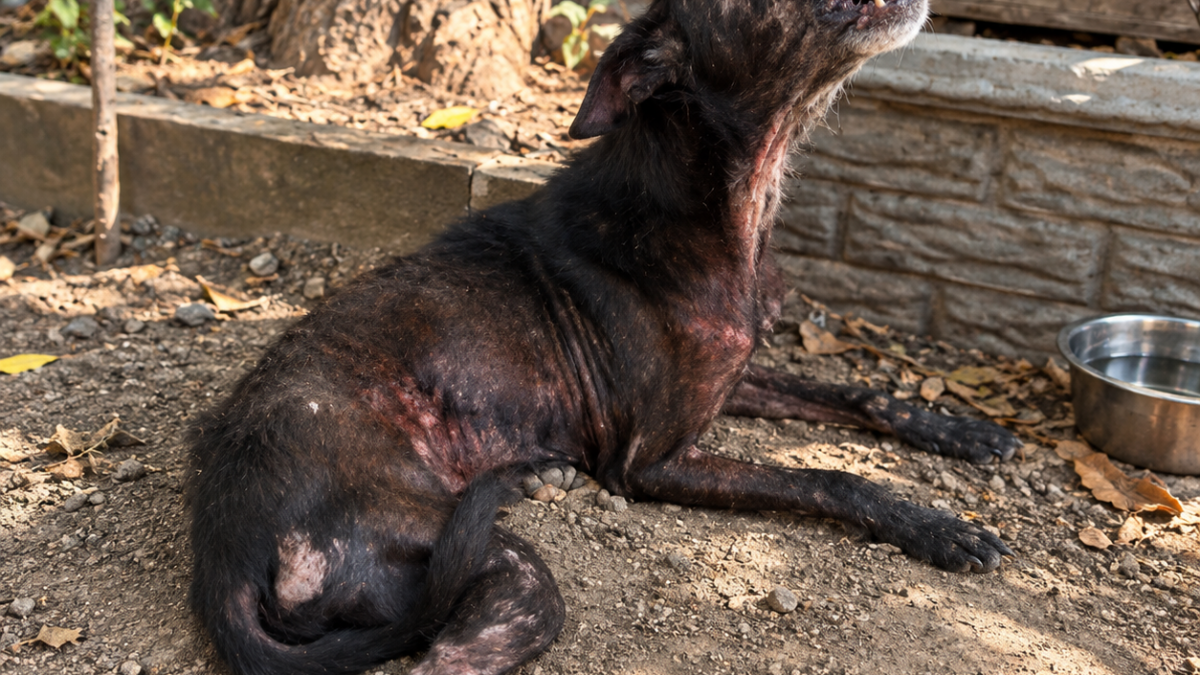
The first time I saw him, he was standing behind a rusted fence so thin that I could count every rib, yet he still lifted his head when he heard my voice.
For weeks, people had been trying to get dogs out of the place rescuers had grimly started calling the Pastukh camp, and every day we feared that some of them would not survive long enough to see the gate open.
Then one morning, a message reached my phone with four words I had almost stopped believing: “We can take them today.”
My name is Olena, and I had been volunteering with animal rescuers long enough to believe I understood neglect.
I was wrong.
The compound sat behind high walls and patched fencing on the edge of a rural community. From the road, it looked almost ordinary.
Then you heard the dogs.
Not barking the way dogs bark at a stranger.
This was different.
Some cried.
Some threw themselves against wire when people approached.
Others made no sound at all.
Those were the ones that frightened me most.
He was one of them.
A large mixed-breed dog with a dark coat, an old wound near one ear, and eyes that seemed much older than the rest of him.
The first time I approached the fence, he didn’t rush toward me.
He watched.
His body remained low.
His tail stayed tucked tightly between his legs.
I crouched several feet away.
“Hey, buddy.”
Nothing.
I pushed a piece of food through an opening.
He looked at it.
Then at me.
He didn’t move until I backed away.
Only then did he crawl forward and eat.
That became our routine.
Whenever access allowed, volunteers brought food, water, medicine, blankets—whatever we could get near the animals.
Every time I saw him, he looked a little weaker.
But he was still there.
Waiting.
Holding on.
One afternoon I noticed another small dog pressed against his side.
The smaller dog was trembling.
The big one shifted his body between the frightened animal and the fence.
That was the moment he became more than another photograph in my phone.
He was starving himself, yet he was still protecting somebody weaker.
I started calling him Titan.
Not because he looked powerful.
Because I needed to believe he could survive.
Word spread.
Volunteers coordinated constantly.
Phones rang late into the night.
People drove supplies.
Veterinarians offered help.
Temporary foster spaces were found, lost, and found again.
And through all of it stood one terrifying question:
Would we get them out in time?
Then the message arrived.
We can take them today.
I stared at it.
Read it again.
Then called Yuliya Baranovska.
She was already preparing space.
“How many?” she asked.
“We don’t know exactly yet.”
“How many can leave?”
“As many as we can safely move.”
There was no hesitation.
“Bring them.”
By the time I reached the compound, several volunteers were already there.
Carriers lined the roadside.
Leashes hung from open car doors.
Someone was crying before we even went inside.
The gate opened with a metallic scrape.
Titan did not understand.
How could he?
For so long, that gate had meant people entering.
Never freedom.
I stepped inside.
He backed against the wall.
“It’s okay.”
His legs shook.
Another rescuer slowly approached from the side.
“No one’s hurting you.”
Titan stared at the open gate.
Then at us.
We clipped a leash onto him.
He dropped flat against the ground.
For several minutes, he refused to move.
So we waited.
Nobody pulled.
Nobody dragged him.
Finally, Titan raised himself.
One step.
Then another.
We walked toward the opening.
The smaller dog he had protected followed behind another volunteer.
Titan reached the threshold and stopped.
Outside was open sky.
Cars.
People.
Grass moving in the wind.
Freedom was only one step away.
But to a dog who had learned that every new thing could hurt him, that step seemed impossible.
I crouched beside him.
“You held on long enough,” I whispered. “You don’t have to stay here anymore.”
Titan looked at me.
Then he lifted one trembling paw.
And stepped beyond the wall.
Behind us, another dog began to cry.
A volunteer shouted for a carrier.
Someone else called Yuliya.
And as Titan stood outside those gates for the first time, I realized the hardest part of his story might not be getting him out.
It might be teaching him that he was truly never going back.
PART 2
Titan froze the moment all four paws reached the grass.
I had imagined that moment hundreds of times.
In those fantasies, the rescued dogs ran.
They wagged.
They looked back at the walls and somehow understood the nightmare was over.
Reality was quieter.
Titan simply stood there.
His legs shook so badly that the leash trembled in my hand.
Behind us, volunteers continued moving dogs through the gate.
One small tan female had to be carried.
Another dog spun in circles the instant a leash touched him.
A white dog with black patches refused to leave a corner until a volunteer sat beside him for almost twenty minutes.
Every animal reacted differently.
But none of them behaved like dogs walking casually out of a kennel.
Their bodies remembered too much.
“Olena.”
I turned.
My friend Katya was kneeling beside the small dog who had often pressed against Titan inside.
“We need another blanket.”
I grabbed one from the van.
The dog’s entire body fit inside it.
“What’s wrong?”
“Cold. Weak. Maybe dehydrated.”
“Which car?”
“Vet transport.”
I helped lift her.
Titan watched.
The moment the little dog disappeared toward the vehicle, he tried to follow.
It was the first time he pulled on the leash.
“Easy.”
He pushed forward.
Not hard.
Just determined.
“He wants her,” Katya said.
“I know.”
We walked him toward the van.
When he saw the little dog again, his body relaxed slightly.
Even then.
Even outside.
Even starving.
Titan was checking that she was safe.
We loaded them into separate secured spaces where they could still see and smell each other.
I sat beside Titan’s crate.
His breathing was fast.
He would not lie down.
He stared at the open vehicle door.
Every person passing made him flinch.
I held my hands where he could see them.
“You’re going somewhere safe.”
Of course he didn’t understand the words.
Maybe the tone.
Maybe nothing.
Sometimes rescue begins with doing the right thing for an animal that has absolutely no reason to believe you.
The final dogs were loaded less than an hour later.
Not every animal on that property left with us that morning.
Logistics were complicated.
Capacity mattered.
Medical transport mattered.
Documentation mattered.
But several did.
More than we had dared expect when we woke up.
Someone closed the transport doors.
I looked toward the compound.
The gate remained open behind us.
For the first time, I felt anger stronger than fear.
Those walls had hidden suffering in plain sight.
But anger had to wait.
We had living animals in front of us.
That was the priority.
Always.
The convoy pulled away.
Titan stood for almost ten minutes.
Then his legs finally gave out.
He collapsed onto the blanket.
I panicked.
“Katya!”
She twisted around from the passenger seat.
“What?”
“He went down.”
“Breathing?”
“Yes.”
“Responsive?”
I touched the crate gently.
“Titan?”
One eye opened.
He was exhausted.
Not unconscious.
Just empty.
I exhaled.
“He’s sleeping.”
Katya looked at him.
“That might be the first safe sleep he’s had in months.”
I sat beside the crate and watched his chest rise.
Fall.
Rise.
Fall.
The small dog lay nearby under her blanket.
At some point, Titan stretched one paw toward the divider.
Her nose moved toward it.
They slept almost touching.
The veterinarian was waiting when we arrived.
Dr. Andriy Kovalenko had been warned to expect severe neglect.
He still became quiet when he saw Titan.
“Weight?”
“We haven’t measured.”
He ran his hands carefully along Titan’s body.
Ribs.
Spine.
Hips.
Too visible.
Skin problems.
Old injuries.
Inflamed paws.
“Has he been eating?”
“Whenever we could get food to him.”
Dr. Kovalenko shook his head.
“That is not what I mean.”
I understood.
An animal can receive food and still be malnourished if access is inconsistent, disease interferes, stress suppresses appetite, or stronger animals compete.
Titan’s blood was drawn.
Temperature checked.
Mucous membranes examined.
He tolerated everything by becoming completely still.
That worried me more than growling would have.
A frightened dog that growls still believes his warning might change what happens.
A dog who freezes sometimes has learned warnings are useless.
Dr. Kovalenko approached his ear.
Titan flinched.
The vet stopped immediately.
“Okay.”
He waited.
Titan stared at him.
“No rush.”
Minutes passed.
Then Dr. Kovalenko tried again.
This time slower.
Titan allowed him to touch the old wound.
“He’s not aggressive,” the doctor said.
“No.”
“He’s expecting pain.”
That sentence stayed with me.
Expecting pain.
How many decisions in Titan’s life had been shaped by that expectation?
Hands meant pain.
Fences meant confinement.
Footsteps meant uncertainty.
An open gate might mean nothing good.
The lab results came back gradually.
Severe malnutrition.
Anemia.
Parasites.
Dehydration.
Skin infection.
A respiratory problem requiring treatment.
No single diagnosis explained his condition.
That was almost worse.
Titan had not been destroyed by one catastrophic event.
He had been worn down.
Slowly.
Day after day.
Neglect works like that.
It does not always arrive as one dramatic injury.
Sometimes it is an empty water bowl.
Then another.
A wound left untreated.
Another cold night.
Another day without enough food.
A chain too short.
A floor never cleaned.
Fear becoming routine.
And eventually a living creature begins disappearing while still breathing.
The smaller dog—whom Katya named Mriya, meaning “dream”—was in worse immediate condition.
Her blood sugar was dangerously low.
She needed warming.
Fluids.
Nutritional support.
Titan could hear her from the next treatment space.
Every time she cried, his head rose.
“We should keep them near each other,” I said.
Dr. Kovalenko nodded.
“If neither becomes medically dependent on separation, yes.”
That first night, the clinic was full.
Dogs occupied recovery runs.
Volunteers moved constantly.
Medications were written on whiteboards.
One dog vomited.
Another finally drank.
Someone cheered because a terrified female accepted food from a hand.
Someone cried in the supply room.
I know because it was me.
I had held myself together during the extraction.
During transport.
During Titan’s examination.
Then I opened a cabinet looking for gauze and found myself staring at shelves of clean bandages.
Such an ordinary thing.
Clean bandages.
Enough for every animal.
And suddenly I thought of how long some of those dogs had lived without basic care.
I closed the cabinet.
My legs stopped working.
I sat on the floor.
Katya found me.
“You okay?”
“No.”
She sat beside me.
For a while neither of us spoke.
Then I said, “He was protecting Mriya.”
“I know.”
“He could barely stand.”
“I know.”
“He still protected her.”
Katya wiped her face.
“I know.”
“Why?”
She looked through the doorway toward the recovery area.
“Because they’re better than us sometimes.”
I shook my head.
“Not better.”
“What then?”
“Less complicated.”
Dogs don’t build philosophies around kindness.
They see someone scared.
They stay close.
Maybe that is why human cruelty toward animals feels so obscene.
Animals rarely understand the systems hurting them.
They only understand whether the next hand is safe.
Yuliya arrived late that evening.
She had been preparing temporary space for the dogs who could leave the clinic after stabilization.
She walked through the treatment area slowly.
She didn’t immediately touch anyone.
That mattered.
Experienced rescuers know affection is not always the first thing a terrified animal needs.
Space can be kindness too.
She stopped beside Titan.
“That’s him?”
“Yes.”
“The big one from the pictures?”
“Yes.”
Titan watched her.
Yuliya crouched.
“Hello.”
He lowered his eyes.
“He needs time,” I said.
“So we give him time.”
Simple.
No dramatic declaration.
No promise that love would fix everything.
Just time.
Yuliya looked toward Mriya.
“And her?”
“Still fragile.”
“They stay together?”
“If possible.”
“Then they stay together.”
Over the next seventy-two hours, Titan remained at the clinic.
He ate tiny meals because feeding a severely malnourished dog too quickly can be dangerous.
That surprised many people following the rescue.
They wanted photographs of huge bowls.
Feasts.
Instant recovery.
But bodies that have been deprived require patience.
So Titan received measured portions.
Small.
Frequent.
Carefully monitored.
At first, he swallowed as fast as possible.
Then searched the bowl.
Then the floor.
Then our hands.
The first time I removed the empty dish, he panicked.
He stood.
Paced.
Whined.
I put it back.
Empty.
He licked it again.
I realized what he believed.
Food might not return.
I sat beside him.
“Tomorrow.”
Meaningless word.
I wished I could explain abundance.
There will be another meal.
Then another.
You do not need to save this one.
You do not need to fight.
You do not need to swallow without breathing.
We will not forget.
Instead, I waited until he settled.
The next meal came on schedule.
Then another.
By the second day, Titan began watching the door around feeding time.
By the fourth, he seemed to understand a pattern.
Patterns matter to traumatized animals.
Predictability is safety.
Morning.
Food.
Medication.
Rest.
Outside.
Food.
Rest.
Nothing terrible.
Then repeat.
Mriya improved more slowly.
She remained weak.
One morning her temperature dropped again.
Dr. Kovalenko called me before sunrise.
I drove to the clinic expecting the worst.
Titan was awake.
He stood as I entered.
Not because of me.
He could see the staff working around Mriya.
“What happened?”
“Her blood pressure dipped.”
“Is she stable?”
“For now.”
I sat near Titan.
He paced the length of his run.
Every time Mriya made a sound, he stopped.
“You can’t fix this.”
He stared through the divider.
I realized I was talking to myself.
Humans hate helplessness.
So do dogs, maybe.
The difference is we invent blame.
We replay.
We ask what if.
Titan only watched.
Mriya survived that morning.
By noon she ate.
By evening, she stood for several seconds.
Titan saw her.
His tail moved.
It was the first time I had seen it.
One slow wag.
Then another.
Katya gasped.
“Did you see?”
“I saw.”
“Do it again.”
Titan stared at us.
“Apparently not.”
We laughed.
That tiny laugh felt almost disrespectful inside a room filled with recovering animals.
Then I understood something.
Joy is not disrespectful to suffering.
Joy is why we fight suffering.
On the fifth day, Titan was medically stable enough to leave the clinic for Yuliya’s care.
We loaded him into a transport crate.
He panicked again.
Of course.
The last vehicle ride had taken him from one unknown place to another.
We slowed everything down.
Yuliya sat near the crate.
Mriya, cleared for transport too, rode beside him.
The drive to Yuliya’s property took just under an hour.
Titan never slept.
He watched every turn.
When we arrived, he refused to come out.
No one forced him.
We opened the crate.
Secured the area.
Then waited.
Ten minutes.
Twenty.
Thirty.
Yuliya sat nearby sorting medication.
Finally Titan extended his head.
Sniffed.
Pulled back.
Again.
One paw.
Then another.
He stepped out.
Grass.
Not the grass outside the old compound.
Different grass.
Different smells.
Cats somewhere nearby.
Dogs barking farther away.
Wind.
Titan lowered himself flat.
Yuliya placed a bowl of water several feet away.
Then walked off.
That was her gift to him.
No audience.
No pressure.
An hour later, he drank.
The next morning, I visited.
Titan was outside in a secure enclosure with Mriya.
He had found a corner beneath a shelter roof.
When he saw me, he stiffened.
Then something strange happened.
He sniffed.
His head tilted.
He took one step toward me.
I stopped.
He took another.
Then another.
Not close enough to touch.
But closer than ever before.
“Hi.”
His tail moved once.
I went home and cried in my car.
Recovery came in pieces like that.
Not dramatic transformations.
A step toward a person.
A meal eaten without panic.
Sleeping on one side instead of sitting upright.
Accepting a blanket.
Drinking while someone watched.
Weeks passed.
Titan gained weight.
Slowly.
His coat improved.
The infection around his skin cleared.
Parasites were treated.
His blood values began normalizing.
But emotionally, progress was harder.
He hated gates.
Any gate.
Even an open one.
If Yuliya opened a gate between two safe enclosures, Titan froze.
He remembered.
So they trained without forcing.
Treat near gate.
Retreat.
Treat closer.
Retreat.
Nothing bad.
Again.
Weeks later, Titan crossed an open gate voluntarily.
Yuliya sent me the video.
I watched it repeatedly.
He walked through.
Stopped.
Looked back.
Then continued.
Such a small thing.
Such an enormous thing.
Mriya became his anchor.
As she recovered, her personality emerged.
She was tiny.
Bossy.
Food-motivated.
Completely willing to steal Titan’s bed despite weighing one-third of what he did.
Titan allowed it.
Yuliya bought another bed.
Mriya took that one too.
Titan slept on the floor.
“He survived hell and now gets bullied by a ten-kilogram female,” Katya said.
“Justice.”
Titan learned toys.
At first he feared them.
A squeaking rubber toy made him jump backward.
A rope meant nothing.
A tennis ball rolled past him and he watched as though suspicious it might explode.
Then Mriya grabbed the ball.
Ran.
Titan followed.
Not playing.
Investigating.
The next day, he touched the ball with his nose.
Two days later, he picked it up.
Yuliya called me.
“He carried it.”
“What?”
“The ball.”
“That’s it?”
“That’s everything.”
She was right.
The first toy Titan carried mattered.
It meant he had enough space in his mind for something unnecessary.
Survival narrows life.
Food.
Threat.
Shelter.
Pain.
A toy has no survival value.
Play appears when a nervous system has room to believe there might be a future.
Titan carried the ball.
Therefore, somewhere inside him, the future had begun.
Meanwhile, questions about the old compound did not disappear.
People were angry.
Very angry.
Photographs circulated.
Videos circulated.
The condition of the rescued animals became impossible to dismiss as rumor.
Authorities were pressured to examine what had happened.
I need to be careful about how I describe that period because outrage can outrun evidence.
People wanted names.
Punishment.
Immediate closure.
They wanted someone arrested by sunset.
But investigations are slower than anger.
Documentation was gathered.
Veterinary records preserved.
Photographs dated.
Witnesses interviewed.
We were told repeatedly not to contaminate what could become evidence by exaggerating online.
That advice frustrated people.
It was also correct.
If accountability was going to happen, we needed facts stronger than emotion.
So we documented.
Titan’s intake weight.
His anemia.
His untreated skin disease.
Mriya’s condition.
The others.
Dates.
Locations.
Photographs.
Every veterinary invoice.
Every medication.
Every statement about when food and water had or had not been available.
Some supporters called that boring.
It was.
Justice is often boring until the moment all those boring pages become impossible to argue with.
Two months after the rescue, an inspector contacted us.
Additional animals might still need removal.
Yuliya called me.
“How many spaces can we create?”
I laughed bitterly.
“None.”
“Good.”
“What?”
“That means we create some.”
This is how rescuers become insane.
Space does not exist.
Then a dog exists.
Suddenly space appears.
Foster calls went out.
A storage room became an animal room.
Someone donated fencing.
Someone else donated crates.
One family offered to take two elderly dogs.
A veterinary technician offered medical foster care.
Within three days, we had places.
The second extraction felt different.
We knew the property.
We knew the smells.
We knew the sound of those gates.
Titan did not come, obviously.
He stayed with Yuliya.
But I thought about him the entire time.
Inside one enclosure, we found an elderly female curled against a wall.
She did not stand when we approached.
My heart dropped.
Then her eyes opened.
She was alive.
We wrapped her in a blanket.
Another dog tried to hide inside an overturned structure.
It took thirty minutes to coax him out.
One young male barked furiously.
People unfamiliar with fear might have called him aggressive.
We gave him distance.
He stopped.
That difference matters.
Fear is not a moral failure.
Animals under pressure communicate however they can.
We removed more dogs.
The old compound grew quieter.
That sound affected me.
I had spent months wishing the barking would stop.
When it finally did, the silence felt like evidence of absence.
Empty runs.
Open gates.
Bowls that no longer belonged to anyone.
I stood inside Titan’s old section.
The corner where he had once pressed his body around Mriya was empty.
I touched the rusted fence.
For the first time since the rescue began, I allowed myself to feel fury without needing to do anything useful with it.
“How could anyone see this every day?”
Katya stood behind me.
“I don’t know.”
“How do you get used to suffering?”
“You don’t.”
“Someone did.”
She didn’t answer.
We left.
That evening, I drove straight to Yuliya’s.
Titan was outside.
He recognized my car before I got out.
For the first time, he came toward the fence willingly.
Not fast.
But directly.
I entered carefully.
He approached.
Sniffed my hand.
Then touched his nose to my fingers.
I nearly stopped breathing.
“Hi.”
He stayed.
I touched the side of his neck.
One second.
Two.
Then moved away before he had to.
Consent matters.
Especially when life has taught an animal his “no” means nothing.
Yuliya came outside.
“You smell like the place.”
I looked at her.
“That’s why he came.”
Titan sniffed my jacket again.
Maybe he recognized it.
Maybe he smelled fear.
Maybe dogs understand histories through scent we will never access.
I sat on the ground.
Titan lowered himself several feet away.
Mriya climbed into my lap without invitation.
“You’re less complicated,” I told her.
Titan watched us.
“You know they’re almost all out?”
His ears moved.
“I wish you understood.”
Yuliya sat beside me.
“Maybe he doesn’t need to.”
That was true.
We humans needed justice.
Titan needed dinner.
There is wisdom in knowing the difference.
Formal proceedings followed.
Not quickly.
Never quickly.
The evidence from veterinarians became crucial.
The condition of multiple animals established patterns that one photograph could not.
There were hearings.
Inspections.
Arguments over responsibility.
Questions about ownership.
Questions about resources.
Questions about who had known what and when.
Supporters became frustrated by delays.
So did I.
One morning, after another procedural postponement, I slammed my car door so hard Katya jumped.
“This is ridiculous.”
“Yes.”
“They have photographs.”
“Yes.”
“They have medical records.”
“Yes.”
“They have witnesses.”
“Yes.”
“Then why are we waiting?”
“Because anger isn’t a verdict.”
“I hate when you’re reasonable.”
“So do I.”
Eventually, restrictions were imposed.
Animals could not simply be returned to the conditions from which they had been removed.
Additional oversight followed.
The compound as we had known it stopped functioning in the same way.
Was it the dramatic revenge people wanted?
No.
There was no cinematic scene where a villain begged while rescuers applauded.
Real accountability rarely satisfies the fantasy part of anger.
But the gates no longer closed around Titan.
The animals removed stayed removed.
Records existed.
Eyes remained on the situation.
And the suffering could no longer hide behind walls as easily as before.
That mattered.
Still, the most satisfying consequence arrived somewhere else entirely.
Titan became healthy.
There is no revenge stronger than the life someone failed to destroy.
Six months after his rescue, Titan weighed almost fourteen kilograms more than at intake.
His ribs disappeared beneath muscle.
His coat became thick.
The wound near his ear healed into a small scar.
He learned to run.
Not frantically.
Joyfully.
The first time happened after fresh snow.
Yuliya sent a video.
Titan stepped outside.
Sniffed the ground.
Mriya ran past him.
He chased her.
One circle.
Then another.
Then he sprinted across the enclosure with his tail high.
High.
I had never seen his tail above the line of his back.
I called Yuliya immediately.
“Is he okay?”
She laughed.
“You’re asking if the dog running like an idiot is okay?”
“I’ve never seen him do that.”
“Me neither.”
Titan slipped.
Rolled.
Jumped up.
Ran again.
Mriya attacked his ear.
He shook her off.
She chased him.
Watching them, I remembered their first night.
Two bodies separated by a divider.
One paw reaching toward the other.
Now they were wrestling in snow.
That was the answer to every person who said rescue was pointless because there were too many animals.
Maybe we could not save every dog in the world.
But the dog running through that snow did not need us to save every dog.
He needed us to save him.
Mriya needed the same.
One life is not statistically impressive.
To the one living it, it is everything.
Adoption became the next question.
Mriya was ready first.
Confident.
Social.
Small enough to attract attention quickly.
Applications arrived.
We rejected some.
Approved one.
Then I cried.
“Why are you crying?” Yuliya asked.
“She’s leaving Titan.”
“She’s getting a family.”
“I know.”
“You want to keep all of them.”
“No.”
“You absolutely do.”
Mriya’s adopters were a young couple with an older rescue dog.
They visited several times.
Mriya liked them immediately.
Titan did not.
Not because he disliked them.
Because every time Mriya went toward the gate, Titan followed.
When she returned, he relaxed.
On adoption day, we worried.
Would he panic when she did not come back?
We let them spend the morning together.
Mriya stole his bed one last time.
Ate from her own bowl.
Chewed the tennis ball.
Then climbed into the adopter’s car.
Titan stood inside the fence.
He watched.
Mriya looked through the window.
Then the car left.
Titan remained there.
Five minutes.
Ten.
He began pacing.
My heart broke.
“We should have kept them together.”
Yuliya shook her head.
“No.”
“He needs her.”
“He needed her.”
“What’s the difference?”
“She taught him he could attach safely. Now we find out whether he can carry that forward.”
I didn’t like it.
But she was right.
That evening, Titan refused dinner for twenty minutes.
Then ate.
The next morning, he searched.
By the third day, he stopped waiting at the gate continuously.
By the end of the week, he followed Yuliya around the yard.
Something had shifted.
He had transferred a piece of trust.
From Mriya.
To people.
Two weeks later, Mriya returned for a visit.
Titan went insane.
There is no dignified way to describe it.
He barked.
Spun.
Ran.
Mriya threw herself into him.
They wrestled until both collapsed.
Then her adopters took her home.
Titan watched.
But this time, he did not panic.
He turned.
Walked back to Yuliya.
And accepted a treat.
Progress.
Titan’s adoption was more complicated.
Applications came.
Most were wrong.
Some wanted a guard dog.
Absolutely not.
One man said Titan’s history would make him “loyal because he knows what suffering is.”
Rejected.
A woman wanted him for an unfenced rural property where he could “run free.”
Rejected.
Someone wanted him because his story had become known online.
That frightened us most.
A dog is not a symbol first.
A dog is a dog.
Titan needed quiet.
Predictability.
Patience.
Secure fencing.
Someone willing to let trust develop slowly.
Months passed.
Yuliya never rushed.
“If nobody right comes, he stays.”
Her house already contained more animals than seemed physically possible.
“You cannot keep him forever.”
“Watch me.”
Then an application came from a man named Mykola.
Fifty-eight.
Widower.
Former railway worker.
One elderly dog had died the previous year.
No children at home.
Secure yard.
Quiet village.
Experienced with fearful dogs.
His application contained one sentence that made me call him.
I do not need the dog to love me quickly.
When Mykola arrived, Titan hid.
Good.
We wanted reality.
Mykola sat outside.
He brought no dramatic energy.
No baby voice.
No reaching.
Titan watched from a distance.
After twenty minutes, Mykola asked, “Should I move closer?”
“No,” Yuliya said.
“Okay.”
Thirty minutes later, Titan came several steps forward.
Mykola did not move.
After an hour, Titan sniffed the air near him.
That was all.
Mykola left.
“Not much progress,” I said.
He smiled.
“First meeting.”
He returned three days later.
Then again.
Fourth visit, Titan took food tossed near him.
Sixth visit, from Mykola’s hand.
Eighth visit, Mykola touched his shoulder.
One second.
Then stopped.
Tenth visit, Titan lay down beside his chair.
Yuliya called me afterward.
“I think he picked him.”
I wanted to argue.
Instead I cried.
Again.
Apparently rescue turns adults into people who cry over a dog sitting beside furniture.
The home visit went well.
Fences secure.
Gate double-latched.
Quiet sleeping area prepared.
Food measured.
Veterinarian identified.
Emergency plan ready.
Then came the question.
Would Titan leave Yuliya willingly?
Adoption day arrived almost exactly eleven months after he walked out of the compound.
Mykola opened the car.
Titan saw it.
Stopped.
Vehicles remained difficult.
Yuliya waited.
Mykola waited.
I waited.
Nobody pulled.
Titan sniffed the ramp.
Backed away.
Tried again.
Twenty minutes.
Then thirty.
Finally Mykola sat inside the car and looked away.
Titan approached.
Put one paw onto the ramp.
Then another.
Halfway.
Stopped.
I thought of the gate.
That first gate.
The trembling paw.
The impossible step.
“Come on,” I whispered.
Titan climbed in.
Mykola closed the secured door gently.
Yuliya pressed her hand against the window.
“Be good.”
I laughed through tears.
“He has never been bad.”
“You know what I mean.”
The car left.
Yuliya stood in the driveway.
Silent.
“You okay?”
“No.”
“Want him back?”
“Yes.”
“Are we going to steal him?”
She considered it.
“Not today.”
Mykola sent updates constantly at first.
Titan under the table.
Titan drinking.
Titan refusing the bedroom.
Titan sleeping near the hallway.
Titan in the yard.
Titan watching birds.
On day four, a photograph arrived.
Titan asleep beside Mykola’s boots.
I stared at it.
There are moments when a rescue becomes complete.
Not when paperwork is signed.
Not when the dog leaves the shelter.
When the animal sleeps deeply enough to stop guarding himself.
Titan’s body was stretched across the rug.
Belly partly exposed.
Head against the boot.
No fence in sight.
I sent the image to everyone.
Katya replied first.
He knows.
Does he?
Maybe.
Maybe safety is not something dogs understand intellectually.
Maybe they learn it through repetition.
Morning comes.
Same house.
Food arrives.
Same person.
Nothing hurts.
Night comes.
Same house.
Same person.
Nothing hurts.
Again.
Again.
Again.
Until the nervous system finally stops preparing for disaster.
Weeks became months.
Titan began meeting Mykola at the gate.
Then carrying his leash when it was time for walks.
The dog who once froze at open gates learned that a gate could lead out and back.
That return mattered.
Every walk ended at home.
Home.
Such a small word.
Such an enormous concept for an animal who had once had none.
The legal and administrative fight around the old compound continued in the background.
People sometimes asked whether Titan’s story had “won.”
I never knew how to answer.
If they meant whether every person responsible received every punishment angry strangers wanted, no.
If they meant whether suffering had been exposed, animals removed, care provided, and pressure created so the same conditions could not continue unnoticed, yes.
But Titan did not measure justice that way.
His revenge was different.
The first winter with Mykola, Titan slept beside a radiator.
The first spring, he discovered digging.
Mykola called.
“Your dog destroyed my garden.”
“My dog?”
“You people gave him to me.”
“Sounds like your dog.”
“He dug up twelve onions.”
“Maybe he doesn’t like onions.”
“He buried a tennis ball in their place.”
“Better crop.”
Mykola laughed.
That laugh became part of Titan’s new life.
Summer brought thunderstorms.
Titan panicked during the first big storm.
He crawled into the bathroom.
Mykola sat outside the doorway.
Didn’t force him out.
The storm passed.
Next storm, Titan stayed in the hallway.
Third, beside Mykola’s chair.
Healing.
Not forgetting.
Learning another ending to an old feeling.
Mriya visited twice a year.
Every reunion was ridiculous.
They remembered.
No doubt.
Titan’s entire body changed when he saw her.
Tail.
Ears.
Posture.
They would run until age gradually made them slower.
For years, I kept the first photograph of Titan on my phone.
Sometimes I looked at it beside newer ones.
Pastukh camp Titan.
Mykola’s Titan.
Same dog.
Completely different body language.
In the old image, his muscles pulled inward.
Head low.
Eyes guarded.
In the new one, he stood in sunlight beside Mykola, chest forward, mouth open, ears relaxed.
People called him a symbol.
They were right.
But I became careful about what kind of symbol.
Titan was not a symbol that suffering makes animals noble.
Suffering is not noble.
It is suffering.
He was not a symbol that love magically fixes trauma.
It doesn’t.
He remained afraid of things years later.
He was a symbol of what becomes possible when cruelty stops.
That distinction matters.
We praise resilience so much that sometimes we accidentally romanticize what created the need for it.
I never wanted anyone to look at Titan and think, What a beautiful story of suffering.
No.
The beautiful part began when the suffering ended.
The open gate.
The veterinary care.
Yuliya’s patience.
Mriya’s companionship.
Mykola’s quiet chair.
Those were the beautiful parts.
The rest should never have happened.
Two years after the rescue, a local animal-welfare group organized an event to recognize volunteers and foster families involved in removing and rehabilitating the dogs.
I almost didn’t go.
Public events make rescue look organized.
Most rescue is chaos.
But Yuliya insisted.
“Come.”
“Why?”
“Because Titan is coming.”
That worked.
Mykola arrived with him.
Titan stepped from the car.
He was bigger now.
Healthy.
Gray beginning around his muzzle.
He saw me.
Stopped.
Sniffed.
Then walked directly over.
I knelt.
He touched his nose to my face.
I laughed.
“Still remember?”
His tail moved.
Yuliya approached.
Titan went to her next.
No fear.
No hesitation.
She wrapped one arm loosely around his chest.
He stayed.
Someone took a photograph.
Later I looked at it.
Yuliya.
Me.
Titan between us.
Behind us, no wall.
No gate.
Just open sky.
During the event, an organizer asked me to speak.
I hadn’t prepared anything.
I stood in front of people with Titan nearby.
For a second, I didn’t know what to say.
Then I looked at him.
“The first time I met this dog, he would only eat after I backed away.”
The room quieted.
“The day he was rescued, he stopped at the open gate because freedom frightened him almost as much as captivity.”
Titan sniffed Mykola’s shoe.
“People have called him a symbol of hope.”
I paused.
“I think that’s true. But I hope he is also a symbol of something else.”
People waited.
“A warning.”
The room became very still.
“No animal should have to become this resilient because humans failed them.”
Yuliya nodded.
“We should not celebrate how much suffering he could endure without also remembering that the suffering should never have existed.”
I looked at Titan.
“The miracle isn’t that he learned to survive abuse.”
Titan lifted his head.
“The miracle is that after everything, he learned safety.”
Mykola reached down and touched his back.
“And we owe him more than admiration. We owe animals like him a world where endurance is not the price of staying alive.”
That was all.
No dramatic speech.
No revenge.
Just truth.
Afterward, people came over.
Some cried.
Some asked how to foster.
One woman offered veterinary supplies.
A man who owned a transport company offered free trips for rescue cases within the region.
Two families submitted adoption applications for other dogs that day.
Titan stood beside Mykola.
That felt like a better legacy than applause.
The years continued.
Rescue never ended.
There was always another animal.
Another emergency.
Another phone call.
Yuliya’s work grew.
More cats.
More dogs.
More medical cases.
More food.
More bills.
More animals arriving because somebody had abandoned them.
Sometimes I wondered whether anything we did made a difference.
Then I visited Titan.
Mykola would open the gate.
Titan would come running.
There was the difference.
One living, breathing answer.
Eventually, Mriya grew ill.
She had always been smaller and medically fragile.
At around nine years old, her family noticed she tired easily.
Tests showed heart disease.
Medication helped.
For a while.
Her adopters called Yuliya.
Then me.
Titan visited her once near the end.
I worried it would confuse him.
Maybe it did.
Mriya was lying on a blanket when Titan entered.
He approached slowly.
Sniffed her.
She lifted her head.
Her tail moved.
Titan lay beside her.
Exactly as they had lain years earlier.
Except the roles had changed.
Mriya was weak.
Titan was strong.
He positioned his body beside hers.
Protected again.
We sat quietly.
No one wanted to speak.
After about forty minutes, Mriya fell asleep with her head against his leg.
Titan stayed.
When Mykola finally called him, he stood.
Sniffed her once more.
Then left.
Mriya died peacefully with her family several days later.
When Titan next visited their house, he searched every room.
That broke me.
Her family gave him the old tennis ball she had stolen from him during foster care.
Titan carried it home.
Mykola said he slept with it for three nights.
Grief is not exclusively human.
We should be cautious about assigning our narratives to animals.
But attachment is real.
Absence is real.
Titan knew someone was missing.
He became quieter for several weeks.
Then life continued.
Because it does.
His walks shortened as he aged.
The scar near his ear disappeared beneath gray fur.
Arthritis arrived.
Mykola built a low step so he could enter the house more easily.
Titan began sleeping more.
Eating remained sacred.
Some trauma habits never entirely vanished.
He still checked his bowl after meals.
Still licked the floor.
Mykola always fed on schedule.
Every day.
Year after year.
One evening, almost eleven years after Titan left the compound, Mykola called me.
His voice was shaking.
“Olena.”
I knew.
“What happened?”
“He can’t get up.”
I drove there.
Yuliya came too.
Titan lay on his bed near the radiator.
Old.
Very old.
The powerful body he had eventually built had become thin again, but differently.
Not neglect.
Age.
His eyes were cloudy.
His breathing slow.
The veterinarian had already examined him.
Advanced organ failure.
There were treatments that might buy time.
Perhaps days.
Maybe weeks.
But not good time.
Mykola sat on the floor.
“I promised him nobody would make him suffer again.”
Yuliya knelt beside him.
“Then keep the promise.”
Mykola began crying.
Titan lifted his head.
Barely.
His nose touched Mykola’s hand.
I turned away.
There is no part of rescue harder than this.
Saving is action.
Letting go feels like the opposite.
But sometimes letting go is the final rescue.
The veterinarian returned that evening.
Titan remained at home.
No clinic.
No metal table.
No strange kennel.
The windows were open slightly.
Spring air came inside.
Mykola sat beside him.
Yuliya on the other side.
I sat near his head.
Someone had brought Mriya’s tennis ball.
Old now.
Faded.
Titan sniffed it.
His tail moved once.
I put my hand near his paw.
“Do you remember the gate?”
Of course he didn’t understand my sentence.
I continued anyway.
“You were terrified.”
His eyes remained half closed.
“You made us wait almost forever.”
Mykola laughed through tears.
“How long?”
“Maybe five minutes.”
“That’s forever in rescue.”
Titan breathed.
In.
Out.
I looked at Yuliya.
“Remember what you said?”
“What?”
“He needs time.”
She nodded.
“We gave him time.”
Eleven years.
Thousands of meals.
Thousands of mornings.
Winters.
Summers.
Snow.
Thunderstorms.
Mriya.
Mykola.
A garden destroyed for tennis balls.
Eleven years from one step through one open gate.
The veterinarian prepared the medication.
Mykola lowered his forehead to Titan’s.
“You’re home.”
Titan’s ear moved.
“You hear me?”
Mykola’s voice broke.
“You are home.”
The first medication relaxed him.
His breathing softened.
For the final injection, everyone remained touching him gently.
Not holding him down.
Holding him close.
Titan’s last breath came quietly.
Nothing like his life inside the compound.
No fear.
No wall.
No hunger.
No waiting for a hand that might hurt.
Just home.
Afterward, Mykola stayed on the floor beside him for almost an hour.
Yuliya cried openly.
I thought I would too.
Instead, I felt something strange.
Grief.
Yes.
But also gratitude so large it almost felt physical.
Titan got old.
That sentence may not sound extraordinary.
For rescue animals, sometimes it is everything.
Titan got old.
He developed arthritis.
He became demanding about food.
He dug onions.
He hated storms.
He lost a friend.
He slept beside a radiator.
He learned Mykola’s car.
He knew the sound of his key.
He lived long enough for the compound to become distant history.
We cremated him.
Mykola kept his ashes beside a framed photograph.
Not the rescue photograph.
The snow one.
Titan running.
Tail high.
Mouth open.
Free.
At the next volunteer gathering, people wanted to make a memorial.
Someone suggested using the image of Titan behind the rusted fence.
I said no.
They looked surprised.
“That picture is important.”
“Yes.”
“It shows what he survived.”
“Yes.”
“Then why not use it?”
“Because he was more than what happened to him.”
We chose the snow photograph.
Underneath, we placed a sentence:
HE WAITED. HE WALKED OUT. HE LIVED.
That was enough.
Years earlier, when Titan first stepped through those walls, people called him a symbol of abuse.
He was.
His body showed what prolonged neglect could do.
They called him a symbol of faith.
That too.
He kept responding to food.
To voices.
To Mriya.
Some tiny part of him remained reachable.
And they called him a symbol of hope.
Absolutely.
But by the end of his life, I thought there was one more thing he represented.
Responsibility.
Hope without responsibility is just a feeling.
Someone has to open the gate.
Someone has to drive.
Someone has to pay the veterinary bill.
Someone has to clean cages.
Someone has to foster.
Someone has to document the evidence.
Someone has to sit quietly when a terrified dog refuses to move.
Someone has to come back tomorrow.
And the next day.
And the next.
Titan survived because many people did small, exhausting, unglamorous things together.
No single hero saved him.
That was the lesson.
People often asked who deserved credit.
The volunteers?
The veterinarians?
Yuliya?
Mykola?
The people who donated?
The families who fostered?
Yes.
All of them.
That is what unity actually looks like.
Not a slogan.
A relay.
One person gets the dog through the gate.
Another drives.
Another starts the IV.
Another gives him somewhere to sleep.
Another buys food.
Another shares the medical bill.
Another fills out paperwork.
Another sits beside him during a thunderstorm three years later.
Nobody does everything.
Everybody does something.
And eventually a dog once trapped behind walls grows old beside a radiator.
That is how rescue wins.
Not perfectly.
Not completely.
There will always be another emergency.
There will always be an animal we cannot reach in time.
That truth hurts.
But hopelessness would have killed Titan as surely as neglect.
If we had looked at the walls and said, Too complicated, he might never have left.
If Yuliya had said, I have enough animals already, he might not have had a recovery space.
If Dr. Kovalenko had said, He’s too damaged, why bother, there would have been no snow video.
If Mykola had said, I need a dog who loves me immediately, Titan might never have learned the sound of his key.
Every good thing in Titan’s later life existed because somebody refused the easiest excuse available.
That is why I still tell his story.
Not because suffering makes good content.
I hate when suffering becomes entertainment.
I tell it because the moment Titan crossed the gate was not only about one dog.
It was proof of what happens when enough people refuse to accept cruelty as normal.
Years after he died, I drove past the road near the old compound.
I had avoided it.
That day I stopped.
The place looked different.
Time had changed it.
Fencing replaced.
Some structures gone.
Grass high.
No chorus of dogs.
I stood outside my car.
The quiet felt strange.
I remembered Titan in the corner.
Mriya beside him.
The rusted wire.
The first piece of food pushed through an opening.
Titan waiting until I backed away.
I remembered believing maybe we would never get him out.
Then I remembered his old age.
Mykola’s house.
Snow.
Tennis balls.
The radiator.
One place had contained only a fraction of his life.
That realization mattered.
Trauma feels enormous because it happens intensely.
But given enough safety, time can become larger.
Titan spent part of his life behind those walls.
He spent far more of it free.
The wall did not get the majority.
Cruelty did not get the majority.
Fear did not get the majority.
Mykola did.
Mriya did.
Snow did.
Meals did.
Sleep did.
Home did.
That was the final revenge.
Not the courtroom.
Not the restrictions.
Not angry posts.
Time.
Titan took time back.
Eleven years of it.
Years the place could not touch.
If I close my eyes now, I can still see him at that first gate.
Thin body.
Shaking legs.
Open sky ahead.
He stopped because freedom was unfamiliar.
I crouched beside him and whispered that he didn’t have to stay.
I believed I was encouraging a dog to walk forward.
I didn’t understand I was watching the central moment of his entire life.
One paw.
Then another.
A step outside.
That was all.
No music.
No applause.
No understanding of what would come next.
Just one frightened animal making one uncertain movement because several humans had finally created a place where forward was safer than backward.
Everything followed from that step.
Medicine.
Food.
Yuliya.
Mriya.
The ball.
Mykola.
Snow.
Old age.
A home.
Sometimes people ask what Titan taught me.
I could say resilience.
Trust.
Forgiveness.
Hope.
All true.
But the deepest lesson was simpler.
Do not demand that someone who has suffered prove they are ready for freedom.
Open the gate.
Make the other side safe.
Then wait.
Titan made us wait.
And then he walked.
For years, people described him as the dog who survived the Pastukh camp.
I eventually stopped using that description.
It was accurate.
But incomplete.
Titan was the dog who loved Mriya.
The dog who stole Mykola’s onions.
The dog who hated thunder.
The dog who learned tennis balls.
The dog who ran in snow.
The dog who slept beside boots.
The dog who lived eleven years after people thought his story might end behind a wall.
That is who he was.
And that is how I choose to remember him.
Not behind rusted wire.
Not starving.
Not waiting.
Running.
Tail high.
Snow under his paws.
Nothing in front of him except open space.
For the first part of his life, Titan had been forced to endure.
For the rest of it, he got to live.
And in the end, that was the only revenge any of us truly needed.
For the rest of it, Titan got to live.
And I eventually learned that living was the part of his story people understood least.
Everyone remembered the photographs from the beginning.
The rusted fence.
The hollow eyes.
The ribs.
The dogs crowded into spaces that never should have held that many animals.
People remembered the moment the gate opened because dramatic rescues are easy to understand.
Before.
After.
Captivity.
Freedom.
But real rescue does not end at the gate.
Sometimes that is where the hardest part begins.
Titan had escaped the place that hurt him, but the place did not immediately escape Titan.
For months, ordinary things frightened him.
A bucket dropping.
A gate closing.
Boots approaching too quickly.
Someone raising an arm to hang a coat.
A broom hitting a wall.
A chain rattling somewhere outside.
One afternoon at Mykola’s house, a neighbor started repairing a metal fence.
The first strike of a hammer against steel sent Titan running.
Mykola found him behind the kitchen table.
Not hiding casually.
Pressed against the wall.
Body flattened.
Eyes wide.
Breathing too fast.
Mykola did not reach for him.
He sat down on the floor several feet away.
The hammer sounded again.
Titan shook.
Mykola stayed.
“It’s not for you,” he said quietly.
Another strike.
“You’re home.”
Titan stared at him.
“You don’t have to come out.”
That sentence became one of the most important things Mykola ever gave him.
You don’t have to.
For so much of Titan’s earlier life, choice had probably been meaningless.
Eat when food appears.
Move when someone makes you move.
Stay when there is nowhere to go.
Endure because there is no alternative.
Mykola built their relationship around the opposite idea.
You don’t have to come to me.
You don’t have to let me touch you.
You don’t have to sleep inside tonight.
You don’t have to like this visitor.
You don’t have to cross that doorway yet.
But the strange thing about being given choices is that eventually you begin making them.
Titan started choosing Mykola.
At first it was tiny.
If Mykola worked in the garden, Titan lay twenty feet away.
Then fifteen.
Then ten.
One afternoon Mykola was repairing an old wooden bench when he realized Titan had fallen asleep beneath it.
That night he called me.
“He was snoring.”
I laughed.
“Congratulations.”
“You don’t understand.”
“I think I do.”
“No. Completely asleep.”
His voice had changed.
Softened.
“He didn’t wake when I dropped the screwdriver.”
For most dog owners, that would mean nothing.
For us, it meant everything.
A dog who once slept as though danger might enter at any second had finally fallen deeply enough into sleep that the world could make a noise without pulling him back into fear.
That was recovery.
Not dramatic.
Not something people would have shared thousands of times.
Just an old man dropping a screwdriver beside a sleeping dog.
The first summer was warm.
Titan discovered shade beneath Mykola’s apple trees.
He would dig shallow holes in the cool soil and stretch his stomach across them.
Mykola complained about the holes.
Then began watering one patch of dirt specifically because Titan preferred it.
“That is called surrender,” I told him.
“It’s called landscaping.”
“It’s called the dog owns your yard.”
“He does not.”
Titan owned the yard.
By August, Mykola had moved a bench because Titan liked lying where the bench had been.
He also stopped using a noisy weed trimmer near the fence because Titan hated the sound.
When I pointed these things out, Mykola always had practical explanations.
“The bench blocked sunlight.”
“It needed moving.”
“The trimmer is inefficient.”
But we knew.
Love had arrived so gradually that neither of them had noticed.
The first time Titan voluntarily climbed onto the couch happened during a thunderstorm.
Thunder remained one of his worst fears.
He usually went to the bathroom or hallway.
Mykola would sit nearby until the storm passed.
That night the rain was heavy.
Thunder rolled across the village.
Titan paced.
Then froze when lightning lit the windows.
Mykola was on the couch reading.
He did what he always did.
Nothing.
No calling.
No forcing.
He simply sat.
Titan approached.
Stopped beside the couch.
Mykola lowered the book.
Titan looked at him.
Then, awkwardly, almost as though embarrassed by the decision, put one front paw on the cushion.
Then the other.
Mykola held his breath.
Titan climbed up.
Turned in a circle.
And lay with his back pressed against Mykola’s hip.
The thunder continued.
Titan shook.
But he stayed.
Mykola did not finish his book that night.
He didn’t want to move.
When he told me the next morning, I teased him.
“You were trapped by a dog.”
“Yes.”
“For how long?”
“Three hours.”
“You could’ve moved.”
“No.”
“Why?”
He looked at me like I had asked something stupid.
“He trusted me.”
That was Mykola.
No dramatic speeches.
No claims that he had healed Titan.
Just three uncomfortable hours on a couch because a frightened dog had finally decided another body could mean safety.
Titan’s world kept expanding.
First the yard.
Then the quiet lane outside Mykola’s house.
Then short walks through the village.
Cars remained difficult.
Motorcycles were worse.
Whenever one passed, Titan moved closer to Mykola.
Not behind him anymore.
Beside him.
That difference made me emotional the first time I saw it.
Inside the old compound, Titan had hidden behind walls and other dogs.
Now he positioned himself beside someone.
Fear was still present.
But so was trust.
One morning, a schoolboy stopped Mykola on the road.
The boy had seen Titan before.
“Can I pet him?”
Mykola looked down at Titan.
“Not yet.”
The boy seemed disappointed.
“Does he bite?”
“No.”
“Then why?”
“Because he doesn’t know you.”
The boy thought about that.
“How does he get to know me?”
Mykola smiled.
“By you not bothering him.”
For the next few weeks, the boy simply waved when he saw them.
Then one day, Titan approached him.
The boy stood still.
Titan sniffed his hand.
Then stepped away.
The next time, Titan stayed longer.
Eventually the boy touched Titan’s shoulder.
One stroke.
Then stopped.
Months later, Titan would walk across the road when he saw him.
That child learned something many adults never do.
Trust is not something you take because you mean well.
It is something another living creature gives you.
Years passed.
Titan became one of those dogs people described as “completely different.”
I understood what they meant.
But part of me disliked the phrase.
He was not a different dog.
He was the same dog in different circumstances.
That matters.
Put an animal in constant fear, hunger, confinement, and uncertainty, and the behavior you see may look nothing like the animal that emerges when those pressures are removed.
Titan did not transform because suffering had somehow improved him.
He emerged because suffering finally stopped covering everything else.
Beneath the fear was playfulness.
Beneath the guarding was gentleness.
Beneath the shutdown was curiosity.
Beneath the starving body was a dog who loved food so much that Mykola eventually had to install a latch on the pantry.
That story became legendary.
One evening Mykola called me.
“He’s a thief.”
“What did he steal?”
“Bread.”
“How?”
“I left the pantry door open.”
“That sounds like your fault.”
“He took the whole loaf.”
“Where is he?”
“Under the table.”
“Eating?”
“No.”
“Then?”
“Looking guilty.”
I drove over because Mykola insisted I needed to see the crime scene.
Titan was indeed under the table.
The loaf sat beside him.
Mostly intact.
Mykola pointed dramatically.
“Evidence.”
Titan looked at me.
Then at the bread.
Then at Mykola.
I started laughing.
“He didn’t even eat it.”
“He stole it.”
“Maybe he was saving it.”
“From what?”
I looked at Titan.
That question changed the room.
Saving food.
Of course.
Even years later, some part of him may still have remembered scarcity.
Mykola’s expression softened.
He crouched.
“You don’t need to do that anymore.”
Titan watched him.
Mykola broke off a small piece of bread and placed it in his bowl.
Then returned the rest to the pantry.
The latch went on the next day.
Not punishment.
Protection from both old instincts and poor dietary decisions.
That was how Mykola handled Titan.
Humor first.
Understanding second.
Punishment almost never.
When Mriya visited, Titan became young again.
No matter how old they got.
The moment her adopters’ car appeared, Titan knew.
He would begin whining before anyone opened the gate.
Mriya would leap from the vehicle and run toward him.
They had a greeting ritual.
Nose.
Shoulder.
Circle.
Then chaos.
Mykola once watched them destroy a flower bed in under forty seconds.
He stood with his hands on his hips.
“Beautiful.”
I laughed.
“You wanted dogs.”
“I wanted one.”
“Mriya is a guest.”
“She is an invading army.”
He never actually cared about the flowers.
Their friendship was one of the few pieces of Titan’s old life we were grateful survived.
They had known each other when everything else was terrible.
Maybe their bond had helped both endure.
Now they got to carry that connection into safety.
But nothing lasts forever.
When Mriya’s heart began failing, her family kept us informed.
Medication helped for almost a year.
Then it stopped helping enough.
Her breathing became difficult.
Walks shortened.
One afternoon, her adopter called.
“If Titan is going to see her, I think it should be soon.”
Mykola and I drove together.
Titan seemed excited at first.
He recognized the road.
The house.
The smell.
Then he entered the room.
Mriya lay on a blanket near the window.
Titan stopped.
His body changed.
No spinning.
No running.
He approached quietly.
Mriya raised her head.
Her tail moved.
Titan sniffed her face.
Then her body.
Then lay beside her.
No one spoke.
I sat against the wall.
Mykola stood near the door.
Mriya’s family cried silently.
Titan stayed pressed against her.
After some time, Mriya’s breathing settled.
She slept.
Titan did not.
He watched.
Hours earlier, he had been sleeping in sunlight outside Mykola’s house.
Now he was back beside the dog he had protected when both were trapped behind walls.
I remembered their first night after rescue.
Titan extending one paw toward the divider.
Mriya’s nose reaching toward him.
Different room.
Different decade.
Same gesture.
When it was time to leave, Mykola called him softly.
Titan stood.
He sniffed Mriya one final time.
Then followed us out.
In the car, he did not look out the window.
He lay with his head between his paws.
Mriya died several days later.
Peacefully.
Her people beside her.
We wondered whether Titan would understand she was gone.
We got our answer when he returned to their house weeks later.
He searched.
Living room.
Kitchen.
Hallway.
Garden.
Back to the living room.
He stood where her bed had been.
Then looked at Mykola.
No one knew what to say.
Her family gave him the old tennis ball.
The same kind Mriya had once stolen during their foster days.
Titan carried it to the car.
For three nights, Mykola told us, he slept with it beside his bed.
Then one morning he left it in the yard.
He still played with balls after that.
Life continued.
Grief and life often occupy the same room.
Titan grew older.
Gray spread around his muzzle.
His joints stiffened.
The first time he failed to jump into Mykola’s car, he looked personally insulted.
Mykola built a ramp the next day.
Titan refused to use it.
“What now?” Mykola asked me.
“You made it too steep.”
“I measured.”
“You measured for physics. Not stubbornness.”
He rebuilt it.
Titan used the second version.
Later came the step near the back door.
Then a thicker bed.
Then medication for arthritis.
The old dog who once lacked basic care eventually had orthopedic bedding, supplements, scheduled veterinary checkups, and a man who noticed if he took three seconds longer than usual to stand.
There was something deeply satisfying about that.
Not because suffering had been erased.
Because neglect had been answered with excess care.
Every bowl filled on time was an answer.
Every veterinary appointment was an answer.
Every warm night beside the radiator.
Every ridiculous ramp.
Every winter blanket.
People occasionally asked us about the people responsible for the old compound.
They wanted updates.
Punishments.
Names.
Consequences.
At first, I understood that hunger.
I had felt it too.
Then Titan grew older.
And the more ordinary his life became, the less interested I was in centering the people who had harmed him.
That was perhaps the most unexpected part of healing.
The villains shrank.
Titan grew.
Not physically.
Narratively.
At the beginning, the story was about what had been done to him.
Later, it became about what he did with the time afterward.
That was a far more satisfying story.
He learned Mykola’s routines.
At 6:30 each morning, Titan waited by the kitchen.
At 6:35, if breakfast had not appeared, he sighed dramatically.
At 6:40, he moved closer to the food cabinet.
At 6:45, according to Mykola, he began “psychological warfare.”
“What does that mean?” I asked.
“He stares.”
“That’s all?”
“You haven’t experienced the stare.”
Titan loved winter sunlight.
Hated baths.
Tolerated brushing.
Refused carrots unless cooked.
Loved boiled chicken.
Once stole an entire boiled egg and swallowed it before Mykola could stop him.
He snored louder with age.
He developed one peculiar habit of checking every room before settling at night.
Mykola said he was “doing security.”
Maybe.
Or maybe some part of Titan still needed to know where everybody was.
Whatever the reason, the routine ended the same.
Kitchen.
Hallway.
Front room.
Bedroom.
Then sleep.
Safe.
Eventually, age began winning battles care could only delay.
Titan’s kidneys weakened.
His liver values changed.
Arthritis became harder to manage.
Mykola adjusted everything.
Shorter walks.
More rest.
Food modified.
Medications changed.
Water bowls added around the house.
Titan adapted.
Old dogs are astonishing that way.
Their worlds get smaller, but they can still fill them completely.
A ten-minute walk becomes enough.
A patch of sun becomes enough.
A slow meal.
A familiar hand.
A nap.
We humans often think happiness requires expansion.
More.
Farther.
New.
Old dogs understand contraction.
This room.
This person.
This warmth.
Enough.
The final spring arrived gently.
Titan spent more time outside as the days warmed.
Mykola placed his bed near the open door so he could lie partly inside and partly in the sun.
One afternoon, I visited.
Titan was asleep.
I crouched.
“Hey.”
His eyes opened.
He tried to stand.
“Don’t.”
He ignored me.
Stubborn to the end.
He stood anyway and walked over.
Slowly.
Then pressed his head against my leg.
I touched the scar near his ear.
Almost invisible beneath gray fur.
“You look terrible.”
Mykola shouted from the kitchen.
“Don’t insult my dog.”
“He’s old.”
“So are you.”
“Fair.”
Titan lowered himself beside me.
I remembered the first time he had approached my hand.
How careful I had been.
How frightened he was.
Now I could touch his neck.
His shoulder.
His head.
Not because I had earned unlimited rights to him.
Because he knew me.
Eleven years of knowing.
That number still astonished me.
Eleven years.
If we had reached the compound one day later, would he have survived?
I don’t know.
If Mriya had not been beside him?
If Yuliya had not had space?
If Mykola’s application had never arrived?
So many lives depend on intersections.
Timing.
Someone seeing a post.
Someone answering a phone.
Someone saying, “I can take one.”
That is why rescue can never belong to a single hero.
Lives are carried.
Passed from hand to hand.
The final call came at night.
Mykola’s voice told me before his words did.
“Olena.”
“What happened?”
“He can’t stand.”
I was dressed and driving within minutes.
Yuliya arrived shortly after me.
Titan was on his bed near the radiator.
The same place he had loved for years.
Mykola sat beside him.
His hand rested on Titan’s chest.
The veterinarian had already been there once.
Organ failure.
Advanced.
Treatment might extend time.
But it would not restore the life Titan recognized.
Mykola looked at us.
“What if I’m doing it too early?”
Every loving owner asks that.
Because love wants one more day.
One more breakfast.
One more walk.
One more night.
Yuliya crouched beside him.
“What would tomorrow give him?”
Mykola closed his eyes.
“Me.”
“He already has you.”
That was the answer.
He had Mykola.
He had home.
He did not need to prove anything else.
The veterinarian returned.
We opened a window slightly.
Spring air moved the curtain.
Titan’s nose twitched.
Outside, birds were settling for the evening.
Someone brought Mriya’s old tennis ball from a drawer.
Mykola had kept it.
Titan sniffed it.
His tail moved once.
That nearly destroyed all of us.
I sat near his head.
“You remember her.”
Maybe he did.
Maybe scent reached places language never can.
Yuliya touched his shoulder.
“The first time I saw you, you wouldn’t even look at me.”
Titan breathed slowly.
“And you ate all my food.”
Mykola laughed through tears.
“He still does that.”
“No manners.”
“No regrets.”
The veterinarian prepared the first injection.
Mykola bent close.
“You’re home.”
Titan’s eyes remained on him.
“You hear me?”
His voice cracked.
“You’re home.”
That sentence mattered more than any other.
Not you are dying.
Not goodbye.
Home.
The place Titan had spent years learning existed.
The first medication relaxed his body.
The trembling stopped.
His breathing deepened.
Mykola pressed his forehead against Titan’s.
“You did enough.”
We all cried then.
Even me.
Especially me.
The final medication entered quietly.
No drama.
No struggle.
Titan’s breathing slowed.
One breath.
Then another.
Then a long pause.
Then nothing.
His body became still beneath our hands.
The veterinarian checked his heart.
Waited.
Then nodded.
“He’s gone.”
Mykola made a sound I will never forget.
Not loud.
Just broken.
He wrapped both arms around Titan.
Yuliya cried into her hands.
I stared toward the open window.
For years, Titan had been called a survivor.
Now he didn’t have to survive anything anymore.
I thought that realization would feel unbearable.
Instead, beneath the grief, there was peace.
He had completed the journey.
Not from the compound to the rescue van.
From fear to safety.
From survival to life.
From life to old age.
From old age to a gentle death in the place he knew as home.
That was the full rescue.
We stayed a long time.
Nobody rushed Mykola.
Eventually, he looked up.
“He got old.”
“Yes.”
“He really got old.”
I smiled through tears.
“He did.”
That was the miracle.
People had once celebrated because Titan walked through a gate.
But the larger miracle was all the boring years afterward.
Years when nobody posted emergency updates.
Years without viral photographs.
Years when Titan’s biggest crime was stealing bread.
Years when the most important news was that his arthritis medicine worked.
Years when he annoyed Mykola at breakfast.
Years when Mriya visited.
Years when snow came.
Years when spring returned.
Years.
Enough years for the terrible place to become the smaller part of his life.
After his cremation, Mykola placed Titan’s ashes on a shelf near a framed photograph.
Not the famous one.
Not the fence.
Not the thin dog looking through wire.
The photograph showed Titan running through snow.
Tail high.
Ears back.
Mouth open.
Alive in every direction.
When volunteers later discussed creating a memorial, someone suggested using the original rescue image.
I refused.
“Why?” they asked.
“Because captivity already took enough of his life.”
The room became quiet.
“He deserves to be remembered free.”
So we used the snow photograph.
Underneath we wrote:
HE WAITED.
HE WALKED OUT.
HE LIVED.
No mention of the people who failed him.
No mention of the walls.
No accusation.
The victory was complete enough without them.
At the small memorial gathering, Mykola stood in front of the photograph for a long time.
Then he said something I still remember.
“When I adopted him, people told me I had saved a damaged dog.”
He shook his head.
“I never saved him from that place. Other people did.”
He looked at the photograph.
“My job was simpler.”
Nobody interrupted.
“I gave him breakfast.”
A few people smiled.
“Then dinner.”
His voice broke.
“Then breakfast again.”
He wiped his face.
“Apparently if you do that enough times, eleven years pass.”
That was Titan’s life in one sentence.
Safety repeated until it became time.
Food repeated.
Kindness repeated.
Home repeated.
Trust is rarely built by one enormous act.
It is built through thousands of ordinary repetitions.
I am here.
The bowl is full.
The gate opens and you come back.
The hand does not hurt.
Night ends.
Morning comes.
I am still here.
Again.
Again.
Again.
Eventually the frightened animal stops waiting for the pattern to break.
That was what Mykola had done.
And that was why, years later, when people asked me about Titan, I no longer began with suffering.
I began with breakfast.
With snow.
With the onions he dug from Mykola’s garden.
With Mriya stealing his bed.
With the boy who waited months before Titan let him touch his shoulder.
With the tennis ball.
With the radiator.
Because those things were not side notes to the rescue.
They were the rescue.
The gate only made them possible.
Sometimes people still called Titan a symbol of hope.
I accepted that.
But hope can become too clean when we turn it into a slogan.
Titan’s hope was messy.
Expensive.
Slow.
It required veterinary medicine.
Fuel.
Fencing.
Cleaning.
Documentation.
Patience.
Rejected adoption applications.
Sleepless nights.
People arguing with authorities.
People crying in supply rooms.
Someone sitting on a couch for three hours because moving might frighten a dog.
Hope was work.
That was the part I wanted people to remember.
The day Titan left the compound, crowds online praised rescuers as heroes.
I understood the emotion.
But heroes make rescue sound exceptional.
I would rather it become ordinary.
An animal needs help.
Someone acts.
Not because they are extraordinary.
Because leaving suffering untouched is unacceptable.
That is the world Titan deserved from the beginning.
He did not get it at first.
But eventually, enough people built a small version of it around him.
And maybe that is all any rescue can do.
We cannot fix the entire world for an animal.
We can fix the part surrounding him.
One yard.
One bowl.
One bed.
One safe hand.
Then let his life expand from there.
Years after Titan died, I visited Mykola.
The house felt different without him.
Quieter.
The radiator was still there.
Titan’s old bed was gone.
Mykola had stored it because looking at it hurt too much.
On the shelf sat the ashes.
Snow photograph beside them.
We drank tea.
At one point, Mykola asked, “Do you think he remembered the compound?”
I thought carefully.
“Yes.”
He looked down.
“Until the end?”
“Probably pieces of it.”
“That bothers me.”
“It shouldn’t.”
“How can it not?”
“Because remembering isn’t the same as still being there.”
He looked at me.
“That is true for people too.”
“Yes.”
We sat quietly.
Then he smiled.
“You know what he remembered better?”
“What?”
“The pantry.”
I laughed.
“And breakfast time.”
“And Mriya’s car.”
“And snow.”
“And my boots.”
“Exactly.”
Trauma leaves memories.
But so does safety.
So does love.
So does repetition.
We cannot always erase the first kind.
We can create enough of the second kind that the first is no longer alone.
That, in the end, was Titan’s real victory.
The old walls had taught him fear.
Eleven years taught him everything else.
He learned people could return after leaving.
He learned a bowl could be empty because another meal was coming, not because food was gone forever.
He learned a gate could open and still lead home.
He learned hands could touch without taking.
He learned thunder ended.
He learned winter could mean snow instead of cold concrete.
He learned another dog could leave and come back.
He learned he could sleep.
Deeply.
He learned he could grow old.
And when his body finally failed, he learned one final thing.
Nobody left him.
Not this time.
Not at the end.
Mykola stayed.
Yuliya stayed.
I stayed.
The people who once watched him walk through an open gate remained beside him for his last breath.
The first chapter of Titan’s story had been written by neglect.
The last chapter was written by loyalty.
That is why I no longer think of his story as one about a dog who survived a terrible place.
Survival was only the beginning.
Titan’s story was about what happened after survival.
And that is the part worth remembering.
He did not spend the rest of his life proving how strong he was.
He spent it discovering he no longer had to be strong every second.
He could be scared during storms.
Stubborn about ramps.
Greedy at breakfast.
Lazy in sunlight.
Sad when Mriya disappeared.
Annoyed by baths.
Excited by snow.
Old.
Ordinary.
Loved.
That was freedom.
Not merely stepping outside a wall.
Having enough safety to become ordinary.
When I close my eyes now, I never picture Titan behind the fence first.
I see the snow.
Always the snow.
Titan running.
Mriya ahead of him.
Mykola laughing behind the camera.
Titan’s tail high.
No leash pulling him.
No wall stopping him.
No person demanding anything.
Just a dog moving because he wanted to move.
He slips.
Falls.
Rolls.
Then jumps up and runs again.
That is the image I keep.
Because the terrible place wanted to reduce Titan to a body that endured.
Rescue gave him back the right to become a life.
And he used every bit of it.
Eleven years.
Thousands of meals.
Thousands of mornings.
Enough winters to gray his face.
Enough springs to slow his steps.
Enough love to make the worst place he had ever known only one small piece of who he had been.
People once said Titan represented abuse.
Perhaps.
But abuse did not get the final word.
They said he represented faith.
Maybe.
But faith alone did not open the gate.
They said he represented hope.
Yes.
But hope became real only when people acted.
In the end, I think Titan represented something simpler.
A second life should not have to be extraordinary to be valuable.
Sometimes the greatest ending is not that the rescued dog becomes famous.
Or heroic.
Or perfectly healed.
Sometimes the greatest ending is that he wakes up hungry.
Gets breakfast.
Walks outside.
Lies in the sun.
Sleeps beside someone he trusts.
And does it again tomorrow.
Titan did that until there were no tomorrows left.
For a dog who once seemed unlikely to escape those walls at all, that was more than enough.
It was everything.








