PART 2: He Spent His Whole Life Locked in a Dark Attic—When Rescuers Found Him, He Was Barely Alive
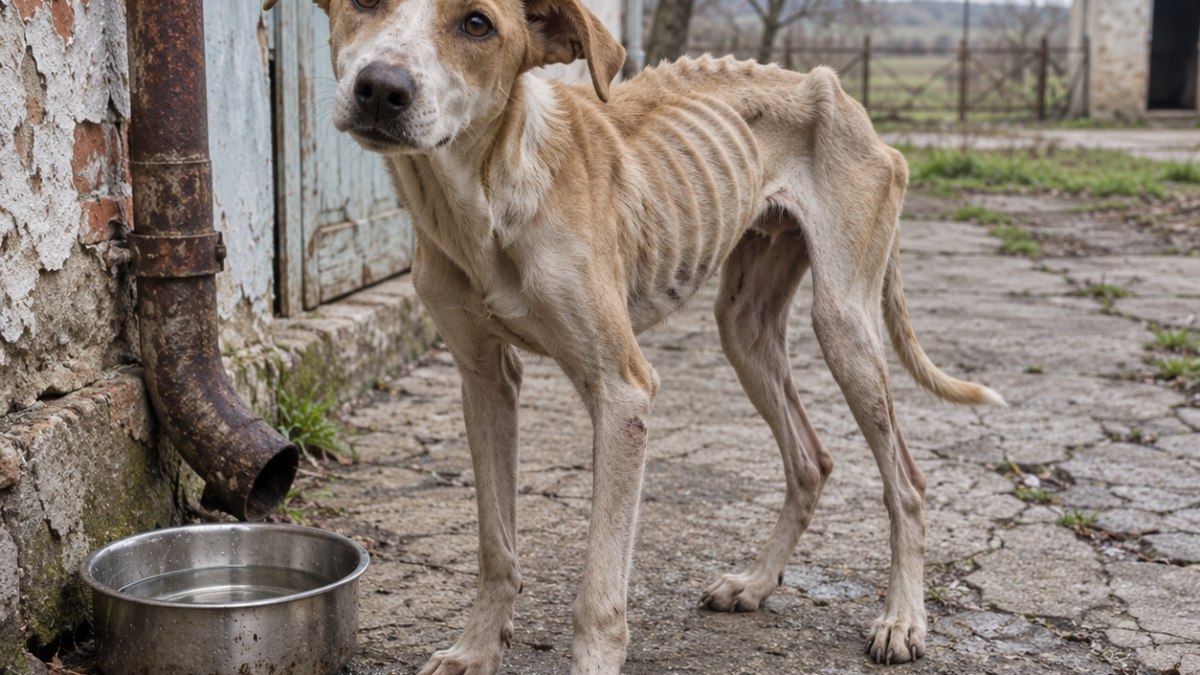
PART 2
For several seconds, nobody moved.
Jo lay where his legs had given way, his chest rising and falling too quickly.
One of the rescuers beside me whispered, “Should we pick him up?”
“No.”
“He can’t walk.”
“I know.”
“Then how do we—”
“Give him a minute.”
I kept my voice quiet.
A frightened animal does not understand rescue the way we do.
We walk into a room believing we are there to save him.
He sees strangers.
Strangers with unfamiliar voices.
Strangers blocking the only exit he knows.
Strangers reaching toward a body that may have learned to expect pain whenever hands come close.
If you forget that, you can turn rescue into another trauma.
I moved a little closer.
Jo’s eyes followed me.
He was small beneath all that fear.
Smaller than I had first realized.
The lack of weight made his head appear too large for his body.
His legs seemed impossibly narrow.
Even breathing looked like work.
“Jo,” I said softly.
His ears moved slightly.
That was the first sign I had that he recognized the sound.
“Is that your name?”
Another tiny movement.
“Okay, Jo. I’m Constança.”
Of course he did not understand the introduction.
But speaking helped me keep my own emotions under control.
I had been rescuing animals for twenty-five years, and people sometimes assumed that meant I had become used to scenes like this.
You never become used to them.
You become functional.
That is different.
You learn to keep your hands steady even when your stomach turns.
You learn to speak gently while every part of you wants to shout at the people responsible.
You learn to deal with what is in front of you first and your anger later.
I reached into the bag beside me and took out a shallow bowl.
Water.
Jo watched.
I placed it on the floor halfway between us.
Then I moved backward.
He stared at the bowl.
Nothing happened.
“Come on, sweetheart.”
Still nothing.
One of the team members said quietly, “Maybe he’s too scared.”
“Maybe.”
Jo’s nose moved.
He could smell it.
Slowly, he pushed himself upright.
His front legs straightened first.
Then his rear legs.
He stood for perhaps two seconds before one leg shook.
He paused.
Tried again.
One step.
Then another.
He approached the water as if he expected it to disappear.
When his tongue finally touched the surface, he drank too fast.
I immediately moved closer.
“Easy.”
Jo jerked away from me.
The reaction was instant.
His body twisted.
His back legs slipped.
Water spilled.
I stopped.
“Okay. Okay.”
He stared at me.
“Sorry.”
I sat down again.
The rescue worker beside me looked confused.
“He needs to drink.”
“Yes.”
“Why stop him?”
“Because a severely dehydrated dog can make himself sick if he takes too much too quickly, and right now we don’t know what his body can handle.”
I pushed the bowl toward him again but kept only a small amount inside.
Jo returned.
Lapped.
Paused.
Lapped again.
He finished it.
Then looked at me.
That look was different.
Not trust.
Nothing close.
But perhaps curiosity.
Maybe he was beginning to understand that I had brought something he needed.
I added a little more.
He drank again.
When the bowl was empty, he licked the bottom.
The sound broke something inside me.
Not because it was dramatic.
Because it was ordinary.
A dog should never have to lick an empty water bowl as though those last drops might be the only ones he would ever get.
“We need him at the clinic,” I said.
The team prepared a blanket.
I wanted to see whether Jo could walk toward us on his own, but after two more attempts it became obvious his body did not have enough strength.
I moved closer.
He backed away until his body touched the wall.
“Jo.”
His eyes widened.
“I have to touch you.”
He trembled.
“I know.”
I extended one hand.
He pulled his head back.
I stopped inches from him.
For a moment we stayed that way.
Then I turned my hand palm-up.
Jo sniffed.
Just once.
His nose barely touched my skin.
I did not move.
He sniffed again.
“You’re doing fine.”
His body remained rigid.
But he did not retreat.
I touched the side of his neck.
He flinched so violently that my heart hurt.
I removed my hand immediately.
One of the rescuers whispered, “Poor thing.”
I waited.
Then tried again.
This time Jo flinched, but he stayed.
I stroked him once.
There was almost nothing beneath my fingers.
Skin.
Bone.
A thin coat.
No muscle.
No healthy layer of fat.
Just the fragile structure of a body that had been forced to survive on too little for too long.
“We’re taking you out,” I whispered.
He did not know what those words meant.
But I wanted to say them anyway.
“You’re leaving this room.”
We wrapped him gently in the blanket.
The moment we lifted him, panic took over.
Jo struggled.
Not strongly.
That was the terrible part.
He wanted to fight us, but his body could barely manage it.
His paws pushed weakly against my arm.
His eyes went wide.
“Easy, easy.”
I held him firmly enough to keep him safe but loosely enough that he did not feel crushed.
“You’re okay.”
His heart hammered against my hand.
I could feel every beat through his ribs.
We carried him toward the door.
Jo looked over my arm at the attic.
I have thought about that moment many times.
Was he afraid to leave?
Was that dark room the only world he knew?
Did he believe we were taking him somewhere worse?
We descended slowly.
For the first time in who knew how long, Jo left the attic.
Outside, daylight hit his face.
He squinted.
Then turned away.
The air moved through his coat.
His nose twitched.
Sounds surrounded him.
Birds.
A car.
People talking.
Leaves moving.
Ordinary things.
To us, nothing.
To Jo, perhaps an entirely new world.
We put him into the rescue vehicle.
I stayed beside him.
On the drive to the veterinary clinic, he remained pressed against the back of the carrier.
Whenever the vehicle turned, his weak body shifted.
I placed a rolled blanket beside him to keep him stable.
“You don’t have to be afraid of everything forever,” I told him.
Jo watched me.
I did not know then how long it would take him to believe that.
At the clinic, the veterinarian took one look at Jo and stopped smiling.
“How long has he been like this?”
“We don’t know.”
She crouched near him.
“Can he stand?”
“Barely.”
The examination began slowly.
Weight first.
The number was far lower than it should have been.
Then temperature.
Hydration.
Heart rate.
Mucous membranes.
The veterinarian ran her hands gently along his body.
Jo stiffened every time she touched him.
When she reached his abdomen, he whimpered.
That was the first real sound I heard from him.
I leaned closer.
“I know.”
The vet looked at me.
“His condition is severe.”
“How severe?”
“We need bloodwork immediately.”
“Do it.”
They drew blood.
Jo barely reacted to the needle.
That worried me more than if he had fought.
A dog that sick often has no energy left for resistance.
While we waited for the results, he lay beneath a blanket.
I sat beside the kennel.
The veterinarian returned with the first findings.
“Malnutrition is obvious.”
I nodded.
“But there’s more.”
I looked at her.
“He has two tick-borne infections.”
My stomach tightened.
“Both active?”
“Yes.”
“What about his organs?”
She looked at the page in her hand.
“His liver values concern me.”
“How much?”
“Enough that we need to stabilize that before we push ahead aggressively with everything else.”
I looked toward Jo.
His eyes were closed.
“What does that mean?”
“It means his body is already under enormous stress. We have to be careful. Treatment itself can become another burden if we move too fast.”
That is something people do not always understand about rescue.
Getting an animal away from neglect is not the same as saving him.
Sometimes the body has been damaged so badly that the first safe meal, the first medication, the first medical procedure all have to be handled carefully.
You cannot pour a normal life into a body that has spent years surviving abnormally and expect everything to correct itself overnight.
Jo needed nutrition.
But too much too quickly could hurt him.
He needed treatment for the infections.
But his liver needed support first.
He needed strength.
But strength takes time.
And he needed something medicine could not provide.
Trust.
That might have been the hardest treatment of all.
The first few days were frightening.
Jo ate small amounts.
Very small.
Meals were carefully measured.
The first time I watched him eat, he swallowed so fast that I had to slow him down.
“Easy.”
He tried to push past my hand toward the bowl.
“I know you’re hungry.”
He kept eating.
“I know.”
Those words felt useless.
How could I possibly know what his hunger had been like?
I had missed meals.
Everyone has.
That is not starvation.
Starvation changes behavior.
It changes the way an animal looks at food.
It turns a bowl into something that might vanish at any second.
Jo ate like someone might take it away.
When the bowl was empty, he searched the floor.
He licked the edges.
He pushed his nose beneath the towel.
Looking.
Always looking.
The first time he did it, I had to leave the room.
One of the younger volunteers followed me.
“Are you okay?”
I leaned against the wall.
“Yes.”
“You don’t look okay.”
“I’m angry.”
“At the owners?”
“At everything.”
She waited.
I took a breath.
“He thinks every meal could be his last.”
Neither of us spoke for a moment.
Then I straightened.
“Come on.”
“Where?”
“Back inside.”
Jo did not need me crying in a hallway.
He needed consistency.
So we gave it to him.
Food at the same times.
Water always available.
Medication.
A clean bed.
Soft voices.
No sudden grabbing.
No forcing affection.
At first, Jo watched every hand.
If someone reached toward his head, he pulled away.
If a person stood too quickly, he flattened himself.
If footsteps approached the kennel, his body became rigid.
It made me wonder what those hands and footsteps had meant before us.
I stopped myself every time.
We knew what we knew.
He had been shut in that attic.
He had been severely deprived of proper food and water.
Beyond that, Jo could not testify.
His fear told us something.
But fear does not provide dates, names, or exact events.
So I concentrated on what we could change.
One morning, I sat beside him while he ate.
He finished.
Then looked at my hand.
Usually, after meals, he moved away.
This time he stayed.
I extended one finger.
Jo sniffed.
Then something happened that would sound insignificant to anyone who had not watched him from the beginning.
He touched his nose to my finger.
And kept it there.
Only a second.
Maybe two.
But he chose it.
I smiled.
“There you are.”
His eyes stayed on me.
I scratched lightly beneath his chin.
He did not pull away.
I did not dare do more.
Trust is fragile when it first appears.
If you become excited and ask for too much, you can frighten it back into hiding.
So I removed my hand.
Jo looked after it.
That made me smile even more.
Days became weeks.
His liver responded to supportive care.
Slowly, carefully, the veterinary team expanded treatment.
The tick-borne infections required monitoring.
Blood tests were repeated.
Every result mattered.
Some days were better.
Some were not.
There was one morning when Jo refused food.
The volunteer called me immediately.
“He won’t eat.”
I was there as quickly as I could be.
Jo lay curled in his bed.
“What happened?”
“Nothing obvious. He ate last night.”
I crouched.
“Jo?”
His eyes opened.
He looked tired.
The veterinarian examined him.
Temperature slightly abnormal.
Bloodwork again.
I watched them carry the samples away.
Fear returned instantly.
Progress makes you greedy.
At the beginning, I had hoped Jo would survive the day.
Then the week.
Then I began imagining him healthy.
Once you allow yourself to imagine a future, every setback feels like someone trying to steal it.
The veterinarian returned.
“We need to adjust treatment.”
“Is the liver worse?”
“Not dramatically. But his body is still fragile.”
“Can he recover?”
“Yes.”
That word mattered.
Not will.
Can.
It was enough.
We adjusted.
Jo began eating again later that day.
I sat beside him.
“You scared me.”
His tail moved.
At first I thought I imagined it.
Then it moved again.
Not a full wag.
Barely more than a twitch against the blanket.
I stared.
“Did you just wag your tail?”
Jo lowered his head toward the bowl.
I laughed.
The volunteer looked over.
“What?”
“He wagged.”
“No way.”
“He did.”
“You sure?”
“I know what a tail looks like.”
For the first time since the rescue, the room felt light.
That tiny movement became a celebration.
It sounds ridiculous until you understand what Jo had been when we found him.
A dog too weak to stand.
A dog terrified of hands.
A dog whose entire world had been darkness, hunger, thirst, and uncertainty.
A tail wag was not just a tail wag.
It was evidence that something inside him had started changing.
Not only his body.
Him.
The scale began changing too.
A little weight.
Then more.
His ribs were still visible, but not as sharply.
His hips no longer looked like they might break through the skin.
Muscle began returning slowly to his legs.
The first time Jo stood without trembling, I almost cried.
“Look at you.”
He took three steps.
Stopped.
Then four more.
A volunteer knelt several feet away.
“Come on, Jo.”
He looked at her.
Then at me.
“You can.”
He walked toward her.
Six steps.
Seven.
His legs stayed beneath him.
When he reached the volunteer, she held out her hand.
Jo sniffed it.
She scratched his chest.
His tail moved.
More clearly this time.
The volunteer looked at me.
“I’m going to cry.”
“Do it later.”
“You’re crying.”
“I am not.”
“You absolutely are.”
I wiped my face.
“Something in my eye.”
She laughed.
Jo looked between us as though humans were ridiculous.
Maybe we were.
His transformation did not happen in one dramatic moment.
There was no morning when we entered and suddenly found a completely different dog.
Recovery came in tiny victories.
Finishing a meal without panicking.
Sleeping while people walked past.
Allowing someone to touch his back.
Standing.
Walking.
Gaining half a pound.
Responding well to medication.
Looking toward the door when he heard my voice.
The first time he did that, I stopped outside the room.
A volunteer had gone in before me.
Jo was lying in his bed.
Then he heard me speaking in the hallway.
His head lifted.
His ears rose.
He looked toward the door.
The volunteer smiled.
“He knows you.”
I entered.
Jo stood.
Then he came toward me.
Not quickly.
His legs were still recovering.
But he came.
I crouched.
“Hi.”
He pressed his head against my hand.
That was the moment the attic finally felt far away.
Not gone.
Never gone.
But far.
For the first time, Jo was not merely tolerating human contact.
He wanted it.
I scratched behind his ear.
He leaned harder.
“You’ve changed your mind about hands, huh?”
His tail wagged.
“There you are.”
But medicine still had more work to do.
The infections had weakened him deeply.
The liver remained something we watched closely.
There were medications.
Blood draws.
Examinations.
And because Jo had spent so much of his life without normal movement, nutrition, and social contact, his rehabilitation required patience beyond what a medical chart could show.
He tired quickly.
A short walk could exhaust him.
New environments made him nervous.
Loud sounds sent him backward emotionally even when his body was moving forward.
One afternoon, a metal bowl fell in the next room.
The crash echoed through the shelter.
Jo dropped flat.
His entire body shook.
I knelt immediately.
“Jo.”
He would not look at me.
“Hey.”
Nothing.
I wanted to reach for him.
I did not.
Instead, I sat on the floor.
Five feet away.
Then four.
I waited.
“Nothing is happening to you.”
His breathing was fast.
“No one is coming.”
I placed my hand on the floor.
The same thing I had done in the attic.
“You decide.”
Minutes passed.
Jo finally looked at me.
Then he crawled forward.
Slowly.
He placed his head against my knee.
That moment taught me something important.
Healing did not mean forgetting.
Jo might become stronger.
He might become happy.
But some fear could remain inside him for a long time.
The goal was not to erase everything that had happened.
We could not.
The goal was to give him enough good experiences that the bad ones no longer controlled every moment.
So we kept building.
Meal after meal.
Touch after touch.
Day after day.
His coat improved.
His eyes became brighter.
His posture changed.
People who had not seen him for several weeks sometimes walked past and then stopped.
“That’s Jo?”
“Yes.”
“No.”
“Yes.”
“The attic dog?”
“The same one.”
They stared.
I understood.
The first Jo had seemed to be disappearing in front of us.
This Jo occupied space.
He stood taller.
His chest had filled out.
His legs supported him.
And sometimes, when he forgot himself, he even played.
The first toy was a small fabric ball.
A volunteer rolled it toward him.
Jo stepped back.
The ball stopped.
He stared.
“What is it?” I asked.
Of course, I knew.
He didn’t.
Perhaps no one had ever given him a toy.
The volunteer rolled it gently again.
Jo sniffed.
Touched it with his nose.
It moved.
He jumped backward.
I laughed.
“Dangerous.”
The ball sat harmlessly.
Jo approached again.
This time he tapped it with one paw.
It rolled.
He followed.
Another tap.
Another roll.
Then, suddenly, something instinctive woke up.
He grabbed it.
The volunteer gasped.
Jo shook the ball.
Once.
Twice.
Then dropped it.
We applauded.
Jo froze.
We stopped instantly.
“Sorry.”
He stared at us.
Then picked the ball up again.
That was the first time I saw him play.
I went home that evening carrying the image with me.
Not the ribs.
Not the attic.
Jo with a toy between his teeth.
That was when the idea of his future stopped feeling imaginary.
Until then, every thought had been about survival.
Treatment.
Weight.
Blood values.
Strength.
Now we could ask a different question.
What comes next?
A home.
A family.
A bed that belonged to him.
A bowl that was filled every day.
People whose hands meant food, comfort, walks, and affection.
But wanting that for Jo and finding the right people were not the same thing.
He had survived neglect.
That did not mean he could simply be placed with anyone.
He needed patience.
Someone who understood that progress could move backward on bad days.
Someone who would not punish fear.
Someone who knew a dog could love you and still flinch when you moved too fast.
Someone who would let Jo set the pace.
We began discussing it.
One volunteer asked, “Do you think he’s ready?”
“Not medically.”
“I mean emotionally.”
I looked through the window.
Jo was lying in a patch of sunlight.
He had discovered sunlight recently.
The attic had offered very little of it.
Now he would search for the warmest patch in the room and stretch himself across it.
“I think he’s beginning to be.”
The volunteer smiled.
“Imagine him in a house.”
“I do.”
“All the time?”
“Too much.”
She laughed.
“What kind?”
“What kind of house?”
“Yeah.”
I thought about it.
“Quiet.”
“Kids?”
“Maybe older ones, if they understand boundaries.”
“Other dogs?”
“Possibly. Depends on the dog.”
“Yard?”
“That would be nice.”
“And someone home a lot.”
“Yes.”
She looked at me.
“You’ve built the whole family in your head.”
“Occupational hazard.”
But there was another question nobody asked aloud for a while.
What if Jo was not chosen quickly?
Rescue work teaches you that suffering does not guarantee a happy ending.
The world does not automatically reward an animal for surviving.
Some animals recover and wait months.
Others wait years.
Some are overlooked because they are older.
Scared.
Medically complicated.
Not the right color.
Not the right size.
Not immediately affectionate enough.
Humans can be strange that way.
I worried that Jo’s history would make people feel sorry for him without making them want the responsibility of loving him.
I did not want pity for Jo.
I wanted commitment.
One afternoon, I sat beside him and said, “You need someone stubborn.”
His ears moved.
“As stubborn as you.”
Tail wag.
“Maybe more.”
He pushed his head beneath my hand.
I smiled.
“You’re getting demanding.”
He leaned harder.
There was revenge in that, though not the kind people imagine when they hear the word.
For weeks after the rescue, I had been angry.
I wanted the people who had allowed Jo to become that thin to understand what they had done.
I wanted them to see his trembling legs.
I wanted them to watch him panic when a hand approached.
I wanted them to understand how long it took to teach him that food would come again tomorrow.
But anger has limits.
You can spend your life staring backward at the person who caused the wound.
Or you can turn toward the animal who survived it.
Jo became our answer.
Every pound he gained was an answer.
Every step he took was an answer.
Every time he chose to approach a human hand instead of shrinking from it, the past lost another piece of him.
Whoever had left him in darkness had taught him that people meant fear.
We would teach him something stronger.
Whoever had allowed him to starve had taught him that food disappeared.
We would feed him every day until he stopped checking the empty bowl in panic.
Whoever had kept him confined had taught him the world was small.
We would show him sunlight.
Grass.
Fresh air.
Open doors.
The revenge was not punishment.
The revenge was that the attic did not get to define the rest of his life.
That mattered more.
Weeks after we found him, Jo took his first proper walk outside.
Not just a few steps near the clinic.
A walk.
The leash frightened him initially.
We clipped it gently to a harness rather than his collar.
He froze.
“It’s okay.”
I took two steps.
Jo stayed.
I waited.
A volunteer stood behind him.
“No pressure.”
Eventually, he moved.
One step.
Then another.
We reached the door.
Jo stopped.
Sunlight fell across the threshold.
He sniffed.
I stepped outside.
He watched me.
“Come on.”
He placed one paw over the threshold.
Then the next.
Outside.
The wind moved across his face.
His nose lifted.
Grass.
Soil.
Trees.
The smell of other animals.
A world beyond walls.
Jo stood still.
Then he moved toward a patch of grass.
He sniffed it so intensely that I laughed.
“It’s grass.”
He looked up.
“Yes, I know. Very exciting.”
He sniffed again.
Then another patch.
Five minutes later, his tail was up.
Ten minutes later, he was pulling slightly ahead.
Not much.
But enough that I had to take a faster step.
“Slow down, athlete.”
A volunteer behind us laughed.
“Remember when he couldn’t stand?”
I stopped.
Jo looked back.
The question hit me harder than she intended.
I remembered.
Of course I remembered.
The attic.
The shaking legs.
The dark.
The way he collapsed.
I looked at him now.
Standing in sunlight.
Harness around his body.
Grass beneath his feet.
Looking impatient because I had stopped walking.
“Yeah,” I said quietly. “I remember.”
We continued.
Jo’s medical tests gradually improved.
His liver stabilized.
Treatment for the tick-borne illnesses progressed.
His weight moved toward a healthier range.
Each appointment brought less fear.
The veterinarian who had first examined him smiled when she saw him several weeks later.
“I would not have recognized him from behind.”
“That good?”
“Very.”
She checked his body condition.
Ran her hands along his ribs.
“Still needs more muscle.”
“We’re working on it.”
“And liver values are better.”
I looked at her.
“How much better?”
“Enough that I’m happy.”
“You’re difficult to make happy.”
“That should tell you something.”
I laughed.
Jo sniffed her coat.
She crouched.
“Remember me?”
He allowed her to pet him.
The veterinarian looked at me.
“He wouldn’t let me do this before.”
“I know.”
“Good boy.”
Jo’s tail wagged.
She smiled.
“He’s going to be okay.”
Those words were different from all the others.
Not, “He has a chance.”
Not, “We’ll see.”
Not, “We need to stabilize him.”
He is going to be okay.
I had waited weeks to hear them.
I looked away.
“You crying again?” the veterinarian asked.
“No.”
“Rescuers are terrible liars.”
“Occupational hazard.”
She laughed.
Jo leaned against my leg.
Eventually, we reached the point where medical care was no longer about whether he would survive.
It was about finishing treatment properly.
That distinction felt enormous.
Jo still needed follow-up care.
His infections had to be fully addressed.
We continued monitoring his liver.
But his body was strong enough now that we could seriously begin considering what kind of home he needed.
Photographs were taken.
Not the attic photographs.
Those were important records, but I did not want Jo’s future reduced to the worst day of his life.
We photographed him outside.
Standing.
Looking toward the camera.
His coat fuller.
His eyes brighter.
One picture captured him leaning into a volunteer’s hand.
When I saw it, I stared for a long time.
Someone beside me asked, “What?”
“Look at his face.”
“What about it?”
“He likes being touched.”
The volunteer smiled.
“Of course he does.”
“No. You don’t understand.”
I zoomed in.
“This dog thought hands were dangerous.”
Jo’s eyes in the photograph were half closed.
Relaxed.
The hand rested beneath his jaw.
He was leaning toward it.
I remembered my hand stretched across the attic floor.
The distance between those two moments could not be measured in feet.
It was measured in trust.
One afternoon, Jo fell asleep with his head in my lap.
It happened without ceremony.
I had been sitting on the floor answering messages.
Jo wandered over.
Turned once.
Then lowered himself beside me.
His head came to rest against my thigh.
I stopped typing.
For a moment I was afraid to move.
Then his breathing slowed.
He slept.
Deeply.
A dog does not sleep like that beside someone he believes might hurt him.
I placed one hand gently on his side.
His breathing did not change.
I thought about that first day.
He could barely stand.
I had touched his neck and watched his whole body recoil.
Now he slept beneath my hand.
I whispered, “You did it.”
But that was not entirely true.
We had helped.
Veterinarians had helped.
Volunteers had helped.
Medication, food, water, patience.
But Jo had done the hardest part.
He had survived long enough to let help reach him.
Then he had taken the risk of trusting us.
People often talk about rescued animals as if gratitude is automatic.
We save them.
Therefore, they love us.
It does not work that way.
Trust is not a debt.
Jo did not owe us affection because we removed him from the attic.
Every time he came closer was a gift he chose to give.
That made each small gesture matter more.
The first nose touch.
The first tail wag.
The first time he walked toward me.
The first toy.
The first walk.
The first time he slept with his head in my lap.
The attic had taken years.
Healing had taken weeks and would continue much longer.
But darkness was losing.
That became the ending I wanted for Jo.
Not some dramatic punishment for the people who had failed him.
I will never pretend cruelty does not deserve consequences.
It does.
But Jo’s story was bigger than the people who neglected him.
I refused to give them the final chapter.
The final chapter belonged to the dog who lived.
The little body we carried down those stairs was no longer barely holding itself together.
Jo stood on his own legs now.
He ate regular meals without searching desperately afterward.
He drank clean water whenever he wanted.
He walked outside.
He played.
He asked for affection.
Sometimes he even became impatient if we stopped petting him.
One morning, I scratched his chest and then pulled my hand away.
Jo stared at me.
“What?”
He pushed his head against my wrist.
I laughed.
“Oh, now you’re offended?”
He pushed again.
“You used to run from this hand.”
Tail wag.
“And now I’m apparently not doing enough.”
He leaned into me.
I resumed scratching.
“There.”
His eyes closed.
A volunteer walked past.
“You’ve created a monster.”
“I’ll take responsibility.”
Jo’s tail thumped against the bed.
That sound might have been the most satisfying thing I had heard in months.
A dog once too scared to be touched was complaining because the touching had stopped.
If that was not victory, I did not know what was.
There were still difficult moments.
Recovery is not a straight line.
Some noises frightened him.
Certain sudden movements made him flinch.
New men sometimes took longer for him to approach.
A closed door could make him anxious.
We respected that.
No forcing.
No punishment.
No expectation that because he looked healthier, the past had disappeared.
Physical recovery can often be measured.
Weight.
Blood values.
Temperature.
Muscle.
Emotional recovery is more complicated.
Sometimes the measurement is simply this:
Yesterday he hid.
Today he watched.
Tomorrow maybe he will approach.
That was enough.
When I looked at Jo by then, I could still see the dog from the attic.
But I had to search for him.
He was becoming covered by something stronger.
Life.
His body filled out.
His personality emerged.
He was gentle.
Curious.
Surprisingly affectionate once he trusted.
He liked warm places.
Soft beds.
Slow walks.
He loved food, although eventually he learned meals were predictable and stopped eating as if every bowl would vanish.
That change made me happier than people understood.
The first day Jo left a few pieces of food in his bowl, a volunteer worried.
“He didn’t finish.”
I looked.
Three pieces remained.
“Is he sick?”
I watched Jo walk toward his bed.
“No.”
“You sure?”
I smiled.
“He knows there’ll be another meal.”
She looked at the bowl.
Then understood.
“Oh.”
“Yes.”
For a dog who had experienced hunger, leaving food behind because he felt safe enough to believe more was coming was extraordinary.
I crouched beside him.
“You finally believe us.”
He licked my hand.
Eventually, the day came when we could say Jo was strong enough for the next chapter.
Not finished with every aspect of medical care.
Not magically free from every fear.
But ready for us to begin finding the family who would continue what we had started.
I sat beside him that evening.
The room was quiet.
Jo lay on a blanket with his head on his paws.
“You know what this means?”
His eyes moved toward me.
“You’re going to have to charm somebody.”
Tail wag.
“Shouldn’t be difficult.”
He rolled slightly onto his side.
“I’m serious.”
I stroked his shoulder.
“You deserve someone who understands you.”
His eyes closed.
“Someone who doesn’t care if you need time.”
I continued slowly.
“Someone who feeds you every day.”
His tail moved.
“Yes, I knew that part would interest you.”
I smiled.
“Someone who lets you sleep somewhere warm.”
He shifted closer.
“And someone whose hands you never have to fear.”
My voice failed slightly on the last sentence.
Jo opened his eyes.
He lifted his head.
Then he licked my fingers.
Once.
I looked away for a moment.
Twenty-five years rescuing animals.
You would think I would have learned not to cry.
I never did.
Maybe I never wanted to.
The day you can look at a dog like Jo and feel nothing is probably the day you should stop doing rescue work.
So I allowed myself the tears.
Jo did not care.
He simply placed his head back in my lap.
Outside, sunlight moved across the floor.
I thought about the attic.
Darkness.
Dust.
That tiny body pressed away from us.
The first bowl of water.
The trembling legs.
The fear when I reached toward him.
Then I looked at the dog beneath my hand.
His ribs no longer dominated his body.
His legs could carry him.
His liver had responded to care.
His infections were being treated.
His eyes no longer followed every human hand with panic.
He was not the dog we had found.
But he was still Jo.
That distinction matters.
We did not create a new dog.
We finally gave the dog who had always been inside him enough safety to appear.
The playful one.
The affectionate one.
The one who wanted to walk.
The one who enjoyed lying in the sun.
The one who nudged your hand when you stopped scratching his chest.
That dog had been locked in the attic too.
Starvation had hidden him.
Fear had hidden him.
Illness had hidden him.
But he had been there.
Waiting.
The people who had neglected Jo had taken years from him.
I could not give those years back.
None of us could.
That truth still hurts.
There is no perfect ending that erases what happened.
No amount of food changes the nights he went hungry.
No clean water removes the thirst he once felt.
No gentle touch makes the old fear unreal.
Healing does not rewrite history.
It changes what history gets to control.
And that was Jo’s victory.
His past could explain him.
It no longer owned him.
The attic could be the place his story began for us.
It did not have to be where his story ended.
Sometimes people ask me which rescue I remember most after twenty-five years.
I never know how to answer.
Every animal leaves something.
But Jo taught me a lesson I carry differently.
When we found him, I believed the greatest miracle would be keeping him alive.
I was wrong.
Life is biological.
A heartbeat.
Breathing.
Organs functioning.
Jo already had those things, barely.
The greater miracle was watching him decide that life could contain more than survival.
Food could be enjoyed instead of defended.
A door could lead outside instead of trapping him inside.
A person walking toward him could bring a leash for a walk instead of fear.
A hand could touch him without hurting him.
A bed could be slept in deeply because nobody was coming to take it away.
That transformation happened one choice at a time.
Ours and his.
We chose patience.
Jo chose to come closer.
We chose consistency.
Jo chose to believe the bowl would be filled again.
We chose gentleness.
Jo chose to lean into our hands.
That is how darkness loses.
Not all at once.
In inches.
A little more weight.
A steadier leg.
One more step.
One tail wag.
One peaceful nap.
One hand no longer feared.
And eventually, you look at the dog in front of you and realize the darkness has become smaller than the life surrounding him.
Jo had spent far too long shut away where almost no one saw him.
Now people noticed him.
They saw the bright eyes.
The fuller body.
The steadier legs.
But most of all, they saw how he responded when someone knelt beside him.
Jo approached.
Carefully sometimes.
But willingly.
He sniffed.
Then leaned in.
Every time he did, I remembered the attic.
Every time, I thought the same thing.
You did not win.
Not the hunger.
Not the illness.
Not the fear.
Not the darkness.
None of it won.
Jo did.
And although his medical journey still needed to be completed before he could leave permanently with a family, he had reached something almost as important.
He was ready to have one.
Ready to be wanted.
Ready to discover a home that was not a locked room.
Ready to learn that food could appear every morning and every evening.
Ready to sleep without listening for danger.
Ready to grow older knowing what clean water tasted like whenever he was thirsty.
Ready to feel hands on his body and expect comfort instead of fear.
That was the revenge I cared about.
Someone had reduced Jo’s world to an attic.
We watched him make it bigger again.
Someone had reduced his body almost to bones.
We watched him fill out.
Someone had taught him to fear people.
We watched him seek them out.
Someone had made survival his only goal.
Now we were talking about happiness.
The past had done everything it could to make Jo disappear.
And there he was.
Standing.
Walking.
Eating.
Trusting.
Alive.
One afternoon near the end of that stage of his recovery, I took him outside again.
The weather was warm.
Jo walked beside me across the grass.
Not behind me.
Not being carried.
Beside me.
We stopped beneath a tree.
He sniffed the ground.
Then sat.
I sat next to him.
For several minutes, we did nothing.
People think rescue is always action.
Sometimes the most beautiful moments are the ones in which nothing needs to happen.
No emergency.
No medication.
No blood test.
No panic.
Just a dog sitting in the sun.
Jo leaned against my leg.
I put my arm loosely around him.
“You know,” I said, “the first day I met you, I wasn’t sure you could make it down those stairs.”
He looked toward the field.
“And now look at you.”
His ears moved.
“Showing off.”
Tail wag.
I laughed.
A breeze moved through the grass.
Jo lifted his nose.
He closed his eyes.
I wondered whether he had ever felt that before we found him.
Not wind through a cracked attic space.
Real open air.
Warm.
Clean.
Carrying a hundred different smells.
I hoped not everything was new.
I hoped somewhere in his earliest memories there had been kindness.
But if there had not been, we would give him enough now.
I rubbed his chest.
He leaned closer.
“When your family comes,” I whispered, “you’re going to scare me.”
His eyes opened.
“Because I’m going to have to let you go.”
That is another truth about rescue.
Success hurts.
You spend weeks or months keeping an animal alive.
You celebrate every improvement.
You become part of his routine.
Then, if everything goes right, you give him to someone else.
People sometimes ask how rescuers can do it.
The answer is that we do not save animals so they can belong to us.
We save them so they can belong to themselves again.
And then, hopefully, share their life with someone who deserves them.
Jo deserved that chance.
I looked down at him.
“You’re not staying with me forever.”
His tail moved.
“Don’t look so pleased.”
He rested his head against my thigh.
“Fine. Maybe a little longer.”
We sat until the sunlight shifted.
When we walked back inside, Jo moved confidently through the door.
I stopped for a moment behind him.
A doorway.
That was all.
But the first time I had found him, a doorway had separated him from the entire world.
Now he passed through one without hesitation.
I followed him inside.
There would still be appointments.
Tests.
Treatment.
There would be good days and anxious days.
There would eventually be a family to choose carefully.
A home to inspect.
People to teach about his history.
A transition that could not be rushed.
But for the first time, those were ordinary rescue problems.
The desperate question—Will he live?—was no longer hanging over every day.
Jo had answered it.
Yes.
He would live.
More than that.
He had begun to live well.
And maybe that is why I no longer think of him first as the dog in the attic.
When I remember Jo now, I see him standing in sunlight.
I see stronger legs beneath him.
I see him leaning into a hand.
I see a dog who once had almost nothing looking at the world as though he had finally realized it contained things worth staying for.
Food.
Water.
Grass.
Warmth.
Toys.
People.
Touch.
Possibility.
Nobody could undo the years Jo had lost.
But nobody could take away what he had become either.
That little dog had entered our care barely able to stand.
His body was starving.
Two infections were attacking him.
His liver was struggling.
His confidence in people was almost gone.
He had every reason to give up.
He didn’t.
So we didn’t either.
Meal by meal, he filled out.
Treatment by treatment, his body recovered.
Touch by touch, fear loosened its grip.
Step by step, his legs steadied.
Until one day the dog we had carried down from that dark attic walked toward us on his own.
And when I reached out my hand, Jo did not flinch.
He leaned into it.
That was the moment I knew the attic had finally lost.
It had taken his time.
It had taken his health.
It had nearly taken his life.
But it did not get the rest of him.
The rest belonged to Jo.
I had been rescuing animals for twenty-five years by the time the call about Jo came in, and I thought I understood what neglect looked like.
I was wrong.
There are some animals you rescue from a bad place, and there are others who seem as if they have been erased little by little until almost nothing remains except the fact that they are still breathing.
Jo was the second kind.
The person on the phone did not give me many details.
“There’s a dog in an attic,” she said.
“How long has he been there?”
“I don’t know.”
“Does he have food?”
“Not enough.”
“Water?”
Another pause.
“Not clean water.”
I closed my eyes.
“Can he walk?”
“I think so.”
That answer bothered me.
People say “I think so” when they do not want to tell you what they have really seen.
I grabbed my keys.
By the time our rescue team reached the house, my stomach already felt tight.
The building itself looked ordinary.
That always gets to me.
You expect suffering to announce itself.
Broken windows.
Trash piled outside.
Chains.
Something that tells the world that pain lives there.
But sometimes it hides behind an ordinary door.
We went inside and made our way toward the stairs.
The higher we climbed, the worse the air became.
Dust.
Stale heat.
Old wood.
Something damp.
And beneath all of it, the unmistakable smell of an animal who had been living too long in a space no animal should have called home.
At the top of the stairs was a door.
I remember putting my hand on the handle and hesitating.
One of my team members looked at me.
“You okay?”
“Yes.”
I wasn’t.
I opened the door.
At first, the attic seemed empty.
The room was dark enough that my eyes needed several seconds to adjust.
Then someone behind me turned on a light.
That was when I saw him.
A small dog stood pressed near the far wall.
At least, he was trying to stand.
His legs were shaking.
His ribs were so sharp beneath his skin that I could count them from across the room.
His hips stuck out.
His neck looked too thin to support his head.
There was almost no muscle left anywhere on his body.
He looked like a dog someone had slowly removed from himself.
“Oh my God,” one of the volunteers whispered.
Jo heard us.
His head lifted.
His eyes widened.
He tried to move backward.
His rear legs buckled.
“Don’t move,” I said.
Everyone stopped.
Jo stared at us.
I crouched.
“Hi.”
He trembled harder.
I had seen frightened dogs before.
Dogs who barked.
Dogs who lunged.
Dogs who hid.
Jo did none of those things.
He just watched.
That silence felt worse.
It looked like fear had become so normal to him that he no longer expected resistance to matter.
I lowered one hand to the floor.
No reaching.
No grabbing.
Nothing sudden.
“You don’t have to come to me.”
His eyes followed my hand.
“That’s okay.”
I stayed there.
A minute passed.
Then another.
Jo tried to move.
One step.
His front paw slipped.
His body dropped.
His chest hit the floor softly.
Nobody spoke.
I felt anger rise inside me so quickly I almost became dizzy.
But anger was useless there.
Jo did not need my rage.
He needed calm.
I took out a small bowl and poured in a little water.
His nose moved immediately.
I placed the bowl several feet away and backed up.
Jo stared at it.
Then at me.
Then back at the water.
He pushed himself upright.
His legs shook so hard I could see the muscles twitch.
One step.
Pause.
Another.
He reached the bowl.
The first time his tongue touched the water, he drank too quickly.
I moved carefully.
“Easy.”
Jo jerked back.
The bowl tipped.
He slipped.
I froze.
“Sorry.”
His eyes were huge.
I sat down again.
After a moment, I added only a little more water.
This time, I did not move while he drank.
He emptied the bowl.
Then licked the bottom.
That sound has stayed with me.
A healthy dog licking an empty bowl is nothing.
A starving dog doing it feels different.
It sounds desperate.
Like the body remembers every time there was not enough.
I added more.
Small amounts.
Slowly.
Jo drank.
When he finally stopped, he looked at me.
Not trusting.
But different.
Maybe the first crack had opened in the wall between us.
We knew he needed veterinary care immediately.
The problem was getting him out.
“He can’t walk down those stairs,” someone said.
“No.”
“We’ll carry him.”
I looked at Jo.
He was already afraid of our hands.
“I know.”
I moved toward him one inch at a time.
“Jo.”
His ears twitched.
I held out my palm.
He pulled away.
I stopped.
Waited.
Then extended it again.
Eventually, he leaned forward enough to sniff me.
His nose barely touched my skin.
I didn’t move.
Again.
Another sniff.
Then I touched the side of his neck.
His whole body flinched.
I removed my hand immediately.
“I know.”
I tried again later.
This time he still tensed, but he did not pull away.
The first thing I noticed beneath my fingers was how little of him there was.
Skin.
Bone.
A thin layer of fur.
Almost no healthy weight.
It was like touching the outline of a dog.
“We’re getting you out,” I whispered.
We wrapped him carefully in a blanket.
The moment we lifted him, panic took over.
His legs moved weakly.
His body twisted.
His heart hammered against my arm.
He was trying to escape.
But he barely had the strength.
“Easy.”
He pushed against me.
“I know you’re scared.”
We carried him to the stairs.
As we started down, Jo looked back toward the attic.
That broke me in a way I did not expect.
Because for all its darkness, hunger, dirt, and isolation, that room was familiar.
Leaving it may have frightened him more than staying.
Outside, daylight hit his face.
He squinted.
The wind moved over his fur.
His nose lifted.
Birds called somewhere nearby.
A car passed.
Leaves moved.
Normal sounds.
Jo reacted to all of them.
For a dog who had spent so long shut away, the world itself seemed overwhelming.
We placed him in the rescue vehicle and drove to the clinic.
I stayed near him the entire time.
He pressed himself against the back of the carrier.
Every turn made his weak body slide.
I wedged a blanket beside him to keep him from falling.
“You’re not going back there,” I told him.
He watched me.
“You don’t know that yet.”
His eyes stayed on mine.
“But you will.”
The veterinarian took one look at him and her expression changed.
“How long has he been this thin?”
“We don’t know.”
“Can he stand?”
“Barely.”
They weighed him.
Checked his temperature.
Hydration.
Heart.
Lungs.
Gums.
Abdomen.
When the veterinarian pressed gently along his stomach, Jo made a tiny sound.
Almost a whimper.
I crouched beside him.
“I’m here.”
The vet looked at me.
“We need bloodwork.”
“Do whatever you need.”
We waited.
Those first results came back worse than I had hoped.
Severe malnutrition was obvious.
But Jo also had two tick-borne infections.
Then came the part that frightened me most.
His liver was already under stress.
“How bad?” I asked.
“Bad enough that we have to be careful.”
“What does that mean?”
“It means we can’t simply throw every treatment at him at once. His body is fragile. His liver needs support first.”
I looked through the kennel door.
Jo lay beneath a blanket.
“What are his chances?”
The veterinarian paused.
“I’m not going to lie to you.”
That is never how you want a sentence to begin.
“He’s very weak.”
“But?”
“But he’s here.”
I waited.
“He’s drinking. He’s alert. We have a chance.”
A chance.
That was enough.
At the beginning, we measured success in hours.
Did he keep the water down?
Yes.
Did he eat?
A little.
Did he tolerate the medication?
So far.
Did his temperature stay stable?
Yes.
Then we measured it in days.
Jo needed food desperately, but starvation cannot always be fixed by simply giving more food.
His meals had to be controlled.
Small.
Frequent.
Easy on his body.
The first few times he ate, he attacked the bowl.
I had to slow him down.
“Easy.”
He pushed forward.
“I know.”
He swallowed too fast.
“I know you’re hungry.”
The words felt almost insulting.
I knew hunger only in the ordinary sense.
Lunch delayed.
Dinner missed.
Jo knew another kind.
The kind that changes the brain.
The kind that teaches you that food is not guaranteed.
When his first meal ended, he searched.
He checked beneath the bowl.
Then along the towel.
He licked crumbs that were not there.
One of our younger volunteers watched.
“Should we give him more?”
“No.”
“He’s still hungry.”
“I know.”
She looked upset.
“So why not?”
“Because his body can’t handle everything his mind wants right now.”
She looked at Jo.
“That’s horrible.”
“Yes.”
It was.
Over the next several days, Jo slowly accepted the routine.
Food came.
Then food came again.
And again.
At roughly the same times.
No one took it from him.
No one made him compete.
No one forgot.
That repetition mattered.
So did water.
A full bowl stayed available.
At first, Jo checked it constantly.
He would drink, walk away, then come back as though confirming it was still there.
Later, he stopped checking.
That was one of the first signs that he was beginning to believe us.
But physical recovery was only half the battle.
Jo feared hands.
Whenever someone reached toward him, his shoulders tightened.
If a person moved too quickly, he flattened himself.
If footsteps came from behind, his ears went back.
He did not snap.
He did not growl.
He simply prepared himself for something bad.
I hated that more than aggression.
Aggression at least says, “I think I can fight.”
Jo’s fear said, “I expect to lose.”
So we changed the meaning of hands.
Hands brought food.
Hands changed bedding.
Hands placed fresh water nearby.
Hands offered treats.
Hands scratched his chest only when he allowed it.
No grabbing.
No forcing.
No punishment.
One afternoon, I sat beside him after a meal.
Jo looked at my fingers.
I placed one hand on the floor.
He sniffed.
Then touched his nose to one finger.
I held still.
He did it again.
“Hi.”
He stayed.
I lifted my fingers slowly and touched beneath his chin.
Jo tensed.
But he did not retreat.
I scratched once.
Then stopped.
His eyes stayed on my hand.
I waited.
Jo leaned forward.
Only slightly.
That tiny movement hit me harder than any dramatic rescue ever had.
He was asking for more.
I scratched his chin again.
“There you are.”
He closed his eyes for half a second.
Trust had entered the room.
Not much.
But enough.
His medical treatment continued carefully.
The liver had to be supported before the team could push harder against the tick-borne infections.
Bloodwork became part of our routine.
Needles.
Medication.
Monitoring.
Jo tolerated all of it better than I expected.
There were good days.
Then one morning, a volunteer called me.
“He won’t eat.”
My stomach dropped.
“Since when?”
“He refused breakfast.”
“Temperature?”
“Not normal.”
I arrived as quickly as I could.
Jo was curled in his bed.
His eyes opened when I entered, but he did not stand.
The veterinarian examined him again.
More bloodwork.
More waiting.
All the fear from the first week returned.
That is the cruel thing about progress.
Once you start believing an animal will survive, every setback feels like the future is being stolen from you.
“What’s happening?” I asked when the vet returned.
“His body is still struggling. We need to adjust his treatment.”
“His liver?”
“Still a concern, but not dramatically worse.”
“Will he make it?”
She looked at me.
“Yes, I believe he can.”
Can.
Again, not will.
But Jo ate later that day.
Only a little.
I sat beside him while he finished.
“You scared me.”
His tail moved.
I stopped breathing for a second.
Then it moved again.
A tiny twitch.
I stared.
“Did you just wag?”
Jo looked down at his bowl.
One of the volunteers turned.
“What?”
“He wagged his tail.”
“No.”
“Yes.”
We both crouched.
Jo looked between us.
His tail moved again.
The volunteer covered her mouth.
“Oh my God.”
We laughed.
Jo stared at us like we were idiots.
That little movement changed the mood of the entire room.
A tail wag should not have felt like a miracle.
But for Jo, it did.
Because it meant something in him had started to believe life might contain something other than endurance.
Days passed.
Then weeks.
The scale began changing.
A little weight.
Then more.
His ribs were still visible, but less sharply.
His hips softened.
Muscle slowly returned to his legs.
One morning, Jo stood up without trembling.
I noticed before anyone else.
“Wait.”
The volunteer beside me looked confused.
“What?”
“Watch him.”
Jo stood.
One second.
Two.
Five.
His legs held.
I smiled.
“Look at you.”
Jo took several steps.
Stopped.
Then moved again.
Someone across the room knelt.
“Come here.”
Jo looked at her.
Then walked.
Slowly.
Carefully.
But he walked.
When he reached her, she held out a hand.
Jo sniffed.
Then let her touch his chest.
His tail wagged.
The volunteer looked at me.
“I’m going to cry.”
“You’re allowed.”
“You’re crying too.”
“I’ve been doing this twenty-five years. I’m allowed more.”
She laughed.
Jo looked between us, clearly unimpressed by human behavior.
His recovery came in moments like that.
No giant transformation overnight.
Just dozens of small victories.
A full meal.
A better blood result.
An extra step.
A longer nap.
A tail wag.
Allowing someone to touch his back.
Looking toward the door when he heard my voice.
The first time he recognized me from sound alone, I stopped in the hallway.
Jo had been sleeping.
Then I spoke to another volunteer.
His head came up.
His ears lifted.
He turned toward the door.
The volunteer smiled.
“He knows you.”
I walked inside.
Jo stood.
Then came toward me.
My throat tightened.
I crouched.
“Hi, sweetheart.”
He pressed his head against my palm.
Not tolerated.
Not endured.
Chosen.
That difference meant everything.
The dog who had once recoiled from my hand was now walking toward it.
Still, recovery did not move in a straight line.
One afternoon, a metal bowl crashed onto the floor in the next room.
Jo dropped flat immediately.
His body shook.
His eyes went distant.
I sat on the floor several feet away.
“Jo.”
Nothing.
I wanted to touch him.
I didn’t.
“Nothing is happening.”
His breathing was fast.
“You’re safe.”
I put my hand flat on the ground.
The same gesture I had used in the attic.
“You decide.”
Minutes passed.
Then Jo looked at me.
Slowly, he crawled forward.
One foot.
Then another.
He put his head against my knee.
I did not move until he relaxed.
That day taught me something important.
Healing does not mean forgetting.
A body can become stronger long before fear learns the world has changed.
So we gave him time.
The medical numbers improved gradually.
His liver responded to care.
The infections were treated.
His weight climbed.
His eyes became brighter.
His coat improved.
And underneath the sick dog we had found, a personality started appearing.
Jo was gentle.
Curious.
More affectionate than I would ever have guessed.
He liked warm blankets.
He liked quiet voices.
He liked sitting near people without being crowded.
And eventually, he learned about toys.
The first one was a small fabric ball.
A volunteer rolled it toward him.
Jo jumped back.
I laughed.
“Terrifying.”
He stared at the ball.
The volunteer rolled it again.
Jo sniffed it.
Touched it with his nose.
It moved.
He backed away.
Then came closer.
One paw.
Tap.
The ball rolled.
Jo followed.
Another tap.
Then he opened his mouth and picked it up.
The volunteer gasped.
Jo froze.
We all stopped.
“Sorry.”
He stared at us.
Then shook the ball.
Once.
Twice.
We smiled without making a sound.
Jo dropped it.
Then picked it up again.
That was the first time I saw him play.
I drove home thinking about that image.
Not the attic.
Not the ribs.
Not the trembling.
Jo with a toy.
That was when I realized we had started talking about something beyond survival.
A future.
A home.
A family.
Someone who would keep feeding him.
Someone whose hands would always mean safety.
But Jo still needed medical care before that future could begin.
We continued treatment.
Continued bloodwork.
Continued rebuilding his strength.
His first real walk outside came later.
We used a harness.
The leash frightened him at first.
I clipped it on.
Jo froze.
“It’s okay.”
I stepped forward.
He stayed.
I waited.
One step.
Then another.
We reached the doorway.
Sunlight lay across the floor.
Jo sniffed.
Then placed one paw outside.
Then the other.
Grass.
Wind.
Trees.
Open sky.
He stood there as if the world had become too big to understand.
Then his nose went down.
He sniffed the grass.
And sniffed again.
I laughed.
“Yes. Grass.”
He looked up.
“Apparently very exciting.”
He walked farther.
Slow at first.
Then with more confidence.
Five minutes later, his tail was higher.
Ten minutes later, he moved slightly ahead of me.
“Slow down.”
A volunteer behind us laughed.
“Remember when he couldn’t stand?”
I stopped.
Jo looked back.
For a moment, I saw both dogs at once.
The one collapsed on the attic floor.
And the one waiting impatiently on the grass.
“Yes,” I said.
“I remember.”
The veterinarian saw Jo again after several more weeks.
She ran her hands along his body.
Checked his weight.
His muscle.
His liver values.
She smiled.
“He looks like a different dog.”
“He is.”
She shook her head.
“No. Same dog. We can finally see him.”
That stayed with me.
Same dog.
We had not created Jo.
We had uncovered him.
Hunger had hidden him.
Illness had hidden him.
Fear had hidden him.
But the gentle, curious dog had been there all along.
One afternoon, Jo fell asleep with his head in my lap.
No hesitation.
No tension.
He just walked over, turned once, lowered himself, and rested against me.
I froze.
His breathing slowed.
Deep sleep.
My hand rested lightly on his side.
He did not flinch.
I looked down at him and remembered the attic.
The first time I touched his neck, his whole body had recoiled.
Now he was asleep beneath my hand.
“You did it,” I whispered.
Maybe that was not fair.
We had helped.
The veterinarians had helped.
The volunteers had helped.
Food helped.
Medicine helped.
But Jo had done the hardest part.
He had survived long enough to be rescued.
Then he had taken the risk of trusting people again.
That was his victory.
For a long time, I had been angry at whoever had allowed him to become that sick.
I wanted them to see him.
I wanted them to understand what hunger had done.
I wanted them to see the fear in his eyes.
The shaking legs.
The way he searched an empty bowl for food that was not there.
But eventually, I understood something.
If I spent all my energy imagining punishment, then the people who hurt Jo would still occupy the center of his story.
I did not want that.
Jo deserved the center.
Every pound he gained became an answer.
Every step became an answer.
Every tail wag.
Every peaceful nap.
Every time he leaned into a hand instead of flinching away.
That was the only revenge I cared about.
Someone had taught Jo that people meant fear.
We taught him people could mean food.
Warmth.
Medicine.
Walks.
Affection.
Someone had taught him that a room could become his entire world.
We showed him grass.
Sunlight.
Open doors.
Someone had made him believe meals could disappear.
Eventually, Jo did something that made me happier than almost anything else.
He left food in his bowl.
Three pieces.
A volunteer noticed.
“He didn’t finish.”
I looked at Jo.
He had walked away and curled up in his bed.
“Is he sick?”
“No.”
“You sure?”
“Yes.”
She stared at the bowl.
Then understood.
“He knows there’ll be more.”
I smiled.
“Exactly.”
A starving dog does not leave food.
A safe dog can.
Jo had finally begun to believe tomorrow existed.
By then, his medical care was no longer focused on whether he would survive.
It was about finishing treatment correctly.
That distinction felt enormous.
We could start thinking seriously about the family he might eventually join.
A quiet home.
Patient people.
Someone who understood fear could return unexpectedly.
Someone who would not rush him.
Someone who knew that a dog with a painful past does not need pity.
He needs consistency.
I sat beside Jo one evening.
“You know what comes next?”
His ears moved.
“We find someone good enough for you.”
Tail wag.
“That might take a while.”
He leaned into my hand.
“You’re very demanding now.”
Another wag.
I stopped petting him.
Jo pushed his head under my wrist.
I laughed.
“Oh, really?”
He pushed harder.
“The dog who used to fear hands is now complaining because I stopped.”
I scratched his chest again.
His eyes closed.
That might have been the most satisfying moment of all.
Not because his past was gone.
It wasn’t.
Some sudden noises still scared him.
Some movements still made him hesitate.
Some strangers needed more time.
But Jo was no longer organized around fear.
Fear had become one part of him.
Not all of him.
The final time I thought seriously about the attic was during another walk outside.
Jo was moving beside me.
Steady legs.
Fuller body.
Tail relaxed.
We stopped beneath a tree.
I sat down.
Jo sat beside me.
For several minutes, nothing happened.
No emergency.
No clinic.
No blood test.
No medication.
Just a dog in the sun.
People think rescue is always dramatic.
Sometimes the most beautiful moment is when nothing needs to happen.
Jo leaned against my leg.
I put an arm around him.
“The first day I met you,” I said, “I wasn’t sure you could make it down those stairs.”
He looked toward the field.
“And now you’re making me walk faster.”
His tail moved.
I smiled.
The wind passed over us.
Jo lifted his nose.
His eyes closed.
I wondered if he had ever felt open air like that before.
Maybe.
Maybe not.
I hoped somewhere in his early life there had been kindness.
But if there had not been enough, we would give him more.
That was what mattered now.
When we walked back inside, Jo crossed the doorway without hesitation.
I stopped behind him.
A doorway.
Such a small thing.
But once, a door had separated Jo from almost everything good in the world.
Now he passed through one freely.
He did not know yet exactly where his future home would be.
His treatment still had steps left.
But he was strong enough for us to think about that life honestly.
He could stand.
Walk.
Play.
Eat.
Sleep deeply.
Seek affection.
Trust.
The question was no longer, “Will Jo survive?”
He had answered that.
Yes.
The question had become, “How good can his life become?”
And that was the ending I wanted for him.
Not a story that stopped at cruelty.
Not a story that made the people who failed him more important than the dog who survived them.
Jo had spent too long shut away in darkness.
The darkness had taken his weight.
His strength.
His health.
His confidence.
But it had not taken everything.
It had not taken his ability to trust.
Not forever.
It had not taken his curiosity.
Not forever.
It had not taken his desire for affection.
Not forever.
And it had not taken his future.
That belonged to Jo.
The little dog we had carried out of an attic wrapped in a blanket could now walk outside beside us.
The dog who once recoiled from a human hand now pushed his head beneath one when the petting stopped.
The dog who once searched an empty bowl in panic could leave a few pieces behind because he finally believed another meal would come.
That was his real transformation.
Not simply putting weight back on.
Not simply improving his blood results.
Not simply standing on stronger legs.
Jo had learned that life could be predictable in good ways.
Water could stay.
Food could return.
Doors could open.
Hands could be gentle.
People could come close without hurting him.
Tomorrow could be worth waiting for.
After twenty-five years of rescue work, I thought I understood what saving an animal meant.
Jo changed that for me.
Saving him was not the moment we opened the attic door.
It was every day after.
Every measured meal.
Every medication.
Every quiet minute sitting beside him.
Every time we let him choose whether to come closer.
Every time someone resisted the urge to force affection.
Every test.
Every setback.
Every small victory.
Rescue was not carrying him down the stairs.
Rescue was teaching him that he would never have to climb those stairs back into darkness again.
One afternoon, I sat near him while he slept.
Sunlight crossed part of his body.
His coat looked healthier now.
His breathing was slow.
Peaceful.
I ran my fingers gently along his shoulder.
Jo did not wake.
I thought about the first day.
His body shaking.
His legs collapsing.
His eyes watching my hand like it might hurt him.
Then I looked at him now.
And for the first time, the attic felt small.
Not because it had not mattered.
It had.
It always would.
But Jo had become bigger than what happened there.
His life had expanded beyond those walls.
Beyond the hunger.
Beyond the sickness.
Beyond the fear.
That is what healing does when it is given enough time.
It does not erase the past.
It makes the future larger.
And Jo’s future was finally larger than the attic.
Much larger.
So when I think about him now, I do not see the dog we found in the dark.
I see him standing in the sun.
I see stronger legs beneath him.
I see him looking toward a human hand and moving closer instead of away.
I see him lying on a clean blanket with a full bowl nearby.
I see a dog who once had almost nothing realizing that the world contained things worth trusting.
Jo had every reason to give up.
He didn’t.
And once he decided to keep going, we made sure he would never have to do it alone again.








